
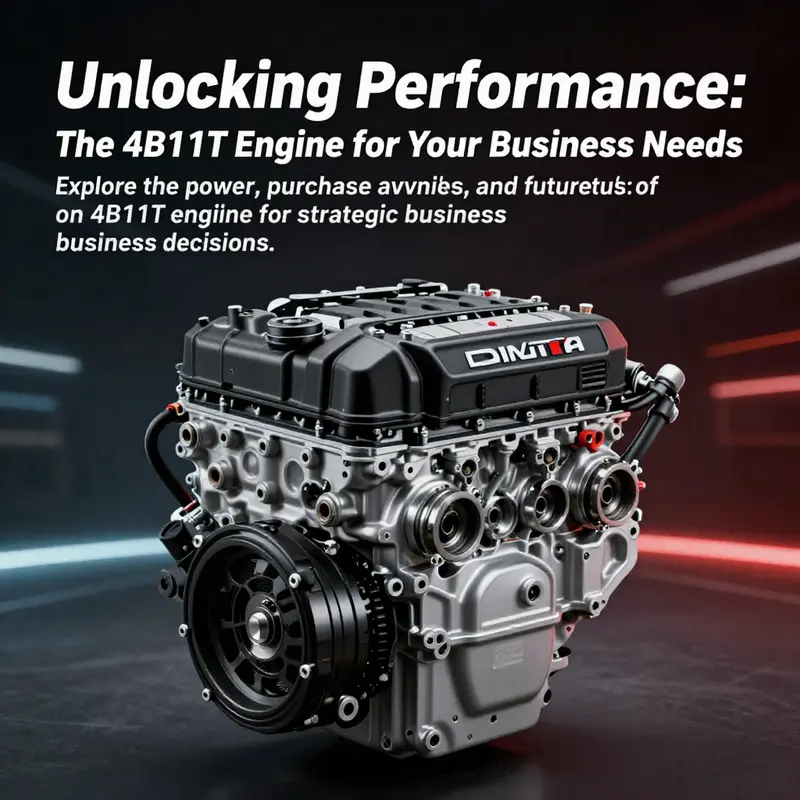
The 4B11T engine stands out as one of Mitsubishi’s most revered performance engines, capturing the attention of automotive businesses worldwide. This high-performing turbocharged engine, often found in iconic models like the Lancer Evolution X, combines innovative technology with impressive power metrics. For business owners in the automotive sector, understanding the mechanics, purchase options, and future trends of the 4B11T engine is crucial. This article dives deep into the engine’s key performance characteristics, purchasing channels, crucial buying advice, associated components, and current market trends, providing a comprehensive guide that equips you with the knowledge to make informed purchasing decisions.
Power on Demand: Understanding the 4B11T Engine’s Performance, Technology, and How to Buy
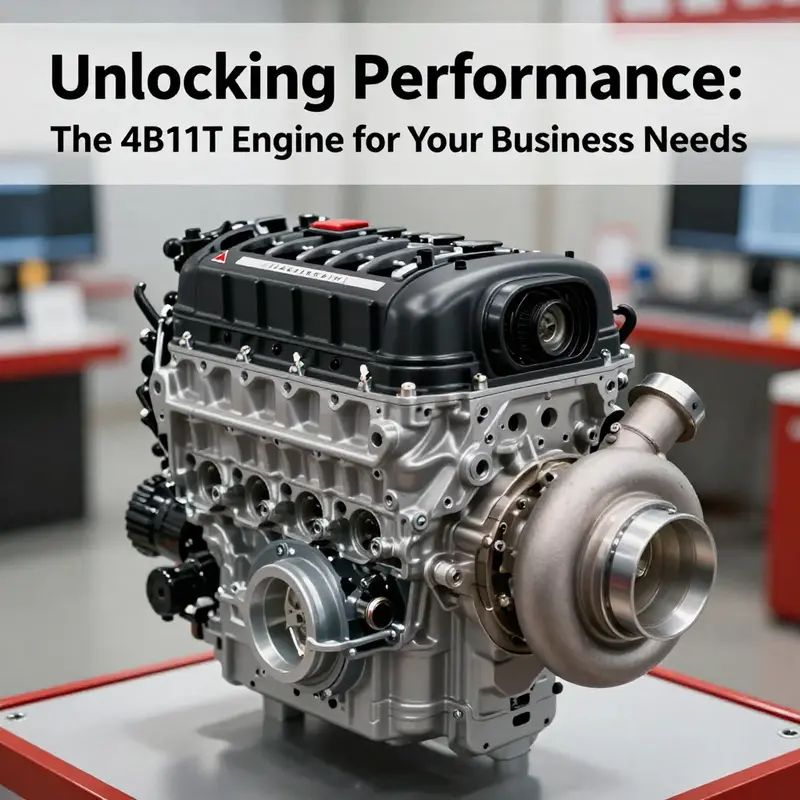
The 4B11T is a compact 2.0-liter inline-four turbocharged engine designed to underpin Mitsubishi’s performance line, notably powering the Lancer Evolution X. In a sale context, its engineering blends race-inspired capability with street usability. Core figures place it in the torque-rich mid-range: roughly 280 horsepower at the crank and about 422 Nm of torque. The torque curve comes on around 3,500 rpm and stays strong into the high revs, delivering a broad, usable power band. This results in brisk acceleration in everyday driving and a capability envelope that rewards spirited driving when the boost comes online.
A key strength is the emphasis on weight and efficiency: an aluminum block and head reduce rotating and reciprocating mass, improving responsiveness and handling. Compared with earlier family members, the light-weight design can save roughly a dozen to twenty kilograms depending on configuration. The turbocharger paired with this architecture helps deliver prompt throttle response, translating into a car that feels eager off-throttle and quick to respond to steering inputs. The timing strategy uses a modern DOHC layout with Mitsubishi’s MIVEC variable valve timing. This keeps intake and exhaust events matched to speed and load, smoothing throttle transitions while extracting more usable energy from air and fuel. In practice, MIVEC supports a smooth switch between high airflow/high-boost operation and efficient low-rev running, preserving fuel efficiency at common speeds while preserving acceleration when demanded. Direct injection in this architecture complements timing control to support power, thermal efficiency, and reliability under boost.
The turbo architecture is designed for fast response and sustained performance across a broad RPM span. Carefully sized turbines and tuned exhaust paths minimize lag, while an engine-control strategy ensures boost builds with predictability rather than abrupt surges. As boost rises, torque remains on a steady curve rather than peaking and fading. These hardware choices—aluminum block and head, robust DOHC with MIVEC, and a reliable intake and fuel system—support longevity in high-boost conditions. For buyers in the aftermarket space, these elements influence long-term durability and reliability under spirited use or track-like sessions.
Market options for a 4B11T-based powertrain include the original factory units for straightforward, well-documented builds with warranty coverage; however, they can be costly and have longer lead times as production winds down. Rebuilt or remanufactured units offer a more accessible path, provided the remanufacturer maintains strict quality-control standards and careful testing prior to shipment. Salvage or replacement engines from damaged vehicles are another route, typically with lower upfront costs but higher diligence demands—service history, current condition via compression and leak-down tests, and inspection of pistons, rods, and the turbocharger are essential.
When evaluating any 4B11T engine for sale, verify the model year and variant, check serial numbers and markings for origin and rebuild status, inspect the fuel system and ignition components, and consider the intended use. For roadworthy builds, a unit with clean internals and proven boost-management strategy is desirable; for track-oriented setups, look for reinforced components, improved charge cooling, and robust internals to withstand sustained higher temperatures. Documentation such as service histories, dyno sheets, and warranty terms is prudent, and buyers should beware of counterfeit or poorly rebuilt units.
For upgrades as part of a longer-term build, the 4B11T’s aluminum construction and MIVEC breathing favor appropriately matched turbocharging, intercooling, and fuel delivery upgrades. You may encounter components designed to withstand higher boost and more demanding operating conditions. Optional performance blocks that preserve structural integrity under elevated pressures can be attractive for high-boost, long-duration applications. See an example billet-block option here: 4b11t-billet-block. This highlights that the engine family supports robust, repeatable performance with the right hardware.
In summary, the 4B11T represents a well-balanced choice for buyers seeking a compact, high-performance powerplant with strong mid-range torque and a responsive top end. Its aluminum construction, MIVEC timing, direct injection, and turbocharged air path align with enthusiast expectations for performance and durability. The decision to purchase should factor in sticker price and total cost of ownership, including installation, driveline compatibility, and emissions requirements based on local regulations. The engine’s Mitsubishi heritage provides additional confidence for buyers seeking a compact unit that can deliver consistent, track-ready performance in a street-legal package.
For a concise reference that anchors the engine’s technical profile, Mitsubishi’s EVO-focused documentation offers a grounded overview of performance characteristics and reliability in mass-produced applications. External readers may review official Mitsubishi EVO materials for context: https://www.mitsubishi-motors.com/jp/vehicle/evo/
Finding the Right 4B11T Engine: Reliability, Compatibility, and Smart Sourcing
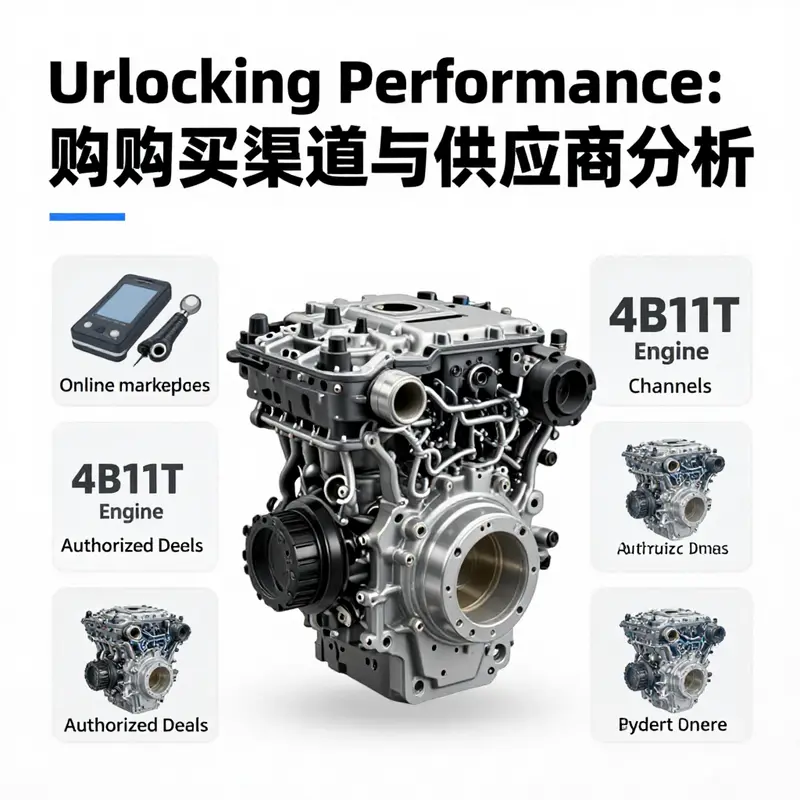
The hunt for a 4B11T engine is more than chasing horsepower; it is about finding a unit that can deliver consistent performance under real-world conditions while staying dependable enough for daily driving. The 4B11T is noted for its aluminum block, dual overhead cams, and MIVEC variable timing in higher outputs. While factory figures can approach 291-303 horsepower and about 366 Nm of torque in boosted configurations, the true value lies in how the engine ages and how well the core can be rebuilt and integrated into your platform.
In the market, you will encounter three broad sourcing paths: factory remanufactured units from official channels, rebuilt cores from specialized shops with documented test data, and salvage-yard returns where price is attractive but provenance and condition are uncertain.
A disciplined buyer weighs price against risk by requesting verifiable data: compression and leak-down results, bore and ring end-gap measurements, and proof of proper turbo compatibility and ECU calibration. Look for a complete package: the core itself, compatible ancillaries, and a warranty that covers core integrity.
Core credibility can be enhanced by considering strengthened options such as a robust billet block core if available, which provides improved rigidity and tolerance stability under boost. However, not every source will offer such options, so vet the entire supply chain: block, head, rotating assembly, and turbo interface, plus the seller’s documentation and return policy.
Documentation and aftercare matter as much as the core itself. Seek a warranty window that applies after installation, a clear plan for bench testing or dyno validation, and guidance on fuel quality and ECU mapping to ensure the engine runs as intended on your platform.
The best approach is to begin with a defined use case and budget, identify credible suppliers, and request test reports or a mounted unit for inspection before shipping. Verify serial numbers, batch data, and material proofs, and assemble the vision of compatible components—turbo, fuel system, intake, exhaust, and engine management—that will keep the 4B11T reliable across thousands of miles.
Ultimately, treat the 4B11T as a system rather than a single part, with long-term reliability and documentation as the guiding goals.
Choosing and Safeguarding a 4B11T Engine for Sale: A Practical Guide to Power, Price, and Peace of Mind

Inside the world of modern performance engines, the 4B11T stands out. Developed by Mitsubishi, this turbocharged four-cylinder powers the Lancer Evolution X, delivering a disciplined blend of modern tech and eager response. In stock form it can push roughly 291 to 303 horsepower and torque around 366 Nm, with turbo responsiveness shaping the drive more than sheer peak numbers. It uses DOHC with MIVEC, a quiet timing chain, and an all-aluminum block and head. The aluminum construction lightens the package by about 20 kilograms, improving handling and balance. It meets Euro IV and higher emissions standards and runs best on high-octane 97 fuel. This combination of tech and tuning explains why 4B11T remains a sought-after drivetrain among enthusiasts.
Today, the 4B11T is no longer in continuous production at the factory, and stock from Mitsubishi is scarce. What remains on the market comes from three main streams: genuine or certified refurbished units from authorized distributors, second-hand engines salvaged from wrecked vehicles, and a vibrant ecosystem of Chinese manufacturers offering replacements that claim to meet or approach original specifications. Original factory channels remain the safest but are expensive and have long lead times; for buyers who want a balance of reliability and cost, the second path becomes appealing, especially in regions where the supply chain allows quick transit. In practice, a buyer should expect a premium for fresh or certified stock, with warranties that reflect the extra verification and testing those engines have undergone. The alternative routes require deeper due diligence to avoid mismatches in fit, tolerances, and long-term reliability.
Quality assurance becomes the decisive hinge when you buy a powerplant that will later sit under a hood repeatedly exposed to high heat and intense pressure. Only a handful of Chinese manufacturers operate with formal quality management systems and traceability that can convincingly challenge OEM standards; look for ISO 9001 certification and a documented testing regime, preferably with a tolerance record for critical components like the cylinder head, block, and pistons. A seller’s technical validation is as essential as a sales contract. Engine buyers should insist on serial numbers, production batch data, and a certificate of conformance that maps the part’s material composition to the OEM’s baseline. If you’re shopping from abroad, confirm compliance with import requirements, shipping terms, and the possibility of blistering customs duties. The risk of hidden defects is real, and a well-documented supply chain can provide the confidence a project like this demands.
Another vital piece of the decision is compatibility with the vehicle’s electronic control architecture. Even within the same engine family, ECU hardware and software can differ between markets and model lines. The same engine coming from a domestic market may need alternative ECU programming to achieve smooth idle, stable boost, and accurate fueling. Some buyers have reported improved stability after adopting a version of the ECU that aligns with a different regional calibration, followed by professional coding with the appropriate diagnostic tool. In practice, this means that before committing to a swap, you should confirm not just the mechanical fit but also the ECU interface, wiring harness compatibility, and required immobilizer configurations. The goal is not merely to drop in an engine but to achieve a coherent, road-worthy motor that behaves consistently under typical driving loads.
For those who are drawn to a lower entry cost or a quicker turnaround, the used-car and salvage engine route has its own logic and risk. Salvaged engines can offer attractive upfront prices, but they carry the burden of unknown cycles of wear, past maintenance quality, and hidden damage from prior accidents. Prospective buyers should arrange independent compression testing, coolant and oil analysis, and a teardown inspection if possible. A trained technician will check valve seats, ring lands, and turbocharger condition, since these areas often reveal the true state of wear that isn’t visible from exterior inspection. The unpredictability of these engines means you should budget for a potential top-end refresh or gaskets, especially if the unit has seen heavy use in sportier applications. If your aim is daily reliability rather than peak track performance, this approach demands extra patience and a well-thought-out contingency plan.
Advisers aligned with the best paths for a 4B11T swap emphasize clarity about your end goal and a disciplined sourcing process. First, define whether you want the engine for a recoverable, engine-on-a-stand project or a direct swap into a street car with a staged performance target. Second, vet the source carefully—demand factory-style measurements, demo videos, and a transparent workshop history. Third, address the ECU and harness problem early. In some cases, buyers will procure a foreign variant ECU and reprogram the unit using a specialized diagnostic suite to unlock optimal boost curves and fuel maps. This is not a casual upgrade; it requires precision engineering and a qualified technician to execute safely. If you are exploring options online, an internal reference point could be the market’s billet-block variants, which you can explore here: 4B11T billet block. Such components improve bottom-end rigidity and offer a stable platform for high-boost ambitions, though they do not make the engine invincible to misapplication.
Beyond the hardware itself, a candid assessment of the gearbox is essential. The common reliance on CVT or conventional torque-converter units in base vehicles means that turbocharger ambitions carry additional risk. The literature and experiential reports warn against turbocharging attempts on CVT-equipped cars, as the sudden oil-pressure surges and heat stress can accelerate wear and threaten the transmission. Even for manual or conventional automatics, the required matching of fuel strength, cooling capacity, and lubrication regimes compounds the complexity. The practical takeaway is simple: a complete package must consider not only the engine but also the cooling system, oil system, intercooler, piping, and the control logic that governs boost response. Skipping any of these pieces invites a cascading series of faults, often culminating in a costly failure that could have been avoided with a more deliberate, staged approach.
Finally, buyers should be aware of the engine’s baseline efficiency. The 4B11T’s characteristic performance comes with a higher appetite for fuel. Reports from enthusiasts who have logged road-time data reveal that even under gentle driving, fuel consumption can exceed 15 liters per hundred kilometers, and under spirited driving or load, it can climb into the mid-twenties. Those figures are not merely academic; they color every decision about whether the swap is worth the cost, the effort, and the potential mechanical risk. If your use case involves daily commuting or long highway journeys, you may want to calibrate expectations and plan for a larger fuel budget. The engine’s efficiency profile is a reminder that speed does not come without trade-offs and that prudent planning helps prevent disappointment after a swap.
To sum up, the most reliable path to a satisfactory 4B11T installation is a disciplined, informed procurement that treats the engine as a complete power unit rather than a partial upgrade. Seek a high-quality core with verifiable history, invest in the correct ECU pairing and professional programming, and ensure that every piece of supporting hardware is up to the task. When done thoughtfully, the 4B11T can deliver its signature blend of rapid thrust and refined response, transforming a chassis into a capable, eager performer. The process demands patience, technical acuity, and a sober assessment of cost versus reward. By prioritizing verified sources, transparent documentation, and a comprehensive compatibility check, buyers can minimize the surprises that often accompany rare, enthusiast-grade powertrains. For a deeper dive into a high-grade core option, see the billet-block reference above, and proceed with careful due diligence rather than impulsive bidding.
External resource for procurement context: https://www.alibaba.com
把关核心与细节:为4B11T发动机购买高品质配件的全流程导航
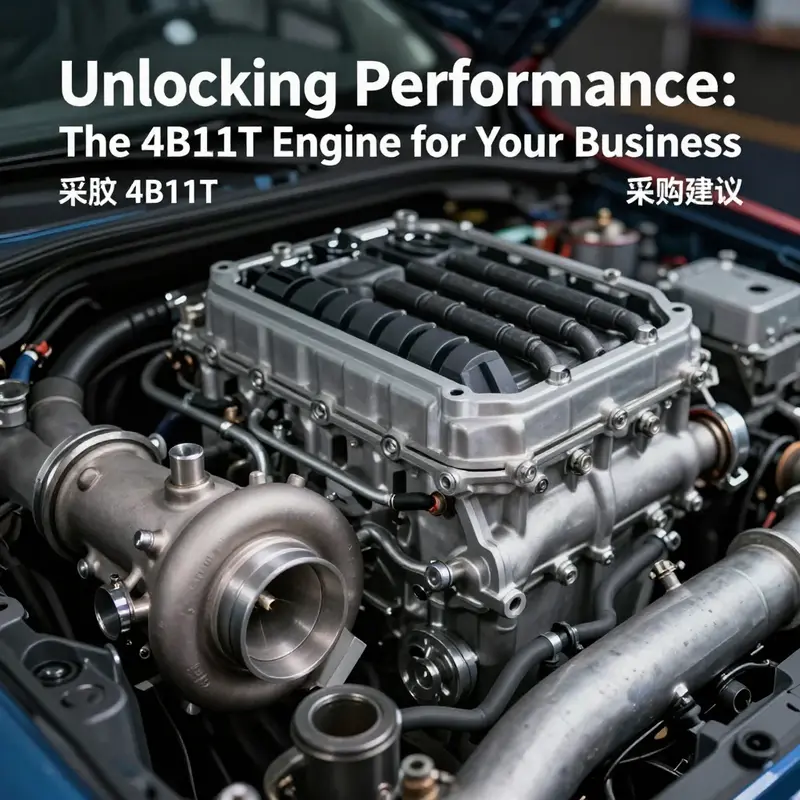
在寻找4B11T发动机的备件与配件时,买家往往聚焦于价格与供应渠道,却容易忽略一个关键事实:4B11T的高性能与高可靠性,来自于对核心部件的精准选择、严格验证以及系统化的采购流程。作为一台以涡轮增压为核心驱动的发动机,涡轮增压器、活塞与连杆、缸盖与气门系统,以及进排气系统共同构成了动力输出的桥梁,也是决定发动机寿命与运行稳定性的关键因素。因此,任何一环的质量缺失都可能放大后续的维护成本与风险。本文意在提供一个贯穿购买前、购买中直至安装后的全流程视角,帮助读者在“4B11T engine for sale”的广阔市场中,锁定真正可靠的配件来源与技术验证路径,避免落入低价陷阱和质量劣质件的泥潭。整个过程强调“安全第一,性能为本”,同时兼顾性价比与长期保修网络,确保购买的每一件部件都能与您的发动机匹配、与您的使用场景相吻合。对于准备进行改装或强力输出的车主来说,这一章将把抽象的技术需求转化为可执行的采购策略,并以实操层面的要点帮助读者避免在锦囊满布的市场中迷路。
在高性能发动机的配件采购中,第一层要素是对原厂或认证件的坚持。原厂件通常代表着最接近原厂设计意图的材料、加工工艺和装配公差。面对二手市场、翻新件或改装件时,务必对供应商的资质、批次记录与保修条件进行严格核验。所谓“原厂或认证配件”,并非仅仅是品牌标识的简单堆砌,而是包含了全链路的质量控制、材料认证与售后服务网络。对于4B11T而言,涡轮增压器是动力系统的心脏,它的稳定性直接关系到发动机的持续高效输出。次级厂商或低价仿制件往往以价格为诱饵,掩盖材料差异、密封性能不足、轴承磨损过快等问题,最终导致功率波动、油品消耗增加甚至引发更严重的热膨胀相关故障。因此,采购时应明确要求提供原厂激光防伪标识、批次追踪信息,并尽可能通过官方渠道验证批次与物流记录,确保所购涡轮是真正适用于4B11T规格的正品或经认证的翻新件。此处的细节判断并非简单的“看起来像原厂”的表象,而是要通过比对型号、序列号、生产日期等硬性信息进行综合核验。
接着,活塞与连杆在发动机强化改装中承担着极高的机械应力。若打算在涡轮压力提升后追求更高的输出,必须确保所选活塞与连杆具有足够的强度与耐热性。采购时,优先关注高强度合金材料、先进的铸造与热处理工艺,以及严格的重量公差控制。品牌层面的选择,往往能反映出长期的耐久性测试与应用场景的覆盖度。知名改装套件品牌经过系统测试,能在提升耐久性与稳定性的同时,降低整套系统的震动与不利共振风险。尽管价格可能高于普通市场件,但从长期角度看,这类配件在耐用性与稳定性方面的优势通常更易为车主带来更低的综合成本。对缸盖与气门系统的注意力不可忽视。缸盖的加工水平、表面处理和密封性,直接影响燃烧室的热管理与爆震控制。4B11T发动机在排气系统中的钠填充气门设计,提升了排气排热效率,对耐热性与稳定性有显著作用。若需要更换气门或缸盖,务必选择具备相同热管理特性的原厂部件或等同品质的件,以确保燃烧室的密封性与热传导路径保持在设计区间内。若你正考虑在进排气系统上进行进一步的性能优化,务必把“通路容积”与“气流阻力”作为评估的核心指标。许多改装方案会以扩大进排气口、优化中冷器及排气管的布局来提升充气效率,但若与ECU的进气模型没有协调,反而可能削弱车辆的稳定性,因此任何系统级的改动都应在专业技术支持下进行,避免因单点改动引发整车行为异常。
在采购的广度上,进排气系统、涡轮增压器、燃油系统及相关配件构成一个相互嵌套的网络,每一个部件的选择都应以“整车协同”为导向。进气系统的清晰度与排气系统的通畅性,直接影响空气质控与燃烧效率。对于涡轮增压系统而言,合适的涡轮增压器不仅要匹配发动机的排量、压缩比、燃油供给与点火时机,还要兼顾热管理与油路设计。采购时,除了关注核心部件的材料与工艺,还应核对配件的型号、重量、配合公差以及与车载ECU的兼容性。对于替代件的判断,建议以“全铝缸体、高强度材料、经认证的加工工艺”为筛选标准,避免因材料劣化导致高温区域的疲劳早衰。
在供应链层面,正规渠道的存在对长期使用尤为关键。优先考虑三菱授权经销商、知名品牌配件商或具备良好信誉的线上平台,这些渠道往往能提供更完善的质检记录、保修体系以及技术支持网络。要点在于,别被低价吸引而放弃对资质、售后和技术支持的核查。对供应商的资质核验,可以通过查询公司注册信息、工厂照片、客户评价和交易记录来完成。签订合同前,务必明确交货时间、运输方式、付款条款及售后服务细则,尤其是在进口采购中,清关与关税的问题也需事先沟通清楚。技术参数方面,应逐项核对型号、序列号、生产批次等信息,确保与车辆的4B11T发动机型号无缝对应,避免因型号不匹配造成的装配困难与性能偏差。
为方便读者在实际采购中进行快速对照,本文也提供一个参考性链接,指向一个专门面向4B11T相关部件的综合页面,便于了解不同件型在统一平台上的标准化信息与批量采购选项。该链接来自一个知名的配件商店,在对比规格、材质与认证时提供了可重复的验证路径,帮助买家形成首轮初筛的信心与依据。你可以通过该页面查看与4B11T相关的铸件、涡轮和缸盖等部件的规格要点,以及厂商提供的质量认证证书。 4b11t-billet-block。
然而,除了正规渠道与高质量部件外,买家还应建立一套自我验证机制。对任何“低价快速交货”的诱惑保持警惕,往往隐藏着质量隐忧。尽管某些渠道声称能提供极具竞争力的价格,但若缺乏ISO 9001等质量体系证书、生产批次信息不足、或无法提供完整的售后网点覆盖,那么这样的交易风险远高于短期的成本节省。技术验证应成为交易的第一要务,即便购买的是翻新件,也应要求提供详细的翻新工艺说明、使用的材料等级、焊接或重新加工的部位、以及与原厂的参数对比数据。只有这样,才能在未来的维护、保养和潜在升级中,获得稳定的性能回报。
总结来说,4B11T发动机的配件采购,归结为一个简单却极具挑战性的原则:安全第一,质量优于价格。通过坚持原厂或认证件、对供应商资质进行深入核验、并将技术参数与整车协同纳入考量,您就能在复杂的市场环境中筛出真正可靠的部件。与此同时,系统性的采购流程与可追溯性,是减少后续故障与维护成本的关键要素。若将来您计划在涡轮增压、缸体、气门系统等核心部件上进行升级,记得把完整的保修与服务网络纳入评估框架,确保在需要时能获得专业的技术支持与服务保障。对于正在准备购买4B11T发动机及配件的读者,这种谨慎而系统的方式,无疑会让“卖与买”的过程省心、也更具可持续性。 外部资源可帮助进一步理解涡轮增压器的技术要点与选型原则,供您在核心部件选择时参考。 外部资源:TD05 Turbocharger 49378-01631在阿里巴巴的技术概览与选型信息,便于对比不同型号在相同工况下的性能表现。
Navigating a Shifting Circuit: The 4B11T Engine in a Changing Market and Its Long-Term Fit
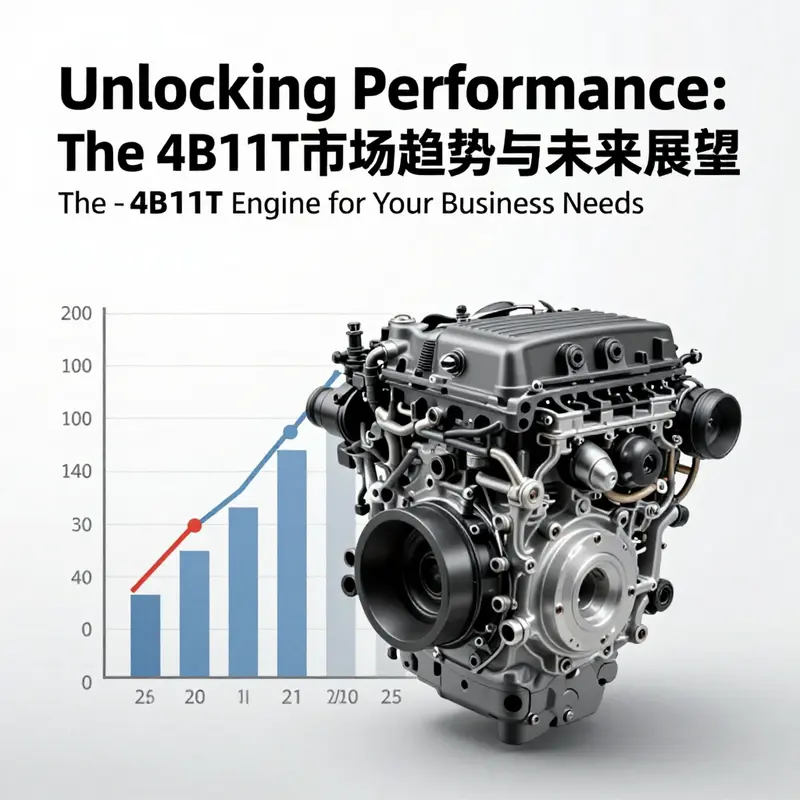
The 4B11T engine sits at an intriguing intersection of performance heritage and market pragmatism. It embodies a design philosophy that prizes responsive turbocharged power, precise control, and careful material choices to keep weight down while delivering strong mid-range thrust. In the broader arc of engine development, this powerplant exemplifies the “small displacement, big punch” approach that has defined high-performance workhorses for some time. As a buyer or a builder looking at a 4B11T in 2026, you are stepping into a market that is both mature in its engineering and fluid in its commercial dynamics. The core value proposition remains straightforward: robust output from a compact, well-balanced four-cylinder package, with the potential for refinement and reliability if approached with the right technical and sourcing discipline. The engine’s core attributes—aluminum block and head for lightness, dual overhead cams with variable timing, and a turbocharging strategy that can deliver corrosion-resistant response across a broad rpm band—continue to power enthusiasts and specialist builders who demand authenticity in their platform without compromising modern efficiency expectations. This balance of performance and refinement persists even as emission standards tighten and the automotive landscape shifts toward electrification. The market response to that shift is not a sudden disappearance of interest in high-performance engines, but a recalibration of where and how they fit. In 2026, the conversation around the 4B11T is less about pure mass-market toy and more about niche applications, longevity, and value. Buyers increasingly seek engines that can be integrated into retrofits, curated builds, or hybridized platforms where the power unit serves as a high-efficiency generator of torque or as a dependable performance core for a track-focused or enthusiast-focused vehicle. This new context does not erase the engine’s strength; it reframes it. The engine’s capability to produce near three hundred horsepower and substantial torque remains appealing, but its market success now hinges on sourcing reliability, long-term support, and the ability to work within a broader, more diverse powertrain ecosystem. The careful buyer is no longer merely chasing raw numbers; they are seeking a powerplant with predictable performance, traceable provenance, and a pathway to parts and service that extends beyond a single calendar year. In this ecosystem, the 4B11T’s current-day viability depends on two intertwined realities: the supply chain and the technology roadmap that governs powertrains in performance cars today. On the supply side, availability hinges largely on secondary markets, dismantled units, and refurbished options. Original factory new builds are scarce and expensive due to limited remaining production and the high costs of maintaining factory-grade standards outside of the OEM network. This reality invites a disciplined approach to sourcing: a need to verify the engine’s condition, confirm its mechanical integrity, and ensure that accompanying components—such as the turbochargers, intake and exhaust systems, and control electronics—are compatible with the vehicle’s configuration and meet the buyer’s reliability expectations. The market guidance that emerges from this reality is pragmatic. It favors buyers who insist on documented provenance, traceable maintenance histories, and verifiable performance data. It also rewards those who adopt a staged procurement plan, mixing core engines with a carefully selected set of components that can be installed with confidence and later upgraded as budgets allow. In practice, this means asking for detailed compression and leak-down tests, confirming that all auxiliary systems are in good order, and ensuring the engine’s control unit, sensors, and actuators are synchronized with the vehicle’s existing architecture. It likewise means preparing for the possibility of re-calibration or remapping to accommodate any differences in fuel quality, emissions systems, or intake configurations found in non-OEM replacements. Those who manage this process well can preserve the engine’s performance intent while mitigating risk, turning a potentially precarious purchase into a durable, track-ready, or street-ready powerplant. From a buyer’s perspective, the right sourcing strategy blends three priorities: authenticity, technical verification, and after-sales confidence. First, authenticity means establishing the engine’s lineage and production context. Second, technical verification focuses on objective tests and measurements that confirm tolerance, material integrity, and compatibility with the target installation. Third, after-sales confidence entails clear warranty terms, return policies, and an accessible supply chain for wear parts, seals, and service updates. The emphasis on verification is not merely about satisfying a due diligence checklist; it is about ensuring that the engine will deliver its intended performance without introducing avoidable compromise into the vehicle’s long-term reliability. Within this framework, some builders consider a billet-block option for even tighter tolerances and enhanced durability. A billet block can offer improved strength characteristics and a cleaner platform for high-performance builds where repeated high-load operation is anticipated. For readers curious about such a path, a dedicated reference point exists that details this option and its potential implications for fitment and durability. See 4b11t-billet-block for more context on how a billet block could influence a build’s expectations. While the billet-block path is not universally required, it represents the kind of tactical decision that can differentiate a project’s resilience and longevity. The broader implication is that the 4B11T remains a gateway to deeper customization rather than a one-size-fits-all assembly. Buyers who understand this nuance can better align their expectations with a plan that prioritizes engineering rigor and a long-term maintenance perspective. Beyond the core engine itself, related systems deserve equal attention. The fuel delivery architecture, the intake and exhaust pathways, and the turbocharger technology all interact with fuel quality, calibration, and the vehicle’s weight and aerodynamics. In practice, this means preparing for a holistic upgrade path rather than a singular focus on the block or the turbocharger. A well-choreographed upgrade plan will include compatible fuel injectors, a tuned compression profile, and an exhaust front-to-back strategy that respects emissions limits while still enabling a rewarding power curve. Accessory considerations—cooling, intercooling, lubrication, and control electronics—play equally critical roles in sustaining performance under dynamic driving conditions and in ensuring that the engine remains robust over the life of the installation. The ongoing development of control algorithms and vehicle-network integration adds another layer of assurance: modern engine management can optimize throttle response, boost control, and fuel delivery in real time, aligning the engine’s behavior with the car’s dynamic demands and the driver’s intent. In this sense, the potential of the 4B11T is not limited to raw output. It extends into how well the engine communicates with the rest of the vehicle, how data is captured and analyzed, and how firmware or calibration updates can extend the engine’s usable life and performance envelope. The market recognizes this to some extent; buyers are increasingly willing to invest in engines that come with documented calibration baselines and a straightforward path for updates. For those who want to see the broader context of how traditional powertrains are evolving alongside electrification, a recent industry overview provides a perspective on the convergence of high-performance combustion engines with hybrid systems and smart control architectures. External resource: https://www.sohu.com/a/739425818_121223
The reality for buyers exploring the 4B11T is that the engine’s story is not a straight line from peak horsepower to consumer shelves. It is a narrative of adaptation—of a power unit that can still deliver compelling performance while slotting into a future where power is not defined by horsepower alone but by efficiency, controllability, and the seamless integration of energy across a vehicle’s entire system. As markets evolve, the 4B11T’s value proposition gains texture: it can serve as a high-performance core for enthusiasts, a reliable generator for range-extender configurations, or a centerpiece for purpose-built, track-oriented machines that prioritize a precise, repeatable power delivery. The solid engineering foundation—lightweight construction, advanced valvetrain, and controlled boost—remains a platform from which careful builders can extract reliable, exhilarating driving experiences. In short, buyers who approach the 4B11T with a clear plan, rigorous verification, and a long-term view will find a powerplant that not only respects its heritage but also remains relevant as the powertrain landscape grows more diverse and interconnected.
Final thoughts
In conclusion, the 4B11T engine represents a blend of power, efficiency, and modern technology that can significantly boost business prospects in the automotive sector. With its robust performance features and the various avenues available for procurement, business owners are well-equipped to make informed decisions. However, diligence in supplier verification, understanding market trends, and ensuring parts compatibility will be crucial for maximizing value and performance. By staying informed and proactive, you can leverage the benefits of the 4B11T engine to meet your specific business needs and drive success in the ever-evolving automotive landscape.