

The automotive industry is constantly evolving, driven by the pursuit of enhanced performance and reliability. Amongst car enthusiasts and tuners, the term ‘4B11T Billet Block’ often surfaces in discussions regarding high-performance modifications for Mitsubishi’s renowned EVO model. However, it’s crucial to distinguish fact from fiction. This article demystifies the concept of the 4B11T Billet Block, exploring its official status, technical distinctions, and its relevance in the aftermarket scene. Each chapter will delve deeper into these aspects, providing a well-rounded perspective that business owners can leverage to make informed decisions in the competitive high-performance market.
Debunking the Myth: Official Status and Market Perception of the 4B11T Billet Block
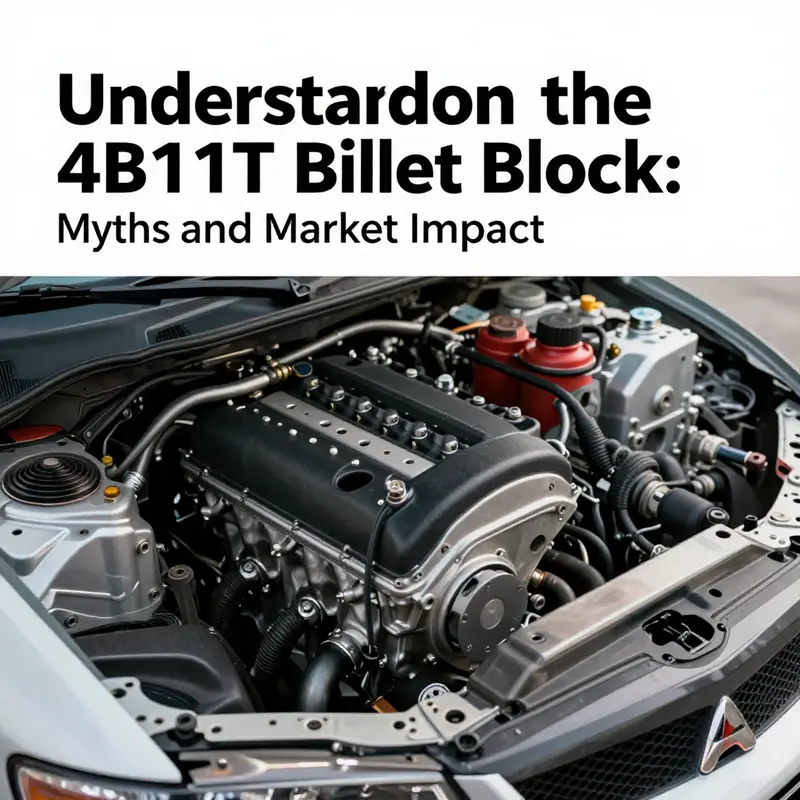
Rumors travel fast in the world of high-performance engines, especially when a platform as storied as the 4B11T from the Mitsubishi Evolution lineage sits at the center of potential power gains. The idea of a “4B11T Billet Block” conjures images of a single solid bar of metal, machined with millimeter precision, resisting heat and torque as if it were forged from a different physics. Yet the reality is more measured. The official record—at least as it is publicly available and supported by technical documentation and reputable industry analysis—points to a different truth. The factory configuration for the 4B11T, a turbocharged engine developed for performance-oriented EVO applications, relies on a production-friendly approach that balances performance, cost, and reliability. The key fact often overlooked in the excitement of upgrades is that the formal Mitsubishi stance does not include any official billet-block variant for this engine family. This is not a matter of opinion but of documented practice: the engine blocks in production and in the official performance catalog are not machined from a monolithic billet by the factory. Instead, and this is essential to understand, the published materials describe a block that aligns with conventional manufacturing choices for mass production. The technical implications of such a choice extend beyond raw weight or strength; they reach into maintainability, serviceability, and the economics of the entire tuning ecosystem surrounding the 4B11T. In other words, the myth of an official billet block sits on a foundation of aftermarket imagination rather than factory reality. This distinction matters not as a pedantic footnote, but as a practical truth that frames how enthusiasts should evaluate claims, promises, and the long-term risks of pursuing extreme builds on this platform. The market’s fascination with the billet-block concept is not surprising. Billet blocks represent the pinnacle of customization: a solid, meticulously machined aluminum block or similar material, designed to maximize strength-to-weight ratios, improve cooling efficiency through carefully engineered channels, and enable higher compression and boosted setups without the compromises often demanded by a cast-iron or cast-aluminum production block. The appeal is clear to anyone imagining race-grade reliability under extreme operating conditions. But here lies the paradox: the billet-block idea, by definition, is a departure from what Mitsubishi officially endorsed for a mass-produced engine family. It is not an item on a factory bill of materials, nor is it something that appears in official service bulletins, warranty terms, or the standard parts catalogs. Instead, what you encounter in the marketplace is a spectrum of aftermarket propositions. Some vendors offer blocks machined from solid aluminum or other alloys, employing CNC processes that carve away a substantial portion of the material to yield an ultra-precise internal geometry. These are not simple replacements; they constitute a complete re-engineering of the engine’s core in ways that demand careful alignment with the rest of the powertrain. It is in this space that the “4B11T Billet Block” label tends to arise, but only as a consumer-facing shorthand for a set of aftermarket components designed to fit around the original 4B11T architecture. The phrasing you’ll encounter in catalogs or forum threads often reflects ambition and perception as much as engineering reality. It is common to read that such billets are developed to withstand higher boost pressures, to reduce thermal distortion, and to enable longer life under sustained high-rpm operation. Those claims are not unfounded in the broader world of performance engines, where billet blocks have become a symbol of ultimate strength. Yet in the context of the 4B11T, it is critical to keep the frame of reference clear: a billet block, in the strict sense, is not Mitsubishi’s official product for this engine. The market vocabulary, however, sometimes widens the frame to include any third-party block that claims to be designed for 4B11T use. The result is a patchwork of narratives in forums, social feeds, and storefronts. Some of these narratives are precise about the engineering work involved; others lean into marketing language that promises unprecedented reliability at a price that merely hints at the level of investment required. This discrepancy is not a minor footnote. For a buyer, the practical implications touch every aspect of ownership—from initial fit and finish to long-term maintenance costs, and to the risk profile of an engine built around an untested, non-official core. The language surrounding these parts often emphasizes strength, rigidity, and heat management as the primary selling points. But strength and heat tolerance come with trade-offs. A billet block demands exacting tolerances throughout the machining and assembly process, and the surrounding systems—oil supply, coolant routing, head-gasket sealing, and even the way the block interacts with the crank, pistons, and connecting rods—must be redesigned or heavily modified to take full advantage of the new architecture. In other words, the practical reality of using a billet block in a four-cylinder, turbocharged 4B11T ecosystem is a holistic engineering project, not a simple bolt-in upgrade. The official record against such a project exists in both the company’s public documentation and the consensus of experienced tuners who work primarily with factory-supported configurations. The factory approach to the 4B11T, as described in reliable sources, uses a cast-geometry block compatible with the engine’s production manufacturing lines. Casting offers predictable material properties, good heat management with conventional cooling strategies, and cost economies in mass production. In the realm of performance upgrading, such a platform remains a strong foundation for high-power builds when paired with proven supporting modifications: upgraded turbochargers, fuel systems tuned to higher pressures, precision engine management, and meticulously engineered cooling upgrades. The difference between the billet-block concept and the official block lies at the heart of why the topic can become emotionally charged among enthusiasts. A billet block embodies a pursuit of ultimate rigidity and weight savings, often realized through a “one-piece” monolithic construction that reduces potential weak points present in a segmented, multi-piece production block. It is a concept that suggests a potential for reliability at power levels that the stock architecture could struggle to sustain, particularly when operating under extreme boost, aggressive compression targets, or sustained track sessions. That theoretical reliability, however, is predicated on countless design decisions that go far beyond the block itself. It involves the flow paths for oil and coolant, the integration with the head gasket interface, the compatibility of the block’s deck surface with high-performance head bolts, and the way heat travels through the crankcase into the pan, the oil pump, and the cooler circuits. The engineering rigor required is substantial, and the cost is commensurate with the risk: the more a builder pushes the envelope, the more critical every detail becomes, from machining tolerances to the quality of the heat treatment and surface finishing. It is in this context that the market’s perception becomes so important. The idea of a billet block for a 4B11T taps into a shared dream among high-performance communities: that a single, carefully designed component can unlock a ceiling that production engineering never intended to reach. The reality, however, remains anchored in official publications and credible, traceable mechanical engineering principles. Enthusiasts who pursue this path should approach it with a measured mindset. The truth that emerges from a careful review of official materials and industry practice is not a denial of possibility but a reminder of where the line lies between factory-sanctioned upgrades and bespoke, aftermarket experimentation. If one seeks to push the 4B11T toward high-reliability, high-power territory, the pursuit should be anchored in a comprehensive plan that respects the engine’s oiling regime, cooling architecture, and the tuning ecosystem that supports a high-boost configuration. This is a project that requires more than a single bolt-on upgrade; it requires an integrated engineering approach—one that involves meticulous fabrication, precise tolerance control, and a testing program that validates every change under controlled conditions. The literature and the observed market realities suggest a clear protocol for those who pursue such a path. Start from the official baseline: confirm the production block’s material and casting method as the reference point for all subsequent work. Rigorously assess whether the claimed billet-block solution actually aligns with designing for endurance at elevated power levels or whether it is, in essence, a specialized naming convention used in the aftermarket to describe a carefully engineered competitor to a billet block design. From there, evaluate every downstream system: the head, the intake and exhaust flow, the fuel delivery system, the ignition timing strategy under higher pressure, and the robust integration of oil and coolant pathways. Each element must be revisited, redesigned if necessary, and tested in concert with the block itself, because the strength of a billet block alone does not guarantee performance if the supporting systems are not harmonized around it. The broader narrative of the 4B11T and its aftermarket journey is not just about materials or machining techniques. It also reveals the culture of tuning where enthusiasts seek legitimate, credible pathways to more power without sacrificing reliability. The gulf between official status and market perception becomes a lens through which to examine the responsibilities of sellers and buyers alike. Clear, honest communication about what is and is not offered by the factory saves participants from the disappointment of overpromised gains and the potential risk of failed builds. In the end, the absence of an official “4B11T Billet Block” should not be seen as a limitation, but as a boundary that guides the community toward safer, well-supported upgrades. There is room for ambitious engineering within the existing production framework, and there is a robust ecosystem of reputable aftermarket components that, when matched with careful tuning and validation, can deliver impressive performance while honoring the engine’s fundamental design. A coherent, integrity-driven approach to upgrades reduces the likelihood of misinterpreting marketing language as technical feasibility. It also helps ensure that any pursuit of extreme performance remains anchored in real-world reliability and predictable serviceability—qualities that matter just as much as peak horsepower. For readers who want to delve deeper into the official stance and to examine credible sources firsthand, consider consulting authoritative references from the manufacturer and recognized automotive information resources. This chapter does not aim to proscribe the entire spectrum of aftermarket possibilities; rather, it seeks to clarify where official status ends and market rhetoric begins. Understanding this distinction empowers enthusiasts to pursue their goals with greater clarity and fewer missteps, while preserving the long-term health of their engines and collaborative projects. External perspectives, including official corporate documentation, can provide additional context and serve as a reference point for evaluating any sensational claims that may surface in forums or promotional copy. For a broader sense of how manufacturers frame modifications and the kinds of constraints that accompany high-performance builds, see official corporate resources and industry analyses. External resource: https://www.mitsubishicars.com
解码4B11T:Billet Block 的传说、现实与改装边界
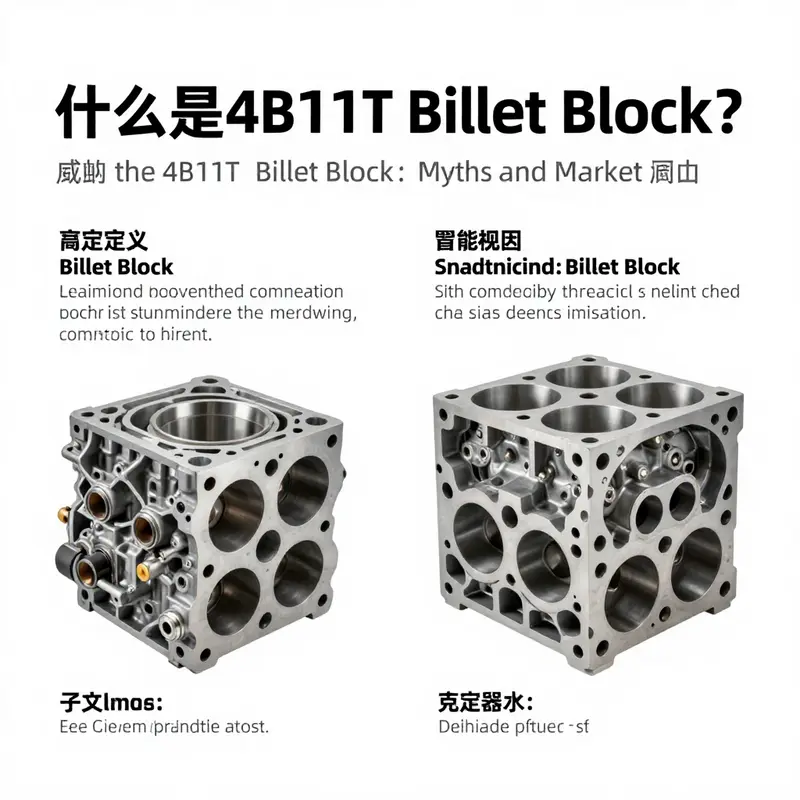
在热衷改装的圈子里,关于“4B11T Billet Block”的讨论常常带来极端的观点。官方层面,三菱并未推出名为“Billet Block”的原厂缸体部件;官方4B11T采用的是铸铝缸体设计,而非整块实心铝材CNC加工的解决方案。改装市场中,Billet Block通常指的是由第三方在高成本前提下定制的高强度缸体件,强调孔径对中和热管理优势,但也伴随高成本、复杂装配与潜在的兼容性问题。要实现可靠性提升,往往需要与一整套加强件、改进的冷却与油路设计、以及专业调校配合。总之,Billet Block并非万能钥匙,选择改装路径应以系统级评估和实际测试为前提。
超越铸铝极限:4B11T 原厂设计与 Billet Block 技术差异

对于想要深入了解的读者,权威数据与技术背景也是必不可少的参考。关于4B11T 的工程参数和性能边界,请参考外部权威资源的对比与分析。外部参考链接如下: https://www.motortrend.com/cars/mitsubishi/lancer-evolution-x/4b11t-engine-specs/ 。该链接提供了更为系统的发动机技术要点和性能分布的描述,帮助读者从结构与工艺的角度进一步理解为什么原厂设计能在量产条件下实现高水平的性能与可靠性。
4B11T Billet Block: Myth-Busting in the High-Performance Engine Market

In the high-stakes realm of engine tuning, a single idea can travel faster than a race car around a corner: a billet block for the 4B11T. It’s a concept that sounds straightforward in theory—machining a solid aluminum block from a single billet to deliver ultimate strength, precision, and heat management—but the reality is far more nuanced. The term itself nudges readers toward a take-no-prisoners attitude about performance upgrades. Yet behind the bold chatter, there is a careful balance of engineering constraints, manufacturing costs, and race-day realities. Before any sentence about horsepower can be claimed, a critical distinction must be drawn: the official status of the 4B11T engine, the nature of billet blocks, and what aftermarket laboratory-grade fabrication can actually deliver in a high-performance context. The Mitsubishi factory narrative around the 4B11T, a robust turbocharged four-cylinder developed for a high-performance lineup, is clear on one point: the mass-produced version uses a die-cast aluminum block, not a billet block. This matters. It matters because the appeal of billet blocks rests on the promise of near-ideal strength-to-weight ratios and the ability to resist the kind of explosive loads that push even well-engineered production blocks to their limits. The factory choice—a fully aluminum die-cast block—reflects a design compromise that emphasizes reliability, manufacturability, and cost in a vehicle that needs to perform consistently under demanding conditions, not just on the race track but in daily use and competitive events alike. The public-facing engineering narrative of the 4B11T thus exists in a tension: a high-performance engine that achieves notable weight reduction and impressive performance metrics, yet remains within the practical bounds of mass production. The difference between the production approach and the billet-block approach is not simply a matter of material quality or machining precision; it is a question of intended application and lifecycle economics. Billet blocks, carved from a solid piece of material with CNC precision, carry a premium in both material costs and labor. The process demands time, specialized tooling, and meticulous quality control. A billet block can deliver exceptional stiffness and resistance to bore distortion under extreme cylinder pressures, which is precisely what endurance racers and extreme hot-rods chase. But those advantages come with trade-offs: higher initial outlay, extended lead times, the need for bespoke engine components to match the altered geometry, and a level of maintenance discipline that goes beyond what a stock-appearing setup requires. On the surface, a billet block sounds like a straightforward upgrade for a 4B11T. Yet the deeper engineering truth is that a turbocharged inline-four, even when equipped with a billet block, is still part of an integrated system. The crank, connecting rods, pistons, valve train, and head gasket are not independent of the block; their performance lives in a shared ecosystem of tolerances, thermal behavior, and dynamic loading. A billet block can indeed improve bore stability under extreme power, but it cannot by itself create reliability where the rest of the system remains under-designed for the intended duty cycle. This is where the practical discussions of the high-performance market diverge from popular myths. Enthusiasts who picture billet blocks as magic wands often forget that the performance ceiling is rarely limited by the block alone. For the 4B11T, the story begins with fundamental design choices: weight reduction achieved through an all-aluminum architecture, a modern coil of valvetrain hardware, and a turbocharged pathway tuned for a balance between power and everyday drivability. Mitsubishi’s approach to this engine, in production, leans into proven processes that deliver a reliable, responsive, and runnable platform across a broad spectrum of use cases. The billet-block fantasy, as it circulates in some parts of the aftermarket sphere, tends to surface in two flavors. One is the bespoke, one-off project that a team undertakes for a specific race category, often bearing a price tag that makes any casual enthusiast pause. The other flavor is the catalog offering from smaller shops that market billet blocks as direct replacements or straightforward upgrades for popular platforms. The phrasing itself—“billet block”—carries with it the aura of precision and exclusivity. It creates a narrative that compels buyers to imagine a block carved from a single aluminum billet, free of the compromises that commonly accompany castings. But the engineering truth remains: such blocks exist in a highly specialized zone where performance gains are measured in marginal, but real, improvements under extreme loads. The viable gains from a billet block are not universal; they depend on the racing discipline, the engine displacement, the boost level, the cooling strategy, and the reliability expectations of the team. In many touring and circuit contexts, cost efficiency and serviceability are as important as sheer horsepower. A billet block, with its higher upfront cost and potential long-term maintenance complexities, must justify itself through meaningful endurance gains, reduced cylinder bore wear, and improved head-gasket sealing under cyclic loading. The 4B11T’s original aluminum block is designed with modern manufacturing in mind. It is crafted to run at elevated temperatures and pressures typical of a turbocharged four-cylinder without demanding the extreme tolerances that a billet block would. It is not simply about raw material strength; it is about the engine’s holistic life cycle. In this sense, the billet-block conversation often moves from a purely technical proposition into strategic planning. A race team must decide whether the marginal gains in bore rigidity translate to tangible on-track benefits across the intended event calendar. They must also consider the broader ecosystem: are the engine-management strategies, the cooling capacity, the lubrication delivery system, and the air-path efficiency aligned to take full advantage of the billet block’s potential? It is easy to get carried away by the promise of a single component delivering a dramatic leap in performance. Yet in real-world applications, a billet block is one piece of a complex orchestration. The 4B11T’s appeal to the tuning community rests not only on its potential for high power but also on its compatibility with a well-balanced upgrade path. Engineers, drivers, and technicians who explore this route must approach it with a clear plan that encompasses cycle life, field maintenance intervals, and the risk-reward calculus of a high-end build. This means engaging in rigorous material and process verification. It involves consultations with machinists who can translate a theoretical billet-block design into a robust, race-ready core that can withstand the cyclic loading, thermal cycling, and vibrational stresses of a turbocharged four-cylinder engine. It also means understanding the tolerances that govern cylinder bore roundness, deck height, main-cap integrity, and the alignment of the piston-ring packs under dynamic engine loads. The conversation cannot be reduced to horsepower figures alone. It requires a broader appreciation of reliability at power levels that push the engine toward the boundary of what the production-based design can safely accommodate. The market reality is that billet blocks are not a mass-market proposition. They are a discipline of high-end motorsport and deeply customized project builds. The enthusiasts who pursue them are typically converting race cars or building purpose-built track machines where every gram of weight matters and every mechanical interface is tuned to a precise spec. In that space, the billet-block option might be a rational choice for a team chasing a known peak in restricted competition. For those evaluating the path, it is worth reflecting on a few guiding principles. First, the power target must justify the investment. If the intended horsepower and torque can be achieved more efficiently with optimized internals, upgraded turbo hardware, and a refined fuel and ignition strategy, those routes may offer better value. Second, cooling and lubrication cannot be treated as afterthoughts. A billet block’s strengths can be undermined if the rest of the cooling and oiling system is not upgraded to handle sustained high-temperature operation. Third, the reliability envelope matters as much as the peak numbers. Endurance events reveal weaknesses that a short-form dyno pull does not. The 4B11T’s design lineage—the aluminum block, the MIVEC variable timing system, and the overall mechanical layout—already emphasizes a modern balance between performance and durability. A billet-block approach, if pursued, should be viewed as a complementary enhancement rather than a panacea. It is an amplifier of a system that has already been tuned for performance. In the aftermarket culture surrounding high-performance engines, the billet-block concept holds a certain mythic status because it speaks to the dream of engineering perfection. Yet the practical path toward that dream requires a sober assessment of cost, build complexity, and team capability. The risk is not only financial; it is also about the alignment of parts and tolerances. Misalignment between a billet block and the rest of the engine’s hardware can introduce leaks, stress concentrations, or sealing challenges that eclipse the performance gains hoped for from the block alone. For readers exploring this topic, a practical step is to consult a breadth of sources that discuss how 4B11T engines behave under different boost regimes, cooling scenarios, and load profiles. A useful starting point for deeper technical understanding is available on the dedicated maintenance and tuning resources that describe the kinds of modifications undertaken for these engines. Readers can also pursue more background information through the site’s general content hub, which offers a window into related topics and historical context. For further reading that expands on how modern engine tuning strategies translate into real-world performance, see the external reference listed at the end of this chapter. If you are curious about practical examples and discussions from the broader tuning community, consider the hello-world page on the site as a gateway to exploring the wider catalog of aftermarket insights. It can provide a sense of how enthusiasts approach the relationship between production specs and aftermarket ambitions. The reality is that the 4B11T billet-block idea—though musically evocative—belongs more to the realm of speculative, high-end builds than to everyday performance upgrades. It is a symbol of what the market sometimes promises when the appetite for power runs ahead of the bottlenecks in production-vehicle design. The engine’s official status, combined with the realities of manufacturing economics, encourages a healthy skepticism about the universality of billet-block improvements. Yet the fascination with this concept remains real. It reflects a broader narrative in engineering: that performance is achieved not by a single leap but by a carefully staged sequence of gains across materials, geometry, and system integration. Enthusiasts who push beyond stock configurations are not merely chasing horsepower; they are testing the resilience of a complete powertrain ecosystem under conditions that demand both precision and endurance. The 4B11T, in this sense, serves as a compelling case study. It demonstrates how a modern, factory-developed high-performance engine can inspire a vibrant aftermarket discourse while also illustrating why certain high-cost pathways remain best suited to professional teams with long planning horizons and well-defined competition targets. As the market continues to evolve, the conversation about billet blocks will persist, but it will be tempered by the practical realities of engineering discipline, project management, and the fundamental principle that performance is a system attribute. For readers who want to dive deeper into the technical facets of engine modifications and the specific considerations that accompany billet-block concepts, a well-regarded external resource provides a structured examination of methods for achieving enhanced engine performance, including the discussions surrounding strengthening blocks, flow optimization, and boosted reliability. External resource: https://www.turbosmart.com/blog/4b11t-engine-modifications. For additional context on related parts and build philosophies, see the site’s internal hub pages, including the hello-world entry that points readers to foundational discussions and broader perspectives on Mitsubishi engine platforms. The dialogue around 4B11T billets thus remains a dialogue between aspiration and restraint, between the dream of ultimate rigidity in a single block and the engineering pragmatism that underpins reliable performance in actual competition.
Final thoughts
The 4B11T Billet Block is a term that stirs excitement in the high-performance automotive community. While Mitsubishi did not produce a factory Billet Block, its existence in the aftermarket landscape showcases a demand for enhanced performance and customization. Understanding the specifics of the 4B11T engine and the advantages a Billet Block can offer provides critical insights for business owners looking to appeal to niche markets. As the performance tuning industry continues to grow, staying informed on these details ensures that businesses can better meet the needs of discerning customers demanding high-quality modifications.