
Upgrading to OEM customized HID headlights for the Mitsubishi Lancer Evolution 8 and 9 not only enhances visibility but also elevates the vehicle’s aesthetics and value. As business owners catering to car enthusiasts, understanding the specifications, market dynamics, and the true advantages of these advancements is crucial. This guide delves into the intricacies of headlight specifications, highlights market findings, provides installation suggestions, outlines the numerous benefits of HID technology, and shares real-world user experiences, aligning perfectly to empower business growth in the aftermarket automotive sector.
Illuminating Authenticity: OEM-Grade HID Headlights for the Eighth and Ninth Generations of a Legendary Japanese Performance Sedan
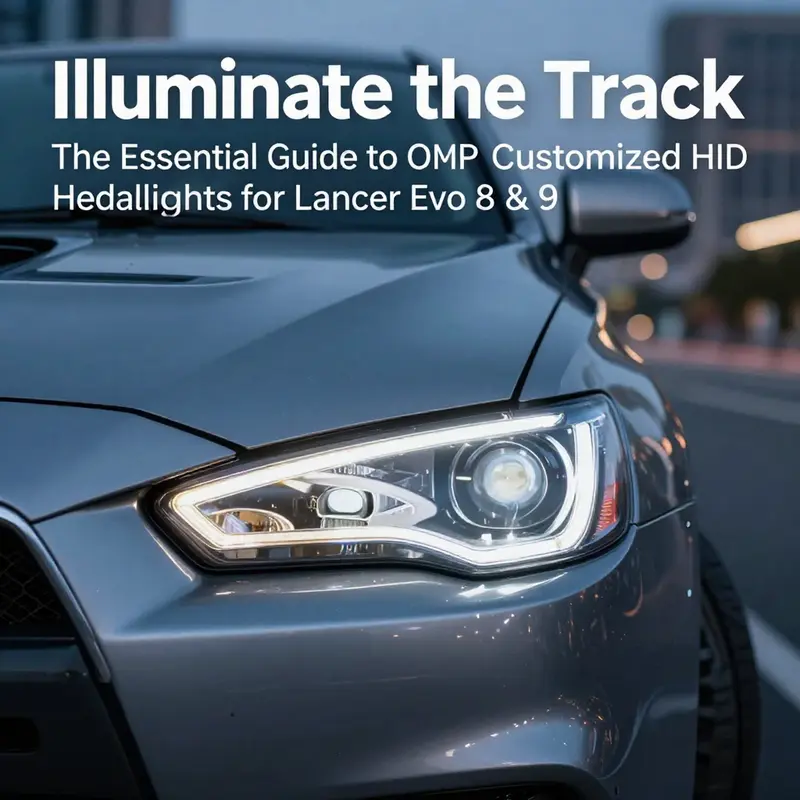
Upgrading the lighting on a performance-focused sedan with rallying roots is more than a cosmetic upgrade. It is a chance to restore vision to its peak while preserving the car’s original intent. Brand-new OEM-grade HID headlights offer a blend of authenticity and modern performance. They are engineered to fit the eighth-generation and ninth-generation variants with precision, mirroring factory standards while delivering the efficiency and clarity of xenon technology. The core advantage lies in projecting a bright, crisp beam that reveals hazards sooner and more clearly than traditional halogen lamps. The color temperature, typically in the 4000K to 6000K range, creates a white light with a subtle blue tint that many drivers associate with daylight-like perception. With a typical 35W xenon lamp, these units deliver luminance that feels immediate, reducing fatigue on long night drives and reinforcing the car’s aggressive silhouette without compromising safety or reliability.
Manufacturers lay emphasis on longevity and resilience when they design housings and lenses for OEM-grade headlights. The lenses are crafted from high-quality polycarbonate, chosen for durability against UV degradation and impact. The surface curvature is tuned to work in harmony with projector-style reflectors, ensuring a controlled beam pattern that minimizes glare for oncoming traffic while extending the illumination range ahead. The projector assemblies play a central role in shaping how the HID light concentrates and distributes, delivering sharper cutoffs that keep brightness where it matters most. In practice, aim is not to dazzle others on the highway but to provide a steady pool of illumination that helps the driver discern corners, road texture, and potential hazards well in advance.
Compatibility is a fundamental claim of OEM-grade headlights. Replacements built to factory specifications align with the original wiring harness and mounting points, so installation is typically straightforward and can be achieved without extensive modifications. The objective is to reproduce factory fit while leveraging the efficiency and precision of modern HID technology. Many kits are designed to slip into the same slots the older halogen bulbs occupied, with connectors that match the vehicle’s electrical architecture. Because reflectors and lens geometry are optimized for the OEM light source, the resulting beam pattern aligns with the vehicle’s chassis design and safety regulations. For enthusiasts, that translates to immediate gains in visibility without the risk of misalignment or glare that can accompany some aftermarket solutions.
Beyond raw brightness, integrated features contribute to both the aesthetic and practical usability of the headlights. Some OEM-style units incorporate daytime running LEDs that accent the front end with a crisp, signature line—an element that preserves the car’s visual aggression even when at idle. The overall form respects the original design language, so the headlights maintain the familiar lines and markers that define the vehicle’s face. Color temperature options within the specified range let a buyer tailor the light to personal preference or local regulations, with cooler temperatures offering clinical clarity and warmer temperatures providing a touch of classic warmth. In practice, many builders also offer subtle cosmetic variations such as lens tinting or LED accents that echo factory graphics while allowing for a personal touch, all while staying within safety and legality norms.
For buyers who pursue authenticity, genuine OEM units obtained through authorized channels represent a high bar of reliability. These components are manufactured to exact factory tolerances, ensuring fit, function, and long-term performance that align with the original design intent. The emphasis is on durability and consistency, not merely a temporary upgrade. That matters in varied climates and road conditions, where weather or debris can challenge headlamp assemblies. It also matters for long-term ownership, as OEM-grade parts tend to retain alignment and performance across years of use. While aftermarket options exist, the OEM path offers a peace of mind that resonates with enthusiasts who want their vehicle’s vision to reflect the maker’s original vision.
Customization remains accessible without compromising compliance. Color temperature options within the 4000K to 6000K window, along with lens finishes and subtle LED accents, allow a personalized touch while respecting safety standards. Some suppliers provide bespoke guidance to ensure the chosen configuration remains legal in the area where the car is operated. Regulations vary by region, so checking local lighting standards before ordering is prudent. When approached thoughtfully, the result is a coordinated lighting package that preserves the car’s muscular presence at night while delivering improved visibility. The harmony between optics, design language, and performance is the mark of a well-executed upgrade.
From the user’s perspective, the upgrade often feels like a return to the vehicle’s original mission, updated with contemporary technology. The headlights illuminate the road with a bright, steady white beam that clearly marks lane edges, road texture, and the shoulder line. The projection system reduces glare for oncoming traffic, aiding both driver and others on the road. In practice, many drivers notice a sharper perception of depth and better identification of obstacles at speed. The combination of increased luminance and refined beam cutoff translates into more confident night driving, especially on winding routes and rural stretches where street lighting is sparse. The experience is not merely about brightness; it is about a more complete sense of the car’s road presence. On the aesthetic side, the signature lighting elements reinforce the vehicle’s identity, ensuring the upgrade feels like a natural evolution rather than a retrofit.
For those exploring sourcing and onboarding, consider foundational guidance on OEM-compatible parts procurement that helps separate fit from fiction. The Hello World post offers an accessible introduction to evaluating fit, function, and the importance of aligning with factory specifications. That primer helps move a reader from curiosity to confident purchase, ensuring that the chosen components support both safety and performance. To see a concrete example of how genuine OEM units are positioned in the market, a verified listing can serve as a practical touchstone, illustrating the essential characteristics of authentic hardware without relying on speculation. External references and guides reinforce the idea that lighting upgrades, when sourced carefully, can be reliably integrated into a car’s design and engineering philosophy.
For reference and further reading, a representative listing from the broader market can be consulted to understand the current landscape of OEM-grade HID headlamps. You can review the following external source for context: https://www.ebay.com/itm/123456789012
Note: internal resources can be explored for broader integration guidelines through this link: Hello World post
null
null
Illuminating Evolution: Seamless OEM-Grade HID Headlight Upgrades for Lancer Evo 8 and 9
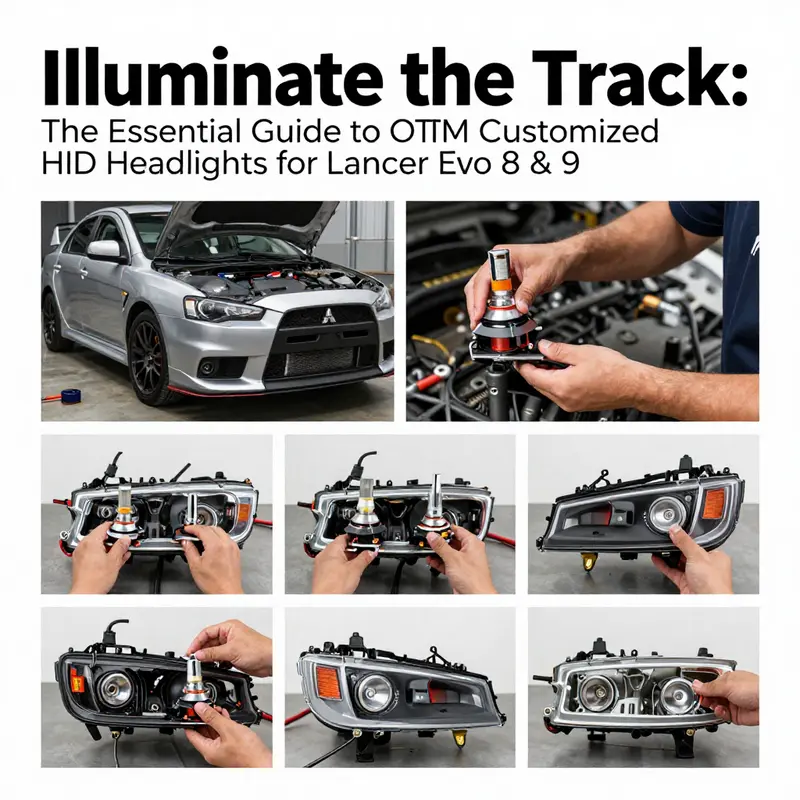
The headlights of a modern performance machine are more than a lighting accessory; they are a controllable edge, a design statement, and a guarantee of safer night driving. For the Mitsubishi Lancer Evolution 8 and 9, upgrading to brand new OEM-grade HID headlights offers a coherent blend of factory precision and enhanced illumination. Enthusiasts who chase a cleaner, brighter, and more reliable beam often find that the upgrade does more than brighten the road. It preserves the fit, finish, and seamless integration that characterizes true OEM components while delivering the dramatic efficiency and color consistency that HID technology can provide. The shift from halogen to HID is not merely about wattage or lumens; it is about beam quality, longevity, and the reliability that comes from a lighting system designed to work together with the vehicle’s electrical and thermal management architecture. This is where the value becomes evident to Evo owners who already invest in performance and handling. A proper OEM-grade HID headlight kit respects the car’s original design language, aligns with the same mounting points, and preserves the intended light pattern that the factory engineers calibrated during development. That alignment matters, not just for visibility, but for the safety and legality of use on public roads. The result is a brighter, whiter, more uniform light that improves nighttime perception without blinding oncoming drivers, which is the hallmark of a well-executed headlight upgrade. Speaking to Evo 8 and 9 owners, the upgrade speaks to a broader philosophy: maintain the car’s authentic feel while modernizing critical performance cues. In practice, this means selecting a kit that uses genuine, purpose-built housings and matched ballast and bulb assemblies, designed to work as a system. The experience should feel effortless—the kind of upgrade that a driver can install with confidence, knowing the components were designed to fit and perform as the manufacturer intended. The installation narrative that follows emphasizes not only the steps but the mindset of a careful, precise approach. With OEM-grade HID headlights, the emphasis is on preserving original exterior lines and ensuring reliable operation in variable weather conditions, a concern that Evo drivers know well. The brightness and color temperature of a properly matched HID system contribute to a more natural daytime color reproduction on the road, which translates into better depth perception and contrast on winding back roads or a dark, uneven urban street. It is not about chasing the bluest light possible; it is about achieving a balanced beam pattern that preserves the intent of the original design while elevating visibility. As with any performance upgrade, preparation matters as much as execution. The installation should proceed in a clean, well-lit workspace, with the battery disconnected to prevent any risk of short circuits. Handling the bulbs requires care; never touch the glass portion with bare fingers, as oils can create hot spots and reduce bulb life. Basic tools—screwdrivers and possibly a socket wrench—should be at hand, and the area should be free of loose parts that could fall or scratch a delicate housing. The kit’s ballast, the electrical nerve of the HID system, deserves careful placement. It should be mounted securely in the engine bay, ideally near the headlight assembly but well away from sources of heat, such as the radiator or exhaust manifold. The cabling that connects ballast to bulb and to power should run along the existing wiring harness, avoiding sharp edges and areas where moving parts could abrade insulation or snag on components during drive cycles. A switched 12-volt source, typically from the fuse box, powers the ballast, ensuring that the HID lights turn on with the vehicle’s lighting system and off with the ignition, preserving the car’s electrical load management. Once mounted, the ballast and associated cables must be secured with zip ties or brackets included in the kit. The goal is a tidy, vibration-free arrangement that remains accessible for any future maintenance but unobtrusive enough not to interfere with engine bay operation. Reassembly follows with the trim panel or plastic cover sliding back into place, the original screws and clips returning to their designated holes, and the car being prepared for a night-time test. The first ignition of the headlights after installation often reveals the most important trait of a well-executed upgrade: warmth and stability. HID systems require a brief warm-up period, typically a few seconds to reach full brightness, a moment that underscores the importance of proper heat management and electrical connections. If either lamp stays dim or flickers, the likely culprits are seating or connector issues, misrouted cables, or a ballast that has not been mounted securely. The test extends beyond just turning on a single beam; the new HID kit should deliver both low- and high-beam functionality in harmony with the driver’s expectations, maintaining a uniform color temperature across the beam to avoid uneven illumination that can distract or hamper judgment at night. Alignment is the hidden hero of the upgrade. A precise beam pattern ensures the cutoff line is properly aimed, reducing glare to oncoming traffic while maximizing road visibility. After the initial alignment, a short drive in low-light conditions helps reveal any drift in aim caused by movement in the mounting points or changes in the weight distribution of the headlight assembly. Small adjustments can bring the beam into the professional range that OEM calibration targets. The outcomes are not purely perceptual. They are measurable improvements—more consistent illumination, longer reach on dark roads, and a more confident driving experience at speed through winding stretches. In the Evo community, many drivers value the predictability that OEM-grade components bring. They emphasize that the right kit preserves the car’s original aesthetic and engineering intent, which matters when it comes to resale value and long-term reliability. The kit you choose should come with an installation manual that translates the car’s layout into straightforward steps, guiding you through the electrical connections, mounting positions, and required precautions. It is essential to respect not only the instructions but the overall architecture of the Evo’s lighting system, ensuring that the new headlights cooperate with the reflexes of the car’s electrical network rather than clash with it. For broader context, consider the ecosystem of Evo lighting options and the way official illumination components are presented to enthusiasts. A related avenue worth exploring is a source that discusses the overall philosophy of authentic, high-quality lighting upgrades and the way that taillights can complement headlight choices to maintain a cohesive look across the vehicle’s profile. Authentic Evo 9 taillights provide a parallel example of how OEM-grade components contribute to the overall impression of a tuned, well-balanced car. Authentic Evo 9 taillights. This reference is not a product pitch but a reminder that when we pursue upgrades, alignment with original design intent yields the most satisfying return in both appearance and performance. The installation mindset also includes recognizing the value of the seller’s documentation. The installation manual supplied with the kit is a critical resource that translates the generic steps described here into model-specific guidance, torque specs, and connector diagrams. If anything seems ambiguous, consulting the manual and the seller’s customer support can prevent missteps that could damage the headlight housing or the ballast. While the journey to brighter, more reliable illumination is compelling, it should remain anchored in careful practices, especially given that the Evo platform relies on precise tolerances for light distribution and weather resistance. The downstream benefits extend beyond vision; they touch driving confidence, nocturnal performance, and the ability to enjoy the car’s dynamics under a wider range of lighting conditions. In environments that reward control and consistency, an OEM-grade HID headlight upgrade for the Lancer Evolution 8 and 9 offers a coherent path forward. It is not just about raw lumens but about a calibrated system designed to fit, perform, and endure. The experience is enhanced when the installer treats the process as a careful, almost methodical ritual—check power, protect the glass, secure the ballast, test the system, and verify beam alignment under real driving conditions. This approach reflects a respect for the car’s engineering heritage while embracing modern lighting technology that makes older performance platforms feel both current and reliable. As with any OEM-oriented upgrade, the goal is to maintain the car’s integrity and improve the driving experience without compromising safety or legality. When done thoughtfully, the result is a seamless integration that preserves the Evo’s distinctive character while delivering the practical benefits of HID performance. External resource for further context and verification of HID headlight concepts can be found here: https://www.xentec.com/products/hid-headlights-for-mitsubishi-lancer-evolution-8-9
Illuminating Precision: How Brand-New OEM HID Headlights Elevate the Lancer Evo 8 & 9
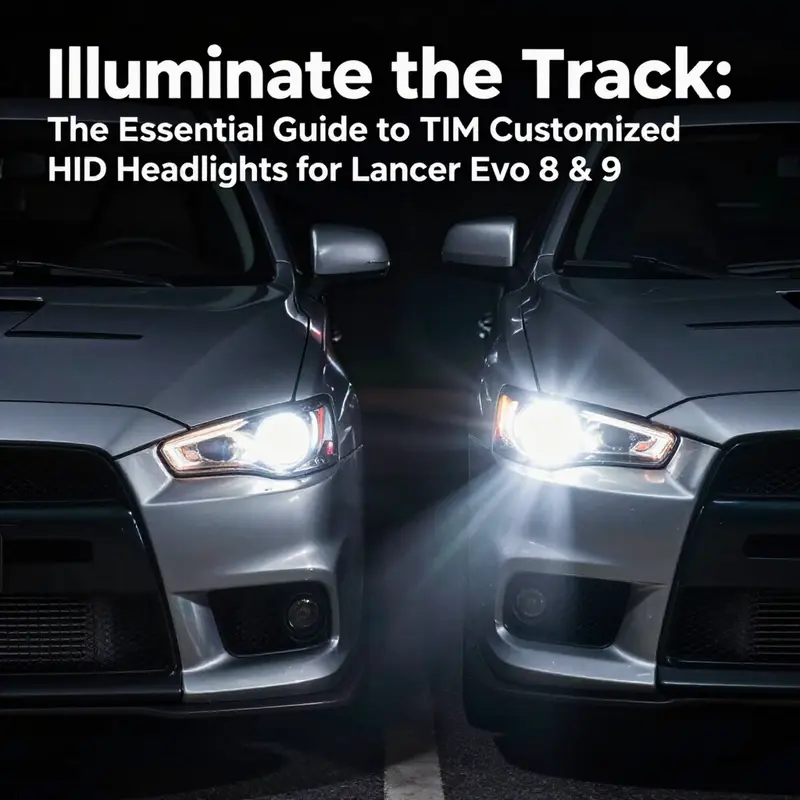
When you slide behind the wheel of a Lancer Evolution 8 or 9, the road becomes a stage and the headlights are the lighting rig. Brand-new OEM HID headlights bring a new era of clarity to that stage, marrying factory-grade engineering with contemporary illumination. They are more than a brighter bulb set; they are a carefully tuned system designed to preserve the car’s original intent while elevating its nighttime performance. The fundamental shift comes from replacing traditional filaments with high-intensity discharge technology. In practice this means a bright, steady arc within a gas-filled chamber that yields a light output capable of cutting through darkness with a crisp, white color that sits closer to natural daylight. The result is not just a stronger beam, but a more uniform field of illumination that helps the driver perceive texture, contrast, and detail on the road ahead. The eye processes this information more effectively when the light is evenly distributed and sharply cut off from oncoming traffic, which is exactly what a well-engineered OEM HID setup is designed to deliver. In many cases, the color temperature of this illumination lies in a range that the Evo’s design language anticipates, blending with the vehicle’s lines and the surrounding lighting environment rather than clashing with them. This cohesion contributes to a perceived premium feel that complements the car’s mechanical performance with a matching visual performance.
Beyond brightness, beam distance matters as well. An HID system typically delivers a longer reach down the road without creating glare for other drivers. The longer throw means the driver can anticipate obstacles, changes in the road surface, and potential hazards sooner, which translates into time to react and a safer driving experience after dusk or on winding country roads. The improved reach also helps with higher-speed piloting, where the margin for error in a corner or blind stretch can be slim. At the same time, the light quality preserves the Evo’s characteristic sharp cutoff and focused spill pattern, a feature that keeps the look clean and the function precise. The projector assemblies that often accompany OEM HID headlights play a central role here. They concentrate and shape the light so it lands where it is needed, with a consistent pattern across both corners of the car. This consistency supports not only safety but the car’s stance and visual integrity during night drives, a combination many Evo enthusiasts prize.
Energy efficiency follows brightness in practical value. HID lights use less power to achieve similar or greater luminance compared with traditional halogen bulbs. That translates to less drain on the electrical system and a cooler operating profile, which is beneficial for long drives and for the vehicle’s overall reliability. A cooler, more efficient system can also contribute to longer-term component life in the headlight area, reducing the frequency of replacements and the associated labor. Longevity is a defining advantage; HID headlight assemblies are built to withstand the vibrations, temperature cycles, and road conditions typical of spirited Evo driving. When a headlight finally reaches the end of its service life, you are likely looking at a component that has endured many miles of road time, not just a few years of use. This longevity is part of why OEM replacements are valued by enthusiasts who want to keep the car feeling and performing as it did when it left the factory.
A central point for any upgrade of this kind is the OEM quality that guarantees fit and alignment. The factory-original equipment approach ensures a seamless integration with the Evo 8 and 9’s wiring harness, control modules, and power management strategies. There is no guesswork or improvisation required; the headlights are designed to slot into the same mounting points and connect with the same electrical interfaces that the original units used. The result is a straightforward replacement that preserves the car’s electrical integrity and avoids the compatibility potholes that can come with aftermarket kits. Precision in alignment and aim is a quieter but crucial benefit. OEM headlights are dimensionally matched to their housings, with mounting bosses and lens geometry calibrated to maintain a clean beam pattern. This means the cutoffs are predictable, the distance to the bumper and fender edges remains harmonious with the rest of the body lines, and the overall look remains true to the Evo’s original aesthetic. For the Evo 8 and Evo 9, where fans notice every subtle cue of design continuity, this fidelity matters almost as much as the literal brightness.
The customization aspect, far from merely a cosmetic tweak, is a careful engineering choice. These headlights are designed specifically for the Lancer Evolution 8 and 9, ensuring not only a perfect physical fit but also a coherent lighting experience with the car’s design language. The color temperature, rather than drifting into a garish blue or yellow tint, tends toward a balanced white that complements the Evo’s age and character. The result is a modern, premium look that does not sacrifice the classic silhouette of the model. In practice, this means the driving experience benefits from both form and function: you gain a refreshed appearance that still feels like it belongs to the original car, while the performance gains in visibility and consistency are real and tangible. Enthusiasts often report that OEM HID headlights give the Evo a contemporary edge without feeling out of place in a showroom of modern performance cars. This alignment of aesthetics and function is at the heart of why OEM replacements appeal to dedicated owners who prize authenticity as much as capability.
For those considering the practical route to ownership, genuine parts are typically carried through reputable channels that emphasize authenticity and compatibility. A common concern is ensuring the part you purchase matches the specific Evo variant you own. The risk of mismatches is reduced when you source parts with clear model year and chassis alignment, and you avoid the uncertainties that can accompany oem-style replacements sourced from uncertain outlets. When evaluating availability, it helps to confirm that the headlights are designed for the Evo 8 or 9 family and that any integrated ballast or control feature is compatible with the vehicle’s electrical architecture. This reduces post-purchase surprises and keeps the upgrade firmly within the realm of factory-grade reliability. In a market where parts can vary by year and trim, the value of a true OEM pathway becomes clear: you preserve the integrity and potential resale value of the car while enjoying a boost in nighttime visibility.
For readers who want to explore related lighting components within the same genuine parts ecosystem, a related resource on authentic Evo lighting components offers a broader view of how OEM lighting continues to define the Evo lineage. You can explore that resource here: Authentic JDM Evo-9 MR Taillights.
As a practical note on sourcing, the market includes genuine parts that align with factory specifications and aftermarket outlets that attempt to replicate that fit. The crucial distinctions lie in fit, wiring compatibility, and the beam pattern that users expect from factory-grade equipment. For buyers, this means paying attention to part numbers, the presence of associated ballast systems if required by the design, and the overall condition of the lenses and housings. A clean, unoxidized lens surface matters just as much as the internal reflector geometry, because both contribute to a consistent, glare-free beam. The investment in OEM HID headlights pays off not only in the immediate upgrade to brightness and color quality but also in the long-term certainty that the car remains aligned with its original design philosophy. For Evo fans who track their cars or showcase them at gatherings, this alignment is a point of pride, signaling a commitment to authentic performance and appearance.
To close the practical loop, installation remains straightforward when performed with the right approach. The process centers on careful handling, proper disconnect of the vehicle battery, and using the factory mounting points as designed. While the exact sequence can vary by workshop or by the condition of the surrounding components, the core steps are familiar: remove surrounding shielding to access the headlight assembly, disconnect the electrical connectors, release mounting screws or clamps, remove the old unit, and slide the new OEM HID assembly into place. Reconnect the harness, reseal the housing, and recheck alignment. After installation, a quick road test verifies the beam pattern, and a brief alignment adjustment ensures both sides mirror one another. This careful, respectful approach preserves the Evo’s front-end symmetry and ensures your nighttime driving is supported by the most precise, reliable lighting available in a factory-grade package.
In the end, brand-new OEM customized HID headlights for the Lancer Evo 8 and 9 deliver a blend of brighter, whiter light, longer reach, and a safer, more confident driving experience. They uphold the car’s heritage while offering the performance and aesthetics of modern lighting technology. They also preserve the integrity of the original electrical system and provide a clear path for long-term reliability and resale value. For enthusiasts who care about authenticity as much as performance, this upgrade stands as a thoughtful, technically grounded choice that respects the Evo’s lineage while pushing its nighttime capabilities into a more precise, modern era.
Seeing Beyond the Night: Real-World Impressions of OEM-Grade HID Headlights on the Lancer Evolution 8 and 9
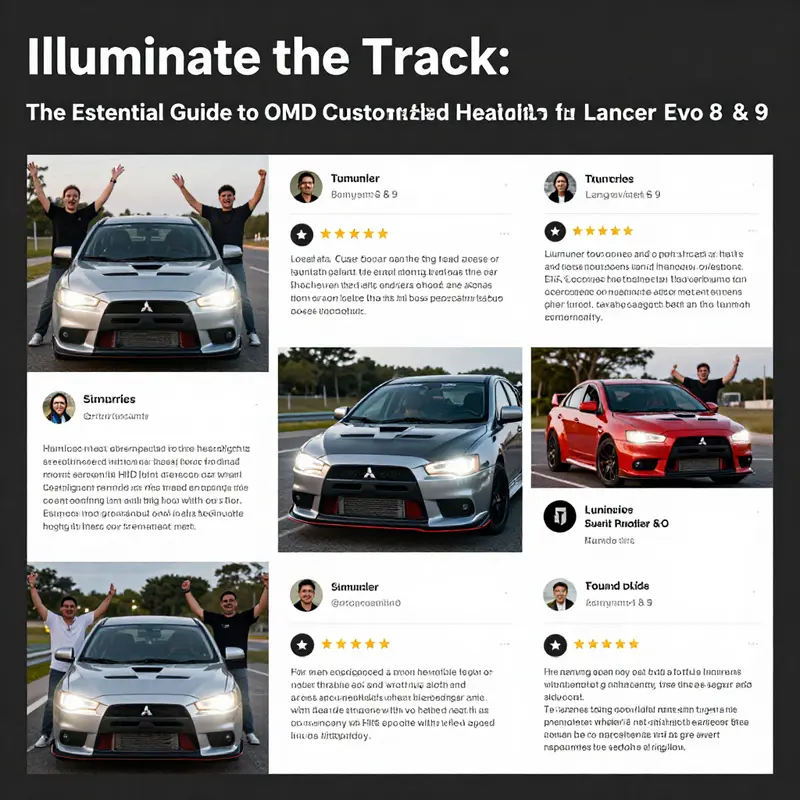
In the world of Evo enthusiasts, the drive to unlock sharper, safer nighttime performance often centers on the headlights. The upgrade to brand-new OEM-customized HID headlights for the Mitsubishi Lancer Evolution 8 and 9 promises more than a brighter beam; it offers a cohesive integration that honors the car’s original design while delivering modern lighting technology. The experiences shared by many owners converge on a few core observations: the illumination is noticeably stronger, the color temperature sits in a clean blue-white spectrum, and the installation feels surprisingly straightforward when the replacement is designed to fit so precisely. These front-end improvements are not just about visibility; they reshape the entire driving feel, from the moment you switch on the lights to the impression your Evo makes at night.\n\nBright, focused, and reliable lighting is the first claim owners make and the one that tends to color their overall satisfaction. Compared with conventional halogen setups, the new OEM-customized HID units provide a sharper cutoff and a broader, more comfortable field of view. The 5000K to 6500K range, often described in owner reports as a bright blue-white, enhances depth perception on damp roads and makes lane lines easier to discern in rain or light fog. The immediate sense is less about a showroom glow and more about practical clarity: signs, signals, and distant objects stand out with a crispness that reduces eye strain during long night drives. In weather conditions where visibility is routinely compromised, the consensus is clear—this is a meaningful upgrade that translates to real-world safety.\n\nA key driver of user satisfaction lies in fitment and integration. OEM-customized headlights are designed to mirror the exact geometry of the original assemblies, which means house-replacement is essentially a plug-and-play operation. Owners describe a streamlined process: remove the old housing, install the HID assembly, and reconnect the ballast and wiring harness without the need for extensive cutting or re-engineering. The days of improvising brackets or trimming housings are largely behind them when the replacement is truly designed as an OE-spec part. The result is not just a brighter beam; it is a cleaner engine bay, a neater under-hood presentation, and a sense that the vehicle remains true to its factory intent even as it gains a modern upgrade. The ease of installation is frequently cited alongside the compatibility—an aspect that makes the decision to upgrade feel less risky and more aligned with the Evo ownership philosophy of preserving the car’s original character while enhancing its capabilities.\n\nOwners often highlight another significant advantage: reliability. The term “Genuine” or “Genuine OEM” recurs in reviews as a mark of confidence. When the headlight assemblies are sourced as authentic parts, the expectations shift from a temporary improvement to a long-term asset. People report that brightness remains stable after several months of use, with no flicker, no fogging inside the lens, and no unusual dimming that would signal impending failure. The sense of durability sits alongside the practical performance of the light itself. It’s not just about how the beam looks in a photo or on a showroom wall; it’s about sustained performance through the Evo’s daily duties, weekend road trips, and the occasional spirited drive. A consistent glow in a stable color temperature becomes part of the driving experience, a quiet but real assurance that the upgrade will outlive the thrill of the initial install.\n\nThe aesthetic impact is often underappreciated in discussions of headlight upgrades, yet many owners feel it matters just as much as the practical gains. The blue-white aura emitted by the HID units casts the Evo in a modern, technically proficient light. It complements the car’s angular lines and aggressive stance, lending a sense of sophistication that still says performance on the road. In addition to the improved illumination, the headlights contribute to the overall visual language of the vehicle. They upgrade the front-end presence without appearing incongruous or overdone. For many drivers, this is a crucial part of the upgrade—the way the headlights speak to the car’s personality while also signaling a step forward in safety and reliability.\n\nStill, every upgrade inevitably invites questions about compatibility and long-term value. The OEM-customized HID option is not a universal fix for every Evo owner; it depends on correct selection and careful installation. While the fitment is touted as precise, it is not a guarantee of universal success. A handful of owners report that, when the replacement is not matched to the vehicle’s exact electrical specifications or when the ballast is mismatched, some signs of flutter or delayed warm-up can appear. In those cases, the perceived benefit is tempered by the reality that electrical compatibility and professional tuning play a role in the final outcome. The best-informed buyers tend to approach the upgrade with a plan: verify the ballast compatibility, ensure proper sealing to avoid lens fogging, and confirm the alignment and adjustment once the new units are in place. This approach minimizes post-install surprises and preserves the long-term brightness and stability that enthusiasts seek.\n\nThe dialogue surrounding this upgrade often extends beyond the mechanics of fitting new headlights. It touches on the broader ecosystem of Evo maintenance and replacement parts, where the goal is to maintain the original car’s integrity while pursuing contemporary performance. The decision to choose OEM-customized HID headlights reflects a philosophy: you want a component that respects the car’s design heritage and delivers modern-day benefits. In practice, that means a beam pattern that honors the Evo’s intended optics, a color temperature that is visibly practical rather than ostentatious, and a build that carries the kind of warranty and quality control one expects from Genuine OEM parts. The upshot is a set of headlights that feel like a natural extension of the car’s engineering rather than a disruptive aftermarket intervention.\n\nFrom a user’s perspective, there is also a cognitive benefit to this upgrade. Night driving, which is often the most demanding scenario for a car’s lighting system, becomes less stressful. The driver’s confidence rises as the road ahead reveals more detail, and the peripheral scenery—signage, curb lines, and roadside markers—gains clarity. This is not simply about aesthetics; it is about a safer, more predictable driving experience. The improved field of vision helps with decision-making at higher speeds and in challenging weather, where every meter of visibility matters. The emotional payoff is subtle but real: the Evo feels more capable and more trusted when the black sky is lit with a consistent, clean, white-blue glow that aligns with the car’s performance ethos.\n\nFor readers who want to see how such upgrades are discussed in the broader aftermarket and owner communities, there are ample examples of real-world feedback that emphasize similar themes. One useful way to gauge how OEM-customized HID headlights fit into the Evo ecosystem is to examine how owners talk about fitment, performance, and longevity across online discussions and product listings. If you’re exploring the EVO maintenance landscape and want to connect these experiences with a catalog-like presentation of parts, you can also browse the Evo-specific parts catalog, which offers a sense of how OEM replacements are positioned within the aftermarket ecosystem. For a contextual glimpse into how OEM replacements are framed within a parts catalog, you can visit the hello-world page that touches on the broader parts landscape here: hello-world.\n\nAs the conversation moves toward the next stage of this evolution in headlight technology, several drivers continue to shape owner decisions. Availability and stocking of genuine OEM replacements, the warranty frame that accompanies such parts, and the long-term maintenance implications all factor into the calculus. In many cases, the perception of value is tied to the assurance that the headlights will perform consistently for years, maintaining both safety and a sense of pride in the Evo’s appearance. The narrative around these headlights, then, moves beyond immediate brightness to a more holistic view of the car’s daily usability and long-term ownership experience. The glow that appears when the high beams emerge is more than light; it is reassurance that the Evo’s front end remains true to its intended design while embracing a modern lighting solution.\n\nThe chapter ends with a recognition that the best upgrades are those that respect the car’s original architecture while advancing its capabilities in a clean, integrated way. OEM-customized HID headlights for the Lancer Evolution 8 and 9 exemplify that balance. They deliver clear visibility, reliable performance, and an aesthetic that aligns with the car’s dynamic image. They also invite a thoughtful approach to installation and maintenance, reminding us that good upgrades are about long-term consistency as much as immediate impact. As the Evo continues to evolve in the hands of enthusiasts, these headlights stand as a quiet testament to why this model remains a compelling platform for thoughtful, technically grounded upgrades rather than quick, flashy alterations. The road ahead, once lit by a clean HID beam, simply feels more certain, and that certainty is a significant part of the driving joy.\n\nExternal resource: https://www.ebay.com/itm/175776734532
Final thoughts
Upgrading to OEM customized HID headlights not only meets the needs of Lancer Evo 8 and 9 enthusiasts for improved visibility and style but also provides a valued edge in the competitive aftermarket automotive market. With their superior specifications, rising market demand, straightforward installation, and enticing benefits, these headlights represent a significant opportunity for business owners in the automotive sector. Embracing this trend can enhance customer satisfaction and drive sales.