

The Lancer Evolution X Spec V, a pinnacle of automotive engineering, is revered for its performance and aesthetic appeal. Within this high-performance model, the integration of upgraded front bumpers and widebody kits significantly enhances its aerodynamic efficiency and visual allure. As business owners in the automotive industry, understanding these components not only helps in steering product offerings but also in providing valuable insights to customers. This article will delve into the Lancer Evo X Spec V’s performance-focused front bumper design, analyze market trends regarding the V1 fron bumper and widebody kits, highlight the roles of race diffusers, and finally guide you through selecting the right race diffuser for optimum performance and customer satisfaction.
The Aerodynamic Architecture of the Lancer Evolution X: Spec VRS1 Front Bumper, Widebody, and Race Diffuser in Focus

When engineers and drivers talk about the Lancer Evolution X, they rarely settle for mere speed. The car becomes a compact laboratory where aerodynamics, chassis dynamics, and powertrain engineering converge. In this chapter, we explore how the front-end architecture—the Spec VRS1 front bumper concept, a V1 widebody approach, and a race diffuser—functions as a cohesive, performance-focused system. This is not just about looks or a single component; it is about the way air moves around a car designed for high-speed stability, precise steering, and controlled cooling under track demand. The Evolution X Spec V embodies a philosophy where acceleration and cornering are not separate feats but parts of a single aerodynamic narrative. The front bumper is the first line of that narrative, serving as both a gateway for cooling and a sculptor of airflow that governs how the car treats the underbody, the wheel arches, and the leading edge of the diffuser at the rear. In this sense, the bumper is not merely a shell of plastic or composite; it is a carefully contoured air guide that interacts with every other aero element to create a balanced, responsive car. A modern competition-minded bumper must do more than channel air toward the radiator and brakes. It must also manage the boundary layer near the front of the car, reducing flow separation at high speeds and enabling the undertray and diffuser to do their work further back. The Spec VRS1 designation—whether seen as a factory-level homage or a tuned interpretation by a race-oriented squad—points to a front-end approach that emphasizes high-speed competence. In practice, the bumper’s large intakes, side ducts, and the potential for an integrated lip or ledge form a microclimate at the front of the Evo X. This microclimate helps to funnel cooler air to the engine and the braking system while shaping the wake that travels downstream toward the diffuser. The geometry matters as much as the material. A front bumper built for track performance tends to favor light weight, stiffness, and a rigidity that preserves the geometry under load. Carbon fiber or composites with high-modulus resins can deliver strength without adding excessive mass. In a car like the Evolution X, where the engine breathes through a tuned intake and the brakes push the thermal envelope, every gram saved in the bumper translates into more predictable brake performance, steadier steering, and a more stable front end at the limit. The bumper’s role in cooling cannot be overstated. On the Evo X, the performance version’s engineering already prioritizes brake cooling and intercooler access through carefully placed intakes and ducts. When a V1 front bumper enters the mix, the intent is to preserve or enhance those cooling pathways while introducing more refined air management at the bumper’s leading edge. The aim is simple in principle: direct air to where it is needed, keep hot air moving away from critical components, and curb turbulent bursts that would otherwise disrupt the flow over the hood and toward the underbody. The result is a front end that not only looks lean and purposeful but also works with the car’s mechanical and aerodynamic backbone to shed drag and gain downforce where it matters most. A well-engineered bumper also contributes to the car’s overall balance with the widebody kit that often accompanies a race-focused build. The wide fenders and side skirts extend the car’s track width, which on a track-focused Evo X means more tire grip and more stable cornering. But a wider stance also changes the way air interacts with the chassis: the air that would have hugged the wheel wells must find a controlled path that avoids wrestling with the tire and creating unwanted drag. This is where the V1 widebody concept becomes crucial. By widening the front and rear fenders, the kit accommodates larger wheels and tires, which increases lateral grip and increases the car’s aero efficiency at speed. The bumper and the widebody are not isolated components; they are two parts of a single aerodynamic system. Their interaction is a dynamic dance. The bumper generates a predictable flow field that helps feed air into the radiator and brake ducts while shaping the wind that passes under the car. The wider fenders allow the tire to sit flush with the outer edge of the body, reducing turbulent leakage around the wheel well and contributing to a cleaner, more stable wake that the rear diffuser can harness. In this context, the Race Diffuser at the rear completes the narrative. A diffuser’s job is to manage the low-pressure wake that forms behind the car at speed. It works with the underbody, the extended side skirts, and the widened rear body to accelerate air under and out from the car in a controlled manner. A race-oriented diffuser—often carbon fiber or carbon composite with intricate strakes and veins—uses its geometry to manage the transition from underbody flow to the free stream. The key aerodynamic principle here is downforce, not merely drag reduction. By shaping the rear wake, the diffuser helps generate downforce in a way that complements the front-end’s stability. When the front bumper, widebody kit, and diffuser are integrated with precise alignment, a track-focused Evo X will feel more planted in high-speed sweepers and more predictable through high-speed entries. From a driving experience perspective, the aero package contributes to confidence. The bump in stability at the limit reduces the need for aggressive steering corrections and allows the driver to keep more of the tire’s contact patch engaged with the tarmac during corners. Even the choice of materials influences the balance between stiffness, weight, and heat management. A carbon fiber diffuser, for instance, brings a luxury of rigidity and thermal resistance that helps preserve aerodynamic performance as speeds increase and the air heats the underbody. By comparison, a high-strength ABS composite used in bumper assemblies can offer a cost-effective balance of weight, impact resistance, and ease of fabrication. In the end, the choice between these materials should consider the intended use, the weight distribution, and how the car responds to throttle and steering inputs on the track. The Evolution X, particularly in its Spec V or VRS1-inspired configurations, is a car designed to push the envelope where aerodynamics and mechanical performance meet. The front bumper’s geometry, the widened stance, and the rear diffuser’s shaping all contribute to a single outcome: a chassis that communicates clearly with the driver through its aerodynamics. This is why enthusiasts who pursue real performance invest in the boons of air management rather than simply chasing horsepower gains. They understand that improved airflow translates into better control, which translates into faster lap times and more consistent performance across diverse track conditions. It is also important to recognize the practical realities that accompany any major aero upgrade. The fitment process, for instance, demands careful planning and professional execution. The mounting points must align with the vehicle’s structural geometry, and panel gaps must be tuned to preserve the correct aerodynamic clearance. The integration of a front bumper with a widebody front fenders set requires attention to the front bumper’s lip, the fender flare, and the wheel arch’s curvature. The process may involve precision cutting, alignment checks, and sometimes modifications to the front subframe or support structure. If the install is not done with the necessary precision, misalignment can worsen aero performance rather than improve it, leading to uneven load distribution, compromised steering feel, and unpredictable brake cooling. In sums and scenarios where a strict, track-first approach is pursued, buyers often weigh the option of carbon fiber for weight savings and thermal performance against the higher cost and the potential fragility in street environments. The car’s use-case dictates the balance between weight, durability, and cost. A well-conceived aero package also invites a discussion about legality and compliance for street use versus sanctioned racing events. While the front bumper’s intake geometry and diffuser dimensions are optimized for high-speed stability and cooling efficiency, many jurisdictions require certain daytime running lights, bumper height, and bumper-to-body integration to meet road-legal standards. The conversation then extends to aesthetics, with customers seeking to maintain the legacy Evo X silhouette while translating it into a modern aerodynamic statement. The VRS1 front bumper concept, as a naming cue, conveys a sense of racing pedigree that resonates with enthusiasts who crave a purposeful look and a measurable performance edge. Yet the essence remains how the total aero package behaves as a system. The synergy between front intake, underbody flow, and rear diffuser can convert potential energy in the form of air momentum into usable downforce and grip. It is one thing to claim improved downforce on a spec sheet; it is another to feel the difference when approaching a high-speed corner with a controlled, confident hand on the wheel. For those exploring these upgrades, it helps to ground the expectations in a broader context: the evolution of the Evo X, the interplay between engine performance and aerodynamics, and the ongoing conversation about track-appropriate modifications versus daily-driver practicality. The Spec V approach historically has emphasized high-performance balance—engine tuning, all-wheel drive control, and enhanced braking—yet the aero package adds a new dimension to how the car communicates with the road. By integrating a front bumper designed for efficient cooling and air guidance with a widebody that expands the tire envelope, and by pairing that assembly with a race diffuser that choreographs the rear wake, the Evo X becomes more than a sum of parts. It becomes a controlled system capable of delivering sustained performance through a combination of steady handling, predictable response, and robust cooling. The practical takeaway for builders and drivers is to proceed with a clear plan: define the track demands, ensure compatibility with the vehicle’s year and market variant, and commit to a professional installation. The goal is not simply to attach a visually aggressive front end or a wider rear stance; it is to realize an aero-integrated configuration where each part supports the others in a unified performance objective. When this coherence is achieved, even modest increases in track time or lap consistency become a natural byproduct of the aero package’s discipline. For readers who want to dive deeper into a concrete example of this approach, a detailed Group-A Evo X Spec VRS1 front bumper package is available here: Group-A Evo X Spec VRS1 Front Bumper (2). This resource illustrates how a front-end assembly can be harmonized with a widebody kit and a rear diffuser to yield a cohesive aero strategy, while reinforcing the principle that the right combination matters more than any single component. For a broader technical reference on the Evolution X itself, the car’s design and performance characteristics are captured in standard technical summaries and historical documentation, including authoritative sources that describe the engine, drivetrain, and chassis geometry that set the baseline for any aero upgrade. As a reminder, the drive to maximize track performance is always tempered by real-world considerations such as weight distribution, tire selection, suspension tuning, and driver input handling. The aero package is a tool to help the car realize its potential, but it must be matched with a thoughtful approach to mechanical setup and on-track feedback. In short, the front bumper’s air channels, the widebody’s tire accomodation, and the diffuser’s wake management work in concert to deliver a more composed, controllable Evo X experience. The result is not only improved cornering performance but also enhanced reliability during long sessions and hot-weather conditions where cooling becomes crucial. The Evolution X Spec VRS1-inspired front bumper and its accompanying aero kit represent a philosophy that values integrated performance over isolated enhancements. This is the essence of true aero engineering: a chain of decisions that, taken together, produces a measurable, repeatable advantage on the track while still delivering a driving experience that can be enjoyed on public roads. External reference for further reading on the Evo X’s broader design philosophy and its aero ambitions can be found here: https://en.wikipedia.org/wiki/MitsubishiLancerEvolution_X
Forging the Evo X Front: V1 Bumper, Widebody Integration, and Race Diffusers in the Spec VRS1 Landscape
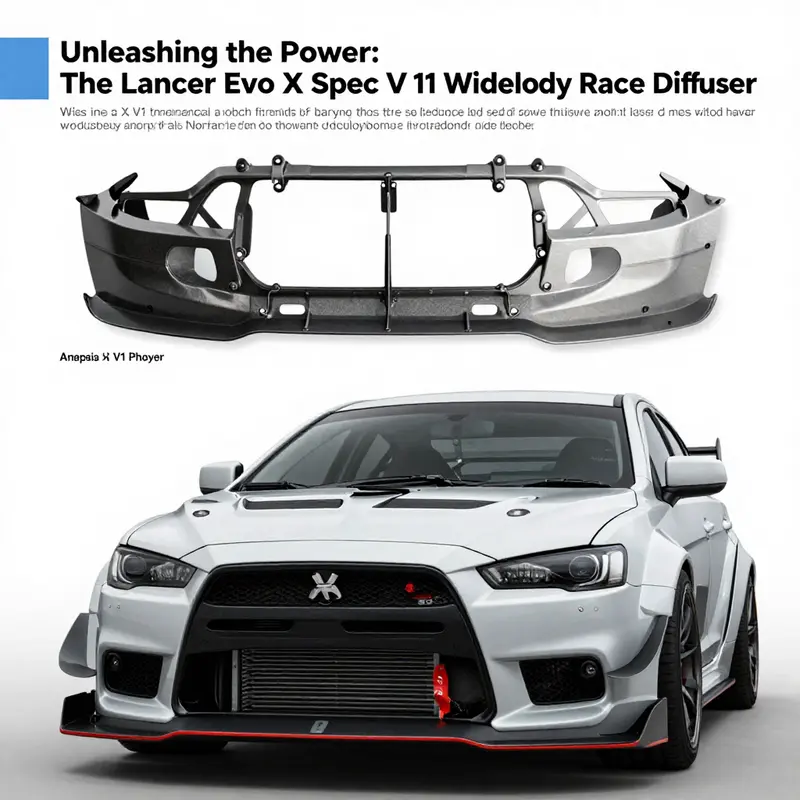
The Evo X front end story begins with a focus on cooling, airflow, and chassis balance. When a V1 front bumper is paired with a widebody kit and a race diffuser, the goal is not simply a more aggressive look, but a repeatable aerodynamic package that preserves cooling, steering feel, and stability at speed.
In this approach, the V1 bumper is more than a cap; it rethinks intake geometry, ducting, and the relationship to the undertray. It creates space for larger ducts, improved ram-air effects, and a smoother path for air to exit along the sides of the nose. Coupled with a wider track, the bumper must work in harmony with the fender flares to maintain clean flow around the wheel wells and to feed the radiators and brake ducts with undisturbed air.
The widebody integration expands the front’s structural and aerodynamic footprint. The wider arches accommodate larger wheels and tires, which increase cornering grip but also modify wake generation. A properly designed bumper kit will balance increased front downforce with reduced drag by guiding air toward the center and away from turbulent corners. The goal is a cohesive front end that leverages the wider stance to produce tangible cooling improvements and a stable aerodynamic baseline for the diffuser at the rear.
Materials options for these parts range from carbon fiber to high-strength composites, with polyurethane or fiberglass as practical, cost-conscious choices. Carbon fiber reduces unsprung weight and improves stiffness, but repairs can be costly. The packaging must preserve crash structure and sensor mounting points, so manufacturers often provide reinforced areas and standardized attachment points that align with the Evo X’s core geometry.
The race diffuser at the rear is the downstream complement: it manages wake, accelerates exhausted air, and helps pull the rear end downward as speed rises. Its effectiveness depends on a clean underbody and a compatible front end. If the diffuser is too aggressive without front-downforce and mid-corner stability, the chassis can feel unsettled. If the front yields insufficient wake management, the diffuser cannot deliver its full effect. The best builds enforce a dialogue between front and rear aero to maintain neutral behavior across temperature ranges and track surfaces.
Installation requires careful fitment work, alignment, and paint, as well as consideration of the bumper beam, crash sensors, and fender liners. The undertray often needs attention to ensure a smooth exit path for air under the car. Professionals commonly advocate measuring and test-fitting with the wheels installed to confirm ground clearance and tire contact, followed by a precision paint and finish stage to preserve UV resistance and color uniformity.
From a market perspective, carbon fiber adoption has grown as precision manufacturing reduces variability in fit and finish. Yet many enthusiasts still opt for blended materials to balance weight, cost, and repairability. The Spec VRS1 front-beam architecture often informs how a V1 bumper integrates with the car’s crash structure and sensor layout, ensuring reliable performance and serviceability.
The broader aero package is most effective when treated as a single system rather than a collection of parts. The V1 front bumper, widebody kit, and race diffuser must communicate a common aero language and maintain consistent ride height and boundary conditions to be repeatable on track days and show events alike.
For readers curious about real-world examples, look to Group-A Evo X Spec VRS1 front bumper references and supplier galleries that illustrate how design intent translates into fit, finish, and performance gains. This is not simply about faster lap times; it is about preserving cooling, steering feel, and durability across demanding race environments.
Ultimately, the Evo X front-end upgrade story is the synthesis of aesthetics, aerodynamics, and engineering discipline. The V1 bumper and widebody concept, when paired with a race diffuser, offer a disciplined approach to modern aero that respects the car’s chassis and the realities of track use. The configuration aims for a balanced, predictable chassis that remains approachable in daily driving while delivering confidence at elevated speeds.
Front Up, Power Back: The Aerodynamic Confluence of a Lancer Evolution X Spec V Front Bumper, Widebody, and Race Diffuser
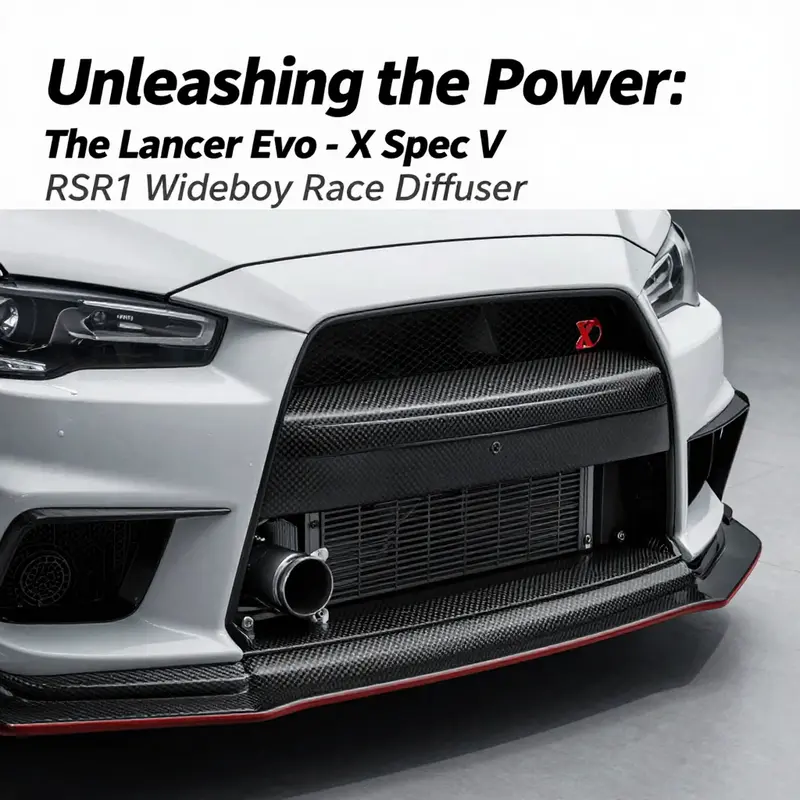
Airflow is a language spoken by designers and engineers, not a decorative afterthought. In the Evolution X, the Spec V front asks more from the air than a pretty face; it demands predictable cooling and a stable separation pattern at speed. When you graft a true widebody onto that package and wrap it with a race-oriented diffuser, you are not adding parts; you are composing a complete aero narrative where the front end, the wheel wells, and the underbody read the same wind and respond in concert.
Front bumper: It must pass air to the radiator and intercooler while guiding flow around wheel arches. The lower lip, ducts, and splitter must sculpt the boundary layer to minimize drag and keep the front axle planted. With a wider fender line, the flow path changes, so the bumper must be tuned to avoid bleeding turbulence into the wheel well and to feed cooling channels efficiently. A well-designed bumper is a system gatekeeper, not a cosmetic fascia.
Widebody: It extends the chassis footprint, letting the tires work with more stability. The wider track reduces steering sensitivity while the aero effects around the front integrate with the underbody. The increased lateral surface area can raise drag if not balanced, so you tune the bumper and the fenders to keep the flow attached behind the front wheels and to feed air to the rear via a controlled path.
Diffuser: The tail acts as a continuation of the underbody. A race diffuser uses channels and strakes to accelerate air under the car, increasing downforce and reducing suction. It must work with the altered underside geometry from the bumper and widebody to create a clean exit flow and maintain rear-end stability under heavy cornering.
Integrated system: The synergy matters more than the individual parts. The front, sides, underbody, and rear diffuser must share a velocity profile, with attention to weight distribution and aero moments. When done right, the upgrade resists lift, reduces early onset understeer, and preserves balance through throttle modulation.
Practical realities: Mounting points, crash structure compatibility, sensors, and electronics must be considered. A front bumper designed for stock Evo X will not automatically fit a widebody; alignment tolerances, splash shields, and radiator shrouding may need revision. Gaps must be minimized; seals must withstand weather; panels must be sealed to prevent water intrusion. The installer should verify part numbers and ensure a coherent kit across the front, sides, and rear.
Conclusion: Treat aero as a system. A front bumper that looks the part is not enough; it must play well with the widened fenders and the diffuser. The result is a track-ready Evolution X that stays planted, inspires confidence in corner exits, and remains stable at the speed where aero really matters.
From Spec V to the Track: The Evo X Widebody Front Bumper and Race Diffuser Odyssey
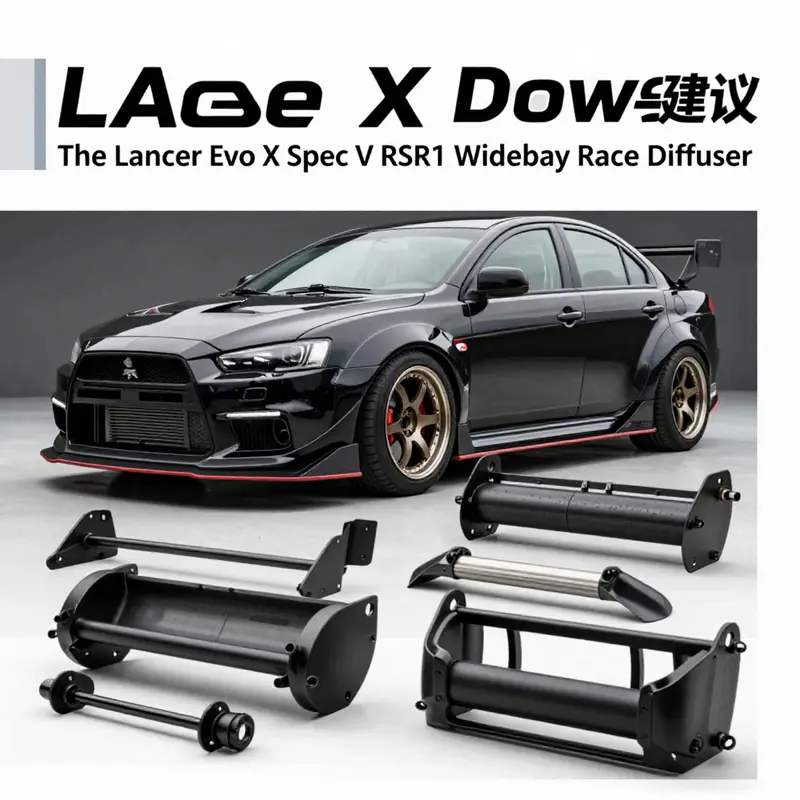
The Mitsubishi Lancer Evolution X Spec V is a compact canvas for aero ambition. Its factory front bumper provides cooling and aerodynamics, but it is only the opening act in a broader philosophy that ties front, sides, and rear into a cohesive performance package. When a widebody kit widens the stance, the front end becomes a key control surface, guiding air around the wheels and into cooling ducts while feeding the underbody with clean, attached flow. The result is not simply a more aggressive look; it is a measurable improvement in balance, cooling efficiency, and high-speed confidence. A V1 front bumper paired with a race diffuser can illustrate the principle that small changes in the air path can cascade into meaningful gains in stability and driveability at speed. The V1 designation often signals iteration rather than a formal Mitsubishi label, but what matters is compatibility with the rest of the aero kit and the ability to mount cleanly to the Evo X structure without sacrificing radiator clearance or hood sealing.
In practice, the front bumper acts as an aerodynamic accelerator for the overall system. Larger ducts feed the intercooler and radiator, while carefully sculpted channels direct air toward the wheel arches and the underbody. A well-designed bumper reduces drag where it is possible and increases downforce where it matters most, all without compromising cooling. When the widebody kit follows with wider fenders and a stronger rocker line, the harmony between front intake, side flow, and rear diffuser becomes the organizing principle of the build. The diffuser, mounted beneath the rear bumper, is the final piece that manages the underside wake, turning high-speed turbulent energy into controlled downforce. A race diffuser is more than length; it is shaping the suction zone and controlling the exit angle so that the airflow remains attached as the car exits corners.
Material choice matters, too. Carbon fiber offers stiffness and weight savings, but cost is a reality for many projects. Fiberglass or reinforced composites can deliver meaningful gains at a more approachable price, while still enabling precise sculpting of the negative lift qualities that the diffuser and bumper aim to deliver. The driver benefits from a more predictable rear end and steadier balance under braking and cornering, especially on tracks where aero loads peak.
Beyond the hardware, the installation and alignment process determines whether the concept becomes a stable reality. Accurate mounting points, correct radiator stance, and proper sealing to prevent moisture ingress are as important as the design itself. A well-chosen package considers regional Evo X variants, ensuring that mounting points align with the chassis and that the bumper-to-wheel-arch gaps maintain the intended airflow path. A coherent aero strategy also requires coordination with the rest of the car—side skirts, a well-integrated rear diffuser, and a front lip that cleanly negotiates the corner airflow.
For buyers new to the space, practical questions guide the choice: What are the performance goals, street use vs. track days, and what is the budget for a full carbon versus reinforced composites? Which variant of the Evo X is on the bench, and how does that affect fitment? How will the front, sides, and rear work together across speed ranges? With thoughtful answers to these questions, the upgrade from Spec V to a track-focused aero package becomes a disciplined, repeatable process rather than a series of one-off components. This is the essence of transforming the Evo X into a purpose-built track companion: every piece, from the V1 front bumper to the race diffuser, contributes to a unified, measurable performance story.
Final thoughts
The Lancer Evo X Spec V is not just a car; it is a statement of performance and style, further amplified by its sophisticated front bumper and widebody kits. These enhancements offer business owners unique opportunities to cater to a niche market of automotive enthusiasts looking to elevate their vehicles. Understanding the role of the race diffuser further enriches this aspect, providing the necessary downforce and stability when it matters most. By recognizing the significance of these components, you can better align your business’s offerings with the desires of your clientele, making informed decisions that can drive sales and enhance customer satisfaction.