
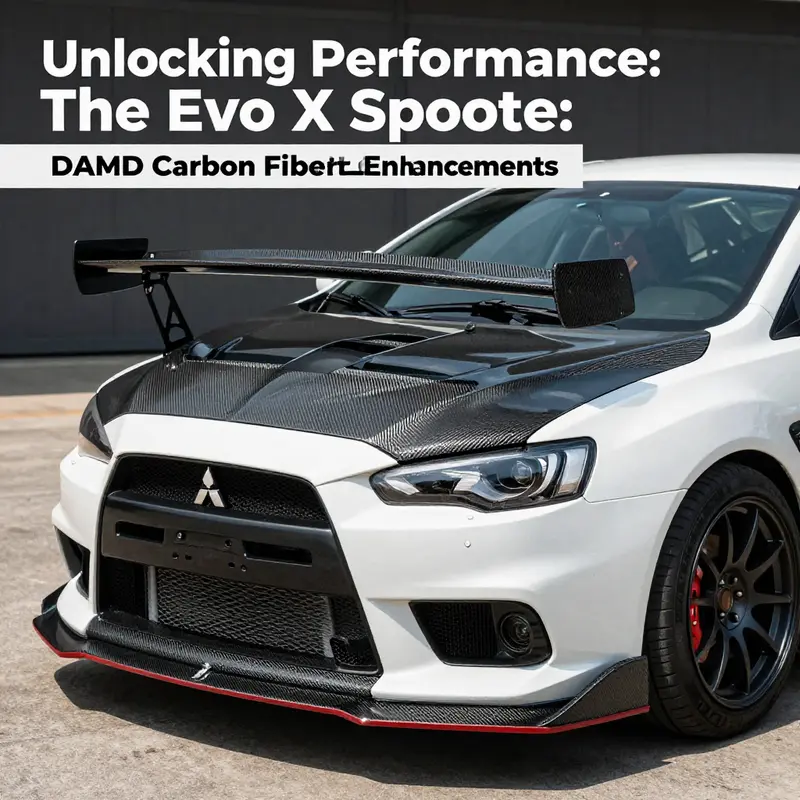
The Mitsubishi Evolution X is celebrated not just for its raw power but also its potential for enhancement through aftermarket parts. Among these, the original Evo X spoiler, enhanced by the DAMD carbon fiber gurney flap and complemented with carbon fiber side garnishes, plays a crucial role in improving both the aesthetics and aerodynamics of this performance vehicle. As business owners in the automotive industry, understanding the intricate symbiosis between these components can provide insight into customer preferences and market demands. The following chapters delve into how these enhancements positively impact aerodynamic performance, aesthetic value, current market trends, and essential installation and maintenance practices.
Winged Precision: The Aerodynamic and Aesthetic Impact of the Evo X Spoiler with DAMD Carbon Gurney Flap and Garnishes
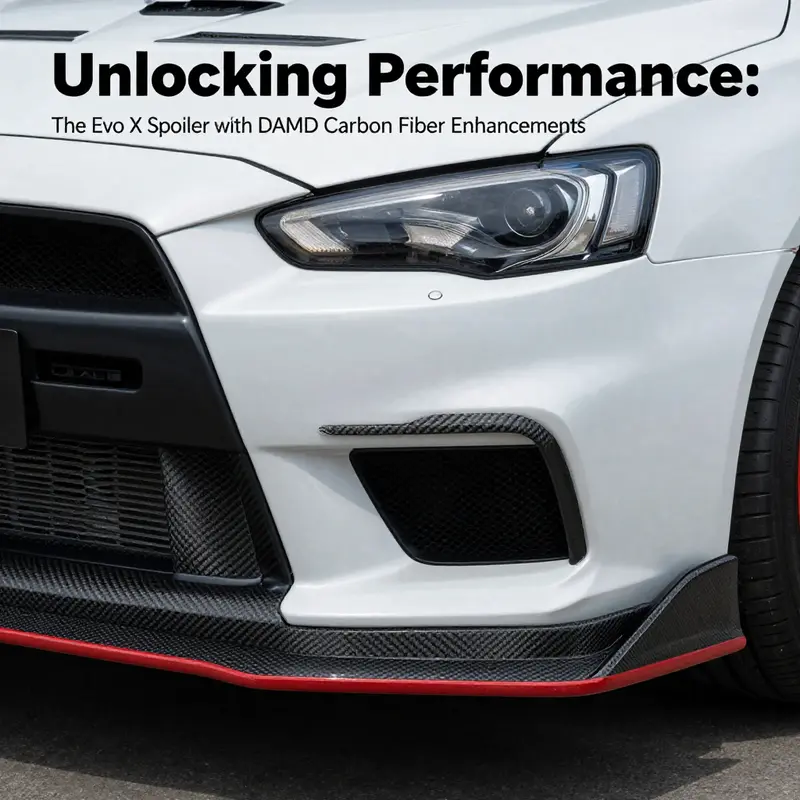
The Evolution X sits at the intersection of speed and design, inviting a closer look at how air behaves around the car. The original spoiler, paired with a DAMD carbon fiber Gurney flap and carbon garnishes, becomes more than a cosmetic upgrade; it is a deliberate aero statement that blends factory intent with aftermarket curiosity. The result is a cohesive system that balances downforce, drag, and stability at speed. The Gurney flap on the trailing edge disrupts the near wake behind the wing, creating a favorable differential pressure that helps the rear tires maintain contact with the road through high speed corners and quick transitions. Carbon fiber keeps weight down while preserving stiffness, helping the edge stay precise under load. The side garnishes guide boundary layer flow along the flanks, minimizing form drag and helping the rear devices work more efficiently. Together, these components form an integrated package where each piece supports the others and contributes to a predictable handling character at the limit. Material choice matters as much as geometry; carbon fiber offers a favorable strength to weight ratio that translates into crisper responses and a more communicative chassis. The result is not simply more downforce, but a harmonized aero footprint that respects the Evo X lines and preserves daily drivability. On the road, the package contributes to a quieter wake and a more stable rear end, while on the track it helps sustain grip during late braking and confident exits. In short, the combination of OEM-inspired spoiler, DAMD Gurney flap, and carbon garnishes provides a coherent aero strategy that feels native to the car rather than tacked on. For readers exploring the broader ecosystem, the carbon rear aero family shows how carbon elements can align with the Evo X rear geometry to shape the wake while keeping a performance oriented aesthetic. External references and real world testing note the value of carbon rear wings, Gurney flaps, and side garnish sets as credible avenues for aero tuning. The story ends with a practical takeaway: when parts are designed to work together and preserve balance, the result is a more confident, engaging driving experience that blends form and function.
null

null
How Carbon-Fiber Gurney Flaps and Side Garnishes Are Shaping the Evo X Customization Market

Market forces and enthusiast priorities that drive demand for the original Evo X spoiler with carbon-fiber gurney flap and side garnish
The appetite for aerodynamic upgrades on the Mitsubishi Lancer Evolution X remains robust. Owners of this model value modifications that deliver both measurable performance gains and a cohesive visual identity. The rear spoiler, when paired with a precision carbon-fiber gurney flap and matching carbon side garnishes, has evolved from an aesthetic flourish into a considered tuning choice. This chapter follows how buyer motivations, manufacturing advances, and secondary-market dynamics converge to shape demand for this complete rear-end package.
Enthusiasts who choose this upgrade typically prioritize high-speed stability. The small, upward lip of a gurney flap yields disproportionate aerodynamic effects for its size. When integrated with the Evo X’s spoiler, it raises rear downforce at speed. That increases traction without an equally large penalty in drag. For street-driven cars that see occasional track use, this balance matters. Owners want predictable handling at the limit but also do not want a rear wing that turns daily driving into a racetrack compromise. A carbon-fiber gurney flap is an intuitive response to that need: light, stiff, and effective.
At the same time, side garnishes in carbon fiber complete the visual story. They frame the spoiler, reduce turbulent flow at the wing endplates, and signal a factory-quality finish. Buyers often describe the upgrade as a “complete package.” They are not simply looking for a single item. They want components that visually and functionally integrate with the car’s lines. That expectation explains why parts advertised as compatible with original design cues, with exact fitment and consistent weave patterns, tend to command higher prices and faster sales.
The market has matured around a few key dynamics. First, material accessibility has improved. High-quality carbon fiber was once confined to race teams and ultra-high-end shops. Modern fabrication techniques—improved pre-preg resins, more precise molds, and broader use of vacuum-bagging—have lowered unit costs. As a result, carbon enhancements that once felt exclusive are now attainable by a larger segment of the tuning community. Second, precision fitment attracts buyers. Parts that bolt on cleanly to factory attachment points reduce installation headaches and protect paint and trim. Fitment reliability builds trust and encourages repeat purchases for other carbon upgrades such as hoods and diffusers.
A functioning secondary market supports demand. Enthusiast forums and specialist marketplaces list both new and gently used components. For the Evo X, the rear spoiler plus gurney flap and side garnishes appear frequently as part of vehicle packages or as standalone items. Consistent interest on these platforms keeps prices competitive and encourages sellers to present comprehensive upgrade sets. That activity signals market maturity: buyers can source parts, verify condition, and compare fitment stories before bidding or purchasing.
Consumer confidence is another important driver. When manufacturers of aftermarket components demonstrate a history of model-specific engineering and high-quality finishes, buyers respond. Sellers that document fit and finish with clear photos, installation guides, and alignment notes reduce perceived risk. The same is true for shops that offer paint-match options or factory-like clear coatings. Buyers will pay a premium for parts that visually blend with original trim and carry assurance of structural integrity.
Pricing is influenced by both material and perceived value. Pure carbon-fiber components command higher sticker prices due to raw material costs and labor intensity. However, careful shoppers weigh that against the long-term benefits: reduced weight, corrosion resistance compared with metal hardware, and preserved resale value. On cars where originality and period-correct upgrades matter, a well-documented, high-quality carbon package can improve a vehicle’s marketability. That makes the investment defensible for many owners.
Integration with other Evo X upgrades matters more than ever. Buyers rarely pursue a single visible modification in isolation. A carbon gurney flap complements ceramic-coated exhaust tips, functional diffusers, and lightweight wheels to create a unified performance aesthetic. This tendency nudges installers and retailers to bundle related parts or offer staged upgrade pathways. Garage owners and shops that lay out coherent plans for aero balance, suspension tuning, and brake upgrades tend to retain customers and foster larger sales over time.
Regulatory and practical considerations also shape demand. Legal restrictions on extreme aerodynamic devices vary by jurisdiction. Many owners choose subtle yet functional solutions, like low-profile gurney flaps, to avoid visibility issues with law enforcement or vehicle inspections. Additionally, road-use realities—speed bumps, kerbs, and parking lot maneuvers—make overly aggressive wings impractical. Carbon side garnishes that maintain clearance and protect wing edges provide a pragmatic bridge between form and function.
Supply chain developments play a role, too. As demand stabilizes, suppliers optimize production runs and tooling. That lowers lead times and often improves consistency from batch to batch. Enthusiasts notice when parts ship promptly and align well with vehicle contours. Conversely, inconsistent batches or weave patterns can erode trust quickly because buyers expect carbon parts to look and fit like factory components. This is where precise vendor photography and clear return policies become part of the product value proposition.
Sustainability and lifecycle thinking are emerging factors. Carbon fiber’s recyclability is limited compared with metals. Still, durability and corrosion resistance reduce the need for frequent replacement. Some suppliers are experimenting with repair-friendly resins and modular designs that allow damaged sections to be replaced without discarding whole assemblies. Buyers who plan for long-term ownership often weigh repairability when selecting aftermarket aero packages.
The aftermarket’s future for Evo X rear-end customization looks steady. Continued interest from the tuner and track communities supports growth. Advances in manufacturing technology will further lower costs and likely broaden design options. Additive and hybrid manufacturing may introduce more complex shapes and integrated functions, such as ducting channels or sensor mounts, yet the core appeal remains: a lightweight gurney flap and matching side garnishes that give measurable downforce and a cohesive, factory-like appearance.
For owners considering the upgrade, one practical resource is a comparison of complementary exterior parts. That guide showcases how a carbon bonnet, rear diffuser, or side skirts can create coherent aero behavior when combined with a spoiler upgrade. For example, sellers often pair these visual upgrades to encourage harmonious styling and aerodynamic balance. See this listing for a carbon bonnet offering to understand typical fitment standards for Evo X carbon components: brand-new-original-carbon-fiber-bonnet-hood-for-mitsubishi-lancer-evo-x.
Market intelligence indicates a steady expansion in the broader aftermarket parts sector, especially for carbon upgrades. That growth reflects both a sustained enthusiast base and wider accessibility of high-quality carbon components. For readers who want a macro-level view of the aftermarket trend, industry projections offer additional context and supporting data: https://www.autonews.com/industry-market-trends/aftermarket-performance-parts-market-growing-6-cagr-through-2030
Overall, the Evo X rear spoiler package with a carbon gurney flap and matching side garnishes sits squarely at the intersection of function and form. Buyers seek parts that fit seamlessly, perform predictably, and preserve the car’s design integrity. Suppliers who deliver on those expectations, while addressing fit, finish, and practical road use, will continue to prosper in this niche market.
Aeroform and Affinity: Integrating the Original Evo X Spoiler with a Carbon Gurney Flap and Side Garnishes into a Cohesive Performance Aesthetic
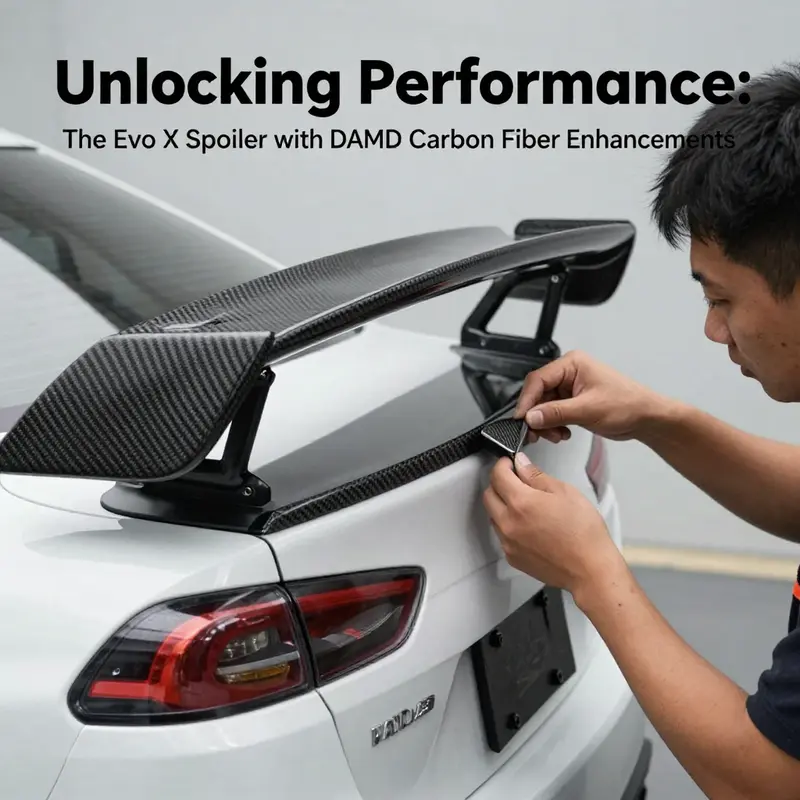
The balance between aesthetics and performance often reveals itself not in grand statements but in the quiet negotiation of lines, angles, and textures. When the rear silhouette of an Evo X is equipped with a spoiler designed to work with a carbon fiber gurney flap and carbon side garnishes, the result is more than a cosmetic statement. It is a deliberate integration where each element communicates with the next, guiding airflow across the trunk and along the body to cultivate stability at speed while preserving the car’s street cred. The original spoiler, paired with the carbon fiber components, demonstrates a philosophy that efficiency can wear a refined, aggressive look without demanding sacrifices in daily usability. Carbon fiber’s lightness and strength invite a kind of confidence; the driver senses that the car’s rear structure is reinforced in both purpose and presence. In this sense, the upgrade becomes a dialogue between form and function, a conversation that begins with the vehicle’s chassis and ends with the way air behaves at high velocity around the taillight cluster and the rear corners.
To understand the full value of this setup, it helps to imagine the season of a race track that demands both downforce and control. At highway speeds, the gurney flap tames the wake behind the spoiler, reducing turbulent drag and encouraging a more favorable pressure distribution across the trunk lid. The carbon garnishes along the sides do more than catch light; they sculpt the side profile to minimize lift and encourage a more predictable crosswind response. In combination, these pieces translate into a stability that is felt, not merely seen. The feel is subtle at legal speeds, where the car remains as quiet and composed as a well-tuned street sports car should be. Yet as velocity climbs, the integration proves its merit: the rear tires maintain a consistent contact patch, the tail stays planted, and the cockpit remains a place where the driver can direct power with a calm hand rather than a frantic tug on the wheel. This is the essence of a coherent aerodynamic package: it does not shout; it works.
Installation, then, becomes a careful act of alignment and restraint. OEM compatibility provides a baseline, a foundation that ensures the spoiler seats correctly against the deck and that the vented areas align with the body’s natural airflow channels. The carbon gurney flap, while visually a dramatic extension, must sit at an angle calibrated to the car’s geometry and the driver’s intended use. The alignment is not a matter of preference but of testing: even a few degrees of misalignment can shift the separation point on the rear glass or subtly alter the rearward flow that interacts with the side garnishes. This is why the process demands meticulous surface preparation and a disciplined approach to bonding. Cleaning the contact surfaces thoroughly removes any grease or dust film that would undermine adhesive performance. It is a step as humble as wiping a workbench, yet essential when carbon fiber joins with a painted surface under load. High-strength adhesives are then applied at critical joints to secure the assembly against vibration and water ingress. These adhesives are chosen for durability and elasticity, properties that help the joint absorb small road-induced motions without cracking or peeling. The installer’s skill matters here: the torque on fasteners must be controlled with a torque wrench to avoid over-tightening that could crack the carbon fiber skin or mar the vehicle’s paint. The aim is a snug, controlled clamping force that preserves both the aesthetic integrity and the structural bond over time.
The maintenance story for this configuration also reads as a narrative of care. Carbon fiber maintains its beauty through protection from UV exposure and careful handling. Scratches, even if barely perceptible, begin a chain of reactions that dull gloss and disrupt the smooth light interaction that makes the garnishes gleam in the sun. Cleaning should avoid abrasive cloths and aggressive cleaners. A neutral soap solution with a soft sponge keeps the surface clean, followed by drying with a soft cloth. If minor scrapes appear, a targeted repair approach with carbon fiber repair paints can restore the finish locally, preserving the overall look without resorting to a full panel refinishing. For more severe damage, professional intervention ensures proper resin restoration and color-matching so the repaired area retains its structural integrity and visual harmony with the rest of the rear assembly. Periodic inspections of the bonded points and bolts become a routine part of maintenance, especially after aggressive driving or long trips where components endure more dynamic loads. If a quick visual check reveals loosening or cracking, the issue should be addressed promptly to avoid a peripheral safety risk that might not be immediately evident to the casual observer.
The interplay among the spoiler, gurney flap, and side garnishes transcends mere attachment points. The aerodynamic story unfolds as air sweeps across the deck and encounters the vertical surface of the gurney flap. The downforce generated by the flap depends on the downstream geometry of the spoiler and the vehicle’s overall pitch and speed. Adjustments to the flap angle should be informed by observed performance, data from testing, and, ideally, professional calibration. In a practical sense, this means that owners who intend to extract consistent high-speed behavior should consider a calibration session with a technician who understands how to interpret dynamic test data for this specific package. A well-calibrated setup will balance the need for rear stability at elevated speeds with the car’s ability to remain compliant in everyday driving, avoiding an overbearing rear that could unsettle the chassis when the road is uneven or when sudden maneuvers are required.
The aesthetics of the package also deserves attention. The carbon fiber’s weave and clear coat interact with the vehicle’s lines in a way that reinforces the Evo X’s identity without overpowering it. The garnish lines trace the silhouette along the sides, echoing the car’s character lines and giving a cohesive sense of motion even when the car is standing still. Visible hardware, where used, is chosen to minimize contrast and to preserve the visual language that carbon fiber communicates: precision, lightness, and strength. The result is a rear end that looks composed under the glare of sunlight and sharp under the diffuse light of a cloudy day. Enthusiasts who care about the relationship between form and function will appreciate how this configuration respects the original design intent while offering a modern, performance-oriented edge. It is not about mere modification; it is about thoughtful enhancement that respects the car’s chassis, its aerodynamics, and its aesthetic heritage.
For readers who are curious about related carbon fiber upgrades that complement this setup, a related option can be explored to broaden the sense of continuity across the car’s exterior. A related resource discusses a carbon fiber bonnet upgrade, which complements a rear aero package by introducing a material and finish that harmonizes with the side garnishes and gurney flap. This broader context helps illustrate how carbon fiber components can be integrated in a way that preserves the Evo X’s proportion and character. See the discussion here: brand-new-original-carbon-fiber-bonnet-hood-for-mitsubishi-lancer-evo-x.
In the end, the value of the original Evo X spoiler paired with a carbon fiber gurney flap and side garnishes is measured not only in grams saved or drag figures but in the confidence it affords the driver. The system speaks to a philosophy of intelligent engineering: a design that respects the air it encounters, the road beneath it, and the eyes of the observer who appreciates a car that moves with purpose. The installation is a careful act of faith in the balance between the car’s footprint, the wind’s pull, and the road’s texture. Maintenance is a discipline that keeps that faith intact, ensuring that the materials perform as promised and that the car continues to look as disciplined as it behaves. It is a small but meaningful chapter in the ongoing story of a vehicle that has long stood for rally-inspired performance and a clean, purposeful aesthetic.
External resource: for deeper historical context and technical discussion on Mitsubishi Evo X aero kits and carbon fiber components, see the Evo Magazine site: https://www.evo-magazine.com/
Final thoughts
Integrating the original Evo X spoiler with the DAMD carbon fiber gurney flap and carbon fiber side garnishes not only accelerates performance but elevates the vehicle’s visual impact. For business owners, offering these enhancements aligns well with the growing trend of performance-oriented automotive modifications. Understanding the aerodynamics, aesthetic value, and market dynamics surrounding these products can inspire strong customer engagement and innovative customization solutions. Ultimately, the original Evo X components represent a blend of high-strain materials and cutting-edge design, catering to both aesthetic appreciation and performance excellence.