
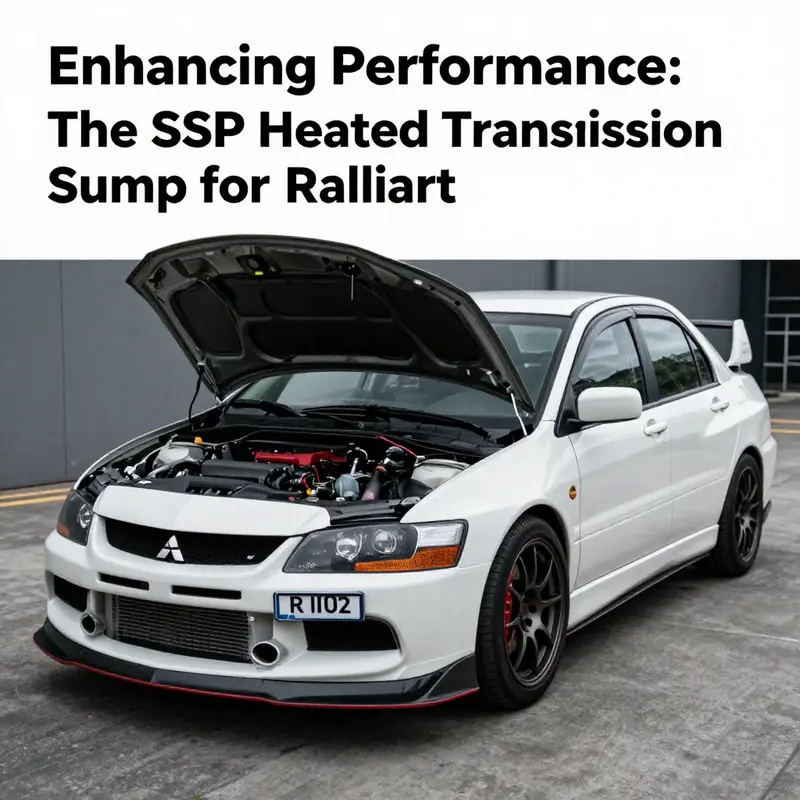
The Mitsubishi Evo X Ralliart (2008-2015) is celebrated for its exhilarating performance, yet any vehicle inherently requires upgrades to maintain efficiency and effectiveness in extreme conditions. One such requisite is the SSP Performance SST Heated Transmission Sump, a noteworthy aftermarket solution aimed at resolving transmission oil overheating—particularly prevalent in dual-clutch setups. This piece explores the innovative features of the SST Heated Transmission Sump, its technical specifications, the vital role of transmission cooling in performance enhancement, and the growing consumer demand in the market for such performance parts. Together, these insights will illustrate how this modification not only boosts functionality but contributes to the overall performance enhancements expected of high-caliber automotive components.
Heat Under Pressure: Thermal Management and the Evolution X Ralliart SST Transmission
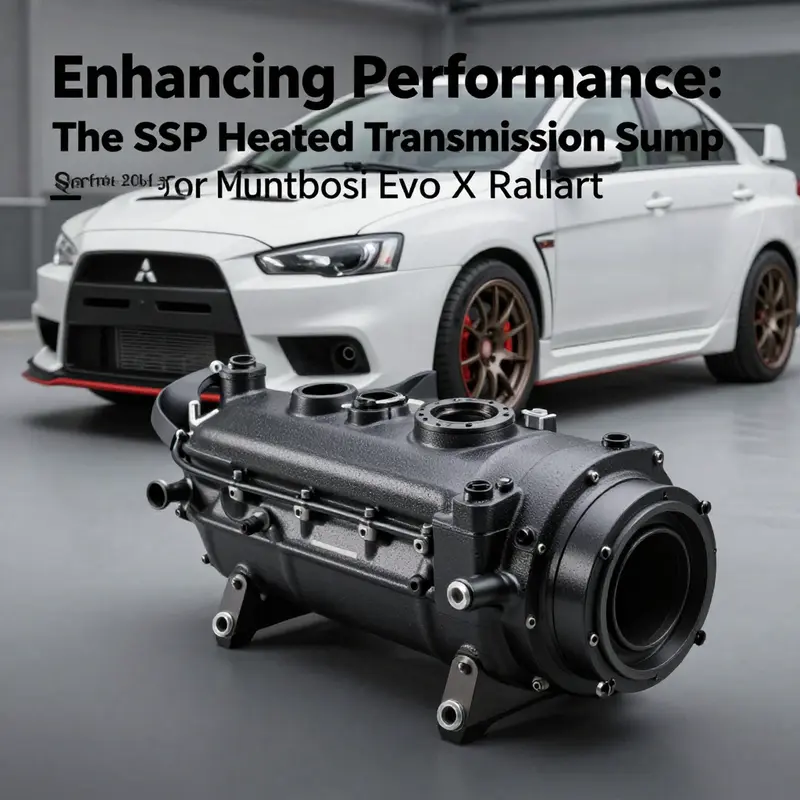
The Mitsubishi Lancer Evolution X Ralliart built between 2008 and 2015 is widely remembered for its rapid-fire shifts and aggressive stance on performance. Central to that character is the six-speed dual-clutch transmission, a unit that blends quick engagement with the mechanical complexity of two clutches working in concert. Yet for all its cadence and precision, this transmission has a well-known Achilles’ heel: heat. In high-load driving, particularly on track sessions or sustained spirited driving, the oil within the transmission climbs quickly, and the oil’s viscosity shifts as a function of temperature. When ambient conditions are cool or the car sits idle for a while, the suspension of heat in the fluid body can lead to stiffer engagements, slower shifts, and a reduction in the overall predictability of gear changes. For owners who push the Evo X Ralliart SST beyond street duty, managing heat is not a cosmetic concern but a reliability one. It is in this arena that a heated transmission sump emerges as a meaningful, if specialized, solution.
Rather than simply cooling the idea of performance oil, the concept is to ensure that the transmission’s oil remains within an optimal viscosity window from the moment the car starts moving. In practical terms, preheating the sump oil helps the transmission reach its intended operating state more quickly, reducing initial wear and smoothing the early gears when the engine is cold. This is especially relevant for a vehicle that experiences sudden, high-load shifts, where the friction and hydraulic demands are most acute right as the engine and transmission are waking up. The notion sits at the intersection of thermodynamics and performance engineering: if the fluid is too thick at startup, the hydraulic pumps and clutches lag; if it is too thin, there is insufficient lubrication at the wrong time. A heated sump addresses this by maintaining a more uniform oil state during cold starts and in cool environments, aligning the transmission’s behavior with its design goals even when the weather or the hour demands more from the car than a warm-up lap could provide.
The net effect is a more consistent shift cadence, a reduction in the abruptness of initial engagements, and a broader window of reliability where drivers can push the car with some confidence that the hardware will respond promptly rather than protest with stiff gear changes or delayed lubrication. In the context of the Evo X Ralliart SST, where the transmission’s performance is closely tied to both track readiness and daily drivability, this kind of thermal management becomes an attractive proposition for enthusiasts who want to preserve the gearbox’s integrity in demanding conditions.
What makes a heated sump particularly compelling is the way it integrates with the transmission’s existing architecture. The sump is designed as a direct replacement component that sits in the same location as the factory bottom pan, but it houses an embedded heating element and a compact control unit. The heater is typically sized to bring the oil to a target temperature quickly and then maintain that temperature within a narrow band, using the vehicle’s electrical system to regulate power as needed. The control strategy is essential: it must be robust enough to account for varying ambient temperatures, battery voltage, and the engine’s operating state. A well-designed system reduces the odds of overfiring the heater, which could otherwise cause unnecessary electrical draw or heat the oil beyond its ideal range.
The installation narrative, while straightforward in concept, is not a casual DIY exercise. It requires careful coupling with the vehicle’s electrical system, proper routing of wiring harnesses, and attention to compatibility with the transmission’s sump mounting points. A clean install preserves the OEM-like fit while enabling a reliable heating function. Given the Evo X Ralliart SST’s DCT architecture, where the transmission’s behavior is closely tied to hydraulic pressure and clutch control, maintaining oil temperature within a precise corridor is not merely a matter of comfort but of mechanical harmony. When the fluid remains in a usable viscosity range, the clutches engage more smoothly, and the transmission’s valve bodies respond with less delay.
The practical upshot for drivers who track their cars or operate them in cooler climates is a more predictable shift feel at start-up and across the first several miles of driving. The warm oil helps the hardware achieve its designed friction characteristics sooner, which translates into better stability during aggressive downshifts and more linear throttle response as the car exits corners. It is not a cure-all for every thermal challenge, but it is a targeted approach to stabilize a subsystem that often bears the brunt of dynamic loading.
In conversations among enthusiasts and technicians, the heated sump is sometimes discussed alongside other high-performance upgrades. The broader narrative around Evo X customization tends to emphasize power, aerodynamics, and exhaust efficiency, but a cohesive approach to reliability often returns to the fundamentals of lubrication and heat management. A heated sump is a practical, nuanced piece of that story. The design ethos is simple: enhance reliability without requiring a wholesale overhaul of the transmission itself. The sump is engineered with high-grade materials to resist the thermal and mechanical demands of hard driving, and its integration with the vehicle’s cooling and electrical frameworks is conceived to minimize parasitic losses while maximizing functional benefits.
From a warranty and community perspective, manufacturers who produce these units often couple them with some form of coverage and user guidance. The consensus in enthusiast circles is that, when properly installed and calibrated, the solution can deliver meaningful improvements in cold-start behavior and long-term oil life, especially in competitive environments where every degree of stability in the transmission’s behavior matters. Of course, any aftermarket modification sits in a trade-off space. The added electrical load is a consideration, as is the potential for wiring failures or sensor conflicts if the installation is not meticulous. Some observers caution that, without a thoughtful control strategy, the system could compete with or even undermine the transmission’s built-in protections. But when designed with care and installed by qualified technicians, the heated sump becomes part of a broader, well-considered strategy to keep the Evo X Ralliart SST’s drivetrain performing consistently, regardless of season or track workload.
The result is not a dramatic overhaul but a quiet improvement—an enhancement that supports the car’s original performance intent while extending the envelope of reliable operation. In the narrative of this chapter, the heated transmission sump stands as a case study in how modern performance engineering treats the unseen, yet critical, aspects of a driveline. It reminds us that speed is not only about horsepower or torque; it is also about lubrication, viscosity, and the art of keeping the fluid in the right state when the world around it is not.
The broader article you are reading weaves this theme into a larger tapestry: performance is as much about controlled warmth and predictable shifts as it is about raw acceleration. For readers who want to explore adjacent technical threads, there is a natural, internal reference to a comprehensive overview of Evo X SST transmission options that provides context on how different pathways—ranging from recalibrated software to hardware modifications—interact with the way the transmission responds under load. This interconnected view helps explain why a heated sump can be a meaningful complement to other performance strategies, rather than a standalone upgrade.
If you are curious about the practical implications of a particular transmission option and how it relates to the broader ecosystem of Evo X parts, you can follow a focused overview page that delves into the transmission’s architecture and the kinds of upgrades enthusiasts commonly consider. For those seeking broader reading beyond the immediate topic, the official product page for the heated sump provides technical specifications, installation notes, and community feedback that illuminate how such a solution is designed to function in real-world conditions. External resource: https://www.ssp-performance.com/products/ssp-sst-heated-transmission-sump-for-mitsubishi-evolution-x-ralliart-2008-2015
Internal reference: For a deeper look at Evo X SST transmission options and compatibility considerations, see the specific Evo X SST transmission gearbox overview: evo-x-sst-dct470-transmission-gearbox.
Heat Under Control: A Deep Dive into the Heated Transmission Sump Concept for Evolution X Platforms with DCT
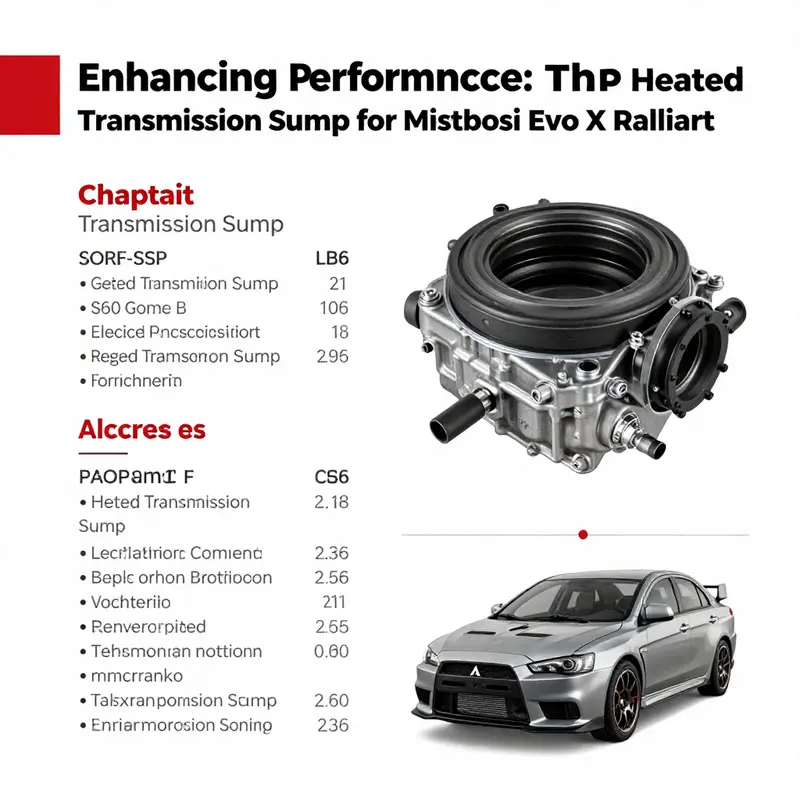
Heat Under Control: A Deep Dive into the Heated Transmission Sump Concept for Evolution X Platforms with DCT
In high‑performance Evolution X platforms with a dual‑clutch transmission, heat management is a constant consideration. The DCT delivers rapid shifts and strong performance, but cold or rapidly warming starts can reveal a transient edge in friction as oil viscosity changes. A heated transmission sump is a targeted approach to bring the fluid to its optimal operating viscosity early in the drive, reducing wear and sharpening shift feel from the first twist of the key.
Mechanically, the sump is the reservoir that feeds the transmission with oil. A heated sump integrates a compact heater into the sump assembly so that when power is applied, the transmission fluid reaches its desired viscosity within minutes. The practical effect is smoother clutch engagement at cold starts, more predictable shifts as speed rises, and a measurable improvement in durability during repeated cold start cycles.
Design philosophy centers on preserving the factory geometry and routing. The heated sump should mount with the same points as the stock unit, leave the pickup and cooler paths unobstructed, and operate within the vehicle electrical system without demanding major rework. The heater is sized to reach the target temperature quickly but with safeguards to prevent overheating.
Control logic varies. Some systems are simple on/off heaters tied to ambient or coolant temperature, while others are integrated with the vehicle’s control modules so the heater ramps on during cold starts and scales back as oil warms. The common goal is the same: start the drive with oil that is already mobile, supporting reliable engagement and consistent performance from the moment of ignition.
Materials and build quality matter as much as the heater itself. A robust sump housing, corrosion resistance, reliable seals, and careful wiring are essential for long term reliability. The heating element should be protected against leaks and short circuits, and the assembly should maintain oil flow paths without creating pressure or restriction. In practice the heated sump is a small, well integrated component that plays a quiet but meaningful role in the drivetrain’s cold start behavior.
In installation terms, the objective is to preserve the stock sump footprint while delivering the heater and its control electronics without disturbing the transmission cooler loop or oil pickup. A typical installation includes a sump with integrated heating, a compact harness, and a controller or relay that governs the heating cycle. When combined with a complementary cooling strategy, such a system helps manage the transient temperature rise during high load while ensuring fluid mobility as soon as the engine starts.
For enthusiasts, the payoff is smoother initial shifts, reduced wear during cold starts, and a more predictable driving experience in variable climates. The heated sump complements a broader suite of cooling and lubrication strategies by accelerating warm up and then working in concert with cooling to maintain stability during extended high‑duty operation.
Cooling the Drive: Transmission Heat, Startup Protection, and the Heated Sump Advantage for the Evo X Ralliart SST (2008–2015)
*In the high-performance world of the Evo X Ralliart SST, speed and agility are only as reliable as the systems that keep those abilities consistent. The transmission, tucked at the heart of the drivetrain, is both the gatekeeper of power and a heat factory when push comes to shove. The 2008–2015 Lancer Evolution X, with its twin-clutch, single-gearbox ethos, was engineered for rapid shifts and thrilling progress. But that engineering also meant managing heat in ways that can make or break a day on track or a long, spirited drive on a winding road. When heat climbs, the fluid begins to lose its vigor; the clutches slip sooner, the oil thins and thins, and the whole drivetrain can feel the toll. This chapter explores why cooling the transmission matters so much for the Evo X Ralliart SST, how a heated transmission sump presents a thoughtful solution to cold-start wear and viscosity challenges, and how these ideas fit into a broader approach to keeping high-performance gears honest under pressure.
From the outset, the mechanics of the Evo X SST—its dual-clutch arrangement and its sealed, performance-oriented oil pathways—are designed to balance lightness of feel with the fuel for fast, precise shifts. But heat is an ever-present adversary in high-load operation. Aggressive driving, road course sessions, and sustained high-speed cruising push the automatic transmission fluid (ATF) temperature beyond comfortable margins. As ATF heats, several problems emerge: chemical breakdown accelerates, lubricating properties degrade, and the ability of the fluid to maintain proper viscosity and film strength suffers. The result is a cascading effect: higher clutch temperatures, more slip, less efficient power transfer, and a greater risk of premature wear on bearings and seals. The goal, therefore, is not simply to lower peak temperatures but to stabilize the entire thermal profile of the transmission during both the short bursts of hard acceleration and the longer sweeps of sustained high speed.
A large portion of the conversation around transmission cooling rightly centers on external cooling hardware. The most straightforward and widely adopted approach is to install an aftermarket transmission cooler with a larger core and a robust fan setup. These coolers are designed to extract heat from ATF before it reaches the internal components, and the result is a cooler, more stable operating window. The benefit is tangible: smoother shifts under load, more consistent clutch engagement, and a reduced likelihood of thermal breakdown in the oil. Such improvements matter not only for daily spirited driving but also for track work, where repeated shifts and high torque can push an otherwise well-tuned system to its thermal edge. A properly designed cooler can be wired into the factory electrical system so that it operates reliably without imposing complex electrical work on the installation. In practice, this type of solution acts as a thermal shield for the transmission, slowing the rate at which the ATF warms and ensuring that the fluid maintains adequate viscosity across a spectrum of operating conditions.
Yet, for enthusiasts who push their Evo X into environments where starting and warming up the drivetrain matter as much as the heat of the track, a heated sump presents an intriguing complement or alternative to external cooling. The heated transmission sump concept centers on an integrated approach: a sump that includes a heating element and control strategy to pre-warm the ATF during cold-start conditions. The logic is straightforward. When a cold engine and transmission start after a cool night or a long winter lay, the ATF is relatively viscous. That high viscosity translates to greater initial friction, slower lubricant film formation, and increased wear during the initial engagement of the clutches and gears. By preheating the sump, the system brings ATF to its optimal viscosity faster. The outcome is more predictable shift feel right off the line, reduced wear during the crucial first few seconds after startup, and a temperature profile that eases the burden on the hydraulic system as load builds. In a performance context, this means the car can respond with cleaner clutch engagement as soon as you press the accelerator, especially in cold climates or after short stops that leave the drivetrain chilly.
Heat management is not simply about reducing peak temperatures; it is about preserving the lubricant and the mechanical integrity of the transmission as an entire system. The heated sump, when matched with a well-calibrated cooling strategy, provides a balanced approach: pre-warm during startup to protect against cold wear, then allow the cooler to swoop in and manage heat during sustained high-speed runs or track sessions. It is a strategy that acknowledges the realities of real-world driving—the car is not always warmed up perfectly before a session, and even in temperate climates, traffic can force the transmission to drain heat from the oil at a pace that challenges the oil’s ability to maintain protective viscosity. The heated sump helps to bridge that gap, ensuring that the fluid hierarchy—oil, clutch packs, bearings—remains within acceptable limits as soon as the car begins to operate at performance levels.
This nuanced approach is particularly relevant for the Evo X Ralliart SST because the six-speed DCT architecture used in many of these cars is a compact, highly efficient mechanism that relies on precise hydraulic control for rapid, clutch-based shifts. In aggressive driving, the system can be stressed in two ways: peak heat during high-load shifts and prolonged exposure to heat during extended sessions. The thermal load is not simply a question of heat at the surface of the oil; it is the dynamic interaction of the oil’s viscosity, the clutch surfaces, and the hydraulic actuation that governs shift quality. A cooler system reduces the temperature differential across the transmission, helping the fluid retain its film strength and the clutches to grip consistently. A heated sump, on the other hand, addresses the other end of the spectrum—ensuring that cold starts do not impose unnecessary wear until the oil is ready to perform at its best. Together, these approaches acknowledge that the car’s best performance comes not from one ideal condition, but from maintaining stable conditions across a broad range of temperatures and driving moods.
In practice, ownership experience and performance data suggest that the Evo X SST benefits from thoughtful thermal management in several ways. First, during cold starts, preheating the ATF reduces the initial load on the clutches. This translated into smoother, quieter engagements and less clutch slip as the system heats up. Second, during track sessions or back-to-back driving, sustained cooling helps prevent thermal runaway—the point at which ATF temperature continues to rise despite the loss of power, threatening both performance and longevity. Third, a combined strategy can preserve steering feel and throttle response. When the transmission remains within an optimal viscosity range, hydraulic actuation is more precise, producing consistent shifts that drivers can rely on, lap after lap. These benefits collectively contribute to a drivetrain that feels more robust under pressure, a crucial consideration for enthusiasts who push their cars beyond ordinary road conditions.
From an installation and maintenance perspective, the choice between integrating a heated sump and installing an external cooler is not purely a matter of performance, but one of workflow and climate. An external cooler tends to be easier to fit with minimal interference to the existing transmission routing. It also provides straightforward benefits in hot climates or during extended high-speed use. The heated sump, while offering unique advantages in terms of startup wear and low-temperature performance, introduces electrical considerations and control logic that must be reliably implemented to avoid unintended heating during normal driving. The ideal approach—when feasible—often involves a combination: a robust cooler for heat rejection during heavy use, paired with a warmed sump to protect the drivetrain during the critical first moments of startup and in cold environments. This dual approach aligns with how serious Evo X builders think about thermal management as a system, not a single gadget.
For those seeking to understand practical options without turning to brand-name talk, it helps to imagine the Evo X’s transmission as a machine that benefits from both a larger radiator and a thoughtful oil heater. The radiator-style cooler takes the heat away through an enlarged surface area, pushing heat into the airflow and pulling it away from the fluid. The heater, conversely, makes sure the fluid starts at a viscosity that won’t stress the first gear and the initial clutch engagement. The synergy is intuitive: prevent heat from climbing too quickly, and keep startup wear to a minimum so that the car can deliver its performance consistently across a wide temperature range. In the end, the goal is clear. The Evo X Ralliart SST should feel confident, predictable, and responsive in every season and every track condition. The right thermal strategy—whether a cooled system, a heated sump, or a calculated blend—helps maintain that confidence over time, protecting the transmission’s integrity while preserving the dynamic character that makes the Evo X a standout in its class.
For readers curious about concrete installations or examples of the kind of transmission configurations discussed here, there are resources that describe how the SST-equipped Evo X platform can be serviced or upgraded in ways that respect its original design while enhancing its thermal resilience. For a direct reference to one such option that illustrates how a contemporary Evo X SST setup can be approached in practice, see this listing: evo-x-sst-dct470-listing. The link provides a concrete context for how practitioners think about a six-speed automatic transmission upgrade within the Evo X ecosystem, illustrating the balance between reliability, performance, and serviceability that underpins modern high-performance builds. (internal link)
External resource for further reading:
AMS Performance demonstrates how a purpose-built transmission cooler kit can materially improve ATF stability and shift consistency for the 2008–2015 Evo X, providing a practical blueprint for heat management in a high-performance drivetrain. Access their overview and specifications here: https://www.amsperformance.com/products/ams-performance-transmission-cooler-kit-for-08-15-mitsubishi-lancer-evolution-x
Thermal Edge: How Transmission Heat Management Shapes the Evo X Ralliart Market and Consumer Expectations (2008–2015)
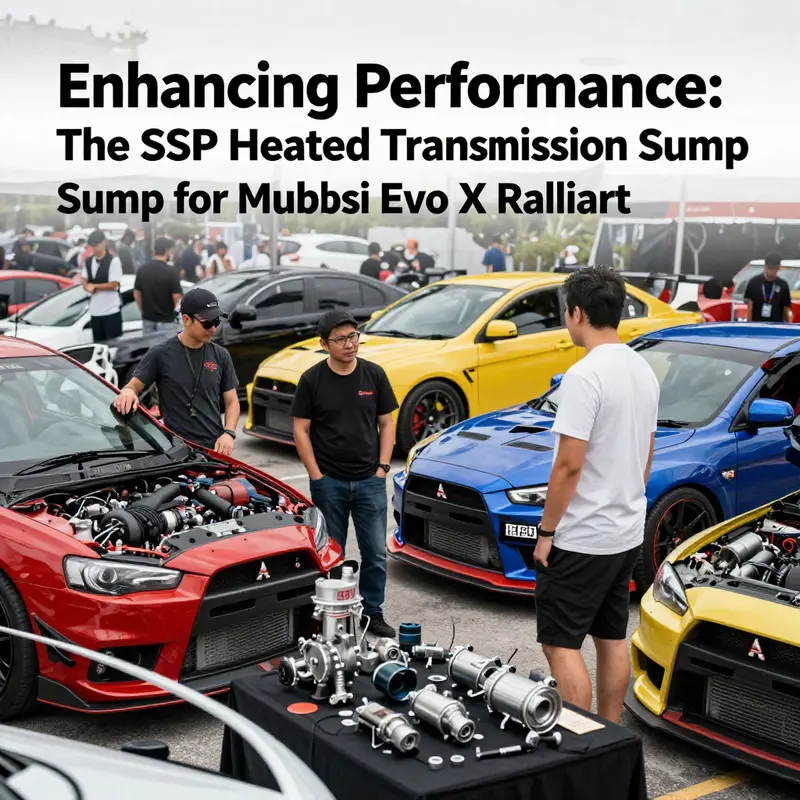
Enthusiasts who chase the combination of brutal acceleration and reliable, repeatable performance understand that the Evo X Ralliart lives at the intersection of engineering ambition and real-world wear. The mid-2000s to mid-2010s era of Mitsubishi’s compact performance platform drew a dedicated following not only for its aggressive proportions and DCT-driven speed, but for the conversations it sparked about what happens after the stopwatch stops ticking. In that ecosystem, the market for advanced thermal management components began to emerge not as a novelty but as a practical answer to concrete driving realities. The transmission is the heart of the car’s power delivery, and its health is the quiet predictor of how fast a car can be driven again and again, whether on a race track, in a spirited canyon run, or during a frigid winter commute. The shift in consumer expectations mirrors a broader industry shift toward parts that promise longevity and consistency in the face of thermal stress. In this context, heated transmission subsystems and related cooling strategies have become more than just accessories; they are statements about reliability, track readiness, and the willingness of owners to invest in the long haul rather than chase an ephemeral peak.
At the core of the market narrative is a simple, observable pattern: as cars with sophisticated dual-clutch transmissions age and see more use in high-load conditions, heat becomes a limiting factor. The factory oil sump and cooling loops are designed for a broad bandwidth of use, yet many Evo X owners push those boundaries with frequent, hard shifts, sustained braking, and extended sessions on autocross courses or time-attack events. In such contexts, fluids degrade when they are overheated or when their viscosity shifts away from optimal ranges. The perception among owners is not merely about avoiding a failure; it is about maintaining the precise feel that makes a high-performance drive rewarding. A heated or thermally optimized transmission sump speaks directly to this expectation. It is not a luxury add-on but a pragmatic instrument aimed at ensuring the fluid operates within a predictable viscosity window as the engine pounds heat into the oil during startup, cold soak, and peak-load regimes. The result is smoother engagement, more consistent clutch feel, and a margin of safety that translates into more confident laps or longer, safer daily drives.
Market data reinforce this perception. Buyers increasingly expect components that address real-world conditions rather than theoretical improvements. In markets with colder climates or drivers who spend significant time on the track, thermal management solutions rise to the top of upgrade lists. This isn’t simply about avoiding nuisance failures; it is about preserving the transmission’s life under elevated stresses and ensuring predictable performance when the thermometer plummets or when a car’s oil takes time to reach its ideal operating temperature after a cold start. The purchasing pattern matches this: premium, purpose-built packages—often sold as cohesive kits that combine a specialized oil sump with heating elements and control logic—continue to rank highly in aftermarket ecosystems catering to this specific platform. The categories that surround heated sump concepts, such as transmission oil coolers and integrated thermal management kits, also show sustained demand. The logic is straightforward: owners want to manage heat efficiently, because heat is the adversary that undermines both performance and durability.
What matters in the marketplace is not only the engineering impulse but the confidence that supply chains, technical support, and installation ecosystems can deliver results. Enthusiasts favor brands and retailers that can offer clear documentation, proven fitment, and realistic expectations around installation complexity and reliability. The Evo X community thrives on knowledge-sharing channels—forums, social media groups, and video tutorials—that demystify installation and troubleshooting. This openness sustains a cycle of inquiry and refinement: if a new thermal solution demonstrates tangible gains in startup behavior, oil viscosity maintenance, and predictable shifting under hot and cold extremes, the surrounding ecosystem rallies around it with data, reviews, and recommendations. The feedback loop helps buyers move beyond curiosity toward a decision to invest, particularly when the price of premium thermal solutions sits within a range that reflects the value of longevity and consistent performance under demanding driving conditions.
From a retailer standpoint, the market segment for heating and cooling transmission components is characterized by a dual motive. Some buyers seek components that minimize wear during aggressive driving and long sessions on track days, where the payoff is measured in reliability and reduced maintenance intervals. Others approach these upgrades through the lens of daily usability—how a car behaves on a winter morning, how quickly the transmission oil flow stabilizes after a cold start, and whether the driver can enjoy smoother shifts during a busy morning commute. In both cases, the perceived return on investment is tied to measurable outcomes: more predictable shift timing, reduced clutch wear, and lower risk of oil shear or thermal breakdown. Those outcomes are particularly persuasive in a niche market where many owners have already invested in other high-performance upgrades—turbos, exhausts, intakes, and suspension packages—and now seek an integrated approach to reliability that extends across the drivetrain.
The social dimension of the market cannot be overstated. Online communities, race-prep clubs, and event organizers are influential in shaping perceived value. When forum members share experiences about startup friction, drop in oil viscosity, or the feel of the transmission after a cold-soak period, new buyers gain confidence to explore higher-end options. The narrative becomes less about speculative gains and more about empirically observed improvements in reliability and consistency. This social proof, combined with a willingness to pay for quality, is what sustains premium pricing bands for specialized thermal management solutions and related components. While the Evo X platform has its own character and quirks, the underlying logic transcends a single model year or regional market. It speaks to a broader consumer trend: enthusiasts are increasingly willing to invest in solutions that address real operational pain points, rather than chasing cosmetic or marginal speed gains alone. This is a shift from a purely performance-first stance to a more holistic approach that values durability and predictable behavior across a broad range of conditions.
The distribution landscape reflects this shift as well. Niche retail outlets and specialized performance shops have established a credible position by curating parts that fit the Evo X’s transmission architecture and wiring schemes. Buyers appreciate compatibility and the ability to source installation guidance and support, which reduces the perceived risk of adopting more advanced thermal strategies. The retailer ecosystem often emphasizes compatibility with other upgrade paths, reinforcing the idea that a heat-managed transmission is most effective when integrated into a wider program of performance enhancements. In practice, this means that consumers are more likely to purchase a completed kit or a carefully coordinated set of parts rather than a disparate collection of components with uncertain interoperability. This preference for cohesive packages is a marker of market maturity, signaling that the community values not just raw capability but reliability, repeatability, and ease of use.
For readers curious about practical signals of market affinity, consider how a robust, warmed transmission approach translates into a customer journey. A potential buyer might begin with a general concern about cold-start wear and slow engagement, then move to perceptions about heat soak during extended track sessions, followed by inquiries about installation feasibility, warranty implications, and the long-term maintenance profile. In this arc, a thermal management solution becomes part of a larger conversation about ownership experience: how the car behaves in diverse climates, how often it needs service in pursuit of peak performance, and how much confidence a driver can place in the drivetrain under stress. The market today rewards providers who can translate these concerns into credible, well-supported product offerings—not merely as add-ons, but as strategic components of a performance program. The Evo X Ralliart narrative in particular demonstrates that drivers and collectors value thermal leadership as a disciplined path to higher quality of experience, rather than a one-off upgrade that looks good in a spec sheet but falters under real use.
As the chapter closes on this market snapshot, the broader implication becomes clear. The consumer demand for sophisticated thermal management in the Evo X’s dual-clutch transmission mirrors a larger industry pattern: enthusiasts are increasingly willing to invest in high-value systems that deliver reliability and repeatable performance. This willingness shows up in robust aftermarket placements, favorable pricing signals for premium kits, and a community-driven validation loop that continues to expand the range of compatible upgrades. The result is a market that evolves with the car, rather than simply one that follows a temporary trend. For the Evo X community, this means that even as new generations arrive and new drivetrains appear, the core logic remains stable: protect the transmission, optimize oil behavior, and ensure that the thrills of acceleration are matched by the confidence to push harder, longer, and more often. The conversation then naturally extends to how these trends inform future product development, how dealers and shops can better communicate value, and how owners can plan a coherent upgrade path that respects the vehicle’s engineering while honoring their own driving ambitions. The chapter that follows will consider how this market cadence interacts with regulatory, lifetime-cost, and environmental considerations, offering a holistic view of performance parts as an investment in both speed and durability.
For readers seeking a practical touchpoint linked to a real-world product ecosystem, a deeper dive into the Evo X transmission upgrade space can be explored through this internal resource about an Evo X transmission upgrade page. Evo X transmission upgrade page.
External resource: https://www.promotiveauto.com/products/ams-2008-2015-mitsubishi-evo-10-x-evolution-ralliart-sst-transmission-cooler-kit
Final thoughts
In summary, the SSP Performance SST Heated Transmission Sump emerges as an essential upgrade for the Mitsubishi Evo X Ralliart (2008-2015), catering to the unique needs of high-performance drivers. Its innovative heating element addresses critical challenges associated with transmission oil heat management, enhancing both driving experience and vehicle longevity. As trends continue to favor performance optimization in the automotive industry, the demand for such specialized components is expected to rise. Business owners looking to tap into this niche market can clearly see a pathway to providing customers with top-tier modifications that elevate vehicle performance effectively.