
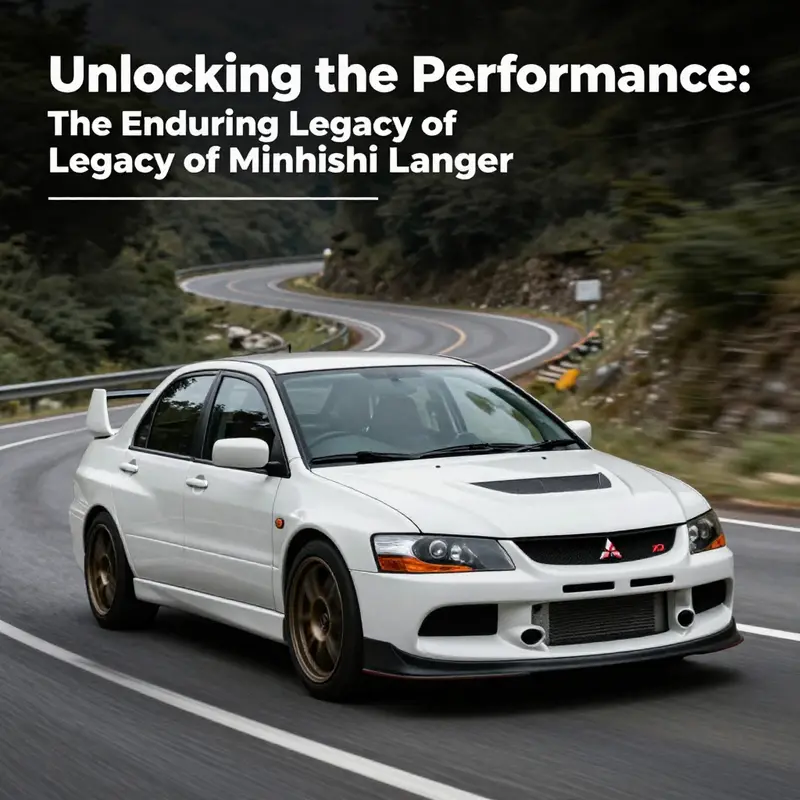
The Mitsubishi Lancer Evolution, often referred to as the EVO, has captured the hearts of automotive enthusiasts and business owners alike with its unapologetic performance and racing pedigree. Since its launch, it has evolved through ten generations, each bettering its predecessor in raw power and technological sophistication. This article delves into the core features and technology that position the EVO as a powerhouse in the automotive landscape, highlights its historical impact and motorsport legacy, assesses its performance specifications against competitors, and explores future perspectives, particularly in the realm of electrification. Understanding these facets can empower business owners in the automotive industry to harness the spirit of innovation that the Mitsubishi Lancer Evolution embodies.
Engineering the Legend: Core Features and the Tech Heartbeat of the Mitsubishi Lancer Evolution
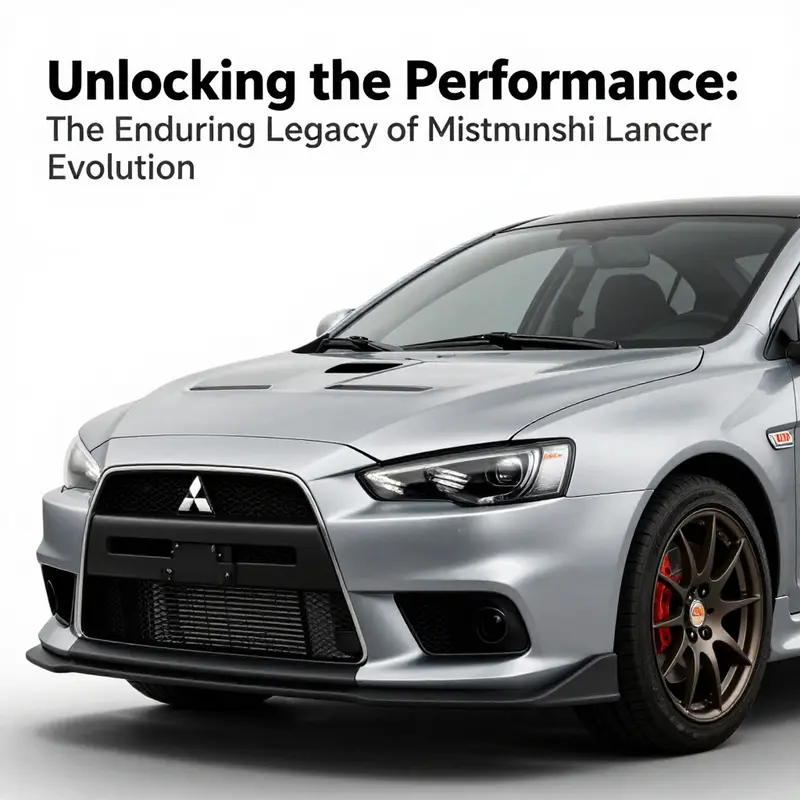
The Mitsubishi Lancer Evolution did not begin as a mere fast sedan. It emerged from a single aim: translate rally performance into a road car that carries the intensity of a World Rally Championship stage into everyday driving. The Evolution’s essence lies in a balanced philosophy where the chassis, drive system, and aerodynamics work together to deliver precise handling, connected steering, and driver confidence. Across generations, the Evolution shows a relentless refinement aimed at turning racetrack demands into usable performance on public roads. The story begins with the fundamentals of the platform and moves to the heart of the car: the all‑wheel‑drive system, the chassis, and how air and braking cooperate to control momentum at high speed.
A performance‑oriented platform anchors the Evolution’s character. It is not a luxury sedan with a sport badge; it is a purpose‑built performance machine with a rigid structure designed to withstand high loads on rally stages and translate them into predictable behavior on winding roads. Across generations, chassis stiffening, additional welds, and strategic bonding create a stable backbone for aggressive driving. That solidity translates into reduced body movement and precise geometry at the limit, giving the driver a sense of control that remains predictable under pressure.
Central to the Evolution is the all‑wheel‑drive system, a cornerstone of its rally heritage. Early versions offered grip and distribution that made the car tractable on loose surfaces. As technology evolved, torque management allowed finer control at the tire contact patch, enabling confident traction through corners on wet roads or gravel stages. The ability to modulate torque to each axle and sometimes to each wheel translates into a car that reads the road and adapts to maintain a balanced line through the apex.
Aerodynamics reinforce the car’s handling. From early days, the Evolution adopted a purposeful look aligned with function: reduced lift, increased downforce, and efficient cooling. A low, wide stance with carefully shaped air intakes and a front fascia supports high‑speed stability. The rear wing, underbody, and diffuser work together to press the car toward the road as speed rises. The goal is stability at the limits: controlling nose pitch under braking, keeping the tail steady, and preserving balanced grip between front and rear tires.
Braking systems are sized to match power and handling. High‑performance brakes with large rotors and capable calipers resist fade under sustained use, while a tuned hydraulic layout preserves pedal feel and progressivity. The result is predictable braking that supports driver confidence through sequences of corners and straights.
Inside, the Evolution emphasizes a driver‑focused philosophy. The cabin prioritizes essential controls and displays, with a supportive, sport‑oriented seat and a practical instrument cluster. A flat‑bottom steering wheel and a driver‑centric layout reduce distraction, keeping the driver connected to the car and the road. The interior is about function first, enabling precise feedback from the chassis through the seat, pedals, and wheel.
At the heart of the car is an engine lineage designed for responsiveness and torque. The turbocharged inline‑four started with robust torque and refined response, evolving to sustain boost and deliver strong mid‑range performance. Across generations, the engine family pursued higher specific output and cooling to keep performance consistent under high load. The result is a powertrain that feels eager, agile, and tractable, delivering strong acceleration without sacrificing driveability on public roads.
The transmission and drivetrain dynamics further crystallize driver engagement. A close‑ratio manual gearbox with a durable clutch rewards precise timing, while differential behavior and gear tuning across generations align with rally‑derived driving styles. The driver’s ability to blend power with steering input defines how the Evolution feels on the road: a car that reads the road, respects tire grip, and responds with control and confidence.
Suspension geometry and tuning underpin the car’s adaptability. Front double‑wishbone and multi‑link rear layouts aim for predictable turn‑in, balanced grip, and composure through varied road textures. Across generations, tuning sought to expand the car’s handling envelope without making it intimidating, allowing both learning and skilled execution.
The Evolution’s narrative links street performance to rally engineering. Data and feedback from competition fed back into production models, refining cooling, aerodynamics, and chassis stiffness to sustain performance on longer drives and during repeated high‑speed laps. The result is a car that remains connected to its racing DNA while offering the practicality, reliability, and daily usability expected of a road car.
Looking ahead, discussions about revival focus on preserving the driving thrills while adopting cleaner propulsion and modern controls. The core idea remains: harmonize power, grip, and chassis feedback to give drivers deep confidence and an engaging driving experience, even as new technologies reshape the automotive landscape.
Mitsubishi Lancer Evolution: Rally‑Bred Genius, Road‑Car Legend, and the Endless Search for Performance
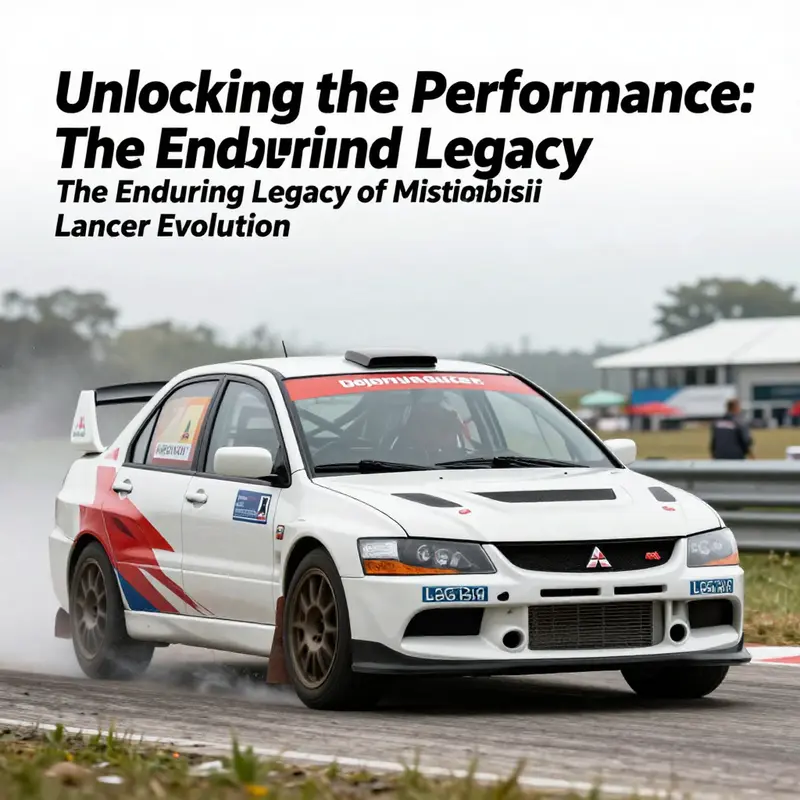
The Lancer Evolution did more than showcase a performance badge on a showroom sedan; it forged a creed that tied racing discipline to every line on a production car. Born from a clear, almost audacious aim—to win the World Rally Championship and translate that triumph into a street‑legal machine—the Evolution became a living laboratory. Each generation was less a facelift and more a careful recalibration of the balance between grip, power, weight, and steering feedback. This chapter traces how a compact sedan with rally genes reshaped what a high‑performance family car could be, and how its influence stretched far beyond the asphalt of the circuit, seeding a cultural memory shared by car enthusiasts around the world. The story begins with a strategic decision in Mitsubishi’s back room and ends with a question about a potential rebirth in an electrified era, a question that keeps fans dreaming while the legend continues to be lived on the road, in the garages, and in the fantasy of every kid who ever pressed a right foot to the floorboard and felt the car obey, instantly and precisely, as if it could read the driver’s thoughts.
The origins of the Evolution lie in the pragmatic rigor of homologation and the hunger for a compact, light, and immensely stiff chassis capable of accepting siege-like levels of driving input. In the late 1980s, the company’s Galant VR‑4—a sedan with a turbocharged four‑cylinder heart and all‑wheel drive—had already demonstrated that performance could come from a well‑engineered drivetrain paired with a chassis that communicated with brutal honesty. The challenge was to deliver that essence in a lighter, more nimble package that the World Rally Championship rules could permit through homologation. The Lancer, already a strong seller with a robust platform, provided the perfect canvas. By transplanting the turbocharged engine and the advanced all‑wheel drive architecture into the Lancer shell, Mitsubishi created the first generation of what would soon be known as a road car that behaved like a rally car when the road demanded it. The result was not simply speed; it was a tactile, precise sense of control that translated the noise and energy of the rally stage into a daily driving experience that was accessible yet ferociously capable.
As the Evolution matured through the 1990s, its distinct identity became inseparable from a single purpose: to conquer the toughest terrains with composure and to deliver driver confidence in conditions that would unsettle a lesser machine. The eight cylinders of a powertrain rarely tell the whole story; the real magic resides in how the power is delivered and how traction is managed. The Lancer Evolution achieved this through a sophisticated all‑wheel drive system—the architecture of which integrated intelligent distribution of torque with a central electronic brain. A viscous coupling unit and a well‑calibrated limited‑slip differential formed the core of a drivetrain that could grab and keep traction on gravel, dirt, mud, and snow. A rigid chassis, finely tuned suspension, and aerodynamic enhancements such as a large front splitter and carefully shaped rear wing contributed to a car that could maintain composure at breakneck speeds over unpredictable terrain. This period solidified the Evolution as the benchmark against which all other rally cars were measured, earning it the title of “the ultimate rally machine.”
Engineering innovation and global influence followed an equally relentless path. Beyond the racetrack, the Lancer Evolution reshaped the concept of a performance sedan. Its evolution was marked by significant technical advancements. The Evolution III introduced a redesigned aerodynamic package with oversized air intakes for improved brake cooling and a massive rear wing for increased downforce—features later adopted across the industry. The turbocharged engine, continuously refined from a horsepower target in early generations to higher outputs in later iterations, became legendary for its reliability and tunability. The transition to the tenth generation marked a pivotal shift: moving away from a shared platform with the standard Lancer to a completely independent design, showcasing Mitsubishi’s commitment to pushing boundaries even after the WRC glory days. The Evolution’s influence extended far beyond Japan. Initially sold only in Japan, its popularity surged globally due to demand from import enthusiasts. The introduction of the Evolution to European markets via RalliArt in 1998 and its eventual launch in North America with the eighth generation proved its universal appeal. It inspired a vast aftermarket culture, with adjustments ranging from simple exhaust upgrades to full engine builds and custom suspension systems. Today, the Evolution remains a symbol of automotive passion, celebrated in films, video games, and social media communities worldwide.
Even after Mitsubishi ceased production of the Lancer Evolution in 2016, its legacy lives on. Enthusiasts continue to restore, modify, and race these vehicles, while new generations discover them through online forums and YouTube channels. The Evolution is more than a car—it is a cultural phenomenon representing the perfect fusion of racing DNA, cutting‑edge engineering, and unyielding driver engagement. Its story is one of relentless pursuit of perfection, where every bolt tightened and every air intake redesigned served a higher purpose: to win on the world’s toughest rally stages and to inspire drivers everywhere.
The cultural impact is felt in the way the car moved the global tuning scene, inspiring a generation of enthusiasts to push the boundaries of what a sedan could do with aftermarket components, aerodynamics, and chassis tuning. The Evolution became a canvas for experimentation and a badge of honor for those who chased the line between road legality and track‑ready performance. The drive to shave off weight, improve stiffness, and optimize cooling created a lineage of parts and ideas that extended far beyond Mitsubishi’s own catalog. The car’s silhouette—compact, wide, with a commanding stance—became a recognizable emblem in streets and parklands where car lovers gather to discuss performance, share build stories, and relive the thrill of rallying through the eyes of a road‑going machine.
The modern question remains: can the spirit endure in a new era of propulsion? A 2025 interview hinted at possibilities, suggesting that the brand may revisit the concept with a fresh powertrain strategy, potentially leveraging electrification to deliver instant torque and refined energy management. If a revival materializes, it would carry forward the core principles of the Evolution: precision, balance, and a driver‑focused experience that rewards control over brute force. The challenge will be to maintain that engaging, communicative feel while embracing the efficiencies and capabilities offered by contemporary technology. Yet the core promise will endure—driving a car that makes the act of going fast feel purposeful, rewarding, and intimate with the road. It is this essence—the car as a dialogue between driver and machine—that has kept the Evolution’s legend alive, well beyond the end of its on‑sale life, and it is the anchor that will guide any future interpretation of the model.
For those who want to explore the tangible heritage and the more recent explorations of the platform’s potential, a related asset is a carbon‑fiber bonnet that showcases how modern high‑aero components can be integrated into a lightweight, performance‑oriented body. The concept captures the spirit of the Evolution’s ongoing fascination with reducing weight while preserving strength and stiffness, a core theme that underpins every generation’s technical philosophy. The link provides a window into how enthusiasts think about the fusion of advanced materials with classic performance design—an ongoing dialogue between past and future that defines the Evolution’s enduring allure. carbon-fiber bonnet for Mitsubishi Lancer Evo X
In the end, the Lancer Evolution is more than a car model; it is a benchmark of engineering discipline and a cultural beacon for car lovers. It represents a moment when a manufacturer decided that racing success could and should translate into a better, more engaging road car. The car’s memory continues to circulate in communities around the world, in the conversations of engineers who still study its design choices, in the fan clubs that meet to celebrate every new restoration, and in the quiet, daily rituals of owners who find joy in a machine that responds to a driver’s intent with unprecedented fidelity. The Evolution’s story is not finished; it simply awaits new chapters that might come in a new guise, perhaps electrified, perhaps reimagined, but always tethered to the same fundamental promise: a high‑performance sedan that can be driven with the same seriousness and joy that defined its rally‑pursuit beginnings. For those who want to trace the official history and the deeper technical narrative beyond the road, the brand’s own archive remains the most authoritative compass on this enduring journey. For official history and technical details, consult the primary source from the manufacturer’s site: Mitsubishi Motors official history.
Rally Bloodline, Road-Bred Precision: Inside the Lancer Evolution’s Drive Toward Legenda
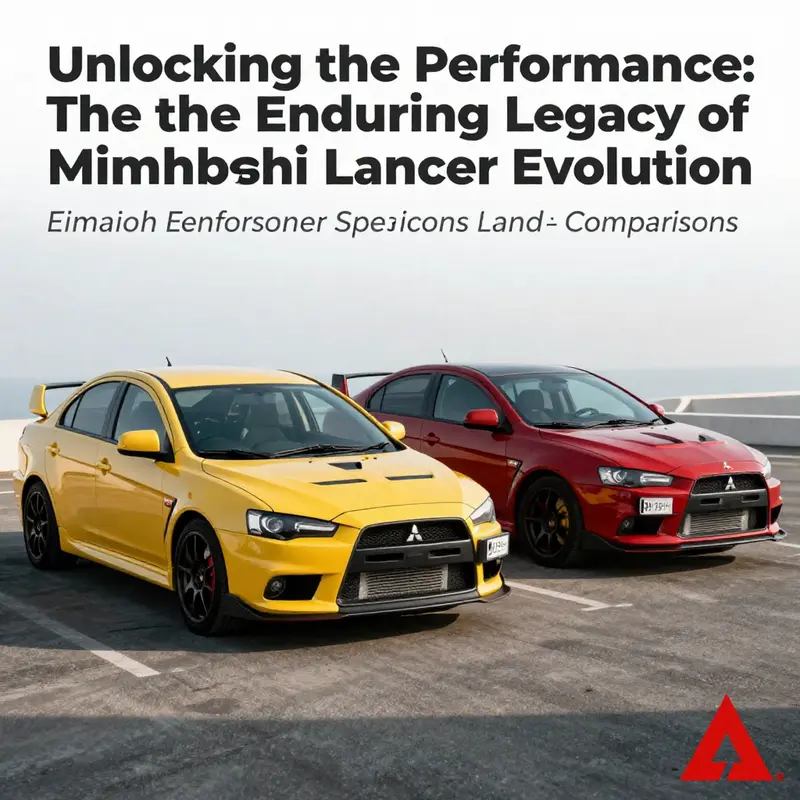
From the moment the Lancer Evolution stepped into the glare of World Rally Championship stages, it carried a responsibility beyond mere speed. It was a machine engineered to translate the brutal demands of rally stages into a ride that could be civilized enough for the street, yet ruthless enough to tackle gravel, tarmac, and ice with the same calm certainty a veteran driver brings to a corner. The Evolution lineage is a chronicle of how a compact sedan, born from a factory floor and tuned by a focused collective of engineers, grew into a symbol of precision, discipline, and the stubborn joy of driving on the edge. Its journey is not merely about horsepower numbers or cornering grip; it is about a philosophy of control. Each generation refined the balance between power, grip, and feedback, and in doing so, it stitched a unique relationship between car and driver that remains compelling to this day.
The early chapters of what became the Evolution story reveal a philosophy that would define the breed. The lineage began with the core idea of rally heritage and road prowess living in one chassis. It demanded not just raw torque but an intelligent distribution of that torque to the wheels, a system that could respond to a driver’s intention in real time, and a chassis that could translate that intention into precise, repeatable behavior on a variety of surfaces. The result was a car that could be driven with surgical precision on a twisty mountain road and then, with a shift of the stance and a tap of the pedal, become the rally-replica on public asphalt. The driving experience was not just about speed; it was about the transmission of intention—from the driver’s foot to the contact patch of the tire, through a drivetrain that could chase a sliding line and recover with grace.
Among the most significant technical pillars supporting that philosophy was the all-wheel-drive system, a technology that transformed perception as much as capability. The Evolution’s AWD architecture was not a single abstraction but a living system, evolving with each generation. Its core was a suite that Mitsubishi christened S-AWC, or Super All-Wheel Control. S-AWC was more than a marketing phrase; it was a real-time choreography of torque between the front and rear axles, coupled with dynamic handling controls that could anticipate the car’s needs and respond with precision. The system integrated active front differential control through the central unit, an active yaw control mechanism, and a stability management layer designed to work in concert. The result was a car that could be nudged toward the apex with the promise of grip and then be steadied with a light hand on the accelerator, or snap back from a misjudged line with a confident, mechanical calm.
Aerodynamics and chassis rigidity were next in line for enhancement, because speed without stability is an illusion. Each generation wore a body that looked purpose-built for the wind, with a low center of gravity and a wide stance that signaled its intent even at a glance. The iconic rear wing, the scooped front bumper teeth, and the sculpted side skirts were not cosmetic afterthoughts; they were aerodynamic devices tuned to generate downforce precisely where it mattered. When the car pressed into a corner at speed, these features did more than just maintain a clean silhouette; they contributed to the feel of the car as a coherent instrument. The suspension architecture and chassis stiffening paired with Brembo brakes and reinforced anti-roll bars ensured the chassis could withstand the rigors of aggressive driving without surrendering that crucial sense of control.
If the engine is the heart, then the Evolution’s heartbeat evolved with an almost musical cadence across generations. Early models carried the famous 4G63 turbocharged engine, a unit renowned for its robust torque delivery and dependable performance under rally conditions. The power, while impressive for its era, was balanced by a torque curve that encouraged a metered, mid-range surge rather than a raw, unbounded sprint. The third generation, EVO III, marked a notable leap forward. It adopted a larger turbo, a refined compression ratio, and a more aggressive aero package that improved cooling and downforce. Power figures climbed into the neighborhood of 270 horsepower with torque around the 309 Newton-meters mark, all while maintaining a chassis that rewarded careful balance rather than brute abuse. This was the generation that defined the EVO’s road-to-rally duality: a car that could be exploited for speed, yet never lost its sense of composure when pushed to the edge. The handling language that emerged—tightened steering response, respectful weight transfer, and crisp throttle discipline—would become a hallmark of the series.
The evolution did not stop there. The tenth generation introduced a newer architecture, the 4B11T twin-turbo engine, a modern force that reimagined the Lancer’s potential. It offered a leap in peak output while maintaining the nimble, responsive persona that defined the EVO line. Power rose to around 295 horsepower, with peak torque estimated in the upper three hundreds of Newton-meters. The car’s acceleration profile—0 to 100 kilometers per hour hovering near the mid-four-second range—hung on the same bedrock of control that had always underpinned the EVO: a drivetrain capable of delivering torque in a manner that a driver could manage with finesse rather than wrestle into submission. The 4B11T powerplant, in combination with S-AWC and a chassis refined for high-speed stability, created a platform that could be equally effective on a closed race circuit or a demanding high-speed highway run.
The daily experience of owning or driving an Evolution was never merely about straight-line speed. The dynamic interplay of torque vectoring, differential actuation, and brake performance crafted a ride that felt both assured and alive. The Active Yaw Control system, initially a standout feature in earlier generations, evolved into a more sophisticated set of decisions within the S-AWC framework. It balanced the car’s yaw moment through careful distribution of power and braking force, especially helpful when entering corners at an aggressive pace. The driver’s feedback—slightly heavier front end, a tactile sense of weight transfer, the body’s natural response to throttle input—was an ongoing dialogue. In this, the car rewarded a precise line, a clean apex, and the willingness to push beyond the perceived limits with predictability. A driver who understood the Evo’s temperament could coax incremental improvements in lap times, a process that felt almost collaborative with the car rather than coercive beneath it.
Beyond the numbers, the Lancer Evolution’s performance story is a study in how a brand translates race-bred competency into road-going excellence. The chassis and brake package—threads that tie together the car’s ability to sustain high-speed stability and decisive stopping power—were designed for the continuous, grueling demands of rally stages and the more forgiving rhythms of road use. Brembo calipers and reinforced rotors became a standard bearer for performance braking, ensuring heat management and consistent bite even when driven at the limit. The result was a car that rewarded sustained, careful driving as much as it rewarded short, surgical bursts of speed. The equation was not merely about power; it was about the discipline to harness that power with a sense of proportion and timing.
Throughout its career, the Evolution also became a cultural phenomenon. It carried the flame of Mitsubishi’s WRC success into everyday garages and street-owned dream machines. The mid-to-late 1990s, in particular, marked a period of extraordinary success on global rally stages, with Mitsubishi’s works team clinching multiple titles and the EVO’s derivative styling and mechanical sophistication becoming instantly recognizable on streets and in magazine imagery. The car’s identity grew beyond a performance car; it became a symbol of a certain ethos in Japanese engineering—a blend of meticulous engineering, rider-friendly manners, and a relentless pursuit of balance between speed and control. The shutters of its pop culture reverberations were not limited to automotive media; the EVO embedded itself into the broader lexicon of car enthusiasts as a tangible representation of a storied era of performance in which technology and driver skill converged into a singular driving language.
As time marched on, the question of the Evolution’s future inspired talk of revival. By 2016, Mitsubishi had announced the end of the conventional EVO production run, closing a chapter that many enthusiasts believed had not yet reached its natural conclusion. Yet, like any enduring legend, the EVO’s spirit lived on in the conversations of engineers, designers, and fans. In 2025, a notable interview with Kaoru Sawase, a Mitsubishi engineer, suggested the brand’s potential to re-engage the EVO legend in a new form—likely electrified, or at least electric-assisted—carrying forward the same core values of precision, balance, and rally-informed dynamics. The notion of a revival in a modern, electrified guise stirred a mix of excitement and skepticism; excitement for the continuation of a performance lineage and skepticism about whether a future EVO could recapture the tactile, mechanical intimacy that defined its earlier generations. Even as the wheels turned toward new propulsion architectures, the EVO’s historical footprint remained unshaken. It functioned less as a simple catalog of models and more as a living case study in how performance engineering can create a cultural touchstone that transcends its era.
In the comparative landscape of modern performance sedans, the Evolution’s footprint remains distinctive. It sits alongside other storied all-wheel-drive options that emerged from different corners of the market, each with its own interpretation of how to marry traction, engine response, and chassis feedback. The EVO’s particular strength lies in that finely tuned triad of driver feedback, predictable handling, and the sense that every component within the drivetrain and suspension is listening to and anticipating the driver’s intent. The result is a machine that invites experimentation and rewards careful, disciplined pedal work. It’s not a car that pretends to be a luxury cruiser or a purely track-focused weapon; it is something in between—a road-going rally car that never forgot its origin while still pushing the envelope of what a street car can become.
To understand the Evolution is to understand a philosophy about performance that values the driver’s experience as much as the machine’s capability. The path from the original 4G63 turbocharged heart to the 4B11T twin-turbo heartbeat illustrates not only an evolution of power but an evolution in how power is delivered and managed. It is, in essence, a narrative about control as a form of sophistication—the art of turning maximum potential into real-world, repeatable driving pleasure. The EVO did not simply go faster; it learned to steer faster, brake later, and bite into a corner with more confidence. Its legacy endures in the minds of enthusiasts who still seek that sense of direct connection between human intention and mechanical response.
For readers who want to trace the lineage with a concrete focal point, EVO III’s era remains a widely cited benchmark for balance and mechanical purity. It represents a moment when the architecture of the car became a philosophy of driving—an idea that the car could be taught to behave in a way that felt almost telepathic to a skilled driver. It’s precisely that blend of confidence and sensitivity that has anchored the Lancer Evolution as more than a set of numbers. It is the embodiment of a spirit—one that challenges the driver to push with respect, and rewards that push with a trustworthy sense of predictability. In that sense, the Evolution is a continuous invitation: a rally-inspired performance machine that remains relevant because it speaks a language engineers and drivers alike can recognize and trust, generation after generation.
Internal link reference for enthusiasts who want to explore a specific component lineage aligns with the practical curiosity that has always accompanied the EVO’s culture. The 4B11T engine, central to the later generations, is a perfect example. The engine’s billet-block evolution and its integration with a modern transmission and control systems highlight how far the platform traveled from its rally-bred roots to a contemporary performance package. For readers looking to understand a concrete engine upgrade that shaped the later EVO X’s capability, a detailed look at the 4B11T billet block provides a technical anchor that ties together the historical narrative with the present performance expectations. 4B11T billet block illustrates how modern manufacturing and precision engineering support high-performance breathing room at the top end of the rpm range, while still preserving the car’s driveable character on everyday roads.
As the modern era unfolds, the EVO’s story continues to resonate because it defies the easy, one-note shorthand of “more horsepower equals better performance.” Instead, it demonstrates how a carefully engineered system, where the engine, drivetrain, aerodynamics, and chassis work in harmony, can yield a driving experience that remains intoxicating even as the world of performance cars evolves toward electrification and digital control. The Evolution’s legacy is not merely a catalog of variants; it is a case study in how to maintain the essence of a rally-inspired car while adapting to shifting technologies and new markets. The next chapters in this ongoing saga will, no doubt, test whether a new interpretation can honor the original’s spirit while addressing the demands of a changing automotive landscape. The core truth, however, remains: the Lancer Evolution forged a connection between engineering discipline and driving passion that few cars have managed to replicate, and that connection continues to captivate enthusiasts who want more than just speed—they want a partner in motion, a car that feels as if it has been tuned to listen to their driving heartbeat.
External reference for a deeper dive into the contemporary concept landscape: https://www.motor1.com/news/532123/mitsubishi-lancer-evolution-xi-concept/
From Turbocharged Legend to Electrified Horizon: Reimagining the Lancer Evolution for a Sustainable Era
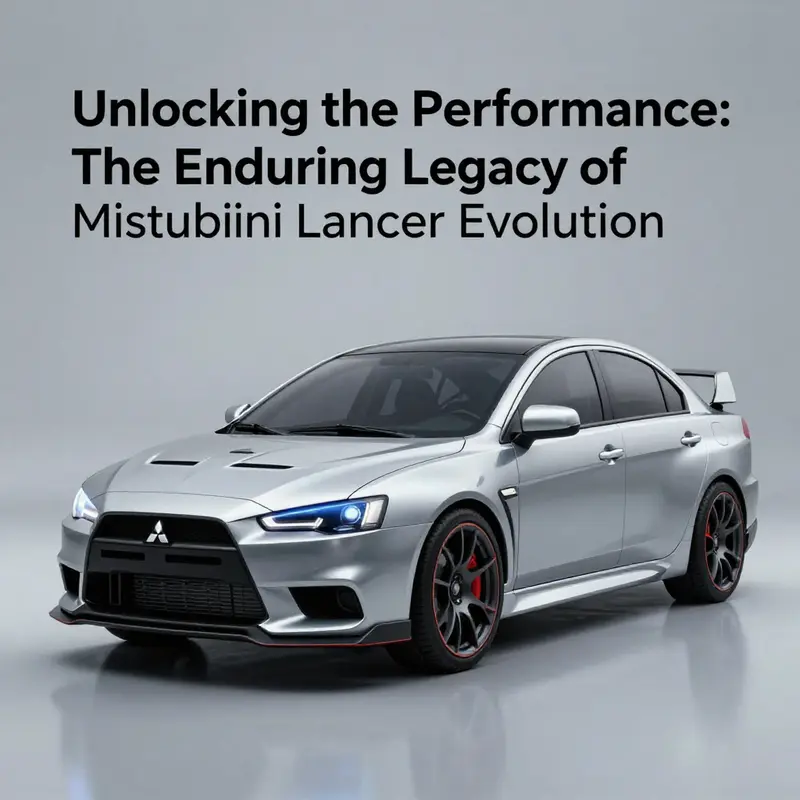
The Lancer Evolution emerged from a hunger for rally pace and chassis precision, and it remains a reference for how a compact sedan can translate racing discipline into street performance. Its legend rests on the dialogue between driver and machine at the edge of grip, where steering feel and balance keep the car honest and alive. This chapter looks forward, tracing a plausible arc for the Evolution that respects its heritage while acknowledging a transportation landscape shaped by emissions targets, resource constraints, and a rapid shift toward battery and software ecosystems. Electrification is not a rupture but a refinement that deepens the Evo’s core virtues while embracing a propulsion paradigm becoming standard in the industry.\n\nA central constraint is platform architecture. The Lancer lineage benefits from a compact understructure, but the current CMF-B platform falls short of the demands of a true performance compact with all wheel drive. A dedicated, performance focused chassis would require substantial investment and a pragmatic approach to resource allocation. The challenge is not simply to add power but to engineer a complete, cohesive platform that preserves the Evo’s immediacy and predictability in steering, throttle, and braking. This effort would demand rethinking the monocoque, suspension geometry, mass distribution, and thermal management, while preserving the handling character that makes the Evo’s input feel telepathic to a skilled driver. Economics and corporate strategy will shape the path, possibly favoring a hybrid approach that uses an adaptable chassis with electric propulsion elements to meet emissions targets and deliver precise torque distribution.\n\nPowertrain strategy sits at the heart of the Evo’s potential rebirth. A straight continuation of the old formula would require substantial investment to meet regulatory hurdles and could struggle in a market leaning toward electrified performance. Electrification offers an alternative path through a plug-in hybrid that combines a gasoline engine with front and rear electric drives, enabling instantaneous torque and versatile torque split that redefine cornering grip and steering response. Batteries add weight, reshaping balance and chassis dynamics, so the Evo would need to adapt its layout to the energy source. Electric motors can provide torque at zero RPM and enable refined torque vectoring, potentially expanding the dynamic range available to the driver. With careful engineering, electrification could preserve the Evo’s linear, communicative feel and even enhance it through electronic systems calibrated for finesse rather than sheer aggression.\n\nThe brand context colors the revival probability. The Lancer name has receded in many markets, and performance is now framed by efficiency, software-defined dynamics, and battery strategy. Yet the rallying spirit that gave rise to the Evo remains persuasive. A future Evolution could sit within a lineup that embraces electrification, validating a modern interpretation of driving excitement. The challenge is to deliver a car that feels familiar to long-time fans while offering the advantages of contemporary propulsion and control systems. A well-integrated electrified architecture could preserve steering feel, front-end bite, and a responsive chassis, while the powertrain delivers controllable grip at the limit.\n\nDesign, aero, and packaging would continue to matter. Electrification would not erase aero performance but would shift its purpose toward cooling, weight distribution, and thermal management. The objective would be to maintain predictable downforce and high-speed stability while keeping weight manageable and protecting the battery. Advanced materials, optimized cooling, and adaptive aero elements could play a role in maintaining balance across driving conditions. Even in an electrified epoch, the Evo’s focus on steering feel and precise turn-in could be preserved by a well-calibrated blend of mechanical and electronic control, delivering a car that remains loyal to the driver’s input.\n\nEngineering integration would require a coherent system approach. Battery placement, weight distribution, and motor control must be designed in concert, with a chassis tuned for dynamic balance under heavy throttle and a suspension layout that supports a wide envelope of lateral Gs. A dual-motor layout could offer a favorable front-to-rear weight bias, while a centralized battery pack keeps the center of gravity low. The human-machine interface would emphasize mode selections that favor balance, linear throttle response, and chassis feedback, rather than a single aggressive acceleration profile. The Evo’s essence could endure, enhanced by software and hardware working together to translate driver intent into precise, predictable motion.\n\nUltimately, the Evo revival would be a bridge between past and future. It would acknowledge heritage while embracing electric propulsion and advanced control systems. If realized, the next Evolution would invite a new generation to measure speed not only by acceleration but by the clarity of driver feedback and the car’s ability to respond with immediacy to micro-adjustments. The chapter closes with a reminder that the Evo’s spirit endures wherever engineering seeks to harmonize performance with sustainability, and that a future Evolution could redefine what a compact performance car can be in an era of electric possibility.
Final thoughts
The Mitsubishi Lancer Evolution stands as a testament to Japanese automotive excellence and a beacon for performance-oriented vehicles. Its rich history in motorsports, robust performance specifications, and the potential for electrification foreshadow a promising future. As the automotive industry evolves, the spirit of the EVO continues to inspire innovation and progress. For business owners and automotive enthusiasts, the Lancer Evolution represents more than just a vehicle; it is a movement towards unmatched performance and technological advancement.