

The Mitsubishi Outlander stands as a testament to automotive engineering, with its exceptional engine designed for efficiency and reliability. Business owners looking into fleet options or personal investment recognize that understanding the engine’s performance attributes, maintenance needs, technological advancements, and market dynamics is crucial for informed decision-making. In the subsequent chapters, we will delve into the specifications and performance of the Mitsubishi Outlander engine, discuss maintenance practices that enhance engine longevity, explore the latest technological innovations in engine design, and examine the economic factors influencing the engine market. Each section contributes to a richer understanding of how the Mitsubishi Outlander can meet diverse driving demands and operational goals.
Engine Harmony: Design, Performance, and Reliability in the Mitsubishi Outlander
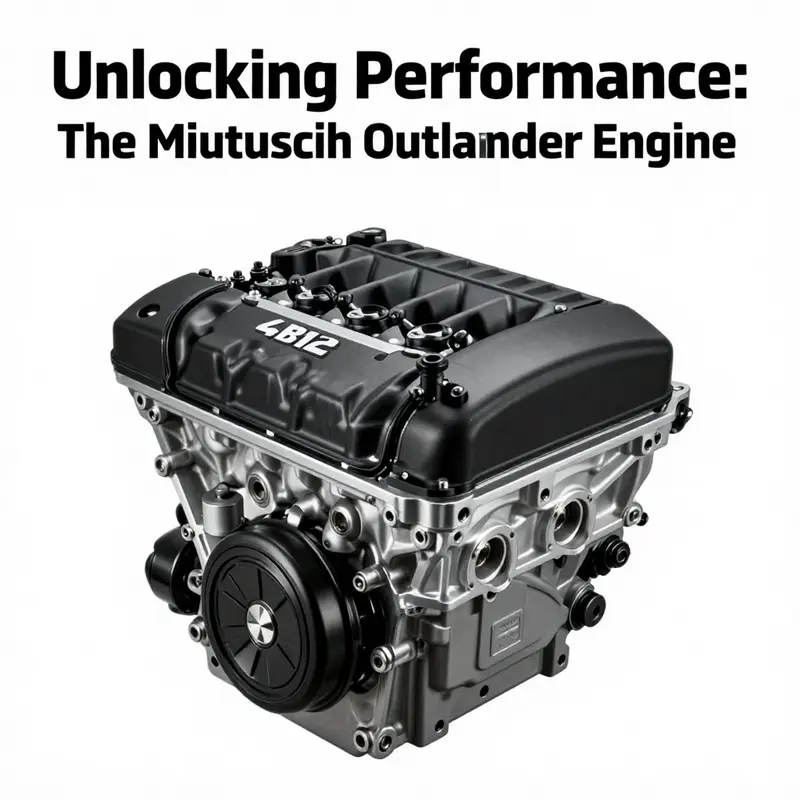
The Mitsubishi Outlander’s engine lineup blends compact displacement with modern efficiency. Across generations the focus has been on lightweight architecture, precise control, and a balance of daily usability and confident highway capability. The current family centers on a pair of inline-four engines in the 1.8 to 2.0 liter range, designed to deliver smooth power, predictable throttle presence, and good fuel economy whether in city traffic or on long highway stints. Transmission choices, including a CVT and a conventional six-speed automatic, are matched to the engine to keep the torque delivery linear and usable.
The 1.8-liter variant employs DOHC with aluminum block and head, minimizing reciprocating mass. The result is lighter inertia, quick response, and steady efficiency. Power is modest, roughly 130-135 hp, but torque is tuned for steady progress in daily driving. Paired with a CVT or six-speed, the engine remains quiet and refined, with a torque curve that is forgiving under city load.
The 2.0-liter adds a bit more urgency and torque, around 150-160 hp, with a broader torque band while still emphasizing efficiency through lightweight construction and smart valve timing. This variant delivers stronger midrange shove for urban overtakes and highway merges, while maintaining the Outlander’s reputation for calm, predictable acceleration. As with the 1.8, the 2.0 is offered with either a CVT or a conventional six-speed automatic, enabling smooth, progressive power delivery.
A key thread tying these engines together is an integrated electronic management system that coordinates combustion efficiency, emissions control, and throttle response. The engine control unit works in concert with the transmission control unit to optimize gear shifts and throttle mapping based on vehicle speed, load, and driving style. In AWD configurations, the control strategy expands the usable envelope by distributing torque to the front and rear axles to enhance stability without compromising efficiency.
Material choices and structural integration play a crucial role in what these engines can deliver. The combination of aluminum for the block and head with careful crank and bearing design lowers inertia while preserving rigidity under load. This aluminum architecture enables compact packaging, improved warm-up, and reliability across a range of climates and driving conditions. For a front-wheel-drive baseline with optional all-wheel drive, the engine must be compact yet robust enough to handle the extra load from AWD activation, resulting in a powerplant that feels both efficient and capable.
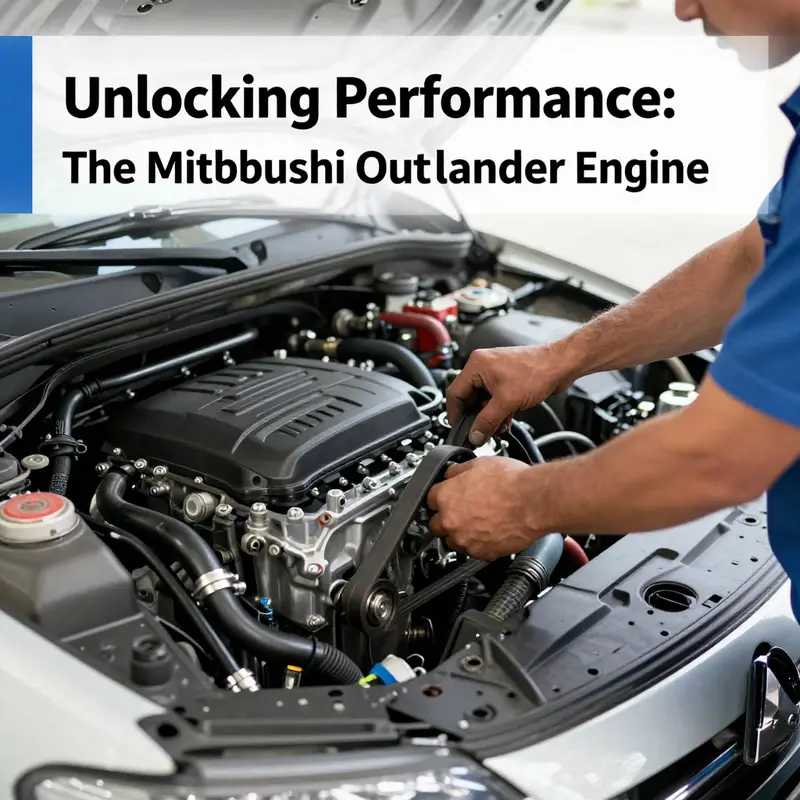
Maintenance and reliability are built into the engineering philosophy. The serpentine belt system drives essential accessories—the alternator, power steering pump, and A/C compressor—and its tensioning system is designed to maintain proper tension across a wide temperature range. Regular inspection of belt wear and tension helps prevent accessory failures. The power steering hoses, often braided and reinforced, also demand periodic checks for cracks or leaks. Taken together, these items illustrate how the Outlander’s engine family emphasizes predictable maintenance as a path to long-term reliability.
From a service and parts perspective, understanding the engine family helps owners anticipate required maintenance. The 4B11 aluminum-block family provides a balance of lightweight construction and robust durability, while the 4B12 expands displacement without abandoning the same design philosophy. The service approach emphasizes timing, lubrication, cooling, and inspection of front-end components to keep the belt system in tune. The onboard ECU/TCU logic adapts to wear and load over time, preserving smooth, reliable performance across model years.
Integrating these engines into the broader vehicle ecosystem also means acknowledging regional trim variations and tuning priorities. Markets seeking spirited driving may favor the 2.0-liter for its punch, while others targeting efficiency may lean toward the 1.8-liter for urban duty. In every market, the engines share a common DNA: lightweight design, precise element interaction, and a control strategy that prioritizes smoothness and reliability. The result is a practical family crossover with a capable undercarriage and a thoughtful approach to modern engineering.
For readers who want a deeper look at engine internals and a more technical perspective on variant blocks, a billet-block exploration within the 4B11 family offers a focused case study of how high-strength materials and precise machining enable enhanced durability and performance potential. See the linked reference for a billet-block variant of the 4B11 family: 4B11t billet-block. This example shows how engineers push the boundaries of material science and manufacturing precision to improve longevity under demanding conditions, a principle that underpins even the standard production engines that power the Outlander in everyday use.
As with any modern automotive engine, these powerplants are designed to be robust, adaptable, and forgiving of a broad spectrum of driving styles and environments. They embody a philosophy that values long-term reliability alongside everyday practicality. The engine’s relationship with the rest of the powertrain—the transmission, the drive system, and the electronic control architecture—creates a dynamic that rewards attentive maintenance, careful driving, and understanding of how the car behaves under different loads.
Sustaining the 2.4L MIVEC Rhythm: A Practical Guide to Maintenance and Longevity in the Mitsubishi Outlander Engine Systems
The Mitsubishi Outlander’s engine systems are more than a sum of parts; they are a coordinated rhythm that underpins everyday practicality and long-range reliability. In models equipped with the 2.4-liter MIVEC inline-four, this rhythm rests on a foundation of balanced materials, smart design, and a maintenance philosophy that favors proactive care over reactive fixes. When the sequence is respected—oil, coolant, belts, and the subtle signals from the engine bay—the result is smooth operation, steady efficiency, and the potential to traverse high mileages with confidence. The journey to longevity begins with recognizing how the key components interact, how the maintenance schedule aligns with actual driving conditions, and how small decisions—like the grade of oil chosen or the timing of a belt check—compound into a durable engine life over many years.
The 2.4L MIVEC engine is notable for its blend of cast iron and aluminum in its construction, a combination that delivers strength without excess weight. This material approach supports a design that is compact enough to slot into the Outlander chassis with admirable efficiency while maintaining the durability required for everyday road use. That efficiency extends to fuel economy and overall responsiveness, attributes that many owners value as they accumulate miles on highways and backroads alike. Yet the same attributes that provide efficiency can only shine through when the maintenance routine respects the engine’s operating realities. Regular oil changes, cooling system vigilance, and timely attention to the timing mechanism are not mere suggestions; they are the core practices that preserve compression, lubrication, and cooling balance—three pillars that keep the 2.4L engine running in its optimal zone.
At the heart of routine maintenance is a cadence of checks and replacements that align with the engine’s design and the drivetrain’s demands. The routine oil change, recommended every 5,000 to 7,500 miles depending on driving conditions, is more than a change of lubricant. It is a reset for the engine’s internal environment, removing particulates and replenishing additives that reduce wear, maintain viscosity, and help control heat at the piston rings and bearings. Using high-quality synthetic oil generally proves advantageous for this particular engine family, helping to sustain performance during cold starts and hot-running conditions alike. This choice matters because the 2.4L MIVEC operates within a narrow balance of tolerances; even small improvements in lubrication quality can translate into lower friction, quieter operation, and less long-term wear.
Spark plugs represent another cornerstone of reliable operation. In many 4B12-era discussions, these components require attention roughly every 60,000 to 100,000 miles, depending on the specific model year and usage. The spark plugs are small, but their function is large: they ignite the air-fuel mixture with precise timing. When the plugs wear, misfires, reduced fuel economy, and diminished throttle response can creep in, even if the rest of the engine seems otherwise healthy. Replacing plugs at the appropriate interval supports consistent combustion and reduces the risk of knocking, which can stress the piston and valve gear over time. A balanced maintenance approach includes not only spark plug replacement but a broader check of ignition coils and related components as part of a routine electrical system assessment.
The timing mechanism, whether belt or chain, deserves special attention because it governs valve timing and, in the worst case, can incur significant internal damage if neglected. For earlier Outlander configurations that relied on a timing belt, adherence to the manufacturer’s replacement schedule is critical. A failed belt can lead to catastrophic engine damage, especially in interference designs where the valves and pistons occupy shared spaces. Later models often lean toward chains or updated timing configurations, but the key principle remains: monitor the timing system and replace components at or before the recommended intervals. The act of checking timing components becomes a preventive measure, illustrating how a single maintenance decision reverberates through the engine’s entire cycle of operation.
Cooling system maintenance is equally central to longevity. The Outlander’s 2.4L engine operates within a thermal envelope that rewards steady cooling and clean coolant paths. Regular coolant flushes, thermostat checks, and inspections of hoses and belts are essential. Over time, coolant degradation and heat cycle stress can lead to leaks or reduced cooling efficiency, both of which threaten engine health. A proactive cooling regimen reduces the risk of overheating, which is one of the most common precursors to engine failure in modern cars. Owners who invest in coolant quality and hose integrity often find themselves with fewer surprise overheating episodes and more reliable daily performance.
Beyond the big-ticket items, the maintenance routine invites owners to be vigilant about “minor” indicators that can presage bigger issues. Unusual noises, warning lights, or unexpectedly poor fuel economy deserve prompt attention. Such signals often point to evolving wear in belts, hoses, sensors, or the fuel delivery and exhaust systems. A systematic approach—addressing even small anomalies early—helps maintain engine integrity and avoids cascading failures that can complicate repairs and raise ownership costs.
Driving habits play a decisive role in how well the engine ages. Gentle acceleration, progressive throttle development, and measured acceleration in the first few seconds after startup reduce mechanical stress. Limiting excessive towing preserves starter and cooling loads that otherwise spike under heavy load. Reducing prolonged idling, especially in hot weather and during urban congestion, lessens heat buildup within the exhaust and cooling pathways. These habits don’t just protect the engine; they also extend the life of the serpentine belt, the power steering system, and the various fluid lines that tie the engine to the rest of the vehicle. A holistic view of maintenance sees the engine as part of a system of interacting parts, each benefiting from careful use and informed maintenance.
The serpentine belt, sometimes referred to in more technical terms as the V-ribbed belt, deserves a short, careful note. This single belt drives several essential accessories—the alternator, power steering pump, and air conditioning compressor. A belt that is too loose or worn can slip, squeal, or fail, interrupting charging, steering assist, and climate control functionality. In modern Outlander models, the belt is designed for serviceability and reliability, but it relies on a properly functioning tensioner pulley system to maintain the correct tension. When a belt fails, the consequences can be rapid and far-reaching: loss of electrical charging, reduced steering assist, and a climate control system that stops cooling. Regular inspection of belt wear and tension, along with timely replacement, is a straightforward investment in engine reliability that yields ongoing dividends in performance stability.
On the fluid side, high-pressure power steering hoses represent another critical link in the chain of reliability. These hoses carry hydraulic fluid under high pressure and must withstand heat, vibration, and constant movement. They may develop leaks at bends or fittings over time if not routinely checked. A small leak here can alter steering feel and hydraulic performance, especially in SUV applications where steering loads can be high. Regular hose inspections, looking for swelling, cracks, or seepage, help ensure that the steering system remains precise and predictable, which is particularly important for drivers who rely on confident handling in a range of road conditions.
The Outlander’s AWD architecture adds another layer to the maintenance conversation. Drivetrain components and fluid levels require periodic checks to preserve traction and overall reliability. The AWD system distributes power across wheels in response to driving conditions, and when fluids are not at proper levels or when clutches wear unevenly, the system can behave differently or exhibit delayed engagement. A methodical approach to drivetrain fluid checks—checking differential fluids, transfer case lubrication, and related seals—complements the broader engine maintenance program. This holistic strategy aligns with the behavior Car and Driver identified in their reliability analysis of recent Outlander models: consistent upkeep translates into durable performance and retained value, even as the vehicle accumulates miles.
For owners seeking to maintain a steady course, a practical mindset helps. Keep the maintenance calendar aligned with manufacturer guidance, but tailor it to your actual driving. Short, frequent trips can create more frequent coolant and oil usage checks, while longer highway commutes might emphasize heat management and belt wear. The overarching goal is to minimize surprises and maximize predictability in maintenance needs. When issues do arise, addressing them promptly preserves engine health and helps maintain the vehicle’s long-term value. This proactive approach echoes the broader automotive maintenance literature, which consistently highlights the correlation between consistent upkeep and extended engine life.
The evidence gathered from reliability analyses, while not perfectly predictive for any individual vehicle, reinforces a clear pattern: the 2.4L Outlander engine responds best to a disciplined, forward-looking maintenance routine. The engine’s robust material choices, combined with a maintenance philosophy that values early detection and timely component replacement, contribute to a lifecycle that can exceed two hundred thousand miles with proper care. This longevity is not merely a theoretical possibility but a practical outcome when drivers commit to a steady maintenance cadence and sensible usage patterns. In this sense, the Outlander’s engine becomes a case study in how modern engineering, matched with disciplined upkeep, yields durable, dependable transportation over the long haul.
A note on sourcing and parts is part of sustaining longevity, too. Owners who locate reliable, factory-appropriate components and use qualified technicians experience fewer stress points in the maintenance process. When a repair or replacement is needed, considering OEM-level compatibility and trusted service support helps maintain engine integrity and performance over time. For those who want to explore parts sourcing options, one practical gateway is a dedicated parts portal that features a wide selection of Outlander-compatible components. This resource can be useful when a repair requires a specific belt, hose, or gasket set to restore the engine’s integrity without compromising performance. As part of a broader maintenance strategy, such sourcing awareness complements the routine work of the shop and the owner who is committed to long-term reliability.
In a broader narrative about the Mitsubishi Outlander engine, the emphasis on maintenance and longevity is not simply about preventing failure. It is about cultivating a dependable driving experience where the engine’s two-four-liter cadence remains steady and predictable across years and miles. When owners approach maintenance with a mindset of regularity, empathy for the engine’s operating needs, and a willingness to replace components before they fail, the Outlander can deliver consistent performance and value well beyond the horizon of standard ownership periods. The engine becomes less of a transient component and more of a trusted partner in daily life, a partner that responds with reliability and efficiency no matter the journey.
For readers seeking a practical touchstone on parts accessibility and practical maintenance decisions, a commonly referenced resource pathway points toward reputable outlets that serve as reliable sources for general maintenance needs and OEM-compatible replacements. Those who explore this space may find it helpful to consider a dedicated parts portal that offers access to Outlander-compatible components and information about compatibility, installation, and service expectations. In the spirit of informed maintenance, this approach enables drivers to plan ahead, budget for routine upkeep, and align their maintenance practices with the vehicle’s engineering needs. The broader takeaway is that longevity is built through a careful balance of routine care, thoughtful driving, and timely attention to indicators of wear. A well-maintained 2.4L MIVEC engine will, with commitment, continue to perform reliably long after many of its peers have required more frequent intervention.
To anchor this discussion in a concrete, route-tested example of practical maintenance considerations within a broader ecosystem of Outlander ownership, consider a trusted source for parts and service planning that aligns with the vehicle’s design and maintenance requirements. front-bumper-mitsubishi-outlander-19 serves as a reminder that the maintenance journey extends beyond the engine itself. While a bumper replacement is not an engine task, the broader maintenance landscape includes the sourcing of OEM-appropriate components and ensuring service compatibility across the vehicle’s subsystems. The chapter thus circles back to a core principle: the engine thrives when the entire vehicle is maintained in harmony, from belts and hoses to steering lines and drivetrain fluids, with each element treated as part of a cohesive system rather than an isolated module.
External resources offer additional context for readers who want to situate the Outlander engine within broader reliability and maintenance discourse. For a comprehensive look at how modern SUVs perform over long horizons, see industry-wide reliability analyses and owner-reported experiences that discuss engine health, maintenance burden, and ownership costs over time. These resources provide a complementary perspective to the specific maintenance guidelines laid out here and reinforce the value of a proactive, informed approach to engine longevity.
External resource: https://www.caranddriver.com/reviews/a36717680/mitsubishi-outlander-review/
Technological Advancements in Mitsubishi Outlander Engine Design
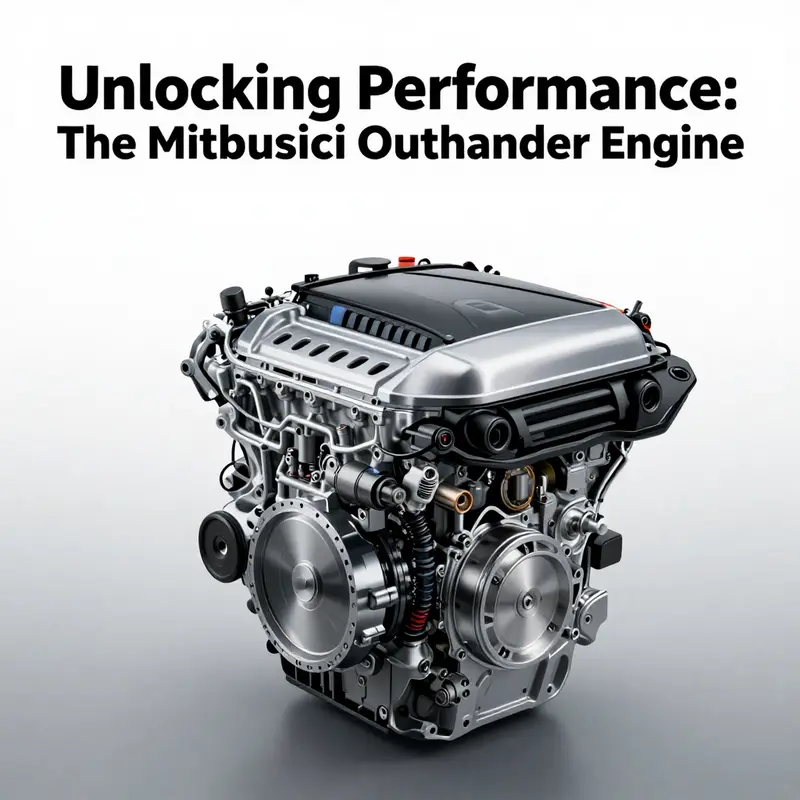
The Mitsubishi Outlander represents more than a single engine option; it embodies a philosophy of engine design that prioritizes efficiency, durability, and adaptability across markets and driving conditions. From the modern gasoline setups that power most contemporary Outlanders to the diesel variants that have found a niche in regions where fuel economy and torque are highly valued, the chapter of Mitsubishi’s engine design reads as a continuous thread of refinement. At the heart of this evolution lies a commitment to integrating lightweight materials with robust structural elements, a balance that enables smooth operation in daily commuting while preserving the potential for capable performance when conditions demand it. The most visible and widely discussed engine in current Outlander discussions is the 4B12-based family, a 2.4-liter inline-four gasoline engine whose architecture leans into a blend of cast iron and aluminum. This material combination delivers the necessary strength to withstand continuous operation and the lightweight characteristics that improve efficiency. Its compact and robust design endows the Outlander with a versatile platform, capable of being adapted across various body styles and drivetrain configurations, particularly front-wheel-drive layouts like those that pair with the Outlander and its Lancer relatives. The engine’s reputation for smooth operation and predictable power delivery makes it a dependable daily driver, while its fuel economy remains a critical talking point for buyers who weigh trips to the pump against the practicality of a compact SUV. Yet the story of technological advancement in the Outlander is not limited to a single powertrain; it unfolds across a spectrum of engines that illustrate Mitsubishi’s approach to marrying mechanical resilience with intelligent engineering controls and modern manufacturing techniques. In markets where emissions and efficiency targets push engineering teams to push further, the 4D56 turbo diesel emerges as a compelling example of how turbocharging can provide a meaningful performance boost without sacrificing fuel economy. The turbocharged diesel family has a well-earned reputation for durability and torque, delivering approximately 90 horsepower and a robust 190 Nm of torque. This kind of output, when paired with modern turbocharging technology, translates into strong real-world performance across a range of driving situations—from city traffic to rolling terrain and even light off-road circumstances where torque at low engine speeds becomes a tangible benefit. The presence of the 4D56 turbo diesel within the Outlander family demonstrates Mitsubishi’s willingness to deploy diverse powertrain strategies to meet region-specific demands. Turbocharging, in this context, becomes more than a means to accelerate; it’s a tool that expands the usable torque band and elevates overall efficiency. The result is a vehicle that can manage altitude, load, and road grade with a degree of composure that reflects careful calibration between the turbocharger’s delivery and the engine’s mechanical limits. In practical terms, the benefit of such a turbo diesel system lies in its ability to maintain strong drivability in urban environments while still delivering meaningful performance when the road rises or when a heavier payload is on board. The Outlander’s diesel variant embodies a design ethos where the engine’s breathing, compression, and exhaust flow are tuned to maximize the energy captured from exhaust gas, convert it into usable boost, and translate that boost into useable torque on demand. The impact of turbocharging on fuel economy cannot be overstated. By providing more air and fuel per combustion cycle without requiring a proportional increase in displacement, the engine can operate more efficiently at a given speed and load, especially during extended highway cruising or steady climbs. The diesel option thus complements the gasoline-driven variants by offering a different path to the same overarching goals: efficiency, reliability, and practical everyday performance. The technological advancements extend beyond mere powertrain mechanics and into the broader system design that supports long-term dependability. For example, the serpentine belt system, sometimes referred to as a V-ribbed belt, has evolved to drive multiple accessories—the alternator, power steering pump, and air conditioning compressor—from a single, continuous belt served by a tensioner pulley system. This arrangement improves serviceability and reliability in modern Outlander models and reduces the likelihood of accessory-driven failures that can undermine engine operation. A belt-driven system that remains properly tensioned is essential for consistent accessory performance, and the tensioner mechanism itself represents a small but crucial advancement in maintaining system integrity over the life of the vehicle. In the same vein, the power steering and cooling circuits depend on robust, well-sealed hoses that resist heat, vibration, and frequent movement. High-pressure power steering hoses, reinforced with layers of rubber and braided steel or fabric, must withstand repeated flexing near bends and fittings to avoid leaks that could compromise steering performance or cooling efficiency. The careful attention to hoses and belts in the Outlander’s engine family underscores a broader engineering principle: reliability is built not only in the cylinder head and crankshaft but also in the ancillary systems that keep the engine and its operator confident under varied operating conditions. The Outlander’s engine design philosophy also highlights modularity and platform compatibility. The compact, robust layout enables the integration of diverse powerplants within front-wheel-drive configurations and, where appropriate, all-wheel-drive platforms. In this sense, the Outlander’s engineering story is less a tale of a single horsepower figure than a narrative about how different technologies align to deliver consistent performance, predictable fuel economy, and durable operation across a wide spectrum of usage. When considering the hardware that makes such versatility possible, it is instructive to look at the wider engine family that shares Mitsubishi’s pursuit of stronger blocks and refined casting practices. For instance, advanced engine blocks used in higher-performance variants—such as billet-block concepts—illustrate how manufacturers push material science and precision manufacturing to new levels. A reference point in this regard is the 4b11t billet block, which represents a targeted approach to achieving higher strength-to-weight performance. While the Outlander primarily uses more conventional alloy blocks suited to mass production, these developments highlight the broader direction within Mitsubishi’s engineering community. See the detailed discussion of billet-block concepts here: 4b11t-billet-block. Such hardware innovations inform how engineers think about engine durability, thermal management, and long-term reliability across different product lines. They also remind us that the Outlander’s powertrain choices sit within a continuum of Mitsubishi’s core engineering competencies rather than as isolated, one-off solutions. Material science, in particular, plays a critical role in shaping the Outlander’s performance envelope. The use of mixed-material architectures—where strength and weight are balanced through the selective use of cast iron and aluminum alloys—enables more efficient heat management and lighter weight without sacrificing rigidity. This approach contributes to quieter operation, smoother throttle response, and improved fuel economy. It also points to a broader design strategy: optimize components at multiple levels, from the block and head to the belt drive and the hose routes, to create a holistic system that performs well under normal daily use while offering robust margins for stress and heat that come with longer drives and tougher conditions. The Outlander’s design work does not occur in a vacuum. It responds to real-world demands, including stringent certification standards that govern safety, emissions, and durability. The vehicle’s powertrain development aligns with compliance requirements that push engineers to deliver not just performance, but also resilience, repeatability, and reliability. In this light, the engine’s performance metrics—torque delivery, throttle response, and fuel economy—are evaluated against a framework that demands consistent results across a wide range of climates and driving styles. The result is an engine set that can provide predictable behavior whether a driver is negotiating a crowded city street, climbing a steep highway grade, or venturing into more challenging terrain. The 4D56 turbo diesel example further reinforces how a turbocharged solution can be harmonized with a well-engineered chassis and control system to deliver a compelling balance of power and efficiency. The Outlander’s engine portfolio thus becomes a narrative about how Mitsubishi translates engineering concepts—such as turbocharging, optimized material use, and integrated belt-driven accessory systems—into a practical, durable product. The story continues to unfold as engineers refine fuel-injection strategies, calibrate turbo boost curves for different markets, and optimize intercooling and air intake paths to minimize parasitic losses and maximize real-world performance. In the end, the advances in engine design that define the Outlander’s lineup are not just about pushing peak numbers; they are about sustaining performance in a broad spectrum of daily uses while reducing long-term ownership costs. For readers who want a deeper dive into the technical specifications and applications of turbo diesel engines in Mitsubishi’s lineup, a detailed overview is available at external resources, which provide context for how the 4D56 turbo diesel engine fits into a broader engineering ecosystem: https://www.mitsubishi-motors.com/en/technical/4d56-turbo-diesel-engine.html
null

null
Final thoughts
Understanding the Mitsubishi Outlander engine is essential for business owners seeking reliable and efficient automotive solutions. Each chapter has shed light on the engine’s specifications and performance, stressed the importance of maintenance practices to enhance longevity, highlighted key technological advancements, and discussed economic factors that shape the market. By appreciating these elements, businesses can make strategic decisions about investment and maintenance, ensuring that their Mitsubishi Outlander engines serve their operational needs effectively. Armed with this knowledge, consider how the Outlander can fit into your vehicle strategy and contribute to your business objectives.