

The Mitsubishi Lancer Evolution VIII, also known as Evo 8, has become a symbol of high-performance driving in the automotive world. At the heart of this exhilarating driving experience are its meticulously designed seats. These seats not only provide comfort but also enhance performance, making them a crucial component for any serious enthusiast or business owner involved in aftermarket sales of automotive parts. Understanding the specifics of Evo 8 seats—from their inherent features to their market pricing and alternatives—is key to making informed decisions. This article delves into an overview of Evo 8 seating features, analyzes current market trends and pricing for OEM parts, examines the technical specifications and performance benefits, and compares the original seats with aftermarket options. By the end, you’ll be better prepared to navigate the options in this competitive market.
Seat by Seat: The Engineering and Driving Soul of Evo VIII’s Recaro Sport Seats
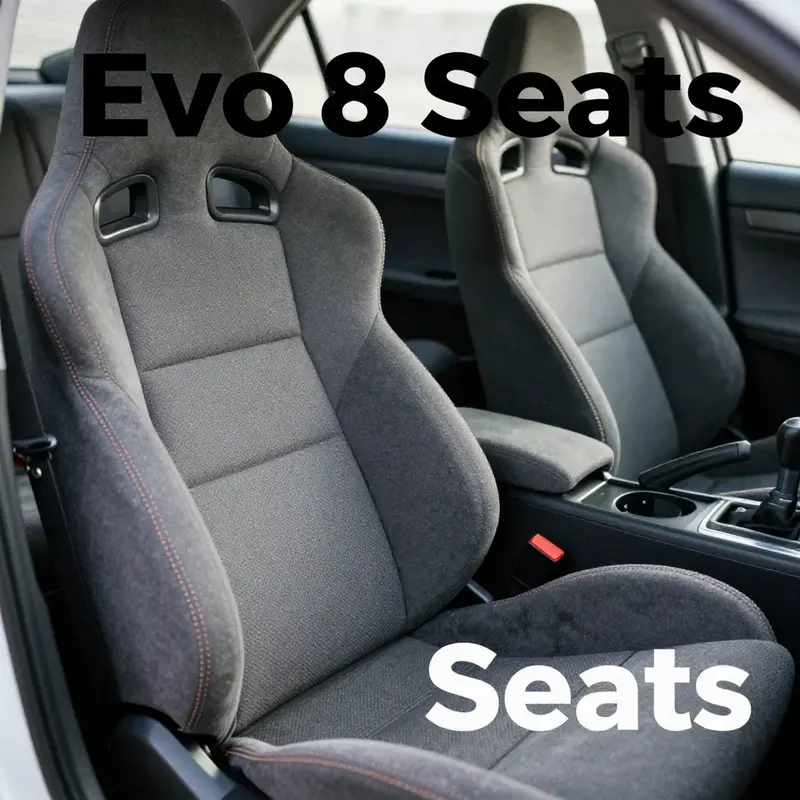
The interior of the Mitsubishi Lancer Evolution VIII isn’t merely a place to sit between gears and a turbo gauge; it’s a meticulously crafted cockpit where every contour of the seat translates a driver’s intent into immediate, tangible feedback from the road. In the Evolution VIII, seating is not an afterthought; it is a core element of the car’s performance proposition. The chassis and drivetrain deliver a blistering platform, but the seats—engineered to hold, guide, and communicate—bind the driver to the car in a way that makes performance feel intentional rather than merely possible. This is where the Evo VIII earns its reputation as a machine that rewards focused driving with a seat that invites, and then compels, the driver to stay engaged.
From the moment a hand reaches for the lever, the seating philosophy reveals itself. The standard front seats are sport-oriented, designed with a focus on lateral support that keeps a driver anchored through high-speed cornering. In practice, that support means the upper torso and hips remain fixed while the car pivots, reducing the chance of slippage during aggressive transitions. The seats are not merely about firmness; they balance containment with mobility needed by a racing-inspired interior. The result is an ergonomic union that helps the driver maintain precise line control without requiring constant micro-corrections from the arms or shoulders. In a machine where throttle steer and mid-corner throttle modulation are part of the rhythm, such seating support becomes a performance lever in its own right.
Weight efficiency and robust support trace the Evo VIII’s seating lineage. The seats are designed to be lightweight, a critical factor in a car whose performance hinges on mass distribution and a razor-thin margin for improvement in acceleration, braking, and cornering. Even when exterior dimensions evoke a compact silhouette, the interior seating still feels purpose-built. The seat shells, trimmed with fabric upholstery, emphasize durability and consistent performance under the stress of track-driven driving, while still offering comfortable positioning for street use. This duality—track-ready support with a comfortable everyday position—reflects Mitsubishi’s understanding that an Evo driver spends a lot of time in less-than-ideal road conditions where fatigue can blunt the edge the car otherwise supplies.
The Evo VIII’s seating is also a story of trims and nuance. The GSR and MR trims share the sport-seat DNA that defines the driver experience in this generation, but the MR variant carries additional weight-conscious enhancements that ripple through the interior’s feel. A notable enhancement in the MR edition is a carbon-conscious, weight-reducing touch—the aluminum roof panel—that underscores the broader engineering philosophy: shedding weight where possible without sacrificing rigidity or safety. The interior remains a disciplined, performance-oriented space, but this panel-level change helps to lower the overall mass and alter the car’s center of gravity just enough to be perceptible in terms of handling feedback. In the context of seats, any lightweighting upstream in the roof structure can subtly change how the seat’s cushion and frame respond to loads, contributing to a crisper, more connected sensation through corners and in transitions.
Material choices inside the Evo VIII are also telling. The front and rear seats use fabrics and synthetic upholstery selected to endure the wear and heat that come from spirited driving, while also reducing unnecessary weight. The balance between comfort and performance is evident in the way the upholstery resists grip loss under high lateral loads. The seat foams are contoured to provide a stable base that helps the driver stay in place without creating numbness or fatigue after longer sessions. The ergonomic stitching and sculpted side bolsters aren’t just stylistic flourishes; they are integral to how the seat recognizes and supports the driver’s posture through the car’s dynamic demands. In practice, the seats read the driver’s shifting weight as a part of the vehicle’s dynamic feedback loop, translating it into a more predictable handling arc and a more confident line through the corner.
If one looks at the Evo VIII as a complete performance package, the seats are the contact point—the interface through which the driver communicates intent to the car’s mechanical hardware. The seating position is highly adjustable, enabling a driver to tailor their stance for aggressive cornering or long highway drives without sacrificing the sense of connection that makes the car feel telepathic on a winding road. The manual adjustability, typically familiar to enthusiasts of this era, allows the driver to optimize thigh support, lumbar comfort, and torso angle so that the pelvis remains aligned with the spine during a rev-happy, throttle-steered arc. This precise alignment matters when the engine breathes heavily, and the chassis starts to talk in a more immediate language—a language that rewards drivers who understand how small, well-timed inputs translate into confident, repeatable responses.
The Evo VIII’s interior storytelling also includes how seating interacts with the broader vehicle design. The seats’ mounting position, their seating surfaces, and the overall geometry were developed to ensure that a driver’s field of vision remains unobstructed by the seat’s bolster while still leveraging the seat’s containment properties. In a car designed for aggressive mid-corner balance and precise throttle modulation, the ability to see critical instruments and track indicators without craning or readjusting is essential. The seat’s height, rake, and cushion depth all contribute to a cockpit that feels both compact and coherent—the sense that every control is within easy reach and every input is rewarded with immediate feedback from the vehicle. In such a cockpit, the seat isn’t just a place to sit; it is a calibrated tool that helps the driver execute the car’s performance potential with confidence.
The seating story in the Evo VIII is not limited to the standard setup, either. The evolution from GSR to MR adds a layer of interior complexity that aligns with the car’s broader performance goals. The MR trim carries not just an mechanical advantage in weight management through structural choices but also a psychological one. A lightened interior environment, a polished, high-contrast feel in the cabin, and the sense that the car’s chassis and shell are working in tighter conjunction all contribute to the driver’s perception of speed and control. The seats play a role in this perception by offering a security blanket that doesn’t encroach on the driver’s freedom to react. In high-G situations, the seat’s pelvic support and lateral containment work together with the driver’s torso to minimize movement that could disrupt steering inputs or throttle modulation. The rarely discussed but crucial effect is that the seats become a stabilizing presence, enabling the driver to maintain focus on the road ahead rather than on keeping the body in place.
Upholstery choices, while practical, also reveal a deeper intention: to blend performance with a sense of durability. The fabrics chosen for front and rear seating are intended to withstand the heat and wear of a performance car while maintaining a sense of quality. In this era, many cars in the segment favored durable synthetic materials or leatherette as a weight- and cost-conscious compromise. The Evo VIII’s seats strike a balance between tactile feel and the realities of daily driving, providing enough texture to keep the occupant in place during spirited driving while staying comfortable enough for longer journeys. This synthesis of material properties—weight, durability, grip, and comfort—reflects a broader design philosophy: performance without compromise in the wrong area is not really performance at all.
The voice of the vehicle through its seats is, in the end, a subtle, continuous dialogue. The driver speaks in steering inputs, throttle positions, and shifting cadence; the seat translates those cues into a physical sense of how the car is reacting to law of physics under the driver’s hands. It is a feedback loop built into the core of the Evo VIII’s design, a loop that rewards drivers who learn to listen with their bodies as much as they listen with their ears. The sport seats, with their tailored bolsters and forward-thinking weight-conscious engineering, help translate the Evo VIII’s raw capability into a more accessible, more communicative driving experience. They anchor the driver while enabling the rapid, precise movements the car demands, and they do so in a way that makes the difference between a good drive and a great one.
For readers who want to explore a concrete piece of the Evo VIII seating lineage in a more tangible sense, there are opportunities to see how this design philosophy translates across generations and configurations. The seat design persists in the lineage of high-performance Mitsubishis, evolving with the era while preserving the core principle: performance seating must be a direct conduit between driver intent and road response. The Evo VIII’s approach—lean, supportive, and purpose-built—remains a touchstone for fans who seek a pure, driver-focused experience in a performance coupe that still holds up as a street machine.
As a final reflection, the Evo VIII’s seats symbolize a philosophy that many modern performance cars have carried forward: the seat is not a passive component but an active partner in performance. It is where a vehicle’s personality takes form in the body’s contact with the vehicle itself. The ergonomics, materials, and architecture of these seats do more than hold occupants in place; they shape how drivers perceive and respond to the car’s limits. In turn, the Evo VIII becomes more than a set of specifications; it becomes a sensory proposition where the seat, the driver, and the road fuse into a single, dynamic experience.
Preserving the Driving Pulse: The OEM Evo 8 Seat Market, Fit, and Value
The seats that came with a legendary, rally-inspired compact from the early 2000s carry more than padding and fabric. They are the physical interface through which a driver feels the mental map of a machine built for precision, speed, and balance. In the world of the Evo 8, the eighth-generation model that defined a particular era of performance sedan ethos, the original front and rear cloth seats were engineered not just for comfort but for an integrated driving experience. They were designed to hold a driver in a poised, controlled stance during aggressive cornering, while still remaining accessible and serviceable for daily use. The upholstery, the stitching pattern, and the foam densities were chosen to deliver a direct, almost tactile sense of connection to the chassis. For the dedicated enthusiast, keeping or restoring that OEM seating arrangement is less about nostalgia and more about preserving a precise driver-machine interface that aligns with the car’s original dynamics and safety profile. In this sense, the Evo 8 seat is a small but meaningful hinge between historical authenticity and modern use. The original equipment front and rear cloth seats symbolize a philosophy: performance should feel effortless and immediate, not mediated by a mismatch of aftermarket components that can shift balance, weight distribution, or seat position away from what the car’s engineers intended.
The engineering behind these seats is a study in restraint and purpose. While other performance models of the era pushed comfort into the foreground, the Evo 8 seats strike a balance that is tactical rather than luxurious. The cloth upholstery, chosen for its durability and breathability, works with the seat’s contouring to maintain a secure stance during hard acceleration and high-G cornering, while also accommodating long stretches of spirited road driving. The bolstering on the sides is pronounced enough to support the torso and hips during aggressive maneuvers, yet not so aggressive that daily ingress and egress become a chore. The seating position itself—neither too high nor too low—was calibrated to maximize weight transfer and steering feel without sacrificing visibility or control. These design decisions matter when you are chasing track-tuned behavior on public roads, and they matter even more when you seek to preserve a vehicle’s original character for future collectors or for weekend warriors who value the “feel” of factory intent.
Market observers note that the demand for OEM seats in this corner of the market remains surprisingly resilient. A genuine front and rear cloth seat set—designed to fit the 2003–2006 Evo 8—and offered in clean, unabraded condition can command a premium price for those who prioritize exact fitment and authenticity. A recent snapshot from a well-known resale platform shows genuine OEM front and rear cloth seats listed for about $1,019.99, with a suggested list price near $1,199.99. This pricing signal underscores two realities: first, there is a robust willingness among enthusiasts to pay for factory integrity and the long-term reliability that comes with original components; and second, the market recognizes the value of complete sets that preserve the original look, texture, and fabric behavior. The emphasis on “clean” and original finishes remains a critical factor in how buyers evaluate value, because the condition of foam, fabric, and mounting points directly influences fitment and long-term safety. When a seller advertises “genuine OEM” and “clean,” they are signaling not just cosmetic appeal but structural integrity—an important consideration for those who intend to reuse the seats in a restoration or a careful preservation project.
Beyond the micro-economics of a single model’s seats, there is a broader, more macro trend that informs these niche markets. The global automotive seating industry has been experiencing steady growth, with the Asia-Pacific region leading the charge at a projected CAGR of around 6 percent from the late 2010s into the 2030s. This growth is driven by rising vehicle production, a growing emphasis on safety and comfort features, and the continual expansion of auto manufacturing in that region. While this macro trend encompasses mass-market seating, it indirectly supports the premium niche of OEM parts that enthusiasts seek for preservation, restoration, or faithful recreation of classic performance cars. In this ecosystem, the major seating manufacturers supply components to original manufacturers, securing durability and a baseline of design integrity. Yet for Evo 8 seats, the data remain more diffuse because the segment sits within specialized enthusiast circles rather than broad consumer channels. This means buyers often rely on a combination of reputable platforms, veteran salvage networks, and tightly curated communities to source genuine parts that meet factory specifications.
For those weighing the choice between OEM seats and aftermarket replacements, the calculus is well worn but worth revisiting in light of modern restoration ambitions. OEM components deliver exact fitment, matching mounting points, rails, and track hardware to factory specifications. They also tend to preserve safety systems and airbag integration in a way that aftermarket seats cannot always guarantee, especially if the aftermarket option diverges from the original foam geometry and fabric properties. The downside is the higher price, potentially longer lead times, and the fragility of aging components—foam compressions can settle, fabric wear can betray mileage, and mounting hardware may require careful inspection to ensure a safe, repeatable seat position. Aftermarket equivalents, conversely, can offer cost savings and a broader spectrum of fabric choices, bolsters, and adjustability. Yet the risk with cheaper or non-OEM options is that fitment may not be exact, rail positioning can alter the driver’s line of sight, and the seating surface’s stiffness can stray from the measured eye of the original design. For the purist, the trade-off favors authenticity and fit accuracy, even if it means a premium price or a longer sourcing journey.
The sourcing journey itself is an art, often requiring patience and meticulous verification. The Evo 8 seat set emerges most reliably in communities that emphasize correctness, provenance, and careful restoration. Sourcing strategies typically include patient online searching, cross-referencing part numbers with a seller’s description, and where possible, direct inspection or high-resolution photography that reveals foam integrity, stitching uniformity, and fabric texture. Buyers often check for signs of cresting or compression in the cushions, evidence of moisture damage, or fabric fading that would indicate prolonged sun exposure. A critical, practical tip is to assess the seat rails and mounting brackets for rust, bends, or unusual wear patterns that signal heavy use or prior accidents. Because these seats are heavy and complex to service, a plan for installation often includes confirming compatibility with the vehicle’s floor pan, bolt patterns, and seat belt anchor points. In addition, a seller’s willingness to include detailed photos of the underside, the track hardware, and the foam’s contour helps build confidence in a purchase that, in many cases, is measured against the value of factory alignment and the potential for a straightforward swap.
Within this ecosystem, a subtle yet important shift has emerged around the concept of authenticity versus practicality. Some owners prefer to keep the original cloth interior intact, not only for the look but for the tactile sense of the driving experience. The feel of the fabric against skin during a long canyon run becomes part of the memory of the drive, as if the chair itself carries a fragment of the machine’s early character. Others, mindful of daily usability or upcoming shows, may opt for a seat that preserves the factory appearance while offering slight improvements in lumbar support through subtle foams or retrimmed fabric that still respects the original color and texture. The central argument remains: genuine OEM seats provide precise upholstery dimensions, a known distribution of support, and reliable compatibility with the original seat rails, a trio of factors that can matter greatly when a car is being prepared for show, resale, or a long-term preservation plan.
To those who stumble upon listings that claim originality, but the seat surface shows heavy wear or the foam has deteriorated, the onus is on careful due diligence. A factory-grade restoration, when feasible, can return the seat to a near-new condition through targeted foam replacement, reupholstery with matching cloth, and careful attention to stitching integrity. The result is a seat that feels like part of the car’s original architecture while benefiting from renewed comfort and support. The decision to restore versus replace is highly personal and depends on the car’s intended use, the owner’s budget, and the anticipated longevity of the seat within the vehicle’s overall lifecycle. In all cases, the underlying principle remains clear: the value of OEM seat components lies not only in their immediate appearance but in their fidelity to the car’s designed ergonomics, safety, and handling characteristics.
For readers who want to explore related options, a related avenue to investigate is second-generation variants and their seat configurations, which can offer a sense of how seat design evolved within the family line while maintaining the core attributes of original fitment. As with any preservation project, aligning expectations with the realities of aging components and the costs of faithful restoration is essential. A practical path often involves starting with a clean, verified OEM set, documenting its mounting alignment, and planning a staged approach to refurbishment if required. This approach preserves the driving experience that enthusiasts prize, and it keeps the vehicle’s narrative intact for future owners who will judge the car as a cohesive, original-driving experience rather than a patched-together recreation.
For readers who want a concrete point of reference on current availability and pricing, a representative listing that illustrates the market dynamics for these seats can be found in external listings that emphasize OEM integrity and cleanliness. See the external listing linked here for context on current availability and pricing dynamics: https://www.ebay.com/itm/03-06-MITSUBISHI-LANCER-EVO-8-9-FRONT-REAR-CLOTH-SEATS-OEM-CLEAN/ . Additionally, a related internal resource that discusses an adjacent seating option is available here: evo-9-recaro-seats-for-sale-clean. These references help frame the practical considerations of sourcing, restoration, and the enduring appeal of factory seating in a car that remains a touchstone for driving enthusiasm.
In the Driver’s Seat of Evolution: Unpacking the EVO VIII’s OEM Seating for Performance and Comfort
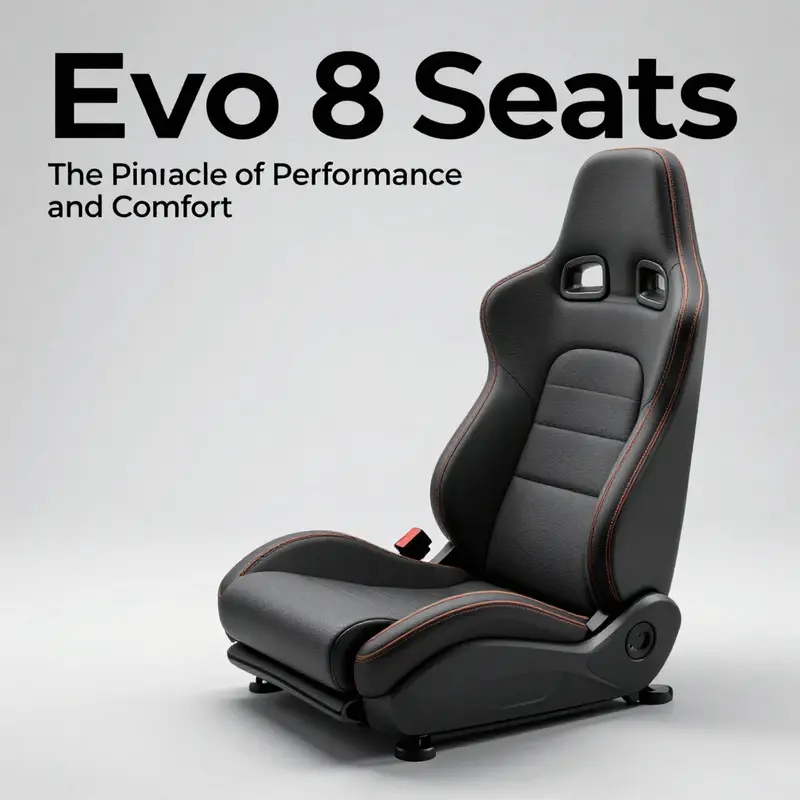
The seat is more than a place to park your behind; it is the interface through which a driver translates intention into motion. In the world of performance sedans, the EVO VIII sits at a crossroads where race-bred handling meets everyday usability. The original equipment front and rear seats, crafted for the 2003 to 2006 Mitsubishi Lancer Evolution EVO 8 and carried into EVO 9 builds, embody a philosophy: sport can be practical, and practicality can be sport. The fabric upholstery on both rows is not a cosmetic flourish but a functional choice. It offers breathability in active use, withstands the daily grind of urban commuting, and can be restored to a clean, nearly showroom condition with attentive care. This chapter traces not just the what, but the why behind those seats, and how their design supports a driver’s confidence on the road and, when needed, on winding mountain passes or damp back roads where grip and rhythm matter most.
The EVO VIII’s seating system is built around a driver-first mindset. The front seats, while not always as aggressively bolstered as aftermarket race buckets, provide a balance of support and comfort that suits hours behind the wheel without becoming a distraction. The side bolstering is pronounced enough to hold the torso in place during aggressive cornering, yet not so aggressive that long-distance rides feel claustrophobic. The rear seats—fabric-wrapped and more modest in contour—are designed to complement the front seats rather than dominate the cabin’s feel. This arrangement reflects a signature of the era: performance hardware that accommodates daily usability. The upholstery, being fabric rather than leather in most OEM configurations, emphasizes resilience and grip. It resists sliding around the occupant’s frame and reduces fatigue by maintaining a consistent seating position, even when the car is driven with a disciplined, high-performance rhythm. In practice, that translates to the driver staying more focused on steering inputs, throttle modulation, and line selection rather than fighting a loose seat or a slippery fabric surface.
From an engineering perspective, the seat is a carefully tuned assembly. The foam that cushions the occupant is engineered to provide a mix of support and conformity. The foam density and contour are designed to compress just enough under load to mold to the driver’s silhouette while preserving enough rebound to prevent fatigue during longer sessions behind the wheel. This is especially meaningful when the EVO is driven at spirited speeds, where even small changes in posture can influence steering feel and throttle response. The seat frame itself provides a rigid mounting, distributing load across the floor pan to maintain the driver’s posture during aggressive cornering. Because the EVO VIII is a performance car that still sees street use, the seating package emphasizes a blend of holding power and long-haul comfort rather than a strictly track-focused, ultra-stiff seat that might punish a daily drive.
Material choice further enhances the everyday viability of the EVO VIII seating. Fabric upholstery, typically a woven material with a tight weave, offers excellent durability and grip under various weather conditions. It breathes more effectively than leather, reducing heat buildup on hot days and mitigating the slickness that can occur when the seat surface is slick with sweat or moisture. The fabric’s texture helps keep the driver anchored, especially when the car is pushed through corners at speed. Cleanliness is a practical concern; the fabric surfaces respond well to regular vacuuming and spot cleaning, which helps preserve the seat’s original appearance and feel. This is especially relevant to owners who purchase used EVO VIII seats and wish to return the interior to a near-original condition. A seller’s note about a “clean” state for OEM front and rear seats signals not only aesthetic appeal but the likelihood that the foam has remained resilient and that the fabric has avoided tears, heavy wear, or sun damage that can degrade support and appearance over time.
The rear seating area, while not the focal point for performance enthusiasts, remains an important piece of the overall package. The rear seats in the EVO VIII provide sufficient space for two average-sized adults, with a fold-down capability that increases cargo flexibility when needed. The upholstery remains consistent with the front seats, ensuring a cohesive cabin feel. The fabric’s durability supports daily use, family trips, and occasional cargo-friendly configurations without sacrificing the sense of a cohesive, sport-oriented interior. This consistency between front and rear seating is part of a broader design ethos: performance does not have to come at the cost of comfort or practicality. When the rear seats are folded down, the cabin expands into a practical space, enabling enthusiasts to transport equipment, wheels, or tools that accompany weekend track days or spirited drives in remote areas. The result is a vehicle interior that remains coherent, recognizable, and confident in its purpose, regardless of how the seats are used.
In discussing the EVO VIII’s seats, it is also essential to acknowledge the potential for evolution over time. As cars age, foam can lose some of its initial resilience, fabric can show signs of wear, and seat frames can develop creaks and squeaks. A well-preserved OEM seating set, especially one described as clean, often signals careful ownership, attentive maintenance, and sometimes a period of light usage after purchase. For collectors and enthusiasts who aim to restore or preserve a driver’s cockpit as a close approximation of its original state, the emphasis tends to fall on matching the exact fabric pattern and color, ensuring the foam maintains its original density, and keeping the seat mounts free of rust and play. Restoration can be more nuanced than simply swapping cover material. It may involve inspecting the seat rails, the mounting points, and the track mechanisms to ensure the seat travels smoothly through its range of motion and remains securely anchored in all driving conditions. The broader point is practical: the seat is a living component of the car’s dynamic character, and one that can be renewed with care to maintain the integrity of the driving experience.
A subtle, yet important dimension of the EVO VIII seating is its compatibility with the car’s overall performance dynamics. The seat’s position relative to the steering wheel and pedals directly affects the driver’s ability to modulate inputs with precision. In a car that is tuned to reward precision, the alignment between eye line, neck posture, and hand position matters as much as tire grip and suspension geometry. Even small adjustments in seat height or tilt can alter the driver’s field of view, the ease of heel-and-toe shifting, and the leverage available when forceful braking through a corner. OEM seats in the EVO VIII are designed to offer a practical range of adjustment that supports a broad spectrum of driver statures, while not complicating the cockpit with excessive complexity. This balance makes them not only suitable for everyday driving but also dependable when the car is pushed toward the limits of handling on a mountain pass or a track-like road.
For owners who explore the more enthusiast-oriented side of the EVO VIII ecosystem, the conversation often turns to comparisons with aftermarket seating options. The OEM seats embody a philosophy of authenticity—keeping the original driving experience intact. However, some owners seek to intensify the driving feel by exploring seats that offer more aggressive lateral support or a more compact footprint. In this context, a listing that surfaces frequently among EVO circles is the evo-9 recaro seats for sale clean, which can be explored for reference here. This kind of update preserves the sense of a performance cockpit while offering a different silhouette and bolster geometry that can change how the driver and passenger interface with the car. It is important to note that switching to a different seating platform can necessitate adjustments to mounting hardware, seat tracks, and the alignment of the occupant’s posture with the car’s pedals and steering column. Any such change should be approached with careful consideration of safety implications and, ideally, professional guidance to ensure compatibility and continued crash protection.
The broader context for EVO VIII seating also invites a look at how modern interpretations of eight-seat or two-row cabin concepts relate to the original philosophy of performance interiors. While the EVO VIII seats themselves are not eight-seat configurations, the idea of balancing power delivery with occupant comfort remains a constant across vehicle segments. Contemporary eight-seat electric or hybrid models emphasize highly engineered interior ergonomics, smart materials, and lightweight constructions aimed at maximizing efficiency without sacrificing occupant experience. They illustrate a continuum of design thinking that started with performance-focused interiors like those in the EVO VIII and continues to inform how drivers interact with high-performance machines today. The lineage—from fabric-wrapped, driver-centered seating to the more technologically integrated, comfort-enhanced cabins of today—highlights a common thread: that an interior, when well conceived, can amplify a car’s character and performance without compromising everyday usability.
In closing, the EVO VIII’s OEM front and rear seats evoke a time when performance was as much about the cockpit as the chassis. The fabric upholstery, the measured foam, the sturdy frame, and the thoughtful layout contributed to a driving experience that rewarded a skilled, attentive operator. The seats’ ability to hold a driver’s posture through rapid transitions, their ease of maintenance, and their compatibility with the car’s overall geometry all feed into a cohesive, authentic performance narrative. While aftermarket options and modern upholsteries offer new textures and shapes for those seeking a refreshed look or a more aggressive stance, the original seating remains a touchstone for what the EVO VIII was designed to deliver: an accessible, intensely engaging driving experience that could be lived with every day, if one chose to. For those readers who want to explore the broader ecosystem of EVO VIII seating and related components, a representative listing of after-market options can serve as a useful reference point. See this link for a product listing that mirrors the ethos of keeping the seat as close as possible to its original character: evo-9-recaro-seats-for-sale-clean. In the larger landscape of eight-seat family and business-oriented models—where efficiency and comfort are paramount—an informed consumer can still learn from the EVO VIII’s approach to seating, a blend of practicality and performance that remains a useful benchmark for enthusiasts and engineers alike. For a broader, more technologically oriented perspective on eight-seat configurations in contemporary electric passenger vehicles, see external research exploring 8-seat electric propulsion systems and their efficiency characteristics: https://www.electricvehicles.com/8-seat-electric-passenger-car-specs.
Seat of Momentum: How the Evo 8’s Original Cockpit Shaped Performance and the Quest for Better Seating
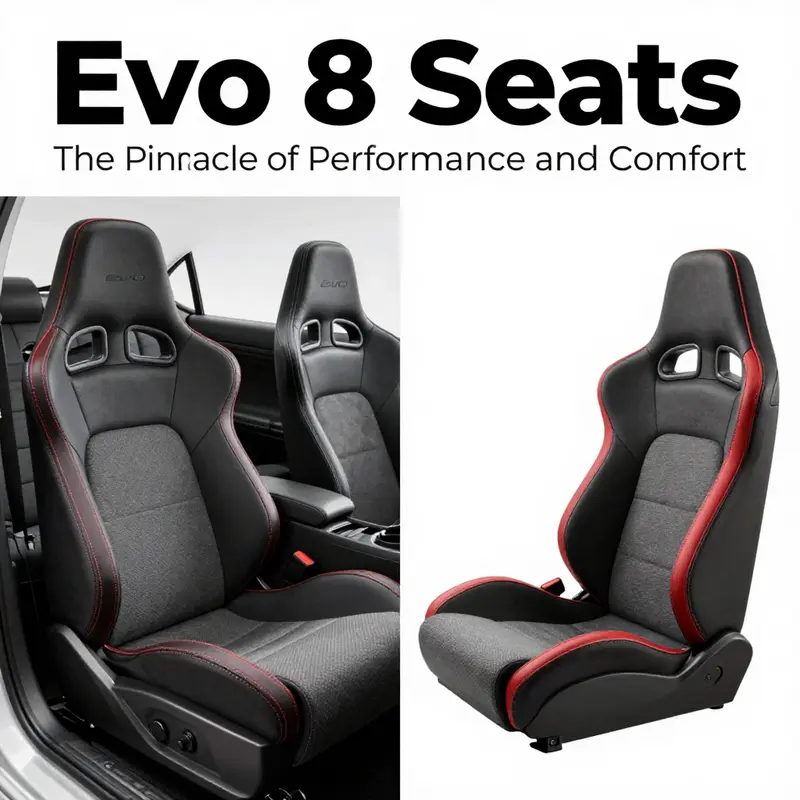
In performance-oriented driving, the seat is not merely a place to rest; it is the primary interface between the driver and the machine. The chassis speaks in lines of grip, weight transfer, and feedback, but the seat translates those signals into a body position that can respond with precision. For the eighth generation of the Evolution lineage, the original front and rear seating was more than upholstery; it was a carefully engineered component, designed to hold a driver in a dynamic pose while preserving safety and comfort under the stresses of high-speed cornering, rapid deceleration, and the occasional track session. What began as utilitarian support soon became the anchor of a driver’s sense of connection to the road. The design language of these seats—tight lateral containment, a firm but forgiving foam core, and a seating geometry that kept the hips, knees, and spine aligned—took on a life beyond mere comfort. It offered a platform for control, enabling the driver to maintain a stable torso angle relative to the steering wheel and pedals, even as the car entered and exited aggressive corners. In essence, the seat established a baseline from which performance could be measured. It was not about chasing a particular brand’s badge or a flashy label; it was about realizing a truth that matters on any fast road or track: the chassis can only be driven as far as the body can stay anchored to it, and the seat is where that anchor takes form.
There is a continuity between the seat’s role and the car’s safety architecture. OEM seating is designed to work in concert with the vehicle’s restraint systems, and rails, anchors, and mounting points are calibrated to sustain structural harmony under crash-test criteria. This is not a footnote; it is a critical factor that frames every decision about upgrades or replacements. When a seat is replaced with anything less integrated than the factory unit, the chain of safety can be altered, sometimes subtly, sometimes in ways that require more substantial alterations to the vehicle’s structure or its electrical interfaces. For owners who value track-day reliability and everyday usability in equal measure, this is a guiding principle: any change to the seating system must preserve, or at least clearly acknowledge, the alignment between driver ergonomics and safety protocols. The original seats, with their reinforced upholstery, robust foam, and anchored mounting hardware, offered a level of predictability that many fans of the car prize highly. It is the blend of performance geometry with steadfast safety compliance that creates a cockpit where the driver can push harder without sacrificing peace of mind.
From an ergonomic standpoint, the original seating also conveyed a philosophy of fit. The seat cushion and backrest were shaped to support the legs, hips, and lumbar region through prolonged periods of aggressive driving, while the side bolsters kept the torso from sliding outward during fast transitions. The geometry of the seat—its height relative to the pedals, the reach to the steering wheel, and the angle of recline—was tuned to allow a natural posture that minimizes fatigue while maximizing muscular endurance. In practice, this meant the driver’s knees could rest at an efficient angle, hips could remain symmetrically aligned, and the upper body could respond to steering inputs with minimal misalignment. For a car built to deliver a rally-bred sense of immediacy, that stability matters as much as the force derived from a tuned suspension or a responsive turbocharged engine. And while the seat was designed to accommodate a broad range of drivers, it also presented a clear limit: beyond a certain horizon of performance, the standard geometry might feel restrictive to those with specific preferences for bolster support, seat height, or lateral containment. That realization has driven the aftermarket and OEM-adjacent ecosystems to offer a spectrum of options that preserve the fundamental ergonomics while letting the driver tailor the cockpit to personal driving styles.
When the conversation shifts toward aftermarket alternatives, the spectrum broadens dramatically, but it does not erase the tension between weight, safety, and comfort. A common thread across high-performance seating choices is the pursuit of weight reduction without compromising body support. Lightweight seats crafted from carbon fiber or advanced composites are appealing because they reduce unsprung and overall mass, which can translate to quicker response times and slightly sharper handling characteristics. Yet, striking the balance between reduced mass and sustained occupant protection is delicate. The goal is to preserve head and torso stability during extreme maneuvers while offering the driver a connected, confidence-building hold. Tactile sensation also plays a role. Bolstered seats in synthetic materials or real leather provide different kinds of grip and feedback, influencing how the driver perceives weight transfer and lateral acceleration. In these decisions, the type of fabric or leather becomes part of the driver’s sensory map, enabling subtle adjustments to body position in response to feedback from the steering wheel and pedals.
Customization is perhaps the most visible dimension of aftermarket seating exploration. Enthusiasts often seek personal expression in stitching patterns, color accents, and occasionally bespoke logos or branding elements. The central idea is simple: the cockpit should reflect the driver’s identity as much as the exterior reflects a team’s aesthetic. This desire for personalization, however, sits alongside practical constraints. Some aftermarket seats are modular, allowing drivers to swap out bolsters or alter side supports to match evolving driving preferences. Others rely on adjustable rails that can alter seating height and recline with more granularity than the factory options. The upside is clear: the ability to sculpt a driver’s ergonomic envelope to optimize control. The trade-off, predictably, is compatibility. Changes to seat design can affect the alignment of airbags, seat belt pretensioners, and the broader electrical system that interacts with the vehicle’s safety modules. As a result, any upgrade pathway often begins with a careful compatibility check, ensuring that the new seat can maintain the integrity of safety mechanisms and mounting points. It is this bridge between performance desire and safety assurance that makes the dialogue about Evo 8 seating both technical and deeply personal.
In practical terms, the upgrade path most enthusiasts adopt tends to be measured and incremental. Some choose to refresh only the seat covers and surface materials, refreshing the feel and appearance while preserving the proven geometry and frame. This approach preserves the seat’s core safety architecture and mounting compatibility while offering a fresh tactile experience. It is a sensible middle ground, especially for daily drivers or weekend track enthusiasts who want a more engaging interior without a full risk calculus that accompanies wholesale seat replacements. For others, the decision is more ambitious: a true seat swap, with a different shell and a new weight profile, might offer the most significant gains in immediate feedback and control. In those cases, the installation journey becomes a project: rail alignment, track compatibility, seat-to-body harness integration, and sometimes a recalibration of driver ergonomics to preserve the desired reach to the wheel and pedals. The narrative here is not about one absolute path but about choosing a route that aligns with the car’s overall mission and the driver’s evolving needs.
Having this conversation also means acknowledging the practical realities of sourcing and fitment. For many owners, the most prudent route is to maintain the original seat frame and focus on intelligently selected upgrades to the outer layers—such as textile or leather coverings and reinforced stitching—while leaving the core frame intact. This strategy keeps the seat’s crash-test and anchor points intact, reduces the risk of unintended interference with airbag systems, and preserves the integrity of the seat rails and mounting hardware that connect the seating system to the chassis. It also avoids the uncertainties that can accompany aftermarket shells, which may require modifications to the vehicle’s interior structure or trimming work to ensure clean integration with trim pieces and door panels. The balance of performance and practicality is not a matter of choosing one extreme or the other; it is about designing a cockpit that remains predictable under stress while reflecting the driver’s preferences for weight, grip, and aesthetics.
For readers who want a deeper dive into the kinds of seating options available and how they align with a specific Evo-like platform, there is value in examining how aftermarket suppliers frame these choices. They often present a menu that ranges from weight-focused shells to more comfortable, sport-oriented designs that still respect safety criteria. A crucial takeaway is that any upgrade should be evaluated not only on its own merits but also in terms of how well it fits the car’s overall geometry and safety architecture. A seat that seems lighter or more aggressively bolstered can feel dramatically different in real-world driving if it changes the seat’s relationship to the pedals, steering wheel, and the vehicle’s safety systems. The decision, then, becomes a holistic assessment rather than a catalog of attractive features. In the end, the Evo-like cockpit evolves not just through what sits in it, but through how its occupant sits within it—the posture, the grip, and the sense that every input will translate with fidelity to the road ahead.
For those curious about practical sourcing avenues while staying mindful of safety and fitment, there are options available through automotive parts retailers and specialized shops that carry seating solutions designed for high-performance machines. When looking at aftermarket seats, a careful evaluation of mounting points, seat width, and rail compatibility is essential. It is not merely about the seat’s own weight or cushion feel; it is about how that seat integrates with the entire cockpit, how it maintains safe airbag interfaces, and how it preserves the intended driving position. If one wants to explore the breadth of possibilities without diving into a full retrofit right away, considering seat covers or bolster replacements can be a stepping-stone. They give a tangible sense of how different textures and densities affect driver feedback, while maintaining the proven safety foundation of the stock frame.
Internal link note: for readers who want a direct example of a specific upgrade path related to seating, an illustrative reference can be found here: brand-new-alcantara-front-recaro-seatsoriginal.
All of these threads—ergonomics, safety, customization, and practical installation—coalesce into a single conclusion: the path to better Evo-like seating is less about chasing the newest trend and more about preserving the essential relationship between driver, seat, and car. The original cockpit provides a proven baseline that many enthusiasts value for its balance of control, safety, and durability. Upgrades are most meaningful when they respect that baseline and temper it with a driver’s evolving needs. Weight savings, grip, and personalization all matter, but they matter most when they do not come at the expense of a seat’s core function: to anchor the driver firmly in a dynamic car and to help them achieve repeatable, confident performance day after day, year after year.
External resource: https://www.alibaba.com/product-detail/Evo-8-Aftermarket-Front-Bumpers-from-Chinese_1600589397881.html?spm=a2700.190313.0.0.1a2e7f1dQJjSbL
Final thoughts
In summary, the Evo 8 seats represent a high standard of performance-oriented design tailored for automotive enthusiasts. With quality features, robust market pricing, and undeniable advantages over alternatives, they are an asset to any vehicle aimed at delivering an exceptional driving experience. As business owners navigate the intricate landscape of automotive parts, understanding the distinctive characteristics and market dynamics of Evo 8 seats equips them to make informed choices, catering to the desires of performance-focused customers. Investing in these seats not only enhances the value of the vehicle but also fosters customer loyalty, as enthusiasts continuously seek authentic performance upgrades.