
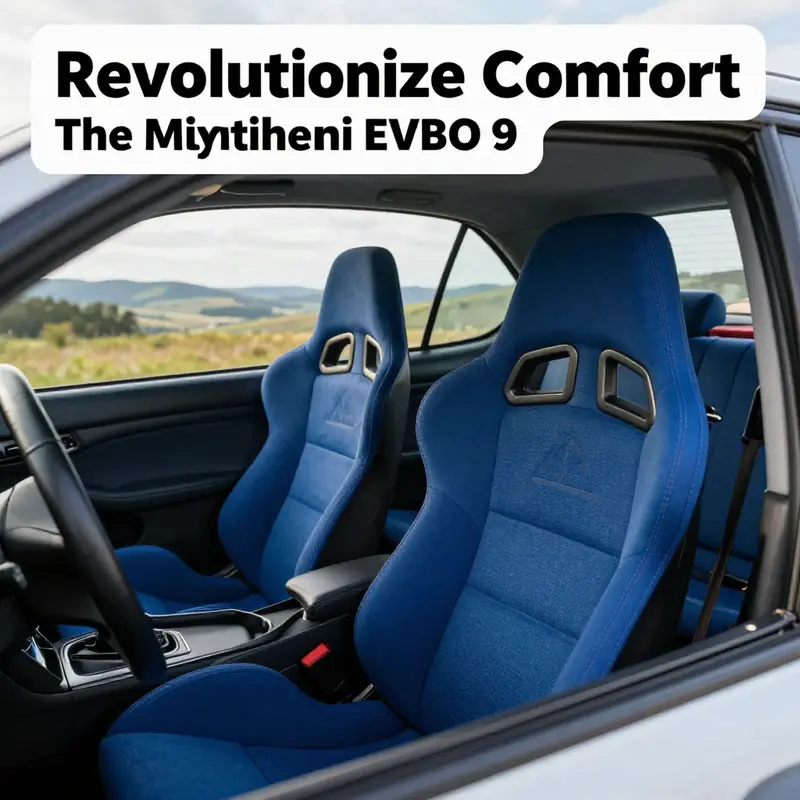
Mitsubishi’s Lancer Evolution IX, popularly known as the EVO 9, is not just a car but a symbol of performance and style. Among its standout features, the blue racing-style seats embody a perfect blend of design, comfort, and cultural significance. As business owners within the automotive sector, understanding the intricacies of EVO 9 seats can enhance your appreciation for this iconic model. This article delves into the design and aesthetic features of these seats, the materials that ensure comfort, the detailed replication in models, and their cultural and collectible significance. Each chapter highlights important facets that collectively paint a picture of why the EVO 9 seats are not only functional but also critical in the evolution of automotive design.
null
null
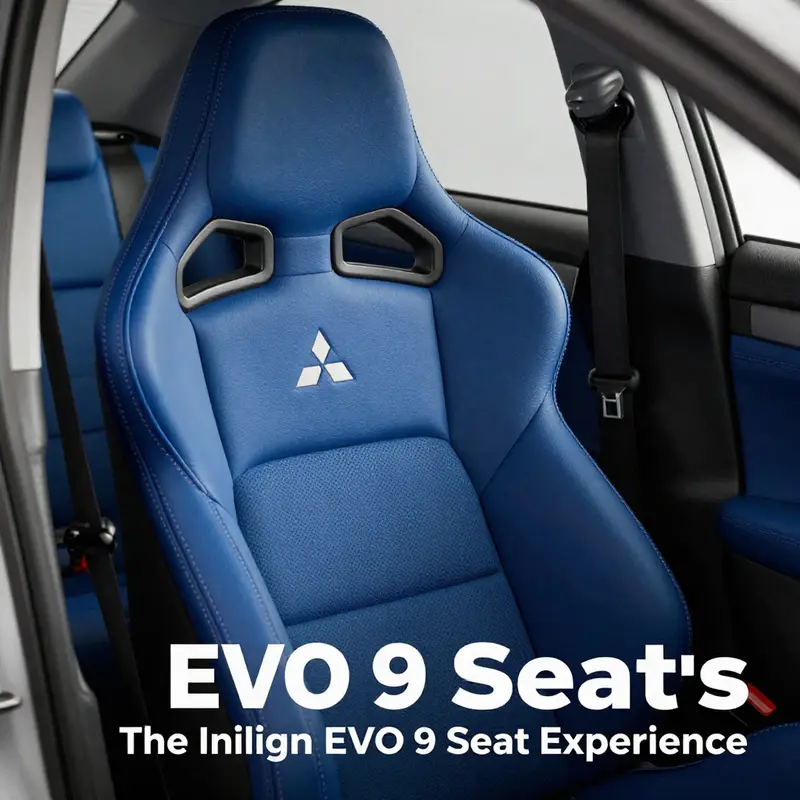
Seats That Define a Legend: Craft, Comfort, and the Performance Intimacy of EVO IX’s Cockpit
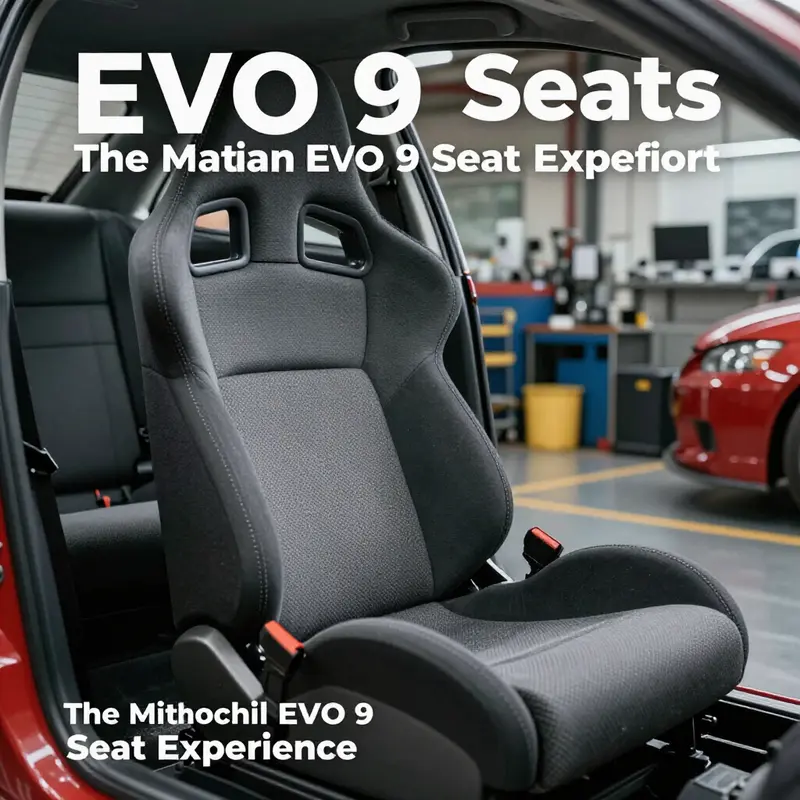
The cockpit of a performance sedan is more than a place to sit; it is the boundary between intention and action. In the EVO IX, the seats are a statement of how Mitsubishi imagined the driving experience translating into daily reality and track readiness. The blue fabric, the sculpted contours, and the way the seat edges cradle the body together choreograph a relationship between driver, car, and road that feels purposeful from the first glance. This chapter follows that thread, tracing how seats in the EVO IX fuse material choices with ergonomic intent to deliver a sense of control that enthusiasts instinctively recognize when the car is in its element. It is not merely about holding the body; it is about shaping the body’s response to dynamic demands. In many of the early EVO IX interiors, seating is where sport meets practicality. The design language centers on a sport-oriented silhouette—high side bolsters that wrap around the torso, a seat base that positions the driver lower and more centered relative to the wheel, and a headrest that appears almost sculpted with intention. The color choice—an unmistakable blue woven fabric in the factory configuration—was not simply an aesthetic flourish. It signaled the model’s performance character, a visual cue that the interior would echo the exterior’s aggressive, purpose-built ethos. The blue is not a soft touch; it is a marker of the engine’s heartbeat translated into the cabin. The material surface, though not true leather, was selected for durability and grip. It needed to survive frequent entry and exit, along with the occasional scrambling in and out during a chase with the clock or the track. The texture reads as a tactile reminder of the seat’s dual mission: comfort for the long haul and grip for the moment of cornering clearance. From the engineering perspective, the seat shell and padding are a careful synthesis. The high-density foam underpinning the seat provides a firm but forgiving base. When a driver snakes through a sequence of quick transitions, the foam maintains a predictable feel, resisting fatigue-inducing compression over hours spent on a twisty road or a demanding circuit. The outer materials pair durability with grip. Synthetic surfaces—often a leatherette-like finish—offer a premium tactile impression without the vulnerability of genuine hide under harsh sun or sweat. The alternative, a textile option featuring a robust weave sometimes described in enthusiasts’ discussions as pineapple cloth, adds a breathable, grippy layer that helps keep the driver from sliding during aggressive maneuvers. This textile choice is not merely about look; it has a practical function: it resists wear from the heavy use and frequent contact that performance seating endures. Together, the padding and surface materials create a seat that feels both assertive and resilient, a rare blend that suits a car whose personality is equal parts rally and road course. The seating geometry reinforces the EVO IX’s driving philosophy. The bucket-like formment is designed to hold the driver in place during hard cornering, enabling the torso to remain aligned with the steering wheel while the hips maintain a firm anchor on the seat. This lateral support is more than a luxury; it is a safety and performance feature. When the car is pushed toward the apex of a curve, the reinforced bolsters reduce unwanted shifting. The seat’s contour is engineered to shorten the distance the driver’s body travels in the event of a rapid change in g-forces, helping to preserve line, rhythm, and throttle control. Yet this design is not merely about speed. It also addresses long-haul comfort by shaping the seat’s silhouette to reduce fatigue. The ergonomic form—gentle curves along the lumbar zone, a cradle that accommodates the buttocks without applying excessive pressure, and a seating angle that keeps the pelvis in a more efficient position—works to lessen cumulative stress on the lower back and thighs. In short, the seat aims to feel simultaneously eager and enduring, a balance that mirrors the EVO IX’s own balance between sprint performance and real-world usability. Even within the constraints of a sport-oriented interior, the seats carry a subtle, almost ritualistic attention to detail. Stitching patterns, headrest geometry, and seam placement all work in concert to communicate the car’s intent. The headrest, for example, is not a generic cushion but a carefully sculpted feature that interacts with the seatback to support the neck and upper spine. There is an intentional negative space or hollow in the headrest that hints at a precise, performance-driven design approach. This is not an afterthought; it is part of a broader cockpit logic in which every centimeter is examined for how it contributes to the driver’s sense of control and confidence. The upholstery’s color and finish extend beyond mere appearance. They tie into the interior’s broader color story, where accents—whether on the door panels, center console, or instrument cluster surround—echo the same chromatic and textural language found on the seats. The result is a cohesive, performance-centric cabin that reads as a single narrative rather than a collection of individual parts. The availability and provenance of authentic EVO IX seats add another layer to the chapter’s story. During those years, certain seat configurations became shorthand for the model’s performance character. While the market has shifted and the availability of original seats evolves, the appeal of authentic components remains strong among enthusiasts seeking to preserve or restore the interior’s original rhythm. The combination of materials associated with the era—high-density foam, leatherette-like surfaces, and durable textiles—continues to define what collectors look for when they evaluate a cabin’s authenticity. For many, the visual cue of a blue fabric or the feel of the seat’s texture immediately signals the interior’s sporting intent. The seats also serve as a tactile bridge to the era’s broader styling cues, linking the cockpit to the car’s exterior silhouette and mechanical character. This synergy matters to collectors and builders alike because it helps maintain the historical integrity and driving feel that defined the EVO IX. In the model world, the significance of seat details extends beyond the real car. Scale models and high-fidelity displays that replicate the interior with careful attention to the seat’s shape, cushions, and stitching have become a key criterion for judging the authenticity of a build. When a model maker captures the high bolsters and the seat’s sculpted headrest, they are translating not just a physical asset but a driving experience into a miniature, tangible form. A seat that is accurately reproduced in miniature communicates the same message as the full-size seat: sport, precision, and driver-centric design. The tactile cues—stitch lines, seam density, the seat’s edge curvature, and the way the fabric catches the light—are all signals of the vehicle’s performance identity. These details matter for enthusiasts who value realism in their collections, and they contribute to a broader appreciation of how performance interiors are imagined and realized, both in the metal-and-leather world and in scale. The narrative of EVO IX seats also intersects with broader questions about interior comfort and daily usability. The same seating geometry that supports aggressive driving can, for some, feel a bit stringent in everyday use. The reinforced side bolsters, while essential for maintaining position during cornering, pose trade-offs for longer trips—pressure points can become noticeable after hours of sitting. Yet even with these cautions, the overall experience remains compelling. The seats’ firm support and precise containment tend to keep the driver engaged, which is exactly the kind of engagement that owners seek when they opt for a performance-focused daily driver. The balance between sport and comfort is not about compromising one for the other; it is about achieving a dynamic equilibrium that preserves the car’s character while enabling practical, everyday operation. In the EVO IX, this balance is a deliberate design choice, not an afterthought, reflecting a philosophy that performance and usability can coexist in a single cabin. The interior narrative would be incomplete without acknowledging the emotional resonance of these seats. For many fans, the blue woven fabric and the voice of the seat’s contours evoke a moment—a corner, a track, a spirited drive when the car felt perfectly aligned with the driver’s intent. Seats become more than ergonomic devices; they are vectors of memory. They mark the transition from showroom novelty to a companion in a shared driving history. The seat’s physical presence becomes part of a personal dialogue with the car—an ongoing conversation about how hard you push, how late you stay on the brakes, and how you return to a straight, quiet road with your hands ready on the wheel. The experience lingers because the seat’s design does not merely accommodate the driver; it amplifies the driver’s agency, translating a line of power into two feet’s worth of movement and control. As we circle back to the concept of authenticity, we can appreciate how the EVO IX’s seat design communicates a coherent philosophy: performance must be felt, not just measured. The materials speak to durability; the geometry speaks to control; the color speaks to identity. When one appreciates the seat in this integrated way, the entire cockpit reveals itself as a unified system designed to keep the driver in close conversation with the machine. The seat’s role in this dynamic is fundamental, a physical and psychological anchor that helps the driver trust the car at the limits and relax enough to maneuver with precision when the road is cooperative. That is the essence of what these seats contribute to the EVO IX’s enduring appeal—the sense that the car was designed as a complete performance package, with the cockpit as the first and most intimate point of contact. For readers who want a tangible sense of how these interior elements intersect with other parts of the EVO IX’s story, there is a related facet worth glancing at. The dashboard and instrument cluster are not isolated from the seat’s influence; their arrangement, visibility, and ergonomics are configured to complement the driver’s posture and reach. A quick look at the dashboard-focused resources can illuminate how the cockpit’s overall architecture supports quick, instinctive reactions under pressure. If you are curious about how the instrument layout aligns with the seating position and the driver’s line of sight, you can explore a related discussion here: https://mitsubishiautopartsshop.com/dashboard-evo-9/. In sum, the EVO IX seats embody a compact philosophy: performance inside the car must be legible to the body. The materials chosen for durability and grip, the ergonomic shell that anchors the body during dynamic motion, and the color and stitching that reinforce the car’s identity all work in concert to produce a cockpit that feels tuned to a driver’s instincts. They are not merely components; they are a narrative device that communicates the car’s purpose every time the door is closed and the engine settles into its awake state. The seats’ legacy endures because they connect a history of engineering intent with a sensory experience that remains compelling to this day. In the broader spectrum of car culture, this is a prime example of how a well-crafted interior can elevate a vehicle’s character, inviting owners to not just drive, but to inhabit and remember the moment when speed, balance, and human control converge. External resource: Original eBay listing for authentic EVO IX/Recaro seats and related interior components offers a historic window into the era’s interior materials and configurations. See the listing here: https://www.ebay.com/itm/2003-2006-Mitsubishi-Lancer-Evolution-8-9-RECARO-Seats-Front-Rear-EVO-CT9A-2-X-Universal-Black-Pineapple-Cloth-PVC-Leather-Left-right-Racing-Bucket-Seats/404157978817?hash=item5e6c0e1f91:g:ZmYAAOSwDjFbWpQJ
Seat Craft of Speed: Recreating EVO IX’s Blue Bucket Seats in Scale Models
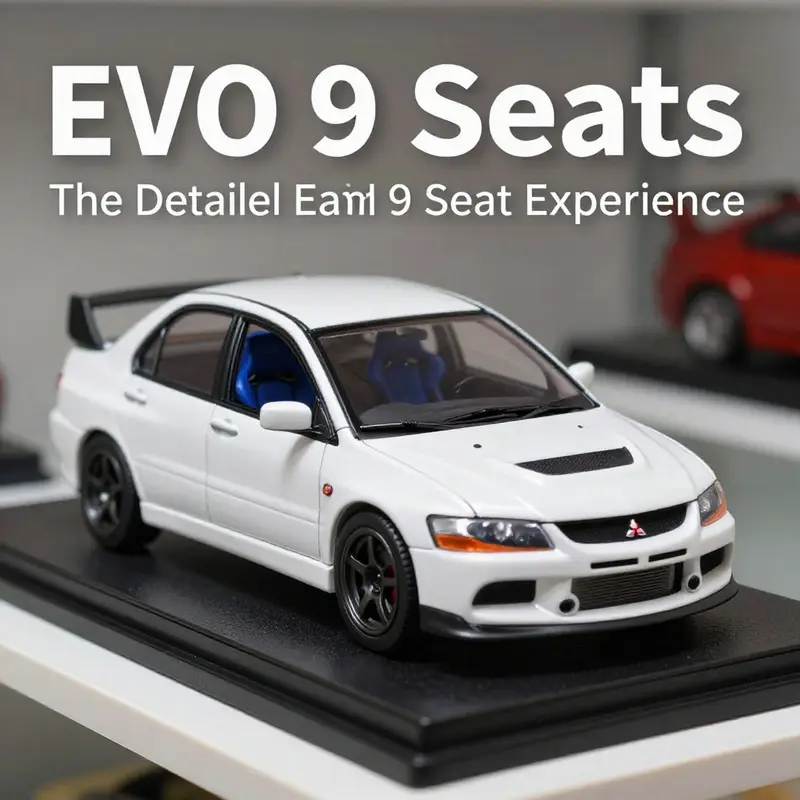
The seat is more than a place to sit; in a high-performance sedan, it is a statement about how a car wants to be driven. When fans turn from the road to the display shelf, the fidelity of the seat design in a scale model becomes a barometer for the model’s overall faithfulness to the original. In the case of the EVO IX, the blue bucket seats that anchored the driver’s sense of confinement and control represent a crucial intersection of aesthetics, performance psychology, and manufacturing craft. The blue fabric, the sculpted high side wings, the precise stitch lines, and the faint, almost architectural hollow of the headrest—these are not mere decorative choices. They are signals that the model, in its miniature form, is attempting to capture the feedback loop between driver and chassis that marks the real car’s character. The way a viewer reads a cockpit in a display case—the way light catches the seat’s textured surface, the way the seam pattern reads under a gloss or matte finish, the way the headrest cutouts suggest air for the neck and the downforce of lateral supports—tells a story about how the car positioned itself for the road ahead. And the story is strongest when the seat’s color, texture, and silhouette harmonize with the rest of the interior and with the body’s color, just as a real cockpit works best when all elements are in tuned accord.
In examining the market of model replicas, the depth of seat detailing often marks the difference between a passing homage and a convincing mirror of the original. For the Lancer Evolution IX, the factory interior sets a performance tone that still resonates with enthusiasts who value authenticity as a core virtue of model collecting. There are many scales, but the 1:64 and 1:24 segments illustrate a useful spectrum of how seat details are implemented and how they translate into perceived value. In the 1:64 scale, the reproduction of the EVO IX’s blue racing seat is not merely a color match. It is a choreography of materials, painting, and assembly that aims to reproduce the seat’s sensory cues in miniature—its fabric-like surface, the way the fabric’s weave is simulated with paint and texture, the way the lateral bolsters wrap the sitter, and the way the shoulder area is contoured to convey both grip and breathing room. The high side wings, which in real life are meant to hold the torso steady during aggressive cornering, are portrayed with pronounced curvature and depth in the model. The seat’s hue—an electric, saturated blue—reads as a racing signature, and the model maker’s challenge is to replicate not just color but the color’s interaction with light and with adjacent components in the cabin.
The detail extends beyond color and silhouette. A hallmark of the higher-end 1:64 execution is the attention to micro-features that would otherwise vanish at smaller scales. The seat contours are designed to read as an integrated part of the seat shell rather than as a separate, floating element. The headrest, with its hollowed or perforated appearance, is a telling cue about real seat ergonomics—the restraint of the neck and the sense of being cocooned by the car’s chassis. In many cases, the model’s headrest is sculpted with precision to evoke that sense of depth, while the surrounding upholstery is etched with fine lines that mimic stitching and grain. The result is a visual language that communicates endurance, grip, and the car’s performance philosophy to a viewer who does not have the chance to slide behind the wheel.
A closely related strength of these high-fidelity 1:64 models is the way interior components are laid out in a modular fashion while maintaining a cohesive look. The pedals, the gear shifter, and other cockpit hardware are often produced as separate pieces, then assembled to the cabin’s shell. The pedals carry a metallic sheen that contrasts with the blue fabric seats, emphasizing the driver’s interaction with the vehicle’s control surfaces. The gear lever’s shape and texture—slightly metallic with defined knurling—contribute to a sense of tactile realism, even in a captured, static form. This modularity is not a mere manufacturing convenience; it serves the narrative of how a performance cockpit is assembled and how the driver perceives its ergonomics. The seat color, the stitching lines, and the surrounding hardware converge to create a perception of depth and activity. In the best examples, the interplay between the seat’s blue fabric and the cabin’s dark accents produces a visual hierarchy in which the driver’s seat remains the focal point of the cockpit, guiding the viewer’s eye toward the instrument panel and steering wheel as the essential interface of performance.
The particular iteration that draws most attention from collectors is the exhibition-grade 1:64 replica released as a limited event model. In these pieces, the seat’s fidelity is described as near “in-toto” reproduction of the original, capturing not only the color and silhouette but the seat’s overall function as a driving aid. The package typically includes the cockpit with separately defined pedals and a shift lever, all finished to simulate metal or polished aluminum in contrast to the seat’s blue textile effect. The result is a scene that invites inspection—an invitation that is rarely granted by lower-fidelity models, where the seat may appear as a flat, monotone plane with less contour and no sense of the seat’s real-world volumetric presence. It is precisely this sense of depth that defines the more convincing models: the seat becomes a chest of cues, telling a story about how a driver would interact with the car at speed and how the car would respond to throttle, steering input, and braking forces.
A different, but equally instructive, interpretation arises in the 1:24 scale, where the model maker’s latitude expands to accommodate more elaborate features. The 1:24 “modified” or “tuned” models may incorporate working light features in headlamps and dashboards, and sometimes even a steering wheel that responds to a knob or finger interaction in display or demonstration formats. In terms of seating, the 1:24 versions often present the seat as visually refined and heavily sculpted, yet the depth of texture on the upholstery and the micro-sculpting of the fabric’s weave may not reach the same experimental intensity as the 1:64 high-end line. The seat’s surface still communicates its racing intent through bold lines and a high-contrast seam pattern, and the hue is typically adjusted to maintain visibility under LED lighting or display case illumination. However, the scale imposes limitations on skin-like texture and the fidelity of the tiny fabric impression, making the 1:24 version a vivid impression of the original cockpit rather than a forensic copy of the seat’s real-world tactile quality.
To understand why seat fidelity matters so much to enthusiasts, it helps to consider the broader ecosystem of the EVO IX’s interior design language. The blue racing seat is not simply a color choice; it signals the driving orientation of the vehicle. It communicates the car’s performance intent—engineered for aggressive handling and secure body control—before a single gauge is read or a corner is entered. In scale form, this same message must be conveyed through a careful synthesis of color, texture, and silhouette. A faithful seat helps the viewer read the model as a coherent whole: it tells you that the interior was designed with purpose and that the exterior body lines were created to live with a cockpit that is both physically supportive and visually dynamic. When the seat’s color aligns with the body tone, and when the stitching lines mirror the real car’s motifs, the entire model reads as a deliberate homage rather than a facsimile. The role of seat design in this larger narrative is thus not cosmetic; it is a functional cue that anchors the model’s credibility in the eyes of a viewer who can draw a line from scale replica to real-world driving experience.
Given this context, the market’s best 1:64 models have earned their reputation through a disciplined approach to interior fidelity. The blue seat’s color is matched across the seat cushion and backrest with careful layering of paint and subtle weathering to simulate the fabric’s wear and the seat’s contour. The stitching pattern, which in the real car follows tight, parallel lines, is translated into the model with deliberate, crisp seams that catch light in a way that imitates the real upholstery’s texture. The headrest’s hollow or cutout is reproduced with precision to maintain the sense that the seat is designed to anchor the driver’s upper body in space, even when viewed from oblique angles. These decisions, though they may appear minor, accumulate into a viewer’s perception of quality. The model becomes a memory of the actual cockpit rather than a mere decorative object, and that memory is what transforms a simple collectible into a cherished reference for fans who measure fidelity in cycles of time—from car launch to scale reproduction.
To connect the interior to the broader design story, one can consider how the dashboard and instrument cluster interface with the seat’s geometry. The cockpit’s geometry is such that the driver’s line of sight to the instrument panel is optimized by seat position and wheel tilt, a relationship that remains true even in miniature form. The 1:64 high-end variants often place a premium on achieving this alignment by ensuring the seat’s angle, cushion height, and bolster curvature yield what a viewer perceives as a realistic seating posture. The 1:24 versions, with their retained functional features, also attend to this alignment but balance it against the available space and the scale’s practical limitations. In both cases, the internal logic is the same: the seating plane is a primary coefficient in the perception of the cockpit’s legitimacy. Without a seat that convincingly reads as a high-performance, purpose-built bucket, the entire interior risks appearing as a generic, unmotivated ensemble rather than a thoughtfully engineered environment designed for a precise driving experience.
The market’s understanding of seat fidelity also reflects a broader philosophy about scale modeling: small things matter because they carry large symbolic weight. The seat’s color, texture, and contour speak to the model maker’s craft, while the seat’s relation to pedals, steering column, and the dashboard determines how the observer interprets the model’s overall performance posture. When the blue fabric and the seat’s contouring harmonize with the cabin’s other elements, the viewer experiences a sense of immersion—a feeling that this model could fit into a display case next to a real car with minimal explanation. In this light, the 1:64 edition, with its near-replica seating, becomes a standard of comparison; it offers a baseline against which other scales and other manufacturers are measured. The 1:24 version, while wonderful in its own right for its added features, stands as a reminder that fidelity involves trade-offs. It is not merely a matter of scale; it is a matter of the balance between texture depth, functional extras, and the weight of the seat’s visual message in the overall cabin.
As collectors compare models, the seat’s role grows from a passive element to a focal point of critical assessment. The blue seat is often cited as an exemplar of how color theory and form language can be implemented at a miniature size without sacrificing the perception of performance intent. It is through this lens that one reads the model’s entire interior, appreciating how each centimeter of fabric pattern, each seam line, and each curvature of the bolsters contributes to a convincing, integrated cockpit. The seat becomes the tactile cue that guides the eye, forming a bridge between the hand that holds the piece and the brain that imagines the driver’s hands gripping a steering wheel, the leg pressing the clutch, the foot applying the throttle. This bridging of senses—sight and imagination—elevates the model beyond a static object and into a narrative artifact of automotive culture.
For readers who wish to explore further, interior sections like dashboard design and cockpit scale relationships offer a complementary perspective that deepens the appreciation of seating fidelity. See the dashboard-focused discussions here in the internal reference: dashboard-evo-9. The small scale, when combined with careful interior detailing, yields a coherent and credible impression of what it feels like to be in control of a car that was built for performance. The tale of the EVO IX’s blue bucket seats, then, is not simply about a color or a texture; it is about how a miniature world can carry the historical and engineering essence of a real machine, and how a collector’s gaze—trained on stitching, shading, and silhouette—can read that essence with surprising clarity.
External resources provide additional confirmation of the standard to which these details are held. In particular, a detailed, near-forensic review of the 1:64 edition highlights the seat’s fidelity as part of a broader interior that has been praised for its compliance with the original’s cues. The review notes the color precision, the hollowed headrest, and the way the seat’s geometry communicates the same sense of purpose that the real interior exudes when the car is pushed toward the limit. This external assessment corroborates what observers often articulate in hobby circles: when a model captures the seating experience with such fidelity, the entire interior earns legitimacy in the eyes of enthusiasts and collectors alike. The convergence of color, texture, posture, and proportion creates a believable scene in miniature, a moment when the viewer becomes a virtual test pilot seated in a car that exists in another scale of reality.
In sum, the EVO IX seat—the blue, high-backed, contoured bucket with its hollowed headrest and sharp stitching—anchors a narrative that spans real driving dynamics and the art of scale reproduction. The best 1:64 examples treat the seat not as a passive filler but as a dynamic element that communicates the car’s character with the kind of fidelity that makes a model feel alive. The 1:24 versions offer additional motion and lighting theatrics, yet their seat detail often emphasizes an overall impression rather than a forensic reading of upholstery texture. For enthusiasts who seek the richest possible encounter with a model’s interior, the blue seat remains a touchstone—a reminder that in the world of scale modeling, details are not ornaments but the very language through which a machine’s driving soul speaks to the observer.
External resource: https://www.auto-modeler.com/ihcm-evo9-gsr-1-64-review
EVO 9 Seats: The Contours of Speed, Culture, and Collectible Value

The seat is more than a place to sit in the Evo IX; it is a compass that points drivers toward the car’s true purpose, a tether that keeps the driver attached to the road at the edge of grip, and a visual signature that signals a lineage of rally and road racing. When you look at the blue fabric seats that defined the interior of Mitsubishi Lancer Evolution IX, you are looking at a design language that trades luxury for connection. The color, the texture, the way the fabric wears over time, and the way the seat wraps around the hips and shoulders all tell a story about the car’s intended use. In the Evo IX, the seats communicated a clear message: this machine is meant to be driven hard, with a driver who is part of a larger chassis equation rather than a passenger in a high-performance shell. The seat’s color—an audacious blue—was more than aesthetics. It was a sign that the interior had a discipline, a focus, and a track-tested temperament. And while the material was synthetic rather than leather, it offered grip, resistance to abrasion, and a tactile feel that proved more reliable under the intense conditions that the Evo IX was engineered to withstand. The high side bolsters, the contoured seat base, and the way the seatback carried the EVO or brand insignia were design cues that new owners instantly understood: this was not a luxury lounge; it was a cockpit built for precision, control, and speed.
The design philosophy behind the Evo IX interior centers on minimalism with a driving-first bias. This is not to say it is Spartan; rather, it is purposeful. The seats are sculpted to keep the driver securely planted through aggressive cornering, while allowing enough comfort for a longer road or a track session. The reinforced foam and fabric surface work in tandem to hold the driver in place during lateral acceleration, converting body movement into more precise steering, throttle, and brake inputs. The stitching patterns are a quiet orchestra of lines that echo the seat’s geometry, with the headrest area often featuring a hollowed or sculpted shape that reduces pressure points and offers a sense of airiness inside a compact cockpit. In some representations and models that aim to faithfully reproduce the Evo IX’s interior, the headrest cutouts and the seat’s upper profile are among the most telling fidelity markers. These details—visible in high-quality close-ups of model cars and in the original factory photos—signal a deliberate effort to preserve the seat as an instrument of driving performance rather than a mere decorative surface.
Material choices reinforce the seat’s dual mandate of durability and engagement. The blue fabric is not merely decorative; it is chosen for its abrasion resistance and anti-slip properties. This is crucial when a car is built to be driven at the edge of grip, where a driver’s body weight and movements can otherwise translate into minor shifts that disrupt balance. The synthetic surface achieves a balance: it avoids the higher maintenance of leather and the relatively cooler, more slippery feel of some all-weather fabrics. It also accepts the repeated stresses of repeated cornering and g-forces, which a living, breathing track machine will inevitably impose. The seat’s form, in turn, cooperates with the interior’s minimal electronics and sparse trim—again a deliberate choice to keep the driving experience visceral and direct. The effect is a cockpit that invites the driver to become one with the car—an intimate relationship that is as much about tactile feedback as it is about speed and control.
In the context of scale models and die-cast reproductions, the Evo IX seat is a focal point that helps collectors assess authenticity. The 1:64 scale representations released by notable brands offer a telling mirror of the original’s design cues. In these models, the headrest’s hollow or cutout design, the precise stitching patterns, and the color-synchronization with the body paint are not trivial. They are the markers of fidelity, and for a devotee seeking realism, they often trump the engine bay gleam or the exterior silhouette. The seat detailing—the way the fabric grain is captured, how the seat’s foam contours are translated into molded plastic, and how the seatback’s curvature aligns with the door cards—can separate a convincing replica from a merely passable one. In this light, the Evo IX’s seating becomes a litmus test for quality. If the model captures the seat’s silhouette and texture with fidelity, it signals a broader commitment to accuracy that enthusiasts prize.
The Evo IX’s interior is also a cultural artifact that reflects the era’s motorsport nostalgia. The car, produced between 2006 and 2008, sits at a moment when high-performance sedans and sport coupes carried a certain purity of intent. The seats, with their bold branding elements and firm bolsters, spoke to a culture that valued driver involvement above quiet opulence. This is less a story of luxury and more a narrative of engagement: a tall, well-supported backrest that keeps your torso in the right alignment for precise steering input; a seat bottom that holds you in place through a long left-hander; stitching that communicates both craftsmanship and sport. The seat’s aesthetics—its color, its texture, and its integration with the EVO branding—are part of a broader lexicon that many fans recognize as the Evo family’s DNA. Collectors, in particular, often talk about not just the car’s speed or its rally heritage but the way its interior tells a story of a specific and successful philosophy: to be fast, you must be connected to the vehicle and aware of every change in the road’s surface through a seat that translates motion into perception.
From a market perspective, the Evo IX has matured into a symbol of limited production and rally heritage. Its value has appreciated in the collector market, in part because the model marked the pinnacle of the Evolution line before the design language shifted toward newer, more modern interpretations. Prices in the current market have shown that well-preserved examples command premium figures, which brings the seats into sharp focus as a proxy for overall preservation. Original, unmodified seats with minimal wear are highly prized because they indicate an authentic, unaltered survival of the car’s driving experience. Replacements, particularly if the seat’s original contours have been altered or its fabric replaced, can dampen the car’s overall resonance with collectors. The seats thus become more than functional components; they become vital evidence of a vehicle’s maintenance history and environmental custody. The seat’s condition is a visible fingerprint of how carefully a car has been cared for, and this, in turn, informs a broader assessment of authenticity, historic value, and potential future investment.
The mechanical heritage of the Evo IX—especially the legendary 4G63 engine and its tuning potential—further elevates the seat’s significance. The engine is often cited for its robustness and for the seemingly unlimited appetite for power gains through careful modification. This mechanical bravura feeds the narrative around the interior; the seats are part of the extension of that power. A driver who can push the car’s front end into a corner relies on the seat to hold them steady while the chassis responds with precise, predictable feedback. The synergy between seat design and mechanical performance is one of those subtle, almost invisible relationships that culminates in a driving experience that feels both raw and refined. The seat’s role in maintaining posture and balance is an essential, if sometimes overlooked, aspect of how the Evo IX handles at the limit. In this way, the seat is a technical accessory as much as a comfort feature. It is a key component in a carefully engineered equation linking human input, vehicle dynamics, and outdoor performance in rally-inspired mamma of speed.
For those who study or collect Evo IX interiors, the seat’s design is a gateway to broader questions about authenticity and reproduction. A faithful interior reproduction—whether in real cars or scale models—depends on an accurate plan for seating materials, stitch cadence, and color balance across the cabin. A faithful seat is not only about a faithful color but about how the seat breathes and how its geometry responds to the driver’s body. The manner in which the seat edges meet the door panel, the way the headrest aligns with the instrument cluster, and how the fabric’s grain catches the light when the cabin is opened all contribute to the overall sense of realism. These are the kinds of details that fans discuss when they compare their own projects, whether restoring a car or building a display model. A seat’s fidelity is a barometer for the care given to the entire interior, and that care, in turn, indicates the car’s overall story of preservation and reverence for a chapter in motorsport history.
From a collector’s vantage point, the seat’s significance also hinges on its ability to convey the Evo IX’s character in a tangible way. The interior’s color palette, the texture of the seat fabric, and the arrangement of the seating positions contribute to a sensory memory—the feel of the car’s athletic intent long after the engine is off. The seat becomes a memory anchor, a point of identity that helps a collector recall the moment of first seeing, first driving, or first imagining the car in action. The Evo IX’s seats thus occupy a special place in the pantheon of collectible sports sedans: they are more than upholstery; they are a gateway to experience, history, and the fable of a car that stood at the forefront of a performance culture that still inspires enthusiasts today.
For readers curious about how interior materials and seating choices translate into modern collector practice, several examples show how the spectrum of options—from Alcantara to synthetic fabrics—can influence the perceived authenticity and the long-term care of a vehicle. A notable option that echoes the Evo IX’s spirit is the availability of front Recaro seats covered in Alcantara, which combine a lightweight, supportive shell with a tactile surface designed for track use. This kind of configuration speaks to a broader trend in the hobby: the pursuit of a seat that preserves the spirit of the original while offering enhanced performance characteristics for modern enthusiasts. When evaluating a potential model or restoration project, attention to seat details can yield insights into the owner’s intent and the vehicle’s provenance. Evidence of careful seating choices—whether the original blue fabric or a faithful reproduction that mirrors the texture and curvature—can elevate both the storytelling and the value of the car or model.
This is not just about nostalgia; it is about understanding how a single design element—the seat—can embody a car’s culture, its engineering, and its market life. The Evo IX’s seats, with their distinctive color, their firm, grippy surfaces, and their capacity to keep a driver connected to the car at speed, stand as a microcosm of the broader Evo ethos. They remind us that performance is not only a function of horsepower or torque figures but of the way the machine communicates with the person inside it. In the Evo IX, seats do more than provide comfort; they translate the vehicle’s ambitions into tangible, usable sense data. They are a reminder that the joy of driving a high-performance car is as much about the felt moment—the contact between body and vehicle—as it is about the numbers on a spec sheet. In that sense, the Evo IX seats remain a compelling, tangible link to a time when performance and purity of purpose defined an entire generation of driving enthusiasts.
External reference: https://www.carinterior.com/evo-9-lancer-guide/
Internal resource for enthusiasts seeking authentic upholstery options: brand-new Alcantara front Recaro seats
Final thoughts
Mitsubishi’s EVO 9 seats exemplify a synthesis of function and form that appeals to performance enthusiasts and collectors alike. By understanding the design, materials, and cultural background associated with these seats, business owners can appreciate the marketing potential and consumer interest in high-performance vehicles. The EVO 9 seats continue to symbolize a legacy of engineering excellence and cultural impact, making them a pivotal element in both automotive design and collector communities.