

In the competitive realm of automotive performance upgrades, the front bumper of the Mitsubishi Lancer Evolution X, also known as EVO 10, stands as more than just an aesthetic enhancement; it is pivotal in grasping the essence of performance and safety. As business owners in automotive parts procurement, understanding the intricacies of the EVO 10 front bumper—from material choices to design trends and market dynamics—can significantly influence your purchasing decisions. Moreover, grasping installation and maintenance techniques ensures product longevity and customer satisfaction. This comprehensive guide will delve into the vital materials and benefits of the EVO 10 front bumper, revealing the latest design trends, performing a market analysis, and providing essential installation and maintenance tips, ensuring you are well-equipped to navigate this vital segment of the performance vehicle market.
Forged at the Front: Material Choices for the EVO X Bumper
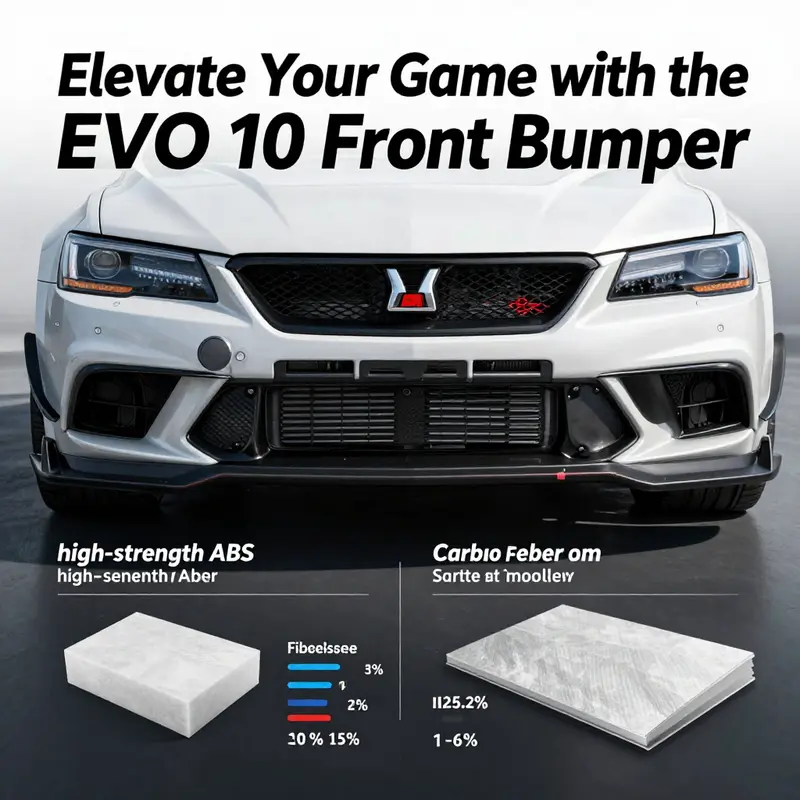
The EVO X front bumper is a critical piece of the car’s aero and cooling strategy. It channels air, supports heat management, and communicates the car’s intent at a glance. For the Lancer Evolution X, three primary material paths dominate the aftermarket scene: fiberglass, ABS plastic, and carbon fiber. Each brings a distinct balance of weight, stiffness, cost, and finish, while sharing the common goal of optimizing the front end for speed, control, and street presence.\n\nFiberglass offers a cost-conscious route with good formability. It can reproduce aggressive lines and large vents while keeping upfront expenses reasonable. However, it tends to be heavier than carbon fiber and can show resin-rich or micro-crack issues if not reinforced and protected from road hazards. With careful layup and proper sealing, fiberglass can deliver a convincing track-inspired look without breaking the bank.\n\nABS plastic strikes a balance of fitment reliability and durable everyday use. Automotive-grade ABS maintains stable dimensions across temperature swings and road conditions, and it can be color-matched and painted to OEM-like finishes. Its predictable molding and resistance to warping make ABS a popular choice for drivers who value repeatable fit and long-term consistency in appearance and performance.\n\nCarbon fiber represents the high end of the spectrum. The lightweight, stiff panels improve front-end response and aerodynamic potential but come at a premium cost and require skilled installation and meticulous finish care. The payoff is reduced weight and enhanced rigidity, which translate into crisper steering feel and the potential for more advanced aero detailing.\n\nIn addition to material choices, regional manufacturing ecosystems influence availability and lead times. Regions with mature automotive supply chains can offer robust tooling, consistent finishes, and reliable paint compatibility, helping keep projects on schedule. Practically, the decision hinges on budget, intended use (street vs. track), and willingness to invest in professional fitment and maintenance.\n\nUltimately, the EVO X bumper should be viewed as a system component: weight, stiffness, cooling capacity, and visual impact must align with the car’s overall goals. The right material choice supports reliability and performance while delivering the look that defines the front of the build.
Edge and Identity: The Evo X Front Bumper as a Living Expression of Performance and Style

The front bumper of the Mitsubishi Lancer Evolution X is more than a protective shell. It is a deliberate interface where aerodynamics, cooling, and aesthetics converge, turning the car’s first impression into a tangible statement of intent. For a generation of enthusiasts, the Evo X became a benchmark not only for speed but for design language. The bumper, in its various incarnations, has evolved from a simple protective cover into a theatre for engineering decisions. It is where the vehicle’s attitude is formed—an outward expression of the car’s internal ambitions. In this chapter, we explore how Evo X front bumpers have become a focal point for both performance optimization and personal customization, and how the current market balances fidelity to original design with the hunger for more aggressive, opportunity-rich styling. The journey through materials, forms, and supply-chain realities reveals a landscape that is as much about manufacturing ecosystems as it is about road manners and race-track potential.
Material choices anchor this conversation. ABS plastic remains the warp and weft of most replacement bumpers because it delivers a reliable mix of toughness, weight management, and cost efficiency. For many builders, a high-strength ABS solution preserves the distinctive lines of the Evo X while offering durable resistance to road debris and weathering. The allure of ABS lies not in novelty, but in predictability: the ability to reproduce factory contours with consistent fitment, easy paint work, and scalable production. Yet the appetite for lighter components continues to pull the market toward carbon fiber. Carbon fiber front setups promise meaningful reductions in mass, which translates to sharper steering input, quicker throttle response, and, at speed, improved front-end behavior. The weight delta isn’t just about performance on a dry-sum gauge; it translates into real-world control during high-speed cornering, where every kilogram of weight at the nose can influence front grip and downforce. When carbon fiber is woven with a tuned front lip, reinforced ducts, and integrated splitters, the result is not merely a look of high-tech readiness but a measurable improvement in airflow management and front-end stability. In this respect, carbon fiber front components align with the Evo X’s legacy as a precision instrument, capable of translating driving intent into scalp-tingling feedback at the wheel.
Fiberglass occupies a more nuanced position in the material spectrum. It offers a compelling blend of cost-effectiveness, customization potential, and mid-range performance. For builders who want to tailor the front-end silhouette—perhaps widening arches or shaping more aggressive air intakes—fiberglass provides the pliancy needed for iterative styling work while still delivering a robust cosmetic and structural foundation. The material’s versatility makes it a practical bridge between stock fidelity and bespoke aerodynamics. It is a reminder that the Evo X aftermarkets are not merely about chasing the lightest possible component, but about finding a balance between weight, durability, and the tactile quality of the surface that greets wind and weather on the road and track.
Beyond raw materials, the design language of Evo X front bumpers has grown increasingly sophisticated. The trend toward aggressive aerodynamics is less about bravado and more about airflow management. Some aftermarket designs push the bounds with wide arches and pronounced air intakes, signaling enhanced cooling for turbocharged powertrains and high-performance intercoolers. These features are not cosmetic afterthoughts; they are practical tools intended to optimize engine health and front-end downforce at speed. When you observe a bumper that emphasizes large air ducts and a pronounced splitter, you are witnessing a carefully engineered response to the thermal and aerodynamic demands of a high-performance platform. The OEM-inspired, high-fidelity replacements strike a different note. Here the goal is not to shout but to sustain, preserving the Evo X’s original proportions while improving durability and fitment quality. The market has learned to value a seamless integration that keeps the car looking like it did from the factory, yet with the confidence of modern materials and modern tolerances. The result is a family of options that can satisfy purists who want a faithful resume of the original design and enthusiasts who crave longevity and confidence in daily use or serious track sessions.
For the connoisseur seeking exclusivity, the landscape opens to more bespoke routes. Custom studios and design houses offer GT Concept-inspired front-end packages that blend engineering finesse with unique branding and finishes. In these projects, the bumper becomes a canvas. The aim is not simply to alter the look, but to craft a cohesive front-end story that complements the car’s overall character, whether the drive is daily or track-focused. Such custom solutions often integrate performance components—carbon fiber splitters, reinforced air ducts, and carefully calibrated aerodynamic features—into the broader styling narrative. The engineering discipline behind these pieces mirrors the care that goes into engine and chassis tuning: it is about creating a coherent system where every change reinforces the car’s purpose and the owner’s vision.
The transportation and manufacturing ecosystem that underpins Evo X bumpers is as telling as the design itself. Guangdong province in southern China stands out as a global hub for the aftermarkets that support these projects. The region’s dense network of injection molding facilities, carbon-fiber layup capabilities, paint shops, and mold-making operations creates a powerful throughput for B2B buyers seeking reliable supply chains. For those aiming to stabilize costs and ensure timely deliveries, locating suppliers within this industrial cluster is not merely advantageous, it is often essential to sustaining a robust program. The advantages extend beyond labor and material costs. The Guangdong cluster’s integrated workflow means that from concept to completion, production cycles can be streamlined, color-matched finishes achieved with high consistency, and quality control embedded at multiple stages of the process. For shop owners and fleet operators who depend on steady replenishment of front bumpers, the ability to source from a tightly synchronized supply chain translates into real-world reliability on production lines, showrooms, or race days.
The material choices themselves reflect a broader philosophy about what it means to upgrade a car that has long been celebrated for its balance of performance and everyday usability. ABS remains a pragmatic default. It offers a robust base for durable, cost-efficient replacements that preserve authentic proportions and fitment while maintaining a level of surface finish that handles daily exposure to sun, rain, and road salt. Carbon fiber, by contrast, is the language of ambition. It speaks to a commitment to lighter weight and enhanced stiffness in the bumper assembly, a choice that can contribute to lower inertia in the nose and more precise steering response. The fiberglass option, sitting between cost and performance, enables a spectrum of custom shapes and textures that can be tailored to individual aesthetics without the premium price tag of carbon fiber. In a way, these material options map to the different priorities within the Evo X community: fidelity to original geometry, a quest for lighter, more aggressive performance, and the practical demands of customization that still respects a reliable, serviceable platform.
As enthusiasts navigate these options, the role of the bumper becomes a blend of science and storytelling. A bumper is not a mere plate that shields the car from contact; it is a structured element that shapes how air interacts with the entire grille and underbody. Its openings influence the efficiency of cooling systems, the management of under-body flow, and the generation of downforce at speed. A well-conceived bumper reduces turbulent wake, channels air toward critical areas, and contributes to front-end stability when the car is pressed toward the edge of its performance envelope. For track-focused builds, even small gains in cooling efficiency or front-end downforce can translate into cooler charge temps, steadier braking, and more predictable turn-in behavior. For street-oriented builds, a cleaner air separation reduces buffeting and noise, while still delivering a bold visual signature that signals performance intent.
An important facet of this ecosystem is the balance between continuity and innovation. The Evo X’s legacy is preserved by designs that respect the car’s proportions and silhouette, while the aftermarket pushes forward with more aggressive aesthetics and refined aerodynamics. The market’s willingness to embrace both approaches reflects a broader truth about how performance culture evolves: enthusiasts want to honor the heritage of a much-loved platform, but they also crave new capabilities and a distinctive stance. In practice, this means a bumper can be a quiet steward of reliability when it mirrors factory geometry, or a loud, track-ready statement when it features wider arches, bold air intakes, and a front splitter that looks as much like a performance tool as a decorative element. The tension between these poles—heritage fidelity and transformative design—drives a vibrant, diverse marketplace where every owner can find a path that resonates with their driving philosophy.
From a practical standpoint, navigating this landscape requires attention to detail in sourcing and fitment. The Evo X front bumper is not a universal add-on; it must align with the car’s mounting points, crash structures, and the chassis’s radiative cooling needs. For B2B buyers, partnering with suppliers who can offer consistent injection-molded ABS parts, precision-cut carbon-fiber sheets, and robust hand-finished fiberglass work is crucial. The manufacturing realities of injection molding, resin transfer, and fabric layup demand careful coordination across design, tooling, and quality control. The Guangdong region’s capability set—rapid prototyping, scalable production, and post-mold finishing—helps ensure that purchases translate into reliable, repeatable outcomes. This is especially important for customers who ship multiple bumpers across regions, or for shops that install dozens of units across a season. In such cases, the predictability of a bumper’s fit, color, and surface texture becomes as valuable as the bumper’s aerodynamic nuance.
In the broader arc of Evo X front bumpers, one can observe a market that respects a core identity while eagerly exploring new aerodynamic concepts and bespoke finishes. The newest designs speak to a future where front-end components are not just passive covers but active, tunable elements of a high-performance system. The best offerings enable seamless integration with existing cooling paths, allow for straightforward installation and repainting, and present a tactile quality that matches the car’s mechanical precision. For enthusiasts who want a direct link to a particular styling direction, a well-chosen bumper can become the very hinge upon which a vision for the car’s personality swings. It is this dynamic—the fusion of engineering discipline with creative expression—that has kept Evo X owners engaged for more than a decade. The bumpers, in their many variants, serve as visible evidence that performance and aesthetics can be mutually reinforcing rather than mutually exclusive.
To readers who crave a concrete stepping stone in the journey, a representative option can be explored here: CZ4A Evo X front bumper in red color, which illustrates how a design can maintain the model’s proportions while offering a bold, sport-oriented impression. This example illustrates the balance between faithful replication and modernized details that many buyers seek. It is not merely about color or finish; it is about the integrity of line flow, the alignment of mounting points with the car’s original crash structure, and the way the new surface interacts with the surrounding grille geometry and lower air channels. When you consider the bumper as part of a larger aerodynamic package, including splitters, canards, and side skirts, the effect becomes a coherent kinetic sculpture that works with the car’s engineered intent rather than against it.
In the end, the Evo X front bumper is a small but significant piece of a greater performance narrative. It embodies a philosophy that values strong form, precise function, and the freedom to personalize without compromising the vehicle’s fundamental characteristics. Whether a driver chooses a faithful OEM-style replacement for durability and fit or a more aggressive, aerodynamically tuned version for track days, the bumper remains a central instrument in shaping the car’s behavior and its story. The ecosystem that supports these choices—materials, manufacturing capabilities, and regional supply networks—ensures that what begins as a protective cover can evolve into a carefully engineered component that enhances airflow, stability, and the emotional resonance the Evo X inspires in its community. For a broader industry view on sourcing and supplier dynamics in Evo X bumpers, see a detailed external resource linked at the end of this chapter.
CZ4A Evo X front bumper – Red Color
External resource: https://www.autosupplyinsights.com/evox-bumper-supplier-guide-2026
Front Bumpers as Performance Gateways: The Evo X’s Aerodynamic and Aesthetic Frontier

The front bumper of the Mitsubishi Lancer Evolution X is more than a face for the car. It is a carefully engineered gateway where aesthetics meet function, where airflows are steered, and where the everyday driving experience begins to feel like a controlled sprint. For enthusiasts, the Evo X represents a rare blend of street practicality and track-ready intent. The aftermarket front bumper market that surrounds this model continues to thrive not merely because owners want a bolder look, but because a well-chosen bumper can meaningfully influence cooling, downforce, and stability at speed. In the context of the Evo X, the front end is the first point of contact with the air, and that contact dictates how the rest of the chassis breathes, how the brakes shed heat, and how the steering responds in the gusting wake of a passing vehicle on a windy highway or a high-speed corner. The chapter that follows unpacks how this pivotal component has evolved in the aftermarket space and why it remains a central focus for distributors, shops, and private builders alike.
Materials are the most tangible starting point for understanding the Evo X front bumper market, and they reveal a spectrum of choices aligned with different objectives. The dominant material is high-strength ABS plastic, which offers a compelling balance of durability, weather resistance, and fidelity to original styling. For many B2B buyers, ABS replacements provide a reliable path to maintain the distinctive lines of the CZ4A design while ensuring impact resistance and consistent color reproduction through standard paint processes. Yet, the market is not limited to this one option. Carbon fiber, pursued by those who chase weight reduction and top-end performance, presents a striking contrast. Carbon fiber front components can reduce mass by a significant margin—estimates from the broader aftermarket ecosystem suggest weight savings of around thirty percent compared with traditional FRP or fiberglass parts—while delivering excellent stiffness and high-temperature tolerance. The appeal is not only the reduced inertia of the front end but also the subtle drag reduction and the potential for increased downforce when paired with a carefully designed splitter and canards.
Fiberglass remains a practical middle ground, delivering reasonable strength, moldability, and a lower overall cost than carbon fiber. It is especially favored by shops and distributors who offer customized styling options or localized paint and finish work. The tradeoffs among ABS, fiberglass, and carbon fiber are not merely about weight or cost; they’re also about fitment consistency, surface finish, and the ease of repair after impacts or road debris encounters. In some cases, polyurethane is discussed as an option due to its natural elasticity and impact-absorbing characteristics, offering a degree of resilience that can be valuable for daily-driven vehicles in variable weather. The material choice, therefore, becomes a strategic decision that aligns with how a car will be used, where it will be driven, and what performance priorities accompany visual impact.
Beyond materials, design language plays a decisive role in shaping the Evo X’s public persona and its on-road performance. The market offers a spectrum from faithful, OEM-like replicas that preserve the original silhouette to more aggressive interpretations that push the eye toward speed and aggression. In recent years, design updates and consumer preferences have helped popularize styles such as the SW Vrs-inspired front end, which emphasizes a more pronounced lower lip, enlarged lower grilles, and sharper lines that visually communicate airflow management. These elements are not cosmetic; they reflect an intent to optimize the air stream as the vehicle advances at speed, pushing air to coolers, brakes, and the underbody while also generating a degree of downforce that can improve high-speed stability. The influence of high-performance exotics on mainstream tuning is evident here: the concept of a dedicated front diffuser, vertical fins, and enhanced venting is carried over from multi-million-dollar supercars into parts that a disciplined Evo X owner can reasonably install and maintain.
The invigorating reality of this market sits atop a robust manufacturing and logistics ecosystem. Guangdong Province, particularly the Guangzhou cluster, has emerged as the world’s most active hub for aftermarket automotive body components. This region hosts a tightly integrated ecosystem that spans injection molding, composite fabrication, surface finishing, and precision tooling. The proximity of these capabilities creates an efficient pipeline from design to delivery, reducing lead times and enabling rapid iteration for new bumper geometries or finish options. The ecosystem’s efficiency is reinforced by a mature export framework, with ports such as Nansha and Shekou handling significant volumes of components destined for markets across North America, Europe, and Asia. For distributors and workshop chains seeking stable supply, sourcing from this cluster translates into predictable lead times, scalable production, and the capacity to respond quickly to shifting demand in niche Evo X communities.
In this setting, procurement decision-making for Evo X front bumpers tends to be data-driven and multi-faceted. Material selection remains foundational, but fitment and aerodynamic performance now compete on equal footing with regulatory compliance and lifecycle costs. A B2B buyer must consider how a bumper performs not only in a static showroom but also in real-world scenarios: how it interacts with the factory hood line and fender gaps, whether it clears the sensor housings for parking assist and crash avoidance, and how it behaves under a wide range of temperatures, from the damp chill of early morning commutes to the heat of summer track sessions. While ABS offers trustworthy reliability and a high-fidelity reproduction of the original contours, alternatives such as polyurethane can provide improved energy absorption, especially in climates where sudden impacts with road debris are more likely. The trade-offs are nuanced: polyurethane may introduce a different paint response and color-matching complexity, while carbon fiber, though light and stiff, commands a premium price and requires careful curing and finishing to maintain a glare-free surface in bright sun.
Market segmentation within the Evo X bumper space also reveals a spectrum of user goals. Wide-body kits remain a distinct niche. Enabling wider front tracks and more aggressive venting, these kits are typically selected by track builders and drift enthusiasts who prioritize cornering stability and a jaw-dropping visual presence over daily comfort. They bring with them higher fabrication costs, potential wind noise increases, and the challenge of ensuring consistent fitment with an often-modified chassis. In contrast, more conservative, OEM-like bumpers aim to preserve the original character of the car while delivering improved durability and easier serviceability. The tension between these two camps—extreme styling and refined performance—defines many showroom conversations and drives the pricing dynamics in the market. These choices ripple through the supply chain: more complex geometries require more precise tooling, more robust molds, and more attention to finish work, all of which influence lead times and after-sales support.
As buyers aim for quality assurance in procurement, the conversation naturally gravitates toward standards and process transparency. Reputable suppliers in the Guangdong cluster commonly emphasize their track records, the certifications they hold, and the clarity of their quality assurance practices. ISO and IATF 16949 certifications are frequently cited as indicators of a facility’s commitment to process control and product consistency. For buyers who plan to distribute these parts widely, such assurances translate into fewer returns, smoother warranty cycles, and a more predictable brand reputation in new markets. Cost structures reflect the same realities: while a higher-end carbon fiber bumper might command a premium, the total cost of ownership—considering longevity, repairability, and customer satisfaction—can still favor a well-managed, ABSpized replacement in many daily-driver applications. Objective evaluation, therefore, pivots on a balanced scorecard that weighs material properties, mold accuracy, paint compatibility, and the capacity to meet international logistics and after-sales demands.
The practical realities of supply-chain dynamics also shape how Evo X bumpers are marketed and sold. The Evolution X front bumper ecosystem benefits from a mature export infrastructure that supports diverse customer needs—from single-unit retail purchases to large-scale B2B orders. The Guangdong factories’ ability to integrate injection molding, composite lamination, and automotive-grade paint means that distributors can streamline their operations, reduce idle time, and maintain consistent quality across batches. This is particularly valuable for buyers who must align with seasonal demand cycles, where a reliable supplier can mitigate the risk of stockouts during peak aftermarket windows. It also explains why a geographic cluster near Guangzhou remains a focal point for many markets seeking stable, scalable supply chains that can keep up with evolving customer expectations around fitment precision and finish standards.
The complexity of fitment is a core thread through every dimension of this chapter. For Evo X owners, compatibility with the original mounting points, grill openings, and integrated sensors is not a cosmetic concern but a functional imperative. The best bumper systems slip into place with minimal modification, preserving the car’s electronic architecture and maintaining the integrity of the crash-structure. In some cases, however, a degree of adaptation is unavoidable, particularly when combining a bumper with a wide-body kit or a reworked undertray. That is where the engineering expertise of the manufacturing cluster becomes valuable: experienced mold designers can anticipate common interference points, and skilled painters can reproduce the precise color and gloss that satisfy a discerning customer. It is this blend of engineering foresight and artisanal finishing that elevates the Evo X front bumper market from a simple accessory to a trusted component of the car’s performance narrative.
Internal linking within this narrative helps readers connect the general context with concrete examples. For instance, one available option that captures the blend of original styling with a touch of personalized flair is the CZ4A Lancer Evolution Evo X front bumper in a distinctive red color. This particular variant showcases how a genuine-looking silhouette can be paired with a bold color statement to transform a car’s character without sacrificing fitment or reliability. See more on the specific red-color option here: CZ4A Lancer Evolution Evo X front bumper red color.
In parallel, external references provide deeper context on how practitioners evaluate bumper performance and select the best option for their use case. For a detailed, independent guide that walks through material, fitment, and performance considerations for Evo X front bumpers, readers can consult a well-regarded industry analysis. This external resource consolidates best practices for material selection, testing, and supplier qualification, helping distributors and builders calibrate their shopping criteria against established benchmarks: https://www.autoindustrysupply.com/mitsubishi-evo-x-front-bumper-guide.
The Evo X front bumper story is thus not a singular product narrative but a network of decisions, from material science to supply-chain strategy, from aesthetic direction to on-track performance. It is about recognizing that the bumper is a strategic interface—a controlled entrance to the vehicle’s aero package, a potential limiter or enabler of downforce, a shield for critical cooling pathways, and a canvas for personal expression. The Guangdong cluster provides the tools to turn design concepts into manufacturable realities, offering a continuum of options that range from OEM-like fidelity with robust durability to high-end composites crafted for weight savings and optimized airflow. Buyers and engineers who approach this part with a systems perspective, weighing fitment, aerodynamics, and lifecycle costs, tend to achieve the most satisfying outcomes. In practice, the best decisions arise when the engineering mind and the market sense work in concert, ensuring that every Evo X front bumper not only looks the part but also performs reliably across the car’s entire envelope of speed, weather, and handling demands.
Ultimately, the Evo X front bumper represents a convergence of engineering discipline, market opportunity, and enthusiast culture. The part’s success hinges on the ability to deliver precise fit and predictable performance while offering a spectrum of finishes and styles that let owners assert their personal voice on the road. As the aftermarket ecosystem continues to mature, the front bumper remains a focal point where the car’s identity is refined and its potential is realized. The interplay between material science, design language, and supply-chain capability ensures that this component will continue to evolve in step with what drivers expect from a modern performance machine. Whether a shop is outfitting a showpiece or someone is preparing a time-attack car for a weekend sprint, the Evo X front bumper remains a critical node in the vehicle’s performance architecture, a true gateway to the road’s next challenge.
External reference: For further reading on material choices, fitment considerations, and performance implications of Evo X front bumpers, see the external guide cited above. And for a concrete example of an Evo X front bumper option that marries classic styling with a touch of personalized color, the red-color variant discussed earlier provides a useful reference point for buyers weighing aesthetics against practicality. See the internal link above for more on this specific option, and consult the external guide to broaden your understanding of how different materials and designs influence real-world behavior on the road or track.
Fitting and Caring for Your EVO 10 Front Bumper: Practical Installation and Long-Term Maintenance

Installation and Upkeep Strategies for the EVO 10 Front Bumper
A front bumper is more than a cosmetic panel on the EVO 10. It shapes airflow, protects structure, and ties into safety systems. Whether you fit a high-fidelity ABS replacement, a flexible fiberglass piece, or a lightweight carbon fiber upgrade, a deliberate approach to installation and maintenance will protect your investment and preserve performance. The following narrative guides you through the full lifecycle: preparing the car, choosing tools and fasteners, aligning complex assemblies, handling integrated wiring, and maintaining finished parts for years of reliable use.
Begin with preparation. Park the car on a level surface and use the parking brake. Disconnect the negative battery terminal to avoid accidental shorts when you work near sensors or lights. Remove the old bumper according to factory steps, keeping fasteners organized. Clean the mounting points with a degreaser and a lint-free cloth. Old adhesive, tar, and oil reduce contact quality and can cause uneven fit. Inspect the crash structure, brackets, and any clips for deformation. Replace bent or missing supports rather than forcing a new bumper to conform to a warped frame. Confirm the replacement bumper matches the EVO 10’s model year and trim. Differences in grille openings, fog light provisions, and sensor locations occur across trims. A correct match reduces trimming and avoids functional compromises.
Tools and hardware matter. Use OEM-equivalent clips and bolts whenever possible. Aftermarket bumpers often ship with hardware, but compare it to factory parts. A torque wrench is essential. Light plastic fasteners typically require low torque, often in the 8–12 Nm range, while steel bolts may call for 15–20 Nm. Tighten progressively and evenly to keep parts aligned. Over-tightening quickly cracks ABS and stresses fibreglass or carbon fiber edges. Where rubber seals or gaskets are specified, seat them fully before final torqueing. Use thread-locking compound on metal bolts that secure structural brackets, but avoid adhesives on plastic threads unless specified.
Fitment is a patient process, not a rush. Many bumpers are modular, with center sections, side extensions, lips, and grilles installed separately. Fit and fasten the center section first, then move outward. Keep panels loose while aligning gaps; temporary screws or alignment pins are useful to hold parts while you make adjustments. Aim for a consistent 2–3 mm gap between the bumper and fender for a factory-like finish. Check hood-to-bumper clearance and headlight interfaces while the clips remain loose. Small shims can correct minor misalignments. For widebody conversions or heavy aftermarket lips, check wheel clearance and steering lock before finalizing the fit.
Composite materials behave differently during installation. ABS is resilient and forgiving. It tolerates slight flexing, so clips and bolts can absorb modest misalignment. Fiberglass delivers striking shapes and is often easier to customize, but it is heavier and more brittle at sharp corners. Carbon fiber offers the best strength-to-weight ratio, yet it demands the greatest care. Carbon parts can be structurally sound but fragile at mounting points if overloaded. When fitting carbon components, consider using aluminum or reinforced mounting plates to distribute loads. Avoid drilling into visible weave unless you plan to finish and seal exposed edges professionally. For carbon fiber or precisely contoured fiberglass pieces, professional fitting is recommended. A trained installer can trim, sand, and bond composite surfaces without compromising strength or finish.
Electrical integration is the final critical step before closing. Many bumpers accommodate fog lamps, daytime running lights, and parking sensors. Route wiring through the bumper’s channels and secure it with zip ties away from heat sources, pinch points, and moving suspension parts. Reconnect sensors and lights and test each circuit before final fasteners are tightened. Where an aftermarket bumper lacks a factory sensor pocket, use sensor relocation brackets specified for the EVO 10 rather than mounting sensors in nonstandard positions. Misplaced sensors reduce functionality and may trigger warning indicators. If the bumper has LED strips, verify their voltage and polarity and, if necessary, add inline resistors or a dedicated harness to avoid flicker or warnings.
After installation, proof the work. Check fastener torque one last time and drive the car slowly over a short route to listen for rattles and to see how aerodynamic elements behave at speed. Re-inspect clips and mounting points for signs of stress after the first hundred miles, and again after any track event or rough road exposure.
Maintenance begins with routine cleaning. Wash the bumper at least monthly using a pH-neutral automotive soap and lukewarm water. Avoid aggressive detergents and solvents that strip clear coats. Pressure washers can be useful but keep the spray at a safe distance and low pressure near seams and sensors. For carbon fiber surfaces, avoid abrasive pads and brushes. Use soft microfiber towels and a gentle drying patter to prevent swirl marks. If the bumper is painted, follow standard paint-care practices; if it has exposed clear-coated carbon weave, treat it as you would any clear-coated finish.
Protecting surfaces from UV and environmental damage preserves appearance and structural integrity. Plastic and painted finishes can fade and craze under long UV exposure. Apply a quality UV-protectant wax or ceramic coating every six months to maintain gloss and reduce micro-cracking. For carbon fiber, a dedicated protective sealant helps keep the clear coat from yellowing and resists etching from bird droppings or tree sap. In coastal climates, salt accelerates corrosion of metal fasteners and erodes protective coatings. Rinse the bumper and undercarriage promptly after exposure to salty air or roads.
Inspection routines prevent small issues from becoming failures. After any off-road or track session, inspect for chips, cracks, and loosening fasteners. Small stone chips on painted surfaces are cosmetic but can lead to rust around metal components if left untreated. ABS and painted bumpers often allow minor repairs with touch-up paint or compound. Fiberglass that develops hairline cracks should be evaluated early; epoxy or fiberglass patch repairs can restore integrity if performed correctly. Carbon fiber repairs are specialized. They require controlled environments and trained technicians to restore structural properties and safety. If a carbon part shows delamination, deep cracks, or exposed weave at mounting points, remove it for professional assessment.
When repairs are needed, match the technique to the material. For ABS, plastic welding and solvent-based adhesives produce durable joins. Fiberglass repairs typically use epoxy resin and cloth overlays. For painted surfaces, sand, prime, and color-match before clear coating. Carbon fiber generally requires replacement of the damaged panel or repair at a certified composite shop. Attempting complex carbon repairs without experience can compromise crash behavior and aerodynamics.
Fastener health is frequently overlooked. Plastic clips and rivets break with repeated removal and stress. Keep a kit of common OEM-style clips and bolts on hand for quick replacement. After any suspension or bodywork, verify bumper fasteners. High-speed driving produces vibrational loads that can loosen clips over time. Use thread locker on metal fasteners where appropriate, but avoid adhesives on plastic threads. If an aftermarket bumper uses nonstandard hardware, ensure it is rated for automotive vibration and corrosion resistance.
Sourcing quality replacement parts starts with understanding manufacturing clusters and production methods. Many high-fidelity bumpers now come from regions with integrated supply chains. These hubs often incorporate injection molding, composite layup, painting, and quality control under one roof. That integration supports consistent fit and shorter lead times for B2B buyers. When sourcing, ask suppliers about material specifications, quality control checkpoints, and warranty terms. For performance builds, compare weight claims and confirm whether the part includes necessary mounting reinforcements.
For builders balancing cost and function, fiberglass provides shape freedom at a reasonable price. ABS delivers robust, economical replacements that replicate factory fit. Carbon fiber delivers measurable weight savings and aerodynamic gains but at a higher price and with increased maintenance demands. Choose a material that matches your priorities and maintenance willingness.
Finally, document the work. Keep a simple log of installation dates, torque values, fastener replacements, and repair actions. This record helps spot recurring issues and supports resale value. It also helps installers and shops understand past interventions when performing future work.
If you want to review a reference bumper installation and parts list for the CZ4A body, consult the CZ4A Lancer Evolution 10 front bumper reference for fitment details and OEM comparisons. This resource helps confirm hole locations and sensor options before you begin.
For a supplier product listing that details material composition, warranty, and shipping, see the external listing linked here:
https://www.alibaba.com/product-detail/YH-FOR-LANCER-EVO-X-Carbon-Fiber_1601795828482.html?spm=a2700.1.a2700.2.1c5a1b4dUQJkLp
With careful preparation, proper fasteners, and a consistent maintenance routine, your EVO 10 front bumper will retain fit, function, and appearance. Thoughtful decisions about material, installation method, and upkeep will deliver the best balance of looks and performance.
Final thoughts
The choice of an EVO 10 front bumper reflects a commitment to both performance and aesthetics, making it a crucial investment for automotive enthusiasts and businesses. Understanding the materials and their benefits is essential for ensuring that the bumper not only enhances the look of the vehicle but also contributes to its performance and safety standards. Staying updated with the evolving design trends will enable business owners to offer products that resonate with the market’s demands. Analyzing market trends from key manufacturing hubs, like Guangdong in China, reveals opportunities for sourcing high-quality components efficiently. Moreover, embracing proper installation and maintenance practices will not only increase customer satisfaction but also enhance brand loyalty. By equipping yourself with a comprehensive understanding of these factors, you position your business for success in the competitive automotive aftermarket landscape.