
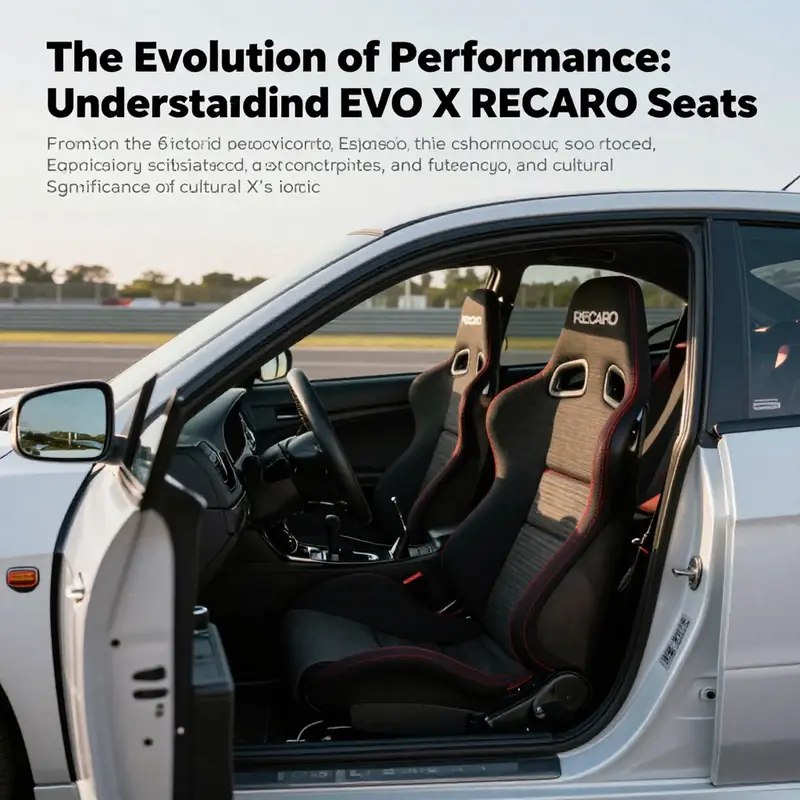
The Mitsubishi EVO X stands as a testament to performance engineering, with one of its most celebrated features being the RECARO bucket seats. These seats are not just pieces of furniture; they encapsulate the essence of driving passion and performance aesthetics that the EVO brand represents. In this exploration, we’ll dive into the factory specifications of EVO X RECARO seats, examine the aftermarket alternatives that enthusiasts are pursuing, and investigate the cultural impact of these seats in the performance community. Each chapter will not only highlight their significance but also reflect on how they contribute to the overall driving experience of the EVO X.
Factory Recaro Seats on the EVO X: The OEM Balance of Grip, Comfort, and Control
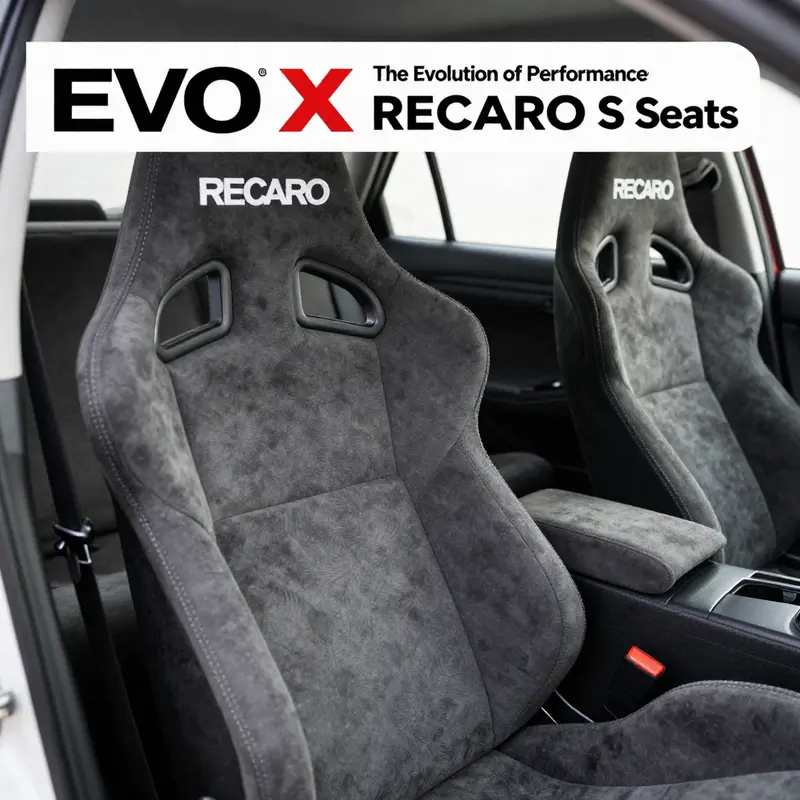
The EVO X arrived in showrooms with an interior detail that quickly became symbolic of its mission: driver-focused performance without sacrificing daily usability. Central to that identity were the factory bucket seats equipped in higher-trim variants. These seats were not mere cosmetic flourishes. They represented a deliberate engineering decision to marry track-capable support with the comfort expected from a modern performance sedan. Understanding those factory specifications sheds light on why the seats matter as much to the car’s character as its turbocharged engine and advanced all-wheel-drive system.
From the moment you sit, the factory seats communicate intent. They use a bucket-style geometry that cradles the torso and hips, with pronounced side bolsters on both the seat cushion and backrest. The goal is simple: keep the driver stable under lateral forces so inputs translate directly into vehicle behavior. To achieve that, the OEM design relies on a strong internal structure, high-resilience foams, and premium covering materials. Those choices produce a seat that feels planted and secure, yet tolerant enough for everyday use.
Material selection drives much of the seat’s personality. The factory pieces combine suede-like inserts with leather or leatherette surrounds. The suede material increases friction between body and cushion, reducing slip during spirited cornering. Leather trim maintains a premium appearance and resists wear on high-contact areas. This blend preserves the track-friendly grip of a race seat while delivering a tactile quality suited to a street car. The suede or Alcantara-like surfaces also age gracefully and provide a visual contrast that reinforces the cabin’s purposeful aesthetic.
Beneath those surfaces is a robust frame designed to endure both crash loads and the stresses of performance driving. The frame typically uses a steel substructure engineered for high strength. Surrounding it, foams of varying densities are shaped to provide the right mix of support and compliance. Firmer foam in the bolsters holds the body in place, while softer foam in the contact areas cushions and reduces fatigue on long drives. The result is a seat that supports consistent pedal and wheel feel over extended sessions without becoming punishing.
The likely donor platform for the factory-fit seats aligns closely with the Sportster-style family known for balancing support and comfort. While exact OEM model numbers vary by market and trim, the shared characteristics are clear: pronounced lateral support, an integrated headrest, and a compact footprint that suits the EVO X’s narrow cockpit. The integrated headrest helps maintain a continuous support surface, improving neck containment during dynamic maneuvers. It also allows a cleaner look and reduces potential intrusion into the cabin space, preserving visibility and ergonomics.
One carefully considered element is the seat’s contouring. Seat designers sculpt the shell to maintain correct posture without forcing an unnatural seating position. The cushion length, thigh support, and lumbar geometry are tuned so that drivers of varying sizes can find a neutral stance. Neutral seating reduces fatigue and improves control precision. This neutrality benefits drivers on long twisty roads and during short, flat-out track laps. A balance between firmness and cushioning ensures the seat remains effective both as a tool and as everyday furniture.
Side bolsters deserve special attention. The bolsters are high and firm enough to trap the pelvis and torso, limiting unwanted movement. That containment makes the steering feel more direct because the driver’s body moves less relative to the vehicle. During high-speed transitions, that difference is immediately perceptible. Compared to standard sedan seats, the EVO X factory buckets reduce the sensation of sliding across the seat. The driver stays anchored, allowing subtler inputs and more precise throttle modulation.
Weight savings was another consideration in the factory approach. The seats take advantage of materials and construction methods that trim mass without compromising safety. Lighter seats reduce sprung weight and can shift the vehicle’s mass distribution subtly in the driver’s favor. That small reduction helps the EVO X remain agile and responsive. Crucially, the OEM seats retain structural reinforcement and airbag compatibility, so the weight savings do not come at the cost of occupant protection.
Safety integration is a non-negotiable aspect of OEM seat design. Factory seats incorporate mounting points for seat belt hardware and, where applicable, pre-tensioners and side-impact airbags. This integration means that while the seats are aggressively shaped, they still function within the vehicle’s passive safety ecosystem. Any replacement or modification must respect these interfaces. Owners who swap seats without accounting for pretensioner wiring or side-airbag connections risk defeating important safety systems and can run afoul of regulations.
The seats also reflect an ergonomic compromise between adjustability and structural rigidity. High-bolster sport seats often limit recline and travel to preserve their supportive geometry. OEM designers mitigate this by optimizing the range of adjustment and the position of the controls. Manual sliders and recline levers are positioned to be straightforward. The result is a seat that can be tailored enough for daily comfort yet remains steadfast under demanding inputs.
From a visual standpoint, the seats helped define the cabin’s sporty identity. Contrasting stitching, textured inserts, and subtly embossed logos reinforce the performance narrative. These cues signal that the car was built with intention. They also establish a premium feel that elevates the cockpit beyond raw function. For many owners, these design notes were as persuasive as horsepower numbers in deciding to purchase the car.
Despite many strengths, factory sport seats are rarely the last word for enthusiasts who pursue uncompromised track performance. The aftermarket community often replaces the OEM seats with full-bucket racing units for reasons of increased lateral support, further weight reduction, and harness compatibility. However, the factory seats occupy a valuable middle ground. They are more supportive than standard seats, yet more comfortable and practical than pure racing shells. For drivers who split time between daily use and occasional track duty, the OEM solution strikes an attractive balance.
Practical considerations often guide owners’ decisions about seat replacement. Compatibility with seat rails, airbags, and center console clearance are common stumbling blocks. The OEM seats are engineered to fit seamlessly with the existing hardware. Aftermarket seats may require custom brackets and wiring adaptors to maintain functionality. Choosing to keep factory seats avoids these complications while preserving resale value and OEM safety integration.
Owners who modify their seats do so with clear intentions. Some replace the covering materials to refresh worn surfaces or to add aftermarket suede inserts for more grip. Others reupholster to repair creased leather or change the cabin’s aesthetic. Reupholstery can restore OEM support and comfort while offering a bespoke look. A popular route is to maintain the stock shell and hardware while upgrading the foam density or surface material. This preserves the seat’s geometry and mounting points while improving tactile performance.
In performance circles, discussions often compare factory-fit sport seats to aftermarket race seats in numeric terms: bolster height, contact patch width, or weight savings. Those metrics matter, but they do not tell the full story. The factory seats are tuned to a vehicle’s full dynamics and to a target customer who expects both performance and comfort. That calibration factors in suspension behavior, steering feedback, and even cabin noise. In other words, OEM seats are part of a holistic design intent. They were never meant to be the lightest or the most extreme; they were meant to serve the car’s dual role as a road and track car.
Maintenance and longevity are part of the factory seat’s appeal. The materials specified resist accelerated wear and are easy to care for. Suede inserts can be refreshed with specific cleaners and brushes while leather sections benefit from conditioning. Stitching and seams are reinforced in high-stress areas to prevent early failure. For many owners, the long-term durability of the factory seats justifies retaining them rather than pursuing aggressive swaps.
The cultural impact of the seats also matters. For many enthusiasts, the presence of factory sport seats signaled a serious vehicle. They became a visual shorthand for performance credibility. That resonance extended beyond the cabin; it affected how the car was marketed and perceived. Enthusiasts recognized the seats as an authentic component of a complete performance package rather than an optional accessory.
When owners do choose to upgrade, they often look toward premium racing-seat families known for track performance. These provide more aggressive side bolsters, lighter shells, and integrated harness slots. The trade-off is usually comfort and daily usability. Yet the aftermarket route is not purely about extremes. Some upgrades aim to retain the OEM look while enhancing foam firmness or adding harness compatibility. These hybrid approaches seek the best of both worlds.
Finally, installing or modifying seats invites technical scrutiny. Any change must honor mounting integrity, occupant protection systems, and local regulations. Proper brackets, hardware torque, and electrical connections preserve function and safety. Owners who pursue seat swaps should plan for professional installation and, if necessary, re-certification of safety features.
The factory Recaro-style seats in the EVO X stand as a considered compromise between performance capability and everyday comfort. They deliver significant containment and a premium feel without forcing the concessions of full race seats. That equilibrium helped the car appeal to a broad audience: drivers who value sharp handling, but still need their car to perform reliably on commutes and road trips. Understanding the design rationale behind these seats clarifies why they remain a touchstone in performance car discussions.
For owners and enthusiasts, the takeaway is clear. The factory seats are purposeful, well-engineered components that complement the car’s dynamic package. They were designed to be used hard, yet lived in comfortably. For those who seek further specialization, a wide range of aftermarket options exists. For many, though, the OEM balance of grip, comfort, and safety remains the right choice.
If you are considering seat refresh or replacement, one available resource is a supplier offering brand-new Alcantara front RECARO seats. That option can be useful for owners seeking OEM-like materials and styling while refreshing worn seating surfaces: https://mitsubishiautopartsshop.com/brand-new-alcantara-front-recaro-seatsoriginal/
For authoritative technical details on the family of seats that inspired the factory configuration, consult the maker’s model guide and product literature, such as the Sportster CS guide published by the seat manufacturer. These resources provide specifications on materials, construction, and safety features, and they clarify the engineering that underpins the balance between support and comfort.
Shifting Comfort and Control: The EVO X Seating Landscape Beyond RECARO

From the moment the EVO X rolled onto the street, its interior announced a driver focused philosophy. The factory RECARO seats with an integrated headrest defined the car’s balance between support and everyday practicality. The suede-like fabric offered grip and a sense of containment that kept the torso anchored through spirited cornering while still remaining comfortable for longer drives. This chapter traces how the seating arrangement shaped the driving experience, how lateral support influenced weight transfer, and why enthusiasts view the seat not just as a place to sit but as a control surface that communicates with the chassis. Over time, the OEM setup became a benchmark from which aftermarket options could evolve without erasing the car’s core personality. Some owners prioritized weight reduction and more aggressive bolstering to improve response at the limit, while others sought comfort for track days, daily commuting, and passenger occupancy. The practical realities of swapping seats include mounting considerations, alignment with rails, and compatibility with safety systems. Professional installation is often advised to preserve seat belt functions and airbag integration, ensure proper height and leg position, and avoid rattles and misalignment that could degrade handling. The broader aftermarket landscape offers a spectrum of shells from lightweight carbon fiber to reinforced fiberglass, with varied padding and upholstery to balance support and comfort. In many setups the goal remains to enhance connection between driver and machine while maintaining safe ergonomics and visibility. The discussion also acknowledges CAD drawn fitment issues, bracket availability, and the potential need for custom brackets when seat width or bolt patterns differ from stock. The EVO X cockpit becomes a dynamic interface where seat geometry influences hip angle and pelvis support, which in turn affects steering feel and throttle modulation. For track enthusiasts, the right seat helps sustain concentration through long sessions, enabling more precise inputs and consistent lines. For daily drivers, comfort and ease of ingress maintain usability and cabin presence. The decision to pursue aftermarket seats is framed as a calibration rather than a replacement, preserving the track-ready DNA of the EVO X while tuning weight, support, and safety to fit personal needs. Some builders emphasize lighter shells to reduce unsprung weight and improve balance, while others value additional side bolster contouring to lock the torso in place during aggressive cornering. A responsible approach weighs the benefits of increased grip against potential compromises in ingress, egress, and long term comfort. In parallel with seat choice, harness options, mounting hardware, and seat belt anchor positions play a crucial role in safety and performance. Proper integration with the car’s electronics, including airbag sensors where applicable, is essential. The EVO X community often navigates these decisions by starting with the OEM RECARO seats and evaluating aftermarket options as a way to refine feel without severing the car’s core identity. The result is a cockpit that can feel almost bespoke, a balance of lightness, support, and daily practicality. Ultimately the chapter invites readers to explore options with attention to installation complexity, weight distribution, visibility, and the way a seat shapes the relationship between driver and road. It also points to related resources that offer deeper technical guidance on fitment, safety implications, and real world experiences with EVO X seating upgrades. External references in this narrative are included to situate the choices within a broader performance culture, rather than to prescribe a single path for every car. The EVO X seat story is one of careful balance, professional execution, and personal preference, where a better seat can sharpen the feel of the chassis, clarify the signal between driver intent and vehicle response, and elevate the enjoyment of both road and track.
Racing Seats as Identity: How EVO X RECARO Shaped a Global Performance Ethos

The cockpit of a performance car is more than a collection of gauges and controls; it is a physical manifesto of how a car wants to be driven. In the case of the Mitsubishi Lancer Evolution X, that manifesto arrives in the form of a RECARO bucket seat, a fixture that transcends mere comfort to become a core element of driving discipline and cultural meaning. The seats are the first tangible border between the driver and the machine, a boundary that has to be porous enough to feel alive yet firm enough to keep the body aligned with the car’s intent. When the EVO X rolled off the line with RECARO as its factory partner, the interior signaled a serious claim: this car was built for precision, for the kind of engagement that rewards a guided hand, and for people who measure a successful corner by the way their hips bite into the seat and the car responds in a tightly choreographed arc. The integrated headrest and the suede-like cushions were not just material choices; they were ergonomics translated into an attitude. The seat cushions and backrests were sculpted to cradle the driver’s frame, enabling aggressive, high‑g‑load maneuvers without sacrificing contact or control. In the mind of a driver who values feedback and balance, the seat becomes a partner. The body is held in precisely the right position so the driver can feel the tires’ demand, the chassis’ limits, and the road’s texture in equal measure. This is a subtle but profound part of the EVO X’s performance grammar: the seat is not a passive component but a dynamic interface through which intent becomes action, and action becomes confidence.
From the outset, RECARO’s bucket-styled configuration for the EVO X fused German craftsmanship with Japanese engineering, producing an interior that looked as fast as it felt. The choice of materials—suede-like surfaces that emphasize grip without compromising comfort—was deliberate. It was about ensuring that the driver’s body remained stable and predictable under cornering stress while the upper torso maintained visibility and control. The seat’s aggressive lateral support is more than a visual cue; it is a functional feature that helps the driver maintain precise positioning during rapid directional changes. In practical terms, the seat helps translate throttle input, steering input, and braking intention into a cohesive, linear response from the vehicle. For the enthusiast, this is not a luxury; it is a performance imperative. A seat that holds you in place with composure under hard acceleration and late-bright cornering allows for a more intuitive, less distracting driving experience. The road’s rhythm becomes legible, and the driver’s reflexes can operate with a higher degree of fidelity to the car’s mechanical state.
As the EVO X found its footing in the tuning culture, the RECARO seats quickly moved beyond factory specifications to become symbols of a broader identity. Enthusiasts who seek to extract every measurable ounce of performance from their machines often pursue upgrades that maintain the essence of the factory ergonomics while amplifying the feel of the cockpit. Classics like the P6 and P1 RECARO variants—renowned for their combination of rigidity, lightness, and precise lateral support—are not merely substitutes for the original seats; they are a statement about what the driver values in the act of driving. The geometry is tuned to reduce energy loss during aggressive cornering, enabling the driver to stay connected to the chassis and to the tires’ grip limits. This is where the seats’ cultural footprint begins to take shape. They become a visible badge among a community that prides itself on precision driving, aerodynamic awareness, and an unspoken code of steering feel and seat contact that links car to driver in a continuous feedback loop.
The EVO X RECARO equation extends beyond the track or the weekend meet. In forums, social media showcases, and automotive events such as prominent trade shows and tuner gatherings, the seats serve as recognizable visual anchors of a car’s performance pedigree. They communicate a philosophy that blends Japanese engineering with German bench craftsmanship, a cross-cultural alliance that many in the tuning world regard as a benchmark for driver-focused design. The seats’ clean silhouette and their characteristic contouring make them instantly legible in photos and videos, and that legibility matters. It signals a car that is ready to be driven hard, to be pushed toward the limits of grip, and to be cared for with a level of attention that mirrors the driver’s own devotion. The effect is not merely aesthetic; it is social capital. A cockpit that looks ready for competition elevates the perception of the whole car in the community, nudging owners toward higher standards in fit, finish, and the ongoing pursuit of performance through iterative, thoughtful modification.
Beyond the bench and upholstery lies a broader ecosystem that thrives on the same ethos of engagement. The EVO X RECARO seats helped catalyze a culture of cockpit refinement where the interior becomes a laboratory for technique. The tactile reality of a firm, form-fitting seat makes seat position an ongoing experiment rather than a fixed setting. Drivers adjust their stance, torso height, and leg angles to optimize leverage and body position relative to the pedals and wheel. In this sense, the seat becomes a tool for teaching and reinforcing technique. A driver learns to anticipate how the car will respond under torque and steering input by developing a sense for how the seat and the body react at the limit. This feedback loop is a critical part of what the community celebrates when they talk about the EVO X as a platform for honing raw driving skill. The seat’s presence—its texture, its angle, the way it holds you in light and shadow as you move through a bend—acts as a constant reminder that performance starts not with horsepower alone, but with how the body interfaces with the car at the edge of traction.
The cultural resonance of these seats expands into the digital realm as well. Video games, live streams, and virtual showrooms model the RECARO cockpit with a level of fidelity that is scarcely accidental. When fans encounter a digital EVO X in a racing sim, the seating geometry and the tactile cues of contact and pressure contribute to a believable sense of driver immersion. The seats become more than a physical feature; they become a symbol of the driver’s relationship with the machine. This cross-contamination between real-world driving and virtual experiences reinforces a shared language in the community. It helps newcomers grasp what a performance cockpit should feel like and invites veterans to discuss refinements with the same vocabulary they use when talking about handling, chassis balance, and feedback. The result is a global culture that treats the RECARO-equipped EVO X as a reference point for what true driver engagement looks and feels like, regardless of geographic origin.
Another dimension of the EVO X culture is the way the interior extends the car’s technical narrative. The presence of high-end seats sits alongside other modern performance cues—think lightweight trim, carbon fiber detailing, and the integration of advanced instrumentation. The MOteC C1212 full LCD instrument panel is an emblem of the tech atmosphere that often accompanies a cockpit designed for precision driving. The seats harmonize with such instrumentation by providing a stable, comfortable base from which the driver can monitor and react to complex data streams without distraction. The interior becomes a cockpit of disciplined focus, where the combination of seat, panel, and control layout works together to reduce cognitive load while increasing perceptual bandwidth. In this environment, the driver’s mind can stay tuned to the car’s instantaneous state: tire load, grip distribution, and the subtle shifts in balance that foretell the next turn or drifty transition. This interplay between seating ergonomics and instrumentation underscores an essential truth: performance culture is as much about perception and feedback as it is about raw power.
The cultural currency of the EVO X RECARO seats is reinforced by the aftermarket ecosystem that sprang up around them. A thriving network of specialists, fabricators, and accessory makers has produced a wide range of compatible options and enhancements that extend the original concept while preserving its core strengths. The cross-platform appeal means that enthusiasts who own other platforms can adopt similar seating ergonomics to realize comparable driving experiences. This cross-pollination contributes to a more inclusive community where ideas about driver engagement, comfort under load, and seat geometry travel beyond a single model or brand. It also fuels the storytelling aspect of car culture: each seat is a narrative node, a point from which a broader conversation about how a car should feel, respond, and communicate with its driver branches out. The seats themselves thus become artifacts within a living museum of performance practice, displayed in forums, galleries, and at events that celebrate the art and craft of driving.
As these seats gained iconic status, they also achieved a form of寿命-long cultural shelf life by appearing in media outside traditional racing contexts. The digital representation of their form and function in popular racing titles reinforces a perception of the EVO X as a coach‑like platform—one that teaches the driver to read the car’s intention through tactile feedback and front‑of‑seat contact. This digital second life helps new generations of enthusiasts understand why the seat geometry matters, why the materials matter, and how these choices feed into the broader experience of performance driving. In parallel, the real-world market for RECARO seats and compatible components continues to evolve, sustaining a cycle of design improvements that keep the cockpit current with evolving chassis dynamics and safety standards. The result is a continually refreshed cultural conversation about how seating, cockpit architecture, and performance technique inform one another across time and across borders.
In sum, the EVO X RECARO seats are not merely an ergonomic upgrade or a cosmetic flourish. They are a cultural artifact that embodies a philosophy of driving that prizes engagement, precision, and tactility. They encode a set of values about what it means to push a car to its limits and to do so with a body that is organized for control rather than fatigue. They signal a fusion of engineering sensibilities across continents, a respect for materials and form that elevates the act of sitting in a car into an act of performance. And they stand as a visual and tactile shorthand for a broader movement—the idea that a cockpit should invite the driver to participate as an active, responsive partner in the chase for speed, balance, and the delicate art of staying ahead of the car’s own potential. In this way, the EVO X RECARO seats remain a lasting beacon in the global performance community, a reminder that seating is not a passive feature but a formative force in how we drive, learn, and connect with machines that move at the edge of capability.
For readers curious about the specific, premium seating option that preserves the sense of luxury while preserving the sport‑driven ethos, consider the availability of brand-new Alcantara front RECARO seats. These seats represent a bridge between classic performance ergonomics and contemporary interior refinement, offering a tangible path to recapturing the original balance between grip, support, and comfort that defined the EVO X cockpit. Brand-new Alcantara front RECARO seats stand as a testament to the enduring appeal of a well‑designed seat, one that continues to guide drivers toward the precise posture and contact that make every bend feel like part of a rehearsed, controlled routine.
As this culture continues to evolve, the EVO X RECARO seats remain a central reference point. They anchor a community’s sense of what performance feels like in practice, not just in theory. They remind us that driving is a dialogue between human and machine, a conversation that happens at the level of the hips, spine, and hands as much as at the level of the tire and the track. And in that ongoing dialogue, these seats—through their form, their materials, and their insistence on precise alignment—continue to shape how enthusiasts imagine, pursue, and celebrate the art and craft of high‑performance driving. The legacy is not merely in a seat’s stiffness or its leather and fabric; it is in the way a cockpit teaches a driver to move with intention, to read a road with confidence, and to translate every moment of contact into a moment of control. That is the cultural impact of the EVO X RECARO seats: a quiet, persistent assertion that the seat is not just where you sit, but where you become someone who drives with purpose.
External resource for deeper context on factory performance features and the EVO X interior narrative can be found in Car and Driver’s coverage of the Lancer Evolution X, which situates these seats within a broader performance vehicle landscape. https://www.caranddriver.com/mitsubishi-lancer-evolution-x
Final thoughts
The RECARO seats in the Mitsubishi EVO X do more than just provide comfort and support; they embody a culture of performance and driving excitement that resonates deeply with automotive enthusiasts. From their factory specifications that prioritize grip and stability to the myriad of aftermarket alternatives that further enhance performance, these seats have established themselves as a significant component in the narrative of the EVO X. Moreover, their impact stretches beyond the vehicle itself, playing a pivotal role in the community that celebrates performance driving. Ultimately, the legacy of EVO X RECARO seats will continue to inspire drivers, making them not just seats, but symbols of automotive passion.