
The Mitsubishi Lancer Evolution, often hailed as a pinnacle of automotive engineering, has significantly evolved over the years, with its legendary 4G63T turbocharged engine at the core of this transformation. Understanding the evolution of the Evo engine not only reveals the brand’s commitment to performance but also highlights its importance for business owners in the automotive sector who are seeking reliable, high-performance vehicles for their operations. This article delves into the technical advancements that have been made, the enhancements in performance and output, and the cooling solutions and challenges faced by these powerful engines. Each chapter will illustrate how these developments solidify the Lancer Evolution’s status in the automotive world and its relevance for modern businesses.
From Iron Heart to Timed Mastery: The Technical Evolution of the Mitsubishi Evo Engine
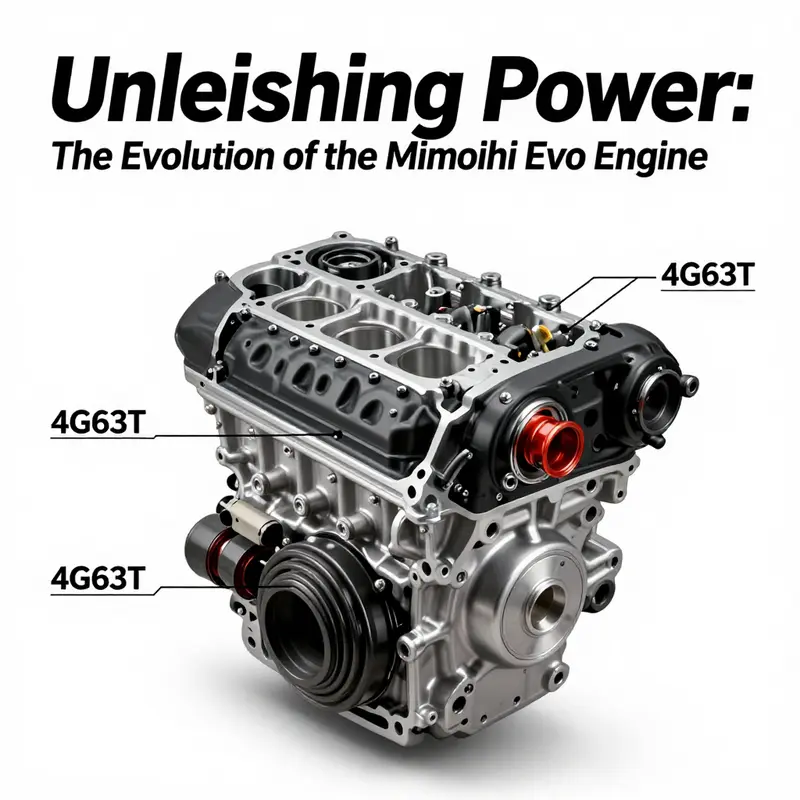
The Mitsubishi Lancer Evolution’s engine story is a continuous search for balance—between raw turbocharged acceleration and the quiet, deliberate reliability needed to survive the most punishing rally stages and the daily grind of street driving. At the core of this saga sits a stubbornly simple premise: a robust, turbocharged inline-four that could endure extreme torque and heat while delivering power in a way that felt both raw and controllable. The 4G63T, with its cast-iron block and aluminum cylinder head, became the emblem of that premise. It was designed to endure the kind of punishment rally competition imposes—hot, demanding conditions, long pull after long pull, and the need to maintain response and reliability as ambient temperatures climb and boost pressures rise. In the earliest Evolutions, that architecture proved it could withstand sustained high-stress operation, a necessity when you are chasing times across rough stages where any hint of power fade translates into a lost position. The engine’s durability allowed Mitsubishi to push power higher without surrendering the trust of its drivers, a combination that created a platform capable of dramatic performance while still feeling forgiving enough for less-than-perfect weather and road conditions.
As the Evolution line matured from Evo I through Evo VI, the engine grew not only in peak numbers but in the quality of its power delivery. The 4G63T remained the backbone, but the chassis and drivetrain around it were increasingly tuned to leverage the turbocharged torque while keeping the balance predictable. The early iterations taught engineers a hard truth: power is not just about peak horsepower; it is about how that power is delivered across the rev range and how the car responds to throttle input at the limit. This realization laid the groundwork for a transformation that would begin to redefine the Evo’s character in generation after generation.
A watershed moment arrived with Evolution VII, when Mitsubishi introduced MIVEC, the Mitsubishi Innovative Valve timing Electronic Control system, to the 4G63T family. MIVEC brought variable valve timing to the intake side, a move that altered the engine’s character at all engine speeds. The qualitative shift was immediate. Low-end torque rose, making the car more tractable in everyday driving and at standstill starts. The throttle felt more eager, the initial bite more immediate, and the car seemed to respond with less fuss when you rolled into the accelerator from a stop. Yet, this system did not simply smooth the engine’s manners. It also opened the door to stronger top-end performance. By adjusting the cam timing, the engine could breathe more efficiently at higher RPM, enabling a more aggressive surge as boost rose and the turbo streamed air at high pressure. The result was a power band that felt broader and more usable—a hallmark that would become a core identity of the Evo’s driving experience.
The Evolution VIII era solidified this identity. MIVEC’s refinements and the packaging around the 4G63T were tuned to maximize the now-familiar blend of tractable daily drivability and ferocity when the road demanded it. Engineers optimized the intake flow and refined the control logic so that the throttle response remained crisp, while the engine could hold higher torque for longer during mid-range accels. In practical terms, the VIII’s power delivery became less of a raw rush and more of a cooperative performance partner: the engine responded with a precise, predictable snappiness that allowed drivers to exploit corner exits with confidence. While the turbocharger and intercooling remained central to the Evo’s performance, the engine’s character matured into a more sophisticated instrument. The MIVEC system, having proven its value, acted as the hinge on which the Evo’s performance profile swung—calibrated for responsiveness at low speed yet capable of unleashing a sustained harvest of torque when demanded by the pace of the rally or the highway.
By Evolution IX, the engine had become a highly refined platform. The 4G63T was still the core, but the internal components were strengthened and the cooling systems were redesigned to handle higher boost pressures and more sustained performance. The revisions were not only about power; they were about durability under more demanding conditions. In standard form, peak outputs hovered around 280 horsepower, a testament to the engineering discipline that kept the engine both powerful and relatively reliable for daily use and competition alike. What elevated the IX further was the attention to heat management and boost control. Mitsubishi adopted more efficient turbochargers and larger intercooling capacity, including a top-mounted intercooler in certain configurations, to keep intake air density high even as exhaust energy and ambient heat rose on the stages and the road. This emphasis on thermal stability allowed the engine to maintain consistent performance across longer bursts, reducing the risk of power drop-off and detonation—a critical factor in a turbocharged inline-four where heat is both an amplifier and a limiter.
Another dimension of Evolution IX was the continued emphasis on the balance between turbo efficiency and drivability. The turbo’s response—how quickly it spools and how it delivers boost—remained a key performance lever. While the later stages of the Evo line faced unavoidable turbo lag, the engineering package—engine internals, cam timing control, cooling, and the engine management strategy—was designed to minimize that lag where possible while ensuring robust fueling and knock resistance. The reliance on high-octane fuels was a reality of this architecture. The combination of elevated boost pressure and advanced valve timing meant the engine could generate significant power, but only if the fuel and cooling infrastructure were up to the task. This reality defined the Evo’s operating envelope and explained why Mitsubishi’s engineers invested so heavily in cooling capacity, cam timing strategy, and turbocharger technology.
Alongside the engine’s electrical and control innovations, the Evo’s cooling architecture played a decisive role in sustaining performance. In many high-performance applications or specialized versions, aluminum radiators found their way into the package as a means of shedding heat more efficiently under aggressive driving. Aluminum radiators offered more rapid heat transfer and reduced weight, supporting higher engine reliability when boost pressures were pushed and the ambient temperatures soared. Yet this equipment did not come without caveats. In especially extreme or heavily tuned scenarios, aluminum radiators could be vulnerable to higher pressure differentials and structural fatigue if not paired with robust cooling circuits, reliable fans, and well-tuned cooling ducting. The takeaway is not to demonize aluminum radiators, but to recognize that as power climbs and boost remains elevated under track-like conditions, the entire thermal ecosystem—radiator capacity, intercooling efficiency, coolant flow, and even ambient airflow—needs to be harmonized. The Evo’s engineering team understood this well, threading the thermal, mechanical, and electronic threads into a cohesive tapestry that allowed drivers to access the engine’s potential without surrendering the car’s stability or the driver’s confidence.
From the vantage point of the engine’s lineage, the Evolution VII’s introduction of MIVEC marked a turning point that would reverberate through subsequent generations. A relatively straightforward piece of technology—variable valve timing—transformed the engine’s character by enabling a broader, more usable power band. It changed not only how the car accelerated, but how it felt under different driving conditions. A driver could feel a livelier conversion of throttle input into movement without needing to hunt for the right gear. The technology allowed the engine to play nicely with the Evo’s sophisticated drivetrain, including compact, tightly tuned gearboxes and limited-slip differentials, whose job was to translate that increased power into tractable, corner-snapping grip. In combination, these elements created a vehicle that felt both brutal and refined—a paradox that became the Evo’s signature in the eyes of enthusiasts around the world.
The engine’s technical evolution did not occur in a vacuum. The Evo’s global competition history—its WRC heritage—demanded a engine and chassis package that could survive the rough, high-stress demands of rally roads while still delivering a translatable, real-world performance. The 4G63T’s iron block, lightened with modern design advances, plus the aluminum head, gave engineers a durable core around which to engineer more aggressive breathers, more precise fuel delivery, and more robust cooling systems. The result was a platform that felt purpose-built for competition and credible as a daily driver. Each evolutionary step—whether a refined cam profile, a more aggressive turbo, or a clever electronic control strategy—was aimed at smoothing the engine’s power delivery, reducing hesitation, and maximizing usable torque. The goal remained consistent: to offer a engine that behaved predictably at the limit and rewarded the driver with satisfying, repeatable acceleration.
Within this narrative, a single thread remains constant: the engine’s character is inseparable from the car’s chassis and the driver’s engagement. It is a loop that starts with a cast-iron block and an aluminum head, then loops through turbochargers, intercoolers, and electronic controls, finally returning to the road as a coherent, communicative machine. The MIVEC-equipped Evolution VII laid the groundwork for this loop to function in harmony. The Evolution IX then tested and refined it under higher load conditions, ensuring that the engine could deliver consistent performance when the pressure mounted and the road demanded a higher tempo. The result is more than a saga of numbers and parts; it is a narrative about how early reliability matured into high-precision performance, how a rally-first design quietly became a driver-focused, road-ready performance icon. The engine’s evolution resonates beyond its cylinders and pistons. It embodies a philosophy: performance is made by blending tried-and-true durability with intelligent, adaptive timing—so that power is always within reach, yet always controllable.
To explore the practical depth of how this evolution manifested in the engine’s most iconic generation, consider the 4G63T’s enduring role as the evolutionary anchor. It is not merely a relic of a bygone era; it is a live demonstration of how a robust basic architecture can be progressively enhanced by clever timing, cooling, and turbocharging strategies. The continuity of the 4G63T family across multiple Evolutions serves as a reminder that, at heart, the Evo’s essence lies in an engine that can deliver horsepower while preserving the driver’s sense of control. A reader can dive deeper into the specific technical standards and benefits associated with the MIVEC system as it appeared in these Evolutions through dedicated analyses that unpack the intake timing, valve lift, and ECU strategies that shaped the power band. The story, however, remains a shared one: engineering that respects a car’s rally roots while embracing the demands of street and track alike.
For a closer look at the engine’s faithful development in the context of a crucial Evo generation, a detailed reference on the 4G63T family and its JDM roots is available here: genuine JDM 4G63T Evo-7 engine details. This link provides insights into the core architecture that powered the early generations and helped establish the Evo’s rally-proven durability as a standard bearer for compact performance cars.
As the evolutionary arc continues beyond the most famous early platforms, the underlying themes endure: a robust engine core, clever management of boost and timing, and a cooling system that keeps the entire package honest under pressure. The Evo engine saga is a demonstration of how a single, well-designed powerplant can be continuously developed to meet the evolving demands of competition and street use alike. It is this integrated, holistic approach—where mechanical robustness, electronic finesse, and thermal management work in concert—that makes the Mitsubishi Evo engine story both technically compelling and endlessly engaging for enthusiasts who want to understand not just what the car can do, but how it does it. For readers who crave a more technical breakdown of how these elements come together in the late-Gen IX configurations, a broad spectrum of sources explores how torque curves, cam timing strategies, and intercooling performance coalesce to deliver the Evo’s signature driving experience.
External resource for deeper technical context: https://autosport.com/tech/features/1972435/understanding-mitsubishi-evo-8-engine-composition-standards-and-industrial-benefits
Precision Through Progress: The Evolution of Mitsubishi Evo Engines
The Mitsubishi Lancer Evolution lineage stands as a living testimony to how a racing-derived powerplant can mature without losing its core identity. At the heart of every Evo is a turbocharged inline four that began with a rugged iron block paired with an aluminum cylinder head. This combination delivered power and durability essential for high load driving. As with any long running performance program, the drive to extract more power, quicker throttle response, and greater reliability pushed engineers to refine every facet of the engine and its supporting systems. The arc from the first Evolutions through the later generations is a carefully choreographed sequence of improvements that redefined what a road going rally machine could be. Through this lens, the Evo engine is not a collection of part numbers but a philosophy: to keep the driver engaged, to deliver surge when the pedal is pressed, and to stay predictable and durable under demanding conditions.
In the early iterations, the challenge was to balance torque and response within a chassis that demanded precise handling. The basic layout provided robust thermal stability and durability, essential for high boost levels. These engines endured sustained boost, high exhaust temperatures, and the demands of sport driving. The synergy between engine and drivetrain—short-throw gears, a mechanical limited-slip differential, and tuned suspension geometry—created a platform where horsepower was only part of the story. Power was delivered with quick spooling turbos, efficient air paths, disciplined fuel delivery, and an engine management brain that harvested usable energy from every puff of boost without inviting trouble.
The Evo II marked a turning point. Engineers focused on air flow, valve motion, and fuel delivery: a revised cam profile increased valve lift for more air and fuel, a higher-flow fuel pump kept pressure up across the range. The result was higher peak horsepower and robust midrange torque, plus crisper throttle response and a more linear feel that suited corner exits and fast shifts.
As the Evolution series moved toward the mid-1990s, the mid-generation refreshes emphasized both power and reliability. A redesigned piston set and a higher compression ratio improved thermodynamic efficiency, allowing more of the boost energy to do useful work. The turbocharger grew more capable, while breathing and cooling paths were optimized to reduce heat soak and shave spool times. The chassis and brakes were tuned to match the upgraded power, ensuring the car could be driven to its limits with confidence.
The later generations shifted toward a more modern architecture. The Evo X introduced a twin-turbo, 2.0-liter platform designed for broad, usable performance across the rev band. This was a shift from chasing peak numbers to delivering coherent power that the chassis could translate into corner speed and straight-line acceleration. The engine management and cooling systems were co-engineered with the driveline to maintain reliability under a wide range of conditions, from dry highway bursts to wet rally stages.
Beyond the engine itself, cooling and reliability gained renewed emphasis. Heavier boost and sustained track use demanded improved radiators, heat exchangers, and more efficient cooling circuits. Aluminum components were adopted strategically to reduce weight while preserving heat rejection but with careful attention to long-term durability. The Evo program shows that durability and performance can coexist by balancing strength, heat rejection, and driver feedback. The result is a powertrain that can sustain repeated, repeatable performance and still feel controllable and friendly to the driver at the limit.
The Evo’s engines became a blueprint for performance automotive engineering: a disciplined feedback loop between competition experience and road-going reliability. Each generation added something that made the whole package more coherent, more drivable, and more trustworthy under demanding conditions. The twin-turbo architecture of the modern era embodies decades of learning, experimentation, and validation, delivering immediate response and strong high-end pull while preserving throttle feel that enthusiasts expect from a true performance icon.
For readers who want to explore further details or real-world projects, the story remains anchored in a holistic view: lubrication, cooling, intake, exhaust, electronics, and drivetrain all work together to produce a coherent and reliable package. The Evo program endures as a benchmark in performance sedans and rally-inspired road cars because it proves that power, response, and control evolve together through patient, data-driven iteration.
Heat, Flow, and the Evo Engine: Mastering Cooling in Mitsubishi’s Turbocharged Lancer Line
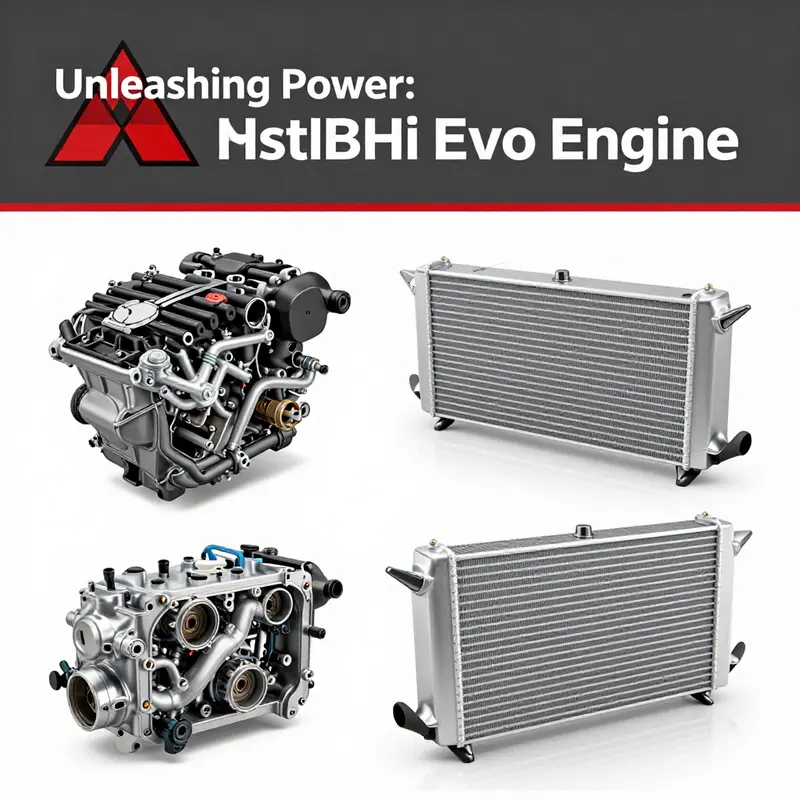
Cooling is the quiet backbone of the Mitsubishi Evo’s celebrated performance. It is the unseen discipline that lets power stay usable and reliable when the turbocharger clocks high boost, exhaust manifolds glow, and the tires bite into an unforgiving asphalt. The Evo lineage centers on the 4G63T turbocharged engine family, a design that delivers high torque and aggressive response, but at a cost: heat. The iron block, coupled with an aluminum cylinder head in the early generations, built a foundation famous for durability yet challenged by sustained high-load operation. As the cars evolved from street fighters to track-day contenders, the maintenance of the cooling system became not a luxury but a necessity. The engine’s capacity to hold together under heat translates directly into how long the power can be kept at the edge and how steady the car remains through a lap rather than a single blistering straightaway. The story of Evo cooling is thus a story of balance—between engine temperature, intake charge, and the airflow that slices through the complex geometry of the front end and the engine bay.
In the Evo’s turbocharged environment, heat emerges from several intertwined sources. The turbo itself runs hot as it compresses intake air, forcing more oxygen into the cylinders and inviting greater combustion energy. The combustion chamber, already stressed by higher boost, produces not just impressive horsepower but a challenge: heat forms a feedback loop that can reduce density of the charge, increase intake air temperatures, and push the knock resistance boundary. The intercooler plays a decisive role here by lowering that charge air temperature, but its effectiveness is tethered to how well heat is shed downstream. Engine oil also heats up in this environment, feeding a cycle where lubrication quality must be maintained to prevent wear in turbo bearings and cam components. The cooling system—radiator, hoses, water pump, thermostats, fans, and even the front-end air dynamics—must orchestrate a response that keeps the coolant moving at the right temperature and preserves oil viscosity, combustion efficiency, and turbo life.
The core cooling components are straightforward in theory yet exacting in practice. A robust radiator is the frontline heat exchanger, tasked with dumping heat from the coolant as it travels through a high-velocity core. Large-diameter hoses ensure the coolant can move with minimal friction, reducing pressure drops that can cause hot pockets to linger in the engine. An efficient fan system must react quickly to varying conditions, pulling air through the radiator at low speeds and maintaining steady flow at high speeds when ram air is less dominant. The intercooler, especially for a turbocharged layout, represents a parallel but equally critical path. It reduces the temperature of the already compressed air before it reaches the cylinders, which heightens performance and mitigates detonation risk. The oil cooling circuit, often overlooked in casual discussions, deserves careful attention as well. When the oil heats up, film strength drops and lubricity can suffer, accelerating wear in a high-stress environment. The thermostatic control of the cooling loop ensures warm-up is controlled and steady, while the water pump must maintain a reliable circulation rate across varying engine speeds. Taken together, these elements form a responsive system, one that must adapt to everything from a cold start in winter to a long, hot day on a track when laps accumulate heat in the coolant, oil, and charge air.
In stock form, the Evo cooling framework was designed for typical day-to-day and spirited street use. The margins, however, tighten quickly once power is increased beyond factory ratings or when the vehicle is pressed into sustained high-load operation on a circuit. The challenge lies not only in achieving a high peak power, but in delivering that power consistently over time without suffering thermal degradation. Coolant boiling at high pressure becomes a real risk when the system is pushed to the limit, particularly in long sessions where heat soak has already built up in the engine bay. Radiator bottlenecks occur when airflow is restricted or when front-end design limits the radiator’s exposure to the air stream, a situation that tends to appear during slow-speed driving or in traffic. Oil cooler inefficiency compounds problems by allowing the lubrication system to overheat, a scenario that elevates oil temperature and undermines film strength. Together, these components define a thermal envelope within which the Evo must perform. Pushing the envelope without addressing the cooling envelope invites a cycle of heat-induced power loss and, over time, potential mechanical stress that can compromise reliability.
Enthusiasts frequently confront these challenges by upgrading cooling components in a holistic way. A high-flow radiator with a denser core increases the surface area exposed to air and coolant contact, enabling more efficient heat transfer even when the vehicle is not moving with surgical speed. Dual- or triple-core radiators push the cooling capacity further, reducing the surface temperature that the coolant experiences and opening a wider margin before heat rises to boiling thresholds or heat soak. When the intake air temperature becomes a limiting factor for engine performance, a larger intercooler system becomes a practical upgrade, not merely an aesthetic one. Cooler intake air reduces the likelihood of knock and allows more aggressive ignition timing at the same boost level, offering a real, running advantage on warm days or when pushing to the limit on a track. The thermostat strategy and water pump capability must accompany these core changes. A thermostat with an appropriate opening range helps the engine reach stable operating temperatures quickly and avoid prolonged cycles of heat cycling that stress the bearings and seals. A more capable water pump keeps coolant moving, preventing hot pockets and ensuring uniform cooling across all engine zones.
Beyond the core components, airflow management around the radiator is essential. Even a modest front-end upgrade or an airflow-related modification can influence cooling effectiveness, especially at city speeds where ram air is scarce. The goal is not simply to increase radiator size, but to maintain a balance between aero efficiency, weight, and the cooling demand of the engine. In practical terms, this means paying attention to grille openings, under-hood airflow channels, and even the color and texture of the engine bay’s surfaces to minimize heat retention. Electric fans can provide a flexible, energy-efficient supplement to the mechanical fan, allowing precise control over when air is drawn through the radiator and how aggressively it is deployed during low-speed operation. The choice between electric versus mechanical fans, and the decision to adopt a dual-fan setup, hinges on the car’s typical duty cycle. A road-driven Evo that spends considerable time in traffic may benefit from a more robust electric fan strategy, whereas a track-oriented car might rely more on a high-capacity mechanical fan and targeted cooling ducts to ensure heat does not accumulate in the confined space behind the grille.
Another vital dimension relates to the cooling of lubrication. An auxiliary oil cooler, often installed in parallel with the main cooling loop, can shed heat from the oil more efficiently than relying entirely on air cooling after the fact. The effect is twofold: it preserves the lubricating film at higher oil temperatures and it reduces the risk of heat-induced viscosity changes that would otherwise ramp up friction and wear. The upshot is a more consistent oil temperature profile, less fluctuation during prolonged high-load use, and, critically, a lower likelihood of thermal fatigue in the engine’s moving parts. The integration of an oil cooler with the cooling circuit calls for a careful balancing act: it must be sized to handle the engine’s typical heat load without becoming a chokepoint itself during rapid throttle transitions or long, steady-state runs on a hot day. In other words, cooling strategy becomes a conversation about the whole system, not isolated improvements in single components.
To consider the Evo’s cooling progression in a broader historical context helps illuminate why modern enthusiasts emphasize a holistic approach. In the early generations, the emphasis lay on maintaining structural integrity and providing a robust baseline to handle factory boost levels. As the class evolved, improvements such as higher flow around the turbocharger and better intercooling were necessary to sustain power under track-like conditions. The Evo IV and Evo VI era, in particular, demanded more aggressive cooling strategies given their high-boost applications and the heat generated by sustained performance. As Ford- and Honda-based platforms refined their cooling philosophies, the Evo’s fans and radiators needed to keep up with higher charge temperatures. The need for better heat management was not simply about avoiding overheating; it was about preserving the engine’s ability to deliver a consistent, controllable power curve across a broad speed range. This is where the art of cooling meets the science of thermodynamics: more cooling capacity translates into less thermal distortion of the intake charge and more predictable power delivery, especially under the demanding conditions of a race weekend or a spirited canyon run.
Material choices also contend with cooling performance. In some high-performance builds, aluminum radiators are employed as a way to reduce weight and improve heat transfer, particularly in configurations where space and airflow constraints exist. While aluminum offers excellent thermal conductivity and a compact footprint, it is not a universal cure. Extreme duty cycles—long, high-boost sessions on track, or aggressive power re-tunes—can still push cooling systems toward their limits. In such scenarios, the design must account for not just the radiator, but the total heat-handling capacity of the entire system: coolant density, the heat capacity of the coolant itself, the efficiency of the hoses under pressure, and the reliability of the pump and thermostat under repetitive thermal stress. In practical terms, this means selecting a cooling package that matches the engine’s power target and the vehicle’s typical duty cycle, while also building in margins for heat soak, ambient temperature extremes, and the geometry of the front end that governs how much air can reach the core.
For Evo owners who pursue reliability alongside performance, the message is clear: a comprehensive cooling overhaul is not merely a performance upgrade but a protective investment. The goal is to deliver stable engine temperatures across all driving scenarios, from slow-speed commuting to heated track sessions, thereby protecting against thermal stress that can degrade bearing life, lubricating film strength, and turbocharger efficiency. The psychology of cooling is equally important. It reassures drivers that the car they are pushing hard has reserves, not just in peak numbers but in sustained power availability. An engine that remains within a reliable temperature window under a broad range of conditions is a more confident partner, offering predictable behavior when the driver is on the edge of adhesion and the tires bite into the pavement with calculated aggression.
In this broader ecosystem, even now, the cooling strategy interacts with fuel and ignition management. As temperatures rise and intake air can become hotter, the engine-to-ECU relationship adjusts timing and fueling in ways that preserve torque curves and keep knock thresholds safe. The most effective cooling upgrades harmonize with this dynamic engine management, enabling more aggressive calibration without inviting heat-induced detuning or reliability concerns. The result is a car that not only achieves noticeable performance gains on paper but also translates those gains into real-world, repeatable behavior on the road or circuit. For the driver, the experience is straightforward: faster, more responsive throttle, steadier mid-range torque, and a sense that heat does not govern the pace as it might have in stock configurations. For the machine, the payoff is longevity, consistent power delivery, and a greater margin of safety against thermal damage.
As owners seek reliability and performance in equal measure, the path forward for cooling is thoroughness and integration. A one-size-fits-all radiator or a single high-gloss component will not suffice for the Evo’s heat profile. The most durable solutions come from a holistic approach that weighs radiator flow, intercooler efficiency, oil cooling, airflow management, and the control logic that governs temperature management. The result is a car that can sit at the edge of its heat tolerance for longer periods without surrendering momentum, a characteristic that makes the Evo not just fast but enduringly capable in the hands of a skilled driver. And because cooling is inseparable from the car’s overall dynamics, the best solutions are those that consider the entire chassis and its interaction with the front-end architecture. This is why the path to higher performance is as much about airflow and heat management as it is about bore, stroke, boost, and gear ratios.
For the reader who thinks in terms of reliability as a performance multiplier, remember that the goal of cooling is not simply to reach a higher peak but to preserve grip and throttle response over extended sessions. The warranty of a well-designed cooling system is the ability to push the car harder for longer without succumbing to thermal fatigue or heat-induced detuning. In that sense, cooling is an investment that pays off in consistent lap times, predictable response, and a chassis that remains inviting rather than punitive as temperatures rise. The Evo’s legacy is built on this combination of raw acceleration and disciplined thermal management. By honoring the cooling envelope as a core performance parameter, builders and owners can sustain the Evo’s characteristic immediacy while elevating endurance on the road and on the track. The conversation about heat is, in the end, a conversation about control—the control that ensures the engine’s power is not a momentary flare but a reliable, repeatable force that helps the car live up to its reputation.
External resource: For a detailed, technical breakdown of modern cooling practices across high-performance engines, see CarScoops’ cooling system guide. https://www.carscoops.com/mitsubishi-evo-cooling-system-guide/
Final thoughts
The Mitsubishi Evo engine’s evolution mirrors advancements in automotive technology, offering insights into performance, reliability, and cooling solutions. As the automotive industry continues to advance, understanding these elements becomes crucial for business owners who are poised to leverage high-performance vehicles to enhance their operational capabilities. By investing in vehicles equipped with evolved technology like the Mitsubishi Evo, businesses can ensure they are at the forefront of innovation and performance, setting themselves apart in a competitive market.