
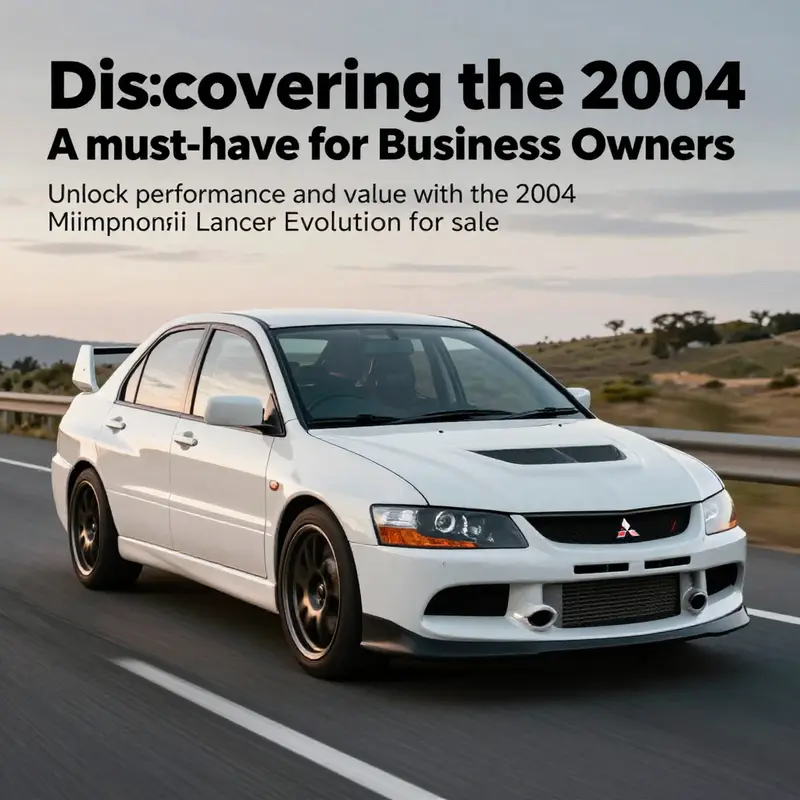
The 2004 Mitsubishi Lancer Evolution VIII is not just a sports car; it’s a symbol of power, precision, and performance. For business owners seeking a unique vehicle that can turn heads and provide exhilarating driving experiences, this model represents the perfect blend of functionality and fun. With its competitive pricing in the used car market, the EVO VIII stands out as a compelling choice for those who value both style and performance. This article is structured to give you an in-depth understanding of the vehicle, including its overview, configurations, special editions, and buying guide, ensuring you are well-equipped to make an informed decision when considering this iconic sports sedan.
Turbocharged Legend: A Close Look at the 2004 Mitsubishi Lancer Evolution VIII for Sale
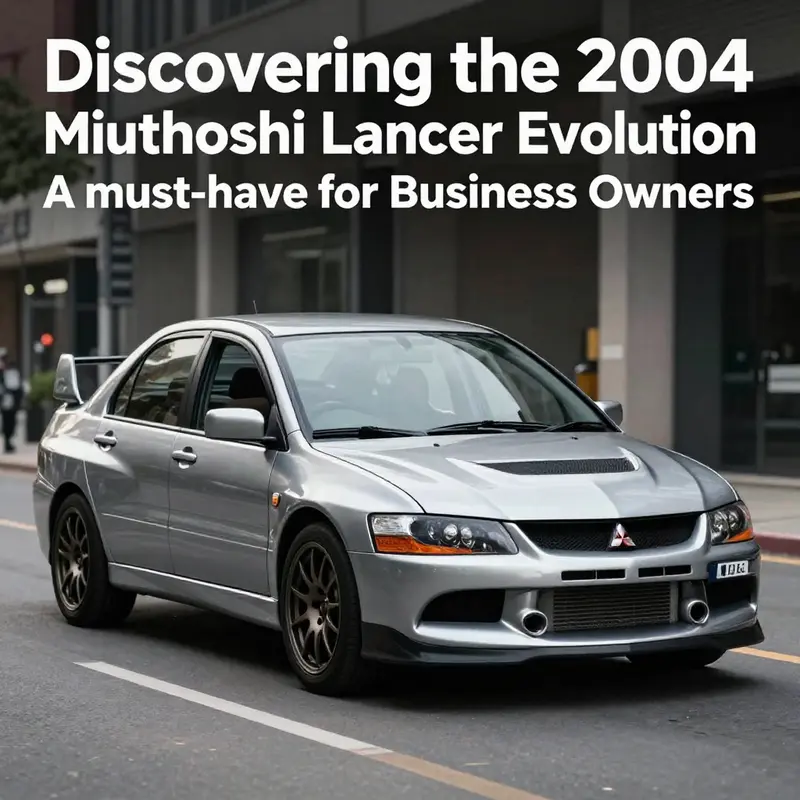
The 2004 Mitsubishi Lancer Evolution VIII is a rally bred sedan that remains approachable on public roads. In MR trim it adds a sharper chassis, more direct steering, and a six speed gearbox that helps keep the engine in its sweet spot while cruising. This combination makes it feel both urgent and usable, a quality that sets it apart from many modern performance sedans.
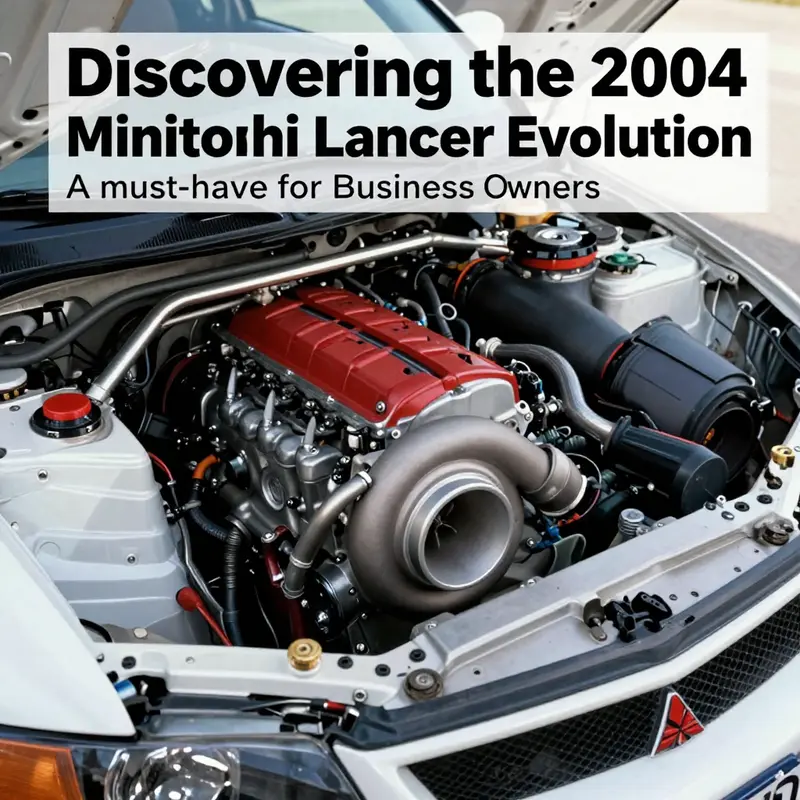
Under the hood sits a purpose built turbo engine, the 2.0 liter four that responds with a quick boost and a linear throttle feel. On paper power sits around 280 horsepower with torque near 398 Newton meters. The real story is how the power feeds the drivetrain through the all wheel drive system, delivering grip and confidence in corners rather than just raw numbers. The MR version intensifies this with faster gearing and a more refined powertrain calibration.
The MR package is the standout for buyers chasing track ready dynamics. A six speed manual replaces the older five speed, keeping the engine within its happiest RPM window for both street driving and spirited back road fun. Bilstein dampers, a front limited slip differential, and a recalibrated chassis tune give the MR a more communicative feel at the limit and a more predictable balance as grip changes during corner exits.
Externally the Evolution VIII keeps its compact silhouette with aggressive aero that is both functional and character defining. The MR stance is lower and more planted, and the wheel and brake package contribute to a sense of immediacy when pushing into a corner. Inside, supportive seats and clear instrumentation encourage a driver to stay connected with the road rather than being overwhelmed by the pace.
Market notes emphasize the MR versions, often in higher demand and price, especially with complete maintenance histories and low mileage. Standard GSR and RS cars remain highly desirable for their value, but they do not carry the same track oriented hardware. The Evo VIII remains a practical classic for enthusiasts who want a car that can be daily driven, yet rewards careful, planned track capable use.
Maintenance and reliability hinge on the basics: regular oil changes, attention to cooling and boost management, and careful inspection of the turbo and all wheel drive components. A well documented service history with records of timing components, differential service, and suspension work is worth its weight in used car value. Modifications should be evaluated for their impact on driveability and long term durability, especially if the car has spent time on the track.
For buyers, the path to a good Evo VIII is thorough evaluation, a test drive that covers a mix of conditions, and a careful check of the car’s alignment and wear items. A clean title, comprehensive maintenance records, and evidence of careful ownership add up to a car that will reward the effort of ownership rather than complicate it. The Evo VIII is a benchmark in its segment, a car that blends speed, precision, and a sense of rallying heritage into a package that remains engaging today.
null
null
Chasing the Peak: The 2004 Mitsubishi Lancer Evolution VIII MR and UK FQ Editions in Focus
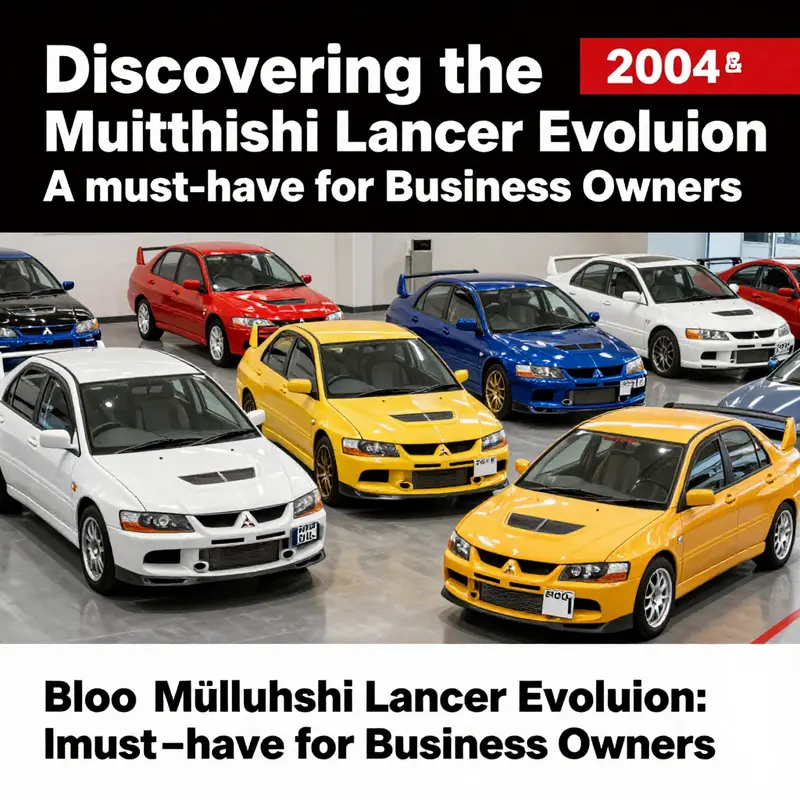
In the world of compact performance sedans, the 2004 Mitsubishi Lancer Evolution VIII sits at a watershed moment when turbocharged power, all-wheel drive handling, and driver-focused refinement began to converge in a way that still feels relevant today. This is the year that highlights the EVO VIII not only as a fast car, but as a platform worth collecting for its factory upgrades and limited-market special editions. At the heart of the standard EVO VIII lies a responsive 2.0-liter turbocharged engine driving the all-wheel-drive system through a chassis tuned to deliver direct, communicative feedback to the driver. The result is a car that can feel both tractable on the street and razor-focused on a back road or a track day, depending on how the owner chooses to configure it.
The MR version—often considered the apex of the EVO VIII’s road-going development in this generation—takes a meaningful leap beyond the base car. The most visible change is the six-speed manual gearbox, a refinement that helps the car stretch its legs on highways while sharpening up acceleration and gear engagement on twisty pavement. The MR also features a reinforced chassis to reduce flex, bolstering high-speed stability and steering precision. Bilstein dampers tune the ride to feel more planted and responsive, while an upgraded front drive system and an available limited-slip front differential help distribute torque more predictably to the wheel with the most grip. Aesthetically, the MR’s signature look is complemented by the 17-inch BBS wheels, chosen for their balance of strength and reduced unsprung weight, and a carbon fiber roof option that nudges the center of gravity lower for improved cornering feel. The overall effect is a cohesive, race-bred character that many EVO enthusiasts equate with the ultimate balance between street manners and track-ready intent.
Beyond the hardware, the MR package also encompasses refined electronic controls. The Super AYC system, an enhanced version of Mitsubishi’s Active Yaw Control, manages torque and throttle response to broaden the car’s behavior envelope when exiting corners. This isn’t a mere gadget; it’s a core element of how the MR stays composed under power and how it communicates grip and balance to the driver. The MR’s dynamic improvements are intentionally matched with the car’s turbocharged personality, creating a package that feels more confident at the limit while preserving the immediacy that enthusiasts crave.
In parallel to the MR’s evolution, the UK market offered a series of factory-tuned special editions under the FQ banner. The FQ lineup—FQ300, FQ320, FQ340, and the rarer FQ400—embodies a deliberate push to extract more from the Evo’s already capable architecture. These editions are rarities outside the UK and Europe, and their tuned characteristics typically center on higher power outputs, refined aerodynamics, and curated component upgrades implemented at the factory level. The FQ400, in particular, is often cited as a pinnacle of factory-backed performance within this generation, with claims of horsepower around the 400 mark and exceptional straight-line and cornering capability. The allure of the FQ editions isn’t simply in raw numbers; it’s in the coherence of factory engineering and the sense that the car was created with specific performance intents in mind, setting them apart as collector’s items that signal a unique regional approach to Evo development.
For buyers exploring the 2004 EVO VIII today, the journey centers on provenance, condition, and the integrity of the drivetrain and chassis. The MR variants command a premium not only for the six-speed gearbox, but for the reinforced structure and the availability of high-quality parts that help keep the car closer to its original behavior. The UK FQ editions add another layer of desirability, offering rarity and a factory-tinished performance profile that’s hard to replicate with aftermarket tuning alone. When evaluating a vehicle, prospective owners should prioritize a clear service history, documentation of the MR-specific components, and, ideally, original parts where possible. A well-documented maintenance trail that includes turbo care, intercooler integrity, and compression-quality checks is invaluable for long-term reliability and enjoyment.
In the current marketplace, the appeal of the EVO VIII’s MR and FQ variants extends beyond horsepower numbers. It’s about how the car communicates with the driver through steering, throttle, and a chassis that rewards smooth, precise inputs. The MR’s additional rigidity and the Super AYC system’s refined torque management translate into a more confident feeling at the limit, while the FQ editions’ rarity and factory pedigree contribute to a sense of collectability that resonates with enthusiasts who value a well-preserved, well-documented example. For those seeking a practical path to ownership, the recommendation is to seek a car with a complete provenance trail, verifiable maintenance records, and the original components where feasible, ensuring that the driving experience remains faithful to the EVO VIII’s intended character.
Ultimately, the 2004 EVO VIII—with MR refinements and the UK’s FQ editions—offers a compelling snapshot of Mitsubishi’s engineering philosophy during a pivotal era for performance all-wheel-drive cars. It blends rally-inspired torque with a chassis that encourages driver involvement, delivering a tactile, engaging experience whether taken to a weekend bend or a damp track day. For collectors and drivers alike, the MR and FQ variants represent a well-considered balance of rarity, performance, and road-ready usability that keeps the EVO VIII relevant long after newer generations have come and gone.
Chasing a 2004 Lancer Evolution VIII: A Buyer’s Guide to the First US-Market Legend
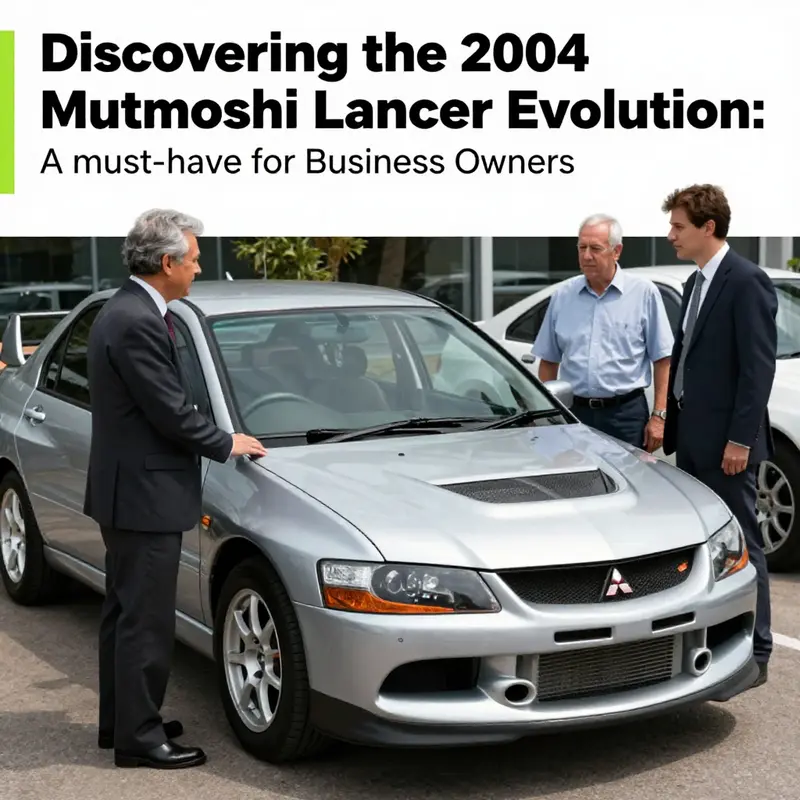
The 2004 Mitsubishi Lancer Evolution VIII sits at a crossroads of rally heritage and modern performance, a year that crystallized the Evolution’s identity for North American enthusiasts and nursed its reputation into a collectible without sacrificing its streetable edge. This chapter unfolds as a narrative of how a prospective buyer can approach a 2004 EVO VIII with eyes open and hands ready to negotiate a thoughtfully chosen car that balances rarity, mechanical vitality, and a living connection to one of the most intense driving platforms of its era. At its core, the EVO VIII of 2004 represents more than a set of numbers on a spec sheet. It embodies a philosophy of engineering that marries turbocharged urgency with a chassis that is alert to the driver’s input, a trait that makes every drive feel like a controlled drift toward the horizon rather than a simple commute. The model year is not just another notch in a lineage; it is the year that marks Mitsubishi’s strategic push into the U.S. market while preserving the core command of a machine bred for the rally stage. The result is a car that asks for disciplined ownership, meticulous maintenance, and a mindset attuned to its turbocharged heartbeat and all-wheel-drive grip.
Under the skin lies the familiar, hard-hitting 2.0-liter turbocharged 4G63T engine that has defined the Evolution’s character for generations. In the 2004 EVO VIII, this powerplant is tuned to deliver roughly 280 horsepower and around 398 Newton-meters of torque, a figure that translated into blistering off-the-line acceleration and a long, controlled pull as the speedometer rose. The power typically channels through a five-speed manual in the standard GSR or RS variants, a transmission setup that rewards a practiced, precise shifting style and a driver who respects the engine’s torque dip and surge. But the MR version—Mitsubishi Racing—arrives as the apex of 2004’s EVO VIIII lineage, bringing a six-speed manual that changes the car’s character entirely. The six-speed, paired with a front LSD, a Bilstein-sprung chassis, and a carbon-balanced weight distribution thanks to an aluminum roof, elevates the Evo’s handling into a different dimension. It’s not merely an extra gear; it’s a refinement that broadens the engine’s usable range and stacks the odds in the driver’s favor on medium and high-speed corners. The MR’s Super AYC—an upgraded version of Mitsubishi’s Active Yaw Control—adds a level of cornering balance that makes the car feel almost preemptively planted as it bites into the turn and exits with a confident, even-applied torque vector across the front axle.
For many buyers, the 2004 MR is the ideal target: a limited-production, late-Model year high-performance variant that retains the essence of the EVO VIII while injecting a maturity of technology and a more direct sense of mechanical communication. The MR’s wheels—17-inch BBS units—are as much a visual signature as a functional upgrade, while the aluminum roof lowers the center of gravity just enough to sharpen the chassis’ response to aggressive steering inputs. The MR’s Bilstein dampers work with a front-end LSD to deliver a steady, composed ride that can still be pushed to the edge without the suspension reacting with abrupt, unsettling motions. In a market where performance variants outside the U.S. footprint offered even more specialized tunes—such as light–weight components or different drivetrain calibrations—the 2004 MR stands as a balanced, road-ready interpretation of Mitsubishi’s rally-bred DNA.
Yet the U.S. market’s early adoption of EVO VIII did not guarantee identical features across every unit. The possibility exists that some U.S.-spec cars did not carry the Active Yaw Control system, depending on regional regulations, cost considerations, and the particular build. It is this nuance that makes the process of buying a 2004 EVO VIII both a search for historic authenticity and a careful evaluation of each car’s factory configuration. The presence or absence of AYC, the exact transmission type, and the specification of the roof, the LSD, and the dampers all color the car’s value and how it will feel in the driver’s hands. In addition to the MR’s mechanical package, there were UK-market variants and special editions in other markets. The UK’s FQ series comes up in conversations about performance appetite. While those cars sit outside U.S. provenance and command their own premium, they illustrate a common theme—people chase the EVO VIII for its potential to be both a spirited daily driver and a lightweight, track-ready machine when properly set up.
From a buyer’s perspective, the Evolution VIII’s appeal centers on a blend of tactile enthusiasm and the opportunity for careful, ongoing maintenance. The engine’s turbocharged nature means that the car rewards meticulous care—oil changed on schedule, turbo seals checked, and the intercooler and intake paths kept free of oil buildup. The turbo system, while robust, is a maintenance-intensive element. Oil leaks around the turbo, or an intake manifold that has seen improper maintenance, can herald more entrenched issues down the line. A healthy EVO VIII sample will have clear service history: regular oil changes with appropriate grade oil, timely timing belt service, and records of inspections or replacements of wear-prone components. The drivetrain—especially in the MR—should present with smooth clutch operation, precise gear engagement, and an LSD that functions without grinding or abrupt slipping during corner transitions. The suspension’s Bilstein units, if present, should show no signs of leaking and should deliver the familiar firm yet controlled damping. The car’s chassis should be evaluated for rust or frame damage, a more common risk in older performance coupes than enthusiasts would prefer, particularly if the vehicle has lived in regions with winter road salt or high humidity.
All of these considerations converge when a buyer begins to search through available units. In practice, the process involves more than a test drive. It means analyzing the provenance: Has the car been kept in the original configuration, or have enthusiasts installed aftermarket parts that render the exact factory spec less certain? Does the current configuration reflect a measured approach to performance—such as a well-documented MR with factory or homologated components—or has it become a patchwork of parts that may be visually appealing but unreliable in street or track use? When a car’s history is transparent, it becomes easier to judge its long-term value. A well-documented EVO VIII MR with limited use, clean maintenance records, and verified matching numbers becomes not only a strong candidate for weekend track days but a potential future collectible whose value could appreciate with time. The decision to pursue a 2004 EVO VIII in MR trim is often as much about confidence in the car’s history as it is about its mechanical health. Enthusiasts who have walked this path know that the EVO’s price curve is influenced by condition, mileage, documentation, and the degree to which the car remains faithful to its original, performance-focused intent.
In the broader ecosystem of the EVO VIII, there are additional branches of interest that collectors and drivers alike watch with curiosity. For some, the rare UK FQ variants, with higher horsepower and more aggressive tuning, represent a pinnacle of the model’s evolution. These versions sit outside the U.S. market in most cases, but they help illustrate how a given EVO VIII can diverge from its siblings in subtle, significant ways. The existence of such variants casts light on the EVO’s overall credibility as a platform: a robust chassis, a responsive turbocharged engine, and an adaptive torque distribution system that, when paired with a capable suspension, rewards precise driving and thoughtful setup. It is this underlying architecture—the combination of turbocharged four-cylinder vigor, all-wheel drive, and a chassis tuned for balance and feedback—that makes the EVO VIII so compelling to buyers who seek both driving pleasure and a piece of modern automotive history.
In practical terms, buyers should keep a few core buying guidelines in mind. First, verify the car’s provenance and ensure that the MR badge and the six-speed manual transmission are indeed the original configuration of the vehicle under consideration. If the car uses a five-speed gearbox, it is likely a base GSR or RS variant, which remains a compelling choice for a purist who values classic Evo dynamics but is not seeking MR-level performance. Second, inspect the car’s undercarriage and body panels for signs of collision repair, rust, or misalignment that might indicate past accidents. A car with a clean frame and no irregular gaps or bent panels is a strong indicator of careful ownership and maintenance. Third, request a complete maintenance log, including records of timing belt changes, turbo servicing, and brake and fluid changes. The turbo system’s health is a central concern; signs of oil leaks or blue smoke on startup or during hard acceleration can signal deeper issues that require more than routine maintenance. Fourth, consider the total ownership cost—parts availability, labor rates, and the potential need for specialist service. The EVO VIII is a performance car that does not enjoy the same mass-market parts ecosystem as more mainstream vehicles; planning for expert service and, when needed, specialized parts is a practical necessity rather than a luxury.
The practical reality is that a 2004 EVO VIII in good shape represents a rare blend of performance, history, and potential. Its value as a driver’s car is matched by its appeal to collectors who recognize the significance of the model year. For those who want a car that can deliver real excitement on country roads or on a prepared track, and who are mindful of ongoing maintenance, the EVO VIII offers a remarkably coherent, cohesive driving experience. The MR variants, with their six-speed transmissions, lighter-weight features, and refined handling, are especially desirable for buyers who want a car that feels like it was engineered to be driven hard and then tuned to respond with precision to a skilled hand. The baseline GSR/RS cars, while slightly less rare, still deliver a visceral sense of speed, a direct connection to the AWD system, and a chassis that loves to be hustled through bends. In either case, a careful, informed approach to buying, supported by thorough inspection and transparent documentation, makes the difference between a satisfying ownership experience and a wallet-punishing misstep.
If you’re pursuing the most authentic path to ownership, you may encounter aftermarket options that promise more power, more grip, or a sharper aesthetic. While some upgrades can be legitimate enhancements that deepen the EVO VIII’s appeal, others may compromise reliability or create a mismatch with the car’s original balance. One way to navigate this landscape is to view aftermarket components as potential complements rather than as replacements for the car’s core engineering. For instance, upgrading to a high-quality aero component or a performance exhaust can be an appealing enhancement if it is part of a cohesive plan that respects the car’s chassis, weight distribution, and engine health. A notable detail is that some high-demand aero parts for the EVO VIII maintain compatibility with the MR’s layout and can be integrated in a way that preserves or enhances handling and cooling characteristics. Enthusiasts often gravitate toward choices that improve downforce or reduce weight without sacrificing drivability. The key is to approach upgrades with a strategic mindset: preserve reliability, maintain core mechanical integrity, and curate a set of components that complement the car’s natural balance rather than overpower it.
To facilitate a buyer’s exploration, it’s helpful to consider where to search for a 2004 EVO VIII. Reputable online marketplaces with robust vehicle history reporting remain a solid starting point. Filtering by model year, market variant, transmission type, and the presence of performance-focused features helps narrow the field to units with verifiable provenance. In parallel, consulting dedicated enthusiast communities and technical forums can yield valuable guidance about model-specific quirks, known issues, and maintenance best practices. These communities often provide a candid, experience-based perspective that complements formal inspections and official service records. When a seller’s documentation aligns with the car’s actual condition, and the service history demonstrates consistent care, the chances of acquiring a compelling EVO VIII rise substantially. The result is a car that can deliver immediate driving delight while remaining a smart, collectible investment that can be enjoyed on weekend drives and occasional track days.
As a closing note, it is worth acknowledging the broader context in which the 2004 EVO VIII sits. It’s a bridge between the earlier, more rudimentary rally-inspired machines and the later, more refined, driver-focused iterations that followed. This year’s model is the product of a car company listening to the demands of drivers who crave speed and precision without sacrificing everyday usability. The chassis communicates with you more directly than most modern performance cars, inviting a tactile dialogue: you set the pace, and the car responds with balance, grip, and a sense of purpose. That is the core reason buyers return to the EVO VIII year after year. It is not merely a car; it is a distilled performance philosophy that, with proper care and a thoughtful configuration, remains thrilling to drive and meaningful as a piece of automotive history.
For those seeking to explore further into the world of modern Evolution variants and to connect with like-minded enthusiasts who have hands-on experience with the EVO VIII MR’s nuances, the community discussions and technical resources can be invaluable. A well-regarded forum dedicated to the Evolution VIII provides a space to share ownership experiences, maintenance tips, and detailed troubleshooting insights from people who have lived with these cars. This network helps buyers verify details about specific cars, confirm the authenticity of the MR features, and understand how owners have navigated the common maintenance milestones that come with turbocharged, all-wheel-drive performance cars. It is through participation in these communities that prospective buyers can turn a speculative purchase into an informed, confident decision, securing a car that remains a vivid reminder of a performance era that fused rally spirit with the immediacy of a street-ready sports car.
Internal link for further exploration: EVO 8-9 Varis front bumper with carbon lip. This resource can be helpful for understanding how enthusiasts approach visually and aerodynamically integrated upgrades while respecting the car’s original layout and weight balance. While choosing upgrades, balance is essential; the goal is to maintain the EVO VIII’s nimble handling and strong, linear power delivery.
External resource for community discourse and deeper technical discussions: EvoWorld’s dedicated Evolution VIII forum. Here, owners and fans discuss everything from maintenance routines to performance tweaks and historical context, providing a practical substrate for buyers who want to learn from the experiences of others: https://www.evoworld.com/forums/evolution-viii-forum/.
Final thoughts
The 2004 Mitsubishi Lancer Evolution VIII is more than just a car; it’s a driving experience that can elevate your daily routine. With various configurations and outstanding performance, this model is an entry into the world of sports cars that business owners shouldn’t overlook. Whether you are drawn to its robust handling or the unique character of the special editions, investing in an EVO VIII can bring thrilling returns. Ensure you approach this purchase informed and prepared, maximizing the value from such a remarkable vehicle.