
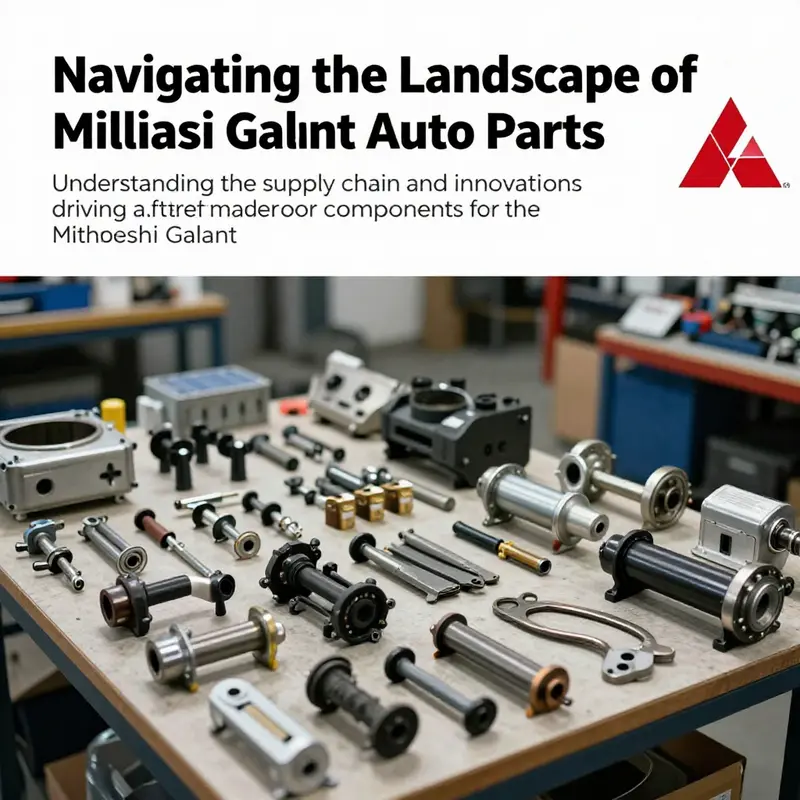
As the demand for Mitsubishi Galant auto parts continues to grow, understanding the aftermarket supply chain becomes crucial for business owners in the automotive sector. With original production long ceased, the reliance on various suppliers—particularly from China—offers essential insights into sourcing, quality, cost-efficiency, and technological advancements. This comprehensive overview will explore the elements shaping the aftermarket landscape for Mitsubishi Galant auto parts, emphasizing the importance of reliable suppliers and innovations in manufacturing.
Lifeline from Across the Sea: How Chinese Aftermarket Networks Sustain Mitsubishi Galant Parts
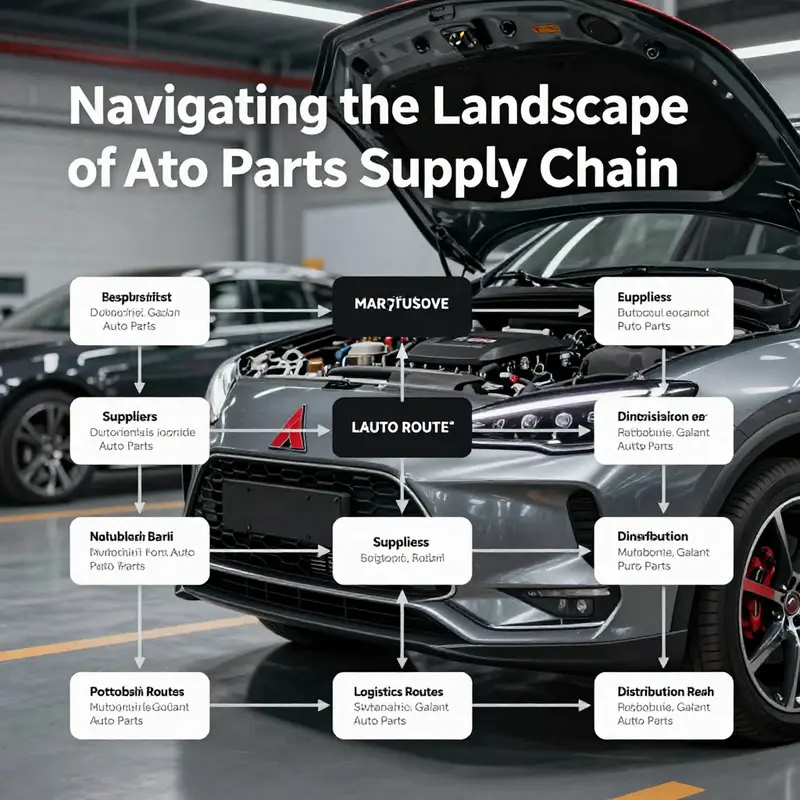
When original equipment production for a legacy model fades, the Galant’s aftermarket life shifts to a global network of manufacturers, distributors, and logistics specialists. In practice, China emerges as a central hub, with Guangdong, Zhejiang, and Jiangsu hosting suppliers who offer everything from suspension components to engine parts, enabling repairs and restorations even as OEM supply tightens.
In Guangdong, the cluster around major ports and cities like Guangzhou concentrates systems and subassemblies that keep older cars on the road. Sensors, controllers, brackets, and support products reach repair shops quickly, with shorter transit times and lower freight costs. Quality is reinforced by prevalent certifications such as IATF 16949, signaling alignment with OEM expectations.
In Zhejiang, hardware and fasteners form the backbone. Ningbo’s manufacturing base supports high-volume stocking of brackets and mounting components, helping fleets and independent garages stock what they need without breaking the bank. The region prioritizes reproducibility and export-ready logistics, delivering steady small-to-medium lots that balance price and durability.
Jiangsu adds precision engineering. Yangzhou and Wuxi are known for high-tolerance components where tight machining and process control translate into reliable, repeatable results. For Galant drivetrains and performance-critical systems, Jiangsu parts emphasize consistency across batches and miles, offering reassurance to shops that demand long-term reliability.
Beyond the coast, Chongqing anchors interior capacity. Engine blocks, cylinder heads, and crankshafts from inland mills enable full restorations or fleet maintenance to be coordinated in a single visit. Centralized capability reduces lead times and lets buyers integrate major work with other sourcing channels.
For procurement teams, sourcing and supplier evaluation rely on platforms like Alibaba.com, which provide verified profiles, performance metrics on delivery, and factory scale. Buyers compare lead times, assess risk, and build transparent partnerships capable of scaling from a few parts to bulk orders, focusing on resilience as a core value rather than price alone.
Quality and warranties matter in practice. Many third-party manufacturers offer warranties tied to shipment and backed by ISO 9001 or TS16949-style processes. This framework gives buyers and insurers confidence in long-term use, even as aging platforms demand stable quality and robust after-sales support.
Taken together, the Galant’s Chinese aftermarket network shows a coordinated system rather than a patchwork. Guangdong provides integrated systems, Zhejiang hardware, Jiangsu precision, and Chongqing heavy-lift capability, creating a diverse map that supports both routine maintenance and restoration projects. The result is a continuing life for the Galant that respects legacy value while leveraging regional strengths and professional logistics.
Ensuring Trust on the Road: Quality Assurance in Mitsubishi Galant Auto Parts Manufacturing
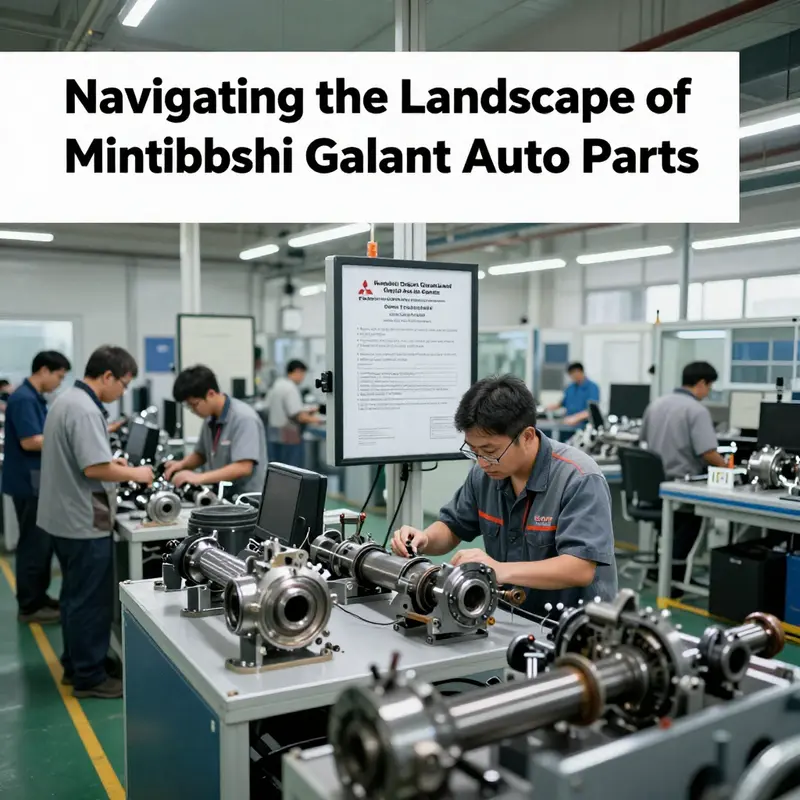
The Mitsubishi Galant occupies a quiet niche in automotive history, a car whose parts ecosystem continues to live beyond the end of original production. As OEM production ceased for many Galant variants, the aftermarket and restoration communities lean on a sophisticated network of manufacturers and suppliers to keep the car on the road. Quality assurance is not a peripheral concern in this landscape; it is the invisible chassis that supports reliability, safety, and satisfaction for repair shops, fleets, and collectors alike. In this ecosystem, the role of manufacturers based in China becomes especially consequential. They bring scale, technical capability, and standardized practices that translate into parts that fit, perform, and endure. Yet with the abundance of options comes the responsibility to distinguish parts that merely resemble original components from those that truly meet rigorous standards. The conversation about quality assurance, therefore, is not a single checkpoint but a continuous discipline woven into every stage of part creation and delivery, from concept to customer and beyond.
Quality assurance begins long before a Galant part reaches a workshop. Manufacturers embrace a multi-stage approach designed to catch issues at the earliest possible moment. Pre-production sampling involves testing prototype components for fit, function, and durability. The goal is to confirm that the design, material choices, and production methods will yield consistent performance across expected operating conditions. This phase is crucial when dealing with essential systems such as suspension, steering, and ignition, where precision tolerances directly influence handling and safety. Once a part moves into mass production, final inspections before shipment become the last critical gate. These checks compare finished components against precise specifications, ensuring dimensional accuracy, surface finish, and functional integrity. It is not uncommon for suppliers to couple these checks with traceable lot numbers, which enable end users to verify provenance and batch history if ever questions arise.
The strongest assurances often come from more advanced inspection techniques that accompany modern manufacturing. Three techniques recur across reputable suppliers: 3D scanning, material testing, and functional diagnostics. 3D scanning allows engineers to verify geometry against CAD models and OEM references, catching subtle deviations that could affect fit or performance. Material testing confirms the composition and mechanical properties of metals and polymers, guarding against premature wear, fatigue, or failure under stress. Functional diagnostics simulate real-world operation, ensuring that a part behaves as expected when integrated into a Galant’s suspension or steering system. Together, these techniques create a data-driven fabric of quality that can be traced back through the production run to specific tooling, batches, and process conditions. When a supplier can demonstrate consistent outcomes across hundreds or thousands of units, buyers gain confidence that a part will perform under the car’s vibration, cornering, and temperature cycles.
The geographic and industrial canvas where these parts are manufactured also matters. Provinces such as Zhejiang and Guangdong in China are well known for their robust engineering ecosystems and specialized capabilities in suspension and steering components. The proximity of a dense network of foundries, metal processing facilities, and precision tooling translates into shorter lead times, tighter process control, and higher repeatability for complex parts such as stabilizer bar links or high-precision ignition coils. These regional strengths are complemented by export-oriented infrastructure, access to ports, and government incentives that encourage consistent quality across large production runs. In practice, that means a Galant owner can expect parts that have undergone rigorous pre-production validation, tight in-line QC during manufacturing, and post-production checks that align with international benchmarks.
A cornerstone of trustworthy sourcing is supplier verification. Platforms that host verified manufacturers can provide buyers with clear performance indicators. On-time delivery rates, factory size, and response times are not mere marketing metrics; they are practical signals of reliability in a supply chain where delays can stall fleets, workshops, and restoration timelines. When a buyer evaluates a potential supplier, these metrics help infer the likelihood that a partner will honor commitments, maintain consistent quality, and respond promptly to questions or changes in demand. Beyond metrics, certification status matters. ISO 9001 certification signals a formal quality management system, while TS 16949, and its successor IATF 16949, signal an automotive-focused manufacturing discipline that emphasizes defect prevention and continuous improvement. For components like suspension and ignition systems, these certifications translate into parts that comply with recognized quality programs and that can be integrated into quality assurance workflows in repair facilities and restoration shops.
Within this intricate framework, particular suppliers have emerged as notable players by combining product breadth with formal quality governance. Taizhou Zedao Machinery Co., Ltd., rooted in Yuhuan City in Zhejiang Province, is a standout example. The company markets a wide array of suspension and steering parts, boasting more than 6,000 product varieties that span various car models, including the Mitsubishi Galant. What elevates their offering in the eyes of buyers is the combination of ISO 9001 and TS16949 certifications, a warranty that covers 30,000 kilometers or 12 months after shipment, and a business model oriented toward customization and global exports. For instance, their stabilizer bar links, compatible with Galant variants such as those carrying part numbers 19136530, 25740375, and 32-16 060 0000, illustrate how quality assurance translates into practical options for both workshop stock and restoration projects. The model of support—low minimum orders, flexible pricing based on volume, and a willingness to tailor products to specific Galant configurations—speaks to a QA-driven approach that treats reliability as a service rather than a one-off sale. Such characteristics appeal to international buyers in regions that rely on imported aftermarket components, including South America, North America, and Western Europe, where the need for dependable parts remains persistent even as OEM supply has waned.
Another critical dimension of quality assurance in this space is the role of specialized component manufacturers that supply engine-related parts, such as ignition coils. Guangdong-based LY Factory exemplifies how high-performance aftermarket parts can align with OEM-style quality while offering efficient delivery timelines. Their catalog includes ignition coils designed to meet or closely replicate original specifications for the Galant and related platforms like the Lancer and Outlander. Certification for these suppliers, including IATF 16949 in many cases, signals that they operate within automotive-grade quality systems and commit to continuous improvement. The operational reality for buyers is meaningful: parts are typically available with short lead times—often within three to seven days—and bulk order arrangements with modest minimums. Payment and shipping options, from DHL and FedEx to sea freight, reinforce the resilience of the supply chain, enabling fleets and repair shops to maintain stock without incurring excessive downtime. This combination of technical alignment and logistical reliability is at the heart of effective QA for Galant parts, ensuring that critical systems such as ignition circuits, coil packs, and related components meet expectations in real-world driving conditions.
Taken together, the QA landscape for Mitsubishi Galant parts is anchored in a philosophy of traceability, certification, and proactive quality improvement. Buyers increasingly expect suppliers to offer transparent traceability for raw materials, process histories for significant production runs, and clear evidence of continuous improvement actions. Traceability supports accountability: if issues arise, it is possible to identify root causes, isolate affected lots, and implement corrective actions without disrupting the broader supply chain. Certification provides a standardized lens through which to view performance, enabling buyers to compare suppliers across markets with confidence. The continuous improvement mindset—a feature of IATF-aligned quality systems—ensures that even established part families evolve to meet evolving performance and durability expectations. In practice, this means Galant owners and workshop professionals can rely on a steady cadence of product updates that reflect improvements in materials, coatings, and manufacturing processes, while maintaining compatibility with older Galant generations.
The practical impact of this QA-focused approach extends beyond reliability. For many Galant restorers, the correctness of a part’s fit and its long-term durability directly influence project timelines, restoration budgets, and the car’s resale value. Parts that measure up in specifications and performance reduce the risk of misfit, excessive wear, or premature failure, all of which can erode enjoyment and increase maintenance costs. A robust QA framework also underpins the trust that repair facilities place in aftermarket suppliers. When a shop knows a part has passed stringent sampling, inspection, and certification checks, it can commit to longer service intervals with confidence, integrate the part into an established maintenance routine, and guarantee consistent service quality to customers.
This emphasis on quality does not occur in isolation. It is part of a broader narrative about how after-OEM ecosystems sustain older platforms. In the Galant’s case, the combination of Chinese manufacturing capacity, international quality standards, and a customer-centric approach to customization creates a resilient supply chain. It allows small shops, large fleets, and private enthusiasts to source parts that are not just affordable but dependable. The presence of clear warranties, accountable suppliers, and transparent performance metrics helps restore and maintain the Galant without requiring impossible-to-find original OEM components. It also fosters a culture of due diligence: buyers learn to value certifications, to request documentation about material composition and process controls, and to verify traceability across parts that come from different batches or suppliers. The result is a more predictable repair and restoration process—one where the car’s mechanical integrity and driving experience are preserved without compromising safety or performance.
In the wider arc of the Galant’s aftermarket story, QA is thus both a practical necessity and a strategic asset. It elevates the value of the vehicle by ensuring that each component—from a stabilizer link to an ignition coil—contributes to a coherent performance narrative. It supports the credibility of suppliers who invest in robust quality systems and who stand behind their products with clear warranties and service commitments. And it offers buyers a framework for making informed choices among the many options that now populate the global market for Mitsubishi Galant auto parts. As the ecosystem matures, and as OEM production remains a memory, confidence in QA-driven sourcing becomes the bridge between the Galant’s classic lineage and its ongoing, reliable presence on the roads of today.
For readers seeking a concrete glimpse into the kinds of references that anchor these QA practices, consider how a representative supplier describes its capabilities and warranties. A section highlighting pre-production sampling, final inspections, and advanced inspection methods mirrors the standards that many reputable manufacturers publish in their quality narratives. While the Galant’s parts may vary by generation and configuration, the underlying commitment to quality remains consistent. This consistency—across geography, certification, and testing—helps ensure that the car continues to deliver the experience fans love, even as its components are sourced from a global network dedicated to precision and reliability. The result is a strengthened bond between the car and its caretakers, a trust earned through disciplined quality practices that translate into safer, more satisfying, and longer-lasting driving.
To explore related examples of how such parts are sourced and evaluated, refer to the following internal resource: brand-new-original-carbon-fiber-bonnet-hood-for-mitsubishi-lancer-evo-x. This link illustrates the level of specification and testing that accompanies high-end aftermarket components, and it provides a practical touchstone for understanding how QA concepts are translated into real-world parts selections. For broader context on Mitsubishi Galant parts within global marketplaces, external readers can consult the following resource. External resource: https://www.made-in-china.com/products?keyword=Mitsubishi+Galant+Parts
null
null
Preserving a Legend through Precision: Mitsubishi Galant Parts in the Modern Aftermarket
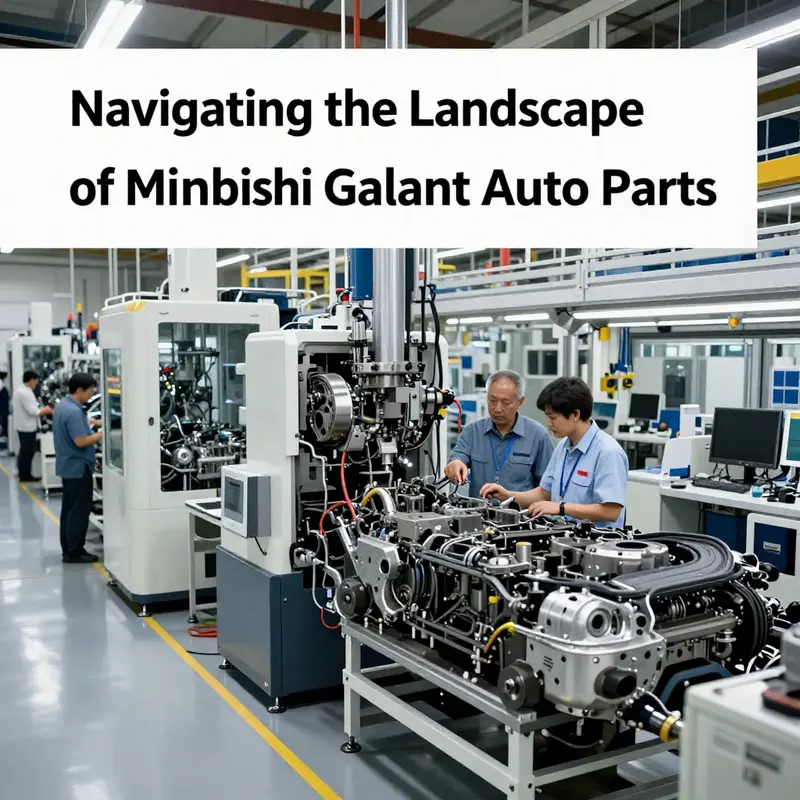
The Mitsubishi Galant sits at the crossroads of heritage and modern engineering. When original equipment production ended, a network of specialized manufacturers and global distributors kept the Galant on the road. The modern story is not just about availability; it is about how strict quality systems, advanced materials, and digital design converge to sustain a lineage once anchored on a factory floor. In this environment, precision is the throughline: a part’s success is measured by fit, longevity, and predictable performance under demanding conditions.
At the heart of these innovations are performance-driven variants like the VR4 and the turbocharged 2.4-liter era. The production philosophy behind parts for those platforms balances higher exhaust flow and improved cooling with respect for the vehicle’s original geometry. The turbo/all-wheel-drive context required harmony between boosted performance and drivetrain stability; aftermarket components aim to preserve or improve handling under track-inspired loads. Practically, every new stabilizer link, hose, or redesigned manifold must demonstrate the ability to withstand higher thermal and mechanical stress without sacrificing reliability. This is not a fantasy of performance but a disciplined process of materials science and fluid dynamics translated into real-world parts for repair shops, fleets, and enthusiasts.
The contemporary Galant parts story also hinges on materials science and manufacturing tolerances. Advancements in alloys and precision machining let components operate at higher temperatures and under greater forces. When a shop installs a turbo-oriented kit, the interaction between exhaust flow, intercooling, and engine breathing becomes a case study in engineering discipline. The goal is to expand the engine’s usable envelope—boosted torque and responsive mid-range—without overwhelming the cooling system. This requires carefully engineered intercoolers, high-flow turbo cores, and manifold systems that minimize resistance and distribute loads evenly. In the Galant’s lineage, where the platform must cope with daily durability and potential competition use, the gains are measured in reduced heat soak, controlled temperatures under sustained boost, and a consistent throttle response across rpm. CAD and FEA workbenches allow engineers to simulate stresses before a prototype is built, guiding geometry and material distribution toward the exact conditions expected on real roads and tracks.
Within this ecosystem, specialized suppliers become central. Zhejiang-based operations have emerged as anchors for Galant repair and upgrade components, leveraging local industrial ecosystems, efficient logistics, and strict quality control to fill the gap left by discontinued OEM production. Their credentials—ISO 9001 and TS 16949—signal a commitment to process discipline and consistent quality. Warranty terms, such as coverage up to thirty thousand kilometers or twelve months after shipment, provide clear assurance that aligns with professional shop standards and fleet maintenance expectations. This combination of breadth, quality assurance, and practical after-sales support makes these suppliers reliable partners for global buyers who must balance cost, availability, and long-term reliability.
Guangdong-based manufacturers focus on engine-related parts like ignition coils, produced with OEM-style fit and performance in mind. These parts rest on robust quality systems and modern manufacturing practices, including IATF 16949-style process controls, helping ensure uniform performance across lots and over the life of a vehicle. Logistics—fast lead times, air and sea freight options, and multiple payment channels—translates into a supply chain that can respond quickly to repair and upgrade cycles in diverse markets. For a model with a broad owner base, the ability to deliver parts quickly becomes as important as the engineering inside the part itself. The Galant’s ongoing viability as a road car, a cult favorite among enthusiasts, or a fleet vehicle depends on a chain of confident decisions about where and how to manufacture, test, and stand behind a part long after it leaves the factory floor.
The practical takeaway is that specialized manufacturing bases, strong quality systems, and digital engineering enable a sustainable aftermarket ecosystem. This approach ensures that even as OEM production receded, the Galant’s performance heritage remains accessible through parts designed for modern constraints. That is how a legacy continues to evolve: through parts crafted with balance, reliability, and performance at the core. For readers seeking external context, a representative example illustrating how advanced materials and design practices translate into real-world parts is linked here: brand-new-original-carbon-fiber-bonnet-hood for Mitsubishi Lancer Evo X. The Evo X is a different model, but the engineering mindset—material innovation paired with precise manufacturing—echoes across the Mitsubishi family, including the Galant.
For broader context on how the parent brand frames engineering across its platforms, the Official Mitsubishi Motors Technology Page provides a perspective on modern engineering practices, materials, and performance technologies used across their vehicle families: https://www.mitsubishi-motors.com/en/technology/. This resource helps situate the Galant’s ongoing story within Mitsubishi’s approach to performance, durability, and efficiency, underscoring the continuity between legacy models and current engineering standards. The Galant’s longevity in the aftermarket is not an accident of supply chains; it is a testament to a design and manufacturing philosophy that treats parts as long-term, intelligent investments in a vehicle’s continued capability and character.
Final thoughts
Navigating the market for Mitsubishi Galant auto parts requires a keen understanding of the aftermarket supply chain, emphasizing the importance of quality assurance, cost-effectiveness, and continuous innovation. As business owners, aligning with reputable suppliers from regions like China will ensure access to reliable, high-quality parts. This dynamic landscape not only supports repair shops and classic car enthusiasts but also fortifies the longevity and performance of the Mitsubishi Galant. Embracing these insights positions businesses to thrive in a competitive industry that values quality and affordability.