
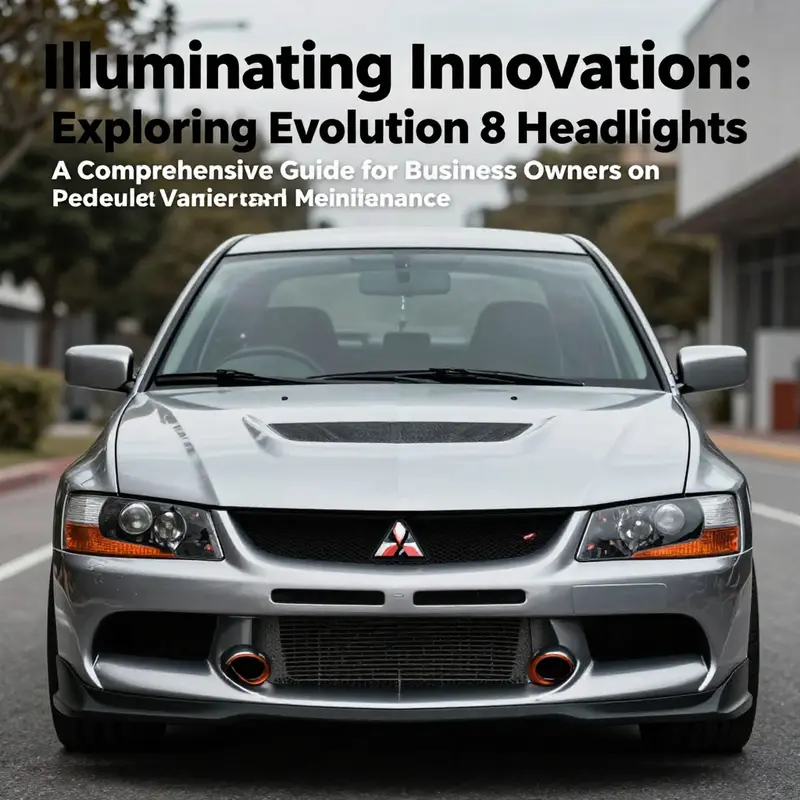
Evolution 8 headlights represent not just a functional asset but also a pivotal part of vehicle aesthetics and safety. As a business owner in the automotive aftermarket or related fields, understanding the various options, performance upgrades, market trends, and best installation practices is crucial to fostering consumer interest and enhancing customer satisfaction. This article delves into the product variants available for Evolution 8 headlights, explores their performance and aesthetic enhancements, analyzes current market trends and pricing, and provides essential installation and maintenance tips to empower your business operations.
Shining Through the VIII Era: Variants, Technologies, and Personalization of Evolution 8 Headlights
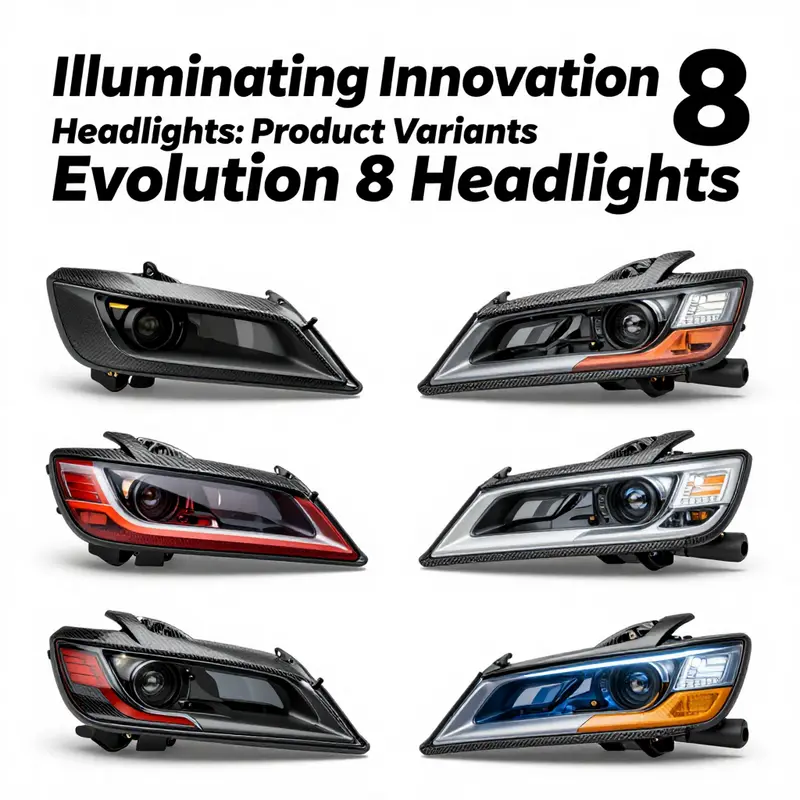
Light has long been more than a utility on a performance car; it is a language of intent. The Evolution VIII era of headlights tells a story about changing technology, evolving aesthetics, and the balancing act between beam quality, regulatory compliance, and personal expression. This chapter surveys how front lighting has shifted from simple reflectors toward intelligent, configurable systems that respond to speed, weather, and mood while preserving the distinctive face of the car. While specific Evolution VIII literature is modest, the broader arc—from halogen to HID to LED and adaptive lighting—provides a framework for understanding what owners seek when upgrading or personalizing headlamps.\n\nFrom a functional perspective, headlight choices hinge on light source type (LEDs offering compact form and signature daytime running patterns, HIDs delivering high long-range output) and on adaptive or dynamic features that adjust to steering input and speed. In an Evo VIII context, these options are as much about identity as function: lighting that follows the driver’s intent while maintaining a coherent look with the car’s compact, aggressive silhouette.\n\nCosmetic customization often begins with smoked housings, darker bezels, or eyelid accents that preserve the core beam geometry while altering the car’s perceived demeanor. The housing architecture can be retained while upgrading to projector modules or LED matrices, enabling more precise beam control without a wholesale exterior redesign. The modular approach helps protect reliability and fitment while unlocking modern lighting sensibilities.\n\nPractical realities matter: fitment, wiring, heat management, and legal compliance drive many decisions. A direct replacement that mirrors the original interface minimizes risk; more ambitious retrofits can bring modern throw and distribution but require careful planning and professional installation to avoid glare, misalignment, or electrical strain.\n\nBeyond performance, there is a social dimension: headlights signal a stance—classic, modern, or a hybrid—that resonates with a community that reads the car as a canvas for engineering and style. The Evolution VIII remains a small but potent platform for experimenting with optics, where light becomes both tool and emblem on a night road.\n\nFor readers seeking practical routes, the recommended path emphasizes maintaining beam quality and regulatory compliance while exploring aesthetic tweaks. Direct-fit HID or LED assemblies that align with the original mounting footprint offer a practical balance; more advanced retrofits can be pursued when the goal is to fuse contemporary lighting with the car’s vintage silhouette. The headlights thus become a living artifact of the vehicle’s evolution, bridging heritage and modernity without compromising reliability or safety.\n\nIn closing, headlight variants and customization on the Evolution VIII illuminate a core truth: lighting exists at the intersection of performance, identity, and personal expression, a narrative that travels with the car from dawn to midnight.
Evolution 8 Headlights Reimagined: Aggressive Front-End Identity Through Carbon, Light, and Heritage
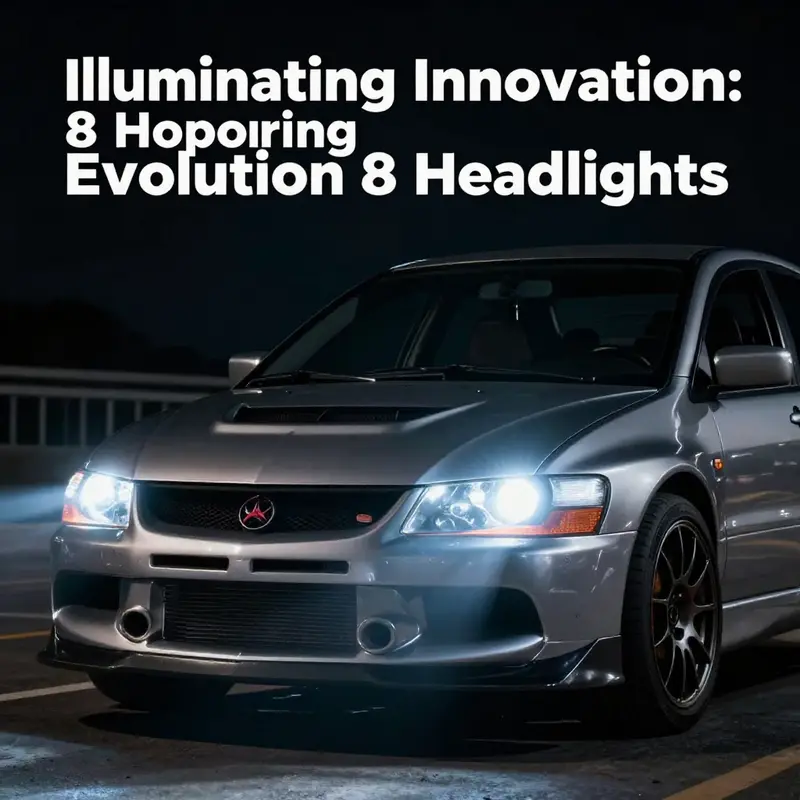
Few details reveal a car’s character as quickly as the shape of its headlights. On the Mitsubishi Lancer Evolution VIII, the front-end layout is already a study in precision engineering and tactile aggression. Yet enthusiasts learned to read the car’s face as a canvas for personal expression. Among the most influential updates to this chassis are aftermarket headlights and the carbon-fiber eyelids that frame them. These additions do more than shed light; they sculpt a silhouette that feels both race-ready and refined. They signal a willingness to push the boundaries of factory design while honoring the Evo’s core identity.
Performance-wise, the technology inside the housings remains largely familiar. Most Evo VIII headlights continued to rely on halogen or standard projector setups, depending on market and trim. The modifications focus on the housing’s outer language rather than the bulb’s brightness. The carbon fiber eyelids sit atop the lens, narrowing the visual aperture and drawing the eye toward the car’s aggressive line. Because they are lightweight, these pieces contribute marginally to unsprung weight, a detail that matters to tuned suspensions and the car’s balance at speed. Importantly, any lighting modification must maintain safe illumination and comply with local rules. Failing to respect regulations can undermine performance gains with legal concerns.
Aesthetically, the eyelids and carbon-fiber styling read as a homage to the Evo’s motorsport roots. The eye-line becomes a signature feature that helps the car appear broader and more purposeful at a glance. In the larger ecosystem of front-end styling, owners often couple such accents with a darker grille, a low-profile lip, or vented fenders. The result is a coherent face that echoes the car’s rally history while translating that heritage into street-ready drama. The carbon fiber look, whether true or simulated, conveys a lightness of touch and a premium finish that aligns with other high-end details visible from the curb. This is the moment where performance meets aesthetics, not through greater brightness but through deliberate framing of light and shadow.
From a design theory perspective, the choice of carbon fiber or FRP for eyelids matters beyond color and texture. Carbon fiber offers a tight weave that catches the light and whispers of weight savings in iterations where every gram counts. FRP, when primed and finished properly, provides durable, cost-conscious options that still deliver the same visual impact. The materials mirror a broader decision process many Evo builders use when upgrading the front of the car: balance the desire for a premium look with the realities of budget, fitment, and long-term durability. Color-matching and finishing are not mere vanity. They ensure that the eyelids sit flush with the surrounding body panels and do not create gaps or misalignment that could collect dirt or moisture. Pre-painted or primed FRP pieces simplify paint work, letting builders achieve a factory-like finish with less time in the shop.
Installation, while conceptually straightforward, demands care. The eyelids are not a bolt-on engine modification; they attach to the header or the edge of the headlight housing with clips, adhesives, or small fasteners. The key is precise alignment. If the top edge sits too high or too low, the car’s front end loses its visual balance and glare might bounce oddly. Enthusiasts often invest in a careful fit check under daylight and at night, verifying that the eyelid lines follow the hood character line without obstructing the beam pattern. Weather exposure calls for UV-resistant coatings, which protect the finish from sun and road salt. For those who lack a dent-free, clean work surface, a professional installation foil can save future headaches. In many cases, a professional can adjust the headlight aim after the accessory is mounted to ensure the beam remains safe and compliant.
Marketplace options range from simple, pre-finished acrylic overlays to more elaborate FRP or carbon-fiber assemblies. Buyers weigh life-cycle cost against the tactile premium such accessories confer. The Evo’s fans often prioritize a look that reads as purposeful and sporty, not flashy, so they prefer a restrained approach. The observed trend is clear: carbon fiber textures and razor-sharp lines create a sense of speed even when the car is at rest. The front end becomes a stage where light and form perform a quiet duet. Because headlights themselves remain the primary functional unit, the eyelids should enhance the vehicle’s persona without compromising the visibility of lamps or signaling indicators. When shopping, customers look for fitment compatibility with the Evo VIII’s curved corners and the headlamp edge geometry. They also search for weather sealing details to prevent moisture intrusion and fogging.
Beyond the hardware, there is a philosophy at work. Headlight upgrades signal attention to detail and a willingness to invest in a car’s personality. The Evo VIII holds a special place in the tuner world, balancing speed with a road-legal silhouette. Eyelid accents, with other front-end mods, aim for a coherent look rather than a flashy one. They communicate rally heritage while staying street-ready. The moment is not just about texture; it’s about how technology can be functional and expressive. The Evo VIII remains relevant by embracing modern materials while honoring its lines. The choice of eyelids also nudges airflow around the hood vents, creating a subtle shadow that reduces glare on certain angles. It’s a small, perceptible detail that enthusiasts notice when the car moves or sits in the sun.
From a practical standpoint, compatibility is a constant concern. The Evo VIII’s headlights come in different shapes across markets and generations, and not all eyelid systems fit every variant. A careful buyer measures the gap around the lamp, checks the curvature of the hood edge, and confirms that mounting points line up. If the product is intended for multiple generations, there may be minor trimming required to ensure a clean finish. In addition, the installation may affect the headlight housing seal; the installer should reseal after modification to withstand moisture and temperature changes. The balance between adding a strong visual brand and preserving reliability is delicate. The best projects proceed with a plan: a clear idea of the look, a practical method for mounting, and a post-install evaluation that tests alignment, sealing, and light output after dark. When done well, the result is a front end that reads as a single design language rather than a collection of tactics. Maintenance matters too; cleaning the edge seam prevents dirt buildup and keeps the finish looking crisp.
For readers curious about how these cosmetic accents fit into a broader front-end design, a related resource explores headlights within a cross-generational context of Lancer variants. This reference helps readers see how frame, bezel, and lamp geometry inform the overall silhouette across different Evo models. headlights-for-lancer-evo-x-2007-2017-audi-design-version-2.
Availability and care also matter in the long run. Enthusiasts who replace eyelids often preserve the original headlight units, recognizing that the aesthetic upgrade should not come at the expense of light quality. When a project includes the front end as a whole, the eyelids can be coordinated with a grille update, a carbon-fiber lip, or a subtle splitter that completes the motor-sport-inspired mosaic. The Evo VIII era is particularly fertile for this kind of coordination, because the chassis accommodates bold changes without losing its essential character. In the best projects, the front end reads as a unified sculpture: a mouth that breathes light, a brow that hints at speed, and a hood line that seals the composition. The driver experiences a sense of purpose whenever a clean, crisp beam cuts through the dark, and the car’s face looks prepared for the next run, whether on a winding street or a track.
Looking beyond the purely visual, we should acknowledge the regulatory and safety boundaries. Headlight design does not exist in a vacuum. It intersects with rules about beam pattern, color, and visibility. Car enthusiasts who chase a cohesive look must verify that any eyelid modification does not block critical light functions, do not create glare for oncoming drivers, and do not obscure the headlight indicators. Knowledge of local requirements mitigates the risk of penalties or rework. Still, when done with care, the Evo VIII’s front-end enhancement becomes a study in how form and function can align. The same ethos that guided Mitsubishi’s engineers—precision, balance, and performance—continues to inform modern interpretations of the car’s most visible face. In that sense, eyelids are not simply a trend but a continuation of the Evo’s enduring dialogue between speed and style. Finally, the story of Evolution 8 headlights sits at the intersection of culture and craft. It reflects a community that values not only speed but the aesthetic dialogue that accompanies every mile. The front end serves as the stage for this conversation, a place where light and texture meet to produce a sense of motion even when the vehicle is stationary. The carbon fiber moment, whether limited to a thin trim or extended across the headlight surround, signals a belief that technology can be both functional and expressive. For those who study the Evo’s evolution, the eyelids offer a quiet but telling clue: the chassis invites personalization without erasing its core lineage. This is the pathway through which the Evo VIII remains relevant today—by embracing modern materials and techniques while preserving the unmistakable face that defined a generation of rally-bred performance. In the end, the Evolution 8 headlights story is ongoing, a dialogue between heritage and modern expression.
Shifting Beams: Market Trends and Pricing Signals in High-Performance Headlight Upgrades for Performance Cars
Headlights have always stood at the crossroads of function and form. They illuminate the road, sure, but they also communicate the intent of a car’s design long before the driver presses a switch or the engine roars to life. In the realm of performance-oriented machines, this relationship is even more pronounced. The past decade has seen a rapid acceleration in the sophistication of headlight systems, with LEDs and their HID cousins reshaping what is possible in brightness, color, beam pattern, and integration with the vehicle’s broader aesthetics. What begins as a practical upgrade soon becomes a signature detail, a visual cue to a car’s entire philosophy: speed, precision, and a tailored driving experience. The chapter that follows examines the market dynamics behind these upgrades, the pricing signals that emerge from a crowded field, and the subtle design choices that buyers weigh when they decide how to shape the light they share with the night.\n\nAcross broader markets, the demand for high-performance headlight assemblies has grown in tandem with the rise of aftermarket customization. Enthusiasts who value both visibility and appearance seek options that go beyond the stock look and performance. The market responds with a spectrum of choices, from discreet enhancements to bold, carbon-look accents that leverage modern fabrication materials. The technological core—advances in LED efficiency, better thermal management, and intelligent control—drives a parallel evolution in supply and demand. The result is a marketplace where reliability, ease of installation, and longevity sit alongside novelty and a sense of personal connection to a vehicle’s character. In this environment, the term used by sellers and buyers often travels a zigzag path through catalogs and listings, with different regions and retailers adopting their own naming conventions. What matters most to the shopper is alignment: does the product deliver the brightness and beam quality they expect, does it fit within the vehicle’s electrical architecture, and does it harmonize with the car’s visual language without introducing unintended drawbacks?\n\nMarket trends in headlight upgrades reveal a few clear currents. The first is an ongoing shift toward solid-state lighting and advanced optics that maximize usable light while controlling glare. The second is a growing emphasis on compatibility and plug-and-play practicality. Buyers want solutions that install with minimal modification, that can be swapped in and out without triggering errors in the car’s monitoring systems, and that resist moisture and heat degradation in a way that matches the rugged expectations of a performance machine. The third trend is aesthetic: the look of the headlight—whether it includes a crisp, contemporary bezel, a carbon-fiber-inspired trim, or a finely sculpted reflector pattern—has become as important as the light produced. It is not enough to be bright; the light must also participate in the vehicle’s sculpture, echoing its lines and the precision that owners associate with high-performance engineering.\n\nFrom a product-development perspective, the market’s complexity has both benefits and risks. On one hand, buyers can select from a range of form factors—compact modules, full headlight assemblies, or retrofit kits—that allow a graded approach to upgrading. On the other hand, the lack of universal standards for branding and naming can blur the line between a reliable, long-lived option and a shorter-lived, less predictable item. In practical terms, this means shoppers frequently encounter three broad tiers of offerings, each with its own price band, installation profile, and expected lifetime. The lowest tier tends to emphasize immediate impact with minimal investment: compact modules that claim high lumens but rely on simple electronics and limited thermal management. These products typically run in the $50 to $150 range and can deliver impressive brightness for their size, but they may struggle with longevity or precise color consistency over time. The middle tier often targets enthusiasts who want a noticeable upgrade without breaking the budget. These options commonly offer longer lifespans, improved beam control, and better color stability, with prices roughly in the $100 to $250 bracket. They balance performance with practicality, seeking a middle ground between dramatic effect and reliability. The premium tier, which captures the attention of collectors and serious builds, features long-life LED or hybrid LED/HID systems, refined optics, integrated cooling, and shields designed for aggressive beam patterns. Prices for these can stretch well beyond $250, reflecting not just brightness, but the precision of beam cutoff, the uniformity of light distribution, and the product’s resilience under heat and weather. Buyers in this tier often expect a warranty that mirrors the investment, along with a track record of consistent performance across countless hours of use.\n\nYet the actual landscape remains messy, precisely because the field is so fragmented. The very term used in marketing, sometimes labeled as a model or generation of a classic performance sedan, rarely maps cleanly to a single, standardized product category. In practice, the same label may surface in listings that refer to different hardware configurations, different source materials, and even different quality benchmarks. This environment creates a dynamic tension for buyers: the desire to capture the latest lighting technology competes with the risk of purchasing something that looks attractive but fails to meet durability or compatibility expectations. The challenge for the consumer becomes not just choosing brightness but verifying fitment, seal integrity, and electrical compatibility. This is where knowledge of the electrical architecture of the car, including the potential CANbus interactions and the need for resistors or adapters, becomes as crucial as the lumen output figures or the color temperature rating. In the absence of a uniform standard, buyers often turn to trusted installation narratives, warranty terms, and the reputation of the retailer or workshop executing the upgrade. The credibility of a seller’s claims—whether about beam pattern accuracy, color consistency, or moisture sealing—overtakes the marketing gloss that accompanies many listings. In other words, the real value emerges in the combination of performance, reliability, and a product’s ability to integrate with the vehicle’s ecosystem without introducing new failure points.\n\nAesthetics and design integration play a prominent role in this marketplace. For enthusiasts, a modern headlight upgrade does more than illuminate the road; it contributes to a coherent visual dialogue with the car’s lines. Many owners look for a balance between the advanced, high-contrast look of contemporary LED systems and the more conservative, classic silhouette of older performance cars. To achieve this balance, designers have explored carbon-fiber-inspired trims and FRP-based accents that simulate the texture of premium composites without the cost or fragility of real carbon fiber. These materials can be molded to echo the sharp creases and sculpted surfaces of a performance headlight, providing a cohesive accent that aligns with the vehicle’s overall aesthetic—tech-forward, race-bred, but not ostentatious. Within the headlight assembly itself, improved optics and reflector geometry can be tuned to deliver a precisely shaped beam. This matters not only for nighttime performance but also for how the car is perceived by onlookers. When the light pattern is carefully engineered, it reinforces the impression of control and discipline, characteristics that mark a performance chassis as much as the engine or the suspension. The result is a synergistic effect: the headlight becomes a signature feature, a microcosm of the broader upgrade philosophy that blends safety, performance, and design.\n\nFrom a technical standpoint, buyers weigh a constellation of trade-offs. Brightness matters, but so does color temperature. A common preference sits around the 4000 to 6000 Kelvin range, a spectrum that provides a bright, clean white light with a hint of cool blue. This range typically offers good visibility without the harsher glare that can accompany higher temperatures, and it tends to harmonize with aftermarket daytime running lights and the car’s own styling language. Power consumption and heat management are critical, particularly for those who plan to run bright headlights as a daily proposition. In high-performance applications, the cooling solution inside the headlamp—whether passive or active—can influence longevity and performance stability. The choice between LED and HID options often comes down to a balance of install complexity, ongoing maintenance, and the user’s tolerance for subtle color shifts over time. It is no accident that a growing portion of buyers lean toward LED configurations that promise long life, rapid response, and resilience in varied weather conditions, even as some purists still admire the instant, high-intensity punch of older technologies when paired with familiar reflector architectures. The practical considerations also include the ease of replacement parts, the availability of compatible adapters, and the clarity of installation instructions. A well-made upgrade should feel like a natural extension of the car’s hands-on ethos, not a brittle add-on that complicates routine maintenance.\n\nIn price terms, the middle ground remains the most commercially viable for many owners. The reason is simple: it offers a balanced mix of performance gains and risk containment. Lower-cost items can be tempting, especially when a project list includes other upgrades, but they often come with a higher probability of performance inconsistencies, shorter lifespans, or ambiguous fitment. Higher-priced options carry a warranty and a better expectation of service life, which matters when the headlights are a frequent touchpoint for maintenance and inspection. The pricing signals across the spectrum tend to reflect this reality: a wide base of inexpensive units, a robust middle, and a smaller slice of premium, engineered-for-durability offerings. Buyers frequently compare not just lumen output but the test of real-world performance—how well the beam distribution avoids glare for oncoming traffic, how even the light is across the road’s surface, and how resilient the seal remains after repeated exposure to heat, moisture, and road debris. In that sense, the market rewards clarity, not just brightness. A well-documented product with straightforward install steps and transparent warranty terms tends to outperform a flashier option that requires extensive modification or specialized tools.\n\nFrom a consumer-behavior perspective, the narrative around headlight upgrades has shifted with the broader culture of customization. The narrative now places as much emphasis on the story of the car as on the technical specification. Buyers often select a kit because it resonates with the car’s narrative—the idea that a performance machine deserves lighting that speaks to speed, precision, and a clean, modern silhouette. This connection is not merely decorative. It shapes perceived value, influences willingness to spend, and encourages longer-term thinking about how the vehicle’s energy and electronics will evolve with time. The aftermarket lighting market thus becomes a lens through which a broader set of automotive passions is expressed: the thrill of speed, the appreciation of clever engineering, and a patient, methodical approach to upgrading—one that respects both the road ahead and the heritage of a beloved chassis.\n\nTo tie these threads together, the market for headlight upgrades is a living ecosystem in which aesthetics, technology, and pricing converge. While there is no single, standardized answer to what constitutes the best choice for every car or every driver, certain patterns emerge. Buyers prioritize beam quality and reliability alongside an appearance that is neither derelict nor excessive. They favor solutions that fit within existing electrical systems without requiring makeshift fixes. They consider long-term costs, including potential replacements and warranty coverage. And they seek options that let them express the car’s personality without sacrificing daytime safety or night-time visibility. In a landscape where the same label can appear on very different hardware, the prudent shopper is the one who asks pointed questions about fitment, warranty, and performance tests, while balancing the budget against the project’s broader intent.\n\nAs this chapter points toward the next, it is useful to reflect on what these trends imply for the future of high-performance lighting. The trajectory suggests continued improvements in efficiency and optical design, more integrated control features, and a growing emphasis on durability that can withstand aggressive driving and weather exposure. Consumers will likely demand more precise color management, better thermal protection, and safer, more intuitive installation experiences. Producers will respond with smarter modules, more robust housings, and clearer documentation. The interplay between design language and technical performance will remain a central driver, not just of how a headlight looks, but of how a car communicates its character at night and how the owner experiences the act of driving when the sun has gone down.\n\nExternal resource: https://www.amazon.com/s?k=Evo+8+Headlights
Shaping the Night: Fitment, Illumination, and Care for the Eight-Generation Lancer Evolution Headlights
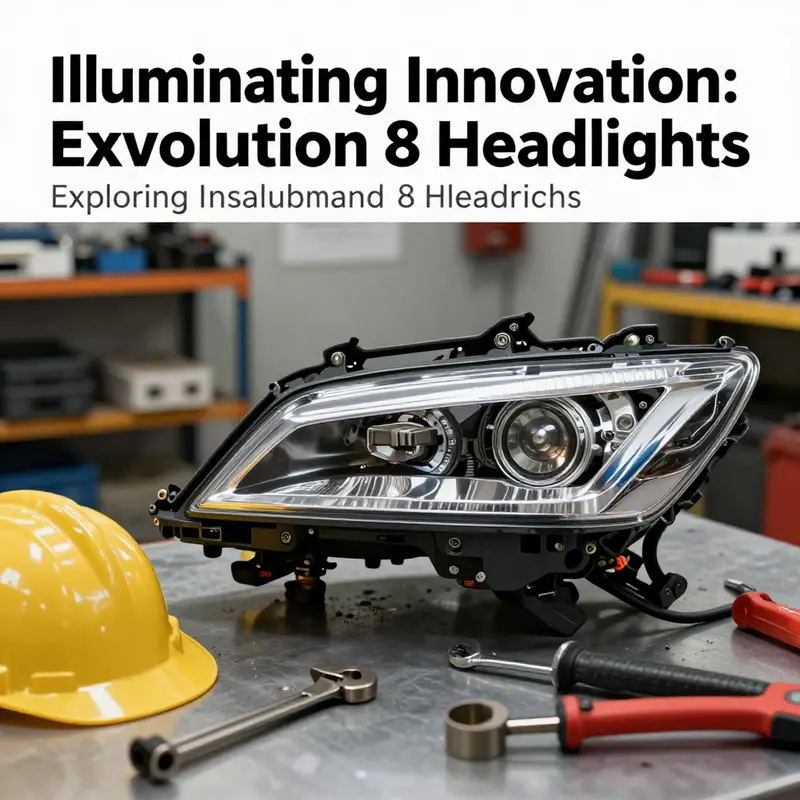
The face of a car tells a story before the engine rumbles to life, and in the world of the eight-generation Lancer Evolution, the headlights are that first, deliberate line. They do more than illuminate; they define the car’s stance, refine its lines, and set the tone for how the driver experiences the road at dusk and dawn. This chapter threads together the practical realities of selecting and fitting aftermarket headlights for this generation, the nuance of alignment and electrical integration, and the ongoing duties of keeping those lenses clear and the lighting trustworthy. It is a narrative that begins with the look and ends with the confidence of knowing the road ahead is well lit. While there are many customization paths, the core idea remains simple: the right headlight upgrade should enhance visibility without compromising safety or reliability, and it should feel like a natural evolution of the vehicle rather than an aftermarket afterthought. In practice, that means understanding fitment across model variations, recognizing how design language—whether it leans toward a carbon-fiber look, a modern LED profile, or a projector-driven beam—interacts with the car’s stock electrical system, and applying maintenance habits that preserve clarity and performance year after year.
A practical starting point is compatibility. Owners who embark on a headlight upgrade typically discover that not every option is a plug-and-play solution. The Evo line, spanning multiple generations that share a family resemblance, still presents variations in mounting points, connector shapes, and ballast or harness needs. Before committing to a purchase, a careful check of the target headlights against the vehicle’s year and trim is essential. Some models demand simple adapters; others require more involved wiring harness work or even minor bodywork adjustments to accommodate a different silhouette or lighting source. Without this verification, even the most visually striking unit can sit misaligned in its housing, its beam pattern skewed, and its output inconsistent. The result is not just glare for oncoming drivers; it is reduced road visibility for the driver and a potential safety hazard.
The selection process is as much about engineering as aesthetics. A headlight that mimics a carbon fiber exterior or adopts a glossy, glass-like finish can dramatically alter the car’s perceived personality. Yet the choice must marry optics with thermal and electrical realities. Many aftermarket options employ glass-like lenses with projector modules and, increasingly, LED or high-intensity discharge elements. Those combos promise crisper cutoffs and brighter, more efficient illumination, but they also bring considerations for heat management, power draw, and compatibility with the vehicle’s wiring and control modules. The prudent path is to treat the upgrade as a system, not a single component. Confirm that the new unit’s connectors align with the factory harness, that there is a clear path for any required adapters, and that the unit’s gasket and seal design will resist moisture intrusion over years of exposure to road spray and temperature swings. In environments with frequent inclement weather, sealing and gasket integrity become not a mere convenience but a safety issue, since compromised seals can invite fogging, corrosion, and degraded light output.
When installation is finally underway, the process benefits from disciplined preparation. Gather the right tools, and approach the job with a plan rather than improvisation. A torque wrench is recommended to avoid over-tightening screws, which can crack housings or distort mounting brackets. Read the manufacturer’s instructions thoroughly one more time, even if you feel confident from prior experience. The sequence often matters: disconnect the negative battery terminal to prevent any electrical snags, remove old bulbs or ballast components safely, and then align the new housing before final securing. Proper alignment—often achieved with a dedicated headlight aim tool or the careful eye of a professional—ensures the brightest portion of the beam sits low enough to illuminate the road without shining into oncoming traffic. A misaligned headlight is not just a nuisance; it is a reliability and safety concern that can degrade night driving significantly.
The practical details extend beyond mounting and aiming. The ignition of new headlight systems—especially those incorporating LEDs or HID elements—should be tested comprehensively. Low and high beams, along with any integrated fog or cornering lamps, should operate with consistent brightness, and there should be no flicker or dramatic dimming as the system cycles through duty cycles. Electrical stability is a key signal; it indicates the harness and control modules communicate reliably with the vehicle’s electrical brain. In addition, the aesthetics of the install matter. Some owners gravitate toward a clean, factory-like appearance, while others pursue a more aggressive, race-inspired look with smoked lenses or dark profiles. The challenge is to balance visual impact with real-world performance. A successful upgrade feels coherent with the car’s lines and colorway while delivering a recognized bump in nighttime visibility, rather than simply an external flourish.
Among the stylistic choices, a popular, understated approach features headlight assemblies that retain a clear, bright interior while presenting a subtle carbon-fiber-inspired surround. This look can be achieved either with genuine carbon-fiber components or with FRP (fiber-reinforced polymer) shells that are finished to resemble carbon fiber. FRP options, in particular, offer a practical compromise: lighter weight, typically lower cost, and easier curvature adjustments during installation. They also pair well with carbon-fiber eyebrow accents or “lids” that frame the upper edge of the headlight housing. Such eyebrow accents—an accessory that has become a familiar topic among Evo enthusiasts—can be sourced in various finishes and thicknesses, depending on whether the goal is a stealthy enhancement or a bold, racing-inspired accent. The conversation around these add-ons recognizes that headlights are a major design feature, yet the best implementation treats them as functional art—improving light distribution and road awareness without sacrificing the vehicle’s balance and harmony.
In discussing maintenance, the conversation returns to fundamentals. Clear lenses are the first line of defense for light quality. Dirt, oxidation, and a cloudy film sap brightness, reduce contrast, and blur the crisp edge of the beam pattern that guides a driver through bends. Regular cleaning with mild soap and water, followed by careful drying, helps preserve clarity. Abrasive cleaners should be avoided, as they can scratch lens surfaces, diminishing light output and leaving micro-scratches that trap moisture. For stubborn residues, specialized headlight cleaning kits often combine gentle polishes with sealants that create a protective film against future fogging. Moisture ingress is another critical maintenance theme. If condensation forms inside the lens, it can signal degraded seals or compromised gaskets. In many cases, restoring seal integrity is straightforward: replace worn gaskets and verify that the housing remains dry during a pressure test or after a controlled exposure to moisture. It is a small investment with outsized benefits, preserving both the aesthetic and the luminosity of the upgrade.
Electrical reliability deserves equal attention. Moisture inside the assembly can cause corrosion, which in turn can lead to intermittent operation or complete failure of a channel. Therefore, ensuring the seals and gaskets are intact before a long-term installation is a wise precaution. Additionally, avoid installing bulbs with wattage ratings that exceed what the headlight housing was designed to handle. Excess heat can shorten the life of internal components and accelerate lens aging, especially in climates with high ambient temperatures or repeated exposure to direct sun. Where higher outputs are desired, selecting a headlight module with built-in thermal management or a dedicated cooling strategy helps maintain performance while protecting the assembly.
Long-term reliability also comes from professional oversight. For many drivers, an annual inspection—particularly after heavy driving in rain, snow, or sandy climates—serves as a proactive checkpoint. A qualified technician can confirm alignment, inspect seals, test electrical continuity, and identify early signs of wear that might otherwise go unnoticed until a failure occurs. Such inspections may be framed as preventive maintenance rather than reactive repair, and the cost is typically modest when weighed against the potential hazards of misaligned beams or deteriorating optics. In this sense, headlights are not a one-and-done upgrade; they are an ongoing relationship with the vehicle’s safety and performance that benefits from periodic attention.
Turning to the broader ecosystem of Evo headlight options, the conversation often cycles back to materials, finish, and integration. Some drivers prefer a bright white light with a crisp color temperature that makes signs and lane markings stand out, while others seek a warmer glow that complements certain paint colors and the car’s interior lighting. The marketplace responds with a spectrum of choices, from genuine projector-based assemblies to ultra-modern LED arrays, each with its own light throw characteristics, cutoff sharpness, and color rendering. The common thread across these options is the importance of careful fitment, reliable electrical integration, and a maintenance routine that respects the environment in which the car operates. In other words, the best headlight upgrade for this generation is one that delivers better night visibility, preserves or improves the vehicle’s visual balance, and remains dependable across seasons and miles.
For readers who want to explore specific upgrade paths, a widely discussed option among Evo enthusiasts is a HID-based headlight package designed for the Lancer Evolution 8 and 9 platforms. It represents a clear commemorative turn in the car’s lighting history: from stock, often halogen-based assemblies to modern HID or LED solutions that offer significantly brighter, crisper illumination and improved beam control. This upgrade should be approached with careful attention to compatibility and electrical load, as mentioned earlier, and often benefits from pairing with a reflective, lens-cleaning regimen to maximize the available brightness. For those curious about pursuing a HID-oriented upgrade, brand-new original HID headlights for Lancer Evo 8-9 serves as a concrete example of how a single component choice can shift the vehicle’s nighttime identity while still requiring the methodical steps outlined above.
To tie the thread together, the decision to upgrade Evo-era headlights is not merely about what looks good in a showroom or on a forum gallery. It is about choosing a system that respects the car’s design philosophy, integrates with the existing electrical architecture, and invites safe, confident driving after dusk. A well-chosen upgrade can illuminate the road more effectively, preserve the car’s classic silhouette, and even enhance safety margins for cornering at night. The end result is not a flashy afterthought but a coherent extension of the vehicle’s DNA—an incremental refinement that aligns with the owner’s driving rituals and the car’s performance potentials. As the discussion moves forward through this article, the next chapters will explore how these lighting enhancements intersect with other aerodynamic and performance upgrades, and how to balance visibility with the car’s broader aesthetic goals, ensuring that every mile after sundown is a moment of clarity rather than a test of nerves.
External resource for deeper technical guidance: the evolution of headlight technology and installation nuances are well captured in expert guides that walk through alignment, ballast management, and beam pattern validation. For a detailed, step-by-step reference, consult the external installation and maintenance guide linked here: https://www.vehiclelightsdirect.com/evolution-8-headlight-installation-maintenance
Final thoughts
Familiarity with Evolution 8 headlights is essential for businesses in the automotive sector. From understanding product variants and performance options to staying abreast of market trends and installation protocols, each aspect plays a vital role in enhancing customer experience and satisfaction. By integrating these insights into your business strategy, you can better serve your clientele and capitalize on the strong aftermarket potential surrounding Evolution 8 headlights.