
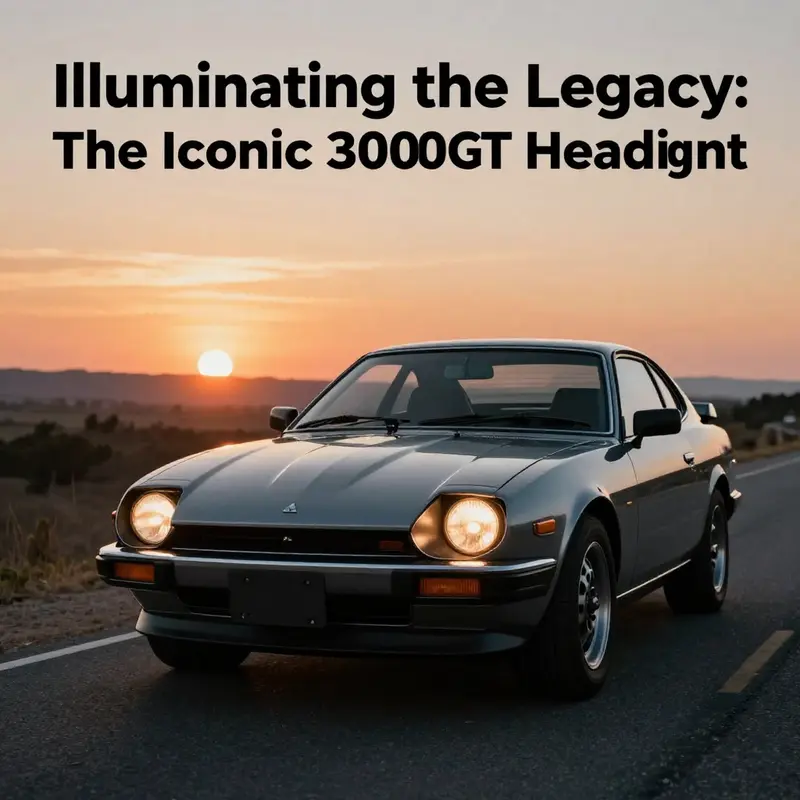
The Mitsubishi 3000GT remains a beloved icon in the automotive world, renowned for its unique design and advanced technologies, especially its distinctive pop-up headlights. These headlights not only serve a functional purpose but also contribute significantly to the car’s aesthetic appeal and identity. This article delves into the intricate details of the 3000GT headlights, exploring their innovative design and features, the evolution of their technology, the availability of market alternatives and compatible options, and the considerations for modifications while complying with regulations. Each chapter will shed light on critical aspects that have kept the 3000GT’s legacy alive in the hearts of car enthusiasts and business owners alike.
灯影之翼:三菱3000GT头灯的设计语言与高速气流的故事
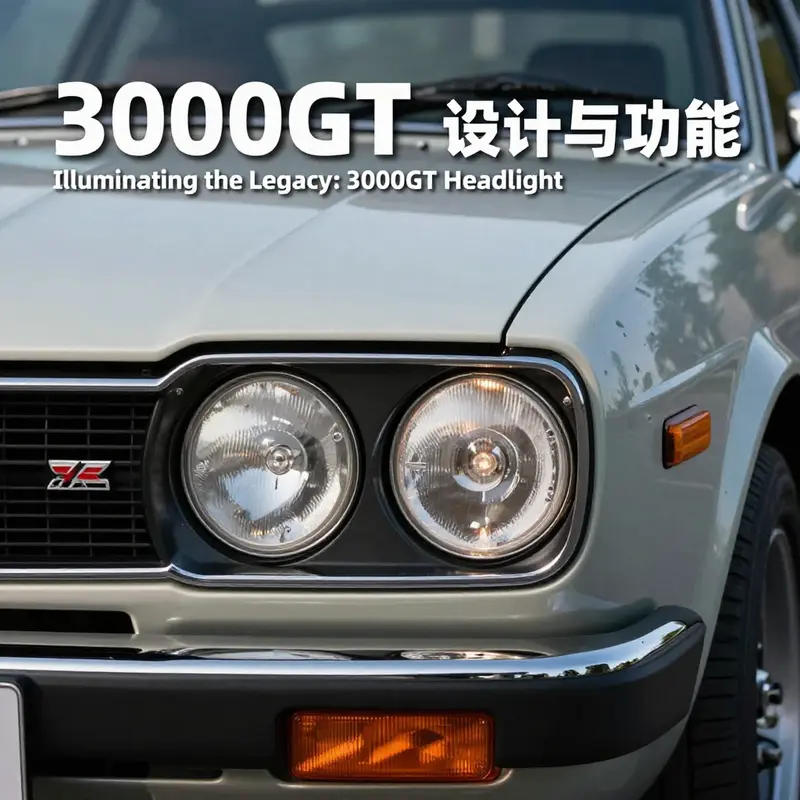
在九十年代的风口浪尖上,三菱3000GT以其头灯设计成为一种符号。翻灯的浮现和隐退,像是汽车工业对空气动力学、灯光美学与性能精神的三重宣言。头灯不仅仅是照明的器官,它承载着整车前脸的线条语言,记录着时间对法规、技术与审美的共同压迫与合奏。回望早期的1991至1994年版本,翻灯设计被视为这款高性能跑车最具辨识度的外观标记。灯罩内侧巧妙嵌入的示宽灯,与外露的翻灯共同构成一体化的前部表情。当大灯托起的一瞬间,光线像从薄雾中穿透的箭矢,既照亮前路,也照亮了车辆的速度基因。这种设计不仅提升了夜间可见性,更以舞动的线条强化了空气动力学的流体美学。在视觉上,翻灯与示宽灯的融合让前脸看起来更为紧凑、线条更为柔和,却在启动时瞬间转化为锐利的边界,这种对比正是九十年代日系跑车追求的前瞻性表现。进入1994年的改款,法规对碰撞安全的更高要求和对可靠性的持续追求推动了头灯系统的变革。翻灯被逐步替换为固定式头灯的设计,这一改变并非仅仅是“去魅”或“回归理性”的简单选择。固定灯组为前脸带来了更直接的攻击性视觉效果,灯具也逐步引入更现代的照明技术。后续版本逐步采用的分层进气格栅与碳纤维饰件,使前脸在仍然具备强烈进气能力的同时,呈现出更简洁、干净的轮廓感。灯具的转折点不仅改变了夜间照明的方式,也对前部气流的流向产生影响。虽然失去了部分早期翻灯的戏剧性,但固定式头灯的功能性与耐用性提升,让这台车在法规与市场双重约束下,仍保持了极强的竞技气质。更深层次的技术定位,则在1990年代末逐步显现。VR-4等高配版本并非只是在灯光上做文章,它们往往配合主动空气动力学系统,为高速行驶时的下压力服务。可变角度的尾翼、主动前下扰流板的存在,使车头与车尾在不同速度下能够完成自我调节,从而在弯道与直线之间维持更优的稳定性。这些技术的综合应用,使3000GT在当时就具备了超越同级别竞品的空气动力学调控能力。灯光在这里不再是单纯的照明,而是整个空气动力学哲学的一个组成要素。灯光的形状、亮度与分布,在一定程度上也反映了前部结构的开放程度和对气流的控制理念。
从翻灯到LED:3000GT头灯的技术演进与风格变迁
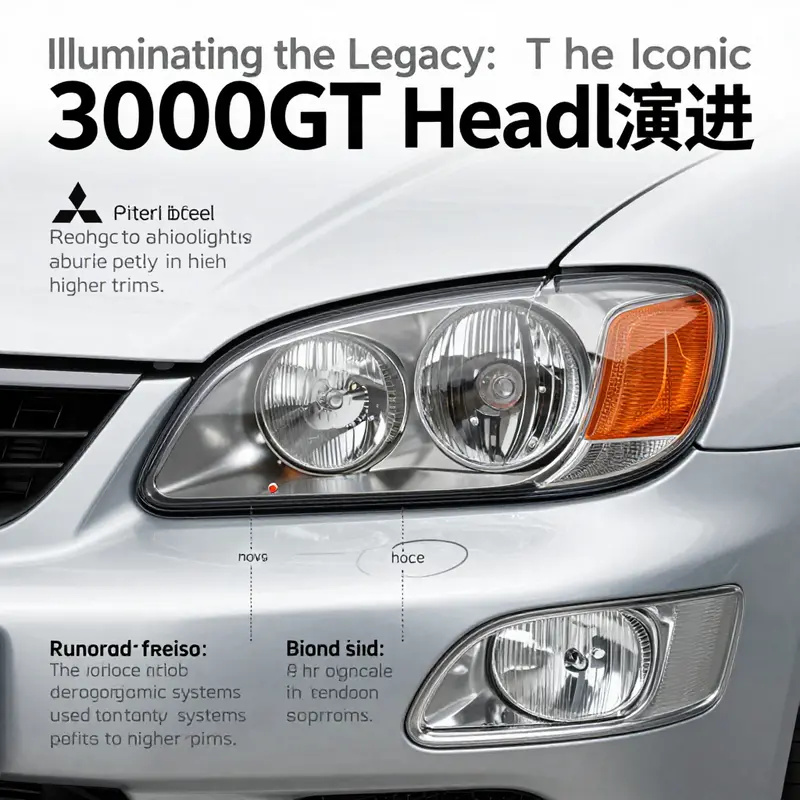
从翻灯到LED,这一看似简单的照明部件在1990年代的日系跑车语境中承载了超越光亮本身的意义。对于这辆经典的双门跑车而言,头灯不仅是夜间照明工具,更是一种机械美学与空气动力学理念的前沿展示。早在初代阶段,标志性的可升降式大灯就成为辨识符号,开启和合拢的动作像一段微型机械表演,通常在约1.2秒内完成。这并非单纯的点亮速度,更是一种对驾乘体验的承诺:按下钥匙或按钮,一组光源像被唤醒的眼睛,立刻塑造出一个圆润而有攻击性的前脸轮廓。在视觉语言上,翻灯与示宽灯的融合成为头部设计的亮点。翻灯开启时,示宽灯与转向信号常作为同一结构的一部分出现,前脸线条得以保持连续,灯组跳动带来的割裂感被减弱,整体美感因此增强。进入1994年的改款,法规与安全标准带来新的前端形态,跳灯转为固定头灯,以提升连续性和空气动力学可控性。新设计沿用运动感,但在视觉冲击力上更显锋利,前保险杠线条被重新雕琢,灯组轮廓变窄、光源更聚焦,为夜间高速提供更清晰的照明覆盖,同时在风口与导流结构的协同作用下,整车在高速域的稳定性得到改善。90年代后期至新千年初,制造商在保持美学的前提下提升照明效率。高配版本在光源技术与透镜形态上的优化,使光照覆盖更广、光通量密度更高,这也让头灯成为车前脸定位与品牌形象表达的重要载体。迈入新世纪后,关于头灯设计语言的讨论并未停止。市场对LED化和更锐利线条的期待持续增长,传闻中的新一代车型可能在前大灯采用分层式LED光源、碳纤维装饰与更强的空气动力套件,尽管官方尚未正式发布,但历史脉络显示这一领域依然具备延展性。在市场层面,原厂部件供应减少但兼容替换件逐渐成为现实选择。如今市场上存在若干兼容灯具,形状多为矩形或近似方形,并具备相关认证,兼顾光照质量与合规性。对于希望保持经典前脸又提升照明水平的车主,兼容件提供了务实的升级路径。若你对替换件感兴趣,优先考虑专为该车系设计、与原厂灯组接口兼容的产品,并确保光学分布与热管理符合当地法规。头灯不只是照明工具,更是年代记忆与未来可能性的载体。为进一步研究,可参考权威媒体的系统梳理,例如 MotorTrend 对1994年后期头灯演变的分析,帮助理解从翻灯到固定灯的转折点及其在空气动力学与光学性能上的意义。最后,若希望快速回到具体的替换信息,可查看市场供应商页面中的相关条目,以获得对比与安装要点。
When the Pop-Up Fades: Navigating Market Substitutes and Compatibility for the 3000GT Headlights
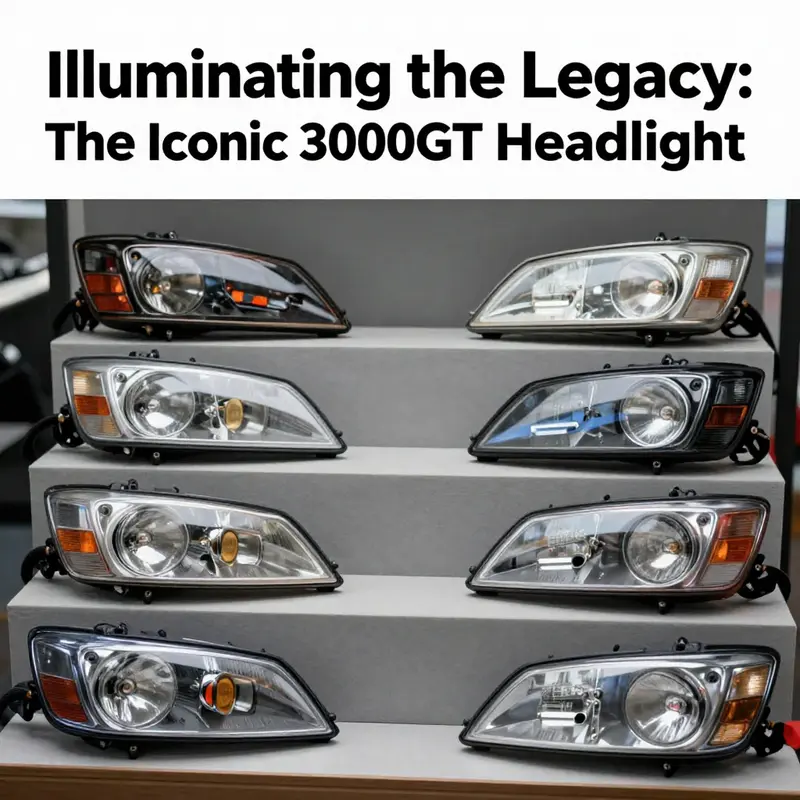
The Mitsubishi 3000GT’s headlights are more than mere illumination; they are a defining silhouette, a kinetic detail that echoed the car’s era of bold, forward-thinking design. That dramatic pop-up mechanism, which rose with a practiced snap as the engine woke and settled back into the bonnet line when the drive quieted, became part of the car’s identity. Yet time does not stand still, especially for an icon that vanished from production after the turn of the millennium. Since the factory headlight assemblies ceased production with the late-1990s models, owners have faced a practical crossroads: locate authentic, year-matched original units through the used market, or pivot to aftermarket substitutes that deliver modern lighting performance while attempting to preserve the classic look. This is no mere cosmetic choice. Headlights are a critical safety feature, a regulatory touchstone, and a hinge point for the car’s overall reliability in daily use and long-distance cruising. The following exploration weaves together market realities, compatibility puzzles, and pragmatic pathways, offering a coherent map for any 3000GT owner weighing the balance between preserving authenticity and embracing contemporary lighting technology.
The market reality is stark but navigable. Factory headlight assemblies for the 3000GT have not been manufactured for many years, and they are increasingly scarce outside of salvage yards. What circulates on the market tends to be a mix of used, refurbished, or third-party-created substitutes. For many buyers, the most straightforward option remains a carefully vetted second-hand unit that originated from a similar year and trim—ideally, one that mirrors the original design and optical performance. In practice, this often means seeking a headlight assembly from a vehicle of the same generation and configuration, with particular attention to whether the car wore the pop-up lamps early on or the fixed lamps later in the production span. In some regions, these conditions align with how the market categorizes the parts—year, model variant, and even minor facelifts determine whether a given unit will drop into the car’s front end without modification. The practical reality is that the supply of pristine, match-year OEM headlights is limited, and prices reflect rarity as much as condition. A typical example might land in a few thousand yuan, with wide variation based on lens clarity, seal integrity, and the presence or absence of interior wiring harnesses.
Beyond the salvage-yard option, the market has progressively matured with aftermarket and replica solutions that aim to capture the familiar “jumping” aesthetic while delivering modern performance. These third-party options often adopt the classic three-dimensional form—either a two-piece or a single-piece housing that mimics the pop-up silhouette—but they pack contemporary lighting technology inside. LED elements, improved beam patterns, and longer lifespans can translate into crisper, more reliable illumination at night and in poor weather. However, the trade-off is not only aesthetics but the heart of compatibility: the 3000GT’s lights are not a universal plug-and-play fit. They sit in a front end that has undergone changes across model years, and the electrical system that coordinates lighting functions is part of a broader harness and body ground network. A modern LED headlight designed to resemble the original may achieve brightness and efficiency, but it must align with the vehicle’s wiring, control modules, and regulatory requirements. The result is a staged decision: preserve the visual integrity with genuine, year-correct OEM units, or embrace the forward-looking practicality of an aftermarket assembly that promises improved lighting and durability while requiring careful verification of fitment and compliance.
To illustrate the market dynamic, consider the landscape for authentic era pieces. When a headlamp assembly is sourced from the late-1990s era, buyers often confront several reality checks: the unit may bear signs of age such as lens clouding, minor pitting, or internal fogging, even if the shells appear intact. The sealing gaskets can degrade, allowing moisture ingress, which compromises beam performance and can fog the internal optics. Replacing these units with a salvage item demands a meticulous inspection protocol—checking the lens condition, the integrity of the mounting tabs, and the presence of the original wiring harness connectors. It is not unusual for a seller to present a headlight as “tested and working,” only to reveal later that the unit fails to seal properly against road moisture. The buyer, therefore, travels a path that often includes a post-purchase refurbishment, a process that may involve resealing, lens clarity restoration, and calibration of the internal adjusters. In this context, a well-preserved used headlight is a treasure, but it is also a high-stakes purchase that benefits from due diligence.
For owners who seek a practical reference point, a representative listing exists on international resale platforms that gathers late-1990s headlight assemblies for the 3000GT. If you want to inspect a concrete example of what such a search might yield, you can explore a listing that presents the “95-99 Mitsubishi 3000GT SL VR4 Clear Driver Passenger Side Headlights Glass.” This particular listing is notable because it emphasizes the key attributes buyers care about: clear glass, intact lens surfaces, and the potential inclusion of mounting hardware. It serves as a touchpoint for what a buyer might encounter in the market and helps frame the expectations around condition, price, and compatibility. See the following internal reference for a concrete case: 1995-1999 3000GT headlight assembly (driver and passenger side).
When the factory option becomes scarce or prohibitively expensive, many owners start to explore aftermarket substitutes that aim to reproduce the original’s look while upgrading the lighting technology inside. The appeal is clear: LEDs offer longer life, lower power consumption, faster response times, and brighter illumination with less heat. A modern LED headlight that replicates the “pop-up” silhouette can preserve the aesthetic most enthusiasts cherish while delivering the practical benefits of contemporary lighting. The challenge, though, is the risk of deviating from the car’s authentic era and the possibility of a misalignment with the vehicle’s electrical system. If a buyer chooses such a path, the key is to select a product that explicitly states year-range compatibility and provides a plug-and-play harness or a well-documented wiring solution. The risk of a partial or failed installation—where turn signals, daytime running lights, and fog lamps do not synchronize with the vehicle’s body computer—must be weighed against the gain in brightness and reliability.
To summarize this market reality, the decision is ultimately a balancing act between authenticity and modernization. The most reliable strategy for a purist remains seeking a matching-year OEM headlamp, even if the search yields limited availability and a premium price. In parallel, the modernized route can deliver tangible practical gains, provided the buyer commits to thorough verification of fitment, electrical compatibility, and regulatory compliance. The path you choose should align not only with your budget but with your daily driving needs and the car’s ongoing use in contemporary roads.
Compatibility is where the discussion becomes intricate. The 3000GT’s headlamp design did evolve across model years, and the consequences of those changes extend beyond the cosmetic shell. The two major forks—pre-1994 “pop-up” lamps and post-1994 fixed lamps—demonstrate that the installation geometry, mounting points, and even the optics differ enough to prevent a simple swap across these periods. A headlamp from a late-1990s fixed-lamp variant, designed for the updated fascia and bumper geometry, will typically not align with an early-1990s pop-up chassis. The hood line, fender arch, bumper cutouts, and the lamp mounting studs are all aligned to a specific generation’s geometry. This means that, even when a reused unit seems to physically fit, the electrical connector and the beam pattern may diverge from the original configuration.
The VR-4 variant adds another layer of nuance. All-wheel-drive, active aero, and the more richly equipped trim have their own electrical cues and control expectations. The headlight assemblies themselves may appear similar, but the connectors, ballast requirements (if using LED replacements), and even the way the lamp communicates with the car’s signaling circuits can diverge. Even minor differences in the wiring harness between a standard model and the VR-4 can create a cascade of non-functional features if not properly matched. The core take-home is simple: exact year and exact trim matter more for headlights than for many other exterior parts. If a car is a 1995 VR-4 with a specific option package, matching that exact configuration is the prudent path to minimize the risk of misalignment, wiring errors, or regulatory noncompliance.
Electrical integration deserves particular attention. The original headlights do more than illuminate; they integrate with the vehicle’s signaling, daytime running lights, and sometimes with the car’s active aero features. An aftermarket LED headlight is not inherently compatible with the 3000GT’s control modules or fuse boxes unless the product clearly provides a compatible wiring harness and wiring diagram that matches your exact year and trim. The installation should ensure that the new unit’s electrical load does not trigger fuses or fault codes, and that all lighting functions—turn signals, high beams, low beams, daytime running lights, and fog lights if present—operate in concert with the rest of the system. The safer path, especially for a daily driver or for a car used on public roads, is to choose a lighting solution that is advertised as plug-and-play for your year and trim, ideally with documented wiring instructions and a tested beam pattern. If you are unsure, consult a specialist who understands classic Japanese performance cars and their electrical ecosystems.
Regulatory and safety considerations shape a large part of the decision framework. Front lighting regulations across jurisdictions specify brightness, color temperature, lens quality, and beam pattern. An aftermarket headlight may deliver brighter output, yet if it does not meet the local standards, the vehicle could fail annual inspection or, worse, present a risk in traffic. Even a unit that seems compliant in design could fail to pass muster due to subtle deviations in beam cutoff or misalignment. This is not a matter to be left to chance. Before committing to a substitution, verify that the chosen headlight assembly has been tested for the specific market where the car will operate and that it provides appropriate documentation or certification. The best route is to select a solution that explicitly states compliance for your region and that includes reliable adjustment mechanisms to ensure the beam is safely aimed at the proper distance and height.
The transportation of headlights—particularly older OEM units from the used market—adds another practical dimension. Because these parts come from older vehicles, there is always a risk of damage in transit, moisture exposure, or a compromised seal, all of which can undermine performance before installation even begins. When ordering, buyers should look for well-constructed packaging, water-resistant seals, and clear return policies. After purchase, the post-delivery inspection should cover the integrity of the lens, the sealing edges, and the condition of the mounting pins and electrical connectors. A keen eye for detail—comparing the received unit to the original look, verifying the reflector geometry, and ensuring that the light’s pattern aligns with the vehicle’s requirements—helps prevent a scenario in which the headlight later needs to be returned, repaired, or replaced again.
The narrative of now versus then also involves the evolving aftermarket ecosystem. The market for compatible, retro-inspired lighting solutions seeks to bridge the aesthetic preference for the 3000GT’s pop-up look with the reliability and efficiency of modern LED technology. Some suppliers market exact-looking replicas that preserve the iconic silhouette while delivering LED performance and longer service life. Others present more radical redesigns that convert the front end into a contemporary, aggressive style with fixed LEDs. In either case, the buyer must navigate two realities: the aesthetic outcome and the functional reality. The aesthetic outcome should honor the vehicle’s character, while the functional reality demands that the lighting system remains safe, reliable, and law-compliant. The balance is not always perfect, but with careful research, a well-chosen path can preserve the car’s personality while delivering improved nighttime visibility.
In closing, the question of which route to take—OEM used parts or modern substitutes—depends on what a 3000GT owner values most. If authenticity and preserving the car’s period-correct appearance are paramount, pursuing exact-year OEM headlights, even in used condition, is the most reliable route. It requires patience, a willingness to assess condition meticulously, and an acceptance that cost and availability may be high. If, instead, the priority is enhanced lighting performance, longevity, and daily usability, a carefully selected aftermarket replacement that explicitly matches the car’s year and trim can deliver tangible benefits. Either way, the installation should be approached with a clear eye for compatibility: year-specific differences, connector and harness alignment, and regulatory compliance must guide the decision. And for those who want to start exploring possibilities in a concrete, localized context, a relevant reference point can be found in a listing from a post-1999 headlight supplier that demonstrates the type of product and condition you may encounter in the market. See the earlier reference for a concrete example of the late-1990s headlight assembly: 1995-1999 3000GT headlight assembly (driver and passenger side).
External resource for additional context on the aftermarket marketplace and physical conditions of used headlight assemblies can be found here: https://www.ebay.com/itm/165454223384
在夜色中守护经典:三菱3000GT头灯改装的技术要点与法规边界
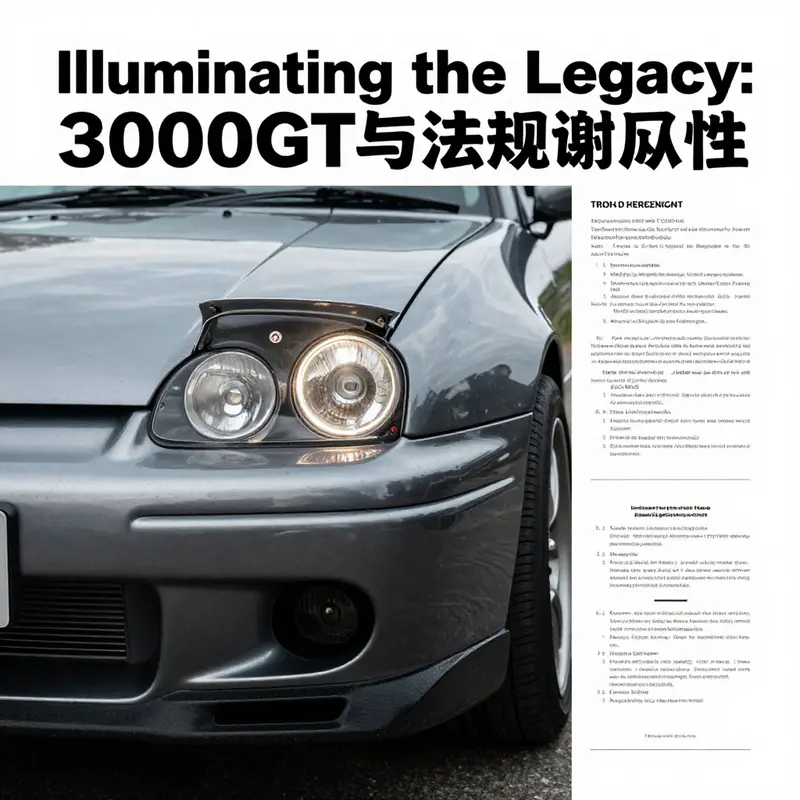
三菱3000GT以其可升降式的前大灯成为1990年代的标志性符号。那对会在发动时缓缓弹起、熄火后又收回的灯组,不仅承载着当时的技术自信,也赋予这辆跑车独特的视觉冲击力。随着时间推移,改装文化让人们在保留经典外观的同时追求更清晰的照明与更高的照射效率。然而,头灯的改装并非简单的“换个灯泡”那么直白,而是一场关于技术、法规与安全的综合博弈。要讲清楚,这一过程必须从车型的具体年份、原厂灯组的构造差异,以及所在地区的交通法规三方面入手,才能在灯光增强的同时,确保整车在年检与日常行驶中的合规性和安全性。\n\n在思考改装时,第一步永远是确认车型的确切版本。1993年至1994年的早期车型还保留了翻转式的前大灯,这是其设计语言中最具辨识度的部分。随后的1994年至1996年之间,出于安全法规的调整,厂家做出了一次重要转变:弹出式灯组逐步改为固定式投射光束的前灯,并辅以圆形前雾灯,这一改动不仅改变了车辆的外观,也改变了改装的直接可行性。到了1999年的末期,车型虽然有小幅改款,但灯组的基本形式已定型,后续的改装大多围绕已固定的头灯系统进行。此差异决定了可选灯具的兼容性与改装难度,也决定了你是否需要走更保守的改装路径。对于每一个计划改装的车主而言,清晰地界定自己的年份与型号,是避免返工、浪费和合规风险的关键。\n\n在全球范围内,改装头灯的核心挑战往往集中在法规合规、光学性能与安装工艺这三条线上。以最新的行业趋势与法规框架为参照,灯具改装需要具备明确的认证与技术参数。对于在中国市场或其他严格监管环境下的改装者来说,强制性产品认证(CCC)是进入道路的门槛之一。没有CCC认证、或者缺乏完整技术规格的灯具,极易在年检中被判定不合格,导致需要现场更换回原厂件或临时装回旧灯接口,增加运营成本与安全隐患。\n\n其次,配光与透镜的要求是改装中最易触犯的环节。无透镜的裸露LED灯泡是不可取的,必须使用带透镜的灯组总成,以确保光线分布符合国家或地区的光学标准,避免对向车辆造成眩目。色温方面,法定限定通常在4300K至6000K之间,超出范围的灯具往往在雨雾天的穿透力下降,且在夜间测试中更易触发违章点检。亮度方面也有明确的下限与限值:近光灯通常不低于1050流明,远光灯不低于1450流明,同时避免过度高亮造成光污染。最后,安装角度与位置的控制同样重要。灯具的安装应遵循原厂设计所规定的灯具高度与光轴角度,近光灯的水平偏移应控制在约150毫米之内,垂直方向在0到150毫米之间。若引导灯光偏离,便会直接影响对向司机的视线,构成重大安全隐患,也会成为年检的直接阻碍。\n\n在这样的法规框架下,针对3000GT的改装策略需要更加谨慎而系统。优先的路径当然是选择原厂或明确标注有CCC认证、具备完整技术参数的合规改装总成。来自正规品牌的总成通常会提供正确的光学透镜、稳定的安装接口以及透明的技术参数表,便于专业技师在现场进行光轴的精准调校。对比之下,市场上出现的为1992年款3000GT设计的4×6矩形LED灯具等替换件,尽管可能在亮度与能效上占有优势,但在法规层面往往更难以保证。若选择此类改装件,务必通过专业机构的评估,确认其CCC认证情况、透镜完整性与光学分布是否符合当地法规,否则即使外观符合经典线条,也难以确保通过年度检验。\n\n安装环节本身就是一个将理论转化为实操的桥梁。灯组需要被牢固安装,透镜需正对光轴,镜头与挡板之间的间隙要保持均匀,接线要符合车辆电气系统的保护要求,避免水汽侵入或走线干扰雨刷、转向与电源系统。调试阶段,技术人员会使用车载照明测试设备,对近光、远光和示宽灯的光轴进行系统化对准,确保在水平与垂直方向上的偏移都落在允许范围内,同时完成对下方照射区域的均匀覆盖。以上步骤都需要具备相应资质的专业厂商来完成,切勿尝试在自家车库里凭直觉调整,以免造成光斑分布不均、车辆越线照射、甚至触发对向车辆的眩目风险。\n\n在对某些经典版本的头灯历史进行回顾时,参考具体的型号差异也很有帮助。对1995至1999年的SL与VR-4版本而言,头灯结构的细微差异会影响到替换件的可行性与安装口径。为了帮助读者更好地理解这一点,可以参考一个具体的案例,它涉及到对同一代车型不同版本头灯的辨识与合规改装路径的差异。您可以查阅相关资料中的头灯组件信息,如这一组可识别的前灯组合,能够清楚呈现不同型号在外观与接口上的差异,以及它们对改装策略的直接影响。请参阅以下链接中的资料片段以获取一个直观的参照:95-99 Mitsubishi 3000GT SL VR-4 Clear Driver Passenger Side Headlights Glass。这一资源帮助读者理解不同年份头灯在接口与透镜设计上的差异,尽管实际改装时仍需结合当地法规与认证来决定最终方案。\n\n在这一切的基础之上,关于“全新3000GT”的概念需要明确。到2026年为止,官方尚未正式发布或生产新的3000GT,因此市场上关于“新款”的信息多半停留在概念草图或媒体传闻层面。对于改装者而言,这意味着任何关于改装新灯组以营造更现代外观的计划,都必须以现有老款车型的灯组结构与法规要求为前提,而非基于虚构的全新车型标准。换言之,改装的边界在于兼容性、光学性能与合规性三者的交汇点,而非追逐“更亮、更时髦”的单一追求。\n\n在实际操作层面,给出一个简明但务实的总结,作为未来的执行指南。第一,明确车型年份与灯组类型,辨识原厂弹出式还是固定式大灯,从而选择匹配的替换件;第二,尽可能选用具备CCC认证、带透镜、色温控制在4300K–6000K范围内的合规灯组,并确保光束分布在标准范围内;第三,委托具备二类以上维修资质的专业改装店进行安装与调试,确保光轴角度和安装位置符合原厂设计;第四,准备在年检时可能需要将原厂卤素灯再次装回以确保通过路检,或以合规的替换件完成年检前的调试与记录。以上策略并非对美学的妥协,而是在保留经典外观的同时,确保夜间照明的安全与法规的可持续性。\n\n若读者对灯组历史与改装路径有兴趣扩展了解,可以查阅权威法规的引用,以便把握当前的合规要求与技术标准,例如国家标准《机动车运行安全技术条件》(GB7258)的最新解读及应用范围。相关资料可在官方政府网站获取,作为改装计划的法规依据与安全参考。\n\n外部参考链接:GB7258 国家标准的官方解读与更新信息,可作为法规遵从性评估的权威依据。https://www.gov.cn/zhengce/zhengceku/2023-09/28/content_5755394.htm
Final thoughts
The pop-up headlights of the Mitsubishi 3000GT symbolize more than just automotive functionality; they represent a significant era in car design and engineering innovation. Understanding their design, technical features, market alternatives, and compliance during modifications provides valuable insights for business owners and automotive enthusiasts alike. As the legacy of the 3000GT continues, its headlights remain a focal point of admiration and discussion, making them an important part of this classic car’s identity. Maintaining and upgrading these headlights ensures their unique character endures for generations to come.