
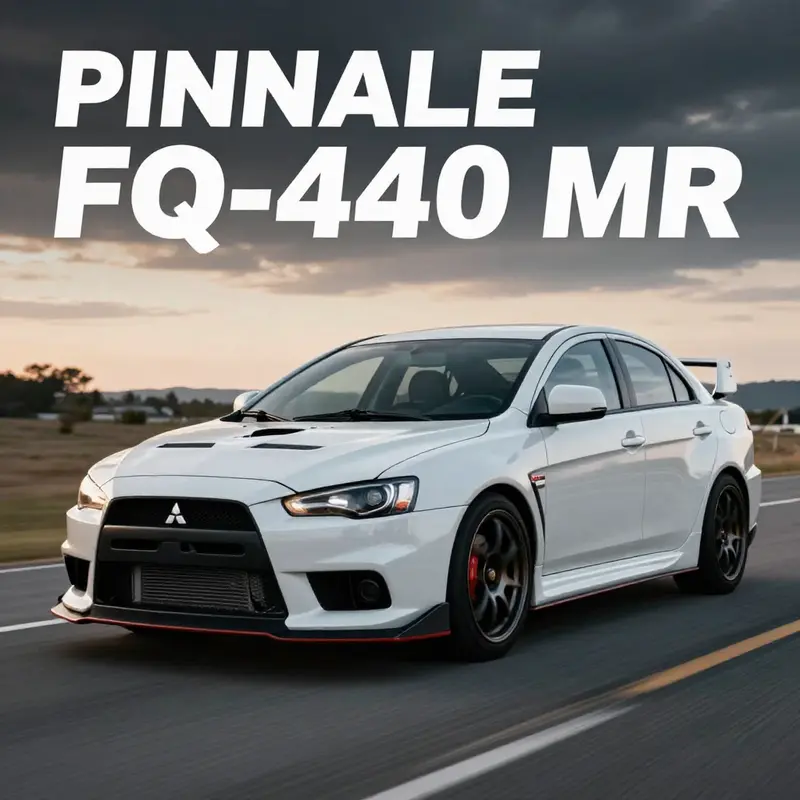
The Mitsubishi Lancer Evo X FQ-440 MR stands as a testament to automotive engineering and performance excellence. With its roots in the famed Lancer Evolution series, this limited-edition model not only commemorated Mitsubishi UK’s 40th anniversary but also solidified its legacy as a benchmark in small displacement turbocharged engines. Released in a limited run of just 40 units, the FQ-440 MR combines cutting-edge technology and engineering prowess, appealing to both performance enthusiasts and collectors alike. In this comprehensive overview, we will delve into the legacy of the Evo X FQ-440 MR, explore its technical specifications and performance highlights, analyze its design features, discuss its market impact and cultural significance, and assess its future collectibility—painting a complete picture of why this vehicle remains an icon in the automotive world.
A Final Legacy in Frost White: The Evo X FQ-440 MR’s Last Roar and Lasting Influence
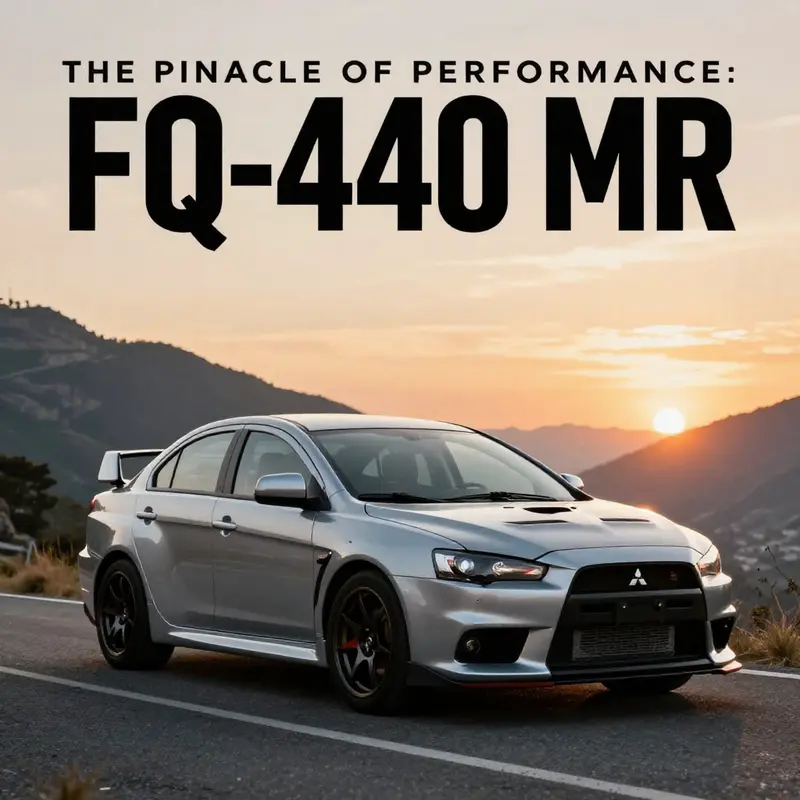
The Evo X FQ-440 MR did not merely arrive as another special edition; it signaled a deliberate, almost ceremonial closing chapter in a lineage that had thrilled drivers and challenged engineers for a generation. Conceived to celebrate Mitsubishi UK’s 40th anniversary, this ultra-limited model carried a promise and a burden: to be the pinnacle of Mitsubishi’s compact performance, and simultaneously the definitive farewell to a family of cars that had defined a genre. With just 40 units released worldwide and exclusively in the UK, the FQ-440 MR fused rarity with a performance ethos that felt almost surgical in its precision. Its Frost White coating, xenon lights, and distinctive badging announced its status before the engine ever sounded. Yet the powder-blue print of its rarity was secondary to what lay underneath the surface. The car’s engineering was a carefully curated symphony, where every component existed to extract maximum capability from a small displacement turbo four, and to do so with a sense of purpose that echoed the best attributes of the Lancer Evolution era—grip, balance, and an unflinching readiness to chase corners at the edge of grip and beyond.
At the heart of the FQ-440 MR sits a heavily tuned variant of the 2.0-liter inline-four turbocharged engine known to the community as the 4B11T. What began as a compact, responsive powerplant was transformed through an orchestrated program of enhancements: a high-performance HKS turbocharger, upgraded fuel injectors, recalibrated ECU mapping, an upgraded intercooling system, and a bespoke exhaust path designed to reduce backpressure while preserving a linear, controllable delivery of torque. The result was a staggering 440 horsepower and 559 Newton-meters of torque, a figure that, at the time of launch, eclipsed many larger, more ostentatious turbocharged machines. The message was clear: in a world where power often came from cubic inches, Mitsubishi proved that disciplined engineering could yield a world-class 2.0-liter performance engine. It was a claim that resonated far beyond its immediate peers, contributing to the reputation of the Evo X as a benchmark in small-displacement turbo performance.
The FQ-440 MR’s propulsion was paired with a deliberate choice in transmission architecture. Rather than a traditional manual, Mitsubishi equipped the car with a 6-speed SST dual-clutch transmission. This decision, while debated among purists who prize tactile engagement, offered lightning-fast gear changes and a seamless power delivery that complemented the car’s all-wheel-drive chassis. The result on the road was a rapid, almost clinical acceleration response, with estimates placing 0–100 km/h in around 3.5 seconds and a electronically limited top speed of 225 km/h. The figure was not merely about bragging rights; it was a demonstration that a mass-produced, small-displacement turbo engine could deliver supercar-like performance with impressive efficiency, a legacy that would influence how engineers contemplated the balance of power and weight for years to come.
Beyond the engine and gearbox, the chassis and suspension upgrades elevated the Evo X FQ-440 MR from a formidable road car to a track-capable performance machine. The car sat on a lowered suspension—front down by 35 millimeters, and rear by 30 millimeters—paired with stiffer anti-roll bars. These changes sharpened turn-in and improved midcorner stability, particularly when the grip limits of the high-performance tires and the Alcon braking system were tested in earnest. The Alcon brakes offered superior heat management and stopping power, an essential attribute when a car produces serious torque and accelerates with the kind of velocity that begs for confident fade-free braking at the limit. Rolling stock consisted of 18-inch forged BBS wheels, a combination that ensured both strength and a light, responsive feel through the steering wheel. Inside, the experience spoke to a balance of everyday usability and track-ready intent: Recaro leather racing seats, a sport-oriented steering wheel, a premium audio system, and a driving data recorder that could capture the car’s dynamic credentials for later study. It was as much a modern road rocket as a vehicle built to teach its driver how to extract every possible tenth of a second from a tight corner.
The design language of the FQ-440 MR reinforced its purpose. The Frost White hue, paired with distinctive badging and an interior that spoke of racing heritage without surrendering comfort, made the car instantly recognizable. Xenon headlights added a modern, high-beam clarity that complemented the car’s purpose-built aero cues and mechanical sophistication. In a world where style alone can mask capability, the FQ-440 MR offered something different: a coherent, purpose-driven package where aesthetics and performance existed on equal footing, each reinforcing the other. The model’s limited production run—forty units—amplified its resonance among collectors and enthusiasts who understood that this was not simply a peak in horsepower, but a peak in engineering philosophy for small-displacement performance. Its rarity has guaranteed that it remains a coveted artifact of the era, a tangible reminder of what Mitsubishi was willing to stake on the concept of a high-performance, compact four-cylinder with a turbocharged heart.
As the Lancer Evolution story drew toward its natural conclusion with the discontinuation of the line after the X generation, the FQ-440 MR acquired a status beyond the sum of its parts. It became the last, most definitive expression of a legend—a car that asked whether a small, turbocharged engine could still deliver the intoxicating blend of speed, handling, and driver connection that had defined the early Evo years. In retrospect, the FQ-440 MR is less about raw numbers and more about the stance it embodies: an uncompromising, unapologetic statement that performance can and should come from intelligent engineering and meticulous tuning, not merely from larger engines or louder exhaust notes. It is a symbol of an era when Japanese manufacturers were at their most audacious, pushing the envelope of what a small displacement turbo could achieve on both road and track.
Today, the FQ-440 MR’s value lies not just in its collectability, but in its place within the broader automotive culture as a benchmark and a reminder. It stands as a curated blueprint for future engineers and a talisman for enthusiasts who celebrate the intimate relationship between driver and machine. The car’s story, then, is a study in restraint and ambition: restrained in its weight, harnessed by a chassis tuned for precise feedback; ambitious in its power delivery, with a drivetrain that moves with a tempo that feels almost choreographed. It’s the kind of vehicle that invites reverence not simply for what it can do, but for what it represents—the peak of a generation that believed performance could be achieved through a perfect blend of engine, chassis, and driver partnership.
The modern collector scene continues to orbit around the FQ-440 MR, and with good reason. Its scarcity makes every surviving example a rare piece of automotive history, a tangible link to an era when capacity and displacement mattered less than the courage to extract maximum potential from a compact powerplant. For enthusiasts seeking a touchpoint with the Evo era’s apex, and for collectors valuing history as much as horsepower, the FQ-440 MR remains a compelling proposition. If one were to search for a representation of the era’s appetite for high-revving, turbocharged performance in a small package, the FQ-440 MR would be hard to beat. For those fortunate enough to encounter a low-mile example, the chance to own a piece of this legendary arc is not merely about possession; it is about preserving a moment when engineering audacity and racing spirit converged in a way that redefined what a “compact performance car” could mean. A rare example like this might still surface, and when it does, it deserves the careful attention of anyone who treats the Evo story as more than a catalog of specs. It deserves a place in the narrative as a living artifact of a milestone, a track-tested testament to an era when power, grip, and control coalesced into a singular driving experience that remains unmatched in the 2.0-liter turbo world today.
For those curious to explore a potential, tangible relic of this era, a rarely seen, low-mile example can be found here: low-mile Evo X FQ-440 MR for sale.
Further context from official channels offers a complete backdrop to this car’s position in Mitsubishi’s modern history. For a detailed, official overview of the FQ-440 MR’s specifications and historical context, visit the Mitsubishi Motors UK page dedicated to this model: https://www.mitsubishi-motors.co.uk/vehicles/lancer-evolution/fq-440-mr
Engineering the Pinnacle: Inside the Mitsubishi Lancer Evolution X FQ-440 MR’s Peak Performance
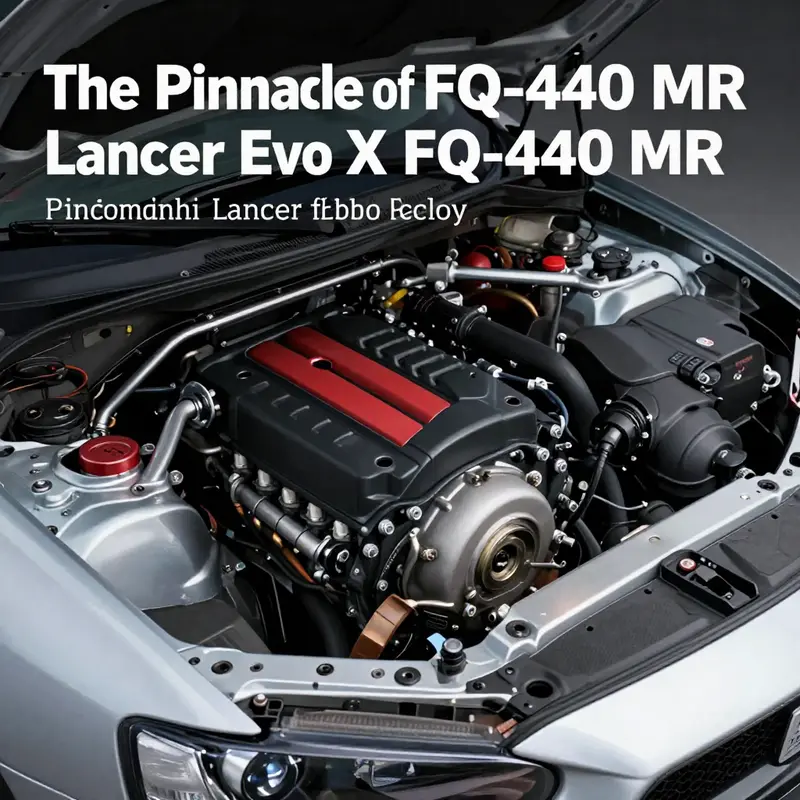
In the pantheon of rally-inspired road cars, few names carry as much weight as the Lancer Evolution. The Evolution X FQ-440 MR stands at the apex of that lineage, a limited-edition celebration of Mitsubishi UK’s 40th anniversary that compressed decades of tunable engineering into a single, uncompromising package. Its lineage is not merely about horsepower; it is a careful marriage of drivetrain prowess, chassis discipline, and interior ambition that transforms a compact turbocharged sedan into a precision instrument for the track and a statement on the street. The model’s mythology grows from its rarity—40 units globally, a UK-exclusive run—that elevated every unhelpful question about practicality into a footnote. What remains undeniable is the car’s ability to redefine the potential of a small-displacement turbo engine when every detail around it is tuned for maximum aggression and control.
Beneath the Frost White skin lies a concentrated heart built around the 4B11T engine, a modern small-displacement turbo that Mitsubishi pushed to the limit. The FQ-440 MR management sheet reads like a blueprint for performance extremism: 440 horsepower at 6,800 rpm and 559 Nm of torque peaking at 4,000 rpm. The internal modifications are as telling as the numbers themselves. A revised HKS turbocharger substitutes the stock unit, unlocking additional breath for the engine’s flow path. High-flow fuel injectors ensure the engine receives a precise and robust supply of fuel as boost climbs. An upgraded Janspeed intake path and a purpose-built intercooler piping kit reduce heat soak and keep the intake temperatures in check, a critical factor when the engine is placed under such pressure. The exhaust is not merely louder; it is a tuned conduit for pressure waves, a way to coax more instant response from the turbo’s surge while preserving exhaust scavenging that supports sustained power delivery. ECU remapping ties these hardware upgrades into a cohesive, responsive map that rewards revs and the driver’s intent.
The transmission choice is revealing in its own right. The FQ-440 MR uses a 6-speed Sports Shift Twin Clutch (SST) automatic, a layout engineered to deliver rapid shifts with a mass-market feel of immediacy. It is telling that Mitsubishi did not offer a manual gearbox with this model; the SST pairing ensures that the drivetrain can manage the increased torque output with speed and precision while maintaining a front-to-rear torque balance that this all-wheel system depends upon. The result is a powertrain that can put down 440 horsepower with authority, projecting the engine’s pull through a compliant yet eager drivetrain. In day-to-day terms, the SST auto might feel less tactile than a manual, yet it rewards precision and consistency on a race track or a twisty road where throttle modulation is the key to extracting pace.
The chassis and suspension engineering complement the breath of the powertrain in a way that makes the car feel smaller, lighter, and more fearless than its bulk suggests. Eibach performance springs lower the ride height—35 millimeters at the front and 30 millimeters at the rear—shaving height from the chassis to reduce the center of gravity and tighten the vehicle’s response envelope through corners. The braking system, upgraded with Alcon components, is designed to dissipate heat under brutal stop-and-go sequences, ensuring consistent stopping power even when the road surfaces become demanding. The wheel-and-tire package—18-inch forged BBS wheels shod with high-performance rubber—supplies the front-end grip necessary to translate such power into usable speed without inviting unwelcome understeer or wheel spin. This careful trifecta of power delivery, chassis stiffness, and braking authority is what makes the Evo X the sort of car that feels aligned with the road even when pushed into the apex of a corner.
Aesthetics and interior craft reinforce the car’s track-ready intent without sacrificing a degree of comfort. The FQ-440 MR’s exterior is a deliberate celebration of purity—a Snow White body, paired with dual xenon headlights that sharpen the car’s fanged, purposeful look. The wheels and the stance are a visual declaration of intent: this is a car that wants to be driven fast, with every line and aero cue tuned to support that ambition. Inside, the experience is a blend of rugged sport and refined detail. Recaro leather sport seats provide supportive hold during aggressive cornering, while a leather-trimmed steering wheel keeps the driver oriented in a cockpit that blends performance and function. A GPS navigation system sits alongside the Rockford Fosgate premium audio system, a reminder that this car, while savage in performance, remains a road-going package able to handle daily life with a touch of sophistication. The inclusion of a driving data recorder underscores Mitsubishi’s intent to make this a machine that can be evaluated, improved, and cherished as a benchmark for years to come.
From a performance perspective, the numbers tell a story that was, at the time of launch, hard to dismiss. Although official 0–100 km/h times were not published, the combination of 440 horsepower, all-wheel drive, and the SST drivetrain suggests a sprint into the mid-3-second range. The electronically limited top speed of 225 km/h completes the portrait of a high-velocity compact sedan that could outpace many contemporary hot hatches when properly composed by its driver. Yet the FQ-440 MR’s objective was not merely raw acceleration. It was a demonstration that a 2.0-liter, turbocharged engine could deliver sustained, usable performance across a spectrum of driving scenarios, from a tight racetrack to a highway with long bends. In that sense, the car functions as both a performance solution and a celebration of engineering discipline, a machine that makes high-speed precision feel almost intuitive.
The FQ-440 MR’s exclusivity is an essential part of its narrative. With only 40 units produced worldwide, and a UK-only release, the model stood as a rare intersection of scarcity and engineering bravado. The initial launch price of around £50,000 placed it within reach of enthusiasts who could justify a serious investment in a modern classic. In collector circles, its value is not simply in the horsepower tally; it lies in the car’s status as the apex of a storied family and the last major statement before the Lancer Evolution line came to a close. Many observers describe it as the strongest 2.0T turbo performance car produced by a mass-market operation at the time, a claim that continues to be debated in the light of later high-output rivals. The Evo X FQ-440 MR is widely viewed as the culmination, the last authentic expression of Mitsubishi’s performance philosophy in the modern era, before the brand’s pivot away from the traditional Lancer chassis platform.
This chapter would be incomplete without touching on the driving experience—the intangible but essential element that cements a car’s place in automotive memory. On a winding road, the FQ-440 MR feels compact and composed, the all-wheel drive delivering traction with a relentless grip that makes late-apex throttle application feel almost natural. The lowered ride height translates to a keener sense of the road, the chassis responding with a crispness that gives the driver confidence to push harder through each bend. The lack of a manual gearbox, once framed as a potential drawback by purists, is often recast by owners as a pragmatic advantage: the SST’s speed and consistency allow the car to stay in its sweet spot, pulling cleanly from low revs to high without the fatigue associated with constant manual operation during a long lapping session. It is a car designed to be driven with precision, not merely admired for its numbers.
For collectors and enthusiasts who crave the chance to own a piece of that pinnacle moment, the market still reveals a few pristine examples from time to time. In the broader ecosystem of Evo X variants and limited editions, the FQ-440 MR remains a rare, coveted asset—an embodiment of an era when small-displacement turbo power could feel inexhaustible and the chassis could carry speed with quiet poise. If you’re curious about current availability, a listing such as the low-mile Evo X FQ-440 MR for sale serves as a reminder that these cars continue to travel the world in careful hands, their value reinforced by the careful engineering that produced them. low-mile Evo X FQ-440 MR for sale.
In the end, the Lancer Evolution X FQ-440 MR is more than a high-performance machine; it is a carefully curated statement about what a limited run can achieve when a manufacturer channels the best of its engineering into a single, coherent vision. It represents a milestone in the history of Mitsubishi’s performance story and the broader narrative of small-displacement turbo performance. As the last hurrah of the Evolution lineage, it continues to draw the gaze of collectors who value not just speed, but the purity of a factory-tuned, road-going race car. Its legacy lies in the synergy of power, grip, and driver-focused detail—a blueprint for how a rare machine can remain relevant, demanding, and incredibly engaging long after its manufacturing run has ended.
Snow-White Benchmark: Design, Detail, and the Evo X FQ-440 MR
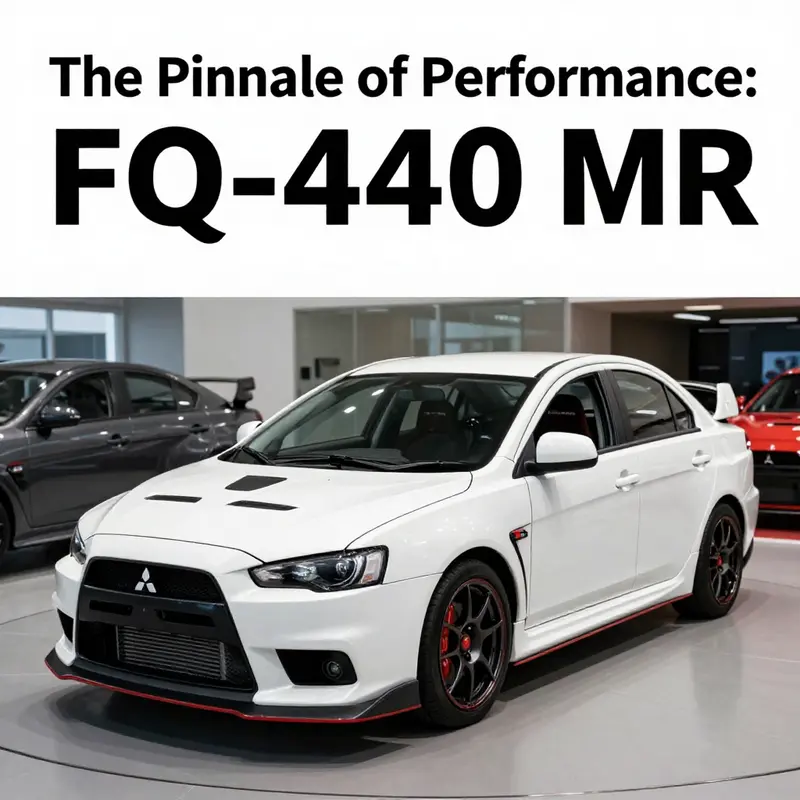
The Evo X FQ-440 MR stands as a rare confluence of design refinement and ruthless engineering. Its snow-white exterior is a deliberate visual statement that elevates every other element of the car’s silhouette. The pale surface reflects light with clinical precision, mirroring the car’s mechanical heart. Dual xenon headlights slice through the surface with intensity, making the front end look sculpted in light. The 18-inch forged wheels, shod with high-performance tires, play a crucial role in handling, braking heat management, and the car’s poised stance. Inside, Recaro leather seats anchor the eye and body, while a leather-wrapped steering wheel emphasizes driver immersion. Optional GPS navigation and a premium audio system balance performance with daily usability, underscoring a cockpit designed for long journeys and track days alike. Under the skin, the power unit derived from a 2.0-liter turbocharged backbone is tuned to produce a formidable output, delivered through a six-speed dual-clutch transmission to all four wheels. Alcon brakes and Eibach springs refine the chassis, preserving balance under high load while maintaining ride comfort on public roads. The suspension geometry lowers slightly to improve turn-in and reduce body roll, while the tires’ grip translates the chassis intent into measurable cornering performance. The car’s limited production run and UK focus add rarity that anchors its value in both design and history. In sum, the Evo X FQ-440 MR embodies a philosophy of restrained aggression: a flagship limited edition that blends race-bred capability with day-to-day usability.
Forty-Unit Legend: The Market Pulse and Cultural Echoes of the Lancer Evolution X FQ-440 MR
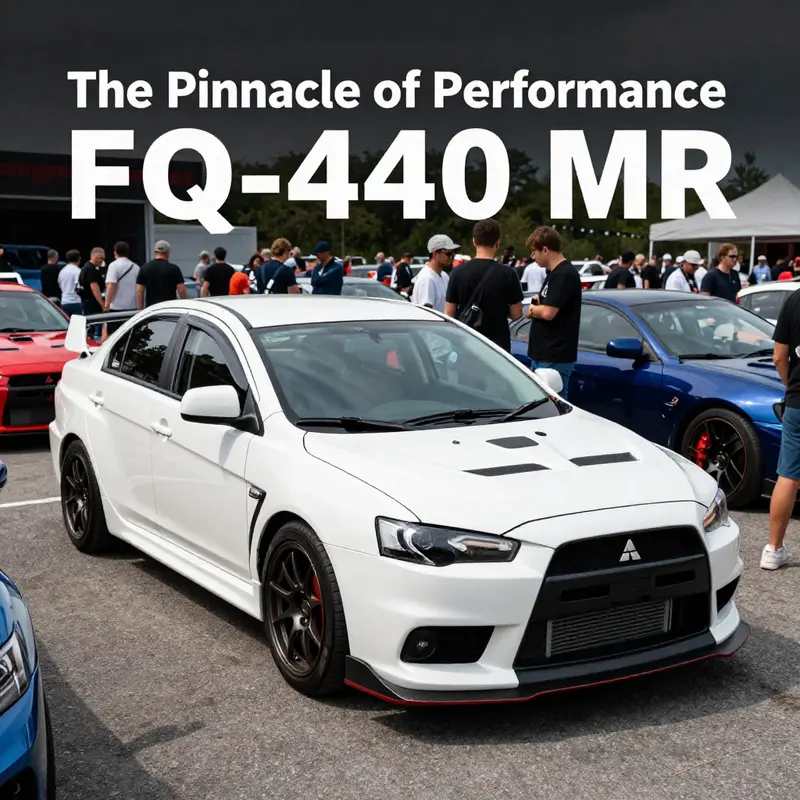
When a car is born from a celebration and released into a world that already reveres its predecessors, it tends to become more than a sum of parts. The Lancer Evolution X FQ-440 MR embodies this idea with unusual clarity. Conceived to mark Mitsubishi UK’s four decades of performance engineering, this limited production model arrived not just as a faster Evo but as a cultural artifact. A mere forty units were dispersed across the globe, a number that instantly transformed the machine from a speed machine into a collectible symbol. In the years since its debut, it has stood as a benchmark for the potential of a small-displacement turbocharged engine, pushing the conversation beyond bragging rights to questions about value, rarity, and the way enthusiasts measure significance in a modern collector’s market. The FQ-440 MR did not merely offer more horsepower; it forged a narrative that linked engineering bravura to a guarded sense of exclusivity, a narrative that still resonates in garages, auctions, and car shows around the world.
The market reaction to such a limited release is instructive. Exclusivity, especially when tied to a storied lineage, tends to amplify demand beyond what objective performance alone might justify. In this case, the car’s 440 horsepower and 559 Nm of torque came wrapped in a package meticulously tuned for real-world track feel and street legality, a juxtaposition that attracted both purists and performance seekers. The narrative that emerged around the FQ-440 MR was not simply about speed; it was about owning a piece of engineering history that also happened to be a brilliantly capable machine. In many conversations among collectors and enthusiasts, the car is described as the closest thing to a modern “halo edition”—not merely a rarified curiosity but a car you could responsibly enjoy on a weekend drive and still admire on a showroom floor. Its potential as an investment is inseparable from its cultural resonance. The vehicle’s rarity means even today that a pristine example can draw attention at auctions, private sales, and classic car gatherings, where the car’s story—anniversary, performance, and a limited production run—adds to its aura as a future classic.
Cultural significance emerges most clearly in the way the FQ-440 MR is remembered within the broader ecosystem of performance cars. The Evo lineage has long enjoyed a fervent following in markets with a deep appetite for rally-inspired engineering, but the British edition of this celebration carried an explicit sense of regional pride. The Frost White paint, the forged BBS wheels, and the bespoke interior trimmings—Recaro seats, a premium audio system, and a driving data recorder—conjure a car that wants to be both a race car and a premium user experience. Its appearance is a symbol of balance: a machine capable of frightening acceleration and impressive handling, yet refined enough for long highway cruises. The debate around the absence of a manual transmission in the FQ-440 MR only adds to its cultural texture. Purists often lament the absence, arguing that the manual connection is essential to the car’s visceral, driver-centric identity. Yet many fans accept the seven-figure performance envelope offered by the dual-clutch system as a fair trade for repeatable, lightning-fast shifts and flawless traction control across all four corners. The result is a cultural footprint that stretches beyond the automotive press. It informs how enthusiasts speak about small-displacement performance, turbocharged ambition, and the way a limited-run model can redefine what a brand can achieve in a single, unforgettable year.
The FQ-440 MR also marks a transitional moment in the automotive conversation about technology and weight, speed, and immediacy. The engineering choices—an upgraded turbo, high-flow injectors, a recalibrated ECU, and enhanced intake and intercooler systems—are not mere numbers on a spec sheet. They translate into a driving experience that marries raw speed with precise feedback. When the throttle is coaxed, the engine responds with a surge that feels almost surgical, the all-wheel-drive layout delivering grip and composure that makes the car forgiving at the limit while still capable of thrilling late-apex exits. The chassis improvements—lowered ride height, tighter suspension with Eibach components, and Alcon brakes designed to manage heat under intense use—reframe the car from a straight-line rocket into a confident handler, able to carry speed through corners with a stability that many performance cars of the era could only aspire to. In this sense, the FQ-440 MR’s cultural impact is as much about how it behaves on a track or a twisty road as it is about how it looked doing it. The car’s dynamic personality has contributed to a broader belief in the viability of a 2.0-liter turbo as a serious performance platform, challenging assumptions that bigger is inherently better and proving that sophistication in tuning can outpace mere displacement.
From a market perspective, the FQ-440 MR set a tone that echoed beyond the limited production run. The appeal of rarity, the thrill of a high-performance package, and the association with a legendary model line created a halo effect around the Evo X platform as a whole. Prospective buyers often weigh today’s depreciation against tomorrow’s potential return, and the FQ-440 MR’s scarcity helps to tip the balance toward long-term value. The car’s status as a collector’s item is reinforced by the aura of exclusivity: a brand with a robust rally heritage, a model that represented a high-water mark for its era, and a storytelling cadence that makes each unit feel charged with history. It’s a rare machine that not only performs but invites dialogue, inviting owners to swap experiences about maintenance, parts availability, and the best ways to preserve a vehicle that sits at the crossroads of performance, prestige, and nostalgia.
In considering its enduring appeal, one can see how the FQ-440 MR functions as a bridge between two kinds of passion: the devotion for technical excellence and the desire to own something that feels almost mythic in scope. The car’s eventual departure from production did not erase its impact; it amplified the sense that the Evo X era—especially in such a definitive, limited edition—represents the end of an era for a generation of enthusiasts. The legacy endures in the way the car is discussed, photographed, and cherished, in the way it continues to shape the expectations for small, highly tuned turbo engines, and in the memories of those who were lucky enough to experience it during its brief, luminous window. In the end, the FQ-440 MR is remembered not just as a fast car but as a carefully curated moment when engineering ambition, limited supply, and a strong regional heritage converged to produce something that remains a touchstone for enthusiasts and a benchmark for future generations.
For readers curious about the tactile details that powered the legend, a deeper dive into carbon components and other lightweight options can provide a tangible sense of how limited editions extend their influence beyond the showroom. For those who want to explore practical heritage as a means of maintaining the car’s performance envelope, a look at accessible upgrades and supportive parts is worth the time—especially when those upgrades are anchored by the same spirit of precision that defined the FQ-440 MR. An understanding of the car’s historical context, its technical choices, and its cultural resonance helps illuminate why this particular model continues to be discussed decades after it first rolled out of the factory. External resources offer a broader window into the lineage, while internal communities and suppliers keep the conversation grounded in the practical realities of ownership and preservation. For a comprehensive historical reference, the official archive remains a reliable starting point, offering a curated view of the model’s evolution and its place in the broader story of performance engineering.
The Last Act in a Legend: Forecasting the Future Collectibility of the Lancer Evolution X FQ-440 MR
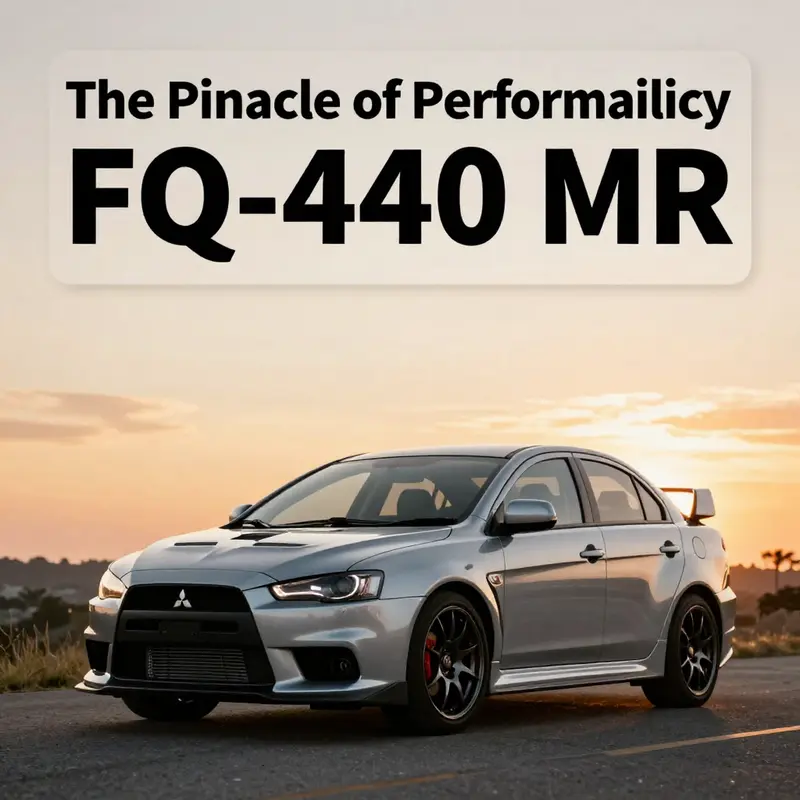
When the dust settles on performance legends, the Lancer Evolution X FQ-440 MR still announces itself with a quiet, relentless certainty. Released in 2014 to mark Mitsubishi UK’s 40th anniversary, this car was never intended to be a mass-market thrill ride. It was engineered as a capstone, a final, unambiguous statement from a lineage known for pushing small-displacement turbo power beyond expectation. With only forty units produced for global markets and an exclusivity that felt almost ceremonial in its restraint, the FQ-440 MR sits at the crossroads where engineering brilliance, scarcity, and cultural memory meet. Its future collectibility, therefore, rests on a handful of durable pillars: rarity, technical excellence, commemorative significance, and the broader arc of automotive nostalgia that treats the Evo as more than a set of numbers on a spec sheet. In that sense, any projection about its value must move beyond the price tag and look at the car as a convergence of history and performance, a rare artifact that still embodies the pulse of a particular era of Mitsubishi’s engineering philosophy.
To begin with, the scarcity is absolute rather than relative. Forty units worldwide is not a number that invites speculation about a larger pool. It creates a ceiling that does not bend easily to market cycles or macroeconomic perturbations. Each example is a unique footprint of that limited run—an exemplar that can be authenticated by a trail of documentation, provenance, and a set of original components that were carefully chosen to maximize the car’s competitive potential on the street and in limited-track contexts. This is not merely a special edition; it is a historically significant bottleneck—a final, concentrated bundle of what the Evolution lineage represented at its peak. The FQ-440 MR’s UK-centric production reinforces its narrative as a coronation of a car that had already built a robust, almost global community of enthusiasts who followed the Evo’s every development for decades. The collector’s appeal, in many ways, is a straightforward arithmetic: a finite number of well-preserved copies plus a pedigree that ties back to Mitsubishi’s celebratory milestone equals a product that will be increasingly difficult to replace once a number of years pass.
Yet rarity alone does not secure lasting value. The FQ-440 MR is also a case study in how engineering judgment translates into collectibility. It represents the pinnacle of a model line that had already proven its mettle in varied forms, but the FQ-440 MR was not about incremental gains. It was about redefining the ceiling for a 2.0-liter turbocharged engine within a mass-produced all-wheel-drive platform. The 4B11T engine, after a cascade of enhancements, reached 440 horsepower and 559 Nm of torque through a disciplined program of hardware and software upgrades. A HKS twin-turbo system, a high-flow intercooler, upgraded intake, and a thoroughly remapped ECU all contributed to a power delivery that felt, in period terms, almost otherworldly for a compact sedan. This was not a mere upgrade package; it was a confirmation that a small displacement turbo could outpace many larger rivals when paired with the right breathing apparatus and a control strategy tuned for aggressive, repeatable response. The result—an estimated 3.5-second run to 100 km/h under a practical, all-wheel-drive setup—was a bold statement at the time and remains a touchstone in conversations about what a mass-produced 2.0T could achieve. For collectors, this translates into more than a number; it signals a benchmark in performance engineering, a point in history where the Evo family crystallized its identity as a serious engineering project rather than a simple hot hatch lineage.
The narrative of collectibility is inseparable from the car’s commemorative context. It was conceived as a tribute to a longstanding automotive heritage, a milestone that carried emotional weight for enthusiasts who had followed Mitsubishi’s rally and road-car story through thick and thin. The Frost White exterior, xenon headlights, and the purposeful detailing that accompanied the FQ-440 MR were not cosmetic afterthoughts; they were deliberate choices that tied the car to a narrative of prestige and performance. Inside, the Recaro leather racing seats, the sport-oriented steering wheel, and the premium Rockford Fosgate audio system paired with a driving data recorder, created a cockpit that felt designed for serious driving and serious appreciation. This blend of luxury touches with uncompromising performance is a rare combination in modern collectible cars, where some models trade off comfort for track potential or vice versa. The Evo X’s final variant encapsulated both, giving future owners a tangible link to a historical moment when the car’s identity shifted from fleet performance to a cultural artifact worth preserving for decades.
The Evo X FQ-440 MR’s lasting appeal also rests on its status as the last true Evolution. In the broader automotive culture, the Evo series stands as a symbol of a particular era of all-wheel-drive performance, a period when turbocharged four-cylinders could deliver headline-grabbing performance with a sense of mechanical purity that is harder to find today. With the Evolution line discontinued, the FQ-440 MR becomes a crown jewel of that era, a canonical endpoint that collectors can point to as the culmination of a philosophy rather than a mere collection of horsepower figures. This sense of conclusion—the closing chapter of a beloved, revered lineage—adds an almost mythic dimension to its future value. As the market increasingly looks back on a generation of cars that defined a certain kind of driving experience, the FQ-440 MR offers a focused, well-documented case study in how rarity, engineering depth, and emotional resonance can coalesce into long-term collectibility.
For the buyer motivated by investment logic, the equation remains nuanced. The car’s value does not rise solely because it is rare; it rises because each unit exists with strong provenance and the likelihood that the number of surviving, well-preserved examples will shrink as time moves forward. Maintenance history becomes a form of currency in itself. Enthusiasts often prioritize cars with complete service records, original components, and minimal, verifiable modification history. In the FQ-440 MR’s case, the core drivetrain, braking system, and suspension were engineered for sustained performance, and the presence of documented upfits or later alterations can influence a model’s market climate. The more pristine a car remains, especially with original parts and a comprehensive archival trail, the stronger its appeal to collectors who view the Evo’s final chapter as a carefully curated archive rather than a fluctuating investment asset.
From a market perspective, the FQ-440 MR’s trajectory will also be shaped by broader trends in modern classics and the evolving value placed on limited-edition, high-performance machines from well-known marques. While the car sits in a segment of automotive history that benefits from nostalgia and renewed interest in the early turbo era, it must contend with issues of age, maintenance costs, and the availability of specialists who can service an era-specific powertrain and drivetrain layout. Yet these challenges can also become advantages for the prepared collector: a well-documented, low-mile example can command premium pricing because it reduces risk for buyers who want a near-original experience with reliable long-term care. In other words, the FQ-440 MR’s future is not guaranteed by its power figure or its rarity alone; it’s anchored in the storytelling around its preservation, its status as a symbol of the Evolution era, and the preparedness of owners to maintain a high standard of care.
To connect the chapter to the current market and circulating narratives, readers can explore a representative listing that showcases a low-mileage example in the market today. This listing, framed within the context of a limited run, helps illuminate how the market values condition, originality, and documentation in parallel with scarcity. For those who want to see how such vehicles are positioned in contemporary sales, consider the listing here: low-mile Mitsubishi Evo-X FQ-440 MR for sale.
As the Evo’s chapter closes in the annals of performance car history, the FQ-440 MR stands as a precise, unforgettable hinge between engineering bravado and collector culture. Its collectibility will likely mature as the number of survivors who can honestly claim the best-of-era powertrain, chassis work, and commemorative significance becomes more finite. For some, this is reason enough to pursue a pristine, well-documented example now, rather than waiting for a future market that may prove less forgiving of imperfect histories or higher restoration costs. For others, the narrative itself—an emblematic last act of a storied lineage—will be the primary reason to keep, preserve, and celebrate. In either case, the FQ-440 MR has earned its place as one of the era’s most compelling, coveted, and enduring symbols of speed engineered to endure.
Final thoughts
The Mitsubishi Lancer Evo X FQ-440 MR is not merely a car; it is a symbol of unmatched performance, engineering excellence, and a storied history that resonates within the automotive community. As we have explored, its legacy, technical specifications, design features, market impact, and potential for future collectibility present a compelling narrative that captivates both enthusiasts and investors. With only 40 units produced, the FQ-440 MR is likely to remain a celebrated icon for years to come, embodying the spirit of speed and innovation while securing its place as one of the most sought-after performance vehicles in history.