
For business owners with a fleet of vehicles or managing a repair service, understanding the transmission options for the 2011 Mitsubishi Lancer is crucial. As the demand for efficient and durable automotive parts continues to rise, knowing where to find reliable transmissions, their specifications, and current pricing trends can significantly enhance operational efficiency. This piece meticulously organizes key insights into available options, compatibility and specifications, and the economic factors influencing pricing, ensuring business owners make informed decisions when sourcing these essential parts.
Between Fit and Finish: Navigating the 2011 Mitsubishi Lancer Transmission Market

When a beloved car model reaches a point where its transmissions are no longer readily available at your local salvage yard, the next frontier often lies in the wider marketplace. For a 2011 Mitsubishi Lancer, the journey from desire to a reliable, functioning drivetrain component is as much about understanding the landscape as it is about identifying a specific part. The marketplace offers an array of options that extend beyond the familiar new-assembly route. You can encounter automatic and manual transmissions, rebuilt units, and even performance-oriented variants that, while not original equipment, promise compatibility with certain trim levels and driving styles. The question, then, becomes not just what is available, but what will actually fit and perform as intended once installed. In this landscape, a clear grasp of three intertwined factors—compatibility, condition, and installation reality—helps transform a potentially risky purchase into a satisfying repair or upgrade.
Compatibility sits at the core of every decision. The 2011 Lancer was offered in several trims and with a handful of drivetrain configurations, each with its own transmission pairing. Vendors and online marketplaces often list transmissions by model year and general compatibility, but the risk of mismatching parts is real. That is where the marketplace’s guaranteed-fit promises come into play. A guaranteed-fit offer provides an assurance that the part will align with your exact vehicle’s specifications, typically verified against a VIN and the manufacturer’s compatibility matrix. This is especially valuable in a market where a transmission is not simply a mechanical box but a complex system with electronic controls, valve bodies, gear ratios, and mounting patterns that must align with the engine, ECU, and chassis harness. When a listing carries guaranteed fit, it reduces one of the sharpest knives in the buyer’s toolkit: the risk of spending money on a part that cannot be installed without significant modifications or further sourcing.
Within that framework, the spectrum of options expands. You will discover both automatic and manual transmissions, each with its own ecosystem of options. For many owners, the choice between automatic and manual is not merely about preference but about the practical realities of the vehicle’s current state and the intended use. An automatic transmission from a 2011 Lancer might present a broader pool of listings—new OEM, refurbished cores, or remanufactured assemblies—but the specific automatics can vary in valve-body design, torque converter compatibility, and electronics for the gear selector. Manual transmissions, by contrast, may offer a narrower field but sometimes come with fewer electronic integration concerns. The key is to parse listings with care: look for the exact transmission code your car uses, the number of gears, the presence of the bellhousing pattern that matches the engine block, and the compatibility with the vehicle’s ECU or immobilizer system. The listing should disclose even granular details such as the model year range the part was used in, the engine code, and any required ancillary components, like the flywheel, clutch, or linkage, that may be sold separately or as part of a complete assembly.
Beyond transmission type and basic compatibility, the decision often turns on the condition and scope of the part itself. The market makes available either full assemblies or discrete components. Some buyers require complete transmissions because the engine and transaxle are a matched pair, and the process of disassembly and reassembly is both time-consuming and technically demanding. Others may be after a single gear cluster, a torque converter, or a bellhousing to retrofit a different donor unit. The choice between a brand-new OEM part, a refurbished unit, or a performance-oriented alternative reflects the buyer’s tolerance for risk, budget, and intended use. An OEM new part typically carries the strongest assurances of fit and longevity, but it comes at a premium. Refurbished or remanufactured options can deliver solid reliability at a lower price, provided the refurbishing process is transparent and the warranty is robust. Performance-oriented options, while appealing to enthusiasts seeking quicker shifts or higher torque handling, may entail additional calibration or compatibility caveats with the stock ECU, steering rack, or anti-skid systems. The narrative here invites restraint and diligence: examine the listing’s warranty terms, the stated mileage or hours on the unit, the history of the part, and any documentation of testing or refurbishment steps. A well-documented listing often signals a seller who understands the value of transparency in a market where incompatible parts can linger and return shipping or restocking fees can erode savings quickly.
Embedded within these choices is the practical reality of installation. A complete transmission assembly can simplify installation by reducing the need to source missing components post-purchase. Yet even with a complete unit, the job is not a simple bolt-in swap. The 2011 Lancer’s drivetrain layout, the transmission’s mounting points, the clutch assembly in manual configurations, and the torque requirements across the engine’s flywheel all demand a precise match to the model year and trim. This means that during the decision process you should anticipate several ancillary costs and steps: new sensor seals or valve-body o-rings, possible replacement of the transmission mount, and, in automatic configurations, potential recalibration of the transmission control module (TCM) to align with the new unit’s gear-ratio maps. Some listings hint at these needs by stating that the part includes the necessary hardware or by noting compatibility with a specific set of vehicles, but the safest path is to assume that professional installation may be required. If you do opt to tackle the transfer yourself, be prepared for a careful teardown, precise alignment checks, and the use of specialized tools to align dowels and input shafts.
Another important thread in this narrative concerns sourcing and price. The marketplace presents a wide price range that mirrors the spectrum from pristine OEM inventory to refurbished cores and even high-performance transaxles that originate from different models or market regions. The variability in price is accompanied by variability in shipping options, return policies, and sellers’ reputations. A smart buyer treats price like a signal rather than a sole decision factor. It helps to assess value in terms of total cost of ownership: the sticker price of the part, the cost of any required ancillary components, the potential labor charges if you hire a shop, and the risk-adjusted costs of return shipping if the part arrives inoperable or unsuited for the car. In this sense, the guaranteed-fit feature serves as a valuable counterbalance to price fluctuations: it helps ensure that the cost you commit to purchasing aligns with a unit that will actually fit your vehicle, reducing the chance of a costly mismatch.
As you navigate listings, you’ll encounter a mix of brand provenance and sourcing quality. The market’s breadth means you’ll see listings from mainstream brands and from independent sellers who refurbish or supply remanufactured units. The decisive factor is the seller’s transparency about the part’s condition, the presence of a warranty, and the clarity of installation guidance. A reliable listing will spell out the exact transmission code, indicate the type (automatic or manual), and provide heavy documentation about any refurbishing work, with photos and serial numbers that can be cross-checked against the vehicle’s VIN. This level of detail becomes more than a courtesy; it becomes a safety net that can prevent a cascade of downstream complications after installation. In short, the marketplace rewards buyers who approach the search with a plan: confirm compatibility first, then verify condition, and finally secure a path to installation and aftersales support.
To anchor this discussion in a practical sense, consider how to approach a listing with the aim of ensuring a successful fit. Start by confirming the transmission’s compatibility with your exact vehicle: the year, trim, engine type, and drive configuration matter as much as the model name. If the listing mentions a guaranteed fit, review the terms carefully and note any exceptions or required verification steps. Next, assess the unit’s condition and history. A complete assembly carries a different risk profile than a partially disassembled unit or a component lot. If a warranty is offered, read the duration and coverage limits—some warranties cover only the core, while others extend to the entire assembly after a return period. Also look for the inclusion of wear components that wear out with use, such as the torque converter in automatics or the synchronizer rings in manuals, and whether those items are new or reused. Finally, evaluate the shipping method and the seller’s reputation. Prompt communication, clear return policies, and trackable shipping reduce the likelihood of surprises from long-distance transactions.
In this evolving landscape, a contemplative buyer can also leverage nearby resources that address broader questions about compatibility and interchangeability. One resource that can illuminate the path is a model-specific exploration that discusses transmission options within per-model contexts and that can help calibrate expectations about what may be possible within the 2011 Lancer ecosystem. For a related perspective that dives into the mechanics and compatibility considerations of a specific model variant, you can explore a deeper discussion here: 2015 Mitsubishi Lancer Evolution X five-speed manual transmission article.
This link reflects a broader industry conversation about how transmission design, mounting patterns, and electronic controls converge across model generations. It’s not a direct plug-and-play map for a 2011 Lancer, but it does provide useful context about the level of specificity that buyers should demand in listings and the kinds of technical details to look for when assessing a potential match. Meanwhile, the broader takeaway remains consistent: the more precise the compatibility information in a listing, the more confidently you can proceed. If a listing can demonstrate a match through verifiable data—VIN-derived compatibility, part numbers, and an explicit statement of the intended vehicle configuration—you gain a stronger footing to proceed with confidence.
As you close in on a choice, the decision often becomes a blend of price, perceived reliability, and logistical practicality. A new OEM transmission might promise the least risk in the long run, but the price may be a barrier for many buyers. A refurbished or remanufactured option can strike a balance between reliability and cost, assuming the refurbisher preserves a thorough testing protocol and offers a warranty that covers core-related failures. In some cases, an enthusiast may seek a performance-oriented unit to support a modified Lancer, accepting greater complexity in calibration and ECU tuning. Each path has its own set of caveats and commitments, but within a well-executed search, the path that feels most trustworthy—supported by explicit fit guarantees, complete part documentation, and transparent seller communication—often yields the most satisfaction when the transmission finally arrives and the car returns to the road.
The marketplace’s breadth is a double-edged sword: it can tempt with a tempting deal on a seemingly perfect fit, yet it also risks misalignment if one does not scrutinize the details. The discipline of cross-checking the vehicle’s VIN with the part number, requesting photos of the casting numbers, and asking pointed questions about what exactly is included with the sale can convert a speculative purchase into a robust, repair-ready acquisition. In practice, this means creating a short list of must-haves before you start browsing: confirm the transmission code for the 2011 Lancer, identify whether you need an automatic or manual unit, decide if you want a full assembly or a component, and set a ceiling for total cost inclusive of labor and potential shipping. With these guardrails in place, you can navigate the listings more calmly, evaluating each option not in isolation but as part of a broader ecosystem that the marketplace invites you to explore.
For readers already deep into the process or those who want to anchor their search with a concrete example, a recent listing channel offers a direct view into the kind of breadth and specificity that can help you compare apples to apples. The link below illustrates how a seller might present a complete, compatible unit, with explicit notes about the applicable vehicle and the included components. It serves as a guidepost for how your own listings should ideally present themselves to maximize clarity and confidence when making a purchase decision. And when you finally receive the part, you will have a clearer expectation of what to inspect during installation and what to test afterwards to ensure you are back on the road with minimal downtime.
External resource for further reading: https://www.ebay.com/sch/i.html?nkw=automatic+transmission+for+2011+Mitsubishi+Lancer&sacat=0
Matching the 2011 Mitsubishi Lancer Transmission: Specs, Compatibility, and How to Find the Right Unit for Sale
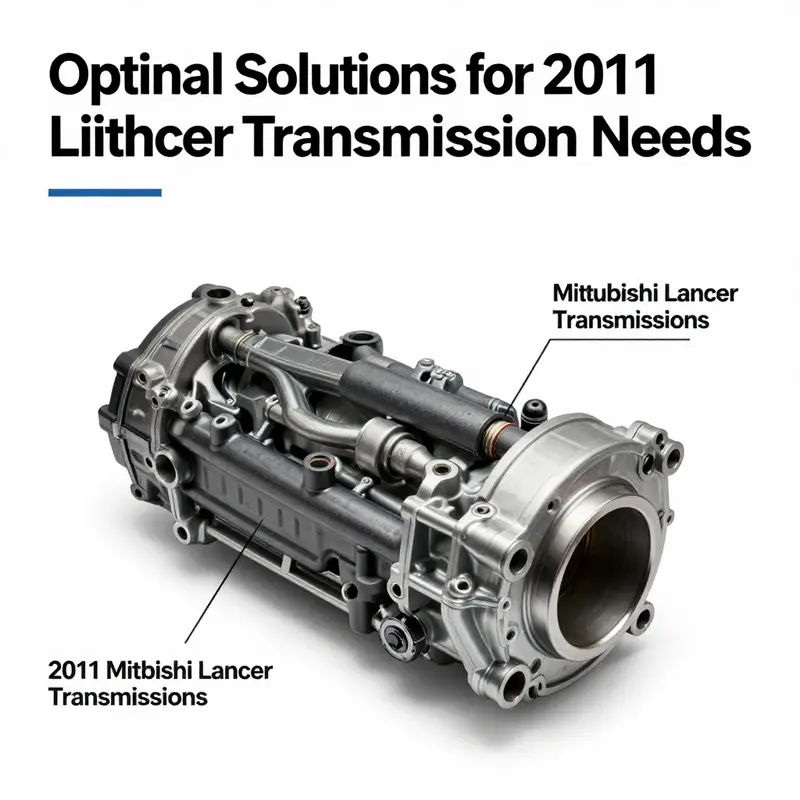
When you start looking for a 2011 Mitsubishi Lancer transmission, you quickly learn that the choice is less about one part and more about how it fits the whole car. The Lancer line for that year offered two fundamental paths: a five speed manual and a continuously variable transmission, or CVT. In practice, the CVT showed up more often in higher trim levels and in all wheel drive variants, while the manual remained a staple for enthusiasts who prize direct control and a mechanical feel. This mix matters a lot when you are shopping for a replacement or a rebuild, because the transmission isn’t a stand-alone item. It speaks to the engine it mates with, the drivetrain layout, and the vehicle’s broader electronic controls. The 2011 Lancer often carries the 2.4 liter 4B12 inline-four engine, a design that aligns well with the CVT in terms of overall torque management and efficiency. If you are seeking a replacement, this association between engine displacement and transmission type isn’t merely historical trivia; it’s the practical cue that helps you filter listings and avoid costly misfits.
Beyond the broad stall of CVT versus manual, the shop talk you need to master concerns compatibility at a few concrete levels. First, engine displacement matters: the 2.4L 4B12 is the common pairing. That means any transmission you consider should be compatible with a 2.4L engine and the same basic drivetrain family. The drivetrain configuration—whether front-wheel drive or all-wheel drive—can alter mounting points, linkage geometry, and the position of the transmission in the engine bay. An AWD 2011 Lancer, for example, often has different mounting points and a different interface with the transfer case than a plain FWD model. While the CVT components remain similar in many ways, the way they bolt up to the engine and connect to the driveshafts or axles can diverge enough to require careful match checking.
It is the interaction between the transmission control unit and the rest of the vehicle’s electronics that can truly derail a replacement if you skip the checks. The TCU, the module that commands the CVT’s pulleys and belt or the manual’s hydraulic clutch operation, must work in harmony with the engine’s ECU. In a rebuilt or used unit, software compatibility becomes a practical concern. Some listings may claim fitment for a certain model year but fail to note if the TCU calibration aligns with your ECU’s revision. In vehicles like the Lancer, where drive mode selections, traction control logic, and even shift logic in the CVT can influence performance, those software handshakes matter. When you are choosing a replacement, you should document the exact transmission code, the engine code, and the drivetrain configuration the seller is advertising. Only then can you draw a confident line from listing to installation.
With options like a five-speed manual or a CVT, the market around a 2011 Lancer transmission often features a spectrum of conditions: brand-new OEM equivalents, refurbished or rebuilt units, and salvage or used cores. Each option has its own value proposition. A brand-new OEM unit tends to promise the most straightforward compatibility and longevity, but it comes at a premium. Refurbished units can offer a middle ground: reliable core functionality, a lower price tag, and a warranty window. Used cores, by contrast, are the riskiest unless you have a precise match in hand. In every case, your due diligence should extend beyond the part itself to the listing details, the seller’s reputation, and the return policy. The online marketplace landscape makes it possible to compare a broad range of configurations quickly, but it also increases the risk of mismatched fitment if you don’t read the line-by-line specifications.
When you wade into listings, there are several practical steps that can dramatically reduce risk. Start with the engine and drivetrain alignment: confirm that the listing specifies a 2.4L displacement and identifies the drivetrain type as FWD or AWD. The two variants can share a common platform, but their mounting points and the position of input shafts and linkage differ. Look for explicit notes about the transmission’s code or model name, and cross-check those details against the vehicle’s service manuals or a trusted repair database. Another crucial check is the compatibility of the Transmission Control Unit and any software or wiring harnesses that accompany the transmission. Some used or rebuilt transmissions come with their own ECU chips or harness adapters, which can complicate install or require reprogramming to harmonize with your car’s ECU. If a listing mentions software or calibration requirements, treat that as a red flag that you may need a specialist’s involvement before committing.
If you are shopping on an online platform that aggregates listings from multiple sellers, you will see a wide range of price points. The variability typically reflects differences in condition, warranty coverage, and the inclusion of ancillary parts such as mounting hardware, linkage assemblies, and the transmission control components. The presence of a Guaranteed Fit promise or a similar assurance should not be the sole criterion, but it can be a meaningful guardrail. A fit guarantee means the seller asserts that the part will fit your specific vehicle make, model, and year or the listing will be corrected or refunded. Even with such assurances, you still want to verify fitment details on your end. This means asking for the exact transmission code, confirming the engine displacement, and, if possible, obtaining the seating or mounting template measurements to ensure the unit’s physical footprint matches what sits in your bay. A careful buyer will request photos of the transmission’s mounting faces, input shaft connections, and the overall condition of the case and seals. Inspecting the bell housing pattern and the intake and exhaust clearances in a photo sequence can reveal subtle mismatches that a textual description might gloss over.
For those who want a concrete reference in the market, it helps to look for listings that clearly call out the engine and drivetrain pairing. A well-described listing will specify the transmission model, the associated engine displacement, and whether the unit is intended for FWD or AWD configurations. You may even see notes about the transmission’s recent miles, rebuild history, and any included hardware. The more detail the seller provides, the lower the risk that you will encounter a misfit after you receive the unit. If a listing offers a cross-reference with the vehicle’s service manual or a reputable repair database, that is an additional sign of reliability. In this space, a careful buyer favors listings that provide verifiable data over generic marketing language.
As you gather information, keep a running checklist. Confirm the exact model or code of the transmission, the engine displacement, and the drivetrain configuration. Confirm the compatibility of the vehicle’s ECU and TCU when applicable. Ensure you understand what is included with the transmission—are mounting brackets, the shifter linkage, or the mount pads part of the package? How about the torque converter or any electronic control modules? The more complete the listing, the easier it is to assess fit with your Lancer. A consistent pattern across credible listings is that they separate physical fitment notes from performance or cosmetic descriptions. You want the technical details to be explicit and easy to cross-check against the factory manuals.
In the context of this model year, a practical approach is to frame the replacement as a project with a built-in verification phase. Start by listing your car’s current state: is it FWD or AWD, does it have a CVT or manual, and what is the exact engine code? Then profile the replacement options you find. Does the listing present a 2.4L CVT AWD unit? If so, you will have the smoothness and fuel economy performance that many Lancer owners value, especially in urban driving. If your preference leans toward the manual experience, focus on listings that specify a five-speed manual transmission compatible with the 2.4L engine and your appetite for a more hands-on driving experience. Either path benefits from a clear understanding of the mechanical interfaces, including the transmission’s mounting points, input/output shaft arrangements, and the necessary bolts and seals.
A useful reminder is that the swap or replacement is more than a bolt-in operation. Even when a listing says the unit is a direct match, there can be pings and tangs in the TCU and ECU software integration. If you do not have direct technician-level experience, you should plan for a professional installation or at least a detailed pre-installation consultation with a trusted shop. The goal is to avoid the common pitfall where a seemingly compatible unit cannot communicate correctly with the vehicle’s electronic controls, leading to limp modes, poor shifting, or complete failure to engage gears. In practice, that means you want to check the exact part numbers, the ECU/Tcu handshakes, and the compatibility notes before finalizing the purchase. When you approach this with a careful, methodical stance, you increase the likelihood of a successful installation and a satisfied ownership experience.
If you are curious about alternative transmission options from the broader Mitsubishi lineup, you can explore a related resource that discusses reconditioned six-speed automatic transmissions used in contemporary Mitsubishi models. The page provides context on how such units are evaluated, rebuilt, and documented for compatibility with specific engines and drivetrains. The link below leads to a dedicated resource for Mitsubishi Evolution X transmissions, illustrating how these components are treated in the marketplace and what buyers typically look for in a reconditioned unit. This cross-reference in the broader ecosystem helps frame your expectations when shopping for a 2011 Lancer transmission, even though the exact model and year differ from the Evo line. Mitsubishi Evolution Evo X SST DCT470 reconditioned 6-speed automatic transmission and related gearboxes
The practical takeaway is that the market rewards clarity, documentation, and a thoughtful cross-check against official service manuals and certified mechanics who know Mitsubishi drivetrains. Rely on the engine-displacement match, the drivetrain alignment, and the electronics pairing to guide you through listings. A well-constructed search and a cautious purchase will help you navigate between an OEM replacement that measures up against the factory spec and a refurbished alternative that promises good performance at a lower cost. In the end, your choice should align with how you drive the car, how you intend to maintain it, and how much risk you are willing to accept with a used or rebuilt unit.
For those who want a practical point of reference when evaluating listings, the process often involves cross-checking part numbers and inspecting fitment details that appear in the listing or the seller’s documentation. If a listing provides a part number, you can compare it against your vehicle’s service manual or a trusted parts database. The difference between a match and a mismatch can hinge on a single digit in a part code or a minor variation in the mounting flange. Treat each listing as a potential fit until you confirm otherwise. The discipline of cross-verification is not merely pedantry; it is the necessary step to prevent a costly misfit that could leave you stranded or forced to pay for a non-refundable exchange.
Finally, assume a disciplined, patient approach to price negotiation and shipping choices. The spectrum of prices reflects each seller’s condition assessment, whether the unit is new, rebuilt, or used, and the shipping logistics that affect cost and timelines. A careful shopper will compare shipping costs and warranty terms, ask about return windows, and request a detailed set of photographs that illustrate bolt patterns, transfer gear interfaces, and visible seals. It is also prudent to request a brief description of the unit’s history—miles logged, prior service, and any known issues—before committing to purchase. The aim is to arrive at a purchase that balances reliability, value, and the peace of mind that comes with a part that truly fits your 2011 Lancer’s needs.
For readers who want to see real-world context on how a transmission search unfolds, consider following a representative internal link that discusses the breadth of Mitsubishi transmission options and how installers verify compatibility across models. This resource highlights how a modern shopper approaches fitment, reconditioning, and installation with the same care described above. Mitsubishi Evolution Evo X SST DCT470 reconditioned 6-speed automatic transmission and related gearboxes
External resource: https://www.ebay.com/itm/2011-Mitsubishi-Lancer-2-4L-CVT-AWD-Transmission-JDM-4B12/185678901234?hash=item185678901234
Market Currents and Replacement Realities: Pricing, Parts, and the Search for a Transmission Solution for the 2011 Mitsubishi Lancer
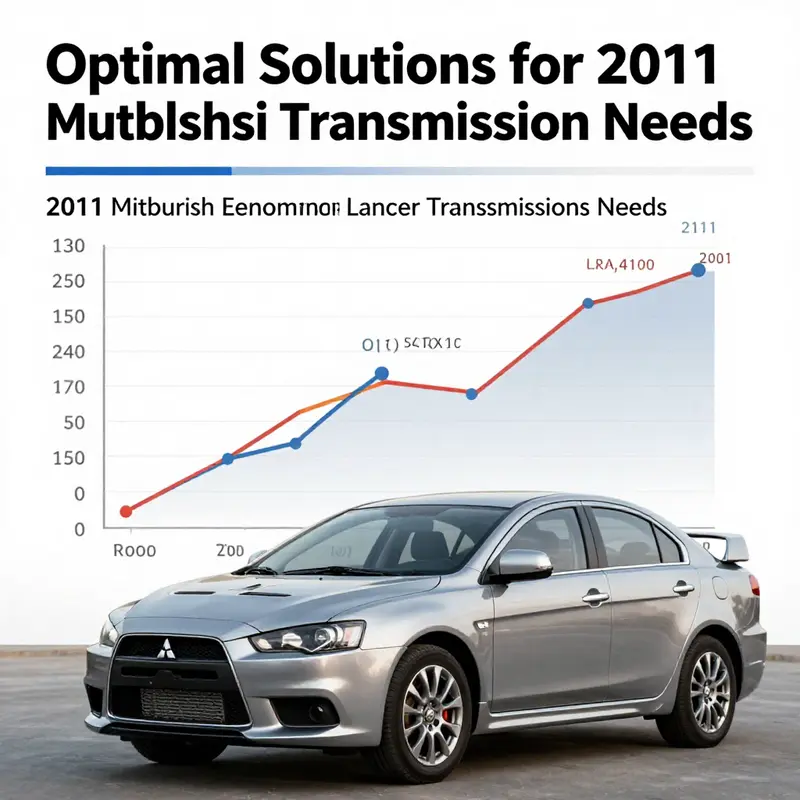
The market for the transmission assembly of a 2011 Mitsubishi Lancer unfolds at the intersection of aging vehicles, shifting supply chains, and the ongoing tension between reliability and cost. When a model passes its tenth birthday, the parts market does not simply soften; it reorganizes around two persistent forces: scarcity and value. On one hand, the number of salvage or rebuilt units on the market tends to rise as more cars reach the end of their primary lives. On the other hand, the cost of doing the work required to install a replacement—diagnostics, removal, alignment, and sometimes ancillary repairs—remains a constant driver of total price. For buyers considering a transmission swap for a car of this vintage, price is rarely a single number. It is a function of condition, provenance, and the broader economy that shapes labor rates and material costs.
The evolution of pricing for these components is not a straight line. It begins with depreciation, the quiet constant that reduces wholesale values as the vehicle ages. Yet depreciation also creates opportunity: as depreciation lowers the value floor of the base car, it makes inexpensive replacements more attractive to budget-conscious buyers who want to extend the life of a vehicle that still otherwise serves a practical purpose. This creates a steady, if modest, demand for used or rebuilt units. In parallel, the aftermarket economy for transmissions—whether rebuilt, refurbished, or remanufactured—remains active, driven by the practical need for dependable replacements in a model that shows up frequently in the hands of high-mileage drivers and enthusiasts who want to maintain performance without buying new.
Price is also inseparable from the global inflationary environment that prints on every layer of a repair bill. Metals costs, specialized plastics, and the precision components inside a transmission contribute to the base price of a unit, whether it is new or rebuilt. When material prices rise, the cost of a replacement unit can move in tandem, even if the market for secondhand units expands. And because labor remains a dominant portion of total repair costs, any uptick in shop rates translates into higher quotes for the entire project. This is not a distant risk of the future but a current reality for many vehicle owners who seek to manage total ownership costs in an era of rising wages and tight labor supply across the automotive service sector.
In this environment, buyers often look to the secondary market as a way to capture value. The appeal of rebuilt or reconditioned transmissions is the potential for substantial savings relative to a brand-new unit, especially when the purchaser is prepared to handle some of the install work themselves or has access to a dealer or independent shop that can manage the process efficiently. However, the tradeoffs are real. A lower upfront price can come with uncertainty about wear patterns, the history of the unit, and the likelihood of recurrence if the root causes of previous failures were not fully addressed. The objective, therefore, becomes more than simply acquiring a replacement that fits; it is about negotiating a package that includes warranty options, return policies, and a clear plan for installation and post-install checks.
The model year under consideration—an older Lancer—also matters for pricing because the availability of compatible parts is tightly linked to a car’s prevalence and the tracking of interchangeable components. Driveshafts, axles, seals, and related hardware often accompany the core transmission in complete repair bundles, and these bundles can offer a better overall value than purchasing parts a la carte. Buyers who anticipate a broader set of repairs can lock in savings by selecting bundles that reduce the need for additional shipping, handling, and disposal fees. The practical implication is that savvy buyers do not treat the transmission as a stand-alone module; they evaluate the entire ecosystem of linked parts that commonly wear or fail during a transmission replacement.
From a shopper’s perspective, the online marketplace landscape—even if described generically here—provides both convenience and risk. Online listings offer a spectrum of options: the simplest used cores, early-life refurbished units, and more substantial rebuilds that promise more predictable performance. The risk matrix expands with the array of sellers. Some listings include detailed specifications, mileage disclosures, installation notes, and even diagnostic records that illuminate prior issues. Others present only a price tag and a warranty window, leaving the buyer with questions that can be answered only through direct communication with the seller or a capable independent technician. This environment rewards buyers who approach the purchase with a plan: a clear sense of the car’s current condition, the most likely root causes of transmission failures in high-mileage examples, and a realistic assessment of the value of labor time versus the deterrent of higher shop rates in the area.
For those navigating the purchasing decision, a number of practical considerations emerge. First, compatibility is king. The 2011 Lancer shares design DNA with earlier and later models, but the specifics that matter for the transmission—gear ratios, control interfaces, and mount points—vary enough to make a misfit expensive in both time and dollars. A buyers’ checklist often emphasizes the need for verified fit, but in a generalized sense rather than a brand-specific promise. Second, condition reporting becomes essential. Listings that provide mileage, service history, temperature exposure, and evidence of internal wear give buyers a clear sense of risk. Third, warranty coverage matters. A modest premium for a limited warranty or a robust return policy can dramatically alter the expected value of an otherwise similar unit. In a market where the base component price can be modest on one end and surprisingly high on the other, these non-price factors frequently decide whether a deal is a bargain or a hedge against future headaches.
The price dynamics here are also shaped by the broader availability of related components. A drivetrain exchange often involves more than the core transmission. If a driveshaft or axle shows elevated wear, the total cost of the repair can rise quickly, but it can also be offset by purchasing a bundled kit from a reputable supplier who can guarantee compatibility and schedule. Bundling often reduces the cumulative cost by minimizing the number of separate shipments, reducing downtime, and simplifying the diagnostic process. This reality pushes buyers toward a holistic view of the repair, where the goal is not merely to swap in a unit but to restore the car to reliable, repeatable operation with a predictable maintenance trajectory.
In this sense, pricing trends are best understood as a blend of market supply, car-specific depreciation, and the user’s risk tolerance. A buyer with a tight budget and a willing spirit for labor may prefer a lower-cost used core combined with a do-it-yourself or local independent installation approach. Another buyer, seeking a longer-term solution, may lean toward a rebuilt or remanufactured unit with a longer warranty and a more comprehensive post-install diagnostic. Each path has its own price curve, and each path interacts with the labor environment. The same shop that would be competitive on a new installation price might ask for higher hourly rates for used-core installations, simply because the process demands more careful inspection, extra disassembly, and a greater degree of troubleshooting. Conversely, a shop with streamlined processes and a wide network of suppliers may offer a more favorable overall package, especially when the installation is aligned with a broader scope of related repairs.
To interpret pricing in this space, it helps to consider not just the sticker price but the total ownership cost. A lower upfront price can become costly if it leads to unexpected failures soon after installation, requiring another round of diagnostics and replacement work. Conversely, a higher upfront price that includes a robust warranty and a concise, well-documented installation plan can prove itself economical over the life of the car, particularly if the owner intends to maintain the vehicle through many more miles. The balance is delicate. It requires a clear sense of the vehicle’s current state, the willingness to invest in professional installation when needed, and a realistic appraisal of the vehicle’s long-term value as a reliable daily driver or a project-car foundation. In the end, price is not simply a function of the unit itself; it is the price of peace of mind, the risk premium for unknown history, and the time value of the money spent on a repair that may extend the car’s usable life for years to come.
For readers who are actively researching options, one practical step is to compare listings not only by price but by the elements attached to the offer. Does the listing provide a clear mileage or hours of operation for the unit? Are there any notes about prior water exposure, torque history, or recent service? Is there an accompanying warranty window that specifies what is covered and for how long? What shipping arrangements are available, and how quickly can the seller deliver? These questions, while sometimes tedious, are essential to avoiding overpaying for a core that may not deliver the reliability expected. The reality is that the variation in price across listings is a reminder that the market values not only the part but the certainty attached to it. In the absence of certainty, buyers often rely on a price premium to offset the perceived risk.
Within this broader narrative, the idea of fit assurance plays a crucial role without naming specific platforms. A reliable listing will typically indicate compatibility with a given model year, engine type, and transmission family, along with any necessary hardware or software considerations. For buyers who fear ambiguity, it can be worth seeking listings that articulate the installation steps or provide installation notes. Such transparency reduces the risk of misfit and the consequent cost of returns or wasted labor. And for those who want to expand their options beyond a single source, there are practical strategies to broaden the search efficiently. Filtering by price bands, mileage ranges, and warranty terms can yield a curated set of options that meet both budget and reliability criteria. From there, direct outreach to sellers—asking pointed questions about prior failures, maintenance history, and what the unit includes—becomes a powerful complement to the posted data.
One caveat often overlooked is the seasonality of pricing in the used parts space. When winter puts a premium on replacement parts due to higher demand for reliability, or when supply chain disruptions ease in the shoulder months, price dynamics can shift for a short window. Buyers who monitor these cycles can time purchases to take advantage of temporary price relief or more favorable shipping terms. The goal, again, is not simply to secure the lowest price but to align cost with confidence—confidence that the unit will perform as expected and that installation will proceed smoothly with minimal interruption to the vehicle’s use. In that frame, the chapter of pricing trends becomes a practical guide rather than a blueprint, a way to navigate a market where the core component is relatively small in mass but large in consequence for the car’s operability.
To bring this discussion into a practical frame, many enthusiasts and owners approach the problem by evaluating the total ecosystem around the replacement. The transmission sits at the center of a network of components that often require attention at around the same time. If you anticipate replacing the unit for the Lancer, it is prudent to budget for potential related work—differential seals, mounting hardware, and services that ensure the new unit is properly integrated with the car’s control systems. While such planning adds to upfront costs, it pays dividends in reliability and reduces the chance of a return visit to the shop shortly after installation. The prudent buyer documents everything from the diagnostic results to the test-drive notes, creating a clear trail that can be referenced in future maintenance cycles. In markets where the supply of compatible parts remains robust, this conservative approach often yields the most stable long-term value, even if the initial outlay is higher than a quick, low-cost swap.
In close, the pricing story for the 2011 Lancer transmission market is a reflection of aging hardware meeting a modern economy. The parts are abundant enough to offer choices, yet they are priced within a spectrum shaped by depreciation, labor cost pressures, and the ongoing desire for dependable repairs. Buyers who succeed in this market are those who translate price into certainty: certainty about fit, certainty about condition, and certainty about the post-install trajectory. The path to value is rarely a single shortcut. It involves carefully comparing options, understanding the full cost of ownership, and recognizing that the most economical choice is not always the one with the lowest upfront price. It is the choice that yields the most predictable outcome over time, with a plan that minimizes downtime and reinforces the vehicle’s ongoing usefulness.
For readers who want to explore related parts in the same ecosystem, an accessible option often discussed in parts communities is a full front-end or midsection replacement, sometimes referred to in listings as a comparable assembly that includes the core components and necessary hardware. This route can simplify the purchase and installation, particularly for buyers who prefer a broader, more unified solution rather than piecemeal replacements. It is the kind of decision that aligns with the goal of restoring reliable performance without creating a cascade of follow-on issues. By pairing the right core with the appropriate ancillary components, and by choosing a seller who provides transparent history and reasonable warranty terms, the buyer can transform a high-mileage car into a dependable daily driver again, or, for an enthusiast, a solid platform for future upgrades. As with any substantial repair, the true value lies not in the sticker price alone but in the confidence and continuity it returns to the vehicle’s operation.
Internal link note: For readers curious about related high-performance components and the kinds of parts that often accompany major drivetrain work, there is a practical entry on parts pages described as evo-x halfcut. It offers a tangible sense of how a broader salvage or rebuild package can influence overall project pricing and logistics. See the evo-x halfcut page for context and related discussions on compatible assemblies.
External source: https://www.autoblog.com/2024/05/16/mitsubishi-lancer-transmission-replacement-costs/
Final thoughts
Navigating the market for 2011 Mitsubishi Lancer transmissions requires an understanding of the available options, specifications, and evolving pricing trends. For business owners, leveraging this information can lead to impactful purchasing decisions that enhance workflow efficiency and vehicle reliability. By staying informed about compatible parts and economic influences on pricing, businesses can build sustainable solutions that meet both operational and budgetary needs. Following these guidelines can significantly benefit your procurement strategy.