

The Mitsubishi Lancer Evolution X, often simply known as the Evo X, has made a significant mark in the automotive world, especially among performance enthusiasts and business owners. Central to its standing is the 4B11T engine, a remarkable 2.0-liter turbocharged inline-four that exemplifies engineering excellence. This article delves into the specifications and performance capabilities of this engine, the innovative technologies integrated into its design, and the broader impact it has had on the automotive industry. Each chapter will provide insights that not only highlight the prowess of the Evo X but also demonstrate its relevance in modern business and engineering.
The 4B11T Pulse: Unraveling the Lancer Evolution X’s 2.0-Turbo Heart
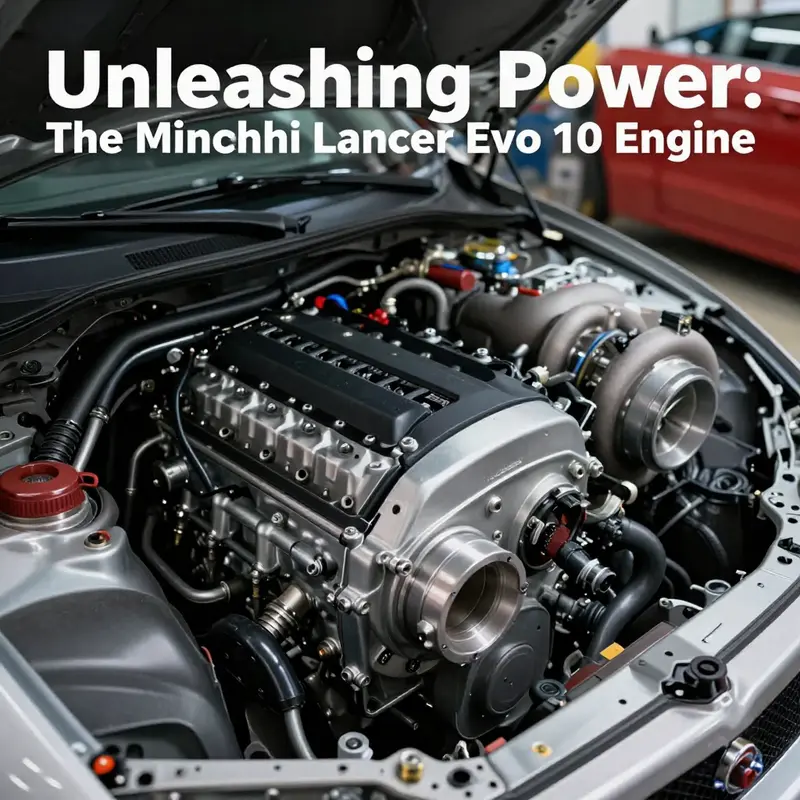
The Mitsubishi Lancer Evolution X arrived as more than a successor to a rally heritage; it stood as a deliberate statement about what a compact sports sedan could achieve when a manufacturer pursues balance as relentlessly as raw speed. At the core of that balance sits a single, highly engineered power unit—the 4B11T 2.0-liter turbocharged inline-four. This engine is more than a set of specifications. It is the heartbeat that links a nimble chassis, a sophisticated all-wheel-drive system, and a clever packaging philosophy that values both weight efficiency and mechanical grip. In the Evo X, the engine’s aluminum block and cylinder head are not merely lightening aides; they are enablers of a broader design ethos that prioritizes high-rpm responsiveness, broad midrange torque, and the ability to sustain performance across a diverse range of driving conditions. The story of this engine is a story of how to extract maximum performance from a 2.0-liter displacement without sacrificing durability or tractability, a balancing act that has long defined Mitsubishi’s approach to turbocharged performance in this era.
The 4B11T is a testament to lightness and precision. Displacing 1998cc, it uses an all-aluminum construction that keeps the weight down where it matters most—in the top end and the rotating assembly. The aluminum block and head contribute to a favorable power-to-weight ratio and improved throttle response, essential traits for a car that must sprint from corner to corner as readily as it does in straight lines. The engine configuration is a straightforward, yet refined, DOHC setup with 16 valves, paired with Mitsubishi’s MIVEC variable valve timing system. This combination provides a smooth idle and tractable low-end manners while still delivering peak performance higher in the rev range. MIVEC enables the engine to optimize valve timing for both economy and power, a dual objective that is crucial for a high-performance application where driver feel and reliability are equally important.
Turbocharged with an intercooler, the 4B11T breathes through a system designed to manage intake temperatures and accessibility of boost across the rev band. In this architecture, the turbocharger does more than simply boost pressure; it shapes the engine’s torque curve to provide substantial midrange thrust, making the Evo X feel alert and eager in everyday traffic as well as when the road opens up. The result is a power delivery that arrives with a confident snappiness rather than a sudden, steep surge. The official power figure sits around 291 horsepower (217 kW) at 6,500 rpm, a number that underscores the engine’s ability to hold high speed and maintain progress through rapid shifts and demanding tracks. Torque, meanwhile, is reported around 366 Nm (270 lb-ft) at 3,500 rpm in many sources, with a commonly cited alternative of 343 Nm in others. That midrange is the engine’s secret weapon: a broad plateau of torque that makes the car feel quick wherever the road is twisty or the pace demands steady, confident runs.
The 4B11T’s internals are designed to sustain that performance under stress. The lubrication system, the cooling circuit, and the turbocharger’s heat management work together to prevent heat soak and to preserve consistency across repeated hot laps. A decently sized intercooler sits between the turbo and the intake, cooling the charge air and improving density for more efficient combustion. This is not merely a cooling accessory but a critical element in the engine’s ability to sustain power and limit detonation under boost. The combustion chamber geometry, the cam phasing courtesy of MIVEC, and the multi-point fuel injection system all contribute to a robust, controllable spark and fuel delivery that respond to driver input with precision. It is a delicate choreography, one where the ECU hardware and software must interpret sensors from the moment the accelerator is pressed to the moment the revs crest, and then translate that data into finely tuned timing and fuel enrichment that optimizes power, torque, and reliability.
Packaging is another dimension of the 4B11T’s design that reveals the engineering philosophy behind the Evo X. The engine’s compact footprint allows Mitsubishi to keep the front end light and the weight distribution favorable for cornering. The all-aluminum construction, coupled with a tight intake and exhaust routing, helps minimize parasitic losses and reduces inertia that might otherwise dull response. The chassis itself is a package designed to work with the engine’s torque characteristics. The Evo X’s drivetrain options, including a six-speed manual transmission or the TC-SST dual-clutch automatic, are integrated with the S-AWC (Super All Wheel Control) system, a suite of technologies that actively manages traction, yaw, and power distribution between the front and rear axles. The engine’s torque curve is well matched to this AWD architecture. With torque delivered early and consistently, the S-AWC system can shuttle power to where it is most needed, maintaining grip and steering feel even when the rubber meets a slick surface or a high-load corner.
The performance numbers reflect this integrated approach. In its standard form with the six-speed manual transmission, the Evo X delivers a satisfying blend of verve and control. The sprint to 100 km/h clocks in around 4.8 seconds when equipped with the twin-clutch DCT version, a figure that highlights how the engine’s midrange and the transmission’s geometry work in concert to minimize shift losses and maximize acceleration. The top speed sits in the neighborhood of 240 to 242 km/h, a ceiling that speaks to the engine’s ability to sustain high-speed momentum without boiling the cooling system or pushing the turbo beyond its comfortable operating window. Weight, hovering near 1,510 kg, is another factor that helps the car achieve a lively yet stable demeanor. It is not a featherweight; it is a calculated balance that permits the engine to work with the chassis rather than against it.
In terms of everyday efficiency, the Evo X remains pragmatic. The engine, the turbocharging system, and the drivetrain come together to offer a reasonable combined fuel consumption around 10 to 12 liters per 100 kilometers. It is not a fuel-sipper, but for a car with this level of performance, the consumption is typically regarded as acceptable given the level of performance on demand. The engine’s architecture, including the light alloy components, the variable valve timing, and the turbocharged air path, all contribute to a machine that can provide lively acceleration on demand while still tolerating longer trips with a measure of restraint.
The Final Edition, introduced years after the initial launch, marks a notable milestone in the Evo X’s lifecycle. In this limited-run variant, the engine received refinements to the exhaust and intake paths that nudged maximum power up to 303 horsepower. That incremental increase might seem modest on paper, but in the real world it translates into an even more confident response when crossing the redline and a slightly livelier character at the top end of the rev range. The Final Edition’s improvements sit alongside a broader program of tuning and component refinement that emphasizes durability and consistent performance under spirited driving, a theme that has always been central to the Evo ethos. While the core 4B11T remains recognizably the same engine, these adjustments serve as a reminder that this architecture has room to evolve in ways that preserve its characteristic immediacy while pushing the envelope of capability, especially in a market where enthusiasts crave both reliability and late-braking bite.
A deeper appreciation of the engine’s design also reveals the importance of its integration with the car’s broader drivetrain strategy. The 4B11T does not live in isolation; it exists in a holistic system. The six-speed manual offers a direct, tactile connection that emphasizes rev matching and precise gear engagement, allowing drivers to exploit the engine’s rapid throttle response and broad torque band to keep momentum through turns. The TC-SST dual-clutch option, with its crisp, rapid shifts and improved consistency under load, demonstrates how electronic control and mechanical efficiency can elevate performance even further. And then there is S-AWC—the Super All Wheel Control system—that binds the engine, the gearbox, and the wheels into a coherent whole. Active center differential and yaw control work in concert with the engine’s torque output to ensure traction, stability, and confidence in the most demanding driving scenarios. In essence, the 4B11T is not just the heart of the Evo X; it is a key contributor to the vehicle’s ability to translate driver intention into measured, repeatable, and exhilarating performance across a wide range of roads and track conditions.
The engine’s influence also extends beyond raw numbers. It shapes the perception of the car as a thoughtful synthesis of engineering decisions, where weight, balance, and response interact with the driving environment to deliver a consistently compelling experience. The aluminum construction keeps the car nimble, enabling the driver to place the chassis with confidence in corners earned through skill and focus. The MIVEC system provides the smoothness that helps everyday use feel natural, even as the turbo spools and boosts power. The intercooler keeps the intake charge within an optimal temperature window, preserving performance during repeated bursts of acceleration. And the exhaust and exhaust-tuning choices of the Final Edition remind us that the soundtrack and the chill of the engine’s breath matter too—the audio cue of performance, as much as the numbers on a spec sheet, contributes to the overall sense of involvement that defines this car.
The Evo X engine’s story is also a note on how a manufacturer negotiates the line between homologation biology and consumer performance. In competition contexts, where reliability and repeatability under stress are essential, the 4B11T’s architecture has to be robust enough to comply with rigorous testing while still delivering the immediacy and aggression that enthusiasts expect. The mix of aluminum construction, variable valve timing, turbocharged boost, and intercooler cooling creates a package that behaves predictably under load and offers a gratifying degree of feedback to the driver when the road opens up. It is this balance—between a track-ready core and a street-friendly manner—that makes the Evo X engine so compelling. It is not merely a high-output unit; it is a thoughtful instrument designed to be used, tuned, and, ultimately, enjoyed on a road or a circuit.
Within the broader landscape of modern turbocharged inline-fours, the 4B11T occupies a notable place. It demonstrates how a compact displacement can be leveraged to deliver tangible performance without sacrificing everyday usability. It embodies a philosophy of efficiency in lightness, precision in timing, and resilience under the heat of sustained boost. Those choices have influenced how the Lancer Evolution line has been remembered: as a car that offered an accessible path to high-performance dynamics, with a powertrain that rewarded attentive driving and rewarded engineers who crafted its balance. For enthusiasts, understanding the engine means understanding a chain of decisions—from material selection and valve timing to turbo sizing and AWD integration—that all converge to produce a driving experience that feels both intimate and expansive at once.
The chapter of the 4B11T’s story is also a reminder that performance machines are never static. The Final Edition’s tweaks acknowledge that even a celebrated engine can be revisited, re-tuned, and refined to extend its relevance. The idea of a 303-horsepower cap-burst variant exists not as a marketing halo but as a demonstration that careful refinements can unlock additional headroom in a package that already has proven its mettle. It is a nod to the culture surrounding performance cars: the pursuit of speed is as much about sustainable, repeatable performance as it is about the thrill of rapid acceleration. In this light, the Evo X engine is not an isolated component; it is a central piece of a larger, evolving equation that invites drivers to push the limits while enjoying a level of control and predictability that makes every drive feel deliberate and purposeful.
For readers curious to explore deeper mechanical details or to see the engine’s role in the broader chassis dynamics, there is a convenient way to connect with a more technical exploration of the powerplant. The 4B11T billet-block variant, discussed in dedicated aftermarket contexts, highlights how enthusiasts and engineers alike consider strengthening options for a future where the engine might see higher stress, more boost, or more aggressive use. While the factory specifications provide a reliable baseline, aftermarket developments reflect a shared interest in expanding the potential of a compact turbocharged engine design. The link to the billet-block discussion offers a concrete example of how a community views the fundamental architecture and its capacity to tolerate more aggressive tuning while preserving reliability. 4B11T billet block
In sum, the Evo X’s engine is a carefully orchestrated blend of materials, timing, and boost. It is not the sole determinant of performance, but it is the critical core around which a responsive chassis, a sophisticated all-wheel-drive system, and a driver-centric transmission approach are organized. From the initial launch to the Final Edition, the 4B11T has demonstrated a remarkable capacity to deliver not just horsepower, but a coherent and dynamic driving experience. Its aluminum architecture, the refinement of MIVEC, the efficiency of the intercooler, and the torque-rich midrange all contribute to a vehicle that remains memorable for how it communicates with its pilot: precise, immediate, and ready to accelerate into the next curve at a moment’s notice. In the broader arc of high-performance sedans, the Lancer Evolution X occupies a distinct niche—one defined by that 4B11T pulse, a gearbox that can be as tactile or as rapid as the driver desires, and an AWD system that translates torque into confidence on every surface the road can present. The truth of this engine lies in its ability to bridge the thrill of the track with the practicality of daily driving, delivering a driving experience that is at once engaging, approachable, and unmistakably exhilarating.
External reference: Official EVO X page
Twin-Scroll Precision and a Lightweight Heart: The Engine Design That Fueled the Evolution X
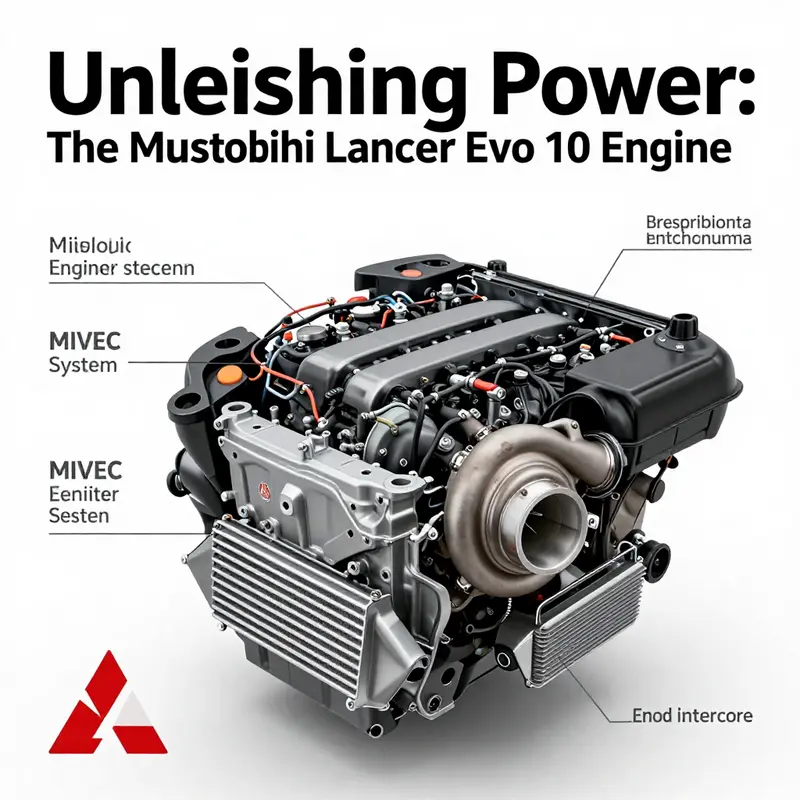
The essence of the Lancer Evolution X lives in its engine as a finely tuned balance between heat, lightness, and relentless response. This 2.0-liter inline-four, forged in a period of intense competition and relentless refinement, embodies a design philosophy that prioritized a compact power unit capable of delivering extraordinary performance without sacrificing everyday usability. The core choice in displacement—just under two liters—gave engineers room to push for high specific output while keeping inertia low enough to respond quickly to driver inputs. The block, crafted from aluminum, reduces overall mass and helps centralize rotating inertia, a subtle but meaningful contribution to the car’s agility. When the hood opens and the pistons begin their metronome-like motion, what you hear is a story of precision engineering aimed at a singular purpose: to convert turbocharged ambition into rideable, track-ready character. In the context of sport-focused engineering, this engine is a case study in how small, lightweight hardware paired with thoughtful air and fuel management can redefine what a compact car can do on the road and the race circuit alike.
A cornerstone of the Evo X’s powertrain is the turbocharging system, which is designed to deliver a broad, linear torque curve that rewards confident throttle application across the rev range. A twin-scroll turbocharger, paired with an integrated intercooling stage, is the heart of this setup. The twin-scroll architecture separates exhaust pulses from opposing cylinders, accelerating spool-up and mitigating turbo lag. The net effect is a more immediate push as you roll into the accelerator, with torque arriving earlier and more predictably than in a single-scroll counterpart. This immediate surge is not about raw peak numbers alone; it is about sustainment and predictability. The middle cooler placement—an intercooling stage integrated within the turbo system—keeps intake air temperatures in check, preserving density as boost climbs. With cooler air comes higher efficiency and a more consistent ignition environment, which, in turn, supports more aggressive timing without inviting reliability concerns. The result is a power delivery that feels cohesive rather than abrupt. Every press of the pedal seems to elicit a measured, proportional response rather than a sudden surge followed by a plateau. The engine’s behavior under load—whether carving through a mountain pass or tracking a circuit’s long straight—speaks to a philosophy that values accessible, linear performance as much as raw peak figures.
Coupled with this turbo architecture is a sophisticated approach to valve timing. Instead of a fixed, one-note cam strategy, the intake valve timing adapts across engine speed and load conditions. This variable timing, implemented through an electronically controlled system, tames the engine’s breathing to maximize low-end torque for confident street drive and to unleash higher-end flow for top-end power when the revs climb. The benefit is a broad, usable torque envelope that makes the car feel lively in everyday driving yet fearless on the track. The efficiency of this approach is not merely about peak power; it ensures that the engine remains tractable when the boost is moderate and raucous when the boost is high. The result is a driver experience that remains tractable at lower speeds yet responds with the aggressiveness demanded by high-speed dynamics. When paired with the turbo’s capability to sustain boost, the timing strategy helps the engine maintain momentum through corners and down the long straights alike, reducing the need for constant throttle modulation to coax speed.
Fuel delivery plays a complementary role in this performance tapestry. A high-pressure direct-injection system ensures precise fuel atomization and optimal combustion across the engine’s operating range. The precision of direct injection is crucial in balancing power and efficiency. It allows the engine to run at high compression and boost levels with controlled ignition, a combination that both relaxes fuel economy expectations and supports robust performance. The ability to inject fuel directly into the combustion chamber means the engine can keep a cool, stable charge under boost, reducing the likelihood of knock and enabling more aggressive timing strategies. The result is a more efficient burning process that yields both power and resilience under demanding conditions. The fuel system’s role extends beyond sheer output; it is central to emissions control and thermal management, enabling the engine to perform at high levels while maintaining stricter environmental and regulatory compliance. In other words, the fuel delivery architecture is not simply about what the engine can make in a lab, but about how it can sustain that performance in real-world driving with reliability.
Under the hood, the internal architecture reinforces the turbocharged, well-timed breathing with components designed to endure the added stresses of forced induction. Forged pistons, a strengthened crankshaft, and high-strength connecting rods form a robust bottom end capable of withstanding boost pressures and the rigors of track driving. This is not a fragile race engine lightly dressed for daily use; it is a purpose-built powerplant that tolerates sustained loads, high temperatures, and the vibrations inherent to high-performance operation. The materials choices and the engineering camaraderie between the bottom end and the valvetrain contribute to a broader design philosophy: a compact engine that maintains its integrity and response even as boost and rpm climb. In practice, this translates to a high degree of durability when teams tune or push the engine toward its elevated performance limits—a crucial consideration for a platform that has long appealed to enthusiasts who enjoy both street driving and weekend track days.
From a systems perspective, the Evo X engine does not operate in isolation. Its power is amplified by the chassis and driveline architecture that channel torque to the road with controlled finesse. The compact engine dimension complements the vehicle’s weight distribution and overall balance, ensuring that the power unit remains a central contributor to steering feel and stability rather than a source of excessive pitch or understeer. This synergy extends to how the engine’s throttle response interacts with traction and brake dynamics, especially on lower-grip surfaces or during rapid corner entries. In these situations, the engine’s ability to deliver torque in a measured, predictable manner gives the driver confidence to press harder, knowing that power will translate into forward momentum without dramatic, destabilizing spikes. The design ethos here favors a harmonious relationship between engine, drivetrain, and chassis—a philosophy that makes the Evo X feel more than just fast in a straight line; it feels composed, even when pushed to the limit.
Numbers matter, but they tell only part of the story. The standard configuration delivers a compelling blend of performance metrics: horsepower in the mid-to-high hundreds and torque in the mid-range, with a torque peak that remains accessible as the revs rise. The exact numbers are a reminder of the era’s engineering ambition: a high-performance compact with a peaky but usable torque band, tuned for both everyday drivability and weekend pursuit of the stopwatch. In late-production, a refined variant demonstrated an uptick in horsepower, achieved through targeted exhaust refinements and intake adjustments—an evolution that underscores the architecture’s tuning potential. This is not merely a system of parts; it is a carefully choreographed collaboration among air, fuel, and mechanical strength, designed to deliver an experience as much as a measurement.
The chapter’s narrative would be incomplete without referencing the broader significance of this engine in the sport compact category. Its design is a textbook example of how a manufacturer can push for higher efficiency and greater power without resorting to oversized displacement or gratuitous complexity. The engine’s lightweight core, paired with a sophisticated fuel and air management strategy, mirrors a broader industry trend: achieving more with precision rather than more with bulk. In the Evo X, this translates into a package that feels light on its feet yet unflinching when the road tears into a corner. Enthusiasts often speak of the engine’s cadence—the way it revs, the way it builds boost, the manner in which torque arrives with a clean, predictable surge. This cadence is, in essence, the driving experience distilled into mechanical form: a compact, efficient, and incredibly responsive heart that makes the Evolution name live up to its reputation.
To illustrate how players in the tuning ecosystem relate to the engine’s design, consider a component family often explored by builders and track-day participants alike. A close look at one such family reveals how the Evo X’s architecture invites refinements without compromising reliability. For a visual guide to a key component group, see the evo-x halfcut. This reference points to a practical view of how a modern turbocharged, inline-four is assembled and integrated with supporting subsystems, offering a tangible sense of how engineers balance mass, heat, and stiffness while preserving the engine’s clean breathing and robust internals. The interplay of lightweight block material, a high-pressure fuel system, and a carefully designed turbo path demonstrates why this powertrain is considered a benchmark in its class.
The engine’s story also intersects with public-facing, official documentation that underscores its design objectives. As a platform, the Evo X is presented as a culmination of Mitsubishi’s work to deliver a high-performance compact with a focus on drivability, reliability, and tunability. The official specification pages highlight the aluminum block, the turbocharged setup, the intake and exhaust architecture, and the integration of advanced timing and fuel strategies. These points collectively reveal a deliberate approach to performance, where each subsystem contributes to a broader aim: an engine that can be both a daily driver and a performance tool for those who push it on the track. The significance of such a design is not measured solely by the horsepower or torque numbers, but by how the vehicle moves as a complete system—how the engine communicates speed and intent to the driver and how long that communication endures under pressure.
In sum, the Evolution X engine is a study in precise engineering choices converging to yield a machine that is quick, responsive, and durable. The twin-scroll turbo, integrated intercooling, variable timing, and direct injection work in concert with a robust bottom end to create a power unit that can be both friendly in daily conditions and ferocious when the activation of boost is greeted with a practiced hand. It is this balance—the art of delivering high performance in a way that remains approachable—that makes the Evo X engine more than a set of specifications. It makes it a narrative of engineering intent. As designers and drivers alike learned, performance does not require excess weight or exotic materials; it demands an architecture that breathes efficiently, responds predictably, and endures through the trials of both street and strip. The engine’s legacy rests not only in the numbers it produced on brochures or dynos but in the way its design has influenced subsequent generations of compact, turbocharged performance engines—an influence that persists in discussions of modern, high-revving, lightweight powerplants.
External reference: https://www.mitsubishi-motors.com/en/vehicles/lancer-evolution-x/
The 4B11T Heart: How the EVO X Engine Redefined Performance in a Compact Sedan

The Lancer Evolution X stands as a watershed in the evolution of performance engineering for compact sedans, a car that fused rally-bred DNA with an adaptable, road-focused chassis. At its core lies a lightweight, 2.0-liter turbocharged inline-four—an engine known by the code 4B11T. This powerplant is not merely a set of numbers on a spec sheet; it is a carefully engineered harmony of materials, turbo technology, and variable timing that made the Evo X a benchmark for how a high-performance engine could coexist with everyday usability. The shift from the previous generations’ more brute, race-oriented approach to a cleaner, more disciplined power delivery was deliberate. The goal was to preserve the thrill of rapid acceleration at the heart of a compact sedan while improving traction, balance, and controllability through a sophisticated drivetrain and chassis integration. In this sense, the Evo X’s engine was not an isolated unit but the centerpiece of a broader philosophy: performance should be accessible, predictable, and rewarding, even when the road conditions demanded nuance rather than outright aggression.
The 4B11T represents a compact, aluminum-block, four-cylinder design that delivers performance through a blend of high boost and intelligent management. The displacement sits just under two liters, a deliberate choice that keeps the engine compact and light without sacrificing the ability to breathe. In practice, the engine’s architecture benefits from aluminum construction, a choice that reduces mass and helps maintain a low center of gravity—an essential factor when the vehicle’s dynamics are tuned for aggressive steering, rapid direction changes, and confident cornering. The turbocharger is a central enabler of this behavior, enabling the engine to reach high exit speeds with a broad torque curve that matched the Evo X’s all-wheel-drive personality. While the raw numbers are impressive—roughly 300 horsepower in stock form and torque figures that peak early enough to pull the chassis out of low-speed corners—the way the engine makes that power matters even more. The turbo spool and throttle response are tempered through an integrated management suite that includes sophisticated variable valve timing and an intercooler system designed to deliver consistent performance across temperatures and driving styles.
One of the most distinctive aspects of the Evo X engine is its integration with the vehicle’s drivetrain, a pairing that elevates the car from a fast sedan to a sharpshooter in the mid- to high-speed regime. The engine breathes through a modern MIVEC system, which adjusts valve timing to optimize both low-end torque and high-end breathing. The result is a broad, usable torque band that helps the car feel eager whether you’re ripping through a winding road or simply merging onto a highway. The MIVEC-enabled headwork works in concert with the turbocharger and intercooler; the timing changes not only enhance efficiency but also help mitigate throttle lag, a crucial trait when you demand precise and immediate response from a compact performance car. This synergy is visible when the accelerator is pressed hard and the engine responds with a clean, linear surge rather than a sudden spike and fade. In everyday terms, that predictability makes the Evo X easier to live with, while still delivering the sense of purpose and speed that enthusiasts crave.
It would be incomplete to discuss the Evo X engine without acknowledging the S-AWC—Super All-Wheel Control—system that defined the car’s handling character. This drivetrain technology integrates active differentials, electronic brake force distribution, and torque vectoring to distribute power precisely where it is needed. The 4B11T’s output becomes the fuel for dynamic balance: the engine drives torque to the front and rear wheels in a way that maintains grip during aggressive cornering, reduces understeer, and allows the driver to exploit the chassis’ natural tendency to rotate under torque. The result is a car that feels planted yet agile, a paradox that has always characterized high-performance machines in this class. The engine’s torque, available at a reasonable rpm, complements the AWD system by giving the driver the sensation of control as the car threads a corner and the brakes, throttle, and steering work in unison to preserve speed through critical arcs. This integrated approach changed the expectations for front-engine, all-wheel-drive performance, compelling competitors to reassess how their own platforms could deliver a similar sense of precision and involvement in real-world driving.
While the heart of the Evo X is undeniably mechanical, the package’s success is also about how that heart is supported by engineering choices that emphasize efficiency and weight management. The engine’s aluminum construction, combined with optimized intake, exhaust, and intercooling paths, contributes to a lighter powertrain. A leaner, more responsive engine helps reduce momentum in the car’s mass, enabling quicker responses to steering input and more confident mid-corner acceleration. The interplay between engine and chassis is a delicate dance, and Mitsubishi’s engineers choreographed it so that the car could behave with predictability at the limits while remaining approachable at everyday speeds. In practice, drivers could push the engine into its peak power region and still feel a coherent, linear relationship between pedal travel and vehicle response. This is crucial in a car that blends rally-derived bravado with the demands of street legal use, where abrupt power delivery can unsettle the chassis’s balance and the driver’s confidence in critical moments.
The Evo X’s engine did more than deliver power; it helped redefine how performance engines could live within regulated, street-legal vehicles. Passenger comfort, fuel efficiency in everyday use, and emissions considerations all required careful calibration. The result was an engine that felt robust and capable while still being refined enough for daily driving. The shift to a more road-focused, yet still incredibly capable, performance machine influenced not only how people evaluated cars in the segment but also how competitors approached powertrain design. In this sense, the Evo X’s 4B11T became a touchstone for how to balance raw performance with the practical realities of ownership. Its influence extended beyond the immediate market: the idea that a compact sedan could marshal supercar-like handling and acceleration without sacrificing everyday usability echoed through the industry, nudging rivals toward more sophisticated AWD architectures and better-integrated engine/drivetrain systems.
From a race-bred aspiration to a road-going benchmark, the engine’s legacy also rests on its evolution toward peak output figures in the final, limited versions of the model. Early iterations hovered around the 291-horsepower mark, a robust quantity for a 2.0-liter turbocharged unit in this category at the time. Over the model’s lifespan, refinements—particularly in exhaust flow, cooling, and electronics—pushed the package toward the upper end of the spectrum, culminating in a Final Edition that showcased enhanced exhaust tuning and improved breathing. Those incremental gains mattered not only for outright speed but for the engine’s ability to sustain performance under load, such as sustained high-speed driving or track sessions. Yet the more lasting impression was not the single peak horsepower figure but the consistent, controllable power delivery paired with a drivetrain that could exploit it with minimal drama. The 4B11T, in this sense, became a blueprint for how to extract meaningful performance from a compact four-cylinder engine without resorting to brute force alone.
The Evo X’s engine, in conjunction with its chassis and drivetrain, also helped shape industry expectations about the sweet spot for modern performance sedans. It demonstrated that a car could deliver supercar-like dynamics in a package that remains rideable and practical for everyday life. This wasn’t mere hype; it reflected a deliberate design philosophy: maximize grip, minimize weight, and optimize the delivery of power so that acceleration and handling feel connected to the driver’s intent. The result was a car that could be driven with the same confidence whether on a twisty road or a city street, a characteristic that resonated with enthusiasts and casual drivers alike. In the larger context of the automotive landscape, the Evo X’s engine helped raise the bar for performance engineering, challenging rivals to improve their own powertrains, AWD architectures, and electronic control strategies to deliver a similar blend of agility and control. The implications extended beyond the model itself, pushing the broader market toward higher standards in drivetrain integration and engine management that would influence how performance-focused cars were developed for years to come.
In reflecting on the 4B11T engine and its role within the Evo X, one can see a narrative that connects engineering ingenuity with real-world driving experience. The aluminum-block, turbocharged configuration gave the car a light, responsive core that could rev quickly and respond assertively to throttle inputs. The MIVEC timing system unlocked the engine’s potential across a broad rpm range, while the intercooler kept temperatures in check so that peak performance could be accessed repeatedly rather than only briefly. The S-AWC system translated all of that power into real-world traction, cornering speed, and composure under braking. It is this cohesion—the engine, the turbo, the variable timing, the intercooler, and the AWD architecture—that accounts for the Evo X’s enduring influence. It showed a path for turning a compact sedan into a high-performance, emotionally engaging machine without resorting to extreme tuning or exotic materials. In the years since, enthusiasts and engineers alike have drawn on that recipe when exploring how to balance power, weight, and control in a way that remains accessible to drivers with a wide range of needs and ambitions.
For those who want to trace the hardware lineage of the engine itself, a deeper dive into the block and its supporting components is worthwhile. The engine’s block, designed to be both robust and light, is part of a broader family of performance-oriented blocks that emphasize rigidity and heat management. The official engineering literature and the aftermarket community alike highlight the importance of block design, cooling channels, and head-gasket interfaces in sustaining high boost and repeated high-load operation. The 4B11T’s design choices—materials, cooling pathways, and precise tolerances—were all aimed at delivering reliability under stress while maintaining the dynamic personality that defines the Evo X. In this sense, the engine’s engineering is a case study in how careful material selection and integrated thermal management can expand the envelope of what a two-liter, turbocharged inline-four can achieve in a real-world sports sedan.
For readers who want to explore a concrete example of the kinds of high-performance components that underpin this engine, consider looking into the dedicated component pages that discuss the billet block options associated with this family of powerplants. 4B11T billet block provides a window into the kinds of upgrades that enthusiasts and builders examine when seeking to extract additional capability from this platform. While aftermarket hardware can push numbers higher, the core lesson remains: the Evo X engine was designed to function as part of a coherent, high-performance system rather than as a stand-alone power source. This integrated approach is what makes the Evo X an enduring reference point for how to engineer a compact sedan that can also perform on the track or in demanding road conditions.
The chapter on the engine’s impact would be incomplete without acknowledging how its influence rippled through the broader automotive landscape. Competitors responded not with imitation alone but with a renewed emphasis on traction control sophistication, variable valve timing, and turbocharged small-displacement engines tuned for high-specific-output performance. The Evo X established a template for how to deliver driving engagement in a segment where efficiency and comfort often compete with outright speed. It also helped to catalyze a cultural moment among enthusiasts who valued the clarity of feedback, the coherence of motion, and the sheer thrill of possessing a car that could entertain at speed without requiring a race track to justify the purchase. In short, the engine did more than power a car; it helped shape expectations for what a modern performance machine could be when it sought to balance power, handling, and everyday usability in equal measure.
As the chapter closes on this exploration of the Evo X engine, the takeaway is clear: the 4B11T was more than a powerplant. It was a catalyst for better drivetrain integration, a benchmark for turbocharged four-cylinders in a compact chassis, and a driver-centric manifesto that emphasized balance, control, and the joy of precise, predictable response. The Final Edition’s refined exhaust and breathing improvements merely complemented a core philosophy that had already proven its worth on road and, when warranted, on the track. That blend of engineering discipline, performance ambition, and real-world usability ensures the Evo X engine remains a touchstone for the era’s most influential automotive innovations. For those tracing the evolution of performance engines in compact sedans, the 4B11T story offers a concise map of how power, weight, and control can converge to redefine an entire class.
External resource: For more technical details, see Mitsubishi Motors’ official specifications: https://www.mitsubishi-motors.com/en/vehicles/lancer-evolution-x/.
Final thoughts
The Mitsubishi Lancer Evo 10, with its formidable 4B11T engine, has not only showcased exceptional performance and innovative engineering but has also set benchmarks in the automotive industry. As we reflect on its specifications, technological advancements, and substantial industry impact, it becomes clear that the Evo X has earned its status as a legendary performance vehicle. For business owners and enthusiasts alike, understanding the prowess of the Evo X engine could inspire new innovations and excite further developments in automotive engineering.