
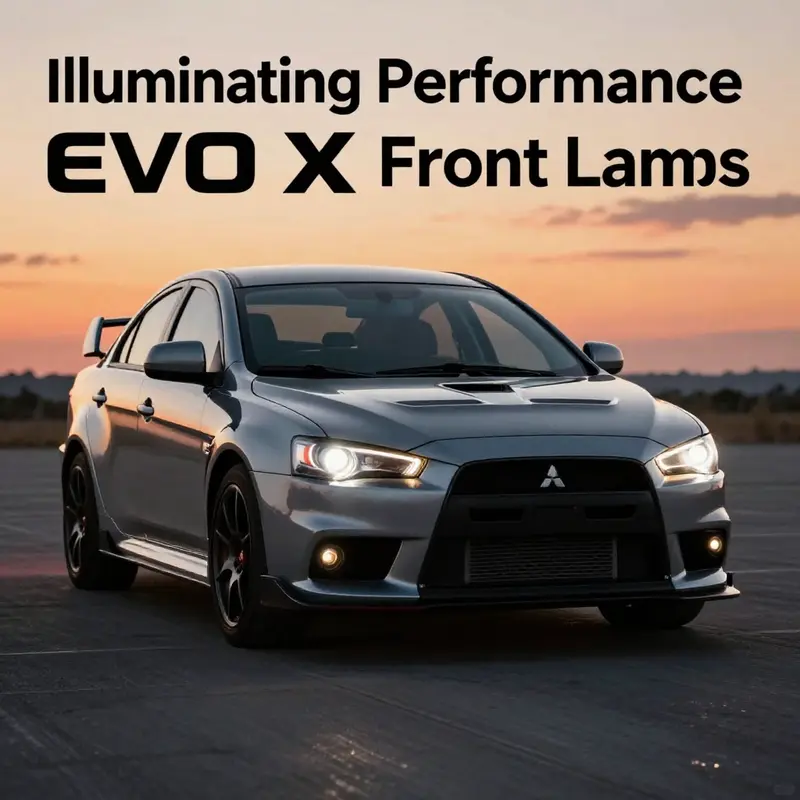
The Mitsubishi Lancer Evolution X, often referred to as EVO X, is known not only for its sterling performance but also for its striking visual appeal. Central to this aesthetics are its front lamps, which play a significant role in defining the vehicle’s character. These lamps embody a blend of functionality and style that resonates with both enthusiasts and business owners alike. In today’s competitive automotive market, understanding the nuances of EVO X front lamps can provide opportunities for customization, performance enhancement, and customer satisfaction. Each chapter will explore these themes, beginning with the design and aesthetics that distinguish the EVO X, before moving on to performance upgrades that can enhance visibility and safety, and finally reviewing the market availability and modifications that cater to diverse customer needs.
EVO X Front Lamps: Sculpting Speed, Identity, and Night Vision in the Shark-Nose Era
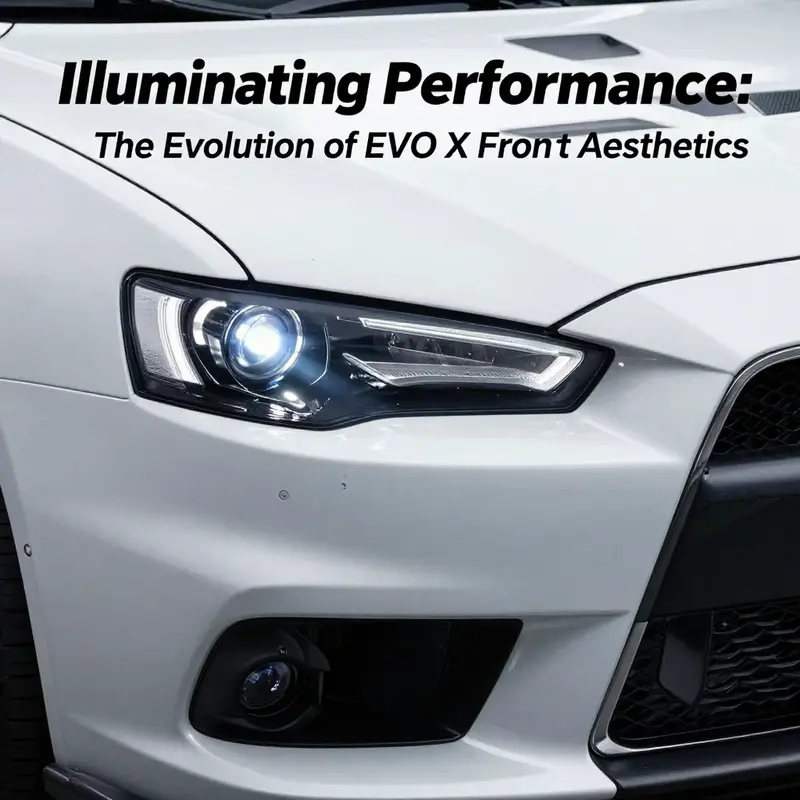
The front lamps of the Mitsubishi Lancer Evolution X are more than mere illumination; they are an essential element of the car’s character, a visible expression of its performance ethos. When you stand in front of an EVO X with its bonnet raised or its silhouette sweeping past a streetlight, the eyes of the car—its headlights—are the first to register. They anchor the sharp, aggressive lines of the shark-nose front, a design that reduces the visual distance between air and metal by drawing the viewer’s gaze toward the grille’s bold geometry and the sculpted crease lines along the fenders. The headlamps sit in a carefully choreographed relationship with the trapezoidal grille, a scale that feels both purposeful and aerodynamic. The slanted diamond mesh of the grille is not merely decorative; it channels airflow to the engine bay and turbocharged heart, a practical feature that complements the performance narrative stitched into every curve of the car. In this light, the lamps function as a bridge between the EVO X’s role as a high-speed machine and its identity as a street-stalking silhouette. The shape of the lens itself follows the hood’s arc and slides into the fender line, a subtle continuity that reinforces the sense of motion even when the car is stationary. The design language of the lamps—crisp edges, precise faceting, and deliberate gaps—echoes the vehicle’s broader theme: performance that is visible, tangible, and immediate to the observer.
A defining aspect of the EVO X’s front lighting is the dramatic use of LED architecture to craft a signature look without sacrificing function. The most arresting feature, often described in enthusiast circles as the demon-eye or eye-like LED DRL, creates a bold, almost synthetic gaze that signals both modernity and readiness. These LED units are arranged to emphasize a narrow, angular silhouette, producing a glow that can range from a cool white to a more incendiary hue, depending on the owner’s preference. The lighting is housed in bezels with a chrome or satin finish that catches reflections from streetlights, wet pavement, or the gleam of a showroom floor, adding a premium note to the front fascia. The effect is not only about aesthetics; the integration of DRLs into a clearly delineated housing helps ensure daytime visibility from a distance, while the steering-beam performance of the projectors behind clear or lightly tinted lenses contributes to nighttime safety without drawing unnecessary attention away from the vehicle’s overall stance.
The interplay of light and shadow within the lamp design further heightens the EVO X’s aggressive character. The lens shape is deliberately angular, with edges that harmonize with the hood line and the cheek contours of the bumper. In many configurations, the inner lighting elements—secondary LED modules, turn signal arrays, and the sensitive cutoff lines of projector technology—are arranged to create a sense of depth. The lamp housing often alternates between a deep, almost blackened backdrop and a gleaming chrome or satin-finish surround, a choice that adds a layer of visual complexity as the car moves through different lighting environments. This contrast—between the dark, recessed inner parts and the bright, reflective outer surfaces—gives the Evo X a sense of layered strength, as if the headlights themselves were cut from the same alloy as the car’s chassis. Fog lamps beneath the main units frequently sit in chrome-trimmed insets, reinforcing the design’s dual character: practical illumination for low-visibility situations and a styling cue that echoes prosaic performance hardware found in racing environments.
From a daylight perspective, the EVX’s front lamps contribute to a cohesive, high-contrast face that reads cleanly from a distance. The sharp lines of the headlamp housings align with the hood’s crease and the bumper’s airflow fins, creating a visual flow that guides the eye along the nose toward the apex of the grille. This alignment is not accidental; it is a deliberate attempt to ensure that the lighting elements do not look out of place as the car travels at speed or sits in a showroom glow. The lamps, in this sense, function as both a practical tool and a piece of sculpture. Their design integrates with the car’s aerodynamics and cooling strategy, while their signature lighting cues establish a distinct, instantly recognizable presence on the road. For many owners, this is the essence of the Evo X’s personality: a car that looks ready to surge forward even when paused, with its face telling a story of precision engineering and track-inspired aesthetics.
As owners consider upgrading or replacing front lamps, the design conversation often centers on how to maintain that balance of form and function. Modern options offer a spectrum: fully integrated LED headlight assemblies that replace the entire unit, or more measured upgrades that preserve the original housing while incorporating newer projection lenses and DRL elements. The upgrade path, in its most thoughtful form, keeps faith with the vehicle’s original geometry, ensuring that the new lamps fit the factory mounting without excessive modification. The goal is a seamless transition where the new unit mirrors the OEM silhouette while delivering the reliability and brightness of contemporary LED technology. The upgrade logic also invites owners to consider light distribution as a performance parameter. A projector-based assembly tends to offer sharper cutoff lines and more controlled beam patterns than a basic reflector setup, translating to better nighttime visibility without glare for oncoming drivers. In practice, this means improved road presence, a clearer long-range throw, and more precise illumination of roadside features such as signs, pedestrians, or uneven pavement—factors that contribute to safer driving in adverse conditions.
In the realm of visual customization, the lamp housing itself becomes a canvas. A clear lens reveals the intricate geometry of the internal optics, while a smoked or tint-to-clear lens arrangement can shift the car’s perceived tone from pristine and clinical to menacing and reserved. The housing finishes—black, chrome, or a hybrid satin—alter how the headlamps interact with the rest of the bumper and fender surfaces. The chrome accents around the demon-eye modules reflect again the EVO X’s affinity for a premium, high-contrast presentation. When paired with the sharp lines of the front fascia, these choices produce a face that communicates precision, speed, and control before the engine is even started. The result is a front end that does not merely illuminate the night; it frames the performance dialogue the car is delivering to the world.
For enthusiasts who crave a balanced blend of original look and modern functionality, the upgrade conversation often veers toward assemblies designed to mimic factory aesthetics while incorporating current LED technology. These approaches emphasize compatibility with the EVO X’s distinctive housing and airflow-driven styling cues so that the lamp assembly sits naturally in the same plane as the grille and bumper—the kind of detail that makes a well-executed upgrade feel almost indistinguishable from the factory fit. In such cases, the aim is to reproduce, as faithfully as possible, the factory silhouette while elevating light output, lifespan, and energy efficiency. Features like sequential turn signals and integrated daytime running lights can be preserved or enhanced within this framework, delivering a contemporary touch without compromising the car’s timeless design language. The practical payoff is not merely cosmetic; enhanced illumination translates to increased confidence behind the wheel, especially on winding roads or in poor weather, where a sharper beam pattern and longer reach can help the driver anticipate obstacles and respond with swifter precision.
The decision to upgrade or preserve also intersects with fitment realities. EVO X headlights were designed to integrate with a specific bumper geometry and fender curvature, including mounting points that align with the car’s subframes, electrical harnesses, and control modules. Any replacement—whether OEM replacement, updated projector units, or fully new LED assemblies—needs to adhere to those constraints. A well-mated headlamp is easy to install, minimizes alignment fiddling, and preserves the seal integrity that keeps moisture out of the housing. Poorly matched units can suffer from fogging, mismatched glare, or alignment drift that reduces beam quality and could cause safety concerns. For this reason, many owners approach upgrades with a patient, iterative mindset: verify fit at the most basic level, check the wiring harness compatibility, confirm the correct bulb or LED configuration, and, where necessary, plan for minor adjustments to mounting points or the bumper’s inner cavity. The luxury of a perfectly snug fit is part of what elevates the EVO X front end from a mere set of lights to a coherent statement of purpose.
From a narrative perspective, the EVO X’s headlamps also symbolize the broader arc of automotive lighting history. They sit at a time when forward-looking design met progressive illumination technology. They show how a performance car’s exterior cues—such as the shark-nose nose, the trapezoidal grille, and the serrated edge lines of the bumper—can harmonize with the rearward-facing clarity of modern LED optics. In other words, the lamps are not an isolated feature; they are a continuation of the EVX’s design language, a visual link between the car’s racing past and its street-going identity. This continuity is a critical consideration for anyone contemplating a restoration or a modern upgrade: the goal is not to erase the EVO X’s lineage but to let it breathe with the new capabilities that today’s lighting technology offers. A careful choice respects the original proportion while embracing the performance benefits of advanced LED and projector systems, producing a headlamp assembly that looks right in the mirror, under streetlights, and on the highway at night.
For readers who want a concrete reference to the kind of headlight configuration that captures the EVO X’s balance of fidelity and modernity, a relevant gallery of replacement options can be found here: lancer evo x 10 headlights. This resource illustrates how contemporary LED projector units can be framed within the EVO X’s original silhouette, maintaining the line integrity of the nose while offering brighter, more efficient illumination and the possibility of additional lighting features such as sequential signals and demon-eye accents. The emphasis in such configurations is on preserving the front’s dramatic expression while improving practical performance, a synthesis that aligns with the EVO X’s legacy of high-speed capability and motor-sport-inspired aesthetics.
When all is considered, the EVO X front lamps stand as a quintessential example of how lighting and design can coalesce into more than the sum of their parts. They are a visual argument for speed and precision, a functional tool that improves safety and visibility, and a stylistic statement that reinforces the car’s aggressive, performance-forward character. In the showroom glare or the night-time street, the headlamps read the car’s intent before any other feature does: the driver intends to push the limits, and the car answers with a clear, bright, and composed light that traces the road ahead. This is the essence of the EVO X lighting story: a design that respects the past, embraces the present, and invites owners to participate in the evolution of the front end’s identity.
External reference for further reading on contemporary LED headlight design and how it complements high-performance silhouettes: https://www.amazon.com/dp/B0B5YJ7R3V?th=1
Shaping the EVO X Night: Front Lamp Upgrades for Performance, Safety, and Aggressive Style
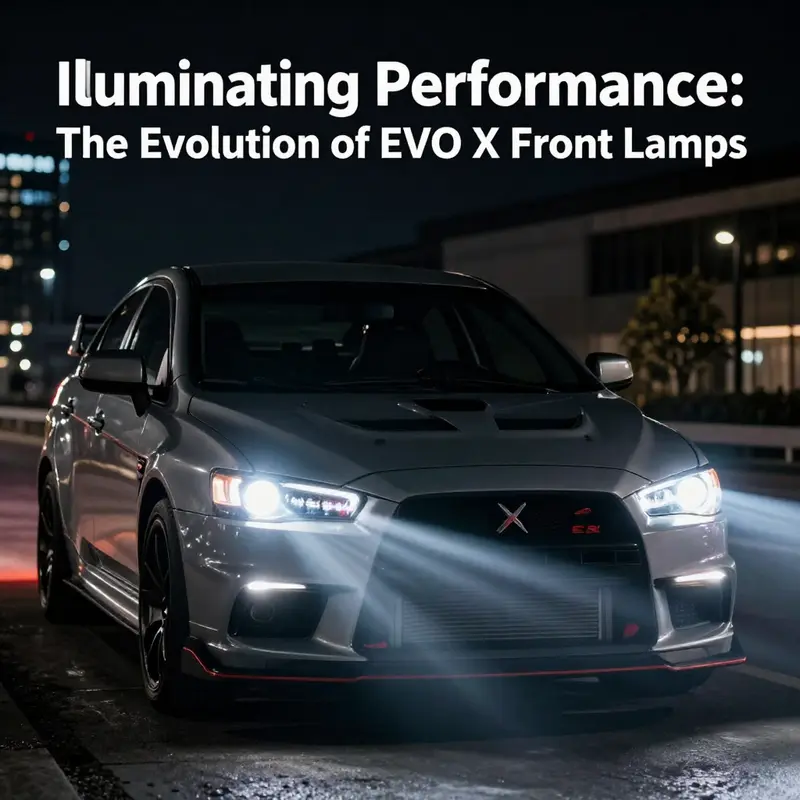
The front lamps of a Mitsubishi Lancer Evolution X are more than just a lighting element. They anchor the car’s signature stance, illuminate the road in ways that reveal the car’s character after dark, and hold a quiet promise of performance and precision. When the EVO X wears its “shark nose” silhouette, the headlamps become a focal point not only for aesthetics but for the very trueness of its drive. Upgrading them is a natural step for enthusiasts who want to translate that visual impact into real, measurable gains—brightness, beam control, response time, and even energy efficiency. The evolution from stock halogen setups to modern LED configurations is not merely cosmetic; it is a shift in how the car perceives and interacts with the road. The objective is simple in theory: brighter light, more accurate distribution, and a cleaner, more contemporary look that still respects the EVO X’s native proportions and driving dynamics. The challenge, however, lies in choosing a solution that respects the car’s electrical architecture, fits precisely, and remains compliant with local rules. The path through this landscape is best walked with a clear sense of what matters most in headlamp performance and how upgrades integrate with the broader goals of handling, safety, and visual cohesion with the car’s aggressive lines and aero cues.
First, the move to modern LED headlamps delivers tangible performance improvements. LEDs offer higher luminance at lower current draw, which translates to brighter high and low beams with less heat buildup. The immediate practical benefit is a more expansive, evenly lit field of view on winding roads and poorly lit urban avenues. A well-designed LED headlamp system also reduces glare for oncoming drivers by enabling sharper cutoffs and more precise light distribution. This is not a mere feature list; it translates into real driving confidence during night-time sessions on back roads or damp autumn evenings when visibility is compromised. The relationship between color temperature and perceived brightness is important here. A color temperature in the mid-5000s Kelvin range tends to render a crisp, daylight-like white that helps distinguish road texture, lane markings, and traffic cues without causing visual fatigue. In practice, this means drivers can react to obstacles or shifting weather conditions more quickly, with less cognitive strain than they would experience with older halogen setups.
Along with brightness and color stability, the mechanical and optical design of the lamp housing matters as much as the light source itself. The modern trend favors projector-based optics, where a precisely engineered lens guides the beam to a clean and predictable pattern. A projector lens concentrates light into a tighter, more controlled footprint, reducing stray glare and helping to maintain a sharp cutoff where the road surface is concerned. In high-speed conditions, that precision matters: a well-behaved beam pattern helps the driver discern edge lines, curbs, and potential hazards earlier, which can translate into smoother cornering and more confident braking when it matters most. In addition to primary illumination, many headlamp upgrades incorporate built-in daytime running lights and dynamic or sequential turn signals. These features contribute to safety by improving visibility during the day and by capturing the attention of other road users during signaling maneuvers. The sequential signals, in particular, lend a motorsport-inspired cadence that echoes the EVO X’s performance heritage, reinforcing the car’s identity even when it is stationary.
In choosing color temperature and output, the range commonly discussed among enthusiasts sits around 5000K to 6000K for a crisp white with enough warmth to maintain good color perception in rain or fog. Lumen output is another critical dial to turn. A typical target range per headlamp housing is roughly 2000 to 3500 lumens, depending on the beam design and the optical quality of the projector. This is not a simple equation of “more is better.” The value lies in the quality of the beam: the lenses, reflectors, and cutoffs must work in harmony with the light source to avoid hot spots and shadowed areas that can undermine night-time visibility. With modern LED assemblies, the electronics and thermal management play a central role. The LED emitters generate significant light, but without proper heat dissipation, their output can degrade over time and brightness can fall short of expectations. A well-engineered kit addresses this through integrated heat sinks, efficient drivers, and careful thermal path design that keeps color and brightness stable across the life of the unit.
Beyond the raw numbers, the physical design of the lamp assembly shapes the EVO X’s appearance and how it interfaces with the vehicle’s aerodynamics. A set of lamps with smoked or tinted lenses and black housings creates a more aggressive, cinematic profile that aligns with the EVO X’s track-inspired persona. The interplay between lens treatment and housing color is not purely cosmetic; it can influence how air flows across the headlamp area, contributing to a coherent, seamless visual impression when viewed from the front. For some owners, the look is complemented by a subtle lip or splitter that extends the visual dominance of the front end without compromising the lamp’s functionality. A well-chosen lamp assembly can balance form and function, producing a front end that looks purpose-built for high-speed, high-precision driving while preserving the car’s street manners for everyday use.
The practical path to upgrading begins with fitment and compatibility. EVO X models span several years, and while the core geometry of the headlamp housing remains consistent, minor differences in mounting points, wiring connectors, and ballast or controller configurations can appear across model years. The careful route is to select an option specified for the EVO X or explicitly noted as compatible with a broad range of years, potentially extending into later variants. A good upgrade plan also respects the car’s existing electrical system and safeguards against error codes that can arise when the vehicle’s onboard computer detects a mismatch in beam pattern or lamp type. This means looking for kits that clearly indicate model-specific fitment and that are designed for plug-and-play installation or, at minimum, simple harness integration. Some enthusiasts lean toward fully sealed, no-bulb LED assemblies that replace the entire headlamp housing, eliminating the need to stock spare bulbs and reducing maintenance complexity. Others prefer a hybrid approach that preserves the factory bulb housings but upgrades the LED modules within a projector framework, maintaining a familiar mounting footprint while reaping the benefits of modern optics. Either path should prioritize a precise fit and seamless integration with the EVO X’s front fascia so that the upgrade feels like an original equipment enhancement rather than an aftermarket afterthought.
The performance and styling story can grow more compelling when the headlamp upgrade is viewed in the broader context of a complete installation plan. A headlamp that is brighter and more precisely cut can illuminate the road more effectively, but the car’s aerodynamics and weight distribution also influence how that brightness translates into real-world performance. When a headlamp upgrade is combined with a coordinated body kit designed for the EVO X, the combined effect is more than the sum of its parts. A body kit that optimizes airflow around the front end can pair with sharper lamp geometry to yield a cohesive, race-inspired look. The resulting visual impact helps the car communicate its intent at a standstill and in motion while also potentially offering modest gains in high-speed stability by presenting a more intentional, engineered silhouette to the wind. While lamps themselves do not directly generate downforce, careful attention to the overall front-end design ensures a harmonious balance between lighting performance and aerodynamic efficiency. The aesthetic and the functional are not two separate conversations; they are two sides of the same coin—the driver’s perception and the car’s actual behavior at speed.
A practical note is the importance of verifying legal compliance. Headlight brightness and beam patterns are regulated in many regions, and a misaligned or excessively bright lamp can fail inspections or draw scrutiny from law enforcement. To avoid trouble, it is wise to consider upgrades that provide consistent, compliant beam patterns and to confirm that any changes preserve the intended cutoffs and avoid glare into oncoming traffic. When possible, choose products that provide documentation about photometric performance or that have undergone third-party testing to validate their compliance with local regulations. A responsible upgrade respects both the vehicle’s identity and the communities in which it operates, preserving safety while enabling the EVO X to achieve its intended presence on the road.
In the realm of practical guidance, the decision-making process for an EVO X headlamp upgrade centers on a few core questions. What color temperature delivers the clearest night visibility without introducing fatigue? Do the beam patterns align with the car’s geometry to avoid glare for other road users? Can the installation be completed without major rewiring, or will it require professional assistance to ensure compatibility with the ECU and drive computer signals? How does this upgrade harmonize with the rest of the car’s aesthetics, from the stance and wheels to the front fascia and aero elements? And, finally, what is the long-term value in terms of maintenance, warranty, and potential resale appeal? These questions guide a careful evaluation that balances the thrill of improved lighting with the realities of everyday use and legal constraints.
Embedded within this consideration is a sense of how the upgrade interacts with perception. The EVO X is a car that communicates purpose at every angle, and the headlights play a critical role in how that message is received. A modern LED assembly with a projector lens and dynamic signaling can transform night driving into a more confident, controlled experience, while also signaling to others that the car is not simply aesthetically tuned but engineered with modern lighting science in mind. For many owners, the choice is as much about the vibe as it is about the raw lumens. A headlamp that looks like it belongs on a track-ready machine reinforces the driver’s sense of connection to the car’s performance heritage, even during routine commutes. The result is a more immersive driving experience, where the road becomes more legible and the car’s personality becomes more legible, too.
As with any significant modification, it is wise to consider the broader ecosystem of the EVO X. The lamp upgrade should be viewed in concert with other performance-oriented improvements. If a chassis or suspension package is aimed at handling and cornering, the improved visibility supports that objective by providing earlier recognition of road texture, changing light conditions, and potential hazards. If an aero upgrade is planned, the lighting design should complement the front end’s new silhouette, with a sense of continuity from bumper to lamp housing that makes the car look like a single, integrated sculpture rather than a collection of discrete parts. In some builds, owners opt for a fully integrated approach that includes a body kit, wheels, exhaust, and intercooler upgrades. In this scenario, the headlamps become a crucial end point of the upgrade journey—a capstone that seals the car’s new identity and ensures that the EVO X not only looks the part but performs with a level of clarity and precision that the name Evolution implies.
To illustrate the practical path forward, imagine a scenario in which a driver in a mixed climate region upgrades to a modern LED front lamp assembly featuring a projector optic and a smoked lens. The color temperature targets a crisp, Daylight-like white, while the beam pattern is tuned to minimize glare and maximize road coverage. The assembly is designed to plug into the stock harness, reducing the complexity of installation and ensuring reliable operation. The dynamic turn signals add a touch of motion to the car’s front profile, while the black housing reinforces the aggressive, performance-oriented look. The driver notices an immediate improvement in nighttime visibility, especially along narrow rural roads and through shadowed zones where a conventional bulb might struggle to reveal the edges of the pavement. The upgrade, in this scenario, also integrates with a front aerodynamic kit that broadens the car’s visual footprint and reinforces the stance without introducing new drag sources. The resulting car feels more confident at speed, more precise in its visual language, and more aligned with the EVO X’s racing-inspired spirit.
One practical tip emerges clearly: model-specific compatibility matters. The modern market offers a spectrum of options, some explicitly marketed as EVO X-specific while others claim broad compatibility with similar chassis. The risk of a mismatch—whether in connector type, mounting points, or the fit around the bumper geometry—can undermine the upgrade’s performance and even create electrical issues. Therefore, the prudent approach is to select a kit that clearly states compatibility with the EVO X and, if possible, to choose a product with a straightforward installation path and a robust warranty. This approach minimizes surprises and helps ensure that the upgrade remains a source of reliability rather than a source of friction. It also means paying attention to the installation environment: a clean, dry workspace, careful handling of the lens elements, and a methodical check of wiring connections after installation. These steps reduce the likelihood of misalignment and ensure that the headlamps deliver consistent performance across a range of temperatures and driving conditions.
For readers who want to explore further options while keeping the scope focused on what matters in practice, the journey involves a balance of performance metrics, fitment certainty, and visual harmony. It is possible to find a kit that delivers not only brighter illumination but also a stronger visual cadence through features like daytime running lights and dynamic turn signals. In addition to the hands-on benefits, such upgrades can even contribute to resale value by preserving the EVO X’s modern look and signaling that the vehicle has been thoughtfully maintained and upgraded. The key is a measured approach: define the performance goals, verify compatibility, consider the aesthetic alignment with the car’s lines, and ensure that the installation respects legal requirements and the car’s electrical integrity. This careful, integrated thinking turns a lamp upgrade from a simple swap into a meaningful enhancement that resonates with the EVO X’s essence—the blend of speed, precision, and an unshakable sense of purpose.
For those intrigued by the specific presentation of front lamps and the nuanced choices they embody, there is a resource that delves into the visual and functional elements of EVO X headlights in a way that echoes the considerations outlined here. Headlights for Lancer Evo X 2007-2017 Audi Design Version offers a window into how a design language can harmonize with a performance-oriented chassis while delivering modern lighting technology. This reference points to the broader ecosystem of aftermarket options and underscores the importance of selecting a configuration that preserves the EVO X’s identity while aligning with contemporary expectations for illumination. You can learn more about these design approaches at: Headlights for Lancer Evo X 2007-2017 Audi Design Version.
In sum, upgrading the EVO X’s front lamps is a convergence of light science and visual storytelling. The choice of projector-based LED optics, the color temperature that renders texture and detail clearly, and the beam pattern that guides the eye with precision—all of these play into a richer, safer, and more confident driving experience. When paired with a complementary aesthetic and aerodynamic strategy, the headlamp upgrade becomes a cohesive element of a car that speaks with a single, forceful voice. It is not merely about brighter days or longer nights; it is about ensuring that every mile is illuminated with intention, so the EVO X can live up to its reputation for speed, control, and aggressive, race-inspired presence on both the street and the track. External resources offer further context for those who want to compare photometric data, material quality, and long-term performance, such as consumer-facing product reviews and third-party testing. For readers who wish to explore a concrete shopping reference, a representative external link to a popular marketplace can provide additional insight into availability and pricing, keeping the focus on durability, warranty coverage, and fitment clarity as essential criteria for a successful upgrade.
External resource: https://www.amazon.com/dp/B0B7WZ1JYR
Faces Forward: EVO X Front Lamps, Market Dynamics, and the Craft of Upgrades
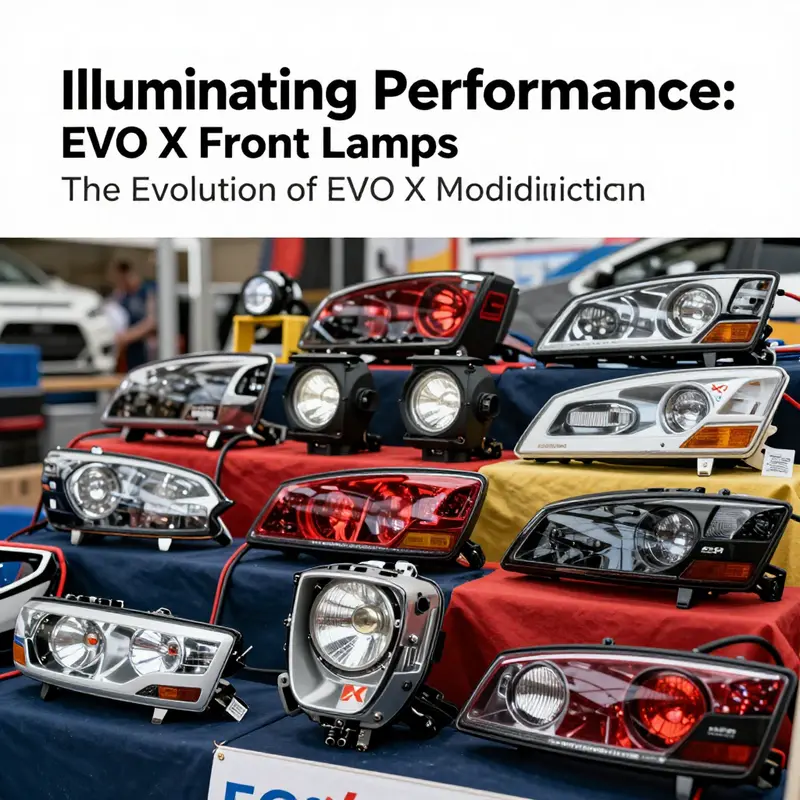
The Mitsubishi Lancer Evolution X arrives at street level with a face as distinctive as its performance heritage. The front end, anchored by the shark-nose motif that gives the EVO X its aggressive identity, is more than a design flourish; it is a functional statement about light, airflow, and how a car speaks to the road at dusk and through the mist. The large trapezoidal grille and the angular intake geometry draw the eye and set up a lighting package that is immediately recognizable. The front lamps themselves, integrated into this bold architecture, become a primary focal point—an element that is both a design signature and a critical performance feature. The way the headlights illuminate the night matters as much as the speed at which the car crosses it. Hence, for owners who seek to preserve the EVO X’s iconic look while elevating its practical capabilities, the front lamps are a natural focal point for upgrades, restorations, or deliberate customization. The market has grown in step with this interest, offering a spectrum of options that balance authenticity, performance, and personal style. The choices range from factory-style replacements that aim to replicate the original light pattern and appearance to advanced aftermarket units that reshape the light field with new technology, brighter outputs, and more aggressive aesthetics. This is not merely a matter of swapping components; it is an exercise in how a modern headlight system interfaces with a vehicle’s electrical architecture, driving dynamics, and the driver’s own expectations for visibility in rain, fog, or the low sun of late afternoon. Brand-new LED headlight assemblies, widely described in product literature as full-LED projections with integrated daytime running lights, promise brighter, longer-lasting illumination while eliminating the need for traditional replaceable bulbs. The appeal is practical: longer life, less maintenance, and cleaner electrical draw when compared with older halogen systems. The cosmetic payoffs are equally compelling. A headlight housing can be finished in a range of styles—from the transparent lens that preserves a factory-like clarity to smoked or blacked-out variants that deepen the front-end tone and complement a carbon fiber grille or a darkened bumper treatment. Within these broad families, the variations feel endless, driven by consumer desires for a certain mood—whether that mood is race-inspired aggression or refined, understated menace. The EVO X’s front lamps have thus become a microcosm of the broader aftermarket lighting market, where the core decision revolves around what balance to strike between fidelity to the original design and the benefits of modern lighting technology. One practical reading of this balance reflects the most common upgrade path: choose an LED projector headlight assembly that preserves correct beam pattern while delivering higher luminance, better cutoff, and longer life. The reason projector-based designs have become so popular lies in their light distribution characteristics. A properly implemented projector lens concentrates light into a narrow, sharply defined beam. This focus translates to clearer distant illumination and a reduced risk of glare to oncoming traffic. For night driving, the difference between a well-tuned projector and a basic reflector is not merely perceptual; it is measurable in visibility distance, reaction time, and comfort for the eyes after hours behind the wheel. At a practical level, one of the most noticeable improvements often comes from how the LED light behaves during rapid on-off transitions—such as when the high beam is momentarily needed on a dark highway. A well-engineered LED projector headlight can maintain color temperature and beam shape during those transitions, providing the driver with a consistent perception of the road and eliminating the “hot spots” or uneven illumination that sometimes accompanies cheaper installations. The market for EVO X front lamps sits squarely at the intersection of performance and style, appealing to enthusiasts who want a brighter, more precise light while still maintaining the silhouette that defines the EVO X’s frontal impression. This is not a simple swap of one unit for another; it is a curated upgrade that signals intent and personality. The options on offer make the choice feel both meaningful and manageable. On the performance side, LED projector assemblies usually include daytime running lights and turn signals integrated into the same housing, a design trend that has become standard across many modern vehicles. The DRL function is not merely decorative; it enhances visibility to other road users during daylight and helps the car maintain a contemporary aesthetic as the rest of the car’s appearance is refreshed. The turn signals, especially when designed to operate in a sequential pattern, add a dynamic touch to the front end that complements the EVO X’s angular geometry. The aesthetic choices extend to the lens and housing finishes. Clear lenses deliver maximum light emission with minimal visual distortion, maintaining a bright, clean look that can blend with a wide range of body colors and trim styles. Smoky lenses and smoked housings, on the other hand, create a dramatic, chiseled face that reads as more aggressive and track-ready, albeit sometimes at the expense of absolute daytime clarity. The housings themselves can be finished in chrome or black, with chrome accents often selected to complement chrome trim on the grille or wheels, while black housings emphasize the car’s shadowy, high-contrast persona. The interplay between lens treatment and housing finish is an example of how the front lamps engage with the broader aesthetic ecosystem surrounding the EVO X. It is not just about go-fast performance; it is about the complete look that one aims to project when the car sits in a garage or arrives at a meet. For owners seeking a more cohesive, integrated look, there is a natural synergy in pairing upgraded headlights with other visual and aerodynamic components. Carbon fiber grilles, in particular, have become a popular companion modification. The lightweight material offers cosmetic cohesion with the high-tech look of LED projectors, while also contributing to the sense of a purposeful, performance-focused front end. Carbon fiber, beyond its visual appeal, is intrinsic to a broader conversation about weight reduction and thermal management. In a car like the EVO X, where cooling, intake efficiency, and overall mass distribution influence handling, the choice to harmonize the front end with high-performance lighting can feel like a deliberate statement about the direction of an entire modification project. The perceived and actual benefits of these combinations are real, but they do require careful planning. Upgraded lighting is more than a cosmetic add-on; it represents an electrical and mechanical system that must harmonize with the vehicle’s original components. The market has responded with a range of solutions that emphasize compatibility, so buyers can select headlamps that state their intentions clearly—whether they are returning to a pristine, factory-like appearance, or signaling a different performance orientation. Compatibility is typically stated for model years spanning from 2008 to 2017, with some designs explicitly noting compatibility through 2020. This reflects the EVO X’s broad, enthusiastic aftermarket community and the practical reality that the car’s chassis remained visually consistent enough to support a variety of modern headlamp solutions without triggering fitment issues in most installations. When contemplating such a swap, many owners appreciate clarity about what they need for a smooth fit. The “plug-and-play” language that appears in product descriptions speaks to a practical expectation—an account of harness connectors, mounting points, and potential adjustments that may be necessary to align the new lamp with the vehicle’s geometry and fender lines. Yet even with compatibility assurances, installation can reveal subtle differences in the way lamps sit relative to the bumper cover, hood edge, and wheel arch. The best-equipped upgrade programs offer a comprehensive mounting kit or detailed instructions to help technicians and enthusiasts achieve an elegant, precise alignment. In addition to the front lamps themselves, the overall presentation of the EVO X’s face benefits from a coordinated approach to front-end customization. The headlamp assemblies often come with integrated or adjacent features that have a direct bearing on how the upgrade performs and feels. For example, the way the light source interacts with reflective surfaces inside the lamp housing can influence both beam intensity and color rendering. Good projector designs focus their energy into the correct region of the road, creating a visible cutoff that helps the driver see the edge of the road without blinding oncoming traffic. This combination of optical engineering and careful aesthetic design is part of why many EVO X owners view the front lamp upgrade as a holistic project rather than a simple swap. It is also a reminder that sourcing plays a crucial role. The global aftermarket landscape is wide-ranging, with manufacturing clusters in regions known for precision molding, high-quality finishes, and reliable export networks. The leading edge of production has often been traced to major centers in East Asia, where a mix of established automotive suppliers and smaller specialty manufacturers co-exist. Guangdong and Zhejiang, in particular, are known for their capabilities in precision molding, surface finishing, and logistics, enabling consistent quality and competitive pricing. For a buyer, this translates into faster production lines and broader availability of variants, including carbon-fiber accessories that pair with headlamp assemblies for a unified look. The broader supply chain has also influenced price points and lead times, making it feasible for hobbyists with modest budgets to participate in this segment. The idea that a front-lamp upgrade is an isolated, one-off modification is increasingly dated. The current approach is to see it as part of an integrated package that includes body work, airflow management, and even electronic reliability. In this light, it is not surprising that some EVO X builders take a holistic view of the valve-stamped front end—considering the effect of modifications on cooling, intake, and even ignition systems. A more robust electrical system, potentially including upgraded ignition components in some builds, can help ensure consistent performance from all electronic systems under demanding conditions. It is not just about brighter light; it is about maintaining stable operation of the vehicle’s electronics as the load on the system grows with demand from more powerful lighting. The practical upshot of this ecosystem is that EVO X owners can select from a diverse set of headlamp solutions, then layer additional upgrades to create a front end that aligns with their goals—whether that means keeping the original color temperature and beam signature, or pursuing a more aggressive, high-contrast presence that reads as a deliberate performance statement. For many, the decision process is as much about the story they want the car to tell as it is about the light itself. An interesting, more subtle path in this landscape is to treat the headlamp upgrade as a gateway to broader customization. The headlamps may be the first visible sign of intent, but they are also a catalyst for choosing complementary components that work in concert. The idea of an “integrated package”—headlamps plus grilles, bumper lips, and airflow management pieces—emerges as a practical philosophy. In such a package, carbon fiber elements can unify the car’s face, while the headlamps provide the modern, high-precision skin that makes the EVO X look both current and capable. With the right combination, the vehicle’s front end communicates a consistent message: this is a car that blends classic rally heritage with contemporary lighting technology. It is this alignment—between form, function, and availability—that explains why the market for EVO X front lamps remains vibrant. The breadth of choices, the clarity of compatibility, and the potential to pair light upgrades with other aesthetic and performance improvements create a compelling ecosystem for owners who want to express their personal interpretation of the Evolution. A note for readers who want to explore a concrete example of a compatible front-lamp option is to look at the listing for headlights intended for Lancer Evolution X. Headlights for Lancer Evo X – Audi Design Version 2 offer a reference point for the kind of aesthetic and functional choices that many buyers weigh when planning a front-end upgrade. This example illustrates how a modern LED projector assembly can preserve the EVO X’s character while delivering a more modern light signature and a distinct, refined look. For readers who prefer a clearer route to understanding, a useful way to gauge the current market is to examine how the most common configurations balance brightness, beam control, and appearance. The LED projector approach tends to win on nighttime performance, while smoked lenses and dark housings tend to win on the street presence side. Either way, the message is consistent: the EVO X front lamps have become a versatile canvas onto which owners project their ambitions for performance, style, and identity. The market responds with a constellation of options that range from near-stock replacements to highly customized assemblies, and from visible cosmetic upgrades to true, measurable improvements in night visibility. For those who want to connect their upgrade choices to a broader narrative about the car’s future, the front lamps provide a clear starting point. They offer an accessible way to refresh the car’s look, update its lighting technology, and set the tone for subsequent modifications—whether the goal is a track-ready appearance, a show-stopping street machine, or a balanced blend of reliability and drama. The process is not about chasing the newest trend but about aligning capability with intention. The result—whether you pursue a factory-faithful replacement or a more aggressive aftermarket package—is the same: a front end that communicates with clarity, power, and character. Those who study the EVO X’s lighting options often discover that the decision is less about which exact component to buy and more about how the lamp’s integration with the car’s identity will influence every future modification. In that sense, front lamps become a compass for the entire project, guiding choices about harness upgrades, mounting hardware, and even sensor alignments that might be part of more complex electronic control systems. It is a reminder that the EVO X’s appeal is not only in its speed or its handling, but in the way the car announces its purpose through the careful choreography of light, shape, and line. For readers who want to see a concrete sample of the broader landscape, the linked resource that showcases a modern LED projector headlight assembly—presented in a retailer-friendly format—offers a useful point of reference for what contemporary front-lamp technology looks and feels like in practice. A representative option that blends with the Evo X’s lines can be found in the headlights for Lancer Evo X – Audi Design Version 2. Headlights for Lancer Evo X – Audi Design Version 2. As you move through this landscape, you can see how the lighting becomes a language that interacts with wheels, brakes, aero pieces, and the car’s silhouette. The result is a vehicle that is not only faster but also more legible to other road users and more expressive to onlookers. The evolving market for EVO X front lamps embodies this idea: it is not a single static choice but a living conversation about how modern lighting technologies can be harmonized with a storied, performance-focused chassis. External resources offer a window into how retailers present these options to buyers, while the technical realities of beam patterns, color temperature, and mounting tolerances remind us that a headlamp upgrade is a small but significant engineering project. For those who want to explore a concrete example of the current market options, see a typical LED projector headlight assembly listing on a major retailer. External resource: https://www.amazon.com/dp/B0CQ5YJ6KZ
Final thoughts
The evolution of the Mitsubishi Lancer Evolution X front lamps encapsulates the interplay between design, performance, and market trends. From their distinctive aesthetics that embody the vehicle’s dynamic persona to the range of performance-enhancing upgrades that improve safety and visibility, these front lamps offer immense value to both car enthusiasts and business owners. The aftermarket for EVO X front lamps is rich with opportunities for customization, with options to cater to individual preferences. By understanding these elements, business owners can better position themselves to meet consumer demands and foster a loyal customer base.