
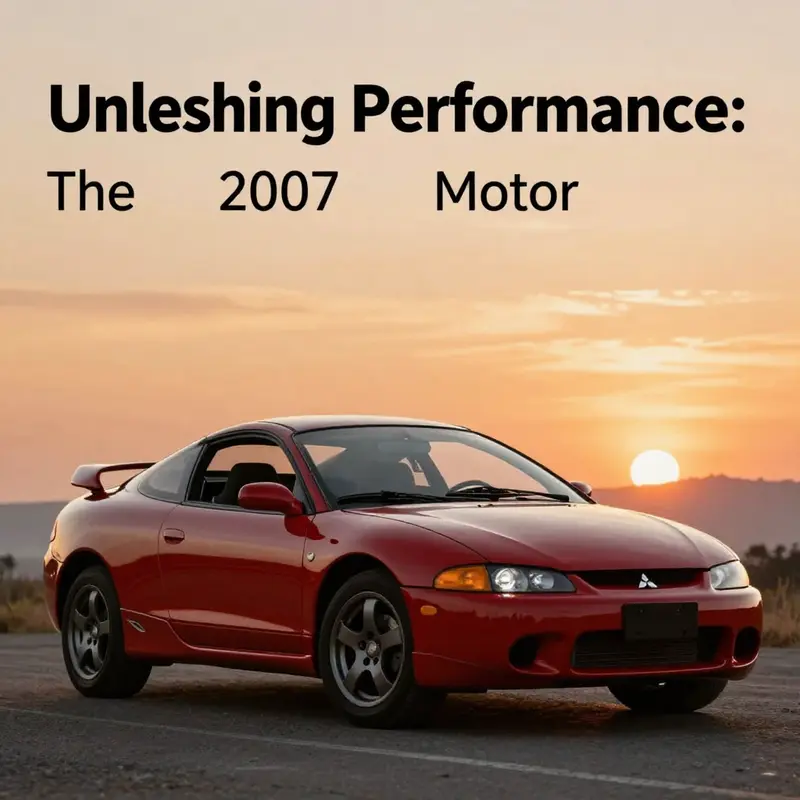
The 2007 Mitsubishi Eclipse, especially in its Spyder convertible form, embodies a balance of performance and efficiency, critical elements for business owners seeking dependable vehicles. In an era where high demands for both performance and environmental consciousness shape automotive design, understanding the specifications, performance analytics, and fuel efficiency of the Eclipse’s motor is vital. This exploration will delve into the engine’s specifications, analyze its performance metrics, and assess its fuel efficiency, demonstrating how these attributes can influence decisions in both personal and business contexts.
Under the Hood: The Dual Engine Story of the 2007 Mitsubishi Eclipse
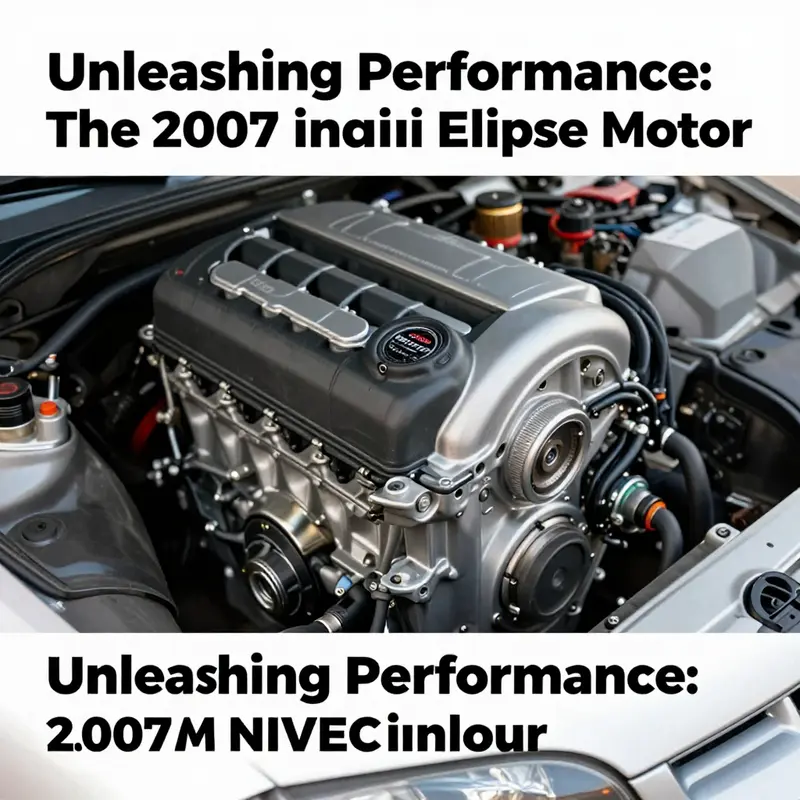
The 2007 Mitsubishi Eclipse sits at a curious crossroads in the automaker’s lineup, a compact sport coupe that seeks to blend everyday practicality with a genuine sense of sport credit. The heart of that equation is not a single musical note but a choice between two very different engine personalities, each tailored to a distinct kind of driving pleasure. In the open-air Spyder version, and in the coupe as well, the powertrain lineup reflects Mitsubishi’s intent to offer an approachable entry into performance without forcing a single, rigid definition of what sport should feel like. The engine options for that year furrowed into two well-worn paths: a 2.4-liter inline-four that prioritizes smooth, efficient torque delivery and accessible performance, and a 3.8-liter V6 that steps into a more robust, muscular torque curve with higher horsepower. The way these two engines feed the Eclipse’s chassis, affect its sound, its acceleration character, and its daily usability, tells a story about a car that wanted to be both a friendly companion on a daily commute and a capable partner on a back road, a balance that enthusiasts often measure not just in numbers but in the way the car feels when it’s asked to do real-world work.
At the small end of the spectrum sits the 2.4-liter inline-four, a configuration that has long been a staple in compact, affordable sport coupes for its blend of light weight and adequate, usable power. The precise figure for the 2007 Eclipse’s 2.4L engine, when paired with the MIVEC variable valve timing system, emerges as approximately 162 horsepower, with torque listed around 162 lb-ft. Those numbers are not meant to raise the eyebrows of a drag-strip aficionado; rather, they convey a power plant that delivers a steady, usable surge across the rev range. This is the engine the average driver would encounter most days: steady power for overtaking, confidence in highway cruising, and a pace that remains agreeable in city traffic without begging for more gear changes or frequent trips to the gas pump. The MIVEC technology at the heart of this setup—Mitsubishi’s variable valve timing Electronic Control—works by altering the cam timing to optimize both intake and exhaust phasing. In practical terms, that means the engine can stay efficient at lower speeds, where most daily driving happens, while still offering a responsive midrange when the throttle is pressed harder. It is a system designed to smooth power delivery rather than to shout it, an attribute that makes the Eclipse feel accessible and refined rather than solely focused on straight-line speed.
The 2.4L engine’s integration into the Eclipse’s drivetrain is complemented by two distinct transmission choices that further shape its character. Buyers could select a five-speed manual, which preserves an element of involvement that sports car enthusiasts value, or opt for a four-speed automatic that emphasizes ease of use and smooth progression through gears. The configuration is telling: a car meant to be practical without giving up a certain level of driver engagement. The manual provides a direct line to the engine’s torque band, a more tactile connection to the car’s accelerating mechanics, and the ability to self-direct the revs through corners or onto hillier roads. The four-speed automatic, on the other hand, can feel more relaxed in daily driving, smoothing the transitions and letting the driver focus on rhythm and pace rather than shift timing. In either setup, the 2.4L’s torque curve is tuned to cover the middle of the rev band with a respectable readiness, the kind of responsiveness that keeps the Eclipse feeling sprightly without demanding constant attention from the driver. This is a powertrain that respects the car’s size and weight, delivering enough punch to keep the car buoyant on a back road but not so much that it becomes a handful for the everyday driver.
Beyond the numbers, the 2.4L engine’s character is shaped by its integration with the Eclipse’s chassis dynamics. The car’s weight distribution, steering feedback, and suspension calibration all respond to the engine’s torque delivery and its associated audio profile. A four-cylinder engine in a compact chassis is often the most transparent way to understand a car’s intent: how it balances efficiency with a sense of cadence and how it communicates with the driver through throttle response, engine chatter, and exhaust timbre. In the Eclipse, that voice remains measured and approachable, a deliberate contrast to higher-performance powerplants that push toward a more aggressive arias. The 2.4L, supported by Mitsubishi’s MIVEC timing, also carries a duty to manage efficiency. For drivers who spend more time weaving through city streets than sprinting along freeways, that balance is not a secondary feature—it is the primary virtue. The result is a powertrain that can carve through urban congestion with a reasonable pace and then settle into highway cruising with minimal fuel penalty, etiquette that suits a car intended to bridge sports appeal and everyday practicality.
Moving up the ladder, the Eclipse lineup offered a more muscular alternative for those drawn to definitely more performance-oriented acceleration: the 3.8-liter V6. This engine, available on higher trims such as the GT and GS, represents a different architectural lineage and a different acoustic fingerprint. With approximately 250 horsepower and 250 lb-ft of torque, the 3.8L V6 delivers a notably more vigorous acceleration profile than the 2.4L. The extra displacement and the inherent character of a V6 contribute to a broader, stronger torque curve, one that underpins confident passing maneuvers and an eager surge when the accelerator is planted. The V6’s power is paired with a five-speed automatic transmission as standard, a pairing that emphasizes smooth, confident shifts and the ability to optimize gear selection for the engine’s higher torque output. The automatic transmission in this configuration is designed to exploit the V6’s torque band while maintaining a level of refinement needed for daily driving. For drivers who crave immediacy and a more muscular on-ramp feel, the V6 offers a tangible step up in the Eclipse’s performance narrative, a step that changes the car’s audible and physical sensation—how the engine note rises with revs, how the torque is delivered as you step on the throttle, and how that power translates into a rapid, linear acceleration that can leave a grin on a driver’s face.
The two-engine approach in the 2007 Eclipse embodies a strategic balance. The 2.4L MIVEC engine is, in its own right, a compact, efficient machine that emphasizes accessibility and daily usability. The MIVEC system enhances efficiency by adjusting cam timing to optimize the engine’s breathing across different RPM ranges, smoothing power delivery and enabling better fuel economy at cruising speeds. In a vehicle that is meant to be both sport-oriented and practical, that efficiency matters. It means drivers can experience a spirited drive when they want it, without feeling as though they have to pay a premium in fuel costs every time they head out. The 3.8L V6, meanwhile, is a different beast—an option for those who value power and a more aggressive, effortless acceleration experience. The V6’s higher horsepower and torque translate into a faster, more authoritative sense of speed, especially in overtaking scenarios or when the car is pulled from a standing start. The choice between the two engines further highlights the Eclipse’s dual identity: a car that offers an engaging drive without requiring a specialist’s fascination with performance engineering. It is a philosophy that keeps the Eclipse in a broad market segment, appealing to buyers who want a little more pep without stepping into a high-strung sports car territory.
In the Spyder variant, the engine choices play a particularly crucial role in shaping the car’s personality. The convertible nature of the Spyder heightens the sense of immediacy that any engine delivers because there are fewer fixed constraints on the driver’s relationship with the vehicle. The 2.4L MIVEC engine’s refined power delivery feels especially suited to open-air driving, where the car’s cadence is more about cadence with traffic and the pleasure of the wind rather than raw top-end performance. The four-cylinder’s smoothness makes cabin acoustics more tolerable at higher speeds, which is part of the Spyder’s appeal as a road-trip companion. The 3.8L V6, with its stronger torque and broader power band, suits those who want a thunderous improvement in the car’s roll-on acceleration when the top is down and the wind is in their faces. The V6’s sound, tone, and immediate response under acceleration give the Spyder a different emotional character, one that some drivers might associate with a more traditional sports car experience. Either engine configuration does not simply deliver numbers; it frames a driving story—whether the Eclipse is a daily partner that glides along with quiet confidence or a sporty companion that asserts its presence with a more muscular shove when the throttle is engaged.
All of this matters when one considers the Eclipse’s broader compatibility with aftermarket and enthusiast trends. The car’s compact dimensions, combined with its approachable power delivery, invite a spectrum of upgrades and modifications that can tailor the engine’s character to specific tastes. For example, in the Eclipse community, there has been interest in after-market weight-reducing components and cosmetic enhancements that can subtly influence the car’s balance and cooling efficiency. The idea is not simply to chase more power but to refine how the engine breathes, how the car handles heat, and how the overall package responds to spirited driving. A notable example within the Eclipse ecosystem is the availability of performance-oriented upgrades that emphasize weight savings and cosmetic customization. Within this context, the Eclipse’ s front-end air intake, exhaust routing, and engine cover choices can be part of a broader strategy to improve throttle response, reduce intake noise, or alter the vehicle’s stance and cooling capacity under demanding conditions. The choice between the two engines thus not only defines the car’s performance envelope but also shapes the way owners approach maintenance, upgrades, and daily use. Those who prioritize a balanced, economy-conscious approach may lean toward the 2.4L MIVEC, enjoying its refined manners and its potential for efficient driving, while those who want more aggressive acceleration and a pronounced engine voice may favor the 3.8L V6’s robust delivery and more assertive highway punch.
From a philosophical standpoint, the Eclipse’s engine strategy mirrors its audience. The 2.4L MIVEC is the instrument of restraint and discipline, allowing the car to advance with quiet competence through busy streets and long stretches alike. The MIVEC timing system plays its part here, quietly managing the engine’s breathing so that efficiency and mid-range response stay strong even as the car remains approachable for a broad range of drivers. The 3.8L V6 is the instrument of urgency, delivering a surge that many sport enthusiasts crave. It isn’t simply about raw horsepower; it’s about how that horsepower is accessible—how the driver feels the engine’s torque respond as soon as the accelerator is pressed, and how the exhaust note ripples through the cabin with a sense of purpose. The Eclipse, in this sense, becomes a study in contrasts: a compact coupe that can glide through traffic with ease or leap into highway acceleration with a convincing rush of power. This duality is, perhaps, the true engine story of the 2007 Eclipse—a narrative that survives on two different tunes, each tuned to a different kind of road, a different kind of weather, and a different driver’s mood.
For those looking for further context on official specifications and model details beyond what this chapter highlights, the original manufacturer documentation and product sheets offer a deeper dive into the engine design, revisions, and performance testing. These resources confirm the two-engine strategy, the power outputs, and the transmission pairings that defined the car in that year. They also provide insights into how the automaker calibrated the engine control software to harmonize with the car’s chassis geometry, its suspension choices, and its overall ride-and-handling characteristics. In practice, the Eclipse’s engine choices are not isolated mechanical components but parts of a complete, integrated driving experience. The engine applications in the Eclipse are a reminder that even within a single model year, a car can present multiple personalities, each appealing to a different subset of drivers, and each contributing to the car’s broader appeal as a practical sport coupe.
In the end, the engine options offered in the 2007 Eclipse demonstrate a deliberate approach to performance that respects a broad spectrum of buyers. The 2.4L inline-four with MIVEC offers an efficient, refined route to athleticism that aligns with everyday driving, while the 3.8L V6 presents a more ardent form of performance, a clear signal to enthusiasts that the Eclipse can stand proudly next to more specialized sport coupes. The transmissions that accompany these engines—five-speed manual or four-speed automatic with the 2.4L, and the five-speed automatic for the V6—further shape the ownership experience, influencing everything from fuel economy in daily commutes to the way a driver experiences cornering and acceleration on a winding road. The choice between these powertrains defines not just a vehicle specification sheet but a personal relationship with the car: a relationship that evolves as the driver’s needs change, whether that means seeking more efficiency for a daily routine or embracing a touch more horsepower for weekend canyon runs.
Within the wider landscape of sport coupes of the era, the Eclipse’s engine strategy stands as a practical template—one that prioritizes an accessible, refined performance on the one hand, while offering a more aggressive, confident option for those who want to press the accelerator a touch harder on the open road. The two-engine setup is a clear invitation to experience a spectrum of driving emotions without leaving the same chassis, a feature that many buyers found appealing in a market crowded with niche performance machines. The Eclipse thus becomes not just a means of transit but a small theatre of automotive personality: a car that can quietly glide in one mode and then surge into a different mood when the moment calls for it. This is a chapter in the Eclipse story that speaks to the core idea of balance—an automotive balance between everyday practicality and sport-infused thrills, a balance achieved through engineering choices that were well aligned with the expectations of a diverse driving audience.
For readers who want to explore real-world correlates of these choices, the Eclipse’s engine-offerings and their integration into the car’s overall behavior offer a useful case study in how powertrains influence the daily experience of a vehicle. Whether cruising with the top up or down, the Eclipse invites a nuanced conversation about power, refinement, and the way a car’s character can shift with a different engine, a different gearset, or a different door configuration. In this sense, the 2007 Eclipse remains notable not merely for its numbers but for its coherent, adaptable approach to performance—a car that understands that sport is a spectrum, not a single point on a chart. And when drivers sum up their own experiences—how the car accelerates from a standstill, how it responds to hills and merges, how it settles into cruising with minimal annoyance—the two-engine strategy reveals itself as an effective means of delivering that spectrum with grace and reliability.
To close this chapter with a nod to the practicalities of ownership and the ongoing interest from a community of enthusiasts, one can see that engine choice influences not just raw performance but maintenance, parts availability, and aftermarket pathways. Enthusiasts who lean toward the 2.4L MIVEC often pursue bolt-on upgrades that complement the engine’s breathing characteristics and mid-range torque, dialing in a personal sense of cadence for daily driving and weekend fun. Those who opt for the 3.8L V6 tend to partner with performance-oriented components that enhance the car’s already assertive acceleration profile, sometimes focusing on exhaust acoustics, intake efficiency, and cooling management as a way to sustain that acceleration and the overall driving experience over longer trips or more demanding sessions on back roads. The Eclipse thus remains a practical platform for experimentation and refinement, with the engine options offering distinct routes to a similar destination: a compact coupe that remains comfortable and approachable while still delivering a meaningful dose of sport when the moment demands it. The overall effect is a car that does not force a single driving identity but gives drivers the opportunity to shape their own experiences within a thoughtful, well-engineered package.
As the chapter draws toward its close, the engine narrative of the 2007 Eclipse becomes more than a list of specifications. It is a story about how power and efficiency can coexist in a vehicle that is designed for real roads and real lives. Whether you choose the 2.4L MIVEC for its refined balance or the 3.8L V6 for its commanding sense of forward push, you are selecting not only a performance metric but a particular way of engaging with the road. The Eclipse invites that engagement with a straightforward promise: a powertrain that delivers appropriate adventure for the moment, paired with a chassis that doesn’t demand you abandon practicality in pursuit of speed. In that light, the 2007 Eclipse stands out as a thoughtful articulation of how an automaker can offer a pair of engines that meet different appetites while still presenting a cohesive, unified driving experience that remains accessible, friendly, and genuinely engaging.
Appendix note for curious readers: for a closer look at the tangible aftermarket options that reflect the Eclipse community’s enthusiasm for balancing performance and style, see one of the niche parts pages that highlights Eclipse-specific upgrades developed for these models. A representative example that has appeared in enthusiast discussions is the Monster GT-style carbon fiber hood, which emphasizes weight savings and a distinctive exterior appearance that many owners associate with a more aggressive road presence. This particular part is linked here for reference: Monster GT-style carbon fiber hood for 2006-2012 Eclipse. While cosmetic and weight-focused, such components are often part of a broader approach to optimizing the driving experience in cars that blend sport with practicality. For readers seeking official, technical specifications beyond the summary provided here, the manufacturer’s site offers comprehensive details about engine architecture, performance ratings, and the rationale behind the two-engine strategy, which remains relevant for understanding how the Eclipse positioned itself in its class. External resource: https://www.mitsubishi-motors.com
Balancing Precision and Pace: A Deep Dive into the 2007 Mitsubishi Eclipse Motor
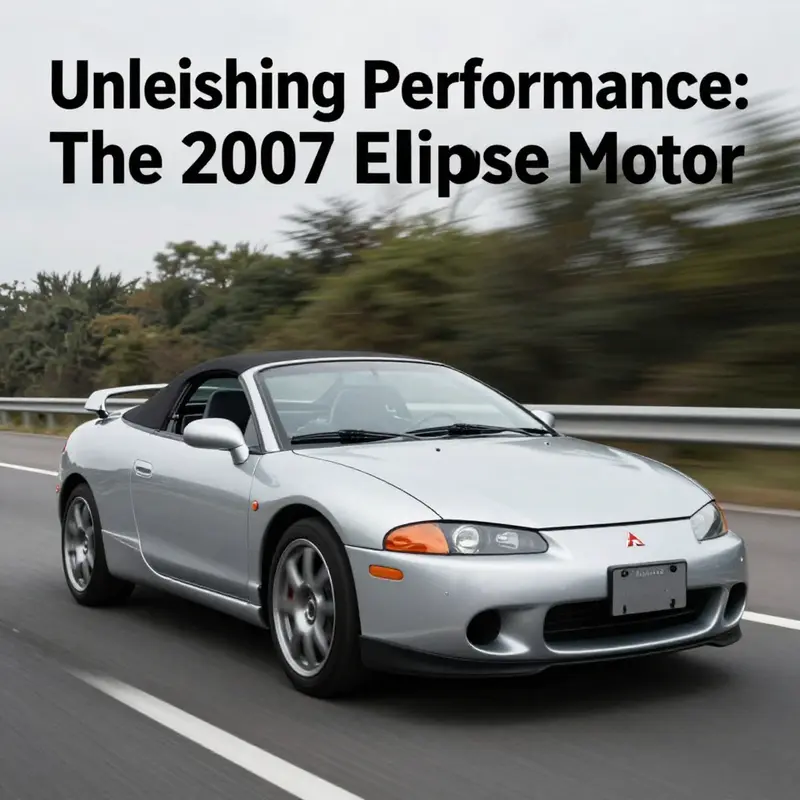
When the 2007 Mitsubishi Eclipse sits in the mid‑2000s showroom and the imagination of the driving public, it wears two very different personalities on its sleeve. One is a lean, efficient four‑cylinder that rewards nimble handling and open‑air motoring; the other is a more muscular V‑6 that leans into the idea of a refined, all‑season sports coupe. The Eclipse line for that model year captures a very particular blend of practical sportiness and reachable performance. In the Spyder, the soft top, the emphasis shifts toward balance—modern, compact, and economical. In the GT, the emphasis tilts toward a more forceful, but still tractable, driving character. What ties these variants together is a common engineering thread: the motor as the heart of the car’s daily usability and its occasional urge toward spirited performance. The motor choices—two distinct engines serving two very different goals—illustrate how Mitsubishi’s design philosophy for that era sought to broaden the Eclipse’s appeal without surrendering the essential sportiness that had defined the car since its inception.
Starting with the Spyder’s powertrain, the 2.4‑liter MIVEC inline‑four stands as the more economical and friendly heart of the lineup. The MIVEC system—variable valve timing that modulates the engine’s breathing to suit rpm and load—delivers a smooth, usable power curve that feels naturally aligned with city and highway duties alike. In this configuration, the engine is tuned to optimize everyday drivability and fuel efficiency, rather than outright peak horsepower. The result is a refined, approachable character reminiscent of a well‑mitted daily driver that also happens to be capable of light sports cruising when the road opens up. The 2.4L engine’s reputation among drivers who prioritize steady, predictable acceleration and good fuel economy is consistent with the Eclipse’s overall positioning in North American markets at the time: an entry‑level sport coupe that can be enjoyed without sacrificing practicality.
The GT, by contrast, represents a deliberate shift toward more traditional sporting intent. The 3.5‑liter V6 offered in the GT is a different engineering proposition entirely. It produces roughly 250 horsepower at around 6,000 rpm and about 240 lb‑ft of torque at approximately 4,400 rpm. Those numbers, paired with a five‑speed transmission choice—either an automatic or a manual—translate into a notably different driving experience. The 0–60 mph time of about 6.5 seconds underlines a motor that is capable of serious, if not extreme, acceleration for its class. The power is delivered in a broad, usable way, largely because the naturally aspirated V6 doesn’t rely on turbocharging to build momentum. It offers robust mid‑range torque that makes highway on‑ramps and passing maneuvers feel decisive, yet it remains tractable and comfortable for everyday use. This is a car designed for someone who wants the sense of pace and grown‑up power without the often harsher drama of higher‑strung engines.
The duality of engines in the 2007 Eclipse lineup also speaks to a broader question about how performance is defined in a sports coupe that remains practical enough for daily commuting. The MIVEC four in the Spyder emphasizes efficiency and smoothness. It is capable of comfortable long drives with the top down, where wind noise and engine cadence matter almost as much as performance figures. The five‑speed or six‑speed (in some markets) gearboxes behind it help optimize fuel economy while still delivering a sense of connection to the road. For enthusiasts who relish a more tactile engagement, the GT’s 3.5L V6 rewards precise throttle input and intentional shifting from the manual gearbox. The automatic option, while more convenient, does not diminish the engine’s ability to respond promptly when requested; it simply offers a different kind of comfort in daily driving.
In terms of chassis dynamics, the Eclipse’s drivetrain is matched to a front‑wheel‑drive layout with a suspension that aims to deliver stability, predictability, and controlled body movement through corners. This setup is historically reliable and consistent, contributing to a sense of confidence whether one is negotiating a congested urban street or tracing a highway bend with a little more courage than usual. The handling characteristics are described as generally stable and predictable, with a tendency toward understeer when pushed into aggressive cornering. That tendency is not unusual for front‑wheel‑drive configurations of the period, especially in a compact sports coupe that weighs more than a pure sports car yet carries a performance‑oriented engine under the hood. What matters for owners is the balance between grip, steering feel, and chassis composure, all of which are shaped by the engine’s output and the transmission’s response.
The 2007 Eclipse’s transmission choices play a central role in shaping the user experience. The manual option offers a more engaging driving experience, with precise shift action and shorter gear throws that reward deliberate, connected driving. The five‑speed manual, in particular, emphasizes a direct relationship between driver input and engine response, a characteristic that has long appealed to enthusiasts who value the tactile feedback of a well‑geared hatchback or coupe. The automatic option, meanwhile, prioritizes ease of use without sacrificing the engine’s ability to deliver power when needed. It can optimize gearing for fuel efficiency and smooth throttle transitions, which is especially welcome in daily driving scenarios and longer highway stretches where comfort counts. The overall impression is that the Eclipse is not a track‑oriented machine; rather, it’s a well‑rounded, responsible performance vehicle that can still surprise with quickness when the moment calls for it.
A closer look at the V6 GT motor’s character is revealing. The engine’s peak torque sits in a range that is well suited to mid‑range acceleration and confident overtaking. This is a motor that loves to pull through its mid‑range and maintain momentum as speeds climb, making highway cruising feel effortless yet purposeful. The horsepower figure, while representative of strong performance within its class, does not tell the whole story. The real strength lies in the way the engine delivers that power—without the distinct surge of forced induction and with a broad, usable band that remains approachable for everyday driving. This is a powerplant designed to feel mature and refined, avoiding the raw edge that sometimes accompanies smaller, high‑revving engines or turbocharged setups. The result is a car that can be as comfortable on a long, winding road as it is exciting in the right conditions.
The Mitsubishi Eclipse of 2007 also belongs to a period when aftermarket enthusiasm was part of the car’s appeal. Enthusiasts explored a spectrum of upgrades—from intake components and exhaust headers to forced‑induction kits—intending to extract more from these engines. The reality, as seen in many similar vehicles, is that while some gains can be realized with such modifications, they are often modest compared to more purpose‑built performance cars. The GT’s V6, for instance, may respond to certain bolt‑on enhancements with incremental gains, but the fundamental architecture and the car’s weight mean that dramatic, track‑level performance increases are unlikely without more extensive alterations. Still, for many Eclipse owners, the prospect of a carefully chosen upgrade path remains a meaningful part of the ownership experience. It allows for a sense of personalization and experimentation, which aligns with the car’s position as a practical sporty coupe rather than a pure performance machine.
The practical consequences of these design choices become clear when one looks at real‑world ownership: reliability and daily drivability take center stage. The 2.4L MIVEC four in the Spyder, with its emphasis on efficiency, aligns well with owners who want a convertible experience without heavy fuel penalties. It is a motor that rewards regular maintenance, stays within comfortable rev ranges for most daily driving, and contributes to a favorable balance of power and economy. The GT’s V6, with its broader torque curve, handles highway demands with ease and provides a touch more reserve for overtaking and spirited driving. Both engines share a common thread of durability and reasonable maintenance costs for a vehicle in this segment and era, which helps explain the Eclipse’s popularity as a practical sports car rather than an outright performance hypercar. The end result is a vehicle that functions well as a daily driver while offering moments of genuine sportiness when the road opens up.
Within the broader ecosystem of 2007 Mitsubishi offerings, the Eclipse sits in a position that emphasizes drivability, refinement, and a balanced relationship between power and control. The two engine options embody this philosophy: the 2.4‑liter MIVEC inline‑four is the sensible choice for everyday life, where smoothness and efficiency are valued almost as much as the occasional sprint to highway speed. The 3.5L V6 in the GT, meanwhile, is the answer for enthusiasts who want a more commanding presence behind the wheel, where power and torque are accessible across a broad rpm range and where the car remains comfortable and predictable enough to enjoy during long drives or on a twisty back road. In both cases, the Eclipse offers a coherent package that respects the practical realities of daily driving while inviting the driver to experience the intrinsic joy of a well‑mitted sports coupe.
The motor is thus not just a set of numbers; it is a mechanism that shapes the car’s character, influences its daily usability, and defines what the driving experience feels like from behind the wheel. The 2007 Eclipse demonstrates how a manufacturer can offer two distinct engine philosophies within a single model line: one that leans into efficiency and easy day‑to‑day performance, and another that invites a more aggressive, engaging driving style without abandoning the car’s core practical strengths. The result is a vehicle whose powertrain choices are as much about lifestyle as about speed, with the engine acting as the fulcrum that balances those competing demands. For the owners of these cars, that balance is what makes the Eclipse a distinct, enduring presence in the segment.
For enthusiasts who want to explore a visible symbol of the Eclipse’s performance potential, there is a tangible, aftermarket‑leaning reminder in the form of a carbon fiber hood associated with the broader Eclipse community: the 2006–2012 Eclipse Monster GT style carbon fiber hood. It stands as a reminder of how owners often look to visual and weight‑reduction upgrades to complement the engine’s capabilities, even if such components do not always translate into dramatic performance leaps. The hood is one piece of a larger ecosystem of enhancements that reflects how drivers personalize these cars to their tastes, whether they are chasing a sportier aesthetic or seeking marginal gains in rigidity and weight distribution. While the hood itself is primarily a visual and weight‑saving modification, its existence speaks to the culture surrounding the Eclipse and its enduring appeal among enthusiasts who relish the process of tailoring a car to their own sense of pace and style.
As a closing reflection on the 2007 Mitsubishi Eclipse motor, what stands out is the clarity of purpose behind each engine choice and the careful balance of performance with everyday usability. The Spyder’s 2.4‑liter MIVEC inline‑four delivers quiet competence and efficiency, making the convertible experience approachable and practical. The GT’s 3.5‑liter V6 provides a deeper, more confident sense of pace, enabling confident highway cruising and stronger accelerative bursts without veering into the realm of brute force. Each engine configuration reinforces the Eclipse’s identity as a thoughtfully designed sports coupe that could be a practical daily driver when needed, yet capable of more energizing driving experiences when conditions allowed. In this light, the 2007 Eclipse motor story is less about chasing peak horsepower and more about harmonizing the car’s broad mission: to offer engaging driving dynamics, everyday reliability, and a sense of occasion whether the top is down or up.
For readers seeking further technical context and official data, a primary source with historical specifications from Mitsubishi Motors North America remains a valuable reference. See the official archive for deeper details on the brand’s heritage and model history: https://www.mitsubishi-motors.com. Additionally, for a tangible example of Eclipse customization that some owners pursue, the community‑recognized 2006–2012 Eclipse Monster GT style carbon fiber hood offers a glimpse into how the model’s owners extend the car’s persona beyond the factory specifications. Internal readers may find related visual and accessory options linked through automotive parts sources dedicated to Eclipse projects, which share the same spirit of personal interpretation and enhancement that has long defined this car in the marketplace.
External resource: official historical data and broader brand context can be found at Mitsubishi Motors North America’s archive, which documents the evolution of the Eclipse and its powertrain options during the era discussed above.
Internal link note: for a related Eclipse modification that reflects the ongoing customization culture around this model, see the Eclipse hood upgrade referenced above.
Fuel in Focus: The 2007 Mitsubishi Eclipse Motor, Efficiency, and Environmental Footprint
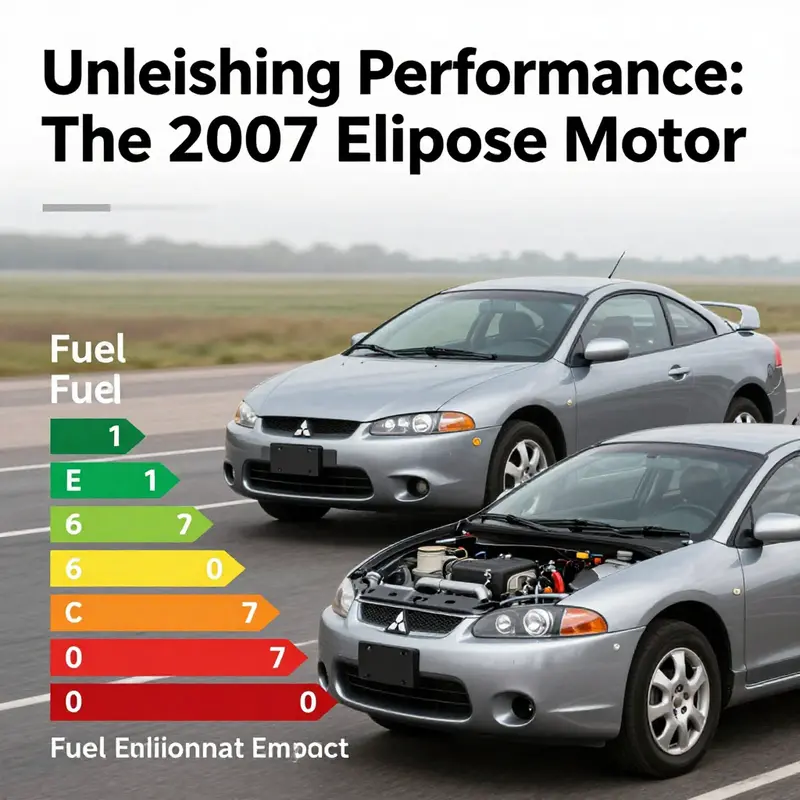
The 2007 Mitsubishi Eclipse sits in a curious niche where sportiness and daily practicality meet, a moment when a compact sports coupe could deliver engaging, predictable performance without sacrificing everyday usability. Central to that balance is the 2.4-liter inline-four engine, a powerplant often described in the literature as a 2.4L MIVEC unit. The engine’s signature is not a thunderous howl but a smooth, usable surge of power that comes in with a measured honesty. It is paired with either a six-speed manual or a five-speed automatic transmission, a choice that shapes the character of the car more than most enthusiasts initially expect. The Spyder, the convertible variation, adds a layer of openness to the experience, inviting wind and sound into the cabin as a counterpoint to the engine’s restraint. In the broader arc of the Eclipse lineup, this engine was designed to deliver a composition of driveability and efficiency that would resonate with a spectrum of buyers who wanted a sporty, stylish car without the sticker shock of premium fuel-saving technologies.
At the heart of the chapter lies a simple truth about the 2007 Eclipse motor: it was a relatively modest answer to a class’s rising hunger for better mileage, especially among compact coupes. The engine’s displacement—2.4 liters—paired with an inline-four configuration, provided a gentle blend of power and refinement. Officially, the base engine produced approximately 173 horsepower, a figure that positions the Eclipse well within what most buyers would consider an energetic yet controllable output for daily driving. The design emphasis here was not to chase peak horsepower but to deliver a balanced experience—one that could sustain spirited driving when warranted and deliver reasonable efficiency on longer highway trips. The nature of that balance is inseparable from how the power is delivered. In everyday conditions, the engine tends to feel smooth and linear, avoiding abrupt torque spikes that can unsettle a car with a front-wheel-drive chassis and a compact footprint.
That balance is inseparably linked to the transmission choices. On one side, a six-speed manual invites a more hands-on engagement, allowing the driver to tailor the engine’s response and to widen the powerband through precise gear changes. On the other side, the five-speed automatic provides seamless, predictable shifts, which can be a boon for daily commutes, long trips, and periods when a more relaxed driving style is preferred. The transmission pairing matters not just for the thrill factor but for efficiency too. Manuals in many cars of this era often offered slightly better fuel economy than automatics, owing to the lighter parasitic losses and the potential for closer gear ratios. But the Eclipse’s actual fuel economy figures reflect a broader picture: the car was designed to balance the mechanical simplicity of a naturally aspirated four-cylinder with the realities of traffic, aerodynamics, and weight that come with a compact coupe and a convertible option.
If one looks at the numbers that came from the U.S. Environmental Protection Agency, the 2007 Eclipse coupe with the 2.4L engine and an automatic transmission achieved an estimated 21 miles per gallon in the city and 30 miles per gallon on the highway, for a combined 24 mpg. These figures place the Eclipse in the mid-range for compact coupes of its era, a category that included a mix of performance-oriented and more economy-focused offerings. It is important to stress that those numbers are representative of the automatic configuration; the six-speed manual, where tested, could yield a slightly different blend. In the real world, that difference could be affected by driver habits, traffic conditions, and the overall efficiency of the drivetrain as a cohesive system. The Odyssey of fuel economy in a car like this is instructive. The Eclipse’s powertrain is not about optimizing for one metric alone; instead, it creates a compromise that suits drivers who enjoy occasional circuits, spirited county roads, and day-to-day errands alike.
The Spyder variant adds another layer to the discussion. The open-air experience raises aerodynamic drag somewhat when the top is down. The result is a potential hit to highway efficiency, particularly at higher speeds where wind resistance becomes a more influential factor. The trade-off, however, is a more immersive and communicative driving experience. The passengers share in the roar of the engine and the wind-swept sensation that a convertible can offer, especially when the weather is cooperative and the top is stowed. The Eclipse’s engineering team did not pursue the most extreme drag-reduction strategies in the 2.4L package; instead, they preserved a broad appeal—one that would let a driver appreciate the sonic and tactile feedback of a relatively quick engine while maintaining mileage parity within the segment. In that sense, the Eclipse struck a practical chord with buyers who valued balance over pure transport efficiency.
From an emissions standpoint, the 2007 Eclipse was a product of its time. It met the EPA Tier 2 emission standards, a benchmark that reflected a regulatory environment aimed at reducing pollutants such as hydrocarbons, carbon monoxide, and nitrogen oxides. The vehicle’s emissions profile is characteristic of non-hybrid gasoline-powered cars of its class and era. It did not feature the more advanced, modern fuel-saving technologies like direct injection or aggressive variable valve timing as part of the baseline feature set in that generation. This is not to deny that the engine had some form of valve timing control in the MIVEC lineage, but the documentation for that particular model year frames the Eclipse as a relatively straightforward setup relative to later generations that would embrace more sophisticated efficiency strategies. Consequently, the CO2 emissions associated with the Eclipse were higher than those of many contemporary compact cars that would later adopt direct injection, turbocharging, or more elaborate engine-management strategies. In the context of a consumer’s lifetime footprint, the car’s emissions and fuel economy are a reminder of a transitional moment in automotive engineering—one that balanced sport-oriented character with the beginnings of a broader push toward more efficient powertrains.
Delving deeper into how the 2.4L MIVEC engine interacts with the Eclipse’s chassis and weight offers additional clarity on fuel efficiency. The Eclipse was never a heavy car by modern standards, but the weight penalty associated with a convertible roof, particularly in the Spyder, cannot be ignored when discussing highway economy. The top-down configuration introduces a measurable aerodynamic penalty. Yet the powertrain’s character helps mitigate some of that drag-related loss. The engine’s torque curve—though not the most aggressive in its class—delivers usable power across a broad rpm range. This makes the car’ s daily driving experience more forgiving; it allows smooth acceleration from a stop or a gentle pull in midrange without heavy throttle input. That, in turn, can translate into more efficient everyday operation because the driver can maintain steady speeds with modest throttle, avoiding the fuel‑hungry blasts that occur with aggressive acceleration. The overall effect is a vehicle that can be as efficient as possible given its design constraints, while also offering a level of performance that does not demand heroic fuel consumption to satisfy enthusiasts.
The Eclipse’s place in the broader ecological and market context of the late 2000s is also meaningful. In North America, it was recognized in its class for offering a credible performance package that was accessible to a wide audience, including younger buyers seeking an entry-level sports car with a distinctive look and spirited driving character. The 2.4L MIVEC engine was a key part of that identity, giving the car a smooth, refined response that did not scream race-bred acceleration but instead rewarded a more refined, confident driving style. For many drivers, efficiency and environmental impact were not the sole determinants of purchase; the Eclipse offered a coherent package where performance, styling, and practicality could coexist—especially in the coupe configuration with its lower weight distribution and stiffer chassis, versus the more challenging dynamics of a convertible with the top down.
It is also instructive to reflect on what the Eclipse did not incorporate at that time. The catalogue of features that would later become common in the pursuit of greater fuel economy—like direct injection, extensive turbocharging, and more aggressive variable valve timing strategies—had not yet become standard across all mainstream compact sport coupes. The Eclipse of 2007 was, in that sense, a snapshot of an automotive era in which engineers pursued a pragmatic, balanced approach to power and efficiency. The result was a car that could deliver a satisfying driving experience without demanding a premium in fuel and emissions. For club members and casual drivers alike, the Eclipse offered a credible entry point into sportier driving dynamics while still acknowledging the realities of a gasoline-powered, non-hybrid powertrain.
Behind the numbers, there is a human aspect to the 2007 Eclipse motor’s environmental footprint. Owners who daily drive these cars are often balancing nostalgia and practicality. They value the engine’s smooth progression through the rev range and the sense of connection to the road that a naturally aspirated four-cylinder can provide. Yet, as with any historical snapshot, the environmental impact cannot be divorced from a longer view of how car design has evolved. The Eclipse, with its 2.4L engine and its non-hybrid configuration, sits at a point in time when the average consumer’s expectations for efficiency were on the rise but not yet dominated by the electrified or highly boosted engines that would come to define later generations. The environmental footprint of this Eclipse is thus a reminder of a car that aimed to be more than a mere toy for enthusiasts. It was intended to be a practical, everyday sports coupe that would still manage to minimize wasteful fuel use and emissions relative to some of its rivals at the time, while preserving the tactile, direct experience that defines a sportscar’s appeal.
From a design perspective, the 2.4-liter engine’s layout and the Eclipse’s overall packaging help explain why fuel economy remains reasonable even under spirited driving. The inline-four, by its nature, tends to be compact and efficient, and when it is aligned with a body that benefits from careful weight distribution and aerodynamic shaping, the result is a more favorable power-to-fuel economy relationship than one might expect from a car of its size and performance orientation. All of these factors—engine architecture, transmission choice, vehicle weight, and aerodynamic character—interplay to shape the 2007 Eclipse’s environmental footprint in a living, real-world way. In a landscape where the next steps toward cleaner powertrains seemed imminent, the Eclipse’s approach reflects a nuanced compromise. It is a car that could provide engaging, enjoyable driving while acknowledging the practical limits of emissions and fuel use in a non-hybrid context.
For readers who want to explore the topic further, consider the broader field of official fuel economy data as a reference point. The U.S. Department of Energy’s Fuel Economy website offers a detailed catalog of tests, test cycles, and real-world adjustments that illuminate how cars like the Eclipse were evaluated and perceived by regulators and consumers alike. Such data provide a useful backdrop against which to measure the Eclipse’s performance and footprint, helping to place a specific model year within a larger trajectory of automotive efficiency toward more sophisticated technologies in later years. In practical terms, the numbers and standards provide a framework for understanding not just a single car’s performance, but the expectations of a market that was beginning to prize efficiency more consistently alongside capability.
From a community perspective, enthusiasts often discuss the Eclipse in terms of both the car’s mechanical package and its aesthetics. The 2.4L engine’s quiet, confident power delivery became part of the car’s identity, a feature that drew drivers who valued a refined feel over raw, shouty performance. The Spyder’s open-air experience amplified the emotional connection, even if it tempered highway efficiency a touch. The car’s design philosophy—an emphasis on balance, accessibility, and everyday practicality—made it a compelling choice for those who wanted a genuine sport coupe without stepping into the realm of high-strung, dedicated performance machines. In this respect, the Eclipse functioned as a bridge between the everyday and the aspirational, offering a motor that was not an extreme in any direction but a reliable, pleasant core that could accompany a wide range of driving lives.
For readers who want to anchor the discussion in concrete, accessible context, consider how community resources and aftermarket discussions converge on practical concerns: maintaining the car’s performance while managing weight and efficiency, ensuring reliability across daily use, and balancing aesthetics with the car’s structural realities. In that vein, aftermarket discussions around Eclipse components—such as the 2006-2012 Mitsubishi Eclipse front bumper—often surface as part of a broader conversation about how owners approach the car’s overall mass, aerodynamics, and appearance without compromising the mechanical essence that defines the Eclipse experience. This is a reminder that the car’s environmental footprint is not merely a function of the engine and the EPA numbers; it is also shaped by how the vehicle is used, modified, and cared for over time. The interplay between factory engineering and owner-driven customization adds a human dimension to the story of the Eclipse’s fuel efficiency and emissions, illustrating how real-world conditions can push numbers in directions that official tests cannot fully capture.
In closing, the 2007 Eclipse motor embodies a moment when performance and practicality were reconciled through a powerplant that offered usable torque and smooth power without leaning heavily into technologies that would later become common as standard. It is a reminder that efficiency is not a single target but a spectrum shaped by engine design, vehicle weight, aerodynamics, transmission choices, and driving style. The car’s environmental footprint—while not negligible—reflects a balanced approach that sought to respect both the thrill of sport driving and the responsibilities of responsible ownership. The chapter’s numbers and descriptions serve as a snapshot of that balance, inviting readers to reflect on how engineering choices from that era laid a foundation for the more sophisticated, efficiency-minded vehicles that would follow.
To explore related aspects of Eclipse customization and parts that are frequently discussed in owner communities, you can browse discussions about Eclipse components such as the 2006-2012 Mitsubishi Eclipse front bumper. (2006-2012 Mitsubishi Eclipse front bumper)
External resources for further context and official data are available at the end of the chapter. For official fuel economy data and emissions details, consult the Fuel Economy site at https://www.fueleconomy.gov.
Final thoughts
The 2007 Mitsubishi Eclipse motor is not only about delivering a thrilling performance, but it also integrates engineering precision that enhances fuel efficiency. Understanding these aspects is crucial for business owners looking for vehicles that can meet both operational demands and economic considerations. This model exemplifies how performance and practicality can harmonize, providing a compelling option for those in need of reliable transportation.