
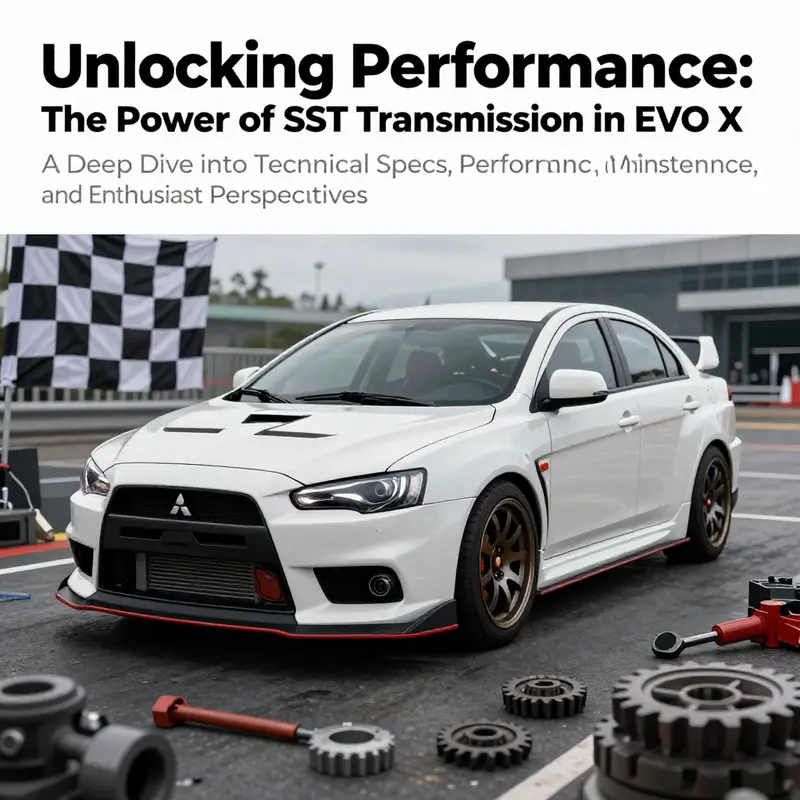
The Mitsubishi Lancer Evolution X, known affectionately as EVO X, stands out not just for its iconic design and rally heritage but also for its innovative SST (Sport Shift Transmission). This advanced 6-speed dual-clutch transmission has positioned the EVO X as a benchmark in performance vehicles. From its rapid gear shifts to versatile driving modes, understanding the SST transmission is crucial for business owners and automotive enthusiasts alike. Each chapter will explore the technical specifications, performance metrics, maintenance considerations, comparisons with manual options, and the impact on market dynamics and customer perspectives, equipping you with crucial insights for informed decision-making.
null
null
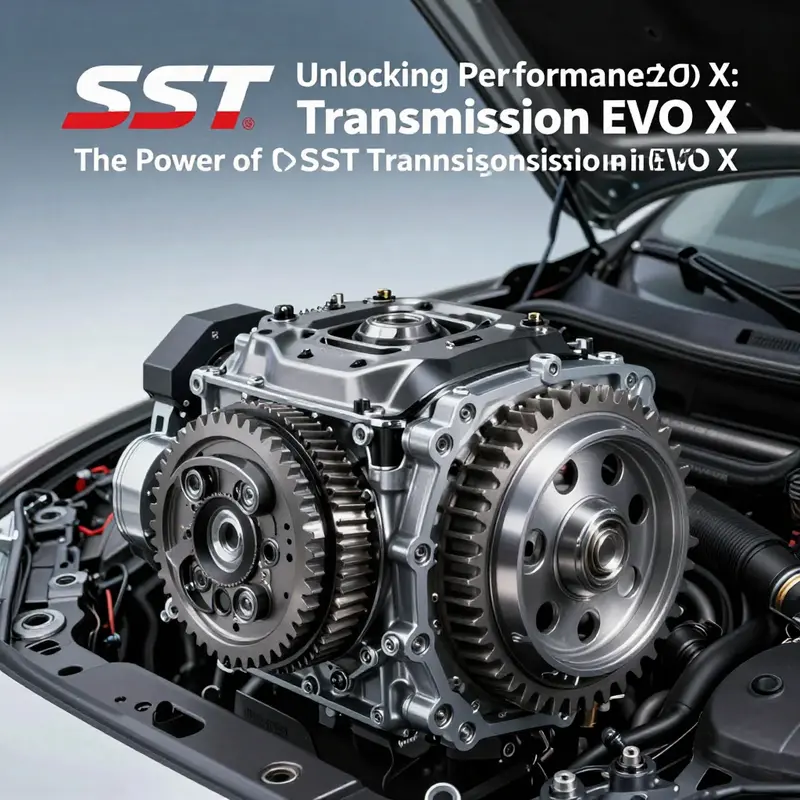
Rapid Shifts, Raw Responsiveness: Inside the EVO X SST Transmission and Its Driving Modes
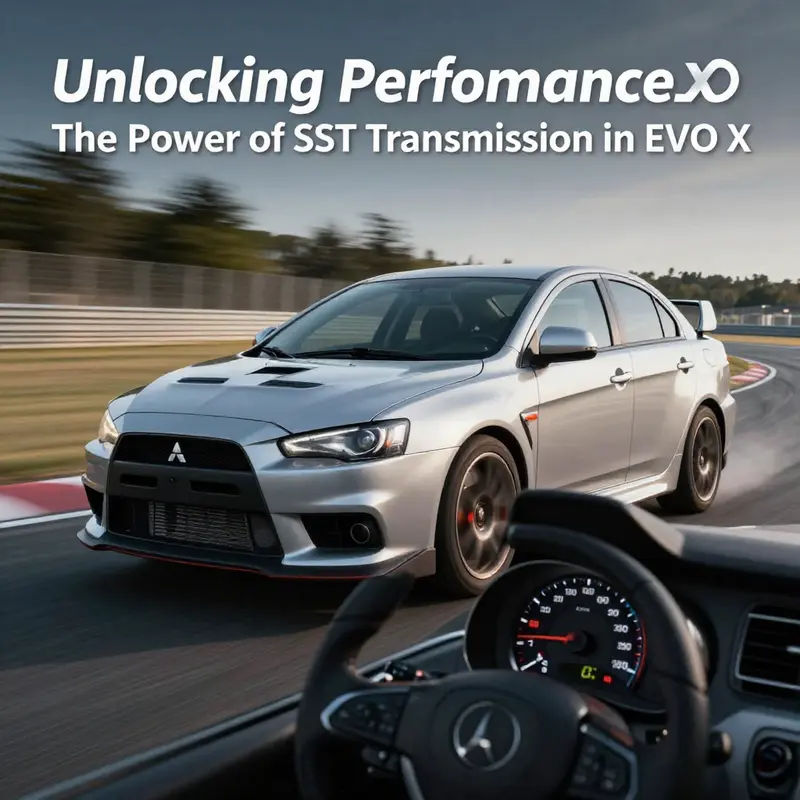
The SST (Sport Shift Transmission) in the Mitsubishi Lancer Evolution X stands as a core pillar of the car’s performance narrative. This six-speed TC-SST, a twin-clutch arrangement, separates odd and even gears across two clutches to deliver lightning-fast gear changes. The result is a transmission that blends the ease and predictability of an automatic with the immediacy and engagement historically associated with a manual. By eliminating the torque converter’s parasitic losses, the SST translates engine torque more directly to the wheels, unlocking a more responsive mid-range and a quick throttle response. In this sense the EVO X’s transmission isn’t just a component; it’s an active partner in shaping how the car feels when the road tightens and the speed climbs. The engineering intent is clear: maintain automatic convenience while preserving the tactile immediacy and precision that enthusiasts crave during spirited driving and on-track sessions alike. The chassis, the turbocharged four-cylinder, and the electronics work in concert to transform a straight line into a dialogue between driver and machine. The SST is the device that translates intention into action in fractions of a second, and that speed is felt long before any straightaway becomes a sprint.\n\nPerformance metrics articulate the effect with clinical clarity. In Sport mode, shift times hover around 150 milliseconds, a figure that eclipses many traditional automatics and even most manual gear changes in real-world driving. That sub-second latency matters: it reduces the window where throttle and gear selection can feel out of sync, ensuring the engine’s torque curve is matched to the car’s acceleration profile with minimal delay. At higher speeds, the torque-converter bypass clutch engages, establishing a direct mechanical tie between engine and transmission. This bypass improves efficiency and throttle response, turning each touch of the accelerator into a more immediate, linear surge instead of a softened, lag-prone reaction. The SST is built to handle the full output of the EVO X’s 4G63 turbocharged engine—roughly 291 horsepower and 300 lb-ft of torque—without sacrificing durability under sustained high-load conditions. The system’s robustness matters, because track days and long uphill battles demand more than a clever shift pattern; they require a transmission that can repeat a precise sequence without heat buildup or slip compromising performance.\n\nThe design also accommodates a spectrum of driving preferences through distinct modes that feel coherent rather than artificial. Normal mode prioritizes smoothness and efficiency, curbing engine speed and delivering gentle, refined shifts that preserve fuel economy on daily commutes. It is the mode that lets the EVO X breathe in ordinary traffic while preserving the sense that the vehicle remains responsive and ready to respond should the driver demand more. Switch to Sport mode, and the character shifts decisively. Shifts arrive sooner and are held longer, the transmission coaching the engine to work near its redline without overreaching into harshness. The result is markedly more immediate acceleration, a tightened chassis feedback loop, and a louder, more assertive exhaust note that underscores the car’s performance intent. The software drives the perception of urgency, and the mechanicals support that by delivering the torque promptly, with less time spent in neutral bands between gears.\n\nFor those who crave direct control, SST Manual mode puts the driver’s in the cockpit’s captain’s chair. Paddle shifters behind the steering wheel translate quick, tactile inputs into deliberate gear selections, allowing the operator to choreograph the car’s attitude through corners and straightaways. The interface preserves the analog thrill of manual gear selection while retaining the car’s automatic safety nets and logic, giving a heightened sense of involvement without sacrificing the practical benefits of an automated system. Then there is the Paddle Shift + Auto setting, a hybrid that lets the driver override the automatic sequence with paddles while the transmission retains the ability to smartly downshift when the engine or vehicle demands it for protection or stability. This combination offers a flexible beat that suits mixed driving environments—from open-road blasting to cautious, corner-heavy transitions on a winding street.\n\nA distinctive design choice further shapes how this powertrain behaves in real-world driving: the activation of the Super Sport mode is deliberately gated. To activate this aggressive state, the vehicle must be stationary in park, and the driver must press and hold the shift paddles for three seconds. The restraint is purposeful, preventing a destabilizing mode switch while the car is rolling, which could otherwise provoke unexpected throttle response or torque shifts. In practice, that safety boundary makes the EVO X feel more controllable on open roads and racetracks alike, even as its performance envelope remains exceptionally broad when conditions permit. This design nuance reflects a broader philosophy: the SST is fast and exciting, but it must be predictable enough to be trusted by drivers when the stakes are high.\n\nThe EVO X’s final expression of this chassis-transmission philosophy sits in a delicate balance. While most EVO X models embrace the dual-clutch SST, the Final Edition’s allure lies in returning to a five-speed manual. The manual box preserves a purist’s tactile connection—an homage to older Mitsubishi performance sensibilities that some fans still prize above the efficiency and rapidity of dual-clutch setups. The nostalgia is real, even as the modern SST delivers measurable advantages in repeatability, acceleration, and drivability across a wide range of scenarios. The shifting experience remains accessible and gripping, but the decision to pivot back to a traditional manual reminds us that performance ecosystems are not monolithic. They are a spectrum of preferences, each with a case for its own engagement style.\n\nFrom a maintenance perspective, the SST’s complexity invites careful attention to lubrication, calibration, and the integrity of its internal clutches and hydraulic systems. When timing and reliability are paramount, enthusiasts often turn to parts and maintenance resources that ensure compatibility with EVO X specifications—such as oil filters and other common wear items that fit the early- to mid-2010s EVO X range. In that context, a well-maintained SST system will retain its responsiveness and precision for a long season of spirited driving. For those who want to explore the ecosystem beyond stock components, there exists a path to consider an SST-DCT470-reconditioned 6-speed transmission as a potential restoration or upgrade option. This choice offers a controlled pathway to preserve the hardware’s performance characteristics while addressing wear or reliability concerns that can arise with aging performance hardware. SST-DCT470 reconditioned 6-speed transmission provides a concrete reference point for those who wish to maintain a high level of drivability without sacrificing the integrity of their gearbox.\n\nThe chassis and software interplay is a crucial thread in this narrative. The SST’s software tuning complements the mechanical sophistication of the twin-clutch arrangement, translating the driver’s intent into a sequence that minimizes lag and maximizes thrust. In this synergy, the EVO X reveals its character: a car built for precision and speed, but tempered by a sense of poise that keeps it predictable when pressure rises. The result is not merely a punchy acceleration curve; it is a calibrated, repeatable performance trait that persists across different driving environments. That reliability is what makes the EVO X’s SST system compelling to enthusiasts who track-test and daily-drive in equal measure.\n\nTo put this into a broader performance context, independent assessments underscore the SST’s role in delivering quick, decisive shifts without the typical penalties associated with high-performance automatics. The Car and Driver review of the EVO X highlights how the transmission contributes to overall acceleration and throttle response, framing the SST as a central component of the car’s dynamic identity. External references reinforce that the SST’s gains are not only theoretical but practically experienced in real-world driving. For readers who want to trace these performance threads to a credible external analysis, the review provides a complementary perspective on how shift speed, gear-holding, and engine torque converge on the track. External reference: https://www.caranddriver.com/mitsubishi/lancer-evolution-x/review
SST Transmission EVO X: Maintaining Precision and Navigating Upgrades for Peak Performance
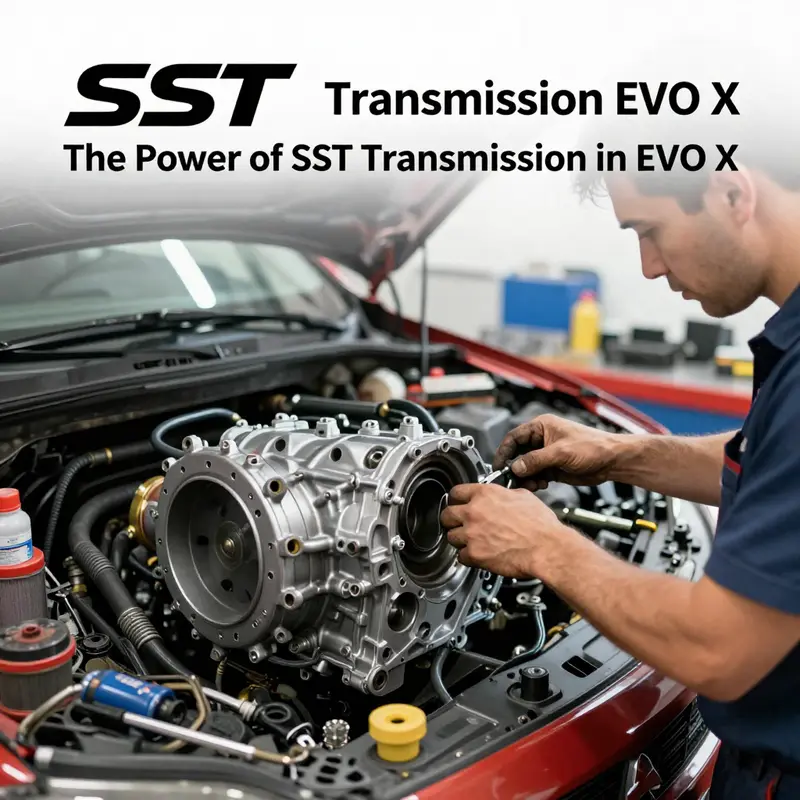
The Twin Clutch Sport Shift Transmission (SST) in the Lancer Evolution X marked a clear shift in how performance and response could be delivered from a factory setup. A carefully tuned ballet of two clutches, one governing odd gears and the other even gears, allowed shifts to happen in the blink of an eye. The result was a level of immediacy in torque delivery and throttle response that traditional automatics could only aspire to, all while cutting the parasitic losses that torque converters introduce. Yet beneath that immediacy lies a layered world of maintenance and upgrade decisions that shape the long-term vitality of the drivetrain. To appreciate the SST’s potential is to understand that the system demands a disciplined approach to upkeep, especially when the car is pushed into performance-oriented driving modes or when power levels climb beyond stock aspirations. Maintenance, in this sense, becomes a foundation for reliability and a gatekeeper for higher performance dreams. In the EVO X, this is not merely about keeping the transmission functioning; it is about sustaining the immediacy, the crispness of each shift, and the confidence that every dialed-in stage of tune will respond predictably when it matters most. The SST’s architecture, while robust, carries a responsibility that sits alongside the engine’s own needs: cooling, lubrication, firmware synchronization, and a controlled driving tempo that respects the limits of the dual-clutch mechanism. For many enthusiasts, this means adopting a holistic view of the powertrain where the transmission’s health becomes integral to the overall driving experience rather than a separate concern to be addressed only when something goes wrong.
At the core of maintenance is fluid management. The SST depends on a specialized transmission fluid that is specified to maintain the unique frictional properties of the dual-clutch system. Using the incorrect fluid is not a mere maintenance inconvenience; it can precipitate pronounced gear wear, slip, or even hydraulic inconsistencies that compromise shift timing. Regularly scheduled fluid changes, using the correct SST-grade fluid, help maintain smooth engagement and prevent clutch glazing as the hydraulic circuits cycle through high-load events. This is especially crucial when the car is driven aggressively and the transmission experiences repeated, rapid shifts or high transients that push the system toward higher operating temperatures. In real-world terms, that means a cooler, cleaner oil environment that preserves clutch life during spirited driving and on longer track sessions where heat soak becomes a factor. The cooling system for the SST deserves equal attention. The transmission generates meaningful heat under stress, and a working cooler that is free of blockages, leaks, and flow restrictions becomes a vital ally. A well-functioning cooler prevents the onset of heat-induced clutch slip and downstream wear, preserving shift consistency and prolonging the life of internal components that are already working at the edge of their design envelope when the boost levels rise or when the car operates in its more aggressive modes.
Beyond fluids and cooling, firmware updates play a quiet yet critical role. Modern dual-clutch transmissions rely on electronic control strategies that adjust shift timing, clutch control, and hydraulic actuation. Dealerships and qualified shops can apply software updates that refine shift logic, improve reliability, or address minor quirks reported by owners. The incremental benefit of such updates can be subtle, but over many miles and in demanding driving contexts, those refinements translate into smoother operation and better predictability when a driver pushes the vehicle into sport or even the more extreme mode sets. To maintain alignment with the vehicle’s evolving behavior, keeping the software current is a prudent practice. It is not about chasing every minor patch, but about ensuring that the transmission’s electronic brain is operating with the most mature and stable control strategy available for your chassis and configuration.
An additional aspect of maintenance concerns driving style and duty cycle. Harsh launches, repeated high-load starts, or sustained, aggressive driving without adequate cooling can accelerate wear on the clutches and related components. The SST’s performance capability is best realized when the drivetrain is treated with a balanced approach—allowing momentary, controlled bursts of power while ensuring that the cooling and lubrication have time to recover between strenuous sessions. This is not simply about etiquette; it is about preserving the integrity of the dual-clutch architecture over the long haul while maintaining the precise throttle response and rapid shifts that define the SST experience.
On the upgrade front, the EVO X’s SST has proven to be a robust platform for enthusiasts seeking more power. While the original configuration presents a compelling blend of performance and efficiency, the aftermarket has responded with a mature set of solutions designed to push power figures beyond stock levels while preserving the integrity of the dual-clutch mechanism. It is worth noting, however, that Mitsubishi did not offer factory performance upgrades for the SST. This has steered the community toward well-supported aftermarket paths, where builders focus on reinforcing the clutch packs, upgrading oil pumps, and enhancing cooling capacity, alongside calibrated tuning software. The implication is simple: any meaningful power expansion beyond the stock range hinges on high-quality, purpose-built components that work in concert with the SST’s mechanical geometry and hydraulic control.
In practice, the high-performance potential of the SST platform is built around three pillars: clutch endurance, hydraulic and oiling reliability, and thermal management. Reinforced clutches and shift forks are common upgrades among rebuilds and high-mileage examples that see track use or frequent extreme accelerations. Upgraded oil pumps ensure a steadier supply of lubrication under peak load, while enhanced cooling systems tackle the heat that accompanies elevated power and rapid shifting. The aftermarket landscape for the EVO X SST is mature and diverse, offering options that address the unique demands of a dual-clutch transmission when it carries more than the factory timing gear and boost levels. Importantly, this upgrade path remains confined by the transmission’s intrinsic design limits; pushing toward higher horsepower requires a carefully designed combination of internal parts and tuned control strategies to maintain reliability.
The modification landscape also reshapes the broader upgrade strategy for the Evo X. The SST, by design, changes how enthusiasts approach common EVO upgrades. Classic routes that focus primarily on engine tuning or forced induction must be aligned with what the SST can reliably manage. This means that engine and exhaust modifications, while still central to increasing power, must be harmonized with the transmission’s capacity. A misalignment can transform a potential performance gain into a drag on throttle response or shift quality, undermining the very immediacy that defines the SST. In this sense, upgrades become an exercise in system integration rather than a simple horsepower chase.
For builders and owners aiming to extract meaningful power from an EVO X while preserving driveability, a thoughtful rebuild plan paired with supporting upgrades is often the most reliable route. This approach begins with a robust assessment of clutch life, hydraulic pressure, and heat management. It then proceeds with upgraded components where needed, followed by calibrated software to harmonize torque delivery with the revised hardware. The goal is not to transform the car into an opaque power machine; it is to preserve the lucid, rapid, and controllable responses that make the SST compelling in the first place.
To readers who are exploring options for the SST, a practical entry point is to consider a dedicated rebuild or upgrade kit that targets the DCT470-style configuration commonly discussed in enthusiast circles. Such kits typically include reinforced clutches and related hardware, a revised oil pump, enhanced cooling capacity, and compatible tuning software. When approached with care, these upgrades can enable power figures well beyond stock while maintaining the crisp shift characteristics that define the original Evo X experience. For a concrete reference to a rebuilt, upgraded SST option, see this resource: mitsubishi-evo-x-10-sst-dct470-reconditioned-6-speed-automatic-transmission-gearbox-ralliart-dodson-ssp. The link points to a dedicated SST rebuild pathway that aligns with the Evo X’s design philosophy and the realities of dual-clutch operation in a high-performance chassis.
Beyond individual components, the broader upgrade strategy also involves anticipating compatibility with various engine tuning and exhaust configurations. The SST’s presence has, in effect, shifted the modification landscape away from some traditional EVO II-era upgrades toward approaches that integrate engine performance with transmission control. This means that the most successful projects are those that treat the entire drivetrain as a single system, where engine, exhaust, turbo or supercharging, cooling, and clutch dynamics are synchronized under a unified performance objective. The result is a vehicle that not only accelerates quickly but does so with a level of consistency and predictability across gears that keeps the driver’s intent clear and the chassis responsive.
For owners who want to deepen their understanding, community-driven discussions offer readily accessible insight into real-world experiences with SST maintenance and upgrades. A central takeaway from such discussions is that knowledge of how the SST operates—its fluid requirements, cooling needs, and software behavior—helps owners make informed decisions about when and how to upgrade. It also highlights that a well-executed plan balances hardware reinforcement with intelligent tuning and prudent driving habits. In short, the SST is a demanding but ultimately rewarding platform when approached with a disciplined, systems-oriented mindset.
External resources and technical discussions provide further context for enthusiasts seeking a deeper dive into the SST’s behaviors and upgrade pathways. For broader owner perspectives and troubleshooting experiences, the Mitsubishi Forum thread dedicated to Lancer Evolution X remains a valuable touchstone for understanding how real-world users manage maintenance, upgrades, and daily usability. You can explore this forum discussion here: https://www.mitsubishiforum.com/forums/lancer-evolution-x.68/.
If you are charting a path for your Evo X that embraces both precision and potential, the key is to stay informed, stay disciplined about maintenance, and engage with a community that has already mapped many of the common upgrade routes. The SST’s legacy is not just about speed; it is about how a dual-clutch transmission can be supported to deliver consistent, repeatable results over time. The balance between care and ambition defines the real-world viability of any upgrade plan, and it is the defining thread that ties maintenance, reliability, and performance together in the EVO X story.
SST Transmission in the EVO X: Speed, Precision, and the Manual vs Dual-Clutch Debate
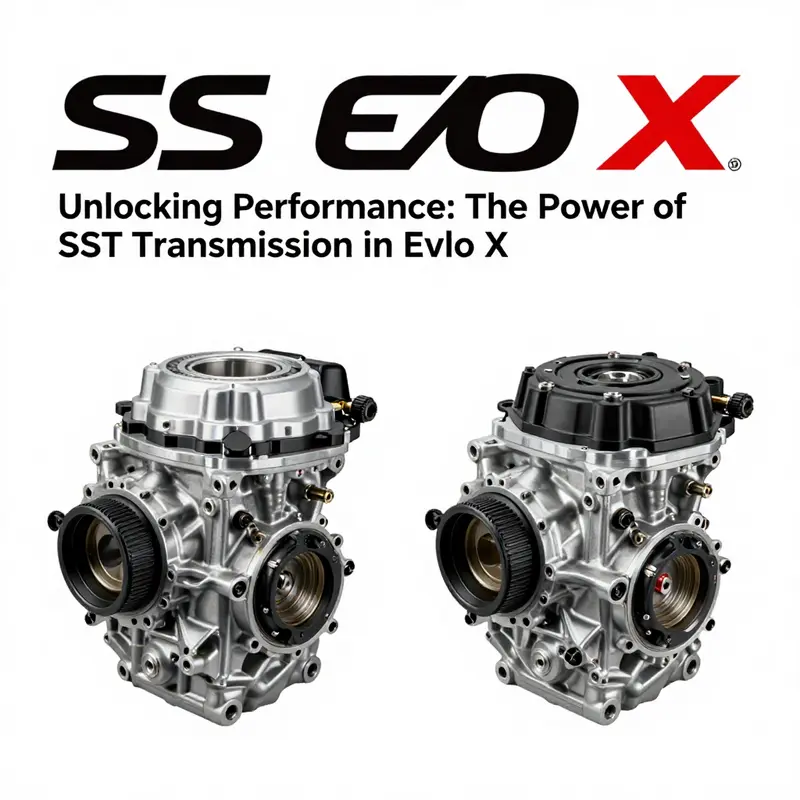
Choosing between the EVO X’s six-speed SST dual-clutch transmission and its six-speed manual box hinges on the driver’s priorities. The SST is designed for blistering, race-inspired shifts with no clutch pedal, delivering smooth preloaded gear changes and near-instantaneous response. In everyday driving, this translates to effortless progress, confident highway merging, and a sense of propulsion that feels effortless. The SST offers three modes: normal for easy, economical cruising; sport for quicker throttle response and sharper shifts; and a safety-first super sport setting that requires a deliberate paddle action to prevent unintended mode changes when the vehicle is moving.
By contrast, the manual transmission emphasizes tactile engagement: a direct link between engine, clutch, and gears, with rev-matching and precise gear selection rewarding a skilled driver. In straight-line acceleration, the SST can be faster due to its preloaded gears, but a deft manual can match or exceed performance in controlled corner exits by choosing gears with careful timing. The manual’s appeal rests in the sensory feedback—the pedal, stick, and engine singing at high revs—that reminds the driver of being in charge of the machine.
From a maintenance and tuning perspective, the SST requires careful calibration to maintain reliability under high load, while the manual can offer simpler maintenance and potentially lower long-term cost. Real-world ownership then comes down to the driver’s mission: if convenience, consistency, and relentless tempo matter most, the SST is the winner; if direct driver input and the ritual of shifting matter most, the manual remains compelling. The EVO X thus demonstrates how a single platform can accommodate two driving philosophies without compromising overall performance.
null
null
Final thoughts
The SST transmission in the Mitsubishi Lancer Evolution X represents a significant leap in automotive engineering, delivering outstanding performance and versatility that appeals to both everyday drivers and hardcore enthusiasts. Understanding this sophisticated technology grants business owners insights into consumer preferences and market trends, underscoring the demand for performance-oriented vehicles. As the landscape of automotive engineering evolves, keeping abreast of innovations like the SST transmission can provide a competitive edge in the industry. Ultimately, the choice between SST and manual transmissions reflects personal preference, with both options offering unique experiences for different types of drivers.