

The Mitsubishi Lancer is not just a compact car; it’s an embodiment of engineering expertise and aesthetic appeal. At the heart of this vehicle lies the engine hood, a critical component that serves both functional and stylistic purposes. Business owners and automotive enthusiasts alike need to grasp the significance of the hood in maintaining vehicle performance, enhancing aerodynamics, and ensuring durability. This article will delve into three key areas: the functional design of the Mitsubishi Lancer hood, the various materials used in its construction, and the market channels available for purchasing these essential parts. By understanding these aspects, business owners can make informed decisions that align with their operational needs and customer demands.
The Hood That Defines a Legend: Function, Form, and the Evolution of the Mitsubishi Lancer’s Engine Bay

The engine hood of a Mitsubishi Lancer carries more than a simple function of enclosure. It is a hinge between the car’s mechanical soul and its visual language, a crafted surface that communicates intent before the first turn of the key. Across the Lancer family, and most memorably within the high-performance lineage that many enthusiasts associate with racing heritage, the hood has evolved from a plain shield to a dynamic component that blends protection, cooling, and aerodynamics with aggressive aesthetics. This evolution is not accidental. It reflects how engineering challenges—the management of heat, the delivery of air to vital components, and the need to stabilize front-end behavior at speed—drive form as surely as form drives perception and identity. A well-designed hood does more than cover the engine bay; it channels air, sheds heat, and frames the driver’s imagination, inviting a closer look at what lies beneath and how that hidden world keeps chasing the limits of performance. In that sense, the hood functions as a microcosm of the Lancer’s broader engineering philosophy: practical resilience married to a recognizable, motorsport-inspired edge that signals capability even when the car is standing still.
At its core, the hood is a protective shell for the engine bay, guarding against external debris while helping to shelter sensitive components such as the radiator, the air conditioning system, and the complex network that keeps the engine’s combustion process stable. But in a lineage that values speed and repeatable performance, protection is inseparable from cooling. The engine bay becomes a heat source during acceleration, in stop-and-go traffic in warm climates, and especially on the track. Without sufficient cooling, power can wane, components can overheat, and the confidence of a long, fast run diminishes. The hood’s design—whether a standard steel panel or a leaner, performance-focused shell—fulfills this thermal mission by providing openings, channels, and interfaces that guide air flow in useful directions. Those design choices are rarely aesthetic only; they are calculated responses to the realities of heat transfer, fluid dynamics, and the need for structural integrity under stress.
In the traditional, utilitarian versions of the Lancer, the hood tends toward clean lines and straightforward construction. It emphasizes durability and cost-effectiveness, which in turn supports reliability and long service life. Yet even within a practical framework, subtle cues begin to emerge that foreshadow the hood’s future role in performance. Slight curvature, a tighter fit against the grille, and the way the leading edge meets the headlights all contribute to a silhouette that signals capability. When a model line grows toward higher performance, those cues become more pronounced. The hood may incorporate purposeful vents or sculpted contours that invite air into the engine bay or create pathways for heat to escape more efficiently. The hood’s character thus travels from a simple protective cover to a functional element of the vehicle’s aerodynamic and thermal strategy, a point of contact where engineering meets visual rhetoric.
Most readers will notice the hood’s air intake or ventilation apertures long before they notice the details hidden below. These openings are not merely for show. In high-performance contexts, they act as purposeful inlets that channel cooler air toward the engine, the intercooler, or the radiator, depending on the configuration. In some configurations, the vents are designed to disrupt boundary layer separation along the hood surface, helping to manage under-hood pressure and reduce lift at speed. The presence of air channels or perforations—whether as open vents or as louvers integrated into the hood—speaks to a philosophy of thermal management that prioritizes sustained power delivery and consistent brake cooling, both of which rely on well-managed air movement. When the engine is pushed into high-demand regimes, such as spirited highway runs or timed laps, these design elements prove their value by preserving a stable intake temperature and preventing thermal throttling. This is the kind of practical advantage that drivers feel but sometimes take for granted, a hidden lift in confidence that arrives not from flashy drama but from measurable, repeatable performance.
Materials tell a complementary part of the story. The standard, factory hood in many Lancer configurations is built from steel, a material chosen for its ruggedness and raw cost efficiency. Steel hoods are durable, forgiving of small impacts, and straightforward to manufacture, which keeps production costs down and serviceability straightforward. However, steel adds significant mass to the front end, a factor that can influence steering response, suspension load distribution, and even fuel efficiency in a car that weighs its handling as much as its horsepower. For owners who chase sharper dynamics, lighter materials become appealing. Aluminum hoods reduce weight, especially at the critical front axle, which in turn can improve turn-in response, reduce front-end inertia, and contribute modestly to overall handling balance. Yet aluminum must be considered alongside corrosion resistance, rigidity, and the potential for heat-related issues when used in demanding conditions. In practice, the choice of material traces a clear arc: from steel for everyday durability to aluminum for a measured performance lift, and, in the most aspirational, carbon fiber for dramatic weight savings and stiffness that matters on track days or in competitive settings.
Carbon fiber represents a more radical shift. The material’s high strength-to-weight ratio paired with its inherent rigidity makes it a darling of performance road cars and race programs. On a hood, carbon fiber can deliver meaningful front-end weight reduction while preserving, or even enhancing, stiffness in the panel. But performance gains are not the sole driver here. Carbon fiber also communicates a certain ethos—a willingness to invest in advanced materials to extract every possible advantage. The aesthetic language of carbon fiber is unmistakable; it signals dedication to lightness, precision, and the willingness to push beyond conventional factory choices. For many enthusiasts, the carbon hood becomes a visible reminder of engineering ambition: a component that aligns the car’s outward appearance with the internal reality of air cooling, heat evacuation, and mechanical efficiency.
The practical implications of hood design extend into the realm of installation and fitment. Even the most well-conceived hood can produce misalignment issues if not matched to the vehicle’s front-end geometry. The hood must line up with the grille, headlights, and fenders with minimal gaps, not only for visual cohesion but also to preserve the seal against weather and noise intrusion. The hinges and latch system require precise alignment to guarantee consistent closure and to avoid fatigue over repeated cycles of opening and closing. When aftermarket or non-OEM hoods are installed, the need for careful measurement, proper hardware, and professional installation becomes more pronounced. The risks—improper latch engagement, misaligned gaps, or interference with adjacent components—underscore the value of a measured approach when upgrading this single, central panel. In practice, such upgrades are most successful when paired with inspection of related assemblies: the hood seal, vent ducts or channels, and any additional fasteners that secure the panel under dynamic loads.
The market landscape surrounding Lancer hoods reflects this blend of practicality and performance emphasis. A wide spectrum of options exists, ranging from factory-appearing variants to purpose-built performance pieces that emphasize thermal management and aerodynamics. Buyers encounter steel, aluminum, and carbon fiber options, each with its own weight, rigidity, and cost implications. The offerings span from stock replacements designed to meet original specifications to aftermarket solutions that promise improved cooling efficiency and a more aggressive stance. The choice often hinges on how the owner uses the car: daily driving with a preference for reliability, spirited weekend drives that test handling, or track-focused sessions in which every gram and every air channel matters. In all cases, the hood is not merely a part to replace; it is a strategic instrument that shapes how the car behaves under stress and how the driver experiences heat, air, and control.
Among enthusiasts and builders, the hood’s role as a design cue also intersects with broader styling narratives. A hood that features vents or a ventilated center section can be part of a cohesive visual package that includes darker grilles, smoked or tinted lighting, and complementary body components. The targeted look—an air of aggression, readiness, and precision—merges with functional cues to create a coordinated identity. Even subtle decisions, such as whether the hood’s leading edge is slightly concave or remains flat, can influence how air flows over the front of the car and how the wind pressure interacts with the rest of the bodywork. When combined with other elements of the front fascia, hood geometry helps generate a visual story of performance: that this is a car designed to handle heat and speed with composure, to gather air and channel it where it can do the most good, and to present a disciplined, purposeful silhouette to rivals and enthusiasts alike.
For those who map their own journeys into this world, the process of upgrading or replacing a hood becomes part of a broader conversation about what performance means in practice. It is a conversation about how engineering balances heat, strength, and weight; how designers translate aerodynamic objectives into a more muscular exterior; and how a car’s external language can reflect its internal capability. The hood’s evolution mirrors the Lancer’s own trajectory—from a dependable compact to a platform that can be tuned and prepared for the limits of driving pleasure. It is a reminder that the car’s most intimate parts are not hidden away in a workshop corner; they form the first line of language a car offers to the road, the track, and the eyes of the driver who believes that speed is a dialogue between many parts, all speaking in one clear, confident voice.
In the context of the modern aftermarket scene, one can locate a spectrum of options that illustrate this convergence of function and aesthetic. Among the most discussed avenues are carbon-fiber variants, which emphasize weight reduction and stiffness while offering a striking, sport-oriented look. There are also ventilated or perforated designs that actively facilitate air movement into the engine bay, supporting cooling during high-demand operation. These choices are not mere trends; they are practical responses to real performance pressures. The more a hood is engineered for cooling, the more stable the engine bay remains under load, which translates into more consistent horsepower delivery and a car that remains predictable when the track or the road demands the most from its powertrain and its cooling system. The hood, in this sense, becomes a daily reminder that performance is not a single moment’s event but an ongoing dynamic between heat, air, and mechanical integrity.
For readers and drivers who want tangible references as they evaluate or plan future upgrades, it helps to anchor discussions in credible, practical considerations. Think about how a hood affects weight distribution and front-end geometry, how venting strategies alter under-hood flow patterns, and how material selection intersects with heat management and durability. It is also valuable to consider installation realities: ensuring correct alignment, verifying the fit with adjacent components, and acknowledging that some upgrades perform best when accompanied by complementary improvements in related systems—radiator capacity, intercooler sizing, and even the rigidity of the front-end structure. The hood, in short, is a keystone piece in a larger performance puzzle, and its proper selection should reflect a measured balance of material science, thermodynamics, and driving philosophy.
To connect this discussion to the broader realities of the vehicle’s ecosystem, contemporary resources and catalogs illustrate the range of choices and their implications. A representative point of reference highlights how modern hood designs incorporate open or semi-open vent patterns to promote cooling, how the air intake strategy integrates with the vehicle’s overall thermal path, and how the hood’s geometry supports or enhances the vehicle’s front-end stability at speed. These credible inputs align with a larger view of performance-centric design: that the hood is not a hollow shell but a functional interface with the air and the thermal environment that surrounds the engine. For readers who want a tangible example of how such designs are presented and discussed in the market, a current listing illustrates the availability of carbon-fiber hoods designed for high-performance variants of the Lancer family. While the specific product names and brands vary, the underlying principle remains consistent: lighter, better-vented, more precisely fitted hoods offer real advantages in heat management and front-end behavior, while also signaling to onlookers a car that is prepared for serious driving.
In sum, the three pillars of hood design—protection, cooling, and aerodynamics—form a coherent narrative about the Lancer’s identity as a performance machine. The hood is where protection meets performance, a surface that is both shield and stage for the engine’s performance story. It embodies a philosophy that values engineering elegance as much as visual impact. The hood’s evolution mirrors the car’s own journey from practical, everyday transport to a platform capable of sustaining high-speed confidence, controlled behavior, and a distinctive motorsport lineage. This is why many owners treat the hood not as an afterthought but as a strategic component that aligns with their driving goals, their aesthetic preferences, and their understanding of how heat, airflow, and weight interact to shape the driving experience. It is a reminder that performance is, at its heart, a holistic endeavor, and the hood stands as a powerful, visible symbol of that commitment.
Internal reference for further exploration into aftermarket options and their fitment considerations can be found in a representative listing that discusses carbon-fiber hood options for this class of vehicle, which can be explored here: brand-new-carbon-fiber-bonnet-hood-for-mitsubishi-lancer-evo-x. This kind of resource helps bridge the conceptual discussion with real-world procurement and installation considerations, underscoring the hood’s role as a practical performance upgrade rather than a purely cosmetic upgrade.
External reference: https://www.autohome.com.cn/news/2024127.html
Steel to Carbon: How Hood Materials Shape the Mitsubishi Lancer’s Front-End Performance
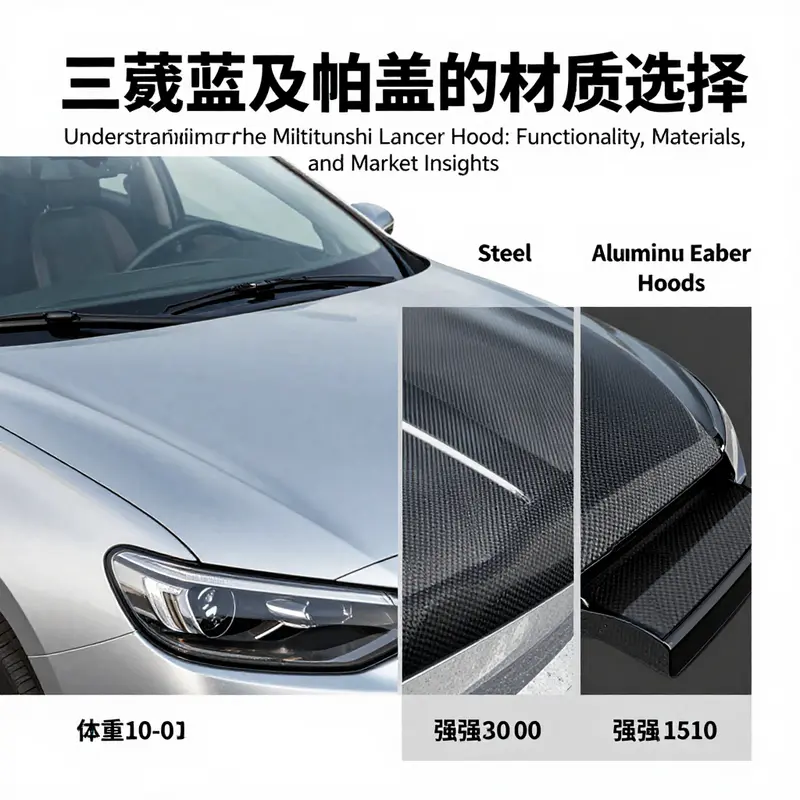
The hood of a Mitsubishi Lancer is more than a mere panel that hides the engine; it is a strategic component that balances safety, weight distribution, cooling every time the engine roars with intent, and the visual language of the car’s character. In the Lancer family, the choice of hood material reads like a microcosm of the broader engineering philosophy: practicality and cost awareness for the everyday version, and a push toward lightness and efficiency for the performance models. Across generations, the hood has evolved in tandem with powertrains, chassis tuning, and aerodynamics, forming a cohesive bridge between the engine bay and the road. The result is not simply a piece of metal or composite; it is a system that influences handling, braking, and even how quickly heat can be removed from the heart of the car during stop-and-go city driving or on the track. While some readers might recall the impressive vented designs of high-performance variants, the underlying truth is that material selection is a foundational decision—one that reverberates through every aspect of the car’s behavior on pavement and on the race circuit alike.
In the current landscape of the Lancer’s hood options, steel remains the foundational material for the standard models. Steel is a choice that emphasizes durability, repairability, and cost efficiency. It’s the workhorse of mass-market production, where manufacturing pipelines favor robustness and predictability over exotic weight reductions. From a practical standpoint, steel brings a predictable crash energy profile, straightforward sheet-metal forming, and a long track record of resilience in a variety of collision scenarios. For owners who are daily drivers, long-term ownership costs, ease of repair after minor prangs, and the availability of replacement parts are essential considerations. In that sense, the steel hood embodies the Lancer’s roots in practicality: it’s thick enough to resist dents under normal use, forgiving enough to be repaired in many shops, and affordable enough to remain accessible to a broad spectrum of owners.
Yet the story does not end with the unadorned steel panel. The engineering team has long understood that even incremental reductions in unsprung or front-end mass can translate into meaningful improvements in steering response, turn-in, and overall nimbleness. For those who pursue a sportier drive experience, the aluminum hood has appeared in several configurations, particularly in models that balance daily usability with a desire for lighter front-end weight. Aluminum offers a weight advantage that helps improve weight distribution and accelerative feel, which in turn can sharpen steering and reduce the moment of inertia that slows the wheel in tight corners. The lighter hood also contributes to better fuel economy in some driving conditions simply by reducing the load carried by the engine mounts, the front suspension, and the front axle. But aluminum is not a one-size-fits-all solution. It can carry a premium price, and its properties require careful attention to stiffness and crash energy management to ensure that the hood still behaves predictably in a collision. In the Lancer’s case, the aluminum option has often been reserved for higher-spec or performance-oriented models where the incremental gains in weight reduction align with broader chassis tuning goals.
The recursive question then becomes: where does carbon fiber fit into the Lancer hood equation? For some high-performance variants and certain aftermarket packages, carbon fiber emerges as a radical answer to weight reduction without sacrificing rigidity. The material’s strength-to-weight ratio is exceptionally favorable, allowing engineers to shave pounds off the front end without surrendering stiffness. A carbon-fiber hood can contribute to faster throttle response and more precise steering feedback by lowering the vehicle’s overall inertia, especially during aggressive cornering and rapid direction changes. The heat management story, too, changes with carbon fiber. While carbon fiber itself is not a superior conductor of heat, its use often accompanies venting or cooling enhancements that help move hot air away from the engine bay. In practice, the carbon fiber hood for the Lancer is frequently part of a broader aero and cooling strategy that includes vented panels, engineered heat extraction paths, and sometimes composite reinforcements designed to preserve impact resistance where it matters most.
However, it’s important to anchor the conversation in the reality that carbon fiber hood options are typically targeted at enthusiasts who race, track-day, or engage in aggressive performance driving. The cost premium is nontrivial, and the durability profile differs from steel or aluminum in a way that requires more careful maintenance and attention to replacement if damaged. Carbon fiber, while incredibly stiff and light, can be sensitive to impact damage and requires proper inspection after a collision or even a strong impact with debris. The installation and fitment of a carbon fiber hood must be performed with care, ensuring that the hood aligns precisely with the grille, headlamps, and fenders. Any misalignment can create unsightly gaps, allow water intrusion, or compromise the effectiveness of the hood latch and safety features under crash conditions. For those who pursue track use, the gains in weight reduction can be valuable, but the setup must be matched with compatible hinges, latches, and seals to maintain structural integrity and weather sealing.
Beyond these primary materials, there is a broader context that car owners frequently encounter in the market: the atmosphere created by aftermarket and OEM-plus components. The line between genuine factory parts and aftermarket upgrades can blur when looking at hood designs that emphasize cooling performance or aerodynamic efficiency. In the Lancer’s ecosystem, this has given rise to a spectrum of choices—from stock steel hoods that maintain factory-fit and crash standards to lighter-weight options and vented designs that promise improved under-hood temperatures and a more aggressive stance on the road. It’s a spectrum that mirrors the balance between everyday practicality and specialized performance. The steel hood remains the domestic staple, while the lighter-material alternatives offer a tool for enthusiasts to tune the vehicle’s front-end characteristics in line with their driving goals. For many owners, the choice is not simply about a single metric like weight; it’s about how weight, rigidity, and heat management converge to influence steering feel, wheel load distribution, and even the early-stage response of the throttle and suspension as the car leaves a corner exit.
In discussing these material choices, it is worth revisiting some practical considerations about performance and daily usability. The hood’s surface must tolerate a range of weather conditions, resist corrosion, and maintain a predictable surface for sealants and weather stripping. The standard steel hood’s resilience in this regard is well documented; it tolerates minor impacts and can be repaired with relative ease at a typical auto body shop. For owners who live in climates with heavy road salt exposure, the corrosion resistance offered by proper steel formulations, or the potential to upgrade to a coated steel or aluminum hood, can be significant long-term advantages. The transfer of heat from the engine bay to the outside world also has to be considered. A heavier hood can contribute to slightly hotter engine bay temperatures under sustained high-load operation simply because it adds to the thermal mass that must be dissipated. Conversely, a lighter hood reduces this thermal mass and can facilitate marginal gains in cooling efficiency when paired with a well-designed cooling system and venting strategy.
The practicalities of repair and maintenance cannot be overlooked either. A steel hood’s dent resistance and repairability make it a straightforward choice for many owners who maintain the car outside or in environments where minor scrapes are almost inevitable. Aluminum and carbon fiber, while offering weight advantages, typically demand more specialized repair approaches. In the case of aluminum, repair can be feasible but sometimes more costly or complex, and care must be taken to ensure proper corrosion protection around edges and fasteners. Carbon fiber repairs are more specialized, with the potential for cosmetic cracks or structural damage requiring technicians who are familiar with composite materials. In all cases, inspecting the hinges, supports, and latch mechanism becomes crucial after any hood replacement or after exposure to harsh driving conditions. Even minute misalignments can cause hood flutter at speed or irregular latch engagement, which could introduce safety concerns or cause water intrusion into the engine bay during rainstorms.
The market realities for the Lancer’s hood options reflect a mix of consumer desire and engineering pragmatism. You can find a range of choices in the used and aftermarket sectors, from aging steel OEM hoods to modern carbon fiber echoes of the Evo era. For Evo enthusiasts, the evolution of hoods often tracks the broader shift from heavy steel to lighter-weight composites that sustain or enhance the car’s performance envelope. Whether the objective is to shave weight for better handling, improve heat extraction with vented panels, or simply achieve a more aggressive aesthetic, there is a hood option that corresponds to the owner’s plan for the car’s next miles, be it street cruising, spirited mountain runs, or a weekend on the track. Even within this spectrum, the hood must harmonize with the car’s overall packaging. The front-end geometry—grille, headlights, bumper lips, and front aero elements—must all work together to maintain not only a coherent visual identity but also predictable airflow and safe sensor operation where applicable. This is why many owners rely on professional installation services, especially when adopting non-OEM hoods, to ensure that the hood’s fit, seal, and alignment meet factory standards or the desired performance criteria.
From a sourcing perspective, the material conversation also touches the broader ecosystem of parts supply. The steel hood typically dominates mainstream supply chains because it aligns with established manufacturing processes, tooling, and service network coverage. For enthusiasts pursuing lighter or more aggressive designs, the aftermarket becomes a source of variety, including carbon fiber options or engineered aluminum variants, sometimes accompanied by vented designs that aim to maximize under-hood cooling. The availability of such parts—from trusted manufacturers to reputable retailers—underscores the importance of aligning purchase decisions with both performance goals and long-term upkeep expectations. In practice, this means weighing not only the initial weight and price but also the potential impact on resale value, ease of future repairs, and compatibility with the car’s existing drive train and chassis tuning.
In this broader context, it is helpful to ground the discussion in a recognized reference that captures the technical standards and properties surrounding Lancer engine hoods. A comprehensive source on engine hood materials highlights that the factory hood is steel, chosen for its balance of strength, stiffness, cost, and repairability. This aligns with the practical reality observed in most ordinary Lancer configurations. The same analysis notes that while PU materials are sometimes discussed in relation to cosmetic exterior components, they do not represent the material reality of the factory engine hood. The distinction between exterior cosmetic accents and the actual structural hood is essential for anyone evaluating performance upgrades or aesthetic modifications. For readers seeking a deeper dive into the specification landscape, the authoritative source provides a detailed breakdown of hood material expectations and the implications for maintenance and safety. Understanding these fundamentals helps demystify why certain upgrades offer meaningful gains while others simply alter the look without delivering the same performance payoff.
All of these threads converge on a central point: the hood is a front-line decision in how a Mitsubishi Lancer behaves under load. The choice between steel, aluminum, or carbon fiber reverberates through the car’s weight distribution, steering response, and cooling strategy. It also frames the ownership experience—how easy it is to repair after a scrape, how likely it is to require specialized service, and how readily available the necessary replacement parts will be if damage occurs. For drivers who take a longer view of ownership, the steel hood offers a pragmatic path with proven durability and affordability. For enthusiasts who aim to extract sharper handling and quicker lap times, the aluminum or carbon fiber options may be worth the premium, provided they are engaged with a supportive chassis setup and a meticulous service plan.
In closing, the hood’s material lineage—from steel to aluminum to carbon fiber—embodies the Lancer’s dual persona: one foot in everyday reliability and another poised for dynamic performance. The formal engineering choice—steel for the baseline, with aluminum or carbon fiber mapping to specific performance aspirations—signals a philosophy that values predictable manufacturing, straightforward maintenance, and a clear path to weight management when matched with a thoughtful cooling and aerodynamics strategy. The hood, then, is not merely a panel but a canvas on which the car’s broader goals are sketched: durable, adaptable, and ready for the road. For owners who crave a sharper, more engaged driving experience, the hood becomes an enabler rather than a decoration—an instrument that, through its material makeup, helps translate the engine’s power into controlled, confident movement on the road and on the track.
For readers interested in a concrete example of how carbon fiber hoods are positioned within the Lancer ecosystem, consider the option of a brand-new original carbon fiber bonnet hood for the Mitsubishi Lancer Evo X. This choice illustrates the kind of material and design philosophy discussed here: a lightweight, stiff panel that works with the Evo X’s performance-oriented goals, while also hinting at how the broader market structures its offerings around specific chassis variants. brand-new-original-carbon-fiber-bonnet-hood-for-mitsubishi-lancer-evo-x.
As a practical note, the broader resources and technical standards consulted for this discussion emphasize that factory configurations rely on steel for the hood due to its proven performance in safety-critical scenarios and its compatibility with the entire vehicle’s structural integrity. While aftermarket options may push toward lighter weights or enhanced cooling, the underlying safety and reliability framework remains anchored in steel for the standard Lancer hood. For those who wish to explore more about the general specifications that govern Lancer models, including engine bays and hood-related dimensions, a respected automotive information resource provides a detailed specification page that confirms the hood material as steel for recent model years. This context helps motorists and enthusiasts anchor their expectations should they choose to upgrade or replace the hood with an alternative material. External resources in this domain offer broader technical insights that complement the practical knowledge shared here, reinforcing the idea that material choices are not isolated preferences but part of a holistic approach to vehicle dynamics and longevity.
In summary, the material story of the Mitsubishi Lancer hood is a story of balancing mass, rigidity, heat management, and cost. Steel remains the dependable backbone for everyday use, while aluminum and carbon fiber open doors to lighter front ends and sportier behavior for those who are properly prepared to manage the accompanying trade-offs. The hood thus reflects the Lancer’s enduring philosophy: a compact performance package that can be tailored to a range of driving experiences without losing sight of safety, reliability, and practical ownership. Those who delve into hood choices appreciate that every pound cut from the front end is a step toward more precise steering, quicker throttle response, and a more confident ride when the road turns twisty. The hood may be the car’s calling card at the showroom, but its material makeup tells the deeper story of how the Lancer negotiates the space between everyday practicality and the racetrack’s demanding language.
External resource: For a broader look at the Lancer’s technical specifications and how hood-related components fit into the entire vehicle architecture, readers can consult Car and Driver’s Mitsubishi Lancer specs page. It provides a rigorous, independent audit of the car’s structural and material characteristics and can serve as a useful reference as owners weigh their upgrade choices: https://www.caranddriver.com/mitsubishi/lancer/specs
Hoods Without Borders: Navigating the Aftermarket Landscape and Buying Routes for the Mitsubishi Lancer Hood
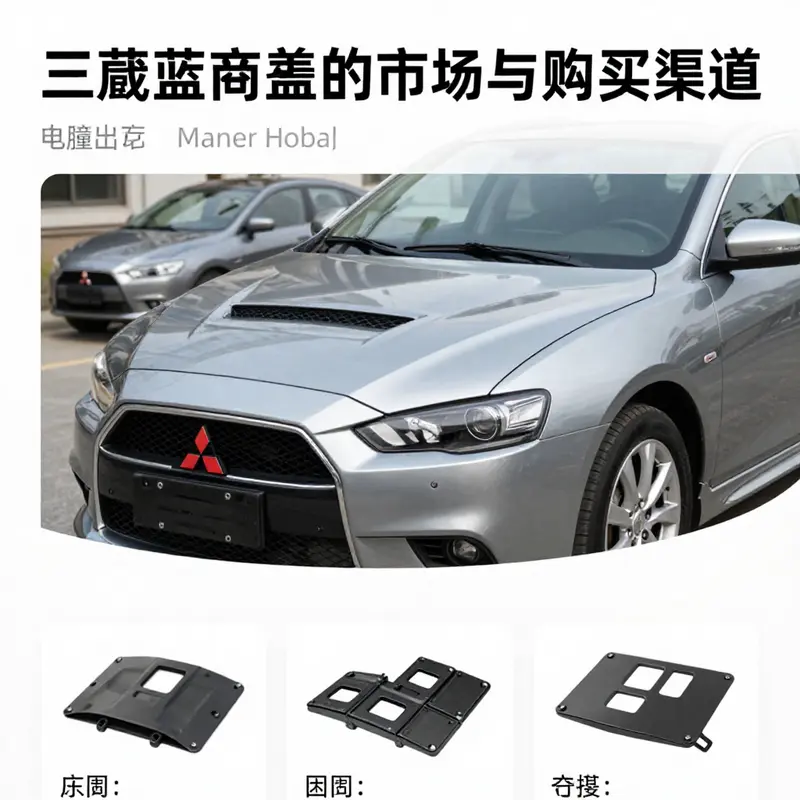
The hood of a Mitsubishi Lancer is more than a lid that shields the engine. It is a statement about balance—between protection, weight, and style. In the world beyond factory production, this balance becomes a moving target. Across generations, markets, and changing regulations, the hood evolves from being a simple sheet of metal to a carefully engineered component that can improve cooling, reduce weight, and sharpen the car’s stance. For owners and enthusiasts, understanding the aftermarket landscape is as essential as knowing the engine it covers. In this chapter, we explore how the Lancer hood has become a focal point for performance and personalization, how the market has adapted once official supply dwindled, and how buyers can navigate the buying channels with confidence, even when official channels have faded away in certain regions.
The Lancer hood sits at a crossroads of function and form. On the practical side, it is the first line of defense against road debris, heat, and the occasional collision. It protects the radiator, fans, and air conditioning components, all of which rely on predictable airflow and stable sealing. The design varies with year and variant. The standard versions tend toward practicality and cost efficiency. They emphasize a flat, durable surface and straightforward manufacturing that keeps production and replacement costs reasonable. In contrast, the high-performance versions—those tuned for rallying and competitive track work—lean toward materials that shave weight and boost cooling, while also delivering a more aggressive aerodynamics profile. Carbon fiber, aluminum, and other lightweight composites surface in these variants, often paired with scoops or vents that channel hot air away from the engine bay and toward the underbody where it can be managed more effectively.
Material choices reveal a quiet but telling evolution. The factory steel hood remains common on many mass-market Lancers, prized for durability and cost. Yet in the performance spectrum, aluminum offers weight savings that can improve front-end response and braking, especially when the front axle bears the burden of extra load. Carbon fiber represents the premium end, with significant weight reduction and stiffness that can translate into crisper handling and better cooling during high-demand sessions. Each material choice carries its own installation considerations, fitment tolerances, and long-term maintenance realities. For a driver who wants a blend of performance and practicality, the right hood becomes a strategic choice rather than a mere costume piece.
Across markets the supply story follows a similar arc. In regions where the newer Lancer generations never reach the showroom floor or where official sales have ended, the aftermarket becomes the primary supply chain. This is particularly true in markets where the Lancer earned a strong enthusiast following decades ago. The absence of a continuing official pipeline does not erase demand; it concentrates it into a vibrant secondary market. The aftermarket ecosystem thrives on a combination of nostalgia, performance potential, and the universal desire for a refreshed or distinctive look. In China’s mainland, for instance, the local consumer base no longer receives new factory parts for the older generations, but the aftermarket continues to pulse with activity. Enthusiasts seek compatibility, weight savings, and aesthetic upgrades. The market response—more options, more sellers, and more buyer questions about fitment and quality—reflects a healthy, ongoing demand for the hood as a vital component of the Lancer persona.
Where buyers find these parts matters as much as what they buy. The most direct route is the global online marketplace, where inventories span multiple generations, engine configurations, and body styles. Here the hood exists as a common item with a broad spectrum of condition and price. Buyers can encounter new, used, refurbished, or even rebuilt options with varying degrees of authenticity. The strength of the online marketplace is breadth. It aggregates sellers from different continents, enabling access to parts that may no longer be available locally. It also introduces a layer of risk—shipping costs, import duties, and the possibility of misrepresentation about condition or fit. For a buyer, a careful due-diligence process—checking the year, model, engine bore, and body style compatibility, reading seller feedback, and calculating total landed costs—becomes essential.
Specialized automotive communities and retailers offer a different flavor of reliability. Forums and dedicated parts sites, often populated by track enthusiasts and restoration project builders, tend to foreground fitment specifics and real-world install experiences. These spaces can be invaluable for understanding which variant of the hood suits a given Lancer generation, how cooling performance changes with venting designs, and what to expect during installation on a non-factory front end. In many cases, these sources will steer buyers toward high-performance options, such as lightweight carbon-fiber or aluminum hoods, that may carry a premium but deliver meaningful handling or cooling improvements on the track or in hot climates.
Local automotive parts markets and repair shops still play a role, especially for buyers who prefer to inspect a part in person before committing. In person, a buyer can assess gauge thickness, paint compatibility, hinge alignment, and the overall soundness of the hood’s sealing edges. Shops with a broad spectrum of stock or the ability to place special orders often serve as a bridge between the desire for a modern upgrade and the realities of import taxes and shipping delays. The risk here lies in variability. Stock availability can be inconsistent, and the quality of non-original parts may vary from supplier to supplier. A buyer who engages with a reputable shop and asks for a written specification, including weight, material, and warranty terms, will typically gain a clearer sense of value and risk than in a purely online transaction.
An important facet of the market is the need for precise compatibility. The Lancer spans multiple generations, each with its own hood shape, hinge placement, latch geometry, and radiator grille relationship. A hood that fits a standard sedan from one year may not align perfectly with a different year’s grille or headlight profile. This is not merely a cosmetic concern; it affects weather sealing, airflow, and even crash energy management in the forward structure. Buyers should insist on confirmation of year, chassis code, body style (hatchback versus sedan), and engine family. The best sellers and most reliable sources publish detailed fitment notes and return policies, but in the absence of official channels, the onus falls on the buyer to cross-check every datum.
The payment and logistics side of the market is its own chapter of risk and reward. Importing a hood—from a distant region to a home market—entails shipping charges that scale with weight, as well as potential duties and insurance costs. The freight process adds layers of complexity: delivery timelines can stretch into several weeks, especially if the shipment goes through multiple transit points or requires special handling for large panels. A thoughtful buyer will map out all cost components before purchase: item price, international shipping, packaging protections, brokerage fees, import duties, taxes, and any potential re-shipping if the item arrives damaged or fails to fit. Packing quality matters, because a hood is a large, thin panel that can suffer from creasing or edge damage in transit if not properly protected.
In this evolving landscape, one practical strategy stands out. Treat the hood as a modular upgrade. Start with a clear understanding of your goals: weight reduction, cooling improvements, or a more aggressive stance. Then map those goals to a material and design that suits your use case. If you are building a track-ready car, a carbon-fiber hood can offer real benefits in weight and rigidity, but it introduces higher cost and a different maintenance profile. If your priority is street usability and durability, a high-quality aluminum or even steel replacement with proper fitment and good weather sealing can be a compelling option. The choice will also shape your procurement path. A track-focused build may lead you toward the specialized retailers and forums that emphasize performance, while a street-oriented project may lean toward larger marketplaces with more standardized returns and a larger pool of compatible parts.
To illustrate how buyers navigate these paths in practical terms, consider a typical journey. A Lancer owner in a market with limited local supply begins by surveying the online marketplaces for a hood that matches their year and body style. They filter for a few key metrics: material type, weight, and condition. They compare images for paint consistency, check the hood’s edge finish and the alignment details of the hinge mounts, and read the seller’s notes about any prior installation work or repairs. They also examine the warranty terms, if offered, and the existence of any compatible mounting hardware in the package. If the listing mentions an EVO or Evolution lineage, the buyer must scrutinize the exact model year and generation to determine fitment certainty; this is where the nuance of model-specific fitment is most critical. As the buyer narrows choices, a link to a dedicated information hub or a community forum often surfaces as a valuable resource for confirming fitment geometry and potential quirks associated with the vehicle’s cooling layout.
When it comes time to seal the deal, a measured approach pays off. The buyer inventories potential suppliers, checks for verified reviews or feedback, and computes the total landed cost. If the hood is a carbon-fiber option or another high-end material, the buyer may request additional documentation about the resin system, weave orientation, and any protective clear coating to resist UV exposure. They may also inquire about returns and whether a transcontinental shipment offers a replacement option if the part does not fit as expected. The conversation with the seller should also cover packaging quality—hoods require protective bracing, corner protection, and a robust outer crate—or risk receiving a shipment with cosmetic or structural damage that undermines the investment.
For enthusiasts who value immediacy, a local shop or a regional distributor can sometimes provide a more straightforward path. These sources can confirm fitment in real time, arrange for an installation or bolt-on service, and offer a bundled package that includes weather stripping, hood alignment, and latch checks. The benefit is clarity and immediacy, which reduces the risk of misalignment or gaps that can cause water intrusion or wind noise. The drawback, naturally, is perhaps higher upfront cost and limited stock compared with global marketplaces. Still, in many communities, the mutual trust built through a local transaction provides intangible value that is difficult to quantify in dollars.
A practical note for the careful buyer: always verify the hood’s relationship to the grille and headlights. Even when a listing claims a perfect match, a visual check during installation is essential. The line between a visually similar hood and an exact fit can be narrow, especially when models evolved with incremental design updates. A professional technician can quickly verify hinge alignment, the latch mechanism’s engagement, and the sealing gasket’s integrity. If any misalignment is detected, it is prudent to pause the installation and consult the seller or manufacturer for guidance. Rushing through installation can result in paint chipping, missealed gaps, or even stress on the hood structure, all of which undermine the intended upgrades.
The market’s resilience rests on information clarity and buyer education. The aftermarket has developed a robust ecosystem of spec sheets, installation guides, and community knowledge that helps bridge the information gap left by the absence of official channels in certain regions. For buyers who take the time to gather fitment data, understand the materials involved, and anticipate the logistics involved in international shipments, the hood purchase becomes less a leap of faith and more a calculated project milestone. The end result can be a car that not only breathes better under the hood but also presents a stronger, more purposeful silhouette from the curb. In the long run, the hood becomes a symbol of a balanced approach to improvement: a blend of practical engineering, deliberate choice of materials, and a thoughtful purchasing path that respects both the car’s legacy and the owner’s ambitions.
Within this landscape, a single example can illuminate the pathway for many buyers. A well-informed buyer will begin with a clear specification of their required fitment by year, body style, and engine configuration. They will then search across marketplaces and specialized outlets, reading technical notes about material properties and installation prerequisites. They will compare multiple options for weight, stiffness, and airflow, and they will calculate the total cost, including shipping and duties, before deciding. They will also consider the long-term maintenance implications, such as repainting needs for non-original hoods, potential resale value, and implications for warranty if the part came from a non-official source. In the end, the purchase becomes a personal decision that reflects how the owner values performance, aesthetics, and practicality in equal measure.
For readers seeking a concrete starting point within the broader market conversation, a deeper dive into a product category that often captures a lot of attention is useful. Loyal to the idea that the hood is a performance and presentation piece, many enthusiasts gravitate toward carbon-fiber or aluminum designs that promise weight savings and aggressive styling without radically altering the car’s fundamental architecture. If you are curious about a specific, widely discussed option that has gained traction in some enthusiast circles, you can explore a detailed overview of a carbon-fiber bonnet tailored for the Lancer Evolution lineage here: carbon-fiber bonnet for Mitsubishi Lancer Evo-X. This link is a stepping stone into a broader understanding of how carbon fiber’s unique properties influence both performance and aesthetics, and why some owners choose this route despite higher upfront costs. It is one example among many in a diverse ecosystem where fit, weight, and appearance intersect with each owner’s goals.
The learning curve for this journey is nontrivial, but it is not a barrier. An informed buyer who respects the complexity of fitment, the variation across generations, and the practical realities of shipping and handling can navigate the aftermarket with confidence. The hood, once a simple sheet of steel, becomes a curated upgrade—one that can enhance cooling performance, reduce unsprung weight, and deliver a more aggressive stance, all while aligning with the car’s original spirit. In markets where official channels have receded, the buyer’s compass—guided by clear fitment data, reputable sources, and careful cost calculation—remains essential. This is how the Mitsubishi Lancer hood continues to live on in a global community of enthusiasts, restorers, and weekend track-day participants who view the hood not as a mere accessory but as a crucial thread in the fabric of the car’s identity.
External resources can provide additional context on standards, properties, and industrial applications that underlie hood design and materials. For readers who want a deeper technical grounding beyond market dynamics, the following external resource offers a comprehensive overview of Lancer parts and the broader engineering considerations that influence hood choice and compatibility: https://www.mitsubishicarparts.com/guide/lancer-1999-parts. This reference can help readers connect the practical buying experiences with the underlying engineering principles, from material properties to manufacturing tolerances, which ultimately shape how a hood behaves in the real world.
Final thoughts
The Mitsubishi Lancer hood is far more than just a cover for the engine; it is integral to the vehicle’s performance, safety, and appearance. Understanding its functionality, material choices, and market availability empowers business owners to make informed purchasing decisions. As the automotive market continues to evolve, keeping abreast of the latest developments in hood design and material technology will be crucial. This knowledge not only enhances operations but also aligns with the expectations of modern consumers who value quality and performance in their vehicles.