

The Mitsubishi Lancer Evolution X (Evo X) has become an icon in the automotive performance world, and its front bumper is a critical component for both functionality and aesthetics. As aftermarket Evo X bumpers gain traction among car enthusiasts and professionals alike, understanding their enhancements, manufacturing trends, and impact on customization becomes essential for business owners in the automotive sector. This article explores these facets, detailing how Evo X bumpers can drive business success by catering to a growing market seeking performance improvement and distinct styling.
Riding the Edge: Aerodynamic Mastery and Structural Precision Through Evo X Bumper Upgrades

A front bumper on a high-performance machine is more than a facial feature. It is a finely tuned system that interacts with the car’s overall balance, the way air splits and reassembles around the body, and the way heat is carried away from the engine bay. For the Mitsubishi Lancer Evolution X, this philosophy is amplified. Owners and builders increasingly view the Evo X bumper not as a single component but as the entry point to a broader aerodynamic program that melds airflow management, weight discipline, and structural resilience. In practice, aftermarket bumpers designed for the Evo X are crafted to work as part of a complete performance package. They’re not merely slapped on for a sharper look; they’re engineered to shape the flow, guide air to critical heat exchangers, and reinforce the front end against the rigors of track sessions and daily driving alike. When approached this way, the Evo X bumper upgrades become a coherent chapter of a car’s performance story, where each contour and material choice serves a specific function in the chassis’ dynamic behavior, not just its appearance.
Aerodynamics is the most immediate benefit people notice. A well-designed aftermarket bumper often comes as part of a full body kit, with integrated front splitters, air dams, and carefully sculpted surfaces that manage the oncoming airstream. The goal is twofold: reduce lift and increase downforce where it matters most, around the front axle. On a car that already relies on four driven wheels and a tuned suspension, the extra downforce translates into more tire grip during aggressive cornering, more stable behavior at the limit, and a more predictable response when a driver pushes the throttle through turn exits. It’s a refinement that helps a driver keep the car planted and composed, even when the pace demands more than the stock geometry was ever intended to handle. As an automotive designer and motorsport consultant emphasized, today’s top-tier body kits aren’t just bolt-on flair—they’re functional extensions of a car’s performance DNA. That sentiment echoes in Evo X applications, where a bumper’s geometry is often the first decision point in dialing in front-end behavior for track use or high-speed street driving. The effect is subtle yet measurable: better high-speed stability, more precise steering feel as the front end bites into the pavement, and improved tire contact during aggressive inputs.
Material selection remains a critical axis of performance when selecting an Evo X bumper. The choices range from flexible, impact-tolerant thermoplastic urethane (TPU) to rigid, weight-conscious carbon fiber, with glass-reinforced plastics like FRP offering a middle ground. Each material brings its own set of trade-offs. TPU, with its high elongation and resistance to impact, is forgiving in everyday driving and in occasional minor contact, such as parking-lot scrapes. It can absorb small dings without cracking, which preserves the car’s silhouette without a high risk of corner cracking that would require immediate repair. FRP offers rigidity and a favorable strength-to-weight ratio, making it attractive for enthusiasts who want a stiffer front-end structure without paying the premium price of carbon fiber. Carbon fiber, the premium option, prioritizes weight savings and stiffness, delivering the most aggressive reduction in overall mass while enhancing the race-inspired aesthetic that many Evo X builders chase. In the most ambitious builds, carbon fiber bumpers can shave a notable amount of weight from the front-end assembly—an advantage that, when combined with optimized aero, contributes to a lower overall vehicle inertia and more responsive front-end feedback. The numbers are meaningful. Studies and build notes from performance-focused developers highlight that premium carbon fiber variants can reduce drag and weight to deliver a tangible improvement in front-end behavior, while still maintaining the durability needed for track use and high-temperature exposure.
But material choice is not solely about weight. It also influences heat management, an area where the Evo X bumper design can unlock measurable gains. Modern performance front bumpers often feature reinforced structures and specifically engineered cooling ducts or pathways that guide air toward the radiator and intercooler. This is particularly important for turbocharged configurations, where sustained performance and power delivery can be compromised by heat buildup. A bumper with integrated ducts does more than protect the teeth of the grille. It acts as a strategic conduit for airflow in and out of the engine bay, helping keep temperatures in check during extended sessions under the sun or during hot-weather track days. The effect is not merely about avoiding overheating; it’s about maintaining consistent power delivery. Engine and intercooler temperatures that remain within target ranges curb the risk of power fade and throttle response that can degrade lap times. In practice, the bumper becomes a cooling ally, especially when paired with a properly designed heat-exchange path and the rest of the cooling system.
Strength and resilience are equally important. A well-engineered Evo X bumper isn’t a lightweight, fragile façade. It is reinforced where the forces of road debris and minor impacts are most likely to converge. The bumper must resist impact zones that would otherwise propagate through the bumper cover to the underlying structure. Reinforced members and attachments can distribute energy across a broader area, reducing the likelihood of localized damage that could lead to misalignment of the front end or misbehavior in the steering geometry after a contact. This structural robustness dovetails with the front-end’s aerodynamic purpose. A stiffer, properly supported bumper maintains its intended shape under aerodynamic loads, ensuring that the intended airflow patterns persist even at higher speeds. In this context, durability becomes a performance factor: fewer repairs, more consistent appearance, and a chassis that remains aligned with its aerodynamic objectives after every open-lapped session and street drive.
The Evo X bumper is also a gateway to a broader supply ecosystem that supports performance-focused builds. The global manufacturing landscape, with significant activity in specialized regions, plays a role in what is practical and affordable for hobbyists and small teams alike. A considerable concentration of high-quality plastic and composite production occurs in regions with mature injection-molding and composite layup capabilities. These hubs enable a range of options—from single-piece prototyping to full production runs. The availability of flexible minimum order quantities (MOQs) means builders can experiment with prototypes before committing to larger batches, a crucial step when dialing in fitment with other body kit components and ensuring compatibility with existing fitment data. Shipment speed and adherence to quality standards are also critical, especially for teams juggling multiple parts and schedules. In this landscape, buyers often explore platforms that connect them to verified suppliers offering warranties and detailed technical specifications, ensuring a consistent baseline of quality for both individual owners and distributors. The practical takeaway is that the Evo X bumper ecosystem supports iterative development and scalable production, which is essential for performance-oriented projects with strict timelines.
With this environment in mind, it’s worth noting the practical compatibility considerations that govern choices in bumper upgrades. Evo X bumpers designed for 2008–2015 models typically reflect the geometry and mounting points common to that generation. Yet the modern aftermarket landscape also offers adaptable mounting provisions and customizable attachment points to accommodate a wide range of body kits and intercooler configurations. The ability to align mounting points, weave patterns, and finish textures to match an existing kit is not merely cosmetic; it influences how the entire assembly behaves at speed. A well-matched bumper pairs cleanly with a front splitter and air dam to maximize the combined aero effect, while retaining a cohesive look that suits the overall theme of the build. The ability to select a certain weave pattern on carbon fiber variants, or to opt for a color-matched finish on a TPU or FRP option, can help preserve the desired aesthetic while maintaining performance integrity. For builders who want to verify fitment and explore the practical options, the Evo X front bumper catalog provides a structured overview of the available configurations and mounting specifics. A representative entry in that catalog, for example, presents the maintenance-free, streamlined silhouette that supports both performance and daily reliability. The Evo X bumper catalog entry 2008-2015-mitsubishi-lancer-evolution-x-front-bumper offers a tangible reference point for the discussion above, illustrating how the combination of aero features, material choices, and mounting flexibility translates into a coherent performance package. This linkage between catalog design and on-car behavior underscores how aftermarket bumpers for the Evo X are more than visual upgrades; they are calibrated components that influence the way air flows, how heat is moved, and how the front end communicates with the rest of the chassis under load.
Another dimension to consider is the practical economics of aftermarket front-end upgrades. For builders thinking about scale or sustainability, the ability to source components from regions with well-developed supply chains matters. Guangdong Province in China, for instance, has emerged as a dominant manufacturing hub due to its advanced injection molding capabilities, mature supply chains for materials like ABS and carbon fiber, and cost-efficient production. This ecosystem supports a broad range of buyers—from solo enthusiasts prototyping a new look to distributors planning stock for workshops across regions. Flexible MOQs, robust shipping options, and warranties—often around a year—provide a safety net for buyers who are balancing build complexity with budget constraints. These factors help explain why certain front-end options are more accessible and how performance-conscious communities remain engaged with upgrades over time. The emphasis on a reliable supply chain, combined with the technical design of the bumper, creates a practical pathway for builders who want to realize aero performance without sacrificing supportability or long-term ownership experience. The result is a more accessible field of options for Evo X enthusiasts who want their track-day cars to look as serious as they perform, while also keeping an eye on parts availability and maintenance needs.
In the end, choosing an aftermarket Evo X bumper is about aligning function with ambition. The right bumper delivers aerodynamic refinement, weight management, heat-handling capability, and ruggedness; it supports the vehicle’s balance and the driver’s confidence at the limit. It also acknowledges the realities of production and procurement, where a robust supply chain, adaptable manufacturing, and clear compatibility guidelines help translate design intent into real-world performance. This integrated approach to front-end upgrades helps explain why enthusiasts increasingly see bumpers as a starting point for a broader aerodynamic strategy rather than a one-off cosmetic choice. When a driver blends the bumper with a thoughtfully selected splitter, a tuned cooling layout, and a carefully balanced suspension, the car becomes more than the sum of its parts. It becomes a platform where downforce, cooling, and structural integrity work in unison to deliver predictable, repeatable performance across a spectrum of conditions. That is the essence of Evo X bumper upgrades: purposeful engineering that respects the car’s heritage while unlocking its potential on the road and on the track.
For readers who want a visual reference to the practical embodiment of these principles, the Evo X bumper catalog entry offers a tangible glimpse of how the components fit together. The catalog shows how a modern front bumper integrates with the overall kit, how air-paths are shaped, and how mounting points are arranged to accommodate different setups. This is not simply about aesthetic appeal; it’s about a cohesive, performance-first approach to the front end that can maintain its effectiveness through the rigors of track days and hot summer commutes alike. The conversation around Evo X bumpers is a conversation about balance—balancing drag against downforce, keeping temperatures in check without adding unnecessary mass, and preserving the integrity of a front-end assembly that must perform consistently when the pressure is on. It is, in essence, the art and science of making an aggressive silhouette serve a precise dynamic purpose.
As a final note, it’s useful to tether these ideas to a broader understanding of how air behaves around a moving body. Aerodynamics is not a theoretical discipline reserved for race cars; it informs every performance improvement in street and track vehicles. The philosophy behind Evo X bumper upgrades—attention to contouring, air management, material performance, cooling efficiency, and structural support—provides a practical blueprint for engineers and enthusiasts who want meaningful gains without sacrificing reliability. For a foundational understanding of how air moves and why downforce matters, see NASA’s aerodynamics primer, which offers accessible explanations of these core principles. Basics of Aerodynamics
In summary, Evo X bumper upgrades are not a single upgrade but a strategic element of a performance-oriented build. They set the stage for improved aero efficiency, smarter heat management, and a robust front-end that can stand up to repeated high-speed sessions. They empower a driver to experience more confident cornering, more consistent power delivery, and a sharper, more precise sense of the car’s front-end stance as it meets the road. When designed and selected with an eye toward weight, stiffness, and airflow, Evo X bumpers become a critical instrument in a driver’s kit—a tool that helps transform a capable car into a well-balanced, track-ready machine capable of delivering predictable, repeatable performance across a range of driving scenarios.
From Molds to Aero: Navigating Evo X Front Bumper Manufacturing and Global Sourcing

Every curve on the Evo X front bumper tells a story of ambition, engineering precision, and the global dance of supply and demand. Enthusiasts who seek both a performance edge and a statement of style understand that a bumper is more than a cosmetic piece; it is a carefully tuned interface between airflow, weight, and the kind of durability that can withstand high-speed runs and the daily grind of a driving season. The Evo X, produced from 2008 to 2015, remains a benchmark in the tuning community. Its front bumper is not merely a cover for the radiator; it is a functional element that shapes the way air splits around the nose, where the split lines, vents, canards, and lip extensions work together to manage pressure, drag, and downforce at track speeds. The growing interest in aftermarket options has transformed the bumper into a product category that defies simple categorization. It sits at the intersection of performance engineering, aesthetics, and logistics. To understand how Evo X front bumpers come to life, one must trace the manufacturing landscape and the sourcing decisions that connect design intent with factory reality, even as adaptive trends reshape expectations in markets around the world.
A central thread in this story is the continued dominance of manufacturing ecosystems in East Asia, with China—especially Guangdong and its surrounding clusters—at the heart of the supply chain for Evo X bumpers. The Guangdong region has evolved into a highly integrated environment, where the same campus or industrial park can host injection molding, fiberglass fabrication, surface finishing, and paint shops. This proximity matters. When a design moves from concept to a physical part, the ability to iterate quickly is often dictated by how efficiently design engineers and factory teams can interact. Close collaboration reduces lead times, a crucial factor for both niche hobbyists and emerging B2B distributors who must balance price with factory-fit precision. The acceleration in prototyping and small-scale production is not a coincidence. It reflects a mature capability to translate complex geometries—vent shapes, intake ducts, and the signature profile lines favored by Evo X communities—into repeatable, export-ready components that adhere to international standards.
Materials are a critical lever in shaping performance outcomes and production economics. ABS plastic has become a default material for mass-produced bumpers due to its toughness, impact resistance, and relatively forgiving processing window. It tolerates the rigors of injection molding and subsequent finishing steps without sacrificing dimensional stability, which is essential when you’re trying to replicate factory-fit tolerance across thousands of units. Yet the appetite for lighter weight and higher stiffness has driven a resurgence in carbon fiber variants for those who demand both strength and a dramatic reduction in mass. Carbon fiber composites can offer substantial advantages, especially when the goal is to reduce unsprung weight and improve throttle response and steering feel at the limit. In these cases, engineers often design bumper components to work in harmony with other aero elements—lip extensions, canards, front diffusers—that together sculpt the air crossing the vehicle’s front end. The result is a package where drag is mitigated, downforce is augmented, and cooling capacity remains robust under duress. In parallel, polypropylene-based composites continue to gain traction in certain applications where cost, impact resistance, and chemical stability matter most. This material family can be tailored with fiber reinforcement and surface finishes that mimic more expensive laminates while preserving a reasonable price point for both prototyping and mass manufacturing.
The production landscape is not simply a matter of choosing a material. It hinges on the ability to reproduce factory-fit precision across varied runs and to maintain consistency as demand shifts. The Guangdong clusters are well tuned to this challenge. Makers in these regions bring experience with international standards—ISO for quality management, SAE for performance and safety benchmarks—and a track record of serving North American, European, and Japanese markets. This experience matters because Evo X bumpers must not only meet cosmetic expectations but also align with the mechanical envelope of the vehicle’s frame and mounting points. For buyers, the appeal lies in a supply chain that is capable of delivering parts that feel factory-installed when bolted onto a chassis that was designed with a specific engineering philosophy in mind. It is a subtle, almost invisible, alignment between the original design language and the aftermarket interpretation. And it is precisely this alignment that requires careful supplier evaluation and ongoing quality assurance.
From a procurement perspective, one of the most compelling aspects of the Chinese manufacturing model is the flexibility it offers on MOQs. For prototyping, buyers can begin with a single piece to validate fit, finish, and integration with existing body kits. For distributors building a catalog or scaling a line, MOQs rise to comfortable levels, often extending into hundreds of units per month. This scalability is essential in a market where the Evo X remains an attractive project car across multiple geographies, and where the appetite for front-end upgrades persists well beyond the vehicle’s original production window. Yet the decision to scale is not merely a math exercise. It requires a structured approach to supplier verification that blends technical due diligence with a practical assessment of logistics and risk management. A robust evaluation framework considers whether a supplier can replicate factory-fit precision, how their QA protocols are implemented on the shop floor, and what material testing regimes are in place to confirm chemistry, mechanical properties, and aging behavior under temperature fluctuations. It also weighs environmental and safety compliance, particularly for components that must withstand high-temperature exposure and oxidative environments around the engine bay. The best suppliers not only deliver parts that look right; they deliver parts that consistently perform under real-world stress, whether on a street rally or a competitive track.
In practice, a successful sourcing strategy for Evo X bumpers integrates several layers of decision-making. First, technical verification is needed to ensure design intent translates into a manufacturable part without compromising mounting geometry, clearances, or downstream aerodynamics. Second, quality assurance protocols must be codified and auditable, ideally with traceability from raw material batch to finished component. Material testing then becomes a daily routine, with checks for impact resistance, stiffness, and environmental aging. Third, logistics planning comes into play, particularly for cross-border shipments where transit times, packaging integrity, and defect handling can affect overall project timelines. The real value in Guangdong’s manufacturing ecosystem is revealed when these layers operate in concert, minimizing holdups between design revisions and a finished product ready for export. It is this integrated flow that makes a bumper a reliable upgrade rather than a roll of abandoned prototypes stacked in a warehouse.
The market outlook adds another dimension to the picture. The global automotive bumper market is projected to grow at a healthy pace, underscoring a sustained demand for lightweight, aerodynamic, and durable components that align with high-performance ambitions. Within this broader trajectory, Evo X bumpers occupy a distinctive niche. They benefit from an ongoing interest in Japanese Domestic Market design cues and a willingness among owners to invest in authentic, performance-focused upgrades. This dynamic helps sustain a robust aftermarket ecosystem where supply chains can absorb variability in demand without sacrificing product integrity. The result is a pipeline that can respond to both small, iterative improvements and larger, more ambitious redesigns that push the envelope on how a front-end assembly can influence cooling, airflow management, and the vehicle’s overall handling characteristics.
When planners and buyers consider the strategic fit of a supplier network for Evo X bumpers, the cost equation cannot be ignored. The Guangdong ecosystem, with its mature supply chains and competitive labor costs, continues to offer substantial price advantages relative to more distant regions. Yet price is not the sole determinant of value. The ability to deliver on-time, damage-free shipments, to provide detailed technical specifications, and to support warranty coverage are equally critical. Warranties—often seen as a proxy for confidence in a supplier’s process—signal a readiness to shoulder risk and a commitment to post-sale service. For B2B distributors, especially those purchasing at scale, these assurances reduce the total cost of ownership and foster long-term partnerships that can weather fluctuations in currency and trade policy.
The interplay of technology, geography, and business practice is what finally makes Evo X bumper manufacturing a compelling case study in modern automotive aftermarket supply chains. It is a field where engineering disciplines, from materials science to fluid dynamics, meet the realities of factory floors, supplier networks, and global logistics. It is where the aspirational design language of a vehicle model—its lines, contours, integration with other aero elements, and the tactile feedback of a component under load—meets the precision requirements of mass production. It is also where the market’s appetite for performance and aesthetics prompts continuous experimentation: new molds that push tighter tolerances, new surface finishes that resist heat and wear, and new composite formulations that balance stiffness with flexibility. All of these decisions echo back to the bottom line, influencing lead times, defect rates, and the ability to fulfill orders across continents while maintaining the brand’s integrity and the customer’s confidence.
For practitioners planning, purchasing, or partnering in this space, the literature and industry chatter converge on a practical takeaway: success in Evo X bumper manufacturing hinges on selecting the right combination of proximity, process capability, and a disciplined approach to supplier management. Those who cultivate strong supplier relationships in Guangdong and similar hubs, couple them with rigorous QA and material testing regimes, and align logistics strategies with a clear view of demand cycles, stand to win both in the short term and as the market evolves toward more advanced materials and even more ambitious aerodynamic concepts. The road from mold to finish is long and often winding, but in the Evo X ecosystem, it is a road well-traveled by engineers who understand that every millimeter of fit, every gram saved in weight, and every watt of cooling capacity recovered can translate into real performance on the road or on the track. As the aftermarket continues to grow and as more players enter this space, the best practices honed in Guangdong’s dense clusters will likely serve as a blueprint for other regions seeking to replicate the same balance of speed, quality, and value that Evo X enthusiasts have come to expect.
Internal link reference: For a catalog-like overview of Evo X body components and compatibility notes, readers can explore a representative collection of related front-end parts at 2008-2015 Mitsubishi Lancer Evo X rear bumpers. This internal reference provides contextual grounding for how parts families align across generations and model variants, illustrating how details such as mounting points and finish options interact with a wider ecosystem of body-kit design. See more here: 2008-2015 Mitsubishi Lancer Evo X rear bumpers.
External resource: The broader market dynamics and sourcing considerations for Evo X bumpers are discussed in industry analyses that frame the growth trajectory of the automotive bumper sector. See the analysis at https://www.supplychaindive.com/news/evolution-x-bumper-sourcing-china-2026/ for additional context on how China-based manufacturing hubs influence scale, quality, and delivery performance in modern automotive aftermarket supply chains.
Shaping Identity and Speed: How an Evo X Bumper Defines Style and Performance
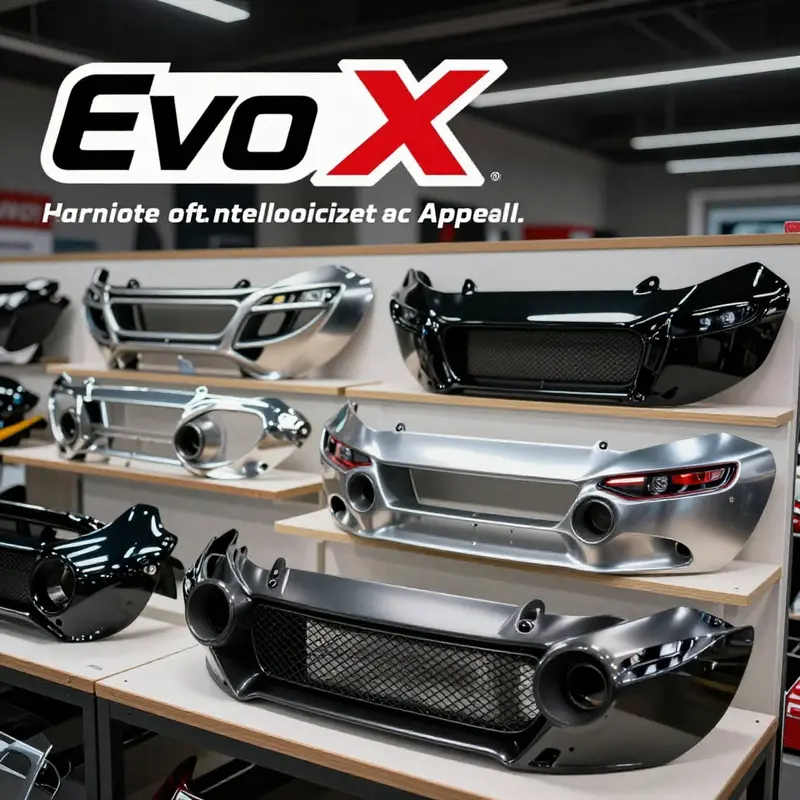
Aesthetic and Performance: How the Evo X Bumper Changes the Car
The front bumper on an Evo X does far more than protect the nose of the car. It is a choreographed fusion of form and function that sets the tone for the entire build. A bumper establishes a car’s visual identity the moment you see it. Sharp lines, deep intakes, and sculpted splitters telegraph intent. They say whether the car is a refined street machine, a stripped-out track tool, or a judged showpiece. For Evo X owners, choosing a bumper becomes a statement about taste, purpose, and driving philosophy.
Visually, the transformation can be dramatic. A more aggressive front fascia adds width and presence. Large openings hint at higher airflow demands. Pronounced lips and canards catch the eye and suggest aerodynamic refinement. Enthusiasts often chase styles rooted in racing culture. Designs that echo Japanese domestic racing heritage emphasize clean geometry and purposeful openings. That aesthetic resonates because it reads as credible. When a bumper carries race-inspired cues, the car looks as if it belongs on a circuit as well as on the street.
Beyond looks, a bumper is a performance tool. It alters how air approaches the car, how it flows beneath the chassis, and how pressure zones form around the front axle. Carefully designed intakes direct air to the intercooler and radiators. Lip spoilers and canards reduce lift at speed. Inner ducts reduce drag by smoothing turbulence. Even small changes in shape can influence high-speed stability. For a car with all-wheel-drive and a turbocharged engine, those gains multiply. Improved airflow helps cooling, which preserves power under sustained load. Reduced lift improves tire contact and feedback. These are practical benefits, not abstract ones.
Material choice plays a central role. Traditional plastic and fiberglass compete with modern composites. Carbon fiber offers the highest strength-to-weight ratio. A lighter front end lowers rotational inertia and can subtly sharpen turn-in. Carbon also withstands heat and repeated stress well. Its stiffness helps maintain designed aerodynamic profiles under load. Different manufacturing methods produce different textures. A visible weave gives a race-ready look. Painted finishes deliver a seamless, factory-like appearance. Buyers weigh these options carefully because the chosen material affects both performance and visual cohesion with the rest of the build.
Fitment precision matters as much as design. A bumper that does not align with fenders, lights, and hood will undermine the build. Small gaps or uneven joints distract from the overall look. They also create new aerodynamic penalties. Improper fitment can cause rattles, increased drag, and premature wear at mounting points. OEM replacement pieces deliver near-perfect alignment because they match factory tolerances. Aftermarket alternatives offer more creative freedom. But they require careful selection and sometimes adjustment to match body lines. A thoughtful installer can modify mounting points and trim edges to achieve factory-like integration.
Installation complexity often becomes the deciding factor. Some bumpers are bolt-on, designed to drop into existing mounts. Others require reinforcement brackets, trimming, or wiring relocation for sensors and lights. When canards or splitters are added, additional hardware and bracing can be necessary. The choice between a straightforward swap and a more involved conversion depends on skill and budget. DIY installers can save money and gain satisfaction. Still, complex mods may be best handled by professionals. Good shops ensure mechanical and aesthetic alignment. They also protect trim pieces during fitment and verify sensor calibration where applicable.
Stylistic coherence with other modifications is essential. A front bumper rarely exists in isolation. Side skirts, rear diffusers, and a wing form the aerodynamic family. A lips-and-canards front that pairs poorly with the rear diffuser will look unbalanced. Likewise, wheel fitment and tire width must complement the bumper’s visual mass. The right bumper will harmonize proportions, reinforcing a single design language across the car. It helps to plan the entire kit, even if installations occur in stages. Visual sketches, photos of reference builds, and mock-up templates reduce the risk of mismatched components.
Color and finish choices influence perceived aggression. Matte and satin paints soften reflections and emphasize shape. Gloss finishes highlight surface contours and create a premium feel. Exposed carbon fiber weave reads as performance-first. Similar weave patterns on multiple components create continuity. Custom paint matched to the factory tone yields a subtle, integrated look. Contrasting accents, like painted canards or colored grille surrounds, draw attention to performance cues without overwhelming the design. These decisions are subjective but impactful.
Aerodynamic supplements like canards and splitters deserve special attention. Canards mounted on the corners manage lateral airflow. They help direct air away from the wheel wells and reduce front-end lift. Splitters extend the lower profile and increase pressure on the top surface. Together, they alter the balance between front and rear downforce. On a car predisposed to oversteer without modifications, adding front aerodynamic devices can restore neutrality. However, any change to the aero balance must be considered in the context of the car’s suspension and tire setup. Aerodynamic tweaks work best when paired with supporting mechanical changes.
Durability and repairability influence long-term satisfaction. Street-driven cars encounter curbs, parking blocks, and debris. A material that cracks easily will cost more over time. Rigid composites resist impact differently than flexible plastics. Some aftermarket designs incorporate sacrificial lips that can be replaced independently. Others emphasize modular attach points to allow section repairs. Choosing wisely reduces future headaches. Consider how often the car will see track days, or where it will be parked. That context guides the selection toward either ultra-light, race-oriented materials or more forgiving, street-focused options.
Sourcing and manufacturing play into value and availability. Many parts come from established manufacturing hubs with mature supply chains. That region is renowned for production capacity and material access. Suppliers there often offer flexible minimum order quantities. They can produce single prototype pieces or respond to bulk dealership needs. Shipping and quality control processes have improved. Reputable sellers provide technical specifications, warranty coverage, and fitment confirmations. Those details are crucial when ordering remotely. Photos and dimensional drawings help verify expectations before purchase.
When evaluating choices, buyers should inspect critical specifications. Check the listed compatibility years and chassis codes. Confirm whether the part accepts factory fogs and sensors. Review the mounting hardware included with the bumper. Determine whether reinforcement brackets are required. Read warranty terms, and note shipment protections. If available, seek user-submitted installation photos. These reveal real-world fitment and common pitfalls. Prioritizing transparency in technical data reduces surprises during installation.
Integration with lighting and safety systems is another practical consideration. Modern cars often place sensors and camera arrays in the bumper area. Aftermarket bumpers may require bracketed mounts or relocation kits for these devices. License plate mounting and airbag sensor placement also deserve attention. A poorly integrated bumper can interfere with sensor function or complicate registration in some regions. Verify that any chosen design allows proper sensor alignment and maintains the original safety systems.
Community perception and resale value are also relevant. A well-chosen bumper can increase desirability among enthusiasts. It signals care and a coherent build. Conversely, a poorly executed or overly radical change can narrow appeal. If resale is a consideration, lean toward reversible modifications. OEM or OEM-style parts remain popular because they balance visual improvement with broad acceptability. For those building a signature car, unique pieces can enhance the narrative and attract collectors.
Maintenance habits shift with material and finish. Painted bumpers may need touch-ups for stone chips. Exposed carbon weaves benefit from UV-resistant clear coats. Foam or mesh inserts in the grille require periodic cleaning. Fasteners and rivets should be checked after track events. A proactive maintenance routine preserves both aesthetics and aerodynamic performance. Keep a small kit with touch-up paint, spare fasteners, and trim adhesive. These items save time and cost when small repairs are needed.
Finally, the right front bumper transforms the Evo X beyond skin deep. It influences cooling, stability, and driver confidence. It clarifies design intent and roots the car in a performance narrative. Whether the objective is subtle enhancement or total transformation, choosing wisely matters. Consider materials, fitment, airflow, and installation complexity. Plan for visual harmony with other mods. Verify supplier data and warranty coverage. When done well, the bumper becomes the keystone that ties appearance, engineering, and driving experience together.
For owners who need direct comparisons and selection guidance, detailed resources offer step-by-step advice on choosing the right bumper for the Evo X. One useful guide explores fitment, material options, and installation tips in depth. See the full selection guide for additional details: https://www.carinterior.com/how-to-choose-a-bumper-for-lancer-evo-x-full-guide
For those interested in authentic OEM fitment, refer to the genuine CZ4A Lancer Evolution X front bumper (genuine) as a reference point. https://mitsubishiautopartsshop.com/cz4a-lancer-evolution-x-front-bumper-genuine/
Selecting a front bumper for an Evo X is not merely cosmetic work. It is a strategic choice that binds appearance, aerodynamics, and engineering. When chosen and installed with care, a bumper elevates the car into a coherent, purposeful package.
Final thoughts
In conclusion, the aftermarket Evo X bumper represents a unique intersection of performance enhancement and aesthetic customization, making it an attractive option for automotive business owners. By comprehensively understanding the benefits of these components, along with current manufacturing trends and consumer preferences, businesses can find innovative ways to meet market demand. As Evo X enthusiasts continue to seek personalized enhancements, aligning your offerings with these insights can significantly boost your market presence and sales potential.