

The Mitsubishi Lancer Evolution X, a cult favorite in the automotive modification scene, boasts numerous custom options that enhance both performance and aesthetics. Among these, the Varis bumper stands out, delivering superior aerodynamic efficiency and the unmistakable aggressive look that enthusiasts crave. In this overview, we will delve into three pivotal aspects: the innovative design and aerodynamics of the Evo X Varis bumper, the burgeoning market demand and its economic implications, and the cultural significance this modification holds within the car culture community. Each chapter will enrich your understanding, highlighting why the Varis bumper is a must-have for serious car modifiers.
Shaping Speed: How a Varis-Style Front Bumper Rewrites Evo X Aerodynamics
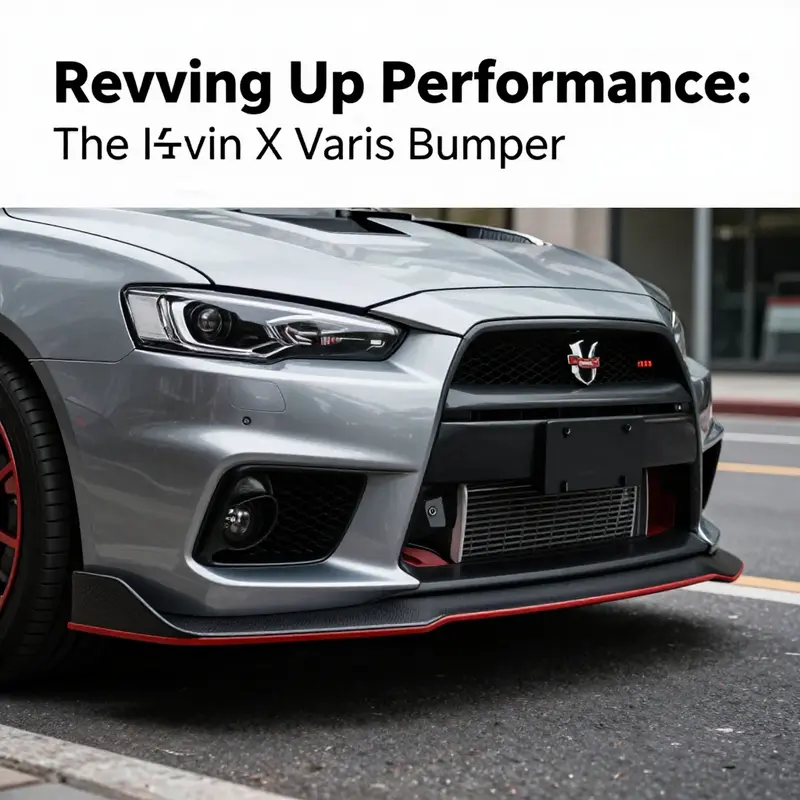
Shaping Speed: The Front Bumper as Aerodynamic Cornerstone
On a car defined by balance between power and control, the front bumper becomes more than styling. For the Evo X, a Varis-inspired front bumper functions as an aerodynamic keystone. It changes how air meets the car, how cooling is delivered, and how stability is maintained at speed. The result blends raw visual aggression with measurable performance gains. This chapter unpacks that transformation, showing how one redesigned element affects the whole vehicle.
A Varis-style front bumper begins with intent. Designers enlarge the central mouth while sculpting well-placed intakes. These features are not merely for show. A larger central intake channels more air into the cooling systems. It feeds the radiator and intercooler, and it supplies directed flow to brake ducts when fitted. The increased volume reduces heat soak during sustained high-speed runs. That means the engine and brakes stay in their optimal temperature windows. On a track day, that can be the difference between consistent lap times and a sudden falloff.
Beyond the central intake, functional side intakes and winglets manage pressure zones around the bumper corners. Stock bumpers often leave turbulent pockets where airflow separates from the body. Those pockets create lift and drag. By integrating sculpted side intakes and turning vanes, the Varis-style bumper shepherds the air smoothly along the wheel arches. The flow alignment reduces turbulence and helps maintain a low-pressure zone beneath the car. When the underbody and diffuser are tuned to that same rhythm, the net effect increases downforce without a dramatic drag penalty.
Material choice supports the aerodynamic goals. High-quality carbon fiber or engineered composite panels keep the added geometry light. Lighter front mass improves turn-in and reduces pitching under braking. A stiff composite resists deformation at speed, maintaining the designed air channels. A flexing bumper will not only look poor; it will alter airflow predictably and unpredictably. Properly manufactured components retain their shape, preserving the intended aerodynamic signature across a range of speeds.
The bumper does not act alone. It is one element in a layered strategy that includes widened fenders, side skirts, and rear aero devices. The slightly wider flares common to Varis kits moderate the transition of air from wheel wells to the car sides. Wider quarters allow for more aggressive track setups and broader tires. That extra rubber improves mechanical grip. When combined with improved aerodynamic balance, it enables higher cornering speeds. The front bumper’s role is to prepare and condition the air before it meets the rest of the car.
A hallmark of these designs is the careful management of pressure differentials. The front of a car sees a stagnation point at the bumper. If airflow is not properly directed around or through the bumper, pressure builds and contributes to lift. Varis-style contours use intakes and splitters to convert that high-pressure region into useful downforce. The lower lip and splitter direct high-energy flow under the chassis, feeding a diffuser. The splitter also increases the effective frontal area, but in a controlled way. Rather than simply increasing drag, the splitter shapes a lower pressure underbody, generating front-end grip that benefits steering precision and corner entry.
Cooling architecture ties directly to these aerodynamic choices. An amplified central intake can align with a larger intercooler or radiator. Improved ducting minimizes recirculation of hot air around the engine bay. Some designs include internal ducts that guide a portion of intake air toward the front brakes, helping them shed heat under repeated heavy use. Cooling is not purely about sustained performance. Cooler intake charge and stable brake temperatures reduce component wear and decrease the chance of thermal-related failures. For spirited street driving that sees bursts of speed, and for track sessions with repeated high-load cycles, that thermal stability pays dividends.
Integration with chassis tune and suspension settings is crucial. Add aerodynamic front bite without adjusting spring rates, and the balance will shift unpredictably. Typically, the added front downforce calls for a complementary dampers and springs setup. Stiffer front springs and appropriately tuned anti-roll bars can make the most of increased aerodynamic grip. In contrast, leaving the rear purely mechanical may result in understeer or oversteer, depending on the rear aero package. A considered approach pairs the bumper’s gains with rear diffuser and wing refinements to maintain a neutral handling character.
The rear elements deserve mention because they close the aerodynamic loop. The front bumper conditions incoming air; the rear bumper and diffuser manage its exit. Reworking the rear structures optimizes exhaust flow and helps recover energy from the underbody airflow. A well-matched rear diffuser turns the low-pressure underfloor into meaningful rear downforce. This balance between front and rear downforce preserves stability at high speed and during transitions. For owners interested in improving the entire aero profile, pairing a Varis-style front bumper with a matched rear solution is essential. For related rear component options, see Evo X rear bumpers.
Fitment and installation raise practical questions. A drop-in replacement simplifies mounting but can require trimming around sensors, fog lights, and tow points. Structural compatibility with the original bumper brackets matters. A stable and secure mounting preserves the designed gap and lip positions. Gaps that vary under load will change airflow and can introduce noise or vibration. Professional installation often includes reinforcing brackets and verifying alignment at multiple points. Proper sealing between bumper edges and undertray also prevents unwanted turbulence from sneaking into the underbody channel.
Wheel clearance and tire choice influence the visual and functional outcome. The more aggressive widebody stance invites bigger wheels and tires. But large wheels can intrude into the airflow around the front fenders. Designers account for this with venting near the arches and carefully angled intakes. Those vents let high-pressure air escape from the wheel well, reducing lift and preventing the wheel from acting like a turbulent drum. When selecting wheels, consider both width and offset. A pushed-out wheel changes the rake and pressure distribution across the bumper’s intakes. The suspension geometry must be checked post-installation to maintain intended handling.
Maintenance and longevity merit attention. Carbon fiber offers excellent strength-to-weight, but impacts or curb scrapes can delaminate or crack the weave. Composite bumpers with flexible resins tolerate minor contact better. Wherever possible, owners should inspect mounting points after aggressive use. Road debris can accumulate within intakes. For track use, quick inspections between sessions clear debris and ensure cooling pathways remain unobstructed. Routine checks preserve both performance and safety.
Aesthetic impact cannot be separated from function. The aggressive lines and pronounced intake shapes create a visual identity that reads as purposeful. The car looks like it wants to be fast. That psychological effect matters. It signals intent to other drivers, and it appeals to owners who appreciate design honesty—form that reveals function. Yet, the best aero work often hides in plain sight. A bumper that screams race only on inspection, by way of ducting and splitter integration, demonstrates refined engineering.
Real-world performance depends on careful tuning beyond visual fit. Wind tunnel validation or CFD simulation refines shapes to ensure gains across speed ranges. Small changes in lip angle or intake curvature can alter the balance of drag and downforce significantly. For customers without access to wind tunnels, track testing and data logging serve as practical alternatives. Measure lap times, brake temperatures, and tire wear before and after installation. These metrics reveal whether the theoretical benefits translate into street or track performance.
Street versus track use affects choice. A radical lip or low splitter maximizes track downforce but may be impractical for daily driving. Consider a modular approach: a removable splitter or adjustable elements that allow you to tune the car for a weekend track event. Some owners prefer a compromise: slightly raised lips and protected edges to handle speed bumps while retaining much of the aerodynamic benefit. Thoughtful design considers the owner’s environment and intended use.
Legal and insurance considerations deserve pragmatic attention. In some regions, extreme body modifications can affect road legality or insurance premiums. Modifying crash structures or pedestrian-impact zones changes regulatory compliance. Confirm local regulations before committing to major changes. Some designs keep critical structure intact and focus on bolt-on components that preserve crash performance. Discuss modifications with insurers to avoid surprises in the event of a claim.
When sourcing a Varis-style bumper, prioritize fit and finish. Poorly made reproductions may look similar but fail to match mounting points or material quality. Seek components with verified fit reports and clear installation instructions. Quality manufacturers publish dimensional data and include reinforcement recommendations. If possible, inspect a finished installation on a similar car, or request sample photos from installers, to confirm how the part sits in real life.
Finally, consider how the bumper will interact with other upgrades. An upgraded intercooler or radiator may need revised ducting. A different splitter height can require recalibration of ride height. Brake ducting might need custom hoses or brackets. The best results come from treating the bumper as part of a system. Plan the whole build, not just the headline piece. That systems mindset ensures the front bumper’s aerodynamic intent is realized in practice.
For a deeper technical review of how a complete kit shifts the Evo X’s airflow and downforce balance, consult the detailed guide on kit selection and aero tuning. That resource outlines real-world testing and kit comparisons, and it can help you decide which approach suits your goals: https://www.carinterior.com/varis-evo-x-guide
In short, a Varis-style front bumper redefines more than the car’s face. It shapes airflow, cooling, and balance. When engineered and installed correctly, it delivers usable downforce and improved thermal performance. When paired with complementary rear aero and chassis tuning, it elevates the Evo X from a powerful sedan to an aerodynamically coherent machine. The key is integration: design, material, fitment, and system-level tuning must align to unlock the promise of shaping speed.
Why Tuners Pay Top Dollar: Market Demand and Economic Impact of the Varis-Style Evo X Bumper
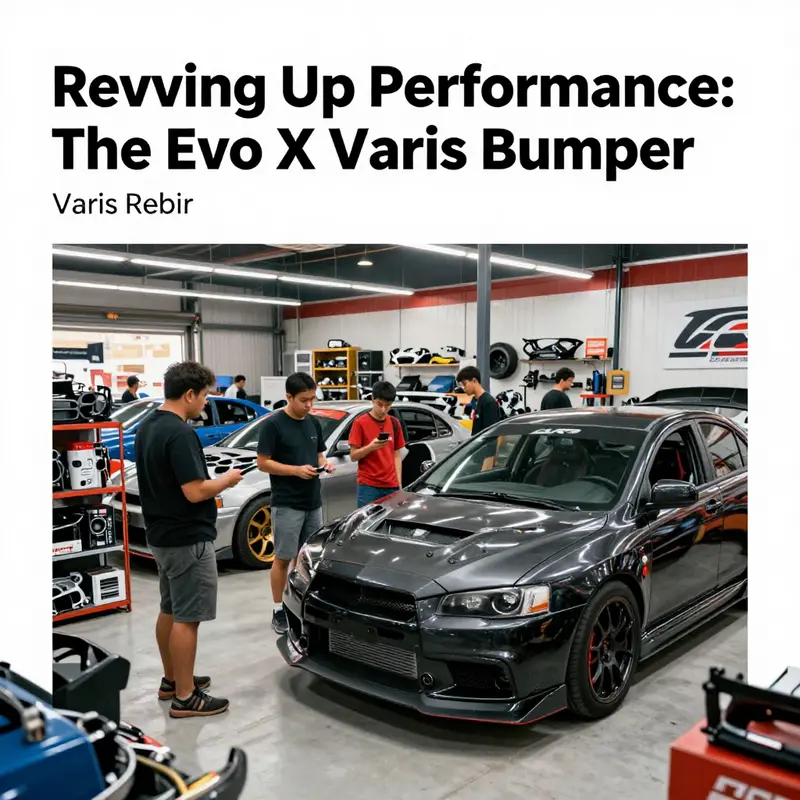
Why the Varis-Style Bumper Commands Attention and Value in the Evo X Market
The aftermarket bumper for the Evo X has grown from a cosmetic upgrade into an economic catalyst. Enthusiasts view the Varis-style bumper as more than a visual statement. It signals intent, performance orientation, and membership in a focused tuning culture. This single component influences purchasing decisions, aftermarket ecosystem health, and even regional import flows. Demand for these bumpers is rooted in a mix of aesthetic preference and measurable aerodynamic benefit. That dual promise has created a durable market where buyers are willing to accept high prices and wait times in exchange for perceived value.
Collectors and active tuners drive the primary demand. For many owners, the Evo X is an icon. Modifying the nose and front aero is a visible way to personalize that icon. The Varis-inspired design, with pronounced canards and aggressive lower profiles, aligns with the visual language of track-minded builds. Buyers who want that language translated into their own cars look specifically for bumpers that match the silhouette and aero cues. Visual desirability becomes a market signal. Sellers respond with premium finishes, carbon fiber inserts, and limited-run variations. The end result is a price stratification that reflects finish, material, and rarity.
Beyond aesthetics, the technical narrative powers purchases. These bumpers are often designed with clear aerodynamic intent. The pronounced lower sections and integrated canards alter airflow around the front axle. On low-stanced cars, they give the car a stable-looking stance. On performance builds, they channel air for improved downforce and reduced lift. This functional value is persuasive. Buyers in the market for performance upgrades see the bumper as a component that complements suspension and aero work. The willingness to pay premium prices correlates with buyers’ broader investments in handling and lap-time improvements.
Supply dynamics further shape pricing. High-quality bumpers use advanced materials and require specialized molds. Carbon fiber finishes and pre-preg manufacturing raise production costs. Skilled fitment and finishing are labor intensive. Small-batch manufacturers therefore price their parts to cover not just materials, but skilled labor and quality control. Importers who specialize in these niche parts add logistics and customs costs. The resulting retail prices reflect the entire value chain, from prototype development to final finishing. For buyers, that price serves as a proxy for exclusivity and build intent.
Resellers and distributors play a key economic role. Specialty shops stock a mix of genuine and inspired pieces. They offer fitment services and warranty assurances. Those services justify markups. They also absorb inventory risk by keeping catalog items on hand. When a popular bumper style resurfaces, these vendors become the fastest route to market. Their margins support a local aftermarket economy of installers, painters, and fabricators. That network increases the total economic impact beyond the initial sale of the bumper itself.
The aftermarket for the Evo X does not exist in isolation. Demand for a Varis-style bumper often triggers complementary purchases. Owners commonly invest in matching side skirts, rear diffusers, and wings to maintain visual coherence. They also upgrade wheels and braking systems to support the altered aerodynamics and styling. Local body shops see higher volumes in paint, bonding, and trim work. Specialized tire shops see demand for low-profile options. These secondary purchases fuel a wider set of service revenues and retail sales.
Import patterns and inventory cycles affect availability. Original or limited-run bumpers are often produced overseas. Shipping lead times and customs processing create gaps between ordering and delivery. Those delays increase perceived scarcity. Scarcity, in turn, reinforces willingness to pay premiums. Some buyers accept months-long waits to secure a desirable finish. Others pay higher prices to obtain parts in shorter windows. Either behavior creates a marketplace where time is monetized alongside material quality.
The economic impact extends to small manufacturers and fabricators. When demand is robust, boutique producers expand capacity. They invest in better molds, CNC tooling, and quality control. That investment raises entry costs for new competitors, but it also professionalizes craft within the niche. Skilled workers gain higher-paying roles. Shops that previously focused on generic fitment start to specialize in Evo X bodies. This specialization increases the local supply of expertise and shortens installation times for future buyers.
Pricing transparency on public marketplaces shapes buyer expectations. Listings with detailed photos and finish descriptions educate prospective buyers. Those listings show how different materials and finishes influence price. Buyers learn to associate carbon fiber with higher cost and better fitment. They also learn which sellers provide pre-finished parts and which require additional painting. Over time, transparent listings create a market where premium pricing is justified by documented quality and seller reputation.
The resale and collector market also matters. Iconic bumper styles retain value. Cars with authentic or well-made inspired bumpers can command higher resale prices within the enthusiast community. That uplift is especially notable for builds that maintain a high degree of originality or quality in appearance. Sellers who document provenance and fitment details can ask for higher prices. Buyers view these purchases not just as upgrades, but as investments in collectible desirability.
Risk and con are part of the economic calculus. High cost is often cited as a negative. Fitment issues and the need for additional support pieces add expense. Installation requires knowledgeable technicians, and some buyers underestimate that labor cost. There is also the risk of damage from road hazards. Low-slung front ends increase vulnerability to curbs and steep driveways. Savvy buyers factor repair and replacement costs into their budgets. Shops that provide robust installation and reinforcement services can mitigate some of those risks. Their services become a selling point worth the extra expense.
The market also supports creative aftermarket responses. Some makers offer modular solutions that allow buyers to swap lower blades or canards. Others create versioned bumpers targeting low-stanced or race-oriented applications. This product differentiation increases consumer choice and stabilizes demand across buyer segments. It also creates multiple price tiers. Entry-level options allow more casual enthusiasts to capture the look. High-end variants cater to those seeking lightweight, race-ready parts.
Regional demand patterns reveal interesting trends. Urban areas with active car cultures see higher per-capita interest in styling upgrades. That concentration supports more local vendors and faster supply chains. Rural or less car-focused regions often rely on online ordering and shipping. Delays and shipping costs can dampen demand in those markets. Importers respond by offering consolidation services or by stocking common finishes locally, reducing the friction for remote buyers.
The ecosystem effect of a popular bumper style is measurable in employment and service revenues. Local body shops, paint shops, and performance garages benefit. Small manufacturers scale up to meet demand, hiring technicians and investing in tooling. Distribution firms gain revenue from handling, customs clearance, and warehousing. Even transport carriers benefit when niche parts move across borders. That web of activity creates a multiplier effect, where a single category of parts supports many adjacent businesses.
Branding and intellectual property considerations influence market structure. When a signature design becomes culturally significant, disputes can arise over replication. Some manufacturers protect their designs, while others employ inspired aesthetics to circumvent restrictions. This dynamic affects pricing and supply. Authorized parts command higher prices but may have limited production. Inspired alternatives provide accessibility at lower prices, but require buyers to accept fitment variability. The coexistence of both channels creates layered demand and offers options for different budgets.
Long-term trends point to maturation. As the Evo X community ages, demand evolves from rapid turnover to selective investment. New buyers still enter the scene, but many spend selectively on quality items. This trend benefits makers who focus on fitment, finish, and material science. Carbon fiber and hybrid composites become selling points. At the same time, the market supports restoration and period-correct builds, where authenticity matters more than outright aggression. That diversity stabilizes demand over time.
For retailers and shops, the economic lesson is clear. Inventory decisions must balance exclusivity and accessibility. Carrying a mix of high-end and value options captures more buyers. Providing installation, reinforcement, and finishing services adds margin and reduces return risk. Educating buyers on the true cost of ownership helps close sales. Transparent lead times and documented fitment mitigate dissatisfaction and boost reputation. These practices convert one-off buyers into repeat customers.
For the enthusiast community, value perception is just as important as actual performance. A well-executed bumper that aligns visually with other parts can elevate an entire build. That perceived lift in value motivates purchases even when pure aerodynamic gains are modest. Social proof, in the form of builds showcased at meets and online, amplifies desirability. When a style becomes a visual shorthand for commitment to performance, demand becomes self-sustaining.
Ultimately, the Varis-style bumper for the Evo X is an example of how a single component can shape a niche economy. It draws buyers who value aesthetics, function, and cachet. It supports specialized manufacturers and local service providers. It influences buyers’ broader modification choices and raises aftermarket revenues across categories. Where supply meets demand, pricing reflects craftsmanship and scarcity. Where local expertise exists, value is captured and circulated within the community. Those economic dynamics explain why these bumpers remain desirable, and why sellers and makers continue to invest in higher-quality, performance-oriented components.
For owners and businesses navigating this market, the best approach is informed decision-making. Consider fitment, material, and total cost of ownership. Account for installation and potential repairs. Seek reputable sellers who document quality and finish. When sourcing complementary parts, shop with providers who understand the particular needs of the Evo X platform. For additional reference on rear bumper options that pair well with a front conversion, see the Evo X rear bumpers collection.
External listing for reference: https://www.ebay.com/itm/317043434744
Evo X Varis Bumper: A Cultural Benchmark in Car Modification

When fans of the Mitsubishi Lancer Evolution X speak of transformation, the conversation often pivots from raw horsepower to a more elusive, collective language: stance, sound, and the disciplined aesthetics of function-first design. The Varis front bumper for the Evo X sits at the center of that discourse, not merely as a piece of hardware but as a cultural artifact within both the JDM-driven bloodstream and the global performance-car community. It represents a pairing of engineering precision with a fearless appetite for bold, track-inspired form. In this sense, the Varis bumper is less a retrofit and more a statement—an outward sign of a mindset that treats modification as a disciplined, almost ritual practice rather than a casual upgrade. The Evo X, with its own storied legacy as a battle-hardened performance icon, finds in Varis a kind of symbolic bridge between heritage and modernity, where a car’s historic identity is intensified by aero work that looks as if it was sculpted on a race track rather than on a showroom floor.
The visual rhetoric of the Varis bumper is unmistakable. It is part of a wider third-generation widebody philosophy that emphasizes exaggerated fender flares and a front end that looks as if it were carved for a purpose far beyond mere street cruising. The bumper’s lines are not random; they are the product of a design vocabulary borrowed from the world of high-speed competition. The front lip, airflow channels, and integrated sills work in concert to create a cohesive silhouette that instantly communicates speed, aggression, and purpose. For many observers, this is the visual shorthand for the Evo X’s evolution—from a nimble performance hatch to a purpose-built performance machine with aero tuned for real-world track dynamics. The car stops being just a car and becomes a narrative—a rolling testament to a culture that prizes not only speed but the integrity of how speed is achieved on the road and on the track.
Material choice under this banner matters as much as the lines themselves. The Varis kit commonly uses Fiberglass Reinforced Plastic (FRP), a material that sits at a particular intersection of rigidity, weight, and cost. The cultural value placed on FRP in these applications reflects a broader motorsport ethic. It offers a superior stiffness-to-weight ratio compared with many OEM urethanes, while still offering a practical balance of impact resistance and ease of repair. In a culture that values performance as much as appearance, this balance is critical. The FRP front bumper integrates with the rest of Varis’ aero program, creating a holistic upgrade that is meant to feel like a single, cohesive system rather than a collection of individual parts. Enthusiasts tend to view this cohesion as essential; it’s not enough to swap a bumper in isolation. True transformations come from ensuring the bumper, the hood, the rear diffuser, and the side skirts speak the same aero language, even if they’re sourced from different production lines or limited runs. When these pieces are aligned, the car communicates a single message—a commitment to track-inspired aerodynamics and to the discipline of maintaining a consistent design philosophy across the entire body.
The cultural resonance of the Varis bumper amplifies when we consider the Evo X’s broader modification ecosystem. The bumper is often part of a larger, carefully curated kit—carbon fiber hoods, full-width body kits, rear diffusers, and other aero elements—that together yield a dramatic transformation. The carbon accents and the way the pieces nest against the car’s original lines create a machine that looks not merely aftermarket but almost engineered for a higher plane of performance styling. This holistic approach to modification has deep roots in a tradition that treats the car as a platform for continuous refinement and experimentation. It is not unusual to encounter builds where the front end is the opening act in a longer symphony of upgrades, with the engine, drivetrain, and braking system tuned to extract performance commensurate with the car’s new silhouette. The result is a vehicle that reads as both a statement on the street and a serious contender on the track, marrying the cause-and-effect logic of aerodynamics with the storytelling power of a design that looks ready to chase down a lap record.
Within the car-modification community, owning a genuine Varis kit is not a casual purchase; it is an entry into a lineage. The bumper, as part of a wider aero family, signals membership in a dedicated circle of Evo enthusiasts who value authenticity, craftsmanship, and the technical discipline of weight, rigidity, and integration. This is especially salient in markets where the Evo X’s lineage remains a live, vibrant thread in street and race culture. Enthusiasts discuss how the bumper’s geometry alters the car’s front-end geometry, affecting air separation at higher speeds, how the fender flares work with the wheels to manage cornering stiffness, and how the overall package changes the car’s balance when cornering at the limits. The consensus is seldom about a single, simple improvement; it is about a coherent transformation that respects the Evo’s original DNA while pushing it toward new performance horizons.
The cultural weight of the Varis bumper also intersects with narratives of exclusivity and authenticity. In a community that often values provenance, an aero kit that is widely recognized for its engineering pedigree and its track-inspired aesthetic carries a premium aura. It signals a driver who appreciates the Evo’s heritage and who believes in a disciplined, almost methodological approach to upshifting capability, weight distribution, and aerodynamic efficiency. The dialogue surrounding these parts frequently invokes a broader conversation about how modification should honor the vehicle’s history while not being afraid to redefine what it means for a car to be “factory-credible” in a modern performance context. It’s a conversation about balance—the balance between a car’s emotional impact and its measurable performance gains, between an aggressive appearance and the survivability of the machine on public roads and private tracks alike.
As the Evo X project matured and, in some markets, began to settle into a vintage-cult status, the Varis bumper acquired an almost mythic dimension. It came to symbolize a particular era of tuning when the front end’s aggressive alignment with carbon accents and broad fenders felt like the physical articulation of a car’s evolving identity. In this light, the bumper exchange is less about a single upgrade and more about a philosophy: the belief that a vehicle’s form should not simply reflect power but should embody a relentless pursuit of optimized airflow, reduced drag, and improved downforce. The idea that a single component can embody a culture’s values—engineering excellence, bold styling, and a respect for heritage—keeps the conversation alive, turning every Evo X with a Varis bumper into a moving piece of automotive culture.
For readers tracing the evolution of this culture, the bumper is a lens through which to view broader shifts in the modification scene. It marks a transition from purely cosmetic customization toward an era in which aero and weight distribution are treated as essential engineering decisions. The story of the Varis bumper is not limited to a few glossy photo shoots or a handful of high-profile builds. It anchors a wider practice where enthusiasts, builders, and professional tuners debate the best ways to balance aggression, reliability, and performance, and where the front end becomes a stage upon which the car’s entire strategy is tested. The cultural significance lies in how it prompts a narrative about what a modern performance car should look like when its purpose extends beyond the showroom and into the realm of track days and spirited street drives.
To those who study the mechanics of car culture, the Varis bumper offers more than a head-turning aesthetic. It is a case study in how a design solution can crystallize a community’s values—precision, rigor, and an undying respect for a car’s lineage—into a tangible, shareable experience. The bumper’s shape, its integration with other aero components, and its material choices all contribute to a narrative of a car built not just for speed but for a philosophy of performance that rewards meticulous preparation and disciplined driving. In this sense, the Evo X Varis bumper becomes a cultural compass for a generation of enthusiasts who see modification as an ongoing project rather than a destination. And as long as the Evo X remains a touchstone for performance-minded drivers, the bumper will continue to function as a cultural benchmark, a symbol of how a community negotiates speed, style, and substance in a world where the line between road car and race car is increasingly blurred.
For readers seeking a deeper, more practical dive, consider the broader context of how such front-end interventions are chosen and installed. The decision often hinges on compatibility with the vehicle’s bumper structure, the potential aero gains, and the fit with other performance parts in the build. A thoughtful approach to choosing a front bumper is not merely about visual impact but about ensuring that the component integrates with the car’s cooling, brake, and suspension regimes. The goal is a harmonized system that delivers tangible aerodynamic benefits without compromising reliability or safety. In this light, the Varis front bumper must be appreciated not only as an artful piece of design but as a carefully engineered element whose performance returns meaningful gains when paired with the right supporting components. The culture surrounding this choice rewards those who take a holistic view of the build, recognizing that the car is a single organism whose parts must communicate effectively to unlock the full potential of the Evo X.
Within this ecosystem, enthusiasts often turn to community knowledge and shared experiences to guide their decisions. Real-world feedback about fitment, durability in varying climates, and the long-term behavior of the bumper under aggressive driving conditions helps shape how new builders approach the upgrade. The social fabric of the modification scene—the photos, the build threads, the road-test anecdotes—serves as a living repository of wisdom that informs both current and future projects. This communal knowledge reinforces the cultural significance of the Varis bumper, turning it from a mere aftermarket component into a beacon around which a worldwide network of Evo aficionados aligns their projects, debates their approaches, and celebrates the shared identity of an evolving, relentless pursuit of speed and style.
The Evo X Varis bumper narrative also intersects with debates about authenticity and exclusivity in car culture. Owning a genuine, widebody Varis kit is frequently described as an entry into an elite circle of Evo enthusiasts. This sense of belonging is not solely about owning a premium piece; it is about participating in a tradition that prioritizes quality, track-ready engineering, and a respect for the car’s core legacy. The idea of exclusivity here is not about ostentation; it is about committing to a disciplined standard of modification that places the vehicle on a higher plane of performance and presentation. Even as the Evo X’s production cycle has ended, the cultural resonance of the Varis bumper endures in the way it continues to be discussed, photographed, and revered within the community. Its legacy is a reminder that the car’s potential is not only what is under the hood but also what can be achieved through thoughtful, collaborative, and technically informed design.
In wrapping these threads together, the Varis bumper emerges as more than a component. It is a cultural marker that crystallizes the Evo X’s identity within the global tuning world. It signals a philosophy that honors track-derived engineering while embracing the visual drama that makes a car memorable. In the hands of builders who respect both the heritage and the future, the bumper acts as a hinge between two worlds: the storied past of the Evo lineage and a forward-looking practice of aero optimization. It invites drivers to consider how speed is imagined, measured, and manifested through form as much as through function. That is the cultural significance of the Evo X Varis bumper—the way it channels a community’s values into a single, powerful statement on the street and on the track, and the gentle, persistent reminder that in car culture, speed always travels with purpose, precision, and a respect for the story that brought it to life.
For readers who want to explore related components that speak to this same philosophy of integrated performance and design, there is a practical path that reflects the broader approach of a cohesive aero strategy. Components that fit into an Evo X project often require a modular mindset, where each piece complements the others. A part like the Evo X halfcut is a reminder that the car is a complex machine whose performance lives in the precise fit and alignment of thousands of millimeters, surfaces, and tolerances. The way a halfcut enables a clean, efficient transition between engine and drivetrain, while preserving the car’s balance, is emblematic of the kind of engineering thinking that underpins the Varis kit’s philosophy. It is not merely about swapping one part for another; it is about maintaining the integrity of the entire system as it evolves into a more capable machine. This is why, even in discussions that focus on front-end aesthetics, enthusiasts frequently emphasize the importance of holistic thinking and the value of components that harmonize with a car’s aero, cooling, and mechanical performance. A reader who appreciates this integrated approach will likely pursue builds that reflect a deep respect for the Evo X’s lineage while exploring new horizons in aero performance, chassis tuning, and driving dynamics. In the end, the story of the Varis bumper becomes a chapter in the larger narrative of how a car’s identity can be honored even as it is pushed beyond its factory boundaries.
As this cultural arc continues to unfold, it remains clear that the Varis bumper acts as a catalyst for conversation, skill development, and a shared language among enthusiasts across continents. It invites dialogue about engineering trade-offs, about the ethics of performance enhancements, and about the ways in which a single design decision can ripple through a community—impacting the way people think about speed, safety, and style. The Evo X’s legacy, already rich with competition history and street legends, gains renewed resonance each time a new build headlines a widebody front end with carbon accents, a carefully tuned suspension, and a set of wheels that completes the look without compromising on function. This ongoing dialogue—between form, function, and cultural meaning—ensures that the Varis bumper remains a living symbol within car modification culture: a concrete reminder that true performance is not just about power figures on a dyno or lap times, but about a shared commitment to craft, to heritage, and to the ongoing pursuit of speed with purpose.
To those who want to explore this theme further on a practical level while remaining mindful of the broader cultural significance, there is a path that marries hands-on learning with inspirational context. The Evo X ecosystem rewards a holistic approach to modification, one that balances the car’s mechanical performance with the aero identity that the community celebrates. This means studying not only how a bumper or a lip affects airflow but how those changes interact with cooling, brake performance, tire grip, and chassis stiffness. It means thinking in terms of a system—an aero and mechanical orchestra in which the bumper is a crucial instrument rather than a soloist. When builders approach the Evo X in this manner, they contribute to a living tradition that honors the car’s storied past while pushing its capabilities forward. The Varis bumper, in this context, is both catalyst and conduit—a tool that enables a builder to articulate a personal interpretation of speed and style while participating in a global conversation about what it means to modify a car with intention.
For those curious about the practical steps involved in exploring this path, the route often begins with careful planning: assessing fitment with the factory structure, evaluating mounting points, and considering how the aero kit integrates with underbody components and the car’s cooling system. It continues with a measured approach to materials selection, as this choice will influence durability under spirited driving and during long-term ownership. It ends with a commitment to testing and refinement—tracking the car’s performance across different speeds and weather conditions, and tuning the suspension to maintain balance with the enhanced front-end geometry. In this way, the Varis bumper becomes a gateway to a broader discipline, inviting enthusiasts to embrace a mindset that sees modification as iterative engineering rather than a one-off cosmetic upgrade. The result is a car that not only looks formidable but truly performs in ways that reflect a sophisticated, globally shared understanding of what makes a performance machine worthy of admiration.
For readers who wish to connect this discussion with additional hands-on resources, an internal reference can offer a sense of how the Evo X ecosystem is structured and how components relate to each other within a build. See the Evo X halfcut page for a practical example of how a modern Evo project can be organized around modular components that support both performance and reliability. The broader takeaway is that, in the context of the Varis front bumper and its many peers, the best projects emerge when builders treat the car as a carefully tuned organism rather than a collection of disconnected parts. This perspective aligns with the cultural ethos surrounding the Evo X and its aero-centric community: a blend of artistry, engineering discipline, and a shared commitment to pushing the envelope while preserving the car’s enduring identity.
External resource for further context on the practical considerations of choosing a Varis-style front bumper in Evo X builds: How to Choose a Varis Front Bumper for Evo X?.
Final thoughts
The Evo X Varis bumper is more than just an aesthetic upgrade; it embodies a blend of cutting-edge design, market trends, and the deep-seated culture of car enthusiasts. Its aerodynamic advantages significantly enhance vehicle performance while making a bold statement on the streets. As demand for such specialized aftermarket components continues to grow, business owners in the automotive sector should recognize the evolving trends and capitalize on opportunities within this niche market. Engaging with the evolving dynamics of car culture not only supports enthusiasts but also ensures sustained economic growth in the automotive aftermarket.