
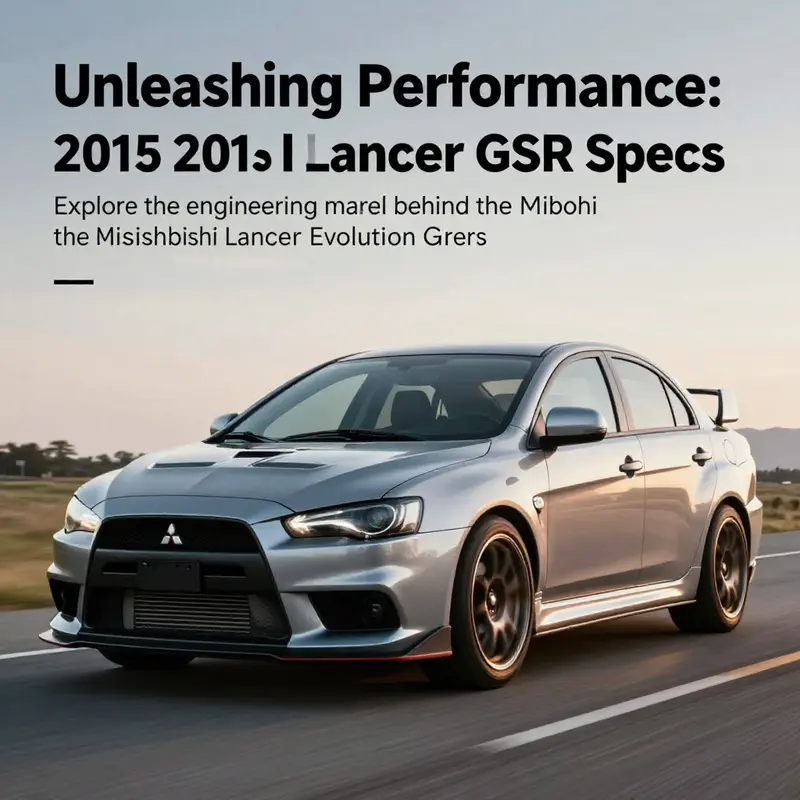
The 2015 Mitsubishi Lancer Evolution GSR stands as a testament to automotive excellence, blending robust engineering with impressive performance. Auto industry professionals and business owners looking to understand the specifications of this iconic vehicle can benefit significantly from a comprehensive overview. This article delves into five key aspects of the Lancer Evolution GSR, detailing its engine specifications, performance metrics, transmission and drivetrain features, braking and suspension systems, and the distinct exterior and interior features that set it apart. Each chapter will enhance your understanding of how these specifications contribute to the vehicle’s reputation, making it relevant for use in various business contexts, including fleet management and performance assessments.
Final Spark: Under the Hood of the 2015 Lancer Evolution X GSR
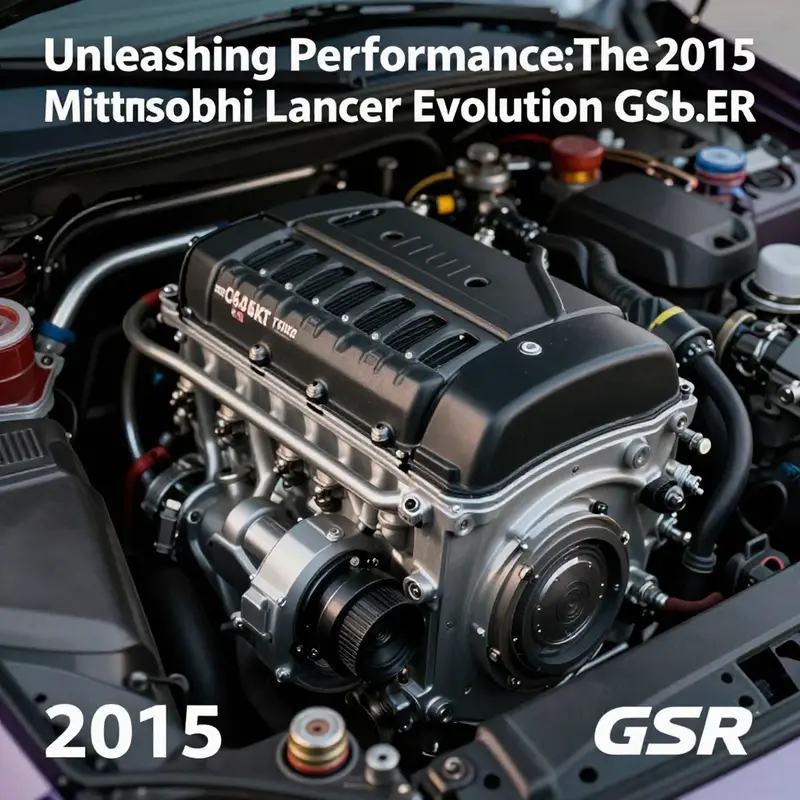
The 2015 Mitsubishi Lancer Evolution X GSR stands at a quiet crossroads in automotive history. It marks the twilight of a decade-long rally-bred lineage, a last act that distilled a philosophy built around balance, precision, and the relentless pursuit of grip. While the Evolution nameplate technically culminated with the EVO X generation, the 2015 GSR variant embodies the culmination of a philosophy that fused turbocharged performance with a highly disciplined all-wheel drive chassis. It is a point where engineering choices—engine, drivetrain arrangement, cooling, and chassis tuning—converge to deliver a cohesive driving experience. The powertrain, in particular, carries forward the essence of the Evolution line: a turbocharged engine that spools quickly, a drivetrain that manages torque with surgical intent, and a set of mechanicals that reward the driver with tangible feedback at the wheel. Even as the market and the sports sedan landscape evolved around it, the 2015 Evolution X GSR remained a focused expression of a single-minded engineering ethos that prized speed, control, and driver engagement in equal measure.
At the heart of this final form is a 2.0-liter, double overhead cam, turbocharged inline-four engine, a 4B11T that represents Mitsubishi’s mature approach to high-output small-block performance. The displacement sits at 1998 cubic centimeters, a scale that optimizes the balance between response and top-end pull. The engine produces a declared peak of 291 horsepower at 6,500 rpm and a peak torque figure of 300 Nm (roughly 221 lb-ft) available from 3,500 rpm. Those figures, while impressive on paper, only hint at the character of the powerplant. The turbocharging strategy—twin-scroll turbocharging fed by direct injection—ensures that the engine spools with rapid response and maintains strong midrange, which is crucial for quick sprints and confident passing on winding roads. The turbocharger itself is a Garrett GT2860RS unit, a setup chosen to deliver a broad, usable torque curve and linear acceleration rather than a raw, peak-limited rush that fades as the tachometer climbs.
Direct injection is another piece of the puzzle. By enabling precise fuel delivery under boost, the engine can achieve the twin goals of performance and efficiency. Fuel is injected directly into the combustion chamber, allowing higher compression and better control of combustion events under high airflow and boost. In practice, this translates to more immediate throttle response, refined part-throttle manners, and the ability to sustain strong performance across a wider range of operating conditions. The result is a power delivery that feels both eager and predictable, a hallmark of the Evo X GSR’s design philosophy. The engine’s mechanical architecture also leans into weight savings and thermal management with an aluminum block. This choice lightens the rotating assembly and helps with cooling efficiency, two practical benefits when fans of brisk driving push the engine toward its redline on a track or a back-road sprint.
Gearbox and drive layout complete the fundamental equation. The 2015 Evolution X GSR uses a six-speed manual transmission paired with a limited-slip differential. This combination preserves the traditional driver engagement that fans of the Evolution line expect, while the LSD ensures that power is effectively redirected to the wheels with the most grip. The manual gearbox remains a tactile interface, inviting a direct, communicative relationship between the driver and the car. It’s a setup that suits the car’s temperament: a compact, high-revving engine that rewards precise gear selections and deliberate throttle input. The manual transmission is not merely a box for gears; it is part of the driver’s toolkit for shaping acceleration, torque management, and corner exit speed.
All-wheel drive, under the banner of Super All-Wheel Control (S-AWC), is the other pillar of the EVO X GSR’s performance story. The S-AWC system is designed to integrate braking, torque distribution, and yaw control to keep the car planted in demanding corners and under abrupt throttle changes. In practice this means the chassis stays neutral when the driver pedals in hard and aggressive lines, with power being steered toward the axle and wheel that can most effectively use it. It is a system that requires minimal prompts from the driver to deliver confident handling, yet it remains perceptible to those who want to understand how the car is behaving mid-corner. The combination of S-AWC with the manual transmission gives a direct, unfiltered sense of control—an interface through which the driver speaks to the car, and the car translates intent into measured, predictable movement.
The rest of the chassis package reinforces the sense of purpose. The Evolution X GSR uses ventilated disc brakes on all four corners, with large four-piston calipers up front. This setup is designed to deliver strong, fade-resistant stopping power when pushed to the edge, whether on a mountain pass or a road course. The braking hardware is complemented by a suspension arrangement that is both robust and adjustable in feel. The front suspension employs a MacPherson independent setup, while the rear uses a multi-link independent layout. Both ends are equipped with adjustable dampers, a feature that allows the car to be tuned toward a balance of compliance and control for street use, or a firmer, more composed feel on the track. The intention is to preserve the Evo line’s hallmark: a chassis that communicates with the driver, providing feedback about grip, weight transfer, and the car’s evolving balance during aggressive driving.
Tire choice and contact with the road are equally telling. The Evo X GSR rides on 235/45 R17 tires, a width and aspect that strike a balance between cornering grip and ride compliance. The tires are a crucial link in the chain from engine torque to actual acceleration and cornering speed, translating the engine’s power through the drivetrain into usable grip. In concert with the suspension, brakes, and the all-wheel drive system, the tires help make the powertrain’s character tangible. This is not a car that simply revs and roars; it asks for throttle discipline and a measured, anticipatory approach to steering input. When those elements align, the 2015 Evo X GSR demonstrates why the Evolution lineage earned its reputation: it rewards precision more than raw, brute acceleration, and it does so with a sense of orchestration rather than a mere rush of torque.
The performance sheet, when read in the context of engineering choices, reveals a careful balance. The horsepower is substantial, the torque broad and accessible, and the redline is a stage for the engine’s character rather than a spectacle of peak numbers alone. The boost response is tempered by the twin-scroll design, which helps reduce lag and maintain a linear surge as the revs climb. The direct injection supports higher boost pressures with more efficient combustion, while the aluminum block keeps weight down and helps the cooling system do its job under sustained load. The transmission and LSD ensure that the driver’s intent translates into traction, even under challenging road surfaces or during a spirited sprint from a standstill. And the S-AWC system, with its collaborative stance between the drivetrain and chassis electronics, makes the car feel almost prescient in its handling, adjusting to the driver’s choices with only a whisper of intervention.
In terms of performance metrics that enthusiasts often cite, the 0–100 km/h dash typically lands around 4.5 seconds, with a top speed near 250 km/h. These figures reflect a blend of the engine’s strong midrange, the torque vectoring capabilities of the AWD system, and the frictional and aerodynamic realities of a compact, high-performance car. They also speak to a philosophy of speed that prioritizes usable, repeatable performance rather than a single, peak-number demonstration. The 235/45 R17 rubber provides a practical compromise between grip and durability, particularly in street driving where road textures vary and weather can complicate traction. The car’s brakes and suspension choices converge on a stable, communicative platform that makes the Evo X GSR both entertaining and predictable—a rare alignment of excitement and control in a four-door package.
For readers seeking a concrete, example-focused reference to how this configuration reads in a real-world context, consider a representative description of the 2015 Evo X GSR: 2015 Mitsubishi Lancer Evolution X GSR Turbocharged 2.0L Inline-Four linked to a five-speed manual transmission and a super all-wheel drive system 25000 miles. This kind of specification snapshot captures the synergy of power, drive, and chassis tuning in a compact package that still resonates with the Evo’s original intent. It is a reminder that the final EVO X iterations were not merely hunted numbers on a spec sheet; they represented a resolved package where each component was chosen to reinforce the others, creating a unit that feels cohesive from first contact to the last wisp of exhaust smoke on a high-speed straightaway.
The broader story of the EVO X GSR, and the 2015 model year in particular, is also one of engineering refinement and evolutionary intent. The final evolution of Mitsubishi’s rally-derived sedan earned its reputation by marrying advanced turbocharging with an agile, adjustable chassis topology. The aluminum block, improved cooling, and direct injection point to a strategy of maximizing efficiency without sacrificing response. The twin-scroll turbo design aims to deliver power where it counts most, eliminating lag and delivering a surge that remains linear across the rev range. The six-speed manual transmission, combined with a limited-slip differential, puts a premium on driver input, ensuring that the car responds to throttle and steering with a sense of immediacy that feels almost tactile. The all-wheel drive system, always a defining feature of the Evolution lineup, remains the mechanism by which the car keeps its grip and composure through corners and under throttle, a feature that has endeared it to enthusiasts who value balance as much as speed.
As a conclusion of sorts, the 2015 Evolution X GSR offers a snapshot of how Mitsubishi, at the end of an era, channeled its engineering into a package that was both sophisticated and accessible. The engine’s 291 horsepower and 300 Nm of torque, the direct injection, the aluminum block, and the robust, well-tuned S-AWC all come together to produce a vehicle that rewards skill and patience in equal measure. The overall effect is not simply high numbers; it is a driving experience that communicates through the steering wheel, the pedals, and the seat of the driver’s pants. In this sense, the final spark of the Evolution line is not only about the raw performance metrics it delivered but about the way those metrics were organized into a coherent, driver-centric philosophy that continues to influence performance-oriented sedans long after the model’s production run ended.
External references offer broader perspectives on how the EVO X matured within its era. For readers who want to connect these details to contemporary automotive journalism, a well-regarded external resource provides a broader look at the EVO X lineup and its reception in the market. See MotorTrend’s coverage for a contemporary interpretation of the Evolution X’s place in the sports sedan landscape: https://www.motortrend.com/cars/mitsubishi-lancer-evolution-x/
Raw Numbers and Real-World Pace: Unpacking the 2015 Lancer Evolution GSR’s Performance
Raw Numbers and Real-World Pace: Unpacking the 2015 Lancer Evolution GSR’s Performance
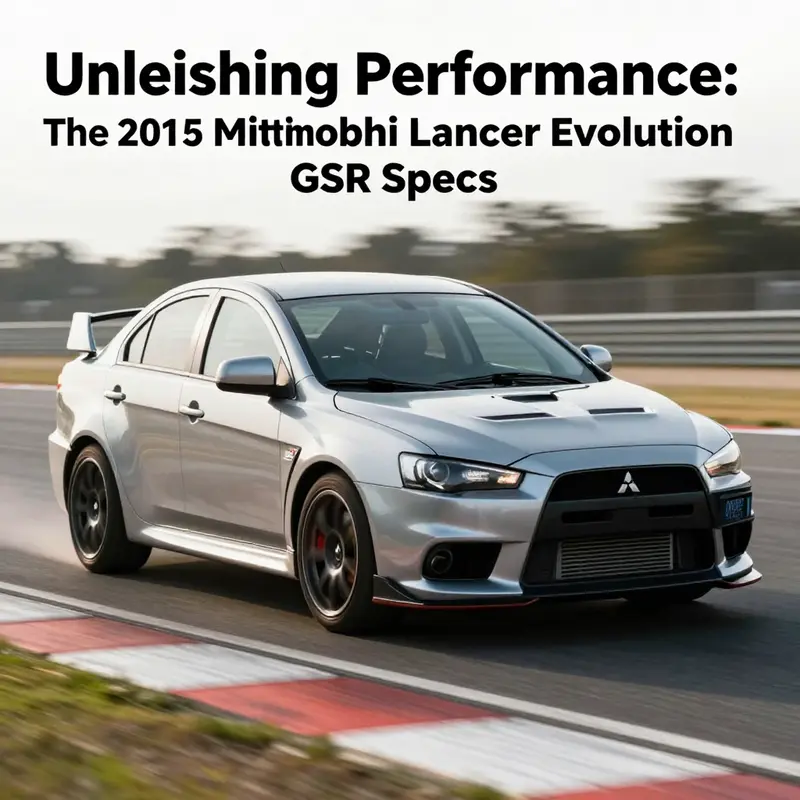
The performance story of the 2015 Lancer Evolution GSR is rooted in a compact, turbocharged four-cylinder and an all-wheel-drive system built to place power where it counts. On paper the drivetrain reads like a concise manifesto: a 2.0-liter turbocharged inline-four, rated at 295 horsepower and 300 lb‑ft (406 Nm) of torque, paired with a six-speed manual and Mitsubishi’s Super All-Wheel Control. Those are headline figures. The way they translate to motion depends on gearing, weight, traction, and suspension tuning. The result is a car that launches with authority, holds lines with composure, and rewards an engaged driver.
Peak power at high revs and an abundance of midrange torque shape the Evo GSR’s character. With 295 hp on tap, the engine breathes strongly through the upper half of the rev range. The 300 lb‑ft torque figure, abundant and immediate, gives the car punch out of corners. That torque peak, combined with a turbocharger that mitigates lag effectively, means the driver rarely feels starved of response. The manual gearbox amplifies the connection. Short throws and a deliberate shift feel let the driver exploit the engine’s power band. Gear ratios are chosen to keep the engine in its sweet spot during both hard acceleration and spirited backroad work.
Traction is the defining multiplier for these numbers. The Super All-Wheel Control system distributes torque intelligently between front and rear axles. It also varies torque front-to-left and front-to-right under cornering loads. That sophistication converts the engine’s output into usable forward motion and sharper turn-in. In practice this AWD system allows more aggressive throttle application mid-corner. It reduces understeer significantly compared with typical front-heavy sedans. When driven hard, the GSR’s traction advantage shortens the gap between available power and effective acceleration.
Acceleration figures reflect the synergy of power, traction, and mass. The quoted 0–60 mph time of approximately 4.7 seconds places the Evo GSR in quick territory for its class and era. That launch time is achieved with a balance of clutch technique, traction control settings, and tire grip. The car’s electronic aids can be dialed to offer more slip or more intervention, which affects real-world times. A competent driver on sticky tires and firm launch technique can consistently reproduce sub‑5‑second runs. That makes the GSR a formidable street and canyon performer, and gives it credible sprint performance on track.
Top speed is less central to the Evo’s appeal, yet it remains notable. A restrained but capable aerodynamic envelope and tall gearing yield a top speed near 155 mph (250 km/h). In everyday driving, the top speed is rarely relevant. What matters is the usable speed range and how rapidly the car climbs through it. The engine’s broad torque curve combined with the six-speed gearbox keeps acceleration brisk through midrange overtakes and high-speed passing maneuvers.
Weight plays a quiet but critical role. At roughly 3,500 pounds (about 1,588 kg), the Evo GSR carries mass comparable to other all-wheel performance sedans. That weight contributes to stability, especially at speed, while also setting the baseline for handling and braking loads. The power-to-weight ratio—approximately 0.084 hp per pound—helps quantify the car’s pace potential. It places the GSR firmly in a performance tier where driver skill and chassis dynamics matter as much as outright horsepower. The net effect is a car that is rewarding to drive quickly, but that also exposes setup shortcomings when pushed beyond its design limits.
Chassis and suspension tune the way those metrics feel. The Evolution’s suspension uses a front MacPherson strut design and a rear multi-link setup with adaptive damping. The adaptive dampers allow the car to stiffen or soften based on conditions and driver input. On smooth pavement they help maintain composure, while under high lateral loads they reduce body roll and keep tire contact consistent. That consistency enhances both braking stability and cornering traction. Steering is weighted and communicative, giving the driver the confidence to place the car precisely. Combined, the suspension and steering make the GSR a balanced tool for spirited roads and track sessions.
Stopping performance is equally important to acceleration. The braking system uses ventilated discs at all four corners, with substantial four-piston calipers up front. The hardware provides strong bite and good fade resistance under repeated heavy use. Brake pedal feel is firm and linear, which aids modulation during threshold braking. In track settings, progressive pad and fluid upgrades further improve heat tolerance. For street drivers, the stock setup offers confidence-inspiring deceleration that matches the car’s pace.
Tires and contact patch shape how the power and braking translate to the pavement. The factory tire spec commonly seen on these cars supports both grip and stability, allowing the S-AWC to operate effectively. Grip levels determine launch quality, cornering speeds, and braking distances. Upgrading to a stickier tire will often yield larger gains than increasing peak power. That means owners seeking improved lap times or canyon performance should consider tire and suspension upgrades before chasing higher horsepower.
Real-world performance also reflects drivability. The manual transmission and predictable turbo response make the GSR friendly to drivers who like to play with gears and boost. The car rewards thoughtful inputs rather than brute force. On mixed roads it feels composed, with a chassis that forgives small errors and encourages progressive improvement. For track enthusiasts, the Evo provides a clear feedback loop between setup changes and lap time improvements. Brake balance, damper settings, and tire pressure adjustments yield immediate and measurable effects.
Beyond stock performance, the GSR’s engine and drivetrain have tuning potential. The turbocharged four-cylinder responds well to bolt-on mods. Across the aftermarket, typical first steps include intake, intercooler, and ECU tuning. Those modifications tend to increase spool and raise peak torque. Because the chassis and AWD system are robust, moderate power gains usually translate to faster lap times and quicker sprints. However, increases in power magnify demands on cooling, driveline durability, and brakes, so upgrades should be balanced.
Evaluating the Evo GSR’s performance means seeing numbers as a system outcome. Horsepower, torque, weight, gearing, tires, and suspension interact. The 295 hp and 300 lb‑ft figures tell part of the story. The AWD system, adaptive dampers, and heavy-duty brakes tell the rest. Together they create a car that accelerates crisply, corners confidently, and remains controllable when pushed. For a driver who values connection and mechanical feedback, the GSR’s raw metrics translate into a coherent, high-performance package.
For those seeking specifics, official performance testing and detailed spec breakdowns provide confirmation of these numbers. The ZePerfs database offers measured acceleration, speed, and related performance data for this model, and is a helpful complement to owner-reported figures. For owners looking at concrete examples and mileage history, a detailed listing of a 2015 Evolution X GSR with 25,000 miles provides context on how these specs perform in real vehicles: https://mitsubishiautopartsshop.com/2015-mitsubishi-lancer-evolution-x-gsrturbocharged-2-0-liter-inline-four-linked-to-a-five-speed-manual-transmission-and-a-super-all-wheel-control-all-wheel-drive-system-25000-miles/.
For measured performance metrics and more granular test results, consult the ZePerfs specifications and performance page on this model. https://www.zeperfs.com/mitsubishi/lancer-evolution-x-gsr/295-hp/specs-performance/
Shifting Power, Shaping Corners: The Transmission and Drivetrain Architecture of the 2015 Lancer Evolution GSR
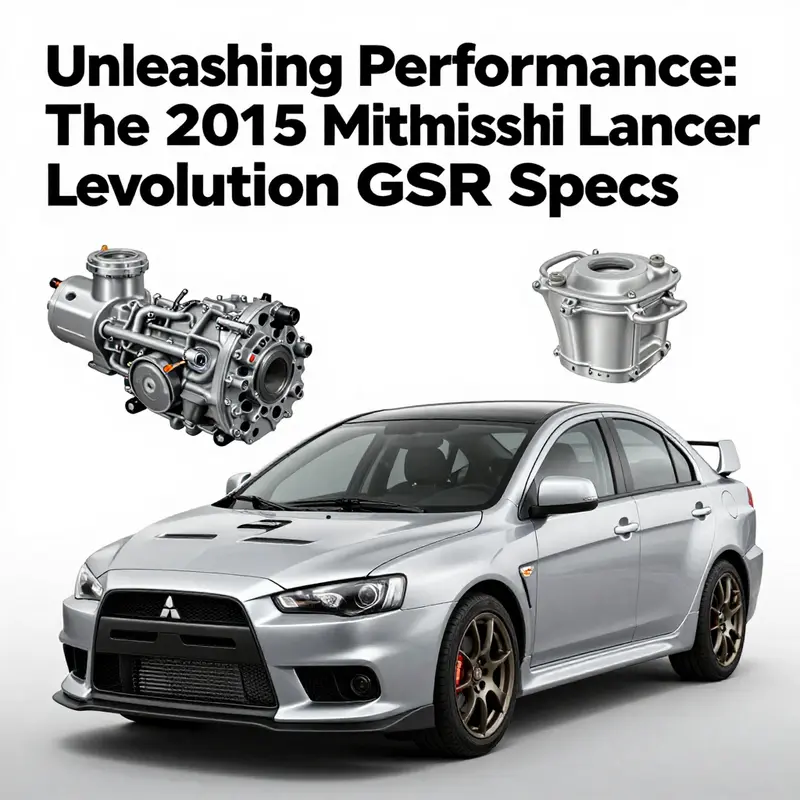
The drivetrain of the 2015 Lancer Evolution GSR reads like a finely tuned orchestra where each instrument must respond in perfect time to a conductor’s cue. The goal is to translate a high-spirited turbocharged engine into precise, confidence-inspiring traction and agility on both street and circuit. To understand the heartbeat of this car, one starts with the all-wheel-drive system, then follows the chain of power through the transmission, and finally considers how the chassis and suspension compress and release energy to keep the tire contact patch sticky and predictable. In this configuration, the car does not merely accelerate; it choreographs its motion through corners with a level of balance that invites driven precision rather than brute force.
At the core of this choreography is an evolved all-wheel-drive system designed to maximize grip and stability when the road’s grip changes from straight-line stability to mid-corner transitions. The system steps beyond basic AWD by integrating an Active Yaw Control logic that actively modulates torque between the left and right rear wheels. This rear-t axle torque bias helps the car rotate more willingly in tight turns and maintains steadiness as speed rises through a corner. The practical effect is a chassis that feels eager to pivot when the driver asks for it, yet remains planted and controllable when the track or road surface becomes uncertain. The system works in concert with a rear helical limited-slip differential, which enhances the torque transfer to the wheel with the most grip, reducing the likelihood of wheel spin during aggressive throttle application. When a driver is threading through a sequence of corners, the AWD and LSD work together to keep the rear end from stepping out too abruptly while still allowing a controlled, predictable rotation that can be exploited to maintain momentum through apexes.
The translation of all that grip into forward motion is handled by a drivetrain that, in this specification, leverages a six-speed dual-clutch transmission. The DCT is tuned for performance, delivering rapid gear changes that are almost instantaneous and leaving little to interrupt the flow of power during shifts. This is not a purely automatic experience; the transmission offers both an automatic mode and a manual shift mode accessible through paddle shifters mounted behind the steering wheel. The paddle shifters give the driver tactile, immediate control, which is essential when negotiating a dynamic course where a momentary elevation in engine speed must coincide with a precise gear selection. The DCT’s pre-selection capability is a central strength here: it anticipates driving conditions and driver inputs, dialing in the next gear before the current one is fully released. In practice, this reduces power interruption and keeps the car’s acceleration smooth and linear, a critical factor when speed through a corner is as much about exit speed as it is about entry grip.
The transmission itself is more than a mechanism for changing gears; it is a strategic partner in the car’s overall performance envelope. The dual-clutch design minimizes the time between shifts, which helps maintain a contiguous flow of torque to the driven wheels. In a car that relies on a well-controlled power delivery to manage the rear-wheel dynamics, the ability to swap gears without a noticeable lull in torque is crucial. The automatic function is not merely a convenience feature; it is part of a broader package that keeps the engine in its sweet spot across a range of driving scenarios. The manual mode, with its paddle controls, invites the driver to participate more actively, encouraging a sense that shifting is part of the driving engagement rather than a background operation. The chassis is engineered to accommodate this, with reinforced structural elements and a suspension system designed to react quickly to throttle input while preserving composure under heavy braking and in high-g cornering.
The relationship between the engine, the transmission, and the AWD system is framed by a carefully engineered chassis that supports and respects the forces at play. The structure is reinforced to resist the additional stresses that a high-output turbocharged powertrain imposes when power is directed through a variety of surfaces and temperatures. Upgraded suspension components complement the drivetrain by offering stiffer bushings, larger anti-roll bars, and adjustable dampers. These elements work together to reduce flex and maintain precise geometry as the car transitions from straight-line acceleration to corner exit. In effect, the chassis acts as a rigid stage for the drivetrain’s performance, limiting unwanted movement that could dilute the responsiveness of the AWD and the crispness of the DCT’s shifts. The result is a vehicle that communicates road feel with clarity: you can sense grip levels, tire state, and suspension travel, which in turn informs the driver’s decisions about throttle, steering, and braking.
Tire choice and braking hardware further anchor the drivetrain’s performance. The specified tire size, 235/45 R17, complements the AWD and the suspension’s travel to provide a broad contact patch that can grip a variety of surfaces. The tire’s footprint under throttle in a corner informs how the LSD and AYC torque distribution should be managed to minimize yaw while preserving acceleration through the apex. Braking performance, supported by ventilated discs and strong four-piston calipers at the front, provides the modulation and stopping power necessary to set up the car’s next entry point into a turn. This is not merely about slowing down; it is about maintaining a stable vehicle attitude while preparing for a precise exit trajectory. All of these elements—drivetrain logic, transmission behavior, chassis reinforcement, suspension adjustability, and braking capability—combine to deliver a dynamic experience where the car remains faithful to the driver’s intentions even when the pace increases.
From a driving dynamics perspective, the drivetrain’s sophistication translates into predictable, communicative behavior across a broad spectrum of conditions. The AWD system’s torque vectoring, coupled with the rear LSD, keeps the rear axle engaged with aggression only when the grip is there, preventing wheel slip that would sap speed or destabilize the balance. The DCT’s rapid engagement and the pre-selection of gears help the car sustain momentum as cornering loads rise, allowing the engine to stay within its power band. The result is a compelling balance of agility and controllability: the front end remains confident to steer, the rear follows with a willingness to rotate, and the mid-corner torque transfer minimizes understeer and yaw instability. It is this orchestration that enables a driver to carry higher corner speeds and to commit more heavily to throttle application earlier in the corner exit, knowing the drivetrain will deliver power in a measured, consistent fashion.
To connect this feeling to measurable performance, consider the typical performance figures associated with the model. A turbocharged 2.0-liter inline-four engine, delivering substantial peak output, feeds a drivetrain designed to exploit high-end torque while maintaining tractable low-end response. The car’s acceleration, reflected in a 0-100 km/h time near 4.5 seconds in this configuration, is not merely a function of raw horsepower; it is a testament to the seamless transfer of that power through the DCT and the AWD system. The top speed, near 250 km/h, underscores the capacity of the drivetrain to sustain high speed once the tires maintain grip through cornering sequences and straight-line runs alike. The chassis and suspension enhancements, including stiffer bushings and larger anti-roll bars, ensure that these raw numbers translate into actual road performance with stability and repeatability. The combination of front-end grip, rear-wheel rotation, and the ability to keep the drivetrain engaged without power interruption makes for a vehicle that responds not only with speed but with precision. The powertrain architecture encourages, rather than resists, the driver’s inputs, supporting rapid steering corrections, deliberate throttle modulation, and a balanced, confident ride through complex driving scenarios.
For readers who want to explore a concrete example of how this drivetrain configuration translates to a specific, real-world description, a detailed drivetrain overview for a similar Evo X model is available in dedicated technical write-ups. 2015 Mitsubishi Lancer Evolution X drivetrain description. This resource helps illuminate how the combination of a turbocharged engine, a six-speed dual-clutch transmission, and an advanced all-wheel-drive system can deliver not just speed, but a consistent, communicative driving experience across varying conditions.
The chapter’s emphasis on the transmission and drivetrain should be seen as part of a larger narrative about how the Lancer Evolution GSR disciplines its performance through a carefully tuned mechanical package. The AWD system, with its rear torque management and limited-slip characteristics, provides a foundation for the dynamic capability. The six-speed dual-clutch transmission enhances the driver’s connection to the car, delivering rapid shifts and smooth acceleration that smooths power delivery at the limit. The reinforced chassis and upgraded suspension translate the drivetrain’s capabilities into a stable platform that can handle aggressive driving while preserving ride quality and predictability. In combination, these elements create a vehicle that behaves with precision at the limit and with confidence at everyday speeds, a quality that defines the Evolution’s enduring appeal for enthusiasts who demand both speed and control.
As the article moves forward to explore other facets of the car’s performance, it is clear that the drivetrain is not a standalone feature but a central thread that ties together acceleration, cornering, braking, and overall driving engagement. The way power is produced, managed, and transmitted to the road defines the car’s personality under pressure. The 2015 Evolution GSR presents a coherent package where the transmission’s fast, pre-reactive shifts meet the AWD system’s intelligent torque distribution, and where chassis stiffness and suspension adaptability ensure that every shift and every corner exit is executed with intention. This is a vehicle designed not merely to reach high speeds but to do so with a sense of precision and rider feedback that makes the act of driving itself part of the performance.
External resource for further context: https://www.mitsubishi-motors.com/en/vehicles/lancer-evolution/2015-lancer-evolution-gsr.html
Precision Under Pressure: The Braking and Suspension Mastery of the 2015 Mitsubishi Lancer Evolution GSR
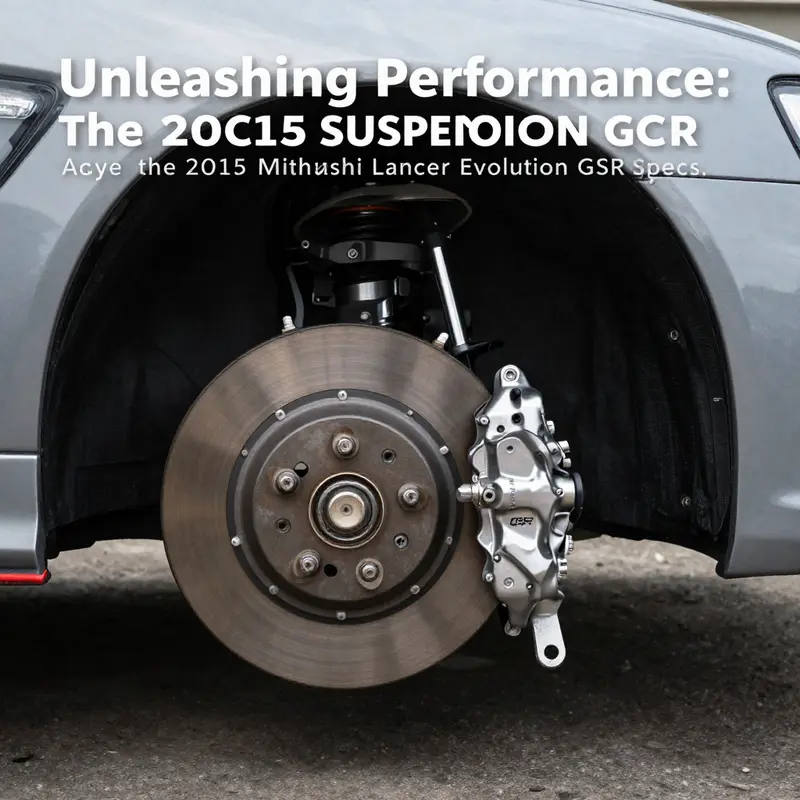
The 2015 Mitsubishi Lancer Evolution GSR sits at a compelling intersection of raw performance and finely tuned chassis geometry. Its reputation rests not only on a turbocharged 2.0 liter engine and an all wheel drive system, but on a braking and suspension setup that translates power into confidence on every bend. This chapter traces how the braking system and the suspension interact as a single cohesive performance package. It explains what makes the GSR agile when pushed into corners and trustworthy when sprinting toward the exit of a straight line. In this context the chassis becomes more than a frame, it is a dynamic instrument that converts controlled pedal effort into precise, measurable handling. The balance between stopping power and ride control is the quiet backbone of the Evolution GSR, a balance that allows drivers to extract the most from its turbocharged heart and its sophisticated drive system. The chapter also considers how heat management, brake bias, and damper tuning work together with the all wheel drive layout to deliver predictable response under both street and track conditions.
Stance, Speed, and the Focused Cockpit: Exterior and Interior Craft of the 2015 Mitsubishi Lancer Evolution GSR
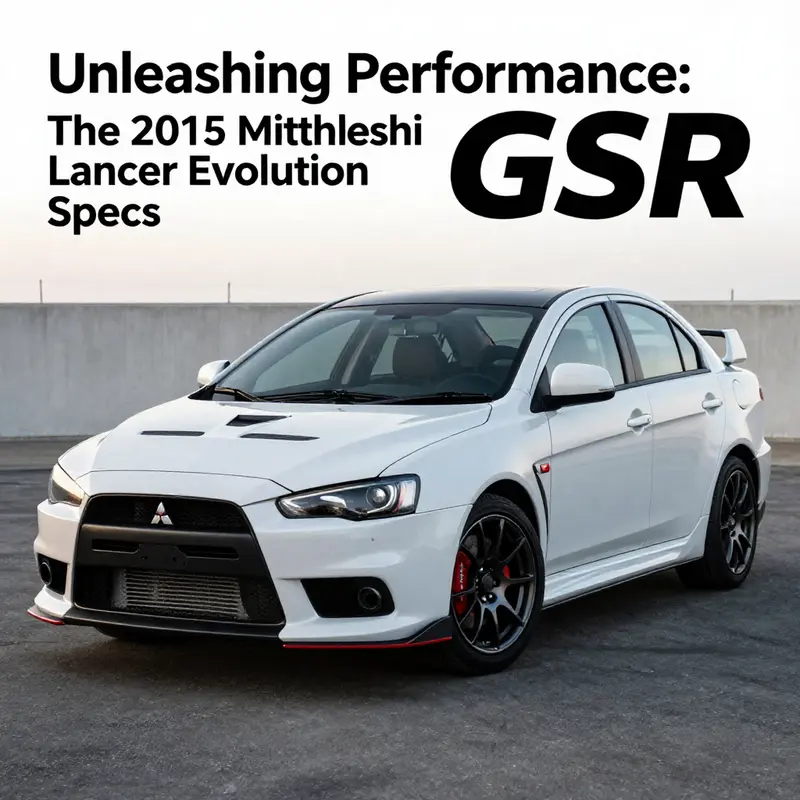
The 2015 Mitsubishi Lancer Evolution GSR presents a rare combination of track-ready aesthetics and a cockpit engineered for precision. Its exterior design is more than a badge and a silhouette; it is a carefully tuned dialogue between airflow, cooling, and the driver’s perception of the road. At a glance, the Evolution’s face immediately announces its performance intent. The shark-nose front fascia remains a recognizable signature of the lineage, a shape that has evolved but never lost its mission: to slice through air with minimal turbulence and to funnel cooling air to the heart of the car. The large, trapezoidal grille sits amid a diagonally diamond-mesh pattern that does more than look aggressive; it communicates the idea that air is being directed with intention. Functional intakes on the hood are not mere styling cues but integral to engine cooling and airflow balance. When the engine is pressed into service, especially in hot or demanding conditions, these ducts become an essential part of the car’s resilience on backroads or on a track day.
Ventilation does not start and stop at the hood. The side vents in the front bumper act as dedicated air routes to the brakes, pulling heat away from rotors and calipers that must withstand repeated hard stops. This is not a cosmetic flourish; it is a practical design choice aimed at preserving brake performance during long, high-speed sessions. The Evolution’s dimensions—length, width, height—contribute to a compact, muscular stance. A wheelbase of 2650 millimeters helps keep the car nimble, while the overall footprint provides a stable platform for the complex balance between grip and tossability that enthusiasts seek in a high-performance sedan. The steep angle of the A-pillar and the flowing line from the C-pillar toward the rear create a silhouette that is both wind-efficient and visually purposeful, a reminder that this is a car designed to stay planted at speed and to communicate momentum even when standing still.
At the rear, the factory-fitted spoiler sits with a carefully tempered profile. It tames lift without creating an ungainly, top-heavy look. The diffuser underneath the rear bumper works in concert with the spoiler to generate downforce as velocity climbs, ensuring that the GSR maintains composure when the road demands more from the chassis. The exterior is finished with careful attention to details that matter on a high-performance sedan: aerodynamically efficient lines, venting that spares components from heat soak, and a silhouette that signals readiness to the more discerning eye. The approach is not about shouting performance from the outside; it is about a quiet, continuous dialogue between the car and the road, conducted through form and function rather than through flash alone.
Moving inside, the cabin confirms that the Evolution’s driver-centric philosophy extends beyond the external theatrics. The interior is predominantly black, with silver trim accents that catch the light and catch the eye at the same moment. The mood is focused rather than indulgent, a space that respects the driver’s need for clarity and control. The steering wheel is a three-spoke, flat-bottom unit wrapped in leather, adding to the tactile connection between driver and machine. Integrated multifunction buttons and paddle shifters are positioned for immediate access, a subtle reminder that the car is built for rapid gear changes when the pace demands it. The instrument cluster embraces a symmetrical twin-tachometer layout, with a redline that anchors the driver’s attention at a decisive 7000 RPM. This is more than a design feature; it is a driver’s cue, a constant reference point that reinforces the characteristic of a performance engine waiting to sing.
The center console reinforces the Evo’s driver-first orientation. Its tiered design places essential controls within easy reach: the upper section houses the infotainment controls and display, while the lower section contains three rotary dials for temperature, fan speed, and climate control. The clarity of the controls is no accident; it is a product of a design choice that weighs how a driver interacts with the cabin while wearing a helmet and driving on a track or spirited back-road runs. The tactile feedback of these dials and the visual symmetry of the layout contribute to a sense of confidence, allowing the driver to adjust comfort without breaking concentration on the road ahead.
The seating, however, is the most immediate statement of purpose inside the Evolution GSR. Front seats are RECARO bucket seats with integrated headrests, finished in a suede-like material that provides grip and support under aggressive driving. The combination of supportive bolstering and a snug, secure seating position helps the driver maintain control during high-G cornering. It is emblematic of a vehicle that prioritizes driver connection to the car over passenger pampering. Together with the leather-wrapped wheel and the precise, responsive pedals, the interior becomes a cockpit rather than a mere compartment. In this environment, every control, every contour, and every texture has a tactical reason. The interior’s restrained palette and purposeful hardware choices avoid distraction, reinforcing the idea that performance is as much a matter of clarity and ergonomics as raw horsepower.
The pairing of exterior efficiency and interior focus is not accidental. The vehicle’s performance credentials—an approximate 291 horsepower from a 2.0-liter turbocharged inline-four and a peak torque around 35.7 kgm—are matched by a chassis and drivetrain tuned for balance and control. A six-speed manual transmission channels that power to a Super All-Wheel Control (S-AWC) system, which integrates torque vectoring and sophisticated braking to shape grip and cornering behavior. The all-wheel-drive system is not merely a traction aid; it is an active partner in steering, encouraging a driver to approach corners with a calculated rhythm rather than a pure rifle of speed. The suspension, with MacPherson struts up front and a rear multi-link setup, offers a blend of precision and compliance. The dampers are adjustable, enabling nuanced tuning for different road surfaces or track conditions, while the overall geometry maintains stability through the lean and dip that accompany aggressive driving. The combination of ventilated discs with large, four-piston calipers at the front, and equally capable brakes at the rear, builds a stopping package that can sustain performance under repeated laps without fear of fade.
The sentence that binds the exterior and interior narratives is simple: form follows function, and function is designed to be felt as quickly as possible by the person behind the wheel. The 235/45 R17 tires provide a balance of grip and ride quality that suits both daily driving and weekend track sessions. The wheel and tire package, in concert with the stance and aero, gives the Evolution GSR a sense of purpose that is palpable the moment one approaches the car. It is a sedan that invites spirited driving not through extravagant theatrics but through a calm, confident readiness that a driver can sense before the engine begins to sing. In this light, the exterior is not merely about aggression; it is about a stable, predictable, and communicative platform on which the driver can place trust.
A practical thread runs through the chapter as well. The design choices—intakes, vents, and the rear diffuser—play a direct role in thermal management and aerodynamic balance. The front bumper’s air channels help manage under-hood temperatures and rotor temperatures, reducing the likelihood of heat-induced performance loss. The rear diffuser complements the spoiler by smoothing airflow and providing the necessary downforce for maintainable high-speed stability. When the vehicle is pushed to its limits, these details matter as much as the larger numbers associated with power and torque. The result is a balanced machine that rewards skill and discipline. The car’s compact dimensions help keep weight distribution favorable, but more than that, the car’s design insists on a driver’s awareness of how momentum, grip, and aero interplay. This is not a car that hides its engineering; it lays it out in the open—front and center, in both the exterior’s purposeful lines and the interior’s exacting ergonomics.
For readers curious to explore a closely related evolution of the same spirit, a related example from the Evo family provides a useful contrast and continuity. A deeply technical reference to a 2015 Evo X GSR model—turbocharged 2.0-liter inline-four paired with a five-speed manual and S-AWC—offers a glimpse into the broader philosophy of Mitsubishi’s performance line during this era. This link helps illuminate how the design and packaging of the Lancer Evolution GSR align with the broader Evo strategy of tuning chassis, powertrain, and driver interface to deliver a cohesive, high-performance package: 2015-mitsubishi-lancer-evolution-x-gsrturbocharged-2-0-liter-inline-four-linked-to-a-five-speed-manual-transmission-and-a-super-all-wheel-drive-system-25000-miles.
The chapter’s closing reflection returns to the present vehicle and what it communicates to a discerning driver. The exterior’s sharp, purposeful cues—the shark-nose silhouette, the grille’s geometry, the hood vents, and the side brake-cooling ducts—work in harmony with the interior’s driver-forward ergonomics to create a single experience. The cabin’s restrained but high-contrast aesthetic, the flat-bottom wheel, and the RECARO seats with suede-like material all reinforce a driving ethos: control, balance, and confidence. The drivetrain’s character—an eager, responsive turbocharged four, driving through a precise manual, and distributed through an advanced AWD system—complements this ethos. The result is more than a sum of parts; it is a coherent manual on how to keep speed, precision, and comfort in perfect alignment.
In the end, the 2015 Evolution GSR’s exterior and interior are not merely about speed. They are about the relationship between a car and a driver, a dialogue that begins with first contact and continues through every twist and straightaway. The exterior signals the car’s purpose with a calm, confident aggression, while the interior offers a cockpit where every control feels natural, almost inevitable in its placement and response. The combination invites a driving experience that is engaging without being invasive—a rare balance that has long defined the Evolution’s appeal. That balance is the heartbeat of the GSR, a reminder that performance can be rooted in design as much as horsepower, and that a car can be both a formidable machine and a precise, responsive partner for the person who dares to turn the key and ask it for more.
External resource: https://www.mitsubishimotors.com/
Final thoughts
The 2015 Mitsubishi Lancer Evolution GSR encapsulates the essence of performance and precision, making it a sought-after model for enthusiasts and business applications alike. Each aspect, from the turbocharged engine to the sophisticated all-wheel drive system, resonates with the needs of those seeking reliability and performance. As businesses increasingly demand vehicles that combine functionality with prowess, understanding the Lancer Evolution GSR’s specifications positions you to make informed decisions, whether in procurement or fleet management. The Lancer Evolution GSR not only provides a thrilling driving experience but also serves as a worthy consideration for those aiming to enhance their automotive assets.