

The 2009 Mitsubishi Lancer serves as a versatile choice for businesses seeking reliable transportation options, combining performance and efficiency. With several engine options, understanding the specifications and operational capabilities of these engines can guide business owners in making informed procurement decisions. This article delves into the distinct engine specifications, performance metrics, fuel efficiency and emissions standards, as well as crucial maintenance insights. Each chapter aims to paint a complete picture of the Lancer’s engine offerings, aiding you in understanding how these components can align with your business needs.
Under the Hood of the 2009 Mitsubishi Lancer: A Comprehensive Engine Exploration
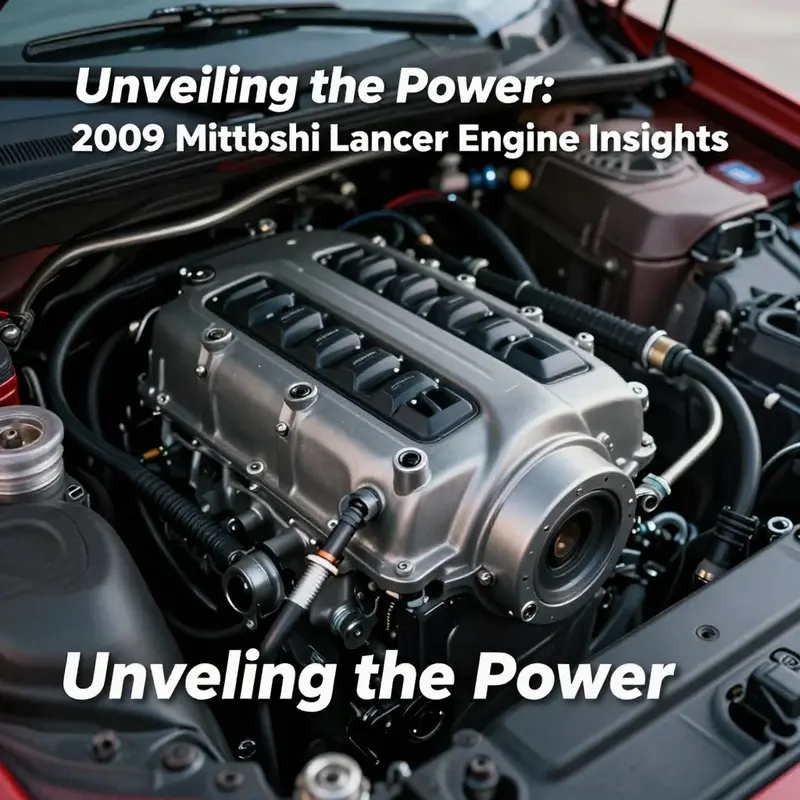
The 2009 Mitsubishi Lancer arrives with a trio of four-cylinder engines that balance efficiency, drivability and outright performance. Whether you’re navigating daily commutes or seeking spirited acceleration on winding roads, understanding each powerplant’s character is critical. From the modest 1.8-liter base motor to the turbocharged heart of the Ralliart, each variant brings its own strengths and trade-offs. In this chapter, we examine the mechanical details, performance numbers and real-world behavior of every engine option available in global markets.
Engine Lineup Overview
At the foundation sits the 1.8-liter 4B10 naturally aspirated inline-four. With roughly 128 horsepower (95 kW) and peak torque around 125 lb-ft, it delivers dependable acceleration in urban and highway driving. The unit employs Mitsubishi’s MIVEC variable valve timing, which optimizes valve lift and duration across the rev range, smoothing power delivery and improving fuel economy. Paired with either a 5-speed manual or a 4-speed automatic, fuel figures linger in the high 20s to low 30s mpg combined, which remains competitive for its era.
Stepping up to the 2.0-liter 4B11 naturally aspirated engine brings a noticeable surge in performance. In standard trims, it offers around 143 horsepower (107 kW) and 145 lb-ft of torque. This extra grunt transforms the Lancer’s acceleration profile, cutting 0–60 mph times by nearly a full second compared to the smaller powerplant. Drivers appreciate the stronger midrange, especially when climbing steep grades or merging onto highways. Efficiency remains respectable, dipping only slightly under heavy throttle but still outperforming many rival compact sedans of 2009.
At the pinnacle sits the 2.0-liter turbocharged 4B11T in the Ralliart variant. With up to 237 horsepower (177 kW) and 253 lb-ft of torque, it redefines the Lancer’s dynamic envelope. Boost peaks at moderate RPM, thanks to an efficient turbocharger and a robust intercooler system that keeps intake temperatures in check under sustained load. MIVEC integration adds further refinement, widening the usable powerband so drivers feel consistent thrust from low speeds through the top end. The Ralliart pairs this engine exclusively with a close-ratio 6-speed manual that features a short-throw shifter and a reinforced clutch—an ideal match to tame the extra torque.
Across all engines, Mitsubishi’s commitment to durability shows in thoughtful engineering details. Forged crankshafts spin within high-strength main bearings. Aluminum alloy blocks resist corrosion while aiding heat dissipation. Roller followers reduce friction at high RPM, and an efficient oil pump ensures stable lubrication under spirited driving.
Maintaining optimal performance over time requires regular attention to service intervals. Spark plugs should be replaced every 30,000 miles on the naturally aspirated units and every 20,000 miles in the turbo. A quality synthetic oil change at 5,000- to 7,500-mile intervals supports longevity, especially in warmer climates or under heavy load. Valve clearance checks aren’t necessary thanks to hydraulic lash adjusters, but an occasional timing chain inspection after 100,000 miles can preempt wear-related noise.
The 4-speed automatic transmission, available on base models, delivers smooth shifts at the expense of fuel economy and acceleration. Under hard acceleration, the unit occasionally hunts for the optimal gear, slightly delaying full throttle response. The 5-speed manual gives drivers a more direct connection, with well-spaced ratios that maximize the engine’s torque curve in both the 1.8 and 2.0 engines. Enthusiasts often praise the manual’s light clutch feel and precise gate pattern.
Fuel economy, while depending on driving style, remains one of the Lancer’s selling points. With the 1.8 and 5-speed manual, EPA ratings hover near 28 mpg city and 34 mpg highway. The 2.0 manual manages 25/33, while the automatic trims roughly one mpg off those figures. The turbocharged Ralliart, with its 6-speed manual, returns around 22/29 mpg—remarkable for a car in its class with that level of output.
A major reason for the Lancer’s competitive efficiency lies in MIVEC technology. By electronically adjusting camshaft profiles, the system seamlessly switches between low-RPM lift for torque and high-RPM lift for peak power. In practice, this results in smooth throttle response, reduced emissions and improved fuel economy without sacrificing the excitement expected from a sporty compact sedan.
Drivers looking to enhance performance on the turbo model often explore the 4B11T billet block as a foundation for higher boost levels and track-focused upgrades. This billet design offers increased strength and improved cooling passages, crucial when tuning for power north of 300 horsepower. Combined with a larger turbocharger, uprated intercooler and supporting fuel system modifications, the 4B11T can become a track-ready powerhouse while retaining daily-driven reliability.
Comfort and noise isolation on the naturally aspirated models remain adequate at cruise speeds, though the Ralliart’s exhaust note generates a more aggressive growl under load. Interior insulation keeps wind and road noise in check, but the firmer suspension in performance trims transmits more feedback through the cabin—an acceptable trade-off for enthusiasts seeking direct connection with the tarmac.
When considering a 2009 Lancer purchase, matching engine choice to intended use ensures satisfaction. Urban commuters value the 1.8’s frugal appetite and nimble handling. Weekend explorers or those expecting occasional spirited drives lean toward the 2.0 naturally aspirated engine. Finally, drivers who crave performance and are comfortable with a manual gearbox find the Ralliart’s turbocharged powerplant exceptionally rewarding.
Performance aside, reliability records show that all three engines can surpass 200,000 miles with proper maintenance. Common areas to monitor include coolant hoses, thermostat housing leaks and occasional throttle body cleaning to prevent idle irregularities.
For a complete breakdown of factory specifications, performance metrics and fuel economy figures, refer to the detailed table at Car and Driver: https://www.caranddriver.com/mitsubishi/lancer/2009/specs
With its array of engine options, the 2009 Mitsubishi Lancer caters to a broad spectrum of drivers. From efficient daily transport to turbocharged excitement, each powerplant delivers a distinct blend of power, economy and character. This chapter has unpacked the mechanical nuances, maintenance insights and driving impressions that define the Lancer’s engine lineup, setting the stage for deeper discussions on suspension tuning and performance upgrades in the following chapters.
Breathing Easy, Driving Bold: The 2009 Lancer Engine Family and Its Driveable Balance

The engine heart of the 2009 Lancer sits at the intersection of pragmatism and performance. Across markets, the manufacturer aimed to deliver a family of powerplants that could satisfy daily commuting needs while reserving a step of enthusiasm for those who wanted to feel a little more punch behind the pedals. Central to that design approach is a smart use of Mitsubishi’s MIVEC technology, which choreographs valve timing to smooth out the delivery and to widen the effective power band. The result is a lineup that can feel both refined at highway speed and responsive when the road rises or falls in the rev range. In this context, the 1.8-liter family, the 2.0-liter naturally aspirated option, and the turbocharged 2.0-liter variant all share a common philosophy: engine architecture that favors reliability and efficient breathing over brute, unmoderated bursts of power. It is a philosophy that rewards steady, predictable acceleration and reasonable fuel economy as much as it rewards a spirited shuffle of gears when the mood for a drive awakens.
At the core of the base engine, the 1.8-liter, a DOHC 16-valve inline-four identified by the 4B11 designation, illustrates the balancing act. In the chassis’ practical, non-Evolution trims, this engine tends to produce roughly 135 to 140 horsepower around 6,000 rpm. Torque clocks in near 127 to 130 lb-ft at about 4,000 rpm, a spread that suits everyday overtakes and city merging without sounding strained. Transmission choices for this powerplant are straightforward: a five-speed manual for drivers who enjoy a tactile connection to the road, and a four-speed automatic for those who prioritize ease and comfort in urban settings. These numbers and options tell a story of drivability rather than outright speed. The emphasis is on smooth torque delivery, predictable throttle response, and the ability to keep the engine in its sweet spot during typical driving cycles. Crucially, the 1.8-liter engine package also leans on the efficiency side of the equation. With EPA fuel-economy figures that hover around the low twenties in city driving and approaching thirty miles per gallon on the highway in non-Evolution trims, it presents a compelling blend of reasonable running costs and adequate daily performance.
The same basic architecture expands into a higher-reach option with the 2.0-liter naturally aspirated four. This variant, found in markets that favor a bit more mid-range pull, moves the performance envelope upward by providing roughly 143 horsepower in the same general power band as the smaller unit. While the exact numbers can vary by market and tuning, the core idea remains: more displacement can yield more torque and a more confident highway presence without straying into the realm of heavy thirst. The 2.0-liter, like the 1.8, is designed to be a practical companion for daily driving and longer trips alike. It maintains the emphasis on a broad, usable torque curve and a throttle response that remains friendly in urban traffic yet satisfying when the road opens up. The engine block and head geometry in this family is optimized for efficient combustion, while the valvetrain retains the MIVEC system’s ability to adjust timing for better breathability at both ends of the rev range. The result is a propulsion system that remains smoothly communicative through nuances of pedal input rather than delivering abrupt, momentary surges that can unsettle a relaxed driving experience.
The third variant, the turbocharged 2.0-liter, is where the narrative shifts toward a more performance-oriented sensibility. In the high-performance configuration within this family, the 4B11T engine is tuned to deliver up to around 237 horsepower, paired with a six-speed manual transmission to maximize driver engagement. The turbocharged setup represents a different approach to the same fundamental goals: use careful tuning and forced induction to widen the effective air-fuel mixture intake at higher RPM, and use valve timing control to ensure the engine remains responsive across a broader operating range. This is the engine that people reference when they talk about the potential for spirited, track-adjacent driving without abandoning the daily-driven comfort of the same car in town. What this turbo variant demonstrates, more than anything, is how a single engine family can be stretched across a spectrum of applications—from economical, dependable daily transport to a confident, eagerly revving performance machine—without requiring a completely different platform.
Across all three options, the shared DNA of the engine family is evident in the application of MIVEC. The Mitsubishi variable valve timing system works behind the scenes to optimize valve opening and closing as the engine climbs in RPM. At lower revs, MIVEC helps the engine produce better torque without needing a larger displacement, contributing to that usable throttle response many drivers value when merging onto a highway or overtaking in a pinch. As the revs rise, the system unlocks the capability for more aggressive breathing, supporting higher power output without the abruptness that can come with a purely fixed-timing setup. The result is a powertrain that feels dependable in everyday traffic and capable of a more energetic burst when the road demands it. The engine architecture also benefits from a careful balance of reciprocating mass, intake and exhaust piping, and air-to-fuel regulation, yielding a refined characteristic that avoids harshness at the top end while maintaining a lively personality in the middle of the rev range.
In a practical sense, the 2009 Lancer’s engine lineup is defined by a relative emphasis on efficiency, reliability, and a lift in performance as you move from the base 1.8-liter configuration to the turbocharged 2.0-liter. Even the turbocharged variant’s power grows without sacrificing the fundamental chassis behavior that makes the car easy to live with every day. The chassis itself benefits from a lightweight construction and a responsive steering setup that, when paired with these engines, creates a balanced experience. Soft, predictable throttle response at city speeds gives way to a more confident, linear acceleration profile as you push just a bit harder on the throttle, especially with the higher-performance variant. In other words, the engine family supports a broad spectrum of driving styles, and the car’s handling and gearing work in concert with the engines to maintain a sense of coherence that makes the car feel smaller, more eager, and more precise than its weight would suggest.
For readers who crave the most technical specificity, the 1.8-liter 4B11 identifies itself as a DOHC, 16-valve inline-four, a layout long favored for its balance of breathing and efficiency, and the torque curve’s shape is a direct beneficiary of the MIVEC timing strategy. The 2.0-liter NA variant inherits the same foundational architecture but with larger displacement delivering a modest bump in peak power and a more relaxed stretch of torque in the mid-range. The turbocharged 2.0-liter, by contrast, injects a higher level of demand into the air-fuel equation. The turbocharger compresses intake air to deliver a denser charge, enabling more power from the same cylinder volume. In this configuration, a six-speed manual helps the driver keep the engine in its most efficient and responsive window, which is especially important given the turbo’s tendency to respond sharply to throttle input around the boost threshold. In all cases, the engines emphasize a relatively narrow, predictable torque delivery window rather than a flat, generic power curve. This makes throttle modulation intuitive—drivers learn to feed the engine its preferred air at the right time, and the car responds with confidence rather than surprise.
The fuel-economy implications of this family are important in the real world. The base 1.8-liter’s efficiency numbers, around 22 mpg in the city and 30 mpg on the highway for non-Evolution trims, reinforce the sense that Mitsubishi designed this engine for everyday practicality. The 2.0-liter naturally aspirated option tends to improve road manners and mid-range performance without dramatically shifting the fuel economy equation, keeping in mind that real-world numbers vary with transmission choice, gearing, and driving style. The turbocharged variant, while delivering substantially more horsepower, demands careful throttle discipline and typically carries a higher appetite for fuel when driven with a heavy right foot. Still, the architecture remains efficient for a turbocharged engine when the driver moderates boost and uses the engine’s torque curve to its advantage. Taken together, the three engines present a coherent, adaptable lineup that accommodates a wide range of buyers—from commuters who value lower operating costs to enthusiasts who want a more dynamic driving experience within a familiar package.
The marketing and engineering narrative around this engine family also helps explain how the car could be tuned for markets with different regulatory expectations and consumer preferences. In markets where a focus on fuel economy is paramount, the base 1.8-liter serves as a compelling core. For markets where a balance of performance and efficiency is desirable, the 2.0-liter NA offers a modest but meaningful step up in power and mid-range shove. And in markets that prize performance, the turbocharged 2.0-liter becomes the obvious choice, delivering a surge of power that complements a more aggressive driving stance. This tiered approach speaks to the flexibility of the underlying architecture and to the engineering discipline that keeps the drivetrain coherent across variants. It is a reminder that a well-designed engine family is not defined by a single number, but by how that number interacts with the rest of the car—its weights, its gearing, its chassis tuning, and its intended use cases.
For those who want a closer look at the durability side of the turbo variant, there is practical detail to consider. The turbo engine’s performance gains come with a corresponding emphasis on strength and cooling, and there is interest in how the block, head, and supporting components withstand boost pressure over long service intervals. A deeper dive into the turbo block’s design and the associated hardware is available in a dedicated technical resource that discusses the 4B11T block structure. This resource, titled in shorthand as the 4B11T billet block, offers insights into how billet-block construction can support higher boost levels and sustained reliability under demanding conditions. It is a useful reference for enthusiasts who want to understand how engineers manage heat, pressure, and durability in a turbocharged four-cylinder layout. 4B11T billet block
The broader story, however, remains grounded in the everyday: the engine’s inherent flexibility, the way it breathes with MIVEC across the rev range, and how the rest of the car—its chassis, its suspension, and its steering—works in harmony with whichever engine sits under its hood. The 2009 Lancer’s handling is often described as refined and predictable, with a light chassis feel and a steering ratio that responds promptly to driver input. In practice, this means that even the base 1.8-liter can offer a satisfying tempo on a winding road, while the turbocharged variant invites a more urgent cadence for those who enjoy a spirited drive. The balance is not about a single, runaway peak of performance; it is about a coherent, repeatable, and accessible sense of pace that can adapt to daily life without demanding specialized driving conditions or locations.
Finally, while the engine is only one part of the vehicle’s overall experience, it remains a critical determinant of how the car feels when you turn the key and press the accelerator. The 1.8-liter and 2.0-liter naturally aspirated options are important because they deliver a consistent and approachable power delivery that many buyers appreciate during city routines and open-road cruising alike. The turbocharged 2.0-liter variant—though less common in the broad market—offers a clear pathway to more aggressive performance without stepping outside the engineering ethos of efficiency, durability, and balanced response. If a reader wants to compare the engine’s performance to formal test numbers, a good starting point is the official specifications published for the model year. These numbers reflect the balance that defined the car’s engineering approach and explain why the 2009 Lancer could feel both practical and engaging depending on the chosen configuration.
In sum, the 2009 Lancer engine family embodies a design philosophy that treats power as a spectrum rather than a single destination. By leveraging a common architecture with variable valve timing, Mitsubishi achieved a versatile lineup that can meet diverse needs while preserving a cohesive driving character. The base 1.8-liter emphasizes efficiency and everyday reliability, the 2.0-liter naturally aspirated option adds a touch more mid-range confidence, and the turbocharged variant offers a substantial performance uplift for those who want a more dynamic experience without abandoning the core platform. The result is a car that can quietly excel in the dull arithmetic of daily driving and still rise to the occasion when the road calls for a more assertive rhythm. As a driver, you feel the engine’s breathing—an almost invisible but very real tell-tale that the car is well engineered, well balanced, and capable of evolving with your preferences over time. The engine is not a loud proclamation of speed; it is a measured, confident partner that helps the entire vehicle feel more alive without demanding undue concessions in comfort or practicality.
External reference for precise specifications and performance data can be found in reputable automotive databases and publications that document the 2009 Lancer’s specifications in detail. See the official spec sheet for authoritative figures and context on market-specific variants and trims.
External resource reference: https://www.caranddriver.com/mitsubishi/lancer/2009/specs
Striking the Balance: Fuel Economy and Emissions Control in the 2009 Mitsubishi Lancer Engine

Striking the Balance: Fuel Economy and Emissions Control in the 2009 Mitsubishi Lancer Engine
From its inception, the 2009 Mitsubishi Lancer was engineered to deliver dependable performance without compromising environmental responsibility. Under the hood, the 2.0-liter four-cylinder powerplant showcases a fine equilibrium between spirited output and frugal fuel consumption. By weaving together refined combustion processes, advanced valve timing, and calibrated transmissions, this naturally aspirated engine met ambitious targets for both driver satisfaction and regulatory compliance.
At the core of the Lancer’s efficiency story is Mitsubishi’s signature adaptive valve timing system. By continuously adjusting the intake valve lift and timing, the technology optimizes airflow across a wide range of engine speeds. In lower rpm ranges, valve timing retreat ensures more complete combustion of the air-fuel mixture, reducing unburned hydrocarbons and improving city driving efficiency. When the tachometer climbs, the system switches to a more aggressive profile, allowing higher volumetric efficiency and a fuller power curve. The result is fuel use that closely tracks real-world demands, from stop-and-go commutes to open-road bursts of acceleration.
Beyond valve timing, the Lancer’s engine block and internals receive careful treatment to trim parasitic losses. Precision-machined cylinder walls and low-friction piston rings cut internal drag. A lightweight crankshaft design, complemented by balanced rotating assemblies, further reduces energy waste. These engineering steps shrink frictional losses so that the vast majority of fuel energy becomes forward motion. Together with a carefully contoured intake manifold that encourages swirl at lower engine speeds, these refinements translate into a smoother power delivery and a tangible gain in miles per gallon.
Transmissions also play a pivotal role in the Lancer’s efficiency equation. The standard 5-speed manual offers closely spaced ratios for an engaged driver, enabling quick upshifts and minimal rpms at cruising speed. Its gearing encourages operators to stay in higher gears as soon as traffic allows. Similarly, the available 4-speed automatic transmission benefits from an adaptive hydraulic control unit that slightly modifies shift points based on load and throttle input. While not a multi-gear dual-clutch unit, the automatic was tuned to emphasize early upshifts at moderate throttle, curbing fuel consumption during light acceleration.
Uniquely, the Lancer’s chassis and body design complement powertrain efficiencies by reducing aerodynamic drag. A carefully sculpted front fascia channels air over the hood and along the windshield at shallow angles. Subtle underbody covers smooth airflow beneath the cabin, and a gently tapered rear end minimizes turbulence. While aerodynamic gains often go unnoticed by the untrained eye, every fraction of drag reduction contributes to highway fuel economy—enabling the 2009 Lancer to deliver up to 30 miles per gallon under steady-state cruising conditions.
Production models adhering to EPA testing protocols earned an official rating of 22 miles per gallon in the city and 30 on the highway with the manual gearbox, translating to a combined figure of 25 mpg. Drivers opting for the 4-speed automatic saw a marginal difference—21 mpg city and 29 mpg highway, or 24 combined. These numbers reflect tangible strides over previous Lancer generations, driven by incremental improvements in engine calibration and transmission software.
Maintaining these efficiency gains over the vehicle’s lifespan depends heavily on routine care. Regular oil changes with a low-viscosity grade help preserve friction-reducing properties. Periodic inspection and replacement of spark plugs ensure optimal flame propagation. A clean air intake and properly gapped filters allow the engine to breathe freely, preserving both power and economy. Adhering to the recommended service intervals for fluid flushes and filter swaps safeguards the delicate balance between internal tolerances and combustion stability.
Emission control hardware forms a second pillar of the Lancer’s environmental performance. A high-flow catalytic converter sits closest to the engine to reach operating temperature swiftly. Integrated oxygen sensors relay real-time exhaust composition to the engine control unit, enabling precise adjustments of fuel injection timing and air-fuel ratio. This closed-loop feedback loop minimizes carbon monoxide, hydrocarbons, and nitrogen oxides. Although the Lancer does not feature particulate filters or selective catalytic reduction systems common in diesel applications, its under-body exhaust routing and heat-insulated components maintain catalytic efficiency through long highway drives.
Upon certification, the 2009 Lancer met stringent U.S. EPA Tier 2 Bin 5 and California LEV II standards. These benchmarks mandated strict limits on tailpipe pollutants, compelling manufacturers to refine every aspect of engine design and calibration. While some competitors leaned on hybrid drivetrains or start-stop technology, Mitsubishi chose to extract maximum efficiency from a conventional gasoline engine. The result was an accessible sedan that delivered advanced emission control without the complexity or cost premium of electrified systems.
Striking this balance required thoughtful trade-offs. Aggressive lean-burn strategies could harm drivability at low speeds, while conservative tuning would undercut fuel savings. Mitsubishi’s engineers therefore opted for a middle path: a combustion chamber geometry that fosters rapid mixture swirl, paired with a central spark plug for even flame fronts, and a mild exhaust gas recirculation rate to reduce nitrogen oxides without sacrificing throttle response. The outcome is a powertrain that feels lively when provoked yet remains surprisingly thrifty during everyday use.
In everyday driving, owners of the 2009 Mitsubishi Lancer discover a capable companion for both urban errands and highway journeys. The marriage of intelligent valve control, efficient drivetrain calibration, and emissions hardware positions this model as an example of early-late-2000s engineering resolve. Far from an afterthought, fuel economy and emissions compliance were critical design goals addressed with precision and balance. By maintaining proper service and tuning, Lancer drivers continue to reap the benefits of this holistic approach even years after purchase. For detailed testing data and official figures, refer to the U.S. EPA Fuel Economy Guide: https://www.fueleconomy.gov/feg/2009/2009mitsubishilancer.shtml
Maximizing Longevity: Essential Maintenance and Repair Strategies for the 2009 Lancer Engine
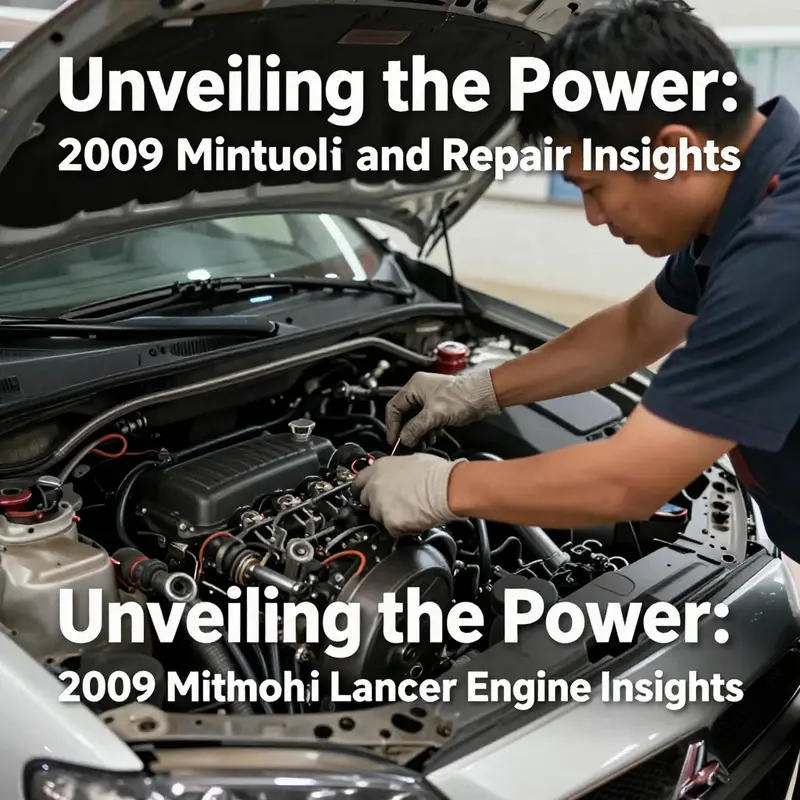
Maintaining the heart of a 2009 Mitsubishi Lancer means understanding how each component interacts under daily use. Whether you own the dependable 1.8L 4B11, the spirited 2.0L 4B10, or the turbocharged 4B11T in the Ralliart model, a proactive approach to upkeep can safeguard performance and extend service life. At the core of this process lies a clear plan for oil, filters, sensors and diagnostics that prevents small issues from becoming costly repairs.
Key Maintenance Strategies and Diagnostic Approaches
Preventive attention begins with a regimented oil and filter schedule. Engine oil lubricates moving parts, carries heat away from critical areas, and suspends debris. For the 2009 Lancer, changing oil every 5,000 to 7,500 miles under normal driving preserves the integrity of pistons, bearings and the oil pump. With each oil change, fitting a fresh high-quality filter ensures that abrasive particles and soot do not recirculate. Neglecting filter replacement between 30,000 and 60,000 miles risks sludge buildup, higher friction and potential bearing failure. Every drop of old oil left behind accelerates wear.
While oil sustains lubrication, the cooling system protects against heat-induced damage. The coolant temperature sensor serves as the engine’s thermometer, relaying readings to the ECU to adjust fuel mixture and fan engagement. A faulty sensor can mimic low coolant levels or false overheating warnings, triggering limp-home modes and drivability issues. Inspecting the sensor and circuits every 30,000 miles prevents misdiagnoses that might otherwise drive unnecessary repairs.
Fuel injectors also demand routine scrutiny. Over time, residue from combustion oils and additives clings to injector tips, altering spray patterns and lean-rick fuel mixtures. Symptoms of clogged injectors include hesitation on acceleration, rough idling and elevated exhaust emissions. Professional cleaning or ultrasonic servicing at regular intervals restores spray precision and fuels efficiency. Skipping this step compromises combustion quality and can accelerate catalytic converter wear.
Consistent oil pressure is vital, so the oil pump must remain in prime condition. Driven by chain or gears, it circulates oil through galleries to bearings and camshafts. Early signs of pump wear include irregular oil pressure readings on the gauge or warning lights. When replacing or inspecting the pump, technicians should verify relief valve springs and clear any debris from passages. A fully functional oil pump ensures that valve trains and turbo bearings on the 4B11T enjoy stable lubrication under boost.
Between mechanical checks, electronic diagnostics serve as a sentinel for engine health. Regular scans with an OBD-II tool reveal over 50 monitored parameters, from air/fuel ratios to ignition timing. Detecting upstream O2 sensor faults or misfires early can save hours of labor and prevent damage to downstream components. A periodic deep-dive scan—ideally every oil change—provides insight into the ECM’s adaptive fuel trims and readiness monitors. When trouble codes surface, address the root cause before clearing the code to avoid masking a deeper issue.
Spark plugs, though small, play an outsized role in combustion efficiency. The MIVEC variable valve timing system demands precise ignition events at each valve lift profile. Worn or fouled plugs cause misfires that disrupt valve timing logic and hinder low-RPM smoothness. Inspect and replace plugs at recommended intervals, usually around 60,000 miles. Always use the correct heat range and torque values specified in the service manual to achieve consistent gaps and firing voltages.
Air intake and filtration have a direct link to engine breathing. A clogged air filter chokes off airflow, starves cylinders of oxygen and forces richer fuel maps. Under dusty conditions, inspect filters more frequently. A clean air path preserves throttle response and prevents abrasive particles from scoring cylinder walls or valves. For turbocharged variants, a clear intake tract also aids intercooler efficiency and cuts knock risk.
Belts and hoses underpin accessory drive and cooling flow. The timing chain on most MIVEC-equipped Lancers typically exceeds 100,000 miles in reliable operation but should still be monitored for elongation and tensioner wear. Serpentine belts drive alternators, water pumps and power steering pumps. Any sign of cracking, glazing or noise calls for replacement. Hoses must remain pliable; a softening hose near the thermostat or radiator can split under high pressure, resulting in sudden coolant loss.
Throughout the vehicle’s life, fluid integrity matters. Transmission, brake, and coolant fluids should follow the manufacturer’s change intervals. While not part of the engine’s internal makeup, compromised fluids stress the engine by raising operating temperatures or forcing the alternator to compensate for dragging brakes. A well-rounded maintenance schedule covers all systems that feed or rely on engine performance.
Enhancing Engine Durability and Performance Through Informed Upgrades
Beyond stock upkeep, savvy enthusiasts often look to strengthen core components without sacrificing reliability. One popular option is installing a reinforced billet block upgrade designed for the 4B11T platform. A high-grade billet block offers tighter stress tolerances under boost, reducing the risk of cylinder wall distortion during track sessions. Interested owners can review details on the 4B11T billet block to assess compatibility and machining requirements.
For those pushing the turbocharged variants, reprogramming the ECU can unlock optimized fuel maps and valve timing curves. However, proper tuning demands solid baseline maintenance: injectors that spray cleanly, sensors that report accurate values, and an oil system capable of sustaining elevated temperatures. A neglected intake or worn pump will undermine any software gains.
MIVEC calibration also responds well to intermittent inspections of the cam phasing mechanism. Over time, carbon buildup can stiffen the vane control and hamper variable timing. A solvent soak and gentle agitation of the cam control assembly restores full range. When reassembling, technicians should apply the correct torque settings and lubricate moving parts with assembly lube to prevent dry start wear.
Even subtle engine management upgrades, such as a higher-capacity oil cooler or a performance thermostat, rely on a foundation of precise maintenance. Upgrading to a larger oil cooler can stabilize oil temperatures under sustained load. Likewise, a calibrated thermostat that opens at a slightly lower temperature keeps coolant flowing more consistently. Both improvements extend component life, but only when the underlying hoses, clamps and sensors remain in peak condition.
It’s equally important to source reliable replacement parts. Whether seals for the oil pan, pressure-rated hoses or fuel injector O-rings, using OEM-equivalent materials preserves the designed tolerances. Cutting corners on low-grade components can lead to leaks and system failures that ripple through the engine.
When complex repairs arise—like rebuilding a worn camshaft or replacing the head gasket—official service manuals offer the precise torque sequences and break-in procedures that aftermarket guides often omit. For step-by-step diagrams, electrical schematics and torque charts, consult the comprehensive service manuals dedicated to the 2009 Lancer.
Ultimately, consistent maintenance combined with targeted upgrades yields an engine that not only runs efficiently but also responds eagerly when demanded. A disciplined routine preserves the synergy of the MIVEC system, ensures reliable power delivery from idle through redline, and guards against the surprises that lead to major repairs. By respecting service intervals, leveraging diagnostic insights, and enhancing durability where it counts, the 2009 Lancer engine can offer years of smooth, dependable performance.
Final thoughts
In conclusion, the 2009 Mitsubishi Lancer engine presents an appealing array of options for business owners seeking reliable and efficient vehicles. By closely examining the engine specifications, performance metrics, and potential maintenance needs, businesses can make informed decisions that align with their operational goals. The emphasis on fuel efficiency also resonates with the growing demand for eco-friendly business solutions. Ultimately, a well-maintained Lancer engine not only enhances vehicle longevity but also contributes positively to overall business fleet performance.