
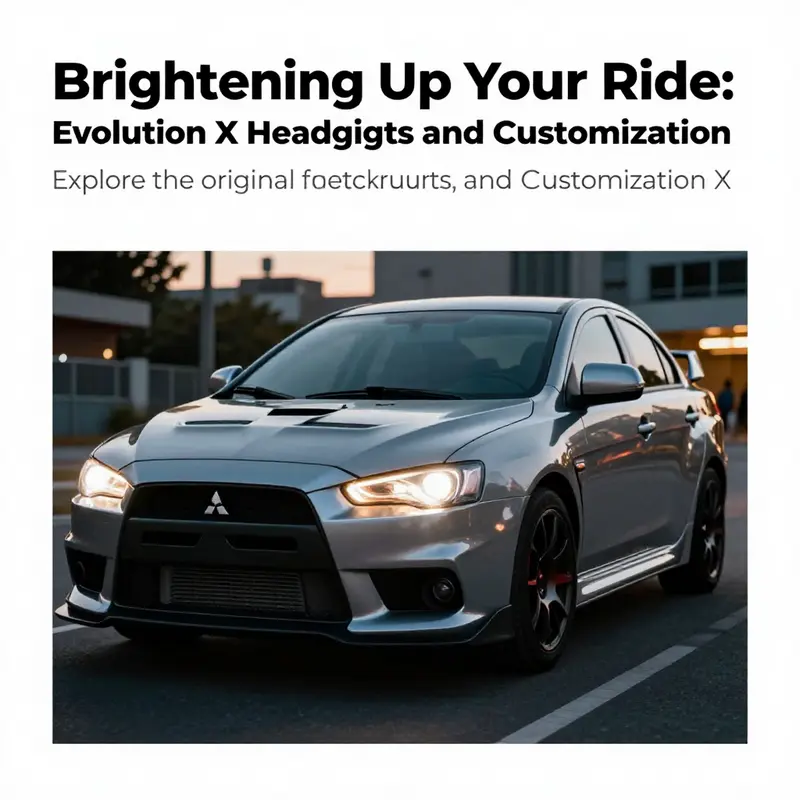
The headlights of the Mitsubishi Lancer Evolution X, a vehicle celebrated for its high performance and distinctive style, represent a key aspect of both functionality and aesthetics. Originally equipped with HID bulbs and projector-style designs, these headlights provide not only illumination but also enhance the aggressive look that the Evo X is known for. As business owners in the automotive aftermarket, understanding the options available for upgrading and replacing these headlights can significantly influence your offerings and customer satisfaction. This article will detail the design features of the original headlights, explore various aftermarket enhancements available, and discuss how to ensure compatibility and selection for your clientele’s specific needs.
Eyes of the Evo X: Original-Equipment Design and the Craft of Aggressive Illumination
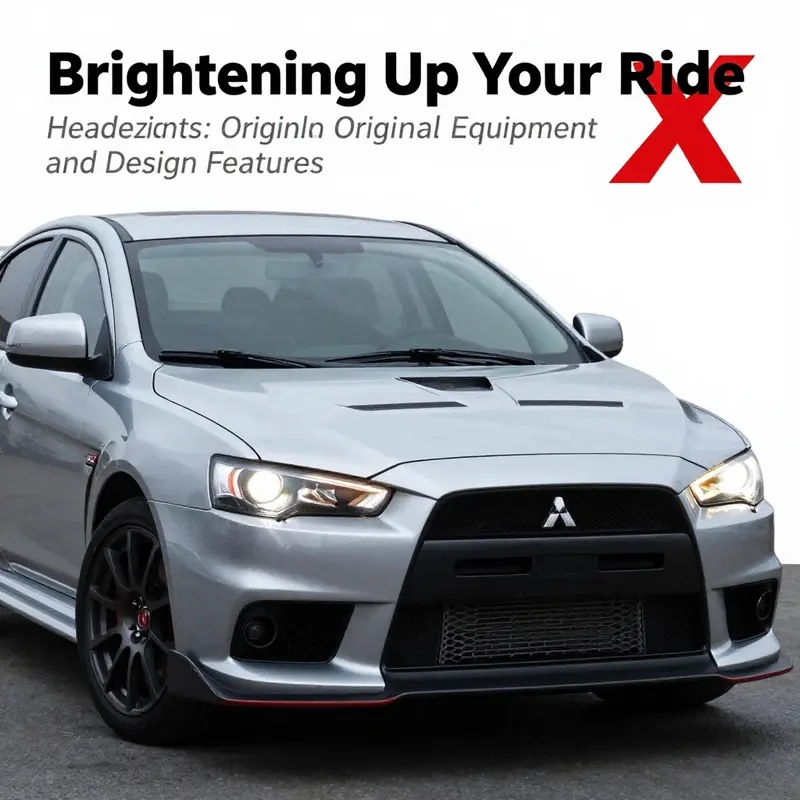
The front end of the Mitsubishi Lancer Evolution X is more than a façade; it is a statement of intent. From 2008 through 2016, the Evo X carried a design language that fused aerodynamics with a predatory presence, and the headlights were a central and indivisible part of that message. In the way they sit, in the way the light interacts with the surrounding bodywork, in the precise silhouettes that cut across the chrome or black housing, the headlights announced that this car meant business before the driver even pressed the accelerator. They did not merely illuminate the road; they framed the perception of speed and aggression. The original equipment, in its halogen form, was tuned to deliver reliable performance while preserving a clean, race-inspired aesthetic. It is tempting to consider them as a simple, functional lighting unit, but in reality they function as a visual engine that harmonizes with the Evo X’s overall architecture. The headlights balance the car’s forward thrust with a measured restraint that allows the rest of the design—especially the hood line, the grille, and the angular crease along the fenders—to breathe and read as a single, cohesive statement. In this sense, the Evo X headlight design is a study in how lighting can be both a technical component and a styling signature, a conjunction of illumination philosophy and aggressive form that helps to define the model’s enduring appeal.
The origins of the OEM design lie in a deliberate choice to emphasize function without sacrificing character. The housing is deep and angular, with a form that mirrors the silhouette of the car’s knife-edged nose. When the driver looks straight ahead, the line of the headlight aligns with the hood crease and the upper edge of the bumper, creating a seamless channel that visually extends the front lip and directs attention to the center of the vehicle. This alignment is not happenstance; it is a reflection of the Evo X’s emphasis on controlled aerodynamics. The lenses are clear polycarbonate, with a matte finish that reduces glare and adds a touch of modernity to the otherwise restrained look. Inside, the design remains minimal and purposeful, with discreet internal reflectors and a clean, almost clinical arrangement that prioritizes the distribution of light over ornament. The effect is understated yet powerful: the eyes of the Evo X appear focused and attentive, always ready to engage the road with intent.
In terms of illumination technology, the base configuration relied on halogen bulbs. This choice was consistent with the era’s industry norms, where reliability, cost-effectiveness, and ease of maintenance outweighed the push toward more expensive or complex lighting systems. Halogen units offered predictable performance, accessible parts, and straightforward electrical requirements. They complemented the car’s performance-focused character while ensuring that service and replacement would not become a burden for owners who drive the Evolution X as a daily sport machine or a weekend performance car. Yet halogen does not tell the whole story of the Evo X’s lighting journey. As the model matured and production shifted across markets, optional upgrades appeared in later years that introduced higher-end lighting technologies. In some markets, HID (High-Intensity Discharge) kits became available as factory options or through dealership programs. These HID upgrades delivered brighter, whiter light with a more intense projection, improving nighttime visibility and providing a visual upgrade that aligned with the car’s performance aspirations. The presence of HID in selected iterations underscores a broader truth about the Evolution X: the car was designed to accommodate ongoing evolution in its own lighting capabilities, even if the base configuration remained within a Halogen comfort zone for most owners.
The visual language of the OEM headlights, however, extends beyond the light itself. The design carries a certain drama through its sheer silhouette. The slightly angular profile of the housing creates a forward-leaning stance that seems to push the front end toward the road. It is a subtle but meaningful cue, a reminder that the Evo X was engineered to feel aggressive in motion as well as at rest. This design is complemented by the decision to keep the internal components compact and well-integrated, ensuring that the headlight assembly does not intrude on the car’s clean lines. The result is a front end that reads as a single, cohesive unit—headlight, hood line, and fender all contributing to the same impression of precision and purpose. Even the treatments chosen for the finish—black or chrome housing, clear lenses, and a shallow, matte interior—work together to minimize reflections and maximize perceived speed. The minimalistic approach is not a decision to be conservative; it is a deliberate choice to keep the eye focused on the car’s geometry rather than on decorative gadgets. In this sense, the Evo X headlights become a study in restraint: they are bright enough to illuminate the dark road ahead, yet they do not overpower the design’s broader honesty about its performance orientation.
As a result of this design philosophy, the Evolution X’s headlight appearance has aged with a sense of disciplined authenticity. Even as the aftermarket scene began to push toward more dramatic lighting solutions—LEDs with sequenced signals, smoked or blacked-out lenses, and projector-driven upgrades—the OEM units remained a benchmark for proportions and fitment. The demarcation between form and function became a core part of the car’s identity: a headlight system that could be seen as a technical tool for nighttime performance and as a visual cue that signals the car’s intent to be taken seriously as a modern performance machine. The base design’s reliance on halogen lighting did not prevent it from becoming a canvas for aftermarket experimentation. Rather, it created a clear platform from which enthusiasts could build, without losing the fundamental proportion and stance that define the Evo X’s front end. This balance—between the raw, mechanical clarity of the halogen setup and the evolving aesthetic opportunities offered by aftermarket upgrades—exemplifies how the Evo X headlights anchor a broader narrative about the model’s adaptability and the culture of tuning around it.
If we look closely at the OEM headlight’s smaller details, we also see how the packaging works in concert with the car’s broader lighting strategy. The lamps sit within a housing that often includes integrated fog lights in the bumper, a pairing that helps to maintain a clean, uninterrupted line along the lower front fascia. Although the demon eyes or signature LED daytime running light (DRL) patterns associated with some aftermarket or higher-end units are not an explicit part of the base Evo X configuration, the concept of a distinct DRL signature is not alien to the design ethos. In practical terms, the DRL approach in the later or more premium variants echoes the same aim as the OEM arrangement: to create a visually legible front end at a glance, ensuring the car remains recognizable in daylight and becomes more conspicuous in traffic. The base headlights achieve this through a careful balance of beam shape, glare control, and a color temperature that reads as crisp and modern without leaning into the more aggressive cold whites or blues that some aftermarket configurations embrace. This restrained lighting approach reinforces the Evo X’s emphasis on control and precision, attributes that are as relevant to an evening canyon run as they are to a daily commute.
From a sourcing perspective, the OEM headlights were designed to interface with the car’s electrical system with predictable plug-and-play compatibility. This meant that the maintenance path for owners—whether they kept the car stock or pursued a light upgrade—remained straightforward. The simple halogen setup meant that bulbs could be replaced with relative ease, with widely available equivalents on the market. In markets where HID upgrades were offered, the transition required attention to ballast compatibility and lighting alignment to preserve beam patterns and glare-free operation. The economic and practical logic behind the stock choice is clear: the Evo X was built to deliver reliable performance, and the headlights reflect that philosophy. The design team pursued a look that would endure, while the engineering team ensured that the installation and operation would be robust enough to meet expectations of daily use and weekend performance driving alike.
Yet as enthusiasts increasingly sought to modernize the Evo X without sacrificing fitment, aftermarket options expanded. The allure of LED headlight kits, projector upgrades, and sequential light functions offered a way to refresh the vehicle’s look and brightness while remaining faithful to the car’s underlying geometry. The practical implications of such upgrades are worth noting. When you opt for a LED conversion or a redesigned headlight assembly painted to match the car’s finish, you are not simply swapping a component; you are renewing the front end’s communicative capability. LEDs can produce brighter, faster-responding light with less energy draw, and their compact, efficient design can be tuned to generate precise beam patterns that complement the Evo X’s aerodynamic silhouette. In addition, features such as sequential turn signals evoke a sense of modernity that resonates with the car’s racing heritage, creating a visual cadence that mirrors the car’s performance rhythm. These upgrades, however, must be approached with care: compatibility with the car’s electrical system, alignment and aiming procedures, and adherence to local regulations are essential for ensuring that the headlight system remains safe and compliant. A well-chosen upgrade preserves the old soul of the Evo X while giving it a sharper, more contemporary gaze.
The interplay between OEM headlights and aftermarket possibilities speaks to a broader truth about automotive design in the modern era. Lighting is not just about illumination; it is a medium for storytelling, a way to translate a vehicle’s personality into a visible form. The Evo X embodies this idea by presenting a headlight design that is at once technically competent and aesthetically decisive. It is a design that can weather the passage of time and still feel relevant, not because it clings to tradition, but because it remains faithful to the car’s core principles: precision, performance, and an unapologetic, forward-facing stance. Owners who choose to upgrade or preserve the OEM setup are participating in a longer conversation about how a car like the Evolution X should age. Should it cling to its original look and continue to deliver what the engineers intended at the factory? Or should it embrace modern lighting technologies that can sharpen visibility and refresh the car’s presence on the road? The answers lie in personal preference, driving needs, and the willingness to balance performance with authenticity. What is undeniable is that the Evo X headlights, in their original form, have forged a lasting impression. They symbolize a moment when function and form aligned to create a visual language that remains compelling to this day. And as the car continues to be enjoyed by a community of enthusiasts—who tend to view lighting not as a mere accessory but as an essential element of the driving experience—the headlights will continue to anchor the Evo X’s identity, even as the technology around them evolves.
For those who want to explore the original equipment in its own right or simply understand how the headlight’s design aligns with the Evo X’s broader engineering goals, a detailed exploration of the Evo X headlights page provides a clear roadmap of fitment and geometry. It offers a sense of how the design emerges from the car’s overall proportions, how the lens, housing, and reflector geometry work in unison, and how the care taken in aligning the beam pattern contributes to safer nighttime driving while preserving the model’s aggressive character. This is not merely a tale about a light source; it is a narrative about how a single element can anchor a car’s identity and influence how owners perceive and experience their vehicle in everyday life.
In summary, the Evolution X’s original headlights deliver a unique blend of function and form. They are a demonstration of design discipline, a reflection of the era’s lighting technology, and a foundation upon which a culture of aftermarket customization could thrive. They show how lighting can support a car’s performance ethos without sacrificing the visual drama that drew enthusiasts to the model in the first place. The headlights are a reminder that, in automotive design, the eyes do more than see—they define the vehicle’s character and shape the journey that follows. As you move through the chapter that builds on these foundations, you will encounter how upgrades and upgrades’ philosophy interact with this classic, and how a modern Evo X can retain its essential personality while embracing brighter, more efficient illumination. The road ahead remains as much about light as it is about motion, and the Evolution X continues to teach a lesson in how to balance heritage with progress.
Internal reference for further detail on OEM fitment and headlight geometry: Lancer Evo X 10 headlights.
External reference: https://www.amazon.com/dp/B0BZ9Q3T5L
Sharper Focus: Upgrading Evolution X Headlights for Fit, Function, and Form
Lighting Tech, Fitment, and Finish — How to Choose and Install Evo X Headlights
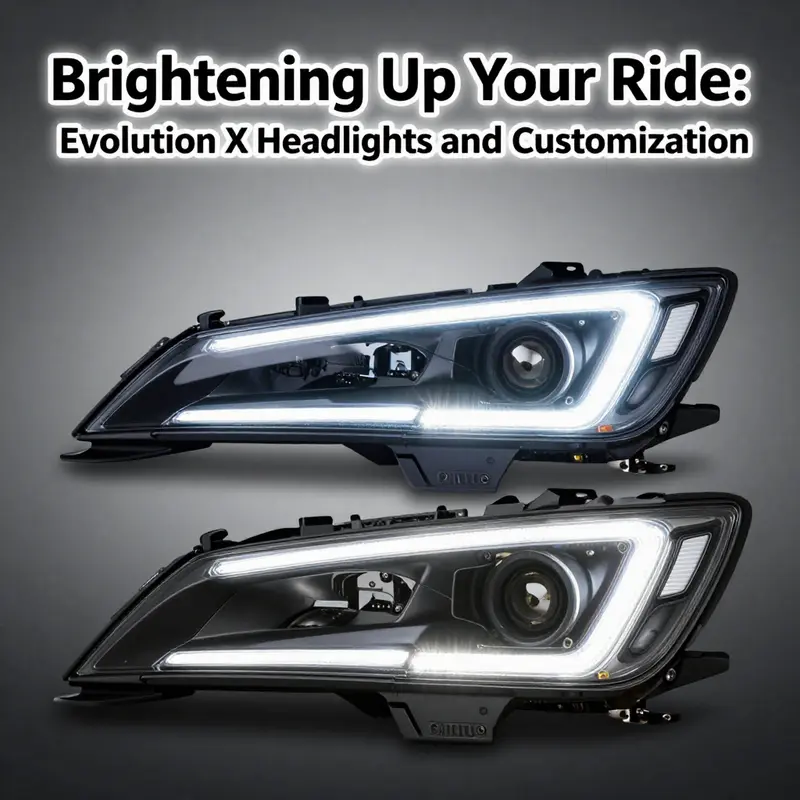
The Evolution X’s front end is defined by its eyes. Those projector-style lamps gave the car a predatory expression and strong on-road presence. When you consider upgrading or replacing these units, the decision affects more than looks. It touches visibility, legal compliance, electrical load, and long-term reliability. A good upgrade keeps the Evo X’s signature edge while improving real-world illumination and durability.
Start with a clear priority list. First, decide whether the goal is improved night visibility, refreshed styling, or both. Second, confirm which model year you own. Minor differences exist between early and late Evo X production runs. Third, determine whether you will install the parts yourself or use a shop. These three choices will shape the technical requirements and the final cost.
Stock Evolution X headlights used projector optics with high-intensity discharge bulbs in higher trims, delivering a focused, bright beam that complemented the car’s aero-driven front fascia. Modern aftermarket units typically center on three design choices: projector versus reflector, light source type, and housing finish. Projector-style optics remain the preferred path when clarity and defined cutoff are priorities. They concentrate light and reduce glare. When paired with a quality light source, projectors provide a sharp cutoff line. That cutoff keeps oncoming drivers safe from blinding glare while illuminating the road effectively.
The light source itself is the most debated topic. LED has become widespread because of its efficiency, long lifespan, and flexible styling options. LEDs allow designers to create running-light signatures and sequential turn indicators without bulky hardware. They also run cooler and draw less current than traditional lamps. Bi-xenon projector setups still have advocates for their color rendition and perceived brightness. These systems produce a daylight-like white that many drivers find easier on the eyes. Bi-xenon projectors can offer an appealing balance of beam throw and flood for mixed-speed driving.
Whatever the chosen technology, check fitment details. The Evo X’s factory openings and mounting points are precise. Aftermarket assemblies that claim direct OEM replacement should be verified for the correct year range. A small variant in mounting brackets or connector placement can mean re-drilling or adapter harnesses. Poor fitment risks light beam misalignment, which impacts safety and may violate regulations. It also increases the chance of water ingress when seals do not sit flush against the body.
Water intrusion is a common failure mode in lower-quality aftermarket lights. Signs include internal condensation, fogging, and corrosion around terminals. When a headlamp floods, the optics can cloud and electronics may short. To avoid this, prioritize housings with reliable seals and a reputation for long-term weather resistance. Look for units with proper venting to balance pressure without allowing moisture entry. Manufacturers that use high-quality gaskets and solvent-welded seams dramatically reduce the risk of internal moisture.
Style choices matter, but they must not compromise function. Blacked-out housings, smoked lenses, or chrome accents can transform the Evo X’s aggression into something unique. Black housings emphasize the car’s menacing stance, while chrome or clear finishes can brighten daytime appearance. Smoked lenses create a stealth look but can reduce light output if overdone. If choosing tinted covers, verify that the resulting light output meets local standards. Remember, appearance upgrades that reduce beam intensity may pass a visual look test but fail when measured for safe illumination.
Sequential daytime running lights and integrated LED strips offer modern cues without altering the car’s core silhouette. These features mimic the behavior of newer vehicles and add dynamic motion to the front end. When implemented well, they integrate with factory wiring through resistors or module adapters. Poor installs, however, can lead to hyperflashing, error codes, or drained batteries. If your Evo X has a body control module sensitive to load, consider a can-bus compatible solution or a properly designed resistor pack.
Electrical compatibility extends to ballast and driver units. Xenon systems require ballasts for ignition and stable operation. LEDs typically require drivers that regulate current and protect against voltage spikes. Be cautious when mixing components designed for different baseline voltages. A retrofitted HID projector that was not engineered for a specific housing can create artifacts, such as scattered light or improper cutoff. Conversely, some LED retrofit kits will not fully disable bulb-out warnings, leading to dashboard alerts. Verify that the assembly provides compatible harnesses or instructions for addressing vehicle electronics.
Thermal management is another practical concern. While LEDs run cooler at their light-emitting surface, the driver circuitry creates heat that must be dissipated. Quality housings incorporate heat sinks or cooling fans to extend LED life. Fans can be audible if low-quality, so sound levels and longevity matter. On the xenon side, heat from the lamp is localized differently, so lens and reflector coatings must tolerate higher temperatures. In both cases, proper ventilation ensures consistent output and prevents premature failure.
Optical quality defines on-road performance. A projector lens with a clean, precise cutoff will illuminate road signs and lane edges without scattering light into oncoming traffic. Look for crisp beam pattern images in third-party tests or from installers. Some lower-end units rely on cheap lenses that cause patterns to bloom or form hotspots, reducing real-world visibility. When possible, inspect beam pattern photos from independent reviewers before buying.
Alignment is simple yet critical. Every headlight must be aimed to match the vehicle’s geometry and load distribution. Even excellent aftermarket units can dazzle if aimed too high. Use a flat surface, a measuring wall, and the factory aiming procedure. If you’re unsure, a professional shop can aim lights to the correct height and lateral position. Proper aiming improves the usable range directly in front of the car and removes glare from approaching traffic.
Compatibility across model years is often overlooked until installation. Early Evo X units sometimes differ in harness layout or fog lamp cutouts compared to later models. Confirm that any aftermarket unit explicitly lists the model year range. Small differences in bumper design can affect whether trim pieces fit without modification. If you plan to pair upgraded headlights with other cosmetic components, check fitment for those parts too, such as bespoke hoods or bumper variants.
Durability and long-term performance often come down to build materials and warranty. Polycarbonate lenses are standard because of their impact resistance. High-quality coatings resist UV yellowing. Look for housings with corrosion-resistant screws and stainless fasteners. A meaningful warranty suggests that the manufacturer stands behind their product. Likewise, choose vendors with clear return policies and documented installation guidance.
Installation tips reduce surprises. Label connectors before removal to avoid confusion. Capture reference photos of the stock setup. Use dielectric grease on electrical contacts to prevent corrosion. When sealing a headlight after modification, apply automotive-grade sealant evenly and allow the joint to cure fully. If drilling or trimming is necessary, proceed cautiously and test-fit multiple times before finalizing the cut.
For owners prioritizing originality, high-quality replacement assemblies can preserve the Evo X’s factory look while updating light sources. For tuners who want to push boundaries, fully redesigned housings give the most dramatic improvement in both appearance and function. Either route benefits from a strategic approach: research, verify fitment, prioritize optics, and manage electrical integration.
When sourcing parts, vet sellers through forums and independent reviews. Photos from other Evo X owners are invaluable. They show real-world fitment and how the lights age after months of exposure. Also, explore specialist shops that build reputation around Mitsubishi models. These vendors often supply correct harnesses and installation advice.
Beyond hardware, consider the legal and safety implications of visible modifications. Different regions enforce beam height, color temperature, and lens clarity standards. Upgrades that produce an excessively blue or violet tint can be problematic in some jurisdictions. A neutral white that mimics daylight remains the safest and most widely accepted choice. When in doubt, consult local vehicle inspection standards.
The right upgrades also keep future maintenance in mind. Avoid overly proprietary mounts that require ordering from a single source if damaged. Choose assemblies with replaceable bulbs or modular driver units. This approach minimizes long-term costs and reduces downtime when maintenance is needed.
A practical final check is to test the assemblies under actual driving conditions. Install the lights and take a night route similar to your typical use. Note long-range visibility, side-illumination at intersections, and glare to oncoming vehicles. If any element feels off, reassess aiming, bulb selection, or the possibility of upgrading the housing optics.
A thoughtful upgrade elevates both the Evo X’s presence and its on-road utility. Prioritize projector optics for a clean cutoff, choose a light source that balances color and output, and verify fitment for your specific year. Address electrical interactions early and plan for thermal management. Guard against water intrusion with proven seals and ventilation. Finally, select housings that match your aesthetic goals while keeping safety at the forefront.
For detailed aftermarket options and examples tailored to the Evo X, reference community-tested listings and photo galleries before purchase. A focused search for “lancer-evo-x-10-headlights” will reveal threads and galleries showing fitment across years and bumper styles. These resources often contain step-by-step install notes and user-submitted beam-pattern images, helping you avoid common pitfalls.
External reference:
https://www.amazon.com/dp/B0B7ZV5XQK
Compatibility as Craft: Selecting Evolution X Headlights for Fit, Function, and Future-Ready Illumination
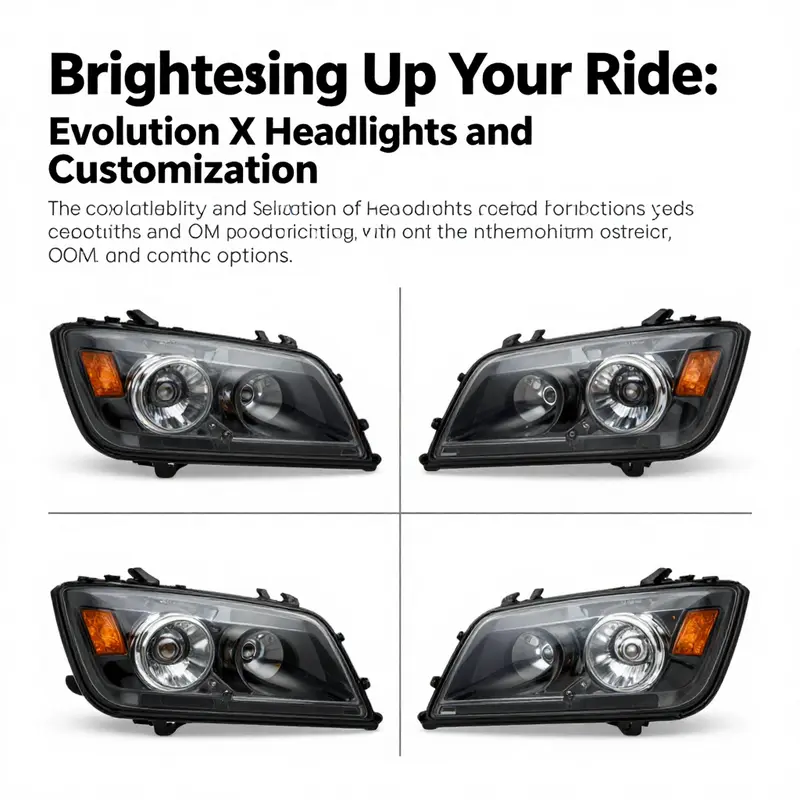
The Evolution X headlight upgrade is about preserving safety and legality while embracing modern illumination. When selecting replacement assemblies, verify model-year specificity (2007–2016 Evo X) and trim-level variations, confirm direct-fit mounting points, and ensure a plug-and-play harness to minimize rewiring. Beam pattern matters: choose projector-based lenses that maintain a sharp cutoff and control glare, especially with LED or HID upgrades. Durability and heat management are essential, as is electrical compatibility with the Evo X wiring and ECU to avoid fault codes. Reputable sellers disclose compatibility with the exact year range and include clear installation notes. Design language matters too: options range from clear lenses with OEM-like accents to black housings or smoked lenses, but safety, legal compliance, and warranty should not be sacrificed for aesthetics. A thoughtful purchase involves checking fitment against the car’s year and trim, evaluating mounting locations, and confirming the kit includes or is compatible with a true plug-in harness, resistors or drivers as needed, and proper DRL/turn-signal timing. In practice, this means reading product specs, consulting manufacturer documentation, and, if possible, using a professional installer to verify beam pattern and headlight alignment after installation. The result should be improved visibility and a cohesive look that respects the Evo X’s engineering and regulatory environment.
Final thoughts
In summary, headlights are more than just a light source; they are crucial to the Mitsubishi Lancer Evolution X’s performance and aesthetic appeal. From the original HID projector headlights that emphasize the vehicle’s edgy design to the abundant aftermarket options that allow for further customization, business owners in the automotive sector can enhance their product offerings significantly. By understanding the specific features, enhancements, and compatibility requirements of Evolution X headlights, you can provide better service to your customers and ensure they find the perfect fit for their vehicles.