
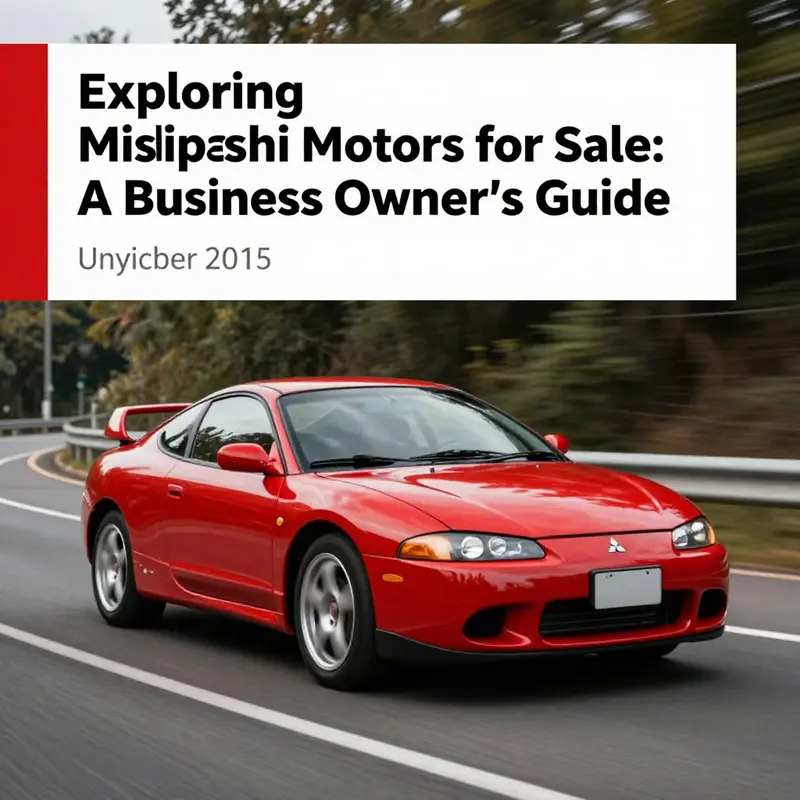
The Mitsubishi Eclipse remains a favorite among car enthusiasts, not only for its sleek design but also for its performance capabilities. As a business owner in the automotive sector, understanding the intricacies of Mitsubishi Eclipse motors for sale can unlock valuable opportunities. This guide will delve into the vibrant market landscape, the types of engines available, the best platforms for purchasing, and key considerations for making informed decisions. By the end of this article, you will be well-prepared to navigate the Mitsubishi Eclipse engine market, ensuring that you can effectively meet customer demand or enhance your service offerings.
Where to Find Mitsubishi Eclipse Engines and How Prices Break Down

The marketplace for Mitsubishi Eclipse engines is active and varied, shaped by nostalgia, performance demand, and practical repair needs. Listings appear on auction sites, classified ads, and specialty vendors. Prices swing widely, depending on the engine’s year, configuration, and condition. Understanding the patterns behind availability and pricing helps buyers make confident choices and avoid common pitfalls.
Across platforms, complete engine assemblies for the Eclipse—short blocks, long blocks, and fully dressed engines—show a clear premium for turbocharged variants. For example, a 1997 2.0L turbo engine is currently listed at $2,450 with $400 shipping. That single listing illustrates the premium that early turbocharged motors command. It also highlights two consistent truths: shipping can add substantially to the total cost, and market interest keeps prices firm for sought-after configurations.
Demand concentrates on late-1990s and early-2000s models. These years produced engines prized for tuning potential and durability. The market also supports newer assemblies; a complete engine compatible with the 2005 model year can still be sourced. That persistence underscores an active ecosystem for parts, salvage, and remanufactured units. Enthusiasts restoring or modifying their cars create steady buyers, while owners seeking affordable repairs keep supply moving.
Pricing follows clear, repeatable factors. Mileage is a primary driver: lower-mileage engines gain higher offers. An engine with documented low miles will often command a higher asking price because it promises longer life and fewer unknowns. Rebuilt or remanufactured units carry another premium. Sellers who overhaul internals, replace wear items, and provide a warranty achieve higher trust and price. Conversely, salvage engines move at a discount but carry elevated risk.
Condition details influence buyer decisions and final costs. Compression and leak-down test results are invaluable. Listings that include clear records of pressure testing or photographic evidence of recent work sell faster. Known issues, such as oil consumption or valve-train wear, reduce value. If a listing discloses a recent timing belt service, replaced head gasket, or a new turbocharger, the engine will fetch more. Absence of these details invites cautious offers or inspection contingencies.
Compatibility and completeness matter. Buyers should confirm whether a unit is a short block, long block, or complete assembly. A short block includes only the bottom end, while long blocks and complete engines may include cylinder heads, manifolds, turbochargers, and ancillary components. A sold engine that lacks the ECU, wiring harness, or transmission may require additional purchases and effort to install. That gap can erase any initial savings from a lower price.
Beyond listing price and shipping, a realistic budget accounts for hidden costs. Crating and freight insurance add fees. If the engine ships from out of state or from overseas, customs or brokerage charges apply. Labor to remove the old motor and install the new one can exceed the cost of the engine itself, particularly if additional parts are necessary. Gaskets, mounts, sensors, alternators, and intake plumbing often need replacement when swapping engines. Clutch or torque converter compatibility may also require addressing. Factor in fluids, filters, and a post-install tune for engines with differing ECU strategies.
Warranties and seller reputation shift the risk equation. A limited warranty on a rebuilt engine can justify a higher purchase price because it protects against immediate failure. Private sellers rarely offer this protection, so buyers rely on inspection, seller feedback, and clear photos. When dealing with online auctions, review seller ratings, read buyer comments, and ask specific questions about return policies and testing. If a seller offers video of the engine running, request it. If no video exists, request compression numbers or a recent invoice for maintenance work.
Sourcing strategies vary by buyer objective. For budget repairs, salvage engines and market auctions often present the lowest prices. For performance builds, low-mileage turbo variants or professionally rebuilt units justify the cost through reliability and upgrade potential. A balanced approach is to prioritize engines that include critical components like the intake, turbo, and ECU, then plan to replace wear items. That minimizes installation surprises while allowing for gradual upgrades.
Negotiation tips come from frequent buyers. Start by confirming exact mileage, condition, and included components. Ask for clear photos of mounting points and internal covers for signs of damage. If the engine will be shipped, get a breakdown of shipping, crating, and insurance costs. If multiple listings are available, use comparable ads to support offers. Sellers often expect some negotiation on auction platforms, but fixed-price sellers may be less flexible.
Inspection checks before purchase reduce regret. Verify the engine serial or casting numbers against the vehicle’s compatibility chart. Ask whether sensors, ancillaries, and harnesses are included. Request compression test results to gauge internal health. Look for signs of coolant or oil leaks, corrosion, or physical damage. If possible, arrange for a mechanic to inspect the engine or request a professional third-party inspection prior to finalizing the sale.
The decision between used, rebuilt, and remanufactured engines should match the project timeline and budget. Used engines win on price when you need a quick replacement. Rebuilt engines balance cost and confidence; skilled rebuilders refresh wear items and often back their work with short warranties. Remanufactured units are the costliest but usually the most reliable, with factory-style processes and more comprehensive coverage. For performance enthusiasts, investing in a rebuilt or remanufactured turbo engine reduces the risk of catastrophic failure when power levels increase.
Community resources matter. Enthusiast forums and specialist shops often list engines not visible on general marketplaces. If a specific engine code or configuration is required, these channels can connect buyers with sellers experienced in the platform. For vintage or JDM-sourced engines, specialist vendors and importers commonly list low-mileage, desirable units. One such listing illustrates this: a genuine JDM low-mileage 4G63T engine advertised for compatible Eclipse and related models. That kind of source can offer engines preserved with lower wear and high desirability.
Finally, timing and market awareness help secure the best deal. Prices fluctuate with supply and demand. Seasonal factors and salvage flows influence listing volume. When few desirable engines are available, prices climb. If several comparable engines are listed, buyers can be selective. Regularly check active listings, set alerts for specific keywords and model years, and track completed sales to understand real-world sale prices. Online marketplaces are dynamic; patience and preparation often yield better value than hurried purchases.
In short, the market for Mitsubishi Eclipse engines is robust and nuanced. Pricing reflects mileage, condition, completeness, and whether the unit is rebuilt or remanufactured. Buyers should carefully verify compatibility, request test results, and budget for shipping and installation. With focused research, informed negotiation, and attention to seller reputation, purchasers can find engines that fit repair or performance goals while avoiding common mistakes.
External resource: https://www.ebay.com/sch/i.html?_nkw=Complete+Engines+for+Mitsubishi+Eclipse
Internal reference: see the genuine-jdm-low-mileage-1995-1999-jdm-mitsubishi-4g63t-2-0l-dohc-turbo-engine listing for an example of a specialist-sourced option.
Under the Hood: Navigating Mitsubishi Eclipse Motors for Sale and the Engine Variants That Power the Swap
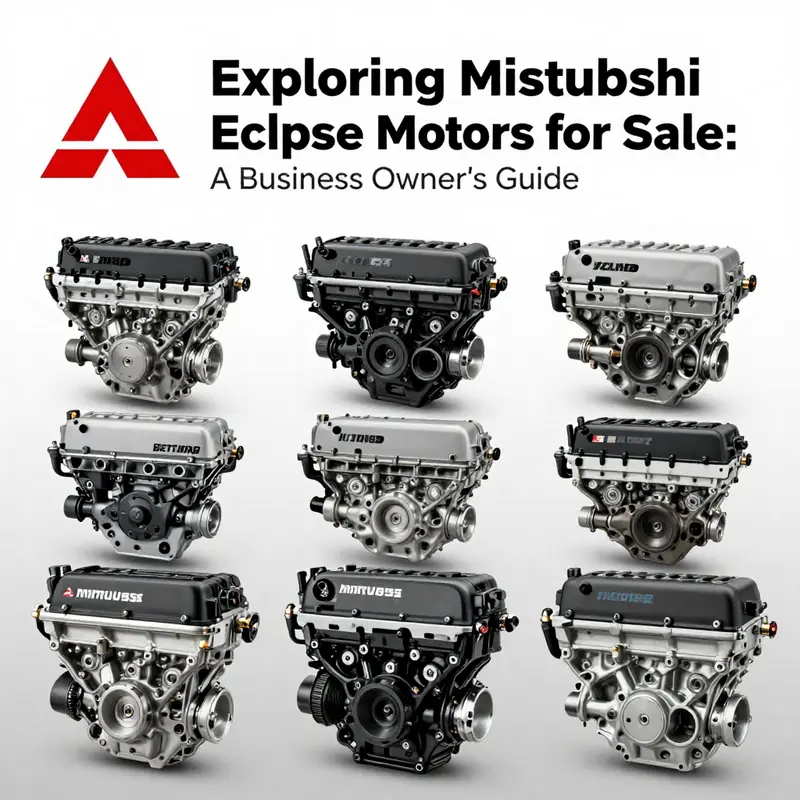
When collectors and enthusiasts search for a Mitsubishi Eclipse motor for sale, they are not simply buying an engine; they are choosing a foundation for a project that can redefine a car’s character. The Eclipse, manufactured across multiple generations from 1990 through 2012, built its identity on a spectrum of powertrains that ranged from reliable everyday drivers to purpose-built performance machines. The market for replacement and swap-friendly options reflects that diversity, with platforms that connect buyers to everything from classic naturally aspirated workhorses to turbocharged twins that still spark the adrenaline of an open road. In this landscape, understanding the engine lineup is essential not only for compatibility but for aligning a build with the kind of driving experience the buyer seeks. The engines themselves tell a story about era, engineering emphasis, and the kinds of upgrades that made the Eclipse a beloved chassis for tuning and competition alike. The most notable engine types you are likely to encounter fall into a few clear categories, each with its own allure and practical considerations for purchase and installation.
Foremost among the engines that define the Eclipse’s performance arc is the 2.0L 4G63 Turbo, produced in the late 1990s for the GS-T and GSX variants. This powerplant is widely regarded as iconic within the Eclipse community. Its turbocharged inline-four configuration offers a robust baseline for high-boost builds, and the exchange rate between cost, reliability, and potential output remains favorable when compared with many modern powerplants. The Turbo 4G63 is a favorite starting point for swaps and upgrades because its architecture has proven to tolerate modifications well, given careful attention to cooling, fueling, and internal components. Enthusiasts recognize the turbocharged 4G63 as a dependable canvas upon which horsepower goals can be pursued without losing the essence of the Eclipse’s original chassis balance.
Beyond the turbocharged variant, a natural progression of the 4G63 family includes the 2.0L 4G63 Naturally Aspirated engine used in the earlier base and GS models from 1990 through 1995. This NA version emphasizes reliability and clean drivability, delivering steady performance for daily use while maintaining compatibility with many original components. For buyers focusing on a restoration or a more street-oriented build, a non-turbo 4G63 can offer a solid foundation with fewer complexities around exhaust manifolds, tuning strategies, and intercooling systems. While it may lack the high-end thrill of a turbocharged setup, the NA option remains an accessible path to keep an Eclipse roadworthy with a classic, simpler engine profile.
In the evolution of the Eclipse’s engine landscape, some later models adopted the 2.4L 4G64 inline-four, positioned from 2000 to 2002 as a more fuel-efficient alternative with increased displacement. The 4G64 shifts the torque curve upward, which translates to improved highway cruising and a broader mid-range response. For buyers who prioritize sustained torque and mid-range grunt for daily driving or relaxed cruising, the 4G64 represents a meaningful upgrade over the early 2.0L options without stepping into a drastically different engine family. The move to a larger displacement can also influence mounting points, accessory drives, and exhaust routing, so a careful assessment of compatibility with a chosen Eclipse generation is essential before committing to a swap.
At the upper end of the performance spectrum in the Eclipse lineage is the 3.0L V6, available in higher trim levels such as the GS in the 2000–2002 window. The V6 brings a notable power increase and a smoother, more refined delivery that many buyers associate with a more premium driving experience. The shift from inline-four fans to a V6 configuration introduces different torque characteristics, engine mounting considerations, and transmission compatibility. For a project that seeks a more upscale feel or simply wants a more linear power band for highway acceleration, the 3.0L V6 offers an attractive path. It isn’t as common as the 4G63 iterations, but its presence in the Eclipse lineup speaks to the model’s versatility and the appetite for varied performance personas within a single chassis family.
The market for used or rebuilt engines in this space is robust and nuanced. Buyers frequently encounter listings for complete engine assemblies and engine components on online marketplaces and auction-style sites. The volume of options reflects both the popularity of the Eclipse as a project car and the enduring appeal of engine swaps as a way to unlock performance without resorting to new-car pricing. When evaluating a potential motor, it is crucial to verify the exact year and variant to ensure compatibility with the intended car, as mounting patterns, intake and exhaust manifolds, and electronics can vary between generations and trims. The previously described engine variants—4G63 Turbo, 4G63 NA, 4G64, and the 3.0L V6—each align with different Eclipse configurations, and matching the engine to the correct chassis is essential for a successful installation.
Considering the practical process of acquiring one of these engines, a few realities shape the decision. The market landscape for a Mitsubishi Eclipse motor for sale is characterized by a spectrum of condition and completeness. Some listings present fully assembled engines with all ancillaries—timing components, manifolds, and sometimes the ECU and harness—ready to drop into a compatible car. Others may offer bare long blocks or rebuilt units, which require sourcing ancillary parts separately. For buyers contemplating a swap, having a clear sense of what is included in the listing saves both time and money. A complete engine with a known history and documented mileage can dramatically reduce the risk of hidden wear in critical areas like the cylinder walls, pistons, and bearings. Conversely, a clean long block may attract a cheaper price but can demand a meticulous inspection and a more comprehensive parts pull, particularly if the build intends to push toward higher horsepower.
The price spectrum often reflects not only the engine variant but also its condition, mileage, and provenance. In observed listings, a turbocharged 2.0L unit can command a premium given its performance potential and the robust aftermarket support it enjoys. A representative example might show a turbo 2.0L 4G63 at a few thousand dollars, with shipping costs adding to the overall cost of the project. For buyers who are sourcing an engine for a swap or a rebuild, those numbers serve as a practical reminder that the total investment extends beyond the engine itself. Shipping, core credits, and the cost of compatible accessories—such as the turbocharger, intake manifold, intercooler, exhaust components, and ECU tuning—play a meaningful role in the final budget. When planning a swap, it is prudent to budget for contingencies, as the exact engine condition and compatibility with the intended Eclipse generation will determine which components must be acquired or replaced.
Within this context, the broader market includes listings and listings’ details from various marketplaces and suppliers. While a robust ecosystem exists for complete engines and swapped assemblies, buyers should approach with a careful eye toward compatibility checks. Understanding the exact model year and engine variant you need is foundational. A later 2.4L 4G64, for example, may be a practical upgrade path for someone seeking better highway efficiency and torque, but it will not be a direct bolt-in for every Eclipse model. The same principle applies to the 3.0L V6; while it can deliver impressive power, mounting points and transmission compatibility must be confirmed to avoid misfits that would derail the project.
For those who want to dive deeper into the available engine configurations and explore current listings, the market landscape includes several well-traveled paths. Platforms that curate engine listings often label the exact model year and engine variant, such as the 2.0L Turbo 4G63 designation, which helps ensure compatibility with specific Eclipse models. A practical approach is to match the engine variant to the intended build path: a turbo 4G63 swap for maximum performance potential, a naturally aspirated 4G63 for classic reliability, a 4G64 for improved torque and efficiency, or a V6 for a smoother, more effortless power delivery. In all cases, the goal is to secure a motor that not only fits physically but also aligns with the driver’s expectations for daily use, track weekends, or show-stopping builds.
When contemplating the purchase, it is also worth acknowledging the broader ecosystem that supports these engines. In addition to the core engine, buyers often need associated components—engine management, wiring harnesses, sensors, and intercooling systems for turbo setups. The presence or absence of these parts can influence a listing’s value and the overall ease of installation. For someone starting a build, a complete engine with a known history can dramatically simplify the process, reduce the risk of misalignment between the ECU and the engine, and provide a clearer path to achieving the desired power and reliability. On the other hand, a lower-priced engine that requires supplemental components can still be a wise choice if the buyer is confident in sourcing parts and performing the install with the right tools and expertise.
For those who want a tangible sense of what the market currently looks like, there are listings that highlight a specific price point and shipping details, signaling the market’s willingness to move motors across regions for the right project. For a potential buyer, such examples underscore the importance of weighing the total landed cost—the engine price plus shipping, taxes where applicable, and any core charges or handling fees—before making a commitment. The decision often turns on a balance between budget, intended power goals, and the level of risk the buyer is prepared to assume with a used engine. A well-annotated listing can illuminate the engine’s history, the conditions under which it was stored, and the level of refurbishment it has undergone, all of which inform a more confident purchasing choice.
In practical terms, the path from interest to installation begins with careful evaluation and documentation. Before you buy, request detailed photos of the engine, a mileage transcript if possible, and any service records that can establish whether timing belts or chains, head gaskets, and rod bearings have been recently addressed. For turbo setups, inquire about the condition of the turbo itself, the presence of intercooler hardware, and past boost levels to gauge the kind of tuning the engine has accommodated. If you’re purchasing a complete engine assembly for a 2005 Eclipse or other model years, confirm compatibility with your chassis year, transmission pairing, and ECU harness layout. In the end, the engine is not a standalone piece; it is a gateway to a broader build philosophy, an opportunity to reimagine how a car behaves on the road or strip, and a commitment to the care and customization that defines the Eclipse enthusiast community.
Within this landscape, one can encounter a spectrum of listings and sellers who provide engines that span the four principal variants discussed above. The appeal of the 4G63 Turbo remains strong for those seeking headroom for upgrades and a proven turbo swap path. The naturally aspirated 4G63, while simpler, can still deliver engaging driving dynamics with the right intake, exhaust, and gearing. The 4G64 represents a thoughtful middle path, offering a blend of efficiency and torque that suits everyday driving with a touch of performance. The 3.0L V6, though less common, delivers an elevated level of refinement and power, inviting buyers who want a smoother, more luxurious driving experience with substantial straight-line speed. Each option carries its own set of installation considerations, performance expectations, and long-term maintenance realities. The key is to enter the market with a clear sense of the car you own or wish to build, the level of technical involvement you want to undertake, and the budget you’re prepared to allocate across engine, electronics, and auxiliary components. With those guardrails in place, the search for a Mitsubishi Eclipse motor for sale becomes a focused journey rather than a broad impulse, increasing the likelihood that a buyer ends up with a powerplant that truly matches their vision for the project.
For readers who want to see real-world examples and current listings, a direct source for engine opportunities includes dedicated listings on widely used marketplace platforms. While the specifics of each listing will vary, the common thread is a clear acknowledgment that the Eclipse’s engine lineup remains a viable and desirable pathway for those pursuing swaps, restorations, or performance upgrades. Those explorations are not merely about acquiring a motor; they are about ensuring the engine you bring into your project aligns with the chassis, the goals, and the timelines you have in mind. The chapter you’ve just read is about the careful selection process—about knowing which engine variant fits your Eclipse generation, recognizing the upgrade potential each option offers, and planning with a pragmatic sense of what the entire project will entail.
As you consider your next steps, one practical piece of guidance is to inspect, compare, and verify the exact engine variant that you intend to use. Checking the engine code on the block, the presence of turbocharger components for turbo-equipped variants, and the compatibility of the intake and exhaust paths helps prevent mismatches during installation. Remember that the Eclipse’s broad appeal is rooted in its adaptability and the way it invites owners to tailor a vehicle that reflects their driving style. The engine you select—whether you lean toward the turbocharged 4G63, the NA 4G63, the 4G64, or even the 3.0L V6—will set the tempo for the build and the relationship you have with your car on the road. In this sense, a motor for sale is not a static asset but a spark that can ignite a project’s energy and guide your decisions about upgrades, maintenance, and driving enjoyment.
Internal link reference: For a specific engine listing that illustrates the path from discovery to purchase, you can explore a detailed listing that showcases a genuine JDM 4G63T engine with a long-standing reputation among Eclipse builders. genuine-jdm-low-mileage-1995-1999-jdm-mitsubishi-4g63t-2-0l-dohc-turbo-engine-evo-7-bolt-eclipse-talon-awd-automatic-transmission-and-ecu-attached.
External resource: For current market listings and pricing trends, see a broad index of engine listings here: https://www.ebay.com/sch/i.html?_nkw=Mitsubishi+Eclipse+Engine
null
null
Under the Hood: Navigating the Mitsubishi Eclipse Motor Market for a Safe, Smart Swap
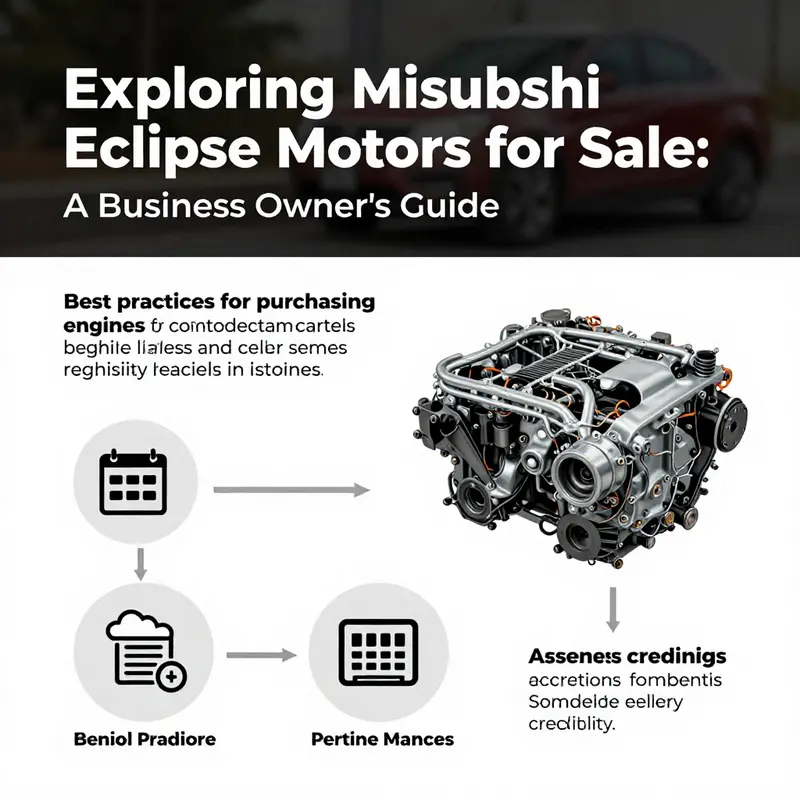
The Mitsubishi Eclipse motor market, especially for the Turbo and non-turbo variants, moves with the same keen tempo as a well-tuned camshaft. Buyers arrive with a vision of quick gains, a project they want to finish, and the confidence that a factory replacement or a rebuilt unit can deliver the performance they associate with the Eclipse name. Yet the path from listing to road-ready power is lined with decisions that determine whether the swap will be a triumph or a costly footnote in a project car. The initial research snapshot provides a concrete sense of the terrain: listings surface on mainstream marketplaces, with a 1997 Eclipse 2.0L Turbo engine often appearing around $2,450 and shipping hovering around $400, a combination that signals both demand and complexity. The fact that such listings attract watchers—twenty-one or more eyes watching one particular engine—speaks to the market’s vibrancy and the degree to which enthusiasts regard an engine swap as not just a replacement but a strategic upgrade. Another facet often mentioned is the availability of a complete engine assembly compatible with later Eclipse models, underscoring that buyers aren’t simply chasing a bare block; they want a turnkey package that minimizes the installation grind. This context frames a broader reality: the Eclipse engine market is a practical ecosystem where price, condition, and certainty must align for a swap to deliver reliable, long-term value.
To navigate this market well, it helps to begin with the axis around which every swap turns—compatibility. The engine must precisely match the vehicle’s model year, displacement, and configuration. A mismatch can turn a straightforward swap into a stubborn puzzle, with fitment issues that cascade into timing, alignment, and harness compatibility problems. The guidance here centers on a clear rule: never assume a generic block will simply bolt in. The 2.0L Turbo configuration from the late-90s, for instance, has unique thresholds for intake, exhaust, intercooling interfaces, and sensor wiring that demand careful matching to the ECU and the vehicle’s harness. A swap that looks like a bargain on price can become a money trap if it won’t talk to the car’s computers or requires a wall of adapters.
Beyond fitment, the condition of the engine or short block matters almost as much as the model-year match. The best outcomes come from securing either a complete assembly or a rebuilt unit from a reputable source. A complete assembly includes the timing belt or chain system, water pump, and sensors necessary for a functioning engine right out of the package. This matters because even a powerful core can disappoint if essential ancillary parts are missing or mis-timed during an installation. The market signals this intention through listings that emphasize “complete engine” or “long block with accessories” rather than bare cores. When you see a listing for a 1997 Eclipse 2.0L Turbo, for example, the value proposition is not merely the block’s mechanical health but the bundle of components that allow a car to start and run without chasing a cascade of missing items. The presence of a heat exchanger, the timing components, and the intake hardware becomes a form of assurance that a swap will proceed with fewer delays, fewer surprises, and fewer late-night engine-firing attempts that end in frustration rather than horsepower.
From a buyer’s perspective, due diligence is the compass. A smart purchaser does not rely on a single line item or a single photograph. Instead, they request and review detailed documentation and inspection reports. This includes clear evidence of the engine’s history—whether it has been involved in accidents or floods—and a verifiable mileage log. Photos and service records are the breadcrumbs that reveal a engine’s provenance, while a video inspection can illuminate the engine’s interior condition, compression results, and any signs of head gasket trouble or radiator contamination. This represents a shift away from impulse buying toward informed decision-making. Reputable sellers are typically prepared to provide such materials because they understand that transparency builds trust and reduces the chance of a dispute after the sale. A robust seller’s package often includes a written history, a note on the engine’s current mechanical health, and documentation of any work performed prior to listing. When a seller can add a narrative that describes the engine’s service life, it becomes easier for a buyer to assess long-term reliability and to plan the next steps.
Warranty consideration further shapes the purchase. The most valuable safeguard is a warranty, whether provided by the seller or backed by a third-party provider. A post-purchase warranty reduces anxiety about hidden issues and creates a stability cushion for the early miles after installation. It is the kind of protection that can shift a project from risky venture to measured investment. Even with warranties, it remains prudent to confirm what constitutes coverage, the duration, and the process for claims. If a seller’s confidence is strong, a warranty is a sign of a credible listing and a partner willing to stand behind the product. This practical layer of assurance dovetails with the physical conditions of the engine components, particularly with a unit that includes the timing belt or chain system, the water pump, and sensors that must function in concert with the ECU. The aim is to deliver a road-ready experience, not a garage-door mystery that requires diagnostic work hours after installation.
The long-term economics of a swap also deserve careful thought. A used engine may carry an attractive upfront price, but the total cost of ownership can tilt toward the rebuilt or remanufactured option if longevity and performance are the priorities. A rebuilt unit, especially when sourced from a specialized rebuilder or a certified salvage facility, can offer a cleaner baseline for reliability, with updated seals and refreshed internal components designed to withstand higher-mileage duty cycles. The trade-off is typically a higher initial outlay and the need to verify the rebuilder’s credentials, warranty terms, and testing standards. Those questions—the credibility of the source, the thoroughness of the rebuild, and the presence of test results—shape the perception of reliability just as much as any single torque spec. In practice, buyers who align their expectations with the engine’s intended duty cycle—street driving, daily commuting, or a weekend track mix—tend to be happier with the decision. They recognize that the best-engine-for-sale is not simply the cheapest, but the one that offers predictable performance under real-world conditions and reasonable maintenance costs over time.
Specialized salvage yards and certified rebuilders emerge as trusted avenues for obtaining a compatible Eclipse motor. Salvage yards can provide access to engines that have documented mileage and a known service history, with the caveat that the buyer must invest time in verification and on-site inspection. Certified rebuilders, by contrast, often offer engines that have undergone standardized remanufacturing processes, including new seals, reconditioned rotating assemblies, and verified testing protocols. The value proposition here is straightforward: a higher likelihood of a consistent, demonstrable level of performance and a reduced risk of latent defects that could derail a project. Regardless of the chosen route, it remains essential to obtain a clear statement of the engine’s provenance, the extent of work performed, and a clear set of operating expectations. The goal is to minimize the amount of guesswork involved and maximize the probability of a successful swap that feels like a factory installation rather than a patchwork fix.
Another layer of due diligence focuses on engine code familiarity and common failure points for the model year in question. Knowledge of the engine code and its typical failure modes is invaluable, because it helps a buyer identify red flags early. For the 2.0L Turbo variants, head gasket concerns have been noted in certain production runs. While this does not automatically disqualify a unit, it does warrant a more thorough gasket and cooling-system check during inspection. A well-documented service history that shows cooling-system maintenance and evidence of head-gasket-related work can be a positive indicator, but it also underscores the importance of a pre-purchase diagnostic evaluation. The aim is not to deter buyers with caution but to equip them with the awareness that saves time, money, and potentially a project’s momentum.
In this landscape, the most successful swaps arise from a synthesis of careful compatibility checks, comprehensive documentation, and a clear plan for installation and testing. The act of purchasing a motor becomes less about chasing the lowest price and more about matching the engine’s specifications to the car’s requirements, then confirming that the engine arrives with sufficient accompanying hardware to ease the installation. The broader conversation around “Mitsubishi Eclipse motor for sale” thus shifts from a transactional search into a strategic process. It becomes about choosing a path that respects the vehicle’s heritage and anticipates the realities of maintenance, parts availability, and long-term reliability. When this alignment occurs, the Eclipse emerges not as a project with uncertain footing but as a vehicle capable of delivering on the enthusiasts’ dual promises: a satisfying driving experience and the enduring satisfaction of a job well done. For enthusiasts who want to explore a concrete example of a compatible, complete powerplant, consider a listing that emphasizes a full package and clear documentation. A complete engine listing like the one referenced here highlights the practical steps to a successful swap, including the critical components and the trust-building details that enable a smoother installation. You can explore such a listing here: complete 4G63 engine listing.
While the thrill of a new engine is real, the smarter impulse is a well-informed selection that prioritizes compatibility, condition, and trustworthy provenance. The decision to pursue an Eclipse motor for sale should be guided by a disciplined assessment that weighs the initial price against the eventual reliability, maintenance cost, and the satisfaction of driving a car that behaves the way its owner envisioned. The chapter, then, is less about chasing a single great deal and more about cultivating the habits of a thoughtful buyer: confirm model-year and displacement, insist on a complete or rebuilt unit, demand documentation and a transparent history, weigh the cost of warranty against risk, and recognize that a rebuild or remanufacture from a reputable source can deliver long-term value that outpaces a cheaper, uncertain core. In doing so, buyers transform a marketplace that can feel fragmented and opaque into a reliable ecosystem where the right engine becomes a catalyst for a more rewarding Eclipse project.
External resource: For a broader overview of engine swaps and the considerations that accompany them, see https://en.wikipedia.org/wiki/Engine_swap.
Final thoughts
The Mitsubishi Eclipse engine market offers a plethora of options for business owners looking to meet the demands of automotive enthusiasts. From understanding current pricing trends and the types of engines available to discerning the best purchasing platforms and implementing best practices in buying, these strategies collectively enhance your business acumen in this niche market. Take this knowledge into your operations and leverage it to stay ahead in the competitive landscape of automotive sales.