

For business owners, the choice of vehicle can vastly influence operations, especially for those requiring transport in urban or rural environments. The Mitsubishi Outlander, particularly in its recent iterations, stands out for its functional back seats designed not only for comfort but also for enhanced practicality during usage. This article will delve into the attributes of these rear seats, covering aspects of comfort and practicality, configuration and flexibility for business needs, and essential maintenance and replacement options to ensure longevity. By understanding these vital components, business owners can leverage the Mitsubishi Outlander to support their operational demands effectively.
Rear Seating That Works: Comfort, Versatility, and Real-World Use of the Outlander Back Seats

Design and Everyday Use
The rear seats of the Outlander are where comfort meets practicality. The designers focused on usable space over gimmicks. That shows in the balance between generous room, supportive cushioning, and folding flexibility. For passengers, the second row delivers real adult-friendly space. Legroom and hip room are generous for this class. Taller passengers sit without knees pressed to the front seats. That makes longer drives less fatiguing and short trips more relaxed.
Padding and contours are tuned to support the body through hours on the road. The seat bases are firm but forgiving. The backrests provide lumbar-friendly support without forcing a single posture. Many models include a reclining option for the second row. Even small adjustments change posture and comfort dramatically. A slight tilt backward reduces lower back strain on long trips. The cushioning remains consistent across the width, so middle-seat passengers do not feel cramped compared with outboard riders. The material choices emphasize durability and easy care. Cloth upholstery resists wear and grips passengers to reduce sliding. Higher trims may offer synthetic leather for a cleaner, more premium look that still wipes down easily after messy loads.
Sound and climate are part of rear-seat comfort. The cabin insulation keeps road noise low enough to allow conversation without raising voices. HVAC vents and airflow are tuned to reach the rear area, preventing temperature extremes and reducing the need for front-seat adjustments. When all passengers set different temperature preferences, the rear still receives steady airflow and avoids hot or cold pockets.
Seating positions are arranged for visibility as well as comfort. The rear windows sit high enough to give passengers a view of the horizon, yet low enough to offer a sense of openness. Headroom is ample, so even people wearing hats or bulky coats avoid contact with the headliner. Children and adults alike feel comfortable in the rear, which helps reduce squirming and improves overall trip quality.
The vehicle’s commitment to family use is clear in its safety-focused details. The outboard rear seats include secure anchor points for child seats. Those ISOFIX anchors sit where installers expect them, making fitting child seats straightforward. Lower anchor accessibility and clear tether points reduce installation errors. For caregivers, that reliability makes daily routine simpler and safer.
Practicality begins where comfort ends. The Outlander’s rear seats fold in user-friendly ways to expand cargo space. Most configurations use a 60/40 split. That split lets you carry people and long items at the same time, without compromising passenger comfort. Fold the larger section for a pair of seats and still keep a single passenger in the remaining seat. The seatbacks fold down to create a mostly flat load floor. That flat area is ideal when loading bulky items such as furniture, sports equipment, or long boxes.
When you need maximum capacity, folding the second and third rows increases cargo volume substantially. With both rows folded, cargo area can reach nearly two thousand liters in some configurations. That capacity turns this vehicle into a true hauler for weekend projects, big grocery runs, or camping gear. The flatness of the load floor matters in practice. It prevents items from catching on gaps and allows heavy objects to sit stable. The cargo area depth and width are also generous. These dimensions make it possible to slide larger objects in without awkward tilting or repeated adjustments.
Loading and securing cargo is easier with built-in features. Tie-down loops and cargo hooks anchor straps and nets. Underfloor compartments and small cubbies keep smaller essentials out of sight yet within easy reach. The rear hatch opens wide and high, giving clear access for bulky items. Practical touches such as a low sill height reduce the lifting distance when loading heavy goods.
On the maintenance side, replacement parts such as cushions and upholstery panels are available through authorized stores and reputable marketplaces. Genuine original-equipment parts are often listed by sellers near major service hubs. Buyers can find lower cushions, seat covers, and trim pieces with estimated delivery times of just a few days. Sourcing OEM components helps maintain the original fit, finish, and safety performance of the seats. When replacing seat elements, choose parts that match the vehicle’s manufacturing specs to preserve seat mounting points and anchor integrity.
A few simple care routines preserve rear-seat comfort and practicality. Vacuum cloth seats regularly to prevent grit buildup. Wipe synthetic leather with a damp cloth and mild soap to remove spills quickly. Conditioners for leather-like materials keep surfaces supple and help avoid cracks over time. If the seats have removable covers or cushions, remove and wash them according to the care label. Pay special attention to anchor points and buckles. Clean them often so latch mechanisms remain smooth and reliable.
Practical upgrades can enhance daily use. All-weather floor mats protect the carpet from mud and salt. A foldable cargo tray keeps the load area tidy and catches spills. Seatback organizers give passengers easy storage for books, tablets, and snacks. Many accessories fit without affecting seat operation, so owners can layer utility on top of factory practicality without compromising safety.
Consider real-world scenarios to see how design decisions perform. Families with child seats benefit from the wide rear bench and easy-to-access anchors. Outdoor enthusiasts appreciate the flat loading area and hooks that secure gear on rough roads. For daily commuters who sometimes need to move furniture or take large shopping hauls, the ability to fold sections of the rear seats without removing headrests or tools makes the vehicle versatile and user-friendly.
A few practical tips smooth the transition between seats and cargo. Before folding a seat, move front seats slightly forward to avoid contact. Release levers are usually reachable from the cargo area or from the seat side. Fold cushions flat and stow headrests if necessary to achieve a truly flat surface. When returning seats to upright position, check that seat belts are untangled and anchors reconnect properly. Test the latch by gently pulling up on the backrest. A secure lock is essential for passenger safety.
Longevity is as much about use as it is about design. The rear seats endure repeated folding and heavy loads. Durable hinges and robust latches ensure longevity, but regular inspection pays dividends. Check for loose bolts and fraying straps. Tighten fittings and replace worn hardware at the first sign of stress. Preventive maintenance prevents small issues from becoming safety problems.
For owners considering replacements or repairs, a few guidelines reduce headaches. Match replacement cushions to the seat frame model and year. OEM parts align with original mounting tabs and attachment points. If buying used components, inspect the cushion foam for sagging and the cover for wear. Look for clean, rust-free metal and intact anchor points. A mismatched cushion may fit poorly and reduce comfort or safety.
When choosing between DIY repairs and professional service, weigh complexity and safety. Recovering seat covers or replacing small panels is feasible at home with patience. Replacing structural components, airbag-equipped seatbacks, or integral heating elements should be handled by trained technicians. Those systems tie into vehicle safety networks; improper work can disable safety features or create hazards.
Accessories and aftermarket options add personality without sacrificing function. Protective covers extend seat life if you haul pets or messy cargo frequently. A well-chosen cover protects fabric from claws and dirt and is removable for cleaning. Seat heaters or cooling inserts are available for some models, but confirm compatibility with seat wiring and airbags. Adding electronics or altering wiring can affect airbag deployment and should only be done by specialists.
Small details often make the biggest difference in day-to-day use. Grab handles and hooks enable passengers to steady themselves during cornering. A center armrest with cupholders serves as a comfort anchor for rear-seat occupants. Rear sunshades reduce glare and protect upholstery from sun damage. Thoughtful lighting near the rear doors and cargo area makes loading in low light easier and safer.
The rear seating area supports varied lifestyles. City drivers appreciate easy entry and exit. Suburban families value child-seat compatibility and flexible cargo options. Outdoor lovers get a base for gear and equipment. Each use case benefits from the same core traits: roomy seating, sturdy materials, and smart folding options. Those traits make the vehicle a practical daily driver and a capable weekend partner.
Practical knowledge also helps when planning a trip or moving large items. Measure cargo lengths before trying to load awkward items. Use the 60/40 split to keep a passenger on one side while carrying a long object on the other. Remove headrests only if needed and stow them safely. Secure tall or loose loads with tie-downs. When transporting pets, use a barrier or carrier to protect passengers and maintain focus while driving.
Beyond function, the rear-seat experience affects emotional comfort. Passengers who feel comfortable and secure are more relaxed and present. That reduces driver distraction and improves safety. A cabin that accommodates belongings neatly, with accessible storage and a low-effort folding system, reduces stress. Owners note that the ability to adapt the interior quickly changes how they use the vehicle. Instead of choosing between comfort and cargo, they get both.
Owners who keep the rear seats in good condition find resale and trade-in easier. Seats that remain clean, intact, and functional suggest thoughtful ownership. Document service and any replaced parts. Keep receipts for genuine replacement components. Those records reassure future buyers about maintenance and part authenticity.
For additional technical specifications and to confirm cargo volumes for specific model years, refer to the manufacturer’s detailed specifications page. That resource helps match your needs with the correct seating configuration and measured cargo values.
For owners interested in replacement parts and accessories tailored to the vehicle, an internal resource covering exterior components and aftermarket parts for this model can be helpful; see front-bumper-mitsubishi-outlander-19 for related parts that match the same model family.
For official specifications and more model-specific details, consult the manufacturer’s specifications page here: https://mitsubishi-motors.com/us/models/outlander/specifications.html
Backseat Geometry: How the Outlander Harnesses Comfort and Cargo Flexibility
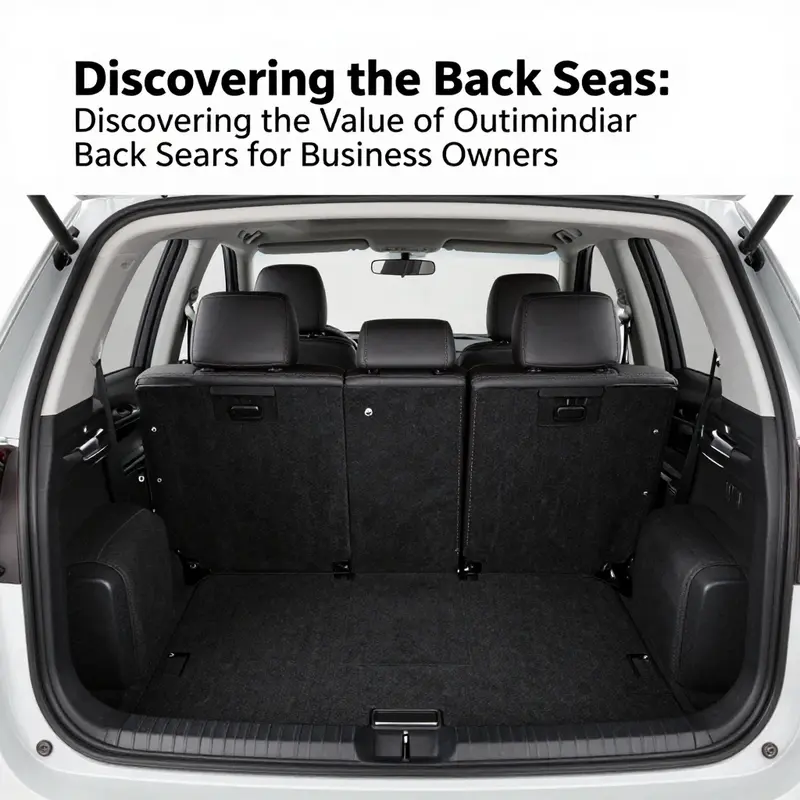
Backseat Geometry: How the Outlander Harnesses Comfort and Cargo Flexibility
The rear seats of a compact SUV are more than a place for passengers to sit; they are a dynamic platform that determines how a family travels, how groceries are transported, and how adventure gear makes it from curb to campsite. In models designed with practicality at the core, the rear seating arrangement often reveals the most deliberate balance between comfort and cargo readiness. The Outlander, in particular, treats the rear deck as a living space that can morph to meet changing needs. The familiar 60/40 split-folding configuration is more than a split; it is a doorway to versatility. It lets the seat that most travellers need to stay upright remain as is while the other portion collapses to accommodate a bicycle, a set of suitcases, or a stack of camping boxes. This kind of adaptability is not merely a feature list; it shapes how families and solo travelers plan trips and how they load for weekend projects or spontaneous getaways.
The mechanics behind this flexibility are elegantly simple. The rear bench is designed to offer two distinct planes of adjustment, allowing one side to maintain passenger comfort while the other side folds flat to extend the cargo area. The interface between passenger seats and cargo space is intentionally intuitive, so even on a rushed morning, an owner can reconfigure the interior without tools or a manual full of steps. But how exactly does the Outlander deliver on this promise of adaptability? The answer lies in the careful choreography of headrests, buckles, and release points—the kind of details that quietly empower a vehicle to behave like a modular space than a fixed shell.
Consider how the seating surfaces interact with the floor. When the need arises to haul a bulkier item—say, a long item such as a kayak, a set of flat-pack furniture, or a week’s worth of gear for a sports tournament—the rear cushions fold forward, creating a nearly uninterrupted surface from bumper to hatch. The result is a flat load floor that not only increases usable length but also reduces the friction between items and the surface beneath. A flat plane is easier to slide onto, stack on, or position, minimizing the hassle of loading and protecting contents from shifting during transit. Such a feature is particularly appreciated by families who navigate a rhythm of carpool days and weekend projects, where efficiency matters as much as comfort.
To understand the practical workflow, imagine a standard trip with two adults and a couple of teenagers returning from a weekend of activities. You start by preparing the space: you lift the rear headrests so that the seatbacks can fold flat without interference. In the middle seat position, you find the safety belt buckle and, with a deliberate motion, fold it to disengage the belt’s anchor from the seatback. Lowering the headrests to their lowest position clears the path for the next step. Then you find the release handle on the back of the rear seat cushion and pull it. The seatback folds forward, and the entire bench blends into a smooth, even plane. The operation is designed to be efficient and tool-free, meant for the moments when time is of the essence and the load needs to be accommodated quickly and securely.
In narrative terms, the folding process is a quiet choreography rather than a dramatic reveal. It is a series of small, precise actions that respect the passengers who remain seated and those who pass through to the cargo area. The heirloom of this approach is reliability: the seats are not going to snag on luggage straps or require an awkward contortion to flatten. They simply respond to a sequence of straightforward steps designed to be performed in real-world conditions—early morning light, rain on the window, or a fumbled set of keys in the pocket. For someone researching the Outlander’s rear seating, this is the kind of reliability that translates into everyday value. A quick fold, a level surface, and a flexible plan for carrying both people and cargo become a practical standard rather than a special case.
Visual references offer further clarity for those who prefer a guided approach. The official guidance, widely cited in owner forums and service literature, reinforces the simple order: fold the rear headrests, locate and fold the safety belt buckle of the rear middle seat, lower the headrest to its lowest position, and finally pull the release handle on the back of the rear seat cushion to fold the seat forward. The result is a near-flat surface that accommodates bulky items with less effort and less risk of damage to cargo or upholstery. In practice, many drivers discover that a single, well-executed fold creates enough space for a surprise purchase, a long tool, or a set of sports gear that would otherwise require a second trip or a trip to a different vehicle.
The outcome of this design is not merely more space; it is a more thoughtful, user-friendly interior ecosystem. When folded, the rear seats reveal a generous load length that encourages owners to rethink what they can carry and how they can carry it. For family trips, the flat surface means fewer awkward angles when loading suitcases, duffels, or a weekend’s worth of groceries. For hobbyists, it means room for bulky equipment that would otherwise be left behind. For spontaneous travelers, it means the ability to adapt on the fly, turning a vehicle into a mobile storage room that can accommodate everything from a week’s worth of camping gear to a set of athletic equipment. The Up-front experience of loading becomes less of a tug-of-war and more of a confident, practical operation.
In the broader arc of vehicle interiors, this approach to rear-seat geometry embodies a philosophy: space should be capable of shifting shape to serve the moment. The Outlander’s rear seating quiets the tension that often accompanies cargo planning. There is no need to choose between passengers or payload; the seat configuration empowers both roles in a single, flexible system. That is the essence of practical design: not merely to fit a static set of constraints, but to anticipate how real life can unfold and to offer a cockpit that responds with ease when plans change mid-journey. The comfort of the rear passengers is preserved when the seats are upright, with adequate cushioning, supportive contours, and a sense of room that remains for longer trips or for hours of city driving. Conversely, when space is at a premium, the same seats transform into a platform that welcomes sturdy, bulkier cargo, with a flat plane that reduces the friction of sliding and stacking heavy items. This duality—comfort for people and freedom for belongings—makes the Outlander’s rear seating a practical centerpiece of the vehicle’s overall utility.
From a maintenance and replacement perspective, a thoughtful design also anticipates the occasional need for parts to be refreshed. The lower cushion bottom, for instance, is a replaceable component that can be sourced as a genuine OEM part when wear or damage necessitates it. Access to authentic parts is available through various channels, including established marketplaces where sellers stock a range of OEM items. The emphasis here is not merely on keeping the vehicle looking right, but on preserving the integrity of the seating’s fit and finish over time. While a cushion is a smaller, almost invisible detail, its condition can influence how the seat folds, how comfortable it remains, and how evenly it supports a passenger’s weight across the seat surface. When replacements are needed, it helps to rely on genuine parts to ensure that the seat system continues to align with the manufacturer’s original tolerances. The aim is to maintain a consistent, reliable folding action and a support structure that stands up to regular use without introducing creaks or gaps in the surface.
For owners who want to extend the life of their rear seats and maximize resale value, attention to wear on the seat cushions, headrests, and seat belts pays dividends. Cleaning will keep the textile or leather surfaces looking fresh, while periodic inspections of the seat frame and alignments can preempt more invasive repairs. A routine check can catch subtle signs of wear on the release mechanism or the fold track, ensuring that the flattening process remains smooth and quiet. The practical takeaway is simple: treat the rear seating as a living part of the interior that benefits from the same regular care you apply to the rest of the cabin. This approach, paired with the Outlander’s inherent configurability, keeps the vehicle’s interior resilient and ready for whatever journey you plan next.
Internal links can help illustrate how the Outlander’s overall design language extends beyond seating to other practical touchpoints inside the vehicle. For readers curious about how related modular design concepts appear in the broader family of Mitsubishi models, a related example can be explored through the vehicle parts ecosystem. The Outlander’s versatility aligns with a philosophy of interchangeability and modularity that is a hallmark of modern SUVs. This mindset—designing components to complement one another—helps ensure that even when you replace a single part, you preserve the symmetry and function of the entire interior system. For readers who want to see a concrete example of how parts at the interface of exterior and interior design connect, you can explore related Outlander components here: front-bumper-mitsubishi-outlander-19.
Beyond the mechanical steps and the feel of a flat floor, the Outlander’s rear seating philosophy invites a conversation about how a vehicle supports daily life. The 60/40 split is not a one-size-fits-all arrangement; it is a flexible canvas that accommodates a spectrum of needs, from daily commutes with room for a stroller and groceries to weekend getaways that call for a larger cargo footprint. The seating positions themselves are designed with passenger comfort in mind, so the act of folding a portion of the seat is balanced by the knowledge that rear occupants may still enjoy ample legroom and supportive cushions when the seats are in use. The seats’ geometry—how the cushion and backrest align with the floor, how the headrests can be adjusted, and how the belt anchors position themselves—contributes to a sense of interior harmony. This is not merely about space; it is about the choreography of space in a way that makes loading and travel feel more natural, less stressful, and more aligned with how people actually live their lives on the road.
For those planning longer trips or more ambitious loading tasks, the practical upshot is clear: the rear seats’ flat-load capability reduces the friction of travel. It makes it easier to keep essential gear within reach, to arrange a multi-day supply of items, or to quickly reconfigure the cabin as passengers’ needs change. The Outlander thus earns its reputation not just for how many people it can carry, but for how well it accommodates the mix of passengers and payload that defines modern itineraries. In the end, the rear seats become less about sitting and more about enabling a journey, a modest but meaningful shift in how interior space informs the rhythm of daily life and weekend adventures alike.
As readers explore more about the Outlander’s interior, they may turn to the broader ecosystem of parts and maintenance to keep their seating experience optimal. Genuine OEM components are accessible for those who find themselves in need of a replacement of the lower cushion bottom or related seating elements. Platforms that facilitate parts sourcing can provide delivery estimates that are remarkably quick—often within a couple of days from sellers located in logistics hubs. This ease of access helps minimize downtime and ensures that the rear seating experience remains consistent with the vehicle’s original performance. If you want to verify compatibility or explore options in greater detail, the official Mitsubishi Motors website and authorized dealerships are dependable sources for up-to-date specifications and guidance on care and maintenance. The conversation around rear seats, then, extends beyond the moment of folding; it becomes part of a longer relationship with the vehicle—one that values adaptability, comfort, and longevity equally.
External resource notice: for a detailed visual guide that accompanies the steps described here, a widely cited source offers a comprehensive walkthrough of flattening the rear seats in the Outlander. This guide provides visual cues that complement the textual description, helping owners perform the folding sequence with confidence. External resource: https://www.bitauto.com/vehicle-tips/mitsubishi-outlander-rear-seat-folding-instructions/
Back Seats in Focus: Maintenance, Comfort, and Replacement Pathways for the Mitsubishi Outlander’s Rear Cabin
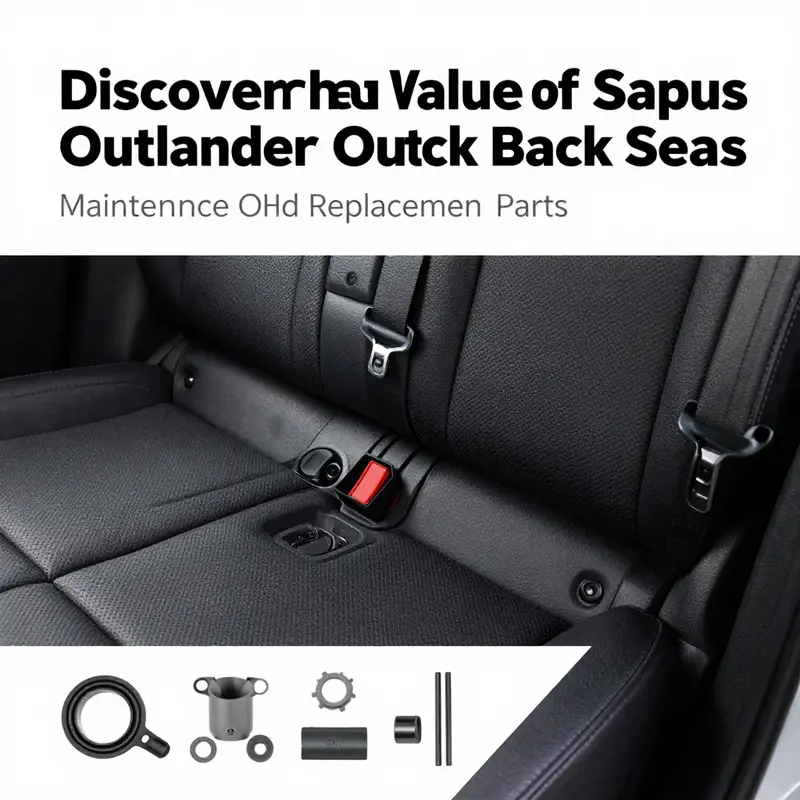
The rear seats of a Mitsubishi Outlander carry more than passengers; they carry the rhythm of family life, the cadence of daily errands, and the quiet confidence that a compact SUV can switch from people move to gear move in seconds. In the Outlander, particularly in the 2020–2024 spectrum, Mitsubishi designed the rear bench with a practical versatility that mirrors the way many owners actually use their vehicles. A 60/40 split-folding configuration invites a blend of seating and cargo space that is rarely all-or-nothing. When the cushions flip forward and the seats lie flat, the cabin reveals a taut, level load floor that can swallow longer items like camping gear, flat-pack furniture, or sporting equipment without forcing awkward stacking. The design acknowledges a core truth about modern car use: space flexibility is not a luxury but a daily requirement. The rear upholstery—whether leather or fabric—contracts and relaxes as the seats fold, and the materials themselves are chosen not just for feel but for durability and ease of maintenance in real-world conditions, where kids, pets, and cargo constantly test the limits of clean and dry. The Outlander’s rear seating also integrates safety features and anchorage systems that work in concert with the rest of the cabin, ensuring that adjustments, locking points, and belt paths remain reliable even after repeated folding and loading cycles. In practice, this means keeping the rear seats in good order is not simply a matter of appearance; it’s about preserving comfort and safety for every journey, from school runs to weekend getaways, where the vehicle becomes a flexible platform for life’s varied requires.
Maintenance in this area begins with a simple, ongoing habit: regular inspection. The seat surfaces—whether they are a smooth leather, a synthetic leather alternative, or a rugged fabric—should be examined for wear, tears, and staining that might otherwise grow if left unchecked. Leather and synthetic leathers demand different care than fabric; the former benefits from conditioning and avoiding harsh cleaners that can dry and crack the surface, while fabric can be more forgiving but still benefits from a gentle vacuuming and spot-cleaning routine that preserves color and texture. A quick glance after each trip can reveal small cracks, loosened stitching, or uneven wear that, if addressed promptly, prevents more extensive repairs later. Cleaning practices should be chosen with material compatibility in mind. For leather, a pH-balanced cleaner followed by a conditioner helps maintain suppleness and resilience; for fabric, a mild detergent solution—with care not to oversaturate—can lift oils and soils that accumulate from everyday use. The goal is not to strip the seats but to renew them gently, preserving the tactile feel that makes the Outlander interior a comfortable place to sit, even after long drives.
Beyond surface care, the function of the rear seats—how they fold, how they lock, and how they accommodate various loads—requires occasional checks. Whether the seat adjustments are manual or powered, the mechanism must operate smoothly and with a decisive feel. A seat that refuses to fold, or a backrest that balks at reclining, signals a need to inspect the hinge points, release levers, and mounting hardware. If the seat cushion itself seems loose or gives under the weight of a bag or child seat, the issue may lie with the track or frame components rather than the upholstery. In the broader system, the seats connect to the vehicle’s safety architecture, and any loosening or misalignment can ripple into compromises in ride quality and occupant safety. The belt anchors that work in conjunction with the rear seats must remain unobtrusive yet secure; buckles should spring back with confident resistance and release cleanly when pressed. The interdependence of upholstery, frame, and restraint systems makes maintenance a holistic practice: a small stain on vinyl or a slight creak in the track may be a symptom of a larger issue that, left unaddressed, could affect comfort, safety, and resale value.
Replacement parts enter the conversation when maintenance reveals damage, wear beyond cosmetic repair, or malfunction that cannot be resolved with simple care. The circuit of components within the rear seating area ranges from the obvious—the cushion foam, the seat covers, and the lower cushion bottom—to the more intricate elements: the seat frames that hold shape and mount to the vehicle, the tracks that govern movement, and the adjustment motors or manual mechanisms that control reclining and folding. Damaged components should be replaced promptly to prevent progressive wear that could degrade the integrity of the seating system, the floor, or the adjacent trim. When replacement becomes necessary, the choice between OEM parts and high-quality aftermarket replacements moves to the forefront. OEM parts, designed by the vehicle’s maker, are engineered to the precise tolerances of the Outlander and carry the assurance of compatibility and safety standards. Aftermarket components can offer cost advantages and, depending on the supplier, high-quality equivalents that meet or exceed specification when correctly sourced. The decision hinges on the specific part, its role in safety, and the availability of a component that matches the vehicle’s year and trim level. For example, the replacement of a damaged seat frame, track, or cushion bottom must be aligned with the appropriate subassembly to ensure a secure fit and proper anchorage. A misfit can create uneven seating surfaces, degraded lock-in points, or misaligned folding actions that undermine both comfort and safety. Complex repairs—such as failures within seat track assemblies or electric adjustment motors—benefit from consulting technical manuals and qualified technicians who understand the vehicle’s electrical and mechanical schematics. In those moments, the aim is not a shortcut but a restoration of the seat’s original performance and its contribution to the overall integrity of the cabin.
When it comes to sourcing replacement parts, owners benefit from recognizing the range of options that exist within legitimate channels. Official channels and authorized retailers offer OEM parts that are designed for the Outlander’s exact configuration, year range, and trim level, with support for installation and warranty coverage that provides a safety net for essential components. For those who wish to explore alternatives, reputable aftermarket providers can supply cushions, upholstery, fasteners, and mechanical components that meet strict safety and fit-for-use standards. The practical considerations here involve compatibility, safety, and the overall lifecycle of the vehicle’s interior. This is not a matter of chasing the lowest price but of ensuring that the part integrates with the seat’s geometry, the track geometry, the latch and recline mechanisms, and the electrical or manual interfaces that govern movement and locking. In this context, the rear seat is not a standalone accessory but a module that interacts with the entire vehicle envelope—the floor, the roofline, the door openings, and even the cargo area’s loading threshold. Properly chosen parts help preserve a flat and stable loading floor when the seats are folded, a state that minimizes the risk of items shifting during transit and enhances the ease of loading heavier objects. The calm of a well-maintained rear cabin comes not from luxury but from a disciplined approach to care, inspection, and timely replacement of worn components.
For those seeking to refresh or repair the rear seating without disrupting the entire interior, the scope of replacement parts includes several accessible options. If the seat cushions show compression, flattening, or surface damage, replacing the lower cushion bottom or the cushion shell can restore the seat’s silhouette and the comfort of the seating surface. If the upholstery is torn, a careful repair or reupholstery can renew the feel and appearance without requiring a full seat replacement. In cases where the seat back or the lower cushion assembly bears cracks or structural fatigue, it may be necessary to swap in a complete subassembly to guarantee a uniform seating profile and proper alignment with the fold mechanism and the 60/40 split. The range of possible replacements also encompasses components such as headrests, armrests, and covers, which contribute to the ergonomics and aesthetics of the cabin. It is important to recognize that, while these components may appear superficial, they often influence the usability of the rear seats—how easily a passenger can access the belt anchors, how comfortable the headrest is for long drives, and how the seat surfaces maintain a steady temperature or dryness in varied climates.
The process of acquiring replacement parts benefits from a careful evaluation of reliability and fit. Some buyers opt for OEM parts sourced through official channels or authorized retailers, which offers a straightforward alignment with the vehicle’s design parameters and a warranty-backed path to repair. Others explore reputable aftermarket options that have earned trust through documented specs, material quality, and consistent performance in similar vehicles. In both cases, precision matters. A mismatched cushion bottom or an ill-fitting track can produce creaking noises, misalignment, or even safety concerns if the seat cannot lock into place correctly. Purchasing decisions should prioritize the correct year and trim compatibility, and, when possible, confirmation from a professional technician or an authoritative parts catalog can spare the frustration of returns and the risk of installing an incompatible component. For more tailored guidance, prospective buyers can reference the official channels or trusted catalogs that categorize parts by year, model, and subassembly, ensuring the restoration of the rear seating to its intended form and function.
Complex repairs, particularly those involving the seat tracks or the electric adjustment motors, present a set of challenges that extend beyond cosmetic concerns. A track failure can inhibit smooth folding and locking, while a faulty motor can render certain seat positions inoperable. In these instances, accessing the relevant service manuals or consulting trained technicians becomes a prudent course of action. Even when a practitioner is called in, the goal remains the same: to restore a back seat arrangement that enables safe, stable seating; to preserve the integrity of the fold-flat load floor; and to safeguard the seat’s anchorage and restraint points so that, in an emergency, the occupant remains properly secured. The outlay for repairs or part replacements should align with the vehicle’s value and the importance of interior integrity to the overall performance of the Outlander as a family-oriented, everyday-use vehicle. This is not merely about keeping the upholstery looking neat; it is about ensuring that the entire seating system continues to meet safety standards, maintain resale value, and support the vehicle’s reputation for practicality in a crowded market where utility and comfort must coexist harmoniously within a single interior space.
To complete the practical picture, buyers should be aware of where to search for parts with confidence. Official channels, available through the brand’s broader parts network, provide a dependable starting point for those who want to replace items like cushions, headrests, or the lower cushion bottom with components that meet exact specifications. For those who enjoy exploring broader options, reputable marketplaces can also offer a curated range of rear interior parts and accessories, with filters to narrow results by model year and body style. When using any marketplace, it is wise to verify the seller’s return policy, warranty terms, and the stated compatibility with the Outlander’s rear seating configuration. The idea is to move through a careful, well-informed decision process that respects the complexity of the seating system and the importance of keeping the cabin cohesive and comfortable for every journey. If you want to explore a focused example of how Outlander parts can be navigated in a catalog-like environment, you can refer to a dedicated Outlander parts page that serves as a reminder of the broader ecosystem in which rear seating exists. Outlander front bumper page for 2019 models.
In sum, the Mitsubishi Outlander’s rear seats are designed as a flexible, durable, and safe component of the vehicle’s interior. They invite owners to maintain them not as a cosmetic afterthought but as a functional element essential to daily life and long-distance travel. Maintenance requires regular checks of material condition and mechanism function, while replacements should be undertaken with careful attention to compatibility and safety standards. By balancing surface care with an informed approach to part selection—OEM when possible, vetted aftermarket when appropriate—Outlander owners can sustain the rear cabin’s comfort and reliability for years to come. The result is not merely a seat that looks intact but a seating system that behaves as it should: supportive, dependable, and ready to adapt as life demands shift from passenger-heavy days to cargo-focused ventures. And when it comes to sourcing parts, a measured approach—coupled with the right combination of official guidance and reputable marketplaces—helps ensure that every replacement preserves the integrity of the rear cabin, so the Outlander continues to feel capable and comfortable, no matter what sits in the back.
External resources can provide practical, external perspectives on how to approach maintenance and replacement parts beyond the immediate vehicle context. For instance, a broad marketplace resource offers a dedicated section for Outlander rear interior parts and accessories, which can be a useful reference point when exploring non-OEM options and compatibility considerations. This external resource can be found at the following link: https://www.ebay.com/b/Mitsubishi-Outlander-Rear-Interior-Parts-Accessories/129530/bn_1748966.
Final thoughts
Equipped with a thorough evaluation of the Mitsubishi Outlander back seats, it becomes evident how integral these features are for business operations. Comfort, flexibility, and the assurance of easily accessible replacement parts combine to offer a reliable solution for transporting employees or cargo efficiently. For business owners seeking something more than a standard vehicle, the Mitsubishi Outlander presents a value proposition that aligns functionality with quality, making it an ideal choice for enhancing operational capabilities.