

The 1999 Mitsubishi Eclipse stands out in the realm of automotive performance, particularly renowned for its robust engine capabilities, primarily the 2.0-liter turbocharged 4G63 engine. As a business owner seeking to source these motors for resale or restoration projects, understanding the engine specifications, market availability, performance enhancements, cost factors, as well as warranty and return policies become essential. Each chapter of this piece carefully dissects these aspects, providing a comprehensive guide tailored to the needs of business professionals keen on delving into the market for 1999 Mitsubishi Eclipse motors.
Turbocharged Legend Under the Hood: Sourcing the 1999 Mitsubishi Eclipse GSX’s 4G63 Turbo Engine
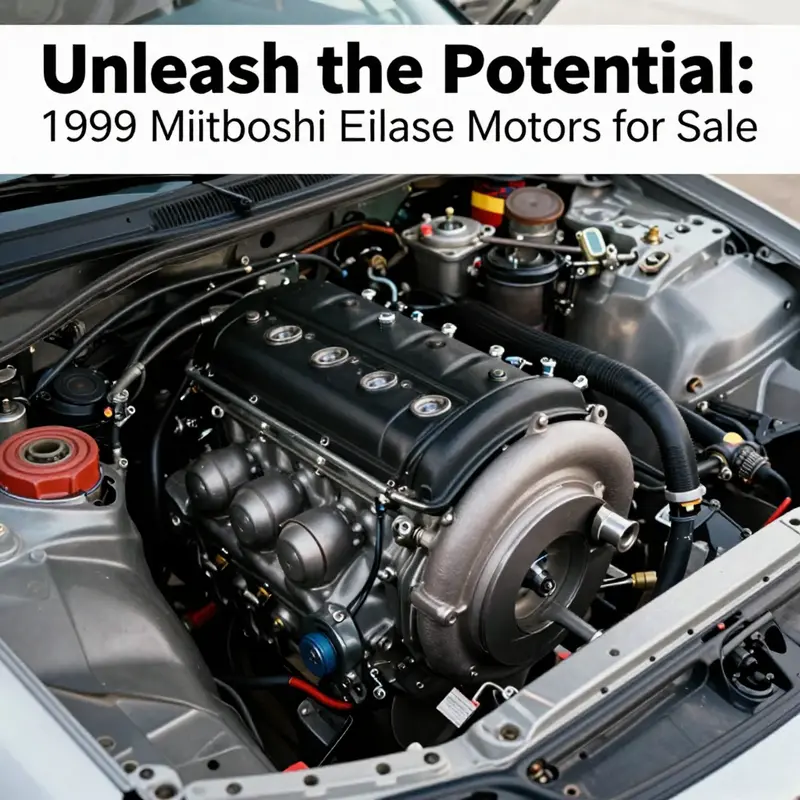
The 1999 Mitsubishi Eclipse GSX occupies a special niche in the late-90s tuner era, a compact coupe that traded quiet reliability for a surge of accessibility to power. At the heart of that identity sits a single, prolific piece of engineering: the 2.0-liter turbocharged 4G63 inline-four. This engine, paired with a Garrett-tuned turbo and a full-time all-wheel-drive system, gave the Eclipse GSX the kind of performance that made its generation a touchstone for enthusiasts who still hunt down the right motor years later. When you’re searching for a replacement or upgrade motor for a 1999 Eclipse, understanding what this engine is, how it behaved in factory form, and what that means for a used unit becomes essential. The 4G63’s reputation rests on a blend of durability and tunability that remains a reason buyers continually explore these engines today.
From a technical standpoint, the powerplant is a 2.0L (1998 cc) DOHC 16-valve inline-four—the 4G63 family that has defined Mitsubishi’s small-performance lineage for decades. In the GSX, this block is turbocharged with a single Garrett T25 unit, a configuration that delivered a factory punch while leaving room for significant growth with aftermarket components. The fuel system is sequential multi-port injection, a setup that sustains responsive throttle behavior and reasonable reliability when maintained. Cooling is emphasized through an enhanced system, including an oil cooler—an important feature for sustained performance and the reliability of boosted power. The engine is mated to a five-speed manual transmission in the GSX, making it a pure driver’s package, with all-wheel drive providing the traction that turns power into grip on wet roads or a windy back road. In stock form, those specifications translated to roughly 200 horsepower and about 200 lb-ft of torque, figures that, for the late-90s, registered as a legitimate performance benchmark in a compact car.
The 4G63 engine’s legacy goes deeper than the Eclipse’s brochure. This same family had rally roots and was famously deployed in competition programs and near-racing applications. Enthusiasts instinctively recognize its resilience and its clear potential for modification. It’s this mix that makes the GSX a perpetual favorite for builders who want to push a platform beyond its factory envelope. The engine’s architecture—robust bottom end, efficient turbocharging, and an accessible path to tuning—has earned it a loyal following, and it explains why the market for used 4G63-based powerplants remains active. When people look for a motor for a 1999 Eclipse, they’re often seeking a unit with a proven core and a track record of handling higher boost, or a clean donor that can anchor a performance build. The reality, of course, is that every listing tells a story. Some engines arrive with modest mileage and careful maintenance; others may carry signs of upgrades, additional miles, or a more aggressive boost history. Either way, the goal is clarity about condition and history before committing to a purchase.
Advertising platforms such as eBay have become common hunting grounds for these engines, thanks to their scale and the protections they offer to buyers. The marketplace hosts a broad catalog of 4G63 and 4G63T engines, along with parts that can help a swap or a refresh. The presence of an option like “Guaranteed Fit” helps buyers feel they’re purchasing a unit that will align with the Eclipse’s original architecture, reducing the risk of misfit components and incompatible wiring or mounting brackets. In practice, a buyer should approach listings with a ready checklist: verify the engine’s overall condition, confirm that the unit includes or excludes necessary ancillaries, and confirm whether the listing includes the correct wiring harness, ECU, sensors, and the turbo hardware. The goal is to assemble a complete, install-ready package or, at minimum, a clearly documented donor engine that aligns with the vehicle’s drivetrain and chassis configuration.
As a buyer moves through listings, it’s crucial to recognize that the motor for sale may not be factory stock in the sense of pristine, untouched, low-mileage equipment. It’s common to encounter engines that have seen boost and tuning—perhaps a larger turbo, an aftermarket intercooler, upgraded fuel delivery, and ECU recalibration. These upgrades can dramatically alter a motor’s wear profile and maintenance needs. They can also shift the risk profile: a well-documented, carefully upgraded engine can offer excellent performance returns, but a hastily assembled setup can introduce reliability challenges if not properly tuned or if supporting systems are neglected. That is why verification of the engine’s history and a thorough assessment before purchase are non-negotiable steps when shopping for a 1999 Eclipse motor.
With these expectations in mind, the practical act of buying becomes a careful balance between enthusiasm and due diligence. The first priority is to verify compatibility. The GSX’s 4G63-based powerplant is uniquely tied to the car’s AWD system, its sensor suite, and its engine harness. If you’re buying an engine that’s advertised as compatible with the Eclipse, you need to confirm that the unit’s bell housing, turbo setup, intake and exhaust manifolds, and fuel system components align with the rest of your car’s configuration. If you’re promoting a swap or a partial rebuild, you’ll want to know whether the listing includes essential pieces such as the ECU and harness, and whether the engine is sold as a complete long block or as a motor only. A clean, complete package of components saves countless hours in a rebuild or swap and minimizes the risk of missing critical connections during installation.
When you do secure a motor, the inspection process should become a focused, technical assessment. Before any cash changes hands, a compression test across all cylinders offers the simplest snapshot of a motor’s health. A consistent, high compression across all cylinders indicates a robust cylinder ring seal, while a wide variation could point to wear or head gasket concerns. In tandem, a leak-down test can reveal the integrity of the valves and the cylinder walls. The engine’s oil condition also becomes telling: dark, gritty, or metallic oil can signal wear or contamination, while the presence of coolant in the oil or oil in the cooling system hints at a head gasket issue or more serious trouble. The turbo’s health is another critical factor. Spin the turbine to check for excessive play or binding; inspect the compressor for oil fouling, which can signal oil seals that are failing. Look for oil-coolant crossovers or signs of leakage around the turbo and its lines. The cooling system itself deserves careful scrutiny; an efficient oil cooling circuit in the GSX is a feature that supports sustained boost, so ensure those components are intact and functional.
Beyond the mechanicals, a buyer must consider the logistics of installation. The GSX’s five-speed manual transmission is not just a powertrain detail; it’s a part of the engine’s identity. If the chosen engine comes without the original manual transmission, you’ll need to plan for a compatible transmission or an appropriately adapted setup, including the clutch hydraulic system, flywheel, and starter, as well as the wiring harness and ECU. Even when a listing advertises a complete engine-and-transmission package, verify the condition of the clutch and flywheel assembly and ensure the transmission’s internal components—such as the gears and synchronizers—are sound. If you’re pursuing a swap that uses the Eclipse’s original architecture, you’ll want to confirm that the engine’s mounting points align with the car’s chassis, and that you have access to a compatible exhaust manifold, intake plumbing, and intercooler layout. The reliability of a boosted 4G63 depends heavily on a coordinated approach to maintenance, including fuel delivery, ignition timing, and cooling, so a meticulous maintenance history will often be as valuable as the engine’s actual condition.
For readers who want a concrete avenue to explore a potential 4G63T engine, there is a listing that mirrors the kind of option many buyers seek: a genuine JDM low-mileage 1995-1999 4G63T 2.0L DOHC turbo engine, Evo 7 bolt, Eclipse, Talon, AWD, automatic transmission and ECU attached. The listing title itself mirrors the kind of complete package a buyer might want to secure, with a clear pedigree and a favorable balance of performance potential and reliability. It’s worth noting that while this link provides a tangible example, any purchase should be approached with the same careful due diligence described above. genuine JDM low-mileage 1995-1999 4G63T turbo engine for Eclipse/Talon AWD.
In all, the pursuit of a 1999 Eclipse engine is less about chasing a dream of flawless nostalgia than about assembling a well-documented, mechanically sound powerplant that can responsibly deliver the performance these cars could deliver when they were new. A robust 4G63T can be a strong foundation for a modernized build, especially if matched with a careful parts list, a thoughtful boost strategy, and a disciplined maintenance plan. The Eclipse GSX remains a benchmark of the 90s Japanese performance scene, not merely for its straight-line speed but for the potential it holds when paired with a careful, informed approach to buying and installing a replacement motor. As you weigh the options, remember that the market has good, but also imperfect, units. The path to a satisfying purchase lies in methodical inspection, honest history, and a willingness to align your mechanical goals with the realities of a vehicle that was born to be tuned.
External resource: https://www.caranddriver.com/mitsubishi/eclipse/features/a27945322/1999-mitsubishi-eclipse-gsx-specs/
Restoring the Pulse: Market Availability and Subtle Trends in the 1999 Mitsubishi Eclipse Motor Landscape

The 1999 Mitsubishi Eclipse sits at a crossroads in the lineage of late-90s Japanese performance sedans. It belongs to the third generation, a period when Mitsubishi aimed to refine chassis balance and reliability as much as raw numbers. For collectors, restorers, and owners pursuing a genuine replacement, the market for Eclipse motors reveals a quiet, patient rhythm rather than a bustling crowd. The model year itself did not offer a turbocharged option; the top-trim GT relied on a 3.0-liter V6 that prioritized smoothness and reliability over screaming performance. That emphasis—refinement over raw boost—frames the current market: engines that are more about dependable operation and correct pairing with the car’s existing drivetrain, rather than turnkey power gains. In practical terms, this creates a market where complete, low-mileage replacements are precious and where naturally aspirated powertrains are the standard baseline for restoration or repair projects. If you are chasing a motor for a 1999 Eclipse, understanding the source ecosystem becomes essential. The primary avenues remain specialized auto parts suppliers, online marketplaces, and enthusiast forums where owners swap war stories as well as part numbers. The reality is tempered by age: dedicated motors for this specific year are not as common as for newer models, and many listings reflect engines that originally left the factory NA. Yet the scarcity is matched by a steady, enduring interest—driven by a broader nostalgia for late-90s Japanese performance and by the everyday practicality of keeping a beloved coupe on the road. The most relevant fact for buyers is compatibility. The Eclipse of this era leaned toward specific engine families tied to the vehicle’s platform and generation. Before committing to a purchase, verify that the engine block, mounting points, and ancillary components align with your chassis and VIN. This careful verification helps avoid mismatches that can turn a hopeful project into a costly misfit. In practice, buyers often scout through a trio of channels: specialty parts suppliers who stock rebuilt or tested cores, general online marketplaces where salvageable units surface, and automotive forums where members share advice on swaps, bolt patterns, and installation pitfalls. Each channel has its own rhythm. Specialty suppliers tend to offer engines in rebuild-ready condition, sometimes with documented service histories, which can reduce the risk of hidden wear. Online marketplaces provide breadth, with listings ranging from completely fresh-bom to long-dormant cores. Forums, meanwhile, offer the benefit of community wisdom—owners who have navigated similar replacements and can point to the most compatible configurations for a given year and trim. An important practical note surfaces here: the condition and mileage of a replacement engine matter more than any single listing. The market shows a broad price range for the 3.0-liter and related NA powerplants, reflecting the engine’s age, mileage, and the inclusion of ancillary parts. Expect prices to drift in a spectrum from modest to substantial, depending on whether the buyer is after a bare long block, a complete long block with manifolds, or a rebuilt unit with the ECU and harness attached. The perceived value of a replacement engine is also shaped by documentation. Factory records, prior maintenance, and any available mileage data can elevate a listing from “okay” to “worth serious consideration.” In this sense, the market rewards engines that come with traceable histories and clear provenance. For restoration enthusiasts, the decision often hinges on the trade-off between authenticity and modern reliability. Some buyers lean toward OEM-replacement engines rebuilt to factory tolerances, while others consider performance-oriented upgrades that retain the vehicle’s original feel but bolster longevity. It is worth noting that the 1999 Eclipse’s engine bay can tempt swap chatter—enthusiasts sometimes discuss converting to different engine families or incorporating turbo components from other generations. That impulse exists, but it comes with a cost: wiring harness compatibility, ECU tuning, intake and exhaust routing, and cooling system integration all become more complex. If you decide to pursue a turbo donor or a high-performance swap, approach the project with a clear plan and support from qualified technicians. For those who want a direct path to a donor engine with a clean pedigree, one potential resource worth examining is a genuine JDM engine option designed for pre-2000 Eclipse models. A representative listing in this category can be found at genuine-jdm-low-mileage-1995-1999-jdm-mitsubishi-4g63t-2-0l-dohc-turbo-engine-evo-7-bolt-eclipse-talon-awd-automatic-transmission-and-ecu-attached. This link points toward a turbo engine option that, while not original to the 1999 Eclipse, can be a route for those seeking a turbocharged revival. It also serves as a reminder that the modern market rewards clear documentation and solid cross-compatibility when a swap is part of the restoration vision. In assessing the economics of replacement power, the price range typically observed for used or rebuilt 3.0-liter V6 units sits around eight hundred to two thousand dollars, influenced by engine condition, mileage, and what, if any, components are included with the core. A unit that includes additional pieces such as the intake manifold, oil pan, or a complete header-to-exhaust set can carry a premium, particularly when those parts are in good condition or carry verified histories. Prospective buyers should map these variables against their mechanical plans, ensuring that the investment aligns with the overall restoration budget and the intended driving experience. There is also a broader, adaptive market trend at play. Interest in classic late-90s Japanese cars—cars that offered a balance of styling, performance potential, and a storied enthusiast base—has been rising. This trend translates into consistent demand for replacement engines that can restore original performance without demanding the heavy investment required by more modern powertrains. Nostalgia is not merely sentiment; it translates into value through the availability of documentation, the presence of active community knowledge, and the willingness of rebuilders to take on older platforms with careful quality control. In place of speculative chatter, buyers find themselves relying on verifiable shop history and explicit engine condition reporting. The reliability profile of the 3.0-liter NA V6—commonly associated with durability and a broad parts ecosystem—also dampens the urgency of rapid upgrades. For owners who prioritize a quiet, dependable restoration over dramatic power gains, this is a compelling reality. The market confirms this preference with price stability tied to condition rather than to dramatic performance leaps. When navigating the listing landscape, buyers should prioritize VIN compatibility checks, confirm the engine’s start-up history, and request any available compression or leakdown data. A well-documented engine that can demonstrate consistent compression across all cylinders immediately lowers the risk profile of a swap or installation. With the market’s quiet but steady demand, and with a careful evaluation of provenance and compatibility, finding a motor for the 1999 Eclipse can transition from a shot in the dark to a strategic, well-informed purchase. In the broader sense, the Eclipse’s motor market for this year is less about chasing peak horsepower and more about maintaining a balance of authenticity, reliability, and restoration viability. External reference: https://www.caranddriver.com/mitsubishi/eclipse/2000-2005/specs
Under the Hood of a Legend: Performance Pathways for a 1999 Eclipse Motor for Sale
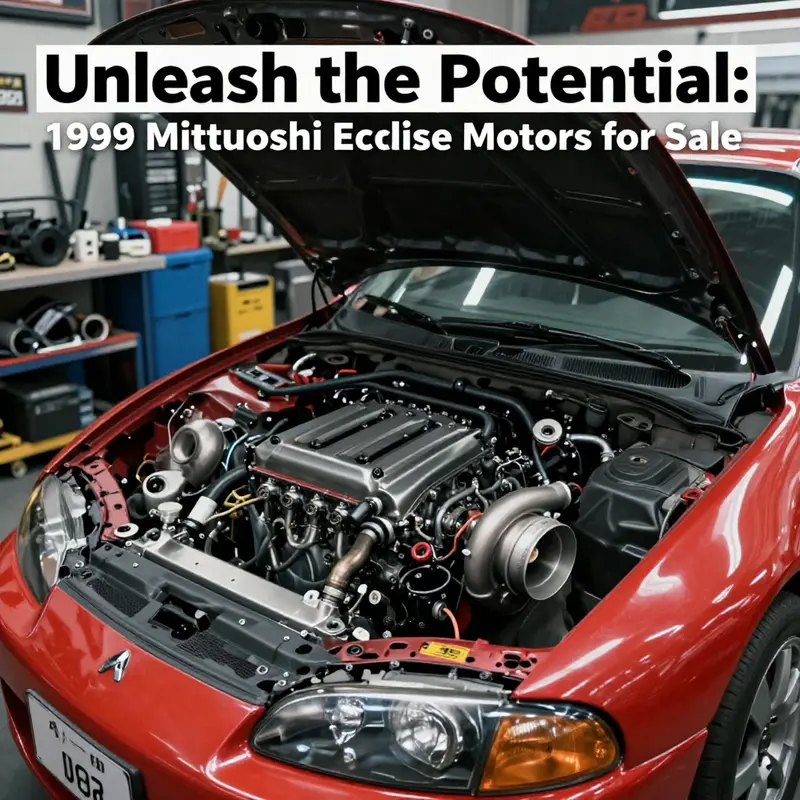
When collectors and tuned-car enthusiasts talk about the late-90s era of Japanese performance, the 1999 Eclipse stands out as a compact, eager platform with a remarkably tunable heart. The era’s turbocharged four-cylinder powerplant—renowned for its robust construction and surprising headroom for power—invites an approach that blends reliability with aggressive, high-spirited performance. The motor for a sale-ready Eclipse isn’t just an exchange of parts; it’s an invitation to reimagine how a compact, two-door coupe can respond to a driver’s push on the accelerator and a wizardry of tuners who understand that cooling, timing, and breathing are as crucial as the piston itself. A prospective buyer should approach this engine with two questions in mind: how far can the setup be pushed, and how maintainable will the build remain as power grows? The answers lie in a careful, staged plan that respects the engine’s original design while exploiting its strongest attributes—the ability to breathe freely, to respond quickly to throttle input, and to tolerate higher boost with proper supporting components.
The first consideration in any performance plan is the turbo system. A turbo upgrade doesn’t merely spike horsepower; it reshapes the entire driving character. A larger turbo unit, paired with a more efficient compressor and wastegate strategy, can raise the pressure and flow enough to deliver meaningful gains across the rev range. But that boost must be managed with a matching airflow path and fuel strategy. An upgraded intercooler, typically a front-mount configuration, reduces intake air temperatures after compression. Cooler air is denser air, which means more stable ignition timing and a reduced risk of detonation under hard driving. The intercooler also preserves power on longer pulls, when heat soaks become a real enemy without adequate cooling. The result is a more linear, confidence-inspiring push from mid-range to redline, where the engine feels awake rather than strained.
No turbo upgrade is complete without a thoughtful calibration of the engine computer. ECU tuning unlocks the latent potential by aligning fuel delivery, ignition timing, and boost control with the new hardware. The aim is to maximize power while preserving reliability and drivability. A well-tuned map reduces throttle lag and smooths out transitions, making the engine respond crisply to pedal input without creating a harsh daily-driving experience. The tuning process also affords opportunities to adjust fueling for different octane levels and to balance performance with emissions considerations, an important factor for any project that might eventually see street use or a return to a road-legal setup. The essence of ECU work is not simply to push more fuel through the engine; it is to optimize the entire intake-to-exhaust loop so the turbo, intercooler, and exhaust system work in harmony.
Internal engine modifications, while more invasive, are part of the discussion for those aiming at higher power ceilings. Strengthening the internal components—pistons, connecting rods, and crankshaft—creates a firmer foundation that can tolerate higher boost levels and more aggressive timing strategies. The goal is not to chase horsepower alone but to extend the engine’s life at elevated stress levels. Forged or upgraded pieces can reduce the risk of mechanical failure during sustained, high-power operation and enable more aggressive tuning. The approach here should be conservative at first, validating reliability with incremental power gains and vigilant monitoring of oil pressure, coolant temperature, and engine vibration. If the project moves into high-boost territory, a robust lubrication strategy and precise clearances become essential, as the difference between success and a costly rebuild is often a few careful measurements and a well-chosen component.
Behind the engine, the exhaust and intake systems play pivotal roles in breathing and throttle response. A freer, more direct intake path can reduce resistance and improve the engine’s ability to fill cylinders on each intake stroke. A high-flow exhaust system paired with a carefully designed downpipe helps the exhaust gases exit more efficiently, minimizing backpressure without compromising emissions or sound characteristics in a way that would alarm neighbors or regulators. The soundtrack—often a source of pride for owner-builds—becomes a byproduct of a well-balanced system that prioritizes airflow, spool, and responsiveness over a mere soundtrack of noise. It is a subtle but meaningful distinction: power is more than peak horsepower; it’s the engine’s willingness to respond eagerly to every hint of throttle.
Beyond the core powertrain, aftermarket options expand the scope of what a seller and buyer can do with a 1999 Eclipse motor. Bolt-on performance parts—headers, downpipes, turbo manifolds, and complete exhaust systems—offer a practical path for substantial, repeatable gains. These parts are designed to fit with minimal fabrication while delivering noticeable improvements in flow and responsiveness. Suspension and braking upgrades, though not directly increasing raw engine power, are essential for keeping the car controllable as power climbs. Upgraded coilovers, tuned sway bars, and strengthened chassis braces help the car handle the greater cornering loads that accompany higher performance. Braking systems with larger rotors and more capable calipers ensure that stopping power keeps pace with acceleration, enhancing both safety and performance credibility. On the wheels and tires front, wider, lighter wheels paired with high-performance tires maximize grip and complement the car’s aggressive stance. Interior upgrades—stiched leather, a sport-minded steering wheel, and supportive seating—enhance comfort and reduce fatigue during longer sessions on a track or back road, ensuring the experience remains engaging rather than tiring.
This chapter’s exploration remains anchored in the practical reality of acquiring a motor for sale and the care required to realize reliable results. Buyers should assess the condition and history of any engine offered, paying special attention to prior maintenance, head gasket integrity, turbo wear, and the state of valve seals and timing mechanisms. A thorough compression test and leak-down assessment can reveal hidden weaknesses that would complicate a build. Documentation that shows proper maintenance and service history can be as valuable as the engine’s current compression numbers. A seller who can provide a clear history of prior maintenance and upgrades can be a significant ally in achieving a successful, well-documented project. As with any performance-focused purchase, a plan for future improvements should be laid out early. Buyers should consider phased upgrades, testing, and tuning sessions that minimize the risk of misalignment between hardware and software, keeping the project on track without unnecessary detours.
In locating the right parts and guidance, the path includes both general-market resources and specialist literature. While broad marketplaces offer a wide array of options, targeted resources that discuss compatibility and tuning strategies can be especially valuable for a project built around a late-90s turbocharged engine. For a deeper dive into harnessing compatible, factory-verified components within a broader engine family, readers may explore a dedicated resource on a related platform that discusses a complete motor and supporting hardware. This guidance helps ensure that the upgrade trajectory remains coherent, from initial intake and intercooler changes to final exhaust and ECU tuning, reducing the risk of mismatched parts and unexpected headaches. For readers pursuing a hands-on, staged approach, the emphasis should always be on reliability, heat management, fuel strategy, and an honest assessment of what is realistically achievable within the budget and the local regulations that apply to their setup. The result is a performance story that respects the car’s heritage while giving it a modern, responsive character that matches the owner’s driving aspirations.
External resources offer further context for buyers evaluating a motor for sale. A marketplace-style resource can provide a sense of the breadth of options, pricing, and condition across a wide range of engines and components. This broader perspective can help a buyer calibrate expectations about condition, price, and available upgrades, ensuring the chosen path aligns with their performance goals and budget.
For a broader exploration of compatible engine-and-parts ecosystems on related platforms, see this external resource:
https://www.ebay.com/sch/i.html?nkw=aftermarket+engines+parts+for+1999+mitsubishi+eclipse&sacat=0&LHTitleDesc=0&from=R40&LHPrefLoc=1&rt=nc&LHBIN=1
And for readers seeking more focused technical references on a related Mitsubishi engine family and performance hardware, consider this internal resource that discusses a complete motor-and-component package within the same lineage:
mitsubishi-evolution-evo-4-9-shock-block-short-motor-engine-complete-4g63-1000b075
Counting Every Dollar: Navigating the Cost Landscape of a 1999-Era Turbo Engine Swap
There is a certain magnetism to the powertrain that powered a late-1990s compact sports coupe, especially the turbocharged four-cylinder under the hood. The lure is not simply raw speed, but a proven rhythm of torque and revs that invites tuning and refinement. For anyone considering replacing that engine with an equivalent period piece, the decision is as much about budget as it is about performance. The conversation centers on what the engine is, where it comes from, and how much it will cost to bring the installation to a completion that feels reliable and road-ready. A practical approach begins with clarity about the engine types available, how condition shifts value, and how origin shapes both price and logistics. In this context, the price landscape is not a single line but a spectrum defined by engine configuration, mileage, and provenance. The core idea is simple: the more original and low mileage the unit, and the more carefully the installation is planned, the higher the upfront cost—but also the greater the likelihood of a durable, satisfying result.
At the heart of budgeting is understanding what you are actually purchasing. The most sought-after option for this era is a turbocharged inline-four with a displacement around two liters. Such an engine configuration is valued for its responsiveness and its extensive tuning potential, which means more headroom for future improvements. Yet the price difference between a turbocharged unit and a naturally aspirated one is meaningful. A used turbocharged unit that originates from a highly preserve condition, especially if it comes with low mileage and documented maintenance, can push well beyond the mid-range of repair budgets. By contrast, a non-turbo counterpart or a later-generation alternative may be substantially cheaper and can still deliver satisfying performance when paired with a thoughtful setup. The essential takeaway is that the engine type strongly influences the budget, not merely as a price tag but as a gateway to the level of work that will be required during installation and tuning.
Another major driver is origin. Engines sourced domestically tend to be easier to acquire and ship, with fewer customs hurdles and often shorter lead times. Imports, especially from the other side of the planet, add layers of cost and risk: freight charges, duties, and longer transit times can all push total spending upward. The condition of the engine upon arrival matters even more in these cases. A low-mileage import will command a premium, but a higher-mileage unit may still be serviceable if accompanied by a robust valuation of the ancillary components and a plan for refurbishment. When origin is tied to a known maintenance history, buyers gain confidence but must still weigh the added complexity against the potential savings from a less pristine unit. The practical result is that origin choices should be a deliberate part of the budget framework, considered alongside transport and repair estimates.
Version, configuration, and ancillary requirements also shape the cost curve. A complete engine replacement is rarely a one-part purchase; it is a small ecosystem of compatibility checks and add-ons. Transmission compatibility, engine control units, wiring harnesses, and cooling hoses must align with the rest of the car’s systems. There is a genuine risk of underestimating these ancillary needs, which can inflame a budget quickly. Some buyers discover that a seemingly straightforward swap grows into a more intricate project when the ECU language, sensor expectations, or mount points diverge from the donor unit. In practice, this means that every quote should be treated as a baseline estimate rather than a final figure. The prudent shopper builds a cushion for these potentialities, recognizing that unnecessary surprises often arise not from the engine alone but from the surrounding hardware and electronics that must integrate for reliable operation.
Across markets and marketplaces, price ranges reflect the same triad of condition, origin, and completeness. A basic, non-turbo or modestly tuned powerplant in fair condition can land in the lower thousands, while a high-quality turbo unit from a well-documented source can push well above that mark. The mid-range often represents engines with reasonable mileage, verified history, and parts that reduce future risk, such as a known mounting compatibility and a serviceable harness with an accompanying ECU. For a full project, many builders budget a staged path: secure the engine and essential ancillaries within a mid-range budget, then allocate a separate line item for installation, tuning, and any refreshes required to the cooling system or mounting brackets. The goal is to avoid the familiar trap of assuming “just the engine” will be enough; a realistic plan anticipates the need for supporting components, mounting solutions, and, when required, modest upgrades to the fuel and ignition systems to preserve reliability and performance.
In practice, a recommended budgeting framework divides the total into three tiers. The low-end tier contemplates a non-turbo or domestically sourced unit with moderate mileage and minimal refurbishment. It assumes a straightforward installation and a conservative contingency fund for minor fixes. The mid-range tier contemplates a turbocharged unit with solid maintenance history or a high-quality import, plus essential peripherals like a compatible harness and ECU, with a buffer for shipping and possible minor refurbishment. The high-end tier considers a complete rebuild or a turnkey installation with professional support, robust hardware upgrades, and expert tuning enabled by a fully integrated fuel, ignition, and cooling plan. These tiers translate into practical dollar figures: a reasonable low-end target might fall in the two-to-three thousand-dollar range, a mid-range window in the four-to-five-thousand zone, and a high-end corridor surpassing six thousand dollars, depending on the exact conditions, geographic location, and the shop’s rates. The framework is deliberately pragmatic, designed to help an owner avoid overpromising and underdelivering when the bill arrives.
The budgeting exercise will also benefit from a disciplined procurement approach. Before any purchase, the prudent buyer performs a careful compatibility audit, isolating the engine code, the mounting points, and the ECU compatibility. This audit reduces the risk of discovering mid-project that the donor unit cannot be integrated without substantial modification. A professional inspection or a careful, methodical review of service records can reveal hidden wear, corroded components, or degraded seals that would otherwise inflate maintenance costs after installation. It is wise to consider the total cost of ownership, not just a sticker price. That means factoring in shipping or travel for pickup, the cost of a fresh gasket set, potential clutch or transmission work if the original drive train is retained, and the anticipated labor hours required for a precise fit and reliable start-up. The most reliable paths blend a transparent quote from a reputable shop with a conservative contingency, ensuring the project remains on track even if unexpected issues arise.
For readers pursuing concrete options, a careful look at the available engine configurations and sourcing strategies is warranted. The market offers a spectrum of choices, from low-mileage units that arrive with limited maintenance history to refurbished cores that have undergone targeted rebuilds. Each option has its own risk-reward profile. A low-mileage turbo engine promises immediate power but demands vigilance to ensure the turbocharger, intake, and exhaust systems remain healthy. A refurbished or rebuild-focused path may deliver reliability with carefully chosen components, but it carries a premium that must be weighed against the expected gains in performance and longevity. In any case, a well-documented intake and exhaust condition, a clean crankcase, and a chassis that shows no signs of prior neglect are practical indicators of value, as is a clear maintenance history for crucial components like the cooling system and oil delivery path.
As a practical note, the engine swap is more than a single purchase; it is a project with a lifecycle. The initial outlay is only the first splash in a larger budget that includes installation, tuning, and post-installation checks. A thoughtful plan—one that accounts for potential repairs, proper break-in procedures, and a focused test drive with professional oversight—can transform an uncertain venture into a satisfying, durable upgrade. To illustrate the kind of options that exist in the marketplace, one could examine a listing that highlights a short-block engine in a complete package. The slug for such a listing is evo-4-9-shock-block-short-motor-engine-complete-4g63-1000b075, and it demonstrates how a donor unit can present a compact, comprehensive solution when paired with the right peripherals. This exemplifies how the right choice aligns with both performance goals and budget constraints. For a practical, direct reference, see this external resource: https://www.ebay.com/sch/i.html?nkw=1999+Mitsubishi+Eclipse+Motor&sacat=15157&LHTitleDesc=0&from=R40&rt=nc&LH_BIN=1. This link provides a snapshot of real-world pricing across various configurations, conditions, and configurations, underscoring the importance of anchoring expectations to current market realities.
In sum, budgeting for a six- or seven-figure dream is rarely feasible, but a disciplined plan that considers engine type, origin, condition, and ancillary costs makes sense. The engine that powers a late-1990s performance coupe is a cornerstone of the project, and its value is defined as much by the quality of the installation and the reliability of the supporting systems as by the raw price tag. A thoughtful buyer does not chase the lowest price at the expense of reliability. Instead, they map out a path that aligns performance ambitions with a realistic budget, leaving room for a careful break-in, tuning, and ongoing maintenance. The result is not just a strong engine swap but a coherent, sustainable plan that respects the car’s heritage while delivering dependable performance for years to come. The journey is as much about prudent economics as it is about muscle and maneuverability, and when approached with discipline, it becomes a rewarding restoration and upgrade project rather than a costly, uncertain gamble.
External resource: https://www.ebay.com/sch/i.html?nkw=1999+Mitsubishi+Eclipse+Motor&sacat=15157&LHTitleDesc=0&from=R40&rt=nc&LH_BIN=1
Warranty Realities for the 1999 Mitsubishi Eclipse Engines
The engine you seek for a 1999 Mitsubishi Eclipse carries more than performance; it carries history, a market, and practical realities that show up after the listing looks best. For a car that is now 25 years old, the promise of a manufacturer warranty on a replacement powerplant does not exist. Buyers confront a landscape of used rebuilt and remanufactured engines, each with its own spectrum of assurances testing and risks. This is not impulse buying but a study in diligence, because the 1999 Eclipse whether you own a GSX with turbo or a base model hinges on matching the exact engine family, the wiring, and the control electronics to the vehicle that still carries your daily ambitions. In that light a buyer moves beyond aesthetics into the grammar of guarantees, return terms, and the fine print that makes a transaction either a restoration project or a straightforward swap that will perform as advertised.
The premise is straightforward: any engine offered for the 1999 Eclipse is a used or aftermarket powerplant by default. It is not backed by a factory warranty from the original maker, and the warranty terms you encounter are almost always dictated by the seller rather than a manufacturer program. Some private sellers proceed with a clean as is stance, a reminder that a bargain can come with a bare minimum protection. Others typically more specialized rebuilders or parts retailers may extend a limited warranty often framed as a window of 30 to 90 days, and in rare cases up to a year. But those terms are not standardized across the market nor universal in scope. The difference between a limited warranty that covers a failed engine block or a seized unit and one that excludes labor gaskets or incidental damage is meaningful. In practical terms a buyer should expect that the actual coverage the conditions that qualify a claim and the process for making a claim are negotiated one seller at a time.
The inquiry begins with the nature of the engine itself. The 1999 Eclipse is recognized for its performance potential in turbocharged form, especially in the GSX trim, where the turbocharged four cylinder meets a balance of power and durability. But even within that family there are critical compatibility considerations. A turbo engine is not a drop in proposition for every Eclipse model, and even when the core dimensions align the engine management system the wiring harness and the exhaust and intake plumbing must align with the vehicle ECU and sensors. Buyers should treat fit as a multi layered question: does the short block match the long block, is the turbocharger present and functional if the listing is for a turbo engine, and will the ECU, wiring harness, and transmission interface with the chosen engine without extensive modification? These questions are not merely technical; they are financial. The more components that must be included or adapted the higher the total cost and the greater the risk of hidden failure if the engine has a murky past.
In parallel with these considerations, there is the practical matter of installation and aftercare. A replacement engine is not simply dropped into a bay and then forgotten; it requires planning, shop labor, alignment, and sometimes hardware changes. The risk of improper installation is not trivial. A well documented warranty may hinge on installing the engine in a professional facility and following the precise procedural steps laid out by the seller or the rebuilder. Without that compliance coverage can be voided at the first sign of trouble, even if the engine itself is sound. Buyers routinely factor in post purchase costs shipping or freight core charges stand by time, and potential rework into their overall budget. In many ways the purchase becomes a project not just a price tag.
To illustrate how a documented option can look in the market consider a listing that includes a low mileage turbo engine with the full configuration that a GSX type Eclipse would expect. It would provide a complete set of components and test results, serve as a model of transparent selling, and demonstrate how the best opportunities present themselves: a clear description, a rebuild certificate, a defined warranty window, and an explicit note about what is included and excluded.
For broader policy context on used and rebuilt engines consult resources from reputable vendors that summarize warranty practices and return options across suppliers. And for a concrete example of a documented turbo engine option explore a representative listing that aligns with the Eclipse performance goals. The point is to anchor the decision in a documented transparent offering that demonstrates best practice in this market.
Final thoughts
As the 1999 Mitsubishi Eclipse continues to be a revered model in the world of performance vehicles, understanding the intricacies of the engine, its availability in the market, enhancement options, pricing strategies, and warranty policies is crucial for business owners. By addressing these factors, you can position yourself effectively within this niche market, ensuring that your ventures in selling or restoring these iconic motors yield positive returns. Equipped with this information, you are now better prepared to navigate the landscape of 1999 Mitsubishi Eclipse engines.