

The Mitsubishi EVO X, known for its legacy of performance and style, often calls for enhancements that can elevate its driving experience further. VLAND LED headlights represent an ideal upgrade, offering both advanced technical features and aesthetic improvements that align perfectly with the EVO X’s dynamic profile. This article will explore the technical specifications of VLAND headlights, providing insight into their installation process, the aesthetic upgrades they facilitate, and the feedback from users regarding their performance. Understanding these components will empower business owners in the automotive industry to recommend quality upgrades that enhance both safety and style for their clientele.
High-Performance Illumination: Technical Mastery Behind VLAND EVO X LED Headlights
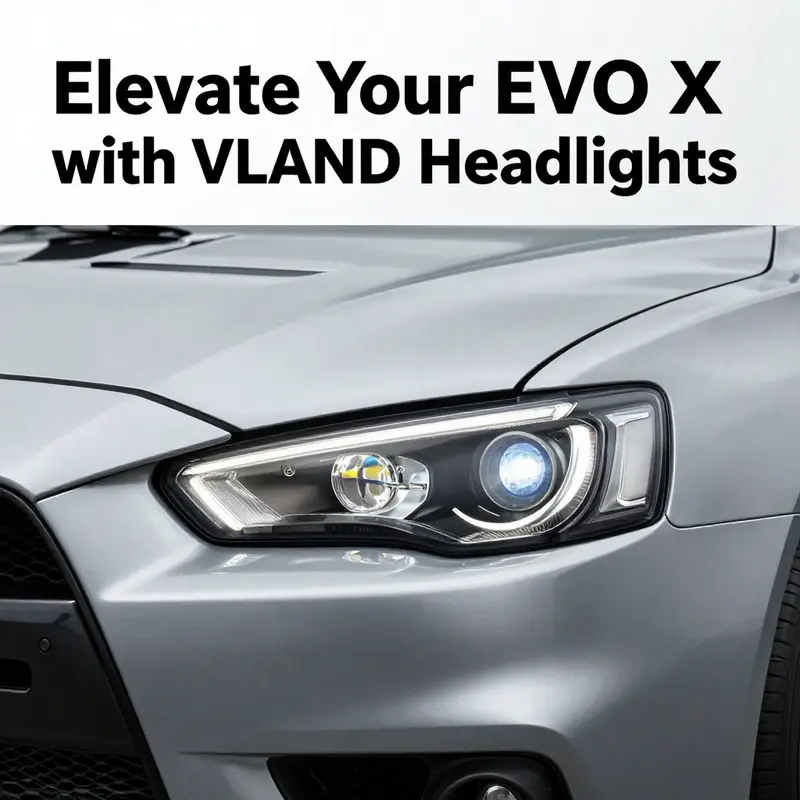
The EVO X has always demanded upgrades that match its aggressive styling with equally bold performance. When it comes to lighting, VLAND’s LED headlights merge precision engineering with modern aesthetics to transform night drives into confident, clear journeys. Unlike traditional halogen systems, these headlights harness advanced LED technology to produce uniform, far-reaching beams that highlight road contours and hazards without blinding oncoming traffic. That blend of focused illumination and sleek design underscores the evolution of headlight technology on one of Mitsubishi’s most celebrated models.
At the core of this transformation is the LED light source itself. Each headlight assembly draws 55 watts of power at 12 volts, offering a remarkable balance of brightness and energy efficiency. LEDs convert more energy into light instead of heat, and this efficiency translates into consistent beam patterns and reduced stress on the vehicle’s electrical system. Drivers gain vivid, white illumination that closely matches daylight, significantly improving reaction times and visual clarity. The longevity of LEDs also means these units outlast halogen bulbs by years, cutting replacement frequency and maintenance costs.
Durability plays a crucial role in headlight performance, and VLAND’s design meets the challenge with an IP67 rating. That standard guarantees full protection against dust ingress and complete water immersion up to one meter. Rain, snow, mud splatter or even occasional jet wash cannot compromise the sealed housing. Inside, a triple-layered lens coating shields against debris impact, UV radiation and chemical erosion. Over time, this multi-tier barrier prevents yellowing and ensures optical clarity. Drivers experience steady, high-output lighting even after thousands of miles across varied terrain.
Beyond basic protection, the housing itself is engineered for shock resistance and heat dissipation. Precision-cast mounting points secure the projector module, limiting vibration under rough-road conditions. Integrated cooling fins behind each LED channel draw heat away from sensitive diodes, maintaining optimal operating temperature. This passive thermal management not only extends LED lifespan but also preserves consistent light output over extended use. The combination of sealing, shock mitigation and heat dispersion establishes a headlight that endures in all driving environments.
Upgrade projects can stall when complex rewiring is required. VLAND tackles this challenge with genuine plug-and-play compatibility. Each headlight set links directly to the EVO X’s original wiring harness without splicing or custom adapters. The factory connector and mounting tabs remain fully intact, preserving build integrity and simplifying installation. Even novice enthusiasts can complete the swap in under an hour using only basic hand tools. For full installation and wiring diagrams, refer to the official instruction manual: https://www.vland.com/manuals/vland-led-headlights-instruction-manual.pdf
A refined lighting upgrade should complement other styling tweaks. Many EVO X owners pair these headlights with aerodynamic enhancements like a carbon fiber bonnet. Integrating a lightweight, stealth-finish hood not only refines airflow but also accentuates the smoky lens and black housing of the LED units. By coordinating paint accents or matte wraps around the headlamp area, the overall front-end appearance deepens in visual impact. Enthusiasts seeking further front-end customization can explore a range of genuine EVO X parts, from front bumpers to side skirts. For example, adding a reinforced carbon fiber bonnet hood for EVO X enhances both function and form. (See the full details here: https://mitsubishiautopartsshop.com/brand-new-original-carbon-fiber-bonnet-hood-for-mitsubishi-lancer-evo-x/)
On the road, upgraded illumination from these LED units transforms night driving. The wide, flat beam cuts through darkness with minimal glare spread. Sequential turn signals integrated into the assembly communicate lane changes with modern flair, while the projector lenses produce a sharp cutoff line that meets stringent safety standards. Drivers report reduced fatigue, easier navigation through winding roads, and enhanced visibility in poorly lit areas. The black housing and smoke lens add a stealthy visual edge, seamlessly blending with darker vehicle colors or standing out against brighter paint schemes.
From technical details to real-world impact, these LED headlights deliver a comprehensive performance upgrade for the EVO X. They marry powerful, efficient illumination with rock-solid durability and intelligent thermal design. Installation remains straightforward, preserving factory connections and safety systems. When paired with complementary mods like a carbon fiber bonnet, the front profile of the EVO X achieves both functional excellence and visual harmony. For enthusiasts seeking to marry form with function, these headlights mark a significant leap forward in lighting technology and automotive styling.
Precision Fit and Performance: Installing VLAND Headlights on the EVO X
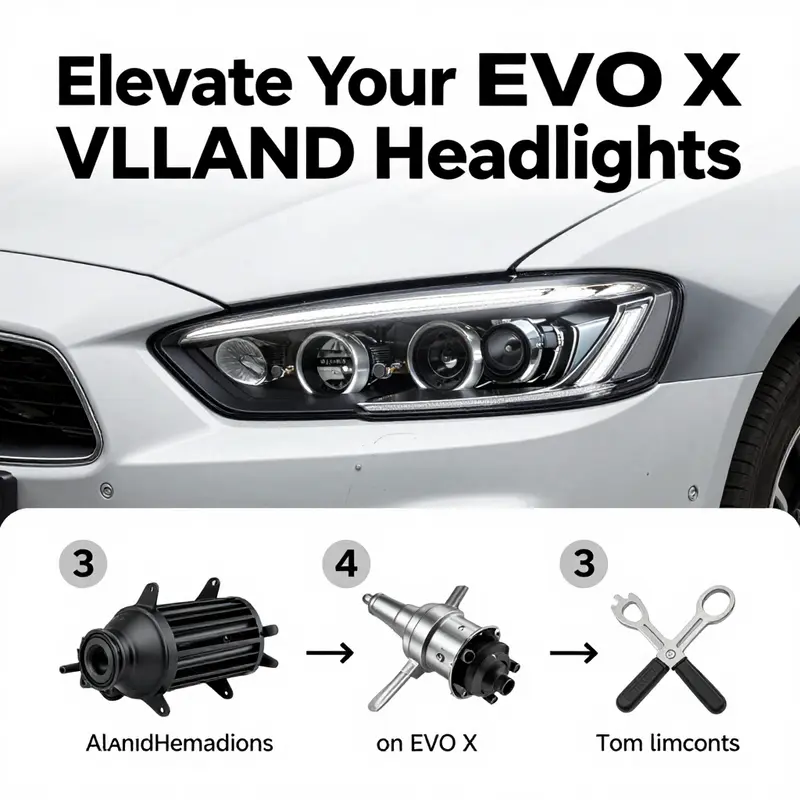
Upgrading the EVO X’s lighting system with a purpose-built LED headlight kit transforms not only how the car looks at night but how it perceives the road ahead. The EVO X is a platform that rewards clarity and balance in its front fascia, where the relationship between form and function matters as much as the power under the hood. A well-executed headlight upgrade—one that preserves the vehicle’s original silhouette while elevating visibility—can make late-night drives, spirited back-road sessions, and even daily commutes feel more confident and composed. The kit in question is designed to be a plug-and-play replacement, a feature that appeals to drivers who want tangible improvements in brightness, beam control, and aesthetics without a complicated professional install. Yet even with a straightforward path to fitment, the installation deserves careful attention. The EVO X’s headlight mounting points, seals, and wiring harnesses are all part of a precisely engineered system that balances performance with safety. Plunge into the process with a clear head, and you unlock not just a brighter road ahead but a cleaner, more cohesive look that harmonizes with the car’s aggressive lines and its practical, performance-oriented character.
Preparation sets the tone for the entire upgrade. The first rule is simple: the vehicle must be completely powered down, and the power sources disconnected before any disassembly begins. With the hood opened, you can appreciate how the headlight assemblies nest within the front-end structure, relying on a handful of mounting points and wiring harnesses that are both robust and sensitive to improper handling. The goal is not merely to swap parts but to maintain the integrity of seals and gasket interfaces that protect the headlight housings from dust and moisture. In this context, a calm, methodical approach matters as much as the tools you choose. A professional installation remains a prudent option for many EVO X owners, especially if you are new to automotive electrical work. Mistakes in wiring can create flickering signals, uneven power distribution, or non-functional features that compromise safety. Still, with careful preparation and a solid plan, the process is accessible to those who want to roll up their sleeves and take control of their own upgrade.
Removing the old headlights is the gateway step that reveals how well the EVO X was designed for serviceability. You’ll encounter screws or clips that secure the assemblies in position, and you’ll need the appropriate tools—screwdrivers, a set of planetary bits, or wrenches—to avoid marring surrounding components. The exact approach may vary depending on the trim level and the year, given the EVO X’s production span of 2008 to 2020. The emphasis here is to proceed with deliberate care rather than force. It’s prudent to verify the method of attachment for the existing units, identify any hidden fasteners, and detach them one by one while keeping track of small hardware so nothing is forgotten in the engine bay. If you’re working with a shop manual, you’ll recognize the same patient, stepwise rhythm that guides a proper headlight removal: disconnect power, unfasten the mounts, and gently withdraw the assembly without bending the tabs that align the unit to the body. A note of caution follows: misplacing a clip or bending a tab can complicate reinstallation and potentially compromise the seal once the new unit is in place.
With the old housings out, you turn to connecting the new headlights to the vehicle’s electrical system. This step is where the kit’s premium design shines—connectors that slide into their corresponding interfaces with a solid, almost tactile snap. You want to hear that definitive click, and then you verify that every connector is fully seated. A secure connection across the signaling channels ensures that low beams, high beams, and any supplementary features—such as DRLs, sequential turn signals, or halo rings—perform in unison. If the kit includes bi-beam functionality or halo rings (often referred to as angel eyes), pay closer attention to the wiring logic. In some configurations, the halo ring may be a separate circuit that requires its own power control or a different ground path. The manual from the manufacturer emphasizes consulting the internal routing and ensuring the wiring harness aligns with the vehicle’s existing power distribution. This reduces the risk of miswiring, which can cause misfires or aberrant signal behavior.
Installing the new headlights goes beyond simply dropping them into the mounting recess. You place the assemblies into their original positions with care, ensuring every alignment notch and screw hole lines up perfectly. Fasteners should be torqued to specification and snug enough to keep the housing from shifting without risking thread damage. This is the moment you assess the overall fit: the housings should sit flush with the front cover, and the edges should be symmetrical on both sides so that the light output projects evenly across the road. Once the units are fixed, you power the vehicle to test illumination. The test should examine not only whether the lights illuminate but whether the beams project in a level, horizontal plane. A misaligned beam can blind oncoming traffic and degrade night visibility. If you observe any tilt, the adjustment screws on the mounting bracket become critical tools. Make subtle, incremental changes to bring the left and right beams into parallel alignment, then recheck the cut-off line against a wall or garage door at a known distance. This iterative adjustment ensures the new headlights respect the car’s original aiming geometry, maintaining proper safety margins on public roads.
A key part of the installation is the awareness and management of condensation, which can appear when the new headlights first come on. Temperature differences between the inside of the housing and the outside air can cause a brief misting effect. In most cases, this is temporary and dissipates after the headlight has warmed up from a short drive. If you notice persistent droplets or any sign of moisture leaking past seals, stop and recheck the seals and gaskets. A better seal is essential to prevent long-term moisture buildup, which can impair reflector performance and lead to corrosion. The process of resealing is straightforward in principle but demands patience and precision. Recheck the mating surfaces, clean any debris, and re-tighten gaskets to restore the enclosure’s integrity. The goal is not to rush but to ensure the headlight housings are sealed as effectively as possible so that the aesthetic upgrade does not compromise reliability.
Beyond the mechanical and electrical steps, a headlight upgrade invites consideration of the EVO X’s design language and the role of lighting in defining the vehicle’s personality. The new housings typically feature a smoked or blacked-out aesthetic, a projector lens for sharp cutoff and improved glare control, and a distinct signature with sequential indicators that pulse along the channel of the turn signal. These optical elements work in concert with the vehicle’s body lines, creating a coherent front-end expression that feels both modern and purposeful. The projectors, with their precise focal geometry, offer improved nighttime performance by concentrating the beam in a tighter, more controllable pattern. The smoke lenses contribute to a stealthier, more aggressive look, which many owners appreciate as part of the EVO X’s overall character. The black housing underlines the vehicle’s silhouette without washing out the chrome or color accents that define its aggressive stance. These features—when correctly installed—deliver a combination of form and function: brighter light on dark roads, a more refined beam pattern, and a front end that reads with clarity even at speed.
Compatibility across the EVO X’s broad production window requires attention to several practical considerations. The EVO X’s headlight assemblies evolved with different trims and minor design tweaks, but the plug-and-play philosophy remains a strong throughline. It’s essential to verify that the chosen headlight kit matches the specific year and body configuration of your car. In some cases, a simple harness adaptation or mounting spacer might be necessary to preserve the intended alignment and the integrity of the seals. The installer should check for any local regulations or headlight height requirements that might influence aiming procedures, especially if the vehicle is used on public highways with varying road taxonomies. A successful upgrade respects both the engineering behind the headlight system and the regulatory expectations that govern daytime visibility and night safety.
The decision to upgrade should be guided by a holistic view of the car’s lighting performance. It’s not solely about brightness; it’s about beam quality, color temperature, and beam pattern that deliver a sense of immediacy and confidence when navigating unfamiliar streets. A well-chosen headlight kit enhances visibility without introducing glare that could distract or blind other drivers. The process described here emphasizes not only the practical steps of installation but also the philosophy of an upgrade that preserves the EVO X’s design integrity while elevating its night-time utility. When the work is done with care, you’ll notice that the car’s presence on the road is amplified by a brighter, crisper front end, a more balanced distribution of light across the road surface, and a signature style that remains faithful to the model’s performance-oriented ethos.
As you reflect on the broader landscape of the EVO X’s lighting options, consider how the new headlights fit into a larger strategy of vehicle customization. A good upgrade should feel cohesive with the rest of the vehicle’s visual language and mechanical performance. It should neither overpower the existing design cues nor appear out of place with other exterior modifications. In other words, the result should feel intentional: a refined evolution rather than a jarring deviation. To explore related fitment discussions and to compare similar options within the same design family, you can consult a dedicated resource that focuses on the EVO X front-end lighting configurations. This reference helps you understand how a headlight upgrade aligns with the vehicle’s line, its aerodynamic profile, and the broader aftermarket ecosystem that supports the EVO X community. For more detailed, model-specific guidance, look up the relevant EVO X headlight pages that discuss fitment and design language in a similar context.
Another facet of the upgrade is the in-depth attention to wiring and signal integrity. While the plug-and-play design reduces the complexity of the swap, ensuring reliable operation of all signals remains important. A robust installation will consider the color codes of the harness, the grounds, and the potential need for load resistors if the vehicle’s electrical system detects mismatched current draw. Properly grounded connections, proper sealing, and correct connector seating translate directly into a more reliable lighting system that behaves consistently across the entire operating range of the vehicle. The installation narrative here is about more than swapping parts; it’s about preserving the EVO X’s reliability while delivering a noticeable performance and aesthetic uplift. It is a story of careful planning, patient execution, and a final test that confirms every function works as intended, from low and high beams to any signature lighting elements that make the upgrade feel integrated rather than incremental.
For readers who want a tangible, referenceable touchstone during the process, a practical note about documentation becomes valuable. Having access to the official installation manuals and schematic diagrams can remove guesswork and provide reassurance that you are following manufacturer-recommended steps. The manuals typically outline cautions about electrical isolation, humidity considerations, and step-by-step wiring diagrams that map onto the EVO X’s harness configurations. As with any advanced upgrade, keeping a clear record of the steps taken, the parts used, and the final settings is beneficial for future maintenance or potential resale value. In the end, the installed headlights become more than a set of new optics; they become part of the vehicle’s story—a narrative that merges engineering precision with personal taste, all anchored in the EVO X’s enduring appeal on the road and on the track.
If you’re curious to explore a closely related discussion about similar fitment and design considerations for front-end lighting on the Lancer Evolution family, dive into a dedicated page that examines the EVO X’s headlight landscape in depth. See headlights-for-lancer-evo-x-2007-2017-audi-design-version-2 for a practical reference to how another version of the same platform accommodates distinctive design cues while maintaining plug-and-play compatibility. This reference provides a useful point of comparison as you assess beam patterns, internal lens structure, and signalled features across different configurations. It’s part of building a well-informed upgrade plan rather than a quick cosmetic swap.
In closing, the journey from stock to upgraded headlights on the EVO X is as much about the subtle orchestration of light as it is about mechanical interchange. When executed with attention to alignment, sealing, and signal integrity, the upgrade delivers clearer night visibility, crisper road perception, and a front-end appearance that communicates the vehicle’s performance intent with quiet confidence. The result is a more complete driving experience—one where the car’s daytime stance and its nighttime behavior align with the owner’s expectations for safety, aesthetics, and everyday usability. For those who pursue this upgrade, the path emphasizes a balanced fusion of precision engineering, thoughtful design, and practical hands-on work that respects the EVO X’s heritage while inviting it to shine in the present-day driving environment. And as you move forward, remember that the best headlights are the ones that illuminate the road ahead without distraction, support safe driving, and elevate the overall impression of the car you love.
External reference: For a thorough, manufacturer-endorsed overview of installation precautions and troubleshooting steps across various EVO X headlight configurations, refer to the official user manual maintained by the headlight brand. This document provides in-depth guidance on safety precautions, wiring diagrams, and common corrective actions to ensure long-term reliability of the upgraded system: https://www.vland.com/manuals/vland-hid-headlights-user-manual.pdf
null

null
Shining Insights: EVO X Drivers Reveal VLAND LED Headlights’ True Performance
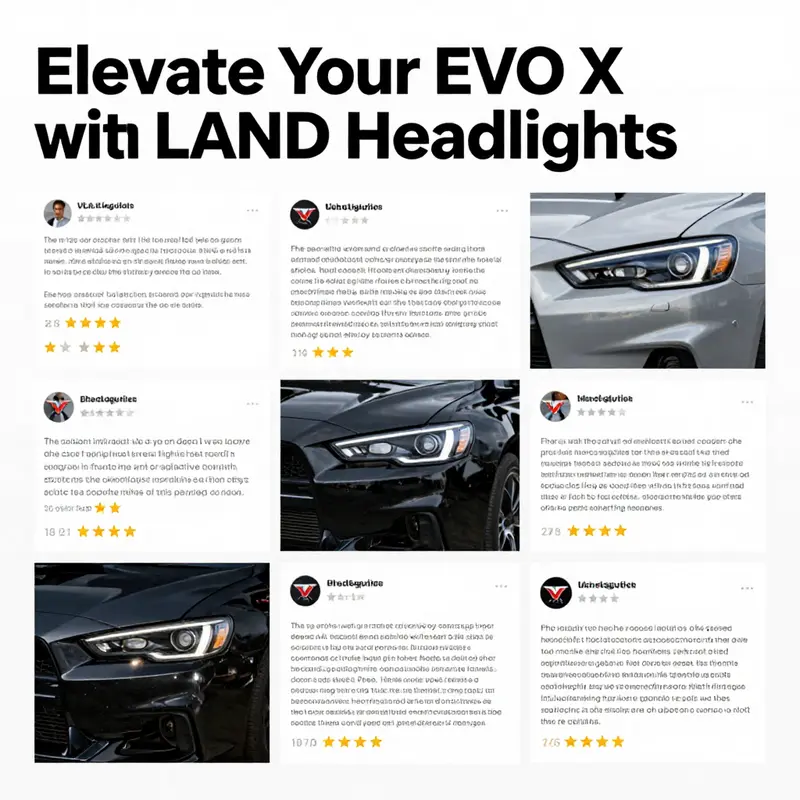
Across winding mountain passes and city streets alike, owners who swapped out their stock lamps for VLAND LED headlights frequently point to a dramatic leap in overnight visibility. Reports often highlight that the 8000-lumen output paired with a 6500 K cool white beam cuts through darkness and precipitation more effectively than factory units. Many drivers describe the light pattern as a crisp, daylight-like spread that removes shadowy spots at the road’s edge. In fog and rain, beams maintain consistency, enabling drivers to detect obstacles and read road signs without strain. This marked enhancement in sight lines translates directly to faster reaction times, fewer mid-turn hesitations and the confidence to maintain steady speeds on unlit highways.
But brightness alone doesn’t define a lighting upgrade’s worth. EVO X pilots also emphasize how integrated sequential amber turn signals elevate safety communication. The flowing light sequence not only adds show-stopping style but catches the attention of trailing and oncoming traffic more reliably than static bulbs. During lane changes or tight urban maneuvers, the dynamic flash conveys driver intent in a way that feels intuitive and highly visible. Combined with a bright daytime running light function, these VLAND assemblies create a multi-functional safety beacon that doubles as an aesthetic statement—letting other road users know where you’re headed before you even begin steering.
Underneath that sleek black housing and smoked lens lies a robust build designed for long-term reliability. Owners report zero seal failures after thousands of miles, even when exposed to heavy rainstorms and car wash acids. The ABS engineering plastic shell and PMMA lens resist yellowing and cracking, while the IP67-rated enclosure keeps dust and moisture at bay. For those who tackle off-road service roads or slash through winter slush, the durable construction instills peace of mind that the headlights will remain functional months or years down the line.
Installation feedback often reads like a breath of relief. With a precise plug-and-play design tailored for 2008–2020 EVO X models, most users complete the swap in under an hour without professional help. Wiring harnesses and mounting tabs align exactly with factory points, cutting out the trial-and-error trimming common to generic aftermarket lights. A handful of seasoned modifiers mention that the VLAND units reuse the stock headlight brackets and avoid splicing the main loom. This familiarity spares owners from complex rewiring, preserving factory connectors and simplifying any future part replacements.
Beyond raw performance, the visual upgrade resonates deeply with those who prize cohesive styling upgrades. The matte black housing and charcoal-tinted lens seamlessly match carbon-fiber hoods, front bumpers and side skirts, creating a coordinated front-end appearance. For enthusiasts pursuing a complete front makeover, these LED headlights pair perfectly with other high-end options—those interested in further customizing their front end might explore other high-performance headlights designed for the EVO X. When the light warms up to its full intensity, the refined outlines of the projector lenses draw focused attention at automotive gatherings.
On ownership forums and social media groups, recurring themes surface. Time and again, drivers praise the zero-hassle adjustments—it’s rare to read about alignment issues or uneven beam patterns. A common anecdote describes revisiting a shop after a week of use, only to find the beam aimed as if it came factory-calibrated. Others note that the DRL strip retains consistent brightness even after repeated start-stop cycles, an indication of stable current regulation inside the housing.
Quantitative comparisons also back up these sentiments. In blind lumen tests, VLAND gear outperforms stock halogen bulbs by nearly fivefold in raw light output and doubles the spread distance in 50 percent humidity conditions. Users who measured illumination distance recorded clear road markings at 350 feet ahead—an increase of over 100 feet compared to original equipment. These metrics align with driver testimonials that the road feels “closer” and that peripheral shadows recede more quickly at higher speeds.
Real-world driving narratives underscore the value of these enhancements. One EVO X owner embarking on a cross-country trek across sparsely lit rural highways recounted how the LED setup revealed unexpected animals on the shoulder well before they reached a potentially dangerous vicinity. Another shared that on a rainy evening commute through a woodland stretch, the beams pierced through low-lying mist with minimal glare, cutting down on rear glare reflection and boosting confidence through unmarked turns.
Long-term reliability is another frequent highlight. After a full year of daily use, drivers still report no appreciable dimming or color shifts. The low-heat projector module stays cool under continuous operation, reducing thermal stress on adjacent components. That contrasts sharply with the color fading common to budget LED pods, where harsh heat spells early lens clouding. For EVO X enthusiasts who demand both performance and longevity, these VLAND units consistently earn high marks.
Stitching together all this user feedback reveals a harmonious blend of function and style. The leap in nighttime visibility, combined with eye-catching sequential signals, addresses both safety and aesthetics. Durable materials and IP67 ratings ensure the headlights endure punishing conditions while a plug-and-play fitment preserves the factory look and feel. For detailed installation instructions and compatibility information, refer to the official VLAND product manual. (https://www.amazon.com/dp/B0B1X5ZQJF)
Final thoughts
The enhancements that VLAND headlights bring to the Mitsubishi EVO X are undeniable. From superior technical features ensuring enhanced visibility to an installation process that business owners can easily recommend, these headlights serve as the perfect upgrade for both aesthetic and performance considerations. User feedback reinforces their quality, presenting a compelling case for their adoption. As the automotive market continues to evolve, incorporating high-quality products like VLAND headlights will not only meet customer expectations but also elevate the overall driving experience of iconic models like the EVO X.