
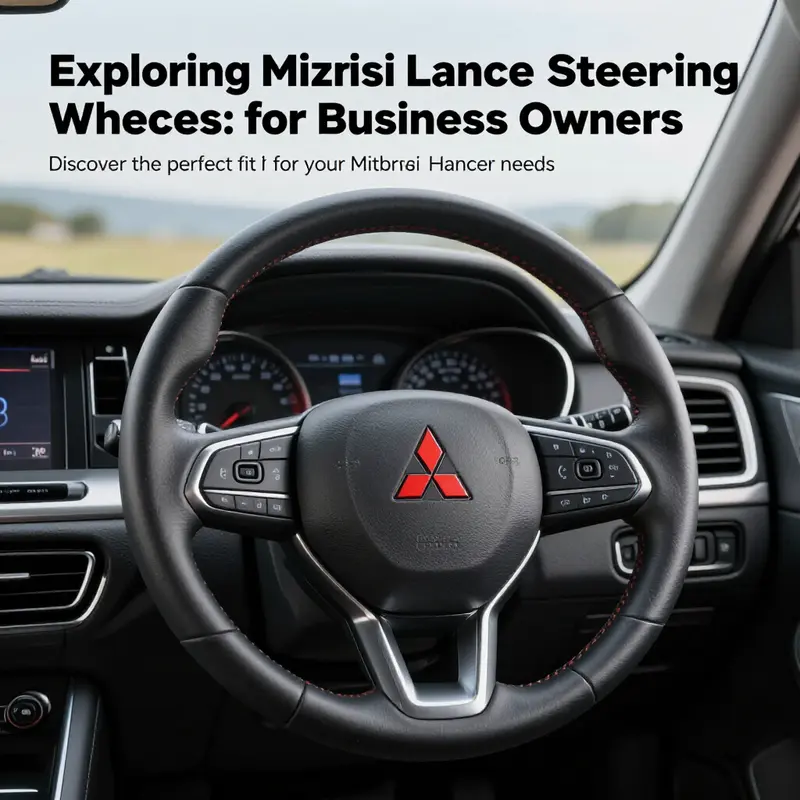
The steering wheel of a Mitsubishi Lancer is more than just a functional component; it significantly influences driving experience and vehicle aesthetics. For business owners leveraging these vehicles, understanding the options available in the marketplace—ranging from premium leather to sporty designs—can help enhance the car’s value and functionality. In this guide, we will delve into the different types and features of Mitsubishi Lancer steering wheels, explore the market and accessory options, evaluate usage scenarios, and discuss customization opportunities for performance enhancement.
Choosing the Right Steering Wheel for Your Mitsubishi Lancer: Style, Feel, and Function
Choosing the Right Steering Wheel for Your Mitsubishi Lancer: Style, Feel, and Function
The steering wheel is the primary interface between driver and car, and on the Mitsubishi Lancer it plays a major role in how the car feels, performs, and presents itself. Across trims and model years, Lancer steering wheels range from simple, functional designs to performance-focused, tactile pieces that alter the entire driving experience. Understanding the differences in materials, shape, ergonomics, and integration is essential whether you are replacing a worn factory wheel, upgrading for comfort, or building a track-ready cockpit.
At the base of the range, standard steering wheels are built for reliability and cost-effectiveness. They typically use sturdy plastics and synthetic coverings and provide clear, direct feedback through a straightforward rim profile. These wheels prioritize durability and predictable handling over luxury. For daily commuting, they are practical: easy to maintain and unlikely to show wear quickly. However, their grip and tactile feedback are modest, and they lack the premium presence that higher trims convey.
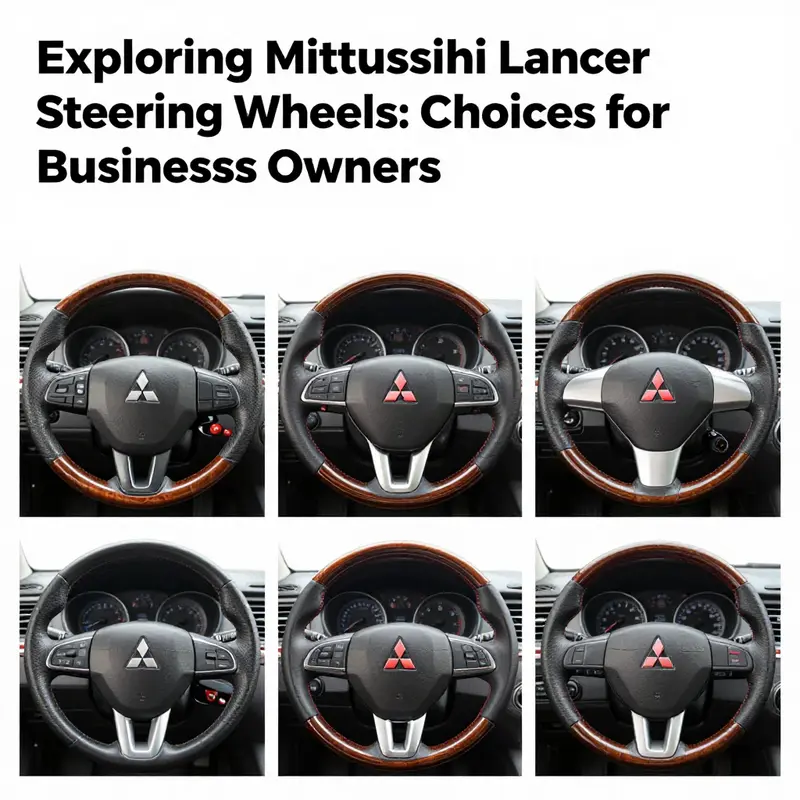
Leather-wrapped steering wheels are the most common step up in Lancer lineups. Offered on mid and upper trims, they bring a softer touch and a more refined look. High-quality leather delivers a comfortable feel and better natural grip, especially in warm or humid conditions where synthetic surfaces can feel slick. Many leather wheels feature contrast stitching—often in red or another accent color—which both visually highlights the wheel and gives subtle tactile cues for hand placement. Over time, leather will require care, but with routine cleaning and conditioning it resists cracking and improves the perceived value of the cabin. For owners who want a blend of daily comfort and a touch of luxury, a leather wheel is a balanced choice.
For drivers focused on performance, sport steering wheels with a flat-bottom profile change both ergonomics and aesthetics. A flattened lower rim increases legroom and makes ingress and egress easier when wearing performance seats. The smaller perceived diameter and thicker rim sections on many sport wheels improve control during rapid steering inputs. These wheels often combine leather with suede-like or grippy inserts to keep hands planted during spirited driving. Accent stitching and center markers are common, offering visual orientation during aggressive turns. Sport wheels are not just cosmetic; their design refines steering precision and encourages confident, engaged driving.
Some Lancer variants and aftermarket options introduce wood or wood-accented steering wheels. These blend traditional styling with modern control needs, pairing wood grain with leather or metal trims. Wood accents create a classically upscale feel and often resist heat buildup better than full leather in hot climates. While wood-trim wheels can look elegant, their tactile feedback differs from leather or suede. They suit a driver who values classic aesthetics and a formal cabin appearance more than high-performance grip.
At the cutting edge are wheels finished in carbon fiber or carbon-look materials. These aim to evoke motorsport technology and a lightweight feel. True carbon wheels are rare and expensive, usually reserved for custom builds. Many aftermarket options offer carbon fiber trims or veneers that replicate the look while keeping costs reasonable. Carbon accents pair well with race-inspired interiors and other lightweight upgrades.
Custom and aftermarket steering wheels widen the possibilities further. Enthusiasts can choose flat-bottom or deep-dish profiles, different rim diameters, cross-section shapes, and coverings such as perforated leather, Alcantara, or premium synthetic blends. Aftermarket wheels allow personalization of color, stitch pattern, and center markers. But customization comes with responsibilities: fitment must be verified for airbag compatibility, horn and control integration, and proper mounting hardware. Many steering wheels require a specific hub adapter or centering ring to match the Lancer’s steering column and maintain a correct airbag clearance and deployment path.
Across all types, several consistent features define quality and usefulness. Ergonomic shaping ensures natural hand placement and reduces fatigue on long drives. A well-designed wheel places thumb rests and contouring where hands typically sit at the nine-and-three positions. Material quality affects comfort and longevity; soft-touch leather and Alcantara enhance feel, while coated metals and high-grade composites improve durability. Modern wheels also integrate steering-mounted controls for audio, cruise, and phone functions. Factory wheels usually keep these features; aftermarket swaps often require retaining the original switchgear or purchasing compatible modules to preserve functionality.
Safety compliance is non-negotiable. Factory-replacement and certified aftermarket wheels must meet airbag deployment and crash safety standards. Airbag housings and sensor placement vary across model years and trims, so a wheel swap must account for the Lancer’s specific system. Removing or improperly mounting an airbag can create a dangerous situation. For this reason, many owners opt to retain the original airbag module and refit it into a new rim or choose certified wheels that accommodate the factory airbag. Professional installation ensures that electrical connectors, clock springs, and mounting torque meet manufacturer specifications.
Practical considerations also shape choices. Cost is a major factor: standard wheels are inexpensive to replace, leather wheels cost more upfront but can add to resale value, and carbon or bespoke wheels command the highest prices. Availability varies by model year; components for high-performance variants are sometimes more common in the aftermarket. Fitment matters, too: a wheel designed for a performance model may change pedal reach or center alignment slightly. Ensuring the wheel centers correctly and that the horn and controls function requires either OEM adapters or quality aftermarket hubs.
Maintenance requirements differ by material. Leather needs gentle cleaners and periodic conditioning to stay supple. Alcantara and suede-like materials require brushing to maintain nap and special cleaners to avoid staining. Wood and carbon veneers need careful polishing and protection from harsh solvents. Regular inspection of stitching and the rim’s structural integrity keeps small problems from becoming safety issues. A clean, well-maintained wheel not only looks better but also retains a predictable grip pattern, which matters in emergency maneuvers.
Selecting the right wheel for a particular Lancer owner is a balance of priorities. For drivers who value everyday comfort and interior refinement, leather offers an excellent compromise. Those who prioritize a classic interior with a refined look may choose wood accents despite the different tactile feedback. Enthusiasts seeking sharper control and a sportier cabin feel will benefit from a flat-bottom sport wheel with enhanced grip zones. And for those customizing extensively, aftermarket wheels allow creativity but demand careful attention to safety and compatibility.
Installation planning is often overlooked but crucial. A direct replacement wheel that retains the factory airbag and switchgear simplifies the swap. If a new rim does not accept original components, sourcing compatible controllers or using a certified hub adapter becomes necessary. Clock spring compatibility must be confirmed; an incorrect clock spring risks airbag or control failure. For radical swaps, professional installers can test electrical continuity, alignment, and airbag readiness.
Beyond feel and fit, a steering wheel can influence perceived value. Upgrading a worn, faded factory wheel to a well-crafted leather or sport rim can make the entire cabin feel newer. For owners preparing a car for sale, a tasteful upgrade may improve buyer impressions and justify a higher asking price. Conversely, overly aggressive or ill-matched aftermarket wheels can deter buyers who prefer factory-correct interiors.
Finally, the steering wheel should complement other interior choices. Pairing a sport wheel with supportive seats and a short-throw shifter creates a cohesive driver-focused environment. Matching stitch colors and materials across the wheel, seats, and shift boot unifies the cabin visually. For owners of performance-oriented models, consider how the wheel matches upgrades such as a lightweight steering column or performance dashboard; resources like the Evo 9 dashboard documentation can help plan cohesive interior upgrades: https://mitsubishiautopartsshop.com/dashboard-evo-9/.
For those who want to read more about steering wheel safety and design principles, an overview of steering wheel function and standards can be found here: https://en.wikipedia.org/wiki/Steering_wheel.
Choosing a steering wheel for a Mitsubishi Lancer is both a technical decision and a personal one. The right wheel improves grip, reduces fatigue, and enhances the car’s character. Whether you aim for understated luxury, classic elegance, or race-inspired control, careful selection, proper fitment, and attention to safety ensure the wheel you pick elevates the whole driving experience.
Steering Toward Custom Comfort: The Market for Mitsubishi Lancer Steering Wheels and Interior Accessories
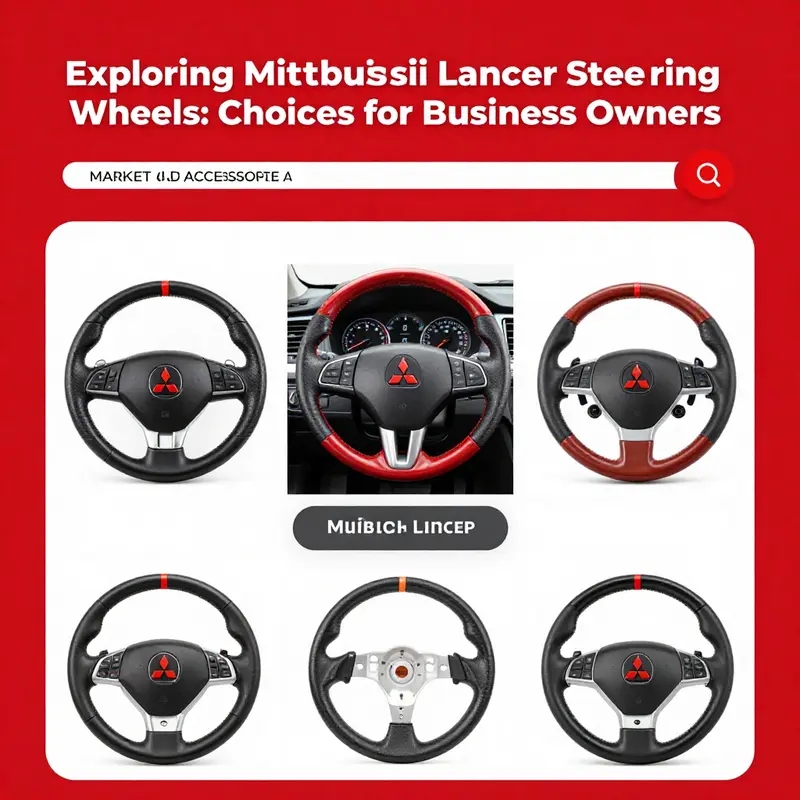
The market for Mitsubishi Lancer steering wheel accessories unfolds as a quiet, continuous conversation between driving feel, interior aesthetics, and practical reliability. For owners who want to tailor the car’s steering experience without sacrificing safety or usability, there is a spectrum of choices that range from conventional to aggressively performance-oriented, all designed to refine how the wheel meets the hand, how the hands meet the road, and how the cabin senses its own personality. This chapter treats that spectrum as a single, evolving ecosystem rather than a series of disparate parts. It explores the logic behind the major categories of steering wheel options, the practical considerations that guide a buyer’s decision, and the ways the market has adapted to accommodate both daily driving and track-focused ambitions. In doing so, it also highlights how the steering wheel, as a centerpiece of the Lancer’s interior, interacts with the broader layout of controls, access, and comfort, creating a cockpit that feels both familiar and newly responsive with each turn of the wheel.
At the heart of the market are three overarching categories of steering wheels: leather, sport-oriented, and decorative or traditional variants such as those with wood-grain accents. Each category speaks to a different driving philosophy and interior mood, yet none stands apart from the others in terms of the core needs drivers bring to the wheel: grip, control, and a sense of connection with the road. Leather steering wheels are the most common option on higher-trim or more luxurious versions of the Lancer’s interior. They are prized for their tactile softness and refined look, qualities that reinforce a sense of comfort during long drives and elevate the perceived value of the cabin. The grip provided by premium soft-touch leather remains strong in warm or humid environments, where texture and friction can matter as much as the wheel’s diameter or circumference. A well-maintained leather wheel ages gracefully, developing a patina that many drivers find appealing and that can contribute to higher resale value. That said, leather requires routine care. Conditioning helps prevent the leather from drying out and cracking, and buyers should plan for occasional maintenance to preserve both feel and appearance. Direct sunlight, meanwhile, can make leather heat up quickly, a factor to consider in sunny climates or when the car sits idle in a parking lot during peak hours.
Sport-oriented wheels represent a different set of priorities. Their flatter bottom and reduced diameter are designed to deliver a more immediate, semi-augmented sense of steering feedback. For drivers who want to feel the road more directly and enjoy a more aggressive driving posture, sport wheels can translate subtle road textures into a heightened sense of awareness. This is not simply about aesthetics; the geometry of a sport wheel changes leverage, giving the hands a crisper and more precise signal from the front tires. In this space, carbon fiber options have grown popular for their lightness and distinctive visual language. Lightweight construction can contribute to a small but meaningful improvement in steering response, especially in spirited, performance-oriented contexts. The aesthetics of carbon fiber—its weave, gloss, and technical look—often signal a certain type of driving discipline, one that leans toward track readiness and a minimalist, high-tech cabin atmosphere. Such wheels frequently come with heat management considerations and compatibility features, including the transfer of controls from the original wheel to the new unit. This transfer process is essential when the Lancer’s steering wheel carries buttons for audio, cruise control, or trip computer, and it requires careful matching of electrical connections and airbag compatibility to maintain safety standards.
Beyond leather and sport, traditional or decorative options—sometimes incorporating wood-grain accents or other trim elements—offer a different kind of refinement. Wood-grain or wood-inspired finishes can evoke a classic, almost timeless ambiance within the cabin. These choices are especially appealing to drivers who value a sense of craftsmanship and a warm, tactile interior environment. The practical edge of such wheels lies in their heat resistance and durability under high temperatures, where some faux-wood or composite-decorated wheels resist scorching more effectively than full-leather options in direct sun. The design language of these wheels can influence the perception of the entire interior, conveying a refined balance between sportiness and tradition. In many cases, these decorative pieces are paired with leather or composite edges to preserve grip and control while delivering a distinctive look that suits a range of personal tastes.
The market for steering wheel accessories does not stop at the wheel itself. A broader ecosystem of components—hub adapters, transfer mechanisms for steering wheel controls, and compatibility considerations for airbags—forms the foundation that makes customization both possible and safe. Hub adapters, in particular, play a pivotal role in the installation process. They ensure that an aftermarket wheel lines up correctly with the factory hub and airbag module, preserving the integrity of the steering column while enabling precise alignment. The availability of adapters from various suppliers has grown with the surge in customization, giving installers and enthusiasts options that match different hub geometries, electrical connectors, and mounting standards. The practical takeaway here is simple: even the best-looking wheel needs a compatible mounting pathway and a reliable electrical interface to function as intended in everyday use.
In practice, a buyer’s decision about which steering wheel to choose often hinges on how the upgrade aligns with daily practicality and long-term ownership experience. Leather wheels tend to be favored by daily drivers who value comfort and a premium feel, while sport wheels entice those who want more direct and responsive steering dynamics during spirited driving. Decorative wheels with wood-grain accents appeal to design-minded owners who want the interior to project a particular mood, rather than focusing on performance alone. Yet, even within each category, there is a spectrum—ranging from wheels with simple, plain-grain finishes to those with enhanced grip textures, contoured thumb rests, and integrated heating options for colder climates. When evaluating options, drivers naturally weigh comfort against heat management, grip against texture, and aesthetics against compatibility with the Lancer’s controls. A well-chosen wheel does not merely replace the old one; it redefines how the car communicates with its driver, translating every maneuver into a clear, immediate sensation that aligns with the driver’s goals—whether those goals center on everyday comfort, weekend fun, or competitive driving.
Another critical thread in the market is the accessibility of high-quality options through global marketplaces. From online listings to specialized shops, buyers can explore a broad range of materials, finishes, and configurations. The market’s breadth means that a driver who wants a carbon-fiber sport wheel for a driven Evo-inspired experience can find an option that respects structural safety while delivering the desired aesthetics. It also means that the upgrade path can be democratized, with a wide range of price points and levels of craftsmanship to match different budgets and expectations. However, the abundance of choice also invites careful evaluation. Not every carbon-fiber wheel, for instance, is a drop-in replacement; some require more extensive wiring work or a reprogramming of steering wheel controls. The best practice is to begin with a clear plan: identify your priorities—grip, feel, aesthetics, or a blend of all three—then confirm compatibility with the Lancer’s hub geometry, airbag system, and control interfaces. In this sense, the steering wheel becomes a strategic component of interior customization rather than a cosmetic afterthought.
The market’s evolution also reflects a broader trend toward integration with other interior upgrades. A steering wheel can be part of a coordinated interior refresh that includes dashboards, seats, and trim pieces designed to complement the wheel’s material and color. For example, a leather wheel harmonizes with matching leather-wrapped consoles or seats, creating a cohesive ambience that emphasizes refinement. Similarly, a sport wheel can be paired with performance-oriented seating and climate-control finishes that echo a high-precision, performance-focused cockpit. Such combinations illustrate how the Lancer’s interior can be reimagined in a way that feels both cohesive and renewed, without compromising the ergonomic layout that drivers rely on every day.
The practical steps toward realizing these upgrades begin with a careful assessment of what the owner actually needs. First, ensure compatibility with the factory airbag and electrical connections. This is non-negotiable for safety and for preserving the factory safety systems that protect occupants. Second, scrutinize fitment: the wheel diameter and grip contour must match the driver’s hand size and preferred grip zones, with attention to thumb placements and the reach to the steering wheel’s paddles or control buttons. Third, evaluate heat and UV exposure. Leather wheels, while luxurious, can dry out over time if left in direct sun; decorative options may offer different heat resistance properties that suit hotter climates. Fourth, think about maintenance. Leather surfaces require conditioning, while carbon-fiber or wood-grain variants may demand gentler cleaning to avoid scuffing or fading the finish. Finally, consider the overall interior mood—the wheel is a powerful visual and tactile cue that shapes every driving session. When selected thoughtfully, it not only improves comfort and control but also elevates the sense of pride in owning a Lancer that feels uniquely personal.
From a market dynamics perspective, the Lancer steering wheel ecosystem benefits from a robust supply chain that spans OEM-equivalent options and broader aftermarket offerings. The demand for customization has encouraged suppliers to offer wheels that retain essential safety features while enabling a broader range of aesthetics and physical profiles. The availability of detachable steering solutions, control transfer options, and secure, airbag-compatible designs means that buyers can pursue upgrades with confidence that the core protective mechanisms remain intact. Moreover, the aftermarket community has fostered a culture of knowledge sharing, where enthusiasts trade installation tips, compatibility notes, and practical advice about achieving a professional look at home or with a trusted installer. This collaborative environment helps mitigate the risk of mismatched components and promotes quality outcomes that preserve or even enhance the Lancer’s interior’s value proposition.
Within this landscape, a critical but often overlooked dimension is the way steering wheel upgrades interact with related interior components. The wheel does not exist in isolation; it’s part of a broader system that includes the airbag module, wiring harnesses, and control interfaces such as audio, cruise, and trip menus. A wheel that integrates with these controls preserves convenience and reduces the cognitive load on the driver. For many drivers, the convenience of retaining familiar button layouts and steering-wheel-mounted controls is a decisive factor. The best aftermarket options acknowledge this need by offering compatible transfer methods, or by providing wheels that replicate the original control geometry and button mapping while delivering improved grip or a refreshed appearance. This compatibility is especially important for those who spend long hours behind the wheel, where back-and-forth movements between the wheel and center console become second nature. The market recognizes this and tends to favor solutions that deliver both tactile and functional continuity.
As with any customization, the decision process benefits from a measured, almost architectural approach. Start with the purpose of the upgrade: is the aim daily comfort, weekend performance, or a refined interior statement? Then map the technical requirements: diameter, thickness, grip texture, and compatibility with control interfaces; assess the environmental conditions in which the Lancer is often used, including sunlight exposure and climate. Finally, balance the budget against expected durability and resale value. A well-chosen wheel becomes part of the vehicle’s story, signaling the owner’s tastes and driving priorities while remaining a reliable component that supports safe operation.
For readers who want a practical path to explore these options, a targeted interior upgrade pathway exists that can be pursued alongside steering-wheel changes. See a related interior dashboard upgrade page for inspiration and to understand how a wheel update can harmonize with other cabin refinements. Dashboard Evo-9 interior page
External resource for broader context: for an example of carbon-fiber sport wheel options available in the market, see this listing on a major online marketplace. https://www.ebay.com/itm/394526925881
Driven by Design: Navigating the Mitsubishi Lancer Steering Wheel Across Everyday and Everyday-Performance Realities

The steering wheel sits at the nexus of driver intent and machine capability in a Mitsubishi Lancer. It is more than a control interface; it is a tactile portal to comfort, precision, and personality inside the cabin. Across the Lancer lineup, steering wheels come in a spectrum of materials, shapes, and features that respond to different driving needs. The choice you make is rarely about a single moment of use, but about the daily pattern of driving you expect, the kind of roads you frequent, and the way you want the cockpit to reflect your taste and your approach to driving. In that sense, the steering wheel becomes a small but telling indicator of how a car fits into a driver’s life. It is a piece of the vehicle that communicates with the hands before the brain engages the pedals, and the feeling conveyed by that contact can ripple outward, affecting posture, fatigue, and even the perception of speed and control. This is why the decision about which steering wheel to select—whether from the factory or as part of a well-considered upgrade—deserves consideration that respects the full range of driving scenarios the Lancer will encounter. When we look at usage scenarios in depth, we can see how different wheel designs and materials respond to distinct demands, from the daily grind of urban commutes to the more demanding cadence of spirited country roads or track days, and even to the subtle shifts in comfort that come with winter or long highway hauls. The result is a practical framework for choosing a wheel that aligns with the driver’s priorities while preserving the Lancer’s unique blend of accessibility and performance.
In everyday urban driving, the steering wheel often becomes a quiet ally rather than a focal point of attention. The most common choice here favors materials that balance comfort with durability. A standard leather or synthetic leather wheel offers an inviting grip that remains comfortable through the typical stop-and-go rhythm of city streets. The tactile feel matters: a soft yet reassuring grip can make steering feel less tiring over a long day and can lift the cabin’s sense of refinement, particularly in higher trim levels where interior quality is a stated priority. In this context, control integration matters, too. Higher trims frequently feature cruise control and other convenience functions that ride on the wheel or its stalks, reducing the amount of time the driver spends locating switches. A wheel designed with easy access to those controls—whether through well-placed buttons or a confident, ergonomic wrap—helps maintain focus on the traffic environment rather than the cockpit clutter. The use of a rotary knob interface for speed adjustment can be especially helpful on highway stretches, where precise tuning of speed resumes and adjustments can contribute to smoother cruising and better fatigue management on lengthy journeys. In such conditions, a wheel that supports a relaxed grip and effortless control helps the driver settle into a steady rhythm, which translates into a more comfortable, efficient drive with less mental load.
Beyond basic comfort, the wheel’s diameter and rim shape subtly shape the driving experience. A wheel with a well-suited diameter feels intuitive in the hands—neither too big to hamper precise inputs nor so small that it demands excessive wrist movement. For many drivers, leather or synthetic leather rims provide a reliable balance of warmth, grip, and durability. In urban traffic and during short trips, this balance translates into smoother steering inputs, less fatigue, and a cabin atmosphere that feels premium without being ostentatious. The arrangement of controls, including media, cruise, and voice commands, should feel natural under the thumb and within easy reach, reinforcing a sense that the car is a partner rather than a chore. In this light, the steering wheel becomes part of the supportive infrastructure that makes daily driving predictable and pleasant, a key factor when the car is your primary means of mobility through crowded streets and unpredictable stops.
When the road opens up and speed becomes a meaningful variable, the Lancer’s performance-oriented configurations begin to reveal their distinct strengths. The Lancer Evolution models, in particular, shift the wheel philosophy toward sport and engagement. Their sport steering wheels are designed with a flatter lower section, a slightly thicker rim, and a more compact overall footprint, all aimed at enabling quicker, more confident transitions through corners and faster response to driver inputs. This design speaks to a specific way of driving—one that favors tactile confidence and a direct line from hand to chassis. In concert with the Evolution’s chassis tuning and the Super All-Wheel Control system, the sport wheel helps to translate driver intent into precise steering response at higher speeds and in dynamic cornering. The wheel’s grip and geometry are tuned to support aggressive handling, providing the driver with a more immediate sense of contact and control as tires meet road surface. The presence of paddle shifters on some configurations adds another dimension of engagement, inviting drivers who enjoy manual gear changes to participate in the driving experience more actively. However, it is important to recognize that paddle shifters require reliable electronic sensors and careful calibration. In the event of sensor failure or misalignment, paddles can be inadvertently activated during sharp turns, which can interrupt the intended input. A well-matched steering wheel type, therefore, is not simply about grip and looks; it is about ensuring that the vehicle’s electronic interfaces stay predictable and intuitive through every twist and turn.
For drivers who seek a balance between performance and comfort, the question often becomes not whether to choose a sport wheel or a luxury wheel, but how to reconcile the two in a single cockpit. Heated steering wheels offer a practical example of this balance, marrying winter-ready comfort with daily usability. In colder climates, a heated wheel can dramatically improve grip and reduce fatigue by maintaining warmth in the palms, a feature that becomes especially valuable during long commutes or early morning starts. The warmth not only improves comfort but can also contribute to better tactile feedback, as fingers remain warm and responsive, enabling more precise inputs when steering through slick conditions. This feature, while common on higher trims, demonstrates how modern steering wheel design integrates comfort technologies to support safer, more confident driving across seasons.
For enthusiasts who want to push the boundaries of customization and cockpit aesthetics, aftermarket options exist that extend the Lancer’s steering wheel portfolio beyond what comes from the factory. A carbon fiber or premium leather wheel can deliver a distinctive look and an even more tactile feel, enhancing the cockpit’s visual drama while preserving or even improving grip and control. The appeal of lighter weight materials and a streamlined, race-inspired profile can be strong for drivers who value a pure, performance-oriented feel during spirited driving or occasional track sessions. When approaching aftermarket choices, one practical constraint to confirm is compatibility with the car’s bolt pattern and mounting interface. In many cases, an adapter or a specific mounting arrangement is required to ensure a secure, vibration-free connection to the steering column. The goal is a seamless blend of form and function, where the wheel looks purposeful and delivers precise, reliable input without introducing unusual play or unwanted steering feel. The discussion often touches on the balance between aesthetics, weight, and structural integrity; a wheel that looks impressive but compromises steering feedback or durability is rarely the best upgrade.
In this spectrum of choices, a few practical guidelines help anchor the decision. For daily commuting and city driving, prioritize comfort and ease of use. An OEM-compatible wheel in leather or synthetic leather with integrated controls provides a familiar, dependable interface that preserves the car’s original wiring and sensor calibration. For longer highway travel, consider ergonomic design and cruise control integration. A wheel that keeps hands in a relaxed position while placing essential controls within easy reach will support a smoother, less tiring journey. For performance driving and occasional track use, a sport wheel with a flatter bottom and thicker grip can enhance feedback and steering precision, especially when paired with a chassis tuned for dynamic handling and with a paddle shifter system that is calibrated to the wheel’s geometry. Winter driving benefits from heated wheels, while customization and style opportunities can address personal taste and cockpit personality when matched with proper compatibility and installation considerations. It is crucial to ensure that any aftermarket option aligns with the Lancer’s mounting pattern, electrical interfaces, and airbag safety requirements.
The Lancer Evo family adds another layer to this narrative. Its S-AWC system and tuned chassis create a context in which steering wheel geometry and input feel can meaningfully affect cornering behavior at higher speeds. The sport wheel’s design is not merely about grip; it is about translating a feeling of connectedness into trust. In such settings, drivers expect a wheel that offers precise centering, consistent tactile feedback through turns, and a sense that the road beneath the tires is predictable even at the limit. This is the kind of cockpit attunement that makes a performance-focused wheel feel like a natural extension of the driver’s hands. At the same time, the potential for miscalibration or unintended input remains a reminder that upgrades must be paired with proper setup and verification.
The broader ecosystem surrounding steering wheel choices also matters. The availability of adapters and compatible high-performance options expands the possibilities for those who want to personalize the Lancer without compromising safety or reliability. In practical terms, a driver who selects a carbon fiber option or a premium leather wheel should also consider the overall balance of weight, grip texture, and the wheel’s diameter. Even small changes in diameter can alter the steering ratio and feedback, influencing how quickly the car responds to steering inputs at different speeds. The key is to approach any change with attention to how the wheel’s feel aligns with the vehicle’s handling characteristics and with the driver’s preferred driving style.
When exploring the options for a Lancer steering wheel, curiosity about the broader technical landscape can be as important as the tactile experience. For those who want to explore related components and compatibility options, a dashboard-oriented Evo-9 parts page offers a glimpse into the kinds of cockpit accessories that share a platform with steering wheel upgrades. See the Evo-9 dashboard page to understand how different cockpit components align with the steering wheel’s interface and controls. dashboard-evo-9.
In sum, choosing a steering wheel for a Mitsubishi Lancer is a decision that reflects how you drive, where you drive, and what you value most in everyday comfort and occasional performance. For daily life, comfort and reliability trump everything else. For highways, a wheel with integrated controls and ergonomic design keeps long drives effortless. For performance moments, a sport wheel paired with precise paddles and a chassis that rewards accurate input elevates the experience. For winter, a heated option keeps hands warm and grip strong, reducing fatigue and improving safety in cold conditions. For enthusiasts, aftermarket wheels expand the horizon of expression and capability as long as compatibility and safety considerations are carefully addressed. Through this lens, the steering wheel emerges not simply as a feature, but as a dynamic instrument that shapes how the Lancer is felt and driven across the entire spectrum of real-world use.
External resource: For broader, officially grounded guidance on steering wheel selection and compatibility, see the Mitsubishi Australia steering wheel guide. https://www.mitsubishicars.com.au/owners/resources/steering-wheel-guide
null

null
Final thoughts
The steering wheel of the Mitsubishi Lancer is a pivotal element that combines functionality with aesthetic appeal. For business owners, selecting the right steering wheel not only enhances the driving experience but also reflects the vehicle’s overall character. Whether you prefer the comfort of a leather finish, the classic look of wood accents, or the sportiness of performance-oriented designs, understanding these choices empowers you to make informed decisions that align with your business’s style and operational needs. By investing in quality steering wheels and accessories, you can enhance your Mitsubishi Lancer’s performance and longevity.