
Navigating the ownership landscape of Advance Auto Parts offers valuable insights for business owners. Understanding who holds the company’s major stakes can reveal trends in corporate governance, investment strategies, and the competitive market. This article dissects the shareholder dynamics of Advance Auto Parts, focusing on major institutional shareholders, with Vanguard Group, Inc. leading the pack. The subsequent chapters will analyze institutional ownership dynamics, provide a deep dive into Vanguard’s strategies, compare ownership with competitors, and explore the broader market implications of these ownership structures. Each aspect is pivotal for business owners looking to strategize in the automotive aftermarket industry.
Institutional Holders and Influence: Who Controls Advance Auto Parts in 2026
Institutional concentration and what it means for ownership of Advance Auto Parts
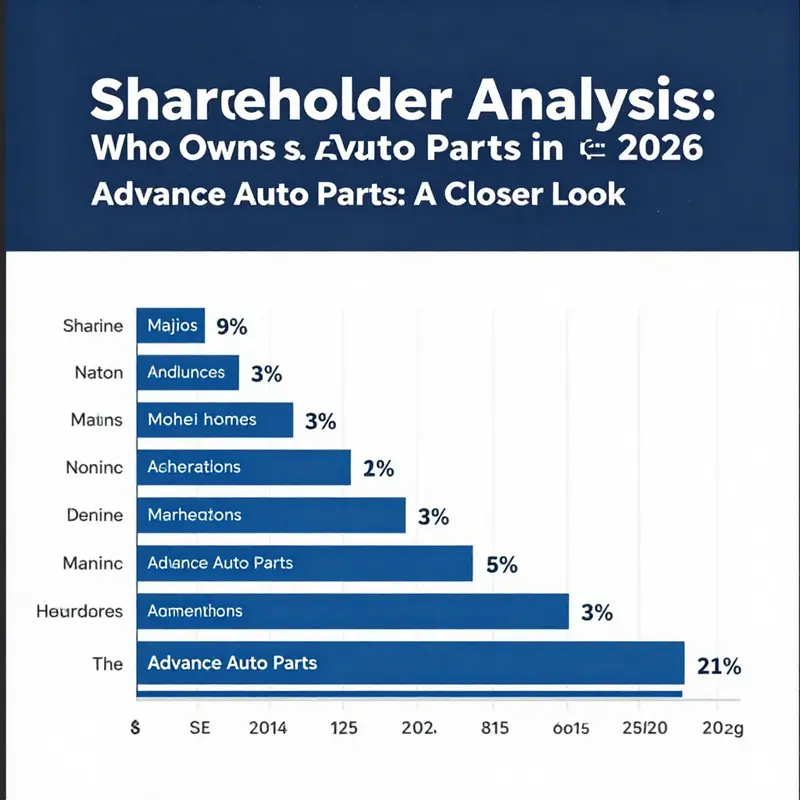
Advance Auto Parts is largely owned by institutional investors rather than a single controlling shareholder. As of the latest filings covering holdings through September 30, 2025, three institutions together hold more than a third of the company’s outstanding shares. BlackRock, Inc. is reported at approximately 14.45%, T. Rowe Price Group, Inc. at about 11.56%, and The Vanguard Group, Inc. at around 11.37%. Those three stakes sum to roughly 37.38% of the company. That concentration signals clear institutional conviction, and it shapes how the company is governed and perceived by the market.
Large institutional ownership can act in multiple ways. When a few firms hold substantial fractions of stock, their voting power matters at annual meetings. They influence board composition, executive compensation plans, and proposals on governance or strategy. Yet ownership percentage alone does not equal direct operational control. Firms like Vanguard and BlackRock typically manage index and passive funds. They hold shares on behalf of clients and often maintain diversified portfolios. Their usual approach combines passive stewardship with selective engagement. They vote across a broad range of companies and use their voting power to promote long-term value, not micro-manage day-to-day operations. Active institutions, by contrast, may pursue more targeted engagement or nominee board seats when they see sustained underperformance.
The composition of Advance Auto Parts’ major holders also matters for short-term market dynamics. Large institutional stakes can reduce float and increase the effect of block trades on share price. Liquidity for the stock can tighten when big investors hold shares for long periods. That can amplify volatility in either direction when positions change. For investors, the presence of significant institutional ownership provides both comfort and caution. Comfort because institutions bring rigorous analysis and are often aligned with long-term returns. Caution because a coordinated decision by several large holders, or a rebalancing event by passive funds tracking indices, could move the stock quickly.
Another practical implication of concentrated institutional ownership is the potential for coalition-driven outcomes. If BlackRock, T. Rowe Price, and Vanguard align on a governance issue, their combined voting power can determine results. In proxy fights or contested votes, such coalitions often decide the outcome. Yet alignment is not guaranteed. Each institution has different voting philosophies, time horizons, and client obligations. BlackRock and Vanguard publish voting guidelines focused on board independence, executive pay, and climate or governance risks. T. Rowe Price tends to emphasize active engagement and may press more aggressively when it sees opportunities to enhance long-term value. These varying approaches can result in nuanced influence, rather than a single unified directive.
Insider ownership and retail holdings complete the ownership picture, though they typically represent smaller slices of the cap table at large public companies. Executives and directors hold shares through salary, equity awards, and stock ownership guidelines. Their stakes tie management’s fortunes to shareholder outcomes, but those holdings rarely match the scale of institutional positions. Retail investors and small funds own the remainder. Their influence is more diffused. For someone assessing control, a helpful next step is to review the company’s most recent proxy statement and Form 4 filings, which document insider trades, and the institutional 13F filings that describe quarterly holdings for large asset managers.
Concentration risk is another factor to weigh. When a few institutions own a sizable portion of a company, their collective actions matter for governance and stability. If one major holder reduces its stake substantially, it can put downward pressure on the stock. Conversely, additional purchases by these investors can support prices. Yet risk is nuanced. Firms that primarily manage index-based products tend to rebalance only when index membership or asset flows change. They do not usually make frequent, sudden disposals for short-term reasons. Active managers may trade more frequently, but their decisions typically follow a distinct investment thesis.
For individual investors, understanding which institutions hold the company is useful for anticipating potential shifts. Institutional filings reveal intent more than timing. Quarterly 13F reports disclose positions as of quarter end, not in real time. Proxy statements and shareholder proposals show how institutions voted historically. Tracking stewardship reports from large asset managers can highlight where they are pushing for change. That context helps interpret corporate developments such as strategic reviews, capital allocation shifts, or leadership changes. Institutions with long-term orientations can anchor a company’s strategy. Those with activist tendencies can prompt faster change.
Finally, transparency and verification are essential. Publicly available filings are the authoritative source for ownership information. The company’s proxy statement, 10-K, and Schedule 13D/G filings give a clear legal record of major holders and any activist intentions. For snapshot summaries and additional context, financial data platforms compile holdings and display percentage stakes and trends. But any snapshot can become stale; holdings shift with market moves, fund flows, and portfolio decisions. Investors who need the most current view should consult the SEC’s EDGAR database and the company’s recent shareholder reports, then compare those with the latest quarter’s 13F filings from major asset managers.
Understanding who owns Advance Auto Parts in 2026 therefore requires a mix of data and interpretation. The three institutions named—BlackRock, T. Rowe Price, and Vanguard—represent a concentrated institutional core. Their combined stake gives them influence without direct operational control. Their voting patterns and stewardship approaches shape governance. Their investment styles affect liquidity and price dynamics. For deeper research, the company’s filings and institutional 13F disclosures provide the primary documentation needed to confirm holdings and to watch for changes.
Source for the institutional holdings cited above: Investing.com – Advance Auto Parts (AAP) Shareholders: https://www.investing.com/equities/advance-auto-parts-shareholders
Behind the Ledger: Institutional Ownership and the Shaping of Advance Auto Parts
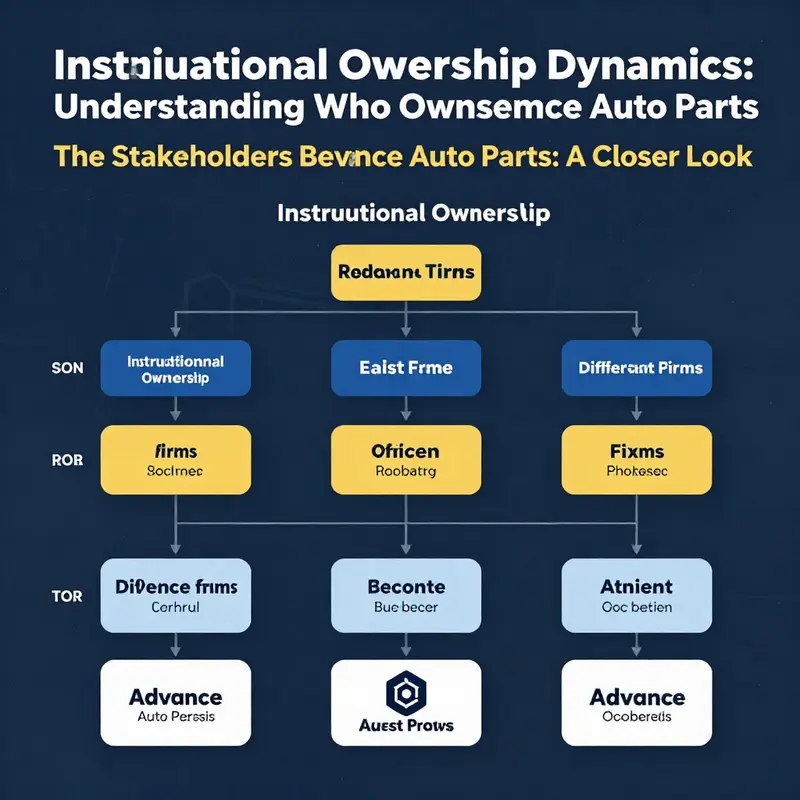
Who actually owns Advance Auto Parts? The short answer is that ownership is distributed across a spectrum of holders, from giant institutions to insiders and individual investors. Yet the real story lies in how those holdings translate into governance, strategy, and the ongoing dialogue between management and the capital that funds it. Advance Auto Parts, as a publicly traded company, cannot be owned by a single person or entity; it is a mosaic built from the stakes of many. In this mosaic, the largest pieces are held by institutions that manage retirement assets, mutual funds, and other pools of capital designed to track or beat market benchmarks. As of January 2026, the leading figure in this landscape is Vanguard Group, Inc., with a stake around 12.9% of the company’s outstanding shares. Not far behind are BlackRock, Inc. and JPMorgan Chase & Co., holding roughly 6.9% and 5.7%, respectively. Taken together, these three names symbolize how ownership in this company rests in the hands of large, persistent investors whose decisions ripple across the market and through the boardroom. The presence of such institutions matters because their investment horizons, governance preferences, and capacity to engage with management extend beyond routine voting—these holders often influence capital allocation, risk governance, and strategic priorities in ways that individual shareholders cannot. The balance of power in a company like this is seldom about one vote at one annual meeting; it is about the cumulative weight of many votes, and the expectations attached to them, over time.
And yet, a curious invigoration surrounds the data itself. Some snapshots of institutional ownership report figures that exceed 100 percent. In practice, that apparent anomaly arises from the mechanics of modern markets. Institutions frequently lend and borrow shares, and investment funds track the same underlying security through multiple accounts and funds. When these activities are tallied, the sum of institutional positions can appear to surpass the total number of shares outstanding. The upshot is not a literal ownership claim that dwarfs the company, but an indicator of intense institutional interest, frequent trading activity, and the way market participants categorize ownership across various layers of portfolios. This does not erase the reality that a large chunk of the equity sits in the hands of a few major holders, but it does remind readers that ownership data must be interpreted with awareness of market mechanics. The practical implication for governance is that while 12.9% for Vanguard may not grant unilateral control, it does confer substantial influence in board discussions, proxy ballots, and the expectations the investor community places on the company’s long-term plan.
Insider ownership provides another, more intimate signal. Executives and directors hold roughly 1.5% of the outstanding shares. That level, while modest compared with the institutional stake, indicates a personal financial alignment with the company’s outcomes. Insider stakes can matter precisely because those holders are closest to the day-to-day realities of the business and because they sit at the intersection between strategic intent and accountability. Their ownership tends to align management’s incentives with shareholder value, at least in the eyes of the market, and it can temper or amplify the influence of external holders depending on how the board perceives these signals. Taken together, the ownership profile sketches a governance architecture in which a handful of large, long-horizon institutions hold most of the leverage, while insiders maintain a guardrail of personal stake and accountability.
What does this mean for the way decisions are made at Advance Auto Parts? Governance is a conversation rather than a command. Large institutional holders seldom assume day-to-day control; instead, they articulate expectations through proxy voting, engagement with the board, and formal dialogues about strategy, capital structure, and risk. A governance environment dominated by steady, patient capital—such as that typically associated with broad index fund managers—often emphasizes disciplined capital allocation, predictable performance, and transparent risk management. In such a setting, management is encouraged to pursue strategies that create durable value rather than short-term mirages of performance. On the other hand, the presence of a smaller, but active, cadre of big institutions open to more assertive governance approaches can introduce a counterweight that pushes for sharper capital discipline, clearer milestones, or strategic shifts if the market signals suggest the current course is drifting from value creation.
The dynamic is further complicated by how ownership evolves. Funds continuously rebalance to reflect evolving benchmarks, risk appetites, and market cycles. A year can bring new positions or exits that reshape the narrative around a company’s prospects. For investors seeking a clear, real-time sense of who is influencing the stock, professional data platforms offer the latest snapshots of institutional holdings. These reflections matter not only for those weighing a purchase or sale, but for lenders, suppliers, and counterparties who view ownership composition as a proxy for governance stability and strategic direction. The takeaway is that ownership is a living story, not a static ledger entry. It is a barometer of how market participants perceive the company’s ability to execute its plan, fund its operations, and weather the cycles that characterize the retail and automotive ecosystems.
From a broader perspective, the ownership structure of Advance Auto Parts speaks to a broader market reality. A company of its scale draws a spectrum of capital, including long-duration funds oriented toward steady returns and specialized funds that monitor earnings, cash flow quality, and the efficiency of capital deployment. The interplay among these investors helps stabilize or destabilize strategic signaling, depending on how consensus around the company’s future path forms and evolves. For suppliers and lenders, the ownership mix provides a lens into governance resilience: a stable, well-aligned creditor and supplier network often accompanies a governance regime that balances risk and reward over the long term. For employees and the broader market narrative, ownership signals can influence how the company positions itself in a competitive landscape that prizes reliability, efficiency, and the capacity to adapt to shifting consumer demand.
As new data surfaces, readers should treat ownership figures as a key but not sole cue. They serve as a scaffold upon which one builds deeper questions: Are institutional holders aligned with the company’s strategic priorities? Do insiders have a meaningful stake that binds leadership to outcomes? How might the balance of influence shift if new funds adopt different governance philosophies? Such questions guide analysts and investors alike as they interpret earnings calls, capital allocation plans, and risk disclosures. The answers depend on more than percentages; they hinge on the quality of ongoing dialogue, the credibility of strategy, and the company’s ability to translate capital into durable value.
For those who want the latest snapshot, the market provides direct, real-time access to institutional holdings. Use these signals in concert with other frameworks to understand how ownership translates into governance and strategy. External observers who study the ownership map should look beyond numbers to the narratives they imply: the kinds of capital that are backing management, the duration over which that capital is expected to stay invested, and the expectations that accompany it. In the end, ownership defines not just who has a vote, but how that vote shapes the company’s path forward, the risks it tolerates, and the opportunities it chooses to pursue. External resource for further context: https://www.nasdaq.com/market-activity/stocks/aap/institutional-holdings
Power in Numbers: Vanguard’s Quiet Governance of Advance Auto Parts in an Era of Passive Ownership
Ownership of public companies often reads like a ledger of who wields influence, not who signs checks. In the case of Advance Auto Parts, the ledger shows a constellation of large institutional holders rather than a single controlling owner. Vanguard Group, Inc. sits at the top of that chart, followed by other giants of the asset-management world. The numbers are not static; they shift with market moves, fund inflows, and the occasional rebalancing of portfolios. Yet the trajectory is clear: a public retailer in the auto parts sector is owned by a broad base of long-term investors who operate with the mandate of stewardship and performance rather than direct control. This arrangement shapes the company’s strategic posture in subtle but meaningful ways, influencing decisions from capital allocation to governance practices, and it does so in a way that patience often characterizes modern investing.
The peers in this ownership structure are as telling as the leaders. Across the most recent analyses, Vanguard Group, Inc. has consistently been identified as the largest shareholder, with ownership in the low- to mid-teens when measured by various data series and dates. Different trackers report slightly different figures, reflecting the timing of filings and the cadence of reporting. For instance, data from MarketScreener and Investing.com placed Vanguard’s stake around 11.3% as of December 30, 2025, underscoring its status as a major owner but not a controlling one. In the same ecosystem of top holders, BlackRock, Inc. and JPMorgan Chase & Co. typically appear with stakes in the range of roughly 6% to 7% and 5% to 6%, respectively. These are not numbers that confer veto power, but they are large enough to shape voting patterns, send signals about preferred governance practices, and influence how the company allocates capital over multi-year horizons. The picture that emerges is one of a widely held equity where several institutions carry substantial influence without any single actor dominating.
This arrangement, however, is not a mere ledger of percentages. It translates into a governance dynamic that can guide, but not dictate, strategic direction. Institutional investors like Vanguard and BlackRock generally advocate for robust governance mechanisms, clear accountability, and disciplined capital allocation. Their voting behavior—on matters ranging from executive compensation to board independence and major corporate actions—often reflects a long-term orientation intended to protect and enhance shareholder value over time. Because Vanguard’s approach to voting is driven by its fund-mamily philosophy, the company tends to emphasize governance quality, transparency, and risk management as part of its broader stewardship mandate. That stance sends signals to management about the kinds of reforms or refinements that are likely to be supported in shareholder meetings. In an environment where most shareholders are institutions, those signals carry more weight because they collectively represent a substantial portion of the outstanding shares.
For Advance Auto Parts, that collective stamp matters. When a large, persistent owner votes in favor of proposals that bolster governance or align executive pay with long-run performance, the company’s leadership can pursue ambitious plans with greater confidence that the plan will endure beyond a single quarterly cycle. Conversely, if investor sentiments lean toward tighter capital discipline, more aggressive cost optimization, or a shift in strategic priorities, these same institutional holders can harmonize their votes to press for those outcomes. It is not a matter of coercion, but of alignment: public companies earn legitimacy when they demonstrate that their strategies are credible to patient, outcome-focused capital. The presence of Vanguard, BlackRock, and JPMorgan among the largest holders also signals a market-wide expectation that the company will manage itself with discipline, maintain a strong governance framework, and pursue returns in a way that remains sustainable through evolving economic conditions.
The practical implications of this ownership structure extend beyond the ballot box. A broad base of institutional ownership supports liquidity and price discovery, which in turn makes the stock a more attractive vehicle for long-horizon investors who seek predictable access to capital markets. For the firm, this means a governance environment that prizes transparency and consistent performance, even as it navigates the competitive pressures of the retail and auto-parts landscape. It also means management must maintain a careful balance between investing in core operations and returning capital to shareholders when that return seems prudent. In times when strategic bets require substantial investment—whether in digital channels, supply chain resilience, or network optimization—management may look to the durable confidence of its owners to justify patient, measured execution. The interplay between steady governance from major holders and the agility required to respond to market shifts becomes a central feature of the company’s strategic calculus.
No single institution holds a controlling position, and that reality matters. It cushions the company from abrupt strategic shifts that can occur if one investor demanded a rapid change in direction. At the same time, it imposes a higher expectation of disciplined governance and transparent communication. The board and executive team must navigate a landscape where multiple influential owners are quietly weighing the same questions: Is the current strategy delivering sustainable growth? Are capital allocations aligned with long-term value creation? Are compensation and incentive structures aligned with performance? In this context, the company’s governance culture is tested—not by a single potent voice, but by a chorus of seasoned investors who collectively steer the broader timetable of decision-making. The result is a governance environment that values consistency, accountability, and a clear long-term vision, even as the concrete steps of that vision unfold in response to quarterly earnings, competitive pressures, and macroeconomic tides.
As data on ownership continues to evolve, the picture remains instructive. The ranking of shareholders, the precise percentages, and the composition of the top holders can shift with market movements and fund rebalances. Yet the broader takeaway endures: Advance Auto Parts operates under the stewardship of a cadre of institutional investors whose approach to ownership emphasizes governance clarity, disciplined capital allocation, and a preference for steady, long-range value creation over quick, episodic shifts in strategy. In the language of corporate finance, this translates to a stock that is widely held by professional, patient capital that values governance as a core asset of the company’s future. It is a reminder that in modern public markets, ownership is less about who owns a majority and more about how a spectrum of large, sophisticated investors collaborates to shape the trajectory of a business over time.
For readers seeking the most current snapshots of these holdings, MarketScreener remains a widely cited source that compiles major shareholders and tracks changes over time. It serves as a practical barometer of which institutions are steering the conversation around Advance Auto Parts at any given moment and how those voices align with the company’s evolving strategy. External researchers and prospective investors often consult such resources to understand how governance dynamics might influence corporate decisions in the years ahead. The evolving ownership landscape is a central thread in the broader story of who owns Advance Auto Parts and what that ownership means for the company’s path forward. External resource: MarketScreener’s major shareholders page provides a current, curated view of institutional positions and their shifts over time. https://www.marketscreener.com/quote/stock/ADVANCE-AUTO-PARTS-INC-29687880/owners/
Shareholders and Strategy: How Advance Auto Parts’ Ownership Compares to Its Peers
Who holds the levers of power in the auto parts sector? Advance Auto Parts sits among a set of large, publicly traded companies that supply, distribute, and retail vehicle parts across North America. Ownership patterns across this sector matter because they shape strategic priorities, board behavior, capital allocation, and responses to market stress. Comparing Advance Auto Parts to its peers highlights how institutional concentration, insider stakes, and retail liquidity interact with business model differences to produce distinct governance dynamics.
Advance Auto Parts shows a typical large-retailer ownership profile: a heavy institutional presence with limited insider concentration. The most recent public data indicates that major investment managers own sizeable blocks of stock. One firm holds roughly 12.9% of shares, while two other leading institutional investors hold near 6.9% and 5.7%, respectively. That distribution places meaningful voting power in the hands of professional asset managers, while leaving the company with a broadly dispersed retail and smaller institutional base. Such dispersion is common among established retail chains with long trading histories and significant free float.
By contrast, competitors in the sector reveal a range of ownership structures. Some peers maintain similarly dispersed institutional bases. Others show more concentrated positions among founding families, long-tenured insiders, or corporate trusts that translate into stronger founder or management influence. These differences stem from company age, listing history, and past financing choices. Firms that were spun out, that underwent private-equity ownership, or that experienced founder-led stewardship often retain higher insider concentration. Companies with repeated public offerings and broad analyst coverage tend to accumulate large institutional stakes and higher liquidity.
Institutional ownership of Advance Auto Parts implies several practical effects. Large asset managers often vote on governance issues with an eye to long-term performance, though voting blocks can vary by firm. When a single institutional investor reaches double-digit ownership, its engagement matters. That investor can influence board composition, executive compensation discussions, and strategic moves such as mergers or buybacks. However, the presence of multiple sizable institutions reduces the likelihood that any one stakeholder can unilaterally direct outcomes. This balance creates a governance environment where management must sustain dialogue with several sophisticated shareholders, not just a controlling owner.
Investor composition also interacts with company fundamentals. Advance Auto Parts reported a negative trailing twelve-month price-to-earnings ratio at the last measurement, signaling either cyclical earnings pressures or accounting reasons that produce a negative figure. Negative or volatile profitability can attract a mix of activist investors seeking change and long-term value investors who view market weakness as an opportunity. At the same time, broad institutional ownership can temper abrupt activist interventions because asset managers tend to balance long-term relationships and voting consistency.
Comparing capital structure and governance across peers helps explain strategic flexibility. A company with dispersed institutional ownership and strong liquidity typically finds it easier to raise capital through public markets. It also enjoys a more transparent valuation regime. Conversely, firms with concentrated insider holdings may face less public pressure for quarterly performance. That can enable multi-year strategic plans but can also limit minority shareholders’ influence on governance.
Another dimension is how ownership patterns reflect and affect market positioning. Advance Auto Parts operates through multiple business units that span national retail, regional wholesale, and specialty import distribution. This diversified operating footprint draws different investor types. Index funds and large passive managers may hold the stock as part of retail or consumer-facing baskets. Active funds with expertise in cyclical retail businesses may treat it as a tactical overweight. A competitor focused heavily on specialty distribution might attract a narrower pool of niche investors who understand that segment’s margins and supply-chain dynamics.
Liquidity and public float matter for takeover vulnerability and volatility. A larger free float tends to lower the probability of hostile acquisition by raising the cost and complexity of assembling a controlling stake. For Advance Auto Parts, a dispersed public shareholder base and notable institutional presence increase the transaction cost for any acquirer. That environment reduces near-term takeover risk. At the same time, dispersed ownership can translate to greater share turnover and potential for short-term price swings when sector news occurs.
Board composition ties back to ownership. Institutional shareholders often push for directors with specific operational, financial, or sector expertise. When several institutions hold sizable stakes, they may coordinate through proxy advisors or direct engagement to influence board refreshment. Companies with founder-led or family ownership sometimes retain directors drawn from that controlling group, which creates a different dynamic. For Advance Auto Parts, the presence of multiple large institutional holders creates incentives for a balanced, professionally oriented board that must answer to various investor constituencies.
A final practical point concerns the tools for comparison. Public filings, including proxy statements and 13F submissions, provide the most reliable snapshot of who owns which shares. Those documents reveal not only percentages but also voting alignments, recent ownership changes, and the presence of activist or index-focused holders. Because ownership positions shift with market flows, a point-in-time comparison can mislead if investors or corporate events move the needle. Therefore, investors who want precise, side-by-side comparisons among Advance Auto Parts and its competitors should rely on official filings and up-to-date institutional reporting.
Taken together, these patterns explain why ownership matters as much as business fundamentals. A company’s creditor relationships, capital allocation choices, and willingness to pursue transformational deals all reflect who holds its stock. Advance Auto Parts sits in a governance sweet spot: significant institutional ownership that brings stewardship and resources, but no single dominant owner that can unilaterally determine strategy. That balance influences how the company navigates earnings variability, invests in its retail footprint, and responds to sector consolidation.
For readers seeking a rigorous, up-to-date ownership comparison across companies, regulatory filings are essential. The SEC’s EDGAR database collects those filings and allows investors to examine 13F reports, proxy statements, and other disclosures that show institutional holdings and insider positions. Reviewing those records provides the definitive view of shareholder composition at any moment, and helps translate percentages into likely governance outcomes.
External resource: For authoritative ownership filings, consult the SEC EDGAR database: https://www.sec.gov/edgar
Ownership in Motion: How Institutional Investors Steer Advance Auto Parts and What It Means for the Road Ahead
Public ownership defines the arc of a company’s strategy, yet the shape of that arc is rarely determined by a single actor. Advance Auto Parts sits within the broader orbit of a U.S. equity market where ownership is dispersed among individuals and, perhaps more consequentially, among large institutional players. The company’s NYSE listing places governance in a frame where the balance between managerial discretion and shareholder oversight is calibrated by the preferences and expectations of these long-term owners. The most recent data available, through January 2026, underscores a familiar pattern for a business of its scale: a relatively small cadre of institutions commands a substantial stake, while the rest of the float is spread across mutual funds, pension plans, and other sophisticated investment vehicles. The leading holder accounts for roughly thirteen percent of shares, with other major asset managers following in multi-percent ranges. This distribution matters because it signals a governance environment where votes, boardroom influence, and capital-allocation decisions are shaped by a handful of confident, long-horizon investors rather than a single family or a founder’s lineage. Institutional ownership, by its nature, tends to align with the demand for durable cash flows, predictable earnings, and a framework that rewards disciplined execution over flash-in-the-pan growth.
Those dynamics matter because institutions do not operate on a whim. Their portfolios are designed around long-term value creation and an emphasis on risk management, liquidity, and transparency. The ownership mix thus becomes a lens through which the market reads management’s plan for capital allocation, debt discipline, and operating efficiency. In practical terms, this means the company’s leadership is under steady scrutiny to deliver consistent cash flow, improve returns on capital, and manage the balance sheet in a way that preserves optionality for future strategic moves. While retail investors provide market sentiment and daily liquidity, the influence of institutional holders is often decisive when it comes to board composition, executive compensation structures, and the cadence of major strategic decisions. The governance conversation, in other words, is frequently reframed through the expectations of those who hold large, diversified portfolios and who, by design, favor clarity, accountability, and a credible path to sustained profitability.
It is important to acknowledge that the precise holdings of these institutions shift over time. Rebalancing cycles, changes in index compositions, and the evolving priorities of large funds can alter who sits in the top tier of ownership from quarter to quarter. This fluidity matters because it can recalibrate the implicit risk budget that the market assigns to the company. When a small group of institutions shoulders the bulk of the stake, their consensus view on the business model, capital structure, and growth aspirations tends to set the tone for investor communications and market expectations. The resulting dynamic is not about control by a single actor; it is about a shared, ongoing dialogue among a few heavyweight stewards who can influence board composition, risk oversight, and the willingness to pursue meaningful structural changes when the opportunity arises.
That opportunity recently manifested in a major strategic maneuver designed to concentrate on core operations and sharpen asset efficiency. In August 2024, the firm announced the sale of a wholesale distribution unit to a private equity investor for a substantial cash sum. Described as a move to streamline the asset base and focus resources on the retail-facing business, the divestiture carried implications for profitability, leverage, and growth dynamics. Investors often react positively to a decision that promises to reduce debt or free capital for redeployment into higher-return pursuits. In this case, the market’s interpretation leaned toward a streamlined balance sheet and improved operating leverage, with the potential for enhanced shareholder value if the core business can sustain stronger cash generation. The nuance, however, lies in how the market prices this shift against ongoing industry cyclicality, cost pressures, and the tempo of capital reinvestment. Institutional holders are particularly attentive to such signals because they impact long-term earnings visibility and the reliability of returns over time. A sale of this magnitude is seldom a binary event; it becomes a test of leadership’s ability to reconcile strategic focus with the realities of a complex, cyclically sensitive market.
Beyond the arithmetic of asset sales and balance sheet optimization, the ownership structure helps explain the market’s interpretation of earnings and guidance. The stock’s price path behaves as a function of both company-specific results and macro-level forces—consumer demand dynamics, interest rate trajectories, and sector-specific rhythms such as repair activity and supply chain resilience. In a market where a handful of investors exercise substantive voting power and influence on director governance, the interpretation of earnings surprises or miss versus consensus guidance carries a denser signal. Institutional players, with their deeper research capabilities and cross-portfolio benchmarking, tend to react to a confluence of factors: cash flow stability, capex discipline, and the efficiency of capital allocation. They evaluate whether the management team’s stated priorities translate into durable performance or merely a short-term repricing of risk.
The practical upshot for employees, suppliers, and customers is not a direct outcome, but a cascade of expectations that shape how the business operates day to day. When ownership is more concentrated and disciplined, executives often feel both the pressure and the latitude to pursue strategic clarity. Decisions about where to allocate capital—whether to fund efficiency programs, invest in digital capabilities, or pursue selective investments that raise the quality of the customer experience—are weighed against the goal of creating sustainable, repeatable returns. For stakeholders downstream, this often translates into steadier guidance, more predictable earnings trajectories, and a governance culture that prizes accountability. The interplay between a steady institutional base and management’s execution becomes a crucible in which resilience is forged. In a sector defined by external shocks—from supply-chain hiccups to sudden shifts in consumer spending—the certainty that comes from disciplined capital management is a valuable asset.
Looking forward, the landscape of ownership will likely continue to be dominated by a core group of institutional investors. Their appetite for governance transparency, disciplined capital allocation, and measurable progress toward profitability will shape the board’s composition and the company’s strategic agenda. That does not imply a narrowing of vision; rather, it suggests a framework in which management translates investor expectations into a coherent, executable plan. The company’s ability to maintain liquidity, reduce debt pressure, and generate consistent cash returns will be among the most visible tests of this alignment. Ultimately, the narrative of ownership is inseparable from the narrative of strategy. As the market absorbs the implications of ongoing operational improvements and potential further restructuring, the road ahead will be navigated not only by impressive top-line growth but by the steadiness of returns delivered through predictable, well-informed capital choices.
For readers seeking the most current governance and shareholder data, official sources provide the authoritative baseline. While market commentary can flesh out context and sentiment, the investment relations portal remains the primary repository for up-to-date holdings, voting rights, and disclosures that illuminate how ownership is shaping the trajectory of this retailer-distributor.
External source: https://investors.advanceautoparts.com/
Final thoughts
Understanding the ownership structure of Advance Auto Parts provides critical insights for business owners navigating the automotive aftermarket. With Vanguard Group, Inc. holding a significant share, their strategies can influence market trends and competitive positioning. As institutional ownership increases, it often translates into a more structured governance approach that can affect overall company performance. Observing these dynamics allows business owners to better strategize within the ever-evolving landscape of the automotive industry.