
Understanding the term OEM, or Original Equipment Manufacturer, in the auto parts sector is crucial for business owners navigating the intricate world of automotive manufacturing and repair. OEM parts are designed to meet strict specifications dictated by vehicle manufacturers, ensuring compatibility and functionality. As we delve into this subject, the relevance of OEM parts will be illustrated throughout four key chapters. The first chapter will help clarify the concept of OEM in the context of auto parts. Next, we will examine the importance of OEM parts in vehicle manufacturing, highlighting their role in quality and reliability. Our third chapter will draw a comparative analysis between OEM and aftermarket parts, shedding light on their distinct advantages. Finally, we will explore the future of OEM parts amidst a rapidly evolving automotive landscape.
OEM at the Core: How Original Equipment Parts Shape Reliability, Fit, and Value in Auto Manufacturing
OEM at the Core: How Original Equipment Parts Shape Reliability, Fit, and Value in Auto Manufacturing
Original Equipment Manufacturer, or OEM, is more than a label that sits on a box in a parts aisle. It is the structural thread that ties a factory’s engineering intent to the vehicle that reaches the road. In the simplest terms, OEM parts are those components that are designed and built to the exact specifications laid out by the vehicle maker. They come from suppliers commissioned by the automaker to produce the same parts that were installed during the original assembly. This is not just about matching dimensions; it is about material chemistry, finish, workmanship, and the precise interaction of one part with every other part it touches. When a vehicle rolls off the line, its performance, safety, and durability are optimized because every piece was conceived in concert with the whole car. OEM parts exist to preserve that harmony long after the paint has dried and the warranty has begun.
To understand why OEM parts matter, it helps to contrast them with aftermarket components. Aftermarket parts are produced by third parties who may or may not replicate exact specifications. Some aftermarket parts are engineered to suit a broad range of vehicles or to offer a different performance profile. Others may rely on shorter tolerances, different materials, or alternative finishing processes. The net effect is a spectrum. On one end, a well-made aftermarket part can perform nearly as well as an OEM part at a lower price. On the other end, a poorly matched aftermarket part can introduce subtle misalignments, altered heat paths, or shifts in electrical fit that degrade reliability over time. OEM parts aim to eliminate that risk by preserving the original geometry and interaction patterns that the automaker designed into the vehicle.
That distinction matters in practice for engineers, technicians, and owners alike. Within the engine bay, for example, the alignment of a gasket, a seal, or a cover may seem small, but it is not. Engine components rely on predictable sealing, heat transfer, and mechanical interaction. Even tiny deviations can alter compression, coolant flow, or oil pressure. OEM suppliers deliver components that meet the exact material specs and dimensional tolerances the engine was engineered around. The same principle applies across the drive system, chassis, and electrical architecture. Consider transmission components such as torque converters, gear sets, and solenoids. These are engineered to operate within precise clearances and with materials chosen to withstand the thermal cycles of daily driving. A substitute part that does not honor those tolerances can ripple across the system, reducing shift quality, durability, and safety margins. In short, OEM parts are a disciplined investment in predictability.
What makes OEM parts genuinely distinctive is the way they are embedded in the vehicle’s original design language. The automaker’s technical specifications are comprehensive. They specify not just size and shape, but also the alloy chemistry, heat treatment, coating, and surface finish that influence wear, corrosion resistance, and friction. An OEM crankshaft, for example, is not merely a metal rod with journals machined to spec. It is a component whose surface hardness, microstructure, and balancing have been tuned to the engine’s dynamic loads. The same is true for electronic components. Wiring harnesses, sensor housings, and control modules are designed to communicate within a vehicle’s network with the same reliability the factory demanded. The result is an integrated system where each part supports the others in maintaining performance under stress—whether the car is cruising on a highway, climbing a mountain grade, or braving extreme heat and cold.
The production narrative behind OEM parts also speaks to why these parts are so often associated with quality and reliability. In many cases, OEM components are supplied through exclusive channels that connect the automaker to specialized manufacturing partners. These partnerships are built around long-term commitments to quality management, traceability, and continuous improvement. Parts are tested under the automaker’s protocols, certified for compatibility, and integrated into the vehicle’s quality assurance framework before reaching the dealership. This controlled ecosystem is part of what sustains a vehicle’s identity long after it leaves the showroom. It also shapes the way repairs are approached. When a repair requires a reseal, a sensor, or a drivetrain component, choosing an OEM part is choosing a piece that has already proven its compatibility with the car’s unique design vocabulary.
The practical consequences of that approach are felt across the maintenance lifecycle. For owners, OEM parts tend to preserve resale value because the vehicle remains closer to its factory specification. Technicians appreciate the predictability of fit and performance. There is less time spent chasing fit issues, recalibrating sensors, or reworking mounting points. For fleets and service networks, OEM sourcing supports standardized maintenance practices. Authorized channels—often certain dealers, service centers, or authorized independents—provide a clear path to obtaining parts that meet the automaker’s standards. This is why many repair plans, warranties, and service programs emphasize OEM components as the recommended choice for critical systems. The intent behind this emphasis is not to constrain buyers but to sustain the integrity of the vehicle’s design and the confidence of the driver.
The relationship between OEM parts and the vehicle’s broader architecture also helps explain why some parts are especially sensitive to sourcing decisions. Critical subsystems—such as the transmission, the suspension, and the electrical network—rely heavily on components that maintain strict tolerances and robust materials. Transmission gear sets, torque converters, and hydraulic controls must sustain precise engagement under wide temperature ranges. Suspension components must preserve ride geometry and damping characteristics that influence handling, braking stability, and tire wear. Wiring harnesses must withstand vibration, thermal cycling, and the rigors of diagnostic and driver-assistance systems. In each case, the OEM approach minimizes the chance that a mismatch in material or dimension undermines the system’s reliability. When a vehicle is out on the road, it is not one part failing that matters most, but the cascading effect of a series of well-integrated parts continuing to function as the engineers intended.
Indeed, for many technicians and engineers, OEM parts function as a form of engineering conservatism. They offer a conservative path to maintain the original behavior of the car, especially for vehicles with advanced electronic control systems and safety features. A mismatch could cause a fault code, sensor misreadings, or degraded performance of a driver-assist feature. In this sense, OEM parts are not simply replacements; they are re-affirmations of the design choices that define the vehicle’s character. This is not to say aftermarket parts cannot perform well. Some aftermarket offerings are engineered to stringent standards and tested to meet or exceed OEM specifications. Yet the variability inherent in a broader market means that the chance of an exact, race- and road-tested alignment with the vehicle’s architecture is naturally higher with OEM parts. The consumer’s decision, whether in the middle of a routine service or a time-sensitive repair, becomes a calculation of risk and value—an assessment that weighs immediate price against long-term reliability, warranty protection, and the vehicle’s preserved identity.
The conversation about OEM parts also intersects with the supplier landscape that underpins modern carmaking. An OEM is typically an automotive-grade partner with a proven track record across development, testing, and scaling production. These suppliers operate under robust quality-management systems and traceability protocols. The result is a supply chain that can respond to defects, recalls, or field issues with speed and precision. When a vehicle model undergoes a lifecycle change—whether through a mid-cycle refresh or a redesign—the OEM network can adapt to revised specifications while preserving compatibility with legacy parts. This continuity is essential for owners who rely on a predictable repair path years after purchase. It also helps explain why OEM parts can sometimes command a premium: they carry not only the promise of fit but the guarantee of compatibility with the vehicle’s original design intent.
Of course, the arena of OEM versus aftermarket is nuanced. There are legitimate cases for choosing aftermarket parts, especially when budget constraints are strong or when a non-critical component is involved. In many markets, OEM suppliers also distribute parts through service centers and authorized retailers, bridging the gap between factory specifications and consumer access. There are scenarios where an aftermarket part may offer enhanced durability or a design improvement, provided it is backed by solid engineering and tested against the vehicle’s requirements. Yet the core principle remains clear: OEM parts aim to deliver alignment with the automaker’s exacting standards so that the vehicle behaves, in perception and performance, as if it were still in the factory environment.
To visualize how an OEM part participates in a vehicle’s architecture without getting lost in jargon, consider a practical example of an component like a hood panel. A genuine, factory-sourced hood is shaped and weighted to balance thermal expansion, loading, and aerodynamics in exactly the way the vehicle’s engineers envisioned. The panel’s fit against surrounding panels, the venting provisions, and the alignment of fasteners with the body structure all follow a tightly controlled geometry. An aftermarket hood, though potentially functional, risks subtle deviations in curvature, mounting alignment, or paint thickness that can ripple into minor gaps, wind noise, or corrosion exposure over time. This is not a universal verdict on aftermarket parts, but it underscores why OEM components are trusted for vehicles where precision matters, especially under the stress of daily driving and varying climates. In many shops, this logic is reinforced by the practice of sourcing parts through authorized channels that guarantee traceability and alignment with the car’s original design intent.
The point, then, is not to sanctify a single path but to illuminate how OEM parts function as a cohesive system. They are the means by which a vehicle maintains its identity, performance envelope, and safety profile. They are also a reminder that the decision about which parts to use is a decision about how reliably a car will age. As our industry continues to evolve with electrification, advanced driver-assistance systems, and increasingly networked components, the role of OEM parts becomes even more central. The automaker’s engineering architecture—its prescriptions for materials, tolerances, and interfaces—needs parts that can live up to those prescriptions not just in a laboratory, but on the road, in every season and under every load condition a vehicle will encounter. In that sense, OEM is not simply a label but a guarantee that a part has passed a rigorous test of compatibility with the car’s built-in logic and with the driving realities that owners experience every day.
For readers curious about how OEM philosophy translates into tangible choices, a concrete illustration is the way an OEM part aligns with a vehicle’s body and propulsion systems through a shared design language. In practice, this means that when a repair calls for a component that is structurally and electronically connected to major systems, the decision to select OEM parts supports the entire vehicle’s integrity. It preserves the relationship between tolerances, electrical interfaces, and control software—elements that work together to deliver smooth operation, efficient performance, and dependable safety features across the vehicle’s lifespan. The result is a repair experience that minimizes the risk of fit issues, reduces the likelihood of diagnostic ambiguities, and sustains the driver’s confidence in the car’s long-term reliability. In a world where vehicles are increasingly complex, OEM parts provide a kind of architectural fidelity that keeps the vehicle true to its original purpose and performance goals.
In this light, the decision to lean on OEM parts becomes a statement about the ownership of a vehicle’s future. It reflects a prioritization of predictability, quality control, and a measured approach to maintenance. It also highlights a pragmatic tolerance for the higher upfront cost when balanced against the potential costs of misfit, warranty disputes, or premature wear. The trade-off is seldom abstract; it is lived out in the workshop, on the highway, and in conversations with customers who want to protect the car’s value, safety, and driving experience. The OEM mindset, then, is less about preserving a static ideal and more about safeguarding a dynamic relationship—the one between the vehicle’s engineering ambitions and the realities of everyday use.
As readers move through the broader discussion of auto parts, they will encounter a spectrum of sourcing strategies, each with its own rationale. The essential takeaway remains consistent: OEM parts stand as a disciplined approach to maintaining the vehicle’s original intent. They are the thread that keeps the story of the car coherent from the first turn of the key to years of dependable service. In pursuing that coherence, owners, technicians, and manufacturers alike invest in a shared commitment to quality, compatibility, and accountability that helps every journey feel a little more assured.
To connect this discussion to a tangible example of how OEM principles manifest in practice, consider how a vehicle’s body and hood design, when paired with a genuine component, maintains exact fit and protective performance across production and repair cycles. See this demonstration of a factory-quality, original hood component and its precise integration with the surrounding structure: brand-new-original-carbon-fiber-bonnet-hood-for-mitsubishi-lancer-evo-x.
In summary, OEM parts are not only about compatibility or vendor origin. They embody a philosophy of engineering fidelity that underpins reliability, safety, and value. They guarantee that the car’s architecture—the carefully tuned sum of its parts—retains its designed behavior long after it leaves the factory floor. They are, in essence, a practical guarantee that the vehicle you rely on continues to perform as intended by the people who designed it. For anyone seeking to protect a vehicle’s legacy, the case for OEM parts rests on a clear proposition: when fit, finish, and function truly matter, OEM parts are the most faithful custodians of the original design.
External reference: For a concise, current explanation of OEM terminology in the auto industry, see this resource: https://www.autoblog.com/what-is-oem-in-the-auto-industry-139728
The Original Blueprint: How OEM Parts Shape Safety, Fit, and Longevity in Autos
When people ask what OEM means for auto parts, they are really asking about the most exacting standard by which a vehicle can function as designed. OEM stands for Original Equipment Manufacturer, a term that signals more than just who built a part. It signals alignment with the exact specifications, manufacturing processes, and quality controls that governed the vehicle’s birth on the factory line. In practice, OEM parts are those created either by the vehicle’s maker or by a certified supplier working under a contract that mirrors the original design intent. The distinction matters not just for bragging rights about a component’s origin; it matters for fit, performance, safety, and the long arc of a car’s life—from the moment it leaves the showroom to tens of thousands of miles down the road. In that sense, OEM parts are the faithful execution of a vehicle’s own engineering philosophy, the tangible link between a car’s intended behavior and the real-world act of driving it day after day.
To understand why OEM parts carry such weight, it helps to move beyond labels and into the realities of design tolerance and system integration. Every critical component in a modern vehicle—whether nestled in the heart of the engine or tucked away in the transmission housing—must meet exact tolerances. These tolerances are not arbitrary numbers; they are the product of countless hours spent testing under extreme conditions: high pressure, wide temperature swings, and the continuous mechanical strain that accompanies years of driving. When an engine oil pan is designed to a specific thickness and shape, when a head gasket is engineered to seal a burning-hot cylinder head to a cooler engine block, or when a timing belt cover channels oil and debris away from sensitive surfaces, those specifications must align with the rest of the powertrain. OEM parts are built with that precision in mind. They are designed not as stand-alone pieces but as living parts of a broader system whose purpose is to deliver consistent power, clean emissions, and predictable maintenance intervals.
The engine, as the centerpiece of most vehicles, makes this point in stark relief. Within the engine, components such as pistons, crankshafts, valves, and gaskets interact with minute clearances and exact materials to withstand constant heat and pressure. A gasket that warps under thermal stress or a piston that sits slightly off its ideal bore can ripple through the engine’s performance, reducing efficiency and inviting failure. OEM parts begin with a design brief that is inseparable from the car’s original performance targets. Materials are selected for durability, heat resistance, and resistance to wear, while manufacturing processes are tuned to produce consistent results at scale. This is not just about surviving a road trip; it is about maintaining engine efficiency and staying within emissions limits over the course of a vehicle’s life. When these pieces are assembled on the factory floor, the resulting engine operates as a single, cohesive unit, with each component resonating with the same design language.
The importance of OEM parts extends beyond the engine to the way a vehicle transmits power and manages motion. Transmission components are built to maintain smooth gear engagement and predictable torque delivery in diverse driving conditions. The synchronization, seals, bearings, and housings chosen for an OEM assembly are not generic substitutes; they are the embodiment of the automaker’s expectations for reliability and feel. The same attention to precise tolerances that governs engine parts influences transmission behavior: the way a clutch engages, the way gears mesh under load, the way lubricants protect surfaces under high shear, and the way temperature changes affect clearances during a long climb or a brisk highway pass. When OEM parts are used, the vehicle preserves its designed shifting characteristics and maintains the consistency a driver expects, mile after mile.
Beyond performance, OEM components play a substantial role in protecting a vehicle’s warranty and its future value. Carmakers and their certified suppliers design parts with the warranty framework in mind, aiming to minimize risk for the owner and for the brand as a whole. Installing non-OEM or aftermarket components can, in some scenarios, complicate warranty coverage or raise questions during inspections. This is not merely a legalistic point; it is a practical one. The original design intent of a vehicle includes an ecosystem of safety and reliability features that are validated together. Deviating from that ecosystem by substituting parts can alter how a system behaves and how wear accumulates over time. In the long run, that can influence resale value in ways that price-conscious buyers often do not anticipate. When a owner adheres to OEM parts, that adherence sends a clear signal—that every link in the chain from the chassis to the exhaust remains aligned with the vehicle’s core engineering goals.
The ecosystem surrounding OEM parts is perhaps the most telling aspect of their value. Automakers do not produce every single component in their own plants. Instead, they contract with specialized suppliers who are vetted to meet the same standards the automaker uses for its own assembly lines. This network of certified partners extends the original design intent, preserving the vehicle’s integrity while allowing for the innovations and efficiencies that come with modern manufacturing. The result is a shared confidence: the components that were aligned at the outset remain aligned after years of production and after countless miles of wear and repair. This collaboration underlines a broader truth about OEM parts: they are not merely replacements; they are brand-new iterations of the original plan, crafted to keep the vehicle faithful to its design philosophy.
Of course, there is room for nuance in the conversation about OEM versus aftermarket. The term aftermarket often covers a wide spectrum—from parts that are technically compatible to those that aim to replicate the look but not the exact function. Some aftermarket parts are manufactured to high standards and can deliver comparable performance in certain scenarios; others may skew toward lower costs at the expense of precision. The critical distinction remains the alignment with the vehicle’s factory specifications. OEM parts are intended to be exact, to fit with no modification, to meet the same functional expectations, and to carry the assurance that the way the car was designed to perform is preserved. This is especially important for high-mileage or high-stress applications, where even small deviations in fit or material quality can magnify into bigger issues over time.
From a consumer perspective, the decision to source OEM parts versus alternatives is rarely a simple calculus of upfront price. It is a decision about the trade-offs between short-term savings and long-term reliability. OEM parts tend to carry higher upfront costs, but they trade that against the peace of mind that comes from knowing the part was designed to live within the vehicle’s original architecture. For many drivers, that peace of mind translates into lower long-term maintenance costs and fewer unexpected repairs. It also means smoother performance in the coldest mornings and hottest afternoons, when precision matters most for lubrication, sealing, and heat management. In some contexts, the choice is also a matter of respecting the longevity of the vehicle’s safety systems, whose performance depends on the dependable operation of every linked component.
As vehicles have grown more complex, the role of OEM parts in ensuring system-wide harmony has become even clearer. Modern automobiles rely on a symphony of subsystems—engine management, fuel delivery, exhaust treatment, cooling, electrics, and advanced safety features—all of which interact with one another through tightly controlled interfaces. The OEM approach recognizes that a change in one driver component can ripple through the entire system. When a factory-designed part is replaced with an element built to a different specification, even subtly, the finished performance can drift away from the vehicle’s original emotional and physical experience: how it feels to accelerate, how softly it shifts, how efficiently it maintains emissions targets, and how it responds to environmental stressors like heat, cold, and humidity. For those who drive with an eye toward consistency, OEM parts act as the throughline that preserves the car’s intended character.
Understanding OEM parts also encourages a more educated conversation about maintenance and care. Routine service, for example, often becomes an opportunity to reaffirm the vehicle’s design parameters. Techs trained to work with OEM parts bring a certain discipline to the table: they know where tolerances matter most, how seals and gaskets age under heat cycles, how lubricants interact with specific metal interfaces, and how timing and alignment tasks must be performed to maintain the intended timing and power delivery architecture. The result is not just a repair but a restoration of the vehicle’s original equilibrium. For owners who plan to keep a car for many years or to pass it along to the next owner, the decision to use OEM parts can preserve the vehicle’s story in a way that resale buyers recognize and value.
The practical takeaway, then, is simple in its essence: OEM parts are not merely about the piece you install; they are about preserving the vehicle’s design integrity. They embody the original engineering choices and the performance expectations that guided the car from the drawing board to the road. This is why many enthusiasts and everyday drivers alike view OEM parts as a form of long-term investment. They are the most reliable bridge between an automobile’s past and its future, providing consistency, safety, and predictability in a world where wear and tear are constants and where the road ahead is always evolving.
Factory Standards, Lasting Confidence: Decoding OEM in Auto Parts
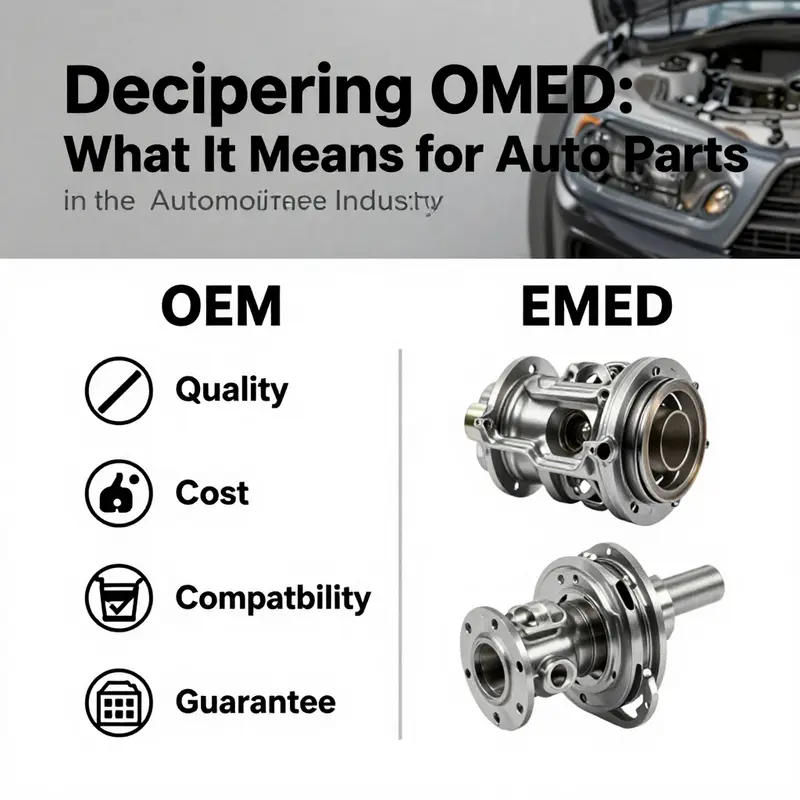
Behind every car’s steady performance lies a quiet, often overlooked default setting: the original specifications that guided its birth. When people ask what OEM means for auto parts, they are really asking about the guarantee that a component will fit, function, and endure the way the factory designed it to. OEM, or Original Equipment Manufacturer, is more than a label. It is a promise that a part was created to the same design intent as the vehicle it helped produce. In practice, that promise translates into a chain of decisions about material, geometry, finishing processes, testing protocols, and the channels through which the part reaches the repair bay or the assembly line. Understanding this helps buyers weigh risk and reward across the spectrum of parts, from critical safety systems to cosmetic accoutrements, and it reframes the conversation about value, performance, and long-term reliability.
To begin with, OEM parts are produced by the same company that built the car or by a trusted supplier under contract to the vehicle maker. They are engineered to exact specifications, mirroring the fit, function, and quality that the vehicle left the factory with. That is not a mere claim about similarity; it is a statement about the underlying processes that matter once the vehicle is on the road. The materials are chosen to meet the same standards, the tolerances are defined to ensure consistent interaction with mating parts, and the testing regimes reproduce, as far as possible, the real-world stresses the vehicle will encounter. The result is a level of predictability that, in the context of a long-lived machine, can translate into fewer surprises during service, lower risk of misalignment, and more reliable performance over miles and seasons.
Yet the landscape around OEM is nuanced. The term is often used in two broad senses. First, it denotes parts that come from the vehicle manufacturer’s own supplier network, typically available through authorized dealerships and service centers. These parts are deeply integrated into the vehicle’s original design language and are supported by the automaker’s warranty framework. Second, some suppliers outside the carmaker’s direct control produce what is commonly described as OEM-equivalent or OEM-licensed parts. These pieces are designed to mimic the originals, often to the same specifications, and may be marketed through the same general channels. The distinction matters because it touches both price and reassurance: OEM parts within the official network tend to carry the strongest warranty coverage and the clearest after-sales support, while OEM-equivalent parts can vary in terms of guarantee, calibration requirements, and the availability of service documentation.
The other side of the coin is the aftermarket. Aftermarket parts are manufactured by third parties not affiliated with the vehicle’s original maker. They populate repair shops, independent garages, and parts retailers with a broad spectrum of offerings. The quality spectrum here spans a wide arc. On one end, there are high-grade components engineered to meet or exceed OEM standards, supported by robust testing, quality certificates, and warranties. On the other end, there are low-cost items where the fit, material integrity, or long-term durability may be less predictable. The advantage of this category is clear: lower upfront cost and a wider menu of choices for non-critical components or older vehicles where OEM replacement costs are hard to justify. The trade-off, however, is less uniform performance and a higher likelihood that a part will diverge from the vehicle’s original design intent over time.
The practical impact of these differences becomes most visible in how a car behaves after a repair. Consider the sensitivity of modern vehicles to precise fit and alignment, especially in systems tied to safety and perception. Braking components, steering linkages, airbag systems, and even structural elements like windshields are designed with a high degree of integration. The windshield example, widely cited in industry guides, underscores a broader truth: some parts connect with advanced driver-assistance systems and the vehicle’s structural integrity. The glass isn’t just a shield against the elements; it also interacts with sensors, cameras, and the vehicle’s frame. An OEM-grade windshield is engineered to the original thickness, lamination, and mounting geometry so the ADAS features calibrate correctly and maintain their precision.
That said, the reality of repair work often invites a pragmatic calculation. For many non-critical components or cosmetic replacements, a carefully chosen aftermarket part can deliver satisfactory performance at a meaningful saving. The crucial steps are vetting the supplier, confirming the part’s certifications, and ensuring the part will still meet the vehicle’s operational needs. Certifications such as ISO quality management, automotive-specific standards, and independent third-party testing can offer a reliable signal about consistency. When a shop or customer prioritizes cost, durability, and timely availability, a high-quality aftermarket option becomes an attractive middle ground between OEM certainty and the affordability of generic components. Importantly, the choice should align with the intended use. If the target is to restore original ride feel, safety, or long-term reliability in a critical system, OEM or a verified OEM-equivalent with robust warranties often makes more sense.
The warranty angle further clarifies how buyers should think about OEM versus aftermarket. OEM parts, because they come from the vehicle’s own supply framework or its official partners, usually carry warranties that are backed by the automaker. This means a level of recourse if a defect arises within the warranty window, and it extends to the integrity of the repair process itself—labor, fit, and function—when installed at an authorized venue. Aftermarket warranties vary widely depending on the provider and the scope of coverage. Some manufacturers offer strong warranties on their higher-end aftermarket products, while others provide more limited terms. For buyers, this creates a practical rule of thumb: a longer, more comprehensive warranty on an aftermarket part often signals a commitment to quality; a shorter or ambiguous warranty should prompt closer scrutiny of the part’s origin, the testing behind it, and the installer’s qualifications.
Pricing is the most immediate and often misunderstood dimension of the OEM-versus-aftermarket debate. OEM parts carry a premium, reflecting not only the cost of the original engineering but also the brand’s service ecosystem and the assurance that the part was produced under the automaker’s own quality umbrella. Aftermarket parts reflect market dynamics—competition, material choices, economies of scale, and regional pricing. The result is a broader spectrum: cheaper options can be perfectly adequate for non-critical components and for older vehicles whose performance is less dependent on exact OEM specifications. The key is to separate price from value. A part that is significantly cheaper but fails early or requires more frequent maintenance can end up costing more in the long run. Conversely, a well-chosen aftermarket with a solid warranty and reputable supplier can deliver value when the performance gap relative to OEM is minimal or negligible for the task at hand.
Beyond price and warranty, the quality and consistency of fit are real-world tests of an OEM versus aftermarket strategy. OEM parts are designed to slide into place with the same tolerances as the original components. This predictability matters in areas where alignment, load paths, and interaction with adjacent parts govern performance. Connections, mounting points, and fasteners are standardized so that, in principle, a mechanic can rely on a straightforward replacement process. With aftermarket parts, fitment can vary. A part might require slight adjustments, different fasteners, or recalibrations. In some cases, especially with critical safety components, those variances can cascade into longer service times, more diagnostic work, or the need for additional alignment procedures. The best aftermarket providers recognize this and include installation guidelines, fitment guarantees, and customer support that helps technicians navigate potential discrepancies.
One deeper layer worth noting concerns the supply chain and authenticity. OEM reliability hinges on a tightly controlled chain from design through manufacturing to delivery. Counterfeit parts pose a real risk in markets crowded with low-cost, inconsistent items. Counterfeit components can fail unexpectedly, compromise safety, and undermine trust in repair work. For this reason, many professional shops insist on parts ordered through authorized channels and meticulously verify documentation. The aftermarket ecosystem, while diverse, faces a parallel challenge: quality erosion when supply chains stretch and shortcuts creep in. Buyers who care about long-term reliability should look for traceability, clear certifications, and transparent sourcing. The moment a part’s provenance becomes murky, the decision to accept it should be weighed against the potential costs of misfit, warranty voiding, or safety concerns.
As with many aspects of modern vehicles, the decision about OEM versus aftermarket is not binary. It benefits from a holistic view that weighs the vehicle’s mission, the part’s role, the repair environment, and the owner’s priorities. For a high-stakes safety component or a car that is still under a substantial factory warranty, leaning toward OEM or an officially licensed equivalent with proven performance and a solid warranty is a prudent move. For a vehicle with routine cosmetic needs, or for owners who chase optimization within a tight budget, a well-vetted aftermarket option can offer compelling value—provided it comes from a reputable supplier, carries credible certifications, and is backed by a service network that can support calibration, replacement, and long-term performance checks.
A practical way to approach the topic is to frame parts by their role in the vehicle and the consequences of a mismatch. Structural or safety-critical elements—the things that influence crash dynamics or sensor performance—benefit most from the security that OEM quality affords. Non-critical components, such as certain interior trim or cosmetics, often tolerate aftermarket options that can satisfy the appearance and functionality requirements without compromising safety or core operation. This nuanced view mirrors how repair professionals approach OEM and aftermarket decisions in the real world: assess the risk, confirm the fit, verify the performance, and align with the customer’s priorities.
Even within the context of a single vehicle program, the ecosystem of parts demonstrates the coexistence of OEM and aftermarket strategies. Some tiered supply networks support original equipment production while simultaneously enabling aftermarket replacements through authorized or semi-authorized channels. The result is a repair landscape in which a repaired car can return to street readiness with assurance that, for the part’s intended role, the choice reflects both engineering intent and practical realities. In the end, the value of OEM lies not in a glossy badge but in the confidence that the part delivers the same outcome the vehicle engineer planned from day one. And that confidence, once earned, often translates into fewer diagnostic headaches, more predictable maintenance intervals, and a continued sense that the car’s performance remains faithful to its original design.
For readers seeking a concrete view of how these principles play out in a critical component category, consider this practical touchstone: an authoritative discussion of OEM versus aftermarket implications for replacement windshields in the context of modern driver-assistance systems. The guide emphasizes exact vehicle specifications, proper fit, and the need for calibration to preserve sensor integrity—areas where OEM alignment often provides the clearest path to safety and reliability. You can explore this external resource for a broader framework that complements the specific automotive context discussed here: https://www.autoglass.com/industry-resources/oem-vs-aftermarket-windshields-a-strategic-guide-for-b2b-buyers.
For readers who want to see how real-world supplier ecosystems present OEM options in a repair setting, a number of industry-facing examples illustrate the spectrum from factory-direct parts to high-quality aftermarket alternatives. One way to appreciate the nuance is to observe the conversations that take place in service directories and parts catalogs, where the language of fitment, certification, and warranty becomes the lens through which value is judged. A robust approach is to test-fit, verify, and calibrate in a controlled setting, ensuring that the selected part not only matches the vehicle’s form but also sustains its function under the dynamic conditions of road use. When the process emphasizes compatibility, demonstrable testing, and transparent support, the difference between OEM and aftermarket becomes less about a binary choice and more about a spectrum of quality, reliability, and the assurance that the vehicle will perform as intended day after day.
In the end, OEM means more than a label. It signals a commitment to faithful replication of the original design, a promise of consistent fit, and a pathway to dependable long-term performance. Aftermarket parts, when sourced from reputable manufacturers and backed by clear certification and warranty, offer a viable alternative that can balance cost with quality. The best practice for most owners and repair shops is to approach each replacement decision with a clear accounting of risk, need, and value, all anchored by an understanding of where the part sits on the OEM–aftermarket spectrum. This approach helps ensure that every replacement, whether it preserves the vehicle’s factory integrity or provides a carefully chosen alternative, continues to reflect the design intent that began with the car’s first roll onto the production line.
Internal resource for deeper exploration: brand-new-original-carbon-fiber-bonnet-hood-for-mitsubishi-lancer-evo-x
External reference: https://www.autoglass.com/industry-resources/oem-vs-aftermarket-windshields-a-strategic-guide-for-b2b-buyers
OEM Parts in the Electric Era: How Truth, Tech, and Lifecycle Redefine the Auto-Parts Landscape

The phrase OEM, once a simple stamp of factory origin, has become a more layered promise in a rapidly evolving automotive world. Original Equipment Manufacturer used to mean exactly what the label says: parts built to the carmaker’s precise tolerances, designed to fit with the vehicle’s mechanicals, electronics, and, increasingly, its software. Today, that promise extends beyond a single component and into a lifecycle of data, interoperability, and continuous improvement. As vehicles pivot toward electrification and automated driving, the OEM’s role shifts from merely supplying parts to orchestrating an entire ecosystem of components, data interfaces, and service models. In this new regime, the meaning of OEM is less about who supplies a bolt and more about who guarantees a coherent, measurable standard of performance across the vehicle’s entire operational life. That standard, in turn, underpins trust between manufacturers, repair providers, and vehicle owners, creating a durable core for a future where maintenance is increasingly data-driven and predictive rather than traditionally scheduled or mileage-based alone.
The move away from traditional internal combustion engines does not erase the relevance of components, but it does recast the category. The parts that matter most expand beyond mechanical wear parts to include high-tech systems such as battery management units, power electronics, thermal management modules, and vast arrays of sensors used by advanced driver assistance systems and, ultimately, by autonomous capabilities. The OEM’s challenge is to ensure that these increasingly sophisticated systems, which are deeply integrated with software and cloud services, remain reliable and compatible across generations of vehicles. The information that travels through a vehicle’s control units is now as critical as the metal and plastic that enclose it. In this context, OEMs must deliver hardware that not only fits precisely but also communicates seamlessly with the vehicle’s software stack, cybersecurity measures, and over-the-air (OTA) update frameworks. The result is a tighter coupling between hardware reliability, software integrity, and data governance, all of which contribute to a durable warranty and a coherent ownership experience.
That evolution carries obvious implications for the aftermarkets that once thrived on physical replacements and technician know-how rooted in older architectures. The aftermarket remains essential, but the requirements are changing. Shops must now interpret complex fault data, manage software- and data-centric repair procedures, and handle modular components whose performance is conditioned by firmware versions. A wheel hub and a battery sensor may be the same part in appearance as they were a decade ago, yet their functionality is defined by software that can be updated remotely and by diagnostic data that travels across networks. In this landscape, OEM identity persists not merely in the part’s provenance but in its compatibility guarantees, its certification of interfaces, and the life-cycle warranties that accompany it. The peace of mind that comes with a truly OEM-validated part hinges on traceable provenance, consistent performance benchmarks, and clear expectations about service intervals and updates. To illustrate the point without getting lost in nomenclature, consider how a genuine OEM rear bumper is presented and certified within official catalogs and dealer networks; the idea is that the component is not just a silhouette and a shell but a deliverable that preserves safety, crash performance, and integration with body control systems. For readers seeking a concrete reference to how OEM components are framed in practice, an example of an OEM-replacement bumper can be seen in this dedicated page: OEM rear bumper example.
The most transformative trend shaping OEM parts is the rapid integration of software into the part itself. The so-called digital twin, which mirrors a vehicle’s hardware and software in a virtual model, enables OEMs to forecast wear, optimize maintenance, and plan part lifecycles with unprecedented precision. A battery system, a motor controller, or a suite of sensors is not a standalone device but a node in a network that includes cloud analytics, vehicle-to-everything (V2X) communication, and centralized diagnostic platforms. This interconnectedness means OEMs must design parts with robust cybersecurity, verifiable update pathways, and standardized interfaces that prevent obsolescence while enabling ongoing performance enhancements. The operational life of an OEM part thus extends beyond the physical object; it encompasses the software updates, calibration routines, and data-handling practices that define how well the part continues to perform as the vehicle evolves. In practice, this approach translates into parts that are engineered to accommodate OTA firmware updates, modular repair schemes, and scalable maintenance protocols, ensuring that what leaves the factory remains compatible with the car’s evolving software profile for years to come.
Another pivotal shift comes from the globalization of manufacturing and the evolving role of emerging players, particularly Chinese OEMs, in setting new benchmarks for cost, quality, and integration. These manufacturers bring a distinctive combination of scale, process discipline, and a willingness to reframe supply chains around standardized interfaces and modular architectures. Their influence is not confined to price competitiveness; it extends to defining performance thresholds and interoperability that other OEMs and suppliers must meet to participate in a shared ecosystem. As vehicles become more software-centric, the question of who controls the data stream and who can access it safely becomes a strategic concern. The OEM wins influence when it can align component design with data governance, cybersecurity, and service-delivery models that support a reduce-risk ownership experience for customers. The competitive landscape thus shifts from merely delivering physical parts to delivering reliable, software-enabled, lifecycle-centric solutions that cross geographic and brand boundaries.
Material science also plays a crucial role in the OEM story for the electric era. Sustainability and performance demands push automakers to rethink the materials used in critical components. Traditional metals are paired with advanced composites, and the appetite for lighter, stiffer, and more heat-tolerant materials has accelerated. Carbon fiber-reinforced polymers, for example, have seen continued integration in high-performance platforms, offering weight reduction and improved fuel economy or range in EV architectures. Aluminum, long a staple in body structure and engineering applications, remains central for its strength-to-weight advantages and recyclability. The strategic deployment of these materials is not just about premium performance; it is about enabling longer vehicle lifecycles, better thermal management for high-power systems, and reduced overall environmental impact. OEMs that master material integration along with software-dominated control loops will be better positioned to deliver parts that last longer and perform more consistently across a vehicle’s life.
Transformation in maintenance and service models follows closely behind material and software innovations. The aftermarket, once driven largely by periodic inspections and mileage thresholds, is increasingly data-driven. Predictive diagnostics use real-time performance signals to anticipate failures before they occur, enabling OEMs to guide proactive replacements and service actions. This shift is supported by digital tools that capture, standardize, and interpret vehicle data across fleets and regions. With OTA updates, the line between a component’s “age” and its “version” becomes blurred. An OEM part installed at manufacture may continue to be refined by software updates that refine its performance envelope, extend its useful life, or adapt its operation to new safety standards. The maintenance model thus moves toward a lifecycle approach in which the OEM coordinates the flow of parts, data, and service across a vehicle’s entire lifespan, ensuring that every repair or upgrade aligns with the vehicle’s evolving technical architecture. In a sense, the OEM becomes the custodian of the vehicle’s integrity, not merely the supplier of a physical object.
The lifecycle-centric view of OEM parts has implications for how owners experience ownership and how repair networks organize themselves. Warranties increasingly depend on the integrity of software interfaces and the ability to maintain a consistent data trail that proves the part’s origin and ongoing performance. Repair professionals need new skills, not only in mechanical repair but in diagnostics, software reconfiguration, and cybersecurity risk assessment. This change encourages a more collaborative ecosystem in which suppliers, dealers, and independent shops share standardized data formats and repair protocols. For consumers, it means greater confidence that a replacement part—whether a simple sensor or a complex battery module—will fit, function, and endure in a manner consistent with the vehicle’s original design intent. The OEM, in this framework, is less a single source of parts and more a harmonizer of standards, interfaces, and data governance, delivering a coherent experience that travels with the car across its entire life journey.
In charting a path forward, OEMs must embrace three intertwined imperatives: digitalization, collaboration, and lifecycle thinking. Digitalization means not merely adding more software to the vehicle but building a resilient data and update ecosystem that keeps parts compatible over time. Collaboration refers to forging supplier networks and cross-brand standards that allow different components to work together within a vehicle platform while preserving safety and performance guarantees. Lifecycle thinking asks OEMs to anticipate the entire duration of a vehicle’s use, from the first installation to eventual end-of-life recycling, designing parts that can be upgraded, replaced, or repurposed without undermining the vehicle’s safety case. These principles, when applied consistently, help OEMs maintain the trust that has always defined their role—trust that a repaired part will perform as intended, that a replacement will integrate with the vehicle’s software and data streams, and that warranties will reflect the true longevity and reliability of the entire system. The result is an automotive ecosystem where OEMs remain central not because they manufacture every bolt, but because they guarantee interoperability, safety, and value across a vehicle’s entire life.
This evolving narrative of OEM parts aligns with broader industry analysis that points to a future where the aftermarket is reshaped by intelligent, connected, and sustainable mobility ecosystems. The question for manufacturers and service providers is not only what parts to stock but how to ensure those parts carry a coherent guarantee of performance in a software-defined vehicle world. As the automotive sector continues to transform, OEMs that leverage digital tools, foster supplier collaboration, and anticipate lifecycle needs will lead the next era of automotive innovation. They will be the stewards of the vehicle’s identity across generations, ensuring that the original design intent—safety, reliability, and performance—persists even as technology accelerates beyond what could have been imagined in the past. For readers seeking a broader, data-driven perspective on the trajectory of the automotive aftermarket through 2030, the following external resource offers a comprehensive analysis: https://www.mckinsey.com/industries/automotive-and-assembly/our-insights/ready-for-inspection-the-automotive-aftermarket-in-2030.
Final thoughts
OEM parts are not just components but play a vital role in ensuring quality, reliability, and efficiency in vehicle production and repairs. Business owners must recognize the crucial differences between OEM and aftermarket parts, which can impact the operational success of their enterprises. As the automotive industry continues to evolve, keeping abreast of trends related to OEM parts will position businesses to capitalize on emerging market opportunities. Emphasizing quality and compatibility will undoubtedly lead to enhanced customer satisfaction and business growth.