
Aftermarket auto parts represent a significant segment of the automotive industry, offering alternatives to original equipment manufacturer (OEM) components. For business owners seeking to capitalize on the growing market for vehicle enhancements, understanding these parts’ roles is crucial. This article delves into what aftermarket auto parts mean, their economic impact, and how they contribute to vehicle customization and performance, providing insights that can benefit automotive businesses in today’s competitive landscape.
Rethinking the Parts You Drive: How Aftermarket Auto Parts Redefine Repair, Style, and Performance

When people first hear the term aftermarket, they often picture inexpensive substitutes meant to mirror what the factory installed. Yet the landscape of aftermarket auto parts is broader and more nuanced than a simple price tag. Aftermarket parts are components manufactured by companies other than the original equipment manufacturer (OEM). They exist to replace worn pieces, to improve or customize a vehicle’s performance, or to express a driver’s personal taste through appearance and convenience features. In this sense, aftermarket parts do not merely fill a gap in the supply chain; they extend the life of a vehicle, broaden what a driver can do with it, and continually push the boundaries of what a car can be. The idea behind aftermarket parts is rooted in choice. Vehicle owners can select products that fit their budget, driving habits, and aesthetic preferences while still maintaining safety and reliability standards that the industry recognizes as legitimate alternatives to OEM offerings. This expanded universe touches every avenue of a vehicle’s life—from routine repairs and long-term maintenance to spirited driving, weekend projects, and the ongoing conversation between a car and its owner about identity on wheels.
At first glance, the role of aftermarket parts in everyday transportation may seem straightforward: they are the replacement items that keep a car running when OEM stock is unavailable or prohibitively expensive. But this is only a starting point. The aftermarket ecosystem also encompasses components designed to restore a classic car to its former glory, parts intended to boost performance on a track or a twisty road, and an array of accessories that transform a vehicle’s interior and exterior into a personal extension of the driver. This multiplicity is not a divergence from the car’s original concept; it is a continuation of the engineering dialogue that began when the vehicle rolled off the assembly line. Aftermarket parts acknowledge that cars live long beyond their factory warranty and that owners may want to pursue a spectrum of priorities—economy, safety, speed, comfort, and aesthetics—at different times in a vehicle’s life.
The distinction between replacement and enhancement is often subtle but meaningful. Replacement parts, in one sense, aim to replicate the function of a failed component with a substitute that meets or exceeds factory specifications. Enhancement parts, by contrast, seek to surpass certain factory limits—whether by improving responsiveness, stability, or power delivery. Customization parts occupy a wide middle ground, focused on tailoring a vehicle to an individual’s style, usage pattern, or on-road persona. A driver who uses aftermarket parts to restore a classic car may choose parts that were common in the original era or that offer modern performance while preserving period-appropriate aesthetics. A performance-minded enthusiast might install upgraded suspension or steering components to achieve sharper handling characteristics, while a commuter may add practical accessories that improve visibility, storage, or convenience. In all these cases, aftermarket parts function as a practical toolbox for extending the vehicle’s usefulness and maximizing satisfaction behind the wheel.
The significance of aftermarket parts in the broader automotive sector extends well beyond personal preference. They form a practical bridge between cost considerations and vehicle longevity. For many owners, aftermarket options provide a more affordable route to keep a car on the road after wear and tear or minor collisions. Insurance claims, particularly for everyday drivers, often rely on aftermarket parts to reduce repair costs while still ensuring safety and reliability. This is not simply a pragmatic shortcut; it reflects an organized approach to vehicle maintenance that aligns with proven standards of fit, finish, and function. The ability to source compatible alternatives helps keep repair bills within reason, which is essential for households navigating fluctuating expenses or for fleets that must manage maintenance budgets efficiently. The aftermarket sector thus contributes to the affordability and accessibility of car ownership, reinforcing the idea that a vehicle’s usefulness should not be tethered to the most expensive OEM path.
From a practical standpoint, the aftermarket industry serves several primary functions that weave together repair, restoration, and personalization into a cohesive narrative. First, aftermarket parts support vehicle repair and upkeep. They provide a wide array of options to replace worn, damaged, or outdated components without waiting for factory stock or paying premium OEM prices. In many markets, these parts enable faster repair turnaround, minimizing downtime for drivers and fleets alike. The cross-reference systems used in the industry help mechanics and consumers identify equivalent parts that will fit a particular make and model. This kind of standardized compatibility reduces the guesswork involved in selecting replacements and helps sustain safety and reliability even when the original parts are not available. Compatibility checks, quality standards, and documented fitment data are essential to maintaining trust in aftermarket solutions. When these elements are in place, the line between OEM and aftermarket becomes less a question of origin and more a question of performance, fit, and durability.
Second, aftermarket parts enable restoration and customization. In the realm of classic cars, faithful reconstruction with period-appropriate parts may be necessary to preserve authenticity. Yet restoration also invites modern advantages: better materials, more precise tolerances, and more durable finishes. For drivers who want to personalize a vehicle without sacrificing integrity, aftermarket options offer a spectrum of possibilities—from redesigned interior trims that better withstand daily use to exterior details that reflect a particular era or mood. This is where lifestyle and identity become legitimate design considerations in automotive engineering. The ability to restore a vehicle to its former glory—or to reimagine it in a way that speaks to a contemporary sensibility—demonstrates how aftermarket parts function as an extension of the owner’s values and daily rituals behind the wheel.
Third, high-performance components illustrate the tuning culture that accompanies many aftermarket choices. Performance-oriented parts are designed for more than just speed; they address handling, braking, steering precision, and the overall driving experience. Upgraded suspension systems, sport-oriented wheels and tires, and engine components aimed at improving cornering feel, response, and stability are part of a broader engineering conversation about balance and control. The existence of these components reflects a mindset that driving can be optimized for enjoyment, challenge, and competition, whether on a closed course or a winding mountain road. It is not merely about raw horsepower; it is about how a vehicle translates driver input into confidence on the surface of the road, how weight distribution is managed, and how contact between tire and pavement is leveraged to achieve predictability and speed in a controlled manner. This connection between engineering choices and the lived experience of driving is a defining feature of the aftermarket sector.
Fourth, accessory parts extend the reach of aftermarket influence into daily life. Lighting packages, interior trims, audio upgrades, and other convenience-focused components can redefine the relationship a driver has with a vehicle. These additions may not alter performance in the traditional sense, but they transform usability, comfort, and even mood. A car becomes a more personalized space when the owner selects features that align with glances from the rearview mirror, the feel of a switch, or the soundscape of the cabin. In this way, aftermarket parts contribute to the storytelling aspect of car ownership. They allow people to translate taste and lifestyle into tangible design choices that remain compatible with the underlying engineering and safety framework of the vehicle.
All of these roles—repair, restoration, performance, and accessories—operate within a framework of standards and compatibility that the industry has developed over decades. Technical standards and cross-referencing systems are not a bureaucratic afterthought; they are the backbone that ensures parts from different manufacturers can work together across a wide range of makes and models. This is essential because it means a customer can select from a diverse ecosystem of suppliers while still expecting a consistent level of fit and function. Consumers and professionals rely on these standards to avoid common pitfalls such as misfitting components, degraded performance, or safety compromises. When standards are respected, aftermarket parts can be integrated into a vehicle with the same confidence and predictability one would expect from OEM components, even though they originate from a different source.
As technology advances, so does the sophistication of aftermarket products. Modern vehicles are increasingly connected and integrated with software, sensors, and electronic control units. Third-party suppliers are responding to this complexity by delivering parts that interface cleanly with onboard systems, from more accurate tire pressure monitoring to upgraded electronic components that harmonize with the vehicle’s diagnostic architecture. This evolution underscores a broader truth: aftermarket parts are not static artifacts; they are dynamic solutions that adapt to changing automotive technologies. The result is a healthier competitive landscape where innovation is driven not only by manufacturers but also by a community of engineers, technicians, and enthusiasts who push for improvements in safety, efficiency, and the driving experience.
Given this expansive landscape, how should a consumer think about the decision to choose aftermarket parts? The first consideration is the intended use. A driver seeking economical repairs for a daily driver may prioritize cost-effectiveness and proven durability. In such cases, selecting parts that meet recognized standards and come with clear warranty terms can provide reassurance that the vehicle will remain reliable. A weekend mechanic focusing on restoration or customization will weigh options for authenticity, aesthetics, and compatibility with late-model systems. For performance-minded drivers, the emphasis shifts toward components that deliver measurable improvements in handling but also require careful calibration and, at times, professional installation to avoid compromising safety. Across these scenarios, the common thread is the need for informed decision-making that respects the vehicle’s design intent and the realities of each component’s role in the broader system.
Quality and safety must remain central to all aftermarket choices. Factory-installed parts are designed with a precise set of tolerances and a guarantee of compatibility with the vehicle’s original engineering. Aftermarket parts, by contrast, vary in design philosophy, material quality, and testing rigor. Some categories offer OE-grade replacements that closely mirror the original in fit and performance; others provide performance-first options with different emphasis, such as lighter weight, stiffer construction, or alternative balance characteristics. Buyers should look for reputable sources that publish clear fitment data, material specifications, and warranty information. Mechanic and technician recommendations often emphasize the importance of alignment, torque specifications, and correct installation procedures. Skipping these steps or choosing unverified parts can undermine safety and negate the potential benefits of aftermarket upgrades. The heart of a reliable aftermarket experience is a thoughtful blend of value, compatibility, and a belt-and-suspenders approach to safety.
An additional layer to consider is the broader ecosystem that supports aftermarket parts. Retailers, repair shops, and independent manufacturers collectively create an ecosystem that serves different customer needs. Some shops specialize in certain makes or generations, developing deep knowledge of compatibility nuances and installation requirements. Others curate a broad catalog that prioritizes speed, convenience, and cost savings for everyday repairs. In many regions, this ecosystem also interacts with insurers and warranty providers, who may have guidelines about the use of aftermarket parts in claims processing. When a consumer understands how these relationships influence costs, coverage, and repair timelines, they can navigate the market with greater confidence. This is not a matter of choosing one path over another but recognizing that different situations call for different combinations of parts, services, and expertise.
The illustrations above point to a central idea: aftermarket parts are not a monolith but an expansive toolkit that reflects a vehicle’s evolving life. A modern car is not simply a fixed set of components; it is a composite system that invites ongoing engagement. The choice of parts—whether for routine maintenance, performance refinement, or personal expression—depends on the driver’s goals, the vehicle’s condition, and the practical realities of installation and upkeep. When approached with care, aftermarket options can extend a car’s usefulness, keep it safer on the road, and deepen the emotional connection between driver and machine. After all, the car one drives is often more than transportation; it is a statement about how one moves through the world, and aftermarket parts are a means of translating that statement into reality on the road.
In this broader sense, aftermarket auto parts mean more than a catalog of alternatives. They are the practical means of maintaining accessibility and choice in a field where technology, regulation, and consumer expectations continually evolve. They support the idea that ownership need not be a constraint but an ongoing project in which the vehicle and the driver grow together. That growth may be incremental—a small replacement that brings a dashboard light back to full brightness—or transformational—a suspension upgrade that changes how the car negotiates a corner. In either case, the aftermarket realm fosters resilience, experimentation, and a dynamic relationship between people and their vehicles. It is, in short, a living system that keeps cars on the road, keeps drivers engaged, and keeps the auto industry responsive to the demands and dreams of everyday life.
For readers seeking a concrete lens into how aftermarket parts are discussed and categorized in practice, consider the way a term like carbon-fiber bonnet hood is used to illustrate the balance between form and function. While it serves a protective and functional purpose, it is also a design choice that signals a particular aesthetic and weight-conscious intent. A reference such as carbon-fiber-bonnet-hood-for-mitsubishi-lancer-evo-x can help readers visualize how a single part can embody both performance and style considerations. Although the specifics of a single model are not universally applicable, the example underscores how aftermarket choices intersect with safety, engineering, and personal vision in a tangible way. This kind of cross-pertilization—from engineering principles to stylistic expression—highlights why aftermarket parts matter beyond price or preference. It also points to the importance of deliberate, informed choices that respect the vehicle’s design constraints while allowing room for experimentation and growth.
All of this leads to a practical takeaway: the aftermarket landscape thrives on informed decision-making, reliable sourcing, and a willingness to balance cost with quality and safety. It rewards drivers who take the time to understand fitment details, claim histories, and warranty terms. It also welcomes enthusiasts who want to participate in a community that values craftsmanship, testing, and reproducible results. Whether someone is repairing a dented bumper after a minor mishap, restoring a classic with a contemporary update, or chasing a personal best on a track day, aftermarket parts offer a pathway to achieve those goals with greater clarity and less frustration than a rigid, one-size-fits-all approach.
As readers move forward, the awareness that aftermarket parts are a spectrum rather than a single category will serve them well. The spectrum ranges from practical, budget-conscious replacements to sophisticated, performance-driven upgrades and stylistic enhancements that reflect who they are behind the wheel. Understanding this spectrum helps demystify the term itself and invites a more thoughtful approach to choosing the right part for the right purpose. The result is a more confident, capable, and satisfying ownership experience, where the car remains reliable, the cost stays within reason, and the driver retains a sense of control over how their vehicle serves their life and their aspirations on the road. This is the core meaning of aftermarket auto parts: a practical, imaginative, and increasingly intelligent extension of automotive life that keeps vehicles relevant, capable, and personal in a rapidly evolving landscape.
External reference for further exploration: https://www.parts-tech.com/what-are-aftermarket-parts/
How Aftermarket Parts Reshape the Auto Economy: Costs, Competition, and the Road Ahead
Economic Forces Shaping Aftermarket and OEM Relations
Aftermarket auto parts are not a fringe segment of the automotive industry. They are a dynamic economic force that reshapes how vehicles are maintained, modified, and kept on the road. At the center of that influence is a simple economic truth: aftermarket parts offer cost alternatives and choices. That choice changes consumer behavior, repair shop operations, and how original equipment manufacturers respond. It also alters broader supply chains and sparks innovation in materials and manufacturing. This chapter traces those effects across multiple dimensions. It explains how price, performance, regulation, and resilience interact to make the aftermarket an essential part of the automotive economy.
Affordability is the most visible driver. Aftermarket parts typically cost less than OEM equivalents. For consumers on tight budgets, the difference can determine whether a small repair is deferred or completed. For independent repair shops, this price gap affects margins, service choices, and inventory strategy. When a brake pad, headlight, or bumper is available at a fraction of the OEM price, repair shops can offer competitive quotes and retain customers. These immediate savings ripple outward. Lower repair costs reduce total cost of ownership, encouraging owners to keep older vehicles. That extended service life translates into steady demand for parts, labor, and refurbishment services.
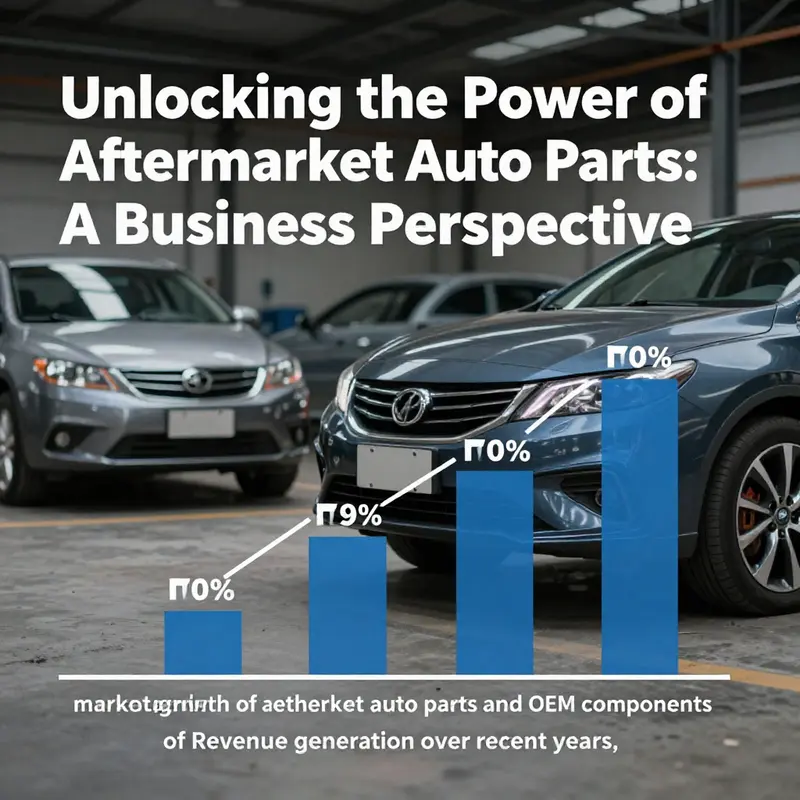
This cost advantage is not merely anecdotal. Global market projections underline the aftermarket’s scale. Forecasts estimate the automotive aftermarket expanding from roughly $457 billion in 2026 to over $600 billion by 2034. That growth reflects aging vehicle fleets, increased repair needs, and shifting economic conditions such as fuel prices. It also reflects consumer preferences for customization and performance upgrades. The aftermarket captures spending that might otherwise bypass traditional OEM channels. By offering a range of price and quality points, it brings previously untapped consumer demand into the automotive supply chain.
Regulation and institutional change shape how aftermarket parts compete. Regulatory frameworks can make some replacement options more or less viable. For example, rules that mandate safety certifications or parts traceability increase the cost of compliance. That can narrow price differences between OEM and aftermarket goods, but it can also raise the quality baseline of aftermarket offerings. Conversely, reforms that encourage part reuse and recycling bolster the aftermarket by lowering raw material costs and creating circular supply opportunities. In some markets, regulatory adjustments have been a catalyst for local industry growth. When governments ease import restrictions or set standards for remanufactured parts, they create space for aftermarket manufacturers and refurbishers to scale.
Environmental rules are another pivot. As regulators press for lower carbon footprints, both OEMs and aftermarket suppliers adapt material choices and production methods. Aftermarket makers increasingly use recycled metals, composites, and plastics, or switch to production processes with lower emissions. These changes have two consequences. First, they can lower manufacturing costs through material reuse and streamlined processes. Second, they align aftermarket products with sustainability goals, making them more acceptable to environmentally conscious consumers. Over time, this alignment strengthens the aftermarket’s economic resilience and broadens its market share.
Competition between aftermarket and OEM parts is nuanced. Historically, OEMs held a quality perception advantage. Owners typically trusted parts bearing the original brand and part number. But that gap has narrowed. Many aftermarket producers now match performance specifications or excel in specific areas like lightweight composites and performance tuning. This narrowing is especially true where aftermarket firms focus on specialized niches, such as sport upgrades, aerodynamic body panels, or advanced lighting systems. Such niche specialization drives innovation and helps aftermarket parts compete not just on price, but on features and performance.
Competitive pressure is not one-way. OEMs respond by improving their parts’ value proposition, adjusting warranty terms, and sometimes partnering with aftermarket suppliers. In some cases, OEMs expand their own replacement parts channels or create certified non-OEM programs. These reactions push the entire market toward higher quality and better service. For consumers, the result is improved choice. For repair shops, the result is more complex procurement decisions. They now weigh cost, warranty coverage, expected longevity, and lead times.
Supply chains also feel the aftermarket’s influence. Aftermarket suppliers often rely on different sourcing networks than OEMs. They may use remanufactured cores, salvaged components, or alternative material suppliers. These options create redundancy in the parts ecosystem. When OEM supply lines stall, aftermarket channels can mitigate shortages and keep vehicles operational. That redundancy proved critical when global disruptions affected primary manufacturers. Independent suppliers and recyclers stepped in to provide solutions and maintain vehicle uptime. This adaptability reduces downtime for end users and stabilizes the broader economy.
Yet the aftermarket’s flexibility also introduces risks. Quality variation across suppliers can be wide. Lower-cost options sometimes mean shorter lifespans or inconsistent fitment. That risk affects consumer confidence and can increase long-term ownership costs if a part fails prematurely. It also raises liability concerns for repair shops that install substandard components. Consequently, market transparency and certification systems become economically important. When consumers and shops can verify part quality, the value of higher-grade aftermarket options rises. Certification programs and warranties help signal reliability and support higher price points, reinforcing sustainable business models for reputable suppliers.
Geography matters. Regional differences in economic conditions and regulation shape aftermarket dynamics. In Europe, for example, inflationary pressures, energy shortages, and geopolitical instability have tightened consumers’ discretionary spending. That shift pressures both OEM and aftermarket demand. Yet Europe’s high vehicle penetration and mature repair culture sustain long-term aftermarket prospects. In emerging markets, expanding vehicle ownership and older average vehicle ages create significant demand for affordable parts. Local aftermarket suppliers, often more agile than global OEMs, capitalize on that demand. They scale remanufacturing, localized production, and distribution networks to serve price-sensitive consumers.
The aftermarket industry also fosters entrepreneurship and jobs. Independent parts manufacturers, remanufacturers, and specialty shops create local employment. Their operations often require skilled technicians, materials engineers, and logistics professionals. By supporting small and medium enterprises, the aftermarket contributes to economic diversity in manufacturing regions. That contribution extends to specialty sectors like carbon-fiber fabrication, powder coating, and custom upholstery. Investment in these trades sustains craftspeople and small firms, creating a multiplier effect in local economies.
Technology reshapes economic outcomes as well. Additive manufacturing, or 3D printing, lowers barriers to entry for small suppliers. A small firm can prototype complex brackets, trim pieces, or specialty components faster and cheaper than before. Digital marketplaces change distribution. Online parts catalogs and direct-to-consumer ordering reduce intermediaries and compress margins. That lowers costs for consumers and increases competition among suppliers. Telematics and vehicle data offer future monetization paths too. As vehicles become more connected, aftermarket suppliers can design parts and services tailored to usage patterns. That data-driven capacity creates new business models, such as subscription-based maintenance or predictive parts replacement.
Performance and customization demand create a large aftermarket segment with its own economic logic. Enthusiasts spend on enhancements that improve handling, power, and aesthetics. These purchases are often discretionary and can command high margins. They support specialist suppliers who balance engineering quality with style. That sector fuels an innovation cycle too. Techniques developed for high-performance components can migrate into mainstream aftermarket products. For instance, lightweight composite technologies often trickle down into broader replacement parts, improving fuel economy and performance for everyday drivers.
Circular economy principles intersect with aftermarket economics. Salvage yards, remanufacturers, and certified recyclers recover valuable materials from end-of-life vehicles. They refurbish cores, recondition engines, and rebuild transmissions. This reuse reduces raw material demand and shrinks production carbon footprints. It also lowers part costs, since remanufactured units avoid new material expenses. For many consumers, remanufactured parts provide a balance between affordability and reliability. For policymakers, promoting remanufacturing helps meet sustainability targets while supporting local industries.
Still, the aftermarket faces headwinds. Counterfeit parts and gray-market imports can undercut legitimate suppliers. Those low-quality imports harm consumers and damage the reputation of genuine aftermarket manufacturers. They also complicate enforcement and raise safety concerns. Policymakers and industry groups respond with stronger enforcement, traceability systems, and consumer education. Those measures raise compliance costs but protect the economic viability of responsible suppliers. Over time, markets that prioritize transparency tend to support higher-quality aftermarket sectors and stronger local industries.
Insurance and warranty dynamics shape purchasing decisions too. Insurers often prefer cost-effective repairs that return a vehicle to safe operation. That preference can favor aftermarket parts when they offer comparable safety performance at lower cost. Conversely, warranty provisions may require OEM parts in certain cases. Such clauses drive OEM part demand and affect repair shop choices. Clear regulations that allow equivalent aftermarket parts can expand choices and lower insurance costs. When insurers, consumers, and repairers align on safety and value standards, the aftermarket gains predictable demand and broader acceptance.
The interplay between aftermarket innovation and OEM strategy is central to the industry’s future. Some OEMs view aftermarket competition as a threat. Others see collaboration opportunities in certified aftermarket programs or reman partnership models. Strategic alliances can offer the best of both worlds: OEM-level quality assurance with aftermarket cost benefits. Such cooperation also accelerates sustainable practices, as OEMs and aftermarket suppliers jointly scale recycled materials and closed-loop supply chains.
In practice, those partnerships are already emerging. OEMs sometimes source specialty parts from niche aftermarket firms. They also license designs to reputable suppliers who produce components to exacting standards. These arrangements reduce OEM production burdens and increase parts availability. For consumers, the result is a wider selection of cost-effective, high-quality options. For the market, it creates a more resilient parts ecosystem.
Looking forward, digital transformation will amplify the aftermarket’s economic impact. E-commerce expands reach. Data integration improves fitment accuracy. Local micro-manufacturing and on-demand production reduce inventory costs and delivery times. These changes lower barriers for new entrants while raising customer expectations for speed and precision. At the same time, evolving vehicle architectures, such as electrification, alter parts demand. Some parts will become simpler, while others will require specialized expertise. Aftermarket suppliers that invest in new skills will capture those opportunities.
The economic narrative of aftermarket parts is one of balance. They deliver affordability and choice, and they support entrepreneurship and longevity of vehicle use. They create competitive pressure that improves quality across the market. They also face challenges in quality control, regulation, and market trust. Yet their adaptability—driven by material innovation, circular economy practices, and digital tools—positions them as an engine of economic resilience. For vehicle owners, the aftermarket transforms what replacement and personalization mean. For economies, it sustains jobs, stabilizes supply chains, and makes mobility more affordable.
For a concrete example of how aftermarket body components can be specified and used in industry, consider a carbon fiber bonnet replacement offered through specialized suppliers. Such components illustrate the aftermarket’s role in supplying advanced materials and design options beyond factory offerings. These suppliers both meet niche performance needs and contribute to broader market dynamics by introducing lightweight technologies at different price points: carbon fiber bonnet replacement.
Further reading on material composition, grades, and industrial applications supports these observations. That resource explores how aftermarket body parts are made, the quality differentials that matter, and how industrial uses influence costs and performance. You can review it for deeper technical context: https://www.autoguide.com/aftermarket-parts-composition-grades-industrial-uses.html
Beyond the OEM: How Aftermarket Auto Parts Forge Personalization, Power, and a Smarter Driving Experience

When people encounter the phrase aftermarket auto parts, they often imagine a spectrum that stretches from cosmetic makeovers to hard-core performance upgrades. Yet the idea is more nuanced than a simple preference for new chrome rims or louder exhaust notes. Aftermarket parts are components produced by manufacturers other than the original equipment manufacturer (OEM). They serve two broad purposes at once: replacement and enhancement. Replacement parts restore or maintain a vehicle as it ages, while enhancement parts push beyond factory specifications to tailor a car to a driver’s unique needs, desires, and driving context. In this sense, the aftermarket ecosystem functions as a parallel drafting table to the OEM’s blueprint, offering alternatives that reflect lifestyle choices, driving ambitions, and even regional road conditions. The result is a dynamically evolving landscape where a vehicle becomes not just a transportation tool but a personalized platform for expression and capability.
This dual role—to replace and to enhance—sits at the heart of how aftermarket parts are understood in contemporary car culture and industry analysis. The broad categories within this world illuminate why the aftermarket can feel so expansive. On the customization side, owners seek to stamp a vehicle with personality and practicality through exterior and interior modifications. Custom hoods, body kits, fender flares, vinyl wraps, and interior accessories provide avenues to refine aesthetics, aerodynamics, and comfort. A custom hood may alter heat management or weight distribution, while a body kit can reshape the car’s stance, reduce drag, or simply alter visual proportion. Fender flares extend wheel arches to accommodate wider tires, which not only change the vehicle’s silhouette but can affect grip and cornering behavior in ways that enthusiasts notice on winding roads or race-inspired layouts. Vinyl wraps offer a reversible, high-impact color or texture change that protects the original paint while signaling a driver’s identity or club affiliation without the permanence of a repaint. Inside the cabin, upgraded trims, premium seat covers, or refined dashboards tailor perceived quality and tactile satisfaction, shaping how a car feels as an everyday companion or a social-stage centerpiece.
The performance domain of aftermarket parts is equally expansive, a different—but interwoven—kind of transformation. Engine performance enhancements include components like high-performance air intakes, exhaust systems, and turbochargers that can boost horsepower and efficiency. The goal here is not just raw numbers; it is the reliability of intake breathing, exhaust flow, and heat management under varying loads. Drivetrain upgrades, such as improved transmission internals or differentials, refine torque delivery and efficiency, translating theoretical gains into real-world drive-ability. Suspension systems, chosen with an eye toward the driver’s tastes—whether for daily comfort, spirited mountain runs, or track days—offer tangible differences in handling, cornering stability, and predictability. A common thread across these enhancements is the shift from a one-size-fits-all factory setup to a system that can be tuned to individual preferences, driving environments, and even climate-related demands. Materials chosen for these parts often emphasize durability, heat resistance, and wear protection, ensuring that gains in performance do not come at the expense of long-term dependability.
What makes the aftermarket story compelling is the way it intersects with cost considerations and reliability. Industry analysis frequently notes that aftermarket mechanical parts can provide long-term reliability benefits and can be more cost-effective than OEM replacements, particularly when sourced from specialized manufacturers who focus on specific subsystems or performance niches. This affordability can be especially meaningful for drivers who plan to use their vehicles in a way that taxes standard parts—think track days, weekend mountain runs, or heavy daily commuting in harsh weather. But price is only one axis of value. True reliability in the aftermarket hinges on careful selection, proper fitment, and ongoing maintenance. Compatibility matters just as much as price. A part that claims to fit a broad range of models may achieve universal compatibility on paper but fall short in actual use if the vehicle’s specific trim, year, or regional configuration imposes unique constraints. The reliability of aftermarket components depends on the quality of manufacturing, adherence to tested tolerances, and the presence of appropriate protective coatings or heat barriers in high-heat applications like turbocharged engines or heat-soaked exhaust paths.
Alongside these tangible dimensions, the aftermarket movement is becoming increasingly technologically integrated. The emergence of smart modules and digitally connected components has opened new pathways for drivers who want not only more power or style but also smarter, safer, and more informed ownership experiences. Diagnostics, predictive maintenance, and telemetry-enabled parts can deliver feedback about performance, wear, and potential failures before they manifest as costly problems. This is especially appealing to younger, tech-savvy drivers who view their vehicles as connected platforms, capable of learning, adapting, and communicating needs in real time. The combination of aesthetic upgrades and intelligent systems is creating an ecosystem where appearance and function reinforce each other. A car’s look communicates intention while its systems communicate capability; together they form a coherent narrative about how a driver wants to use their vehicle and what they expect it to do in daily life and in specialized situations alike.
Underlying all these dimensions is the practical reality of fitment, compatibility, and installation. Aftermarket components rarely arrive ready to bolt in as if they were OEM replacements; many require specialized knowledge or professional installation. The skill set involved—precise mounting, tuning, and sometimes software calibration—adds value that goes beyond raw part specifications. In some cases, a dealership warranty or service plan may be affected by non-OEM parts, prompting drivers to carefully weigh the trade-offs between customization freedom and potential risk to coverage. The narrative of aftermarket parts thus threads through personal preference, mechanical literacy, and the economics of long-term ownership.
This is not simply a tale of better, faster, shinier. It is a story about how car culture embraces agency—telling a vehicle’s story not just through its function but through its form, its soundscape, its touch, and the way it responds to the driver’s intent. The aftermarket environment invites a broader understanding of what a car can be when the factory’s baseline is only a starting point. The same vehicle can be a touring partner, a weekend warrior, or a daily driver that signals values and aspirations to the outside world. For some, this transformation is about performance and speed; for others, it is about resilience and the joy of a carefully tuned driving feel. And for many, it is about balancing all these aspects with the realities of budget, time, and fate of roads traveled.
In contemplating this wide spectrum, it helps to consider the social and technical networks that sustain the aftermarket world. Independent shops, online communities, and specialist manufacturers collaborate to curate parts, share installation know-how, and validate performance claims. Storytelling around aftermarket components often blends technical specificity with experiential testimony. Enthusiasts describe how a particular hood or a set of suspension springs changes the car’s character, not merely its numbers. They talk about the feel of steering feedback, the cadence of engine response, or the way a vehicle communicates grip at the limit. This emphasis on subjective experience complements the objective metrics of horsepower, torque, and 0-60 times, highlighting that the aftermarket conversation is as much about perception and confidence as it is about measurement.
The decision to adopt aftermarket parts also intersects with design aesthetics and brand identity. A vehicle is frequently a canvas for personal expression, a way to convey taste, identity, and lifestyle choices to observers and other drivers. The aesthetic decisions—how a car sits on its wheels, the silhouette created by body modifications, the texture of interior finishes, or the gloss of a wrapped surface—become part of the user experience. This is not simply vanity; it translates to how a driver feels behind the wheel, how they are perceived, and how they connect with communities that share a passion for a given lineage of cars or a particular driving discipline. In that sense, aftermarket parts function as tools for storytelling, turning a machine into a narrative device that reflects a driver’s evolving relationship with their vehicle.
The conversation about aftermarket parts inevitably raises questions about standards, safety, and best practices. The modern aftermarket landscape is not a wild frontier but a spectrum governed by technical standards, cross-referenced specifications, and industry guidance that help ensure compatibility and reliability. A growing body of material explains how aftermarket components relate to one another, what to verify when sourcing parts, and how to interpret laboratory and field tests that demonstrate durability and performance under stress. For readers who want a structured entry point into these concerns, resources exist that detail technical standards, properties, and practical applications in cross-referencing parts. They serve as anchors for a more informed consumer experience, enabling buyers to navigate choices with greater confidence and fewer surprises down the road.
Within this broader architecture, there is also a practical value in seeking reputable sources of information about compatibility and fitment. In many cases, the right part can extend a vehicle’s life, improve daily usability, or turn a routine commute into a more engaging experience. The right part, chosen with an eye toward the vehicle’s original design intent and the driver’s anticipated use, can harmonize with safety systems, engine calibration, and chassis dynamics. Yet the wrong part can introduce mismatches, reliability concerns, or even safety risks. The responsibility to research, verify, and select is as important as the thrill of customization and the promise of performance gains. In that sense, aftermarket parts are a reminder that the act of owning a car is an ongoing partnership between person, vehicle, and road, where choice, care, and knowledge work together to create a more satisfying driving life.
To ground these ideas in practical terms, consider how a driver might approach a typical upgrade cycle. A daily driver with a passion for performance might begin with an intake and exhaust upgrade to improve breathing and exhaust flow, followed by a targeted suspension refinement to sharpen handling while preserving ride comfort. If the goal shifts toward a more aggressive, track-ready setup, one could layer in a more sophisticated braking system, a tuned differential, and aero components that influence downforce and stability. Even within this trajectory, the choices would be guided by the vehicle’s architecture and the driver’s climate and road conditions. The same car could, with the right sequence of parts, serve as a reliable weekend warrior and a comfortable weekday companion, illustrating how aftermarket parts enable versatility alongside personality. Through this lens, aftermarket parts become more than add-ons; they are instruments of adaptation—tools that empower owners to script a vehicle’s behavior in keeping with evolving needs and ambitions.
From a narrative standpoint, it is essential to acknowledge that not all aftermarket experiences are trimmed to victory bells and performance metrics. For many drivers, the appeal lies in the lifestyle dimension: the ritual of maintenance, the joy of a fresh finish, the confidence that a well-fitted component brings during rain-slicked commutes, or the social dimension of belonging to a community that shares a common taste for certain car lines or driving philosophies. The aftermarket ecosystem thrives on this blend of practical gains and personal resonance. It invites a broader audience to engage with car culture not through brief impressions but through ongoing dialogue about durability, aesthetics, and the evolving relationship between human beings and their machines. In this sense, aftermarket parts enable a form of mobility that is as much about self-expression as it is about efficiency, speed, or protection. The vehicle becomes a collaborator in daily life and a stage for experimentation, where each addition—whether a subtle trim upgrade or a major mechanical enhancement—contributes to a richer, more meaningful ownership experience.
For readers seeking a concrete example of how customization and performance coexist in the aftermarket world, consider the intersection of aesthetics and function in exterior upgrades. A set of body modifications can transform a car’s presence while also influencing aerodynamic behavior. A broader stance may accommodate wider tires, which can improve grip and stability but also necessitate careful alignment and suspension tuning to avoid scrubbing or imbalance. A hood, chosen for both its look and its heat-dissipation characteristics, can alter the vehicle’s thermal profile under strenuous use. In these cases, the narrative is not simply about appearance; it is about the integrated system—the engine, the cooling path, the brakes, and the tires—working together to deliver a cohesive driving experience. The most successful aftermarket projects are those in which every chosen part speaks the same language: it is not a collage of unrelated upgrades, but a curated ensemble that respects the car’s original engineering while expanding its capabilities in a coherent, purposeful way.
This integrated approach to customization and performance also invites a thoughtful consideration of sourcing, support, and knowledge transfer. Drivers often rely on communities and professional shops to translate ideas into implementable configurations. The language of fitment—knowing whether a part aligns with a specific generation, trim level, or market variation—becomes a vital skill. Access to technical guides, installation advisories, and compatibility charts matters as much as the ingenuity of the idea itself. In short, aftermarket parts work best when there is clarity about how the pieces fit the whole, and when the pursuit of novelty is balanced by respect for safety, reliability, and the driving realities of daily life.
Within this context, it is also worth noting how the aftermarket story reflects broader industry trends. The shift toward smarter, connected components is part of a long-term movement toward data-driven maintenance and performance management. AI-enabled diagnostics, predictive analytics, and telemetry-enabled parts are empowering users to collect, interpret, and act on data about wear, heat, and efficiency. This convergence of hardware and software allows enthusiasts to tailor their cars with a precision that was once the domain of professional teams, while also democratizing access to advanced capabilities. The result is a more inclusive, knowledge-rich culture where experimentation is encouraged, but done with a growing emphasis on informed decision-making and ongoing care.
As with any evolving field, the aftermarket world carries responsibilities as well as opportunities. Buyers should seek reliable sources of information, understand the implications for warranties and insurance, and be mindful of local regulations governing vehicle modifications. The best experiences often arise when curiosity is coupled with disciplined evaluation—checking fitment notes, seeking professional installation when needed, and validating performance improvements with measurable test results. The romance of customization and the allure of performance coexist with practical prudence, ensuring that the pursuit of personal expression does not outpace the fundamentals of safe, reliable operation on the road. In this way, aftermarket parts can be embraced as a mature, thoughtful practice rather than a reckless sprint toward spectacle.
To connect these ideas with concrete directions for curious readers, one can explore the relationship between customization and performance through the lens of real-world examples and community knowledge. In many cases, a nuanced approach to selecting parts—prioritizing compatibility, durability, and the alignment between driver goals and vehicle capabilities—yields a richer reward than chasing the flashiest upgrade. The aftermarket ecosystem rewards patience and learning: reading fitment notes, comparing installation procedures, and listening to feedback from other drivers who have undertaken similar projects. This is how a car becomes a living canvas, a vehicle that evolves with its owner’s experiences, the roads traveled, and the memories forged in the process. For readers who want to anchor these ideas in a specific, experiential reference, a detailed exploration of how a given model line has been upgraded by the community can be illuminating. For example, a page focusing on hood and bumper upgrades demonstrates how aesthetic and functional considerations intertwine in a practical build, reinforcing the broader point that aftermarket components are most compelling when they advance both form and function in harmony.
For readers seeking a concrete example of how customization and performance coexist in the aftermarket world, consider the intersection of aesthetics and function in exterior upgrades. A set of body modifications can transform a car’s presence while also influencing aerodynamic behavior. A broader stance may accommodate wider tires, which can improve grip and stability but also necessitate careful alignment and suspension tuning to avoid scrubbing or imbalance. A hood, chosen for both its look and its heat-dissipation characteristics, can alter the vehicle’s thermal profile under strenuous use. In these cases, the narrative is not simply about appearance; it is about the integrated system—the engine, the cooling path, the brakes, and the tires—working together to deliver a cohesive driving experience. The most successful aftermarket projects are those in which every chosen part speaks the same language: it is not a collage of unrelated upgrades, but a curated ensemble that respects the car’s original engineering while expanding its capabilities in a coherent, purposeful way.
To close this flow of ideas, it is helpful to acknowledge that the aftermarket is not a static field. It evolves with shifting consumer desires, regulatory landscapes, and the continuous press of technology into the automotive world. The horizon now includes smarter diagnostics, more sophisticated materials, and a broader range of performance-enhancing components that can be integrated without compromising safety or reliability. The result is an ecosystem where aesthetics, performance, and technology reinforce one another, offering drivers the chance to craft a vehicle that is as expressive as it is capable. And as the industry grows, the conversation will continue to emphasize not only what aftermarket parts can do, but how they do it—how they balance power with control, style with durability, and personal preference with collective learning. In this sense, aftermarket parts are not merely substitutions for worn-out components; they are instruments of customization and performance that invite ongoing dialogue, experimentation, and refinement. The chapter of a car’s life written by aftermarket choices is one that remains open to revision, always ready for the next thoughtful upgrade that aligns engineering insight with individual vision.
As you navigate the aftermarket landscape, keep in mind a practical observation: the most satisfying projects are those that treat each part as a link in a carefully designed chain. A hood chosen for efficient heat management should be complemented by a matching intake, exhaust, and cooling strategy. Suspension upgrades should be paired with alignment and brake work to maintain balance and safety. The aim is not to chase a single knockout feature, but to cultivate a coherent, livable performance package that reflects the driver’s personality and goals. By embracing this holistic view, the aftermarket becomes a disciplined, creative discipline rather than a scattershot collection of add-ons. And in that spirit, the journey toward personalization, power, and smarter driving becomes a guided exploration rather than a series of impulsive purchases.
For readers who want to explore a practical facet of this ecosystem, a visit to a specific upgrade page can illuminate how parts are described, rated for fitment, and organized for installation. One example of such a resource is a hood upgrade page that illustrates how fitment notes, finish options, and installation guidance come together to help buyers make informed decisions. You can explore a representative example of this type of upgrade at the linked page: 08-15-mitsubishi-lancer-evolution-evo-x-hood-phantom-black-oem-u02. This kind of page demonstrates how a single component can embody aesthetic appeal, thermal management, and installation practicality, illustrating the broader pattern of how aftermarket parts balance style, function, and usability in real-world builds.
In closing, the aftermarket auto parts landscape is a living ecosystem that invites creativity while demanding discernment. It supports customization that personalizes a vehicle’s appearance and cabin feel and enables performance upgrades that translate to tangible improvements in driving dynamics. It also embraces a smarter future where data, connectivity, and advanced materials underpin more reliable, efficient, and enjoyable ownership experiences. The practical takeaway is straightforward: a thoughtful approach to aftermarket parts—grounded in compatibility, quality, and purposeful integration—can unlock a vehicle’s potential without compromising safety or reliability. The journey from OEM baseline to an individualized vehicle is not a gamble; it is a craft. And as with any craft, the best outcomes arise from research, patience, and a clear sense of the driving life you want to lead on every mile of road ahead.
External resource for further technical context: Auto Parts Cross Reference Explained: Technical Standards, Properties, and Practical Applications. https://www.autoparts-crossreference.com/technical-standards-and-practical-applications
Final thoughts
In conclusion, aftermarket auto parts represent not only a growing sector within the automotive industry but also a wealth of opportunities for business owners. As we’ve explored, understanding their definition, economic implications, and roles in vehicle customization can empower businesses to navigate this dynamic market effectively. Recognizing the value of aftermarket parts can lead to enhanced customer satisfaction and increased profitability, making them an integral focus for any automotive enterprise moving forward.