

In today’s competitive automotive landscape, understanding what OEM means in the context of auto parts is vital for business owners. Original Equipment Manufacturers (OEMs) play a crucial role in vehicle production and maintenance, ensuring that parts are designed to fit specific models and maintain the quality that consumers expect. From the creation of engine components to braking systems, OEMs establish the foundation of quality and reliability in vehicles. This article will delineate the significance of OEMs in auto parts production, highlighting their role in vehicle manufacturing, contrasting OEM parts with aftermarket alternatives, examining quality control processes, and analyzing the economic impact they have in the automotive sector. Each chapter will build on the previous insights, providing business owners with a comprehensive understanding of OEMs and their indispensable contributions to the industry.
The Original Engine of Trust: How OEM Parts Define Fit, Safety, and Longevity in Modern Cars
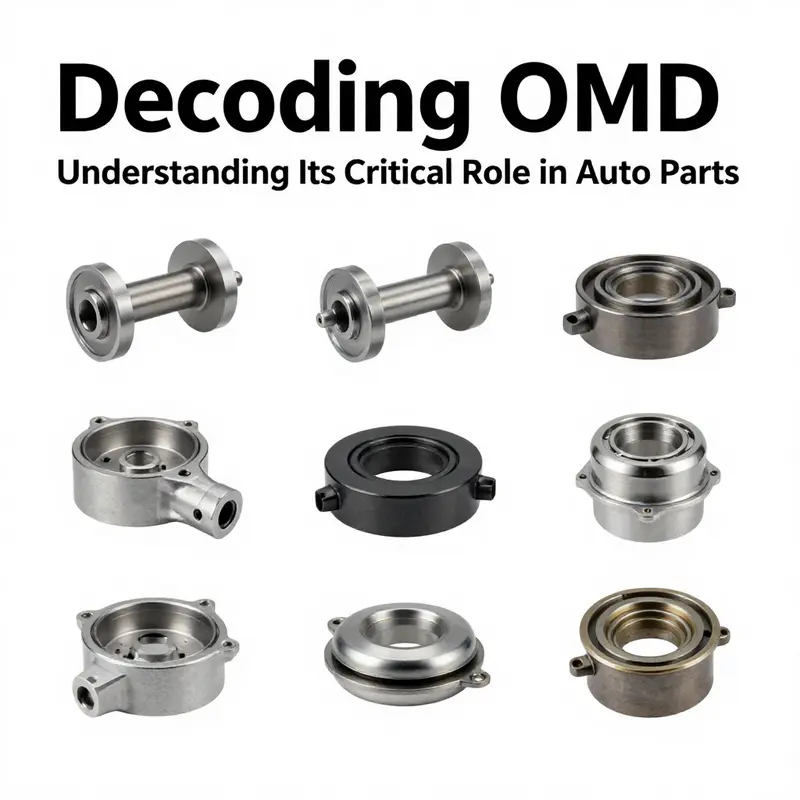
The term OEM, short for Original Equipment Manufacturer, sits at the heart of how people understand the parts that keep a car running from the moment it leaves the factory. It designates more than a label on a box; it marks the part as the product of the original design and engineering that the vehicle was built around. An OEM part is the component that was specified by the vehicle’s maker and produced to the exact tolerances, materials, and performance criteria that ensure the car’s systems work together as intended. When you hear that a part is OEM, you are hearing a promise about alignment with the factory’s engineering standards, the likelihood that the part will integrate with the vehicle’s safety features, and the expectation of long-term reliability across the car’s lifecycle. This is not merely about replacement compatibility; it is about preserving the integrity of the initial design—where every bolt, sensor, and housing has a precise role in the vehicle’s overall harmony.
In practice, OEM parts are produced by a company that designs and manufactures a component for a specific car brand, and those parts are intended for use in the new vehicles that brand manufactures. The part may be produced by the brand itself or by a specialized supplier that has been contracted to deliver components to the exact brand specifications. The result is a part that fits as the car intended, performs as the manufacturer planned, and meets the same safety and durability benchmarks that guided the vehicle’s original assembly. This is why OEM parts are known for their compatibility and for maintaining the vehicle’s intended behavior, from brake response and engine timing to air intake and electronic control functions. In contrast, aftermarket parts, while often cheaper or more readily available, may involve different materials, tolerances, or design decisions that alter how a system performs over time.
One of the most important aspects of the OEM concept is exclusivity. OEM parts are usually designed for a particular make and model, and their development aligns with the vehicle’s design language and performance envelope. That exclusivity helps ensure that the part integrates with the car’s existing systems—the sensors talk to the control units, the seals keep out contaminants, and the housings align with mounting points with minimal or no modification. This level of alignment is especially critical for safety-related components such as braking systems, steering interfaces, and restraint systems. It is also a key reason why dealerships commonly stock OEM parts to preserve the exact factory fit. When you purchase an OEM part from a dealership, you are often receiving the same item that was installed on your car at the factory. The aftermarket may offer compatible substitutes, but the link to the vehicle’s original design intent is not always preserved.
Quality assurance is another defining trait. OEM components undergo rigorous testing and validation as part of the vehicle’s production program. These tests check how a part performs not just in isolation but within the entire ecosystem of the vehicle’s systems. A part that fits physically but interacts poorly with sensors or electronic control units can compromise performance and safety. For this reason, OEM manufacturing processes emphasize uniformity, traceability, and repeatability. The goal is to ensure that every unit behaves the same way, delivering predictable performance across all production lots and over the vehicle’s intended lifespan. This approach reduces the risk of irregular wear, unexpected failures, or inconsistent performance that can accompany parts sourced from multiple, non-aligned suppliers.
A common misconception is that OEM merely means the original manufacturer’s name on the part. In some contexts, people use OEM to describe parts made to the original specifications, even if a different company produced them. Strictly speaking, OEM refers to the original maker—the producer responsible for the part’s definition during the vehicle’s initial manufacture. The result is a subtle but important distinction: an OEM part is not just a widely similar part; it is the genuine article, designed and built to the car brand’s exact standards. This distinction matters most during repair or restoration work, where staying faithful to the factory design helps maintain the vehicle’s integrity and resale value.
The supply chain behind OEM parts is a story of specialization and collaboration. Automotive manufacturers increasingly rely on a network of specialized suppliers who bring deep expertise in particular systems. The engine, the brakes, the transmission, or the electronics may each trace back to separate specialists who are entrusted with delivering components that meet the brand’s precise specifications. In this arrangement, the OEM is the conductor ensuring harmony across diverse contributors. The result is a system where every part is designed to fit within a tightly choreographed performance envelope. Modern OEM work also embraces advanced manufacturing methods. Computer Numerical Control (CNC) machining, for instance, has expanded what is possible in metal part fabrication. Five-axis CNC capabilities allow for highly complex geometries with precise tolerances, enabling components like engine brackets, fasteners, or housings to be produced with a level of accuracy that supports reliable high-volume use. The end products meet international standards such as DIN, GB, ANSI, or BS, which provides a common benchmark for quality and interchangeability across markets. The integration of CNC machining and these standards ensures OEMs can offer parts that consistently perform as intended, regardless of where the vehicle is sold.
Beyond traditional mechanical parts, OEMs are increasingly involved in the electronic side of vehicles. The automotive landscape has grown to rely on sophisticated electronic control units and infotainment platforms, and legitimate OEM pathways now extend into these high-tech domains as well. The manufacturer’s expectations for reliability, security, and long-term support push suppliers to apply the same rigorous engineering discipline to electronics as to metal components. This evolution reflects a broader shift: OEMs are not simply about replacing a hammer and a bolt. They are about preserving the integrated intelligence of the vehicle—the sensors, the actuators, and the software that coordinate how a car perceives and responds to its environment.
Geography has become a practical dimension of OEM viability. In large-scale production regions, dense clusters of skilled suppliers enable rapid prototyping, tight synchronization with assembly lines, and efficient just-in-time delivery. In parts of the world where manufacturing ecosystems are highly developed, clusters can minimize lead times while upholding exacting quality controls. The result is an ecosystem where OEMs can deliver precise, well-tested parts quickly to meet the demands of modern production schedules and maintenance needs. The overall effect is a more predictable supply chain, reduced risk of counterfeit or substandard components, and a smoother repair pathway for vehicle owners who want to preserve factory performance.
Procurement decisions in this space go beyond catalog choices. Strategic sourcing for OEM-compatible parts involves technical due diligence, performance benchmarking, and alignment with rigorous operational standards. Buyers assess tolerance stacks, material properties, heat treatment, coatings, and the compatibility of interfacing parts. They evaluate how the part will interact with electronics, software, and safety features. This kind of due diligence helps prevent surprises in assembly and in long-term operation, where a seemingly small variance can ripple into broader performance concerns. Platforms that connect buyers to verified suppliers can illuminate key details such as pricing structures, minimum order quantities, and freight terms, providing a clearer path from design to production or maintenance. In such environments, the value of OEM parts becomes evident in how they preserve the vehicle’s original performance, rather than simply offering a similar substitute.
For readers who want a concrete sense of how OEM concepts translate into practice, it helps to consider a real-world example of a sourcing decision. An OEM pathway may involve a supplier who designs and manufactures a crucial mechanical component to a brand’s exacting geometry, while other collaborators focus on complementary subsystems. The result is a cohesive, well-integrated component set that preserves the car’s intended feel and response. This is part of why many owners and technicians prefer OEM parts for critical systems. In repair work, OEM components can simplify service, keep warranty considerations intact, and reduce the likelihood of unexpected compatibility issues with other factory-installed hardware.
If you are exploring where to start with OEM-compatible parts, remember that the goal is not merely replacement. It is restoration of the vehicle’s original performance envelope. A practical takeaway is to view OEM parts as a way to protect the investment in a vehicle’s design. They are the most straightforward path to preserving fitment, function, and the long-term relationship between a car’s mechanical and electronic systems. And when it comes to sourcing, it helps to examine supplier credentials, traceability records, and the extent of conformity testing, rather than simply comparing price tags. For those curious about how this landscape is described and compared in industry literature, you can read a concise overview of OEM, OES, and aftermarket distinctions here: https://www.autocar.co.uk/industry/understanding-different-types-automotive-parts-oem-oes. As a practical illustration of OEM sourcing in a catalog context, one might encounter entries such as brand-new-original-carbon-fiber-bonnet-hood-for-mitsubishi-lancer-evo-x, which demonstrate how a single part can embody the tightly regulated, design-forward mindset that OEM thinking champions.
This integrated perspective—engineering precision, controlled manufacturing processes, and strategic sourcing—helps explain why OEM parts continue to be central to modern automotive reliability. They are not simply about replacing a worn piece; they are about sustaining the car’s original character, performance, and reliability across years of service. The OEM mindset emphasizes that the best repair choices align with the vehicle’s initial design intent, ensuring that safety, efficiency, and driving feel stay faithful to what the manufacturer envisioned when the car first rolled off the line.
null
null
Choosing Between OEM and Aftermarket Parts: What Changes Under the Hood
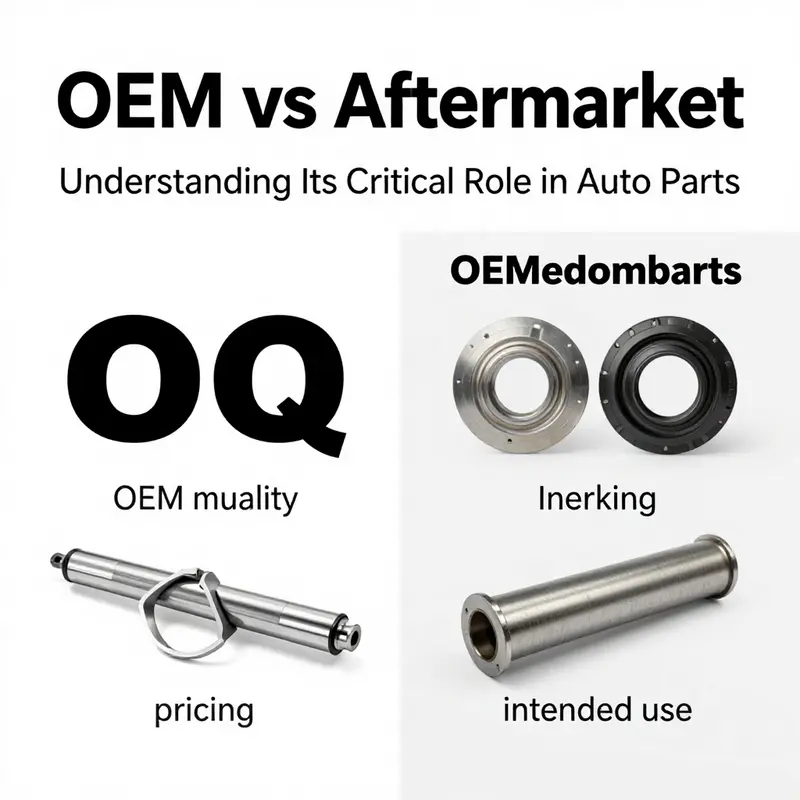
OEM versus aftermarket is the central decision many vehicle owners face after a repair, upgrade, or maintenance need. The choice goes beyond price. It touches reliability, fit, warranty, availability, and long-term cost. This chapter walks through those trade-offs in a single, cohesive narrative so you can see how each factor plays into real-world decisions.
Begin with origin and intent. OEM parts are made to the exact specifications used when the vehicle left the factory. They are designed to mate, perform, and age in harmony with all the other components on the vehicle. Aftermarket parts are produced by independent manufacturers after the vehicle has entered service. Their aim can vary: some target direct replacements that match the original closely, while others aim to undercut price, simplify manufacturing, or add a performance twist. That difference in intent shapes everything else you will compare.
Quality and performance often act as the decisive pair. OEM parts generally meet the original engineering and safety targets because they must integrate with a complex system. That means tighter dimensional tolerances, matching material choices, and quality controls that reflect the automaker’s standards. In practice, this reduces the chance of fitment issues and unforeseen interactions with sensors, wiring, or adjacent components. Aftermarket parts range widely. Some third-party makers invest in high-precision tooling and rigorous testing and deliver components that equal or exceed the original. Others cut corners by using thinner metals, cheaper plastics, or simplified designs. The result is a wide gulf in durability and performance among aftermarket options.
Cost is the clearest contrast. OEM units typically carry higher prices. Those costs reflect factory-level engineering, controlled supply chains, and often dealer markups. Aftermarket parts frequently cost less because more suppliers compete in the space, and manufacturers can choose lower-cost materials or processes. Yet lower purchase price does not always equal lower lifetime cost. If a cheaper part fails early, the combined expense of repeated replacements and additional labor can exceed the savings on the initial buy.
Fit and installation time matter in everyday life. An OEM part usually slips into place with no modification. That means shorter shop time, fewer surprises, and less chance of follow-on repairs. Aftermarket pieces can require minor adjustments, specialized adapters, or alternative fasteners. For do-it-yourselfers, that may translate into extra time, a learning curve, or the need for supplementary parts. For shops, it can add labor and the possibility of warranty disputes if a non-OEM replacement causes a failure.
Warranties and guarantees form another key consideration. OEM parts often come with a clear warranty from the dealer or manufacturer that covers both the part and, in some cases, associated labor. Many reputable aftermarket brands also back their parts with strong warranties or lifetime guarantees, but coverage terms vary. Reading warranty fine print matters: some warranties void when parts are installed by non-certified technicians, while others protect only the replacement part and not consequential damage.
Safety-critical components deserve special attention. Brakes, steering parts, structural elements, airbags, and certain sensors are central to safe operation. For these items, many experts recommend OEM replacements because they were engineered as part of a safety architecture. Aftermarket alternatives may be acceptable, but only when their specifications and testing history are transparent and proven. Choosing a less expensive substitute for a safety-critical item is a calculated risk.
Availability and selection influence the timing of your repair. OEM parts may be sourced through dealerships or certified distributors, and sometimes lead times are longer, especially for older models or rare components. Aftermarket suppliers often offer a wide range of options, including upgrades, performance-oriented variations, and readily available replacements. That variety is an advantage when speed or customization is a priority.
Long-term ownership and resale considerations also shape the decision. Vehicles maintained with OEM parts can present a documentation trail that appeals to buyers who prefer factory-spec maintenance. Conversely, quality aftermarket upgrades can enhance performance or economy, and well-documented, high-quality aftermarket installations can be a selling point. The distinction is context-dependent: for classic restorations, OEM authenticity often commands a premium; for performance builds, tasteful aftermarket enhancements can add value.
Decision-making rules of thumb help you act without overthinking every purchase. For safety systems and complex electronic modules, favor OEM or vetted equivalents. For consumables such as filters, bulbs, and wiper blades, a reputable aftermarket option often delivers equal service for less cost. When the goal is a performance upgrade or a visible aesthetic change, the aftermarket’s broader selection can be the right path. Always weigh the total cost: price of the part, installation, potential rework, and the warranty terms.
Quality verification tips are practical and short. Check for part numbers and compare them to the original. Ask for material specifications and manufacturing tolerances when possible. Seek brands with documented testing, third-party certifications, or positive track records in technical forums and repair networks. If you choose aftermarket, prefer suppliers that publish warranty terms clearly and support return policies. For OEM purchases, verify whether installation by an authorized facility is required for warranty coverage.
Smart purchasing practices minimize regrets. When you receive a part, inspect it before installation. Verify fitment points, connectors, and mounting interfaces. If any fit or function issue appears, document and contact the supplier before proceeding. Keep receipts, packaging, and warranty paperwork in a safe place; these will be essential if a replacement or claim is necessary. When a mechanic recommends a specific part, ask whether they will honor a labor warranty if a non-OEM part fails soon after installation.
Finally, there are hybrid approaches. Many owners mix OEM and aftermarket parts strategically: OEM for safety and electronics, aftermarket for noncritical items and performance upgrades. This balanced approach can control costs while preserving reliability where it matters most.
For a practical example of part sourcing choices and how original-design items are presented in a specialty catalog, see this listing for a brand-new original carbon fiber bonnet for a popular performance model: brand-new-original-carbon-fiber-bonnet-hood-for-mitsubishi-lancer-evo-x.
If you want standards and industry perspective on aftermarket practices, refer to authoritative guidance from the industry association: https://www.aaia.org
How OEM Parts Stay Reliable: Quality Control and Assurance Explained
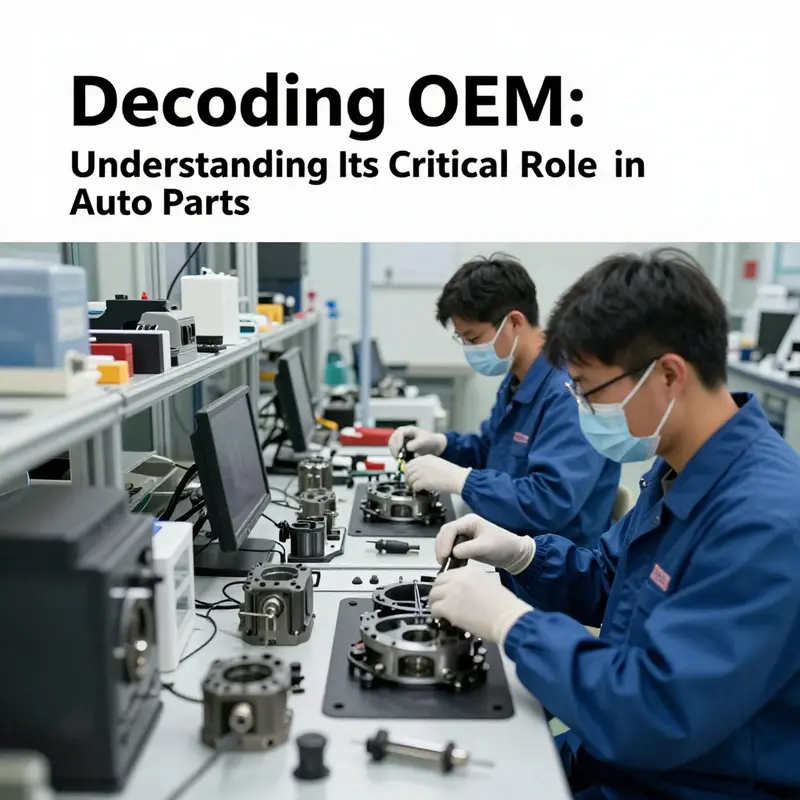
Quality control and assurance in OEM parts is the backbone of vehicle safety, performance, and durability. When a component leaves an OEM production line, it must fit, function, and last exactly as the vehicle maker expects. That reliability comes from a tight web of processes, measurements, standards, and continuous feedback. This chapter explains how those elements work together to keep OEM parts consistent, why they matter to the driver, and how modern methods further reduce risk.
At the center of OEM quality is precise specification. Vehicle manufacturers provide detailed design drawings, dimensional tolerances, material requirements, and functional targets. Suppliers build processes around those specifications. The goal is simple: produce every unit so it performs like the part originally intended for the car. To reach that goal, quality assurance begins long before the first production piece. Engineers develop control plans that identify critical features. Failure Modes and Effects Analysis, or FMEA, maps how parts might fail and ranks those risks. Suppliers then design process controls aimed at the highest risks. The result is a set of predictable, repeatable steps that minimize variation.
Measurement and monitoring turn plans into reality. Incoming inspection verifies raw materials meet composition and dimensional standards. During production, automated systems measure key features in real time. Statistical Process Control monitors trends and flags deviations. When a measurement drifts, systems either alert operators or trigger automatic adjustments. Those rapid corrections stop defects from multiplying. Final inspection confirms every finished part conforms to tolerance limits and functional tests. Together, incoming, in-process, and final checks keep a closed loop of quality.
Certifications and audits provide an external check on those internal practices. Automotive-specific quality standards define what a supplier must document and control. Achieving certification requires written procedures, records of training, traceability of parts, and evidence that corrective actions work. Regular audits—both internal and by the vehicle maker—verify adherence. Certification alone does not guarantee perfect parts. But it ensures a disciplined approach to quality, with documented methods and processes that can be improved over time.
Traceability matters when problems appear in service. OEM systems label batches with identifiers that trace components back to raw materials, machines, shifts, and operators. If a defect is discovered in the field, traceability speeds root-cause analysis. Manufacturers can isolate affected lots, notify service centers, and issue targeted recalls when needed. That capability limits exposure and resolves issues more quickly than guessing which parts might be affected.
Design for manufacturability is another pillar. Engineers consider how a part will be produced from the first sketch. Tolerances are balanced with realistic tooling capabilities. Assembly fit and joining methods are chosen to reduce error. When designers and manufacturing teams collaborate early, parts require fewer changes and have fewer production problems. This close collaboration explains why OEMs often make or closely control components meant for initial vehicle assembly. It reduces surprises during mass production and limits field failures.
Supplier management is an essential, ongoing activity. OEMs do not always make every part themselves. They select specialist suppliers for engines, brakes, electronics, and more. Those suppliers are evaluated on quality performance, delivery reliability, and improvement capability. Long-term supplier relationships get stronger because both parties invest in shared processes. OEM teams support key suppliers with engineering assistance, joint improvement projects, and shared quality metrics. This alignment cultivates consistent quality across a complex supply chain.
Testing and validation go beyond dimensions. Components undergo environmental tests to simulate heat, cold, humidity, and vibration. Fatigue testing verifies long-term durability. Some parts are tested under extreme load or impact conditions. Software-controlled systems face additional validation, including electromagnetic compatibility and software reliability tests. Validation replicates the real-world stresses a part will face. When a part passes those tests, confidence in its performance grows.
Modern manufacturing adds new layers of assurance. Real-time data capture and integrated software platforms connect machines, inspection tools, and quality databases. That integration turns data into action. For example, a spindle wear signal can trigger maintenance before parts drift from tolerance. Automated inspection using cameras and sensors catches defects faster and with more consistency than manual checks. These systems reduce scrap, improve cycle time, and keep quality stable across shifts and plants.
Cost and value intersect in quality discussions. OEM parts typically cost more than some aftermarket options. That difference reflects rigorous testing, traceability, certification, and the engineering that ensures a part works with vehicle systems. For end users, higher upfront cost can mean fewer visits to the repair shop, better safety, and consistent vehicle performance. For fleets and safety-critical applications, that predictability reduces total ownership cost.
A clear distinction exists between OEM parts and aftermarket alternatives. Aftermarket producers may meet technical specifications, but they rarely match the complete quality ecosystem of an OEM supplier. They might not follow the same documentation, traceability, or certification processes. Buyers who prioritize guaranteed fit and documented testing often choose OEM parts despite the premium.
Continuous improvement closes the loop. Quality data from production, field reports, and warranty claims feed back into design and process changes. Root-cause analysis leads to design tweaks, supplier changes, or new process controls. A part introduced five years ago is seldom identical today. Iterations driven by actual performance and failure data make current parts safer and more reliable.
For practical context, consider how authenticity and condition affect selection. A listing for a genuine, low-mileage engine illustrates why provenance matters. When OEM parts retain original specifications and known history, they provide peace of mind to vehicle owners and technicians. You can view an example of a genuine engine listing that emphasizes authenticity and condition here: genuine JDM low-mileage 1995-1999 JDM Mitsubishi 4G63T engine.
Quality control and assurance in OEM parts are not static obligations. They are a continuous practice that combines clear specifications, rigorous testing, disciplined processes, and modern data tools. That combination preserves vehicle performance and safety. It also delivers predictable outcomes for manufacturers, service networks, and vehicle owners. For those who value exact fit, proven durability, and documented provenance, OEM parts remain the benchmark.
For more detail on how integrated software and automated inspection improve part quality, consult this resource: https://www.automation.com/insights/how-to-improve-part-quality-with-integrated-software
Original at the Core: How OEM Auto Parts Shape Quality, Costs, and the Industry’s Future

Original equipment manufacturer parts sit at the center of how a car performs, feels, and lasts. They are more than just components; they are the culmination of design intent, precision engineering, and a tightly controlled manufacturing process that aligns with the vehicle maker’s standards. In this sense, OEM parts are the original article in a broader system where every bolt, bearing, and housing must fit the rest of the vehicle like a carefully tuned instrument. Their defining features—exclusivity, rigorous testing, and a direct link to the factory’s blueprint—anchor both the car’s immediate performance and its long-term reputation. When a customer asks what OEM means in auto parts, the simplest answer is that these parts originate from the same design and production lineage that built the vehicle in the first place. They are designed to integrate with every other system on the car, from the engine and transmission to the braking and electronic control networks. This integration is not merely about compatibility; it is about a managed balance between performance, safety, and durability that aftermarket substitutes strain to emulate. OEM parts are designed to be a perfect complement to the brand’s engineering language, ensuring that the vehicle responds as intended under all typical usage scenarios. The result is a level of reliability and predictability that forms the backbone of the consumer’s trust in a brand, a trust that translates into long-term loyalty, favorable resale value, and a reputation for quality that suppliers, dealerships, and manufacturers rely on in equal measure. The economic implications cascade from this core idea. When the parts installed at the factory are the same parts offered for service, warranties align with the original performance criteria, and maintenance intervals reflect the vehicle’s initial design expectations. The cost calculus becomes more straightforward for the manufacturer: fewer unexpected compatibility issues, lower warranty claims, and a clearer path to consistent service experiences. For consumers, the cost picture often presents OEM parts as a premium choice, justified by the guarantee of seamless integration and the assurance that the part will perform as it did when the car was new. Yet the economics are more nuanced. OEM parts give manufacturers a predictable supply chain and a known compatibility matrix, which lowers risk and simplifies forecasting. To the other side of the supply chain, the implications ripple through pricing strategies and dealer practices. Dealers can position OEM parts within a trusted value proposition that emphasizes safety, performance, and longevity, differentiating dealership service from generic aftermarket options. This positioning matters because it reinforces a brand’s identity, not merely a vehicle’s. A vehicle is a complex system, and OEM parts function as the reliable scaffolding that keeps that system coherent over time. When a brand emphasizes OEM parts in its aftercare, it signals a commitment to the vehicle’s original design intent—an attribute many drivers value when considering long-term ownership costs. The quality assurance that accompanies OEM parts is not incidental. These parts undergo testing that mirrors or exceeds the rigorous standards applied during the vehicle’s initial production. The testing regimes, the validation of materials, and the verification across the vehicle’s interface with electronic systems all contribute to a predictable performance profile. In the modern automotive landscape, this predictability matters at scale. As manufacturers embrace advanced propulsion systems, precision manufacturing, and intelligent assemblies, the OEM framework serves as a stable reference point. It provides a shared language for engineers, suppliers, and service teams to ensure that every component will behave harmoniously with the others, even as new technologies alter the vehicle’s behavior. At the same time, the economic dynamics surrounding OEM parts are evolving. The market isn’t static, and new entrants, often lean and capital-efficient, push toward niches that grin with opportunity at the edge of the traditional supply chain. They may offer specialized components or enhanced aftermarket services that still respect the original specifications in principle, pressuring established OEM suppliers to optimize pricing and efficiency. This ongoing competitive pressure benefits the broader ecosystem by driving innovation and reducing costs through smarter manufacturing and logistics. Data from global markets illustrate a broader economic arc: a sizable, growing aftermarket ecosystem coexists with OEM supply, supporting the entire life cycle of a vehicle. In some regions, the aftermarket market has surged past historical expectations, signaling a robust demand for reliable parts beyond the factory warranty window. In parallel, sustainability considerations are reshaping the cost structure and responsibilities of OEMs. The shift toward greener manufacturing and circular economy principles is not a phase but a transformation. Recycling and reprocessing of renewable resources have become part of the production and repair chain, with green practices spreading across factories and supplier networks. Companies investing in eco-friendly processing equipment and waste reduction technologies are not just pursuing compliance; they are shaping a more cost-efficient, low-risk supply chain. These investments translate into lower material waste, reduced energy consumption, and improved yield, which collectively lower per-unit costs for OEM parts over time and support more stable pricing for the original components. The economic case for OEM parts also rests on long-term value. OEMs help preserve a vehicle’s resale value, a factor that weighs heavily in ownership economics. When a buyer sees a vehicle maintenance history that includes factory-grade parts, confidence in future reliability rises. Dealers and lenders similarly interpret this history as a lower risk profile, which can translate into better financing terms and broader marketability at resale. This is not an abstract advantage. It directly affects consumer willingness to invest in a vehicle and can influence the total cost of ownership. The integration of OEM parts into the broader supply chain thus functions as a stabilizing force amid rapid technological change. As electrification accelerates, vehicle architectures become more complex and software-driven. OEM suppliers are uniquely positioned to keep pace with these shifts because they operate within the brand’s design and testing ecosystems. The partnership models that underwrite OEM production—where the vehicle maker collaborates with carefully selected suppliers to meet exacting specifications—also enable a shared focus on safety, durability, and reliability. In a world where parts can be sourced from distant regions with varying quality standards, the OEM framework provides a common standard that reduces risk and supports a coherent maintenance narrative for customers. For readers tracing the arc of OEM parts from factory floor to service bay, the key takeaway is that OEMs are not simply about initial assembly. They set a benchmark for performance and compatibility that reverberates through warranties, repair costs, and consumer confidence. The economic implications are as consequential as the technical ones: efficiency in production, resilience in supply, and a feedback loop that incentivizes ongoing innovation. Even as new players enter the market and offer alternatives, the value proposition of OEM parts remains anchored in the assurance that the original design intent remains intact. This is the ecosystem where quality, reliability, and cost considerations converge to influence decisions at every stage of a vehicle’s life. In practice, customers encounter OEM parts when service intervals align with factory specifications, when fit and finish meet the same tolerances as the day the car left the line, and when the vehicle’s performance profile remains consistent across thousands of miles. It is in this consistency that the economic logic becomes most persuasive: a longer-lasting part reduces total cost of ownership, reduces the probability of unintended side effects, and preserves the vehicle’s intended balance of power, efficiency, and safety. For those seeking a tangible glimpse into the practical world of component sourcing, consider the broader spectrum of parts that reflect original design principles, including items that emphasize the integrity of the installation and the seamlessness of integration within the vehicle’s architecture. A concrete example of how such principles can be observed in practice is the availability of specialized listings that highlight original or original-equivalent components within a trusted network. Example listings, while diverse in scope, illustrate how consumers and shops seek parts that align with the vehicle’s factory specifications, reinforcing the long-standing preference for OEM-grade integrity. Internal references to such listings can remind readers that the concept of original equipment extends beyond the factory floor and into the hands of technicians and enthusiasts who value precise fit and dependable performance. This continuity—from design to service to ownership—explains why OEM parts remain a cornerstone of the automotive economy. The tensions and trade-offs within this system—between exclusivity and competition, between high-quality assurance and price sensitivity, between sustainable manufacturing and global sourcing—drive ongoing evolution in the industry. As vehicles become more sophisticated and global supply chains more interconnected, the OEM framework will continue to anchor the balance between innovation and reliability, ensuring that the parts installed in a car today will still perform as intended years from now. External resource: How Will Baodi Auto Parts’ Patent for Collecting Debris Processing Equipment Change the Industry? https://www.example.com/baodi-patent-impact
Final thoughts
The exploration of OEM in auto parts has illuminated its essential role within the automotive industry. OEMs guarantee that the components manufactured adhere to strict specifications, ensuring reliability and safety in vehicles. By differentiating OEM parts from aftermarket alternatives, recognizing the quality assurance processes, and acknowledging the substantial economic impact, business owners can make informed decisions about the parts they choose for their vehicles. This understanding is not only advantageous for maintaining high performance in vehicles but is also essential for fostering long-term business relationships with manufacturers and suppliers. Ultimately, embracing OEM parts is a strategic investment in quality, reliability, and customer satisfaction.