

Advance Auto Parts is set to close around 700 locations by mid-2025, a significant move that reflects ongoing challenges in the auto repair retail industry. This article delves into critical aspects of these closures, covering the timeline of when these stores will shut down, the financial ramifications for the company and its stakeholders, and the broader trends influencing the automotive market today. With these insights, business owners can better navigate the evolving landscape of the industrial and retail businesses that intersect with the automotive sector.
Timeline and Rationale Behind the Advance Auto Parts Store Closures: What to Expect and When
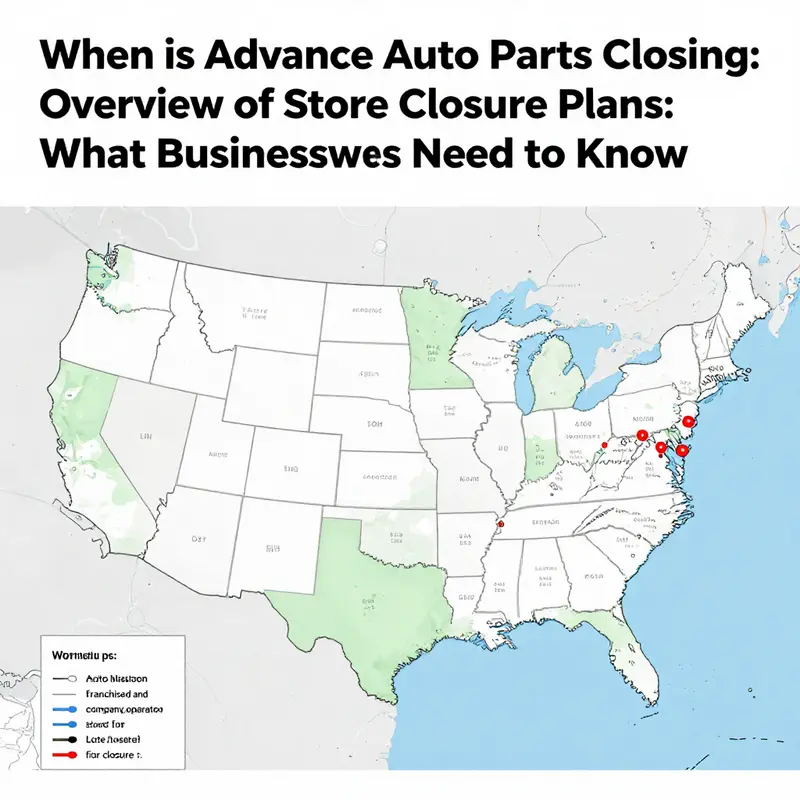
When the company announced its plan, many observers asked a simple question: when will the closures happen? This chapter traces the timeline, the business reasons, and the practical implications of the announced store reductions. It explains why the decision came later than some expected, how the company structured the reductions, and what stakeholders should expect as the program unfolds through mid-2025.
The decision to close roughly 700 retail locations did not arise overnight. Publicly available records show no major program of closures in 2023. Instead, the program crystallized during 2024 as the company re-evaluated where it could compete most effectively. In November 2024 the firm laid out a comprehensive restructuring package. That disclosure specified the closure of 523 franchised partner stores and 204 company-operated retail locations. The plan also included the consolidation of logistics by shuttering four distribution centers. Management tied these steps to the completion of a major corporate divestiture earlier in 2024 — the sale of its large wholesale business — and to a broader aim of refocusing on core retail operations.
Understanding the timing requires starting with the 2024 announcements. The sale of the wholesale arm removed a substantial piece of the company’s historical footprint. With that business sold, leadership reassessed store density, distribution reach, and the franchising model itself. The November 2024 disclosure was the first time the company publicly quantified the scale of closures. It made clear that the reductions would be spread across both owned and franchised locations, and that the company planned to complete most actions by mid-2025. In short: the formal closure plan was revealed late in 2024, and execution was scheduled to proceed through the first half of 2025.
The public timeline reflected practical constraints. Closing a retail network of this size requires lease negotiations, inventory disposition plans, employee transitions, and regulatory compliance. For franchised stores, the process often involves parallel negotiations between the corporate brand and independent owners. The company signaled it would exit the franchising model in many markets. That meant franchise agreements had to be unwound, compensation or transition assistance discussed, and customers given notice. Company-run stores likewise required logistics for inventory and staff. Distribution centers involved their own complexities, because they affect regional supply chains. For those reasons, management aimed to complete the bulk of actions by mid-2025, while recognizing some locations could remain under transitional arrangements for a longer period.
Why mid-2025? Midyear is a pragmatic target. It allows a full fiscal quarter cycle for closure logistics and avoids the most disruptive parts of peak seasonal demand periods for automotive retail. It also aligns with many commercial lease calendars, where midyear termination windows and notification requirements make timing smoother. Setting a clear target gave stakeholders a predictable period to plan around. It also allowed the company to manage public expectations, reducing the chance of ad hoc or poorly coordinated shutdowns.
The November 2024 plan had three components that informed the timeline. First, the store count: the announced total of roughly 727 closures combined franchised and company-owned shops. Second, the distribution adjustments: four centers were slated to close, which would shift the inventory flow for nearby stores. Third, the corporate strategy change: management intended to pare back franchising as part of a broader simplification. Each component added layers to the timetable and required separate action plans. Combining them meant the company could achieve savings while also redesigning its operating model.
The underlying reasons are as important as the dates. Several forces prompted the overhaul. The first was changing consumer behavior. E-commerce penetration rose steadily and the marketplace for parts and supplies grew more competitive. Customers increasingly compare prices online before purchasing. That preference reduces foot traffic to smaller, less strategically located stores. The second reason was the long-term trend of lower per-vehicle repair demand. As vehicles become more reliable, and as certain models and technologies reduce routine maintenance needs, the volume of parts sold in brick-and-mortar stores faces pressure. The third was intense competition across national and regional chains and specialized online retailers. Finally, management cited financial pressure; despite a return to profitability in the first quarter of 2026, revenue remained under strain, making cost and network optimization essential.
It matters that profitability returned in early 2026. The company closed the fiscal year with a complex picture: a cleaner business after the wholesale sale, modest profitability, but still revenue headwinds. That combination validated some restructuring steps but did not eliminate the need to shrink the retail footprint. In practice, profitability in a quarter does not instantly offset long-term declines in retail sales. Closing underperforming locations remains a common path to stabilize margins and allocate resources more efficiently.
The plan’s division between franchised and company-owned retail was deliberate. Franchised stores historically allowed quicker geographic expansion with lower corporate capital. But the model introduced variability in customer experience and in strategic control. By reducing reliance on franchisees and reshaping owned-store density, the company could align daily operations and promotions more closely with corporate priorities. For franchise owners, the announced changes forced immediate choices: accept transitional terms, pursue alternative arrangements, or exit. For corporate-owned stores, corporate leaders could more quickly implement closures, reallocate inventory, and repurpose facilities where feasible.
Operationally, the company used a phased approach. Early phases focused on locations with the weakest performance or with overlapping service areas. Mid phases tackled logistical hubs and distribution center consolidation. Later phases were reserved for complex leases or legally sensitive closures. This method balanced speed with risk mitigation. It also allowed the company to apply learnings from initial closures to later ones, improving processes for employee communication, inventory liquidation, and customer transition messaging.
The social and local economic effects of these closures were tangible. Employees at affected stores faced job changes, layoffs, or transfers. Franchise owners needed to weigh the economics of continuing under a new model versus exiting. Local suppliers and small contractors lost business when nearby retail demand fell. Communities that relied on accessible retail for parts and advice saw a reduction in options. In many cases, customers had to travel further, switch to different channels, or learn new online ordering workflows. The company planned to provide transition assistance where possible, including severance, outplacement support, and opportunities to apply for open roles within a reconfigured network.
From a customer perspective, the timing had practical consequences. Customers using the chain’s locations had to plan for alternative sources. The closures accelerated adoption of online ordering platforms and third-party marketplaces for hard-to-find parts. Specialty items and performance components frequently remained easier to obtain from niche suppliers, not larger chains, which drove some enthusiasts directly to independent online stores. As an example of the specialist market, customers seeking unique aftermarket components might explore dedicated online storefronts for performance parts, such as a carbon fiber bonnet for a Lancer Evo X.
Supply chain adjustments were a critical part of the timing story. Closing distribution centers required rerouting shipments, adjusting inventory buffers, and recalculating transportation costs. In some regions, customers could see shifts in delivery times or fulfillment options. The company aimed to coordinate store closures with network rerouting to minimize service disruption. That required detailed demand forecasting and rapid execution to ensure remaining stores remained stocked.
Financially, the decision reflected a trade-off. Closing stores generates one-time costs — lease termination fees, severance expenses, and write-offs for unsold inventory. Over time, however, the expected gain comes from lower fixed costs and improved per-store economics for the locations that remain. Management framed the closures as a reallocation of capital to better-performing markets and to investment in technology and e-commerce capabilities. Achieving those gains required both careful timing and a clear view of where future demand would be concentrated.
Regulatory considerations also influenced scheduling. Local labor laws, notification requirements, and commercial lease clauses differ across jurisdictions. These legal differences often determined the sequence in which stores could be closed. For example, some leases include notice periods that extend into mid-year or beyond. For franchised operations, contract law and franchise statutes added layers of protection for franchisees, sometimes lengthening negotiations.
Communications held a central role. The company followed a cadence of announcements and direct outreach. Public disclosures explained the rationale and scale. Individual store-level communications informed employees and customers. The aim was to provide clarity and reduce anxiety. For many stakeholders, timely information was essential to making practical decisions, whether that meant searching for new employment, planning alternate sources for parts, or finalizing local contracts.
For investors and analysts, the timeline and scale of the closures clarified the company’s strategic direction. The sale of the wholesale business, coupled with a tighter, smaller retail footprint, repositioned the firm as a focused retail operator. The mid-2025 target provided a window for measuring the financial impact of the changes. Investors evaluated whether cost savings would offset one-time closure expenses and whether the remaining network could regain sustainable growth.
What does this mean for the average customer or a local market? Expect a gradual transition through mid-2025. In many markets, nearby stores will remain open. In others, customers will need to shift to different retailers or to online channels. The company’s near-term efforts included promoting digital ordering, optimizing remaining stores for higher inventory turns, and offering customer incentives to maintain loyalty during the transition. For customers who rely on local walk-in service, planning ahead would reduce inconvenience.
For employees and franchisees, the November 2024 announcement started a clock that required decisions and adaptation. The company emphasized support but the outcomes varied by market. Some franchise owners negotiated buyouts or conversions. Others chose to close and reallocate capital. Employees who could relocate or transfer had better prospects than those in isolated regions.
The mid-2025 endpoint was realistic but not absolute. Some lease or legal constraints could push completion slightly beyond that date. Still, the company’s public schedule set expectations clearly. By setting a target rather than an open-ended plan, the firm helped communities and partners prepare. It also allowed the company to measure progress and adjust tactics as closures proceeded.
This timeline and rationale show a company responding to structural market shifts. The November 2024 disclosure formalized a plan that balanced immediate cost savings with longer-term strategic positioning. Execution through mid-2025 required coordination across leases, supply chains, franchise relationships, and customer communications. Stakeholders who tracked the company’s announcements and who prepared for the transition faced fewer surprises.
For readers who want the source document behind the November disclosure, the company’s investor relations site hosts the press release that outlines the restructuring in full. The formal press release is available here for reference: https://investors.advanceautoparts.com/news-releases/press-release-details/2024/Advance-Auto-Parts-Announces-Comprehensive-Restructuring-Plan
Overall, the timeline was clear: the plan was announced late in 2024, execution was scheduled through mid-2025, and the program combined store and distribution center closures with a strategic retreat from parts of the franchising model. The reasons were mixed: changing customer behavior, competitive pressure, and a strategic reorientation after divesting a major wholesale business. For anyone affected, understanding the timing window gave space to respond, and it showed how a major retail chain rearranged its footprint to face the next chapter in automotive retail.
Closing the Footprint: Timing, Finance, and Strategy in Advance Auto Parts’ Restructuring
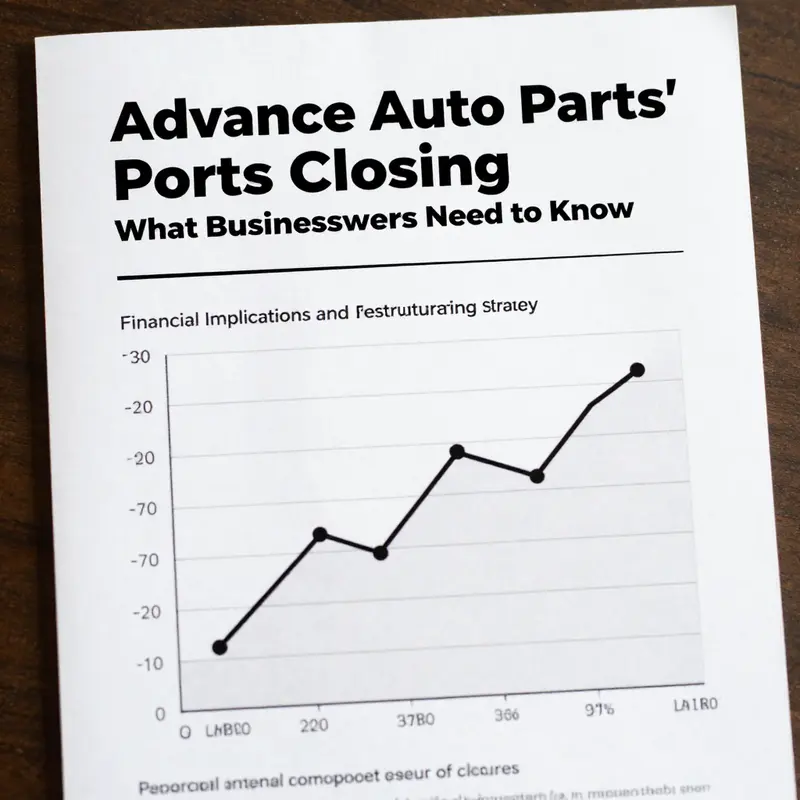
When the corporate map is redrawn, the first question a market asks is rarely about a single store or a single quarter. It is about the cadence of change, the reasons behind thinning the physical footprint, and the financial gravity that carries a company from loss to recovery and back toward sustainable growth. In the case of Advance Auto Parts, the sequence was explicit and carefully staged. Announced in late 2024, the plan called for a substantial reconfiguration of the company’s network, with the objective of closing approximately 700 stores by mid-2025 as part of a broader restructuring and transformation effort. The decision was not just about shedding underperforming real estate; it was about reallocating capital, sharpening the operating model, and repositioning the business for a market that had grown more complex in its consumer behavior and its competitive pressures. The scope was clear: a large majority of the closures would involve franchised locations, totaling more than five hundred, with hundreds more company-operated stores to follow. The strategic pivot also included exiting the franchising model altogether and narrowing the distribution network, signaling a move from rapid expansion to disciplined optimization. The magnitude of the footprint adjustment underscored the leadership’s judgment that the path to profitability needed more than incremental efficiency; it required a reconfiguration of how customers access parts, how the supply chain serves those customers, and how the balance sheet supports the pivot.
This is a chapter about timing and consequence as much as it is about numbers. It is about the reality that closures can unlock value only if the surrounding operations are recalibrated to serve customers more efficiently, and it is about the discipline required to navigate a transition that touches store associates, franchisees, landlords, suppliers, and the communities that rely on easy access to automotive parts and services. The strategic logic rests on a three-pillar plan that centers the physical footprint, the distribution backbone, and the customer-facing capabilities that, taken together, aim to shift the company from a cost-heavy footprint to a lean, responsive, and growth-oriented engine. The plan has evolved in two acts: the immediate harvest of cost savings from footprint optimization, and a longer-term reimagination of the business’s core capabilities and growth avenues. This approach is not merely about reducing costs; it is about enabling the right kind of growth—profitable, scalable, and resilient in the face of an industry that continues to be buffeted by changing demand for repairs, a rising tide of competition from e-commerce and independents, and evolving consumer expectations for speed, price, and service.
The timing of the closures, with mid-2025 as a target, was not an arbitrary deadline. It reflected a carefully modeled implementation plan designed to minimize service disruption while delivering measurable financial benefits. In the near term, the reductions in footprint are expected to yield meaningful annual savings—roughly $70 million—from the consolidation of stores and the optimization of the distribution network. Those savings are not simply a number on a projection sheet; they represent the core wind beneath the restructuring’s wings, enabling a faster return of capital to shareholders, a more robust buffer against macroeconomic headwinds, and a more agile platform for reinvesting in areas that can drive higher profitability and customer value. The closures are a means to an end, not an end in themselves, and the end, as the company frames it, is a stronger, more focused business that can sustain positive cash flow, improve margins, and deliver dependable performance through cycles of demand and competition.
Financial results in the period following the announcement have begun to reflect the recalibration, though not without short-term strains. In the fourth quarter of 2025, the company reported an adjusted earnings per share of $0.86, reversing a loss of $1.18 in the same quarter a year earlier. The improvement in adjusted operating margin, expanding by more than 800 basis points year over year, signals a significant operating leverage being unlocked by the restructuring efforts. This profitability pivot does not happen in a vacuum. It is the product of a multi-faceted program designed to streamline the supply chain, increase the efficiency of the store network, and elevate the performance of core channels. The company has indicated that the profit improvement is being driven in part by tighter cost discipline and improved pricing and service dynamics that better reflect the real costs of serving customers in a more focused footprint. Yet even as profitability gains materialize, the business has acknowledged the near-term tradeoff of some sales softness tied to the closures themselves—a cautious reminder that portfolio restructuring often comes with a revenue transition period.
From a sales perspective, the quarterly data tell a nuanced story. Net sales declined by about 1% in Q4 2025, a pause that Market observers attributed in part to the ongoing impact of the store closures on overall footprint and shopper reach. Yet this headwind was offset by a resilient performance in the professional channel, where same-store sales rose by a modest but meaningful 1.1%. The volume shift toward Pro customers—traditionally a higher-margin, service-centric segment—suggests that the company’s strategic emphasis on professional tradespeople and fleet operators is beginning to pay off, even as the consumer repair market remains cyclical and sensitive to discretionary spend. Management has articulated a forward-looking expectation for same-store sales to grow by approximately 1% to 2% in 2026, indicating that the company anticipates the revenue volatility caused by closures to ease as the footprint stabilizes and the new operational levers mature. This dual trajectory—near-term margin enhancement and mid-term, albeit gradual, top-line improvement—reflects a common pattern in restructuring programs: costs decline earlier, while revenue growth lags but eventually follows from the improved customer experience and channel mix.
A critical question that underpins all of these movements is how the company intends to sustain and protect its liquidity as it executes this ambitious plan. The restructuring is anchored by a notable balance sheet improvement achieved through a substantial liquidity event that freed up capital for investment in the areas deemed essential to long-term value creation. While the exact composition of this liquidity is not described in detail in public summaries, the strategic use of such liquidity is evident. It has allowed the company to accelerate investments in digital tools, customer service, and supply chain capabilities, and to begin establishing new market centers that can act as hubs for regional expansion and more responsive distribution networks. In addition to the capital flexibility, the company has begun to deploy a pipeline of real estate moves that prioritize high-potential markets and optimize peak service capability with a leaner cost base. The intent is to shift away from broad-based expansion that stretched resources and diluted profitability toward a more disciplined growth posture that emphasizes quality of service, speed, and reliability.
The portfolio reconfiguration is also accompanied by strategic changes in how the company interacts with its broader ecosystem. One notable element is a reduction in the number of independent franchise relationships, accompanied by a narrowing of the distribution network. This shift signals a more centralized operating model in which the company can exert greater consistency in pricing, inventory availability, and service standards, thereby reinforcing the customer value proposition across a more manageable footprint. The broader implication for franchisees and landlords is a period of adjustment as the network contracts and the market realigns around a streamlined, more profitable core. For employees, the transition carries both risk and opportunity: risk from job losses and role changes in a more concentrated store network, and opportunity from potential role expansion within a leaner, more technologically enabled business that can scale more predictably.
Operationally, the restructuring has been accompanied by a technology-driven push that aims to sharpen pricing accuracy, improve stock availability, and hasten the flow of goods through a more efficient distribution backbone. The company has highlighted investments in AI-driven pricing tools as part of its efforts to optimize margins in a dynamic retail environment where even small price-discovery advantages can translate into meaningful profits. Market centers, the planned network hubs, are designed to support faster replenishment cycles and more responsive fulfillment, ensuring that parts can reach customers with minimal delay. These capabilities are particularly important in an industry where downtime can erode trust and erode customer loyalty. The 2025–2026 plan, which includes opening 35 new stores in late 2025 and aiming to add 40–45 new locations plus 10–15 market centers in 2026, illustrates a pivot from incremental efficiency to growth with a more targeted, strategic lens. It is a shift from simply reducing the cost base to reinvesting in capabilities that can drive sustainable gains in market share and profitability over time.
The wider implications for stakeholders are multifaceted. For customers, the net effect should be more reliable access to the parts and tools they need, delivered with shorter lead times and better service quality, even as the footprint contracts in certain regions. For suppliers, a leaner, more predictable demand pattern can translate into more stable planning, though it may require adjustments as the network reshapes purchasing volumes and channel mix. For landlords and local communities, the closures mean a rebalanced presence of retail activity, with some neighborhoods losing stores while strategic markets gain enhanced service capabilities. These shifts require thoughtful stakeholder communication, transparent timelines, and ongoing efforts to mitigate disruption. It is a reminder that corporate decisions in the retail space are rarely confined to the numbers on a quarterly report. They ripple through the communities that rely on local access to repair resources, and they shape the operating culture of the company in fundamental ways.
In the broader context of the retail automotive landscape, the Advance Auto Parts restructuring fits within a set of industry-wide responses to changing consumer behavior and intensifying competition. Consumers increasingly blend self-service, online guidance, and professional assistance to complete repairs and maintenance tasks. The physical footprint, once the primary differentiator for many retailers, is becoming a component of a more holistic value proposition that pairs store access with superior digital support, a robust assortment, and dependable service. Companies that manage this combination successfully are better positioned to weather cyclical downturns and to capitalize on growth opportunities when demand for preventative maintenance and repairs rebounds. The decision to prune the network while investing in strategic capabilities signals a disciplined belief that long-term value rests not in the sheer number of doors, but in the quality of customer experience, the efficiency of the supply chain, and the ability to adapt to market signals with speed.
For stakeholders who watch these moves with a critical eye, the question is not only whether the company can achieve its near-term profitability targets but whether the restructuring can unlock durable, self-reinforcing growth. The 3.8% to 4.5% target for adjusted operating margin indicates ambition but also a dose of realism about what remains to be earned from price optimization, inventory discipline, and improved service delivery. The aim to restore positive free cash flow underscores the priority of liquidity and capital discipline as a prerequisite for future investments in people, process, and technology. In this context, the closure schedule and the evolving footprint are not mere cost-cutting steps; they are the scaffolding for a transformed business model designed to be lean, agile, and capable of delivering value across cycles.
The official earnings report for the fourth quarter and full year 2025 provides the most authoritative current snapshot of how the plan is progressing and where the next set of milestones will be set. Stakeholders are encouraged to review the detailed results and the accompanying guidance to understand the nuances of the revenue mix, the margin structure, and the cash flow trajectory as the company continues to execute its strategy. As with any large-scale corporate transformation, the narrative is as important as the numbers: it captures the balance between reduction and reinvestment, the balance between risk and opportunity, and the balance between immediate returns and durable value creation. For readers looking to dive deeper into the primary financial disclosures and to monitor the company’s progress, the official earnings release provides the most current and comprehensive source of truth.
Internal link example for context on disciplined focus: 08-15-mitsubishi-lancer-evolution-evo-x-hood-phantom-black-oem-u02
External resource for further context on performance disclosures: https://www.advancetools.com/ir/reports-presentations
Overall, the story of Advance Auto Parts’ closing timetable is a case study in transformative retail strategy. It underscores how a company can convert a strategic reconfiguration into a path toward healthier margins, stronger liquidity, and a credible growth narrative. It also highlights the delicacy of executing such a plan in a sector where competition is intensifying, customers expect seamless service, and the economics of repair and maintenance continue to shift with every new wave of consumer demand. As the company continues to navigate mid-2025 as a pivotal deadline, observers will be watching not only the number of stores that close or remain open but the speed and effectiveness with which the remaining network absorbs the changes, how the AI-powered pricing and market-center strategy translates into real-world utilization, and how the organization translates a leaner footprint into consistent, profitable growth.
For readers who are following this topic across chapters, the next discussion will examine how these structural changes are influencing supplier relations, financing decisions, and the broader outlook for the automotive parts retail segment in a market that remains in flux yet persistently focused on value, reliability, and speed of service.
When the Lights Dim: Market Shifts, Strategic Realignment, and the Quiet Rollout of Advance Auto Parts Closures

The process of store closures in the retail auto parts sector rarely unfolds as a single dramatic event. More often it plays out as a careful recalibration, a series of measured choices that reflect broader shifts in consumer behavior, operating costs, and the price of doing business in a digitizing landscape. In this context, Advance Auto Parts’ plan to shrink its footprint by hundreds of stores over the next year and a half stands not as a sign of collapse, but as a calculated adjustment aimed at preserving financial health while advancing a more digital-first, efficiency-driven model. The numbers alone tell part of the story: a target to close roughly 700 stores by mid-2025, with a split of 523 franchised locations and 204 company-operated stores. In tandem with these reductions, the company announced it would exit the franchising model and narrow its distribution network. The arc of this decision is stepping-stone, not finished, as management seeks to concentrate resources on high-demand locations, better e-commerce capabilities, and streamlined logistics. These moves sit within a broader arc of industry-wide change, where traditional brick-and-mortar presence is increasingly weighed against digital channels, supply chain resilience, and the cost structure required to serve both DIY enthusiasts and professional shops.
There is no single fixed date for every closure. Instead, the strategy unfolds through a continuous, performance-driven process. The underlying goal is simple in form and complex in execution: optimize the network to maximize profitability and customer relevance in a market where convenience, speed, and price matter more than ever. The company’s leadership has framed the closures as leveraging fiscal discipline and network optimization rather than signaling a terminal decline. As one retail industry analyst observed, when a store isn’t meeting volume thresholds, closure isn’t failure—it’s fiscal responsibility. That sentiment captures the tension at the heart of Advance Auto Parts’ transformation: a careful trimming of the portfolio to protect the core, while still investing in the capabilities needed to compete in a changing landscape.
The first dimension of the change is clear in the retail geometry itself. In recent years, consumer behavior has shifted toward online shopping for automotive parts and accessories. The ease of comparing prices, reading reviews, and ordering with fast shipping options has eroded some of the advantages of large, omnichannel networks that rely on foot traffic alone. In markets where demand is concentrated in a few high-volume stores, a sprawling footprint with overlapping locations becomes a maintenance problem rather than a growth engine. When the doors close at underperforming sites, it is not simply the loss of a single revenue stream; it is the elimination of ongoing lease obligations, property taxes, high labor costs, and the capital tied up in inventory that may turn over slowly in a volatile environment. The shift toward a leaner, more digitalized network is not unique to this company. It mirrors a larger pattern among retailers who have faced sustained pressure from online competitors, rising occupancy costs, and limited ability to pass rising expenses onto customers through price or service gains.
To understand why this particular adjustment is happening, it helps to place it within the context of market trends shaping the sector. The core driver remains a fundamental change in how people shop for car parts. The convenience of online marketplaces, the expansion of home delivery options, and the ability to source non-traditional parts from a growing array of suppliers have collectively changed the economics of a typical auto parts store. In some markets, the volume needed to justify a large footprint simply isn’t there. In others, overlapping footprints create inefficiencies that compound fixed costs. The result is a natural convergence toward a model that prioritizes lanes with stronger sales and more efficient logistics. This approach aligns with the company’s stated objective of focusing on core business areas, expanding e-commerce capabilities, and investing in distribution centers to improve supply chain efficiency. The ambition is not to abandon traditional channels altogether but to convert a larger share of demand into a digitally enabled, faster-to-fulfill experience.
The financial picture accompanying these strategic moves is telling, even at a moment when the company was able to report profitability in the first quarter of 2026. Revenue, however, remained under pressure, underscoring how fragile a recovery can be when demand for repairs remains tepid and competition intensifies. The projections for 2026 indicate a cautious path to growth rather than a rapid ascent. The company forecast same-store sales growth of 1% to 2% for the year, a range that sits slightly below what some analysts expected. Revenue guidance hovered between $8.49 billion and $8.58 billion, with adjusted earnings per share (EPS) projected from $2.40 to $3.10. By contrast, some analysts were modeling a somewhat stronger year, with revenue closer to $8.67 billion and EPS around $2.67. The difference between company guidance and external expectations is a reminder that the road to normalization in retail auto parts remains contingent on multiple moving parts: consumer demand, pricing discipline, inventory management, and the pace of e-commerce growth.
The decision to exit the franchising model is particularly notable. Franchises historically offered a way to expand reach with lower capital intensity. However, as the company narrows its distribution network and concentrates on fewer, higher-performing locations, the business case for franchising loses some of its appeal. Franchising often requires a delicate balance of local market dynamics, brand standards, and ongoing oversight. When demand fluctuates, maintaining a large, dispersed franchise network can become a drag on capital and a source of inconsistent customer experiences. By returning to a more controlled network—fewer locations, better alignment with distribution strategies—the company aims to deliver a more predictable profit profile and a sharper, more cohesive customer journey across its most strategic markets.
Beyond the store count itself, the restructuring signals a broader shift toward integrating digital capabilities with a refined physical presence. Consumers increasingly expect parts to be available online, with accurate inventories and reliable delivery windows. The days when a Saturday trip to a nearby store would guarantee a quick in-and-out purchase are being supplanted by a hybrid model in which customers research online, reserve parts for pickup, or have items shipped to their door. For the company, this means retooling its online storefront, enhancing search and recommendation systems, modernizing order-fulfillment processes, and prioritizing distribution centers that can reduce transit times and costs. In practice, this translates into leaner inventories at individual stores and more reliance on central warehouses and regional distribution hubs that can respond quickly to demand surges or supply disruptions. The objective is not to eliminate the physical presence but to ensure that each store contributes meaningfully to the network’s overall performance rather than becoming an anchor tied to rising costs.
The decision to optimize the footprint also carries implications for local communities and employees. Store closures inevitably affect workers, the tax base, and access to automotive expertise in certain neighborhoods. Leaders and unions alike watch closely as communities adapt to changes in nearby services. For some customers, a nearby alternative retailer or a nimble online option may offer comparable convenience; for others, a gap may emerge that requires new logistics solutions, such as extended in-store pickup hours or more aggressive local delivery programs from nearby facilities. The social and economic ripple effects underscore why the closure strategy is not merely a financial exercise. It is a realignment that must reckon with the short- and long-term consequences for the communities the stores served and the associates who helped run them.
From a strategic perspective, the move reflects a deliberate prioritization of core competencies. The company has signaled its intention to lean into e-commerce capabilities and to bolster distribution infrastructure. The underlying logic is straightforward: a more robust digital channel can reach a wider audience and enable customers to source parts without relying solely on a particular neighborhood storefront. A stronger distribution network can also lower the cost-to-serve, shorten lead times, and improve inventory turnover. In a market where a parts order can hinge on the exact compatibility of components and the speed of fulfillment, optimizing the balance between physical locations and centralized logistics becomes a foundational element of long-term profitability. The calculus is not only about today’s receipts but about building resilience against the shifting tides of demand, labor costs, and capital constraints.
Analysts keep a careful eye on the revenue and earnings trajectory as the network evolves. The 2026 guidance, while cautiously optimistic, reflects a company that is aware of market fragility even as it pursues structural improvement. The projected 1%–2% same-store growth suggests a commitment to stabilizing existing assets while continuing to harvest efficiency gains from the broader network redesign. The anticipated range of total revenue and EPS indicates that management expects a modest expansion of profitability even as the footprint contracts. These expectations align with a longer-term view of value creation that prioritizes cash flow optimization, capital discipline, and the strategic use of distribution assets to support both retail and professional customers.
It is important to note that the company’s approach does not presuppose a static end state. The modern retail auto parts business remains dynamic, with evolving consumer expectations and a continuous push toward digital-enabled service models. The closures are part of a living plan that responds to data, market signals, and the execution realities of each market. Rather than presenting a rigid timetable, the strategy emphasizes adaptability. In practice, store openings, relocations, or closures may occur in response to measurable performance metrics. For customers seeking clarity on specific locations, the official Store Locator remains the most reliable source for real-time information. The locator consolidates the company’s footprint and updates as stores are transitioned, closed, or transformed within the network.
For readers who want to examine how retailers navigate footprint reductions when price pressures and online competition intensify, consider this practical example from a catalog page that demonstrates how a product-focused retailer manages similar network adjustments. mitsubishiautopartsshop.com/03-06-mitsubishi-evolution-8-9-jdm-rear-bumper-oem/. While the catalog entry itself belongs to a different market segment, the underlying narrative—prioritizing core assets, aligning supply with demand, and ensuring customers can still source what they need efficiently—offers a useful parallel to how a broader auto-parts retailer rethinks its store and distribution mix in response to market signals. This kind of analogy helps illuminate the logic behind a decision that may feel abrupt on a local level but is, in fact, part of a deliberate strategic trend across the industry.
The broader industry context reinforces the interpretation of Advance Auto Parts’ actions as part of a long-running modernization effort. Retailers across the sector have faced a confluence of pressures: digital disruption, rising operating costs, tight profit margins, and the need to sustain service quality across a geographically dispersed customer base. A net loss in previous years does not doom a company to perpetual trouble if the current restructuring can pivot the balance sheet toward cash generation and sustainable operating margins. The progress achieved in early 2026—profitability in the near term—suggests that the transformation is beginning to yield tangible benefits, even as the company continues to navigate the challenges of a reshaped market. The store closures, then, should be read not as a signal of decline but as a disciplined realignment designed to strengthen the company’s core capabilities, improve the customer experience, and position the business for a steadier, more predictable growth path in a more digital, margin-conscious retail environment.
For stakeholders, the unfolding plan implies both risk and opportunity. Communities losing a long-standing store may face short-term inconvenience, while neighboring stores may experience increased traffic and load. Employees in closing locations may seek transitions within the broader network or may pursue new opportunities outside the company. On the flip side, customers in the surviving locations can expect more reliable inventories and faster fulfillment, as the centralization of distribution and the emphasis on e-commerce translate into better product availability. Suppliers and partners will likewise be asked to respond to a more predictable demand pattern and to adapt to a distribution framework designed to optimize transportation costs and lead times. Overall, the strategy signals a focus on core strengths—pricing integrity, product availability, and delivery speed—coupled with a disciplined approach to capital allocation and network design.
In sum, the store-closure initiative embodies a broader shift in how retail auto parts players position themselves in a landscape defined by digitization, cost pressures, and changing consumer preferences. The number of stores affected, the split between franchised and company-operated locations, and the decision to exit franchising all reflect a deliberate design to streamline, not to abandon. The absence of a fixed deadline for every closure reinforces the adaptive nature of the plan, as management seeks to optimize performance in real time. The road ahead will involve continued monitoring of sales performance, customer demand, and the evolving economics of online fulfillment. As customers and communities adjust to the new footprint, the company’s focus on core operations, digital expansion, and a more efficient distribution network will be critical to sustaining growth and preserving value for shareholders.
External resources provide context for the ongoing conversation about store closures in this sector. For a contemporary perspective on how such initiatives translate into profitability during a period of sector-wide turbulence, readers can consult the following external resource: https://www.wsj.com/articles/advance-auto-parts-turns-profitable-amid-store-closures-11708134400. This article captures how a similar realignment can coexist with a return to profitability, highlighting the balance between cost discipline and strategic investments that underpins contemporary retail strategy. The WSJ piece offers a useful backdrop for understanding the environment in which the Advance Auto Parts decision operates, including the timing, market reactions, and the potential implications for investors and customers alike.
In sum, the journey of a large auto-parts retailer as it trims its footprint is not a simple narrative of contraction; it is a narrative of transformation. The closures are a mechanism by which the company can redeploy capital toward higher-return avenues, upgrade its online and logistics capabilities, and ensure that its most critical markets are served with speed and reliability. The long arc of this process—continuous, data-driven, and strategically targeted—reflects a retail industry that is less about preserving a broad, bygone network and more about building a resilient platform that can compete in a world where convenience and value increasingly define customer choice. For customers and communities, the key is not to fear the dimming of nearby storefronts, but to watch for the emergence of a smarter, faster, and more accessible shopping ecosystem that makes getting the right part at the right time easier than ever before.
Final thoughts
The planned closures of Advance Auto Parts underscore a critical period for the company and the broader automotive retail sector. As they implement their restructuring strategy to cope with changing demand and competitive pressures, it is crucial for business owners to adapt and reassess their positions within this evolving market. Ultimately, while these closures might suggest challenges for the industry, they also open the door for new opportunities and innovations that can emerge from significant shifts in retail strategies.