
Finding reliable sources for used auto parts is crucial for business owners seeking cost-effective solutions to vehicle maintenance and repairs. This guide delves into various purchasing avenues, including specialized markets, online platforms, and scrap yards, offering practical insights for each approach. By understanding these options, business owners will be equipped to make informed decisions that enhance their operations and profitability.
Buying Used Auto Parts in Person: Navigating Guangzhou’s Markets, Ports and Wholesale Hubs
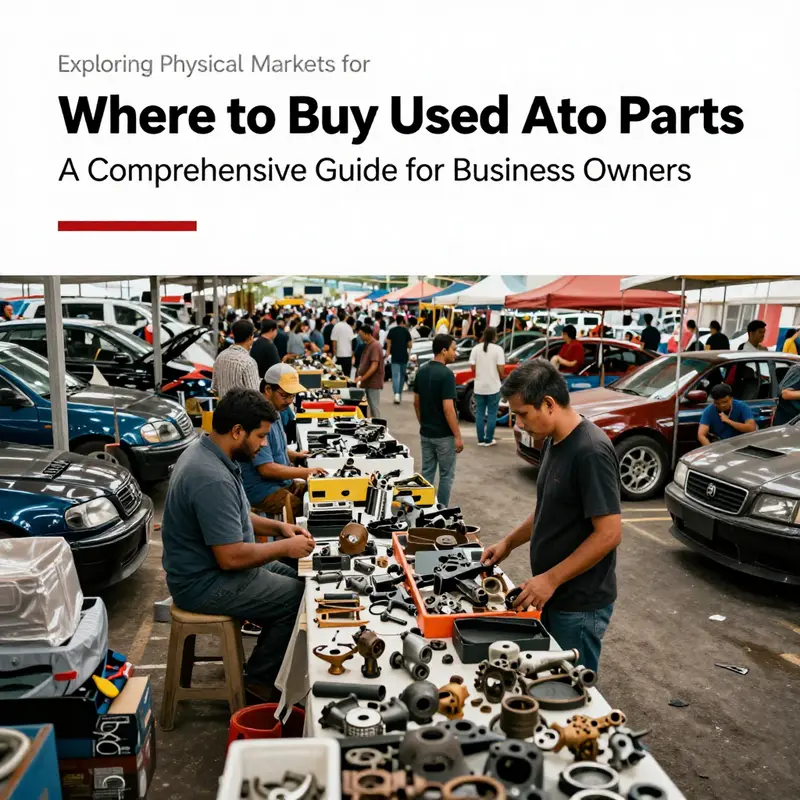
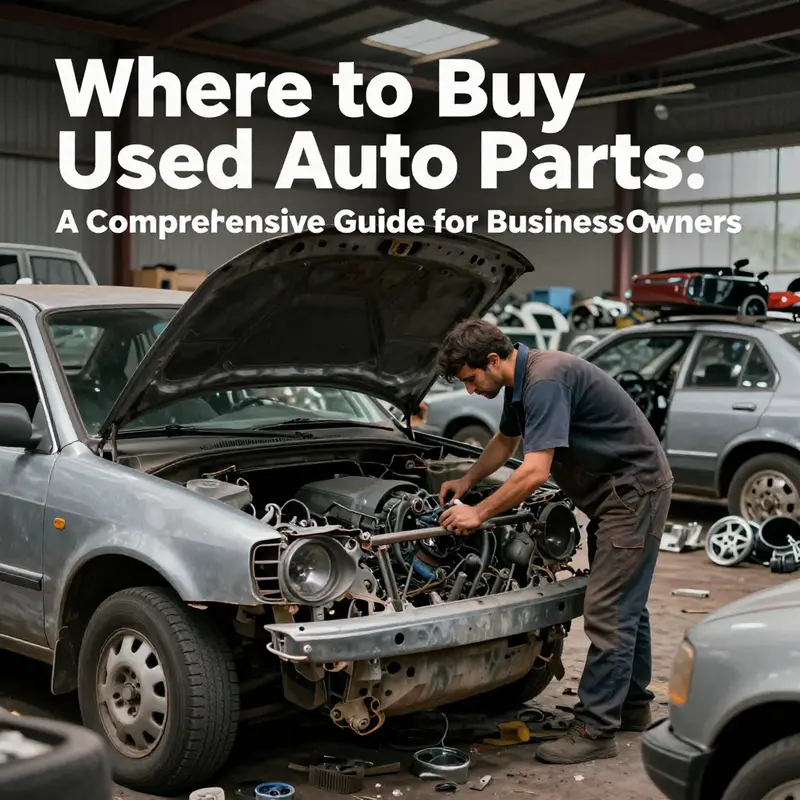
Physical markets remain essential when you ask where to buy used auto parts. There is a particular logic to walking through rows of dismantled vehicles, talking directly to parts processors, and seeing components up close. Guangdong Province, especially the industrial corridors around Guangzhou and Foshan, functions as one of the world’s most concentrated ecosystems for used auto parts. Dealers, dismantlers, testing labs, and bonded warehouses cluster within a few districts, creating scale and speed that makes these markets indispensable for buyers who need volume, variety, or specific hard-to-find pieces.
A buyer arriving at these markets encounters is a mix of small workshops and larger wholesale houses. In areas such as Baiyun District, hundreds of specialized dealers operate side by side. That density matters: when many suppliers are in close proximity, inventory moves faster and prices become competitive. It also shortens lead times for bulk orders. If you need a handful of suspension arms for a city fleet, or dozens of transmissions for export, those logistical advantages translate to real savings and reliability.
Proximity to major maritime gateways is another clear benefit. Markets near ports such as Nansha and Shekou are naturally wired for containerized shipping. Suppliers write export documentation frequently, and many maintain compliance with international standards. This reduces friction for buyers outside China who need dependable export paperwork and customs-ready packaging. For anyone arranging global shipments, working with dealers located near these ports simplifies coordination with freight forwarders and helps control shipping timelines.
The variety available in Guangzhou markets goes well beyond basic consumables. While filters, bulbs, and wipers are commonly stocked, you will also find more technically demanding components. Suspension parts—shock absorbers, struts, coil and leaf springs, control arms, bushings, and stabilizer bars—are commonly available because urban driving wears them quickly. Manual transmissions and complete engine assemblies turn up frequently, especially for popular older platforms. For buyers who handle repairs for commercial vehicles or manual-transmission passenger cars in harsh urban environments, these markets are a reliable source.
Quality assessment is a central skill when buying in person. A thorough inspection begins with a visual check for cracks, corrosion, deformation, and signs of repair. For moving parts, test for smooth operation. For electrical components, ask for a bench test or a demonstration under power. Many reputable dealers operate basic testing rigs on site or have parts that have been inspected and graded. When buying suspension components, look for even wear patterns and intact mounting points. For transmissions and engines, request compression readings, leak-down data, and service history when possible.
Documentation and traceability separate trustworthy suppliers from the rest. Reputable dealers will provide clear invoices, origin statements, and, when required, export certificates. Some maintain bonded warehouse arrangements that allow parts to be stored under customs supervision, which simplifies export processes. Always insist on paperwork that identifies the salvage or dismantling source. It reduces the risk of buying stolen or undocumented components and helps when arranging international shipments.
Negotiation is practical and straightforward in these markets. Prices are often quoted per piece and adjusted for condition and volume. Buy several identical parts and you will unlock meaningful discounts. Always ask about grading systems—some dealers classify parts as “good,” “serviceable,” or “for repair.” Understand how they define those grades because the same label can mean different things from seller to seller. When possible, negotiate sample purchases first. Buying one or two units to verify compatibility and quality limits exposure before committing to larger orders.
For buyers whose operations serve specific regions, market knowledge helps match parts to local needs. For example, parts destined for environments with poor road surfaces must prioritize robust suspension and chassis components. Technical guides and regional standards help here. They explain material choices and engineering applications for critical components. When sourcing for markets like Ethiopia, prioritize suppliers who understand the demands of those roads and can recommend more durable options. Many dealers are experienced exporters and can advise on parts that perform best under heavy urban wear.
If you need a complete replacement engine, some dealers offer full assemblies and half-cut vehicle sections. These units save time and can reduce installation complexity. For reference or to check availability, you may find listings such as the JDM low-mileage engine listing useful when verifying what a market can supply. Always confirm the engine’s history, attached components, and whether electronics were included.
Sample testing and third-party inspection services exist for buyers who want additional assurance. Independent inspectors can perform on-site audits, verify serial numbers, and run functional tests. For large shipments, arrange container inspections and pre-shipment checks. This reduces the chance of receiving a pallet full of parts that do not match descriptions. Many wholesale buyers include inspection clauses in purchase agreements, allowing refusal on arrival if a predefined quality threshold is not met.
Logistics planning matters just as much as part condition. When buying in Guangdong, coordinate pickup, consolidation, and export in advance. Bonded warehouses allow consolidation without triggering immediate customs clearance. This is valuable when combining parts purchased from multiple dealers. Also, clarify packaging standards: fragile electronics should be crated or foam-packed, while heavy mechanical parts require secure bracing. Poor packing is a common cause of damage during transit.
Payment terms vary by seller. Established wholesale houses often accept bank transfers and offer net terms to trusted customers. Smaller workshops may require cash or immediate settlement. Use escrow services or letters of credit for large transactions when possible. These mechanisms protect both parties and keep trade transparent. Always document your agreements in writing: quantity, grade, price, packing method, shipping incoterms, and return policies.
Returns and warranties are limited in used parts markets, but they exist. Larger dealers will sometimes offer short-term warranties or exchange periods for mechanical failure that was not apparent at the time of sale. Get these terms in writing. For international buyers, clarify who covers return shipping for defective items. Often, negotiation can build in limited return windows for critical components.
When scaling purchases for resale or long-term supply, develop relationships rather than one-off transactions. Visiting suppliers multiple times builds trust. Regular buyers gain access to fresher inventory and preferential pricing. Suppliers will also learn your parts profile—what you sell fast versus what you hold—and can pre-select inventory for you. This relationship approach reduces lead time and improves consistency in supply quality.
Safety and legality cannot be ignored. Ensure parts comply with local regulations at the destination. Some countries restrict the import of certain automotive components due to emissions or safety rules. Ask suppliers for conformity documents and consult your local import regulations before shipping. Avoid deals that look intentionally opaque; low price does not justify legal or reputational risk.
If you cannot travel to the market in person, use a trusted agent or third-party sourcing company. Agents can inspect, negotiate, consolidate, and manage export paperwork. Choose an agent with a proven track record and clear fee structures. Require photo and video evidence of parts prior to shipment, and agree on inspection criteria to avoid ambiguity.
Physical markets remain one of the best answers to where to buy used auto parts when you need scale, variety, and direct verification. They are especially effective for buyers focusing on durable components for heavy urban use or for those who require complex assemblies. Use inspections, written agreements, and strategic logistics to protect your purchase. And when you expand into wholesale buying, refer to comprehensive purchasing guides to refine supplier selection, quality assessment, and negotiation tactics.
For a practical, step-by-step guide on wholesale purchasing strategies, see this resource: https://www.carinterior.com/how-to-buy-used-car-parts-wholesale-a-complete-guide/.
From Clicks to Car Parts: Navigating Online Marketplaces to Buy Used Auto Parts
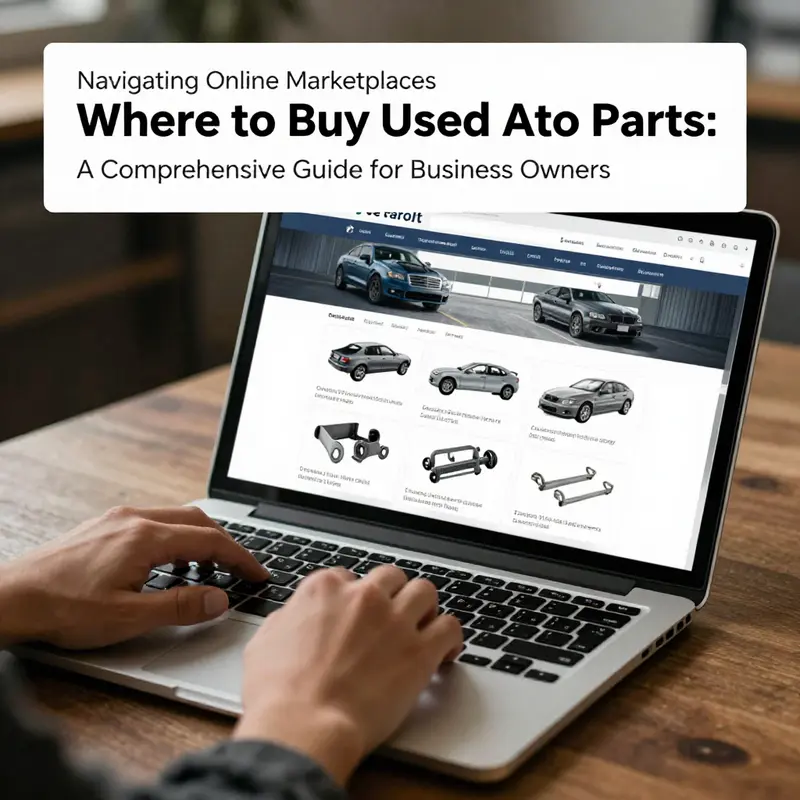
From Clicks to Car Parts: navigating online marketplaces to buy used auto parts is a journey through a mix of abundance and risk, opportunity and deception. The Internet makes it possible to compare dozens of options in minutes, but that same breadth can also overwhelm you with vague descriptions, unclear histories, and parts that look right in photos but don’t fit your vehicle. The challenge is less about finding any part and more about finding the right part at the right price, with a level of assurance that it will function when you bolt it on. This chapter treats online marketplaces as a map rather than a maze. It describes how to read that map, how to verify what you’re seeing, and how to reduce the chances you’ll end up with something that fails or, worse, leaves you stranded on the side of the road. In the larger arc of the article, this chapter reinforces a practical truth: where you buy used auto parts matters nearly as much as what you buy, and online channels can be both reliable resources and clever traps depending on how you approach them.
When you start exploring online marketplaces for used parts, the first impression is one of scale. You’ll encounter listings for everything from common wear items—filters, spark plugs, wiper blades, and bulbs—to more specialized components like engine components, body panels, or even rare trims. A marketplace that hosts thousands of listings can be a boon, but it also means you must separate the credible vendors from the casual sellers who may not disclose the part history or the exact fitment. The quality of information in a listing—photos, part numbers, vehicle compatibility, and the seller’s stated condition—becomes your most important filter. A robust listing often includes multiple clear photographs from different angles, close-ups of the part’s condition, a visible part number, and an explicit note about the part’s provenance. It’s not enough to see a good-looking image; you want tangible evidence that the part came from a specific vehicle and that it’s suitable for your own.
In practice, the marketplace approach begins with a careful inquiry. You’ll want to gather as much information as possible before committing. Request detailed photos that show the exterior, interior connectors or mounting points, and any wear or damage that isn’t apparent in a single shot. Ask for the part number and, if possible, the VIN of the vehicle from which the part originated. The VIN is a key tool for compatibility; it allows you to verify that the exact part, or an acceptable equivalent, exists for your make, model, and year. If a seller hesitates or avoids providing a part number or clear provenance, that hesitation should be a red flag. Some listings may claim compatibility, but without a verifiable part number, you’re relying on memory or assumption—riskier ground when buying used.
The next layer of due diligence involves the seller’s reputation. Reputable sellers tend to accumulate a positive trail of ratings and reviews that reflect consistent fulfillment, accurate descriptions, and timely communication. Look for an established seller profile with a long history, not just a glowing review for a single transaction. Read the comments left by previous buyers to learn whether parts arrived as described, whether any issues were resolved promptly, and whether the listing included a clear return policy. Trust can be cultivated through dialogue as well. A seller who responds quickly, politely, and with specific information about fitment and testing is more trustworthy than one who provides a terse answer or nothing at all. On a crowded marketplace, buyer protection features—whether they’re platform-facilitated guarantees, third-party verifications, or seller-provided warranties—become your safety net. When in doubt, choose sellers who offer some form of return policy or guarantee, especially for parts labeled as “tested” or “functioning.”
The practical test of any online listing is compatibility. Compatibility is not a vague notion; it’s a precise equation that starts with your vehicle’s information. You need your exact make, model, year, and trim, plus the part’s intended usage. For many parts, cross-referencing is straightforward, but for others, especially rarer or more modern components, you’ll want to verify cross-compatibility through reliable references that map part numbers to vehicle applications. If a listing provides a part number, use it to confirm that the part matches your vehicle’s requirements. If the listing only shows a vague model name, push for a definitive compatibility statement and, when possible, compare the part to your current component in terms of mounting points, electrical connectors, and dimensions. A careful check of fitment details saves you the frustration of returning an item that won’t work.
Prices in online marketplaces can be compelling, but they also require circumspection. A price that seems dramatically lower than typical market values can be a warning sign. It may indicate a damaged, non-functional, or misrepresented part, or it could reflect moral hazards like undisclosed vehicle history or hidden shipping costs. Your instinct about value should be balanced with a transparent assessment of condition. If a seller describes a part as “used but functioning” and provides no testing documentation or proof of origin, you should proceed with caution. Conversely, an honest listing that includes a brief summary of testing, a clear return window, and high-quality photos can be a dependable starting point for a deal that makes sense within your budget.
Beyond the basic checks of photos, numbers, and promises, you’ll want to triangulate information across sources. This is where browsing databases and reference tools becomes valuable. Reputable online resources and cross-reference tools can tell you whether a part number corresponds to your make and model, reducing the risk of a mismatch. These resources aren’t a substitute for direct seller information, but they provide a vital second opinion that helps you verify what you’re about to buy. In the same spirit, some buyers use third-party inspection services on select marketplaces to confirm the condition of the item before shipment. While these services aren’t universal, they can add a meaningful layer of assurance for high-value or hard-to-find parts.
As you compare listings, the question of provenance—where the part came from and how it was used—becomes important. The more you know about the vehicle’s history, the better you’ll understand the likelihood of continued reliability after installation. A part that was removed from a vehicle with a clean history or from a low-mileage donor can be more attractive than one from a car with a murky past or significant accident history. Some listings disclose these details clearly, often mentioning whether the part was removed in a salvage scenario or from a vehicle with documented maintenance records. When this information isn’t provided, you should treat the listing as provisional and seek additional confirmation before purchase. A careful buyer builds a mental dossier of each potential part: year, model, trim, mileage if available, and the context of removal. This dossier becomes your compass as you navigate the marketplace more broadly.
One practical example of how listings communicate information can be seen in catalog-style postings that lay out several angles of the same item and include a specific pathway to verification. A listing for a bonnet or hood, for instance, may present the part number, the vehicle compatibility, mounting details, and multiple photos showing the condition of the outer skin, hinges, and alignment points. Even more telling is when the seller provides a short explanation of testing performed and a clear note about whether the part has ever been repainted or repaired. Such transparency enhances confidence and reduces the odds of a misunderstanding in delivery or fitment. In some cases, a seller will even offer a guided fitment check via video call or provide instructions for verifying the part’s compatibility with your car’s VIN. These practices reflect a conscientious approach to selling used parts and should prove persuasive to buyers who value accuracy and accountability.
To illustrate how online marketplaces can support careful buying without drowning in complexity, consider how a careful buyer might approach a listing for a specific component. They would begin by identifying the make, model, and year of their car, then zero in on the exact part number. They would request high-resolution images that show all connection points and mounting surfaces, plus a side-by-side comparison with the part currently installed on their vehicle. They would check the seller’s feedback history and ask for documentation proving the part’s origin, and they would consult a reference database to confirm that the listed fitment aligns with their VIN. If a seller responds with precise, non-defensive answers and offers a fair return policy, the buyer gains a degree of trust that can turn an online transaction into a successful swap.
A note on the human element is essential. The process of buying used parts online relies as much on communication as on catalogs. Clear, timely, and courteous responses from the seller can matter as much as the part’s condition. If the seller seems evasive, delays answers, or cannot provide basic documentation, it’s prudent to move on. The marketplace rewards transparency and accountability, and buyers should not feel compelled to settle for uncertain deals simply because they appear convenient or inexpensive.
In this landscape, the question of where to begin often comes down to balancing convenience with assurance. For many readers, established online platforms that facilitate buyer protection and straightforward return policies offer a practical starting point. These platforms typically host a wide range of parts and provide structured conditions for returns, warranties, and dispute resolution. However, the path to confidence does not stop there. The same principles apply whether you are hunting for a common wear item or a rare body panel: insist on verifiable alignment with your vehicle’s specifications, demand comprehensive product information, and prioritize sellers who demonstrate a track record of reliable fulfillment. As you gain experience, you’ll develop a sense for listings that offer genuine value and ones that are better left as a last resort.
To anchor these ideas in a concrete example within this article’s broader theme, consider how a realistic listing might be structured and what a buyer should do next. If you encounter a listing that includes a detailed description, a clear part number, multiple high-quality images, and a definitive compatibility note aligned with your VIN, you have the right signals for further steps. You would place a careful inquiry, request the additional documentation, and compare the part against your vehicle’s needs using a reputable reference tool. If everything aligns, you would confirm compatibility, review the seller’s return policy, and proceed to purchase. If the price looks favorable but you’re missing one crucial piece of information, you should pause and seek that information before proceeding. The goal is not to maximize speed but to maximize certainty.
The broader takeaway is that online marketplaces can function as powerful, efficient channels for acquiring used auto parts, provided you approach them with a disciplined verification routine, a healthy skepticism about bargains that seem too good to be true, and a readiness to cross-check information across sources. The strategies described here—scrutinizing photos, confirming part numbers, verifying provenance, checking return policies, and evaluating the seller’s reputation—form a robust framework for making informed decisions in any marketplace. They align with the realistic expectation that used parts, while affordable, carry an element of risk. The best practice is to approach each potential purchase as a careful collaboration between the buyer’s knowledge and the seller’s transparency, with a safety net of documentation and a clear plan for what happens if the part doesn’t meet expectations.
As you refine your approach to buying used auto parts online, you’ll also want to consider the broader ecosystem in which these transactions take place. Car-part ecosystems vary by region, and the availability of certain parts can differ dramatically depending on your location and the age of your vehicle. Some buyers find it helpful to join car owner communities or forums, where fellow enthusiasts share real-world experiences, post listings from private sellers, and offer guidance on fitment and maintenance. These communities can be especially valuable when you’re hunting for hard-to-find components or when you’re seeking second opinions on a listing’s credibility. In the end, the marketplace is not a single source of truth; it is a network that benefits from your savvy as a buyer, your willingness to verify, and your insistence on clear, trustworthy information.
To illustrate a tangible example of how marketplaces present parts with clear information, consider the following listing approach: a seller posts a detailed item page that includes the part number, a close-up photo of the mounting points, and a written note about testing and origin. The listing also features a short compatibility table showing the make, model, and year, along with a statement about whether the part has ever undergone repainting or repair. The buyer, upon reviewing this information, can compare it to the vehicle’s VIN and perform cross-checks with a reference database. A transparent return policy is stated, with a reasonable window and clear conditions. All these elements together create a credible pathway from online curiosity to a confident purchase.
In closing, online marketplaces are not inherently risky or inherently reliable. They are a spectrum, ranging from highly vetted, well-documented listings to ad-hoc postings with little to no provenance. Your role as a buyer is to tilt that spectrum toward reliability through disciplined inquiry, careful cross-checking, and a clear understanding of your car’s exact needs. When you combine these practices with a willingness to pause and verify, you transform an online shopping expedition into a successful, satisfying, and safe acquisition that keeps your vehicle on the road rather than in the shop.
For readers seeking a deeper, practice-focused guide on evaluating used auto parts in major online environments, a comprehensive buyer’s guide offers actionable steps and checklists that complement the principles discussed here. See this external resource for a broader framework that you can apply across marketplaces and regions: https://www.autoblog.com/2026/01/28/how-to-choose-used-auto-parts/ . Meanwhile, to illustrate how a specific marketplace listing might present information and how you can navigate such pages, you can explore a sample listing from a dedicated parts shop that demonstrates clear photography, part numbers, and fitment details. For convenience, here is a direct link to one listing that exemplifies this approach: brand-new-original-carbon-fiber-bonnet-hood-for-mitsubishi-lancer-evo-x/. This example mirrors the level of detail buyers should expect when engaging with reputable sellers, even as you widen your search to other listings across marketplaces.
The journey from curiosity to installation may take a little time, but with thoughtful steps and a careful eye for detail, you can unlock a world of affordable, reliable parts that keep your car running in peak condition. The online marketplace is not a showroom only; it is a collaborative space where your diligence and the seller’s transparency determine whether a bargain becomes a lasting repair or a costly return. As you continue through the book, you’ll see how these principles apply across different kinds of parts and across various platforms, forming a coherent strategy for finding used auto parts without compromising safety, performance, or value.
null
null
null
null
Final thoughts
Understanding where to buy used auto parts empowers business owners to make strategic purchases that can lead to significant cost savings. Whether exploring physical markets, navigating online platforms, or leveraging scrap yards, knowing the strengths of each option ensures that you are well-equipped to source high-quality parts sustainably. As businesses look to improve efficiency and financial health, the avenues outlined in this guide offer invaluable resources to enhance operations and maintain competitiveness.