
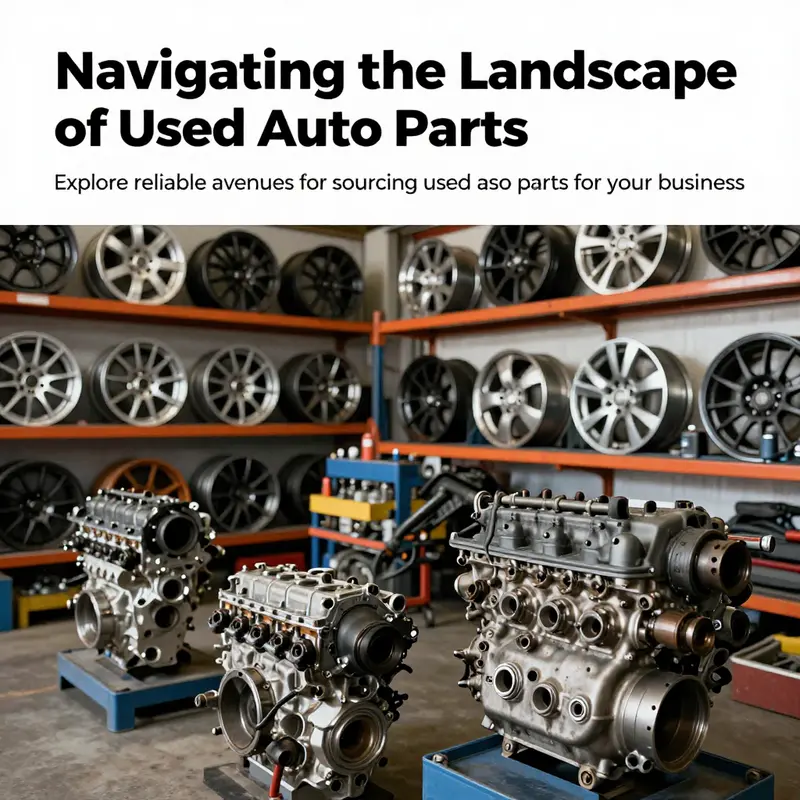
Finding quality used auto parts is crucial for businesses looking to minimize costs while maximizing value and efficiency in vehicle repair and maintenance. With rising vehicle ownership and repair costs, knowing where to source reliable used parts can enhance your competitive edge. This article delves into key avenues for discovering used auto parts, tailored for business owners. We will explore online marketplaces that offer convenience and a broad selection, specialized automotive markets that allow for in-person inspection, and scrap yards that provide economical options. Each chapter provides insights to empower businesses in making informed purchasing decisions, ultimately leading to cost savings and enhanced service quality.
From Clicks to Car: Finding Used Auto Parts in Online Marketplaces
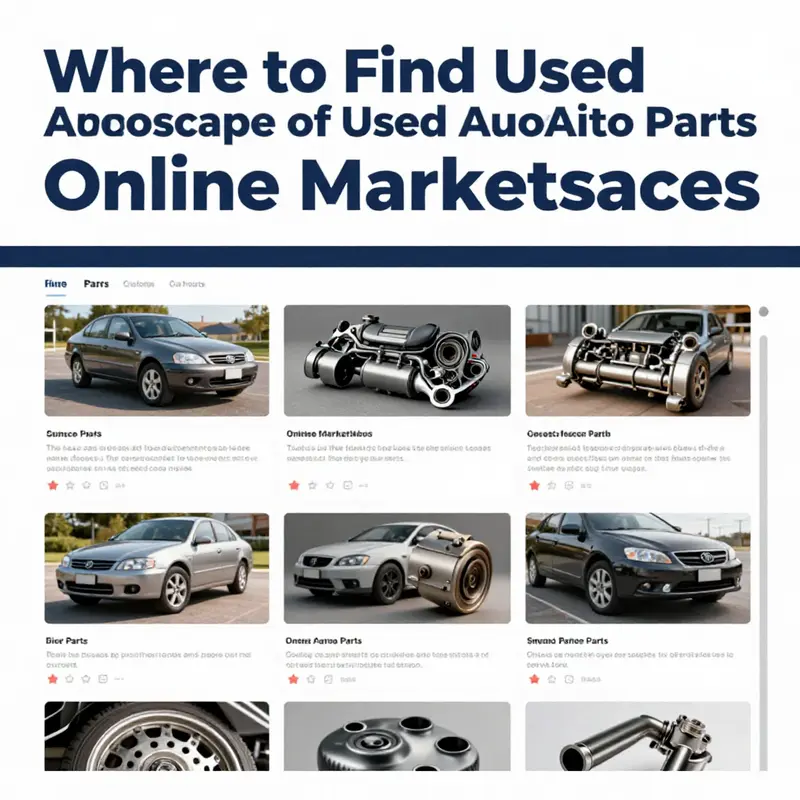
Across the modern automotive landscape, online marketplaces have become a primary route for most drivers seeking used parts. The appeal is obvious: breadth of choice, potential savings, and the convenience of shopping from a kitchen table or a mechanic’s shop. Yet the very breadth that draws buyers in can also complicate decisions. Sifting through listings, judging condition from photos, and confirming compatibility without ever handling the item brings a specific kind of calculus. The good news is that online platforms have evolved to meet these demands. They have built in systems for seller credibility, buyer protection, and accessible product information. They also host a spectrum of parts, from common consumables to rare structural components. As with any market, success hinges on a disciplined approach: knowing what to look for, how to evaluate listings, and how to verify that a part will fit your vehicle before it is shipped. This chapter follows that logic, staying grounded in practical steps while weaving in real-world cues that can help you navigate confidently.
First, consider the platforms themselves as your starting line. The most widely used marketplaces are designed to host thousands of sellers and hundreds of thousands of listings, which means you can usually locate a replacement part even for older or less common models. The search interfaces typically let you filter by vehicle make, model, year, and even by specific part name or number. This is crucial because compatibility is the linchpin of a successful used-part purchase. A listing might show a part that looks identical to what you need, but a mismatch in year or trim level can render it useless or, worse, risky to install. As you compare options, the listing’s clarity matters as much as the price. Clear photos taken from multiple angles, close-ups of serial numbers or part numbers, and notes about condition—whether it is used, refurbished, or tested prior to sale—are all signals you should weigh heavily. A listing that lacks detail should be treated with caution rather than as a bargain.
Among the online marketplaces, one platform has built a robust reputation for automotive parts by curating an inventory that includes OEM components and reputable refurbished items. You’ll often see listings that come with detailed photos, notes about the part’s origin, and a history of buyer feedback. The presence of a seller’s rating and a clear return policy are practical indicators of accountability. When you encounter a listing that aligns with your vehicle’s exact specifications, the next step is to examine the listing more closely for subtle cues about condition and legitimacy. Look for photos that show wear consistent with the item’s stated age and use, and compare any visible numbers with the manufacturer’s part numbers found in your vehicle’s service literature. If a listing mentions reconditioned or tested parts, ask for documentation or detailed test results to corroborate the claim.
A second axis worth exploring is the reliability of the seller’s return policies. A straightforward return window, reasonable restocking fees, and a process that doesn’t penalize the buyer for a misfit are strong signs of buyer protection. This is particularly important for a used part, where the risk of receiving something that is not as advertised exists in every marketplace. In parallel, examine the seller’s stated warranty if one exists. Some items may carry a short warranty on function, while others are sold as-is. The distinction matters not just for the initial purchase but for any potential future fit issues that may arise once the part is installed. If you encounter a seller who is willing to share additional photos or past customer feedback on a given listing, consider that openness a positive signal. It often translates to a more trustworthy transaction overall.
When you move beyond straightforward parts like filters, fluids, or common wear items, the scope of online marketplaces expands to more specialized components. A pivotal strategy is to search across multiple platforms rather than fixating on a single site. This breadth helps you capture not only price differences but also the variety of condition and origin stories that accompany used parts. For example, one seller may have a stock of components pulled from a salvaged vehicle with clear documentation about the vehicle’s mileage and service history, while another may offer a similar part that has been refurbished and tested. Both may be valid options, but your decision framework will weigh the provenance, the test status, and the likelihood of receiving a part that will perform as expected when installed.
In practice, the most successful online searches combine precise targeting with careful verification. Start by identifying the exact part you need, then confirm the vehicle’s year, trim, and engine configuration. If you are replacing an item where tolerances matter—think brake calipers, steering components, or engine sensors—you should push for precise compatibility data. Some listings offer cross-reference numbers or compatibility charts that can help you verify fit across different model years and variants. If a seller cannot provide this level of specificity, that is a red flag. A well-documented listing will include not just photos but also the part’s measurements, finish, and, when relevant, serial or OEM numbers. You can then cross-check those details with your vehicle’s service documentation or VIN-derived part specifications. The more data the listing conveys, the smaller the chance of receiving a misfit or low-quality item.
A practical technique to validate authenticity and condition, especially for higher-stakes parts, is to request additional photos before purchase. Written guarantees of fit are helpful, but photographs of the part lying on a neutral surface, with visible wear patterns and any labels or packaging, can reveal a lot about its real-world status. For instance, a brake rotor photo should show its edge wear, any scoring, and the presence of correct hub mounting features. A sensor or electronic module should be shown powered up in a test environment, if the listing claims it has been tested. When buyers press for more information, reputable sellers will usually accommodate. They understand that transparent communication reduces the risk of a return and protects their seller reputation in the long run. The exchange of information often becomes as important as the price itself.
A crucial but sometimes overlooked step is to verify compatibility through your vehicle’s VIN or engine plate, particularly for parts that are engine- or chassis-specific. VIN-based checks are standard in many mainstream marketplaces, but when you are dealing with more obscure or older models, you may need to contact the seller with your VIN and request a cross-check. Some platforms even have built-in tools that allow you to enter your VIN and see suggested compatible parts, though you should always corroborate with the official service data for your model. Engine plates and part numbers present another reliable route. If a listing includes a photo of the engine plate or a stamped part number, you can compare that data against your own vehicle’s documentation to ensure a match. When in doubt, reach out to the seller with the exact engine code or plate number you possess and ask whether the part is a direct match or if any variants exist for your vehicle. A small amount of proactive diligence at this stage can spare the time and expense of a return once the part arrives.
Another dimension to online sourcing is the role of specialized directories and curated supplier lists. For buyers who want more than a loose collection of listings, directories can point you toward vetted, domestic sources that emphasize material standards, compatibility, and traceable provenance. These platforms are especially useful for professional mechanics or performance enthusiasts who require consistent quality and a higher degree of assurance about the origin of used parts. For such buyers, a directory can be a reliable shortcut to credible suppliers, reducing the time spent winnowing through questionable postings and giving more room for technical due diligence. In practice, this added layer of assurance is not a silver bullet. It still depends on your ability to read part numbers, confirm fit, and request documentation. But it can strengthen confidence when you are investing in critical components such as transmission assemblies, steering racks, or brake systems.
Online marketplaces also share a common challenge: the risk of counterfeit or misrepresented parts. This risk is not unique to used parts, but it tends to be more pronounced in high-value components where a premium is placed on genuine OEM status. Your best defense is a combination of due diligence and a measured skepticism. Begin with a trusted platform that emphasizes seller identity and buyer protection. Read the seller’s feedback history and note whether the same seller has a pattern of positive interactions with buyers. Look for consistency: a seller who has sold similar parts to multiple buyers and who responds promptly to questions is more likely to be reliable. Compare prices with other listings while considering the condition with photos and documentation. A significantly lower price can indicate a non-original or poor-condition item or even a counterfeit. When you see a truly remarkable bargain, exercise extra caution and request assurances before purchase rather than after.
In the context of online marketplaces, editorially rich listings that explain the part’s history, repair or refurbishment steps, and testing procedures tend to correlate with higher buyer satisfaction. A well-documented listing may note whether the part has undergone non-destructive testing, a specific load test, or a functional check. If a seller is reluctant to share these details or cannot provide any supporting documentation, it is prudent to deprioritize that option. The same prudence applies to shipping and packaging information. Used parts must be handled with care during transit, and the seller’s packaging standards contribute to the likelihood that the item will arrive undamaged. A robust seller will describe its packaging approach and provide clear guidance on how the item will be protected during shipping. You should look for a seller who uses sturdy packaging, tracks shipments, and offers a secure return path if the part is damaged in transit.
A notable, practical touchstone for many buyers is the ability to visualize the part in a real-world context. Listings that show the item next to other components, or alongside a vehicle in the photos, can provide a helpful sense of size, finish, and mounting points. This visual context makes it easier to gauge whether the part will fit your car, even before you check the numbers. And when a seller can offer a short video of the part operating or fitting into a test rig, that can be a strong signal of reliability. If you encounter a listing with minimal imagery or vague descriptions, it is reasonable to move on. Time and money spent chasing uncertain listings rarely pays off in the long run.
With all these considerations in mind, you may still wonder how to integrate what you learn from online marketplaces with offline options. The online-research phase should not supersede physical inspection and expert advice. Instead, it should complement it. If you can, plan to visit a local auto parts market or a repair shop that can physically evaluate a candidate part for you. Online listings can be used to narrow down options, while in-person inspection can confirm that the item is sound and compatible. When you’re ready to pull the trigger, the transaction should feel confident rather than impulsive. The right listing, a well-communicated condition, verifiable part numbers, and a credible seller together form a strong case for a successful replacement part that will perform as intended.
For readers who want a concrete example of how an online listing can convey essential details, consider this kind of listing format in a dedicated marketplace. The entry includes the model, year range, and specific compatibility notes in plain language, supported by close-up photos of the part and any serial numbers. It may also show a short verification note that the part has been tested and is ready for install, along with a warranty policy and a straightforward return path. While not every listing will meet all these criteria, the more of these signals you encounter, the greater your odds of a smooth purchase. If you want to see a practical reference that demonstrates how a reputable listing communicates essential details, you can explore a representative example here: 03-06 Mitsubishi Evolution 8-9 JDM Rear Bumper OEM.
As you weave through the online marketplace landscape, remember that your goal is not simply to save money. It is to secure a part that fits precisely, functions reliably, and can be returned if it does not. The discipline of cross-checking part numbers, validating compatibility with your VIN, and asking for supporting documentation creates a safety net that offsets the uncertainties inherent in buying used components online. The result is a purchase that aligns with your vehicle’s needs and with your expectations for performance and longevity. When the transaction is complete, you should feel a sense of assurance that your part is not only affordable but genuinely appropriate for your car. The process, once learned, becomes a routine part of maintaining a car with practicality and prudence rather than risk.
To close the loop on decisions made in the digital marketplace, a few closing reflections can help anchor your approach. First, always start with a precise request. If you know the exact part number or the OEM specification, your search becomes much more efficient. Second, treat photos as primary evidence. A photograph is worth a thousand words in terms of the part’s condition, fit, and age. Third, never hesitate to ask questions. A few well-posed questions can unmask a listing that seems promising but is concealing essential details. Finally, keep an eye on the bigger picture: the goal is a cost-effective, reliable fix that keeps your car on the road with confidence. The digital marketplace has grown into a robust ecosystem that can deliver on that goal when used thoughtfully and with a measured sense of due diligence. In the end, the intelligence you bring to the shopping process—your questions, your document requests, and your willingness to compare and verify—translates directly into the quality of the part you end up installing. External resources and shopping guidance are available, but the core work remains in your hands, guided by a clear standard of fit, condition, and provenance.
External resource for further reading: https://www.ebay.com/b/Auto-Parts/bn_2736894505
Specialized Markets, Global Reach: Navigating the Heart of Used Auto Parts Sourcing
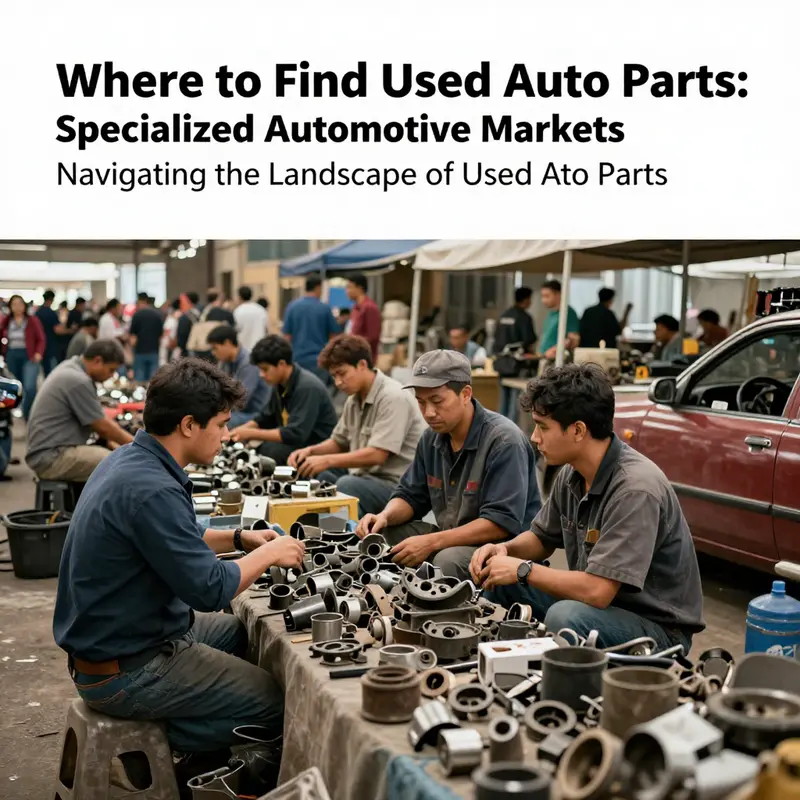
The hunt for used auto parts often starts online, but the strongest, most reliable finds frequently emerge from a different geography altogether: the dense, purpose-built markets that specialize in dismantling, testing, and reassembling components for resale. In these specialized automotive markets, the backbone of the aftermarket ecosystem comes into sharp focus. They are not merely warehouses; they are living networks where dismantlers, refurbishers, buyers, and mechanics intersect, exchange knowledge, and move large volumes with carefully measured efficiency. The heart of this system beats in the Pearl River Delta, especially in Guangdong Province, where cities like Guangzhou and Foshan have evolved into global hubs for used parts trade. Here, an intricate lattice of dismantling yards, testing facilities, and bonded warehouses creates a contiguous supply chain that can transform a weekend shopping list into a verified set of components ready to install. The proximity of hundreds, sometimes thousands of specialized dealers and processors in close quarters means you can inspect, compare, and negotiate with an ease that online marketplaces often cannot replicate. When you walk through a Baiyun District alley of yards, you feel the difference between a random listing and a curated inventory. The staff are seasoned: they know the engines that power your model, the quirks of certain transmissions, and the common failures that lead to premature wear. They understand the importance of matching a part to a vehicle’s identity, not just its part number. This is not a mere acquisition—it’s a carefully managed restoration of function. The scale and density of these markets make them particularly attractive for professionals who need to source not just one component but entire batches that share a common standard of quality and compatibility. In a single day you can walk from a yard specializing in body components—doors, bumpers, hoods, fenders, mirrors, and grilles—to another where technicians focus on mechanical systems such as engine blocks, transmissions, and suspension components. The contrast is not merely in what is sold, but in what you can verify on the spot. Parts taken from decommissioned vehicles are inspected, tested, and logged before they reappear in the supply chain, and this process is visible to buyers who demand a higher standard. The practical benefits are substantial. First, the ability to physically inspect a part reduces the risk of misrepresentation. You can confirm measurement tolerances, surface finish, and any corrosion or fatigue that could affect performance. Second, you can compare multiple options in real time—brand-new-looking parts that carry genuine OEM numbers versus those with aftermarket or recycled identifiers—and you can ask vendors about the origin of each item. In markets with deep experience, staff can often guide you toward parts that fit not only your exact vehicle model but also your preferred maintenance approach. For example, a high-precision component intended for a luxury model may require a certain grade of alloy or a specific machining tolerance. The staff in these hubs can help ensure the piece you select aligns with those expectations, rather than leaving you to guess from a photo and a barcode.
The Guangdong corridor also excels in logistics. Its access to major ports—Nansha and Shekou among them—facilitates containerized shipping to North America, Europe, Africa, and Southeast Asia. For buyers placing large or recurring orders, the ability to move stock efficiently across international borders can be the decisive factor between a good deal and a missed opportunity. Many suppliers in this region operate under international export standards that align with global B2B expectations. This means paperwork, compliance checks, and quality protocols are already calibrated for cross-border trade, reducing the friction often associated with importing used components. It is a practical advantage for shops and refurbishers who need predictable lead times and transparent sourcing practices. The region’s infrastructure has grown to meet this demand: testing facilities that verify part integrity, bonded warehouses that streamline customs processes, and a network of freight forwarders who understand the nuances of multi-country shipments.
Within the markets themselves, buyers find a spectrum of parts that often outpace what one might locate through conventional retail channels. For body components, there is a vast selection of doors, bumpers, hoods, fenders, side mirrors, and grilles sourced from decommissioned vehicles that have sustained varying degrees of impact but otherwise retain usable structural or cosmetic value. The advantage here is not merely price, but the breadth of choices—different brands, generations, and finishes—allowing buyers to select a match not only for fit but for appearance expected in a given restoration or build. For mechanical systems, the range includes engine blocks, transmissions, suspension components, and other core elements where a clean, inspected unit can dramatically reduce a project timeline and total cost compared with new parts. It is common to find high-demand items in bulk, temporarily rolled into assemblies that streamlines the process for repair shops and rebuild specialists who procure many parts at once.
The specialized market model also carries a nuanced logic about quality and provenance that online marketplaces can struggle to convey. In the best yards, provenance is a minimum standard rather than a bonus. Buyers often request proof of part origin, such as vehicle dismantling records, engine numbers, or OEM references that trace back to a specific donor vehicle. In high-volume yards, this documentation is not an afterthought but a routine part of the sale, insured by internal inspection teams that test critical parameters and confirm compatibility. The consequence for buyers is a higher level of confidence, especially when the replacement part must withstand rigorous use or align with precise vehicle specifications. In turn, this emphasis on traceability supports the broader sustainability goals of the sector: reusing components with verifiable history reduces waste and extends the life of thousands of vehicles while curbing the demand for new raw materials.
The journey into these markets, however, is not entirely carefree. The sheer scale and diversity of offerings require a disciplined approach. Buyers must prepare in advance: identify the exact part numbers or OEM references, understand the variations that correspond to model years, and anticipate the potential differences in fit across market regions. A practical step is to map out a short list of parts you know you will need in the next procurement cycle, then allocate time for on-site evaluation. This planning helps you filter the noise—an abundance of listings—into a concise set of viable candidates. It is also wise to verify return policies and warranties, which are common in professional operations but less so in informal settings. When a part comes with a limited or conditional warranty, buyers should seek explicit documentation of the inspection procedures, the scope of testing performed, and the criteria for claims. A thorough buyer will also request multiple photographs from different angles and, where possible, a live demonstration or measurement verification to confirm that the part meets the required standards.
The practicalities of sourcing through specialized markets extend beyond the physical aisles. Digital platforms and industry networks complement the on-the-ground experience by aggregating inventories across yards, enabling bulk orders, and offering logistical coordination for international shipments. For buyers who understand the advantage of blended channels, the most effective approach is not to choose between physical markets and online listings but to weave them together into a hybrid sourcing strategy. In many cases, a business will begin by surveying inventories online, identifying a short list of promising options, and then visiting the corresponding yards to perform in-person verifications. This approach offers the reliability of face-to-face inspection with the efficiency of digital cataloging. The result is a curated portfolio of parts where each item is validated by both its documented provenance and the tangible assessment conducted on site. The synergy between these channels is a hallmark of mature sourcing operations and is central to how professional buyers achieve scale.
From a regional perspective, it is valuable to recognize how Guangdong’s specialized markets fit into a global framework. While the local clusters provide extraordinary access to a wide range of parts, the strategic insight is understanding how this ecosystem interplays with European and North American demand. European-model compatibility often requires specific tuning to engine management systems, electrical configurations, and emission-control components. In these cases, the Guangdong market’s capacity to deliver high-precision parts—especially for luxury or performance-oriented lines—becomes a compelling factor for buyers who demand exact specifications. The region’s long-standing exposure to international trade, along with its matured manufacturing and metalworking ecosystems in other adjacent provinces, fosters a competitive edge in sourcing high-quality used components that still behave like authentic parts on real-world roads. It is in this context that the narrative of specialization extends well beyond the mere availability of a few dozen items. It becomes a story about reliability, repeatable quality, and the logistical fluency required to move parts across oceans with confidence.
For buyers who are new to specialized markets, the learning curve can be steep but not insurmountable. Start by defining your driving context: the models you service, the parts that are most frequently needed, and the acceptable thresholds for price versus risk. If you are sourcing in bulk or on a continuing basis, consider establishing a relationship with a few trusted yards that can deliver consistent quality and predictable scheduling. A relationship of this kind often yields priority access to new inventory, better pricing tiers, and faster turnarounds when urgent needs arise. The human element matters as much as the infrastructure. Experienced vendors can guide you toward parts that balance cost with the likelihood of long service life, and they can provide educated opinions on the suitability of a given component for a particular vehicle or repair scenario.
In addition to the direct benefits of inspection and bulk access, it is useful to acknowledge how these markets intersect with broader supply-chain considerations. Bonded warehouses, for instance, create a buffer that can help you manage currency fluctuations and import duties by deferring duties until the moment of release. Testing facilities embedded within yards or nearby partner labs offer a layer of quality assurance that is particularly valuable for mechanical parts and assemblies with critical tolerances. The presence of such facilities signals a mature ecosystem where risk management is part of the operational discipline rather than an afterthought. And because many suppliers in these regions maintain export-oriented processes, the documentation—certificates of origin, invoices with accurate part numbers, and compliance declarations—tends to be comprehensive. This is not accidental; it is the product of a market that has evolved to cater to international buyers who require traceable provenance and a predictable, accountable supply chain.
The narrative of specialized markets would be incomplete without noting the role of digital platforms in balancing global reach with local expertise. Online marketplaces and B2B portals often list thousands of options from dozens of yards, creating a broader awareness of availability and price. Yet it is the direct relationships formed in these markets that anchor the trust necessary for large-scale procurement. Buyers often negotiate terms, warranties, and service levels with established yards that they have physically vetted, while continuing to monitor new listings to diversify risk. In that sense, online listings function as an initial intelligence tool—an informed front-end to a more rigorous, on-the-ground verification process. For those who want to optimize their inventory strategy, the strategy is simple: pair the breadth of online catalogs with the depth of on-site inspections, weighting decisions toward yards with transparent testing and robust documentation.
Within this broader framework, it can be instructive to consider how this specialized market dynamic translates into practical outcomes. A shop that embraces these markets can reduce cycle times for spare parts dramatically. When a critical body component or a mechanical assembly is needed to complete a restoration, the ability to source a compatible part in the same day or within a few days from a campus of yards can mean the difference between a project moving forward and a backlog that interrupts service. The same logic applies to more complex assemblies where precision tolerances and compatibility with a vehicle’s engine management or transmission control units are essential. The market’s attention to matching vehicle identity—from VIN and engine plate details to OEM part numbers—helps ensure that replacements not only fit but perform within the engineered design envelope. In practice, this translates to fewer returns, fewer misfits, and a higher overall satisfaction rate for customers who demand professional reliability.
To illustrate how buyers navigate this landscape in a concrete way, consider the combined use of on-site verification and selective online sourcing as a blueprint for success. A professional team might start by mapping out the specific components they require in the coming months and then search the yards for those items with an eye toward the best balance of price and provenance. When a promising candidate is identified online, the team can request a set of photographs and, if possible, a brief video demonstration of the part in place. The on-site evaluation would then confirm the fitment and confirm the absence of hidden defects. In cases where the part is for a high-performance build or a luxury model, the team might request additional documentation such as serial numbers, revision levels, or proof of testing performed on the donor vehicle. The end result is a carefully curated, domestically sourced inventory that meets international standards and speaks to the reliability required by professional service centers. By weaving together the strengths of specialized markets with the expansive reach of online catalogs, buyers create a sourcing ecosystem that is both resilient and scalable.
For readers who are curious about where these specialized practices sit within the broader ecosystem of used parts, a quick map helps. Guangdong’s Pearl River Delta is the epicenter, with hubs in Guangzhou, Foshan, and adjacent cities forming a dense network that supports rapid aggregation of parts and efficient cross-docking. The local infrastructure includes ports that handle bulk shipments, a suite of testing labs, and the kind of professional dismantling services that ensure parts are sorted by model family, engine code, and compatibility constraints. This is complemented by Zhejiang and Shandong, regions known for their metal fabrication, hardware production, and heavy-duty components, which broaden the range of options for buyers seeking specialized or high-demand parts. Meanwhile, in Europe, Germany remains a notable hub for European-compatible parts, where the blend of technical standards and market maturity complements the more cost-effective, high-volume sourcing from Guangdong. The bottom line is simple: for scalable procurement of used auto parts—especially when you require variety, reliability, and a clear provenance—the specialized markets in Guangdong and the broader Chinese network, along with strategic cross-border arrangements, offer a compelling value proposition.
As part of this discussion, it is worth acknowledging how experienced buyers balance risk and opportunity when exploring these markets. A measured buyer keeps a running log of part numbers, OEM references, and vehicle identifications to compare against the donor vehicle’s details—something that helps minimize the mismatch between a part’s intended application and its practical performance. They also insist on visible assessments: surface condition checks for body components, clear evidence of function for mechanical parts, and a willingness from the seller to arrange or demonstrate testing where appropriate. In some cases, large fleets and repair shops will negotiate consignment arrangements or long-term supply commitments with yards that have demonstrated consistency in quality control. The goal is not simply to purchase a component; it is to secure a trusted supply channel that can deliver predictable results, repeatable outcomes, and consistent service levels across multiple orders. That is the hallmark of a mature specialized market operation—the ability to convert a complex, multi-part sourcing challenge into a streamlined, auditable process.
When thinking about how to approach this world, it is useful to keep a few guiding principles in mind. First, physical inspection remains indispensable for high-stakes components. Second, documentation matters—the more complete the provenance package, the easier it is to justify a purchase and to integrate the part into a broader repair or build plan. Third, balance your strategies: combine on-site verification with selective online procurement to maximize both the breadth of choice and the assurance of fit. Fourth, respect the global nature of the market. Even as you source locally, you should be mindful of cross-border requirements, currency considerations, and the nuances of exporting parts that will travel long distances for installation in vehicles around the world. Finally, cultivate relationships with trusted vendors who understand your standards and can deliver consistent results over time. The payoff is clear: a more reliable supply chain for used parts, faster turnarounds on repairs, and the ability to take on projects that would be too risky or costly if you relied on generic marketplaces alone.
For readers who want an accessible touchpoint that reflects this broader regional dynamic, consider exploring a practical example of how a specific category of parts moves through these markets. A body components cluster may surface an array of doors and bumpers with the same model-year alignment but different trim levels or paint finishes. In such cases, buyers will often focus on the exact color code, the panel’s condition, and any prior repaint history. A mechanical cluster, on the other hand, may present engine blocks or transmissions that require verification of casting numbers, bore measurements, and wear conditions. In both cases, the goal is to ensure a seamless replacement that aligns with the vehicle’s architecture and its long-term performance expectations. These checks, along with a transparent description of part history, help build trust in the supply chain and reduce the likelihood of warranty disputes or post-installation issues.
In closing, the specialized automotive markets of Guangdong and the Pearl River Delta offer a compelling, proven path for sourcing used auto parts. They provide a blend of physical inspection, robust documentation, bulk aggregation, and global shipping capabilities that online marketplaces alone cannot easily replicate. They are not a distant outpost but a living ecosystem that continuously adapts to the needs of repair shops, rebuilders, and enthusiasts who demand reliability and value from every component they install. The road from a dismantling yard to a finished repair or restoration is long and complex, but it is a route that many professionals have traveled successfully, time after time, by leveraging the market’s depth, its logistical sophistication, and its insistence on provenance and quality. For those who intend to pursue this path seriously, the journey begins with careful planning, persistent on-site verification, and a willingness to engage with the market’s practitioners in the language of parts and performance. And as you chart your course, the potential is enormous: a steady stream of authentic, compatible, and affordable components that extend the life of vehicles around the world, while advancing the durability and sustainability of the automotive aftermarket.
Mitsubishi Evo rear bumper OEM
External resource: For a broader perspective on Chinese wholesalers and global B2B export strategies in used auto parts, this industry guide offers additional context and practical insights. https://www.autosupplychain.com/used-auto-parts-supplier-guide-china/
Where Used Auto Parts Come From: The Practical World of Scrap Yards and Recycling Centers
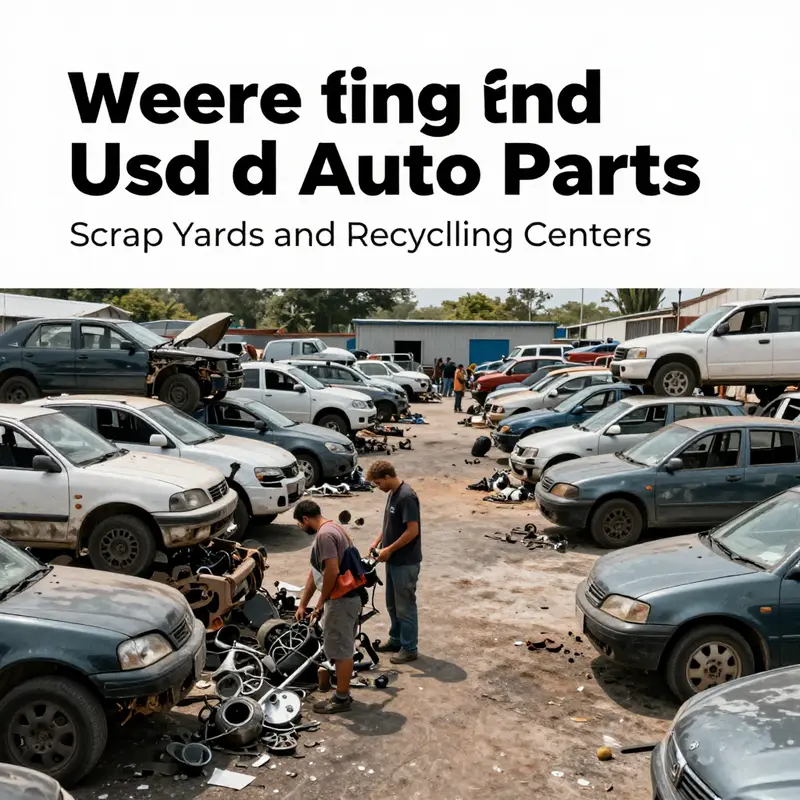
Scrap yards and recycling centers sit at the intersection of economy, practicality, and responsibility. They are not junk piles but carefully managed ecosystems where end-of-life vehicles are dismantled, and usable components are cleaned, tested, and prepared for resale. For vehicle owners facing a repair bill that would exceed the value of the car, these yards offer a cost-conscious route to functional parts. For the planet, they represent a crucial step in extending the life of components, reducing waste, and ensuring hazardous materials are handled properly. The appeal is straightforward: you get a part with real-world value, often at a fraction of the cost of new, while supporting a system designed to reuse rather than discard. The reality, however, is more nuanced. To navigate this world well, you need to understand how these facilities operate, how to verify parts, and how to communicate clearly with the staff who know the inventory best. The journey begins with understanding the anatomy of a salvage operation and then moves into the practical steps a shopper takes to land a compatible, working part without unnecessary risk.
Most scrap yards and recycling centers operate around the same core idea. They purchase or accept end-of-life vehicles, store them in a secured yard, and then dismantle them with an eye toward salvaging components that still carry value. The parts can range from straightforward consumables—filters, belts, hoses, and fluids—to critical components like alternators, starters, and entire engines or transmissions. The oldest, but still most reliable, truth about this channel is simple: if a vehicle stopped running, there is a chance a usable piece remains. The newer truth is more complex: yards now leverage digital catalogs and inventory systems that tie into real-time stock. That means you can search for a specific make, model, year, and trim, and often see whether that exact part is currently on the shelf. In some yards, the catalog is more like an index, but in the best cases you can filter by compatibility and see photographs, condition notes, and price. The combination of searchability and physical inspection creates a powerful workflow for finding hard-to-source pieces without committing to ship-from-faraway vendors or risky private sales.
In the quiet realism of these yards, the process of locating a part can feel almost like a treasure hunt. You arrive with a clear target—your vehicle’s year, model, trim, and the exact part number if you have one. Some yards organize their inventory around vehicle families, with bays or stalls dedicated to popular makes and models. Others keep a more holistic approach, where technicians or sales staff can guide you through rows of vehicles, noting which ones have components that might fit your car. A skilled attendant can help you cross-check part numbers against your vehicle’s VIN and engine code, but you will still reap the best rewards if you come with as much information as possible. The engine plate or engine code, the VIN, and the final drive configuration are often the keys to confirming fit. The process may begin with a quick phone call or a chat with a staff member at the gate. You describe your car, relay the exact part you need, and then, if you’ve prepared well, you get pointed toward the right area of the yard where a few candidate vehicles are waiting to be picked over by the dismantlers.
One of the most valuable changes in recent years is the rise of digital cataloging within salvage operations. Even locations that still incorporate a large, tangible yard can now offer a searchable index that helps you locate a desirable part before you walk the rows. In truly efficient yards, the catalog is linked to a real-time inventory system. You can input your vehicle’s details and, within moments, learn whether a compatible part exists in the yard, what it costs, and what the condition notes say about wear, corrosion, or prior repairs. This is a level of transparency that makes the process faster and more predictable, which is essential when you are trying to decide whether a given piece is a worthwhile investment. The efficiency of digital catalogs can also reduce the number of parts you physically handle, which lowers the risk of picking the wrong item or damaging something delicate while in the yard space.
Before you ever lift a part from the shelf, there is a critical, almost ritual step: confirm compatibility with your specific vehicle. The VIN, the make, model, and trim level, plus the year are your best verification tools. Cars can share names across generations, yet the exact fit of a component depends on subtle differences in production dates, trim packages, or regional variations. A small mismatch can translate into a failed installation or a part that simply does not fit. This is why a yard’s best practices often call for checking the part against your VIN in their database, or for a staff member to verify the match by cross-referencing part numbers and the vehicle’s configuration. If the yard offers a test or demonstration option, take it. Some parts can be physically examined, rotated, or even tested in place to confirm that the gearing, bearing surfaces, or electrical connectors are intact and ready for reuse. If testing is not possible, request photographs or measurements. A reputable yard will understand and accommodate such requests, because it is in their interest to ensure you are satisfied with the fit before you leave with the part.
Inspection is not just about fit. It is about assessing the part’s condition and ensuring you are buying something that won’t fail soon after installation. Visual checks are important: look for heavy corrosion, cracks, broken mounting points, or fluid leaks. For mechanical parts, a feel test can reveal lockups or rough surfaces that indicate wear beyond practical reuse. For electrical components, examine connectors for bent pins, cracked housings, or signs of moisture ingress. Ask to see the part from multiple angles, and request a close-up of any labeling or stamping that might confirm its origin and compatibility. In many cases, yards will have a basic warranty policy on used parts. A short-term warranty, even if limited to certain kinds of components, adds a layer of assurance that a dealer or retailer will honor if the part fails under reasonable conditions. If the yard does not offer any warranty, insist on a return window and a clear process for exchanges. This is not just smart buying; it is good risk management in a market where the condition of used pieces can vary widely from one vehicle to another.
The environmental and social benefits of salvage play a large role in why this channel remains viable. Recycling centers ensure materials are diverted from landfills, while the recovery of usable parts powers a cycle of repair rather than replacement. When you buy a reused component, you invest in a solution that requires fewer manufacturing resources and emits less waste than a brand-new part would. The environmental dividend compounds when salvage yards implement careful sorting, testing, and warehousing practices that minimize the risk of hazardous substances entering the waste stream. Reputable yards typically provide documentation or a brief provenance note with more specialized parts, giving you a sense of how the piece was recovered and what steps were taken to ensure it remains usable. In many areas, this process is tied to broader recycling programs and regulatory standards that guide the handling of fluids, batteries, and other components that demand careful environmental stewardship. If you are curious about the broader impact, you can seek out general guidance on salvage practices from established recycling networks or consumer resource centers that describe how these facilities operate and what safeguards they employ to protect both customers and the environment.
Because the landscape of salvage is best navigated with a blend of preparation and practical on-site judgment, a few practical steps can make a meaningful difference in what you bring home. First, do your homework. Prepare a precise list of the parts you need, with the exact model, year, and trim. If possible, carry with you the VIN, engine code, or the original part numbers you’ve found in service records or shop notes. This helps you compare the catalog details on the yard’s system with your car’s specifications. Second, map out a plan for your yard visit. If your part is scarce or likely to be in high demand, you may want to call ahead to confirm its presence. This is especially helpful for popular vehicles that share common components across multiple model years or regional variants. Third, bring the right tools to open casings or gain access to mounted parts. A clean, organized approach reduces the risk of accidental damage and makes the exchange with staff smoother. Fourth, document everything. Take clear photos of the part, including identifying marks, serial numbers, bolt patterns, and connectors. These images serve as a reference if installation proves more complicated than expected or if you need to coordinate with a mechanic about compatibility.
If you want to get a taste of how catalog-driven salvage can feel when you walk the yard with purpose, consider a real-world example of a modern salvage operation. Some facilities now publish searchable inventories that you can access before you arrive, so you know which vehicles are on-site with the needed components. In practice, a customer might begin with a target like a front-end component for a specific generation of a popular vehicle, then narrow the search to a few promising candidates. A staff member can guide you to the exact vehicle in the row that holds that component, call up the part on the yard’s digital system to confirm its condition, and then help you extract it with the proper tools and safety precautions. The net result is a more predictable, less stressful experience than wandering through a sea of vehicles in the hope of stumbling upon a usable part. Even as you rely more on digital listings and yard-affiliated catalogs, the human element remains essential. The staff’s knowledge about fit used in the dismantling process, the quirks of different trims, and the relative reliability of various components can make the difference between a successful repair and a return to the garage to search again.
For those whose curiosity extends beyond the immediate purchase, the broader ecosystem of salvage and recycling reveals a robust, ongoing effort to reuse items that otherwise might be discarded. Recycling centers do not simply salvage parts; they treat metals and hazardous materials with appropriate care, ensuring that the lifecycle of a vehicle aligns with sustainability goals. The idea is not just to find a part that fits but to contribute to a system that minimizes environmental impact while delivering tangible savings. The practical lesson is clear: if you approach salvage as a resource rather than a last resort, you unlock a reliable stream of affordable parts that can extend the life of your vehicle, a sense of satisfaction from a smart purchase, and a quiet confidence that you are participating in a responsible waste-management framework.
In closing this look at scrap yards and recycling centers, the practical approach matters as much as the parts themselves. Bring precise vehicle details, be prepared to inspect and verify, and insist on clear terms regarding warranty or return policies. Rely on the yard’s digital tools when available, but never skip the essential step of confirming compatibility before you leave with a part. The best yards combine a transparent catalog, knowledgeable staff, and a respect for the way a vehicle’s identity—the VIN, the engine code, and the trim history—dictates fitment. When you align your expectations with these realities, salvage parts become less of a gamble and more of a robust, sustainable option for keeping your car on the road.
To illustrate how catalog-backed inventory can guide a practical search, you can explore a sample catalog entry from a well-regarded cataloging approach used by some yards. For example, 08-15-mitsubishi-lancer-evolution-evo-x-hood-phantom-black-oem-u02 demonstrates how a single part reference can be positioned within a larger system that helps buyers verify fitment across options. This is the sort of linkage you would hope to find in a well-run salvage operation: a way to connect a displayed part to a precise vehicle identity, accompanied by clear photos and measurements that reduce guesswork. While not every yard offers such a polished interface, the goal remains the same: empowered, informed purchasing built on clear data and direct access to the part’s provenance. The end result is a more confident repair decision, with a lower chance that a misfit part will end up back on the bench or in the back seat of a car that cannot be repaired at a reasonable price.
For readers who want to broaden their literacy about salvage operations and how they fit within the automotive ecosystem, there is a broader set of resources that describe how salvage yards operate, how inventories are organized, and how buyers interact with staff to pinpoint the right part. These resources provide a complementary perspective to the practical tips offered here and help place the salvage experience within a larger context of sustainability, cost control, and vehicle longevity.
External resource note: For a general overview of salvage yards, purchasing practices, and practical tips from an established salvage operation, see WHI Northside Salvage – Finding Auto Parts at a Salvage Yard. This external reference offers insight into how a modern salvage operation presents its inventory, warranties, and service approach to customers seeking used components. The discussion complements the specifics above by offering a broader sense of the discipline, the variability among yards, and the standards one can expect when pursuing reused parts in real-world settings. (External resource: https://www.whinorthside.com/used-auto-parts)
Final thoughts
Sourcing used auto parts effectively can be a game-changer for business operations, allowing for significant cost savings while ensuring quality repairs. By leveraging online marketplaces, visiting specialized automotive markets, and exploring scrap yards, business owners can find the parts they need without compromising on authenticity or quality. Whether you opt for the convenience of online shopping, the hands-on approach of visiting markets, or the cost-effectiveness of scrap yards, understanding your options will enable better decision-making. This comprehensive knowledge empowers businesses to enhance service offerings and meet customer expectations.