
The automotive industry is defined not only by the vehicles we drive but also by the parts that make them run efficiently and safely. Within this intricate ecosystem, the distinction between A series and S series auto parts—especially in brands like Audi—serves as a significant differentiation factor in performance and design. As business owners, recognizing the unique qualities and implications of these components can facilitate informed purchasing decisions, ultimately influencing customer satisfaction and brand reputation. The following chapters will delve into a comparative analysis of A and S auto parts, explore the material specifications and cost implications, and examine current market trends to forecast the future of these essential automotive components.
Understanding A and S Auto Parts: How Design, Materials, and Purpose Define Performance
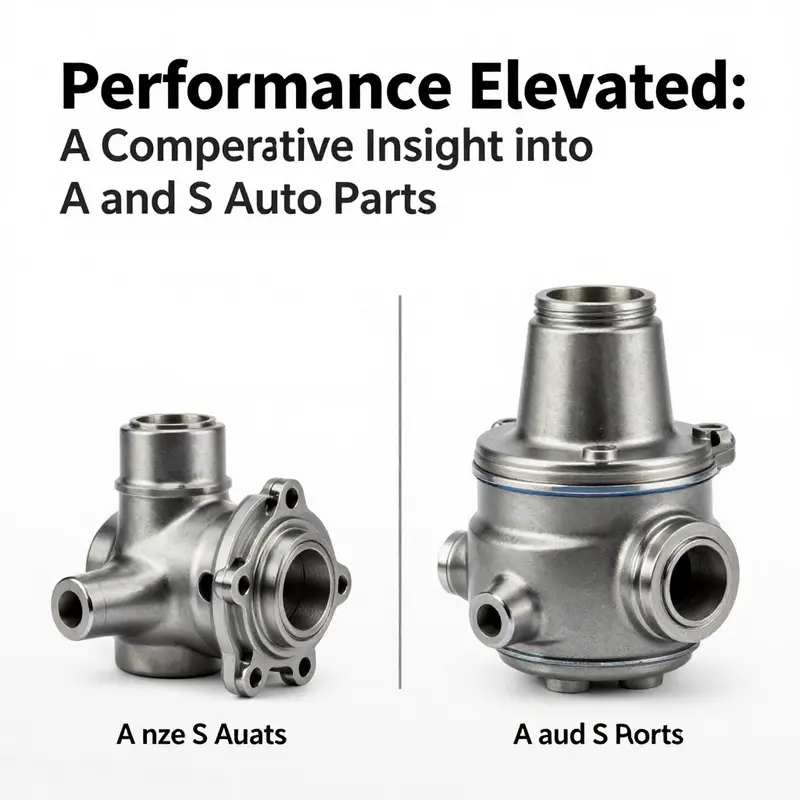
A and S designations often signal a fundamental choice in vehicle engineering. Across many vehicle lineups and parts catalogs, a letter code differentiates two clear philosophies: the standard, balanced approach aimed at everyday use, and the sport-oriented approach aimed at higher performance. When parts are grouped as “A” and “S” series, that split typically reflects different priorities in design, materials, function, and intended operating context. This chapter traces those priorities, explains how they shape specific components, and explores the downstream impacts for owners, technicians, and purchasing teams.
Start with the basic premise. The so-called A lineage prioritizes reliability, cost-effectiveness, and broad compatibility. The S lineage prioritizes dynamic performance, stiffness, reduced weight, and often a higher tolerance for stress. These priorities manifest in part geometry, material choices, manufacturing tolerances, and testing regimes. Understanding those manifestations helps readers evaluate trade-offs when selecting replacement or upgrade parts.
Performance expectations shape the part at the beginning. Engineers set targets for durability, noise and vibration, weight, thermal behavior, and fatigue life. For a component intended for a standard model, the targets emphasize long service intervals, predictable wear patterns, and cost-efficient manufacture. For a sport variant, targets emphasize heat dissipation, stiffness-to-weight ratio, and the ability to withstand repeated high-load cycles. The consequences of those targets appear across seemingly unrelated components. For example, braking components in a sport lineup will be larger, use higher-friction compounds, and sit behind wheels designed for greater airflow. Suspension bushings may use stiffer elastomers. Fasteners might be heat-treated to higher grades.
Materials tell the same story in tangible form. A-series parts commonly use conventional steel grades, common polymers, and standard castings. The design choices are conservative, leveraging supply-chain maturity and lower-cost processing. S-series parts often shift to higher-performance alloys, heat-resistant composites, and advanced surface treatments. That might mean high-strength aluminum for knuckles, forged alloys for control arms, and composite or ceramic materials for brake rotors. The alternatives deliver gains in weight and temperature performance. They also raise manufacturing complexity and cost. These material differences are not aesthetic only. They change how a part behaves under load and how it should be maintained.
Design intent also influences dimensional choices. S-series systems frequently use larger physical dimensions to handle greater loads. Brake discs become wider and thicker. Calipers gain more pistons and larger bores. Tires and wheels grow in diameter and width. The steering geometry and suspension tuning adapt to maintain handling balance. Designers accept tighter mounting tolerances and closer clearances to achieve predictable behavior at higher speeds. That precision demands stricter quality control and often more expensive machining or finishing operations.
Surface engineering and coatings are another area of divergence. Parts for higher-performance use receive protective finishes that resist heat, corrosion, and abrasion more effectively. High-temperature paints, ceramic coatings, and specialized anodizing protect components exposed to repeated thermal cycling. Sealing surfaces and sliding contacts often use advanced treatments to reduce friction and slow wear. These finishes can materially extend service life under severe duty, but they add steps to manufacturing and often increase unit cost.
Testing and validation amplify those technical differences. A-series components undergo durability testing tuned to average use cycles and regulatory standards. They must pass functional checks and performance tests that align with warranty expectations for everyday driving. S-series components face additional track-like validation: repeated high-speed thermal cycles, sustained high-load mechanical tests, and harsher environmental exposures. Acceptance criteria are tougher because failure at high speed is more dangerous. That rigorous testing both increases development time and raises unit price.
Compatibility and integration are practical topics that affect repair and replacement. A-series parts are typically designed for broad compatibility across multiple trims and model years. This modularity simplifies inventory and reduces the number of unique SKUs. In contrast, S-series parts are often specific to higher-trim models or dedicated sport packages. That specificity limits interchangeability and increases the complexity of parts management for fleets and repair shops. Fitment checks and software calibration steps may be necessary when replacing S-series components.
Cost matters. The cumulative effect of advanced materials, machining, coatings, and testing is a higher purchase price for S-series parts. The premium can be significant. But this cost is not only about raw materials. It covers engineering validation, tighter tolerances, and the expectation of performance under more extreme conditions. Buyers evaluating cost should consider the total cost of ownership. In some cases, a higher upfront cost yields longer intervals between replacements for owners who actually subject parts to severe conditions. In others, the premium is only useful to drivers who exploit the increased capability.
Maintenance regimes differ between series. S-series components often need more knowledgeable service, more frequent inspections, and different consumables. Brake pads engineered for high friction behave differently at low temperature. Suspension components with stiffer bushes transfer more road shock, which can raise wear on adjacent parts. Lubricants and fluids are sometimes specified at different grades to match the operating profile. Service facilities must be aware of these differences to avoid introducing unforeseen wear patterns.
The aftermarket magnifies these contrasts. Many independent manufacturers target sport parts buyers with upgraded components that emulate S-series features. Others focus on reliability and cost, supplying high-quality A-series replacements for broad consumption. Aftermarket options span a spectrum: from plug-and-play replacements that mimic original specifications, to bespoke upgrades that demand additional calibration or installation expertise. Owners should ensure any aftermarket upgrade respects the vehicle’s safety systems and dynamic balance.
Supply chain considerations influence availability and lead times. Standard parts benefit from high volumes and mature suppliers, creating shorter lead times and more stable pricing. Sport parts, with lower production volumes and more specialized processes, can suffer longer lead times and more volatile pricing. That reality affects fleet managers and retailers who must balance inventory cost against parts availability.
Performance also has implications for metrics like fuel economy, emissions, and NVH (noise, vibration, and harshness). S-series configurations, by design, often reduce weight but may also increase aerodynamic drag or mechanical losses in pursuit of handling and stopping power. As a result, they may influence a vehicle’s measured fuel economy and emissions. NVH characteristics vary too. A desire for sharper feedback can increase road noise and perceived harshness. Engineers aim for a balanced compromise, but consumers must understand the trade-offs.
From a procurement perspective, clarity in specification is vital. Buying teams must specify material grades, heat-treatment requirements, and acceptable surface treatments. They must also dictate test protocols and acceptance criteria for fatigue, corrosion, and thermal cycling. When sourcing replacements, confirm whether a part is an A-series or S-series component. If the goal is to retain the vehicle’s original dynamic character, choose the correct series. Substituting the wrong series can degrade performance or safety.
Service technicians must recognize the practical differences too. Installation torque values, break-in procedures, and inspection intervals can differ. For example, high-performance brake systems may require a specific bedding process to achieve optimal friction properties. Suspension components with different compliance values can alter alignment specifications. Failure to follow recommended procedures risks reduced lifespan and compromised safety.
Regulatory and warranty matters are nontrivial. Some high-performance components are approved only when installed as part of an approved package. Warranty coverage can change when a vehicle is retrofitted with parts outside the original specification. Consumers should verify warranty scope before upgrading, and maintain documentation of service events to preserve coverage where possible.
The decision framework for choosing between A-series and S-series parts depends on intended use and priorities. If the vehicle’s primary role is daily commuting, commerce, or passenger transport, the A-series approach typically offers the best value and predictability. If the vehicle is used for performance driving, spirited road use, or track events, the S-series approach delivers safer and more predictable behavior under stress.
Case studies help illustrate these choices in concrete terms. Consider braking systems. A standard braking system prioritizes fade resistance sufficient for normal driving, predictable pedal feel, and cost-effective wear. A sport braking system increases rotor mass, uses higher-performance friction materials, and improves caliper rigidity. The result is stronger, repeatable braking at high speeds. Without appropriate cooling and bedding procedures, those advantages may not materialize. Similarly, wheel and tire choices planned for an S-series setup influence steering response and available traction. A mismatch between softer OEM tires and a high-stiffness suspension reduces the benefit of upgraded control arms and dampers.
Sustainability and lifecycle analysis can influence the choice, too. Advanced materials sometimes enable longer life or recycling advantages. Carbon-intensive processing might offset that benefit. Decision-makers should consider whole-life impacts, including energy use in manufacturing and opportunities for remanufacturing or recycling.
Finally, communication between stakeholders matters. Engineers, procurement, service teams, and end users must share clear expectations. A robust parts database that tags components by series, material, and test history simplifies life-cycle management. Service documents should call out special procedures for sport components. Shops should track inventory clearly and maintain supplier relationships that reflect the unique needs of each series.
A final practical note: plenty of high-quality, performance-oriented parts designed for sport variants can be adapted by informed owners. However, adaptations require attention to integration. When upgrading one subsystem, consider the vehicle’s entire dynamics. Adjustments to braking, steering, suspension, and tires often work best when implemented as a coordinated package. Piecemeal upgrades can lead to imbalance and unexpected wear.
For those seeking concrete examples of how sport-grade bodywork and lightweight components fit into real-world projects, explore the detailed item listing for a carbon fiber bonnet commonly used in high-performance model upgrades: brand-new-original-carbon-fiber-bonnet-hood-for-mitsubishi-lancer-evo-x. That resource shows how designers use material substitution to reduce weight, and how such parts often require matching fasteners and mounting hardware to preserve fit and function.
Understanding the distinction between A and S parts is less about labels and more about intent. The letter encodes a philosophy of trade-offs. Knowing that philosophy allows better choices in purchasing, installation, and maintenance. Owners and technicians who grasp the underlying engineering will select parts that deliver the expected balance of cost, longevity, and performance.
Note: Where specific data on friction compounds, alloy grades, or part dimensions are required, consult manufacturer or supplier technical sheets. Those documents provide the test protocols and precise material specifications necessary for engineering-level decisions.
Material Specifications and Cost Implications in A and S Auto Parts: Navigating Performance, Longevity, and Value
Material choices sit at the heart of any automotive part’s performance envelope. When an aftermarket supplier labels parts as belonging to an A-series or an S-series, that distinction is signaling more than a price point or a color of packaging. It hints at a philosophy about what the part must do, how long it should last, and what kind of performance the vehicle will rely on during daily driving, spirited road miles, or demanding track sessions. In the broader arc of A and S Auto Parts, understanding material specifications is not a boutique concern but a practical driver of reliability, safety, and total cost of ownership. The modern parts landscape has shifted toward transparent material declarations, stricter adherence to industry standards, and a tiered approach to materials that balances cost with function. This chapter unwraps how those choices play out in the real world, from the factory floor to the repair bay, and why buyers—whether they are independent shops, enthusiasts, or everyday drivers—benefit from a clear view of what sits inside every component labeled A or S.
At the core of the A versus S distinction is a simple premise: standard-grade parts prioritize cost-effectiveness and broad compatibility, while high-performance or “S-series” parts are engineered for upgraded strength, higher tolerances, and advanced operating conditions. The material science behind this is not merely a matter of selecting a material with higher numbers in a datasheet; it is about how that material behaves under heat, stress, fatigue, and environmental exposure. In many applications, the shift from standard to high-performance materials translates into greater stiffness and strength, improved fatigue resistance, and enhanced heat handling. Those advantages can claw back value over time when a part is subjected to high duty cycles, repeated braking, or elevated engine temperatures. Yet they come with trade-offs: higher raw material costs, more complex processing, and sometimes stricter manufacturing controls that influence lead times and inventory planning. For technicians and end users, the consequence is clear. A higher-spec part may deliver better push-back against wear and tear, but the immediate price tag can be noticeably larger. The question becomes whether the benefits align with the vehicle’s use case and the owner’s willingness to invest in longevity.
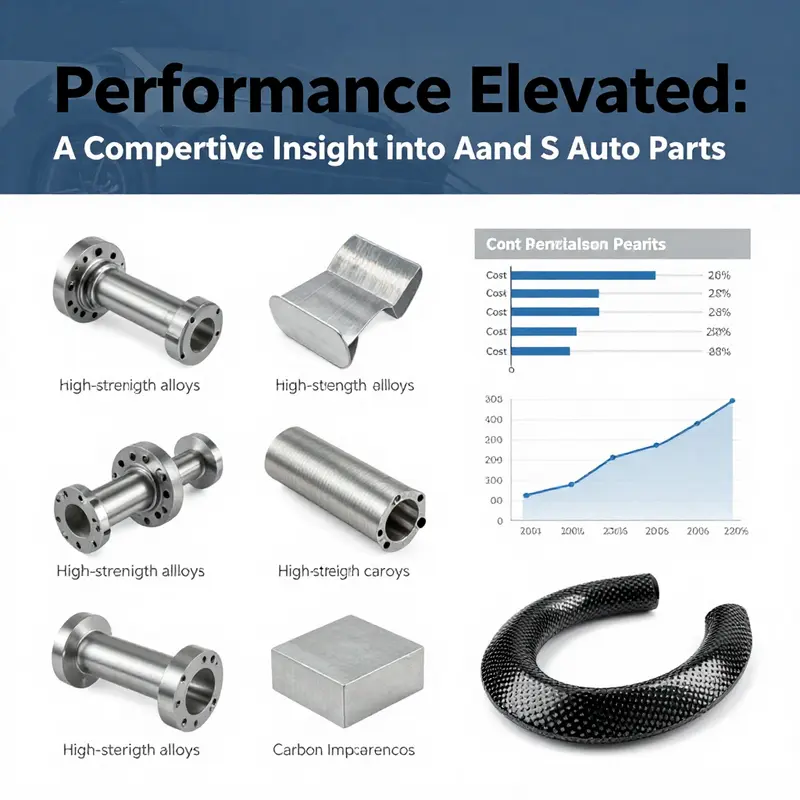
In concrete terms, material choices commonly juxtapose standard high-strength steel with alloys designed for greater ductility, impact resistance, or thermal stability. Advanced high-strength steels (AHSS) have become a mainstay for critical structural components, thanks to their high strength-to-weight ratios and improved crash performance. Aluminum alloys offer another route to weight reduction, which can translate into better fuel economy and handling responsiveness, especially in mid- to high-volume platforms. For certain high-performance or niche segments, carbon fiber composites or ceramic materials enter the conversation, typically in ultra-lighting or high-heat zones such as braking systems or exterior load-bearing panels. Each material category brings a unique blend of properties, processing requirements, and cost implications. The practical effect is that A-series parts often rely on conventional materials that deliver proven performance with predictable costs, while S-series parts aim to push the envelope on performance density, sometimes at the expense of higher initial expenditure.
The lifecycle implications of those material choices deserve particular attention. From a buyer’s perspective, the initial purchase price is only one piece of the total cost of ownership. When a part is engineered with premium materials, the upfront cost may seem steep. However, durable materials can reduce maintenance events, extend intervals between service, and lower the probability of unexpected failures. A brake caliper or rotor in an S-series lineup, for instance, might incorporate larger discs, higher-grade friction materials, and improved thermal management. Those features can maintain braking performance under repeated heavy use, reduce brake fade, and minimize warping or glazing that often necessitates premature replacements with standard parts. In the long run, the premium paid at the point of purchase may be offset by lower replacement rates and steadier performance in demanding conditions. The same calculus applies to suspension components, engine internals, or structural hardware where material fatigue life determines service intervals and risk exposure. The takeaway is that cost is not a single snapshot but a continuum that spans material price, manufacturing complexity, maintenance schedules, and the probability of failure under a vehicle’s typical duty cycle.
Industry standards play a pivotal role in shaping this continuum. ISO 9001, for example, anchors quality management across manufacturing and assembly processes. It signals to customers that a supplier has a documented system for consistent product realization, traceability, and continual improvement. In practice, this translates to more predictable part quality batch-to-batch, which matters when a customer is balancing replacement parts against the risk of accelerated wear or mismatch with other components. On the material side, ASTM and SAE specifications establish the mechanical, chemical, and testing criteria that parts must meet to ensure compatibility and performance under real-world conditions. These standards cover a spectrum of topics—from tensile strength, hardness, and impact testing to corrosion resistance, surface finish, and dimensional tolerances. For A-series parts, these standards help keep costs in check by leveraging proven materials and established processes. For S-series parts, they establish the higher bar required for elevated performance, ensuring that advanced materials perform within defined limits and do not compromise safety or reliability under extreme operational scenarios.
Transparency about material composition becomes especially crucial in the aftermarket arena. When a buyer purchases a part from an aftermarket supplier, they are often relying on non-OEM suppliers to deliver parts that fit, function, and endure in the same way as original equipment. In this context, clear disclosure of the material makeup, heat-treatment history, surface finishes, and compliance with recognized standards becomes a form of trust. It allows mechanics and enthusiasts to make informed trade-offs between price and performance, to cross-reference parts accurately, and to anticipate maintenance needs. Ambiguity—whether about alloy type, coating, or treatment—opens the door to mis aligned expectations, mismatched compatibility, and even premature failures. Consequently, companies that publish explicit material data and demonstrate adherence to ISO, ASTM, or SAE specifications often gain credibility with repair shops and informed buyers who value consistency. This transparency also supports better decision-making for cross-compatibility between brands and models, a particularly relevant factor in a highly fragmented aftermarket ecosystem where compatibility lists and part numbers multiply quickly.
From a practical standpoint, the selection of materials in A- and S-series parts influences many aspects of the supply chain, including production planning, inventory management, and testing regimes. Parts designed for standard duty can be produced with widely available tooling, standard heat-treatment cycles, and established finishing processes. That alignment translates into shorter lead times and more predictable costs for manufacturers and retailers. On the other hand, parts designed to meet higher performance criteria often require specialized alloys, precise forging or casting techniques, and advanced finishing operations such as surface hardening, tailored heat treatment, or even non-destructive testing protocols to verify integrity. Each of these steps adds complexity and cost but, when executed properly, yields components that resist degradation in high-heat, high-load environments. The economic reality is nuanced: premium materials and meticulous processes can reduce failure modes that would otherwise result in costly warranty claims, recalls, or field repairs. For a shop or vehicle owner tallying total expenditures over a lifecycle, the math may strongly favor a higher-spec component in high-demand applications, while standard parts may deliver the best value in regular driving scenarios with modest performance expectations.
A practical way to think about this is to map performance needs to a cost curve. If a vehicle’s daily operation involves routine commuting, light cargo, and predictable driving cycles, standard materials are often sufficient and cost-effective. For drivers who push their vehicles harder—rapid acceleration, frequent braking, sustained high speeds, or sustained uphill conditions—the added resilience of higher-performance materials can yield tangible gains in controllability and reliability. The key is to align the part’s material specification with the actual operating context. A misalignment—such as choosing a high-end material for a part that seldom encounters high heat or heavy loads—can waste capital and complicate maintenance without delivering meaningful benefits. Conversely, selecting a standard material for a high-stress role can invite early wear, corrosion, or failure that undermines performance and safety. This alignment is precisely where the A and S labeling can serve as a guide, signaling the intended duty cycle and performance envelope while inviting buyers to interrogate exact material data during purchasing decisions.
The value proposition for A-series parts is often rooted in predictable performance within known limits. They are designed to meet established service conditions, with materials that have a long track record of reliability and compatibility across a wide range of models. For many owners, this balance of cost and reliability matches the realities of everyday driving and moderate maintenance budgets. S-series parts, by contrast, are positioned for users who demand more aggressive performance margins. They may incorporate alloys with enhanced yield strength, refined microstructures, or coatings engineered to resist wear in extreme temperatures. When applied appropriately, those enhancements can translate into smoother operation under heavy use, more precise control in dynamic maneuvers, and greater longevity in demanding service. Yet the premium attached to these benefits requires careful justification—especially in a market where performance assumptions can blur with marketing claims.
For aftermarket retailers and independent repair shops, material transparency is not a luxury but a strategic asset. Clear disclosures about composition, heat treatment, and tested properties enable technicians to select compatible parts with confidence, perform accurate cross-referencing, and communicate realistic expectations to customers. It also makes it easier to align pricing with the value delivered by a given part. In practice, this means a catalog that lists alloy codes, hardness ranges, thicknesses, coating types, and relevant standards in accessible language. It means enabling customers to weigh upfront costs against maintenance savings, service interval extensions, and improved performance metrics such as braking response or steering precision. It also reduces risk by making it harder for counterfeit or mislabeled parts to slip through. When a supplier demonstrates that its parts meet or exceed recognized standards and that the material data is openly disclosed, buyers gain confidence that the part will perform as advertised and fit within the intended vehicle architecture.
A concrete example of how material choices translate into real-world outcomes can be found in the realm of high-performance aftermarket upgrades. Consider components designed to handle greater thermal loads and higher mechanical stress. If such parts employ advanced materials, they often require tighter tolerances and more rigorous quality control during manufacturing. The result is a part that not only performs better but also behaves more consistently across a wider temperature range. The downside is cost and potential supply-chain complexity. In this landscape, the value proposition rests on whether the user’s operating environment justifies the extra expense. For a motorsport-influenced street car, the payoff can be substantial. For a city commuter, the extra cost may offer diminishing returns. This is why the conversation around A-series and S-series parts should not be reduced to a single metric like price per kilogram. It is about the sum of performance gains, reliability improvements, and the steadiness of operating costs over time.
Within this broader framework, one can observe how material choices intersect with the evolving capabilities of the aftermarket sector in different regions. In some markets, manufacturers and suppliers have built robust ecosystems capable of scaling full-spectrum parts—from structural components to functional micro-parts—without compromising on safety or quality. The ability to produce a wide array of parts at scale, with consistent material specifications, feeds into an ecosystem where technicians can confidently source cross-compatible components and keep vehicle fleets on the road longer. This scale is an important factor when evaluating the cost implications of A- versus S-series parts. It means that while premium materials may demand a higher unit price, the certainty of supply, reduced downtime, and predictable service outcomes can translate into savings that accrue over many service events. It also means more robust quality assurance and traceability across batches, a consideration that becomes particularly important for independent workshops that depend on consistent performance across a broad model range.
The broader message ends up being both pragmatic and aspirational. Pragmatic, because material selection remains a concrete lever to control costs, performance, and durability. Aspirational, because the best implementations push beyond the minimums of standard parts and embrace materials that unlock safer handling, longer service intervals, and more efficient energy use. The A-series versus S-series distinction is not merely cosmetic; it is a signal about the level of engineering rigor behind a part. Buyers who understand that signal—and who examine the material data rather than relying solely on price—are better positioned to optimize their vehicle’s performance envelope while preserving long-term value. In this sense, material specifications become a language of trust between manufacturers, retailers, technicians, and vehicle owners. When every stakeholder in the supply chain speaks that language clearly, the aftermarket becomes less a guessing game and more a thoughtful, data-informed collaboration.
To illustrate how material choices appear in the field, consider a familiar but telling scenario in the aftermarket, where components intended for high-performance applications demand materials that resist fatigue under repeated stress and heat. The same logic applies whether the part is a structural brace, a brake rotor, or a suspension link. A-series parts that rely on standard materials may suffice for traffic, but S-series parts, when matched to the vehicle’s actual demands, can preserve alignment and control even in harsh driving conditions. The premium, in this case, is not a badge of superiority alone; it is a signal of a carefully engineered response to real-world needs, backed by standardized testing and transparent disclosure. For technicians, the practical takeaway is straightforward: when a customer asks for performance that endures, request the material specifications, confirm that they meet recognized standards, and evaluate the total cost of ownership across the vehicle’s typical duty cycle. When a customer seeks a balanced value proposition, point to parts with proven performance within known service envelopes and reliable cross-references. In both cases, a well-articulated material strategy helps move the conversation beyond sticker price toward meaningful, long-term outcomes.
One tangible way to anchor this discussion is to acknowledge how advanced materials and better processing choices are taking shape in the aftermarket ecosystem. The industry continues to scale the production of specialized components—from body-in-white panels employing metallic or composite skins to high-load joints manufactured with precision forging and heat-treatment protocols that produce tightly controlled microstructures. Modern parts manufacturers increasingly rely on standardized testing to verify properties such as yield strength, elongation, and surface hardness, ensuring that every batch performs consistently under a spectrum of environmental conditions. Such testing regimes are essential not only for performance claims but also for safety and reliability. In the end, the value of choosing S-series parts hinges on whether the performance improvements survive the tests of time and the realities of road abuse. The buyer’s calculus, especially when purchased through an aftermarket channel, should prioritize documented material composition, traceability, and adherence to recognized standards as the bedrock of any informed decision.
In the context of A and S Auto Parts, the broader takeaway is that the choice of materials—whether standard or premium—serves as a strategic lever for tailoring performance to use-case realities. The company’s ability to articulate material specifications, align them with ISO 9001 quality systems, and provide transparent, standards-based data creates a compelling value proposition for customers who demand reliability and accountability. As the aftermarket market continues to mature, the role of clear material data will only grow more important. It helps ensure compatibility and reduces the friction of cross-referencing across brands, models, and generations. It helps repair shops estimate maintenance needs with greater accuracy. And it helps vehicle owners understand what they are paying for when they invest in higher-spec parts. The net effect is a cleaner, more predictable market where performance is not a vague promise but a demonstrable attribute grounded in material science and rigorous testing.
For readers seeking a deeper technical lens on how material specification choices translate into cost, performance, and sustainability, the literature offers a wealth of analyses. A peer-reviewed resource from SAE International provides a comprehensive framework for balancing cost, performance, and sustainability in automotive material selection. This resource delves into how different material classes—from steels to aluminum alloys and composites—perform under real-world loading, how processing decisions affect life-cycle costs, and how sustainability considerations intersect with design choices. It is a valuable companion to the practical discussions in this chapter and a reminder that the best material decisions come from integrating design intent with rigorous engineering data. Material Selection in Automotive Engineering: Balancing Cost, Performance, and Sustainability.
As a final note, the landscape of aftermarket parts is increasingly influenced by the broader capabilities of regional suppliers to scale the production of full-range components. Chinese and other regional manufacturers have developed capabilities to deliver everything from structural assemblies to small fasteners with consistent quality and traceable material data. In this climate, buyers can expect more dependable parts, provided they insist on explicit disclosures and standard-compliant processing. For enthusiasts exploring specific upgrades, an example of the material-forward approach in the aftermarket is the availability of carbon-fiber components and other advanced materials that push weight savings and performance boundaries. In acts of cross-reference, a current example within the aftermarket catalog illustrates this trend in carbon-fiber body components: carbon fiber bonnet for Mitsubishi Lancer Evolution X. This link demonstrates how high-performance materials are presented to consumers who are already weighing the compromises between weight, strength, and cost, and it underscores the practical reality that material choices are inseparable from the overall value proposition of performance upgrades.
Shifting Gears: Market Trends, Electrification, and the Future of A and S Auto Parts
The landscape of auto parts is unfolding with a decisive cadence, and the arc is clear enough to reshape how communities of repair shops, fleets, hobbyists, and manufacturers think about what it means to keep a vehicle on the road. At the center of this shift sits the concept of A and S auto parts—a framework that, while rooted in the familiar distinction between standard and high-performance configurations, invites a broader reflection on how performance, durability, and value converge in an increasingly software-driven and electrified automotive world. If the last decade taught many players to chase new technologies and cheaper supply chains, the next decade will reward those who fuse physical parts with digital insight, and who anticipate how electrification will redefine what counts as a part worth replacing, upgrading, or upgrading again.
The aftermarket parts market has matured into a global system that balances the needs of original equipment manufacturers and the independent aftermarket. The numbers tell a resonant story: in 2025, the global automotive parts market carried a substantial presence in the economy, and projections point to a robust expansion ahead. Within this larger frame, the aftermarket segment—where A and S parts habitually find their footing—has shown a tendency toward resilience even as vehicle age increases. The drivers behind this resilience are not simply price pressures or the desire for cosmetic upgrades; they’re anchored in the practical realities of modern fleets and private ownership, where maintenance cost efficiency, downtime minimization, and predictable performance matter as much as ultimate speed or handling precision. This is the milieu in which A-series parts, designed to deliver dependable baseline performance, and S-series parts, engineered to sustain higher power output and more demanding driving dynamics, compete for attention, investment, and trust.
A critical influence shaping the future is electrification. The ascent of new energy vehicles (NEVs) has turned the emphasis toward components that were once peripheral in everyday maintenance but are now central to reliability, safety, and user experience. Battery packs, electric motors, power electronics, thermal management systems, and the charging ecosystem collectively redefine what constitutes a premium or a standard part. In this new order, the value proposition for A-series components must prove its relevance in an era where simple mechanical endurance is no longer sufficient; it must demonstrate compatibility with battery health, thermal stability, and software-driven monitoring. S-series components, which historically answered higher performance demands, now face a parallel challenge: how to deliver high-grade materials, precise tolerances, and durable construction in a context where software and electrical integration are inseparable from the physical part itself. The tension—and opportunity—lie in creating parts that not only withstand the heat of spirited driving but also operate harmoniously with smarter vehicle architectures, battery management, and real-time diagnostics.
Geography matters in this shift. Asia Pacific stands out as a focal point for NEV adoption and, by extension, for the kinds of parts that will become essential in the coming years. Market growth in this region is underscored by a convergence of policy support, consumer demand, and expanding manufacturing capability. This is not just about the volume of vehicles but about the velocity at which those vehicles demand compatible parts that are reliable, quickly accessible, and affordable to maintain in diverse road and climate conditions. The region’s trajectory will influence global supply chains, setting benchmarks for lead times, quality standards, and the ability of distributors to offer a broad catalog that ranges from standard maintenance items to high-performance upgrades. For players with a portfolio surrounding A-series and S-series parts, the emphasis shifts from pure innovation to scalable, repeatable quality—a capability that ensures a steady flow of parts into service bays, independent shops, and install businesses.
A distinguishing feature of this market’s evolution is the growing role of data and digital platforms. The industry now leans on analytics to navigate supply chains, forecast demand, and optimize pricing with a precision that would have seemed extraordinary a decade ago. Platforms that aggregate real-time data on sales, dealer inventory, incentive programs, and transactional pricing are becoming common tools to sustain reorder rates, which are a crucial indicator of supplier reliability and service quality. In practice, this means a supplier’s ability to deliver the right A-series and S-series part, at the right time, at the right price, and with a predictable service layer, is increasingly a differentiator. The interplay of physical inventory and digital visibility enables garages to minimize downtime and helps consumers avoid the frustration of back-ordered parts. It also pushes suppliers to refine their product development by focusing on what customers actually buy, what their vehicles actually need, and how those needs shift as vehicles age or transition to new drivetrains.
The research landscape also shows a diversification of business models that is worth noting. Traditional manufacturing and distribution are being complemented by new entrants that emphasize specialization in EV components, integration services, and a broader ecosystem approach. A notable example is a company born in 2025 that aligns its operations with NEV trends by offering electrical accessories to NEVs as a core business line. This pivot demonstrates how suppliers are reorienting themselves: rather than viewing electrification as a single product category, they are treating it as a portfolio of integrated solutions—devices, modules, connectors, harnesses, and software interfaces—that must work together in a densely integrated vehicle environment. Such diversification matters for A-series and S-series parts because it expands the set of compatible upgrades and maintenance paths available to drivers and technicians. It also raises questions about the standardization of interfaces and the interoperability of parts across brands and platforms, a theme that becomes even more salient as vehicle architectures trend toward modularity and over-the-air updates.
Another thread running through the market is the growing importance of sustainability and the transition to more intelligent maintenance approaches. The classic model of replacement driven by wear or probabilistic failure is increasingly complemented by predictive maintenance, powered by sensors, data analytics, and machine learning. In this world, the difference between an A-series part and an S-series part is not merely raw material strength or a larger brake rotor; it is the degree to which the part can be monitored, its lifespan forecasted, and its performance metrics adjusted through software. For end users, this translates into smarter intervals for service, fewer unplanned downtime events, and better overall lifecycle cost. For manufacturers and suppliers, it means investing in more sophisticated testing, traceability, and digital twin capabilities that help guarantee a given part’s suitability across a range of driving scenarios. The outcome is a more resilient aftermarket where both A-series and S-series categories gain credibility not just from immediate performance but from how they enable ongoing health of the vehicle.
In parallel with electrification and digitalization is the broader transformation of supply chains. The automotive ecosystem now expects higher levels of supply chain resilience, more transparent sourcing, and the ability to respond quickly to shocks—from raw material volatility to regional disruptions. The ability to maintain high reorder rates, as evidenced by flagships of the industry, becomes a proxy for reliability and service quality. Suppliers that can couple robust physical inventory with precise demand forecasting will be better positioned to support both standard maintenance cycles and performance-oriented upgrades. This is especially important for S-series parts, where the premium on performance makes timely availability even more critical, and for A-series parts, where cost-effective maintenance depends on steady access to reliable replacements. The net effect is a market that rewards not only clever product design but also disciplined execution, efficient logistics, and a customer-centric approach to service.
The broader narrative also points to the interplay between software, hardware, and the customer experience. Modern vehicles, seen as digital platforms with mechanical underpinnings, require a seamless interface between the part and the vehicle’s control architecture. This means suppliers must consider how a part’s integration impacts calibration, software updates, and the vehicle’s safety architecture. The best practitioners recognize that a great maintenance part for an A-series base model should still be able to communicate with the vehicle’s diagnostic systems, while a best-in-class S-series upgrade must not only deliver enhanced mechanical performance but also integrate with performance monitoring dashboards, telemetry, and potentially driver-assistance features. As AI and IoT technologies mature, there will be a natural progression toward more intelligent parts that are capable of self-reporting wear, heat, vibration, and other metrics that inform both the technician and the vehicle owner about when a replacement or upgrade is warranted.
For those who supply A-series and S-series parts, there is a practical lesson about positioning and value. It is not enough to claim superiority through strength or speed alone. Consumers are increasingly discerning about total cost of ownership, reliability, and the confidence that comes from consistent performance across many miles and seasons. This means that a well-rounded A-series offering must balance durability with affordability, while an S-series portfolio must justify its premium through quantifiable gains in performance, control, and reproducible outcomes under load. The price tier, the materials used, and the efficiency of the supply chain all feed into a consumer decision that weighs not just the part itself but the entire service ecosystem around it. In this sense, the A vs. S distinction becomes a lens for thinking about how parts contribute to a vehicle’s story: the everyday reliability of the A-series and the exhilarating, track-inspired capability of the S-series, both supported by a modern, data-driven aftermarket that emphasizes quality, accessibility, and support.
China’s auto parts industry, in particular, has demonstrated the capacity to scale across a complete spectrum of components—from body-in-white to minute fasteners—while meeting safety, comfort, and functional requirements. This capacity becomes a strategic asset in the global market, as manufacturers aim to deliver parts that can be produced at scale, tested for compatibility, and distributed with predictable timelines. The ability to coordinate such a wide range of parts under a single supply chain enhances resilience and reduces the friction that often accompanies cross-border trade, tariffs, and regional supply constraints. When dealers and repair shops can source both A-series and S-series parts from an integrated supplier network, the customer experience improves: maintenance becomes more predictable, upgrades become more feasible, and the overall ownership experience trends toward greater satisfaction. In this evolving ecosystem, the role of the original equipment manufacturer becomes complementary rather than exclusive. The aftermarket, with its breadth of options and flexible business models, will continue to play a pivotal role in extending a vehicle’s life, enabling owners to tailor performance and comfort to their own preferences, budgets, and driving environments.
What does all of this mean for the future of A and S auto parts? It suggests a market that will reward adaptability, where success hinges on blending physical excellence with digital intelligence. It implies a continued emphasis on development that respects safety, compatibility, and environmental considerations while allowing room for innovation in materials, manufacturing processes, and sensor-enabled, data-rich components. It also signals that companies must become adept at navigating a dynamic mix of OEM and aftermarket demand, balancing the need for reference quality with the flexibility of aftermarket customization. The consumer, increasingly empowered by information and more aware of total cost of ownership, will reward sellers who can demonstrate reliability, transparency, and an ability to deliver value not only today but in the long arc of vehicle ownership.
As the industry moves forward, the A-series and S-series distinction remains a useful shorthand for understanding different performance and pricing tiers, but it will be reinforced by a broader ecosystem that values systems thinking. Parts will no longer be judged solely on their own merit but on how well they integrate with software, sensors, and vehicle networks, and how effectively they contribute to the overall driving experience. For practitioners, educators, and policy makers alike, the challenge is to foster innovation while preserving safety, quality, and access. The best entrants will be those who recognize that electrification and digitalization do not replace the importance of robust, well-engineered parts; instead, they magnify the consequences of the choices made in the design, manufacturing, and distribution of those parts. In this sense, the future of A and S auto parts is not a single path but a landscape of possibilities—each part a nod to enduring mechanical principles and every upgrade a step toward a more intelligent, more connected, and more sustainable driving world.
External resource: For a broader industry perspective on these shifts, see S&P Global Mobility’s Automotive Aftermarket Industry Trends 2025, which provides a framework for understanding the dynamics at play in markets worldwide and how data-driven decision-making is shaping supply chain resilience and aftermarket performance. https://www.spglobal.com/mobility/en/research/insights/automotive-aftermarket-industry-trends-2025.html
Final thoughts
In the landscape of automotive parts, the distinction between A and S series components transcends mere nomenclature; they embody varying levels of performance, material quality, and design intent. This understanding is crucial for business owners aiming to optimize their product offerings and meet customer expectations. By strategically aligning the right parts with their performance demands, businesses stand to enhance their reputation and profitability in a competitive market. As the automotive industry continues to evolve, staying informed about these dynamics will empower companies to make value-driven decisions that resonate with both their operational goals and customer satisfaction.