
A-Premium auto parts have established themselves as significant players in the automotive aftermarket sector, primarily through their manufacturing located in China under the supervision of Fuzhou Yangteng Co., Ltd. Since their inception in 2013, they have focused on quality, innovation, and customer needs, making them a noteworthy choice for business owners in the automotive industry. In this exploration, we will delve into the various aspects of A-Premium auto parts—from manufacturing locations to quality control processes, market positioning, e-commerce strategies, and the innovations that define their production. Each chapter aims to provide a comprehensive view that equips business owners with the insights needed to understand A-Premium’s role in the global automotive parts market.
From Fujian’s Foundries to Global Roads: Tracing the Manufacturing Home of A-Premium Auto Parts
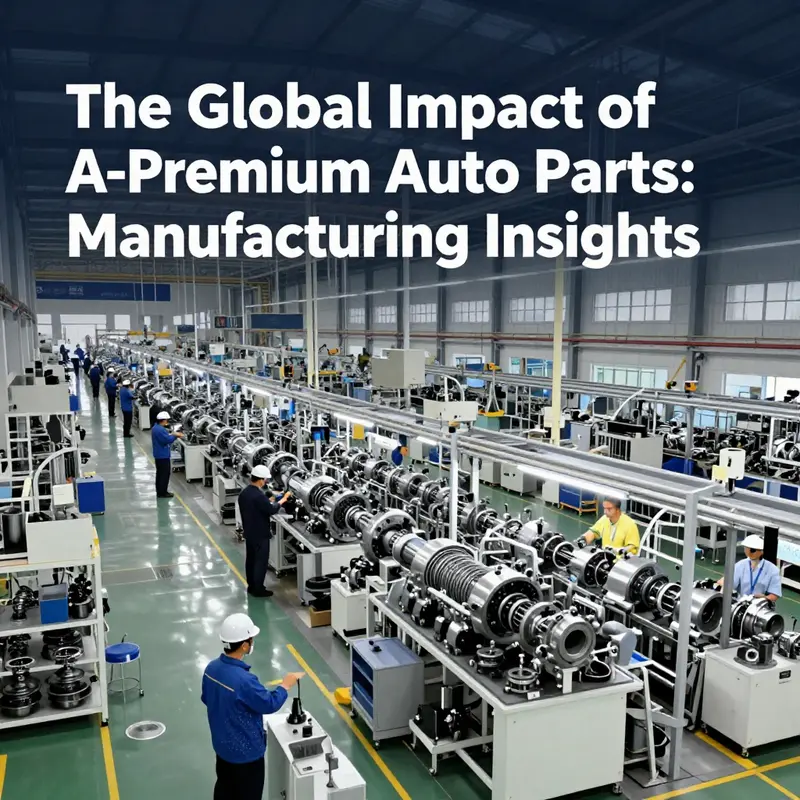
Where are A-Premium auto parts made? The straightforward answer points to a single country, but the reality is more nuanced. The brand operates under Fuzhou Yangteng Co., Ltd., a comprehensive automotive parts company headquartered in Fuzhou, Fujian Province, China. Since its founding in 2013, the company has grown beyond local workshops to become a recognized player in the aftermarket, combining design, development, and sales in a single ecosystem. A-Premium has built its reputation on an engineering-forward approach and market responsiveness, leveraging Fujian’s robust manufacturing network to support a scalable portfolio that reaches customers around the world through major online marketplaces. The emphasis is on quality and service, with production designed to meet the practical needs of aftermarket buyers while remaining adaptable to shifts in vehicle models and regional regulations. In this context, the manufacturing and operational core of A-Premium is anchored in Fujian Province, particularly in the industrial clusters around Fuzhou. The region is known for export-oriented manufacturing, favorable logistics, and a dense network of suppliers that can support both large-volume runs and more specialized, shorter production cycles. To a casual observer, Fujian might appear as a singular locale; to professionals, it reveals a well-coordinated ecosystem in which design studios, toolmaking shops, machine shops, and logistics hubs align to deliver reliable parts on a predictable timetable. It is this blend of scale and flexibility that enables a brand like A-Premium to offer a coherent line of components that stand up to real-world replacement scenarios across a diverse global market. The parent company’s emphasis on design and development complements the manufacturing core, ensuring that products are conceived with practical fitment and durability in mind and then translated into production specifications that factories can execute with confidence. In practice, this means that the brand’s offerings are molded by engineering insight and validated through testing that mirrors the conditions vehicles encounter in daily use, while feedback from distributors and end users informs ongoing refinements. The result is a manufacturing model that centers on Fujian’s industrial strengths while maintaining a global orientation, a balance that matters when customers compare aftermarket parts on reliability, compatibility, and value. Although the exact addresses of individual facilities are not publicly disclosed, the available information makes clear that the Fujian-based operations form the backbone of A-Premium’s supply chain. The region’s strength lies not in a single signature plant but in the collaborative networks that connect design leadership, tooling and prototyping capabilities, precision machining, quality assurance, and distribution logistics. This integrated approach supports rapid product iterations, tight tolerance control, and reliable lead times for online orders, all of which are critical as consumers increasingly expect fast, dependable delivery alongside consistent performance. The company’s footprint in Fujian is reinforced by a proven track record of serving the international aftermarket through e-commerce channels, linking the development work done in its laboratories to the tangible parts that arrive on customers’ doorsteps across continents. In this sense, the story of where A-Premium parts are made is not merely about a map pin but about an operating model that leverages proximity to skilled labor, access to advanced manufacturing technologies, and a robust export-oriented economy. The emphasis on research and development is a core element of this model, ensuring that the parts not only fit but endure, performing well under the conditions vehicles encounter in ordinary use and in more demanding settings faced by fleets and commercial operations. Quality control, standardized procedures, and continuous process improvement are woven into daily routines, enabling consistent results across batches and reducing the risk of variation that could undermine trust in aftermarket components. The global reach of A-Premium, supported by Fujian’s manufacturing ecosystem, rests on careful supplier selection and a commitment to aligning production capabilities with market needs. While the brand’s origin and operations are rooted in Fujian, the company is part of a wider ecosystem of Chinese manufacturers whose collective strength lies in delivering export-grade quality, responsiveness, and value. For readers seeking deeper insight into supplier reliability and manufacturing capabilities in this region, verified B2B platforms such as Alibaba’s supplier pages offer a directory of Chinese manufacturers and suppliers that specialize in automotive parts for global markets, illustrating how regional strengths translate into a world-spanning supply chain. It is important to recognize that publicly sharing specific factory locations is not universal across brands, and some manufacturers protect facility-level details as part of competitive strategy. Yet the Fujian origin remains a meaningful indicator of the production philosophy behind A-Premium: a commitment to investing in technologies and processes that underpin scalable manufacturing while staying attuned to the needs of a global customer base. In the end, knowing where A-Premium auto parts are made provides a lens into the company’s operating model—one that emphasizes grounded production in a thriving regional economy, paired with a global distribution approach that relies on digital commerce, careful quality systems, and ongoing development. For consumers and professionals alike, this combination of local manufacturing strength and international reach offers a basis for trust, provided they work with reputable distributors and verify the product lineage and compliance with applicable standards. The Fujian origin anchors the brand’s identity, while the worldwide distribution channels demonstrate how that origin translates into accessibility and continued relevance in a highly competitive aftermarket. If you are tracing the path from the factory floor to the road, the journey begins in Fujian’s industrial landscape, where engineering expertise, manufacturing discipline, and export dynamics converge to bring products to customers in dozens of countries, long after the initial design concepts took shape in a development environment that remains rooted in the region. For further context on how regional manufacturing ecosystems translate into global supply capabilities, explore industry-relevant vendor directories and supplier databases such as Alibaba’s listings for automotive parts: Alibaba supplier directory.
Tracing Quality from Factory Floor to Road: How A-Premium Auto Parts Are Built for Reliability
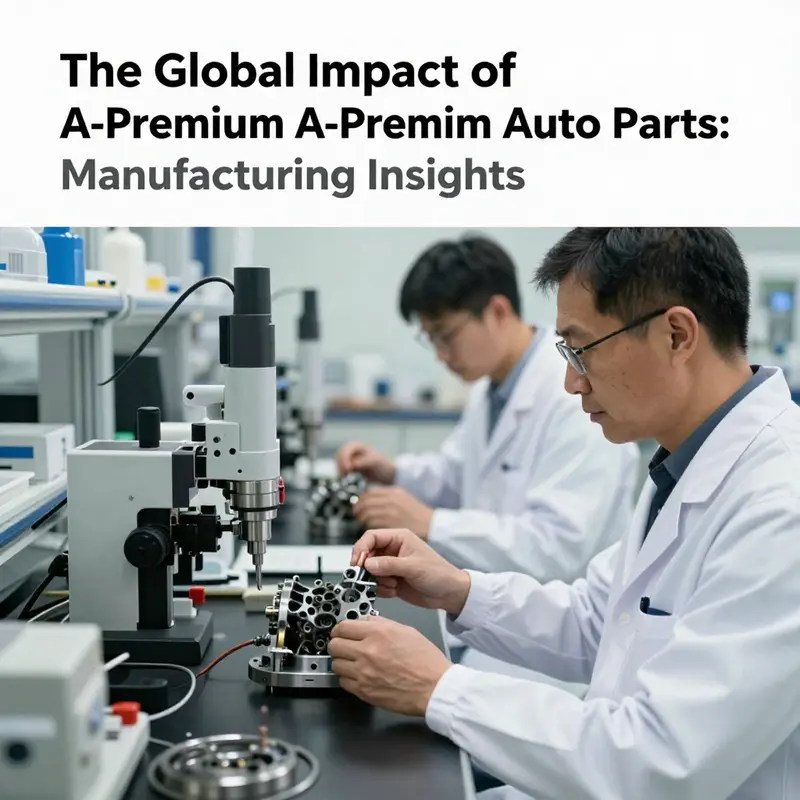
Understanding where A-Premium auto parts come from is more than tracing a country of origin. It’s about a deliberate, end-to-end approach to quality that starts long before a part leaves the factory floor and continues long after it arrives on a customer’s doorstep. A-Premium, as a brand built in China under the umbrella of Fuzhou Yangteng Co., Ltd., positions itself as a conduit between advanced engineering and practical service. The company, headquartered in Fuzhou, Fujian Province, has carved a niche in the automotive aftermarket since 2013 by combining design and development with responsive sales and distribution. Its footprint on global e-commerce channels, including prominent marketplaces, reflects a stature that is not merely about price but about a demonstrated commitment to performance and reliability. In this context, quality control becomes more than a checklist; it becomes the operating rhythm that sustains trust between manufacturers, distributors, and the drivers who depend on these parts every day.
The heart of A-Premium’s QC philosophy is its supplier network. Selecting suppliers is not a one-off gatekeeping step but a structured discipline that anticipates risk and builds resilience. The company looks for partners with proven engineering capacity and in-house production capabilities. When a supplier controls tooling, molding, and surface treatment—often across several production lines—the path from design intent to finished part is more predictable. This reduces dependency on external processes that can introduce variation and delays. Importantly, a strong quality assurance culture among suppliers signals a readiness to align with A-Premium’s standards, which in turn supports consistent performance across product families. In practice, this means audits, documented processes, and a track record of continuous improvement become prerequisites for collaboration. For a consumer, this translates into fewer surprises at unpacking and installation, and a higher likelihood that the part will fit as intended and endure the rigors of real-world use.
As products travel from concept to consumer, measurable indicators—KPIs—become the compass guiding manufacturing and procurement decisions. A blended approach incorporating quantitative metrics and qualitative assessments helps ensure a balanced view of quality. Quantitative KPIs include defect rates, on-time delivery, and first-pass yield. These metrics offer a snapshot of the production line’s efficiency and the supplier’s consistency. But numbers alone cannot capture the nuance of compatibility, fitment accuracy, and long-term durability. That is where qualitative assessments come into play. Supplier responsiveness, the flexibility to accommodate customization, and adherence to international standards—such as ISO/TS 16949—provide a richer understanding of a partner’s quality culture. In practice, this means that even when price and MOQs are competitive, the true premium value rests on whether a supplier can reliably meet exact fitment requirements, maintain consistent material performance, and honor warranty terms. Illustrative examples from the broader aftermarket context emphasize that parts intended for specific models—like a Toyota Highlander, or any model with tight tolerances—demand a clear demonstration of capability beyond cost considerations. When these expectations are met, the result is not only a part that functions but a part that endures.
The validation and inspection phase is where theoretical quality becomes tangible. A-Premium’s process emphasizes proactive verification at multiple stages. Pre-shipment inspections play a critical role by verifying that each batch aligns with precise specifications before it leaves the supplier’s facility. This step serves as a final check against deviations in dimensions, materials, coatings, and packaging. To further decrease risk, random sampling during production helps catch anomalies early, before they cascade into larger issues that could trigger recalls or customer dissatisfaction. Third-party inspection services add an independent layer of objectivity, strengthening confidence for both the seller and the buyer. The combination of internal checks, random in-process sampling, and external audits provides a robust net that catches process drift, material inconsistencies, or tooling wear that might otherwise go unnoticed until after sale.
Communication and audits are the glue that holds the QC system together. Establishing clear channels with suppliers ensures issues are addressed promptly and aligned with stated quality expectations. When a discrepancy arises—whether it concerns fitment tolerance, surface treatment integrity, or performance under operation—a transparent, documented remediation path helps prevent recurrence. Regular supplier audits reinforce this discipline, encouraging continuous improvement and adaptation as product specifications evolve. In a world where aftermarket parts must meet varying regional standards and consumer expectations, this ongoing dialogue between buyer and supplier keeps production aligned with the latest designs and performance benchmarks. The outcome is a chain of accountability that supports reliability across the purchasing journey—from initial order through shipment and post-sale support.
The practical impact of these QC processes extends beyond the factory floor and into the hands of vehicle owners. The commitment to robust supplier selection, rigorous KPIs, thorough validation, and ongoing communication yields parts that align with the safety and reliability expectations that customers impose on the aftermarket sector. When a part arrives with a precise fit, consistent performance, and a durable finish, a consumer is more inclined to trust that the A-Premium label stands for quality—not just price. This trust, in turn, reinforces the value of the broader sourcing ecosystem that enables a premium experience on global marketplaces. It is not merely about assembling components; it is about composing a dependable supply chain that withstands the test of miles and time.
In addition to these internal standards, the broader industry context offers a useful frame for understanding how A-Premium positions itself within the Chinese manufacturing landscape. The company’s strategy shows that high quality in the aftermarket does not arise from a single heroic test but from a disciplined, repeatable process that begins with the choice of suppliers and ends with a trusted customer experience. The model—rooted in China’s sophisticated production capabilities—demonstrates how modern manufacturing can combine cost efficiency with rigorous quality controls. This blend of capabilities is what enables A-Premium to respond to changing market demands while preserving the reliability expected of premium parts. The result is a coherent narrative of quality that ties together design intent, production discipline, supplier collaboration, and end-user value.
As the automotive aftermarket continues to evolve, the alignment between manufacturing origin, quality discipline, and customer outcomes becomes increasingly visible. Consumers who explore options on major online platforms seek assurance that the parts they install will perform as advertised and endure the life of their vehicle. A-Premium’s QC framework, anchored in supplier capability, KPI discipline, proactive validation, and proactive communication, provides a clear answer to that expectation. It is a reminder that even when a product is produced far from the consumer’s driveway, its value is measured not only by the engineering inside the box but by the integrity of the processes that produced it. The chain—from raw material selection to final inspection—forms a continuous loop of accountability and improvement. And while one part may be a single piece in a larger system, its reliability depends on the discipline that governs its creation. That is the essence of reliable aftermarket parts in the modern era: robust control at the source, rigorous verification along the way, and a dependable performance once installed on the road.
For readers seeking a broader perspective on how to approach sourcing and quality control in auto parts from a global manufacturing base, a comprehensive guide on supplier selection and QC practices offers valuable context. This external resource outlines actionable strategies for evaluating supplier capabilities, managing risk, and ensuring consistency across complex supply chains. It can serve as a practical companion to the internal QC framework described here, helping teams translate principles into measurable improvements. Strategic Sourcing of Auto Parts from China: Supplier Selection & Quality Control Guide.
Within the broader narrative of quality, there is also a tangible reminder of the ongoing relationship between a manufacturer, its suppliers, and the customers who rely on the parts. The goal is not merely to prevent defects but to foster a culture of continuous improvement that anticipates changing vehicle requirements, evolving materials, and new manufacturing technologies. In that sense, the quality control processes described here are not static procedures but a living system that adapts, learns, and, crucially, delivers a consistent level of performance for drivers around the world. The result is a coherent, trusted pathway from the factory floor in China to the open road, where each turn of the wheel affirms the value of thoughtful, well-executed quality management.
From Fuzhou to Every Garage: Tracing Where Aftermarket Auto Parts Are Made and How They Reach the World
From the question of where replacement parts come from, a broader story emerges about factories, supply chains, and the everyday people who depend on them. The manufacturing footprint of aftermarket auto parts, particularly those produced in China, is not a single point of origin but a network shaped by location, capability, and a deliberate strategy to balance affordability with reliability. The core production hub for this particular line of parts sits in Fuzhou, in Fujian Province, where ownership rests with Fuzhou Yangteng Co., Ltd. This arrangement places the heart of manufacturing within a region known for its long-standing industrial base, skilled labor, and access to a dense network of suppliers and tooling resources. Since its establishment in 2013, the company has grown by emphasizing design, research and development, and sales. That combination turns production into a process that is as much about continuous improvement as it is about casting parts out of a mold. The outcome is a brand that seeks to couple practical function with a discernible degree of consistency across many SKUs and a large market reach that is increasingly defined by digital storefronts and online shopping habits.
The geography of production matters because it is inseparable from the economics and the quality story that customers encounter when they browse, compare, and select parts. In the aftermarket, where the emphasis frequently lands on value and accessibility, a Chinese-based manufacturing base offers a robust platform for scaling up to meet common needs—especially when those needs involve modifications or routine replacements that drivers perform on a weekend or during a scheduled maintenance window. The narrative here is not about exotic or boutique manufacturing feats but about reliability, repeatability, and the ability to deliver consistent parts that fit and function as expected. Advanced production techniques are highlighted as a strategic investment, a signal that the company is not content to rely on low-cost labor alone but is actively pursuing processes that improve tolerances, finish, and performance across large production runs. This alignment between technique and demand helps explain why the parts can be offered at price points that remain appealing to a broad customer base while still meeting essential standards of quality and service.
The aftermarket landscape rewards breadth as much as it rewards balance. The catalog in question spans components such as body and trim pieces, brake system parts, shocks and struts, suspension elements, and various transmission components. These categories reflect a deliberate choice to address the most frequently needed repairs and maintenance tasks that owners face, rather than chasing high-margin, low-volume niches. The appeal is straightforward: a wide range of functional replacements that can be installed with confidence by DIY enthusiasts and professional technicians alike. The price anchor is equally clear—a mid-to-low price range that makes upkeep affordable for a wide spectrum of drivers, while providing a dependable alternative to more expensive, premium offerings. In this space, the value proposition centers on accessibility, predictable performance, and the ability to source from a supplier that can sustain supply through fluctuating demand and evolving vehicle fleets.
Distribution through digital channels has become the lifeblood of this strategy. The presence on major e-commerce platforms—most notably Amazon and eBay—transforms a regional manufacturing story into a global consumer experience. Buyers in North America and beyond can access a broad assortment of parts without the friction of a traditional parts counter, with reviews, fitment notes, and direct shipping options forming the modern conversation between buyer and seller. This online-first approach shapes expectations in two important ways. First, it elevates the importance of accurate listings, clear compatibility information, and reliable post-purchase support. Second, it rewards speed and convenience, because the online marketplace rewards vendors who can fulfill orders promptly and transparently. For DIY mechanics and drivers seeking routine, economical replacements, these dynamics translate into a straightforward value proposition: a credible source for commonly needed parts delivered with reasonable ease and at attractive price points. The geographic origin—rooted in a Chinese manufacturing base—becomes a virtue when paired with an efficient, customer-focused digital distribution model.
The market position of this manufacturing approach also reveals the boundaries of its appeal. While it may not satisfy buyers chasing premium performance, OEM-level specifications, or the longest possible longevity, the combination of accessibility and affordability resonates strongly with a broad audience. When compared with brands that target high-performance characteristics or specialized engineering, the A-brand-like positioning described here emphasizes practical functionality and predictable outcomes for everyday wear and tear. The choice to emphasize value is not merely about price; it is about delivering a dependable fit, reasonable quality, and a service culture that supports customers once a part is installed. In a market where many buyers want quick, no-hassle replacements, the ability to offer a wide catalog with consistent quality at accessible prices becomes a decisive advantage. This is not about offering the most advanced material science or the most flamboyant engineering; it is about delivering steady, practical solutions that keep vehicles on the road and owners moving forward with confidence.
The geographic concentration of manufacturing does not imply a closed loop or a lack of global reach. On the contrary, it signals a deliberate alignment between a robust production ecosystem and expansive digital channels. When a factory in a busy industrial region can feed an online marketplace with thousands of units, the result is a scalable, responsive supply chain. The lesson, for industry observers, is clear: origin matters, not as a badge of prestige but as a lever of efficiency, consistency, and value. The company’s ability to invest in design and development, while maintaining a broad catalog and reliable delivery through e-commerce, demonstrates how manufacturing geography can function as a strategic asset rather than a merely geographic footnote. The same footprint that underpins cost competitiveness also supports the customer experience—quick access to parts, straightforward compatibility guidance, and a straightforward path from purchase to installation.
This narrative also sits against a broader competitive backdrop. In markets where customers pursue premium materials or extended longevity, other brands may be favored for their engineering depth. But the strength of a Chinese-based production approach lies in its ability to sustain volume, standardization, and predictable performance across a wide array of common replacements. The resulting balance—quality enough for everyday use, price accessible to budget-conscious buyers, and a distribution model that prioritizes convenience—helps explain why the parts from this manufacturing base have found a global foothold. It is not a story of flashy innovations; it is a story of dependable, scalable manufacturing paired with consumer-friendly ordering and fulfillment. In many ways, the geography behind these parts—anchored in a modern production region of China and extended through a global online marketplace—embodies a pragmatic answer to the question of where aftermarket parts come from and how they arrive in a customer’s hands.
For anyone evaluating the sourcing of widely used replacement components, the takeaway is simple: a manufacturing footprint like this is designed to support broad, rapid access to parts people rely on. It is about a steady, scalable production system that can meet common demand and a logistics and sales approach that makes flipping open a browser and ordering a feasible, low-friction choice. The result is not a glamorous tale of exotic export routes but a clear, practical pathway from a Fujian factory floor to the garage and driveway around the world. Readers—whether they are first-time buyers or seasoned DIYers—can recognize that origin, process, and distribution are all part of a cohesive, customer-focused strategy. And they can appreciate how a combination of domestic design and international accessibility can translate into predictable replacements when time matters and dollars count.
External resource: https://www.ebay.com/usr/apremiumofficial
Made in China, Sold Worldwide: The Manufacturing Core and Digital Distribution of A-Premium Auto Parts
The question of where A-Premium auto parts are made opens a broader view of how today’s automotive aftermarket operates. It is not enough to point to a single factory floor or a lone supplier; the journey from design to delivery traverses continents, cultures, and increasingly sophisticated digital channels. In the case of A-Premium, production is anchored in China, driven by a Fujian-based company that has steered the brand since its inception. This core—manufacturing in a high-volume environment with a strong emphasis on research and development, design validation, and rigorous quality discipline—sets the stage for a distribution model that has evolved in parallel with e-commerce and global logistics. Understanding this synthesis helps explain not only the physical origins of the parts but also how they reach customers around the world with speed, consistency, and adaptability.
From the factory floor to the consumer’s doorstep, the manufacturing philosophy centers on two enduring objectives: compatibility and reliability. Engineers and machinists in the production hub apply advanced tooling, process automation, and lean manufacturing principles to produce components that fit a wide range of vehicles across regions. The emphasis on R&D and design means the parts are conceived with interchangeability in mind, tested for performance under diverse conditions, and standardized so that a single part number can fit multiple models where appropriate. This focus on engineering rigor translates into predictable quality outcomes, which is essential when a brand operates across borders and relies on a dispersed network of distributors and retailers.
The supply chain that supports this manufacturing model is not a one-way street. It is a tightly coordinated system that blends in-house capabilities with carefully selected partners for materials, testing, and logistics. In practice, this means suppliers are vetted for material integrity, traceability, and consistent performance. Finished components undergo inspection and functional validation before they enter the market. The result is a product story that begins with disciplined production and ends with confidence in every shipment, a promise that is especially critical as buyers increasingly scrutinize fitment accuracy, warranty terms, and post-purchase support.
On the distribution side, e-commerce has reshaped how premium auto parts are bought and sold. A multi-channel approach has become the norm, combining a direct-to-consumer strategy with robust third-party retail and marketplace channels. A leading U.S.-based online aftermarket retailer serves as a useful reference point for understanding this evolution, though the exact names and figures are less important than the underlying dynamics. The direct-to-consumer channel—comprising a branded website and a mobile app—offers advantages such as real-time inventory visibility, personalized recommendations, and streamlined fulfillment. It enables a seller to present a cohesive story about parts quality, fitment, and compatibility while maintaining control over pricing, returns, and customer data. This is not a simple storefront; it is a tightly integrated system where catalog accuracy, logistics sequencing, and after-sales service cohere into a single experience for the buyer.
Yet, no single channel suffices in a global market. Third-party marketplaces and wholesale distributors broaden reach, diversify risk, and provide resilience against regional disruptions. This hybrid model lets an enterprise extend its geographic footprint without surrendering the benefits of a direct relationship with the end user. It is a pragmatic balance: the brand preserves its narrative and value proposition through its own platform, while marketplaces and distributors provide scale, local market access, and rapid fulfillment options. The result is a distribution architecture that can flex with demand cycles, regulatory environments, and shifting consumer expectations, such as faster delivery times, better stock availability, and clearer product information.
Strategic partnerships have emerged as a crucial instrument in expanding global reach. In recent years, cross-border collaborations have linked logistics acumen with e-commerce infrastructure to create more seamless flows of parts across continents. By aligning with partners that can optimize international freight, customs clearance, and last-mile delivery, a parts brand can reduce cycle times and improve cost efficiency. These collaborations also support the development of regional stockholding and localized catalogs, so customers find parts that are relevant to their markets while benefiting from the assurances of a centralized quality program. The effect is a more resilient supply chain, better customer experiences, and a clearer, more durable path from manufacturer to consumer.
Product strategy plays a complementary role in this ecosystem. A significant portion of catalog inventory leans toward in-house or private-label offerings. This approach provides stronger control over quality, sourcing, and pricing, while delivering faster response to market shifts. It also helps maintain consistency across regions, since the same standard can be applied to parts sourced through different suppliers as long as the upstream specifications are preserved. Beyond the core scope of private-label parts, curated third-party brands fill the catalog with a breadth of options, ensuring that customers can compare alternatives and find the best fit for their vehicles and budgets. The balance between proprietary and third-party content is not merely about choice; it is a carefully engineered proposition that harmonizes cost structure, warranty coverage, and speed of availability.
As the global aftermarket landscape tilts toward digital commerce, market forecasts reinforce the move toward online, multi-channel distribution. The total market for e-commerce in the automotive aftermarket continues to expand, underpinned by a growing appetite for convenience, transparency, and dynamic pricing. Analysts note a healthy compound growth trajectory for this segment, even as competition intensifies and traditional channels recalibrate. In this environment, models such as dropshipping—where inventory and fulfillment are outsourced to specialized suppliers—gain traction for their low upfront costs and flexibility. The caveat, of course, is that success hinges on identifying reliable partners who can ensure consistent product quality, accurate stock availability, and timely shipping. These capabilities are not optional luxuries; they are prerequisites for maintaining credibility in a landscape where customer expectations are calibrated by instant access and real-time information.
The geographic breadth of distribution also carries implications for after-sales support, regulatory compliance, and warranty administration. A manufacturer rooted in China but serving customers worldwide must navigate a patchwork of standards, vehicle configurations, and consumer protections. Achieving smooth interoperability requires clear product data, precise fitment guidance, and responsive customer service. When a part fits a broad spectrum of vehicles and model generations, customers gain confidence in purchasing decisions made from a digital catalog. Conversely, inaccurate fitment data can erode trust and increase costs through returns and callbacks.
In practice, this fusion of precise engineering, disciplined manufacturing, and intelligent distribution produces a coherent value proposition. Buyers can expect parts that meet agreed specifications, delivered within reasonable timeframes, and supported by a credible service framework. The digital tools powering these outcomes—real-time inventory, transparent pricing, and accessible customer assistance—turn an online purchase into a reliable tactile experience. The geography of origin matters less than the quality signals that travel with the product: consistent performance, dependable compatibility, and a predictable path through the supply chain. That is the real story behind the question of where A-Premium auto parts are made: the answer points to a manufacturing core in China that is inseparable from a modern, global distribution and service system.
For readers seeking a broader lens on market dynamics and growth trajectories in this space, a comprehensive external resource outlines the long-term potential of the global e-commerce automotive aftermarket and highlights trends such as multi-channel strategies and the rising relevance of scalable logistics networks. See Global E-Commerce Automotive Aftermarket Market Report 2025 for context on the magnitudes and growth patterns shaping these decisions. In practical terms, those trends push brands toward more agile supply chains, tighter data governance, and partnerships that bridge regional strengths with global demand.
The narrative also intersects with practical, on-the-ground examples of how parts are presented to consumers online. A representative listing from an auto parts retailer—an item page that showcases fitment details, high-resolution images, and a precise compatibility checklist—illustrates the kind of content that supports confident online buying. This kind of catalog discipline matters increasingly as buyers rely on digital channels to assess fit and quality before purchase. For reference to how such content is indexed and organized on a product-level page, you can explore a detailed listing here: 03-06-mitsubishi-evolution-8-9-jdm-rear-bumper-oem. While the article uses a specific slug as anchor text, the underlying lesson is universal: precise, model-specific information reduces ambiguity and accelerates decision-making for online customers.
In sum, the origin of A-Premium parts is China, anchored by a manufacturing program that blends engineering rigor with scalable production. The journey from factory to consumer is mediated by a sophisticated, multi-channel distribution strategy that leverages direct-to-consumer platforms, third-party marketplaces, and regional wholesale networks. Strategic collaborations and a deliberate emphasis on private-label quality further reinforce a value proposition that holds up under the pressures of a rapidly evolving digital marketplace. As automotive e-commerce continues to mature, the exact geography of production will remain important, but what ultimately matters most is the reliability, transparency, and responsiveness that travel with the parts—whether purchased from a brand’s own site or through a network of trusted partners.
Made in China, Engineered for Global Roads: The Innovation Embedded in A-Premium Auto Parts
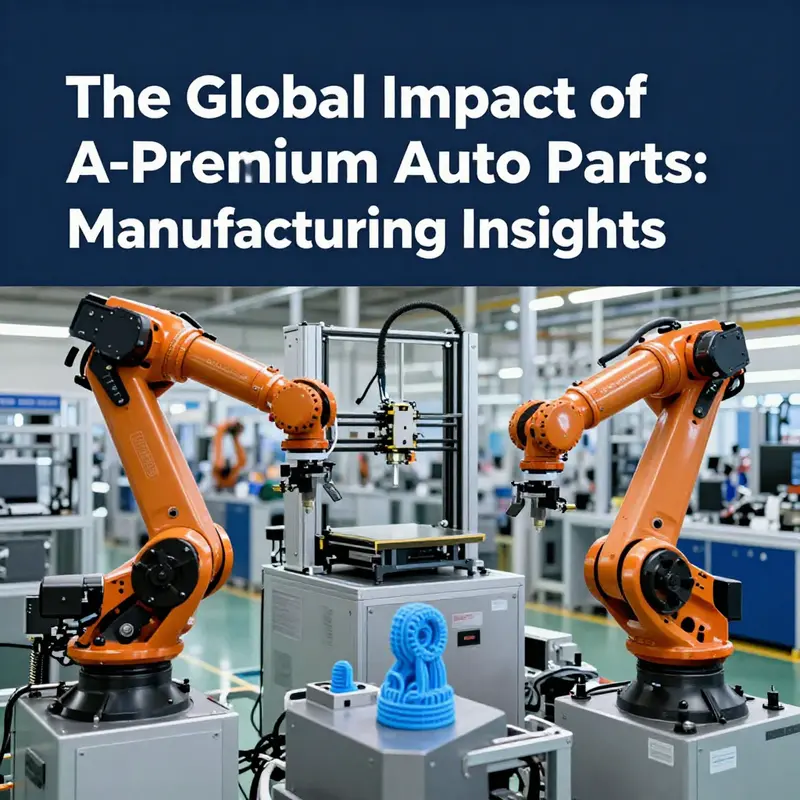
From its roots in Fuzhou, founded in 2013 by a Chinese manufacturer, A-Premium has grown into a globally accessible supplier of automotive components. The company emphasizes design, research and development, and aftersales support, and leverages China-based production facilities to deliver reliable parts through a worldwide network that spans multiple continents. This chapter traces how components are conceived in labs, refined through testing, and manufactured in automated facilities that use data-driven processes to maintain tight tolerances and consistent quality. Sustainability, compliance, and intellectual property protection are positioned as core capabilities that enable long-term relationships with distributors and repair shops. As demand for smarter, lighter, and greener parts rises, A-Premium embeds green manufacturing practices, lifecycle thinking, and transparent certification into its production DNA, ensuring that parts not only meet performance expectations but also align with global regulatory and environmental goals. The narrative also highlights how the company balances cost competitiveness with reliability by integrating design thinking, scalable tooling, and robust supplier networks to adapt quickly to evolving market needs. The result is a resilient, traceable, and responsive aftermarket ecosystem where a single Chinese factory can serve diverse vehicle generations while maintaining high standards of quality, delivery, and service.
Final thoughts
Understanding where A-Premium auto parts are made, along with their quality assurance, market positioning, e-commerce strategies, and technological innovations, equips business owners with valuable insights into the automotive aftermarket. A-Premium continues to leverage its manufacturing capabilities in China while adapting to market trends and demands. By prioritizing quality and advanced production techniques, they have established a reputable presence in the global market, making them a reliable source for automotive replacement parts. Thus, embracing A-Premium products could enhance your business offerings and customer satisfaction.