
Auto body parts are critical for maintaining the performance and safety of vehicles. Business owners face numerous challenges when sourcing parts, including quality assurance, cost-effectiveness, and compatibility. This guide delves into the best options available for purchasing auto body parts—each unique in its benefits. From online marketplaces that provide a diverse array of options to specialized platforms ensuring accurate fitment, you’ll discover sources that align with your specific business needs. We will also explore OEM and brand-authorized dealers for warranty protection, local body shops for direct support, and salvage yards for budget-conscious choices. Understanding these channels will empower business owners to make informed purchasing decisions.
Beyond the Driveway: Harnessing Online Marketplaces for Variety, Price, and Confidence in Auto Body Parts
Online marketplaces have become the unseen workshop partner for anyone restoring, repairing, or upgrading a vehicle’s exterior. They blend breadth, price competition, and convenience in a way that traditional retail channels rarely can, turning the hunt for a hood, a fender, or a grille from a ritual into a more predictable part of a project timeline. The evolution is not merely about finding a lower price; it is about accessing a wider spectrum of options—new, used, OEM, and aftermarket—so you can align part choice with your vehicle’s value, your budget, and your own tolerance for risk. The result is a landscape that rewards careful buyers who couple curiosity with disciplined verification, and it rewards shops and DIYers who approach parts as a system, not as a single, isolated item. In this chapter we explore how online marketplaces function as a unified ecosystem, what to look for in listings, and how to move from curiosity to a confident purchase without getting tripped up by the usual pitfalls of remote buying.
The first thing online marketplaces deliver is variety. A modern repair or restoration project often involves more than a single component; it requires a suite of parts that must fit a specific model and year, sometimes across generations of a vehicle. The catalogs available through these platforms span exterior panels like bumpers, hoods, doors, fenders, grilles, and mirrors, as well as trim pieces, moldings, and even smaller hardware. The upside is clear: with one search you can compare OEM and aftermarket options side by side, evaluate different finishes, and decide whether a replacement panel should be sourced as a brand-new part or a salvaged piece from another vehicle with a compatible VIN. The downside, however, is equally real. The sheer scale of listings means the quality of information can vary, and the line between a parts bin and a genuine factory piece can blur. Buyers who do not ask the right questions risk ending up with a misfit component, a color mismatch, or a part that requires more labor than anticipated.
That tension between breadth and reliability is where the art of shopping online body parts lives. Reputable listings often present a clear set of signals that help you judge whether a listing will meet expectations. Photos that show multiple angles, close-ups of attachment points, and a VIN or OE number in the listing increase transparency. Clear indications of the part’s condition—new, used, refurbished—and the included warranty or return policy provide a framework for risk management. The best listings also offer technical details beyond the surface, such as mounting diagrams, fitment notes for different trim levels, and references to paint codes that guide color matching. These elements do not guarantee compatibility, but they do turn a guessing game into a reasoned decision process. In many cases, you will find advanced search and filtering tools that let you narrow results by year, make, and model, and even by the specific damage point you are addressing. This combination of filters and details is essential when you are dealing with body parts, where a few millimeters in tolerance can translate into a difference in fit, alignment, and appearance.
The method behind the magic is not randomness; it is a growing alignment between consumer shopping behavior and supplier capabilities. Some marketplaces have matured to offer precise part matching using vehicle VINs or OE numbers, turning the search from a generic catalog browse into a targeted lookup. For professionals, this capability reduces the time spent chasing the correct panel and minimizes the risk of returning or exchanging incorrect parts. For DIY enthusiasts, it delivers the confidence to place a more expensive order with the knowledge that the part is likely to fit on the first try. The practical consequence is a smoother project cadence, fewer delays due to incorrect parts, and less downtime in the shop or garage.
Price is the second major pillar of value in online marketplaces. Competition among sellers translates into rapidly shifting price points, and shoppers can benefit from knowing when a deal is truly a bargain and when it is a trap built on incomplete information. Price differences can arise from several sources: whether the part is new or used, the seller’s location and shipping footprint, any included warranties, and how the listing’s photos and documentation stack up in terms of quality. A new piece from a reputable source often commands a premium that reflects the guarantee of authenticity, color compatibility, and the assurance of return policies. On the other hand, a used or refurbished panel can represent substantial savings, particularly for older models or for parts that are not safety-critical in the moment but impact appearance or corrosion resistance. The savvy buyer weighs the long-term costs—labor for installation, possible repainting to achieve a color match, and the risk of needing a subsequent replacement—against the initial purchase price.
To navigate price effectively, it helps to treat the marketplace as a dynamic marketplace rather than a static catalog. Compare similar listings side by side, paying attention to who is selling, what condition is stated, and what the return window looks like. A listing with a generous return policy serves as a cushion against misfits, especially when you cannot examine the part in person before purchase. In many cases, the best value is not the lowest price but the best price-to-risk ratio. Do not discount shipping costs, either; international or cross-border shipments can dramatically alter the final tally, sometimes turning a perceived bargain into a marginal gain once duties, taxes, and handling fees are factored in.
A critical, often overlooked aspect of pricing is the potential for color mismatch. Exterior panels may arrive with a paint code that requires professional color matching to achieve a seamless look. Some listings explicitly offer color-matched or color-ready options, while others provide paint codes and factory specifications that you can hand to a body shop. If your project includes a repaint, you can often negotiate a better price on a non-color-matched panel and rely on the shop to handle the finishing touches. If color matching is essential to your goals, consider listing that concern up front when you communicate with a seller or confirm that the color is an exact factory shade before the item ships. The cost and complexity of paint work can be a deciding factor for the overall viability of a given online option.
A question that inevitably arises is how to protect yourself from counterfeit or mislabeled items. It is prudent to scrutinize seller reputation and to look for listings that provide extensive product details and authentic documentation. One indicator of reliability is a listing that includes a plan for returns and a warranty period. Reviews from other buyers can reveal patterns—consistent fit issues, missing hardware, or inaccurate descriptions—that a single listing does not reveal. When in doubt, reach out with direct questions about the part’s OE number, its country of origin, and any fitment notes that could affect your vehicle. A seller who responds promptly with precise information is often a sign of reliability and professional handling, even in a marketplace where the breadth of inventory is so wide.
The third pillar, and perhaps the most distinctive feature of major online marketplaces, is the ecosystem around the transaction itself. Secure payment options, buyer protection programs, and transparent return policies create a safety net that can be absent from informal marketplaces or from private party transactions. This framework matters when you are purchasing substantial components such as body panels, which involve sizable financial commitments and significant labor if they do not fit as expected. The promise of a reliable return or warranty can give you the margin to take a careful, calculated risk rather than a rushed impulse to salvage a project on a tight deadline. In practice, this means reading the fine print, noting the required condition for returns, and understanding whether the defect or mismatch is the seller’s responsibility or if it falls under a broader policy framework.
For many buyers, the practical workflow looks something like this: you begin with a clear plan for what needs replacement, or you may simply be compiling options for a future project. You search for panels or components that correspond to your vehicle’s year, make, and model, while also considering related compatibility maps for mid-cycle updates or trim variations. You inspect listing details, compare images, and check the part numbers where available. You may filter to avoid non-vehicle-specific listings or to highlight items with a guaranteed fit. You reach out to sellers with targeted questions about condition, OE numbers, and any included hardware, then you compare the outcomes against your budget and schedule. If the listing aligns with your risk tolerance and your project timeline, you place the order, knowing you have a realistic plan for installation and finishing. If not, you keep shopping and refine your criteria until a confident choice emerges.
The value of online marketplaces also grows when combined with specialized platforms that focus on accuracy and compatibility. These platforms use more rigorous matching logic, sometimes requiring a vehicle VIN, OE number, or other precise references to ensure the part will fit. This approach is especially important for structural components or panels where a subtle mismatch can derail alignment and paint flow. For a professional shop, such precision reduces the need for back-and-forth with suppliers and speeds up job timelines. For a hobbyist, it turns a potentially fraught search into a measured, data-driven process.
Beyond the broad marketplaces and the precision-focused platforms lies another layer of options that can be extremely practical in everyday repair work: local auto body shops and salvage yards. While the online sphere is indispensable for hard-to-find parts and for comparative shopping, the local ecosystem offers the benefit of face-to-face advice, inspection opportunities, and the possibility of close-to-home pickup. A shop can guide you toward the best part type for your situation, whether that means an OEM replacement that guarantees color match and warranty or a dependable aftermarket substitute that minimizes cost while preserving safety and performance. Salvage yards and auto recyclers extend the reach of online inventories, enabling you to source functional used panels at a fraction of the price of new parts. The caveat here is that conditions can vary widely; you may encounter rust, deformation, or hidden damage that is not evident from a photo. Having a trusted mechanic or a consistent source who can verify fitment before you buy can turn these opportunities into a legitimate savings strategy rather than a gamble.
If your project targets a particular vehicle family or you are chasing a rare model, the dialogue between online search skills and on-the-ground expertise becomes even more important. There are enthusiasts who specialize in older, hard-to-find parts, and they often rely on networks that cross borders and time periods to locate the exact component you need. In such cases, the ability to verify alignment with VINs, OE references, and your vehicle’s paint code remains critical. The most durable approach blends the immediacy of online marketplaces for price and availability with the confidence that only professional guidance or in-person inspection can provide for tricky fitments. This is not about abandoning one channel for another; it is about knowing when a broad search should transition into a targeted confirmation of part specifications and installation requirements.
For readers who want a concrete example of navigating these waters, picture a DIYer planning to replace a dented front bumper on a mid-generation sedan. The goal is not simply to find a bumper that looks right; it is to ensure the panel will align with the headlight housings, the fender gap, and the hood line, while also matching the car’s paint code if repaint is necessary. The person begins by identifying several candidate panels that are listed as compatible with the vehicle’s year and trim. They compare photos showing mounting points, brackets, and any added reinforcements. They check the OE numbers when provided and request additional images of the back of the panel to confirm the hardware layout. They confirm the finish code and verify whether paint services are available or if color matching will be necessary. They read the seller’s return policy and confirm the warranty terms. They weigh shipping times and costs, factoring in possible delays that may affect a restoration deadline. If all signals align—fitment data, return assurances, and a coherent price-versus-labor plan—the buyer proceeds with the purchase, scheduling installation and paint work with a trusted shop. In cases where the part is scarce or specialty, they may expand the search into regional salvage networks or professional-grade suppliers that can provide a fresh, undamaged panel with documented compatibility.
To readers who are balancing breadth, price, and confidence, the path forward is deliberate. Start with a clear definition of which parts matter most for your project’s success, and identify the key compatibility criteria ahead of time. A well-defined plan reduces the overwhelm that can come with an online search and makes it easier to discern a good listing from a poor one. The more you can anchor your choices to verifiable details—VIN, OE numbers, paint codes, mounting diagrams—the less you will rely on guesswork. And as you grow accustomed to the marketplace’s rhythms, you will begin to see patterns: what kinds of listings tend to require more negotiation, which sources consistently provide accurate information, and how to spot listings that offer robust customer support, clear photos, and transparent terms. The final insight is that buying auto body parts online is not a single transaction but a two-part process: you acquire the correct component, and you secure the confidence that it will integrate with your vehicle’s geometry, finish, and safety requirements.
Throughout this journey, a single guiding principle remains constant: verify before you buy. Use your vehicle’s VIN, OE numbers, and exact model details to anchor your search. Read the listing thoroughly and compare it against your vehicle’s reference data. If a listing is missing critical information or if a seller’s responses feel vague or delayed, treat that as a warning sign and either push for clarification or move on. When in doubt, seek a seller who offers clear documentation, a reasonable return window, and a straightforward warranty policy. The fusion of broad availability with disciplined verification is what makes online marketplaces not just a convenience but a strategic resource for reliable, cost-conscious auto body parts sourcing.
As you integrate these practices into your purchasing routine, remember that you are not limited to a single platform or one style of part sourcing. A well-rounded approach uses online marketplaces for breadth and price, specialized platforms for precise fitment and technical guidance, OEM or dealer channels for guaranteed originality and color-matching assurance, and local shops or salvage yards for hands-on assessment and practical support. The blend of channels enables you to tailor your process to the exact needs of each project—whether you are chasing a perfect factory finish on a showroom-restoration, or simply restoring functional integrity at a modest cost. If you are exploring an option that focuses on precise vehicle-specific body part searches and secure transactions with verified suppliers, consider a dedicated platform that emphasizes accuracy and reliability in parts matching. For a curated example of this approach, you can explore a dedicated Evo-X bumper listing on a platform that specializes in Mitsubishi Evolution parts. See the dedicated listing here: front bumper listing for Evolution X.
Finally, for readers who want to extend their sourcing toolbox with trusted catalogs and comprehensive part databases, an external resource can provide a deeper, category-wide view of available components and fitment guidance. The broader catalogs offer structured filters, detailed part descriptions, and consistent warranty terms that complement the marketplace experience. External resource: https://www.carparts.com
Precision You Can Trust: How Specialized Auto Parts Platforms Ensure Accurate Fitment
When you set out to replace a damaged panel or upgrade a cosmetic element on a vehicle, the question quickly shifts from where can I buy parts to which path will guarantee the right part, the right fit, and the right finish. The landscape is rich with options, but the most dependable route for accuracy and compatibility lies with specialized auto parts platforms. These platforms are not just about catalog breadth; they are built to connect buyers, parts, and vehicle data in a way that minimizes guesswork. The result is a buying experience that feels more like a precise engineering collaboration than a simple e commerce transaction. In a market where a tiny misalignment, an eighth of an inch off, a single wrong VIN, or a paint code that doesn’t match, can derail a restoration or prolong a repair, the value of specialized platforms becomes clear. They function as a bridge between the complexity of modern vehicle construction and the practical needs of shop owners, enthusiasts, and detail oriented drivers who demand fitment that is verifiable and durable over time. The shift to precision is not an abstract trend; it is a pragmatic response to the realities of contemporary auto body work, where OEM level fidelity and consistent quality matter just as much as price or speed of delivery. A well chosen specialized platform can transform a potentially iterative, uncertain process into a smooth, verifiable progression from search to install, backed by data that carries real trust. To understand why these specialized platforms stand out, it helps to look at the manufacturing backbone that supports them. In regions like Changzhou and Danyang, within Jiangsu Province, a quiet but powerful ecosystem has emerged for high precision body kits and complex aerodynamic components. These cities leverage sophisticated CNC machining and advanced composite materials to produce parts with a level of tolerance that makes aftermarket fitment closer to OEM expectations. The emphasis here is not on mass production alone but on controlled processes that ensure each panel or panel related accessory aligns with the exact geometry required by a vehicle design language. Buyers who pursue premium export grade components benefit from this alignment because it reduces the typical back and forth of trial and fit checks. It also means color and texture coordination two factors that can make or break a restoration are more likely to meet the original standards. The Chinese manufacturing cluster in Jiangsu, alongside other regional hubs, reinforces a global network where specialized platforms can source components that maintain stringent fitment and finish, even when the vehicle model has unique or limited production years. The result is an ecosystem where precision is not a niche attribute but a foundational expectation. This is especially important for body panels and structural components where incorrect shape, mounting points, or seam alignments can ripple into multiple trades, from paint shop prep to final assembly. Beyond regional specialization, the credibility of any platform hinges on how it screens, matches, and delivers parts. A growing body of guidance for B2B buyers appearing in 2026 and still widely relevant highlights three pillars of reliability: supplier capabilities, pricing and performance metrics, and adherence to international standards. When a platform can demonstrate that its suppliers maintain consistent quality control, conduct regular inspections, and operate with traceable manufacturing documentation, buyers gain confidence that the parts will perform as intended and arrive on time. Price transparency matters, too. The most robust specialized platforms publish performance metrics that help buyers compare lead times, defect rates, and warranty terms. They present clear, standardized data on packaging, return policies, and post sale support. Finally, international standards alignment matters for cross-border purchases and for shops that demand a uniform baseline for safety and compatibility. Buyers who understand these criteria approach the market with a sharper sense of risk and a stronger expectation of value. The regional clusters that feed these platforms, including Guangdong for stamped metal components, Zhejiang for standardized parts, and Liaoning for broader export networks, complete the picture. They form a distributed but coherent system in which the platform can curate a catalog that meets diverse needs from high volume repair shops to boutique restoration projects. For a buyer, the practical implication of this framework is that specialized platforms do not simply offer an inventory list; they offer a structured, vehicle data driven experience. When you search for a part, you are not merely scanning a price sheet; you are interacting with a data rich interface that can verify fitment against your vehicle VIN, OE number, or exact model details. This capability is especially important for parts whose geometry, mounting points, or connectivity are tightly regulated by design specifications. Take, for example, a scenario where a shop needs to replace a front fender on a late model, high performance variant. A generic marketplace might present several candidates with similar visuals but different mounting holes or radii. A specialized platform, by contrast, can filter candidates using your car VIN and OE references, ensuring that the chosen panel aligns with the original engineering intent. The same principle applies to more complex components associated with performance packages or limited edition models, where the risk of mismatch is higher and the cost of a wrong part is steep. This emphasis on accuracy naturally extends to the way these platforms curate and present their catalogs. They pursue partnerships with manufacturers and authorized distributors who can supply factory grade components or carefully engineered aftermarket equivalents that preserve the integrity of the original design. In practice, this often means catalog entries include detailed technical specifications, precise dimensions, material compositions, finish options, and install guides. When you are dealing with a kit that involves multiple parts or a panel set, the platform’s ability to present a cohesive bundle with correct fitment data becomes a decisive advantage. The installation narrative, whether it covers alignment lines, seam tolerances, or primer requirements, reduces the guesswork that can otherwise lead to paint peeling, poor seam sealing, or mismatched hardware. For professionals in particular, the availability of installation guides, torque specs, and compatibility notes saves labor hours and minimizes the risk of rework. The exchange is not merely transactional; it is educational and consultative, inviting shops to validate each choice against a structured data model built to support precise outcomes. Of course, no discussion of specialized platforms would be complete without considering the practical path from search to install. In the real world, a buyer might begin by assessing suppliers for reliability and capacity to fulfill orders consistently. That means looking for platforms that can demonstrate a track record of on time deliveries, robust packaging standards, and responsive after sales support. It also means recognizing the value of clear return policies and warranties, especially for parts with sensitive tolerances or color matching requirements. The next step is to translate the model into action: filtering by vehicle data, selecting parts that align with OEM references, and confirming that the color code, if applicable, matches. The best platforms also acknowledge the inevitable realities of international shipping, including customs considerations, import duties, and the fluctuating costs of cross border transport. They present transparent options for expedited shipping, incoterms clarity, and realistic lead times so shops can plan their repair schedules with confidence. In short, the journey from a product listing to a finished panel is supported by a chain of verifiable decisions rather than a sequence of uncertain guesses. Within this landscape, the interplay between consumer marketplaces and specialized platforms becomes a tailored decision based on need and risk tolerance. For routine maintenance replacements on common models, consumer marketplaces may offer an efficient route that balances price and availability. Yet for cosmetic upgrades, restoration projects, or repairs demanding exact panel fit and taught paint compatibility, specialized platforms become indispensable. They deliver more than a catalog; they deliver a data driven process that aligns with the meticulous workflows found in professional repair settings. By integrating VIN verification, OE data, and a structured supplier network, these platforms help ensure that every part not only fits but performs as intended within the vehicle design envelope. The outcome is a restoration or repair that looks and feels like it came straight from the factory floor, preserving the vehicle value, aesthetics, and safety features. To illustrate the point in a tangible way, consider a scenario where a shop or enthusiast is pursuing a precise, OEM like rear bumper replacement for a specific Mitsubishi Evolution model. Engaging through a specialized platform that supports precise vehicle specific part searches can streamline the decision process. A dedicated platform might present compatible OEM referenced options, supply installation instructions, and confirm color matching services where available. An example of a product page that reflects this level of specificity can be found on a dedicated Mitsubishi parts portal, which demonstrates how a single part can be identified and vetted in a way that aligns strictly with the vehicle identity. For readers who want to see how this approach translates into a real world acquisition, an example page available on a specialized Mitsubishi aftermarket portal highlights the exact part and its fitment context, reinforcing the value of a precise, model specific search. This kind of targeted sourcing epitomizes the core advantage of specialized platforms: accuracy built on vehicle data, quality control anchored in verified suppliers, and a buying experience that honors both the artistry and the engineering behind auto body work. To learn more about model specific parts and how a precise search can guide your choices, you can explore a dedicated product page such as the following: 03-06 Mitsubishi Evolution 8-9 JDM Rear Bumper OEM. It stands as a practical reminder that the right platform turns complex fitment into a predictable, repeatable process. As you move through your sourcing decisions, it’s also important to anchor your approach in credible external resources that contextualize how digital marketplaces and specialized suppliers intersect. For consumers and shops seeking a broad but robust sense of the market landscape, major e commerce ecosystems still provide a wide array of options, with customer reviews and detailed specifications helping to guide initial judgments. However, when the goal is high stakes accuracy, the path to success is paved by platforms that tie data integrity to supplier reliability and international quality standards. In this sense, the decision often comes down to risk management choosing a channel that minimizes misfit, miscolor, or delayed installation while maximizing predictive outcomes for the final finish. The end result is a procurement experience that supports not only the immediate repair or upgrade but also the long arc of maintenance and value retention for the vehicle. For readers who want to connect with a broad catalog while still weighing the realities of fitment, a well curated consumer marketplace remains a valuable starting point, complemented by the more rigorous pathways that specialized platforms offer for mission critical parts. And when the time comes to validate an exact match against your VIN and OE numbers, the confidence that comes with a specialized platform can be decisive, enabling you to proceed with installation plans rather than second guess your choice.
OEM-Certified Purchases: Ensuring Fit, Finish, and Warranty When Buying Auto Body Parts
Choosing auto body parts is not just about the right shape or color. It is about the integrity of the entire structure that keeps a vehicle safe, the precise fit that makes body lines seamless, and the long warranty that guards against hidden defects after installation. When you weigh your buying options, OEM parts and brand authorized dealers rise to the top because they anchor repairs in factory standards. They are the path most likely to deliver the original fit, the correct finish, and the manufacturer backed protection that gives you lasting peace of mind. This chapter weaves together the practical steps to access these sources, the assurances they carry, and the careful checks that prevent missteps in the pursuit of quality and reliability. The aim is not to dismiss other channels, but to illuminate a route where safety, fit, and warranty are built into every part from the moment it leaves the factory floor.
OEM parts are not merely another option. They are the components produced by the same companies that crafted your car’s initial hardware. The same stamping lines, the same alloys, the same tolerances. When a part bears the OEM designation, it signals that the part has been designed to meet your vehicle’s exact specifications. Authorized dealerships and certified aftermarket suppliers carry these parts, and they typically accompany technical support, installation guidance, and warranty coverage that extends over years or miles. The safety-critical components—bumpers, fenders, hoods, door panels—benefit most from this alignment because the risks of misfit or compromised performance are minimized. The warranty attached to OEM parts not only protects against manufacturing flaws but also provides a consistency of service standards that many independent shops recognize, aligning the repair with the vehicle’s original design intent.
To begin the journey toward authentic parts, the most reliable step is to connect with legitimate dealers through official channels. Manufacturer websites often provide online dealer locators that let you search by zip code or city. These tools are not merely a convenience; they are a safeguard that helps you filter out speculative sources and focus on verified providers with formal warranty terms. In addition to manufacturer locator services, look for dealership parts departments, often referred to as parts stores within 4S shops, which are specifically set up to handle the needs of maintenance and repair with genuine components. These venues may be more expensive on sticker price, but their pricing rarely sacrifices the guarantee of fit and paint compatibility, and the backing warranty is typically aligned with the factory standards, not an aftermarket substitute.
If your vehicle calls for something more specialized or high-performance, there are also direct purchase routes from the automaker’s own parts division or official partner networks. These direct channels can be especially appealing for enthusiasts who want to preserve factory performance characteristics or for owners of limited or specialty models where aftermarket alternatives may be scarce or uncertain. Direct purchases often come with the cleanest provenance trail, including authentic packaging, clear part numbers, and a straightforward return or exchange policy that mirrors the carmaker’s own service ecosystem. While pricing can be steeper, the value proposition—fit, finish, and warranty—often justifies the premium when the result is a seamless repair that looks and performs as the factory intended.
For many buyers, a practical balance emerges from combining OEM parts with expert advice. Local auto body shops and repair centers frequently stock common OEM components and operate as trusted intermediaries who understand vehicle-specific fitment. They can verify part numbers against your VIN, confirm color-matching codes, and offer installation support or painting services that preserve the original appearance. Importantly, their access to OEM parts through authorized channels can reduce the risk of counterfeit or substandard alternatives that might surface in less reputable marketplaces. If you rely on a shop for the replacement decision, insist on OEM parts or certified aftermarket equivalents that carry manufacturer-backed warranties. This approach honors the repair’s long-term durability and keeps the vehicle’s resale value intact.
In the realm of maintenance and repair, a standard caution remains paramount: always verify compatibility using your vehicle’s VIN, OE numbers, or exact model details. VIN-based part matching is more than a convenience; it is a direct check against potential misfit caused by regional variations, mid-cycle updates, or trim-level differences. When critical safety components are involved, such as frame rails or airbag housings, the emphasis on OEM or certified aftermarket parts becomes even more pronounced. A mismatch here is not simply a cosmetic concern; it can affect crash performance, airbag deployment, and protective energy absorption. The emphasis on proper authentication is not alarmist rhetoric but a practical habit that saves time, money, and risk in the long run.
To keep these principles in sharp focus, consider the scenario of a mid-life restoration where you want to preserve the vehicle’s original look and performance. The cleanest path begins with OEM parts sourced through authorized channels that can guarantee the correct fit for the specific model and production year. If you are uncertain about a dealer’s status, ask for proof of authorization or documentation showing a direct link to the automaker or the official distribution network. In many cases, reputable retailers partner with OEM brands to offer verified parts with warranty protection, enabling you to shop with confidence while still benefiting from the breadth of selection that modern channels provide. For instance, many well-known parts retailers operate with approved OEM lines or collaborate with the manufacturer to ensure that the parts sold are authentic and fully supported by warranty terms that survive installation and vehicle use.
The decision to buy OEM or brand-authorized parts also aligns well with the broader goals of long-term ownership. A factory-original bumper or fender not only fits the body panels with precision but also aligns paint color and finish more reliably. When you repaint a panel to match, alignment with the body lines and gaps becomes more predictable, reducing the risk of a mismatch that becomes visible years after the repair. This is particularly important for vehicles with color codes that have evolved over production years or for metallic paints where subtle shade differences can reveal themselves on the edges of repaired sections. The value here is not merely cosmetic; it translates into a more durable and consistent repair that holds up under sun exposure, weathering, and general wear.
The path to authentic parts can be navigated with practical steps that streamline decision-making. First, locate legitimate sources through manufacturer portals or trusted dealer networks that explicitly state their authorization status. Then, confirm the exact part using your VIN, the vehicle’s OE part number, or a precise description of the required part type and position. When possible, request installation guidance or a technical specification sheet so you know what to expect during the repair process. This information often helps prevent surprise costs or delays caused by ill-fitting panels or incompatible trim pieces. In the context of a full replacement, such as a door panel or hood, verify that the part is not only the correct piece but also the same gauge, texture, and curvature as the original to maintain structural and aerodynamic integrity. Safety, after all, is inseparable from fit and finish.
For those who want a tangible example of an authentic parts experience, consider exploring a dedicated resource that highlights genuine components and their provenance. Authentic JDM Evo-9 MR taillights, for instance, exemplify how official channels preserve the exact composition and appearance of the original equipment. These items, sold through authorized vendors, illustrate the clarity of the sourcing path and the assurances that come with OEM labeling. The link below points to a relevant catalog entry that demonstrates the level of detail and specification you can expect when shopping through legitimate channels. Authentic JDM Evo-9 MR taillights
This emphasis on legitimacy is not a gatekeeper exercise; it is a practical framework for ensuring the repair you undertake preserves the vehicle’s structural integrity, safety standards, and value. It also creates a smoother collaboration with repair professionals, who can rely on consistent part numbers and documented warranties when they install OEM components. When you buy through OEM channels, you are aligning yourself with a process that has been refined across decades of automotive manufacturing and service. The result is a repair that not only looks correct but functions correctly, with a warranty covering performance and durability that extends beyond cosmetic considerations.
Beyond the initial purchase, it is wise to maintain a relationship with your authorized dealer or OEM network. Registering parts to your vehicle’s VIN, keeping purchase receipts, and storing warranty information in a dedicated folder can simplify future service or claims. Should a warranty issue arise, knowing that the part was sourced from an authorized dealer with a traceable provenance supports faster resolution and clearer communication with the service department. While the cost may be higher upfront, the long-term reliability and the ability to stand behind the repair with manufacturer support often justify the extra investment.
As you navigate the landscape of options, one overarching guideline remains essential: prioritize authenticity. Counterfeit or substandard parts not only risk your safety but can erode the vehicle’s performance and resale value. OEM and brand-authorized channels offer the most direct line to verified components with the strongest warranty protections, giving you a dependable path to restore or enhance your vehicle without compromising its integrity.
Internal link example for further OEM-oriented content: Authentic JDM Evo-9 MR taillights
By grounding your purchase in OEM legitimacy, you place your repair on a foundation designed to endure. The path through authorized dealers or the automaker’s official channels minimizes guesswork and maximizes the likelihood that your repair will be durable, paint-matched, and fully covered by warranty. This approach will feel especially reassuring if you are dealing with a vehicle that carries not just mechanical value but a strong emotional or historical resonance. In the long run, the choice to rely on OEM or brand-authorized suppliers becomes a practical expression of respect for the vehicle’s original engineering and an investment in lasting performance.
External resource for further reference: https://www.autoparts.com/
The Local Advantage: How Neighborhood Auto Body Shops Turn Parts, Service, and Peace of Mind into a Seamless Repair
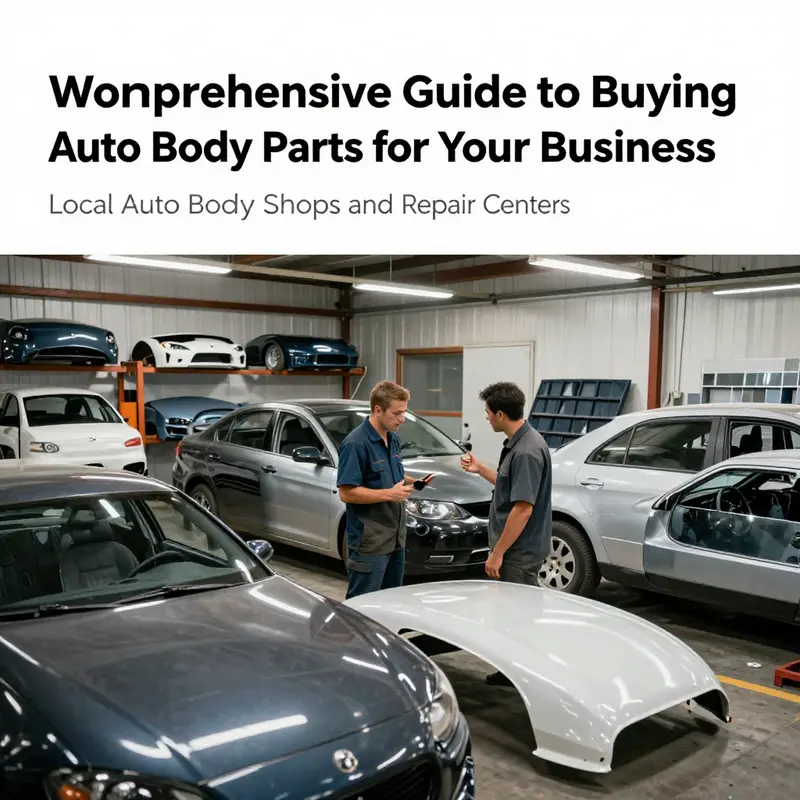
When a dent, bend, or collision disrupts your routine, the path back to driving confidence often starts not at a warehouse or a warehouse-sized online storefront, but in a neighborhood shop. Local auto body shops and repair centers sit at the intersection of parts sourcing, skilled labor, and personal service. They are more than a place to drop off a damaged car; they are a bridge between the car’s needs and the owner’s expectations for quality, speed, and accountability. This is where the practical realities of sourcing auto body parts meet the art and science of repair, painting a picture of how proximity, expertise, and a well-connected supply chain can make the whole experience smoother and more predictable.
What makes a local shop such a compelling option is the immediate ecosystem it provides. A nearby shop understands the community’s driving patterns, the climate-related wear that shows up in this region, and the makes and models that populate the streets. They are often stocked with parts that are most likely to be needed in their area—bumpers, hoods, doors, fenders, grilles, and trim pieces—and they maintain direct lines to reputable distributors or manufacturer-approved channels for the items that require ordering. The advantage is not merely faster delivery; it is the chance to receive a curated set of options that balance fit, finish, and price, all vetted by professionals who know how a panel should align with the rest of the vehicle’s architecture.
The heart of the local shop’s value lies in fit and compatibility. Vehicle bodies are intricate systems with reserved tolerances, reinforced structures, and sensor networks that are sensitive to misalignment. A part that looks similar in a photograph may differ at the mounting points, the seam lines, or in how it accepts a welded seam or a sealant bead. This is where VINs and OE numbers become essential tools in the hands of the shop staff. They can verify that the chosen panel, whether OEM, OEM-equivalent, or high-quality aftermarket, will truly fit the car’s frame and won’t create misaligned gaps or interference with the hood, fenders, or headlights. In practice, a good local shop will present options organized by compatibility, insurance coverage, and budget, then walk the customer through the trade-offs between new versus used or salvaged parts, if applicable, and the potential implications for color matching and warranty.
The sourcing process in a neighborhood shop is a dance of expertise and logistics. The technician identifies the exact part variant needed, cross-checks it against the car’s OE number, and then considers the best path to obtain it. Some shops keep a small but meaningful stock of body panels and closures for common repairs. Others rely on established relationships with reputable distributors that specialize in automotive body components. In either case, the shop maintains oversight of the order, ensuring that the part’s delivery aligns with the repair schedule. This coalesces into a smoother repair timeline because the customer interacts with a single point of contact who can demystify inventory, pricing, and the sequence of events from drop-off to paint cure.
For repairs that demand speed without sacrificing safety or aesthetics, the local shop’s integrated approach shines. Consider a front bumper replacement, a common scenario that involves more than simply unbolting and rebolting a panel. The bumper must align with adjacent panels, accommodate fog lights or sensors, and preserve the vehicle’s safety system calibration. The shop can source a panel through its distributor network, often providing multiple finish options—from a factory-applied color to a finish that will require later repainting to perfectly match the rest of the vehicle. The process typically unfolds like this: an initial diagnostic confirms that a replacement is the wisest course; the team presents several compatible options, including OEM, OEM-equivalent, and aftermarket panels; the customer selects the option that fits their budget and goals; the shop coordinates delivery and prepares the vehicle for install and paint; finally, the bumper is mounted, aligned, and, if needed, sensors are recalibrated to ensure proper operation. For a concrete example of the kind of panel a shop might source, consider a front bumper like the 2006-2008 Mitsubishi Eclipse Front Bumper. This link illustrates how a shop can navigate a supplier network to present a range of valid choices with clear implications for fit and finish, while still keeping the process anchored in the customer’s timeline and budget.
The installation and paint phases are not afterthoughts in a local shop’s workflow. They are carefully sequenced steps that rely on skilled craftspeople who understand the nuances of panel fitment, sealants, moisture control, and color matching. The presence of an in-house paint and finish team, or access to a trusted color-matching lab, means customers do not have to shuttle between a parts vendor and a separate body shop to complete the job. On-site painting can harmonize the new panel with the original paint code, taking into account years of weathering and sun exposure that may alter the tint slightly. The technicians will blend the new panel into the existing surface, apply a durable clear coat, and allow for sufficient cure time before a final inspection for texture, gloss, and seam alignment. The finished result is not merely a cosmetic improvement; it is a restoration of the vehicle’s defensive envelope and aesthetic integrity, preserving safety features, wind performance, and the car’s overall value.
Beyond the technical aspects, the local shop’s approach is anchored in transparency and accountability. The quote you receive typically breaks down parts, labor, and paint time, and it may include contingencies for potential paint or sensor recalibration. The shop may offer a warranty on both parts and labor, a signal to customers that the business stands behind its workmanship. In some cases, labor warranties cover the precise repair steps the technicians performed, while parts warranties are tied to the component’s manufacture or to the distributor’s guarantee. The guarantee offers peace of mind, especially when the car’s safety systems depend on precise installation tolerances and correct sensor alignment. A trustworthy local shop will explain the warranty terms in language that is easy to understand and will outline what is covered and for how long.
The customer experience in a local shop is also shaped by practical considerations that matter in everyday life. Proximity matters when you need an estimate or a quick decision about repair versus replacement. A nearby shop reduces the time spent in transit and makes it easier to obtain a second opinion if necessary. Easy access to the technicians allows you to ask questions, observe the process, and receive real-time updates on progress. The shop can arrange shop-obtained loaner vehicles or coordinate with rental services to minimize downtime, a feature that is especially valuable for families or essential workers who rely on a car for daily tasks. The convenience factor—combined with the assurance of local accountability—often tips the balance toward repair when the car can be safely restored to its former condition without resorting to a total replacement.
Sourcing strategies in local shops are supported by a broader network of relationships that keeps the supply chain efficient. Shops frequently partner with distributors that specialize in factory-grade parts and high-quality aftermarket components. These partnerships help ensure that replacements meet safety and performance standards, aligning with the vehicle’s design intent and the customer’s expectations. The network can also shorten lead times for hard-to-find items, which is crucial when a specific panel is scarce or when a model is less common in the immediate area. In cases where a vehicle is older or less common, the shop may reach out to salvage yards for viable used parts, or they may locate compatible panels that still meet safety and functional requirements. Even in these scenarios, the shop’s expertise preserves the integrity of the repair by confirming fitment and compatibility, rather than simply delivering a mismatched piece that might look fine at first glance.
For readers who depend on reliable, local recommendations, the path to a trusted shop can begin with a quick check of regional directories and review sites. Yelp, for example, aggregates customer experiences and clarifies whether a shop has strong communication, fair pricing, and consistent work quality. The platform’s open-now filter helps you identify options that align with your schedule, while reviews can reveal how well a shop handles complex repairs, such as frame straightening or sensor recalibration. The local connection matters here: a shop known for its transparency and a solid reputation in the community is more likely to provide accurate quotes, to keep you informed about the repair’s progression, and to stand by the work once the car returns to the road.
Choosing a local shop also means considering the broader ecosystem in which the shop operates. A good shop will be able to explain the pros and cons of different part sources, including OEM parts, OEM-equivalent parts, and reputable aftermarket panels. They will understand which options are most suitable for the car’s make and model, the customer’s budget, and the intended use of the vehicle after repair. They will also be ready to discuss color matching challenges—how they plan to achieve the best possible visual integration with the original paint, and how long the color match is expected to hold under varying climate and lighting conditions. For vehicles that rely on sensors and camera systems, the shop will emphasize the need for proper calibration after installation and will describe how the recalibration process is performed and validated. This holistic view—covering fit, finish, function, warranty, and ongoing support—defines the local shop as a partner rather than a one-time vendor.
As you weigh your options, keep in mind that local auto body shops do not exist in a vacuum. They are part of a broader daily life context, with staff who are known to neighbors, friends, and colleagues. Their recommendations carry weight because they reflect proven outcomes: safety, durability, and a repair job that respects the vehicle’s history. The experience they deliver—from the moment you walk through the door to the moment you pick up your car after the final wipe-down—can transform a potentially stressful event into a predictable sequence of milestones. The emphasis on clear communication helps ensure that you understand what is being done, why it is necessary, and what you can expect in terms of timeline and cost. This clarity can be especially valuable when insurance matters or car rental arrangements are involved, as the shop often serves as a convenient liaison, translating the technical language of parts and procedures into practical terms for the customer.
For readers who want a quick starting point, consider using a nearby auto body shop lookup tool or directory to locate trusted professionals near you. If you want to explore more options, you can consult Yelp’s directory of auto body shops open now, which is a quick way to surface reputable providers in your area. Here is the link to help you start your search: https://www.yelp.com/search?finddesc=Auto+Body+Shops&findloc=Near+Me
This chapter has aimed to illuminate the local path as a robust alternative to online-only channels. The local shop is not simply a storefront with parts and a wrench; it is a coordinated ecosystem that blends sourcing, technical expertise, and hands-on service into a single, accountable repair experience. The shop’s proximity makes the process more responsive, the staff’s experience enhances the quality of the outcome, and the supplier relationships provide a steady stream of part options that respect the car’s original design. In short, the local auto body shop offers a pragmatic, trustworthy lane to get your car back on the road, with the parts sourced appropriately, the installation performed with care, and the finish matched to the vehicle’s character. If you are navigating a repair decision, starting with a nearby shop can yield faster results, clearer communication, and a repair that honors both your car and your schedule. The neighborhood shop thus becomes a partner in care, guiding you through the parts landscape while keeping the car’s safety, performance, and aesthetics at the forefront.
Final thoughts
Navigating the landscape of auto body parts purchasing is crucial for business efficiency and success. With multiple avenues available—from the vast selections of online marketplaces to the tailored offerings of specialized platforms and the guaranteed quality of OEM dealers—business owners can find the right components to keep vehicles operating safely and efficiently. Local shops and salvage yards also provide valuable resources and cost-effective solutions for essential repairs. By exploring these options, you can make informed decisions that will benefit your business in the long run.