
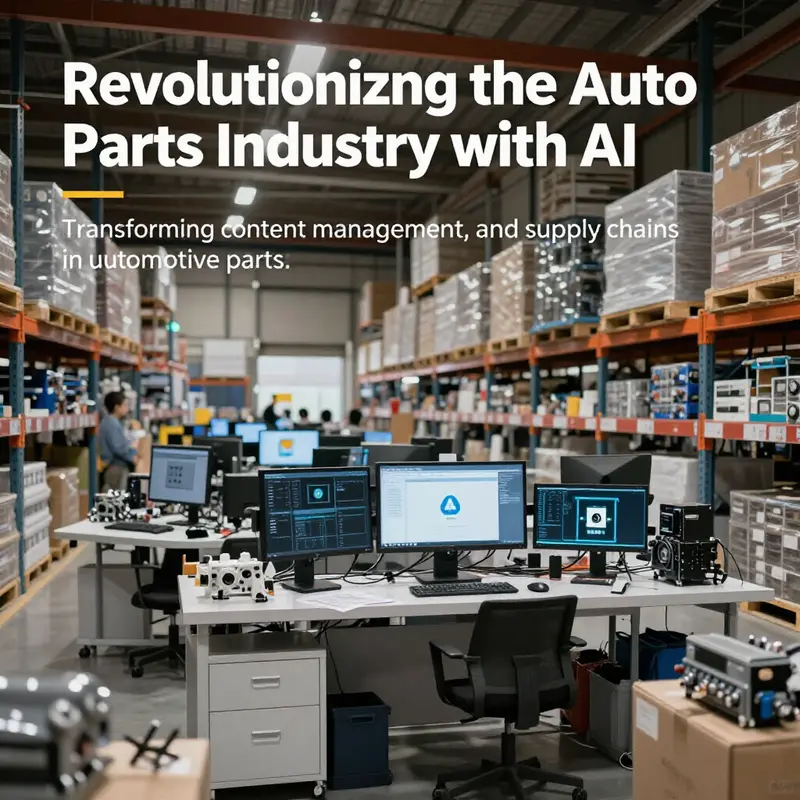
The automotive parts industry is undergoing a significant evolution, powered by artificial intelligence (AI). Business owners in this sector are now equipped with tools that enhance efficiency and precision across multiple facets of their operations. This article explores the profound effects of AI on three core areas: content creation and management, intelligent recommendations and precision matching, and innovations in supply chain and production manufacturing. Each chapter delves into practical applications of AI that can help streamline processes, reduce costs, and improve customer satisfaction, ultimately transforming how auto parts businesses operate.
From SKU to Story: How AI Transforms Content Creation and Management for Auto Parts
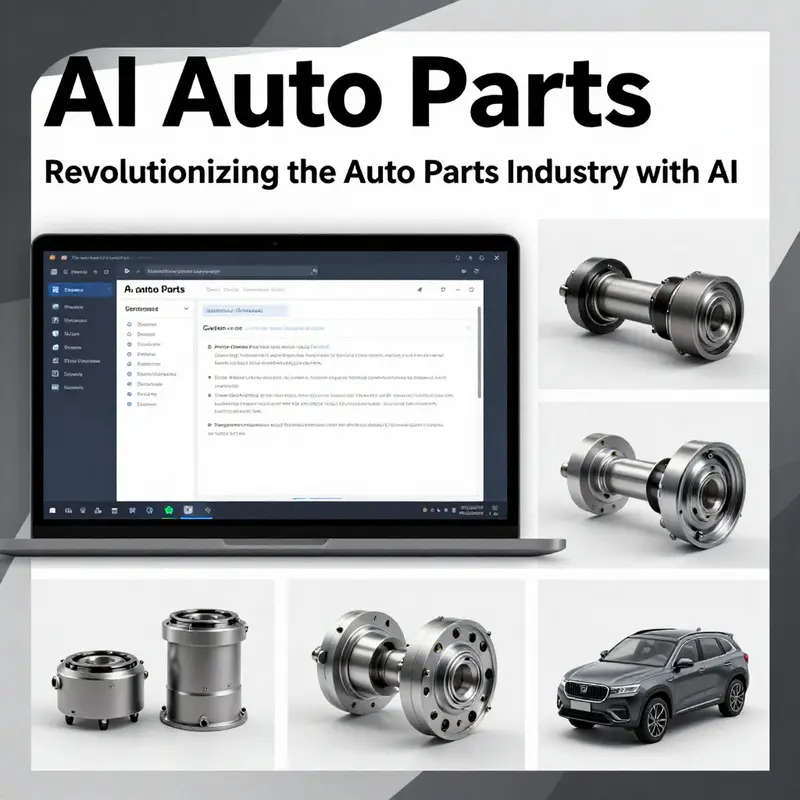
From SKU to Story: AI-Driven Content for Auto Parts
The way auto parts companies create and manage content has shifted from manual cataloging to intelligent orchestration. AI now sits at the center of that change, turning fragmented product data into coherent, searchable, and persuasive content across channels. This chapter follows a single thread: how AI moves a part through a content lifecycle, from raw technical details to rich, localized customer experiences. It shows how automation reduces friction, how models add context, and how teams regain time for strategy and creativity.
At the start of the lifecycle sits the SKU. Historically, a SKU was little more than a code plus a terse description. Today, AI expands that SKU into a living digital asset. A few fields—part number, fitment list, basic dimensions—become the seed for dozens of content variants. AI generates standardized identifiers, normalized attribute sets, and structured specifications. It crafts product titles that balance search keywords and clarity. It writes technical descriptions that avoid ambiguity while staying accessible to buyers and technicians. All this happens in seconds instead of hours.
This speed matters because modern buyers expect information instantly. They research parts across marketplaces, dealer sites, and specialist forums. A single accurate description reduces returns. It also shortens the path from discovery to purchase. AI contributes by enforcing consistency and completeness. Natural language generation fills missing fields with conservative, evidence-backed language. It flags uncertain claims for human review. It ensures that compatibility statements are precise and traced back to source data. The result is a smoother buyer journey and fewer support queries.
Beyond text, AI broadens the asset set. High-resolution photos remain important. Yet AI-generated or AI-enhanced visuals now supplement photos. Image processing tools auto-crop, normalize color, and remove backgrounds. Generative models create realistic renderings when physical photography is impractical. The rise of interactive 3D models has particular impact in auto parts. A single three-dimensional model can produce images from multiple angles, animated installation guides, and exploded views. These derivatives accelerate content creation while ensuring technical accuracy.
3D models also enable mass personalization. From one model, AI can produce packaging variants, multilingual labels, and region-specific compliance markings. This capability drastically reduces the need for costly photo shoots and regional artwork rounds. It accelerates localization and scales visually rich content across markets. For distributors serving many countries, this alone cuts weeks from time-to-market.
Metadata is the invisible architecture powering these gains. AI automates metadata tagging, classifies parts according to taxonomy, and links attributes to standard parts libraries. Automated tagging removes a major bottleneck. When metadata is reliable, search engines and marketplaces deliver better matches. It also enables precise recommendation systems. If a user views a brake rotor, the system can suggest the correct pads, hardware kits, or installation tools with confidence. Those recommendations increase cart size and improve conversion.
Integration is key. AI does not operate in isolation. It sits between PIM systems, CMS platforms, digital asset managers, and ERP databases. A bidirectional flow of information keeps the single source of truth accurate and current. When inventory changes or a specification updates, AI-driven workflows propagate changes across descriptions, compatibility lists, and dealer-facing documentation. This reduces error and speeds remediation when recalls or updates occur.
Quality control extends beyond text and images. AI performs compliance checks automatically. It scans copy for regulatory wording, warranty statements, and safety notices. It validates measurements and tolerances against engineering data. Version control becomes automated. Each asset gains a provenance trail, showing who approved what, and when. This transparency is crucial for audits, for cross-border sales, and for large supplier networks.
Localization is no longer translation alone. AI-enabled localization models adapt tone, measurements, and regional terminology. They tune messaging for technicians versus end users. They localize not just language but also digital experiences, such as unit systems, currency, and color conventions. This depth of adaptation turns a single global catalog into many regionally optimized catalogs, with minimal manual effort.
Personalization is where content turns into commerce. AI profiles users by vehicle, behavior, and intent. When a customer enters a vehicle identification number or selects a model year, the platform filters content to show only compatible parts. When browsing history indicates interest in performance upgrades, content emphasizes relevant technical benefits. These micro-targeted content variants increase relevance and purchase intent. They also reduce confusion for customers who might otherwise choose incorrect parts.
Human oversight remains essential. AI speeds and scales, but subject-matter experts keep the final say. Editorial review workflows route uncertain claims, rare fitment questions, and legal language to product specialists. This human-in-the-loop model ensures that automation does not become a blind trust. It also offers a practical training loop: corrected AI outputs feed back into models, improving future performance.
A significant benefit of AI is measurable operational efficiency. Content that once required hours of manual labor now takes minutes or seconds. Teams redeploy time from repetitive writing tasks to strategic work: campaign planning, channel optimization, and technical documentation. This reallocation improves morale and reduces headcount pressure while maintaining output quality.
Search engine optimization is another area of impact. AI models generate title variations, meta descriptions, and structured data that fit search engine expectations. They adhere to best practices for keyword placement and readability. They also create content for rich snippets, increasing visibility in search results. For niche parts with low search volume, AI drafts long-tail content that captures specific queries. This increases organic traffic without a large editorial team.
Analytics completes the content loop. AI systems track performance by variant and channel. They run A/B tests on product descriptions, images, and calls to action. Insights feed back into content generation rules. Poor-performing variants are retired. Successful patterns inform templates for future parts. Over time, the system learns which descriptive styles convert for which audiences. This continuous learning converts content into a repeatable revenue engine.
Content governance is pivotal as scale increases. A governance framework defines taxonomies, tone of voice, required data fields, and escalation paths for exceptions. AI enforces these rules programmatically. It rejects non-compliant outputs or flags them for review. Auditable trails and role-based approvals maintain accountability. This governance reduces legal risk and preserves brand voice across thousands of SKUs.
Collaboration across departments also improves. Engineers, merchandisers, and marketing teams access the same repository. AI mediates differences in language. Engineering language is translated into customer-friendly copy. Marketing briefs are translated back into technical checks. This shared context shortens approval cycles and reduces miscommunication.
Supply chain signals start to inform content as well. AI links content versions to inventory levels and lead times. When a part is out of stock, the platform automatically swaps content to recommend compatible alternatives. When lead times extend, the product page communicates expected availability and offers substitute options. This improves customer experience and reduces cancelled orders.
Digital twins play a growing role in training and support. Interactive models show part installation steps. They also feed augmented reality experiences for technicians. Support content integrates animation and stepwise instructions generated from the same master model used for marketing. This single-source approach keeps marketing and technical content aligned and current.
The ROI of AI-driven content operations comes from multiple levers. Time savings reduce operating costs. Better metadata and compatibility reduce returns. Rich visuals and personalization increase conversion rates and average order value. Faster localization opens new markets with lower incremental cost. Measured together, these improvements justify investment in AI platforms and change management.
Data quality remains the most common barrier. AI depends on good input. Incomplete or inconsistent data yields poor outputs. Companies that succeed pair AI adoption with data cleanup initiatives. They standardize attribute names, consolidate part families, and map legacy codes to new taxonomies. These upfront steps shorten the learning curve and improve early results.
Security and IP considerations also matter. Proprietary engineering drawings and specifications require careful handling. Access controls and encryption protect sensitive assets. AI models trained on internal data must not leak proprietary knowledge. Proper isolation and governance prevent accidental exposure.
Beyond immediate gains, AI changes content strategy. Companies move from static catalogs to dynamic content systems. Marketing campaigns no longer require bespoke copy for each SKU. Instead, templates and AI rules produce hundreds of localized campaign assets in hours. Seasonal promotions, clearance sales, and bundle offers get generated programmatically. This agility allows teams to respond to market shifts quickly.
Friction points persist. Edge cases of fitment and legacy parts demand manual attention. Small suppliers with limited digital records need support to onboard properly. Change management must address skepticism within teams used to manual control. Successful programs combine pilot projects, measurable targets, and training to build confidence in AI tools.
When implemented thoughtfully, AI magnifies human expertise. It turns technical detail into persuasive copy. It transforms messy catalogs into searchable, trustworthy storefronts. It allows a single content team to serve dealers, marketplaces, and end consumers without scaling headcount. The end result is an intelligent content supply chain that aligns product truth with buyer context.
An example helps illustrate the workflow. A distributor lists a set of aftermarket headlights. Raw data arrives as a manufacturer sheet, a parts catalog, and a few photos. AI extracts attributes and normalizes naming. It verifies fitment against vehicle databases. It generates a concise title, a technical specification table, and several description lengths tailored for mobile and desktop. It produces localized versions, including measurements converted to local units. It tags the images and creates animated install guidance from a 3D model. The platform publishes these assets across the e-commerce site, dealer portal, and social channels. Performance data then refines which description variant converts best for particular customer segments.
For a concrete product example and how such assets appear in a live catalog, see the OEM customized HID headlights for Lancer Evo 8-9 product listing.
For industry context and further reading on AI-driven content workflows, refer to this linked report: https://www.adobe.com/content/dam/acom/en/insights/reports/ai-in-content-creation-2025.pdf
This chapter has traced the content lifecycle for auto parts under AI. It emphasized systems integration, metadata, localization, and governance. It highlighted human oversight and ROI. The narrative links data quality, automation, and creative strategy into a single thread. In practice, these elements combine to make content a scalable, revenue-driving asset for modern auto parts businesses.
AI Auto Parts: Intelligent Recommendation and Precision Matching

Intelligent recommendation and precision matching are not just new features in the auto parts ecosystem; they are the nerve center of a broader transformation that touches every stage of the aftermarket lifecycle. When a customer begins a shopping journey for parts, they rarely know all the compatible options, and the catalog often obscures the subtle differences between seemingly similar components. AI-driven recommendation systems change the map by translating a tangle of data—historical sales, vehicle specifications, real-time inventory, regional demand, and even seasonal wear patterns—into a focused path that guides the shopper toward the right parts with remarkable speed and accuracy. This shift is not merely about showing more options; it is about showing the right options at the right moment, aligned with the customer’s intent and the vehicle’s exact configuration. In practice, intelligent recommendation becomes a bridge that connects consumer need, product suitability, and supplier readiness in a tight, measurable loop that strengthens trust and accelerates conversion.
The backbone of this capability is a data architecture that treats cars as living repositories of configuration. The system consumes a steady stream of behavior signals—what the user clicks, what they search for, what they purchase—and fuses it with structured vehicle data such as model, year, trim, and even submodel variants. But the real leap happens when the model extends beyond surface-level cues to incorporate accurate vehicle information. Through image recognition, license plate reading, or VIN decoding, a customer can convey the precise configuration of their car, and the platform uses that signal to instantiate a unique compatibility profile. In this moment, the abstract idea of “the right brake pad for my car” becomes a concrete, verifiable fact: the part that fits, performs to spec, and can be delivered on time. This is the essence of precision matching, where accuracy reduces friction, error, and returns, and the system becomes a quiet partner that knows the customer’s car as intimately as a shop technician would.
What makes this shift so enduring is that it moves beyond a single touchpoint. The intelligent recommendation engine operates as a centralized, cross-cutting intelligence that aligns consumer preferences with supplier capability and manufacturing readiness. It is not just about pushing items that matched a click pattern in the past; it is about aligning the entire supply chain with a forecast of what the customer will need next. The model learns seasonal demand, regional preferences, and lifecycle realities of different vehicle platforms. If the data indicates that headlight assemblies for a specific generation tend to see a spike in winter in northern regions, the system can pre-emptively adjust content, promotions, and stock to accommodate that surge. This creates a virtuous cycle: better recommendations reduce time-to-purchase, more confident purchasers reduce post-sale friction, and improved forecast accuracy lowers stockouts and excess inventory alike. The effect is a measurable uplift in conversion and a meaningful reduction in time spent navigating a catalog that formerly felt like a labyrinth.
At the heart of the experience lies a shift in how products are matched to vehicles. The old paradigm—relying primarily on user behavior and keyword matching—was inherently limited by the quality of the data and the user’s ability to articulate their needs precisely. The new paradigm leverages what industry players describe as “vehicle-centric matching.” In practice, this means the platform is capable of accepting a vehicle image, a VIN, or a structured model input, and returning a curated set of parts that are verified to be compatible with the vehicle’s exact configuration. The benefit is dramatic: a customer with a complex or less-common model may have faced a long, uncertain search process; the system now provides a confident answer in seconds. And because accuracy is bolstered by multi-source validation—VIN decoding, cross-referenced parts catalogs, and supplier data—the likelihood of selecting an incorrect part drops sharply. The user experiences a smoother path from discovery to decision, and the retailer benefits from increased trust and lower risk of returns.
A practical implication of this approach is the reframing of how parts information is presented. The product page no longer stands as a static billboard of features but becomes a living, dynamic representation of fitment. The same item may appear in multiple contexts, each tailored to the user’s vehicle profile, its usage scenario, and the customer’s stated priorities, whether those priorities are reliability, performance, or value. The content management engine that supports this experience also plays a critical role in international markets. By automating multilingual product descriptions and standardizing SKUs, AI reduces the friction of global expansion. A single, well-structured product description can be translated into several languages with consistent terminology, preserving compatibility notes, installation steps, and warranty terms. The operational impact is substantial: translation time can be slashed by a large margin, speed-to-market for new regions accelerates, and the consistency of information across markets reduces confusion and miscommunication that historically hindered cross-border sales.
The integration of intelligent recommendations with a robust supply chain is where theory becomes practice. The knowledge graph that underpins the system links models, parts, and solutions in a way that supports proactive decision making. By incorporating internal ERP and warehouse data with external catalogs and failure histories, this graph becomes a cognitive map for the organization. It informs not only what to recommend but what to stock, what to reorder, and where to allocate capacity. When a particular model shows rising demand for a critical component, the system can flag it to demand planners, trigger supplier negotiations, and adjust production schedules in a synchronized loop. The result is a more resilient supply chain that can absorb shocks, reallocate inventory with precision, and reduce lead times. Such an architecture turns intelligence into a field-ready capability rather than a theoretical advantage.
Within manufacturing environments, AI-driven precision matching extends its influence to the shop floor and the quality assurance processes that define the reliability of post-sales service. The same recognition and filtering technologies that allow a customer to snap a photo of their vehicle and receive accurate part recommendations can be deployed behind the scenes to verify packaging accuracy, confirm part numbers, and detect mislabeling before dispatch. In some advanced configurations, AI-powered quality inspectors inspect incoming components against expected SKUs as they are unpacked, using vision systems to identify misplacements, scratches, or surface defects that could affect performance. This end-to-end quality discipline reduces the risk of delivering incorrect parts to customers and reinforces confidence that the parts they receive will function as intended on their vehicles. In short, precision matching is not merely a consumer-facing feature; it is a comprehensive quality and accuracy discipline that extends from online recommendations to the assembly line and beyond.
The customer experience, in this new paradigm, is framed by speed, relevance, and trust. Speed comes from the ability to narrow choices rapidly because the platform understands the vehicle in front of the user and can retrieve a compatible set of parts in seconds. Relevance emerges from the vehicle-centric approach, where recommendations are filtered not just by consumer behavior but by the exact mechanical requirements and engineering tolerances of the car. Trust follows from consistency and transparency: customers see why a certain part is suggested, how it fits their vehicle, and what evidence supports that fitment, including installation notes, warranty coverage, and post-purchase support. When a shopper purchases a part with confidence and clarity, the likelihood of returns declines, and the lifetime value of the customer increases. The ecosystem benefits too: reduced returns free up inventory for other buyers, and suppliers can move faster with higher forecast accuracy and smoother logistics.
A subtle but powerful consequence of this transformation is how it reshapes the relationship between consumer, retailer, and technician. The technician’s role evolves from a pure “fit it and hope it works” activity to a data-informed coordination task. With the precision-matching framework, technicians can rely on accurate part selection to finalize repairs with fewer reworks, which shortens service cycles and improves vehicle uptime. For customers, that translates into predictable service experiences, fewer surprises, and greater willingness to rely on digital channels for essential maintenance. For the platform, it means building a reputation for accuracy and speed, which compounds over time as more data are collected and the models are refined. The cycle becomes self-reinforcing: better data drives better recommendations, better recommendations drive more confident purchases, and more confident purchases yield richer data, which further sharpens the system. The result is a self-improving ecosystem that not only supports today’s needs but scales to future vehicle complexity and evolving consumer expectations.
The strategic implications extend beyond immediate sales and service metrics. The ability to accurately map parts to vehicles creates new avenues for value-added services, such as proactive maintenance reminders, tailored upgrade paths, and risk-based service plans. When the system identifies that a typical owner of a certain model tends to replace a specific component after a defined mileage window, it can surface timely, relevant service offers. That proactive stance fosters ongoing engagement with customers and creates opportunities for partnerships with service providers who can deliver maintenance with precision timing. In this way, intelligent recommendation and precision matching become a platform for ongoing relationship management, not merely a checkout optimization tool.
One practical illustration of the approach can be seen in how content ecosystems, logistics, and product cataloging converge to deliver a seamless experience. The same AI that powers the vehicle-centric matching also orchestrates content generation and catalog normalization. A single product entry can be structured in a way that supports multilingual deployment while preserving the precise fitment notes that technicians require. This alignment reduces the cognitive load on the consumer, who no longer has to reconcile disparate data silos to determine compatibility. It also helps cross-border buyers, whose expectations include clear fitment and installation guidance in their native language. In a broader sense, the entire system is guided by a single principle: the right part for the right car at the right time, delivered efficiently and with transparent rationale. This principle underpins improved customer satisfaction, stronger supplier collaboration, and a more agile market response to shifting demand.
As with any ambitious architectural shift, success hinges on governance, data quality, and privacy considerations. The most effective AI-driven recommendation engines insist on clean data onboarding, continuous calibration, and explainable outputs. Consumers appreciate clarity about why a particular part is suggested, what vehicle data supported the choice, and what alternatives exist if they want to explore further. Providers must establish robust data stewardship practices, ensure data accuracy across catalogs, and protect sensitive vehicle information. When these governance elements are in place, the system can scale without sacrificing reliability or user trust. The result is a sustainable model in which intelligence adds value without compromising privacy or security, a balance that becomes increasingly crucial as the aftermarket expands into more regional markets and more vehicle configurations.
In one of the practical manifestations of a mature system, a widely used supplier ecosystem has integrated deep learning–driven plugins for assembly lines and post-purchase processes. These plugins coordinate with SMT (surface-mount technology) workflows, enabling smart, automated insertion of electronic components with higher precision and lower error rates. While this may seem distant from consumer shopping, it is precisely that alignment between intelligent matching and manufacturing precision that makes the entire value chain more reliable. When a parts library is updated with a new fitment rule, the recommendation engine instantly recalibrates its suggestions, ensuring customers see only parts that truly fit their vehicles. That tight coupling between knowledge representation and physical reality is what makes the system resilient to the complex realities of modern vehicle platforms, from multiple generations to evolving trim levels and regional variations. It is a shift from catalog-driven shopping to configuration-driven fulfillment, and it represents the kind of holistic optimization that differentiates the top players in the aftersales landscape.
As this capability becomes more widespread, the industry is moving toward a future in which the phrase “the right part, for the right car, at the right time” becomes a standard expectation rather than a differentiator. The convergence of large models, edge computing, and real-time data streams will push intelligent recommendation from a reactive feature to a proactive capability. Imagine a world where your platform not only suggests parts that fit but anticipates your needs before you search, presenting outcomes that align with your repair schedule, your preferred brands, and your budget. Such a future relies on a robust, interconnected data fabric that makes the entire ecosystem more coherent and more responsive to real-world dynamics. In this trajectory, the aftermarket moves closer to a fully integrated service experience, where every touchpoint—discovery, decision, delivery, and aftercare—feels like a single, intelligent system designed to minimize effort and maximize precision.
To illustrate a practical manifestation of these ideas without naming specific products, consider the following: the platform’s internal knowledge graph, which maps vehicle configurations to a spectrum of compatible parts and recommended actions, is continually refined by feedback loops from actual purchases and aftercare outcomes. When a customer confirms a purchase, the system cross-checks the post-sale data to update its confidence levels for similar vehicles and parts. The platform can then surface related components that have historically shown high compatibility and reliability in similar service scenarios. This approach reduces cognitive load for both customers and technicians and shortens the path from identification to completion of a repair or upgrade. It is a model of intelligent commerce where machine-driven insight translates directly into tangible, on-the-ground improvements in vehicle maintenance and performance.
An important thread running through this narrative is the role of cross-border content management in enabling truly global reach. AI-enabled content automation ensures that critical fitment information and installation guidance are consistently expressed across languages and markets. As the aftermarket continues to scale internationally, the ability to standardize terminology and present clear compatibility notes becomes essential. The result is not just a catalog that speaks multiple languages; it is a multilingual decision-support system that preserves technical nuance and reduces the risk of misinterpretation. In this context, intelligent recommendation and precision matching become a catalyst for global growth, enabling retailers to serve diverse customer bases with the same level of reliability and speed that they offer domestically.
The chapter closes where it began, with a vision of a connected, intelligent ecosystem that treats cars as the central node of a vast information network. The consumer-facing experience—accurate recommendations, instant fitment validation, and transparent content—reflects the DNA of a broader industrial shift. Behind the scenes, the supply chain, manufacturing, and quality assurance processes leverage the same logic to lower costs, shorten lead times, and lift overall reliability. The intelligent recommendation engine, powered by a vehicle-centered perspective and reinforced by end-to-end data governance, becomes the backbone of a more resilient, efficient, and customer-centric aftermarket. In this world, the promise is not merely faster shopping or smarter inventories; it is the creation of a coherent, adaptive system that honors the complexity of modern vehicles and the evolving needs of their owners. That is the essence of AI-driven precision matching in auto parts—a transformation rooted in data, empowered by technology, and delivered through a unified experience that customers feel as simply as it is profoundly effective.
External resource: For a broader industry perspective on how AI-powered recommendation systems are reshaping automotive parts markets, see https://www.reuters.com/technology/ai-automotive-parts-recommendation-systems-2025. Additionally, an internal reference to a detailed product detail scenario that demonstrates practical application within a parts catalog can be explored through this page: mitsubishi-evolution-evo-4-9-shock-block-short-motor-engine-complete-4g63-1000b075. These resources illustrate how the concepts described translate into real-world tools and workflows that connect buyers with precisely the right components across markets.
Smart Parts, Smarter Chains: AI-Driven Reconfiguration of Auto Parts From Factory Floor to Global Customer Cart
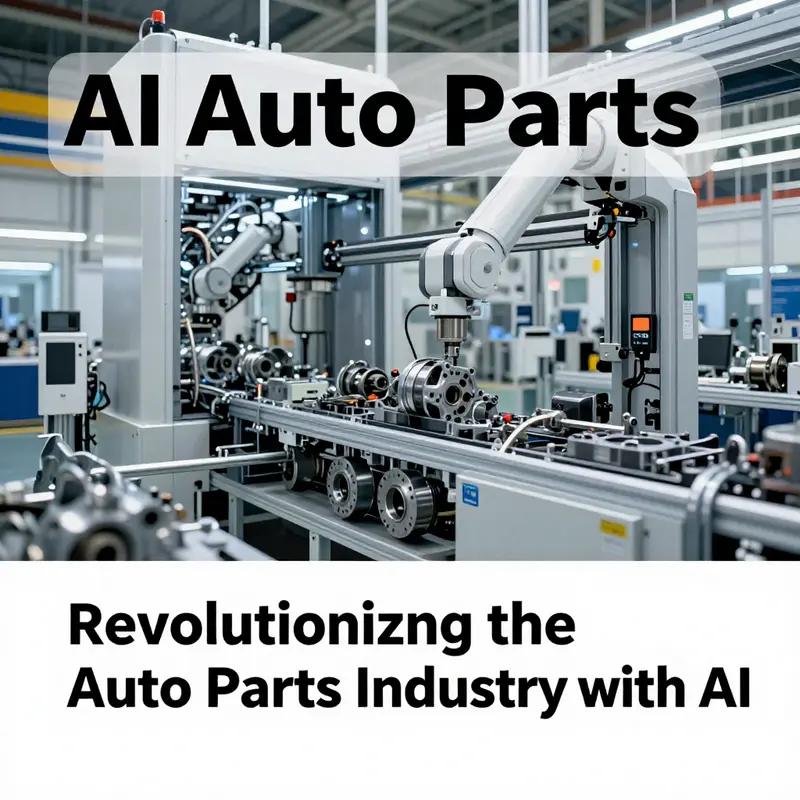
Artificial intelligence is no longer a backstage operator in the auto parts business. It has become the orchestrator of a complex, global system where parts, processes, and people move in a tightly coordinated rhythm. The shift is not merely about speeding up a single task. It is about reimagining the entire lifecycle of automotive components—from design and production to distribution, post-market service, and even consumer choice. When AI is applied across the supply chain and manufacturing operations, the result is a resilient, data-driven ecosystem that can anticipate demand, reduce waste, and accelerate innovation without sacrificing quality or safety. That is the arc this chapter follows: AI as a core driver of value in the automotive parts world, injecting intelligence into every link of the chain while preserving the human judgment that gives the industry its nuance and responsibility.
In the traditional view, an auto parts business relied on a cascade of functions—engineering spec sheets, procurement, manufacturing, warehousing, distribution, and sales. Each silo pursued its own metrics, often leading to friction and misalignment. AI reframes this dynamic by creating a continuous data loop that links the entire network. At the heart of the transformation is a superstructure that merges internal systems such as enterprise resource planning (ERP), warehouse management (WMS), and customer relationship management (CRM) with external models of vehicles, fault histories, and technical advisories. The result is a dynamic map that translates vehicle configurations into the precise parts, assemblies, and solutions that fit each unique case. In practice, this means a data-and-AI collaboration that allows a single query about a vehicle model to yield a complete pathway—from the exact SKU to the recommended alternative components in case of supply gaps, and from the installation instructions to the language most suitable for a cross-border market.
A central feature of this reconfiguration is the development of a knowledge graph that captures the relationships among models, assemblies, parts, and the solutions those parts enable. The graph acts as a reasoning engine, letting machines infer connections that humans would not easily uncover at speed. For example, when a given model requires a brake system compatible with a specific vehicle platform, the graph can consider factors such as manufacturing date ranges, supplier batches, and regional regulatory constraints to identify compatible parts across a global supplier base. This is more than a match between a model and a part; it is a contextual match that includes performance requirements, warranty considerations, and the end-user’s usage scenarios. The practical upshot is a dramatic reduction in search times and a significant improvement in match accuracy. A query that once took hours of manual cross-referencing can now be resolved in seconds, with a full trail of provenance and compatibility notes.
The supply chain layer, in particular, benefits from AI-enabled visibility and agility. Car fleets, recall actions, policy changes, and even weather-related disruptions no longer induce a cascade of cascading delays. Instead, models continuously synthesize signals from internal data and external feeds to forecast demand, to sense potential bottlenecks, and to adjust production and procurement plans in near real time. The approach treats the supply chain as a living system in which data streams from ERP, WMS, and CRM are harmonized with car-model databases, repair histories, and technical bulletins. This harmonization is not a simple data consolidation; it is a coordinated intelligence that empowers planners to anticipate shifts and act preemptively. The results are tangible: fewer stockouts, lower carrying costs, and more accurate lead times communicated to customers, even across borders where language and regulatory differences once posed formidable obstacles.
Forecasting under AI in auto parts goes beyond traditional demand planning. It incorporates a spectrum of signals: seasonal cycles in vehicle ownership, promotional calendars from regional markets, regulatory changes that influence component choices, and even the failure rates of similar parts in the field. These inputs feed dynamic demand models that adapt as new information arrives. What makes this credible is the use of a data closure approach—the continuous closure of the loop from sensing, through interpretation, to action and back to sensing again. In effect, AI makes the supply chain a learning organism. When a new fault scenario emerges, the corresponding knowledge is embedded into the system, connecting the dots between vehicle models, heat cycles, and the parts most likely to be needed as replacements or upgrades. For the business, this translates into smarter stock allocation, targeted supplier engagement, and the capacity to pivot quickly when a credible risk emerges.
The production and manufacturing domain has seen an equally dramatic reimagination. AI is the catalyst that converts factories from optimized mass producers into intelligent, responsive factories. A telling example is the application of digital twin simulations on production floors. In a smart shop, a digital twin of a workstation or line can model extreme operating conditions, stress-testing components virtually before any physical test runs. This accelerates validation cycles and can shrink lengthy durability tests from days to hours, or even minutes, without compromising the depth of insight. When AI models predict how a part behaves under a broad set of real-world scenarios, engineers gain time to iterate designs, compare materials, and optimize assembly sequences. The effect is not just speed; it is a qualitative change in how engineering risk is managed and how quickly a company can react to new design briefs or regulatory requirements.
Beyond planning and validation, AI-enabled automation is transforming the actual assembly and inspection processes. In certain advanced contexts, AI-driven vision systems and robotics cooperate to perform high-precision assembly in SMT lines and mechanical sub-assemblies. The AI system can recognize components, confirm correct orientation, detect potential misplacements, and trigger corrective actions with minimal human intervention. This level of automation reduces defects early in the line, promoting a culture of zero-defect thinking that is not about perfectionism but about consistent quality by design. The speed and accuracy of computer vision systems enable rapid feedback loops that were not feasible with manual inspection alone. In parallel, AI-powered quality-control platforms capture high-definition images of parts and use deep learning to identify micro-defects such as minute scratches or tiny cracks that would escape human detection. The outcome is a substantial drop in defect rates, improved customer satisfaction, and lower costs associated with returns and warranty service.
A key dimension of the manufacturing story is the role of core suppliers in this intelligent ecosystem. As the industry evolves toward “full-stack solution enablement,” the traditional supplier relationship—simply delivering a part—gives way to partnerships that fuse knowledge, software capabilities, and manufacturing prowess. The leading players begin to converge around the idea of offering modular, end-to-end solutions that cover the entire lifecycle of a component—from design feasibility and testing to packaging, logistics, and after-sales analytics. In such a setting, suppliers are less about a single SKU and more about a capability that can be deployed across multiple models, markets, and configurations. This shift creates a competitive barrier built not solely on cost or quality but on the ability to orchestrate a broader value proposition that aligns with the customer’s evolving expectations for speed, transparency, and adaptability.
The practical impact of this shift on the aftermarket and the broader value chain is substantial. Customers experience faster availability of compatible parts, more precise fitment information, and richer, multilingual product data that reduces the risk of wrong purchases. At the same time, distributors and retailers gain a more predictable demand signal and stronger inventory discipline. AI helps to phase the lifecycle of a part more intelligently. When a design improvement or a regulatory update arises, the knowledge graphs and the corresponding manufacturing workflows can be updated in a coordinated fashion, ensuring that the latest, compliant versions reach the market without creeping delays. The chain becomes less brittle, more responsive, and better aligned with the consumer’s desire for speed, clarity, and assurance.
The narrative would be incomplete without touching the experience of risk management. The auto parts business is inherently exposed to a variety of uncertainties—from supplier delays and logistics disruptions to quality batch anomalies and geopolitical shifts. AI-based risk signals can monitor supplier performance, flag unusual patterns in delivery times, and forecast potential interruptions before they materialize. The system can automatically reallocate orders, switch to alternative suppliers, or adjust production schedules to absorb shocks with minimal impact on customers. In effect, AI becomes a form of digital resilience: the ability to anticipate, absorb, recover, and adapt to unexpected changes while maintaining a trusted level of service.
From a strategic standpoint, the shift toward an intelligent ecosystem also reshapes the role of data governance and ethics. The power of data-driven decisions in supply chains and manufacturing is immense, but so is the responsibility to protect sensitive supplier data, ensure data quality, and prevent algorithmic bias in forecasting. Organizations that thrive in this new regime implement robust governance frameworks. They standardize data definitions, establish clear lineage for model decisions, and maintain human oversight for critical calls. The best practices emphasize transparency: the rationale behind a forecast or a recommended supplier, the confidence level of the model’s prediction, and the fallback options when data are incomplete. In a world where decisions move at machine speed, the human layer remains essential to interpret complex trade-offs, to validate critical choices, and to maintain the trust of partners and customers alike.
The outward face of AI-enabled parts ecosystems is a smoother, more intuitive experience for users and buyers around the world. As language barriers fade through automated multilingual content generation and near-instantaneous localization, cross-border trade becomes more seamless. A user looking for a compatible part for an older vehicle in a distant market can rely on the same data-driven logic that guides a domestic purchase. The system knows which parts are compatible, which are best alternatives, and which ones will arrive on time given the current logistics climate. This is a subtle but powerful shift: the post-market journey transitions from a one-off, transactional interaction to an ongoing, data-informed relationship between vehicle owners, service providers, and the digital platforms that connect them.
In stitching together the threads of supply chain intelligence, manufacturing excellence, and a more informed aftermarket, AI is moving from a tool of efficiency to a driver of strategic value. It is not merely about reducing cost or shortening lead times; it is about enabling a broader ecosystem in which parts and platforms can adapt, learn, and evolve together. The outcome is a more resilient industry that can withstand shocks, respond to shifting consumer needs, and sustain high levels of quality and safety, even as the market becomes more complex and global.
To illustrate how these ideas translate into practice, consider the broader pattern of data collaboration across the value chain. Enterprises increasingly rely on cross-functional data loops that connect product design with manufacturing and with customer feedback, feeding back into the design stage. This closed-loop learning enables rapid iteration, more precise performance testing, and the ability to tailor parts to specific application contexts. The long-term effect is a more intelligent supply chain whose optimization criteria extend beyond traditional cost metrics to include customer satisfaction, service quality, and environmental impact. In other words, AI-enabled auto parts ecosystems expand the notion of value from a narrow operational lens to a holistic performance framework, where every node in the network contributes to a shared objective: delivering the right part, at the right time, in the right condition, and at the right price.
The journey is ongoing, and the pace of change is accelerating. As vehicles become more software-defined and as connectivity enables real-time diagnostics and predictive maintenance, the demand for intelligent parts ecosystems will only grow. The industry faces a future where parts are not simply static components but dynamic, context-aware entities that can sense wear, adapt to usage patterns, and communicate with vehicles and service networks. AI provides the architecture to realize this future with rigor and scale. The challenge for leaders is to balance ambition with governance, to invest in data infrastructure while cultivating the human judgment needed to steer intelligent systems toward outcomes that are technically feasible, economically viable, and socially responsible.
For readers who want a tangible glimpse into the data-centric approach that underpins these shifts, consider the following anchor within the industry’s ecosystem: Mitsubishi Autopart Shop catalog. This link exemplifies how parts data, when connected through a coherent information fabric, can support rapid search, accurate matching, and clear presentation across markets. While the content here avoids naming specific products, the principle remains: accessible, accurate, and well-governed data paired with intelligent decision-making can unlock significant advantages in speed, accuracy, and customer experience. The broader lesson is clear: the automotives parts industry that embraces AI not as a novelty but as an operating principle will emerge with a more agile, transparent, and resilient supply chain that can support both today’s market realities and tomorrow’s innovations.
External resource: For a broader perspective on how AI is reshaping the automotive supply chain and post-market ecosystem, see Reuters’ analysis on AI-driven supply-chain innovation in the automotive sector. https://www.reuters.com/technology/ai-automotive-supply-chain-2025-11-24/
Final thoughts
The integration of AI in the auto parts industry is not merely a trend; it represents a fundamental shift in how businesses operate. From enhancing content management to enabling precise part recommendations and streamlining supply chains, AI is driving significant improvements in efficiency and customer satisfaction. For business owners looking to stay competitive, embracing these AI technologies is essential for navigating the future of the automotive aftermarket. The journey towards automation and optimization is just beginning, and those who seize these innovations will undoubtedly lead the market.