
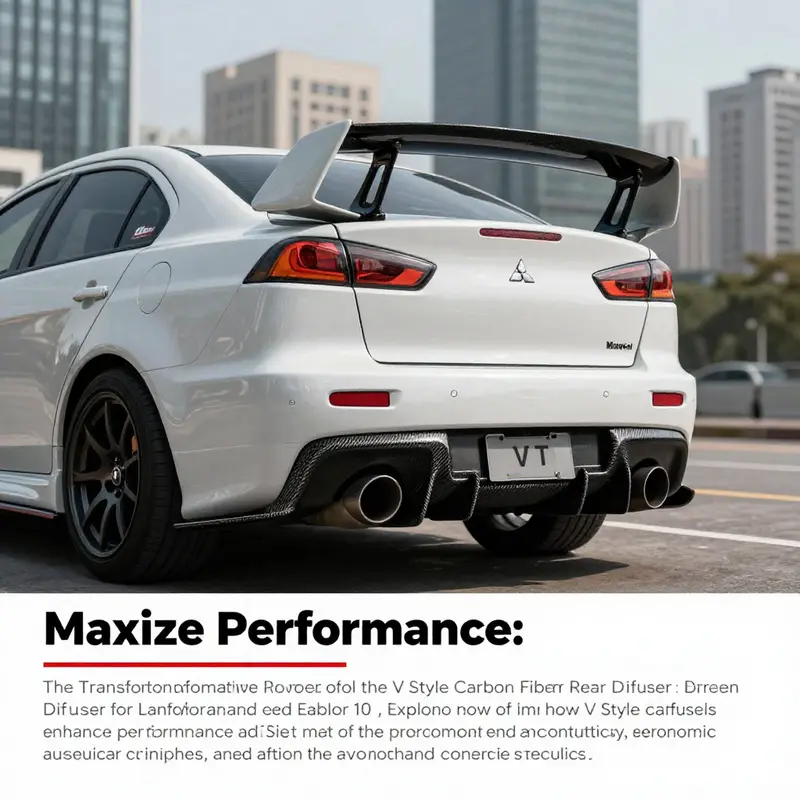
In the competitive space of automotive enhancement, performance and aesthetics often collide, particularly for brands like Mitsubishi with iconic models such as the Lancer and EVO 10. Among aftermarket modifications, the V Style Carbon Fiber Rear Diffuser stands out. Designed to elevate both the vehicle’s aerodynamic efficiency and visual appeal, this accessory has captivated the attention of car enthusiasts and business owners alike. This article delves into three essential components: the performance benefits of the V Style diffuser, its relationship with the aerodynamic characteristics of Lancer and EVO 10, and an analysis of its market price along with consumer preferences. Understanding these facets not only enhances product offerings for businesses but also enriches customer engagement.
V-Style Carbon Rear Diffuser: Elevating Grip, Cooling, and Street Presence on the Mitsubishi Lancer Evolution X
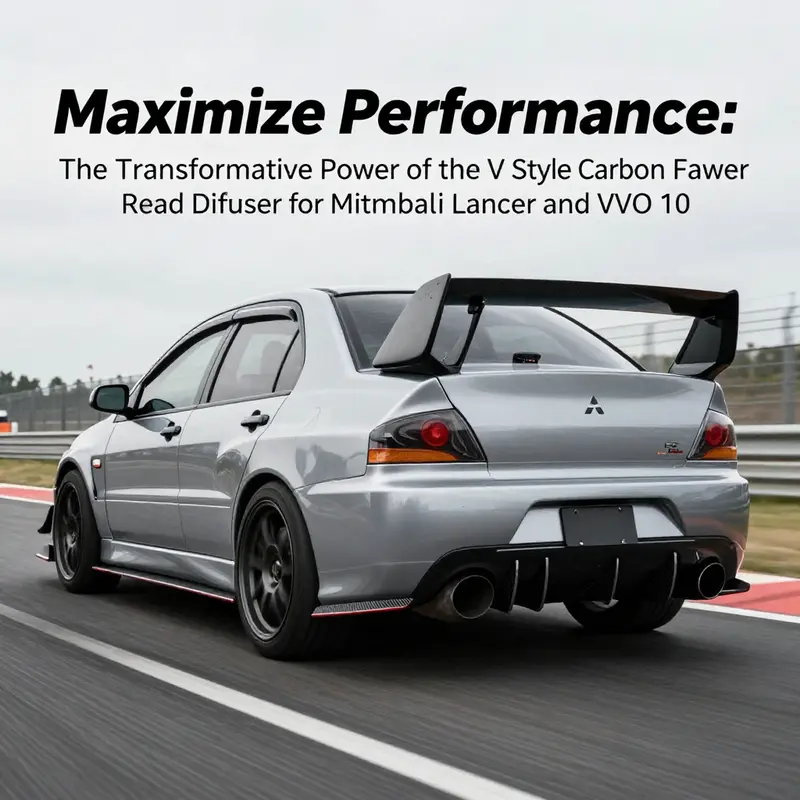
Every enthusiast who has watched a Lancer Evolution X on a winding road or a dry racetrack will tell you that the car’s true edge comes not from horsepower alone, but from how that power finds its grip and how the chassis communicates with the air it slices through. The rear diffuser, especially in a design language described as V-style, sits at the heart of that conversation. It is not merely a cosmetic compliment to a wide-body kit or a flashy exhaust note; it is a carefully carved portal for air to exit the undercarriage with purpose. In the context of the Mitsubishi Lancer Evolution X, or EVO X, this rear end accessory has the potential to shift the balance of handling, stability, and even engine and transmission reliability when the vehicle is driven hard. The concept hinges on a simple physics truth: fluids prefer to travel the path of least resistance, and the way air leaves the underbody at the rear of a car strongly influences lift, downforce, and boundary-layer behavior. When a diffuser embodies a V-style profile—characterized by distinct, inward-curved vanes that guide the streamlines toward the outer edges of the diffuser rather than letting them fan out indiscriminately—the flow field beneath the car becomes more coherent, more predictable, and more capable of pulling the rear tires toward the pavement at high speeds. The discussion that follows, grounded in the broader aerodynamic consensus around rear diffusers, centers on how a high-quality carbon fiber diffuser designed in this V-style language translates into tangible performance benefits for a car whose identity is inseparable from its rally-bred dynamics and all-wheel-drive traction. The EVO X, with its modernized chassis geometry and the tempered aggression of its silhouette, provides an ideal canvas for examining these benefits. The chassis setup, the flat underbody, and the rear bumper design interact with any diffuser in a way that amplifies or damps the claimed gains. In this regard, the diffuser must be considered not as a standalone add-on, but as a pivotal element of an integrated aerodynamic system. A diffuser in carbon fiber, crafted to be both light and rigid, offers a dual advantage. First, the reduction in weight at the car’s tail helps lower the overall rotating mass and enhances the unsprung dynamics of the rear suspension, a subtle but meaningful contributor to more responsive steering feel and more stable onboarding into mid-corner throttle application. Second, carbon fiber’s high specific strength translates into a diffuser that can retain a precise geometry under the duress of track use, resisting deformation from heat and airflow-induced loads that would otherwise alter the exit flow and degrade performance. In the EVO X’s context, these attributes matter because the car’s four-wheel-drive system already has to manage a broad power band and a slightly rearward weight distribution that benefits from added downforce without inviting excessive drag. The V-style diffuser’s primary aerodynamic contribution lies in how it accelerates air toward the diffuser’s trailing edge and then choreographs its reattachment with the airstream behind the car. By shaping the low-pressure region that naturally forms beneath the car, the diffuser curtails lift and increases downforce. The resulting effect is most pronounced at speeds where the car begins to rely on aerodynamic stabilization rather than mechanical grip alone. Under these conditions, the EVO X can sustain higher cornering speeds with more neutral transitions from entry to apex to exit, an outcome that is especially welcome for drivers who push hard through the twisty sections on mountain roads or look for predictable, repeatable behavior on the racetrack. The V-style geometry often emphasizes a stepped, multi-element profile rather than a single, flat plane. Each element serves to organize the boundary layer in a different way, encouraging a smooth top surface for the underbody and a controlled pitch of the exiting air as it blends with the ambient atmosphere. In practice, this translates to a rear end that feels more planted, less prone to sudden lift under braking and lift-off deceleration, and more forgiving available torque delivery during aggressive throttle application in mid-corner exit. It is in this respect that the diffuser earns its keep beyond the sake of a sharper look. When the diffuser is fabricated from carbon fiber, the gains multiply in several subtle, interlocking ways. The stiffness-to-weight ratio means the diffuser resists flutter and oscillation at high speed, which helps prevent the exhaust plume from vibrating into the diffuser’s mounting points or distorting the exhaust note into a harsher, less refined tone. The lightness contributes to a small but measurable decrease in overall weight, aiding the car’s rotational inertia balance and reducing the load on the tail suspension. Carbon fiber’s thermal properties also matter, albeit in a nuanced way. In high-power EVO X applications, during sustained track use or hot-weather street sessions, the engine bay and underbody can get hot enough to warp inferior diffusers or induce warping over time. A well-designed carbon diffuser manages heat more efficiently through its reduced mass and, often, through integrated venting paths that work in concert with the vehicle’s cooling system. These vents or channels can assist in prying away hot air from the engine bay, lowering the temperature in the rear portion of the underbody and, by extension, influencing the rear diffuser’s effective aerodynamic performance. All of this occurs while the diffuser preserves a visual language that many drivers associate with performance. The V-style rear diffuser provides a silhouette that communicates a readiness to engage, a stance that feels deliberate and fast even when the car is at rest. The carbon weave catching light along the rear geographies of the EVO X accentuates the lines of the bumper and the rear fender, enhancing the car’s presence in a way that is as much about psychological confidence as it is about measurable downforce. It is this synergy of form and function that makes the diffuser more than a passive accessory. It anchors the vehicle in a broader performance ecosystem, where chassis tuning, tire choice, brake balance, and aerodynamic load management all work in concert. The EVO X sits in a sweet spot here because its drivetrain and chassis layout already reward precise balance between front-end grip, mid-corner stability, and rear-end composure. A properly designed diffuser can amplify these traits by smoothing out rear-end airflow, reducing the wake behind the car, and curtailing the chaotic turbulence that can destabilize the tail when braking into corners or during a sudden throttle lift. It is worth noting, however, that the diffuser’s gains are not purely about drag reduction or top speed, but rather about the nuanced shift in the vehicle’s handling envelope. A diffuser that exaggerates rear downforce at the expense of front-end grip can upset balance, making the car oversteer or understeer in undesirable ways. The ideal V-style diffuser for the EVO X is one that integrates with the bumper geometry to maintain front-rear balance, respects the exhaust routing, and avoids intrusive undertail configurations that could complicate ground clearance. In this regard, compatibility with a wide-body kit is a practical consideration that aspiring EVO X builders must weigh. A wide-body setup often changes the rear bumper’s profile and the undercarriage’s effective height, potentially altering diffuser effectiveness or mounting geometry. An appropriately designed diffuser will anticipate these changes by offering robust mounting points and adjustable elements to align with the widened stance and the expanded rear aero surface. This is where the science meets the art of fitment. The craftsperson who designs or installs a V-style carbon rear diffuser must consider the entire rear fascia: the bumper, the lower valance, the exhaust tips, the diffuser’s own thickness and rake, and the proximity to the tires. It is not merely about tacking a piece to the back end; it is about achieving a polished, cohesive look that respects critical clearance and avoids fast-moving underbody contact. When done well, the diffuser becomes a unifying feature that ties the car’s visual aggression to the predictable, confident performance behind the wheel. If we step back and examine the performance implications in the EVO X’s real-world scenarios, several takeaways emerge. On a road course, the diffuser’s downforce contributes to quicker corner entry and steadier mid-corner stability. The driver can carry more speed into turns and apply power earlier on exit, translating to shorter lap times and a more consistent cadence across laps. On street-driven cars, the diffuser serves as a stylistic anchor that communicates the car’s intent while contributing to a more planted ride, especially in gusty conditions or at highway speeds where crosswinds can buffet the rear end. The weight savings compound with other carbon components, allowing for a more balanced scale of performance across the vehicle’s mass distribution. In the long view, the diffuser’s impact is a blend of physics and perception. While some of the improvements may be incremental on a straight line, the cumulative effect across corners, braking zones, and throttle modulation can be meaningful for drivers who push their EVO X to the edge. The price of admission is not trivial. A carbon fiber diffuser in this class can approach the order of several hundred dollars, with market examples often landing near the seven-hundred-to-eight-hundred-dollar range depending on finish, mounting hardware, and whether the diffuser is part of a broader aerodynamic kit. For enthusiasts, this is a rational exchange when weighed against the potential gains in handling confidence and the satisfaction of owning a piece that embodies modern composite engineering. It is also essential to understand that the diffuser does not operate in isolation. It depends on the surrounding aerodynamic elements to realize its full potential. The bumper design, the lower side skirts, the undertray, and even the diffuser’s interaction with the rear wheel arches all influence how effectively the rear airflow is managed. This means that any upgrade should be viewed as part of a broader program rather than a single, standalone modification. For EVO X owners, integrating a V-style carbon rear diffuser with the rest of the vehicle’s aero package should be a deliberate, measured process. It is not enough to deploy a high-gloss carbon part and expect instantaneous miracles. Instead, the most satisfying outcomes come from aligning the diffuser with a tuned suspension, a considered tire choice, and a brake setup that can handle the incremental downforce without compromising the car’s balance or comfort. The narrative of performance upgrades on a car like the EVO X has always revolved around the interplay between weight, stiffness, flow, and control. A carbon rear diffuser, especially in a V-style configuration, offers a tangible route to improve air management at the rear while delivering a striking visual cue that mirrors the car’s performance intent. The diffuser’s role becomes clearer when we look at how it sits within a broader ecosystem of rear-end performance parts. A complete rear aero package might include a diffuser in carbon fiber, a contrasting lower rear bumper, and a pair of side skirts that continue the air-training path from the undercarriage outward. The result is a rear end that looks simultaneously compact and aggressive, as if the EVO X has learned to harness the very air it creates. In this sense, the diffuser is not merely a tool for the racetrack; it is a statement about how a car can mature into its aerodynamics with restraint, precision, and a sense of purpose. The decision to adopt a V-style carbon diffuser also invites consideration of material choices and manufacturing quality. Carbon fiber, when properly crafted, offers a combination of stiffness and lightness that synthetic composites cannot equal. The laminate structure must be engineered to withstand the stresses of high-speed airflow and to resist impact from track debris and road hazards without cracking or delaminating. The finishing process—whether it emphasizes a high-gloss weave, a satin texture, or a specific UV-protective coating—also contributes to longevity and aesthetics. While the fascination with the look and feel of carbon fiber is undeniable, durability under track conditions and street wear remains a practical metric for judging a diffuser’s value. In sum, a V-style carbon rear diffuser can be a productive upgrade for the EVO X when installed with attention to compatibility, fitment, and harmony with the rest of the chassis and aero ensemble. Its benefits extend beyond numbers on a data sheet. They touch on the driver’s experience—how the car communicates its intentions through the wheel and pedal, how it behaves under load in corners, and how confident the driver feels when pressing through the car’s performance envelope. For many EVO X enthusiasts, that is the essence of modification: a meaningful improvement that respects the car’s roots while elevating its capabilities, all wrapped in a package that communicates speed even when the car is stationary. The journey toward this outcome is not a leap of faith but a careful, measured progression. It begins with an understanding of the car’s aerodynamic tendencies and ends with a complete picture in which the diffuser, the bumper, the undertray, and the rear geometry work in concert. The path from concept to track-ready setup is paved with choices about materials, mounting, wrap or finish, and the interplay with other components. It is a path that rewards patience and diligence, especially when the vehicle is intended for real-world driving as much as for the thrill of the track. For readers who are curious about the practical steps involved in adopting a V-style carbon rear diffuser for the EVO X, the process begins with research into fitment across model years, followed by measurements that confirm clearance to the exhaust and to the rear tires. It continues with alignment checks, test fittings, and, if possible, a temporary mounting approach to verify airflow effects before committing to a permanent installation. The goal is not simply to install a piece of carbon fiber but to integrate a performance-focused rear aero element into a holistic approach to vehicle dynamics. The EVO X has a natural affinity for this path because its four-wheel-drive layout and balanced chassis respond well to aero enhancements that emphasize stability and control rather than mere speed. The diffuser’s success lies in providing a consistent, predictable rear flow that helps the tires maintain contact with the road surface through corners. It is a small but meaningful piece of the larger puzzle that is modern automotive aerodynamics, where every component—from the front splitter to the trailing edge of the diffuser—contributes to a coherent, controllable, and satisfying driving experience. If the discussion seems technical, that is by design. Performance upgrades are not just about pushing a car’s limits; they are about empowering the driver to trust the machine and to extract maximum performance without inviting surprises. A well-chosen diffuser—crafted in carbon fiber in a V-style configuration—offers a balanced path to that trust. It complements the EVO X’s natural strengths: the car’s cornering neutrality, its confident mid-corner behavior, and its ability to deliver power in a measured, controllable fashion. The additional downforce at the rear helps keep the tail from stepping out when applying power mid-curl, a trait that can be a raw, exciting challenge on street tires yet become a controlled, repeatable advantage on a track. And while the diffuser contributes to this dynamic, it remains essential to pair such a component with an appropriate tire compound, a calibrated spring rate, and a brake system that can manage the aero load in the heat of a hot lap. In this sense, the diffuser acts not in isolation but as part of a thoughtful, multi-element package. It is the kind of upgrade that invites a broader conversation about how modern performance cars are tuned. The EVO X, with its rally heritage and its modern refinement, lends itself to a measured approach where drivers can experience incremental gains that add up to a more confident, connected drive. The V-style carbon rear diffuser is a part of that dialogue—a piece that asks the car to do more with the air it already commands, while making a bold statement about the owner’s intent and aesthetic. For readers who want to explore further, the rear-end upgrade can be considered alongside related parts that touch the same performance envelope. A consistent approach to rear aero might incorporate a compatible rear bumper and diffuser integration, ensuring that the overall geometry remains balanced and that the car’s stance does not drift into impractical ground clearance or scraping risks. The process is one of careful curation: selecting parts that fit the vehicle’s profile, confirming that mounting points align with factory or aftermarket mounting locations, and verifying that the sum of the parts does not introduce unwanted vibrations, gaps, or misalignments that could compromise airflow or aesthetics. Throughout this journey, it helps to remain mindful of the EVO X’s broader design language. The car’s lines, proportions, and stance are all part of its identity. Upgrades like a V-style carbon rear diffuser should enhance that identity without displacing it. A well-integrated diffuser should feel like a natural extension of the car’s rear fascia, rather than an afterthought. In the end, the question is not just about whether a diffuser can increase downforce or reduce drag in a measurable way. It is about whether the upgrade makes the EVO X more engaging to drive and more satisfying to look at. When the diffuser is selected with care, mounted with precision, and paired with complementary aero, chassis, and tire choices, the result is a car that communicates its intent with quiet confidence: speed is not just a momentary burst but a sustained, controllable relationship with the air that surrounds it. For the EVO X driver who seeks this balance, a V-style carbon rear diffuser offers a pathway to enhanced downforce, improved cooling management, and a more prestigious, race-ready silhouette. It is a small component with outsized impact, one that demonstrates how aerodynamic refinement can elevate both the performance and the perception of a high-performance Mitsubishi. As the community of enthusiasts continues to explore and refine, the ethos remains clear: aerodynamics is not about chasing the ultimate top speed alone; it is about shaping the car’s behavior under load, ensuring predictability, and delivering a driving experience that is as satisfying in everyday riding as it is in the rare, demanding moments on a track. The V-style carbon rear diffuser thus stands as a quiet advocate for smarter engineering—an emblem of a philosophy that values weight-conscious design, thoughtful airflow management, and a story that connects a legendary car to the modern era of high-performance composites. With every test twist of the road, every corner past the apex, and every moment when the throttle is pressed with intent, the diffuser’s influence becomes audible in the driver’s confidence and visible in the car’s poised, composed stance. It is, in short, a small, carefully executed step toward a larger, more rewarding relationship between man, machine, and the air they share. 2008-2015 Mitsubishi Lancer Evo-X rear bumpers is a reference point for fitment considerations in real-world projects, reminding us that the rear aero is most effective when allied to thoughtful, compatible bodywork that respects the Evo X’s proportions and high-performance ambitions. As a practical note for readers who may be exploring this path, it is wise to consult fitment guides and mounting diagrams before committing to a purchase, since minor variations across model years and bumper revisions can influence the diffuser’s installation and performance. This caution is not a barrier but a doorway to a more deliberate, satisfying upgrade that yields results you can feel and see every time you drive. External resources on diffuser principles and their role in automotive aerodynamics offer a helpful, broader context for enthusiasts who want to deepen their understanding of airflow management behind the car. For a concise overview of diffuser theory and how it relates to everyday performance cars, see an external resource that explains diffuser principles and their practical implications in automotive design: https://en.wikipedia.org/wiki/Diffuser_(automotive).
Flowing with the Carbon Edge: Aerodynamics, the V-Style Rear Diffuser, and the Legacy of a Japanese Performance Sedan Line
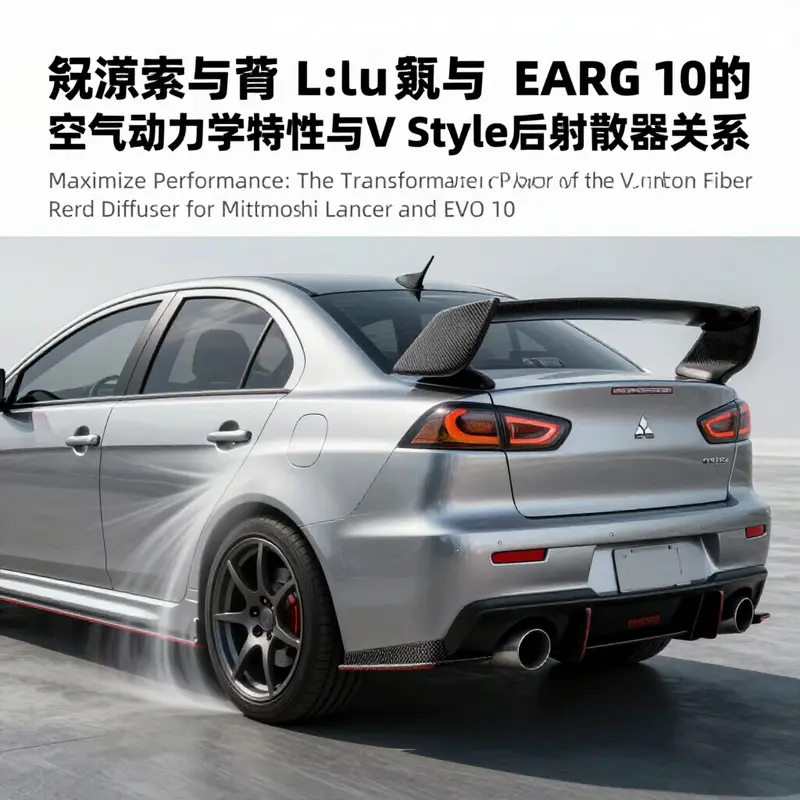
The rear diffuser is more than a visual flourish in a high-performance compact sedan. It is a carefully calibrated element of the car’s overall aerodynamic system, designed to sculpt the wake that forms behind the vehicle at speed. When a lightweight, high-strength carbon fiber diffuser in a V-shaped arrangement is added to the back end, the conversation about how air behaves around the car shifts from mere appearance to a deliberate, data-informed pursuit of performance. This chapter traces how such a diffuser—commonly described in aftermarket discourse as a V-Style or V-shaped rear diffuser—fits into the broader narrative of aerodynamics across a lineage of performance sedans from a prominent Japanese automaker. It is a tale of how a single component can influence stability, downforce, and drag, while also contributing to the aggressive, race-inspired silhouette that enthusiasts crave. In this discussion, the emphasis remains on principles and observable effects rather than on a single branded kit, focusing instead on how the V-Style concept embodies a philosophy of airflow management that has persisted through generations of engineering iterations.
Aerodynamics begins at the front, but its most visible downstream theatre is the rear section. A diffuser reduces lift by accelerating the air beneath the car as it exits toward the back. In doing so, it creates a favorable pressure gradient under the vehicle, which translates into a suction-like effect that presses the car closer to the road. A carbon fiber diffuser, with its light weight and high stiffness, can perform this job more efficiently than heavier materials. The V-Style diffuser—characterized by its inward-angled, wing-like channels—works by encouraging a smooth, organized separation of the boundary layer as air leaves the underbody. The resulting wake is less chaotic, with reduced vortices that would otherwise pull air upward and generate lift at high speeds. In practice, this translates into steadier high-speed cornering, improved stability on straightaways, and a more confident feeling through the rear axle when the road bends feed into the car’s line of travel.
To understand why the diffuser is so consequential, it is helpful to picture the flow field behind a typical production bumper. Air streams diverge, shedding eddies that grow into a swirling wake. This wake creates pressure variations that can destabilize the tail, especially at the boundary between the car and the ambient air. By guiding the flow through a diffuser with precise geometry, engineers can flatten the wake, shorten its length, and minimize the drag penalties that accompany turbulence. A well-designed diffuser does more than reduce lift; it helps shape the rear airflow so that the car follows the driver’s input with less lag and more predictability. Carbon fiber, with its combination of stiffness and lightness, provides a practical balance. It resists deformation under load and heat, maintains sharp geometric lines, and contributes less weight aloft—the last of the slow-drip benefits when pursuing aggressive handling and efficiency.
In aftermarket circles, the V-Style configuration is often discussed in tandem with the broader underbody and bumper ecosystem. An effective diffuser does not exist in isolation; it relies on a compatible rear bumper, a carefully tuned undertray, and, ideally, a well-integrated exhaust design to avoid unintended interference. The diffuser’s success hinges on how well it sits within the entire aft aero system. When fitment is precise, when mounting points line up without gaps, and when the diffuser’s trailing edge is cleanly aligned with the car’s centerline, the supposed gains are more readily realized on the road and on the race track. The aesthetic appeal of a carbon diffuser—its gloss in sun, its crisp, tight radii, its visible weave—often accompanies its functional benefits, but the strongest case for the diffuser rests on air, not appearance. The air knows; it moves more confidently around a vehicle with a diffuser that respects the laws of flow than around one that merely looks the part.
The historical arc of aero development in this class of cars is instructive. Across generations, engineers repeatedly show that aero upgrades are most effective when they address the full wake, not just local disturbances. Early iterations favored bold, visually dramatic features that claimed downforce but did little to improve overall flow. Later, the emphasis shifted toward integrated solutions: front and rear components working in concert, underbody shaping guiding air along the cabin floor, and rear corners designed to reduce separation at the trailing edge. This progression reflects a broader principle: aerodynamic performance is cumulative. A diffuser can contribute, but it reaches peak effectiveness when the rest of the vehicle’s aero architecture supports and complements it. The V-Style diffuser, in this light, is not a solitary wand but a piece of an interconnected system that values consistency of flow, predictability of wake, and a coherent visual identity that signals purposeful engineering.
From a design language perspective, the carbon diffuser’s allure extends beyond function. Carbon fiber offers a clear, high-contrast surface that speaks to a performance ethos. The material’s stiffness-to-weight ratio allows for slender, aggressively profiled diffuser blades that resist flex under high-speed air pressures. When a diffuser is too flexible, or when it deforms under the duress of track miles, the shape ceases to guide the flow, and any potential gains evaporate. In contrast, a well-specified carbon diffuser keeps the intended geometry intact, preserving the intended wake characteristics even as the speed climbs. Enthusiasts are drawn to this combination of form and function. The diffuser becomes a tangible signal of intent: a car that is ready for the challenges of high-speed stability, cornering precision, and the discipline of tuning that accompanies serious track work or spirited street driving.
Yet, it is essential to acknowledge the limits of aftermarket aero parts. Without proper calibration of the entire aero package, a diffuser can introduce mismatches. If the diffuser projects too far downward, or if its edges create unintended suction or drag, handling can become unsettled in dynamic conditions. This is why skillful installation, precise alignment, and thoughtful integration with the bumper and underbody are prerequisites for meaningful gains. It is also why the concept remains a topic for ongoing experimentation among enthusiasts who seek to extract more from their machines without sacrificing reliability. In addition, practitioners advise careful consideration of local regulations and the potential impact on noise, emissions, and insurance. The most compelling stories of diffuser upgrades tend to be the ones in which the owner has approached the modification as part of a data-informed program, testing changes on the road or on the track and tuning the rest of the car to harmonize with the new rear geometry.
The historical context of this aero approach is instructive for readers who care about how a particular class of cars has evolved. The lineage’s early generations emphasized dramatic front-end changes, with the rear being treated as an afterthought rather than a system that deserved equal design consideration. Over time, as wind tunnels and computational fluid dynamics (CFD) matured, engineers learned to quantify the rear diffuser’s impact on downforce, drag, and stability. This matured philosophy aligns with the V-Style diffuser’s promise: a means to influence rear wake with relatively modest weight penalties, and with a form that can be adjusted to different bumper configurations and underbody constraints. In that sense, the diffuser represents a synthesis of practical aerodynamics and the visceral aesthetics that define performance sedans. It is a reminder that the past’s empirical learning—how certain shapes and arrangements behaved on a racer’s tail—continues to inform the choices made in modern aftermarket tuning.
The future of rear diffusers in this class of cars can be expected to hinge on increasingly nuanced underbody shaping and better integration with exhaust and chassis architecture. A recently discussed direction in new models points toward more three-dimensional diffusers and an emphasis on multi-element trailing geometries that can further tame wake dynamics. In such a context, the V-Style approach remains a reference point: it demonstrates how a distinct geometric idea can translate into real gains when it resonates with the surrounding aero ecosystem. As more data becomes available from road tests and track days, enthusiasts will refine their understanding of how much a diffuser alone can contribute and how much it depends on harmonized upgrades across the rear of the car. The big takeaway is simple: aero performance is not a single feature but a concerted strategy that leverages materials, geometry, and integration to move the vehicle through air with greater efficiency and confidence.
For readers who want to explore compatibility and component choices in a concrete way, there are practical resources that catalog rear-end options and their fitment considerations. For example, one commonly referenced page provides a concise overview of rear-end components and their compatibility with a broad range of hatchback and sedan platforms, offering a sense of how aftermarket parts are designed to work together. This kind of resource helps demystify the process of upgrading with a diffuser by focusing on alignment, underbody considerations, and the relationship to rear bumpers and exhaust layouts. It is not merely about the diffuser; it is about the entire aft aero system and how every piece contributes to the final flow and the car’s on-road demeanor.
Ultimately, the core idea is that a V-Style carbon diffuser represents a practical embodiment of aerodynamic philosophy: shape the wake, minimize turbulence, and maintain stable downforce with a lightweight, rigid structure. When paired with compatible bodywork and a thoughtfully tuned underbody, it can help a performance-oriented sedan feel more planted at speed and more confident through sharp corners. It is not a magic solution, but it is a meaningful lever in the ongoing effort to balance speed, handling, and daily usability. The best stories are those in which the diffuser’s effect is felt not only in the numbers but in the cadence of the driver’s hands on the wheel—the way the car communicates grip, balance, and intent as the road and the throttle demand an equal degree of discipline and control.
For readers who want a tangible path to explore diffuser options and their fitment with aft-end components, a practical entry point is the rear-end kit that concentrates on compatibility with the rear bumper geometry and the surrounding aero surfaces. The page provides a useful reference for understanding how different rear-tail configurations work with diffuser profiles, even if the specific model name is not the focus. 2008-2015-mitsubishi-lancer-evo-x-rear-bumpers offers a concrete example of the kind of integration considerations discussed here, illustrating how a diffuser’s success hinges on cohesive design between rear bodywork, underbody shaping, and the bumper’s geometry.
Looking back at the broader Aerodynamics of the Evolution lineage, early generations of these performance sedans placed a premium on downforce and stability. The rear diffuser was part of a suite that included refined underbody channels, carefully shaped rear corners, and, in high-performance variants, race-bred exhaust arrangements. The throughline across generations is clear: downstream aerodynamics matter, and the diffuser is a critical element—especially when weight is a concern and performance demands lean toward scrupulous packaging and efficient airflow. The V-Style diffuser is a contemporary embodiment of this enduring principle. It is a practical tool in the toolkit of aero-conscious tuners who value both the mechanical performance gains and the visual language that speaks of wind tunnels, track days, and the discipline of tuning.
In sum, the conversation around carbon rear diffusers in a well-known Japanese performance sedan lineage reflects a broader truth: aerodynamics is a discipline of systems. A diffuser does not perform its magic in isolation. It works best when it sits within an aero strategy that respects the car’s chassis geometry, the underbody, and the bumper’s contour. The V-Style diffuser offers one pathway to achieving a cleaner wake and steadier rear-end behavior, reinforcing the idea that form and function can align in a way that resonates with both engineers and enthusiasts. The result is a rear end that looks purposeful and performs with a degree of precision that suits the ambitions of drivers who chase speed with control, who value feedback through the wheel, and who want their performance sedan to communicate the grip and balance that come from thoughtful engineering rather than from spectacle alone.
External resource for further reading: Autocar’s analysis of the aerodynamics of the early Evolution-era model provides a historical anchor for understanding how rear end and diffuser concepts developed over time. See the detailed discussion here: https://www.autocar.co.uk/car-review/mitsubishi/lancer-evolution-iii
在风之边界:V Style 碳纤维后扩散器对三菱 Lancer Evo X 的价格、性能与买家偏好全景解读
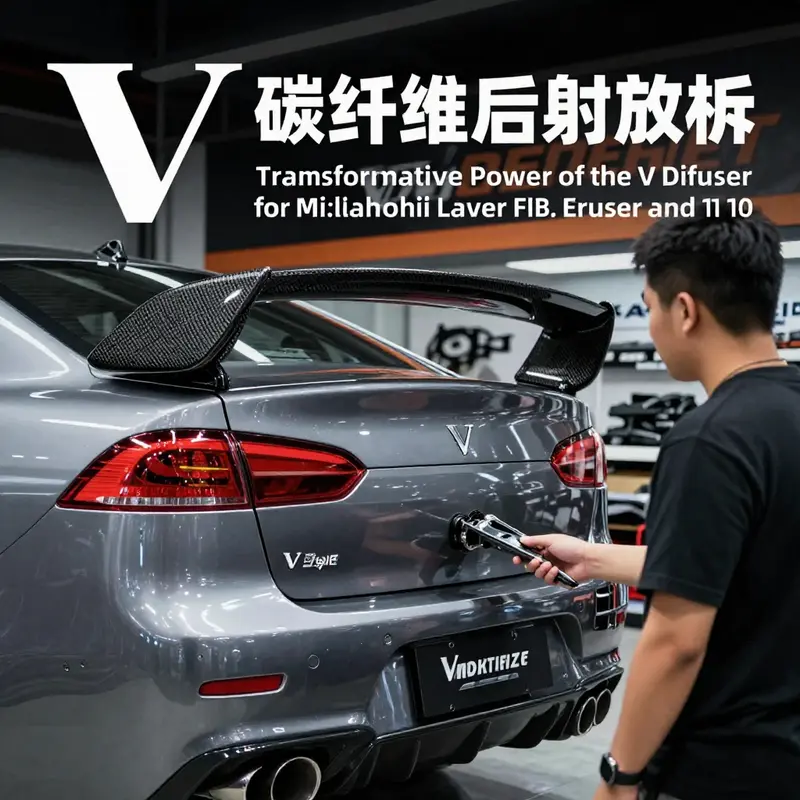
在对市场价格的观察中,V Style 碳纤维后扩散器的定价呈现出明显的分层结构。基线款或通用款普遍覆盖多车型应用,它们的价格区间大致在三位数的美元区间波动。这类产品多以通用型设计为主,强调对多种车型的适配性与入口成本的友好性。对一些需要在外观与性能之间取得更高平衡的买家而言,基线款是进入碳纤维改装世界的起点。与之相对的是高阶定制款或带灯款的产品线。这一分支通常采用更高工艺标准,或者在外观设计上融入“PM 风格”或“ED1 风格”等特定视觉标签,并将LED 发光作为可选项添加进来。此类扩散器的价格明显更高,价格区间常落在 435 美元至 820 美元之间。更极端的案例则包括整车干式碳纤维套件,如前唇、侧裙、后尾翼与后扩散器的组合,总价可能达到或超过 1,800 美元,甚至更高。市场上对这类高端选项的需求,往往来自于对重量极限与外观辨识度要求极高的车主,他们愿意为的是在夜间灯光、日间光泽以及整车氛围的传达上获得更强的“科技感”与“竞速感”。在此价格结构的背后,买家的心理诉求也越发清晰:碳纤维材质的可见纹理、与车身表面的光学对比、以及在夜间或灯光下的照明效果成为决定性因素。消费者逐渐从单纯的“看起来像赛车的外观”转向“看的不是只是外表,而是对整车空气动力学绩效的认可”。这也解释了为何带 LED 照明的后扩散器越来越受欢迎,尽管它们在造价上并不便宜,但在夜间识别度和科技感营造上具备不可替代的作用。对于特定车型的精准匹配度,同样是一个关键维度。车主们偏爱明确标注适用于某一具体车型的产品,因为这关系到安装便利性、耦合件的装配顺畅,以及最终效果的贴合度。正因如此,在淘宝类平台、阿里巴巴国际站等电商渠道看到大量标注“全球批发”“起订量1件”等字样的商品时,买家会对性价比与供应稳定性进行综合评估。这类渠道的出现,说明市场对小批量、高性价比采购的需求仍然强劲。对于 Evo X 的特定改装需求,社区和改装店也在不断分享“如何最大化贴合度、如何在不损伤原车结构的前提下实现最佳尾部气流分布”等经验。此时,碳纤维材质的价位并非唯一决定因素,安装工艺的精细程度、喷涂的耐久性、以及售后服务的覆盖范围同样影响最终的购买决策。对那些考虑集成 LED 的扩散器的买家来说,系统亮度、照明均匀性以及在雨天或夜间的视觉效果会成为实际使用的关键考量。反过来,部分买家也会将焦点放在“品牌与适配性”上,偏好具备清晰车型匹配信息的产品,以确保安装的可行性与后续维护的简便性。通过对不同渠道的观察,消费者也逐渐偏向于更高性价比的组合购买,例如在阿里巴巴国际站等平台上寻找“全球批发”的商品,以实现小批量采购与成本分摊的平衡。这也映射出一个更广泛的市场生态:碳纤维后扩散器作为一个可再配置的性能件,其价值不仅体现在单件产品的重量和提升,还体现在通过组合搭配实现的系统级收益。对于 Evo X 的改装社区而言,后扩散器是一个常被讨论的焦点,因为它直接影响到尾部气流的分布、尾涡的强度以及整车的后端稳定性。理论层面,碳纤维的硬度与强度相比传统材料更有利于承受高速行驶时的尾部应力,这对提升横向稳定性和纵向加速响应有潜在帮助。现实层面,安装过程中的精度、对现有 bumper 与尾箱盖、以及后扩散器唇缘之间的贴合度都需要专业的调整与校准。正是因为如此,许多车主在购买此类件时,往往会授权专业改装店进行现场测量、微调以及最终的装配测试,以确保扩散器在高速行驶中发挥出最大的效果。为 Evo X 量身定制的后扩散器往往意味着它与整车尾部的线条在视觉上形成一种递进关系:扩散器的角度、宽度与尾部扰流设计的边缘都需要与尾灯、后保险杠以及底部的空气导流槽协同工作,避免不必要的乱流和尾流过度集中。此类协作往往要求对整车的空气动力学进行综合评估,甚至需要在某些场景下对尾部结构进行微调,以确保扩散器在实际高速行驶中的表现符合设计预期。将目标锁定在特定车型的后扩散器,也反映出市场对“原厂匹配度”这一维度的高度重视。消费者愿意为此付出额外的成本与时间,原因在于它减少了后续的改装风险,使得改装结果更接近于设计初衷。与此同时,市场也在逐渐显现一个趋势,即对“可选或内置 LED 灯”的扩散器的偏好日益增强。这类产品不仅增强夜间行车的辨识度,还为整车的科技感与豪华感提供额外的视觉证据。通过对价格区间的综合分析,可以观察到一个清晰的结构:低成本、通用性强的基础款适合入门级改装和试水;中高端定制与带灯款更适合追求更高性能表现与个性化表达的车主;而整车套件则更多出现在极端性能导向的改装项目中。对于 Evo X 的用户而言,这样的分层不仅决定了购买路径,也影响着改装的总体预算与时间规划。进入购买路径时,渠道的重要性同样不可忽视。大多数消费者会首先在全球市场的电商平台上进行价格对比,借助平台自带的评分、售后保障和买家评论来评估产品的可靠性。与此同时,车主们也会关注供应商的发货速度、退换货政策以及是否提供安装指导或技术支持。对于一些需要高强度、耐候性的应用场景来说,耐久性与保养成本也成为选购决策中的重要因素。综上所述,V Style 碳纤维后扩散器在 Evo X 领域的市场表现呈现出明显的多层级结构:从基础款到高端定制款、从单件购买到整套套件的组合,以及从注重性价比到追求品牌匹配与外观个性化的多元需求。不同的用户驱动着不同的购买逻辑,以及不同的安装与维护路径。对行业观察者而言,理解这一结构不仅有助于把握当前市场的需求分布,更有助于预测未来的创新方向。材料工艺的进步将继续推动碳纤维在改装市场中的渗透率,同时,随着灯光集成技术的普及,带灯款式的扩散器在夜间效用和观感上的优势也将进一步被放大。对消费群体而言,真正的挑战在于在成本、安装便利性、品牌信任与最终效果之间做出权衡。对工程与设计而言,核心问题是如何实现更可靠的气流控制与更稳定的尾部响应,同时确保外观设计与整车气质的一致性。 Evo X 的案例清晰地表明,成功的改装不仅仅是单件件的提升,而是一个跨领域协同的结果。为实现这一点,设计者需要理解材料的实际性能、制造工艺的边界以及车辆本身的空气动力学特征。正因如此,一些车主和改装爱好者在选择具体产品时,会优先考虑那些明确标注适用于特定车型的选项,以确保安装的便捷性和表达的一致性。随后,在安装完成后的持续使用阶段,保养与维护同样不可忽视。碳纤维的抗划伤性、尾部涂层的耐黄变性、以及 LED 灯的寿命与更换成本,都是长期拥有成本的重要组成部分。对于 Evo X 的改装群体,后扩散器并非一次性投资,而是与后续的维护、轮胎选择、悬架调校等其他改装项共同构成的一个综合系统。通过对价格、材料、设计与渠道的综合分析,可以看出市场对碳纤维后扩散器的需求呈现出较强的结构性稳定性:一方面,碳纤维材质的视觉与物理属性持续获认可;另一方面,车型匹配度与集成性成为影响购买决定的重要因素。尽管高端定制品的价格带较宽,但对性价比的追求仍是主线。最终,V Style 碳纤维后扩散器在 Evo X 的应用,呈现出一种对性能与美学并重的市场态势。车主们在追求速度与稳定性的同时,也在追求个性表达与品牌语言的一致性。这种综合性需求推动了整个细分市场的持续进化,也让改装从单一的零件升级,转向对整车气动学系统的优化。对那些希望将车带入更高水平的玩家而言,购买与安装的选择,最终会回归对赛车式驾控体验的承诺。无论是追求更低的尾部升力、提升尾部稳定性,还是希望在夜色中让车辆辨识度更高,V Style 碳纤维后扩散器都在这一场看不见的力学博弈中,扮演着极具性价比与象征意义的角色。为帮助读者更好地了解与评估 Evo X 专属的后扩散器选择,以下是一个与车型相关但非强制性的重要参考点:前往相关的改装组件页面以获取更多关于尾部设计与整体套件搭配的资料与装配要点。可通过以下链接获取更多信息: 2008-2015 Mitsubishi Lancer Evo X rear bumpers。在深入理解市场结构的同时,读者也可将注意力转向材料基础与工艺细节,以便在未来的选购中做出更具前瞻性的判断。为了拓展对碳纤维材料及其在汽车领域应用的理解,外部参考资源提供了系统的理论支撑与实际案例分析,帮助读者把设计理念转化为工程实现的可操作路径。外部资源可供进一步阅读与对照:https://en.wikipedia.org/wiki/Carbonfiberreinforced_plastic
Final thoughts
The integration of the V Style Carbon Fiber Rear Diffuser into Mitsubishi Lancer and EVO 10 models signifies a pivotal transformation in both performance and style. By significantly lowering lift and improving stability at high speeds, this accessory not only boosts the driving experience but also enhances the vehicle’s aggressive aesthetics. As aftermarket parts continue to thrive, understanding consumer preferences and pricing trends is vital for businesses aiming to capture this market. Thus, embracing innovations like the V Style diffuser not only supports vehicle enhancement but also drives customer satisfaction and brand loyalty. Emphasizing such products can be a key strategy in improving sales and establishing authority in the automotive aftermarket space.