
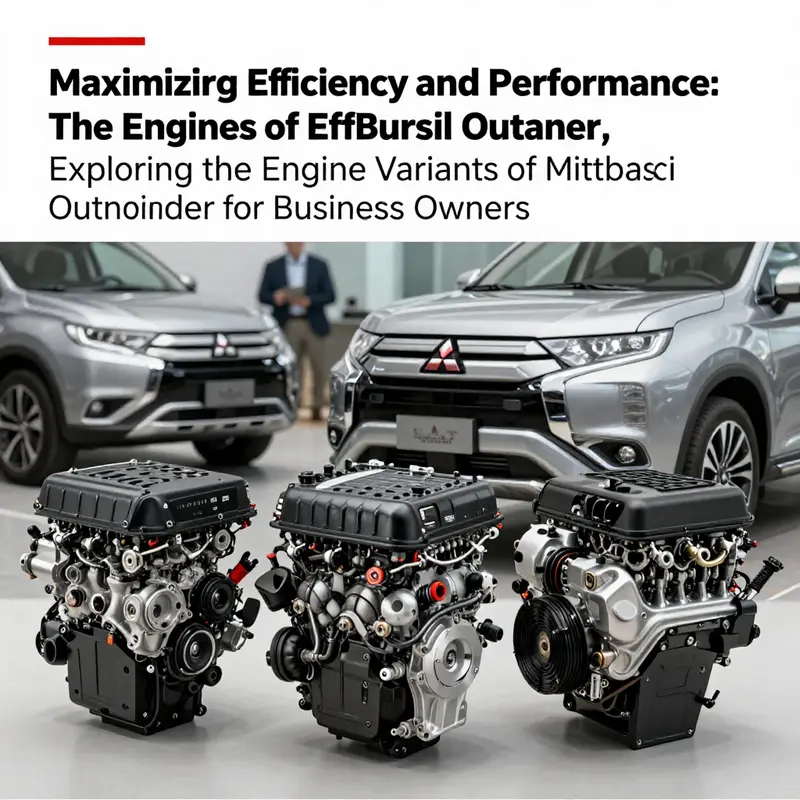
The Mitsubishi Outlander has established itself as a versatile player in the SUV market, appealing to various consumers with its robust engine configurations. For business owners considering this model, understanding the intricacies of its engine options is paramount for making informed decisions. This article delves into three key engine variants, starting with the widely-utilized 2.0L naturally aspirated engine known for its fuel efficiency, progressing to the historical significance of the 2.4L engine that shaped early models, and culminating in the potential of turbocharging technology that unlocks enhanced power but warrants careful consideration. Each chapter is designed not only to provide detailed specifications but also to highlight their relevance to business applications and operational efficiency.
平顺与省油并重的驱动核心:Mitsubishi Outlander 2.0L 自然吸气发动机应用全析
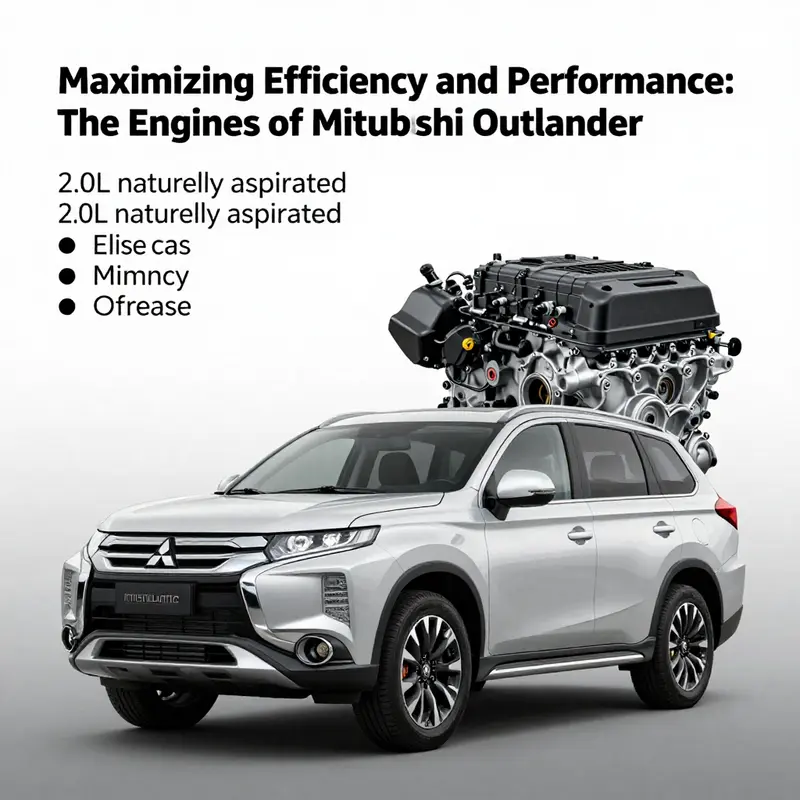
在Mitsubishi Outlander 的动力家族里,2.0L 自然吸气发动机长期承担着日常通勤的基石职责。 它并非以极端的峰值功率去搏眼球,而是以线性、可靠、易维修的特性赢得城市驾乘者的信赖。就这一代Outlander 的动力系统而言,2.0L 经常被描述为“厚道的日系大SUV动力底盘”,它的设计初衷是提供稳健的起步响应与持续的中段扭矩,帮助车主在繁忙路况中保持从容,而非追求暴力加速的快感。对于那些把油耗、维护成本以及日常可靠性放在首位的家庭用户来说,2.0L 自然吸气发动机成为一个极具吸引力的选择。
在技术层面,这台发动机以铝合金材质主体为特征,使整机重量得到有效控制,进而改善热管理和燃油经济性。核心技术之一是可变流量气门正时系统,通常被称为MIVEC。通过智能调节进排气的时机与行程,MIVEC 能在不同工况下提升进气效率、降低排放并优化扭矩输出曲线。这意味着在低速巡航时,发动机能以较低转速获得更高的扭矩响应,提升日常城市驾驶的平顺性;而在中高转速区间,MIVEC 又能让发动机保持良好的呼吸,使动力曲线更加线性,没有明显的“发力点”跳跃。
在具体参数上,2.0L 自然吸气发动机在不同市场与年款中的标定存在细微差异。历史资料显示,早期版本和部分市场的参数接近于158马力(约115千瓦)与201牛·米的峰值扭矩,然而在最新版本的统计中,这一代车型在某些市场的最大功率已经提升至约166马力(约122千瓦),峰值扭矩仍然落在201牛·米左右。这些差异源自于市场法规、排放标准、以及厂商在不同生产阶段对发动机调校的微调。尽管数字有变,核心特性始终如一:轻量化的铝合金结构、MIVEC 的智能气门控制、以及对热管理的持续优化共同作用,确保发动机在日常油耗与持续性动力之间取得一个平衡点。
推动Outlander 的动力传输,往往采用稳定性出色、更新鲜的传动配合。多数市场的2.0L 版本搭配的是一台模拟8速的CVT无级变速器。这种变速箱不是以传统的机械齿比切换为核心,而是通过控制策略让传动比在一定范围内连贯滑顺地变化,辅以模拟“齿比换挡”的感受,尽可能地缩短换挡延迟、提高起步和加速时的响应。对驾驶者而言,这意味着在日常市区穿行时,油门踏下的响应会显得更为线性,车身与轮胎的配合也更容易维持可控的平顺性。对于追求油耗经济的家庭用车场景,这样的组合往往能带来更低的综合用车成本,尤其是在长期通勤和周末郊游之间实现良好切换时的稳定性。
然而,Outlander 的2.0L 自然吸气并非一路“单调”的选择。它的扭矩曲线在低转速段就已具备充沛的起步能力,足以应对城市堵车中的慢速起步与提速需求;在中段转速区间,发动机的呼吸系统与CVT 的协同使得加速过程显得顺滑且可控。有关驾驶感知的一些细节值得关注:当你从静止状态慢慢松离刹车,发动机的响应会以一种连续且可预测的方式传递给车轮,避免了传统发动机在低速时的“打滑感”或突兀的降挡行为。对于那些更在意平顺性而非极致爆发的驾驶者,这种特征正是Outlander 的卖点之一。
与早期2.4L 自然吸气版本相比,2.0L 的优势更多体现在经济性与城市友好性上。2.4L 版本在某些市场拥有更强的低扭与更广的扭矩曲线,可能在越野场景或高速等特定工况中给驾驶者带来不同的驾驶感受。但在日常通勤和家庭用车的广泛场景下,2.0L 的燃油经济性与可靠性往往更具吸引力。厂商对2.0L 版本的定位也体现了对市场环境的敏感度:在全球各个市场,法规、燃油税、排放标准以及购置成本都对发动机排量与技术配置产生直接影响。
在讨论性能的同时,维护性与长期可靠性也构成这颗发动机被广泛接受的重要原因。铝合金结构不仅降低了整机重量,也有助于提升热循环效率,使发动机在长时间工作后维持更稳定的热态管理。MIVEC 的存在意味着在不同工况下对气门时序进行动态调整,从而降低积碳、提升长期燃油效率和清洁排放的能力。这一点在Outlander 的日常使用场景中尤其重要:城市拥堵、冬季低温启动、以及夏季高温下的热管理都需要发动机具备较强的自我调节能力。
在实际行驶体验方面,许多车主报告的优点包括稳定的油耗水平、较低的噪音进入感以及平稳的换挡体验。对于那些以家庭出行为主、经常需要长距离通勤的用户,2.0L 的设计哲学往往意味着“省心的日常驾控”。当然,任何发动机在不同气候、海拔、轮胎负载与道路条件的综合作用下,都会呈现出不同的油耗与响应曲线。因此,理解自家Outlander 的具体版本、生产年份以及市场定位,是评估该引擎在自身用车场景中的表现的关键。
在动力系统的其他相关方面,Outlander 的整体驱动配置也与发动机选型紧密相关。部分高配车型提供的全时四驱系统,结合中央差速器的液力变矩器能在路况复杂时自动分配前后轴的动力,提升通过性同时兼顾城市驾驶的舒适性。这种综合配置使得2.0L 发动机不仅仅是城市通勤的选手,也在一定程度上承担起轻度越野或湿滑路面的责任。对于喜欢周末郊野、偶尔需要涉水或攀坡的车主而言,Outlander 的2.0L 车型提供了一个在不牺牲日常使用成本的前提下,仍具备一定越野潜力的解决方案。
在维护与升级的现实层面,若需要更换或维修发动机部件,车主们通常会关注两类资源:原厂件与兼容件。市场上有不少渠道提供完整的发动机总成或替换部件,尽管不同年份版本的部件参数可能存在差异。对热衔接、燃油系统和点火系统等关键部件的关注,能够帮助维持发动机在高效工作状态。在此,值得一提的是一种常见的市场现象——不同市场对同一代发动机的命名与部件规格可能略有不同。比如在日本本土市场,2.0L 版本有时以不同代号出现,与其他地区的4B11/4J11 系列可能需要特别留意兼容性。了解部件的真实匹配情况,最好通过官方规格说明或权威的车辆诊断工具来确认。
在理解具体版本的同时,仍需对误传与改装保持警惕。市场上确实存在一些改装或非原厂的涡轮增压套件宣称能“提升 2.0L 的动力”,这些方案往往带来保修失效、排放合规性下降、长期可靠性受损等风险。因此,若目标是提升性能,推荐的路径依然是围绕原厂调校与经授权的维护策略来实现安全、稳定的性能提升,而非简单地加装涡轮增压组件。 Outlander 的2.0L 自然吸气发动机在现实使用中体现的是一个“稳健、可持续、以经济性为导向的综合性能”——它让车辆的日常使用成本尽可能低,同时保留足够的动力去应对多变的城市交通与家庭出行需求。
综观全局,Outlander 的2.0L 自然吸气发动机在不同市场、不同年份的版本之间,围绕“平顺性、油耗、可靠性”这三项核心价值持续演进。它并非以极致的功率来博取眼球,而是在大量日常场景中提供稳定、可预期的表现。对于寻求“省心、低维护成本、日常通勤与周末出游兼顾”的消费者而言,这一代发动机的定位恰逢其时,也恰如其分地回应了全球市场对中型SUV核心诉求的综合反馈。
内部参考与进一步阅读:如需了解4B11T 系列发动机块的材料与工程细节,可参阅以下页面以获取更专业的拆解信息与可维护性参考: 4B11T billet block。
外部资源:官方对Outlander 2.0L发动机规格页面,提供按市场分布的正式参数与版本信息,帮助读者核对具体车型的实际配置与转 Valencia
外部参考资源: https://www.mitsubishimotors.com/vehicles/outlander/specs
The 2.4L Heartbeat: Tracing the Outlander’s Natural-Aspiration Engine Through Four Generations
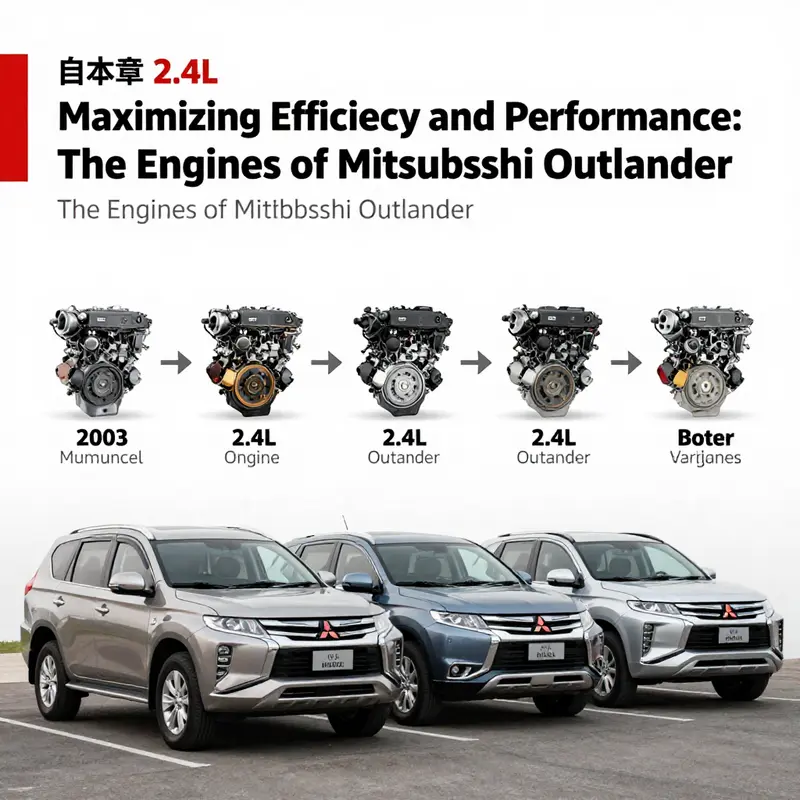
The Mitsubishi Outlander has long stood as a practical crossroads where reliability, efficiency, and versatility meet. Its engine lineup, especially in the early and middle years of its life, has reflected a careful balance between everyday usability and the occasional push toward more refined performance. Central to that story is the 2.4-liter inline-four naturally aspirated engine family. Across generations, this engine served as the steadfast core that underpinned daily driving, family duty, and light off-road capability. While the Outlander would later diversify with hybrid systems that would redefine its powertrain, the 2.4L natural-aspiration engine remains a throughline—a quiet but persistent reminder of how Mitsubishi engineered for durability, predictable maintenance, and broad market appeal. What follows is less a marketing chronicle and more a historical narrative of how a single, accessible engine configuration evolved to meet shifting expectations, regulatory landscapes, and the practical realities of real-world use.
In the dawn of the Outlander’s early era, the automotive world still measured a compact SUV’s value in straightforward horsepower and torque figures rather than in the orchestration of hybrid energy flows. The first generation, spanning the early 2000s, introduced a 2.4-liter engine that was designed to deliver ample daily grunt without sacrificing the frugality that families and fleet operators prized. This period saw engines crafted with an emphasis on linear torque delivery and steady, predictable throttle response. Buyers appreciated the ability to navigate urban streets, merge onto highways, and occasionally tackle light-duty off-road tasks without feeling the weight of excessive complexity. The engine’s architecture leaned on a robust cast-iron block and practical bore-and-stroke choices that favored durability and ease of maintenance. It was a unit you could rely on to perform without fuss, which matched the Outlander’s mission as a practical, all-weather companion.
By the time the second generation arrived, Mitsubishi had refined the 2.4-liter formula. The architecture remained fundamentally straightforward—naturally aspirated, four cylinders, designed for broad compatibility with a four-speed automatic transmission in many markets. Yet the internal refinements were meaningful. The introduction of Mitsubishi’s variable valve timing system—an evolution of the broader engine technology in the brand’s lineup—changed the engine’s character in subtle but noticeable ways. Throttle response sharpened, especially at mid-range speeds where most daily driving occurs. The torque curve felt more responsive, and the engine could pull smoothly from lower revs without the sort of flatness that plagued earlier, less sophisticated atmospherics. This shift mattered not only for perceived acceleration but for real-world driveability, particularly when the Outlander faced varying terrains or a full passenger load.
In discussing the second generation, it is worth noting that markets outside the core footprint occasionally offered alternative engines. While the 2.4-liter naturally aspirated engine remained the dominant choice for many regions, some markets explored variations to meet emissions or efficiency requirements. Those regional differences underscored a simple but important truth: the Outlander had to operate in a mosaic of regulatory environments and consumer expectations. The enduring appeal of the 2.4L configuration lay in its balance: modest power for everyday driving, predictable maintenance costs, and a framework that could support Mitsubishi’s broader drivetrain philosophies without demanding specialized knowledge from owners. The reliability story—centered on components with a proven track record in daily usability—contributed to the Outlander’s reputation as a dependable family SUV rather than a high-performance machine.
When the third generation arrived, the engine family acknowledged new realities in fuel economy, emissions, and ongoing reliability. The 4B12 variant—still a naturally aspirated 2.4-liter—offered incremental improvements in combustion efficiency and thermal management. These changes translated into consistent power delivery and better fuel economy in real-world driving, aided by refinements in the CVT control strategy that governed how the engine’s torque was distributed to the wheels. The combination of improved engine breathing, refined combustion, and smarter transmission control yielded a more linear driving experience. For listeners who valued the feel of a traditional automatic but sought the smoothness of a continuously variable system, the Outlander’s powertrain in this era provided a compelling middle ground. The vehicle’s capability remained versatile: it could shuttle a family to weekend adventures, accommodate cargo, and still return reasonable fuel economy—an important selling point as competition from other brands intensified.
Through these years, Mitsubishi’s engineering emphasis remained clear: deliver a robust engine that could survive a long service life, require only routine maintenance, and integrate smoothly with the vehicle’s broader drivetrain architecture. The 2.4-liter engine—whether evaluated in isolation or as part of a connected system with the transmission and chassis—exemplified a philosophy of durability. The cylinder head design, intake and exhaust flow paths, and the balance of friction-reducing measures all contributed to a dependable, relatively straightforward powertrain. For owners who prioritized predictable performance and lower maintenance costs, the 2.4L naturally aspirated engine offered a sense of confidence that comes from knowing you can rely on a simple, proven architecture.
As the fourth generation began to take shape, the automotive industry’s momentum toward electrification and hybridization created a new context for the Outlander’s powertrain. Mitsubishi shifted toward a blended powertrain architecture, integrating electric motors and batteries with the internal combustion engine. In this new framework, the internal combustion engine did not vanish; rather, its role evolved. The 2.4L naturally aspirated unit found a revised responsibility: it became a generator in the hybrid system, supplying electrical energy to propulsion motors and to the battery alongside regenerative braking. This transition reflected a broader industry trend: keep a reliable, well-understood engine in service, but recast its function to maximize overall efficiency and reduce emissions. The result was a vehicle that could operate with reduced fuel use in city and highway scenarios while retaining the familiar drive feel that owners trusted.
This strategic shift did not simply replace an old paradigm with a new one. It required careful engineering to synchronize piston rhythms, combustion cycles, and electrical generation with a battery pack and an electric drive system. The engine remained physically compact and robust, but its job became more about powering the hybrid’s energy management rather than delivering the sole momentum for vehicle propulsion. In practice, that means the Outlander’s powertrain became a composite system where the internal combustion engine’s transient performance characteristics—its willingness to rev, its throttle response, and its efficiency at cruising speeds—took on new significance within a broader energy architecture. The driver’s experience evolved as well: the car could operate in quieter EV mode in more situations, and the internal combustion engine would start primarily to maintain electrical demand rather than to drive the wheels directly. This evolution marks a meaningful turning point in the Outlander’s engineering narrative, one that aligns with the shift toward electrified mobility that has touched nearly every mainstream SUV in recent years.
The practical implications of this transition are worth examining in detail. For owners who rely on predictable, steady performance in daily use, the older 2.4L naturally aspirated engine’s strength lay in simplicity. It offered reliable combustion stability, straightforward maintenance routines, and a robustness that made it easy to service in a wide range of markets. The motor’s resistive losses were predictable, and spare parts availability remained high because the family’s components had matured over many years of production. When the engine operated as a generator in the hybrid system, those same traits—reliability, straightforward mechanics, and a focus on durability—translated into a different but equally valuable benefit: electricity generation with efficiency that helped minimize fuel consumption in stop-and-go driving. It is a refinement of purpose rather than a departure from capability, and it reflects Mitsubishi’s pragmatic approach to modernization: preserve what works, adapt what can be improved, and keep the ownership experience calm and predictable.
During this period of evolution, enthusiasts and technicians took a particular interest in how the 2.4L engine family could be supported by aftermarket knowledge and parts. The 4B11 and its related variants had a long service life, and with it came a wealth of experience about maintenance intervals, common wear items, and practical upgrades. An example of how the ecosystem around this engine matured can be seen in the availability of specialized blocks and internals for performance-minded builds. For those who sought to explore the upper bounds of durability or to customize the engine for particular duties, a billet-block upgrade for the 4B11 family became a talking point within the community of enthusiasts who valued reliability and heightened rigidity under demanding conditions. Such developments illustrate how, even as the Outlander moved toward electrified propulsion in the broader sense, the older, simpler engines continued to generate interest for their potential in certain applications and for the education they provide about engine design and longevity. In this sense, the 2.4-liter family remains not just a propulsion system but a historical artifact that illustrates the evolution of how engineers balance performance, reliability, and practicality across changing times.
The broader context of this engine’s story is the way manufacturers balance a model’s market position with evolving technology. The Outlander’s shift from a conventional, naturally aspirated powertrain to a hybrid configuration does not minimize the significance of the 2.4L engine as a design philosophy. It demonstrates a continuity in engineering thinking: start with a robust, maintainable core, then augment it with energy systems that extend range and reduce emissions without compromising the familiar driving experience. In real terms, the Outlander’s fourth-generation approach translated into a vehicle that could deliver quiet, electric-powered urban driving while still offering the warmth of a straightforward internal combustion engine when longer trips demanded it. The experience for drivers, then, becomes one of seamless transitions between propulsion modes—a practical outcome of the engine’s enduring adaptability rather than a simple shift in technology for technology’s sake.
In every generation, the 2.4L engine’s performance envelope was shaped by a careful balance. The engineers sought to ensure that daily driving felt confident, that enough torque was available for safe highway merging and climbing grades, and that fuel economy remained acceptable in a class where many buyers compared competing models by the cost of ownership over five to ten years. The design choices—moderate compression, reliable intake and exhaust strategies, and the compatibility with a range of transmissions—reflected a philosophy of building a powertrain that would be comfortable to live with and capable enough to adapt to a broad spectrum of driving conditions. It is this blend of reliability, predictability, and efficiency that has allowed the Outlander to traverse different markets and generations without losing its core identity: a sensible, versatile SUV that people can rely on for daily routines and for weekend getsaways.
From a maintenance perspective, the enduring relevance of the 2.4L engine lies in its relative simplicity. Routine tasks—oil changes on a regular schedule, air filter replacements, spark plug checks, and water pump inspections—became predictable and affordable in many regions. The engine’s durability was often tied to disciplined maintenance practices rather than to esoteric, high-cost parts. This is a meaningful advantage, especially for buyers who need a vehicle that remains serviceable many years after purchase. The Outlander, with its practical chassis, spacious interior, and the reassuring presence of a robust, consistently engineered powerplant, was well suited to families and fleets alike. Even as technology advanced and the hybrid era began to define newer models globally, the 2.4L engine’s story did not simply end. It evolved into a different kind of contribution—one that supported energy efficiency, reduced emissions, and a smoother transition between propulsion modes—while preserving the core attributes that made the Outlander a trusted companion on a wide range of roads and weather conditions.
In reflecting on the engine’s journey, a single thread emerges: the capacity to adapt without losing identity. The 2.4L engine began as a straightforward, dependable power source for everyday driving. Over the years, it absorbed refinements in valve timing, combustion efficiency, and transmission pairing, which enhanced its responsiveness and efficiency. When the model line gestured toward electrification, the same basic architecture assumed a new role, enabling the hybrid system to function with coherence and efficiency. The Outlander’s evolution—driven by market demands, regulatory pressures, and a pragmatic engineering philosophy—shows how a single engine family can anchor a vehicle as it moves through transformative times. It is a narrative of continuity and change, of respect for proven engineering principles and willingness to reimagine them in the service of cleaner, smarter mobility.
For readers who want to see the full picture of how the Outlander’s powertrain has been described by the manufacturer, official specifications for the latest models provide a consolidated reference. These documents contextualize the hybrid integration and clarify how the internal combustion engine contributes to the vehicle’s overall energy strategy. The evolution of the Outlander’s engine is not merely a catalog of horsepower figures; it is a case study in how a brand navigates shifting environmental expectations while preserving a familiar driving experience. The journey of the 2.4L engine, from a simple workhorse to a key component within a sophisticated energy system, illustrates a broader truth about modern SUVs: progress does not always mean abandoning the past, but rather repurposing it to serve a new set of goals.
In closing this exploration of the 2.4L natural-aspiration engine and its role in the Outlander, it becomes clear that the engine’s history is more than a chronology of numbers. It is a chronicle of how engineers interpreted daily realities—the need for reliability, the demand for efficiency, and the desire for a driving experience that could adapt to evolving transportation expectations. The Outlander’s story, with its steady march from a straightforward 2.4L engine toward a hybrid future, offers a lens on how modern SUVs balance the comfort of familiar mechanics with the imperative to move toward cleaner, smarter mobility. The engine’s legacy is not merely in its torque curves or its rev limits; it rests in the quiet confidence it bestowed on every mile driven, whatever the weather or the road conditions might be. And that legacy continues to inform how the model is viewed by owners who value practicality, resilience, and long-term value as its core strengths.
External resource: https://www.mitsubishi-motors.com/en/vehicles/outlander/specifications/
Internal link reference (for context on engine-related upgrades): 4b11t-billet-block
涡轮加持下的Outlander:性能提升、现实权衡与车主实操指南
涡轮加持下的Outlander:性能提升、现实权衡与车主实操指南
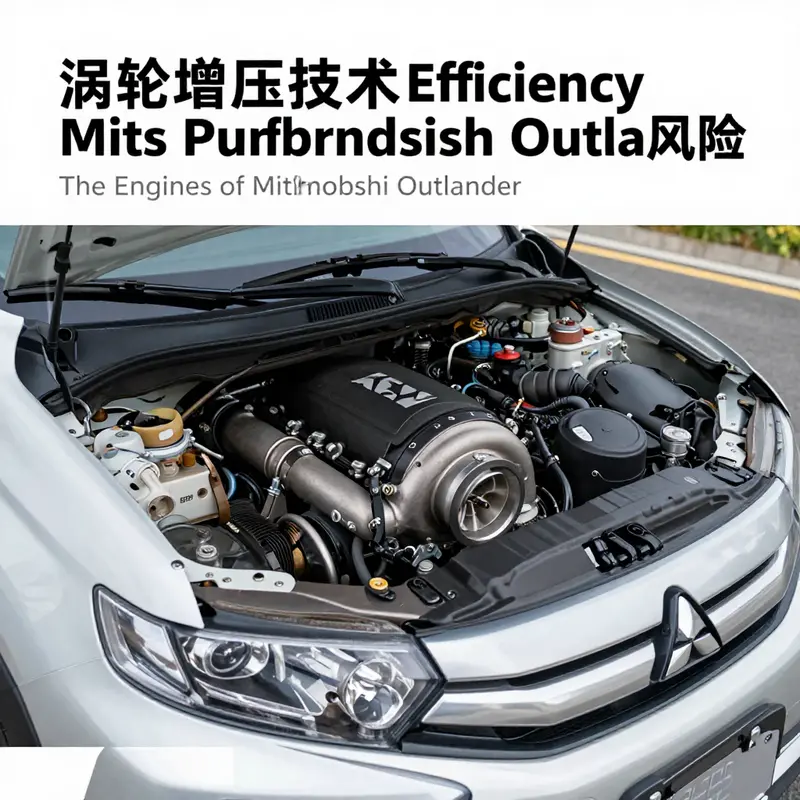
三菱Outlander采用涡轮增压技术,既为车型带来明显的动力与效率优势,又引入新的维护和驾驶要求。本章从实用角度出发,详述涡轮系统在Outlander平台上的好处与隐忧,并给出可操作的维护、购买与驾驶建议。全文将技术与现实使用场景结合,帮助你在权衡利弊后做出更合适的引擎选择。
涡轮增压的核心魅力在于“小排量、大输出”。1.5T涡轮发动机能在不增大排量的前提下,产生接近或超过2.0L自然吸气发动机的动力。对Outlander来说,这意味着城市路段起步、并道超车和高速加速都更为从容。涡轮带来的峰值扭矩通常提前到来,这提升了低转速的牵引力。对于需要经常载重或拉行李的家庭用户,这种扭矩分布的改变带来真实的驾驶便利。
燃油经济性是涡轮技术的另一张王牌。因为涡轮可以通过回收废气能量提高进气压力,发动机在多数日常工况中可保持较低排量运行,达到更佳的热效率。在城市通勤和混合路况下,1.5T配合轻度电气化系统,往往能显著降低平均油耗。对于关注长期使用成本与排放合规的车主,这一点尤为重要。此外,涡轮式小排量发动机更容易满足愈发严格的排放法规,有助于厂方在不同市场实现法规合规性。
高海拔环境对自然吸气发动机打击明显,动力会随空气密度下降而衰减。涡轮增压通过压缩进气,减轻了高原环境对动力的影响。这使得在山区或高海拔地区行驶的Outlander,能保持更稳定的动力输出和更可预测的驾驶体验。对于经常走盘山路或偶尔进入高海拔区域的用户,涡轮优势十分实际。
厂方越来越多地将涡轮发动机与轻混系统联合使用。这样的组合能在低速时平顺补偿涡轮滞后,提升起步响应。同时,轻混在制动回收和低负荷工况中提供辅助扭矩,使发动机在更经济的转速区间工作。对Outlander而言,这带来更舒适的城市驾驶体验和降低的油耗波动。
然而,涡轮并非没有代价。涡轮迟滞是常见的现象。尽管现代低惯量涡轮和电子增压技术已明显改善这一点,仍可能在急加速瞬间感受到短时的动力延迟。这种“先薄后厚”的动力曲线對某些驾驶者而言,会被感知为不够线性或不够可预见。想要获得更平滑的加速体验,厂商通常会在动力调校和变速器配合上花工夫,但驾驶节奏的调整也是必要的。
维护成本与技术复杂性上,涡轮系统高于传统自然吸气发动机。涡轮转子以极高转速运转,对润滑和散热极为敏感。油品的质量、换油周期与冷却系统的状态直接影响涡轮寿命。若忽视这些细节,长期会导致涡轮轴承损伤、密封失效或积碳增加,进而影响增压效率和发动机可靠性。维修费用也通常高于常规气门机构或排气歧管维修,因此车主需把潜在维护支出纳入购车预算。
涡轮对油品和驾驶习惯有更高要求。厂商多建议使用高辛烷值燃油和符合规格的合成机油。激烈驾驶或长期满载行驶,会让涡轮长期处于高温高载状态,加速机件疲劳。此外,频繁的短途、冷启动和不充分的热稳态行驶,会加剧积碳和油泥生成。这些因素一起决定了涡轮发动机是否能达到其预期寿命和性能。如果你习惯短距离频繁行驶或偏好高转速驾驶,涡轮的寿命和维护成本将更为敏感。
高速持续巡航时的表现也值得重视。涡轮在间歇或动态负载下表现出色,但在长时间高负荷下,涡轮的持续增压能力可能受到限制。相比大排量自然吸气发动机那种线性且持续的扭矩输出,涡轮驱动在高转速区的表现有时会显得“后劲不足”。这在高速超车或长途满载匀速爬坡时,尤其明显。合理的传动比和变速箱策略能一定程度缓解这一问题,但物理极限不可完全消除。
改装涡轮是另一个常见话题。在市场上,存在大量第三方涡轮套件和性能调校服务。改装虽能显著提升动力,但往往带来保修失效、排放不合规和整车寿命风险。此外,改装涉及燃油、进排气、冷却、ECU调校等多个系统。若改装不当,发动机耐久性和整车平衡会遭到破坏。因此,若非在受控环境下并由专业团队完成,不建议对出厂涡轮系统进行大幅改动。
购买二手涡轮Outlander时,要特别留意几项关键要点。首先检查保养记录,确认是否按厂方建议更换机油和涡轮相关部件。其次听发动机运转声,涡轮异常的嗡鸣或哨声,可能是轴承磨损的信号。第三观察油耗与机油消耗,异常上升提示内部磨损或密封问题。最后进行涡轮轴侧向和轴向间隙检查,这通常需要专业技师拆卸或至少用端口检测设备检测。采买时对这些细节的关注,能显著降低未来维修风险。
实际使用中的驾驶与维护建议同样重要。冷启动后避免立即高转速运转,待机油和增压器温度达到稳定状态再加速。长途行驶后,短暂停车并怠速让涡轮降温,避免立即熄火以抑制机油在高温下形成碳积或烧蚀。遵守厂方推荐的换油周期和使用合格机油,能延长涡轮与发动机寿命。若你的用车环境多为城市短途,可考虑偶尔进行一次长途高速行驶,帮助清除积碳,提高发动机工作状态。
对注重原厂可靠性的用户,购买出厂已调教好的涡轮车型更为稳妥。厂方在整车级别做了热管理、排气、燃油与变速箱匹配等优化。若动手改装,建议选择经验丰富的改装厂或调校师,优先考虑热管理升级、加强冷却与加强传动系统配套。对比赛或极限性能追求者而言,投资涡轮强化部件能带来更高的上限,但平衡日常耐久性与性能同样重要。
保险与保修的角度也须纳入决策。涡轮系统若发生故障,维修金额往往较高。投保时应咨询保险条款对涡轮系统与改装的覆盖范围。若购买二手车,确认原厂保修是否仍生效,或是否有延保或第三方质保计划能覆盖涡轮等关键部件。这些预防性措施能在问题发生时减少车主的经济负担。
最后,从用户体验角度看,涡轮车型带来的“更少油耗、更强动力”的组合非常有吸引力。它改变了Outlander原有的驾驶特性,让这款家用SUV既能满足日常舒适性,也能在需要时提供较强的动力储备。关键在于是否接受随之而来的维护要求和驾驶调整。如果你希望在有限油耗下获得更好动力,且愿意按规范维护,涡轮版本是明智选择。反之,如果你追求极简维护及线性动力体验,自然吸气版本仍有其独到优势。
对于关注配件更换或整机更换的车主,市场上也能找到合适资源。若需查询整机或涡轮相关替换件,可参考售卖完整发动机或整备件的在线平台。不过,务必核实配件来源和适配年份,以免买到不匹配的部件。更多零件信息可参考内部资源,例如可查询的 4b11t billet block 说明,了解涡轮化发动机的关键结构与强化方案。4b11t billet block
(相关引擎整机和配件信息示例可在外部平台查阅,例如完整发动机供货清单。)
更多详细的市场采购信息与可供选择的整机型号,可见外部参考链接。外部资源示例:https://www.ebay.com/sch/i.html?_nkw=complete+engine+for+mitsubishi+outlander
Final thoughts
Understanding the various engine options of the Mitsubishi Outlander is crucial for business owners who prioritize efficiency, reliability, and performance in their fleet. The 2.0L engine stands out for its fuel efficiency, making it ideal for economical operations, while the historical 2.4L variant reflects the brand’s evolution and commitment to enhancing consumer experiences. Additionally, the turbocharged options present unique opportunities for those seeking higher performance, though they come with their own set of considerations regarding maintenance and reliability. By evaluating these engines’ strengths and weaknesses, business owners can effectively align their transportation choices with their operational needs.