
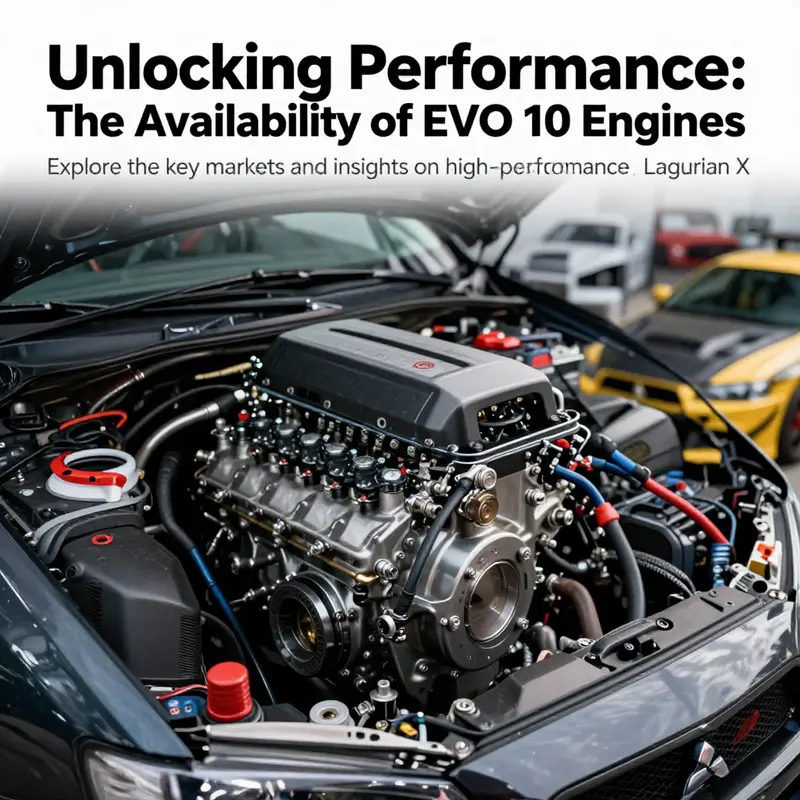
The Mitsubishi Lancer Evolution X, commonly referred to as EVO 10, has carved out a significant niche in the automotive industry as a high-performance vehicle. Central to its appeal is the 4B11T 2.0L turbocharged engine, which not only offers stellar performance but has become a sought-after component in the aftermarket and tuning community. This article delves into the intricacies of the EVO 10 engine market, its technical specifications, performance metrics, economic factors, and a comparative analysis to equip business owners with essential insights. As demand shifts and evolves, understanding where and how to acquire the EVO 10 engine can provide a competitive advantage.
Chasing the X Powerplant: Navigating Markets for the EVO X Engine in the Aftermarket Scene
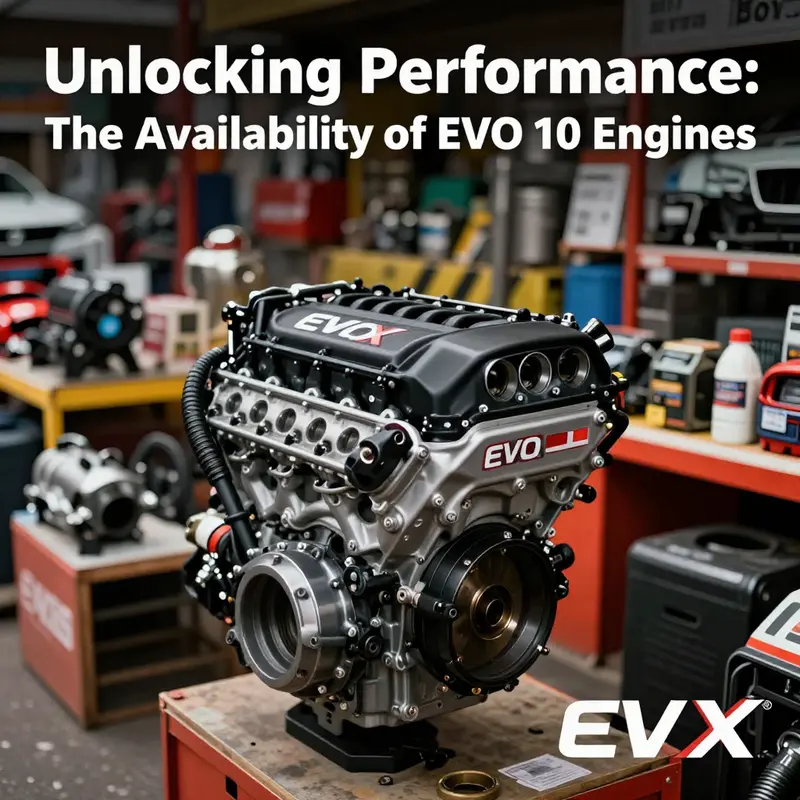
Within the circle of car enthusiasts who chase high-revving, torque-rich driving experiences, the engine that powered the Evolution X remains a coveted piece. Not as a new showroom part, but as a used unit with a proven track record in rally-inspired performance. The term evo 10 engine is shorthand that fans and mechanics use to signal a very particular 2.0-liter turbo four that lived under the hood of a legendary platform. Yet the reality of the market is more nuanced. Because the Evolution X itself has been out of production for years, finding an authentic, complete powerplant for sale means walking a path that blends aftermarket marketplaces, international sourcing, and careful verification. The search can feel like piecing together a puzzle where one or two crucial edge pieces determine whether the whole project will run smoothly or stall on the shop floor.
From a naming perspective, the shorthand EVO 10 often points to the Lancer Evolution X generation made between 2008 and 2016. The engine that powered those cars was a turbocharged inline-four that delivered a heady mix of responsiveness and torque. For buyers, the appeal is clear: a complete, compatible engine can become the heart of a repair, a foundation for a build that pushes more power, or a straightforward replacement when the original unit has suffered wear after miles of high-performance use. But that clarity clashes with the practical reality that there is no single, factory-issued catalog entry labeled EVO 10 engine. Instead, the market speaks in terms of the engine family code, compatibility notes, and the presence or absence of ancillary pieces like the turbocharger, ECU, transmission interface, and mounting hardware. In other words, the search is less about a named product and more about a precise mechanical match that fits the chassis and the intended project.
Marketing channels for these engines cluster around the mainstream parts ecosystem where buyers expect to see reliable listings with clear photos, mileage, condition, and shipping terms. International sellers, auction houses, and B2B distributors gather stock from dismantled vehicles, salvage yards, and enthusiasts who either swap to newer builds or revert to stock configurations. The most active and accessible avenue for complete Evo X engines has long been large-scale online marketplaces that host dozens of dealer and private listings from across the United States and abroad. Real-time market data captured at the start of 2026 confirms that a complete, pre-owned engine associated with that platform has a price that can hover near four thousand dollars, with some listings including free domestic shipping. This snapshot underscores a broader trend: even after a model line ends production, its core propulsion system remains in circulation because powerplants retain value for repair, restoration, and performance projects.
Consider a representative listing that illustrates what buyers encounter. A pre-owned Evo X engine, spanning model years 2008 to 2015, is described as a 2.0-liter turbocharged unit—commonly associated with the Lancer Evolution X architecture in the aftermarket record—and is offered at around four thousand dollars with free delivery in the United States. The listing often includes the engine only, with or without the turbo, the intake, exhaust manifolds, and perhaps the ECU. The appeal for a buyer is the promise of a straightforward swap that can restore performance or anchor a build plan without the chaos of sourcing parts from multiple vendors. Yet the reality is that every listing needs careful scrutiny: verify the engine code, ensure it matches the vehicle’s chassis compatibility, confirm that transmission bolt patterns align, and check the health of critical components such as the rotating assembly, cam timing, and compression. Knowledge of the exact configuration matters as much as the price tag.
Prospective buyers also weigh the options of different procurement strategies. Some enthusiasts seek a full engine assembled and ready to drop in, while others prefer a half-cut or long-block approach, which preserves certain ancillaries and offers flexibility for future upgrades. The half-cut concept—pulling the engine as a near-complete module including the front subassembly—has become a practical route for many performance shops that want to minimize installation downtime. For those who want to explore durability upgrades, conversations about forged blocks and reinforced internals arise, and here the internal reference to available upgrade components like a billet-block can be relevant. For example, a dedicated part page exists for those interested in high-strength engine blocks, and it becomes a convenient waypoint in the buyer’s research. If you are exploring that path, you can learn more by visiting 4b11t-billet-block for additional technical context and durability-focused options. The presence of such upgrade paths is a reminder that the Evo X engine, while aging, remains a platform capable of handling modern performance ambitions when matched with careful preparation and quality parts.
Shopping discipline matters as much as the engine condition. A buyer should request service histories, maintenance records, and any evidence of head gasket integrity or turbocharger health. When a seller offers a recently rebuilt unit, or a refurbished block, ask for tests, proof of machining tolerances, and documentation of the rebuild kit used. Check compatibility with the vehicle’s ECU and any required calibration tools. If an engine is sold as a standalone unit, confirm whether essential adaptors and harnesses are included; if not, budget for additional parts that can complicate the swap timeline. Shipping arrangements deserve special attention: engines are heavy, and improper packaging can invite damage in transit; insure the shipment and prefer door-to-door service or a reputable freight carrier with tracking. Handling and storage conditions prior to installation also influence long-term reliability, especially for engines that have sat idle for extended periods.
Even at the level of the broader market, there is a spectrum of availability. Some sellers market engines as ‘exact match’ replacements for a specific generation, while others cast a wider net to sell compatible long-blocks that can be fitted with aftermarket turbos or upgraded electronics. Price variables hinge on mileage, perceived condition, and whether the listing covers a complete powertrain or only a core. For buyers who want to maximize their investment, pairing the engine purchase with a supported warranty or a tested return policy matters. A warranty offers psychological assurance and measurable protection when a used engine arrives with unknown history. It does not replace pre-purchase inspection, but it complements it by providing recourse if a critical failure appears within a reasonable period after install. The combination of due diligence, documented condition, and reasonable pricing helps turn what might feel like a risky impulse into a successful upgrade or repair project.
From a community and ecosystem perspective, the Evo X engine has continued to influence tuning studios, rally-inspired builds, and import-car enthusiasts who view the platform as a versatile base for experimentation. Even as the original car has receded from dealer showrooms, the aftermarket world preserves the powertrain’s appeal through parts catalogs, replacement engines, and performance-oriented upgrades. The core appeal is not simply raw horsepower; it is a balance of responsiveness, reliability, and the potential for future improvements without starting from scratch. As a buyer, you become part of that ongoing dialogue—weighing compatibility, condition, and long-term maintenance considerations against the immediate desire to reclaim the sound and feel of a high-velocity machine on closed courses or street circuits. The market rewards patience, meticulous research, and a willingness to build around a proven engine platform that still has a pulse in used-car and tuning circles.
Putting the latest market data into perspective, the absence of a formal EVO 10 engine catalog entry does not mean ‘no engines exist.’ It means the reality is stitched together from parts catalogs, salvage inventories, and dealers who carry stock across generations. The most practical path for many buyers remains to monitor major online marketplaces, join enthusiast forums for current listings, and confirm details directly with sellers before committing. In addition to the primary marketplaces, researchers routinely uncover parallel routes through private sellers and trusted B2B distributors who specialize in stock and performance upgrades for this platform. In other words, the engine remains a living concern for those who value high-performance reliability and the potential for bolt-in upgrades, even decades after the car first rolled into showrooms. The search, while complex, can deliver a satisfying result when approached with a clear checklist and a realistic timeline.
To summarize the practical takeaway for anyone pursuing an EVO X engine for sale, treat the process as a careful sourcing mission rather than a quick impulse purchase. Confirm fitment with the chassis and the transmission, scrutinize the listing for mileage and maintenance evidence, and plan for ancillary parts that can accompany the swap. Consider the advantages of a half-cut if you want a faster, cleaner installation, or the lure of a full long-block if you prefer maximum compatibility with your tune and ECU strategy. Always verify shipping terms, insurance, and the return policy, and lean on reputable listings that offer transparent history. For those who want to extend their search beyond a single platform, the broader market hosts thousands of engines for various generations, and the hunt can pay off with a well-timed find that brings an aging but capable powerplant back into action. The Evo X engine, in this sense, remains less a discontinued product and more a long-running opportunity—an invitation to breathe new life into a celebrated performance machine. As you navigate the listings, you become part of a community that keeps a storied platform alive on the road and on the track.
External resource: Complete Engines for Mitsubishi Lancer Evo X on eBay
Under the Hood of a Legend: The EVO X 4B11T Engine for Sale—Specs, Potential, and the Allure of Aftermarket Power
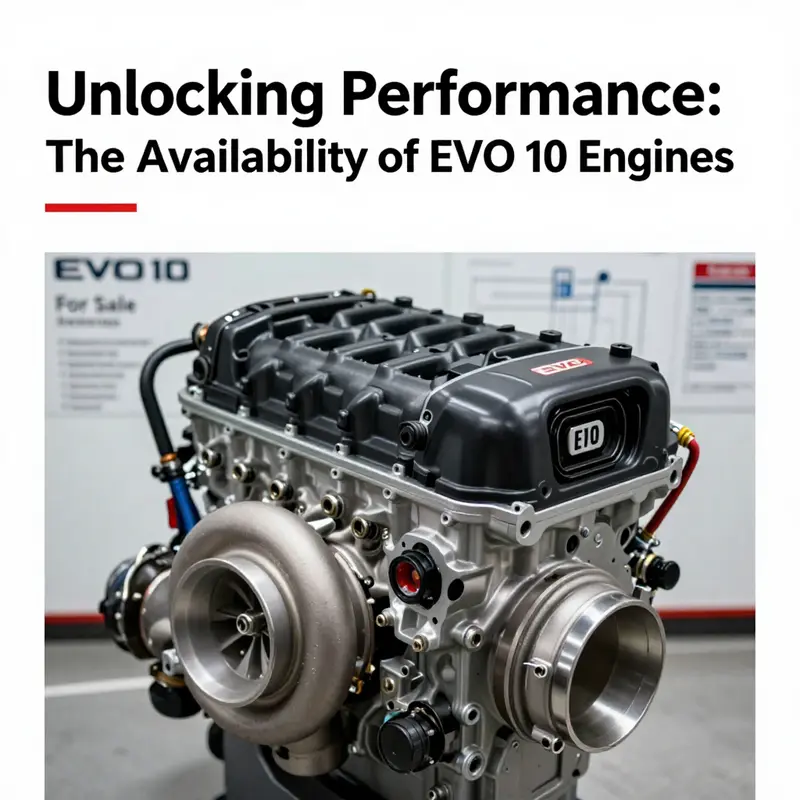
The EVO X engine, often celebrated as the beating heart of Mitsubishi’s Lancer Evolution X, remains a focal point for enthusiasts and builders even after the car itself drifted from new-car showrooms. When a single powertrain outlives a model name, it becomes more than a component; it becomes a ticket to potential. In the current market for used performance hardware, the EVO X’s 4B11T 2.0-liter turbocharged four-workhorse continues to draw attention from track day crews, shop rebuilds, and privateers chasing a blend of reliability and raw capability. The term EVO 10 has become shorthand for the platform as a whole, not a stand-alone engine design. Yet within the market, the 4B11T is the one piece that keeps the legacy alive, offering a relatively compact, highly configurable foundation for both restoration and serious tuning. The reality is simple: if your project calls for a genuine EVO X powerplant, the 4B11T is the engine most in demand, most understood by repair shops, and most likely to be found in a condition suitable for a rebuild or substitution. The conversation about buying one typically begins with a pragmatic breakdown of the factory specs and then moves quickly into the realm of performance potential and practical install considerations. In a word, the engine is a well-balanced combination of advanced engineering and aftermarket promise, a package that has aged with respect and still delivers when pushed beyond the factory envelope.
At the core of this discussion are the precise specifications that defined the EVO X powertrain when it rolled off the line and into performance legend. The engine is a 2.0-liter, inline-four with turbocharging and dual overhead camshafts. The engine code is 4B11T, a designation that fans and engineers alike recognize as the key to a broad aftermarket ecosystem. Displacement sits at 1998 cubic centimeters, a figure that balances compactness with the torque characteristics demanded by a responsive turbocharged four. Factory output sits around 291 horsepower at 6500 rpm, with peak torque of 366 Newton-meters (270 pound-feet) arriving at a sprightly 3500 rpm. Those numbers, on a platform built for all-wheel drive dynamics, translate into a lively, high-revving surge that remains competitive for a modern street or light-track setup when paired with the right supporting components.
The EVO X’s hardware architecture reinforces those numbers with deliberate materials choices. The engine features a full aluminum construction for both the head and the block, a choice that reduces mass and improves heat management—an important factor when a turbocharged four must sustain higher cylinder pressures and temperatures. The valvetrain is managed by Mitsubishi Innovative Valve timing Electronic Control (MIVEC), a system that allows variable valve timing for improved low-end response and top-end flow. Fuel is delivered via a multi-point injection system, a configuration that supports clean air-fuel mixing across a broad RPM band while preserving throttle response. The turbocharger is complemented by an intercooler, a feature that helps keep intake temperatures in check, preserving performance and reliability as boost levels rise. These components, when looked at together, reveal a factory package that was designed not only for peak numbers on a spec sheet but for consistent performance on the street, and later, as a platform for serious modification.
To understand why buyers keep seeking EVO X engines for sale, it helps to translate those specs into real-world potential. The stock 291 hp is a strong baseline for a vehicle of its era, especially when you consider the vehicle’s all-wheel-drive architecture that optimizes traction. With the right upgrades—decent exhaust, intake, and an ECU tune—enthusiasts often realize a meaningful increase in power. A common path is to pursue a higher-flow turbo, a more capable intercooler, and a calibrated ECU map tuned for elevated boost and refined air management. When these pieces come together, the EVO X engine has shown it can reliably surpass the 600 horsepower mark in well-supported builds. The interplay between the turbo sizing, intercooler efficiency, and modern engine management is crucial here; it’s not simply about turning up the boost but about preserving compressive cooling, fuel delivery, and combustion stability so the engine can endure extended, high-boost operation. The result is not just a higher number on a dyno but a more exhilarating, throttle-responsive character that remains faithful to the original engine’s linear power delivery.
This aftermarket potential, however, comes with practical caveats that buyers rightly weigh. The EVO X engine market often presents engines as long blocks or complete crate motors without associated transmission, ECU, or harnesses. Some sellers include ancillary pieces, others sell everything separately. The balancing act for a buyer is clear: you want a crisp, low-mileage core that starts reliably, with intact internal tolerances, good compression, and a clean cylinder head. Yet you also want ready access to supporting components—an ECU compatible with the 4B11T, an harness that matches the car’s wiring layout, and a turbo system and exhaust path that can withstand the upgrade trajectory. The awareness that comes with experience is that a higher horsepower build will demand upgrades to the fuel system, the clutch or torque converter, and in many cases the transmission internals or gear ratios. The winner in this space is often the buyer who plans ahead: what is the target power band, what kind of daily usability is desired, and how much of the build will be professional-tuned versus DIY? This is where the EVO X engine remains particularly compelling. It provides a robust, well-understood base with a robust aftermarket ecosystem and a history of real-world performance stories that can guide planning, not just dream about numbers.
From a market standpoint, the practical reality is that EVO X engines appear intermittently in the used-parts space, driven by owners who either part out damaged cars or swap a higher-output setup into their machines. A representative data point from early 2026 shows a real-world example: a factory-fresh, pre-purchase EVO X engine from the late-2000s to mid-2010s window listed in the United States market for $3,895, with free domestic shipping. The listing reflected the price and availability typical of a used, yet serviceable, 4B11T unit that had been preserved for replacements or rebuilds. For buyers, that price point communicates both accessibility and the potentially high value of a clean core. It is not uncommon for sellers to emphasize the engine’s original Turbocharged 4B11T configuration, its aluminum block and head, and its mechanical reliability when properly serviced. It also highlights the market reality that, although EVO X as an entire model is no longer in production, the most essential component—the powertrain—still has a strong aftermarket footprint and a large community of technicians who understand the tune, the interconnections, and the potential upgrade paths.
What many buyers discover is that the EVO X engine is not a single, static target but a dynamic platform capable of a wide variety of configurations. A stock rebuild is a sensible starting point for many enthusiasts who want to restore factory performance with a fresh seal kit, a clean head, and new gaskets. Others begin with a conservative performance upgrade: higher-flow turbo, upgraded intercooler, and a tuned map designed to preserve engine safety while delivering a notable performance bump. For those with ambitions toward the upper echelons of power, the 4B11T provides a flexible canvas for forged internals and precision-tuned fueling, particularly when matched with a strong clutch and a drivetrain that can handle the increased torque. Importantly, the 4B11T is not a fragile foundation; it was engineered to tolerate performance-oriented upgrades, albeit with careful attention to cooling, lubrication, and reliability under higher boost and sustained loads. This makes the EVO X engine an attractive target for rebuild shops and hobbyists alike, because the path from factory baseline to track-ready power feels viable rather than speculative. The result is a cycle of availability and desire: a core that’s sufficiently common to find, but sufficiently capable to warrant investment when the build begins to scale beyond street driving.
In terms of installation and compatibility, it is wise to treat the EVO X engine as part of a broader system. The engine’s arrangement—inline-four, turbocharged, paired with an all-wheel-drive layout—means the harness, ECU, and turbo plumbing are important pieces of the integration puzzle. Some buyers will source a complete engine minus transmission, ensuring compatibility with their existing transmission choice, whether it’s the original five- or six-speed manual setups or an SST/automatic variant where applicable. For those who seek a straightforward swap, the field tests and shop manuals commonly emphasize verifying engine code matches, ensuring the correct intake manifold geometry, turbo-to-downpipe routing, and the intercooler plumbing align with the chassis’s frame rails and under-hood clearances. The process becomes a careful balancing act: you want to preserve the reliability of a modern engine management system, maintain proper fuel delivery, and ensure that the engine’s electrical interface remains compatible with the vehicle’s engine control unit, sensors, and anti-knock features. The long view here is useful: a well-chosen EVO X engine for sale, installed with appropriate verification and testing, can deliver years of dependable service and the platform’s revered driving experience. Buyers who plan ahead, secure a solid core, and partner with reputable rebuilders or tuners tend to extract the best returns on investment when they turn the key on a rebuilt or upgraded setup.
The narrative around such an engine is not simply a catalog of numbers. It is, instead, a story about how to translate factory capability into a flexible, track-ready reality. The EVO X’s 4B11T is the kind of engine that invites a measured, informed approach: determine your power target, map your cooling and fuel strategies, verify drive-train compatibility, and then chart a path that aligns with both your budget and your risk tolerance. It is this blend of precise engineering and practical modification that keeps the EVO X engine for sale relevant. It remains a platform that invites ownership transfer, rebuild, and inventive tuning—a rare combination of accessibility and ambition that is not always present in the broader spectrum of used performance engines. For anyone who wants to build with a known quantity rather than guess at what a modern turbo-four might offer, the EVO X engine represents a disciplined, repeatable route to meaningful performance gains without abandoning the fundamentals that long ago earned the name Evolution.
External resource for further context on performance enhancements and components designed for the 4B11T family can be found here: https://mitsubishiautopartsshop.com/4b11t-billet-block/.
Power, Provenance, and Purchase: A Practical Look at the EVO X Engine

The EVO X engine sits at the crossroads of history and opportunity. In the aftermarket, the 2.0-liter turbocharged four that powered the final EVO generation remains a highly sought after powerplant for builds, restorations, and track ready projects. This chapter maps what the engine is, how it performs in real world driving, and what signals to read when evaluating a unit for installation into another car or a dedicated project.
Core specs and performance: a modern aluminum 2.0-liter turbo four with strong mid range torque and a responsive throttle. In many configurations it delivers roughly the mid two hundreds horsepower with torque that comes on strongly in the mid range. Aluminum construction helps reduce rotating mass and contributes to chassis balance and heat management. When you encounter an EVO X engine for sale you are reading a record of engineering decisions that still matter for builders today.
Market listings usually emphasize not just horsepower but the broader package. Expect notes on engine family, displacement, induction method, included components such as manifolds, turbo, ECU, and harness. Practical selling points include the quality of the core and the availability of parts for a swap or rebuild. A typical listing may mention compatibility with certain transmissions and drive train interfaces, and whether the ECU comes with the unit.
Value and risk: used engines are often priced in the mid thousands, with price reflecting provenance, condition, and the seller warranty. Shipping, import duties, and the cost of any required reprogramming or turbo service add to the total landed cost. A well documented service history, consistent compression readings, and clear pictures are strong indicators of reliability.
Getting it right: inspect, verify history, and plan for integration with your chassis. Decide whether you need a full engine, a long block, or a half cut based on your project. Plan for engine management, intercooling, intake paths, and exhaust routing to preserve driveability and performance. The investment in due diligence pays off in a more predictable build and a better long term driving experience.
External resource: https://www.motorsport.com/technical-guide/evo-x-ignition-coil/
Reading the Market Pulse: The EVO X Engine for Sale and Its Economic Footprint
Discussing the EVO X engine for sale invites both market psychology and technical scrutiny. The EVO X engine most buyers pursue is the 4B11T, a turbocharged four that powered the Lancer Evolution X from 2008 to 2015. Beyond the mechanical core, buyers rate value by condition, mileage, documentation, and the completeness of the package. A well-preserved 4B11T with all ancillaries tends to command a premium, while a bare core or missing components pushes the price toward the lower end. The market rewards complete bundles with timing gear, water pump, oil pump, sensors, and provenance. These elements can tip negotiations as much as any performance statistic.
Usability matters as much as raw power. Buyers look at compression or leak-down results to gauge wear, since uniform mid- to high-teens readings across cylinders reassure buyers that the engine has lived in a capable setup. Uneven compression or signs of internal wear prompt considerations of rebuild costs and total ownership. Documentation such as service history and donor lineage often adds value, while gaps can depress it. The bought engine is typically priced considering not just the core, but the accessibility of installation, required modifications, and potential downtime.
Pricing also depends on how sellers reach buyers. Online marketplaces, salvage yards, and specialty shops each bring different cost structures. Geographic factors, shipping costs, and the convenience of pickup influence final price. A quick turnaround buyer may pay more to avoid delays or transit risk, while a patient buyer may negotiate lower by waiting for better timing or accepting partial trades. The broader automotive economy, including shifts toward electrification, adds choppiness to pricing. Yet enthusiasts remain drawn to the allure of power, tuning potential, and the story a 4B11T carries from a world of rally-inspired performance.
From due diligence to practical expectations, buyers typically assess compression, leak-down, cam timing, and the integrity of turbo and intercooler systems. They consider whether the engine will slot into an existing build or serve as a starting point for substantial fabrication. A well-documented unit often yields the best long-term outcomes, reliability, and build consistency.
For a practical sense of market dynamics, prospective buyers appreciate transparent dialogue about origin, mileage, and any known service history. The EVO X engine represents more than a component; it is a gateway to a broader project, and patience combined with technical scrutiny often leads to favorable outcomes for a well-presented package. The future value of the EVO X engine will hinge on supply constraints, rebuild costs, and evolving preferences of the community. A complete, well-documented package with clear provenance remains a robust choice for builders and enthusiasts alike.
Under the Hood: Navigating the EVO X Powerplant Marketplace for a Used Engine
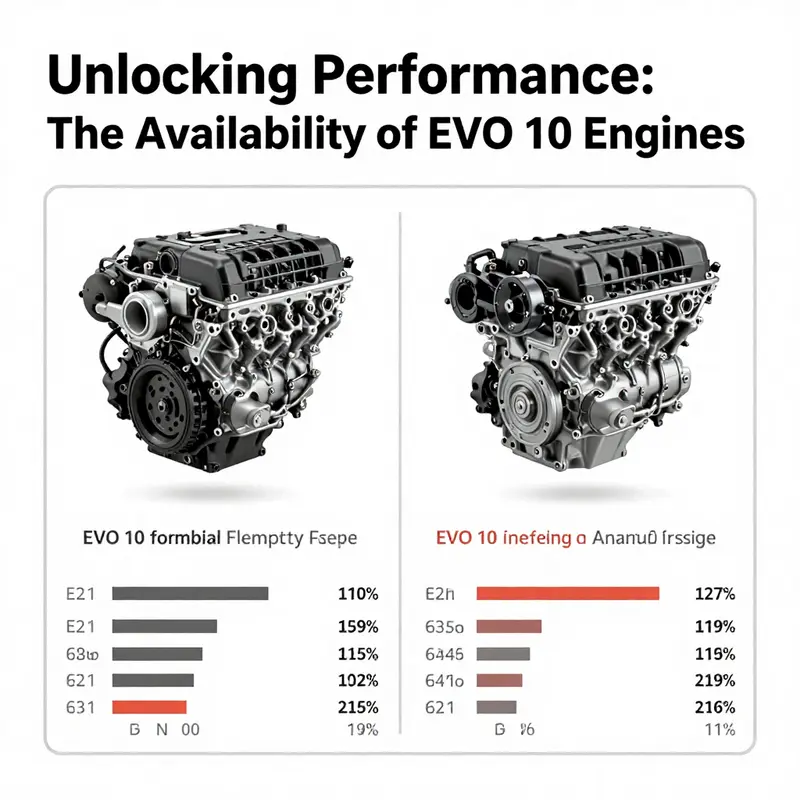
The EVO X powerplant has earned a quiet, enduring reputation among enthusiasts who chase stopwatch-worthy performance and the satisfaction of a faithful restoration. It is not simply a raw component; it is the beating heart of a lineage that combined a 2.0-liter turbocharged inline-four with intelligent all-wheel-drive dynamics. Because this engine is no longer in production, the market for a used unit has matured into a delicate balance of scarcity, value, and careful sourcing. Buyers enter a landscape where a handful of trusted listings, a network of aftermarket suppliers, and a spectrum of condition reports shape every decision. The core realization at the outset is straightforward: the engine remains in circulation primarily as a secondhand piece, and its price and availability hinge on how complete the package is, what state the internals are in, and how well a seller can demonstrate reliability and provenance. In a marketplace that rewards performance heritage, a well-documented 4B11T 2.0L turbo engine—often described in listings by its displacement, turbocharged architecture, and model years 2009 to 2015—continues to draw interest from builders, restorers, and performance shops alike. The conversation around such an engine is not merely about whether a buyer can obtain it; it is also about what comes with it, what state the engine is in, and how it will integrate with a project that may stretch across time and budget.
Market observations point to a few deterministic realities. Availability is sporadic rather than steady, and the most active trade happens through well-known marketplaces that handle automotive parts, with listings that note whether the engine is a pull from a donor car, a rebuilt unit, or a crate engine awaiting installation. The price signal in this space is influenced by a cluster of factors. A listing showing a pre-owned engine from a 2009–2015 EVO X with the turbocharger attached tends to command a higher price than a bare long block, because it reduces downtime and integration risk for a buyer who wants the powertrain to drop into an existing vehicle with minimal adaptation. A representative case in recent market chatter showed a Buy It Now price around $3,895, with the note that shipping within the United States is free. That price reflects not only the engine itself but also the value attributed to its status as an original, compatible core for a platform that remains highly capable when properly tuned and maintained. As with any performance unit, the price is a function of several levers: condition, mileage, maintenance history, and the degree to which ancillary components are included.
Conditional nuances matter as much as raw numbers. A lower-mileage engine will typically command a premium, while a higher-mileage unit might be priced more aggressively if it has a documented compression test, fresh seals, or signs of recent refurbishment. Completeness often tilts the scale toward the higher end of the spectrum. If a listing includes the turbocharger, intake, manifold, purge of the exhaust side, and possibly even the transmission or engine control hardware, the buyer perceives less logistical risk. Conversely, a bare engine without accessory items introduces a more complex risk profile: the buyer must source compatible components, verify compatibility with the vehicle’s ECU and harness, and account for potential ancillary upgrades to meet performance targets. In practice, a buyer who treats the engine as a performance core may deliberately seek a balance—an engine that is clean inside, with reasonable compression, and a documented service history, paired with a sourcing plan that will reduce downtime and ensure reliable startup.
Beyond the marketplace’s front door, the sourcing strategy becomes a coordinated effort, especially for B2B buyers or repair shops handling multiple projects. The literature on global supply dynamics points to an established pathway where China-based manufacturing ecosystems—particularly hubs in Guangdong, Chongqing, and Shandong—offer robust CNC capabilities, supply chain resilience, and cost-efficient logistics. A seasoned buyer evaluates suppliers not only on unit price but also on technical capacity, component traceability, quality assurance protocols, and post-sale support. The move toward a structured supplier evaluation process helps international buyers mitigate risk when procuring high-performance engine components that demand precise tolerances and reliable performance. As with any high-stakes component, the decision to work with a specific supplier rests on an aggregation of data points: past performance, capacity to meet demand, real-world lead times, and verifiable quality-control metrics.
For a buyer aiming to optimize value, the sourcing plan should articulate a clear sequence of checks. First, verify the engine’s identity and history: the exact engine code, production window, and any known issues or rebuild history. Second, perform due diligence on compression and inspection results, or secure a written assurance from the seller regarding the engine’s mechanical state. Third, confirm whether the listing includes the turbocharger, intake manifold, exhaust components, ECU, and wiring harness, and evaluate how those pieces align with the donor vehicle’s specifications. The more complete the package, the more seamless the transition from purchase to installation. In many cases, the absence of a turbocharger or ECU means additional procurement steps and potentially higher total costs, especially if a buyer seeks a plug-and-play installation experience. These practical realities underscore why a reliable supplier, even if slightly more expensive, can deliver long-term savings by reducing the risk of hidden issues that surface after installation.
Another dimension of the market concerns the practical logistics of bringing a used engine across borders or delivering it to a restoration shop. Shipping a powerplant involves careful packaging, adherence to hazardous-material rules for certain fluids, and a logistics partner capable of handling heavy, sensitive equipment. Import duties and compliance with local emission or safety standards can also influence total landed cost and the feasibility of a project in a new region. Think of the engine not as a single component but as a module that will interact with a cascade of subsystems: the transmission, driveshafts, differential gearing, cooling loops, and control electronics. Buyers who approach the process with a comprehensive plan—one that addresses the installation, tuning, and break-in procedures—tend to keep projects on track and avoid costly delays.
Within this ecosystem, a practical way to think about upgrades is to view the engine block, among other components, as a platform that can be fortified for reliability and longevity. For builders who want to maximize durability and limit the risk of heat-induced wear, a billet block upgrade can be an appealing option. A widely circulated resource on the subject discusses how such blocks can contribute to improved strength and tolerance stability under high-boost conditions. For readers who want to explore this path, a focused reference point is available at the technical hub that documents the billet-block variant. See the dedicated entry for further specification and context: 4b11t-billet-block. This link serves as a practical touchstone for those weighing core reliability against project scope and budget, illustrating how the market provides not only the base engine but also a spectrum of engineered upgrades that can help a project withstand the demands of high-performance use.
The narrative of price, availability, and sourcing is inseparable from the risks that accompany any used or rebuilt powerplant. Enthusiasts must remain vigilant for listings that might misrepresent mileage, condition, or included components. Red flags include vague history, missing service records, inconsistent serial numbers, or signals of unverified rebuilds. The most responsible buyers insist on independent verification: a compression test, a leak-down test, or even a pre-purchase inspection by a qualified technician who specializes in turbocharged four-cylinder engines. In a market where the same model line can appear in multiple configurations, a thorough validation process reduces the probability of post-purchase disappointment and aligns the project’s objectives with a realistic budget and timeline. The broader environment—an aftermarket ecosystem that has learned to balance rarity with value—rewards buyers who approach the purchase with clear criteria, robust documentation, and a strategic plan for integration and use.
As a closing note, the engine’s market reality is not merely about one listing or one price point. It is about a community of builders and restorers who share performance ambitions, a readiness to invest in quality, and a pragmatic approach to sourcing that blends catalogued parts with informed vendor relationships. The EVO X powertrain remains a compelling choice for those who want a legacy platform capable of delivering strong acceleration, responsive handling, and the satisfaction of working with a piece of automotive history. The journey from listing to installation can be short for a well-prepared buyer and longer for someone who treats engine procurement as a series of one-off transactions. In either case, the engine stands as a durable core for projects that aim to celebrate performance while navigating the realities of a post-production market. For readers who want to continue exploring the practical logistics of sourcing and the broader market dynamics, a broader industry resource offers a thoughtful perspective on risk management and procurement strategies in automotive parts markets: https://www.autonews.com.
Final thoughts
The market for the EVO 10 engine remains vibrant and competitive, driven by its performance pedigree and tuning potential. Business owners looking to capitalize on this market should understand the value of sourcing reliable components and the nuances that come with the EVO X’s aftermarket appeal. By leveraging insights from market trends, technical specifications, and performance data, you can make informed purchasing decisions that align with customer expectations for quality and performance. The EVO 10 engine not only represents a specific model in history but stands as a benchmark in the performance automotive space that continues to influence the industry.