

The front bumper is a crucial component of the Mitsubishi Outlander, not only offering protection but also enhancing its aesthetic appeal. For business owners involved in automotive parts or services, understanding the various aspects of Outlander front bumpers can significantly influence purchasing decisions and customer satisfaction. This guide explores the compatibility and design features of different models, examines the materials and their impact on performance, analyzes the essential functionalities and safety considerations, breaks down market pricing and purchasing avenues, and illustrates how improved designs can enhance both aesthetics and aerodynamics. Together, these insights will empower you with the knowledge needed to make informed decisions for your business’s needs.
前脸结构与适配秘诀:解析三菱欧蓝德前保险杠的设计演进与年款兼容性

前脸结构与适配秘诀:解析三菱欧蓝德前保险杠的设计演进与年款兼容性
三菱欧蓝德的前保险杠既是外观的视觉中心,也是吸能保护的第一道防线。随着车型在不同年款的迭代,前保险杠在造型、材质与安装接口上进行了细致调整,但整体设计逻辑保持连贯。这一章将以整体叙述的方式,讲清为什么某些年款之间能够互换前保险杠,而有些则需要定制或更换配件。
从设计层面看,近年欧蓝德的前脸呈现出更硬朗的几何语言。上格栅常采用倒梯形造型,与两侧分体灯组形成视觉联动。灯组的设计影响保险杠开孔、雾灯位和日间行车灯的布置,因此同一代车型的保险杠通常能直接互换,但跨代更换时需核对灯组与感应孔位。结构上,制造商通常将前保险杠分为外板、缓冲材料和横梁三部分。外板以耐冲击工程塑料为主,表面处理可实现磨砂、亮光或喷漆效果。缓冲层位于外板之后,起到二次吸能作用。横梁则是刚性元件,多为冲压钢或高强度合金,负责将冲击在车身间分散。了解这三部分的功能,有助于判断替换件的实用性。
材料选择直接决定耐用性与修复成本。原厂设计偏向韧性较好的工程塑料,以在轻微碰撞中优先发生可替换的外板损坏,保护更昂贵的车体结构。改装或高端替换件有时采用金属或实心格栅元素,以追求更精致的外观和耐久度,但金属件在碰撞中可能传递更多冲击能量,影响整车安全表现。因此在选购替换件时,既要考虑外观与耐用性,也要评估碰撞时的能量管理。
兼容性检验主要围绕安装点、传感器位、灯位和横梁接口四项要素。首先确认保险杠与车身的固定耳位是否一致,固定牙位和螺栓尺寸差异会导致装配困难。其次,现代车辆大量配备前置雷达、泊车传感器和摄像头。替换件若缺少相应预留孔位或传感器支架,需额外开孔或购买传感器支架配件,这会增加安装复杂度并可能影响传感器性能。第三,雾灯或进气格栅样式差异会影响散热与制动冷却效率。某些运动化款式的进气口更大,能改善高速热管理;而仿赛车款的密闭面板则可能提高前脸刚度,但降低散热效率。最后,横梁与车体连接方式在平台共享车型中往往高度一致。欧蓝德与其他同平台车型在横梁接口上存在共通性,这为跨车型适配提供了可能性,但仍需逐一核对尺寸与角度。
对于客户而言,年款兼容性分为三类:直接互换、需小幅改动、需定制适配。直接互换适用于同一代车型内的年款,尤其是中期改款前后未改变主要前脸结构时。需小幅改动的情形包括更换不同样式的外板或格栅,但保留原始横梁与传感器支架,这类操作通常仅需对卡扣或导流板进行调整。需定制适配则多见于跨代或跨平台更换,需改变横梁接口、重新定位传感器或更换支架。
安装与修复注意事项不可忽视。首先,建议在检测确保固定孔位对齐后再进行固定,避免在压力不均的情况下拧紧螺栓。第二,若替换件表面未喷涂或颜色偏差较大,请在装配前完成喷漆,以避免后续拆装造成的二次损伤。第三,若保险杠上需安装感应器或摄像头,务必校准这些设备以保证功能正常。校准工作通常需要专业设备或在专修店进行。第四,若横梁或缓冲材料出现变形,应优先更换这些结构件,而非仅更换外板。外板替换可以修复美观,但不会恢复横梁的原始吸能特性。
在考虑改装时,车主常关注空气动力学与视觉效果的平衡。带有侧裙或导流槽的套件能在高速时导流,降低升力,提升车速稳定性。但这类套件对散热口设计也提出要求,过度封闭可能导致冷却不足。运动化装饰应与制动及散热系统整体匹配,确保性能不被牺牲。对于城市日常驾驶者,更注重外观与轻度防护;而对频繁高速或载重的使用场景,应优先考虑通风良好、吸能设计完备的版本。
采购渠道与备件策略影响维修速度和成本。市场上既有原厂标准件,也有经过优化的替换件。选择时应优先确认件的牌号或编号是否与车型匹配。部分替换件标注覆盖多个年款,这通常意味着制造商做了通用化设计,包含多个预留孔位或可调支架。通用设计提高了灵活性,但安装时需认真核对每一接口。购买二手拆车件能节省成本,但需严格检验横梁是否有隐性损伤。使用翻新的外板要确保材料完整无裂纹,以免在下一次轻微碰撞时出现断裂。
最后,维护与长期保养同样重要。前保险杠长期暴露在路面碎石、盐分及飞溅物中,表面涂层会逐渐磨损。定期检查卡扣、螺丝和感应器的固定状态,能提前发现松动或疲劳。出现表面刮花时,及时做局部修补可以防止更大范围剥落。若发生碰撞并需要更换,请优先评估横梁和吸能部件的状态,确定是否需要同步更换。只有这样,才能还原车辆在碰撞中的保护能力。
在适配决策上,理解设计与结构是关键。评估年款之间的兼容性不应只看外形,而要结合固定点、传感器位和横梁连接方式来判断。正确的配件选择和专业安装可以同时恢复外观与安全功能。若需要参考具体适配案例,可查看此处的前保险杠配件说明,了解常见年款的适配细节:front-bumper-mitsubishi-outlander-19。
更多关于平台共享与结构设计的权威参考,可参阅官方技术文档,进一步理解车辆在工程层面的共性与差异。http://mitsubishi-motors.com/vehicles/evolution/eclipse-cross
内金外塑的平衡:三菱欧蓝德前保险杠的材质与性能解析

内金外塑的设计哲学
三菱欧蓝德前保险杠采用了明显的“内金外塑”设计思路。内部防撞结构以金属为主,外层蒙皮则以工程塑料为核心。这样的组合并非偶然,而是出于对安全、耐久和轻量化的综合权衡。金属防撞梁承担碰撞能量吸收与载荷分散。外层塑料件负责日常抗冲击、外观表现以及与空气动力学套件的兼容性。
权威碰撞数据与工程资料显示,欧蓝德的前防撞梁通常采用双层辊压钢板,厚度约为1.73毫米。这种结构覆盖了车头约70%的区域,能在低速和中速碰撞中有效分散冲击力,降低对发动机、冷却系统和转向组件的损伤风险。与此同时,车身框架采用公司自有的高刚性车身结构,关键位置使用高达980兆帕的高强度钢,侧围甚至达到1500兆帕的超高强度钢。这些金属部件形成了前端的“安全骨架”,它们决定了碰撞时车身变形路径和乘员保护的基本性能。
与坚固的内核形成对比的是外部蒙皮的材质选择。欧蓝德前保险杠的外饰件多采用聚丙烯(PP)或类似的高性能工程塑料。PP材料的吸水率低,耐油、耐低温、抗化学腐蚀,并具备很好的抗冲击性。这意味着在日常行驶中遭遇的轻微碰擦,塑料蒙皮可以先行吸收并局部变形,从而保护内部金属结构免受更重创。塑料蒙皮同时有利于整车减重,降低油耗并改善操控性,这是现代整车工程常用的策略。
外观装饰件与工艺处理也影响整体性能。镀铬饰条、雾灯盖等细节通常由ABS塑料注塑后电镀处理,既提升视觉质感,又保留一定的抗冲击能力。高端改装件或装饰面板在工艺上甚至采用金属化处理或小面积金属结构件,以兼顾装饰效果与耐用性。
材质之间的功能分工与工程取舍
从工程角度看,前保险杠是一个多功能系统。内层金属负责强制能量管理。它的厚度、材料属性和连接方式直接影响碰撞载荷向整车分布的路径。双层辊压钢板通过层间结构和折弯形式提升能量吸收效率,并能在碰撞中产生可控的屈服与折断区域,从而保护乘员舱不被过度压缩。
外层塑料负责美观和日常耐用性。PP的可塑性使设计师可以创造复杂曲面并集成空气导流通道或传感器位点。这些塑料件可以在注塑过程中直接形成卡扣或定位点,简化装配工序,降低制造成本。另一方面,塑料的抗老化性能决定了外观长期维持的能力,因此抗紫外线添加剂、耐候改性以及表面涂层的选择,也成为耐久性考量的重要一环。
两者结合时要权衡维修成本与替换复杂度。金属内梁通常能在小范围碰撞后继续承担一定功能,但若发生塑性变形,则需要专业校正或更换。塑料蒙皮在轻微撞击中容易产生划痕或裂纹,但更换成本低,加工与喷涂工艺成熟,常被选作为标准维修件。
轻量化与空气动力学的协同效应
材料选择不仅影响安全与耐久,也直接关系到车辆的重心与操控性。使用聚丙烯等轻质材料替代整块金属外壳,可在不牺牲碰撞保护的前提下减轻前端质量。质量降低有助于前轴负载控制,改善转向响应与燃油经济性。与此同时,保险杠外形设计与内部支撑结构必须配合空气动力学需求。集成的下扰流板或侧裙能平滑气流,减少驻流区,从而降低阻力系数并提升高速稳定性。
这些空气动力学特性往往通过塑料件的细微造型实现,塑料允许更精细的几何控制,且便于与车身其它部位无缝对接。对于需要更激进外观或性能优化的车主,市场上也有多种兼容型改装件,能在保持原有安全结构的前提下,改善空气管理或提供更具攻击性的视觉效果。欲查看针对特定年款的替换件和款式,可以参考相关配件页面,例如这款前保险杠资源。
制造工艺、检测与耐久性考量
生产过程中,金属防撞梁通常通过辊压成形和激光焊接工艺制造,以确保尺寸精度和材料连续性。焊接点、粘接带和螺栓连接部位的设计,影响着能量传递和耐久性。塑料蒙皮则通过注塑成型完成,随后进行表面涂装或电镀处理。高质量供应商会在出厂前对塑料件进行冲击测试、热循环试验和紫外老化测试,以检测长期耐候性与色差稳定性。
在选购或维修时,关注几个质量指标尤为重要:材料说明书(如PP、ABS标识)、表面涂层的耐候测试报告、装配定位基准与孔位精度,以及与原车碰撞吸能体系的兼容声明。高质量替换件通常会标明是否达到OEM标准,或者提供等效的碰撞性能测试数据。
适配性、传感器与现代化需求
随着车辆电子化程度提升,前保险杠的功能也在扩展。前置雷达位、停车辅助传感器位和摄像头安置点,要求外层塑料在结构上预留专门安装位,并保证在碰撞或日晒环境下仍能维持精确位置。材料的尺寸稳定性在这里显得关键,尤其是在极端温度下,塑料的热膨胀系数会影响传感器的标定精度。因此,厂商通常采用改性PP或通过加筋设计来控制热变形。
此外,雾灯或LED灯组的集成要求塑料件具备良好的固定性和耐热性。ABS与PC混合材料常用于这些细节部件,以兼顾外观电镀效果与耐高温性能。
给车主与维修方的实用建议
在选择前保险杠或其部件时,优先考虑是否保留原有的内金结构。若只更换外壳,确认其与防撞梁的卡扣和定位吻合,避免产生缝隙或应力集中。检查塑料件表面处理是否均匀,颜色是否与车身配套。若车辆装备有前置传感器,请确保替换件预留或标注传感器位,并留意保修政策对传感器功能的影响。
对于希望提升外观或空气动力学表现的车主,选择那些明确支持原车防撞体系的改装件更为稳妥。有时候,外观改装会改变气流路径,进而影响发动机散热或前桥冷却,需要综合评估。
结合工程数据、材料性能与日常使用需求,三菱欧蓝德前保险杠的“内金外塑”布局在安全性与经济性之间达成了平衡。理解这种材料间的分工与相互制约,能帮助车主与维修技师做出更稳健的选择。
外部资料:更多关于该车身高刚性结构的技术解读见三菱官方关于RISE车身结构的说明:https://www.mitsubishi-motors.com/en/innovation/rd/feature/rise/
内部参考链接:如需查看特定年款前保险杠替换件,请参阅相关配件信息:Front bumper Mitsubishi Outlander (2019)
The Frontline Shield: Function, Safety, and Steady Evolution of the Mitsubishi Outlander Front Bumper

The front bumper of the Mitsubishi Outlander is more than a cosmetic garnish or a single replacement part. It is the vehicle’s first line of defense, a complex, multi-material system designed to protect the engine bay, support occupant safety, and optimize the car’s overall performance in real-world driving. When we consider the Outlander models spanning 2015 through 2023, along with compatibility notes for slightly older ranges, the bumper emerges as a carefully engineered interface between the harsh environment of the road and the more delicate components behind it. Its design, while often understated on the showroom floor, reflects a balance of crash energy management, aerodynamic efficiency, and practical usefulness. Optional configurations—such as a full bumper assembly tailored to specific model years, or modular additions like the front upper grille, chrome molding, and integrated lighting kits—extend its function beyond simple protection. In this sense, the bumper becomes a microcosm of automotive safety engineering: a blend of materials science, structural geometry, and an eye toward both everyday utility and long-term durability.
From a safety perspective, the Outlander’s front bumper represents a pivotal element of the vehicle’s passive safety system. In the event of a collision, its role is to absorb and dissipate energy before that energy can reach more critical components of the front end, including the radiator, headlights, and, most importantly, the passenger compartment. The assembly typically comprises several linked layers that work in concert. The outer panel forms the visible silhouette and provides initial resistance to deformation. Behind it sits a carefully chosen energy-absorbing material—often a high-toughness engineering plastic such as a polypropylene blend with compatible elastomeric compounds—that cushions the impact. This layer is designed to deform in controlled ways, converting kinetic energy into plastic strain energy rather than shock, so that during a low-speed impact (for example, around 15 km/h or less) the bumper can absorb a significant portion of the energy. In quantified terms, such materials and configurations can absorb roughly sixty to eighty percent of the energy in mild crashes, a remarkable safeguard that translates into reduced damage to critical components like the engine cover, condenser, and radiator. The deepest energy-absorption work, however, happens through the bumper beam—the structural element at the core of the system.
The bumper beam, or front crash beam, connects to the vehicle’s chassis with a robust, often high-strength steel member that acts as a conduit for impact forces. Rather than merely hanging off the face of the car, the beam is integrated into the vehicle’s load path. This integration ensures that when a minor collision occurs, the energy is transmitted and distributed across the frame to minimize intrusion into the passenger cabin. The result is not only better protection but also a greater likelihood that crucial safety systems, such as airbags and pretensioners, can perform as designed. The choice of materials—high-strength steel in the crash-beam region—is essential here. The body-in-white structure gains a bit more rigidity without sacrificing the bumper’s capacity to deform in a predictable manner under crash conditions. In practical terms, this means the Outlander’s bumper system helps reduce the likelihood of severe front-end damage, keeping both the vehicle’s core geometry intact and the occupants safer.
Beyond the crash physics, the bumper’s design serves functional and aesthetic purposes that affect everyday driving and long-term ownership. Aerodynamics matters, even at the speeds most drivers routinely encounter. A well-drafted bumper lip, airflow channels, and strategic air dams can subtly shape the vehicle’s drag coefficient. In some configurations, engineers incorporate side ducts and lower valances that guide air smoothly past the front tires and underbody surfaces. The resulting reductions in drag do not just serve efficiency in theory; they can translate into measurable improvements in fuel economy or electric range for hybrid and plug-in variants. When paired with sensor technology—radar units, cameras, and mounting points for forward-looking safety and driver-assistance systems—the bumper becomes a practical platform for advanced features. The cutouts and mounts that allow sensors to operate unobstructed are as important as the bumper’s ability to withstand a stray shopping cart or a light impact in a crowded parking lot.
Material selection in the Outlander’s bumper system reflects a calculated compromise between stiffness, weight, durability, and cost. The outer layers are typically engineered plastics chosen for their toughness, UV resistance, and long-term dimensional stability. The bumper’s inner support structure may employ reinforced plastics and, in some variants, metal reinforcements to improve rigidity without adding unnecessary weight. The plastic components are designed to resist weathering and impact fatigue, crucial considerations for a vehicle that is likely to spend many years outdoors in varied climates. In higher-end or sport-oriented trim lines, the bumper may incorporate more refined details—such as billet-style grilles or accent trims—that enhance the vehicle’s visual appeal while preserving the bumper’s protective function. These design touches are not mere cosmetics; they reflect a broader philosophy that safety and style can coexist, and that the bumper can be a platform for personal expression without compromising structural integrity.
The functional versatility of the Outlander bumper extends into practical assembly and maintenance considerations. Replacement parts exist in tiers—from full front bumper assemblies to targeted components like the front upper grille or chrome molding pieces—so owners can tailor their setups to fit the car’s styling preferences and budget. For those who pursue a more aggressive or refined look, aftermarket or OEM-style options provide models with different surface finishes and integrated elements, such as fog-light housings or air-intake grilles, which must remain compatible with the vehicle’s mounting geometry and sensor arrays. The compatibility span across model years—2015 to 2023, with some components compatible with earlier ranges from 2010 to 2018—serves as a reminder that the bumper is not a single, static piece but a modular system that has evolved with the Outlander’s broader design language. In practice, installers and owners must verify fitment carefully, especially when mixing trim levels or adopting non-OEM components that claim universal compatibility. The bumper’s connection points to the vehicle chassis, the alignment of the fog-light openings, and the placement of sensor housings all demand precise measurement and sometimes recalibration of safety systems after replacement.
For readers considering a direct path to replacement or an upgrade, a straightforward option exists in the dedicated Outlander front bumper page, which houses assemblies designed to fit the specific year and trim. This page is a practical resource for ensuring alignment with the car’s frontal geometry, mounting points, and electrical connections. It is also a useful starting point for evaluating the balance between factory specifications and aftermarket customization—an assessment that weighs fitment accuracy, finish quality, and warranty considerations. See the dedicated Outlander front bumper page for a direct look at the available options: Outlander front bumper page. This kind of targeted resource helps clarify whether a given bumper aligns with one’s ownership year, trim, and any ASC (Advanced Safety) packages that may require sensor calibration after installation.
In the broader context of vehicle safety and maintenance, the front bumper’s function remains deeply tied to ongoing research and evolving standards. Real-world data and recall information continue to shape how manufacturers approach bumper design, energy absorption profiles, and the integration of sensor technologies. The emphasis on crash energy management translates into safer urban environments and improved outcomes for drivers and pedestrians alike. For readers who want a broader safety frame beyond the bumper itself, authoritative coverage on recalls and system-level safety assessments provides valuable context about how front-end components interact with the vehicle’s overall safety architecture. External reference material presents a more comprehensive view of how front-end safety systems are tested, refined, and sometimes updated in response to new findings and regulatory requirements. External resource: https://www.caranddriver.com/mitsubishi/eclipse-cross/recalls
Assessing Cost and Channels: Real-World Value of a Mitsubishi Outlander Front Bumper
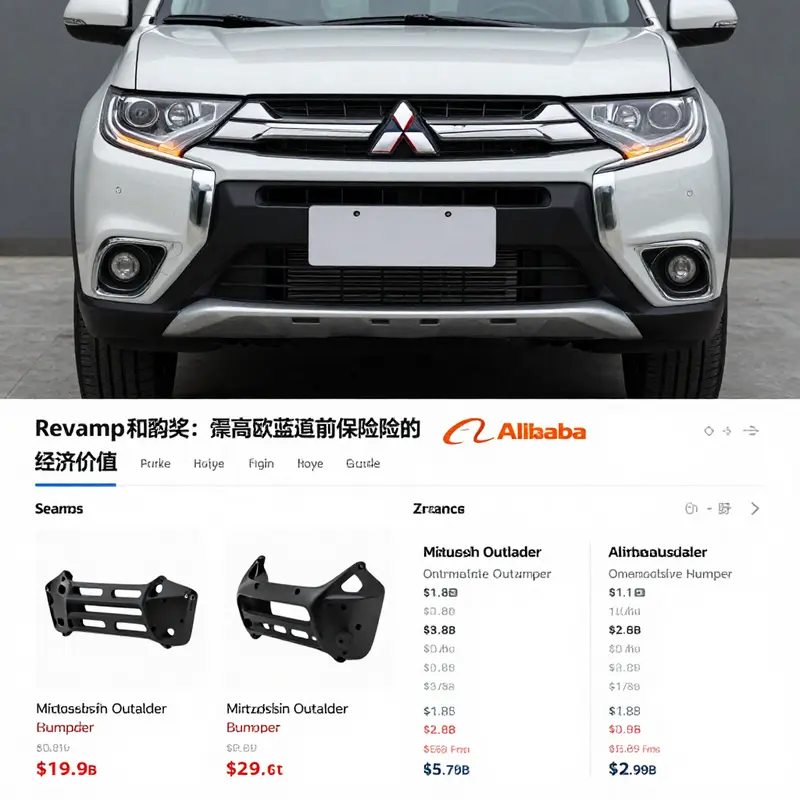
Understanding the real cost and value of a front bumper for a Mitsubishi Outlander requires more than a price check. The decision combines compatibility, materials, installation needs, warranty, and long-term durability. It also depends on where you buy. A clear view of market ranges, cost composition, and buying channels helps owners choose the best balance of price and performance.
Across recent model years, compatible front bumpers cover a broad span. Many aftermarket items list fitment for 2013–2023 models, with assemblies specially tailored for specific year ranges. That means price comparisons must start with exact fitment. A bumper intended for a 2016–2018 trim can look identical to other years, yet small differences in sensor mounts or grille inserts change compatibility and value.
Price bands fall into three practical tiers. First, budget aftermarket pieces that prioritize affordability. These items are typically injection-molded engineering plastics. They offer adequate impact resistance and weather tolerance. Their retail prices are low. Examples in the budget tier can fall into the lower hundreds when converted to common currencies. Wholesale volumes reduce per-unit costs further. For owners focused on quick repairs or low-cost replacement, this tier provides the best immediate value.
Second, mid-range replacement parts aim to match original fit and finish more closely. These may include better-quality polymers, integrated mounting brackets, and optional pre-cut holes for fog lamps or sensors. Prices here rise with additional features like grille inserts, fog lamp bezels, or reinforced mounting areas. Painting and color-matching add to the final cost, because a bare bumper needs prep, primer, and paint to match the vehicle’s existing finish.
Third, original equipment manufacturer assemblies and premium aftermarket units represent the top tier. OEM pieces deliver exact fit, original mounting points, and pre-installed features. They cost substantially more, but they reduce rework and alignment time during installation. Premium aftermarket parts can offer improved materials — for example, thicker plastics or metal accents — and refined aesthetics. For owners prioritizing long-term reliability and factory appearance, this tier often provides good value despite higher upfront cost.
Installation is a major part of the overall expense and value equation. Labor, paint, and associated parts compound the base price of the bumper. Replacing a simple bumper cover might be straightforward. But when the assembly includes integrated grilles, fog lamps, parking sensors, or headlight washer nozzles, installation time grows. Labor at a dealer or authorized service center includes fitment checks, sensor calibration, and quality control. Those services increase the total bill, but they also reduce the risk of misalignment and functional issues.
Insurance claims change the calculus as well. When repairs are handled through insurance, many owners prefer OEM parts and certified shops. That preference stems from guaranteed fit and regulatory compliance. However, insurance policies and deductibles influence whether an owner chooses OEM or aftermarket parts. If paying out of pocket, many choose the more economical aftermarket route and save the difference in cash.
Where you buy directly affects price, lead time, and buyer protections. Local salvage yards and used parts outlets sometimes carry gently used OEM bumpers. These can be excellent bargains for older vehicles. Online general marketplaces offer many options, but quality varies. Wholesale B2B platforms list large-volume suppliers and sometimes show factory-level pricing. Authorized dealers provide OEM parts and warranty coverage, but at a premium. Independent parts shops often balance price and service, offering both aftermarket and OEM options. Each channel has trade-offs between price, reliability, and convenience.
When evaluating an individual offer, consider material and structural details. Most modern bumpers use high-strength engineering plastics. Look for reinforced attachment points, proper grille integration, and clean sensor mounts. Ask whether the piece is primed and ready for paint. If the bumper includes additional components — fog lights, grille inserts, or decorative moldings — confirm whether these are genuine, compatible, or generic. Extra components raise the part cost. They also increase installation complexity.
Paint and finish matter more than many owners expect. A low-priced bumper saves money only if painting remains economical. Paint matching, blending adjacent panels, and clearcoat application require both skill and materials. A poor paint job can ruin the perceived value of an otherwise solid part. When comparing quotes, ask whether the supplier offers painted, primed, or raw parts. Factor in color-matching labor for final cost.
Warranty and returns affect long-term value. Budget parts sometimes carry limited return windows. Higher-end or OEM parts usually include warranty coverage. That coverage protects against defects and misfit. If a bumper arrives warped or cracked, a clear return policy saves time and money. Verify shipping terms and show photographs upon receipt. For cross-border purchases, factor customs, shipping fees, and potential import duties into the total price.
Fitment and sensor integration are practical concerns. Many modern Outlanders use parking sensors, adaptive cruise components, or washers. A bumper must align with these items precisely. If the replacement lacks correct mounting points, extra drilling or adapters may be necessary. Those modifications add labor and may compromise warranty. When buying, request confirmation of sensor compatibility and ask for pictures of the exact piece intended for shipment.
Assessing economic value also requires long-term thinking. A higher-quality bumper may resist fading, cracking, and minor impacts longer. That durability lessens the chance of repeat replacement. It also presents better resale value when the vehicle is sold. Conversely, a cheap bumper that requires repainting or repair soon after installation imposes additional costs. Evaluate both initial outlay and expected service life.
Practical buying tips help reduce risk. First, confirm exact model year and trim for fitment. Second, request photos of the real item, not stock images. Third, check seller ratings, reviews, and return policies. Fourth, factor in painting and installation when comparing prices. Fifth, keep records and proof of purchase for warranty or insurance. These steps improve the chance of a successful transaction.
For owners who value aesthetics and aerodynamic effects, some aftermarket options add functional features. Lower grille designs, side skirts, and integrated diffusers can improve airflow. These features often come as part of a body kit. They increase cost but also alter the vehicle’s appearance and, in some cases, its driving characteristics. Balance the visual goals with the budget and the complexity of installation.
In short, the economic value of a Mitsubishi Outlander front bumper depends on more than a sticker price. Consider fitment, material, included components, paint requirements, installation complexity, warranty, and long-term durability. For strict budget control, aftermarket pieces offer the lowest cost. For the best match, longevity, and warranty, OEM and higher-end aftermarket items justify their higher price. Use fitting, shipping, and labor estimates to compare apples to apples.
If you want to see how suppliers present bulk pricing and seller credentials on a wholesale platform, this external listing provides a useful example: https://www.1688.com/offer/679423256248.html. For a focused product page related to Outlander bumpers, see this internal reference to a front bumper listing: front bumper Mitsubishi Outlander (2019 reference).
Taking a pragmatic approach will save money and reduce hassle. Match the part to your needs and budget. Confirm compatibility and installation requirements. Evaluate warranties and return policies. With a clear view of channels and costs, you can choose the option that delivers the best real-world value for your Mitsubishi Outlander.
Style in Motion: The Outlander Front Bumper as a Convergence of Presence, Protection, and Flow

The front bumper of a modern SUV is more than a shield for the radiator and headlights. It is the first line of visual language that announces the vehicle’s character and the first point of contact with the road’s realities. In the Outlander, the design philosophy behind the front bumper translates the car’s broader intent into a tangible, field-tested form. The chapter’s focal point is not merely a cosmetic piece but a carefully tuned assembly that blends bold aesthetics with purposeful engineering. This is where style and function meet, where the bold stride of the vehicle is reflected in every contour, every opening, and every line that guides air around the face of the machine.
From a distance, the Outlander presents a confident stance, and the bumper’s geometry plays a pivotal role in that impression. The design embraces the brand’s recent language of muscular shoulders and clean, dimensional surfaces. A trapezoidal lower grille, often framed by a silver-toned accent, punctuates the front fascia and adds a sense of depth to the bumper’s lower edge. This isn’t just about adding a shiny ring to catch the eye; the line and the opening work together to break the air smoothly around the vehicle’s midsection. The result is a silhouette that feels both grounded and dynamic, ready for urban streets and country lanes alike. The effect is subtle but measurable: a sense of velocity even when the car is stationary, a perception of forward motion that aligns with the Outlander’s all-weather capability.
The bumper design also communicates a philosophy of safety that is visible before it is felt. The outer panel, formed from engineering plastics, is chosen for its light weight and energy-absorbing characteristics. In a minor collision—the kind of jolt that can occur in busy parking lots or narrow driveways—the bumper is tasked with managing the initial deceleration and protecting the more fragile components behind it. This protective role is reinforced by a foam energy-absorbing layer that sits just inside the outer skin, tuned to compress and dissipate a portion of the impact energy. The thick, structured backbone of the system is the crash beam, which is tightly integrated with the vehicle’s chassis. When a collision occurs, the beam behaves like a shield coupled to the frame, guiding forces away from the engine bay and cabin. In higher-strength implementations, certain critical joints are reinforced with high-tensile steel, a detail that might be described in technical sources as a 980 MPa-grade steel in key regions. That is not a flourish but a real, measurable element of safety performance, a reminder that the bumper’s protective role is built on solid metallurgy as well as clever design.
Cohesion between the bumper and the rest of the vehicle is more than a matter of mounting points. It is a deliberate alignment of sensor zones, airflow channels, and structural members so that every piece contributes to the car’s overall integrity. The bumper’s outer shell is shaped to align with the hood line and fender flares, ensuring a seamless transition as the eye travels across the front of the car. This cohesion matters not just for aesthetics but for the subtle aerodynamic benefits it enables. The Outlander’s front end is designed to steer air efficiently around the sides and into designated channels that reduce turbulence near the wheels and under the bumper. Even small improvements in this flow can lower drag, a gain that translates into steadier high-speed handling and better fuel efficiency over long highway stretches. Designers talk about airflow not as an afterthought but as an integral part of the bumper’s purpose. This is where engineering meets artistry: the bumper becomes a sculpted surface that guides air while projecting the vehicle’s bold, capable personality.
The bumper’s function and form also extend into the realm of customization and upgrades. The vehicle’s front face is offered in a range of configurations to suit different needs. There are complete bumper assemblies designed for multiple model years, reflecting how the Outlander has evolved as a platform. In addition to the full bumper, there are parts such as upper grilles, chrome molding accents, and kit options that include fog lights and grille inserts. These components allow owners to tailor the look and the degree of aggressiveness, comfort, or refinement to their own taste. It is this flexibility—combined with the robust engineering of the base design—that makes the Outlander front bumper a practical focal point for both aesthetic enhancement and functional improvement.
For readers who are thinking through the practical path of upgrading or replacing, a direct route to a compatible bumper is available on a dedicated vehicle parts page. There, the fitment considerations for different year ranges are clearly outlined, and the options range from full assemblies to individual components such as upper grilles and lighting kits. This approach helps owners avoid guesswork and ensures that the chosen piece aligns with the vehicle’s mounting geometry and safety expectations. If you are exploring a direct replacement path, you can consult the dedicated Outlander front bumper page that specifically addresses 2019 and later models, which are representative of the current design language and safety philosophy. Front bumper Mitsubishi Outlander 19
The Outlander’s bumper also reflects a broader trend in modern SUV design: the scattering of functional details across a front-end package that still reads as cohesive and purposeful. Even the choice of materials—engineering plastics for the outer shell and reinforced metal in critical zones—speaks to a deliberate balance. Engineers want to keep weight in check while preserving crashworthiness and durability in day-to-day use. The plastics resist weathering and resist minor impacts that happen in urban environments, while the internal reinforcements ensure the car’s safety system engages where it should in the event of a collision. In practical terms, drivers benefit from a system that protects not just the engine and radiator but the surrounding components that power and control the car. The bumper’s design helps ensure that when a jolt happens—whether at slow speed in traffic or on a bumpy road—the energy is managed in a controlled way that reduces the likelihood of collateral damage.
Beyond the visible surface and the internal skeleton, the bumper contributes to the vehicle’s aerodynamic package as a whole. It works in concert with side skirts and lower body styling to guide air toward the undercarriage and around the wheel wells. The objective is more stable airflow along the sides of the vehicle, which reduces lift and improves straight-line tracking at highway speeds. In an SUV that is often pressed into diverse duty—city commuting, family road trips, light off-road exploration—these small gains in airflow management accumulate over time, contributing to a steadier ride and a modest improvement in fuel economy. The outcome is a vehicle that feels confident in a range of circumstances, with the front end projecting a sense of readiness rather than compromise.
The design story of the Outlander’s front bumper, then, is not a single line or a single material choice. It is a layered narrative about how presence, protection, and flow are choreographed into a single, integrated element. The bumper establishes visual authority, provides a shield for critical components, and facilitates efficient air movement. It is a strong example of how contemporary SUV design marries aesthetics with engineering to produce a compelling, capable machine that remains practical in the real world.
External references and broader context about the safety and structural aspects of front bumpers in modern SUVs can be found in automotive analysis sources that discuss how such components contribute to absorb energy and maintain structural integrity during impact. For readers seeking further reading on the safety performance and design considerations of front bumpers, an external reference provides an in-depth technical perspective: https://www.sohu.com/a/876543210_121000.
Final thoughts
In summary, the front bumper of the Mitsubishi Outlander is not just an essential safety feature but also an opportunity for business owners to enhance vehicle aesthetics and performance. The insights provided throughout this guide reveal the importance of considering compatibility, material choice, safety functions, market pricing, and design advantages. By understanding these elements, automotive businesses can effectively cater to customer needs, ensuring that they offer high-quality products that meet both regulatory standards and consumer expectations. Embrace the opportunity to provide your clients with the best components for their Mitsubishi Outlander and watch your business thrive.