
The online market for auto parts is continually growing, driven by the increasing preference for e-commerce among consumers. As a business owner in this sector, tapping into effective strategies is crucial for maximizing your reach and increasing sales. This guide delves into three pivotal components that shape your success: selecting the right sales platforms, optimizing your product listings, and leveraging social media and content marketing. Embracing these elements not only enhances visibility but also builds trust with your customers, ultimately driving sales and establishing your reputation in the competitive auto parts market.
Where to Sell Auto Parts Online: Matching Channels to Parts, Customers and Growth
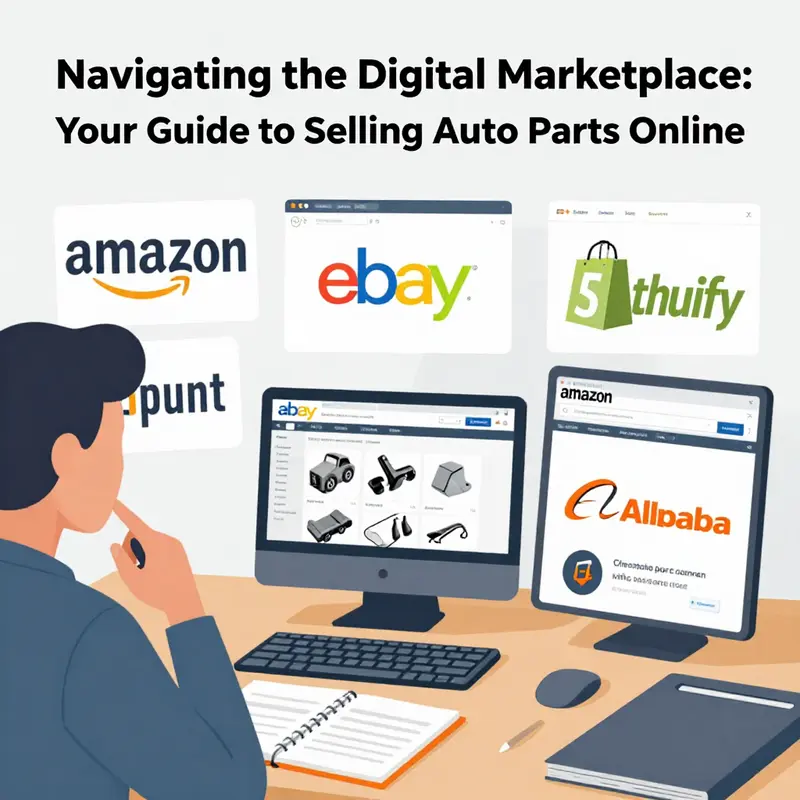
Choosing where to sell auto parts online shapes every other decision you make. The channels you pick determine how customers discover your parts, how much margin you keep, how you handle logistics, and how fast you can scale. Think of platform selection as a strategic filter: it focuses your product presentation, customer support style, and backend operations. A mismatch costs time and money. The right mix positions your parts where buyers look, provides the tools you need, and protects your brand reputation.
Start by mapping your inventory against buyer behavior. Does your catalog include common wear items people search for on price? Are you selling specialist components sought by enthusiasts? Do you supply repair shops that buy in bulk and need reliable invoicing and delivery? Each of those buyer groups finds parts on different channels. Private consumers often use high-traffic marketplaces when they want fast comparison shopping. Enthusiasts prefer communities, niche stores, and sellers known for expertise. Repair shops value predictable lead times, trade accounts, and B2B ordering features. Define two to three primary buyer personas and let them guide the channels you test first.
Next, weigh the trade-offs between marketplace reach and brand control. Large marketplaces provide immediate exposure and discovery. They ease trust issues by offering buyer protections and familiar checkout paths. But they often limit how you present your brand and charge fees that reduce per-sale margin. Branded stores, on the other hand, give you full control of pricing, content, and customer experience. They make it easier to convert visitors into repeat customers and collect first-party data. They require marketing to drive traffic, and they demand stronger product content to win organic search. A hybrid approach usually works best: use marketplaces for discovery and volume, and use your own store to build loyalty and higher-margin sales.
Evaluate each channel against a consistent checklist. First, audience fit. Does the channel attract the personas you defined? Look at search intent, community composition, and commercial behavior. Second, listing quality. Can you upload multiple images, detailed specs, and compatibility lists? For auto parts, compatibility metadata is critical. The ability to specify make, model, year, and submodel, and to attach diagrams or fitment notes, reduces returns and increases buyer confidence. Third, integration capability. Check if the channel supports inventory sync, order routing, and automated shipping label generation. Seamless integrations prevent oversells and reduce manual work as you scale.
Fee structure deserves close attention. Platforms vary widely. Some take a percentage per sale. Others charge subscription fees, advertising costs, or fees for value-added services like payments or fulfillment. Model your gross margin for typical SKUs on each channel. Factor in shipping, returns, and the cost of customer acquisition. This simple math reveals which channels can be profitable for your most common parts, and which are only viable for premium or niche items. If fees appear high on a particular channel, test higher-margin SKUs there first, or use that channel primarily for clearance and customer acquisition, not steady revenue.
Trust and reputation features should influence your decision. Channels that allow buyer ratings, verified seller badges, and easy dispute resolution increase conversion. For complex parts, the presence of Q&A sections and rich product documentation helps. Also look for channels that support warranties and returns policies in clear ways. A platform that encourages detailed reviews will reward consistent quality. Conversely, channels with little buyer protection can lead to disputes and reputational risk.
Marketing support from the channel can accelerate your growth. Does the platform offer search optimization tools, paid ad placements, or promotional campaigns you can join? Can you run limited-time discounts or coupon codes? Are there tools for email remarketing or abandoned cart recovery? If a channel gives you built-in ways to surface listings, it reduces the upstream marketing cost you must cover from scratch. Prioritize platforms that give measurable promotional levers and trackable return on ad spend.
Look for advanced features that help you scale. Multi-channel management, bulk listing tools, and analytics dashboards are worth their weight. Good platforms provide sales trends, conversion metrics, and traffic sources. They let you see which SKUs are growing and which need different pricing. Also value channels that support multiple seller roles, such as creating trade accounts for B2B buyers or granting access to staff for order processing. As your business grows, the ability to tie multiple sales channels into a single inventory and reporting system will save hours each week.
Consider regional and language factors when you pick channels. Local consumer habits, payment preferences, and logistic networks vary. Selling cross-border requires customs management, localized listings, and clear shipping timelines. If you target specific countries, prioritize channels with strong local presence and trusted payment options. For mobile-first markets, choose channels optimized for mobile checkout and social sharing. Where messaging apps and mini-programs dominate, a lightweight storefront integrated with those ecosystems can drive high conversion.
B2B customers need different features than retail buyers. If you regularly sell to repair shops or distributors, look for channels that support bulk pricing, purchase orders, net terms, and account-level catalogs. Some channels offer dedicated business storefronts where buyers see negotiated pricing and can reorder quickly. If a channel lacks such features, you can still serve B2B through your own store, but you must add functionality such as catalog segmentation, tiered pricing, and credit terms.
Operational fit matters as much as marketing fit. How will orders reach your warehouse? Can your fulfillment processes scale with the channel’s volume peaks? Does the channel provide shipping label integration with major carriers? The easiest way to lose margin is by shipping errors, late deliveries, and returns processing that create extra labor. Choose platforms that plug into your existing logistics or allow you to outsource fulfillment while maintaining control over branding and return policies.
User experience on the channel affects how you must present your parts. If a platform favors visual browsing, invest in professional photography and lifestyle images. If search-driven customers dominate, focus on technical titles, fast-loading spec sheets, and clear compatibility matrices. Channels with strong product comparison features reward precise specs and feature lists. Write descriptions that answer the common questions buyers ask, and standardize how you present fitment data. Consistency reduces buyer confusion and returns.
Protecting your brand and your IP is part of platform selection. Some channels allow third-party sellers to list identical SKUs side by side. That can lead to price competition and counterfeit risks. If brand protection matters, seek channels that let you register as a brand owner or that offer tools to report unauthorized sellers. Where possible, centralize high-value or exclusive SKUs on channels that provide better seller protections and stronger enforcement mechanisms.
Start small, then scale. Launch a curated set of SKUs on one marketplace and on your own store. Use the initial launch to test listing templates, shipping times, and returns flows. Track conversion rates and average order value. If a SKU performs strongly on a marketplace, consider investing in paid promotion there. If your own store shows repeat buyers, invest in email programs and loyalty incentives. A phased approach reduces risk and gives you data-driven insight into channel profitability.
Plan for multi-channel complexity from day one. Invest early in an inventory system that synchronizes stock across channels. Without sync, you risk overselling and angry customers. Use order automation to route orders to the right fulfillment center and to generate tracking information automatically. If you plan to sell internationally, integrate a carrier service that handles customs paperwork and calculates duties in checkout. The cost of these integrations is small compared with the value of avoiding manual reconciliation and late shipments.
Customer support differs by channel. Some platforms handle first-line customer inquiries and refunds. Others push all contact back to you. Define clear service-level agreements for each channel. Document processes for handling missing parts, fitment disputes, and warranty claims. Where possible, create templated responses for common issues. Fast, consistent support reduces negative feedback and bolsters repeat purchases.
Data should drive your channel decisions. Monitor metrics such as conversion rate, return rate, average order value, and customer lifetime value for each channel. Look at the cost of customer acquisition by channel, including marketplace fees and marketing spend. Identify which channels bring high-value buyers and which bring transactional one-time shoppers. Reallocate inventory and promotional budget accordingly. Channels that look unprofitable at first can become profitable after optimizations such as better images, revised pricing, or improved shipping options.
Remember the channel lifecycle. New channels can offer early-adopter advantages. Established channels provide predictable traffic but higher competition. Always reserve a portion of your test budget for emerging channels that align with your buyers. Conversely, don’t spread yourself too thin. Maintain deep optimization on your primary channels instead of shallow presence everywhere.
Finally, integrate your channel choice with product strategy. High-volume, low-cost parts perform well on high-traffic marketplaces. Niche and high-ticket items do better on specialty channels and your own store. Use a deliberate SKU-to-channel mapping. Reserve exclusive or bundled offerings for your branded store to encourage direct purchases. Offer curated bundles or installation kits on marketplaces only when you can maintain healthy margins despite fees.
For an example of how a supplier frames platform choice within the auto parts world, review the guidance available at:
https://www.napaonline.com/what-we-offer/choosing-the-right-napa-online-auto-parts
If you want a concrete example from an existing catalog, review this product listing for a carbon fiber bonnet. It shows how a high-value, specialty part is presented and bundled with fitment details, images, and descriptions that increase buyer trust: brand-new-original-carbon-fiber-bonnet-hood-for-mitsubishi-lancer-evo-x.
Choosing the right sales platforms is not a one-time decision. Reassess channels at least twice a year, and whenever you add a new product line or enter a new market. Let buyer personas, unit economics, operational capacity, and platform tools guide you. With careful selection and continuous optimization, the channels you pick will become a growth engine for your auto parts business.
Turning Listings into Sales: How to Optimize Auto Parts Product Pages for Online Success
Visuals, Fitment, and Copy Working Together
A product listing is the single place a buyer learns everything about an auto part. It must communicate fitment, function, quality, and confidence in clear, fast ways. When these elements work together, a listing does more than describe a product. It answers the buyer’s questions, removes doubt, and shortens the path to purchase.
Start with visuals that show the part exactly as it will arrive. Use multiple high-resolution photos that capture angles, mounting points, and any stamped numbers or tags. Include a close-up of finishes and edges. One image should show the part next to a ruler or a common object to indicate scale. If the part has pads, clips, or inserts, photograph those parts separately. These small photos prevent misunderstandings and cut returns.
Supplement still photos with short, purposeful video. A thirty to sixty second clip that shows the part rotating, followed by an installation snippet, proves fit and function. Videos calm buyers who worry about compatibility or complexity. They also increase time on page, which signals engagement to platform algorithms.
Complement visuals with simple technical diagrams. A labeled diagram that highlights bolt patterns, connector types, or hose locations answers technical questions at a glance. Many buyers appreciate a diagram more than a long paragraph of text. Present these diagrams as downloadable PDFs for installers and shops who want to save them.
Write a title that acts like a search query and a product promise. The title should combine the core identifier with fitment details and one key benefit. Use a format that buyers recognize, such as year range, make, model, engine or trim, followed by the part name and a short benefit line. Keep the title concise and readable; avoid redundant words. The title helps search relevance and sets clear expectations before buyers open the page.
Beneath the title, craft bullets that scan. Each bullet should answer a common buying question: fitment, materials, performance benefits, included hardware, and warranty. Use simple language and keep each bullet focused. The first two bullets must hit the highest objections: “Will this fit my vehicle?” and “Is the quality reliable?”.
The product description is where you build trust through context. Explain why the material choice matters. Describe testing or quality control in practical terms, not corporate jargon. Mention installation ease and list any special tools required. If the part replaces a stock component, explain how it performs differently. Use short paragraphs and occasional italics for emphasis. This keeps readability high for buyers who read the whole page.
Fitment data is the backbone of correctness. Accurate compatibility details reduce returns more than any other single factor. Maintain a centralized fitment database and push that data to every listing channel. Record make, model, year, engine code, transmission type, and trim. Add notes for exceptions, such as optional packages or pre-2005 model variants. Where possible, include OEM or factory part numbers to help buyers cross-reference and validate.
Offer a fitment table or selector widget so buyers can confirm compatibility in two clicks. If a platform supports automatic validation, enable it. If not, ask for VIN or engine code on the product page and provide a clear explanation of how that information will be used. Buyers who can confirm compatibility quickly are far more likely to convert.
Technical accuracy requires internal processes. Set up a part-number validation step before listing goes live. Cross-check measurements and connectors against supplier data. Update fitment whenever you receive new information from manufacturers or customer feedback. Keep a change log with timestamps so you can audit decisions if a compatibility issue arises.
Social proof closes the trust loop. Solicit reviews from installers and DIYers with targeted follow-up messages. Encourage reviewers to mention vehicle fit, installation time, and driving impressions. Short, specific reviews help unknown buyers decide. Respond to negative feedback politely and with solutions. If a return is necessary, offer a clear and simple path. Public responsiveness turns a potential brand weakness into a competitive advantage.
Include a Q&A section on the page and monitor it daily. Many buyers ask the same few questions. When you answer publicly, future buyers see those answers without contacting support. Use responses to refine the listing text. If several buyers ask about the same tool or bolt size, update the description and diagrams accordingly.
Pricing signals matter. Price competitively, but avoid a race to the bottom. Use tiered pricing for volume buyers and offer bundles where it makes sense. For example, offer a small savings when buyers purchase related hardware or both left and right components. Show the bundle price and the savings compared to buying separately. Limited-time promotions and clear coupon displays create urgency. Clearly state shipping times and costs. Unexpected shipping fees kill conversions.
Use automated repricing carefully. Competing on price alone invites margin erosion. Set rules that protect your best-selling SKUs and allow flexibility on slow-moving items. Combine repricing with promotion windows to protect margins during high-traffic events.
Optimize for mobile browsing and fast pages. Most shoppers arrive from phones. Ensure images scale well and that videos play without stuttering. Compress images for performance but preserve detail in critical product shots. Keep the most persuasive content above the fold: fitment confirmation, price, a primary photo, and the buy button. Secondary content like extended specs, installation guides, and warranty details can appear lower on the page.
Make sure metadata and backend fields are populated. Platforms index product attributes and hidden keywords differently from visible text. Use these fields to include synonyms, alternate part numbers, and common misspellings. Maintain a list of negative keywords where appropriate to avoid irrelevant traffic. Track which backend fields each channel exposes and tailor your data accordingly.
Use structured data where possible. Embedding machine-readable part identifiers, fitment attributes, and review snippets helps search engines show rich results. When a buyer sees star ratings, price, and shipping info in search results, they are likelier to click through. Structured data also helps voice assistants provide accurate answers for buyers using hands-free search while working on a car.
Cross-sell and upsell with intent. Place recommended add-ons near the buy button. Recommend the exact hardware kit required for installation, a matching filter, or a protective coating based on the part. Keep suggestions contextual and limited to two or three items. Overloading the page with unrelated accessories distracts and reduces conversion.
Handle variants and SKUs cleanly. If one listing covers multiple finishes or left/right orientations, let the buyer choose on the page rather than creating separate product pages. Show images for each variant and keep variant-specific fitment clear. Use consistent SKU naming conventions so returns and replacements are simpler.
Protect buyers with clear warranty and return terms. A straightforward warranty policy raises confidence. State coverage, conditions, and how to submit a claim. If free returns apply for incorrect fitment, advertise that prominently. The extra assurance reduces hesitation and increases conversion.
Test and iterate continuously. Run A/B tests on titles, main images, and bullet order. Measure conversion rate, add-to-cart rate, and return rates. Use heatmaps and session recordings to see where buyers drop off. If a majority of buyers view the Q&A or installation video, make that content more prominent.
Monitor key performance indicators daily. Watch conversion rate by channel, return reason trends, and average order value. Track the lift from promotions and the effect of price changes. Keep an eye on refund rates tied to fitment issues. A rising trend requires immediate attention to data, photos, or fitment accuracy.
Manage content consistency across channels. Use a single canonical listing as the truth and sync it to all marketplaces. Inconsistencies in photos, specs, or fitment across channels create confusion and returns. If a channel requires unique formatting, maintain a translation layer that pulls from your canonical data.
Localize listings for selling internationally. Translate technical terms accurately and adapt measurements to local units. Clarify shipping times and duties. Some buyers expect localized installation tips, such as torque specifications in commonly used units. Localization reduces friction and improves satisfaction.
Keep legal and safety information visible but unobtrusive. Note any regulatory limitations and include clear installation warnings. For safety-critical parts, encourage professional installation where appropriate. Buyers should not be left guessing about liability or safe use.
Finally, invest in listing templates and training. Create templates for common part families with fields for key photos, diagrams, and copy. Train your listing team to follow checklists that verify fitment, photos, specs, and backend keyword fields. Templates speed up rollout while keeping quality high.
A practical example brings this to life. A listing for a body panel paired a clean scale photo, a short installation video, and a diagram showing mounting points. The title used make and year and included the key finish. Bullets answered fitment, warranty, and included hardware. The buy button area showed a bundled screws option and an easy-fit guarantee. Customers reported fewer returns and higher satisfaction after these changes. See an example product page for a carbon fiber bonnet here: brand-new-original-carbon-fiber-bonnet-hood-for-mitsubishi-lancer-evo-x.
When a listing is optimized across visuals, fitment accuracy, copy, and backend fields, it becomes a conversion engine. It answers every reasonable buyer question before checkout. It proves competence through proof points and responsiveness. It reduces returns and builds repeat customers. Invest the time to do it right, and listings will scale sales rather than limit them.
For additional guidance on expanding an auto parts business online and platform strategies, consult this comprehensive external resource: https://www.shopify.com/blog/automotive-parts-online-sales
From Feed to Fitment: Mastering Social Media and Content Marketing to Sell Auto Parts Online
Social media has become more than a place to showcase shiny parts; it is a dynamic workshop where trust is built, questions are answered, and buying decisions are made. For anyone selling auto parts online, the path from a casual scroll to a confirmed purchase runs through content that educates, demonstrates, and reduces friction at every turn. The audience is diverse—do-it-yourself enthusiasts who want to save time, professional technicians who need reliability, and car aficionados who crave community and proof. The challenge is not simply to push products, but to craft a narrative that positions your brand as a helpful, credible partner in maintenance and upgrades. When done with intention, social media and content marketing become a seamless engine that drives awareness, guides consideration, and accelerates conversion, all while strengthening loyalty and repeat business.
At the heart of this approach is a simple discipline: speak to real needs with real value. A post about a common maintenance task, a short clip showing a part’s fitment, or a step-by-step guide to a tricky install can resonate far beyond a single SKU. The narrative should acknowledge what your audience struggles with—compatibility, timing, and the fear of receiving the wrong part—and offer clear, actionable information. This is not about chasing trends; it is about building a dependable information resource that car owners turn to again and again. The best content shows, not tells. A crisp video demonstrating how a component integrates with a vehicle, a photo carousel that reveals fitment from multiple angles, or a written guide with exact torque specs and installation steps can transform indecision into confidence. And because buyers often seek social proof, including testimonials, before-and-after imagery, and user-submitted data adds credibility that no single product description can achieve.
Platform choice matters, but the underlying strategy remains consistent. On visually driven networks, keep imagery sharp and purposeful. A high-quality still image paired with a concise caption can spark interest, while longer-form videos can dive into installation nuances, maintenance tips, and the comparative advantages of different options. It is not unusual to see a single piece of content perform across multiple channels by adapting its format to each context. A short reel on a social app can tease a longer YouTube tutorial, while a descriptive blog post can live on your site and be teased through a link on social feeds. The objective across platforms is coherent storytelling that nudges the audience toward the next step—visit your site, browse compatible parts, and consider a bundle that includes installation tips or maintenance checks.
The content bank you build becomes a strategic asset. Start by cataloging common questions your customers ask, recurring installation challenges, and frequent misfits between part numbers and actual needs. Convert these into content formats that fit various stages of the buyer journey. Quick-tip videos for awareness, in-depth how-to guides for consideration, and installation walkthroughs for purchase support create a layered experience that helps potential buyers without feeling salesy. Importantly, ensure every piece of content links back to product pages with clear, consistent calls to action. This alignment is essential; content should not exist in a vacuum. It must direct the audience to the most relevant parts pages, compatibility guides, or how-to resources, so that curiosity translates into a measurable action.
A practical rule of thumb is to treat content as a funnel, not a one-off promotional splash. Awareness content speaks to problems and outcomes: saving time, avoiding wrong parts, extending vehicle life, or achieving better performance. Consideration content compares options, explains compatibility, and translates specifications into real-world benefits. Purchase-oriented content reduces hesitation by outlining installation steps, teardown tips, and warranty or return policy clarity. Content that follows this logic helps ensure a smoother journey from discovery to checkout, which ultimately boosts conversion rates and customer satisfaction.
High production quality does not have to mean high costs. Clear visuals, steady framing, and thoughtful lighting can elevate any content without breaking the budget. A well-lit camera phone, a clean workspace, and a confident on-screen voice can deliver authentic, trustworthy messaging. When you combine these visuals with precise, practical information, viewers feel they can rely on your content as much as on your product quality. A voice that communicates expertise without arrogance builds rapport; a narrative that acknowledges potential mistakes or common missteps signals transparency and reliability. In this way, authenticity becomes a differentiator that stands out in crowded feeds where performance marketing often competes with glossy but hollow claims.
The content should be anchored by practical, evergreen topics that remain relevant beyond a single season. Tutorials such as how to replace a specific part, how to diagnose a common failure, or how to select the right compatible component for a given vehicle model are universally useful. Seasonal content can supplement this with timely topics—preparation tips for winter driving, summer performance checks, or end-of-year maintenance checklists. While trends can boost initial reach, evergreen content sustains long-term organic growth, especially when it is structured with search intent in mind. Long-tail keywords embedded in explanatory guides improve search visibility, while videos and how-to posts capture intent-driven searches when users want to see results before buying.
Search engine visibility is not incidental. Content that answers real questions is a strong signal to search platforms about relevance. Where possible, integrate SEO considerations into your content planning from the outset. This means studying common search queries related to vehicle maintenance, compatibility concerns, and installation pain points, and then crafting content that directly addresses those questions. The synergy between social media engagement and SEO is powerful: social shares expand reach, while optimized content improves ranking and drives consistent traffic to your store. To maximize impact, diversify formats—short clips that tease longer tutorials, detailed guides that live on your site, and interactive posts that invite user participation. The result is a content ecosystem that feeds both discovery and education, producing a steady stream of qualified visitors who are more likely to convert.
Trust is the currency of online auto parts sales. Transparency about compatibility, fitment, and warranty terms reduces post-purchase anxiety and returns. People want to know that the part they are ordering will fit their vehicle and function as described. Content that demonstrates fit and performance through real-world usage, side-by-side comparisons, and installation walkthroughs reinforces credibility. Encouraging and highlighting user-generated content—photos of installations, feedback from customers, or video testimonials—expands the social proof portfolio and strengthens community engagement. A simple, well-timed request for user content after a customer completes an installation can yield valuable material for future campaigns. It also signals that your brand values customer voices, not just sales figures.
The role of storytelling in this chapter is not to replace product detail but to enrich it. Buyers arrive with questions about fitment, reliability, and value. A well-crafted narrative answers those questions while guiding the customer toward the practical certainty of purchase. For instance, a content piece that explains how a maintenance routine becomes easier with the right part can be paired with a tutorial showing exact steps. The narrative reinforces the product’s usefulness and creates a mental image of success—the satisfaction of completing a repair quickly, the confidence of choosing a durable component, or the relief of a precise fit on a difficult installation. In this way, content becomes not just information but a mindset that aligns with responsible ownership and proactive maintenance.
A concrete tactic for turning engagement into conversions is the disciplined use of content-to-commerce links. Every post can include a pathway to a relevant product page or guide, and every tutorial should end with a recap of the takeaways and a direct link to the proper part. However, it is essential to avoid a hard-sell energy in every piece. Value-first content earns time, attention, and trust, which makes the eventual product suggestion feel like a natural next step rather than an interruption. When this rhythm is achieved, customers feel supported, not sold, and are more willing to explore, compare, and ultimately purchase.
The cultivation of community is another vital dimension. Brands that create spaces for users to share projects, exchange tips, and celebrate successful repairs foster loyalty beyond the moment of sale. A branded hashtag, a monthly feature of customer installations, or a community-led Q&A session can turn casual followers into advocates. In practice, this means encouraging discussions in comments, acknowledging user contributions, and providing timely, helpful responses to questions. A responsive, values-driven brand voice travels well across platforms and helps protect against the fatigue that comes with constant promotional noise. When people feel seen and supported, they return not just for the next part but for the next conversation, the next tutorial, and the next recommendation that aligns with their evolving needs.
Partnerships amplify reach without sacrificing integrity. Collaborations with auto repair shops, car clubs, and enthusiasts offer credibility and access to niche communities. Joint content, such as co-hosted live sessions, collaborative tutorials, or exclusive member promotions, can introduce your content to a broader audience while maintaining the authenticity of the collaboration. Trade shows and expos remain valuable for hands-on demonstrations and direct feedback, where potential buyers can examine fitment, ask questions, and witness performance in a controlled environment. Even digital partnerships, such as influencer-style creator series, should prioritize honesty and transparency. The objective is not to capture a quick sale but to build long-term relationships that translate into repeat purchases, referrals, and ongoing engagement.
To illustrate how these principles translate into practice, consider a content strategy that blends product storytelling with practical guidance. Start with a short video showing a common maintenance task that anyone with a basic toolkit can perform. Add a follow-up post detailing the exact steps, compatibility considerations, and measurement tips. A longer form guide could compare several compatible components, outlining when to choose a more budget-friendly option versus a higher-performance alternative. Each piece should link to relevant product pages that support the content and provide clear calls to action. When a customer clicks through to your site, ensure the landing experience continues the same value-driven, transparent tone. The user should feel they are receiving helpful information, not a sales pitch, and only then should the product suggestion appear as a natural continuation of the learning journey.
In this framework, one practical example of content and product alignment can be seen on a detailed product page that is part of a broader content ecosystem. The page showcases a specific rear bumper with clear fitment information, high-quality imagery, and installation notes, while the surrounding content highlights a short installation video, a blog post about choosing the right bumper, and a customer installation gallery. The content supports confidence in the decision to purchase and reduces friction during the checkout process. For a concrete reference to how this approach translates into listing details and content synergy, you can explore a detailed listing like the one at the following page: 03-06-mitsubishi-evolution-8-9-jdm-rear-bumper-oem. This link illustrates how a content-forward approach informs the presentation of a specific part, with clear compatibility notes, visuals from multiple angles, and practical guidance for installation—elements that support higher engagement and better conversion rates across channels.
The integration of social media content with your broader marketing stack will also benefit from a disciplined measurement framework. Track engagement metrics such as saves, shares, and comments as indicators of content resonance, and pair them with on-site signals like page dwell time and scroll depth to gauge content effectiveness. Social ads should be tested and refined based on audience signals, with retargeting aimed at users who interacted with installation content or read a how-to guide but did not purchase. Reflect on what content moves buyers through the funnel, and adjust your calendar to emphasize formats and topics that prove most effective in driving both traffic and conversions. This iterative process is essential in a market where consumer preferences shift and new content formats continually emerge.
Finally, treat content marketing as a long-game investment in credibility and trust. When your audience consumes well-structured tutorials, thoughtful maintenance advice, and authentic reviews over time, they come to rely on your brand as a reliable source. This reliability translates into greater willingness to choose your parts, accept better offers, and participate in a community built around knowledge and shared experience. Over months and years, a well-executed content strategy yields compounding benefits: higher organic visibility, increased engagement, better conversion rates, and stronger customer loyalty. The payoff is not measured solely in immediate sales but in the lifetime value of customers who repeatedly return to your brand for guidance and quality.
For readers seeking a broader framework and additional case studies on digital marketing strategies for automotive e-commerce, see Shopify’s Automotive E-commerce Marketing guide. It offers a complementary perspective on how to structure campaigns, optimize content for conversion, and leverage platform analytics to refine tactics over time. External resource: https://www.shopify.com/blog/automotive-e-commerce-marketing
Final thoughts
Selling auto parts online encompasses a multifaceted approach, where choosing the right platforms, optimizing your listings, and leveraging social media marketing play critical roles. By effectively integrating these strategies, you elevate your business, enhance customer relationships, and capture a larger share of the market. As you move forward, continuously adapt and refine each element, maintaining a keen focus on providing value and building trust with your customers in this digital-first buying landscape.